Adrenal Gland & Pineal Gland & Pancreas & Ovaries/Testes & Thymus & Other Organs - Chapter 17

0.0(0)
studied byStudied by 0 people
0.0(0)
full-widthCall with Kai
learnLearn
examPractice Test
spaced repetitionSpaced Repetition
heart puzzleMatch
flashcardsFlashcards
GameKnowt Play
Card Sorting

1/29

encourage image

There's no tags or description

Looks like no tags are added yet.

Study Analytics
Name
Mastery
Learn
Test
Matching
Spaced
Call with Kai

No study sessions yet.

30 Terms

1
New cards

gl twin 😭

knowt flashcard image
2
New cards

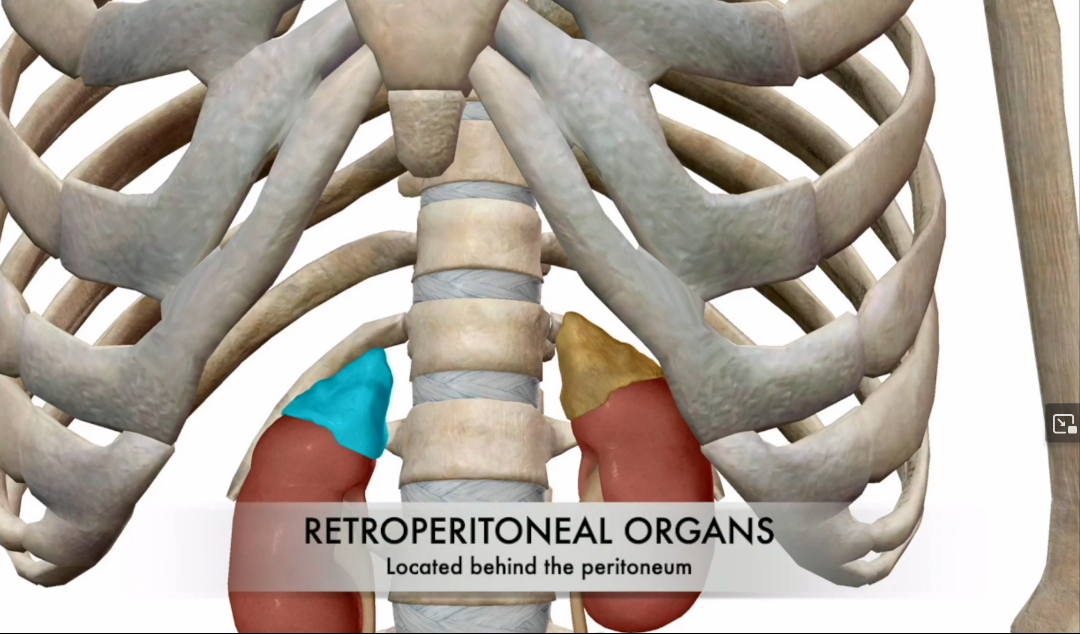
Adrenal Gland Location

  • Sits atop the kidneys and is a retroperitoneal organ.

  • Btw is glandular tissue

<ul><li><p>Sits atop the kidneys and is a retroperitoneal organ.</p></li><li><p>Btw is glandular tissue</p></li></ul><p></p>
3
New cards

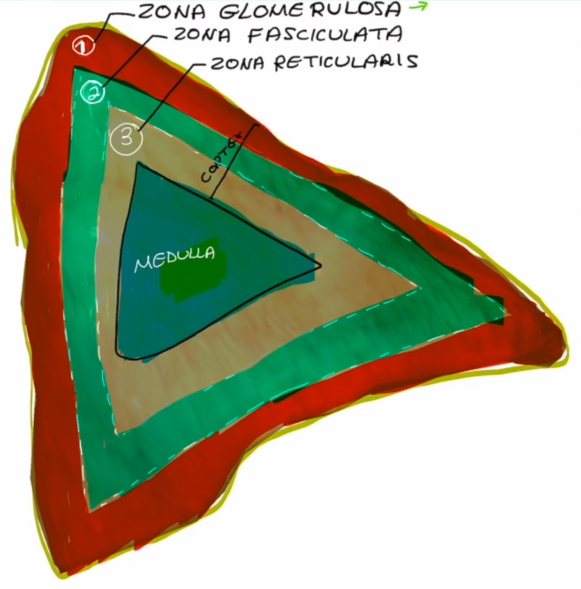
What are the two parts of the Adrenal Gland?

  • Cortex

  • Medulla

<ul><li><p>Cortex</p></li><li><p>Medulla</p></li></ul><p></p>
4
New cards

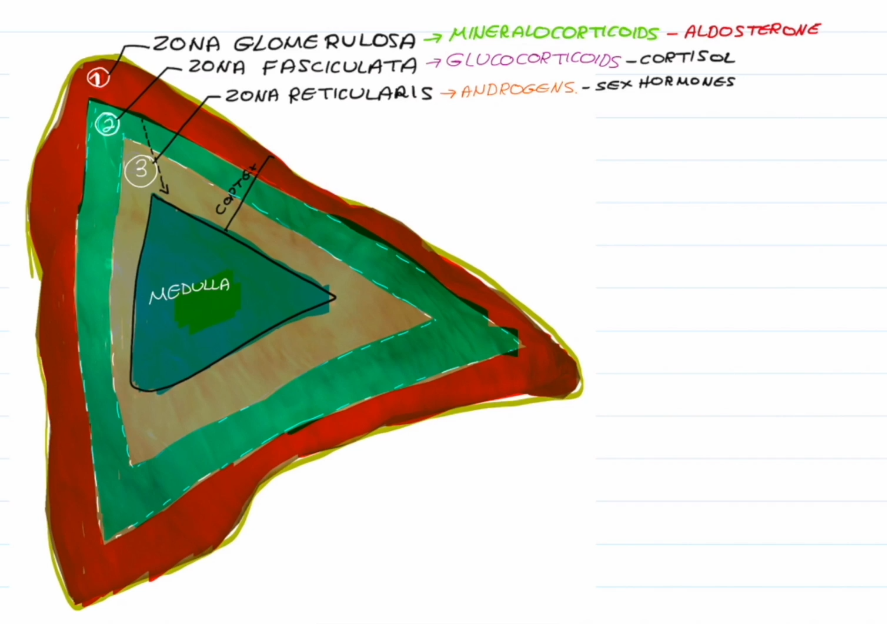
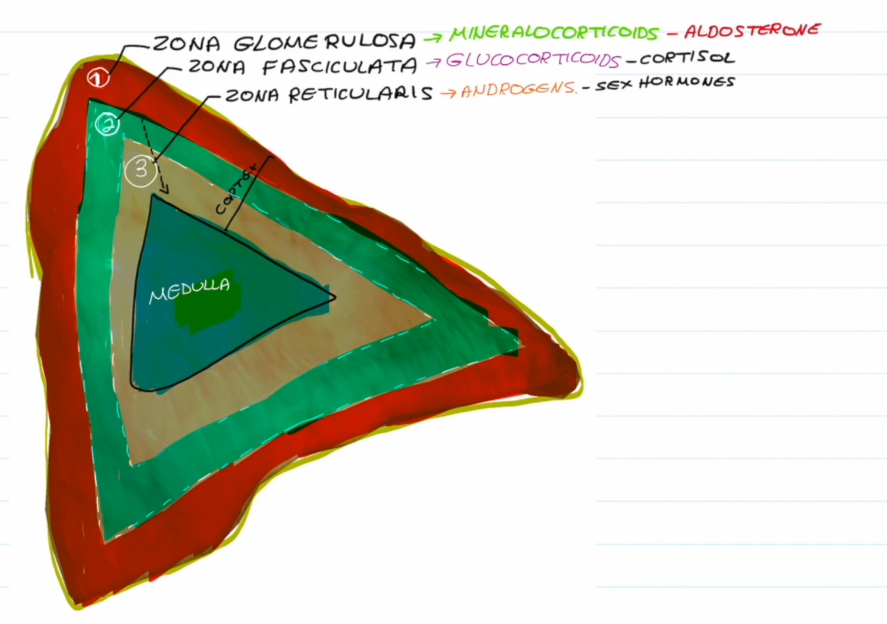
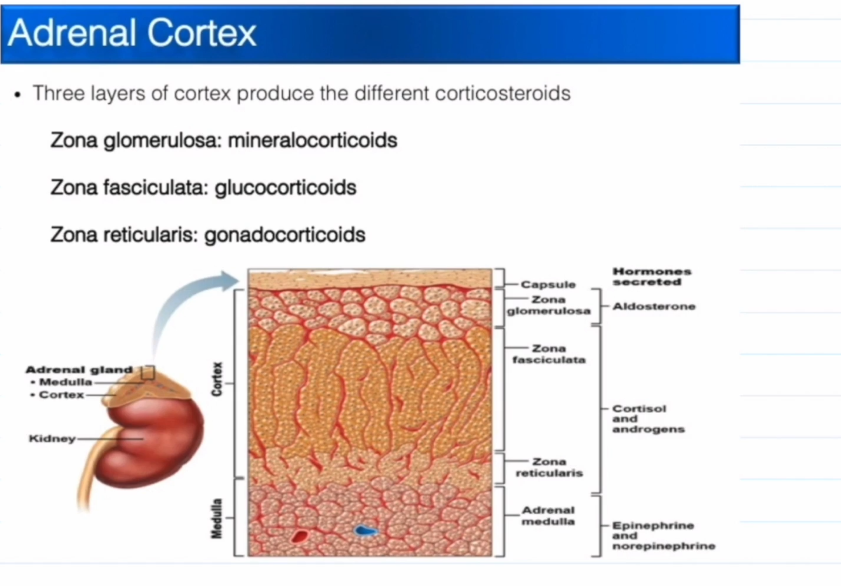
Cortex layers, superficial to deep:

  • Zona Glomerulosa

  • Zona Fasciculata

  • Zona Reticularis

<ul><li><p>Zona Glomerulosa</p></li><li><p>Zona Fasciculata</p></li><li><p>Zona Reticularis</p></li></ul><p></p>
5
New cards

Zona Glomerulosa Hormone:

  • Mineralocorticoids (Aldosterone)

<ul><li><p>Mineralocorticoids (Aldosterone)</p></li></ul><p></p>
6
New cards

Zona Fasciculata Hormone:

Glucocorticoids (Cortisols)
<p>Glucocorticoids (Cortisols)</p>
7
New cards

Zona Reticularis

Androgen (Sex Hormones)

<p>Androgen (Sex Hormones)</p>
8
New cards

What kind of tissue is the medula and what does it release?

Medula is neural tissue and releases epinephrine and norepinephrine
<p>Medula is neural tissue and releases epinephrine and norepinephrine</p>
9
New cards

What do Mineralocorticoids do?

  • Mineral = ions Na+ and K+

  • Na+ effects Extracellular Fluid (ECF) Volume, blood volume, and therefore blood pressure

  • K+ sets resting membrane potential of cells.

<ul><li><p>Mineral = ions Na+ and K+</p></li><li><p>Na+ effects Extracellular Fluid (ECF) Volume, blood volume, and therefore blood pressure</p></li><li><p>K+ sets resting membrane potential of cells.</p></li></ul><p></p>
10
New cards

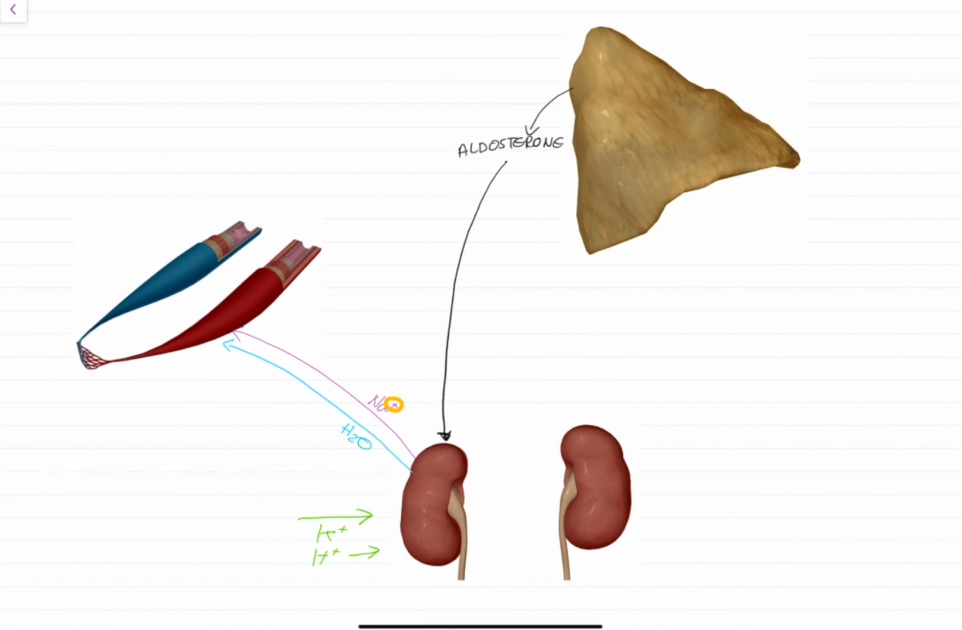
Aldosterone Function

  • Most potent of the mineralocorticoids.

  • Stimulates Na+, and therefore water reabsorption into the blood via the kidneys.

  • Eliminates K+ and H+ from the blood back into the kidneys
<ul><li><p>Most potent of the mineralocorticoids.</p></li><li><p>Stimulates Na+, and therefore water reabsorption into the blood via the kidneys.</p></li><li><p>Eliminates K+ and H+ from the blood back into the kidneys</p></li></ul><p></p>
11
New cards

Glucocorticoids Function

  • Keep blood glucose levels relatively constant

  • Maintain blood pressure by initiating vasoconstriction.

  • Ts the stuff that make u stress out

  • Hypothalamus releases CRH (Corticotropin releasing hormone → Anterior Pituitary Gland releases ACTH (Adrenocorticotropic Hormone) → Adrenal gland (Zona Fasciulata) releases cortisol)

  • Preforms Glucogenesis uses fat to turn protein into carbohydrates for immediate energy when stressed.

<ul><li><p>Keep blood glucose levels relatively constant</p></li><li><p>Maintain blood pressure by initiating vasoconstriction.</p></li><li><p>Ts the stuff that make u stress out</p></li><li><p>Hypothalamus releases CRH (Corticotropin releasing hormone → Anterior Pituitary Gland releases ACTH (Adrenocorticotropic Hormone) → Adrenal gland (Zona Fasciulata) releases cortisol)</p></li><li><p>Preforms <strong>Glucogenesis</strong> uses fat to turn protein into carbohydrates for immediate energy when stressed.</p></li></ul><p></p>
12
New cards

Gonadocorticoids (Sex Hormones) Function

  • Weak androgens are converted to testosterone in males and estrogen in females.

  • They contribute to the onset of puberty, secondary sex characteristics, sex drive in females, and estrogens in postmenopausal women

13
New cards

Medullary Chromaffin Cells Function

  • Produce 80% epinephrine and 20% norepinephrine

  • Causes vasoconstriction, increased heart rate, increaes blood glucose levels, shunts blood to yo muscles

<ul><li><p>Produce 80% epinephrine and 20% norepinephrine</p></li><li><p>Causes vasoconstriction, increased heart rate, increaes blood glucose levels, shunts blood to yo muscles</p></li></ul><p></p>
14
New cards

Hypersecretion of Glucocorticoids

  • Called Cushing’s Syndrome (Disease if tumor is present)

  • Depresses the cartilage and the bone

  • Inhibits inflamation

  • Depresses the immune system

<ul><li><p>Called Cushing’s Syndrome (Disease if tumor is present)</p></li><li><p>Depresses the cartilage and the bone</p></li><li><p>Inhibits inflamation</p></li><li><p>Depresses the immune system</p></li></ul><p></p>
15
New cards

Hyposecretion of Glucocorticoids

  • Decrease in glucose and sodium in the blood

  • Causes weight loss, dehydration, and hypotension

<ul><li><p>Decrease in glucose and sodium in the blood</p></li><li><p>Causes weight loss, dehydration, and hypotension</p></li></ul><p></p>
16
New cards

Pheochromocytoma

  • Tumor located in the chromaffin cells of the medulla

  • Lots of Epinephrine and Norepinephrine get released

  • Increased HR, BV, and therefore blood pressure

<ul><li><p>Tumor located in the chromaffin cells of the medulla</p></li><li><p>Lots of Epinephrine and Norepinephrine get released</p></li><li><p>Increased HR, BV, and therefore blood pressure</p></li></ul><p></p>
17
New cards

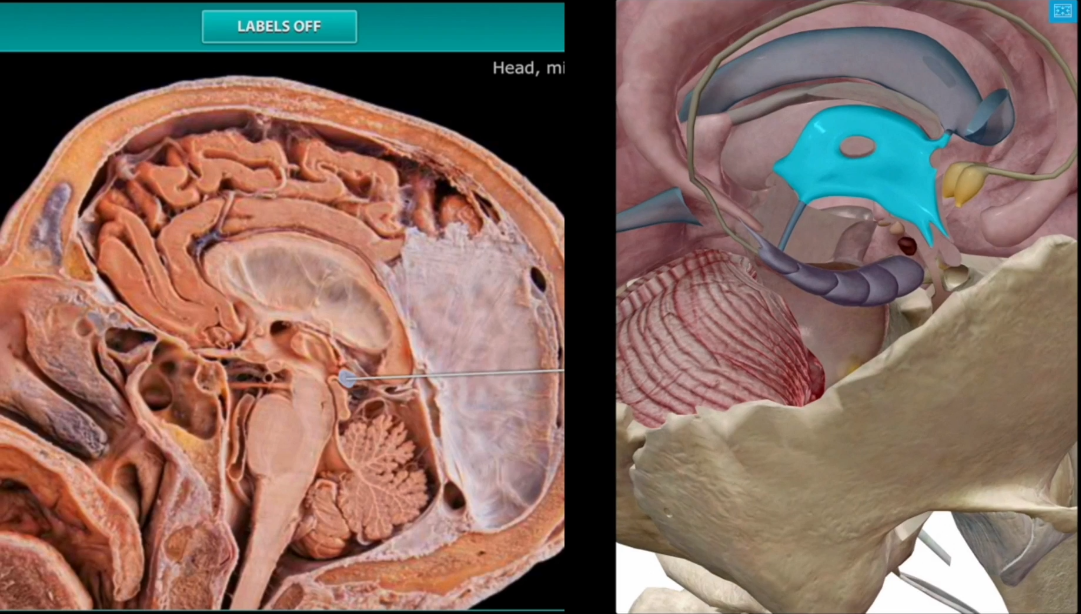
Pineal Gland Location

Near the posterior aspect of the third ventricle
<p>Near the posterior aspect of the third ventricle </p>
18
New cards

Pineal Gland Function

  • Secrets melaonin (which is derived from seratonin0: Leads to

  • Sexual maturation

  • Day/night cycle (And anything involving rythym: body temperatuire/ sleep/appitite

  • Production of antioxidants

Is located very close to the Superior Colliculi, which processes light from the optic nerves. Ergo, if someone turns on a light you wake up

<ul><li><p>Secrets melaonin (which is derived from seratonin0: Leads to</p></li><li><p>Sexual maturation</p></li><li><p>Day/night cycle (And anything involving rythym: body temperatuire/ sleep/appitite</p></li><li><p>Production of antioxidants</p></li></ul><p>Is located very close to the Superior Colliculi, which processes light from the optic nerves. Ergo, if someone turns on a light you wake up</p><p></p>
19
New cards

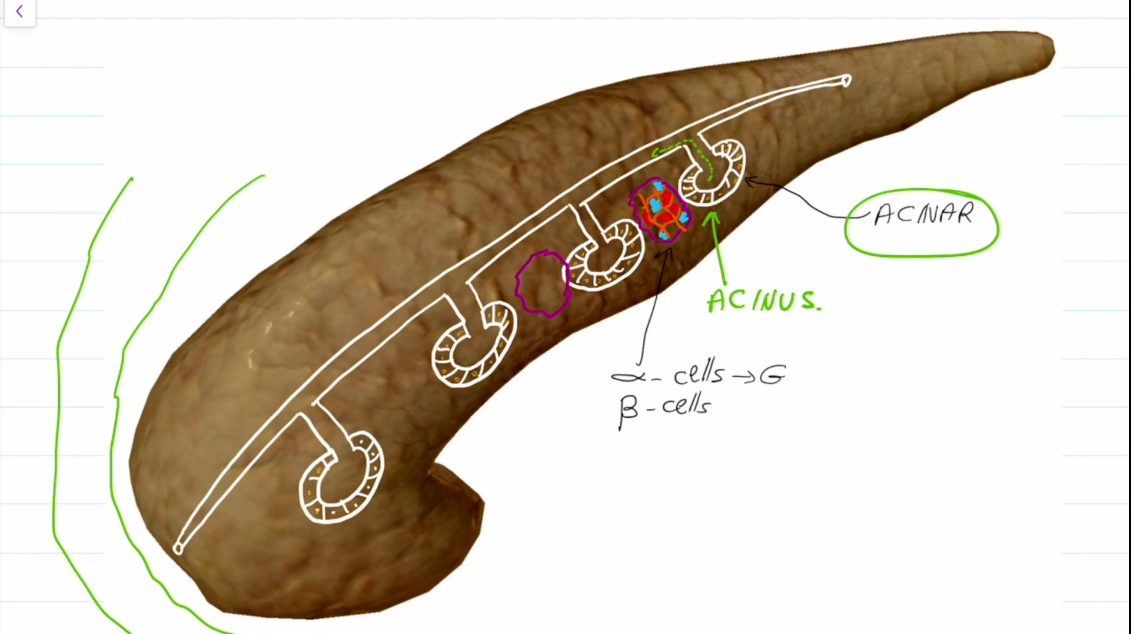
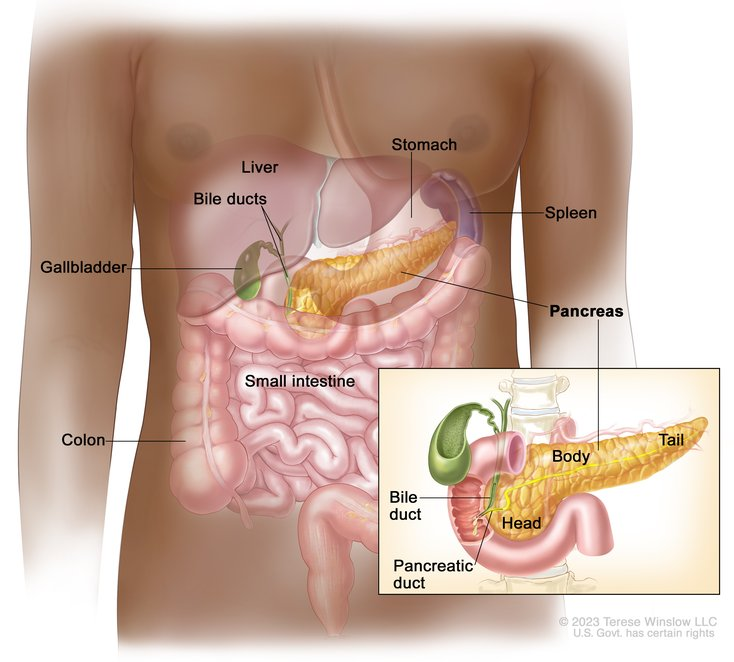
Where is the Pancreas Located?

  • Behind the stomach.

  • It has exocrine and endocrine functions, however we will focus on the endocrine functions
<ul><li><p>Behind the stomach.</p></li><li><p>It has exocrine and endocrine functions, however we will focus on the endocrine functions</p></li></ul><p></p>
20
New cards

What kinds of cells does the Pancreas have?

  • Acinar cells create digestive enzymes (exocrine)

  • In between them are Islet of Langerhan Cells, which contain Alpha and Beta Receptors

  • Alpha receptors produce glucagon

  • Beta receptors produce insulin

<ul><li><p>Acinar cells create digestive enzymes (exocrine)</p></li><li><p>In between them are Islet of Langerhan Cells, which contain Alpha and Beta Receptors</p></li><li><p>Alpha receptors produce glucagon</p></li><li><p>Beta receptors produce insulin</p></li></ul><p></p>
21
New cards

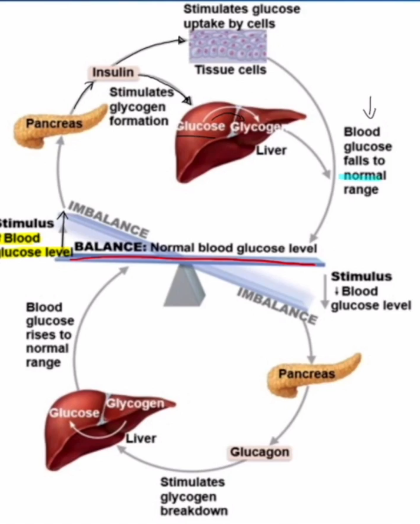
How does Insulin work?

  1. Too much glucose in the blood.

  2. Insulin is released by the pancreas

  3. Insulin instructs cells to take and store glucose, and tells the liver to store glucose as glycogen

  4. Glucose levels drop in the blood

  • Inhibits Glycogenolysis: Breakdown of glycogen into sugar

  • Inhibits Gluconeogenesis: Synthesis of glucose from lactic acid and noncarbohydrates
<ol><li><p>Too much glucose in the blood.</p></li><li><p>Insulin is released by the pancreas</p></li><li><p>Insulin instructs cells to take and store glucose, and tells the liver to store glucose as glycogen</p></li><li><p>Glucose levels drop in the blood</p></li></ol><p></p><ul><li><p>Inhibits Glycogenolysis: Breakdown of glycogen into sugar</p></li><li><p>Inhibits Gluconeogenesis: Synthesis of glucose from lactic acid and noncarbohydrates</p></li></ul><p></p>
22
New cards

How does Glucagon Work?

  1. Not enough glucose in the blood

  2. GLucagon is released by the pancreas

  3. Glucagon instructs the liver to process glycogen stores into glucose, and then to release glucose into the blood

  4. Glucose levels rise in the blood

  • Encourages Glycogenolysis: Breakdown of glycogen into sugar

  • Encourages Gluconeogenesis: Synthesis of glucose from lactic acid and noncarbohydrates

<ol><li><p>Not enough glucose in the blood</p></li><li><p>GLucagon is released by the pancreas</p></li><li><p>Glucagon instructs the liver to process glycogen stores into glucose, and then to release glucose into the blood</p></li><li><p>Glucose levels rise in the blood</p></li></ol><p></p><ul><li><p>Encourages Glycogenolysis: Breakdown of glycogen into sugar</p></li><li><p>Encourages Gluconeogenesis: Synthesis of glucose from lactic acid and noncarbohydrates</p></li></ul><p></p>
23
New cards

How does insulin work at the cell level?

  • Insulin interacts with a receptor

  • IGF-1 (Insulin-like growth factor 1) if formed within the cell

  • A channel known as Glut-4 fuses with the cell membrane

  • Glucose is now able to enter the cell freely.

  • Note, the liver, kidneys, and brain have no need for insulin to take in sugar. They all need a large amount to survive.

<ul><li><p>Insulin interacts with a receptor</p></li><li><p>IGF-1 (Insulin-like growth factor 1) if formed within the cell</p></li><li><p>A channel known as Glut-4 fuses with the cell membrane</p></li><li><p>Glucose is now able to enter the cell freely.</p></li></ul><p></p><ul><li><p>Note, the liver, kidneys, and brain have no need for insulin to take in sugar. They all need a large amount to survive.</p></li></ul><p></p>
24
New cards

Diabetes mellitus (DM)

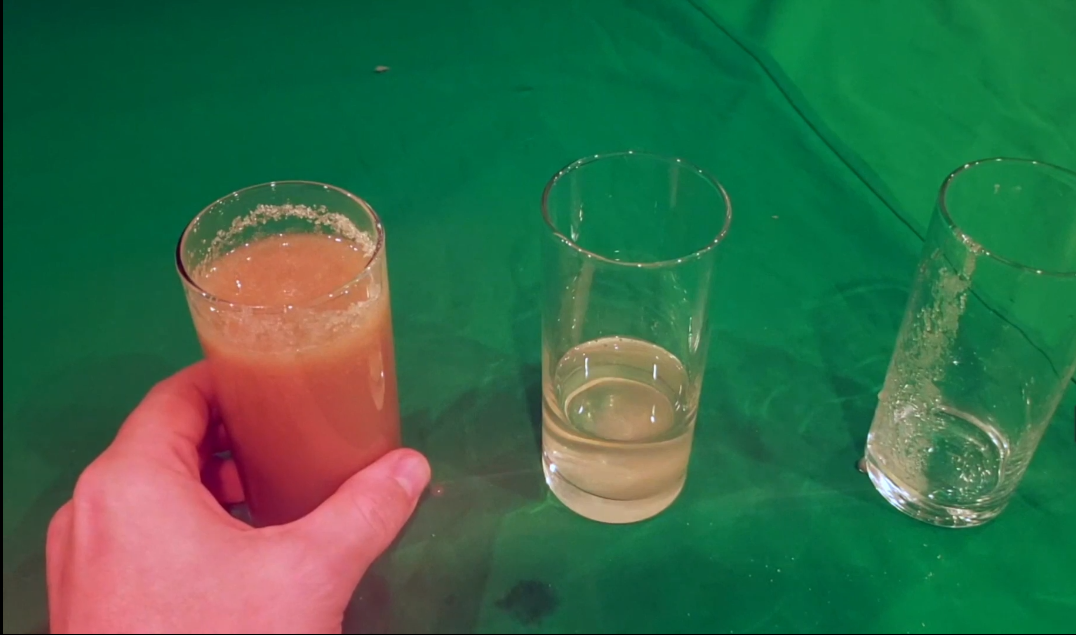
  • Two types: Type 1 and Type 2

  • Type 1 (Hyposecretion) usually results from an autoimmune disease and is caused by a lack of insulin

  • Type 2 (Hypoactivity) is caused by excessive sugar in the blood, leading to insulin receptors being dulled and becoming inactive (Can be reversed)
<ul><li><p>Two types: Type 1 and Type 2</p></li><li><p>Type 1 (Hyposecretion) usually results from an autoimmune disease and is caused by a lack of insulin</p></li><li><p>Type 2 (Hypoactivity) is caused by excessive sugar in the blood, leading to insulin receptors being dulled and becoming inactive (Can be reversed)</p></li></ul><p></p>
25
New cards

Diabetes mellitus (DM) Dangers

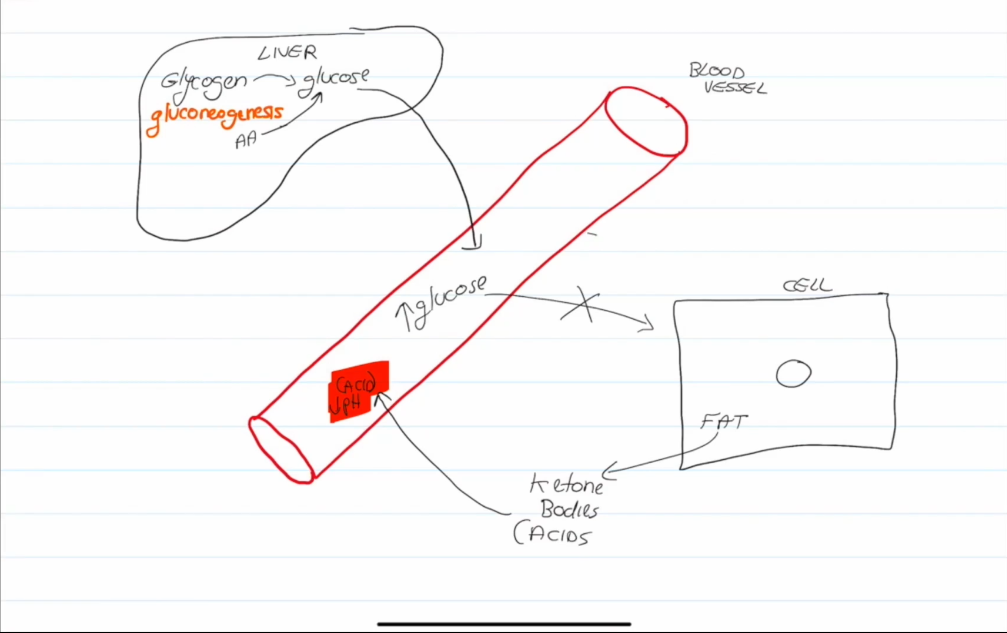
  • Excessive sugar in the blood causes the blood to thicken.

  • Fats use lipids for energy, which leads to the formation of ketones, ketones can leak into the blood and alter blood pH.

  • Untreated ketoacidosis can lead to coma and death
<ul><li><p>Excessive sugar in the blood causes the blood to thicken.</p></li><li><p>Fats use lipids for energy, which leads to the formation of ketones, ketones can leak into the blood and alter blood pH.</p></li><li><p>Untreated ketoacidosis can lead to coma and death</p></li></ul><p></p>
26
New cards

Diabetes mellitus (DM) Cardinal Signs:

  • Polyuria, pissin

  • Polydipsia, drinkin

  • Polyphagia, eatingn

<ul><li><p>Polyuria, pissin</p></li><li><p>Polydipsia, drinkin</p></li><li><p>Polyphagia, eatingn</p></li></ul><p></p>
27
New cards

Ovaries and Placenta

  • Ovaries produce estrogen and progesterone. Are stimulated by FSH and LH.

  • Estrogen Matures reproductive organs, spurs on the appearance of secondary sex charecteristics, with progesterone cause breast development and menustral cycle

  • Placenta does the same but also releases hCG (tells u ur gregnant)
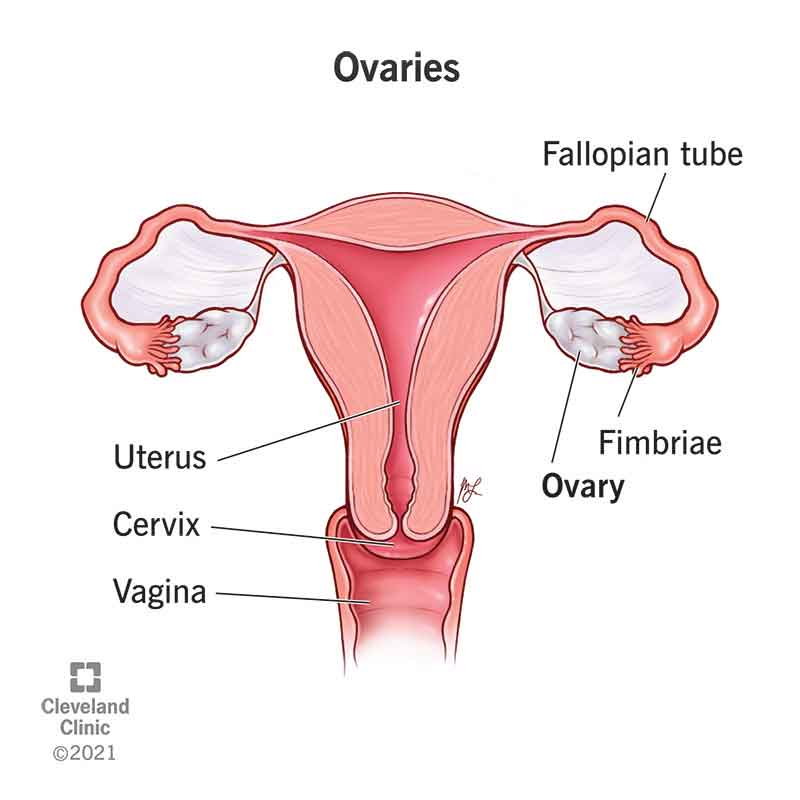
<ul><li><p>Ovaries produce estrogen and progesterone. Are stimulated by FSH and LH.</p></li><li><p>Estrogen Matures reproductive organs, spurs on the appearance of secondary sex charecteristics, with progesterone cause breast development and menustral cycle</p></li><li><p>Placenta does the same but also releases hCG (tells u ur gregnant)</p></li></ul><p></p>
28
New cards

Testes

  • U know where they are bro 💀

  • Produce testosterone, which matures reproductive organs, spurs on the appearance of secondary sex characteristic, lead to sperm production, maintain reproductive drive
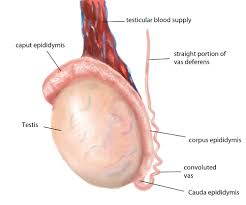
<ul><li><p>U know where they are bro <span data-name="skull" data-type="emoji">💀</span> </p></li><li><p>Produce testosterone, which matures reproductive organs, spurs on the appearance of secondary sex characteristic, lead to sperm production, maintain reproductive drive</p></li></ul><p></p>
29
New cards

Thymus

Only kids should have it, but it sits on teh heart and makes white blood cells

<p>Only kids should have it, but it sits on teh heart and makes white blood cells</p>
30
New cards

Other organs:

Kidneys mak eErythropoietin EPO, makes Red blood cells

Stomach makes grehlin make u hungry

Liver makes angiotensinogen idfk

Heart make Atrial Natriuretic Peptide ANP causes vasodilation