Diastema Closure (Dr. Kose)
 Studied by 0 people
 Call with Kai
 Learn
Learn Practice Test
 Spaced Repetition
 Match
Match Flashcards
 Knowt Play
1/64

There's no tags or description
Looks like no tags are added yet.
Name | Mastery | Learn | Test | Matching | Spaced | Call with Kai |
|---|
No study sessions yet.
65 Terms
What are the four elements of the smile design?
- Face
- Lips
- Gingiva
- Teeth
What is the vertical position of the lower border of the upper lip when smiling?
lip line
What is considered acceptable for the lip line in relation to height of the gingiva on the maxillary central incisors shown when smiling?
about 2 mm
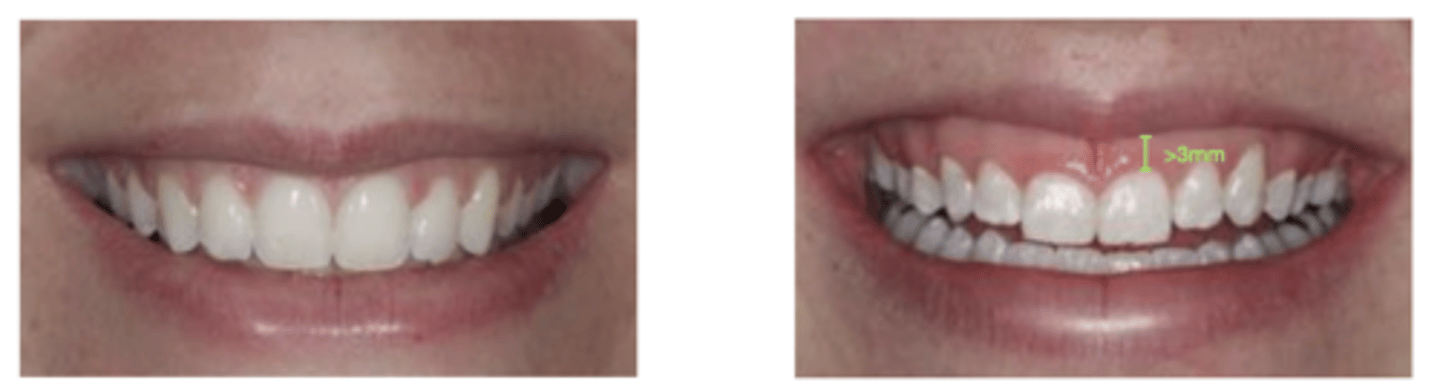
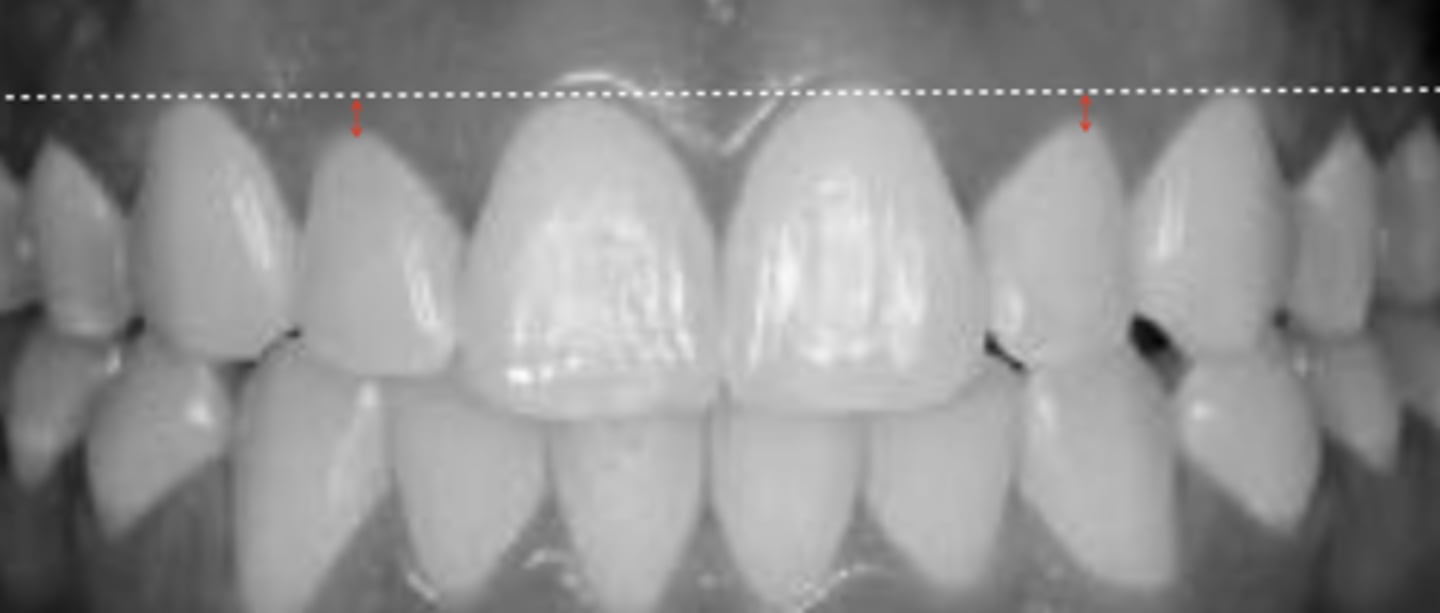
Gingival margins of the lateral incisors are slightly ______ (0.5-1.mm) to that of canines and central incisors
incisal
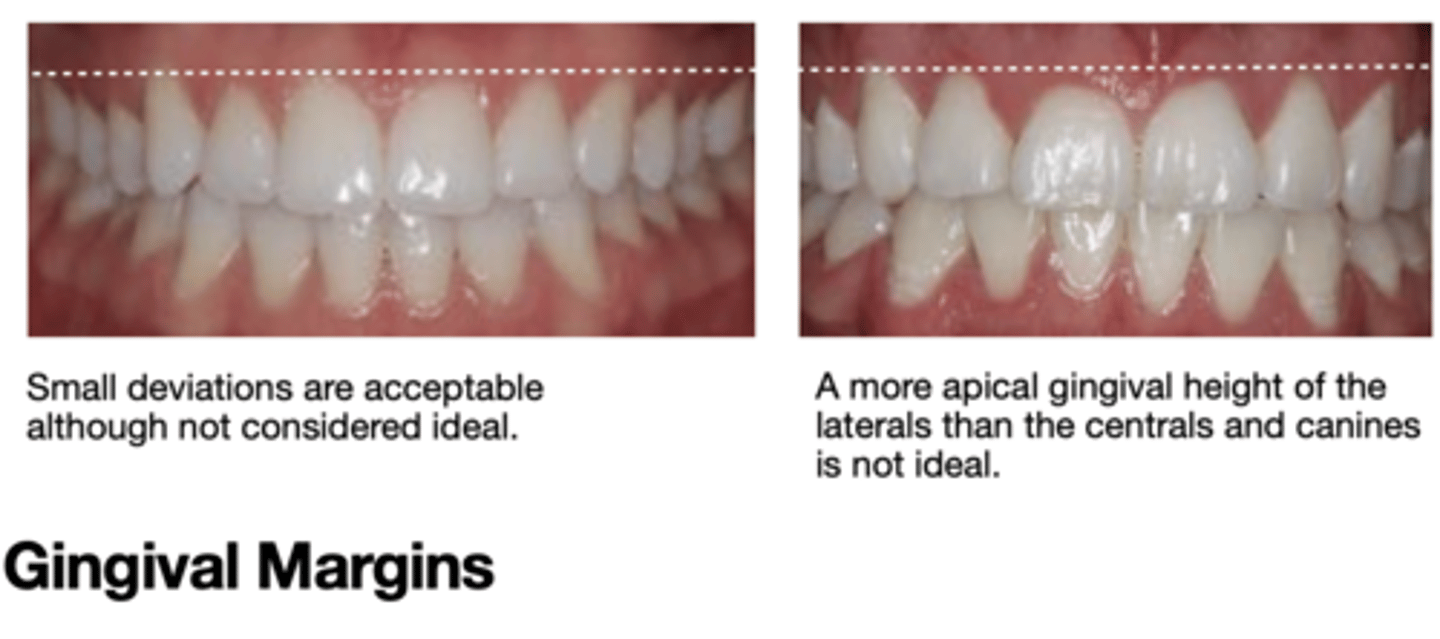
T/F small deviations are considered acceptable for gingival margins but are not ideal
true
A more _________ gingival height of the laterals than the centrals and canines is not ideal
apical
What is the most apical point of the gingival tissue surrounding the tooth?
gingival zenith
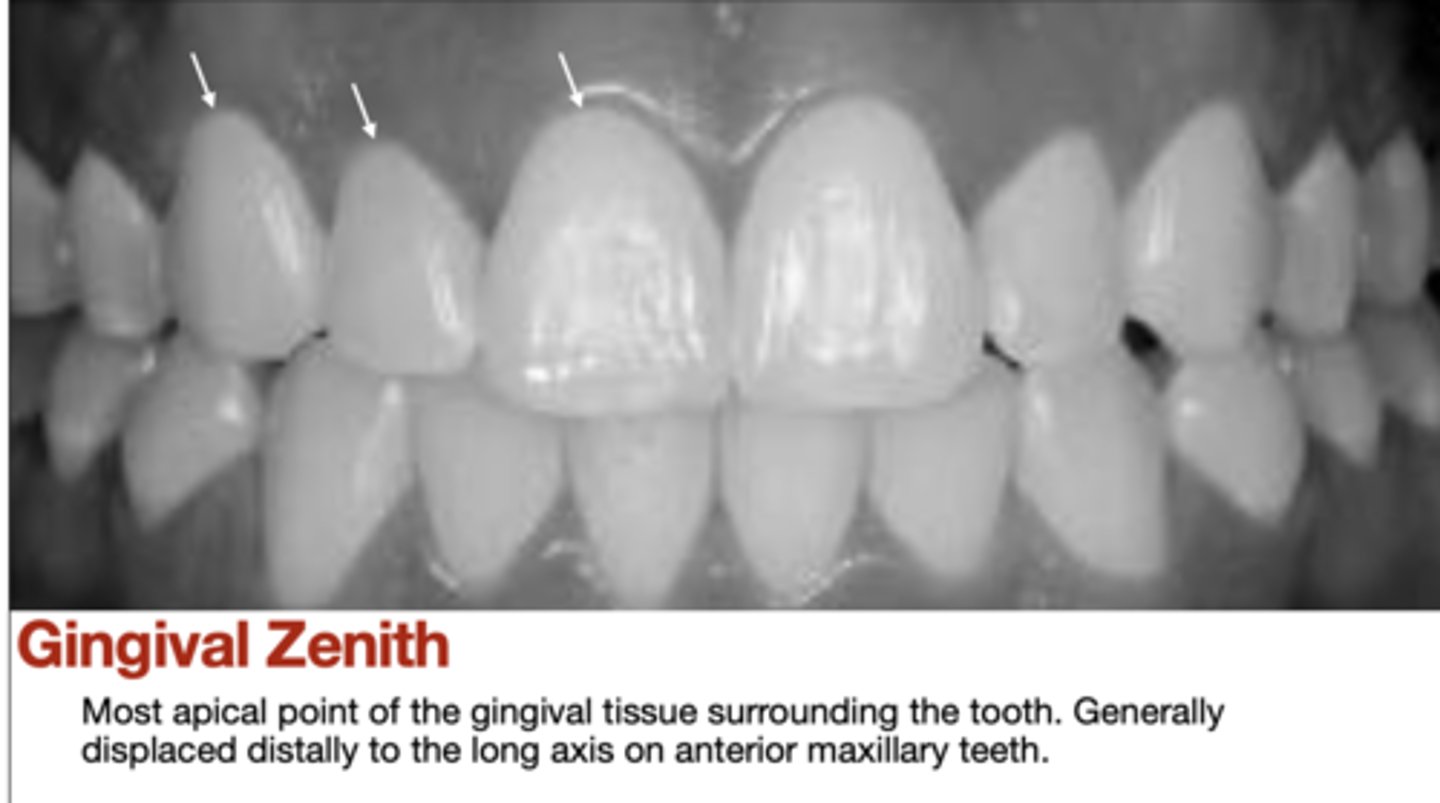
Generally, the gingival zenith is displaced where compared to the long axis of anterior maxillary teeth?
distally
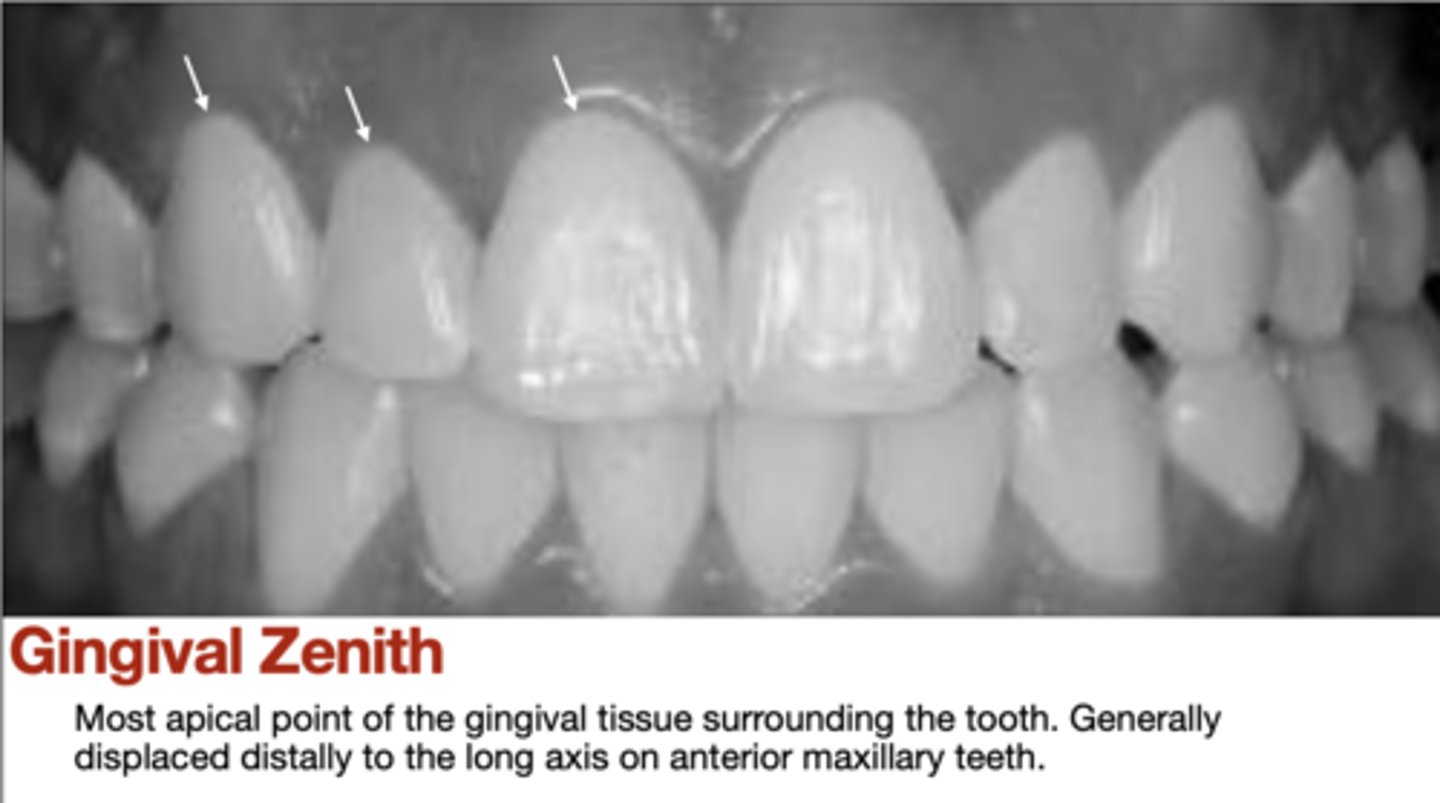
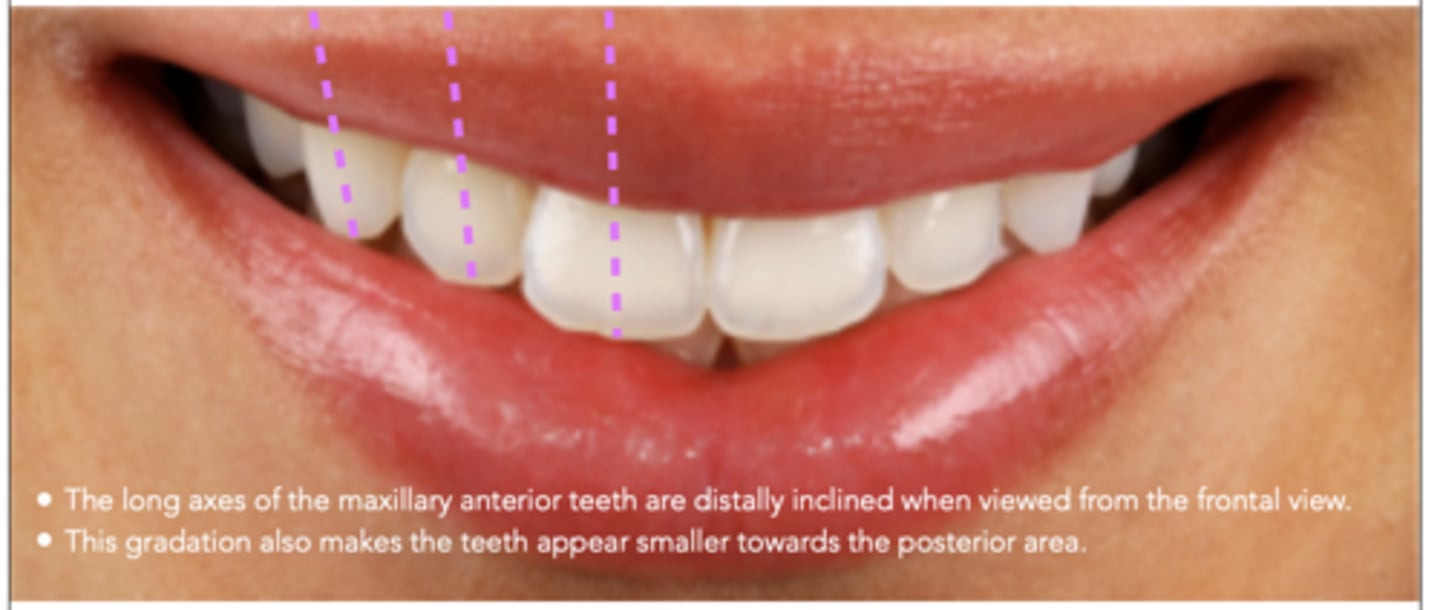
When viewed from the frontal view, the long axes of maxillary anterior teeth are ________ inclined
distally
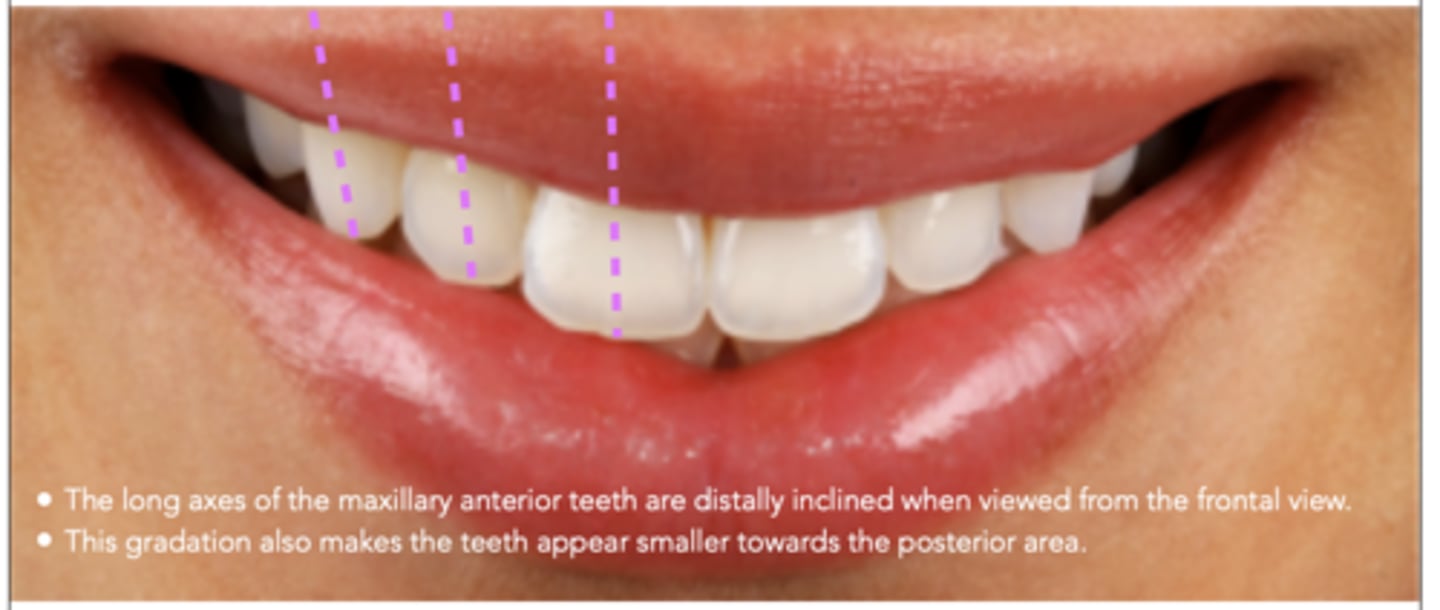
The gradation of the long axis of the tooth becoming more and more distal for each posterior tooth, makes teeth appear ________ towards the posterior area
Smaller
Which position?
- Visible tooth displayed when lips and lower jaw are in REST position
incisal edge position
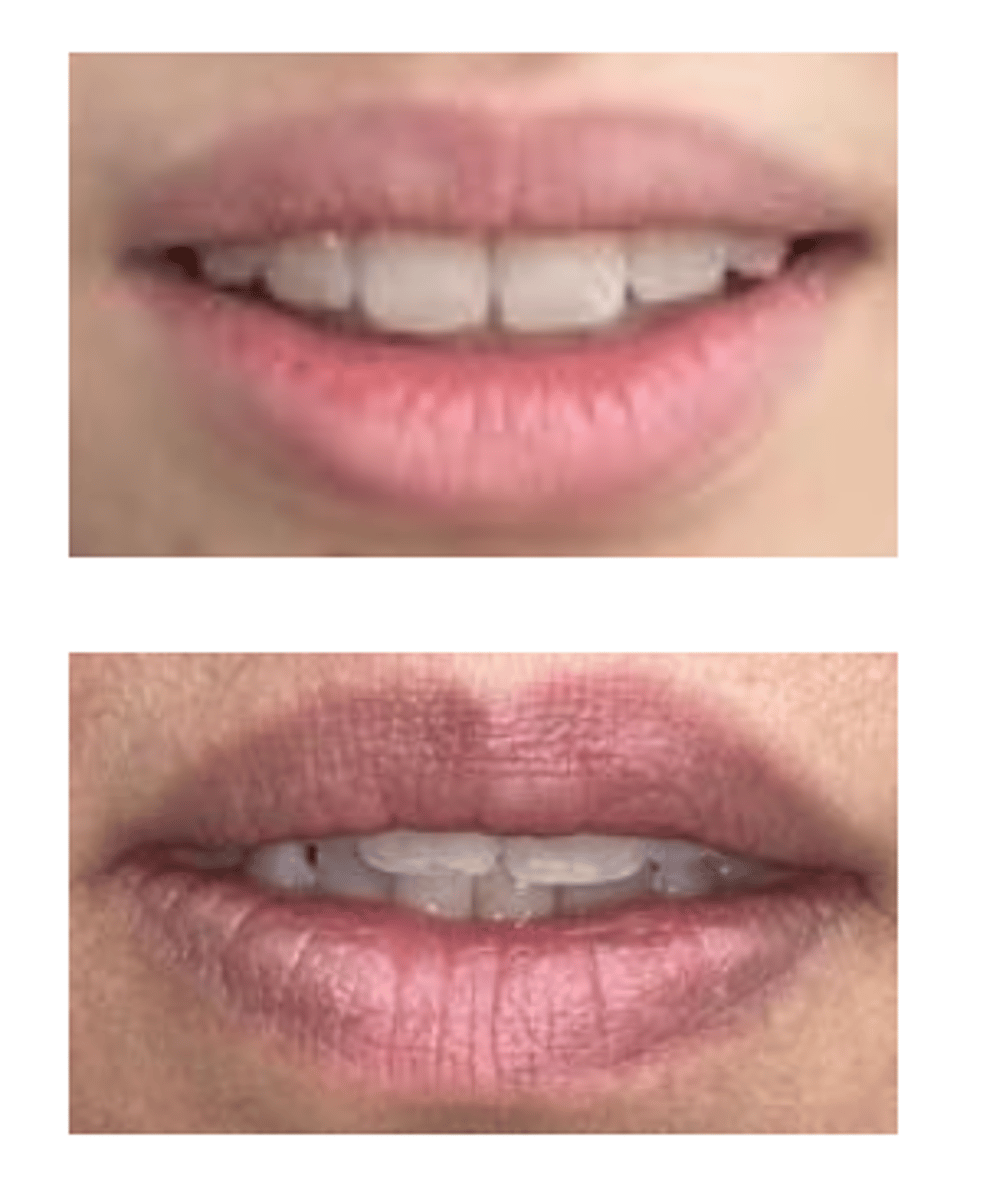
What sound should the patient say to get to incisal edge position?
M sound
What is the average distance from incisal edge to lower edge of upper lip in women?
2-4 mm
What is the average distance from incisal edge to lower edge of upper lip in men?
1-2 mm
An ideal incisal display is a characteristic of what kind of smile?
Youthful
For smile arc:
In a full smile, the incisal edges follow the contour of the (upper/lower) lip?
lower
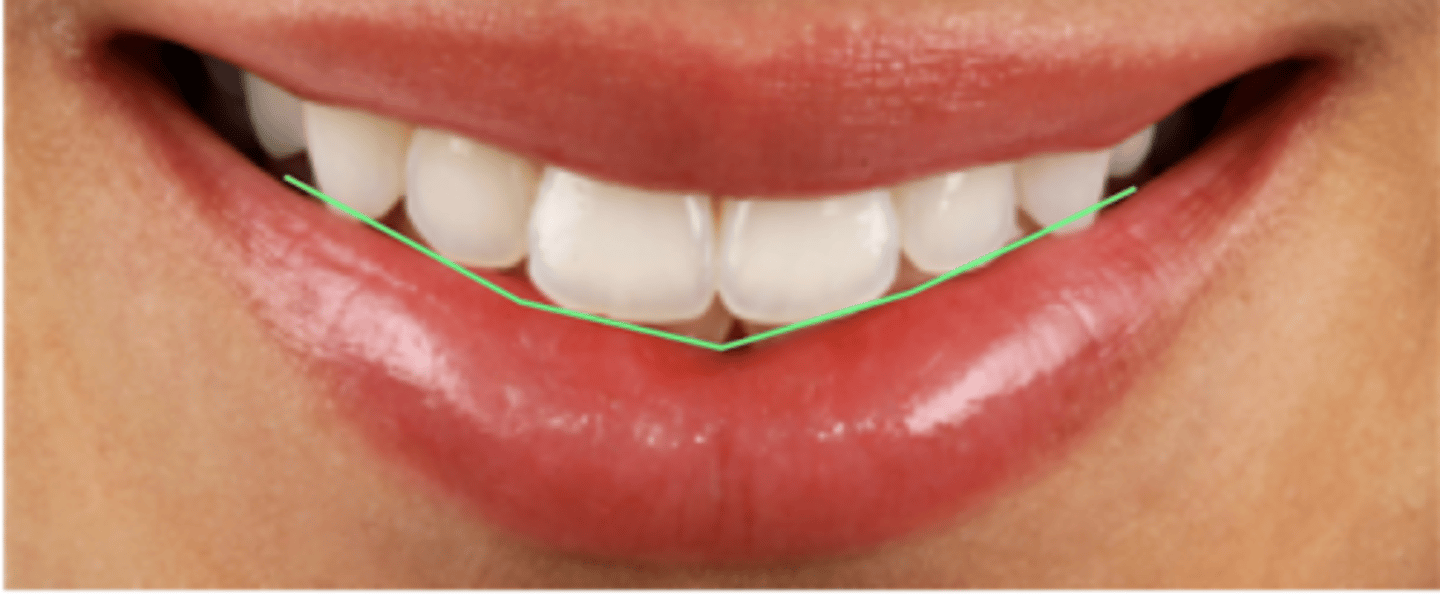
To properly see the smile arc, where incisal edges of maxillary central incisors should lightly touch the wet-dry border of the lower lip, what sound do you have a patient make?
F or V sound
For ideal smile arc, lateral incisors have what relation to central incisors?
shorter incisal edges
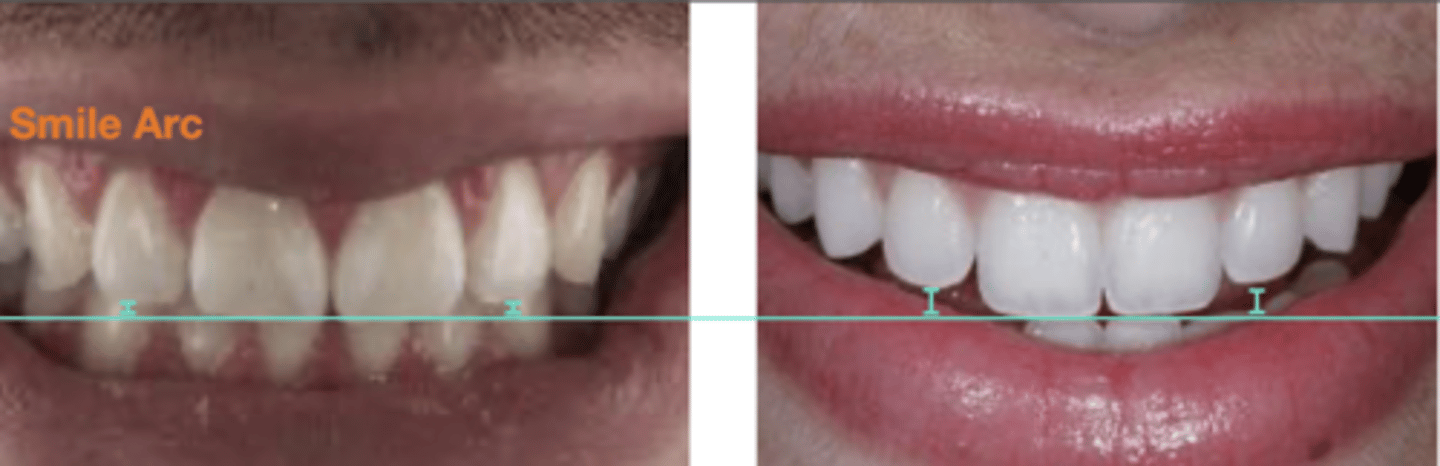
How much shorter are lateral incisal edges compared to central incisal edges in women?
1.0-1.5 mm
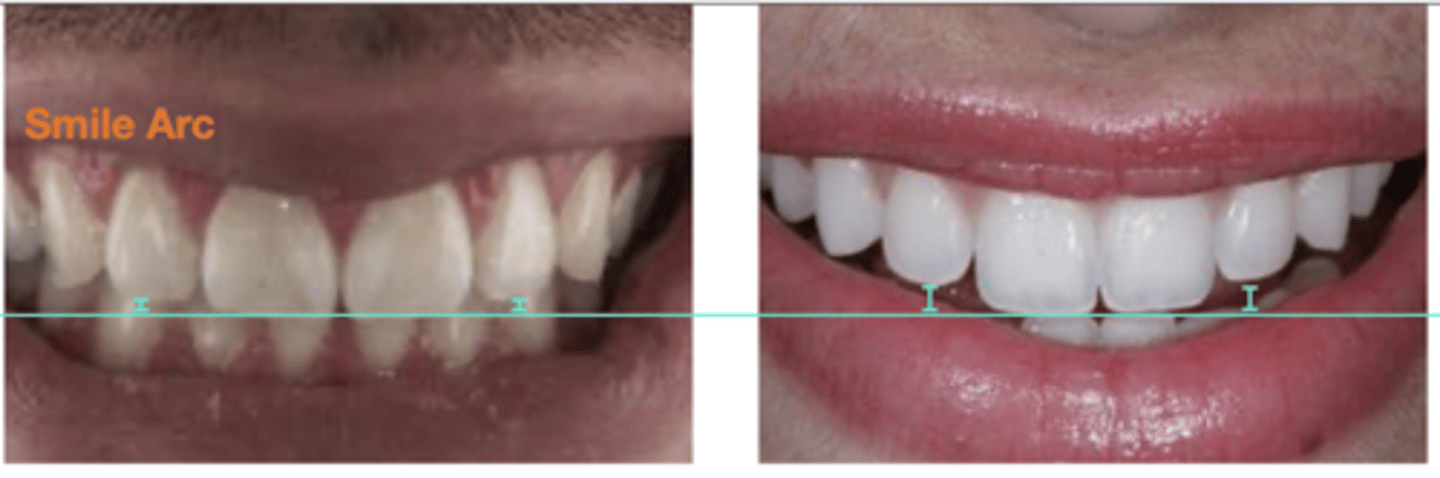
How much shorter are lateral incisal edges compared to central incisal edges in men?
0.5-1.0 mm
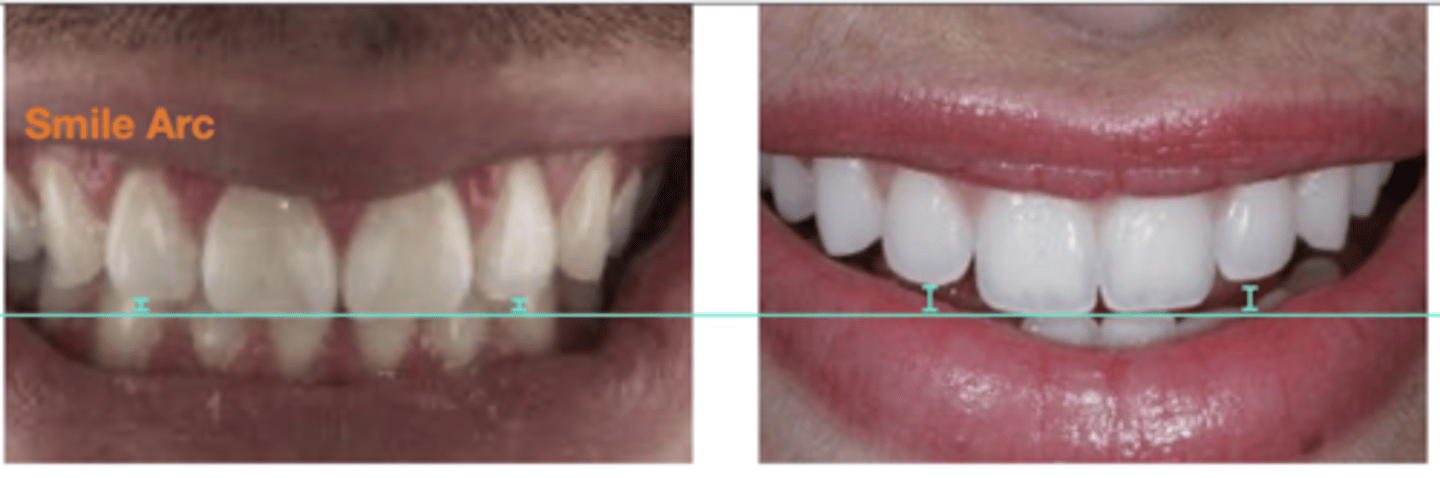
Malocclusion, parafunctional habits, aging-related attrition may result in which type of smile?
inverted smile
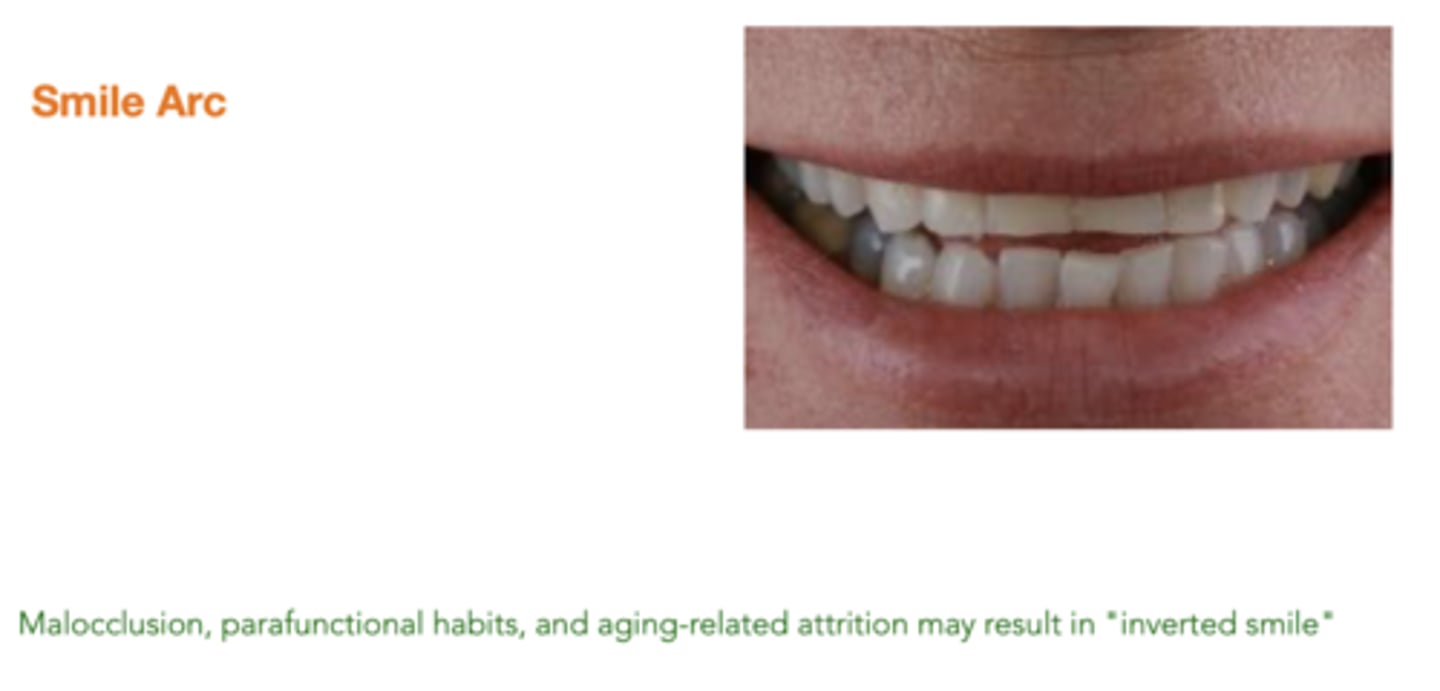
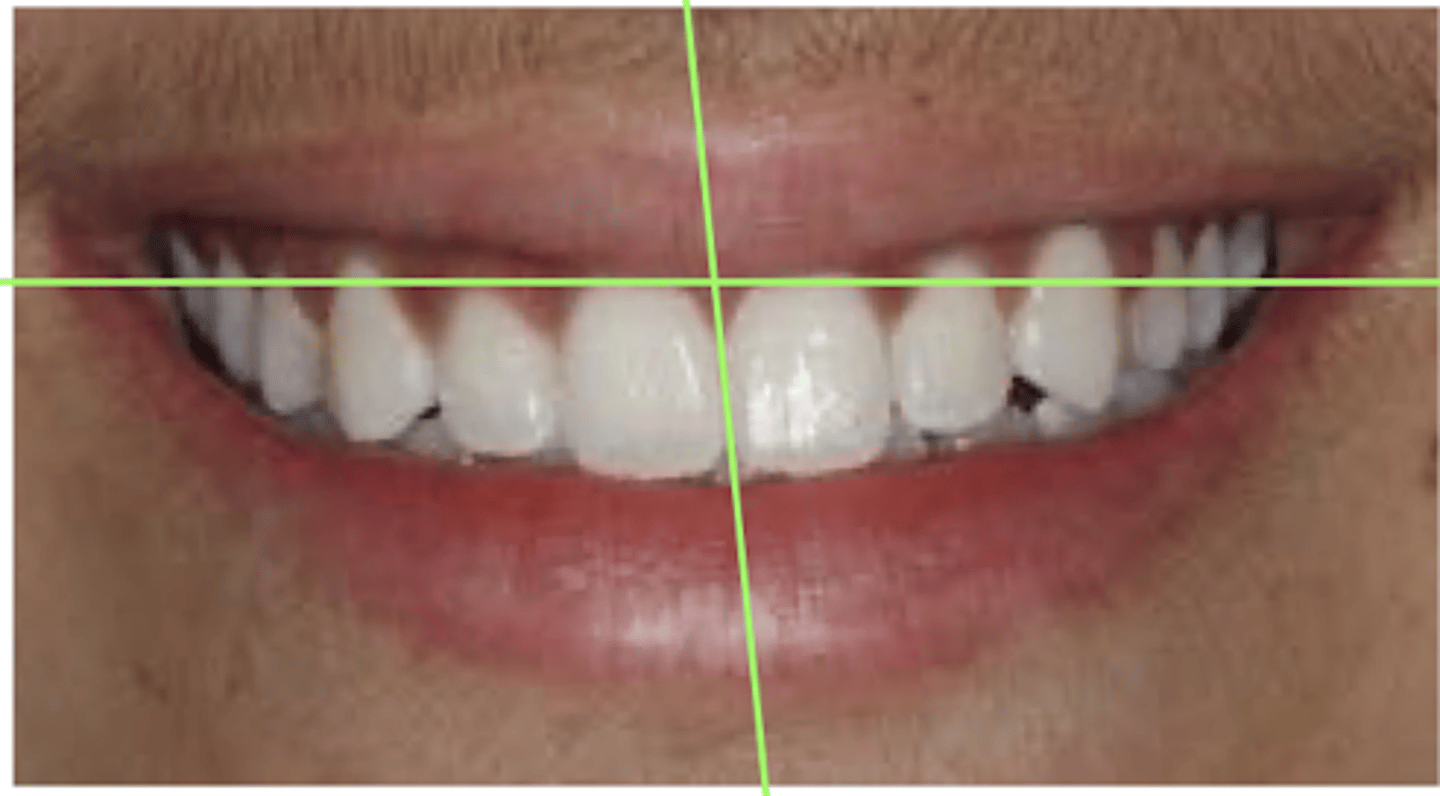
What is the vertical line between maxillary central incisors called?
midline
The midline is _______ to the incisal plane and _______ to the face midline
perpendicular, parallel
T/F: Small deviations of midline are acceptable
True
T/F: A canted midline (midline angulation) is normally more noticeable and considered not ideal
True
Anterior teeth must be in proper proportion to one another when the patient is viewed from the front. There are different theories regarding dental proportions. What are two types of dental proportion theories that we learned about?
- Golden proportion
- Recurrent esthetic dental proportion
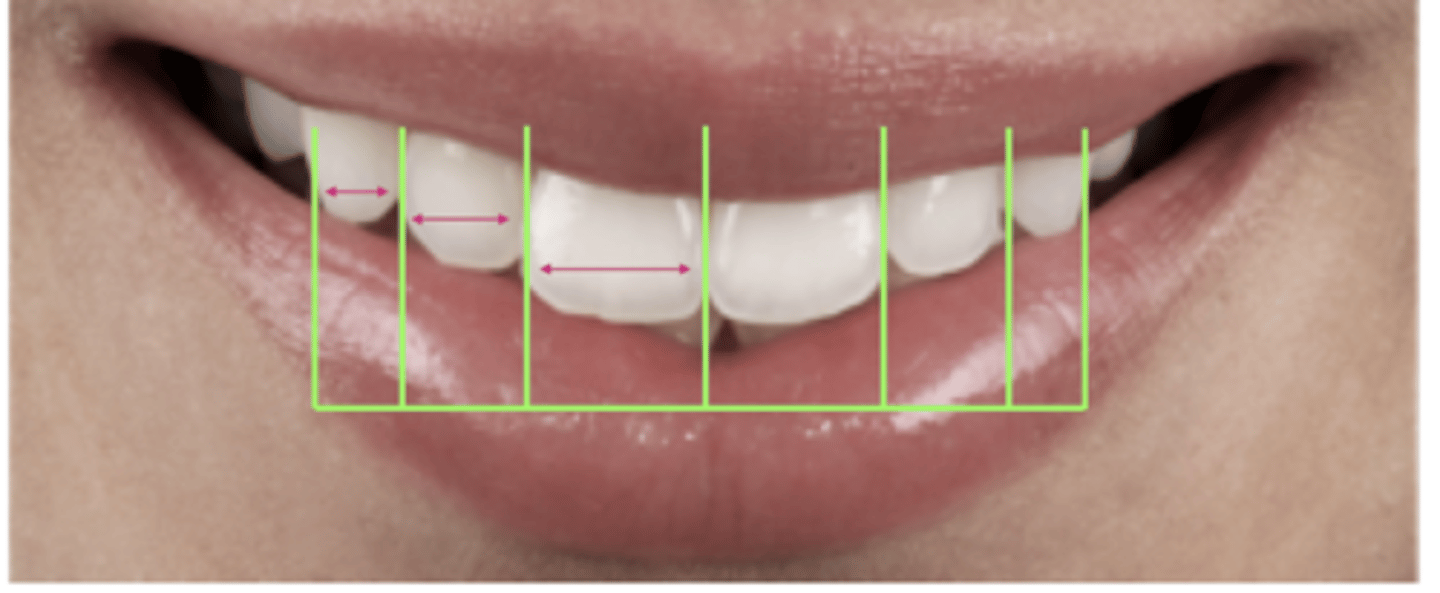
What is a constant that mathematically defines the ratio between the dimensions of a larger and a smaller length?
golden proportion
What is the golden number?
0.618
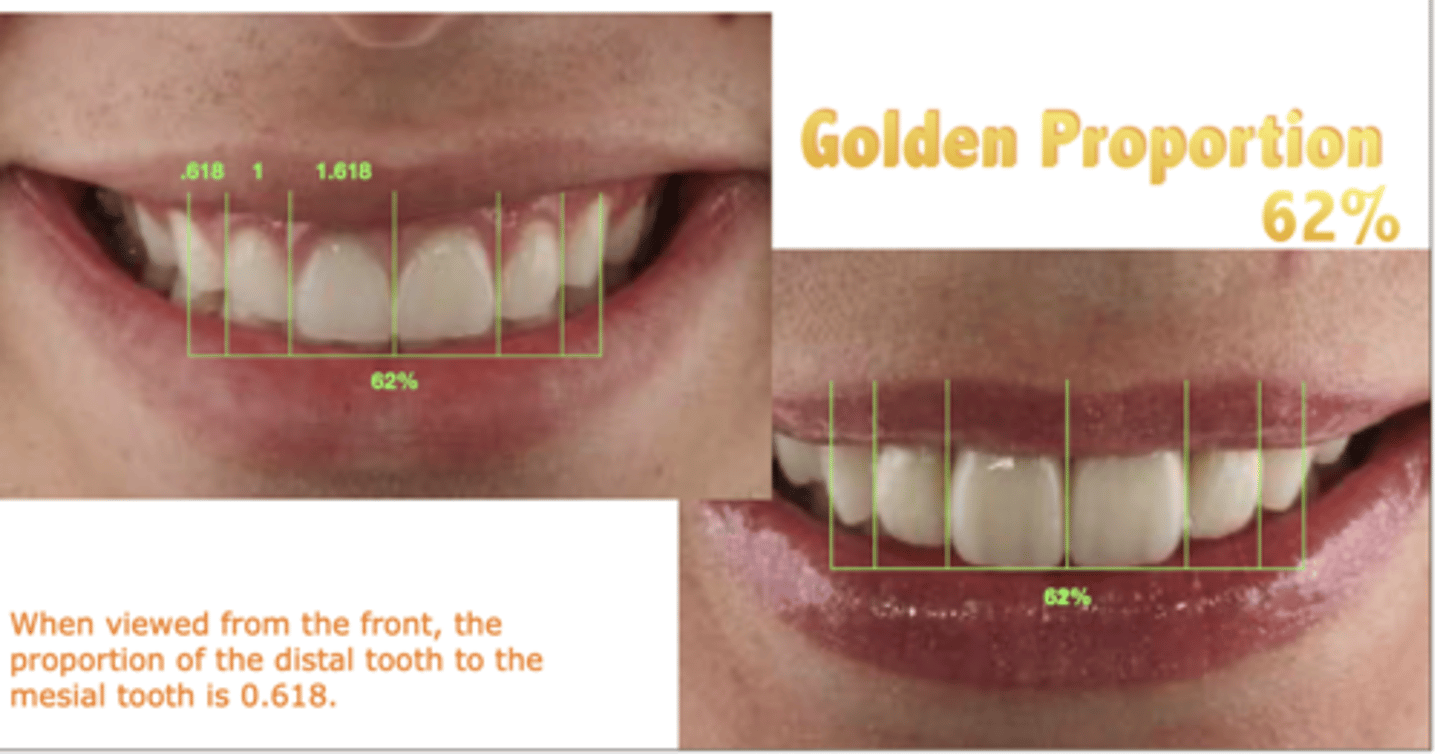
According to the golden proportion, each tooth starting from the midline, is approximstely ____% of the apparent mesiodistal width of the tooth immediately mesial to it.
62%
What percent of the population naturally exhibits smiles that meet the golden proportion?
17%
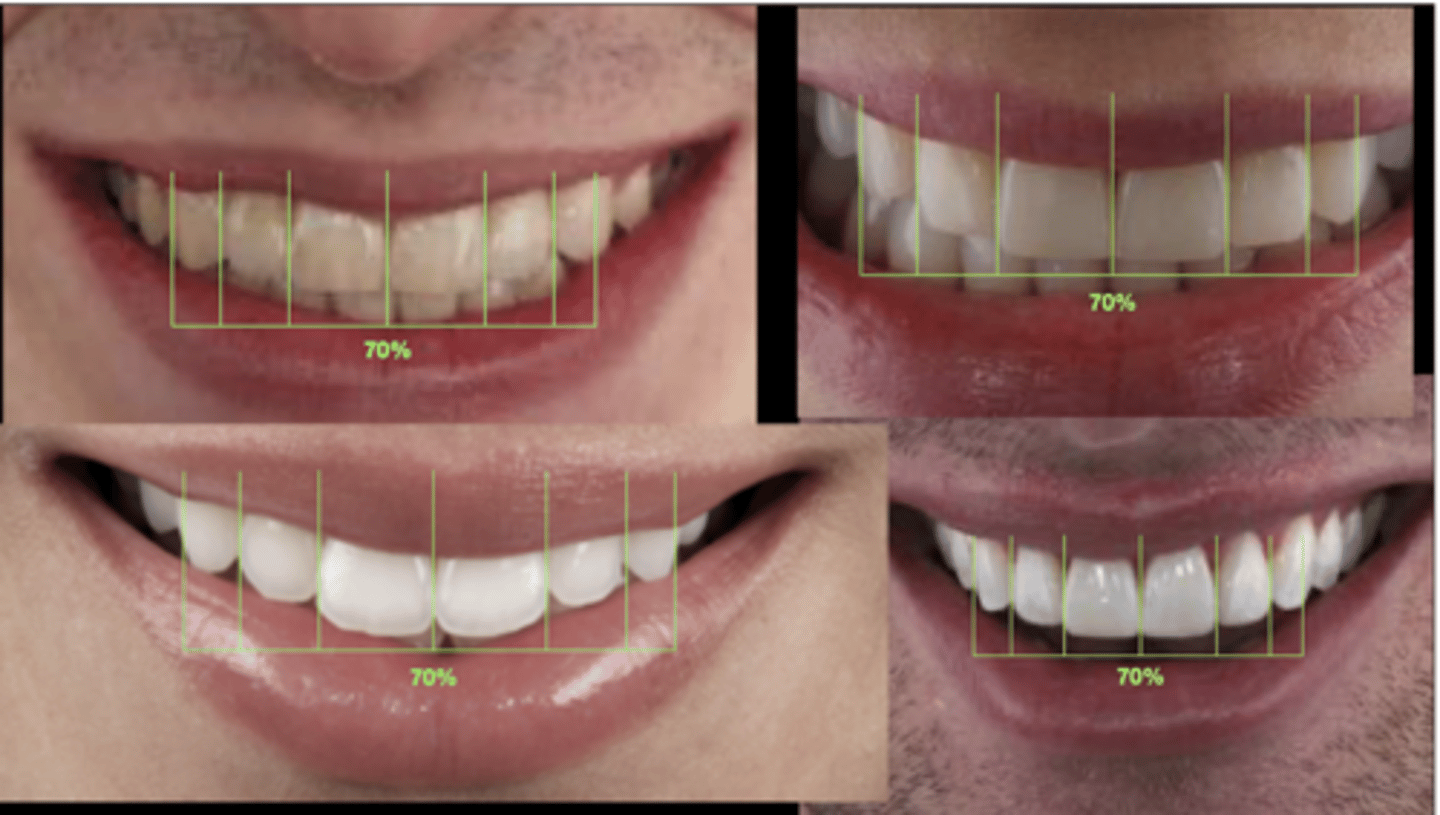
What does RED stand for?
- Recurring
- Esthetic
- Dental (proportion)
Do dentists prefer RED or golden proportion?
RED (70%)
Which % of RED do dentists prefer?
70%
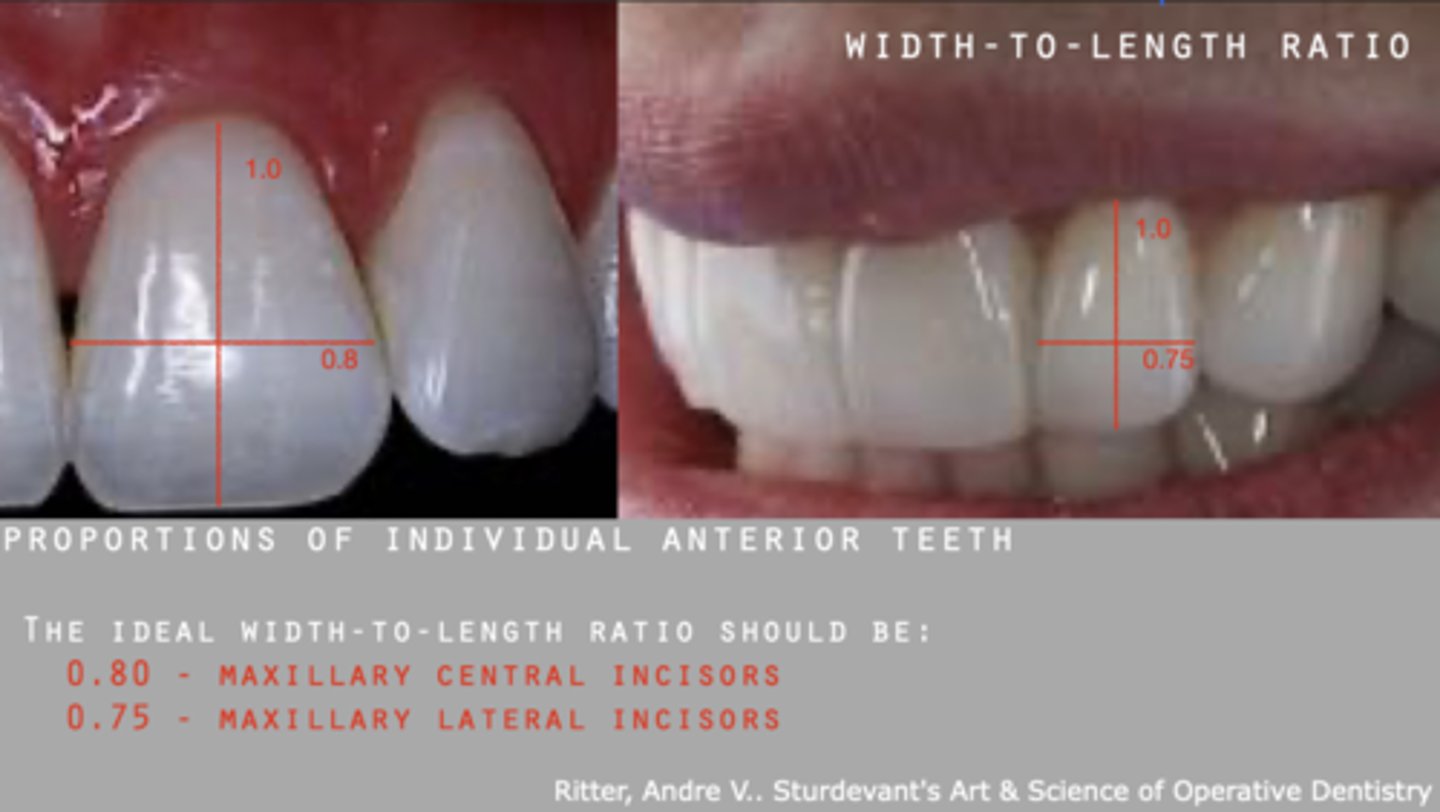
What is the ideal width-to-length ratio of maxillary central incisors?
0.80
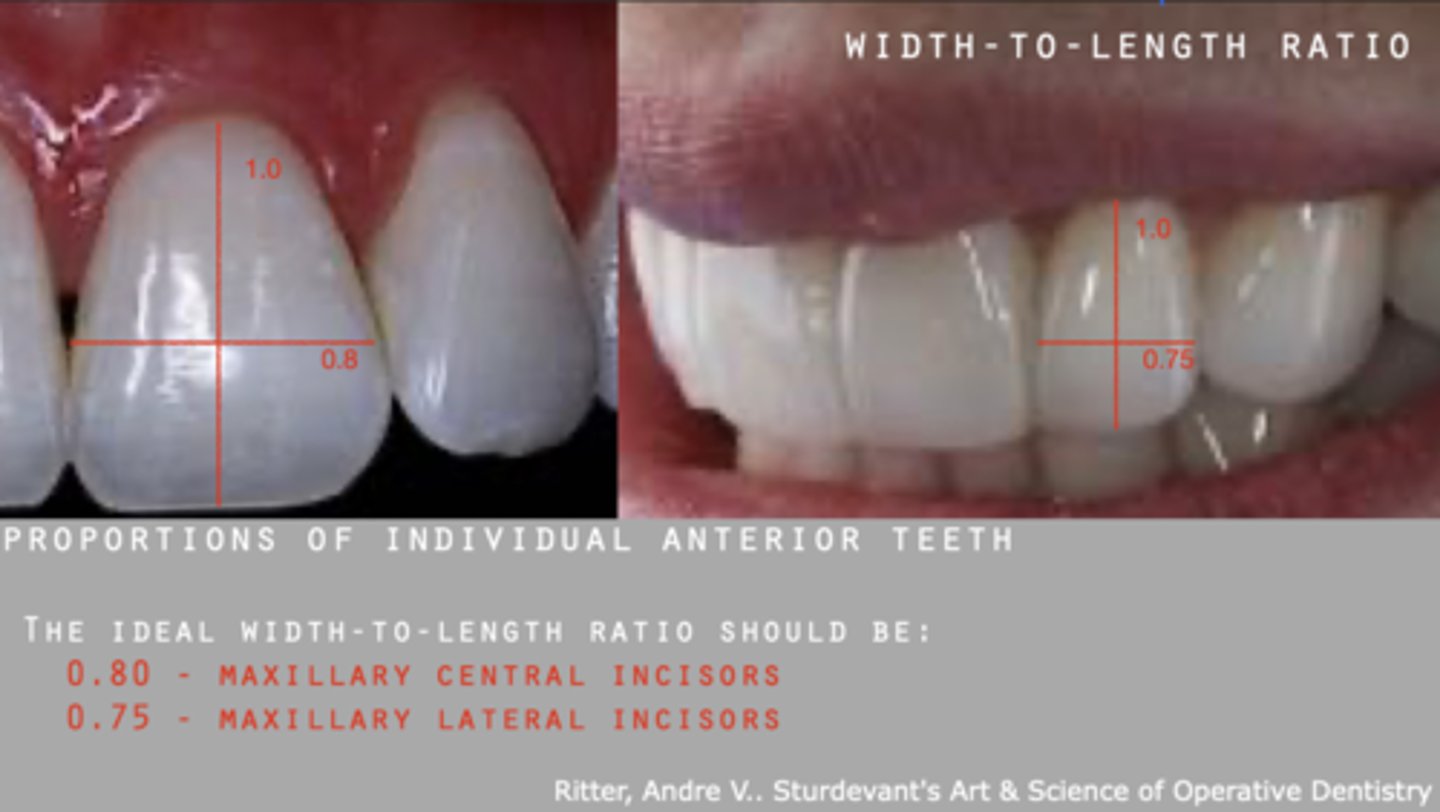
What is the ideal width-to-length ratio of maxillary lateral incisors?
0.75
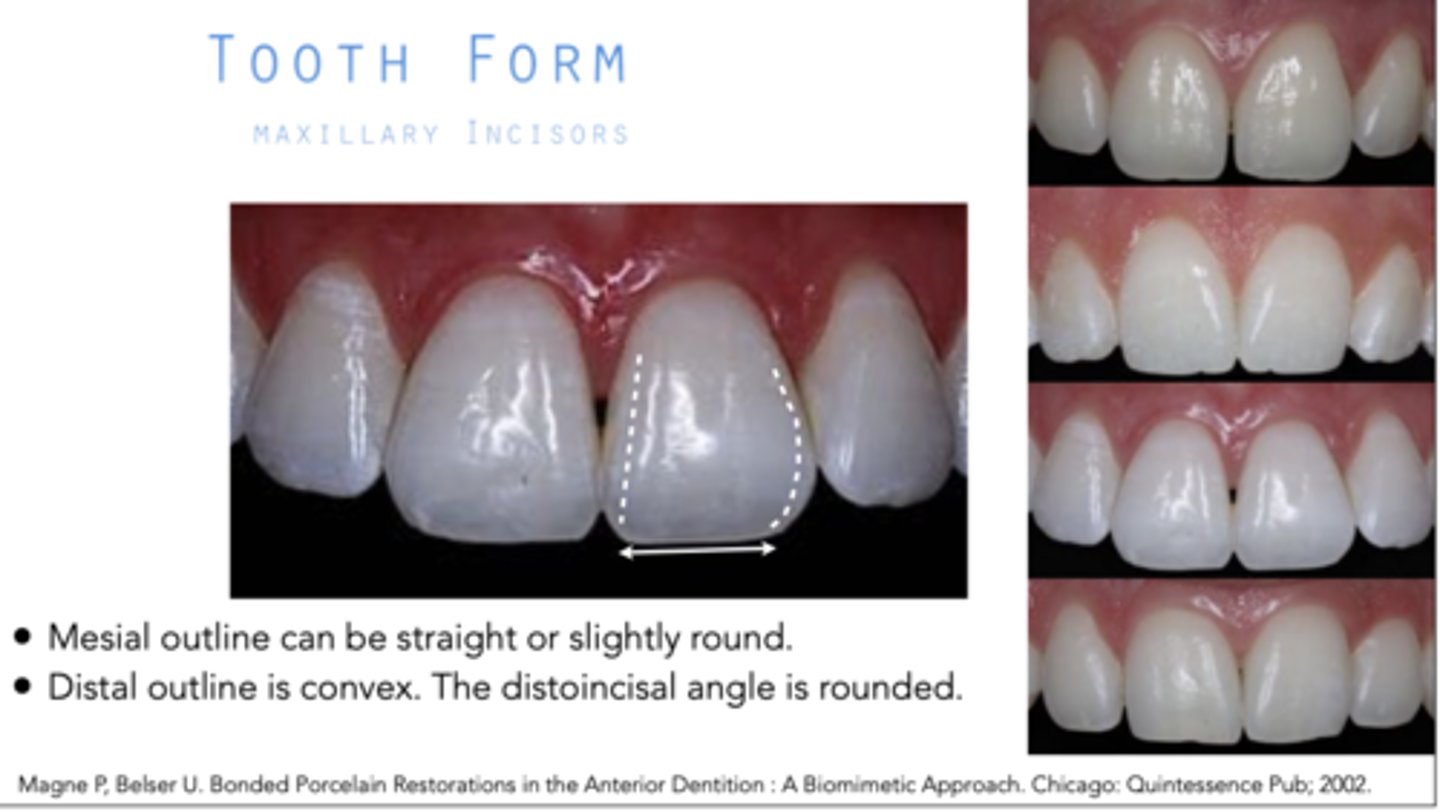
Maxillary incisor mesial outline is what shape?
straight or slightly rounded
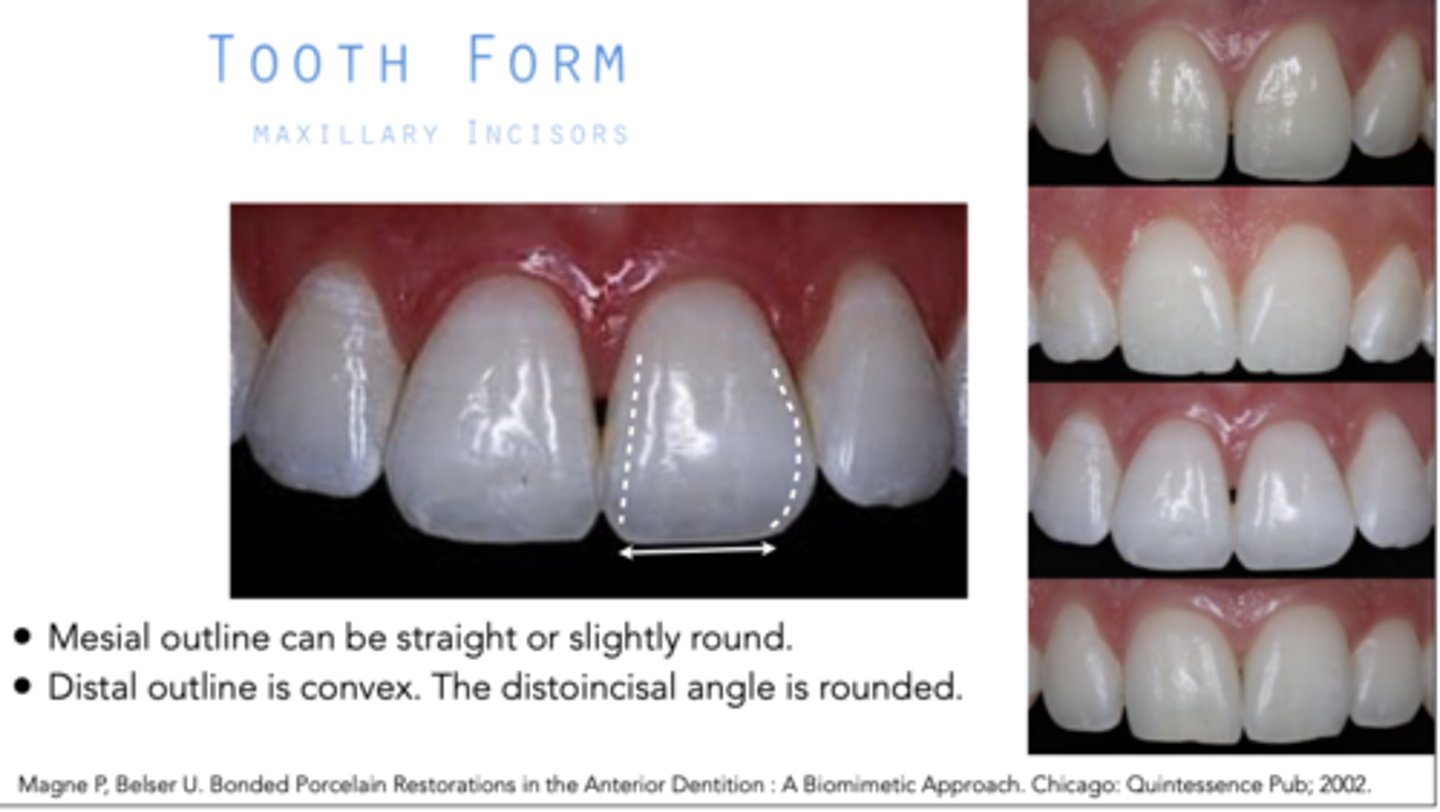
Maxillary incisor distal outline is what shape?
convex
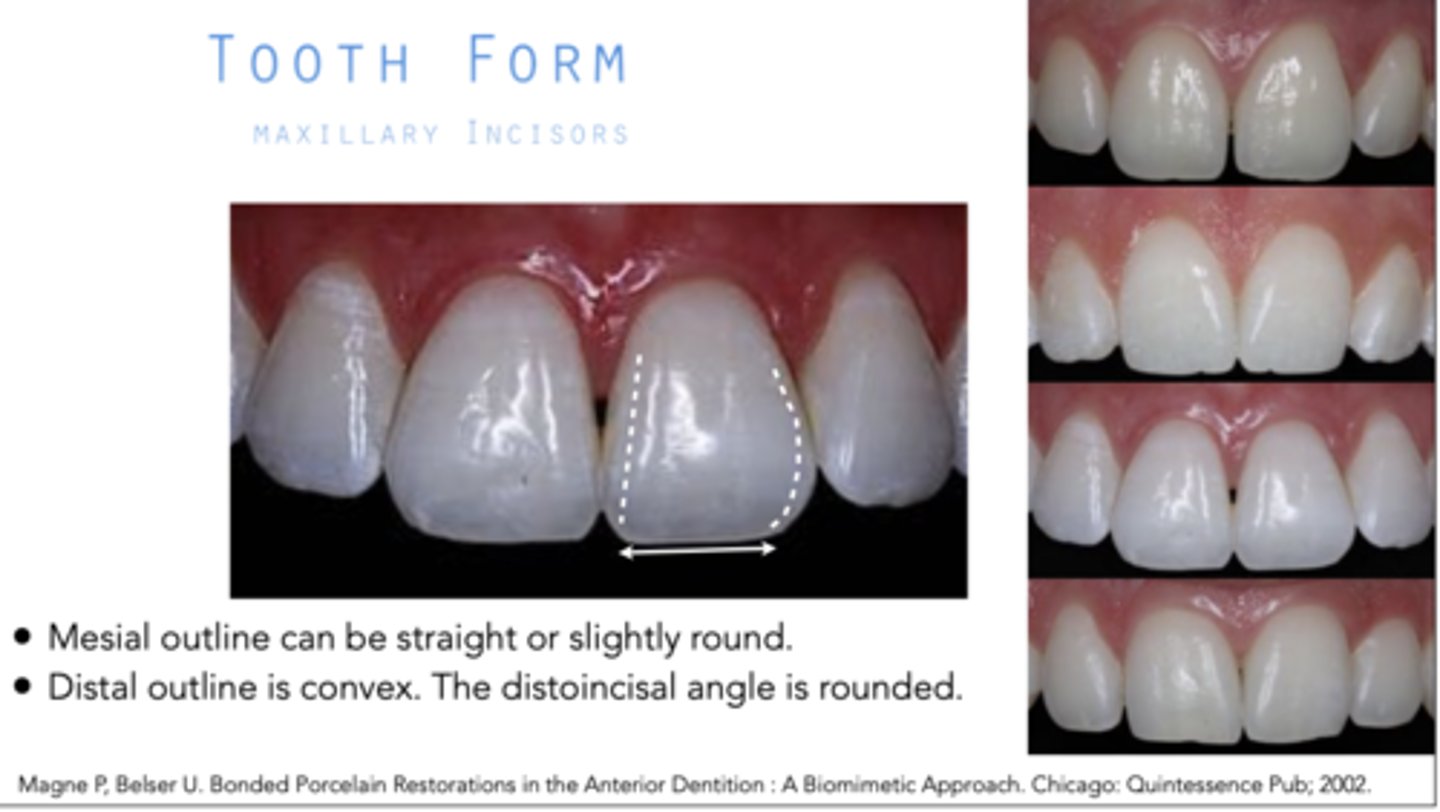
Maxillary incisor distoincisal angle is _______
rounded
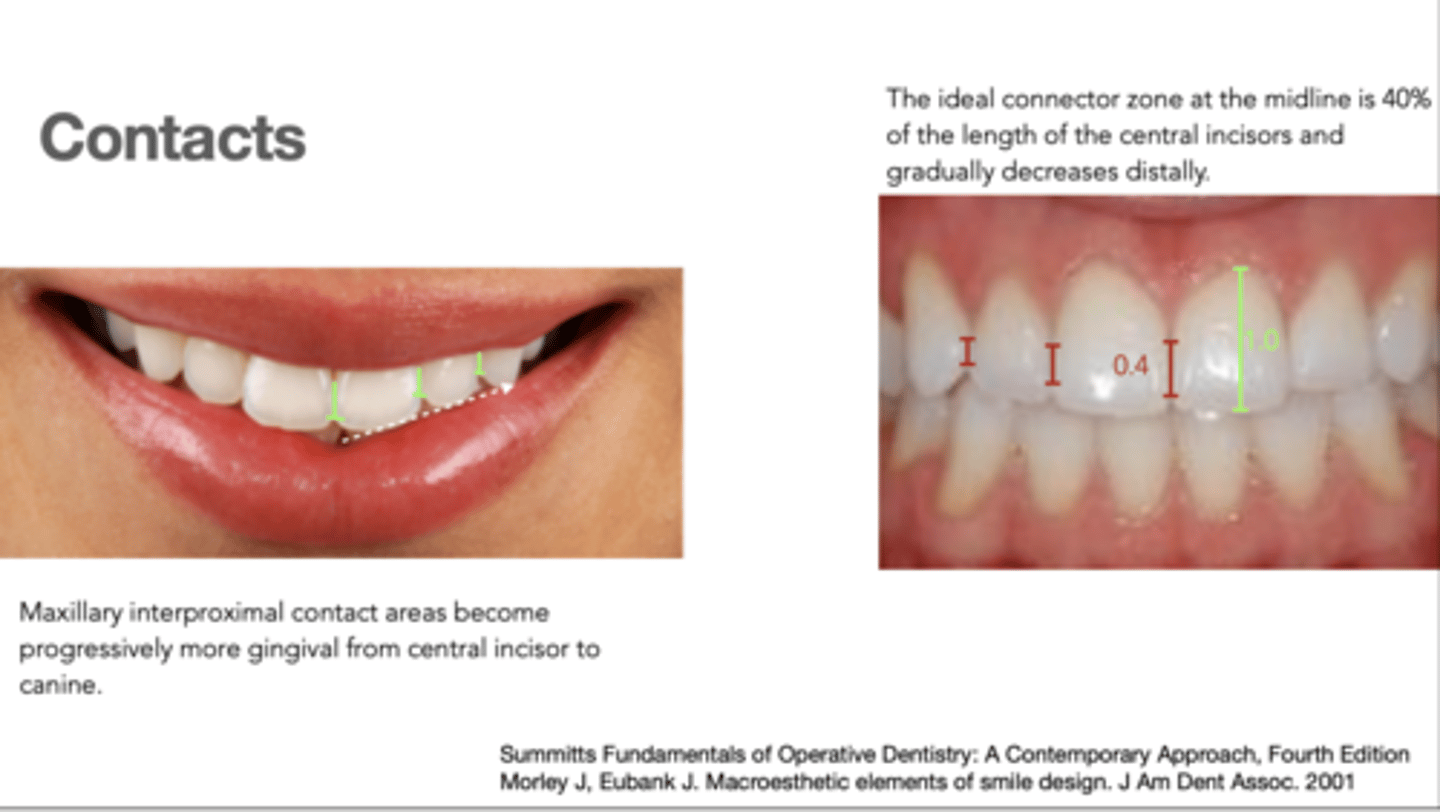
Maxillary interproximal contacts become progressively more (gingival/incisal) from central incisor to canine
gingival
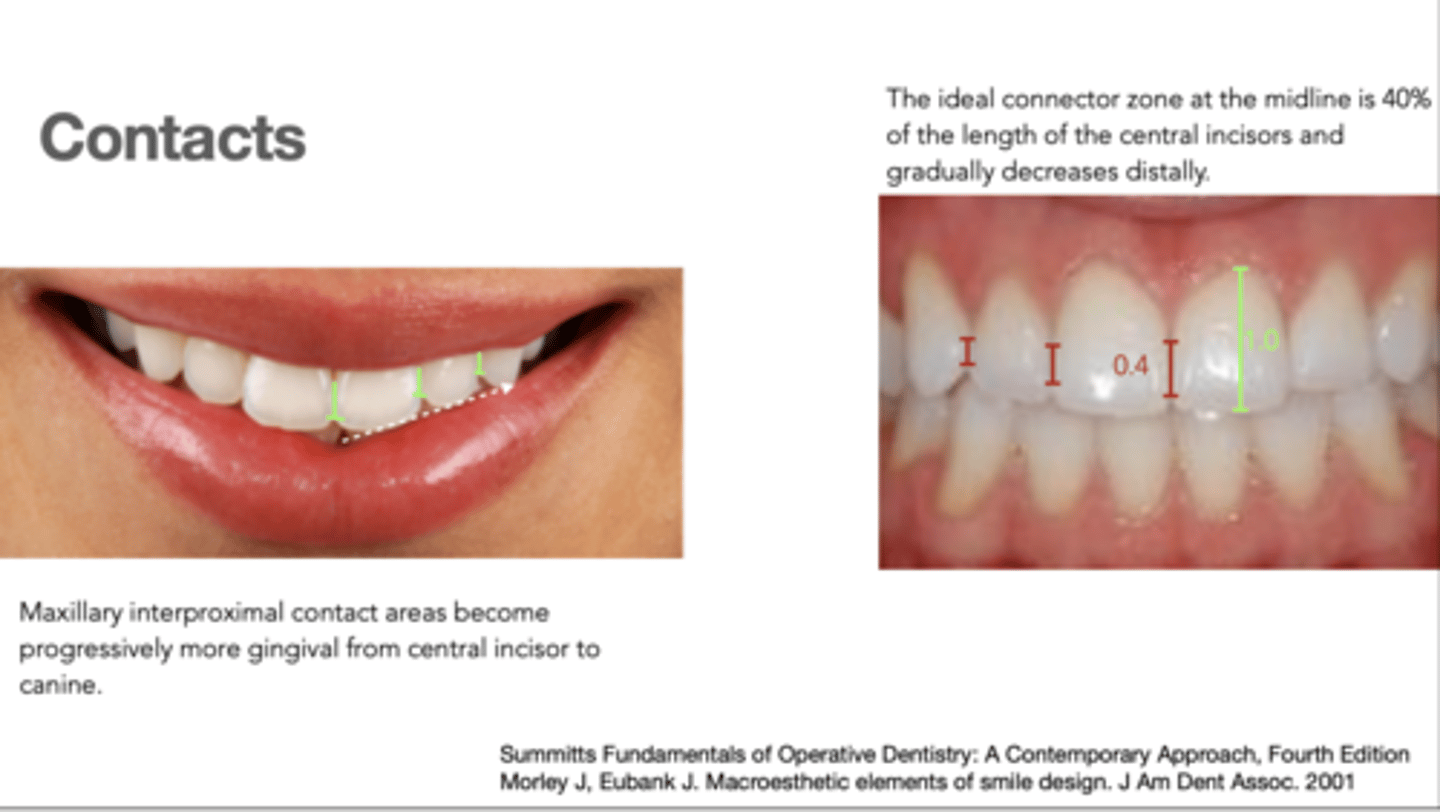
The ideal connector zone at the midline is ____% of the length of the central incisors and gradually decreases distally
40%
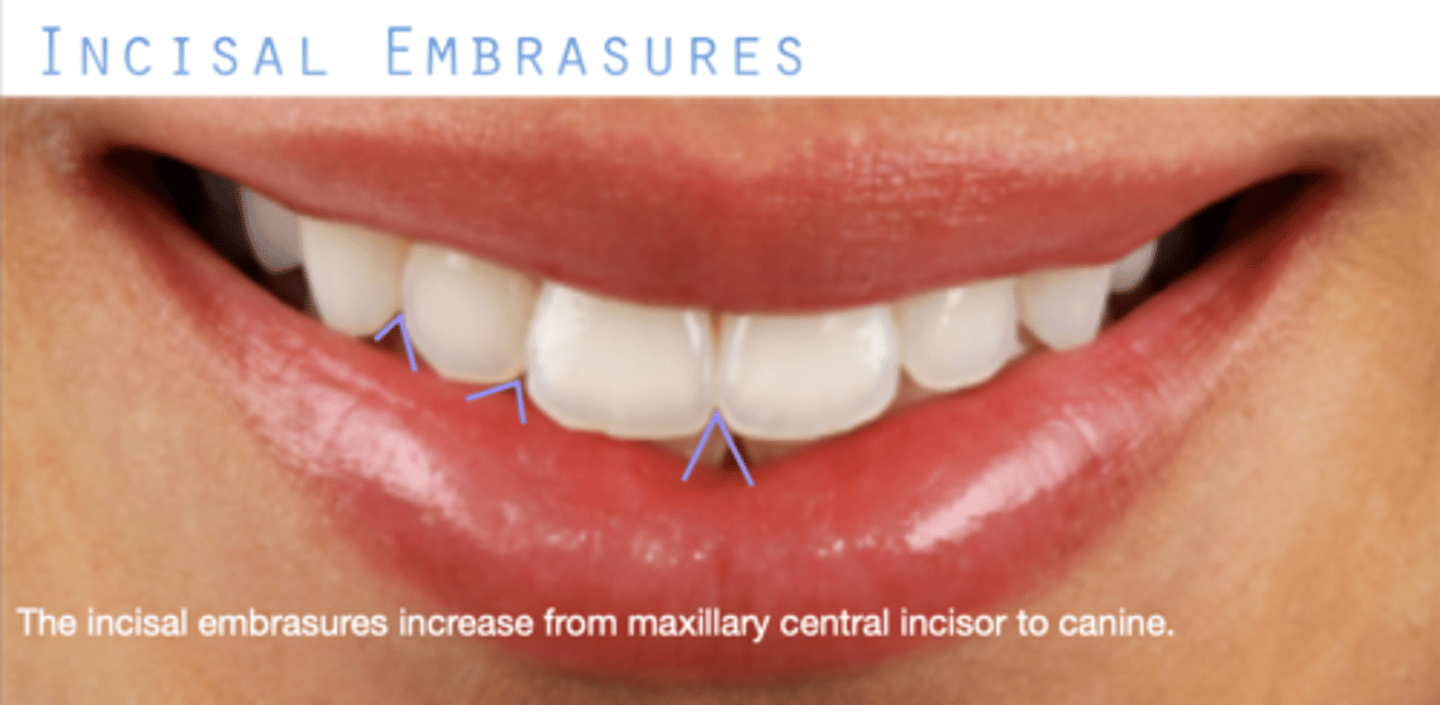
The incisal embrasures (increase/decrease) from maxillary central incisor to canine
increase
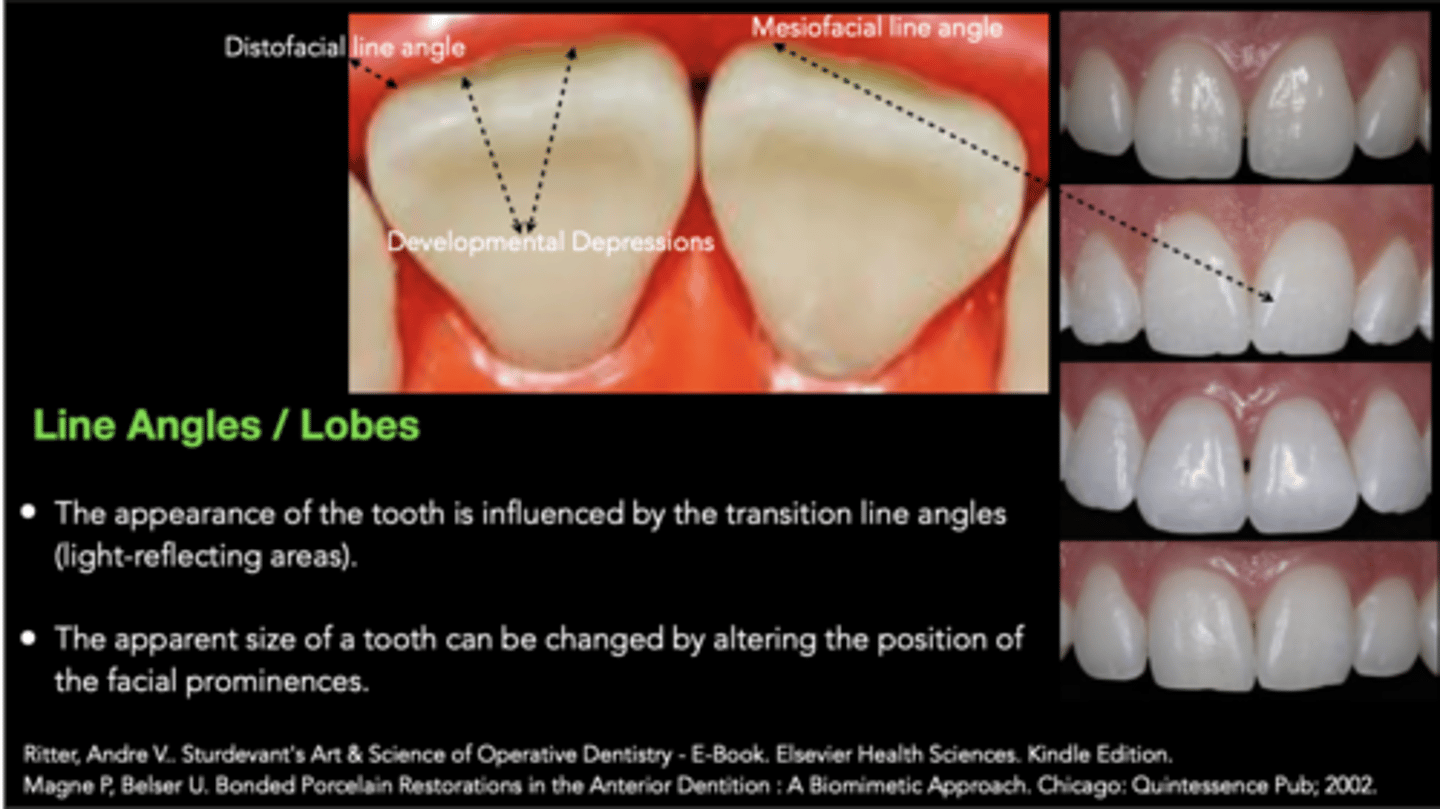
The appearance of the tooth is influenced by what?
Transition line angles
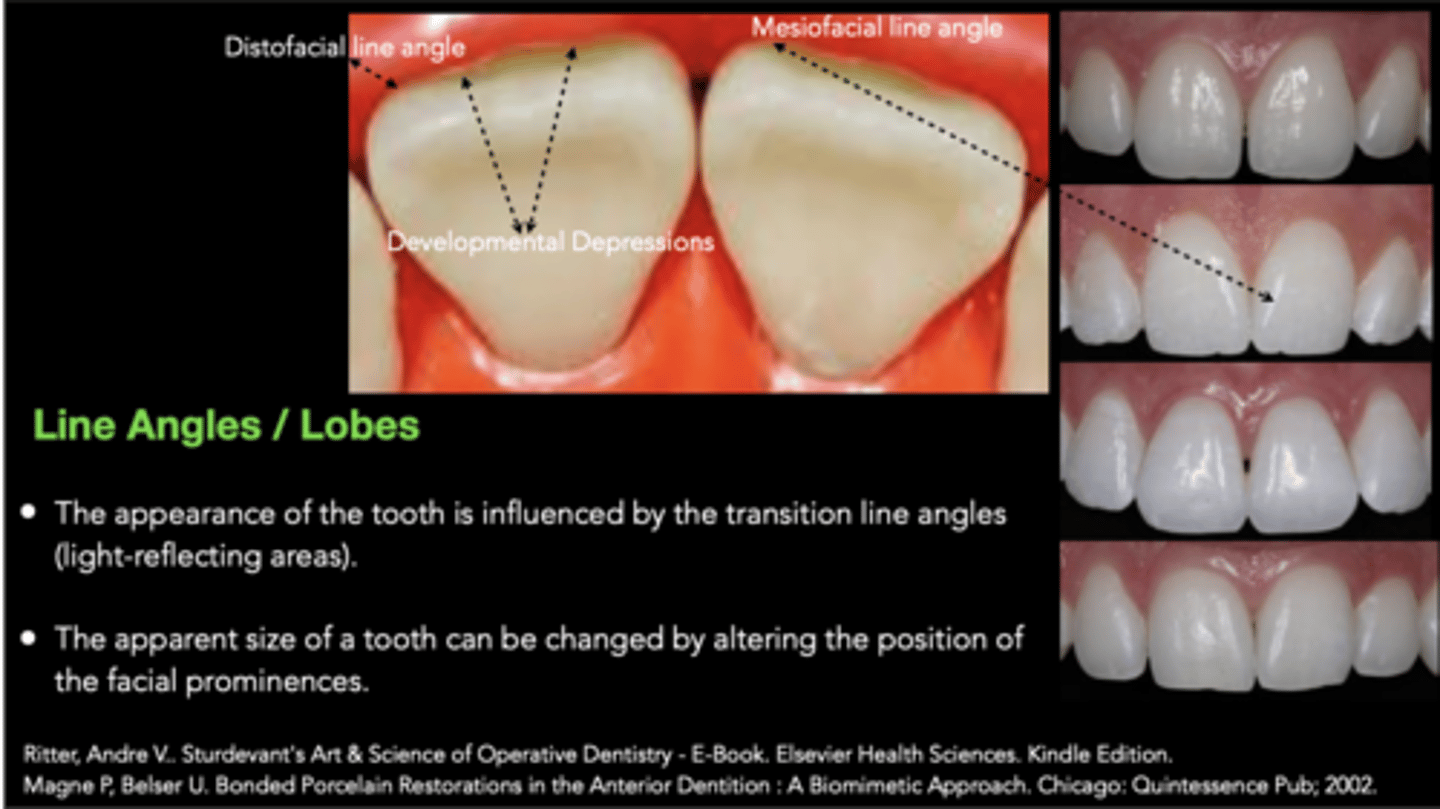
The apparent size of the tooth can be changed by doing what?
Altering position of the facial prominences
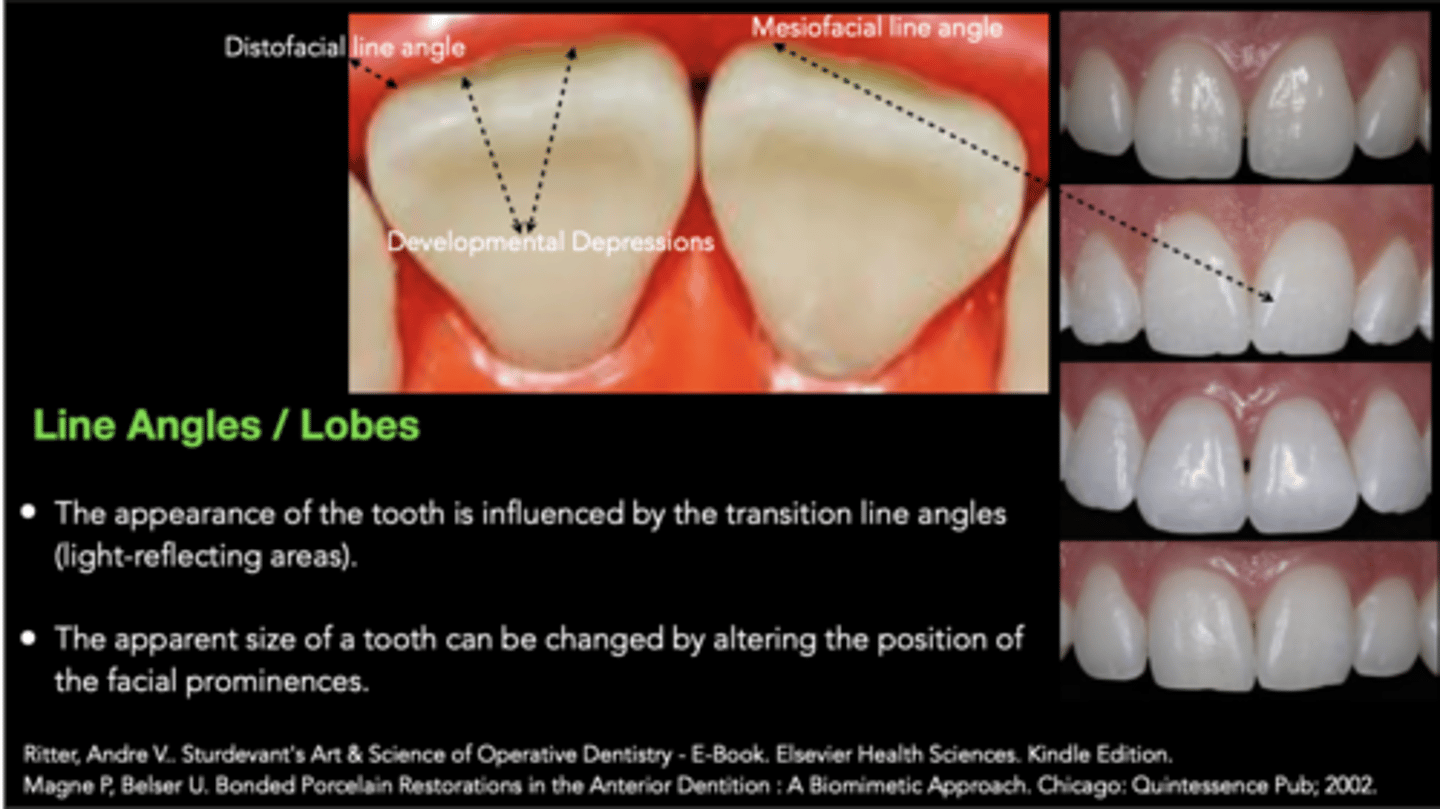
Line angles are also called?
lobes
T/F: The gingival height of contour can be slightly moved gingivally or incisally to make the tooth appear longer or shorter.
True
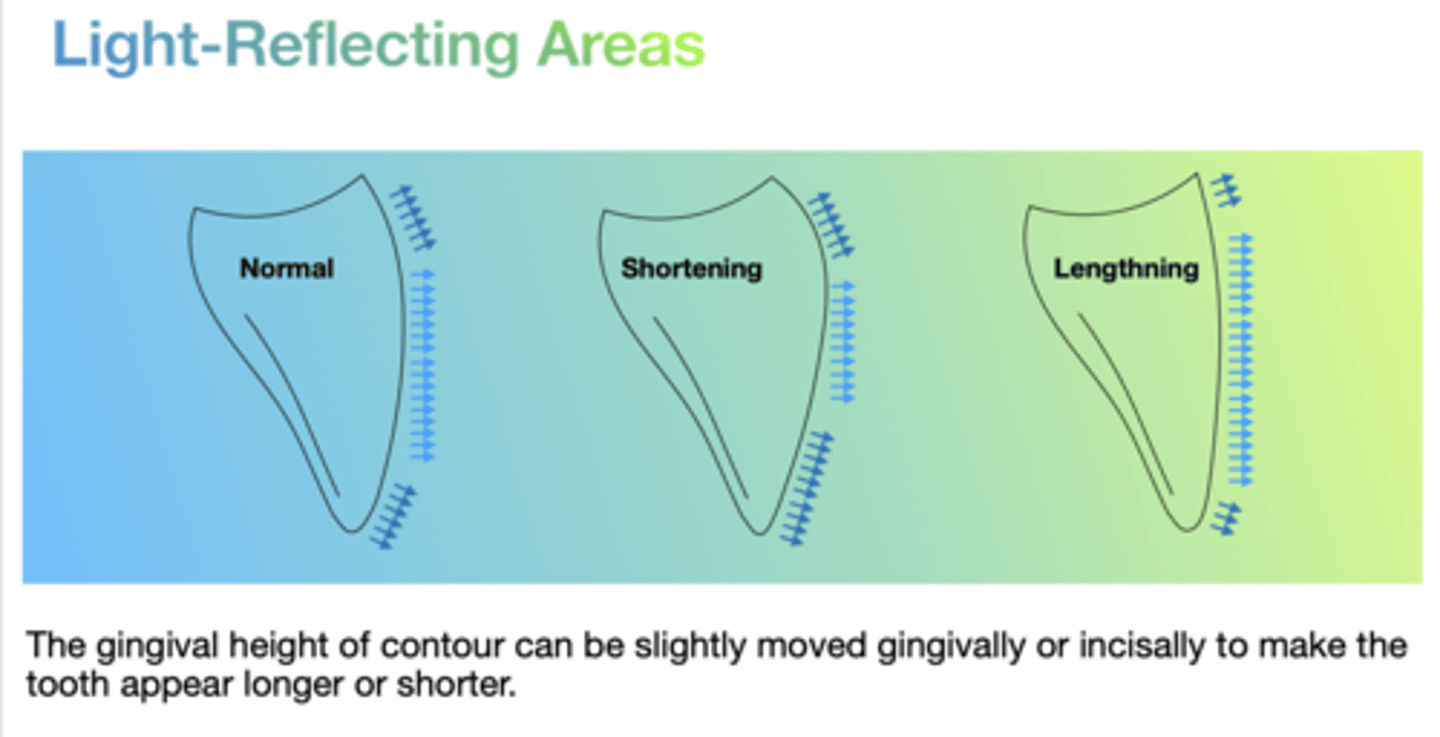
If the gingival height of contour is moved slightly gingivally, does the tooth appear shorter/longer?
shorter
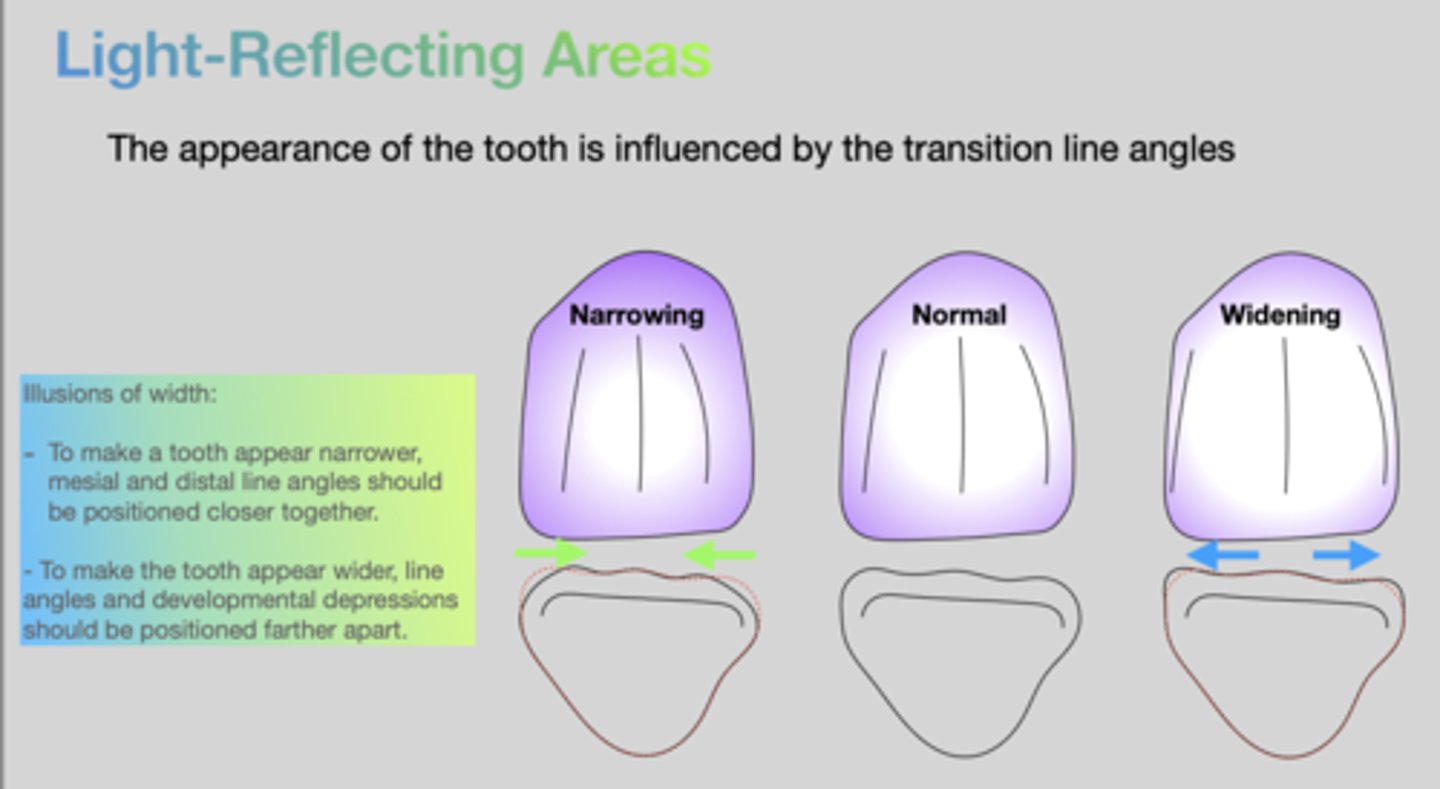
If the gingival height of contour is moved slightly incisally, does the tooth appear shorter/longer?
longer

To make a tooth appear narrower, mesial and distal line angles should be positioned closer or further apart?
closer
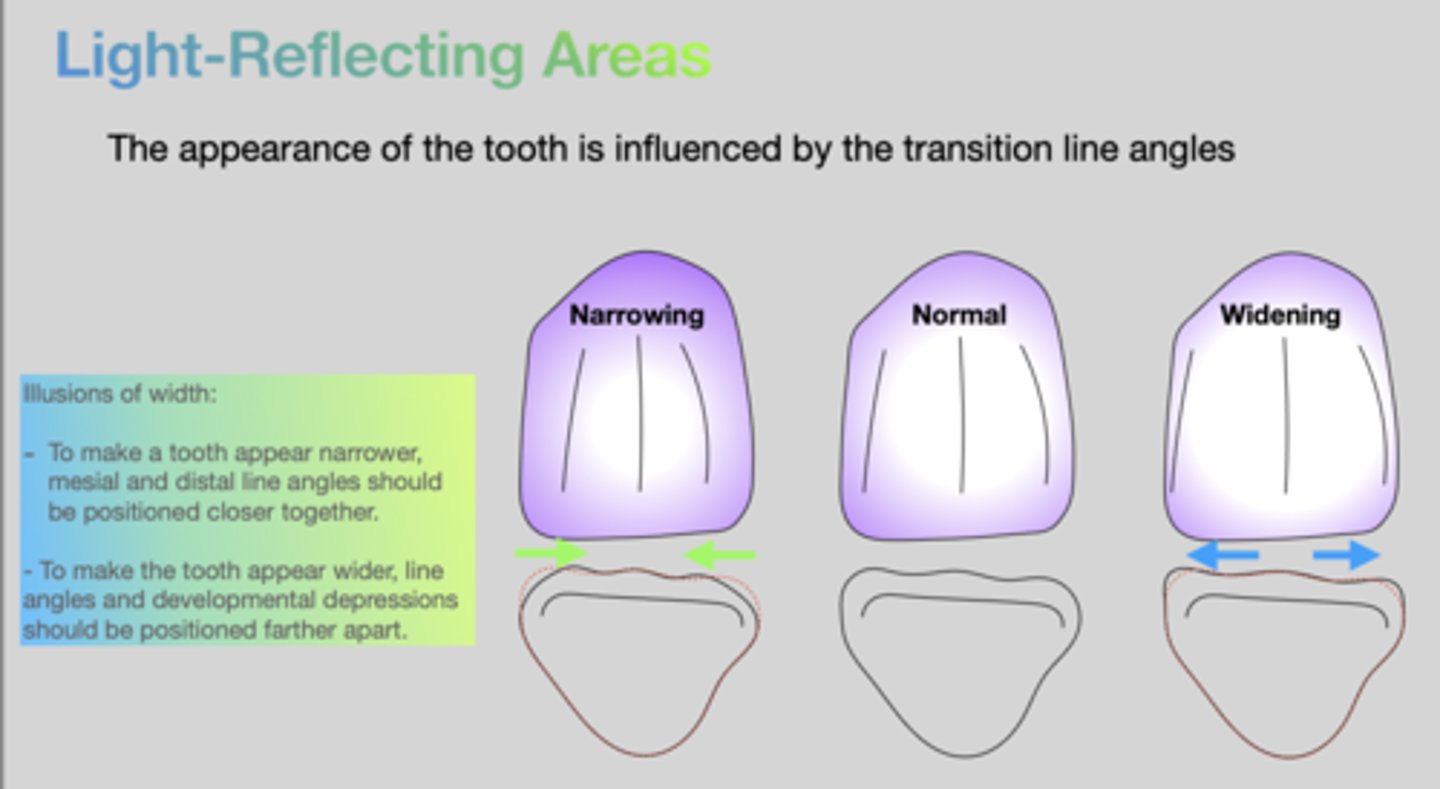
To make a tooth appear wider, mesial and distal line angles should be positioned closer or further apart?
further apart
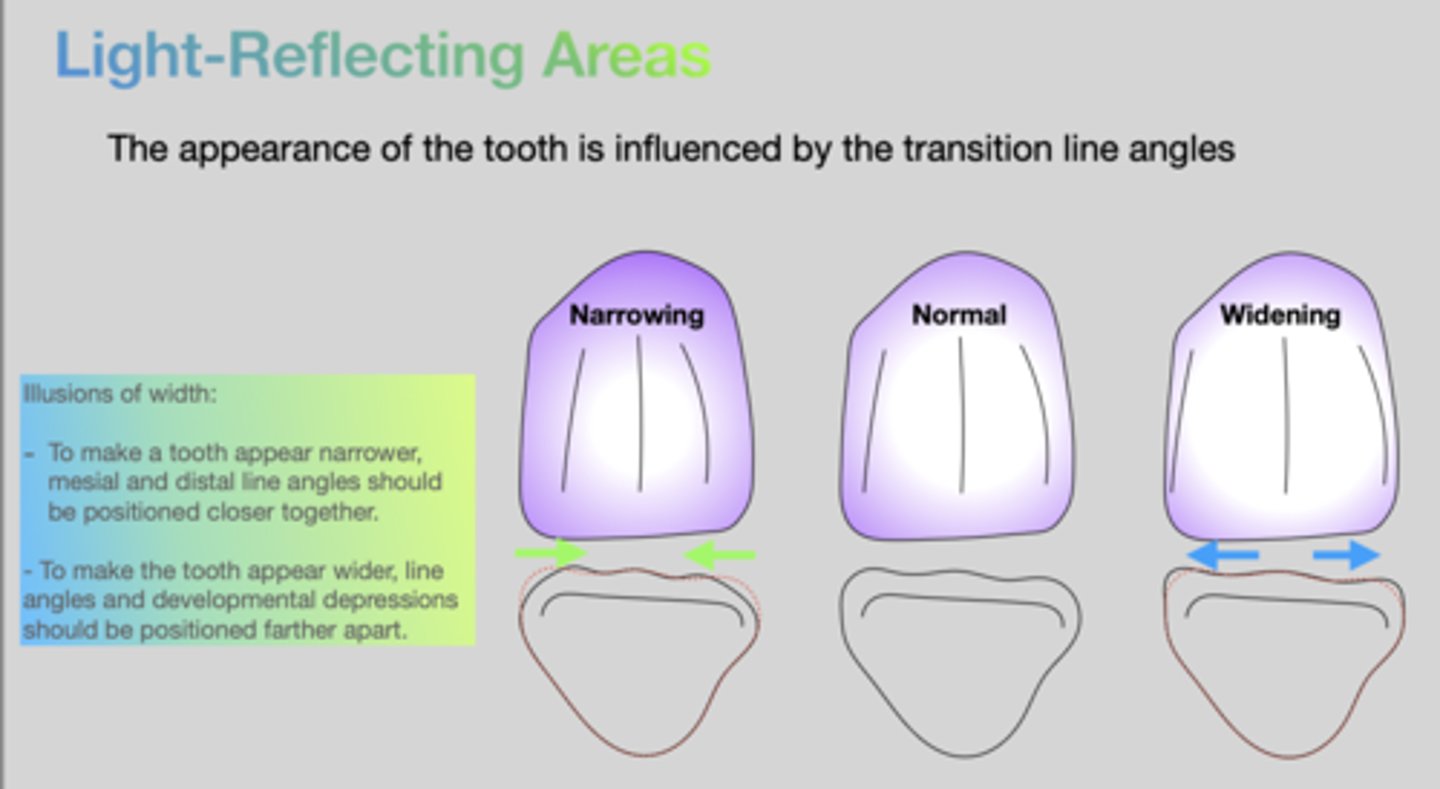
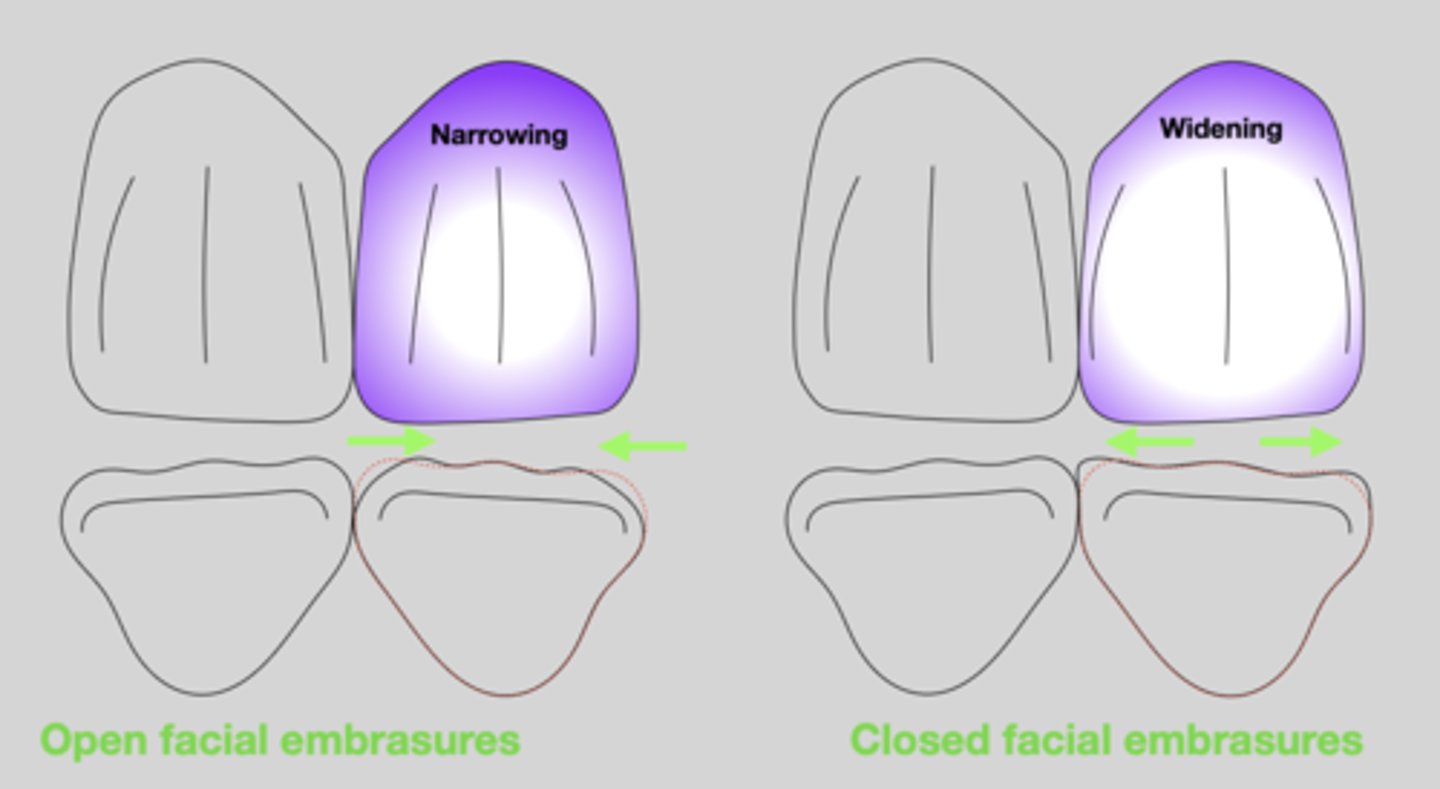
Open facial embrasures narrow or widen the appearance of the tooth?
narrow
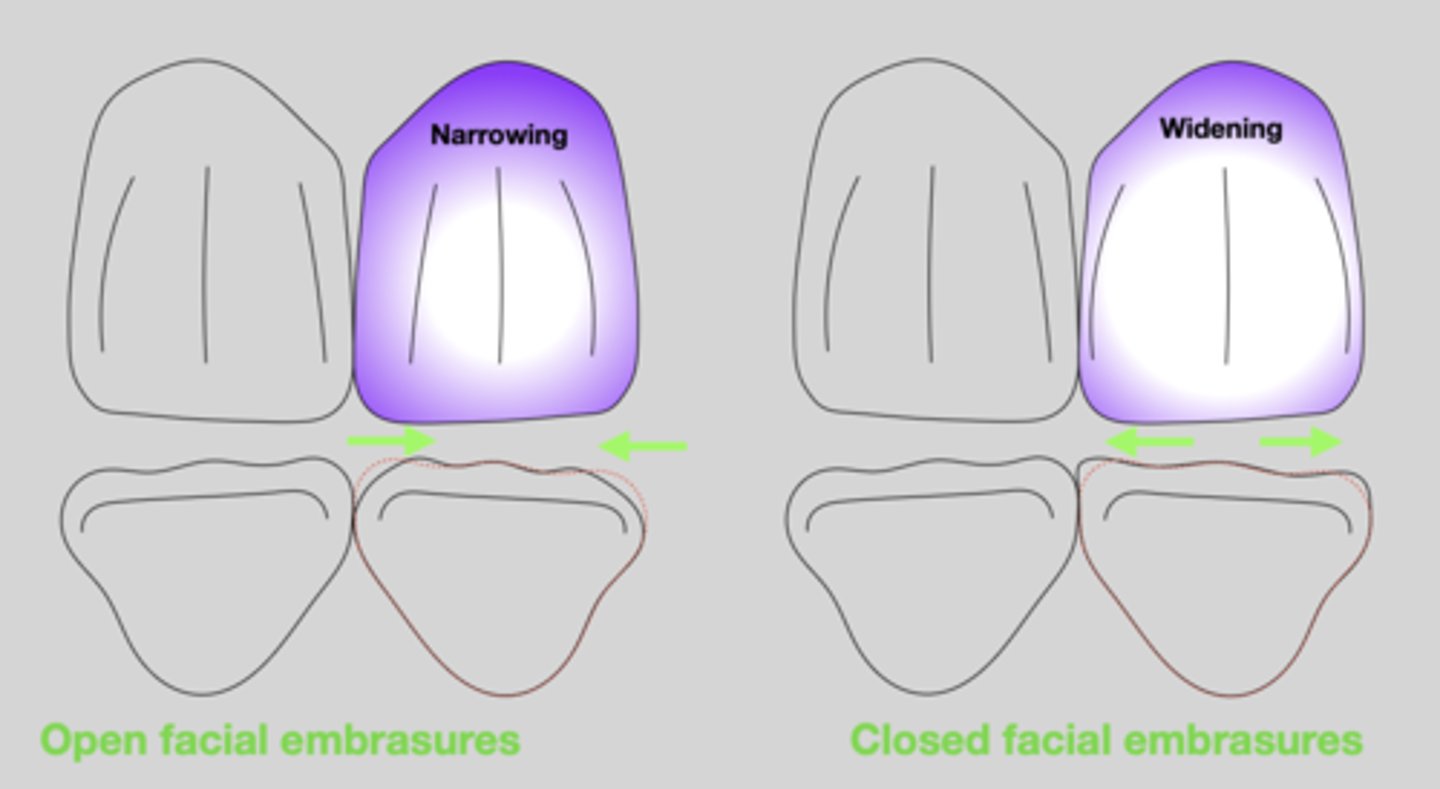
Closed facial embrasures narrow or widen the appearance of the tooth?
widen
What are the three fundamental elements of color?
- Hue
- Value
- Chroma
Which fundamental element of color?
- Intrinsic quality of shade or color
hue
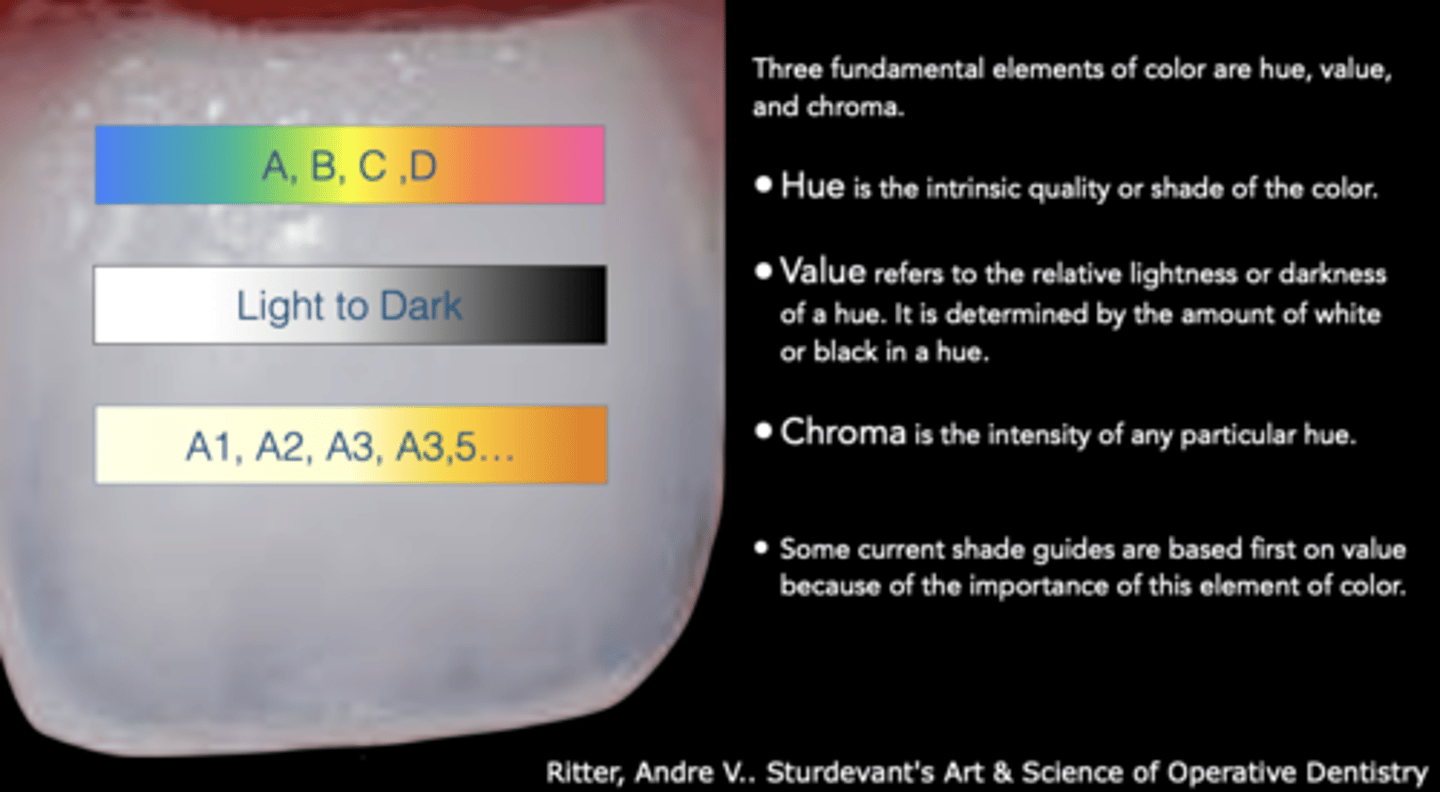
Which fundamental element of color?
- Relative lightness or darkness of a hue, determined by amount of white or black in a hue
value
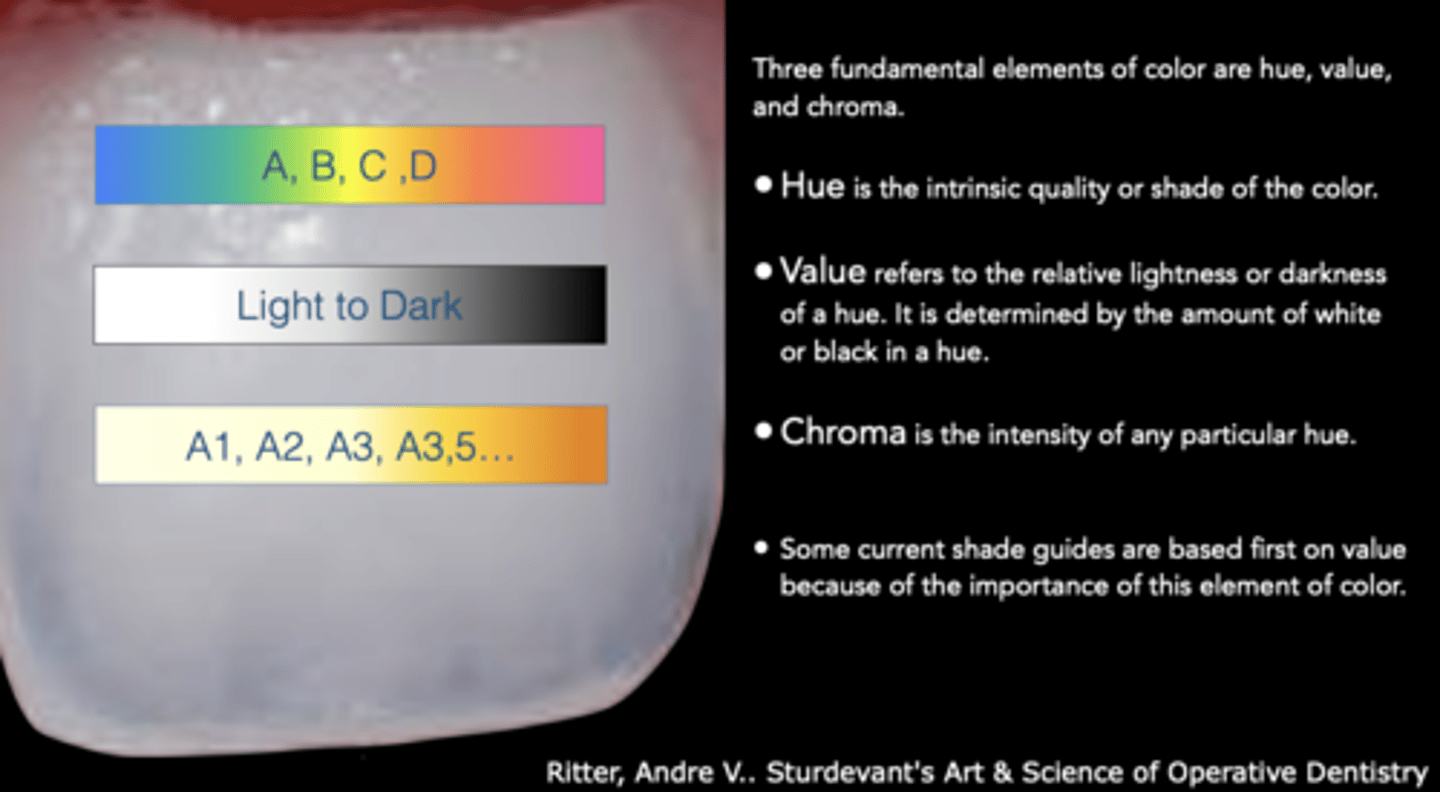
Which fundamental element of color?
- Intensity of any particular hue
chroma
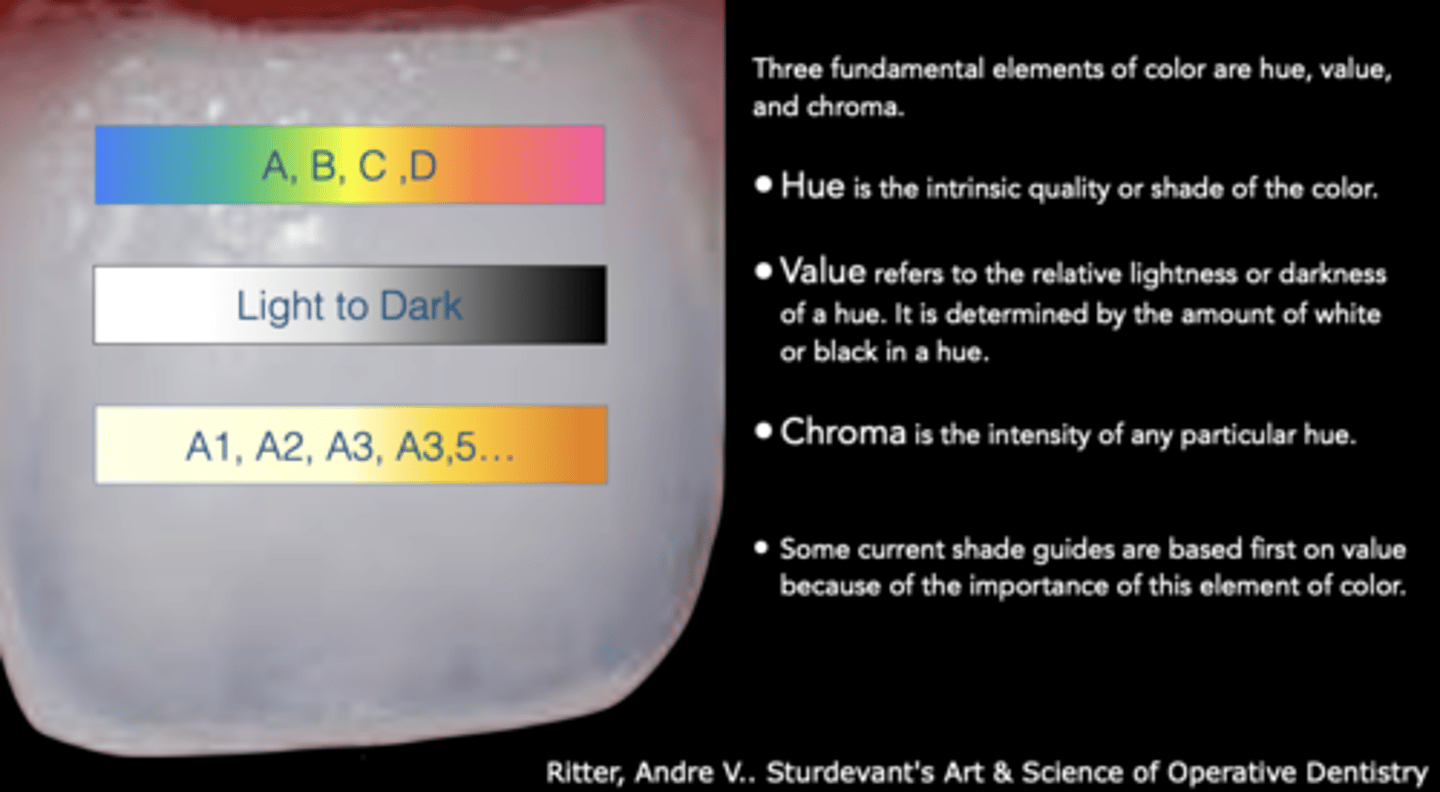
Some current shade guides are based on which element?
value (because of the importance of this element of color)
What element of composite?
- How deeply light penetrates before it is reflected outwards
translucency
Teeth in older individuals tend to show reduced or increased surface characterization (developmental depressions, prominences, perikymata)
reduced
Attrition of incisal edges results in what type of embrasure spaces?
closed
Attrition of incisal edges results in what type of incisal edges?
angular
With aging, if an absence of the step between central and lateral incisors occurs, what is the result?
straight/inverted smile
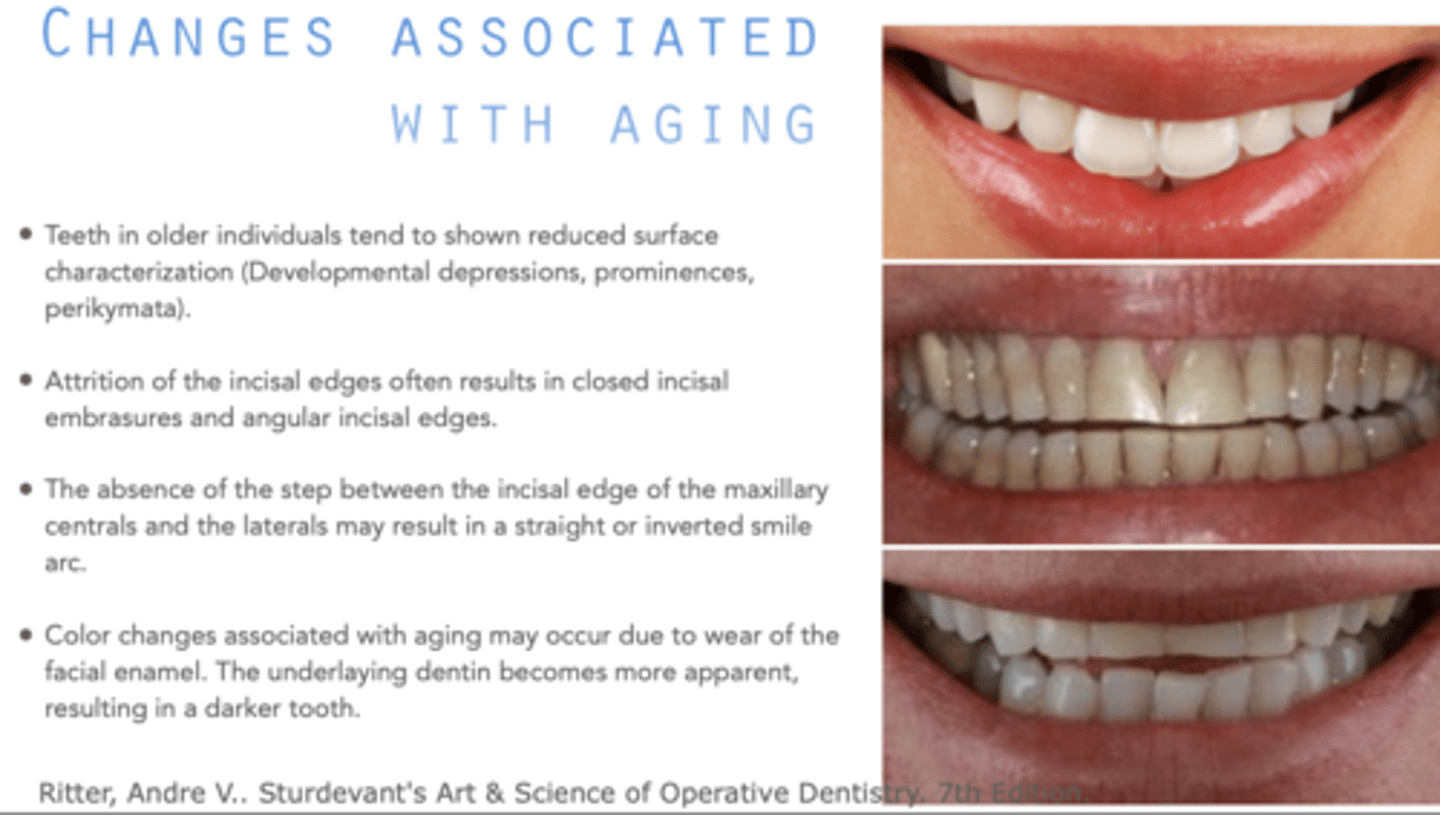
T/F: Color changes associated with aging may occur due to wear of the facial enamel
True
Why do the color of teeth get darker with aging?
A) Amount of coffee drank
B) Amount of wine drank
C) Dentin becomes more apparent due to wear of facial enamel
D) Cementum becomes more apparent due to wear of facial enamel
C) Dentin becomes more apparent due to wear of facial enamel
This is etiology for what?
- Prominent labial frenum
- Congenitally missing teeth
- Undersized or malformed teeth
- Interarch tooth size discrepencies (bolton discrepancy)
- Periodontal diease
- Posterior bite collapse
diastemas
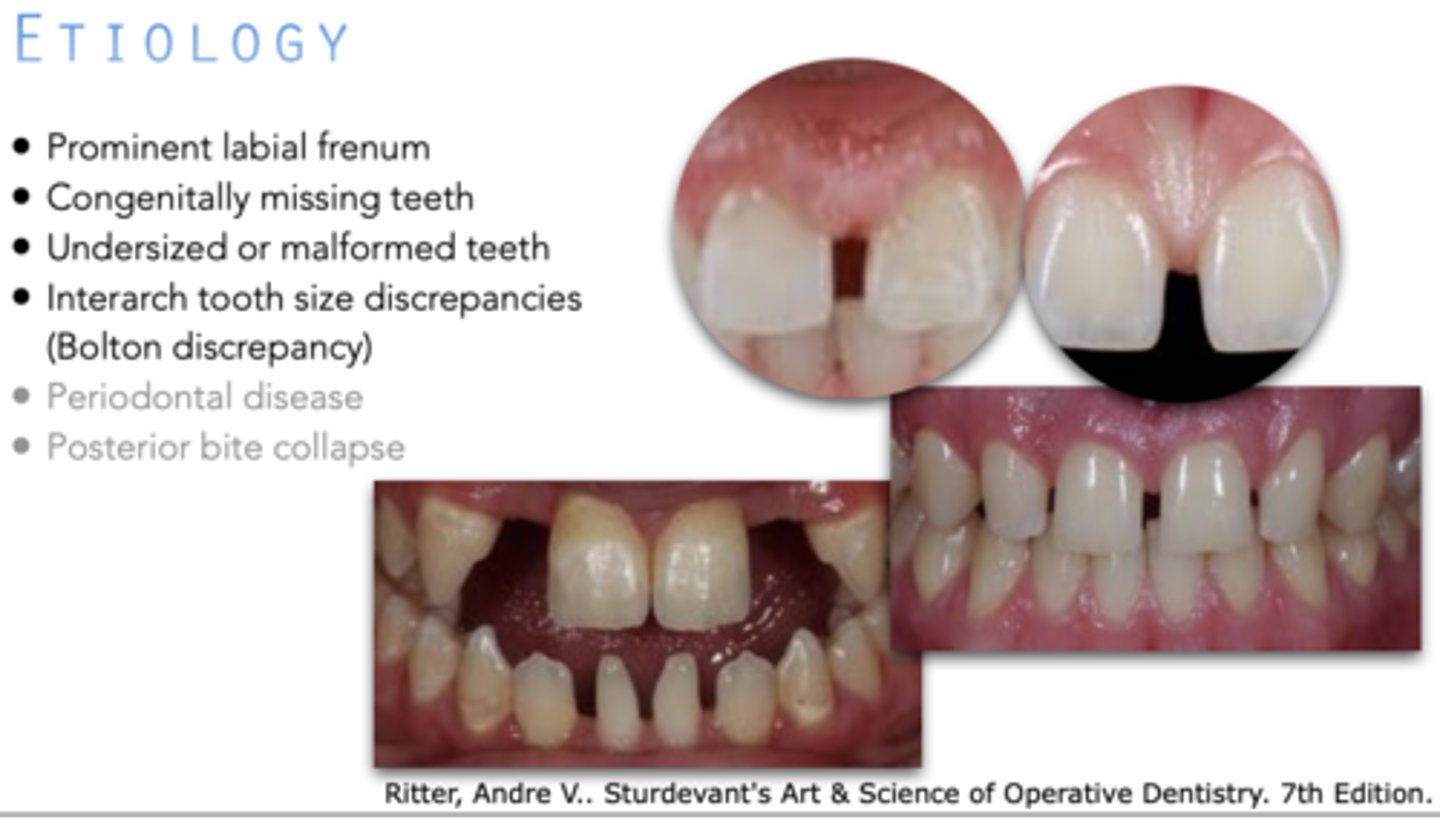
Diastemas should not be closed without first what?
Recognizing and treating the underlying cause (ex: periodontal disease, posterior bite collapse, etc.)
 Note
Note  Flashcards (56)