BIO 203 E2 Spring 2026 Module 5

0.0(0)
Studied by 0 people
call kaiCall Kai
learnLearn
examPractice Test
spaced repetitionSpaced Repetition
heart puzzleMatch
flashcardsFlashcards
GameKnowt Play
Card Sorting

1/43

flashcard set

Earn XP

Description and Tags

85+

Last updated 6:35 AM on 4/7/26
Name
Mastery
Learn
Test
Matching
Spaced
Call with Kai

No analytics yet

Send a link to your students to track their progress

44 Terms

1
New cards

Excitation

Synaptic transmission at the neuromuscular junction & sarcolemma
depolarization

2
New cards

Coupling

Release of intracellular calcium

3
New cards

Contraction

Sliding Filament Theory

4
New cards

muscle fiber

muscle cell

5
New cards

Muscle Type 1 - Skeletal

Location: Attached to bones (and a few tubes)
Function: Moves the skeleton (and a few sphincters)
NS Control: Somatic
Initiation of contraction: Membrane Depolarization
Cell structure: Large, multinucleated fibers/cells
Coordination of muscle contraction: One neuron depolarizes many fibers (motor unit)
Contractile Filaments: Actin & Myosin
Appearance: Striated

6
New cards

Muscle Type 2 - Cardiac

Location: Heart
Function: Generates heart contraction
NS Control: Autonomic
Initiation of contraction: Membrane Depolarization
Cell structure: Smaller, uninucleated cells; branched fibers
Coordination of muscle contraction: Gap junctions
Contractile Filaments: Actin & Myosin
Appearance: Striated

7
New cards

Muscle Type 3 - Smooth

Location: Internal organs & tubes
Function: Moves internal organs & tubes
NS Control: Autonomic
Initiation of contraction: Membrane Depolarization
Cell structure: Small, uninucleated cells
Coordination of muscle contraction: Gap junctions and motor units
Contractile Filaments: Actin & Myosin
Appearance: Not Striated
8
New cards
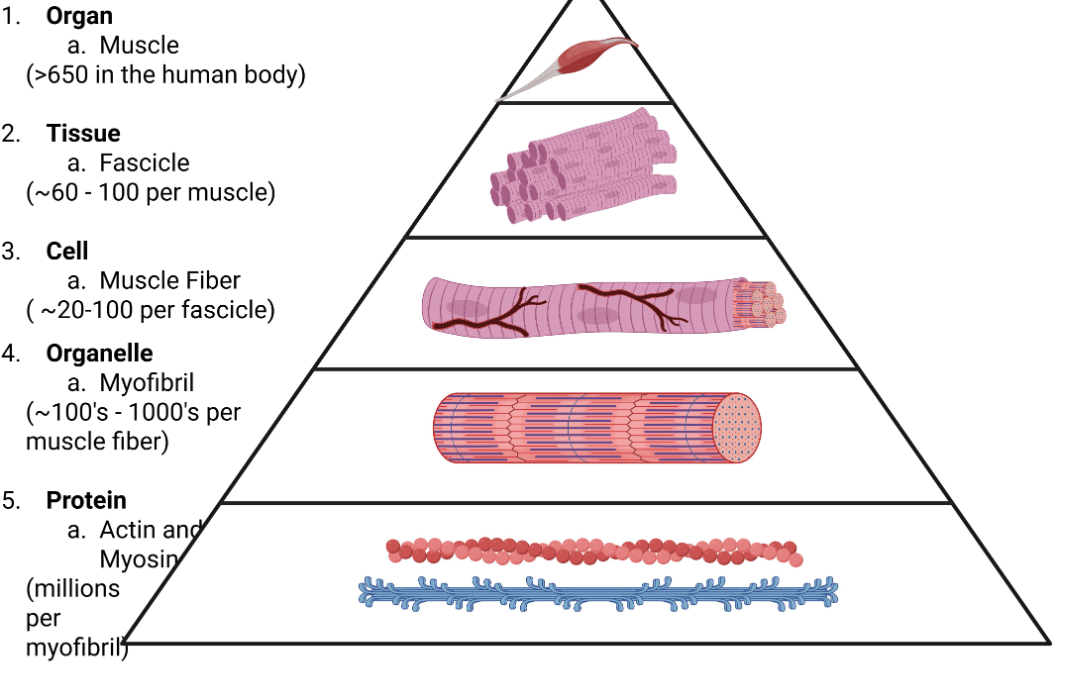
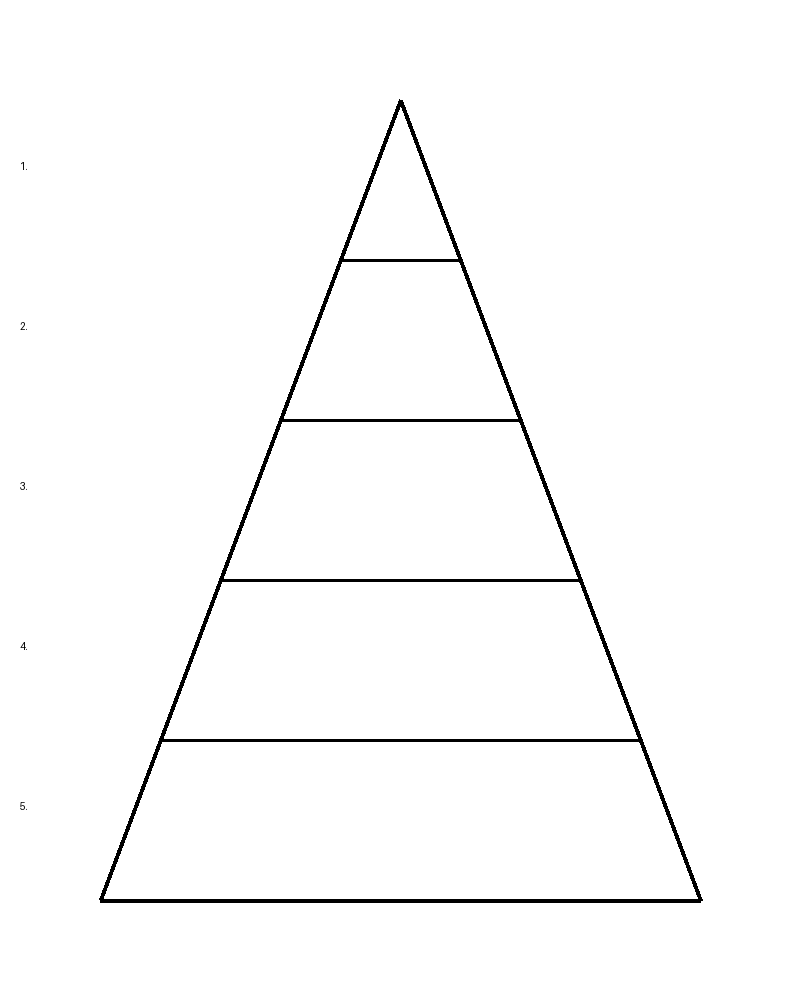
<p>Organize from biggest on top to smallest on bottom (with relative quantity increasing the further they are down the pyramid)<br><br>Organelle, Tissue, Organ , Cell , Protein</p>

Organize from biggest on top to smallest on bottom (with relative quantity increasing the further they are down the pyramid)

Organelle, Tissue, Organ , Cell , Protein

  1. Organ (Muscle)

  2. Tissue (Fascicle)

  3. Cell (Muscle Fiber)

  4. Organelle (Myofibril)

  5. Protein (Actin and Myosin)

<ol><li><p>Organ (Muscle)</p></li><li><p>Tissue (Fascicle)</p></li><li><p>Cell (Muscle Fiber)</p></li><li><p>Organelle (Myofibril)</p></li><li><p>Protein (Actin and Myosin)</p></li></ol><p></p>
9
New cards
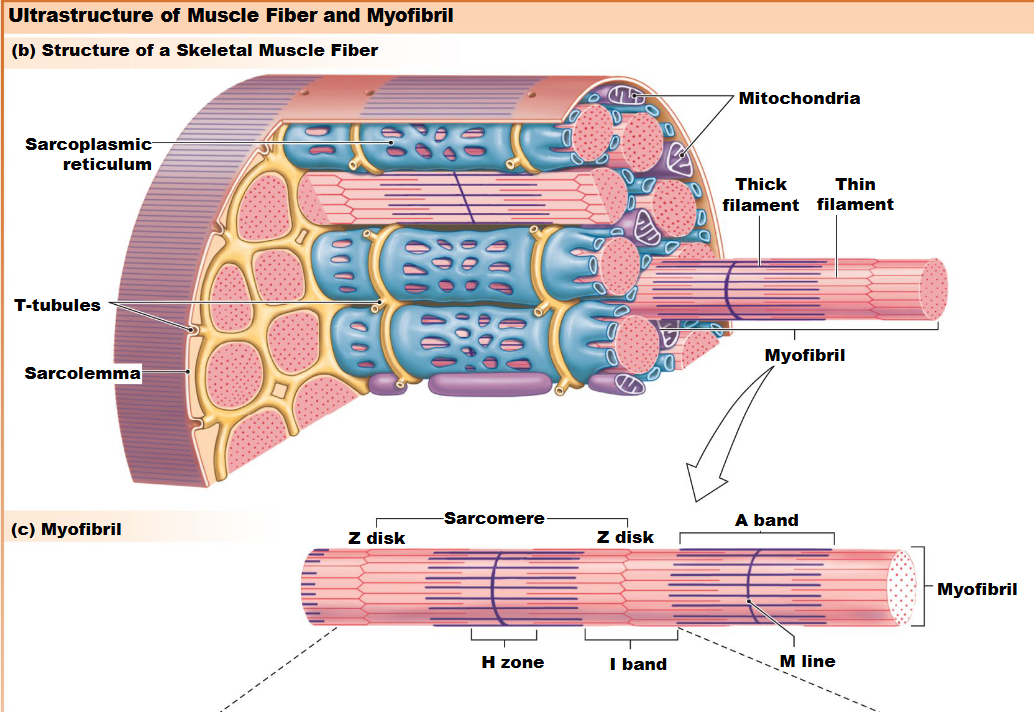
<p>Function of the M line?</p>

Function of the M line?

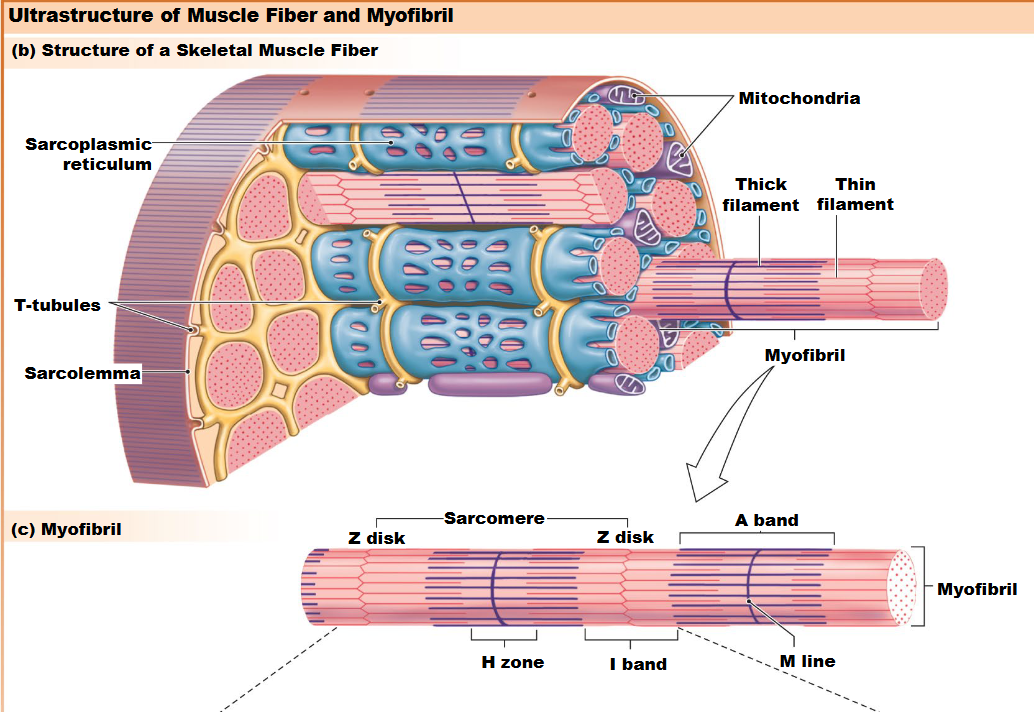
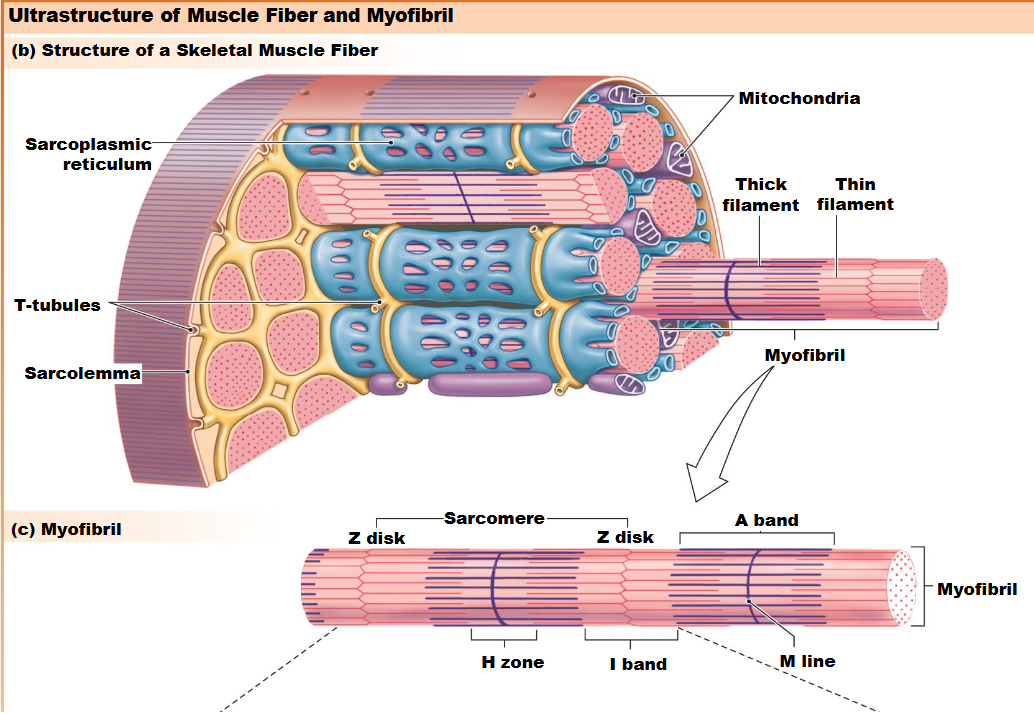
The M line is responsible for anchoring thick filaments (myosin) in the center of the sarcomere and providing structural stability to the muscle fiber during contraction
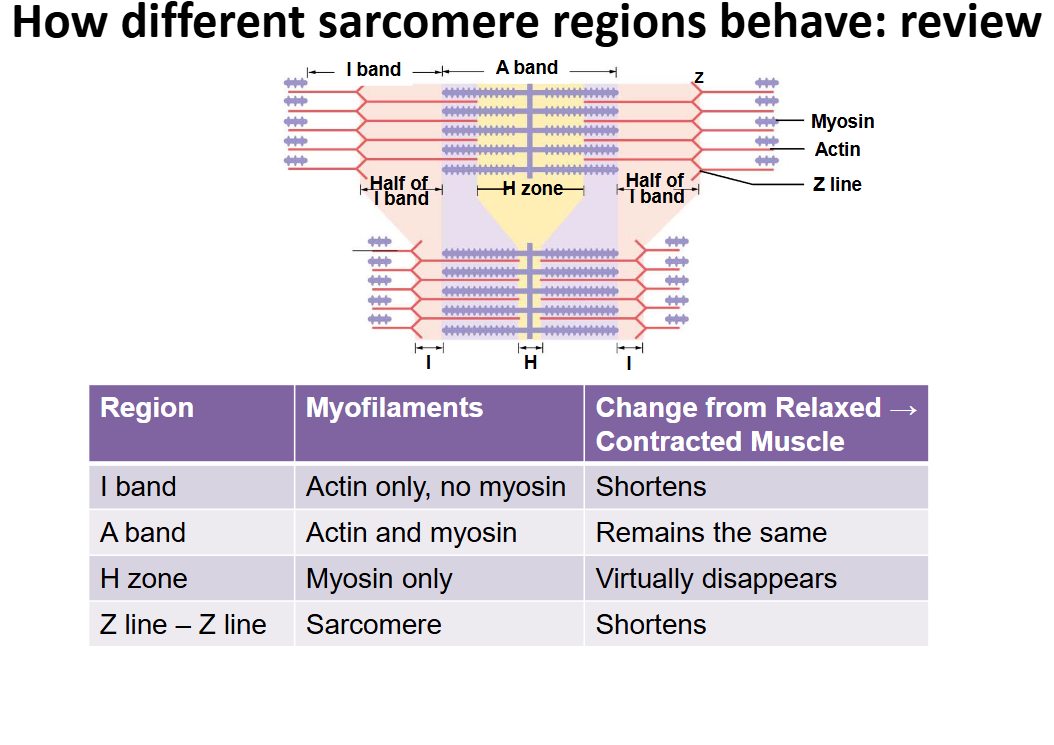
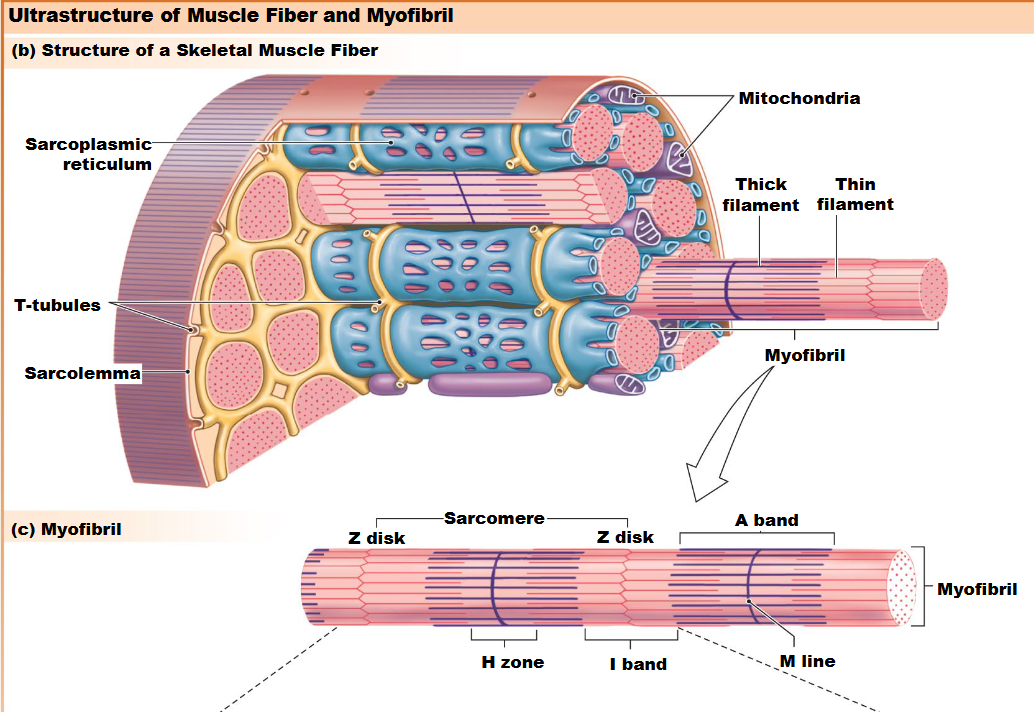
<p><span>The M line is responsible for anchoring thick filaments (myosin) in the center of the sarcomere and providing structural stability to the muscle fiber during contraction</span></p>
10
New cards
<p>Function of Z disk?</p>

Function of Z disk?

The Z disk serves as the boundary of the sarcomere, anchoring the thin filaments (actin) and helping to maintain the structural organization of the muscle fiber during contraction (also shortens)
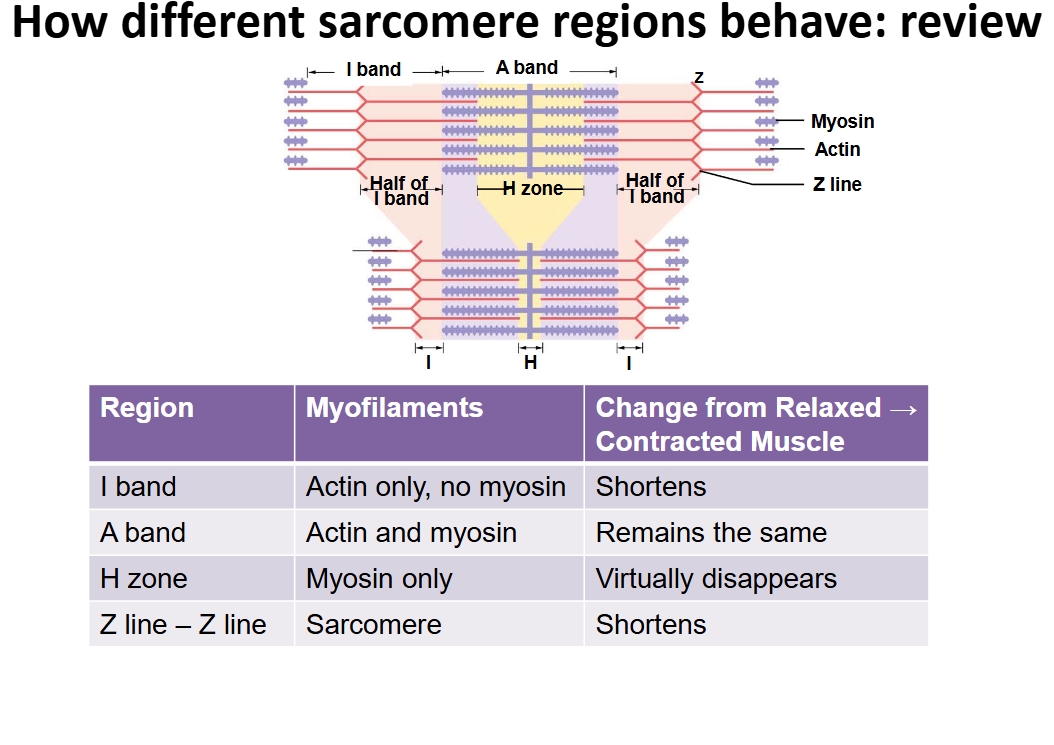
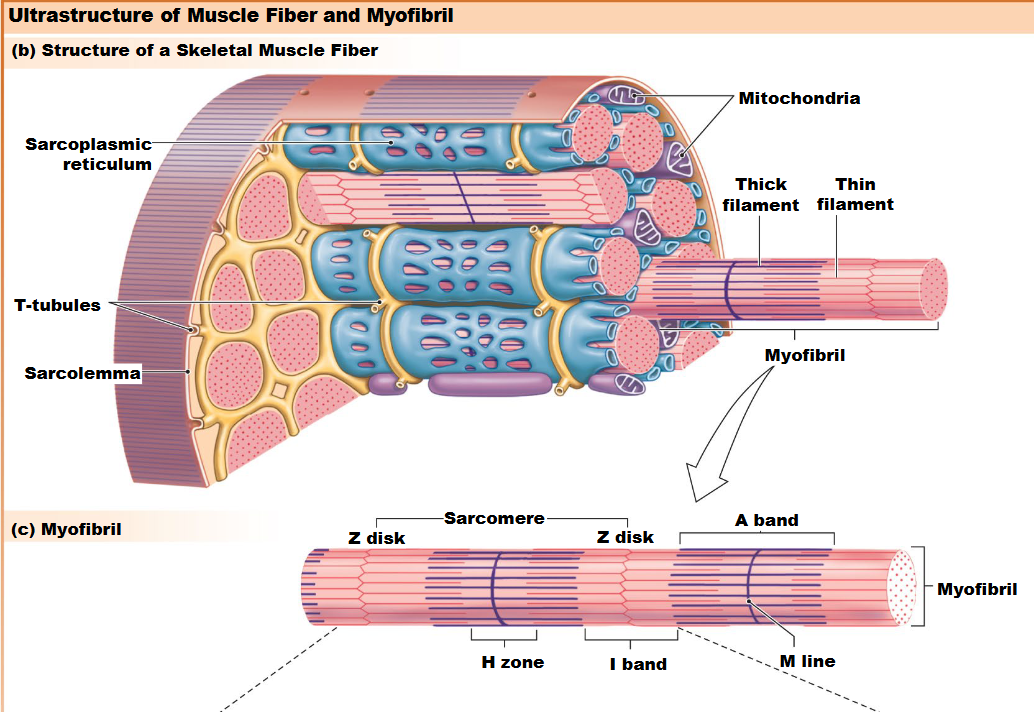
<p>The Z disk serves as the boundary of the sarcomere, anchoring the thin filaments (actin) and helping to maintain the structural organization of the muscle fiber during contraction <u>(also shortens)</u></p>
11
New cards
<p>Function of A band?</p>

Function of A band?

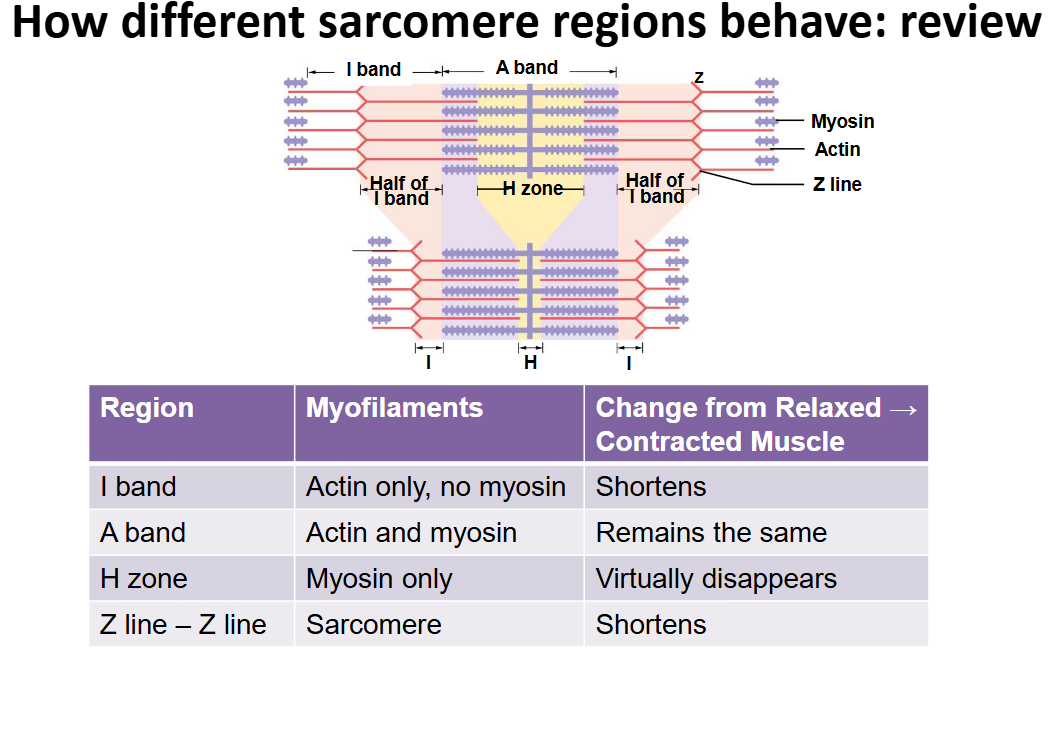
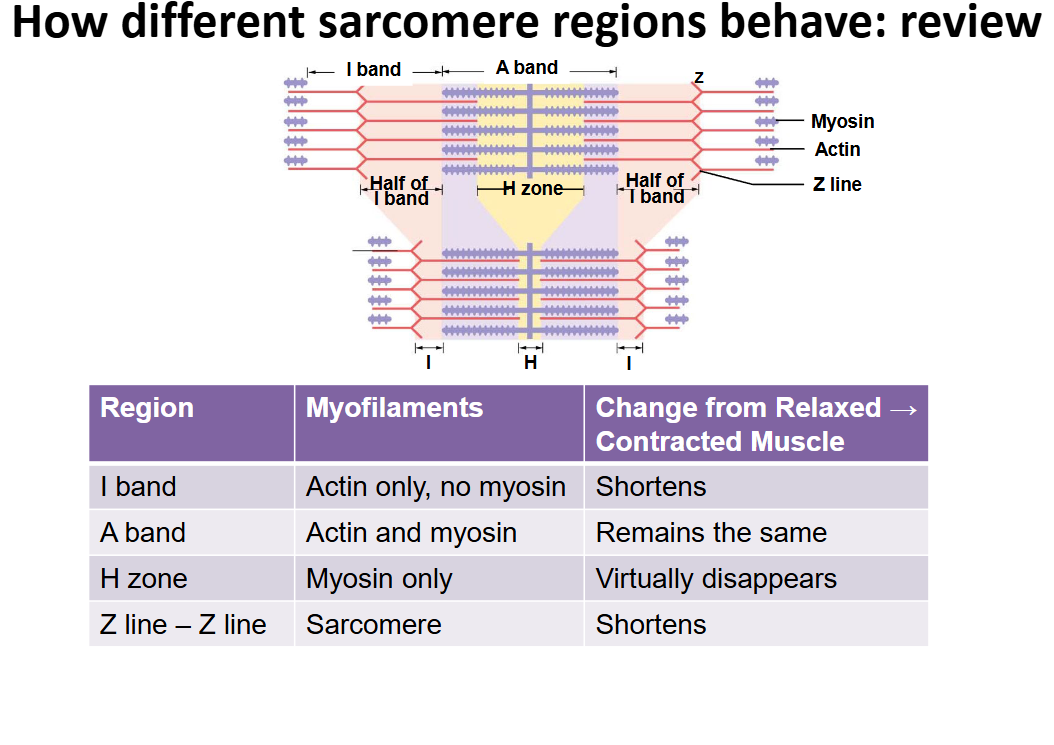
The A band is the dark region of the sarcomere that contains the entire length of thick filaments (myosin) and overlaps with thin filaments (actin). It is crucial for muscle contraction as it corresponds to the region where thick and thin filaments interact.
<p><span>The A band is the dark region of the sarcomere that contains the entire length of thick filaments (myosin) and overlaps with thin filaments (actin). It is crucial for muscle contraction as it corresponds to the region where thick and thin filaments interact.</span></p>
12
New cards
<p>Function of H zone?</p>

Function of H zone?

The H zone is the area within the A band of a sarcomere that appears lighter due to the absence of thin filaments (actin). It represents the region where only thick filaments (myosin) are present, and during muscle contraction, the H zone decreases in width as the thin filaments slide over the thick filaments
<p><span>The H zone is the area within the A band of a sarcomere that appears lighter due to the absence of thin filaments (actin). It represents the region where only thick filaments (myosin) are present, and <strong>during muscle contraction, the H zone decreases in width as the thin filaments slide over the thick filaments</strong></span></p>
13
New cards
<p>Function of I band?</p>

Function of I band?

The I band is the light region of the sarcomere that consists of thin filaments (actin) only and is located on either side of the A band. It shortens during muscle contraction as the thick and thin filaments slide past each other.
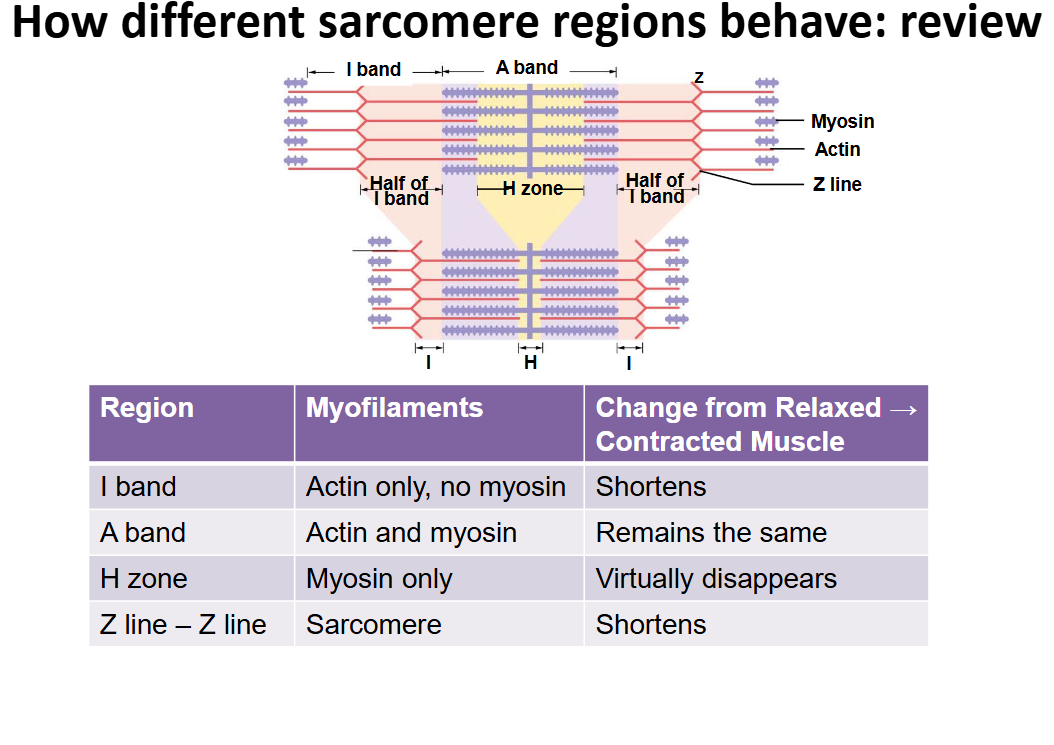
<p>The I band is the light region of the sarcomere that consists of thin filaments <strong><u>(actin) only</u></strong> and is located on either side of the A band. <strong><u>It shortens</u> during muscle contraction as the thick and thin filaments slide past each other.</strong></p>
14
New cards

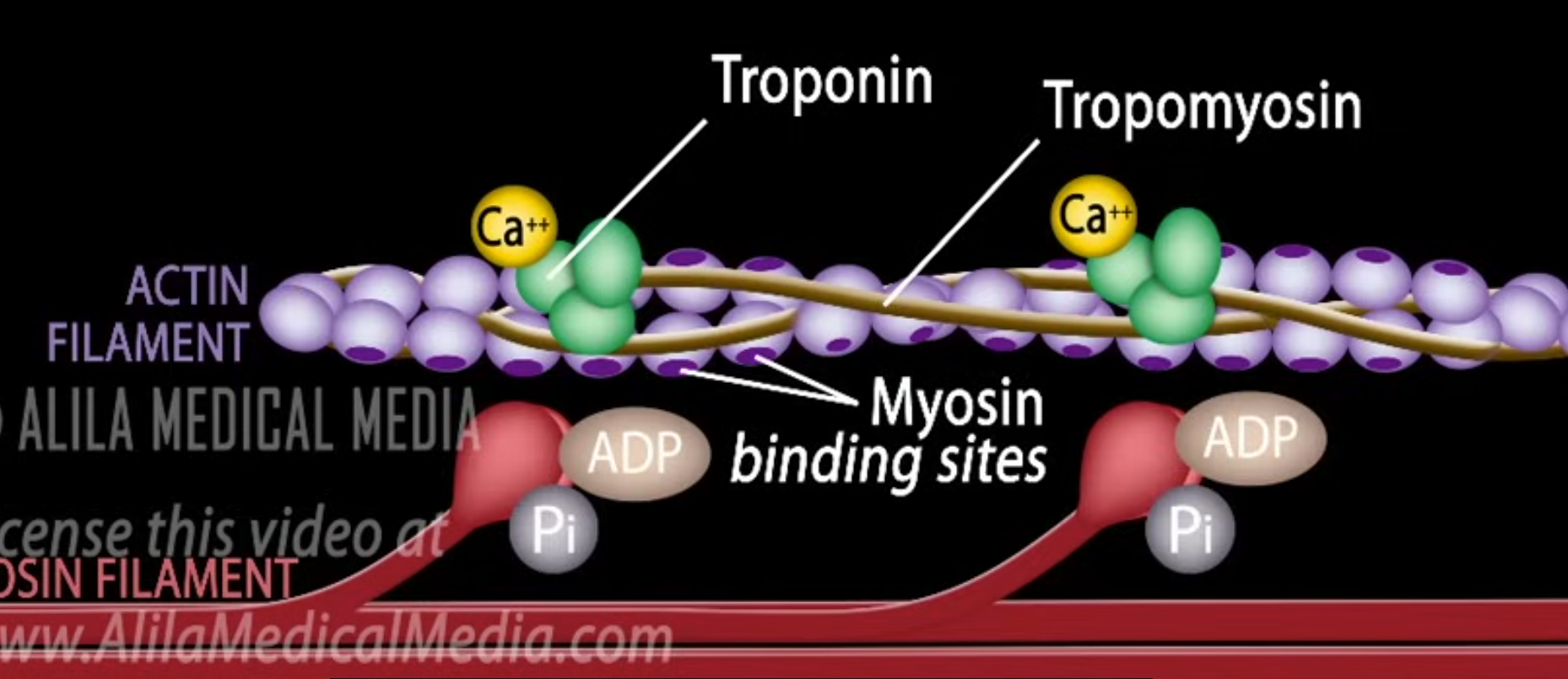
Heads of Myosin are _____ and have binding sites for _____

ATPases and G-Actin
15
New cards
<p>What binds to troponin which moves the <u>tropomyosin </u>to reveal the myosin binding sites (which is on ACTIN)?</p>

What binds to troponin which moves the tropomyosin to reveal the myosin binding sites (which is on ACTIN)?

Calcium ions

16
New cards

How do muscles “turn on” and then how do they contract?

An axon potential travels onto a muscle fiber via a motor neuron, then acetylcholine goes onto ligan gated channels, Na+ rushes in and K+ leaks out causing a depolarization (action potential), this action potential travels down the sarcolemma and down T-tubules, this triggers Ca+ ions to flood into cell and then contract via revealing the Myosin sites on actin after Ca+ binds to Troponin
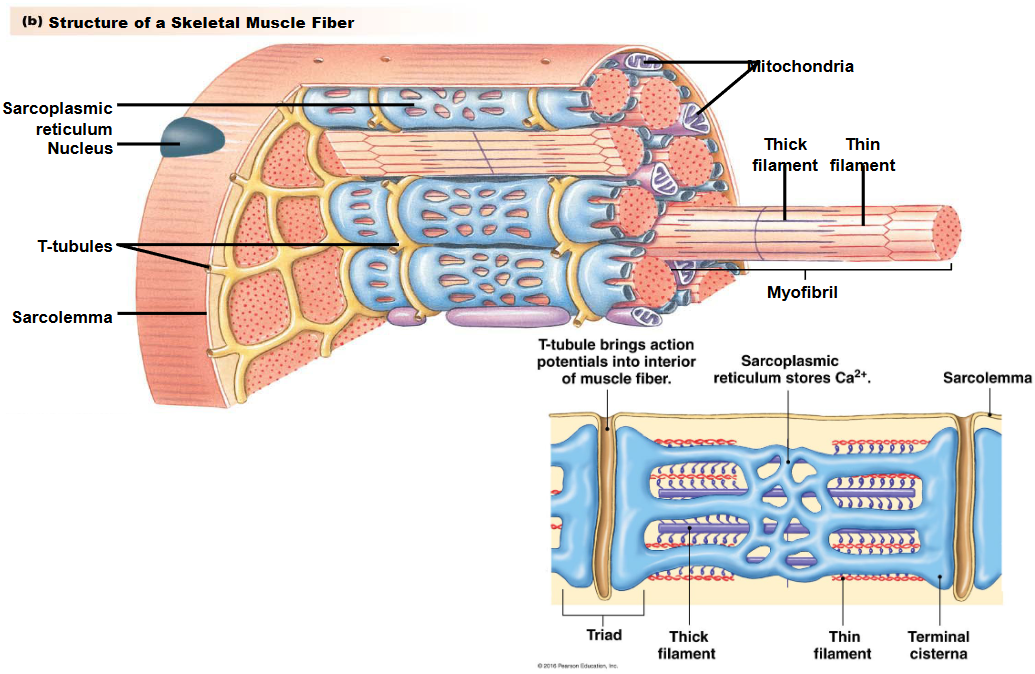
<p>An axon potential travels onto a muscle fiber via a motor neuron, then acetylcholine goes onto ligan gated channels, Na+ rushes in and K+ leaks out causing a depolarization (action potential), this action potential travels down the sarcolemma and down T-tubules, this triggers Ca+ ions to flood into cell and then contract via revealing the Myosin sites on actin after Ca+ binds to Troponin </p>
17
New cards

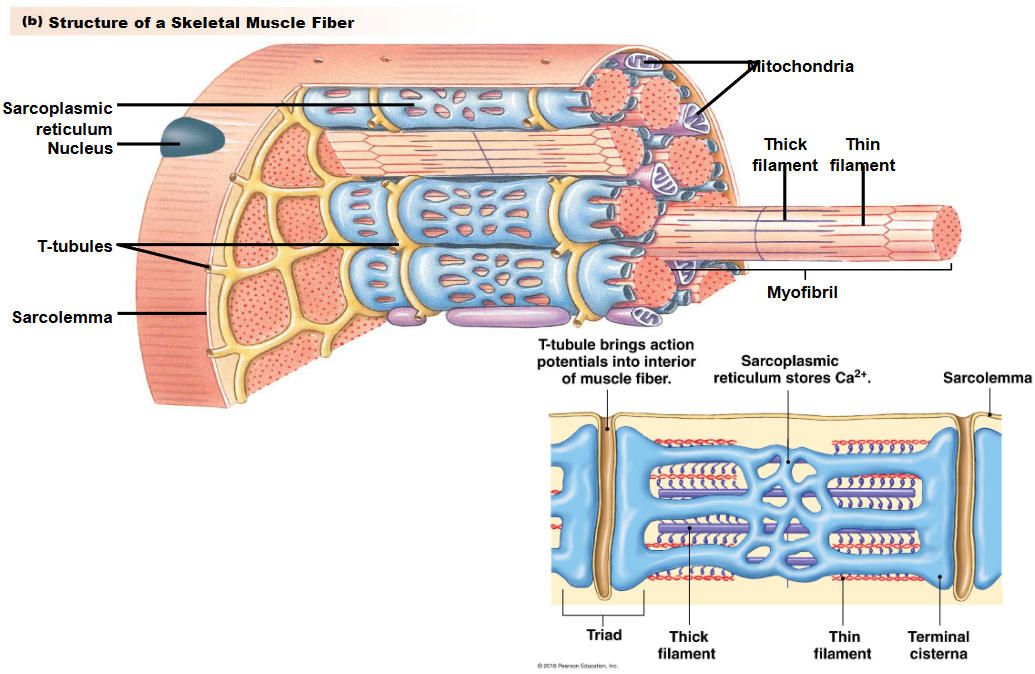
What does the sarcoplasmic reticulum inside the sarcolemma contain?

Ca+ ions
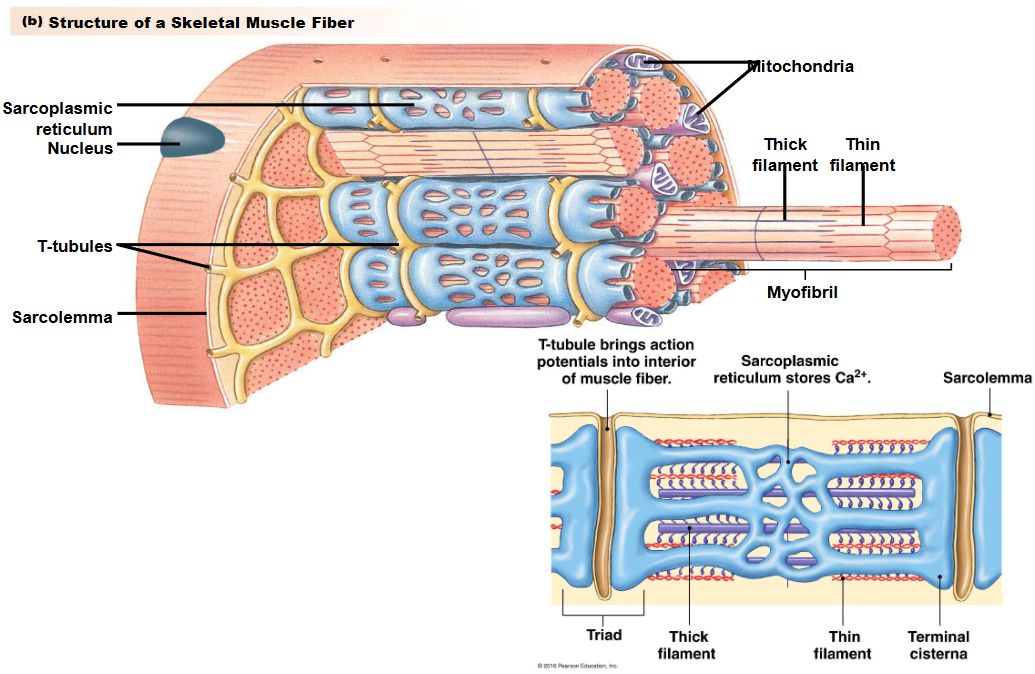
<p>Ca+ ions</p>
18
New cards

What do T-tubules (Transverse Tubules) mostly do and serve as their purpose?

Brings in the action potential to then allow Ca+ release and thus cause contraction
<p>Brings in the action potential to then allow Ca+ release and thus cause contraction</p>
19
New cards

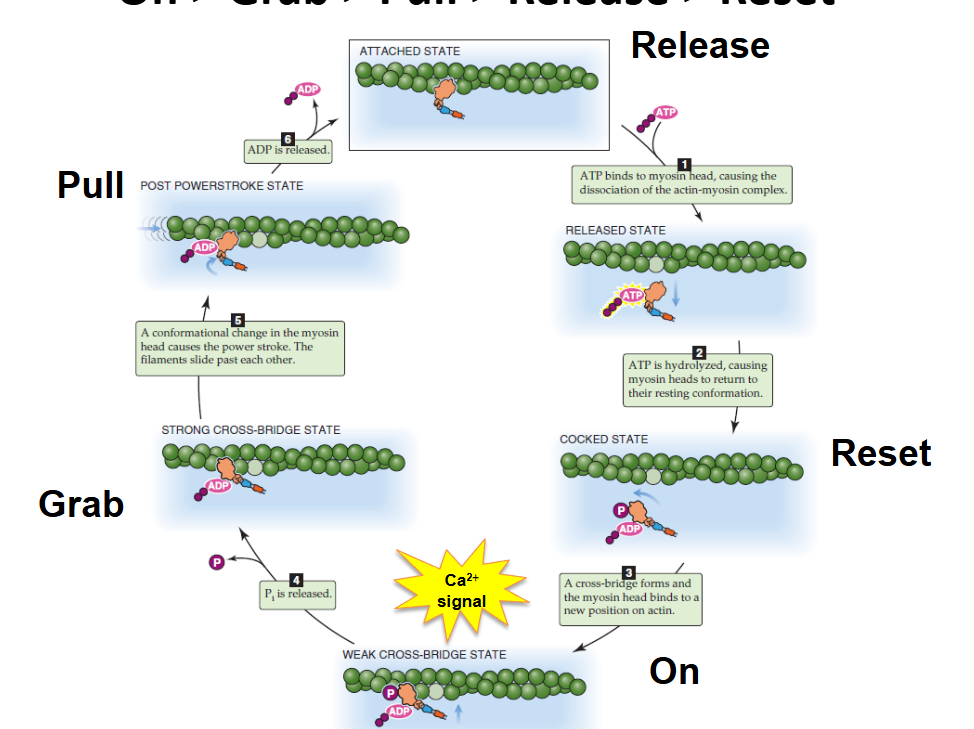
How does the cross-bridge cycle function?

Myosin heads start in the inactive state where there is ADP and Pi (phosphates), then the Myosin heads release the phosphates and bind to the sites on actin, ADP alone moves the actin (pull motion) and then drops off, after which ATP is reintroduced and then Hydrolyzes into ADP and phosphates, ADP and the new phosphates reconfigure and thus stop.
<p>Myosin heads start in the inactive state where there is ADP and Pi (phosphates), then the Myosin heads release the phosphates and bind to the sites on actin, ADP alone moves the actin (pull motion) and then drops off, after which ATP is reintroduced and then Hydrolyzes into ADP and phosphates, ADP and the new phosphates reconfigure and thus stop.</p>
20
New cards

What causes Ca+ to go back into SR (Sarcolemma Reticulum)?

Ca2+-ATPase
21
New cards
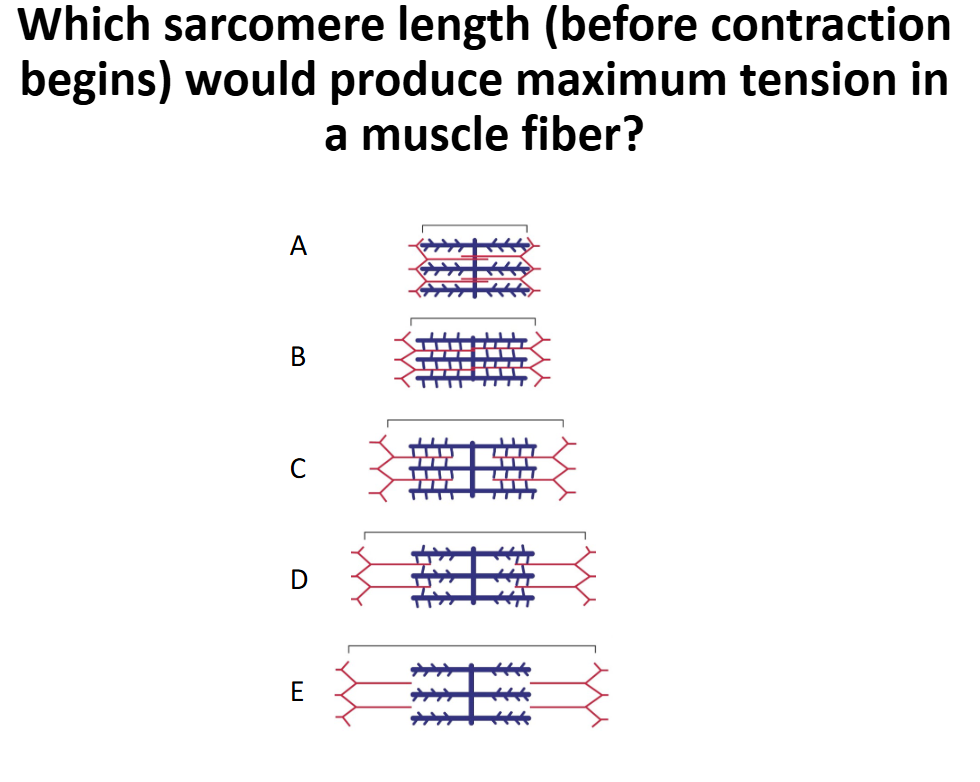
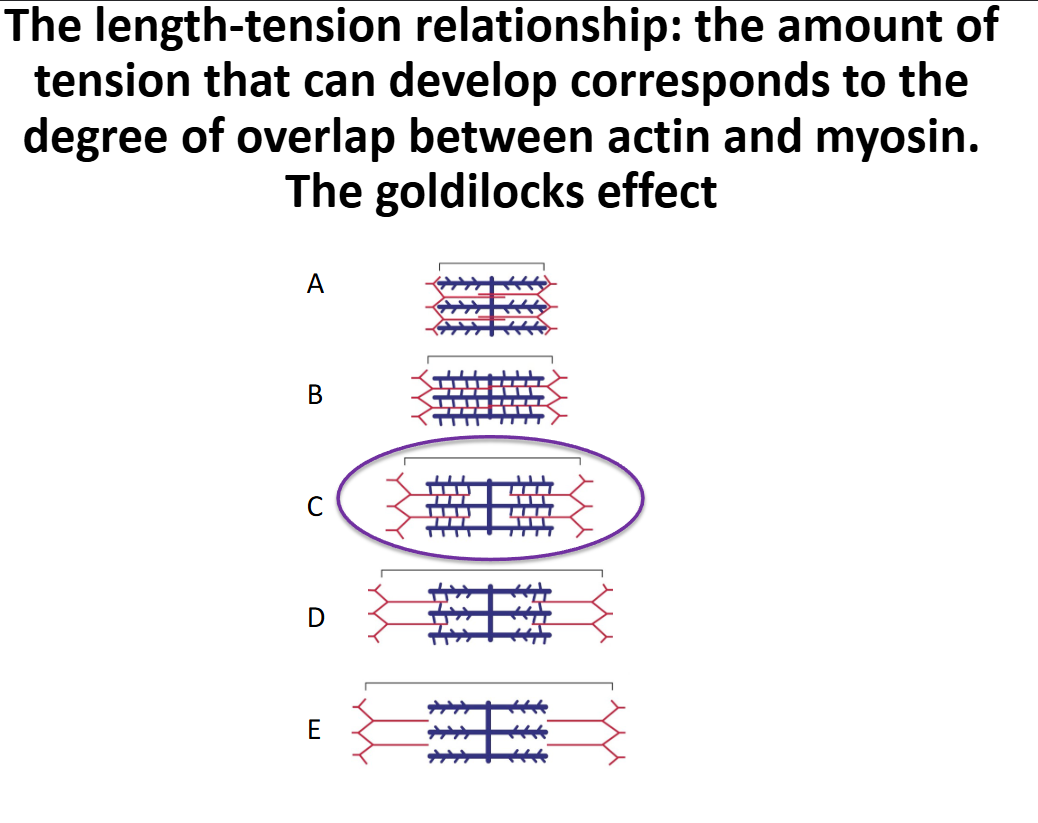
<p>Which sarcomere length would produce maximum tension?</p>

Which sarcomere length would produce maximum tension?

C
<p>C</p>
22
New cards

What is a muscle twitch?

a single contraction of a single muscle fiber in response to stimulation from a motor neuron (twitch = unit of contraction)

23
New cards

What function does myoglobin serve on muscle fibers?

stores oxygen in the muscle fibers

24
New cards

Size of motor units determines _____?

precision of movements (smaller units = more precise movements)
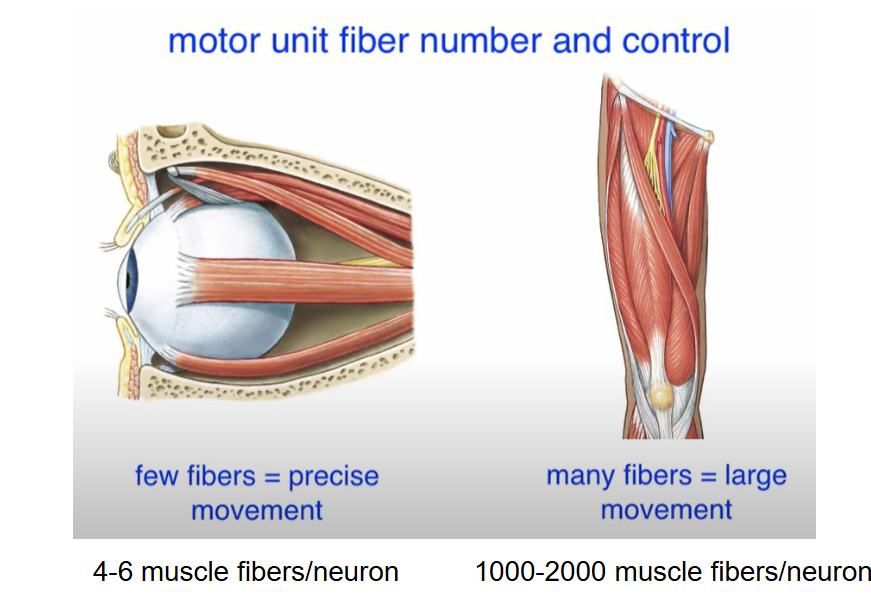
<p>precision of movements (smaller units = more precise movements)</p>
25
New cards
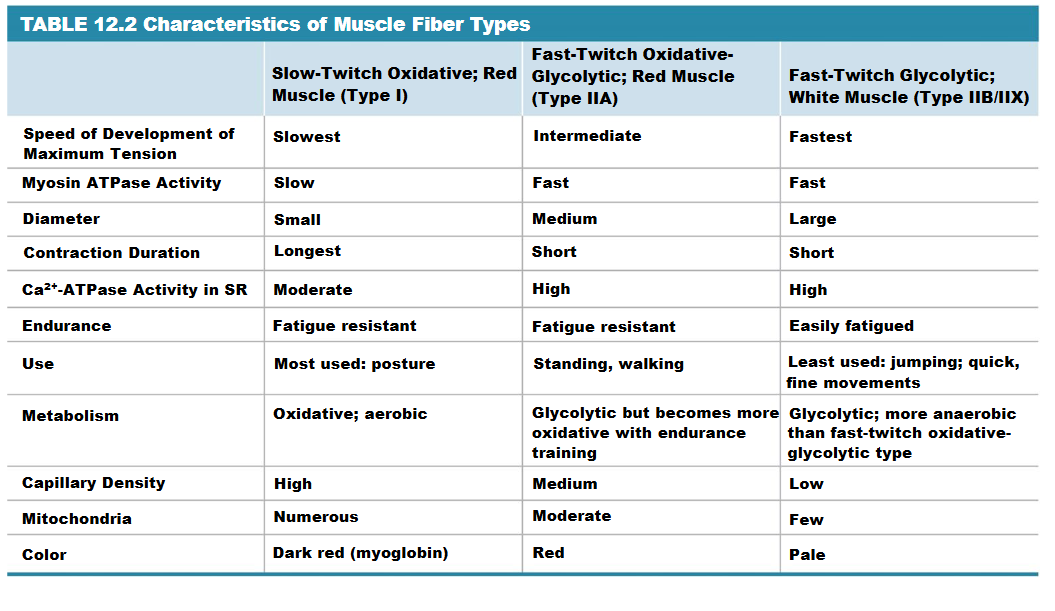
<p>Analyze the table and rewrite important info/differences</p>

Analyze the table and rewrite important info/differences

done

26
New cards
27
New cards
28
New cards
29
New cards
30
New cards
31
New cards
32
New cards
33
New cards
34
New cards
35
New cards
36
New cards
37
New cards
38
New cards
39
New cards
40
New cards
41
New cards
42
New cards
43
New cards
44
New cards

Explore top notes

note
0.2: Pre-Colonial America
Updated 1270d ago
0.0(0)
note
Vocab E Units 1-5
Updated 476d ago
0.0(0)
note
Week 2 Readings
Updated 1176d ago
0.0(0)
note
Physical Science - Chapter 1
Updated 955d ago
0.0(0)
note
chapter 4 Cell Structure
Updated 401d ago
0.0(0)
note
Heimler APUSH TP 5.11
Updated 476d ago
0.0(0)
note
Chapter 9 - Motivation and Emotion
Updated 1253d ago
0.0(0)
note
electricity
Updated 393d ago
0.0(0)
note
0.2: Pre-Colonial America
Updated 1270d ago
0.0(0)
note
Vocab E Units 1-5
Updated 476d ago
0.0(0)
note
Week 2 Readings
Updated 1176d ago
0.0(0)
note
Physical Science - Chapter 1
Updated 955d ago
0.0(0)
note
chapter 4 Cell Structure
Updated 401d ago
0.0(0)
note
Heimler APUSH TP 5.11
Updated 476d ago
0.0(0)
note
Chapter 9 - Motivation and Emotion
Updated 1253d ago
0.0(0)
note
electricity
Updated 393d ago
0.0(0)

Explore top flashcards

flashcards
General vocab/definitions
29
Updated 1070d ago
0.0(0)
flashcards
Exam 3 - Physiology
34
Updated 482d ago
0.0(0)
flashcards
safmed period 7 part 2
77
Updated 742d ago
0.0(0)
flashcards
Biology Chapter 7 Test
60
Updated 202d ago
0.0(0)
flashcards
Avancemos 2 2.2
72
Updated 862d ago
0.0(0)
flashcards
General vocab/definitions
29
Updated 1070d ago
0.0(0)
flashcards
Exam 3 - Physiology
34
Updated 482d ago
0.0(0)
flashcards
safmed period 7 part 2
77
Updated 742d ago
0.0(0)
flashcards
Biology Chapter 7 Test
60
Updated 202d ago
0.0(0)
flashcards
Avancemos 2 2.2
72
Updated 862d ago
0.0(0)