chapter 32: traditional sensorimotor approaches PNF approach (test 1)
 Studied by 0 people
 Call Kai
 Learn
Learn Practice Test
 Spaced Repetition
 Match
Match Flashcards
 Knowt Play
1/60

There's no tags or description
Looks like no tags are added yet.
Name | Mastery | Learn | Test | Matching | Spaced | Call with Kai |
|---|
No analytics yet
Send a link to your students to track their progress
61 Terms
what does PNF stand for
proprioceptive neuromuscular facilitation
(sensory input to elicit a guided movement)
PNF approach
-it is based on normal movement/development
-addresses posture, mobility, strength, effort, and coordination
PNF foundations an movement patterns
-mass movement patterns are spiral and diagonal
-paterns resemble movement in FUNCTIONAL activities
-patterns used as a preparatory methods or within task performance
t or f: the brain register total movement, not individual muscle action
true
PNF Facilitation methods
-multisensory approach to facilitate movement
- use of MANUAL CONTACTS, VERBAL commands, and VISUAL cues
-facilitation layered onto movement patterns and postures
t or f: sensory stimulation supports motor response
true
Principles of PNF intervention
-emphasis on abilities and untapped potential
-cervicaudal and proximodistal development guides interventions
-postural control precedes distal skill development
-balance between antagonistic muscle groups is essential
motor development and motor control in PNF
-early movement dominated by reflex activity
-matures movement reinforced by postural reflexes
-reversing movements (flexion/extension) support control
-eccentric control critical for functional control
what movement is dominated by reflex activity
early movment
what movement is reinforced by postural reflexes
-mature development
what movements (flexion/extension) support control
reversing movements
what type of control is essential for functional transitions
eccentric control
"when muscles "grows"/stretches
Motor learning principles in PNF
-Motor learning supported by multisensory input
-repetition and frequency reinforce learning
-goal-directed activity enhances skill acquisition
-external cues gradually withdrawn as learning occurs
Motor learning supported by multisensory input: examples
integration of auditory, visual, and tactile systems
-sensory input must be individualized and adjusted ot the client's progress
auditory systems
VERBAL COMMANDS: they should be brief and clear
-timing of the command must match the motor act (not too early of too late)
-tone of voice influences response (soft for reassurance/smooth movement; sharp of maximal activation; moderate for best effort)
-VERBAL MEDIATION: can improve sequencing and retention of safety routines (e.g. - transfer steps)
visual system
-visual stimuli assist initiation and coordination of movement
-monitor that the client tracks in the direction of movement
-therapists positioning provides visual cues (e.g. diagonally in front to cue forwards movement)
-placement of OT activities can facilitate rotation and ligament
-diagonal patterns can reinforce oculomotor control and eye teaming when indicated
placement of OT activities can facilitate rotation and ligament example
tasks placed font-left to promote head/neck/trunk rotation
tactile system
-touch provides temporal and spatial discrimination
-client should feel coordinated and balanced movement patterns (especially with ataxia)
- PNF supplies tactile input through the therapist's (manual contacts) to guide and reinforce desired responses
which system matures first
tactile system matures first before auditory and visual systems and is highly efficient
Manual contacts: grading and precautions
-Tactile facilitation may include gentle guidance, stretch to
initiate movement, and resistance to strengthen movement
-Avoid stretch or resistance with musculoskeletal instability or early fracture healing
- Do not use stretch or resistance if they increase pain or create tone imbalance
practice for motor learning
-motor learning requires opportunities to practice to increase speed and accuracy
-repetition builds habit patterns
what type of practice does PNF uses
-part-task practice
-whole task practice
stepwise procedures
-emphasize difficult parts during performance of the whole task, then fade as skill improves
part-task practice
targets components the client cannon perform independently
-as coordination improves, part-task practice decreases and facilitation is withdrawn
whole task practice
integrates components into the full functional task
assessment PNF approach
-assessment requires astute observational skills and knowledge of normal movement
-initial assessment identifies abilities, deficiencies, and potential
-assessment is ongoing to evaluate interventions effectiveness and guide modification
-PNF assessment emphasizes quality of movement and balance bewtween stability and mobility
Sequence of PNF assessment (proximal to distal)
-allows a proximal-to-distal sequence
-begin with vital and related functions, breathing, swallowing, voice, facial/oral musculature, visual ocular control
-impairment in vital functions may limit occupational performance
when Is the head and neck assessed
after vital functions
-deficits directly affect trunk and upper extremity function
-observed across posture, total patterns, and functional activities
what is the segmental and delevoplemtal assessment order
vitals - head and neck- upper trunk- upper extremities- lower trunk- lower extremities
Assessment area: vital function
observed: breathing, swallowing, voice, ocular
OT relevance: determines endurance and ability to sustain occupation
Assessment area: head and neck
observed: tone dominance, alignment, stability vs mobility
OT relevance: foundation for trunk and UE control
Assessment area: upper trunk
observed: postural control, symmetry, endurance
OT relevance: supports reaching and manipulation
Assessment area:UE
observed: QUALITY, coordination, synergy dominance
OT relevance: impacts ADLS and IADLs performance
Assessment area: lower trunk
observed: stability, weight shifting, alignments
OT relevance: affects transfer and mobility
Assessment area: LE
observed: movement quality, balance, tone
OT relevance: influences gait and functional mobility
Assessment area: developmental posture
observed: ability to assume and maintain posture
OT relevance: guides task grading and positioning
patterns are __ and __, not isolated joint motions
spiral and diagonal
-PNF uses mass movement patterns observed in functional activities
how many motions does each body region have
-each body region has two diagonal motions with flexion and extension components
diagonal patterns combine __ ___ and __ towards or away from midline
flexion/extension, rotation, and movement
extremity diagonal patterns (D1 and D2)
-UE and LE diagonals described by movements at shoulder and hip
-components include flexion/extension, abduction/adduction, and rotation
-D1 and D2 include flexion and extension components
reference point for UE is shoulder for LE is the hip
D1 flexion
end position: flexion
functional exam: feeding or brushing hair on the opposite side
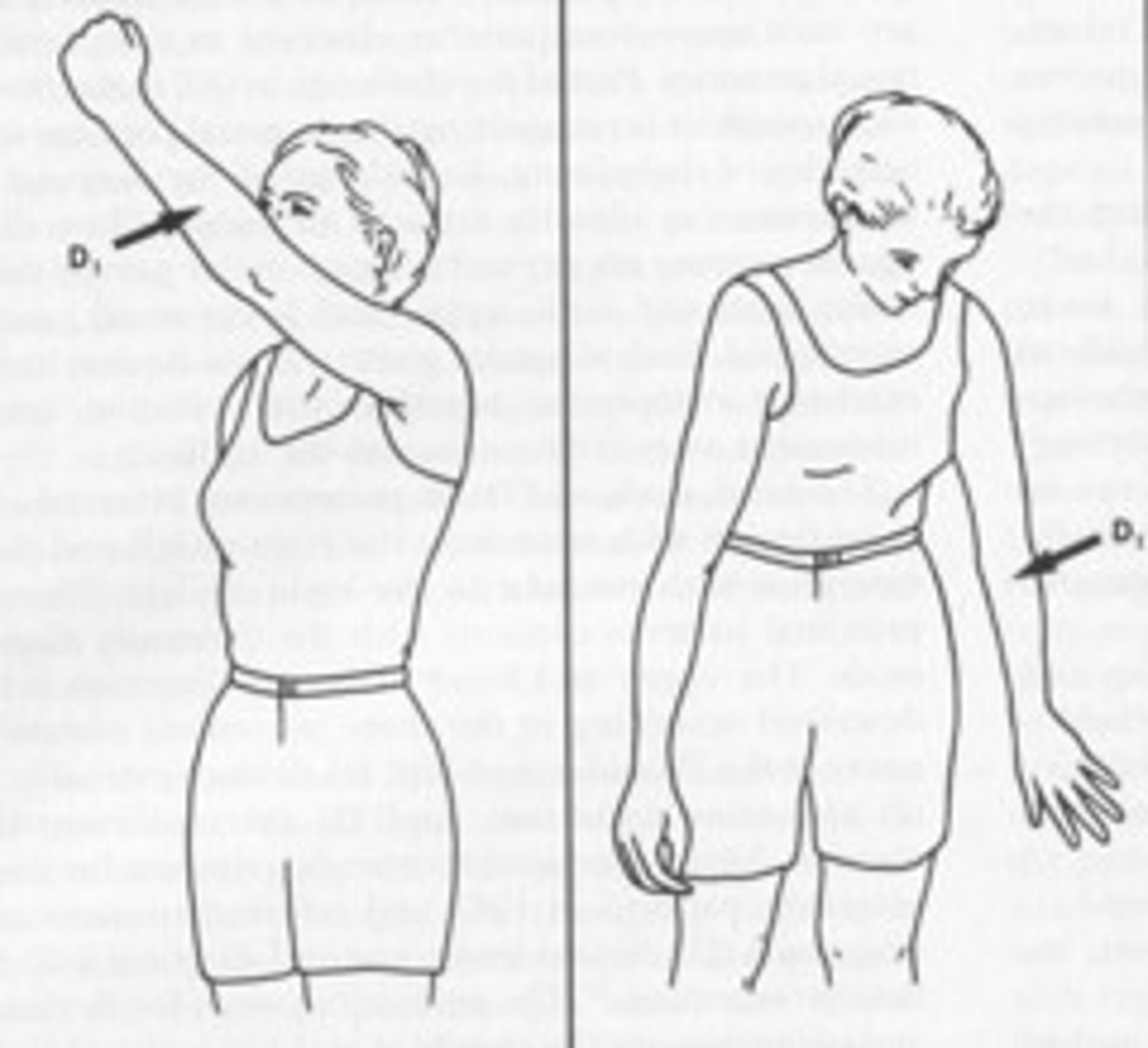
D1 extension
end position: extension
functional exam:pushing a car door open from the inside, a tennis backhand stroke, or buckling a seatbelt.
D2 flexion
ending position: shoulder flexion (lifting ur sword)
functional exam: Lifting a plate to a high shelf, reaching for a seatbelt, pulling a cord on a machine, or reaching upward to hang clothes.
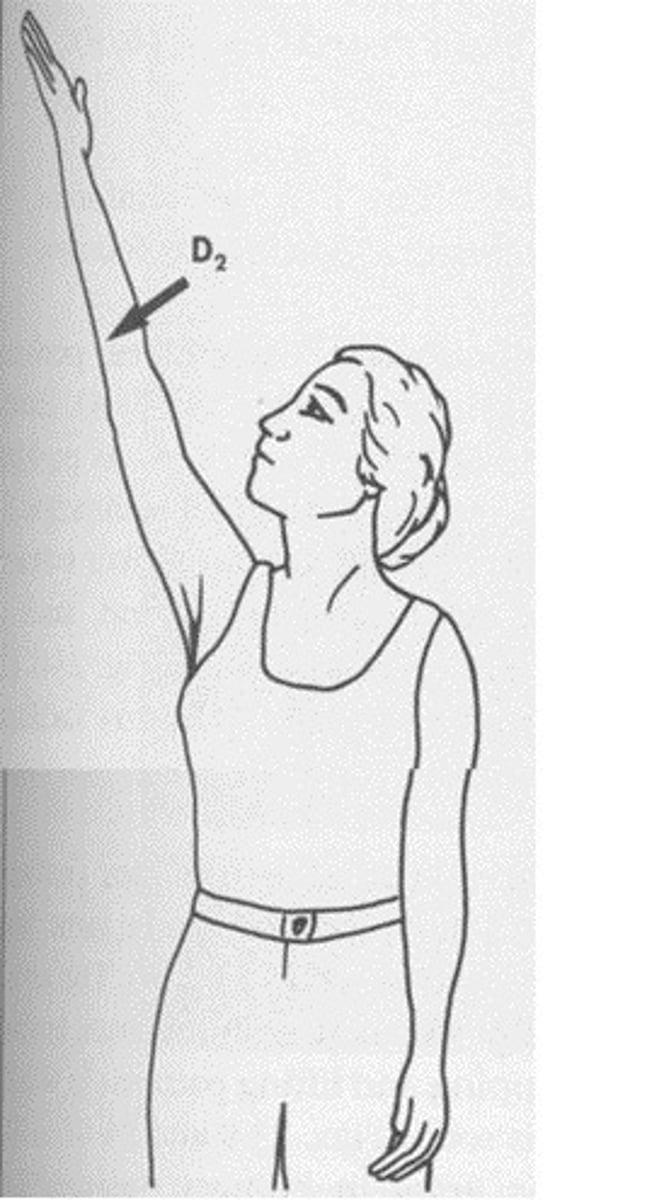
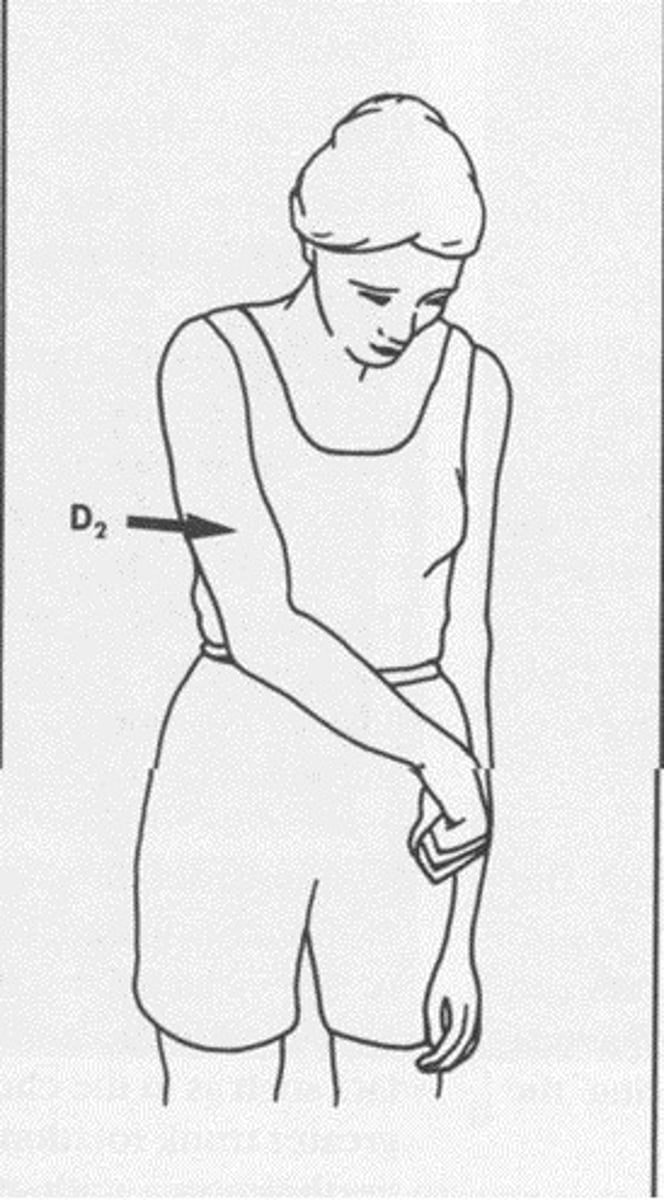
d2 extension
ending position: shoulder extension (DRAWING UR sword)
functional exam: Putting a sword back into its sheath, pushing a heavy object down and across the body, or taking a dish from a high shelf and putting it into the dishwasher.
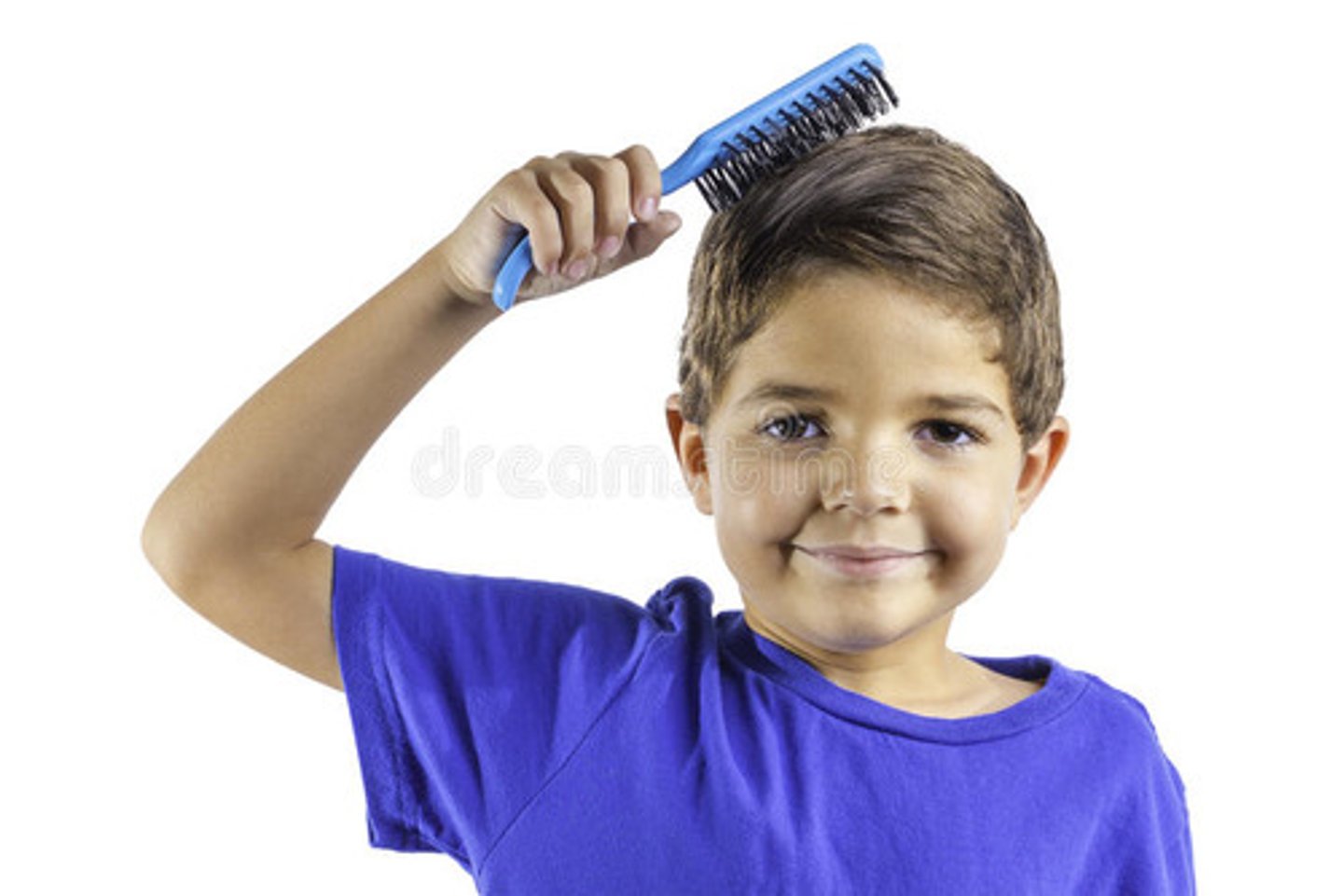
d1 flexion example
brushing hair on opposite side

d2 flexion example
brushing hair on same side
d1 extension example
-used to push a car door open
d2 extension example
-used to button trousers on the opposite side
bilateral patterns
-bilateral patterns reinforce extremity movement through combined diagnosis
-patterns influence trunk stability, flexion, extension, and rotation
what are the 3 types if bilateral patterns
symmetric, asymmetric, and reciprocal patterns
bilateral symmetrical pattern
paired extremities perform like movements at the same time (pattern, time and direction)- ex: starting to take off pullover sweater, reaching to lift large item off high shelf.
bilateral asymmetrical pattern
same pattern, timing but different direction
weight shifting?
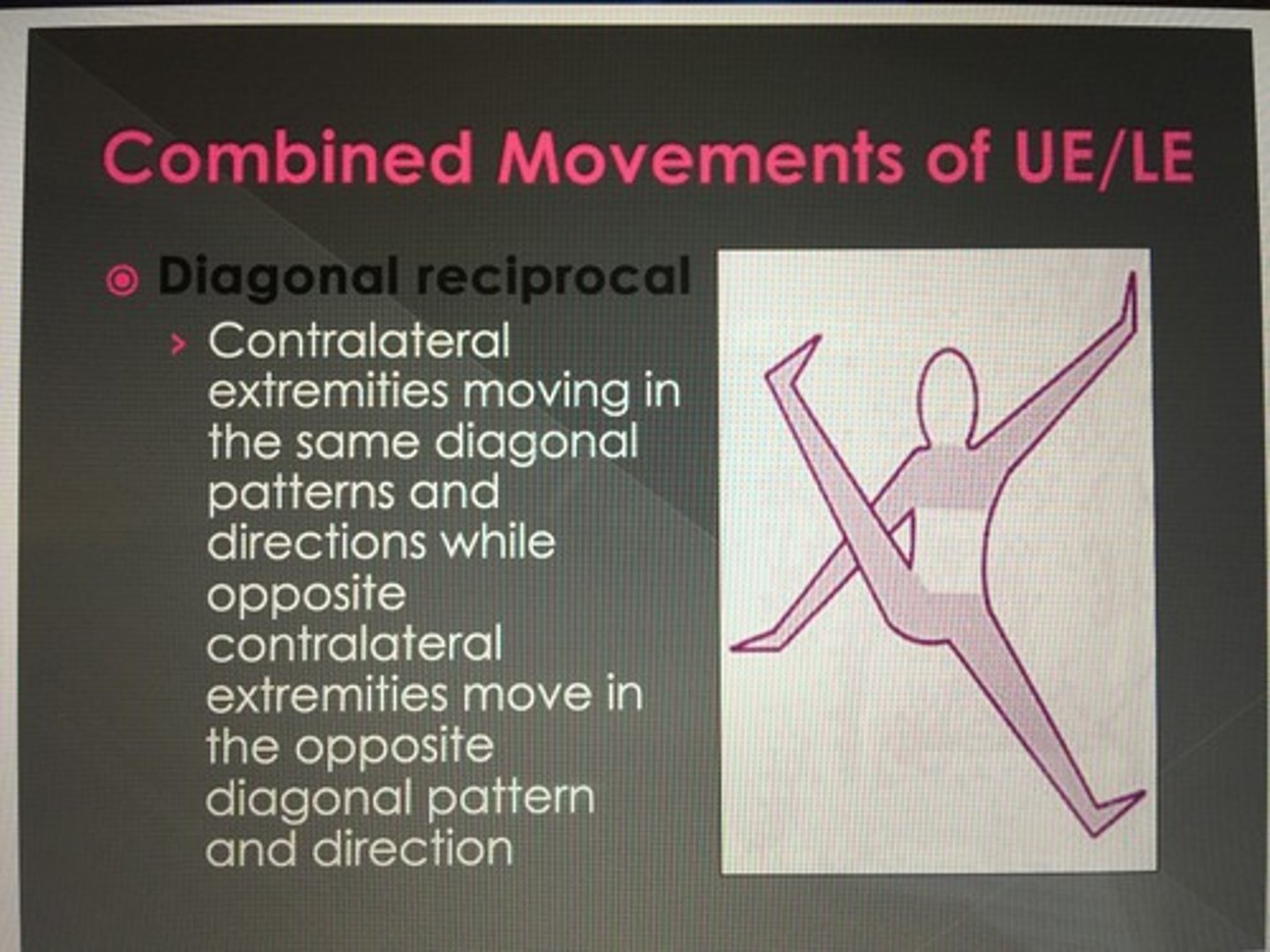
bilateral reciprocal pattern
opposite timing, pattern, direction
ex) running, swimming, walking
Extremities move in opposite directions simultaneously
• Combined diagonal reciprocals stabilize head, neck, and trunk
• Same-diagonal reciprocals facilitate trunk rotation
• Observed in walking, swimming, and higher-level balance tasks
bilateral symmetric and asymmetric patterns
symmetric patterns- both extremities move similarly at the same time
- facilitate trunk flexion or extension
-asymmetric patterns: extremities move towards one side simultaneously
- facilitate trunk rotation and increased control
which facilitates trunk rotation and increased control
bilateral asymmetric pattern
which facilitates trunk flexion or extensio
bilateral symmetric pattern
a client performs a bilateral PNF pattern in which one UE moves upwards while the opposite UE moves downwards in the same diagonal pattern? which bilateral patten is being used
asymmetrical
which bilateral PNF pattern places the highest demand on the trunk coordination and postural control
reciprocal
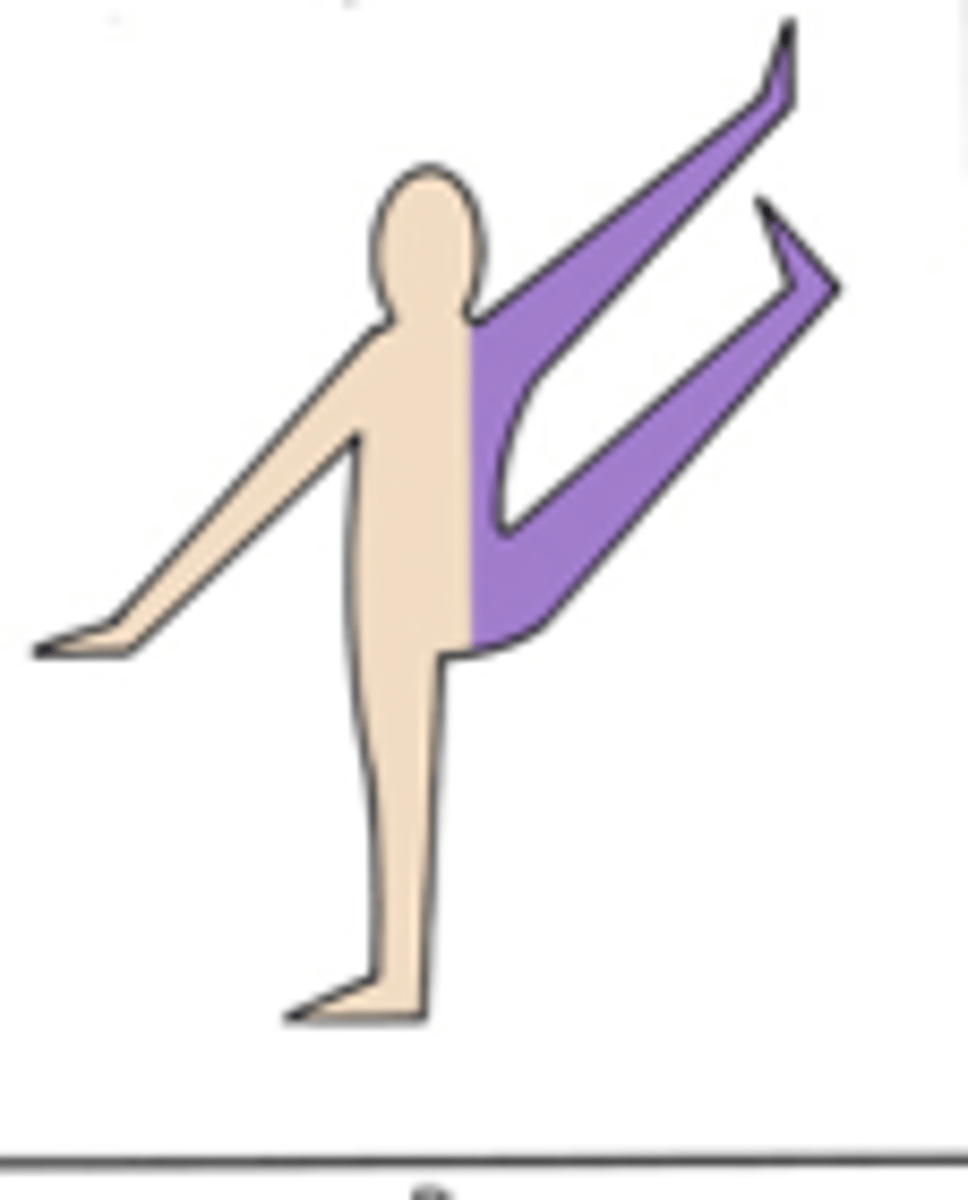
ipsilateral patterns
same-side extremities move together
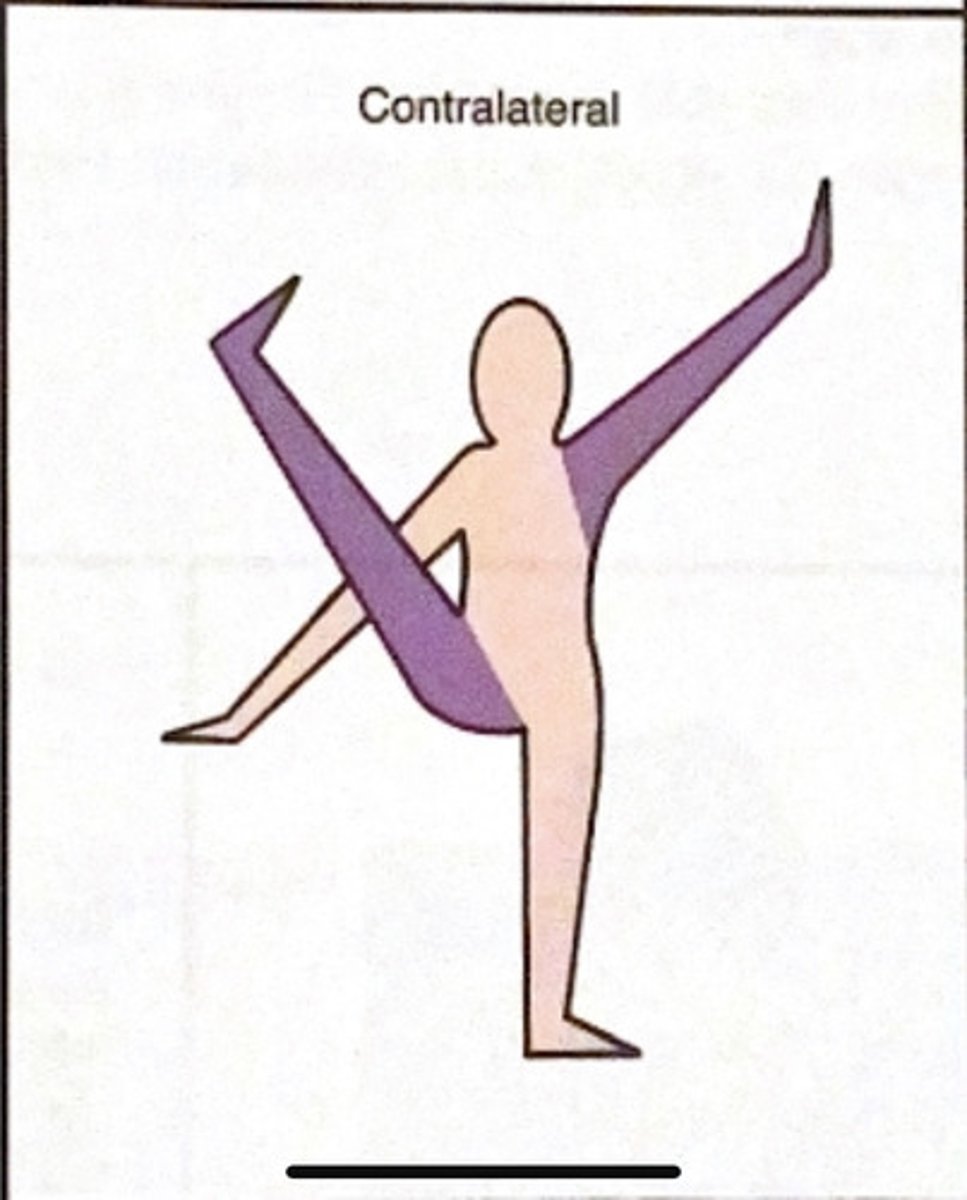
contralateral patterns
opposite-side extremities move together
diagonal reciprocal
read ?
 Note
Note  Flashcards (50)