Ch #3: 21st Century Thinking
 Studied by 0 people
 Call with Kai
 Learn
Learn Practice Test
 Spaced Repetition
 Match
Match Flashcards
 Knowt Play
1/12

There's no tags or description
Looks like no tags are added yet.
Name | Mastery | Learn | Test | Matching | Spaced | Call with Kai |
|---|
No analytics yet
Send a link to your students to track their progress
13 Terms
Leadership and Management - New Concepts
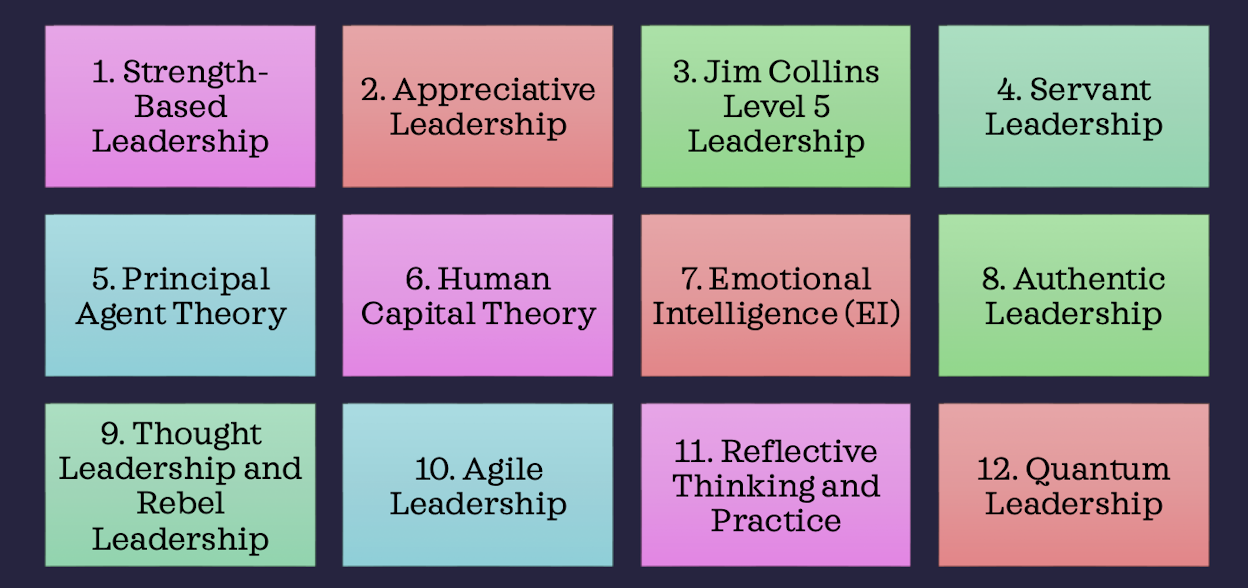
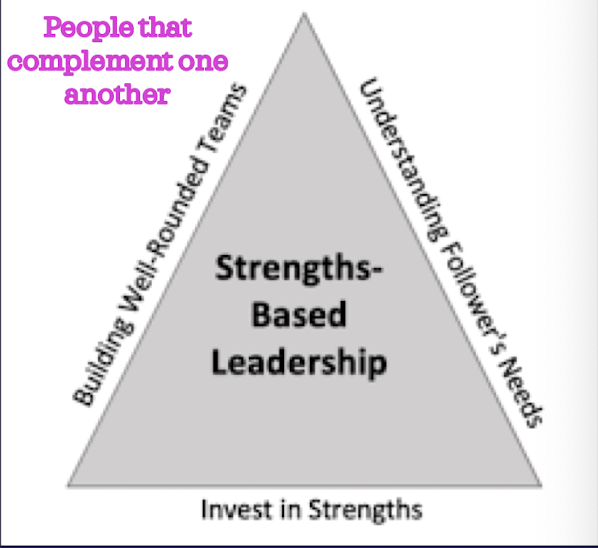
Strength-Based Leadership - Definition
Focus on development or empowerment of strengths
Opposed to focusing on weakness or areas of needed growth
Followers will want trust, compassion, stability, and hope from their leader

Appreciative Leadership - Definition
Focus on recognizing strengths in others and using relational processes and methods to build upon these strengths
Work collectively to make things happen
Recognize potential in others and help them accomplish more
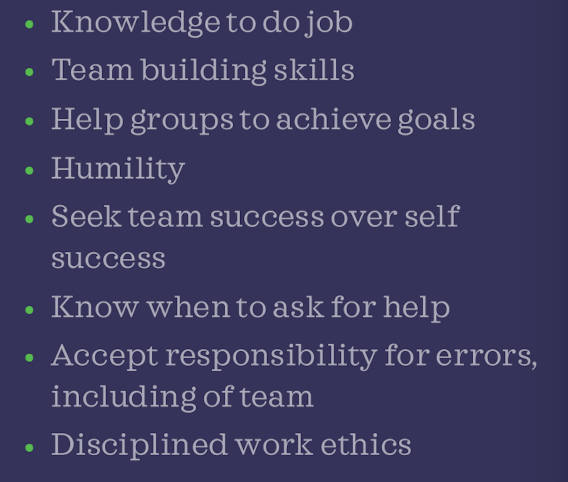
Jim Collins’ Level 5 Leadership - Definition
Need to show all 5 levels!
#1) Highly capable individual
#2) Contributing team member
#3) Competent manager
#4) Effective leader
#5 Executive
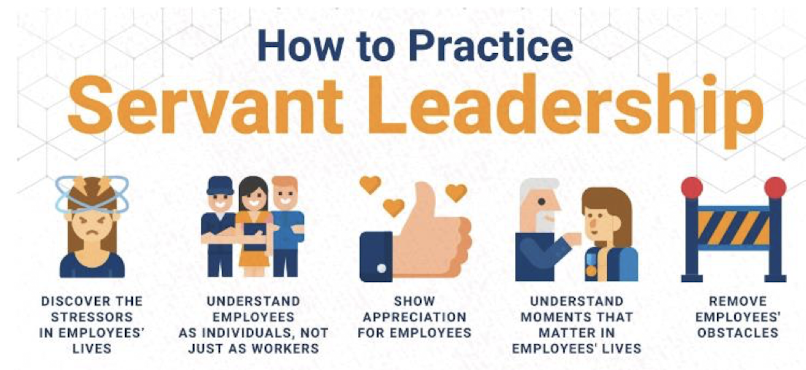
Servant Leadership - Definition
Prioritize serving others as #1 → Includes employees, customers, and community
Promote collaboration, teamwork, and collective activism
Empower others to be leaders
Increases collaboration, retention, and satisfaction
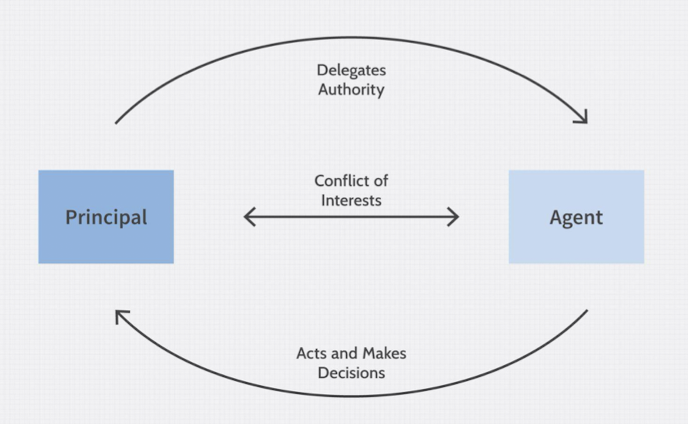
Principal Agent Theory - Definition
Not all followers (agents) are inherently motivated to act in best interest of the leader or employer (principal)
Advantage and own preferences may cause deviation from leader’s preferences
Principal must ID and provide agents with appropriate incentives to act in the organization’s best interest
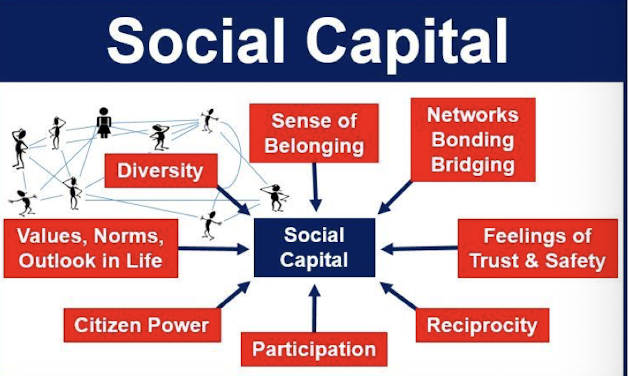
Human and Social Capital Theory - Definition
Human Capital = Economic value of a workers abilities and output
Investing in professional development is a future payoff for company
Social Capital = What a group can accomplish together via social relationships and networks
Built as companies encourage workers to view workplace as community where feel accepted and appreciated

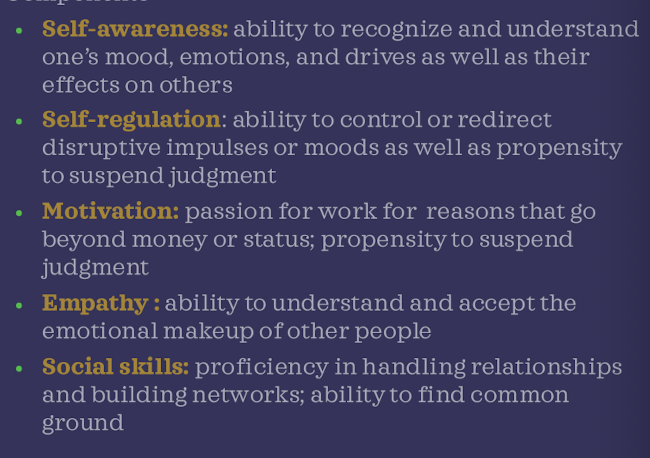
Emotional Intelligence - Definition
Ability to understand and control one’s own emotions as well as those of others
Made up of 5 main components
Self-awareness
Self-regulation
Motivation
Empathy
Social skills
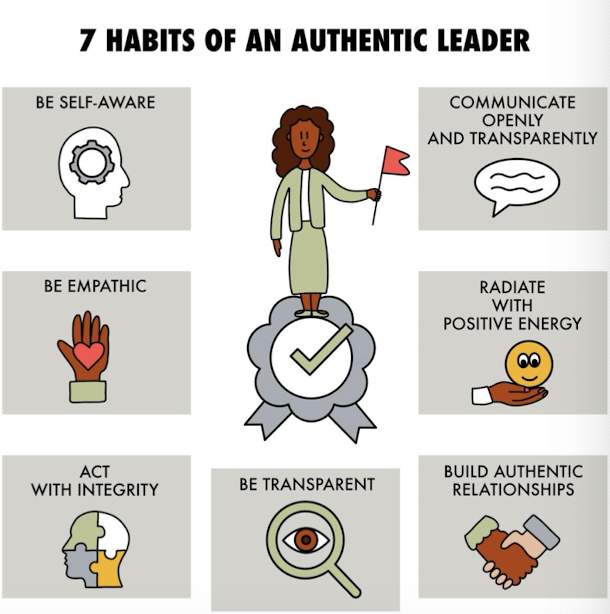
Authentic Leadership - Definition
To lead a person must be true to self including values and act accordingly → Hold team and self accountable
Characteristics include purpose, values, heart, relationships, and self discipline
Thought Leadership - Definition
Any situation an individual convinces another to consider a new idea, product, or way of looking at things
Attract followers by their risk-taking and vision to be innovative
Ideas are future-oriented and problem-oriented
Rebel Leadership - Definition
Becoming a Thought Leader through breaking the rules
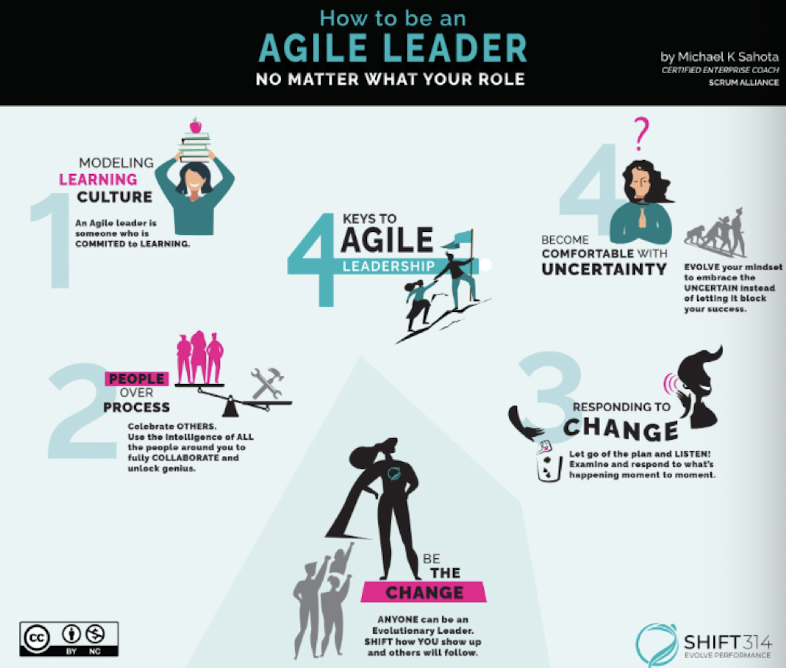
Agile Leadership - Definition
Can think in many ways
Fast, flexible, and adaptable in decision making
Open to ideas and innovation
Passionate for learning with desire to develop and inspire others
Strong communication skills
Agent for change
Quantum Leadership - Definition
Leaders work together with subordinates
Want to identify common goals, exploit opportunities, and empower staff to make decisions for organizational productivity to occur
 Note
Note  Flashcards (37)