Debate - Food and Nutraceuticals as Medicine
 Call Kai
 Learn
Learn Practice Test
 Spaced Repetition
 Match
Match Flashcards
 Knowt Play
1/45

There's no tags or description
Looks like no tags are added yet.
Name | Mastery | Learn | Test | Matching | Spaced | Call with Kai |
|---|
No analytics yet
Send a link to your students to track their progress
46 Terms
when does the food become functional
a food with demonstrated physiological benefits and/or reduction of chronic disease risk beyond basic nutrition functions
features bioactive substances (e.g. lycopene, allicin, sulforaphane)
does not include fortified foods
can be consumed as part of a typical diet
demonstrated health benefits
REMEMBER
food is what is eaten, but food can become functional when consumed by the right person, at the right dose and frequency of consumption to lead to a therapeutic effect
nutraceutical
a substance isolated from food with demonstrated physiological/health benefits and/or reduction of chronic disease risk
often features bioactive substances (vitamins, minerals, isoflavones, probiotics)
typically sold in medicinal formats (capsules and tablets)
often less accessible than functional foods due to cost
drug/pharmaceutical
a substance or mix of substances intended for either:
a) diagnosing, treating, mitigating, or preventing diseases and disorders
b) restoring, correcting, or modifying organic functions
c) disinfection of premises in which food is manufactured, prepared or kept
over the counter or prescribed
administered in a large variety of formats
heavily regulated: - food and drugs acts, controlled drug and substances act, patented medicines regulations
functional foods formats
natural food form, low processing
nutraceuticals forms
pills, liquids, capsules, powder
medicine forms
pills, liquids, capsules, tablets, topical, inhalers, injections, etc
bad diet effect on diabetes
diets high in sugars, carbs, and unhealthy fats: insulin resistance and metabolic dysfunction
good diet effect on diabetes
diet rich in whole grains, lean proteins, fiber, and heathy fats, physical inactivity: prevent, manage, or even reverse early stages diabetes
example of medication, nutraceutical, and functional food that may benefit blood glucose levels
medication: Metformin
nutraceutical: Berberine
functional food: Cinnamon
what does long term exposure to high glucose levels lead to
permanent damage to the eyes, kidneys, nerves and blood vessels. it also significantly increases the risk of CVD
case study CV
35yo female
diagnosed with T1DM at 21
eating disorder history: withholding insulin; attempted to manage T1DM through diet alone
→ chronic uncontrolled blood glucose levels (HbA1C > 10%)
case study LG
LG is a 57 yo male
diagnosed with T2DM at age 55
family history of CVD
LDL-c elevated: 4.2mmol/L (on a statin)
HbA1C elevated: 7.1%
hesitant to start metformin (medication) - refused
motivated to change diet and physical activity
berberine origin and study
berberine is extracted from coptis root and phellodendron chinese herbs
a meta-analysis included studies where individuals with T2DM consumed 0.6g-2.7g of berberine for 56-112 days
when was berberine effective in reducing blood glucose
when taken in combination with oral hypoglycemics vs. taking oral hypoglycemics alone
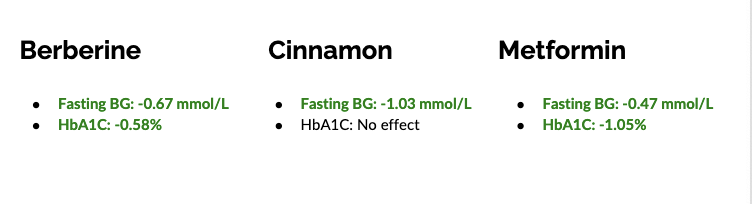
fasting plasma glucose: -0.67 mmol/L
postprandial glucose: -0.98mmol/L
HbA1C: -0.58%
berberine vs. oral hypoglycemics
there were no statistically significant effect differences in blood glucose changes
i.e. they were equally effective
side effects of berberine
increased risk of side effects with increased berberine dose
incidence of adverse reactions was low, and side effects were relatively low risk: nausea, diarrhea, constipation (note: similar side effects with metformin, especially when first starting the medication)
cinnamon
obtained from the inner bark of the cinnamon tree
it has been reported to possess antimicrobial, anti-inflammatory, antioxidant, antifungal, and antidiabetic properties
main bioactive components in cinnamon
cinnamaldehyde
cinnamic acid
cinnamate
as well as many polyphenols
meta analysis of cinnamon
meta-analysis: participants consumed 1-6g/day of cinnamon or 0.12-0.5g/day of cinnamon extract for a duration of 40-120 days
cinnamon effect on fasting plasma glucose
cinnamon was found to decrease fasting blood glucose by 19mg.dL (1.03 mmol/L)
no effect on HbA1C and serum insulin (consider the timeframe of 40-120 days; we need about 90 days to see a change in HbA1C)
metformin
commonly prescribed for the prevention/treatment of type 2 diabetes (improves insulin sensitivity, decreases intestinal absorption of glucose)
it has demonstrated to be a long-term tool for diabetes prevention in patients with prediabbetes
Meta-analysis: trial duration from 8-156 weeks and dose of metformin from 1000 to 3000 mg/d
metformin effect on blood glucose
HbA1C reduced by 1.05% vs. placebo
fasting blood glucose reduced by 0.47 mmol/L vs. placebo
result of CM case study → attempted to manage T1DM through diet alone
→ kidney transplant in 2018, long-term nerve and ocular damage
result of case study LG → hesitant to start metformin - motivated to change diet and physical activity
→ AIC: 6.3% (within target for T2DM)
hypertension
>135/>85 mm Hg
a condition that
affects the blood vessels of the bdoy
results in consistently high force and pressure of blood pushing against vessel walls - can cause damage that can reuslt in atherosclerosis
causes the heart to work harder to pump blood
is the leading risk factor for CVD - can lead to heart attack and heart failure so it is very important to manage
can be a result of too much sodium in diet
known as the silent killer
medication, nutraceutical, functional food for hypertension
medication: ACE inhibitors (Enalapril, lisinopril)
nutraceutical: magnesium
functional food: garlic (raw)
magnesium and hypertension
inadequate consumption of certain minerals, including magnesium is a risk factor for hypertension
magnesium acts as a calcium antagonist on smooth muscle, resulting in vasorelaxation
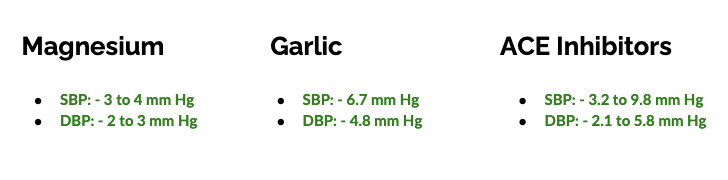
a 2012 meta-analysis of 22 trials found an overall significant decrease of (systolic BP, diastolic BP)
effect of magnesium supplementation on BP
blood pressure decrease was statistically significant but small elemental magnesium supplement dose: 120-973 mg (mean: 410mg)
garlic and hypertension
used in the management of a variety of health conditions for thousands of years
exerts antihypertensive effects biochemically:
inhibits angiotensin-converting enzyme activity
reduces synthesis of vasoconstricting prostanoids
enhances nitric oxide (NO) activity
Many of these benefits are exerted by the bioactive component allicin
garlic and hypertension studies show
a systematic review and meta analysis found garlic to have significant effects on systolic and diastolic blood pressure
overall significant decrease of:
systolic blood pressure: -6.71 mm Hg
diastolic blood pressure: -4.8mm Hg
also found garlic to be safe
limitations: lack of long-term studies and RCTs demonstrated risk of bias
ace inhibitors and hypertension
angiotensin-converting enzyme (ACE) inhibitors target the renin-angiotensin-aldosterone system (RAAS)
overactive RAAS associated with higher bloo dpressure
ACE inhibitors also characterized by decrease in the bradykinin degradation- leads to a release of NO and prostaglandins, therefore causing vasodilation
ACE inhibitors shown to significantly decrease all-cause mortality in hypertensive patients
chronic inflammation
a long-term inflammatory state in which there is an increased production of pro-inflammatory mediators such as cytokines and adhesion molecules
chronic inflammation supports the development of Noncommunicable diseases (NCDs) - cardiovascular disease, cancer, chronic respiratory disease and diabetes
medication, nutraceutical, functional food example for chronic inflammation
medication: NSAIDS (ibuprofen, COX2 inhibitors)
nutraceuticals: curcumin
functional food: nuts
what is curcumin
a bioactive polyphenol most potently found in tumeric
meta analysis of curcumin
trial duration ranged from 12 days to 24 weeks.
curcumin dosage ranged from 46-4275mg/day
curcumin reduced TNF-a, MCP-1, IL-8. IL-6, and CRP compared to control, and increased IL-10 compared to control
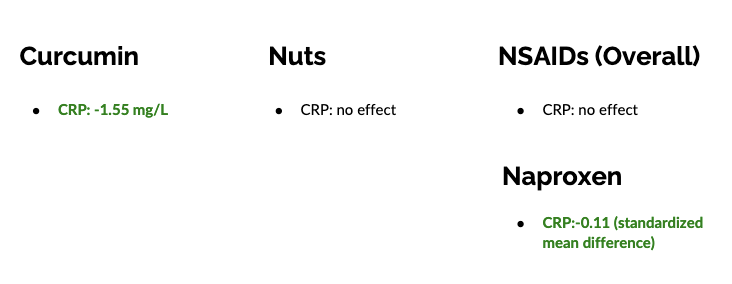
curcumin was more effective at lowering CRP concentrations as the duration of consumption increased (overall CRP change: -1.55mg/L)
was the meta analysis on curcumin accurate
however, the risk of bias in the studies included in this meta-analysis was highly variable
the greatest lowering effects on CRP was found in the negative-quality studies, followed by the neutral-quality studies and lastly the positive-quality studies
this trend was also seen with the findings for IL-6 and TNF-a
Nuts and inflammation
a meta-analysis evaluated the impact of a variety of nuts, such as walnuts, almonds, pistachios, peanuts, hazelnuts, cashews, and mixed nuts
intervention duration: 4 to 48 weeks
dosage of nut consumption from 28-128g/day
what did nut consumption do
nut consumption reduced ICAM-1 levels, specifically in mixed nuts
across all nuts, there was no significant effect on levels of CRP, VCAM-1, TNF-a, IL-6, and E-selectin
NSAIDs
non-steroidal anti-inflammatory drugs are typically used to reduce pain and inflammation
however, not all NSAIDs are considered equal
meta-analysis on NSAIDs
meta-analysis of RCTs in patients with rheumatoid arthritis
included 19 RCTs of 1- different NSAIDs
overall: no effect on CRP
Naproxen: significant reduction in CRP (SMD: 0.11)
NSAID side effects: stomach ulcers, stomach pain, nausea, headaches, dizziness, kidney damage, etc
how does misinformation in the media contribute to perceptions about food/nutraceuticals as medicine
functional foods and nutraceuticals:
lack of regulatory compliance oversight (esp. nutraceuticals) - presence of other compounds not listen on the label
lack of experimental evidence
false advertising
contamination with heavy metals
interactions between supplements/nutrients/herbs and drugs?
potentially pushes the misunderstanding of “more is better” - this may lead to the consumption of excess nutrients, leading to toxicity
problems on all ends
medicine
adverse drug reactions
high potency
inappropriate dosage for certain (complex) patients
inappropriate prescription
failure of drug knowledge
drug-drug interactions (many unknown)
is food medicine? are nutraceuticals medicine?
inspiring message, or guilt inducing message (guilt that you caused your disease by not eating properly)
consider effect sizes with medication vs. FFN
consider the role of nutrition in disease prevention
how are FFN perceived when it comes to their impact on health? how about medication?
consider statistical significance vs. clinically meaningful results
are the forms of FFN similar or different to medication?

