Integration of body systems
 Studied by 2 people
 Call Kai
 Learn
Learn Practice Test
 Spaced Repetition
 Match
Match Flashcards
 Knowt Play
1/28

There's no tags or description
Looks like no tags are added yet.
Name | Mastery | Learn | Test | Matching | Spaced | Call with Kai |
|---|
No analytics yet
Send a link to your students to track their progress
29 Terms
system integration
complex living organisms evolved to make use of body systems made up of component parts that collectively perform an overall function
coordination of parts required for systems to work together for whole organism
cells, tissues, organs and systems
specialised cells of the same type group together to form tissues
tissues work together to perform a particular function
different tissues work together to form organs
different organs work together to form organ systems
organ systems work together to carry out the life functions of a complete organism
each hierarchical level has great efficiency and complexity
emergent properties
multicellular organisms can perform functions unicellular organisms cannot
this is a result of properties emerging when individual cells organise and interact
integration of organs
communication within bodies of animals primarily by nervous and endocrine system
blood circulates throughout all organs and almost all tissues transporting these things e.g:
energy as respiratory substrates
oxygen
water and carbon compounds
waste products of metabolism
nervous system vs. endocrine system
similarities:
both used for communication between cells
both can work over long distances
both use chemicals that bind to receptors

structure of brain
cerebral cortex:
outer layer of brain, divided into 2 hemispheres
responsible for higher order processes (intelligence, memory
cerebellum
underneath cerebral cortex
responsible for balance, muscle coordination and movement
brainstem
relays messages between cerebral cortex, cerebellum and spinal cord
medulla: controls unconscious activities like heart beat
important glands:
pituitary gland:
produces hormones
hypothalamus
region of brain that regulates body temp
role of brain: central info integration organ
brain receives info, processes it, stores it and sends instructions to all parts of body to coordinate life processes
info is received from sensory receptors, in specialised sense organs like eye or in other organs like pressure receptor in blood vessel
brain also stores info for short/long term in form of memory
processing info leads to decision making by brain, resulting in signals sent to effectors (muscles, glands)
spinal cord
area of tissue in centre of spinal cord: grey matter, integrating centre for unconscious processes
this info is processed at the unconscious level, involves reflex reactions, which happen quickly
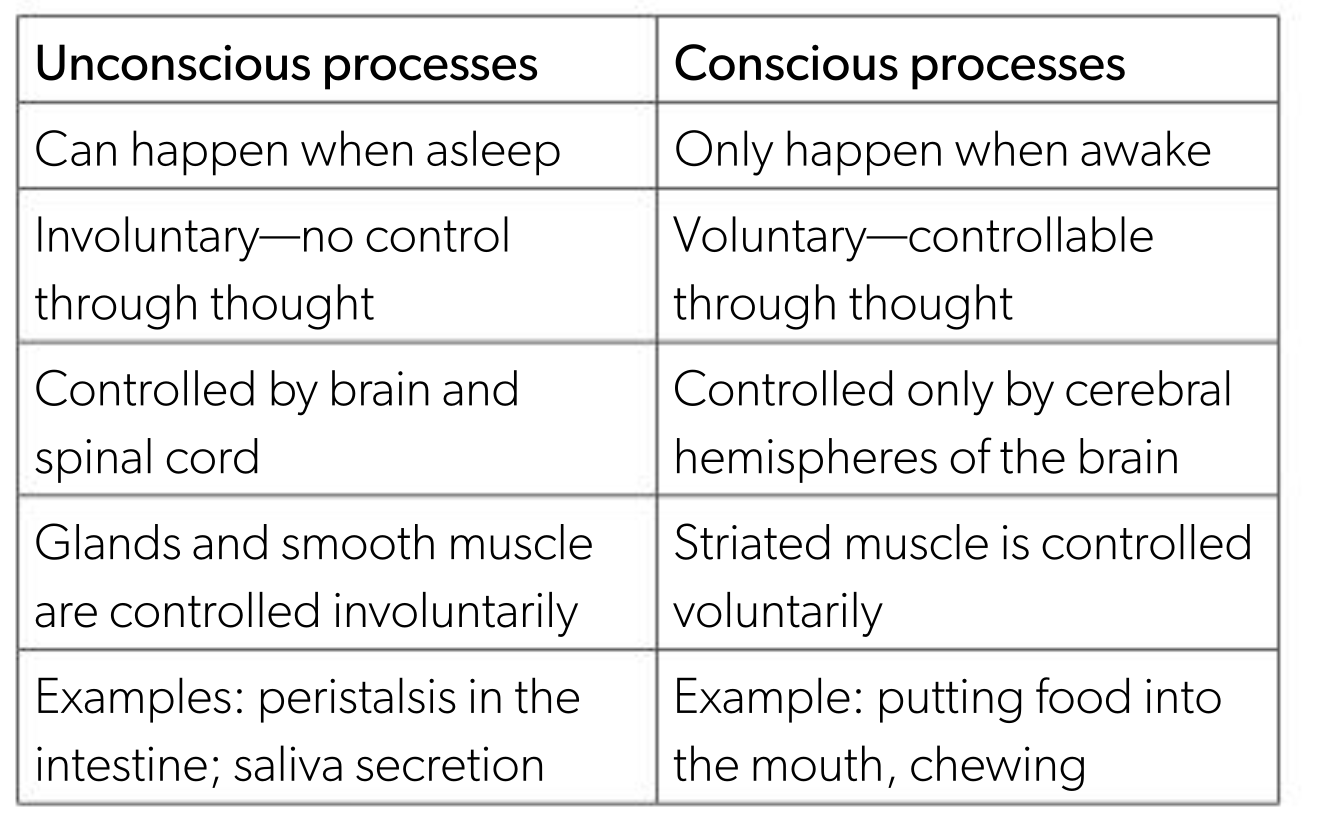
input through sensory neurones
receptors: specialised cell that detects changes in environment that cause stimulus
receptors convert energy in one form into an electrical impulse, and pass to sensory neurone
signals from sensory neurones are conveyed to CNS
spinal cord receives signals from organs like skin and muscle
brain receives signals from all the sense organs located in head
sensory inputs are receives by cerebral hemispheres
output through motor neurones
motor cortex can send impulses to any striated muscle (attached to bone) in the body
motor neurones: used to carry out action potentials to muscles to initiate movement
motor neurone receives signals from interneurone, forms synapse with second motor neurone, whose axon leads to a specific striated muscle
when nerve impulse reaches the end, contraction is stimulated
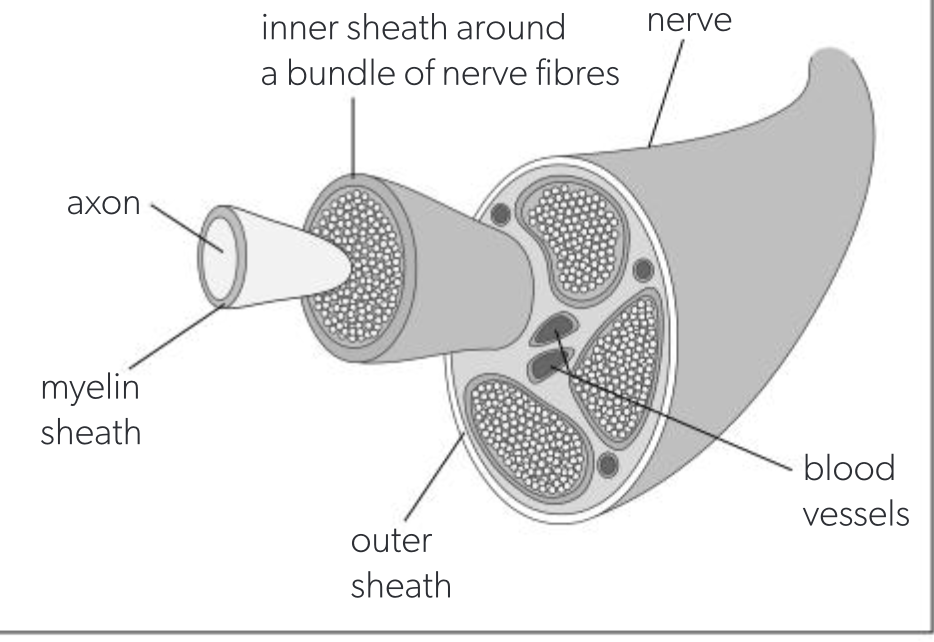
structure of nerves
nerves are made of bundles of sensory neurones/motor neurones fibres
may be myelinated or unmyelinated
protective myelin sheath
reflex arc
pathway along which impulses are transmitted from a receptor to an effector without involving conscious regions of the brain
synapses for pain reflex are in spinal cord
order of a reflex arc
(pain) reflex arc in the hand:
stimulus may be sharp pin or heat, detected by receptor in the skin of the hand, pain is perceived directly by nerve endings of sensory neurone
nerve impulse from receptor cell/sensory nerve endings passed to CNS
electrical impulse passed to interneuron in grey matter of brain/spinal cord
process signals brought by sensory neurone and make decisions abt appropriate responses
interneuron passes synapse to appropriate motor neurone. if threshold potential achieved, impulse is passed along axon to effector
when stimulated by motor neurone, effector (muscle) will contract and pull away from stimulus
role of cerebellum
coordinates movement and controls skeletal muscle contraction and balance
does not initiate movement, when movement begins the cerebellum receives feedback signals from area of the body that’s moving and it sends signals to coordinate and control the movement
circadian rhythms
24 hour cycles
melatonin and sleep patterns
melatonin controls sleep-wake circadian rhythm
pineal gland secretes melatonin into blood
production is influenced by detection of light/dark by retina in eye
signals transmitted to pineal gland according to amount of daylight person is exposed to
increasing melatonin: tiredness, decreasing melatnonin: awakeness
epinephrine
during stressful, fearful or exciting situations, neurones stimulate epinephrine secretion
since it is hormone, transported around body in bloodstream and binds to receptors on target organs, one of which is SAN, leading to increased frequency of excitations
increases heart rate to supply blood to muscle cells faster
increases rate of aerobic respiration, so more energy
due to this, striated muscles receive a greater vol of blood per min, blood carries more glucose and oxygen allowing increased production of ATP, thus more powerful/frequent muscle contractions
changes experienced are both nervous and hormonal responses
control of endocrine system
hypothalamus
monitors blood as it flows through the brain, releases hormones in response or stimulate pituitary gland to release hormones
examples of functions:
regulating body temp
osmoregulation
pituitary gland
located below hypothalamus
produces a range of hormones
feedback control of heartrate
medulla oblongata: cardioregulatory centre in the brain, unconscious control
found at the base of brain near top of spinal cord
causes a change in heart rate to bring pressure, pH and conc of O2/CO2 in blood to be brought back to target levels
signals sent to the SAN cause the heart rate to be changed
exercise can cause internal stimuli, detected by chemoreceptors and baroreceptors, located in the aorta and in the carotid arteries
chemoreceptors: detect changes in blood pH and O2 and CO2 levels
baroreceptors monitor changes in blood pressure
feedback control of ventilation rate
controlled by respiratory centres in brainstem
processes inputs and changes ventilation rate by negative feedback if blood pH is too high/low
during exercise, high levels of CO2 produced due to increase in respiration, so blood pH falls
pH changes in the blood:
CO2 released as a waste product from respiring cells diffuses into cytoplasm of red blood cells
CO2 combines with water forming carbonic acid which dissociates readily into H+ and HCO3-
H+ ions lower pH of blood so their presence detected by chemoreceptors in the medulla
signals sent at higher rate to diaphragm and EIC muscles to increase ventilation rates and volume of air being moved in/out of lungs
control of peristalsis
peristalsis: series of muscles contractions in walls of oesphagus or small intestine, controlled unconsciously by enteric nervous system (ENS)
peristalsis controlled by muscles which initiate peristaltic reflex
muscle in tongue is under voluntary control by brain and initiates swallowing
bolus of food is detected by stretch receptors (sensory neurones of ENS) as alimentary canal becomes distended
signals from these receptors pass to brainstem, which stimulates muscle contractions that push food into oesophagus, now the process is involuntary
defecation is the removal of faeces from the rectum via anus. anus relaxes and widens to defecate, this process is voluntary
observations of tropic responses
tropisms: responses to factors affecting plant growth
towards a stimulus: positive, away from a stimulus: negative
most roots are positively gravitropic
tropisms can be investigated and the responses to a variety of stimuli can be measured through:
qualitative diagrams of seedling growth
quantitative measurements of angles of curvature of seedlings
phototropism
plant shoots are positively phototropic, they grow towards light
ensures plants maximise the amount of light absorbed for photosynthesis
affects shoots and top of stems
phytohormones in plant
phytohormones: plants hormones that regulate growth, development, and response to stimuli
e.g auxin resulting in cell elongation
maintaining phytohormone conc gradients
auxins: group of plant hormone that influence many aspects of plant growth
auxin enters cells by simple diffusion, but to exit and move to next cell it needs membrane proteins called auxin efflux carriers
plant cells distribute auxin efflux carriers on one side of the cell to encourage one way movement of auxin
process requires ATP
efflux carriers are important in establishing auxin gradient across stem/root in response to stimulus
cell growth by auxin
concentration of auxin determines the rate of cell elongation within the stem
when light shines on stem from one side, an auxin gradient is establish with more auxin on the shaded side and less on illuminated side
cell elongates faster on the shaded side, shoot bends towards the source of light
controlling growth by elongation
auxin promotes synthesis of proton pumps by cell and their insertion into plasma membrane
pumps transport H+ ions from inside the cell to the cell wall (apoplast), acidifying the apoplast
cell wall made of cellulose contains crosslinkages, which are influenced by pH. more acidic pH weakens the links allowing wall to extend, so the cell can grow
concentration gradients of auxin cause gradients of apoplastic pH and therefore difference in cell growth, needed for phototropism
interactions between auxin and cytokinin
auxin: cell elongation, produced in shoots
cytokinin: cell division, produced in roots
both hormones must be transported to areas of the plant where they are not produced
cytokinin: from root to shoot
auxin: from shoot to root
at certain concentrations, 2 hormones work together to ensure root and shoot growth is regulated
positive feedback in fruit ripening
ethylene is a gas produced by fruit during fruit ripening, and produce this phytohormone as they ripen, so this is positive feedback that promotes rapid ripening
gas diffuses from one fruit to adjacent fruit which triggers further release of ethylene
effect is that all fruit ripens at the same time
 Note
Note  Flashcards (63)