Chapter 6 - SUPPLY, DEMAND AND, GOVERNMENT POLICIES
 Call Kai
 Learn
Learn Practice Test
 Spaced Repetition
 Match
Match Flashcards
 Knowt Play
1/43

There's no tags or description
Looks like no tags are added yet.
Name | Mastery | Learn | Test | Matching | Spaced | Call with Kai |
|---|
No analytics yet
Send a link to your students to track their progress
44 Terms
What is a price ceiling?
The legal maximum price a seller is allowed to charge.
Think: “You can’t go above this price.”
👉 Example: Rent control laws (landlords can’t charge more than a set rent)
What is a price floor?
The legal minimum price a seller is allowed to charge.
Think: “You can’t go below this price.”
👉 Example: Minimum wage (workers must be paid at least this amount)
What happens when the is a price ceiling is below equilibrium? For consumers and producers?
If the ceiling is too low, it causes a shortage.
👉 Why?
More people want the product (it’s cheap)
Sellers don’t want to sell as much
📌 Result: Not enough goods for everyone
What happens when the price floor is above equilibrium? For consumers and producers?
If the floor is too high, it causes a surplus.
👉 Why?
Sellers want to sell more (high price)
Buyers don’t want to buy as much
📌 Result: Too much of the product, not enough buyers
Is price ceiling supposed to be above or below equilibrium?
Above
Is price floor supposed to be above or below equilibrium?
Below
What is a tax?
A tax is money the government takes when people buy or sell something.
👉 Example: Sales tax when you buy clothes
How do taxes affect the market? How does it affect buyers and sellers?
Taxes make things more expensive and reduce buying and selling.
👉 What happens:
Buyers pay more 💸
Sellers receive less 💸
Fewer products are sold
Does it matter if the tax is on buyers or sellers? What happened if tax is on buyers? What happens if tax is on sellers?
Not really!
👉 Even if:
Tax is on buyers → prices go up
Tax is on sellers → prices still go up
📌 Both end up sharing the cost
What is tax incidence?
who actually feels the burden of the tax
👉 In simple terms:
Who is really paying more money?
What determines who pays more of the tax?
It depends on who can change their behavior more easily.
👉 If buyers really need something (like gas):
Buyers pay more of the tax
👉 If sellers really need to sell:
Sellers pay more of the tax
📌 Rule:
The side that can’t avoid the tax easily pays more
Simple real-life example of tax incidence
Gas tax ⛽
People still need gas → they keep buying
So buyers pay most of the tax
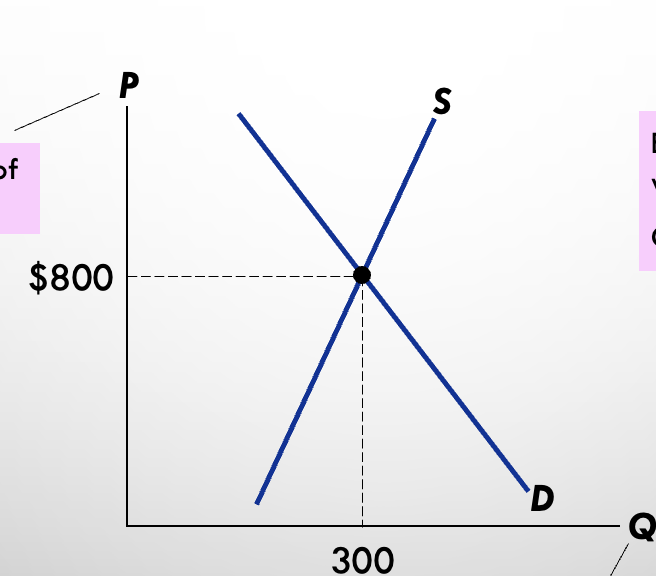
What does this graph show?
Equilibrium without price controls
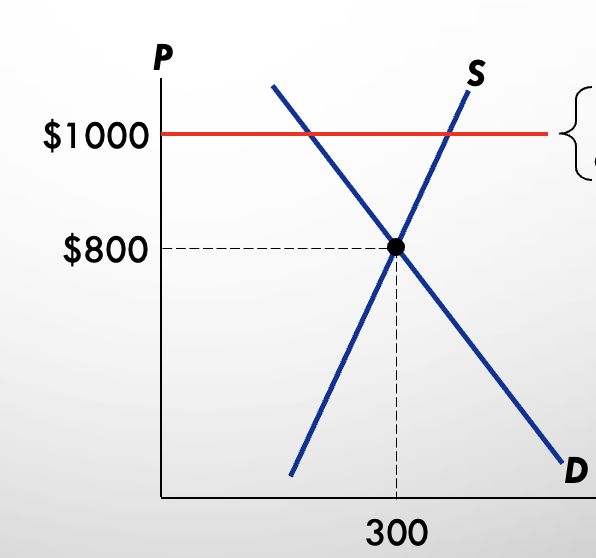
What does the red line represent?
Price ceiling
A price ceiling above the equilibrium price is… binding or not binding? Does it have a effect on the market outcome?
Not Binding
Has no effect on the market outcome
If the equilibrium price is above the ceiling, would it be legal or illegal? and would it be binding or not binding? Surplus or Shortage?
Illegal
Binding
Shortage
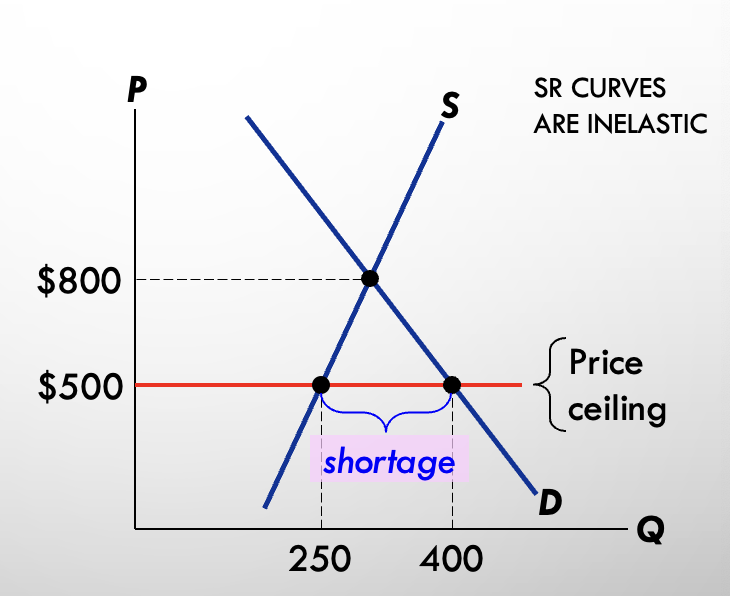
If there is a shortage, how would sellers “ration” goods? Or decides who gets the limited items? (Rationing Methods)
Long Lines: first come first served, it wastes time because not everyone can wait
Discrimination (bias) : sellers choose based on personal preference, its unfair and not based on who actually needs it the most
Main Idea: Shortages cause unfair rationing, so goods don’t always go to the people who value them most.
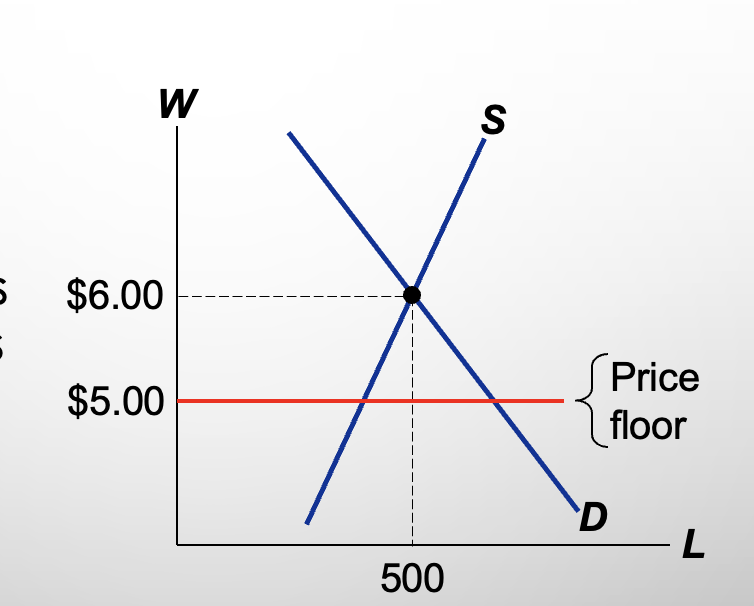
Is this binding? Does it have an effect on the market outcome?
Not Binding
Has no effect on the market outcome
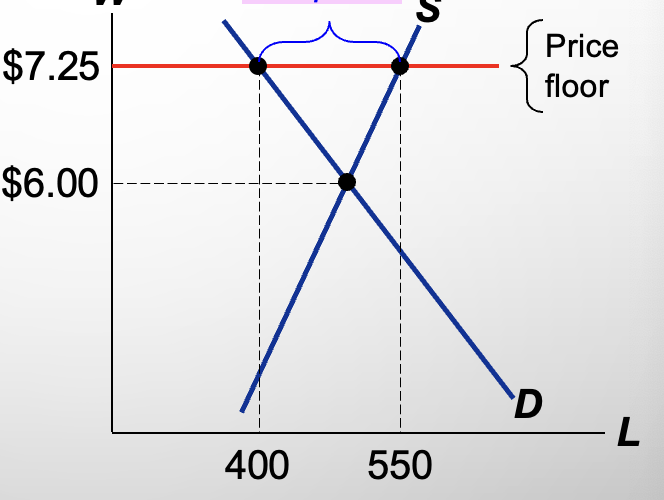
Is this binding or not binding? Does it cause a surplus or shortage? Is it legal or illegal?
Binding
Causes a Surplus
Illegal
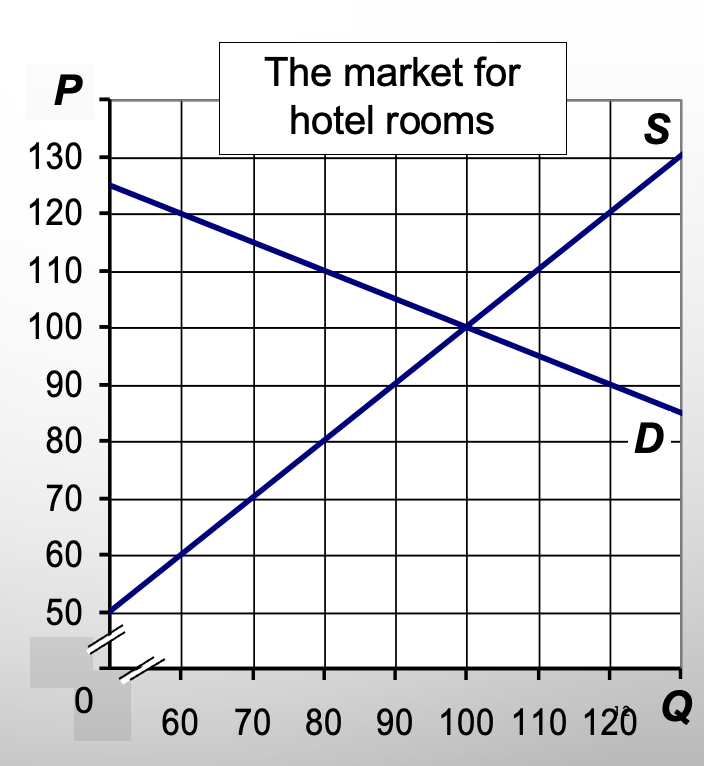
Determine the effects of $90 price ceiling. Shortage or surplus by how much? Binding or not binding?
Binding price ceiling below the equilibrium
The price falls to $90.
Shortage of 30
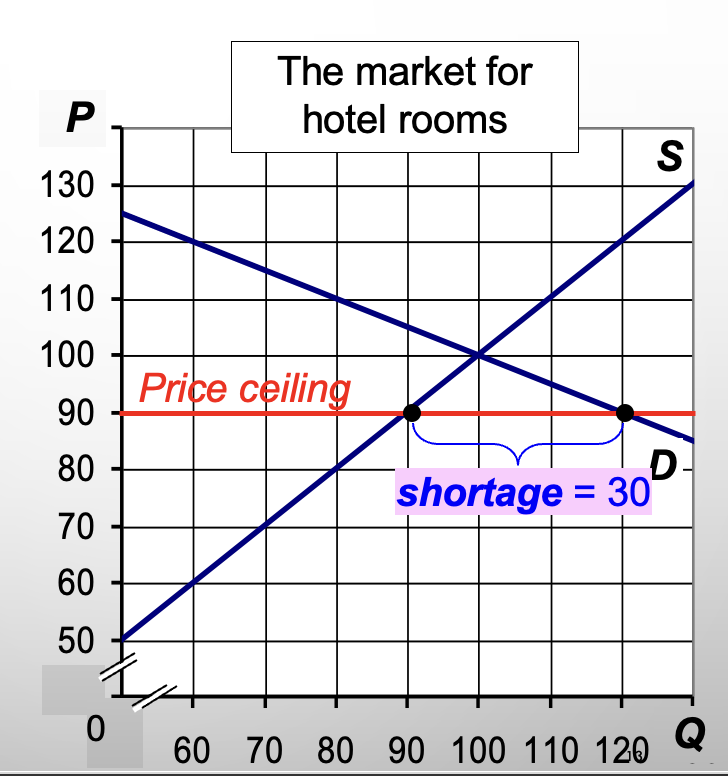
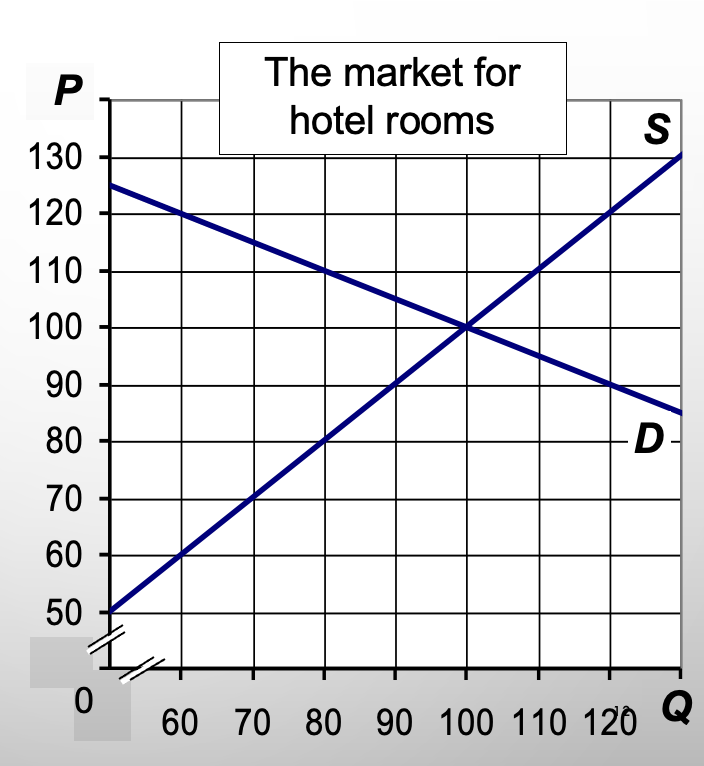
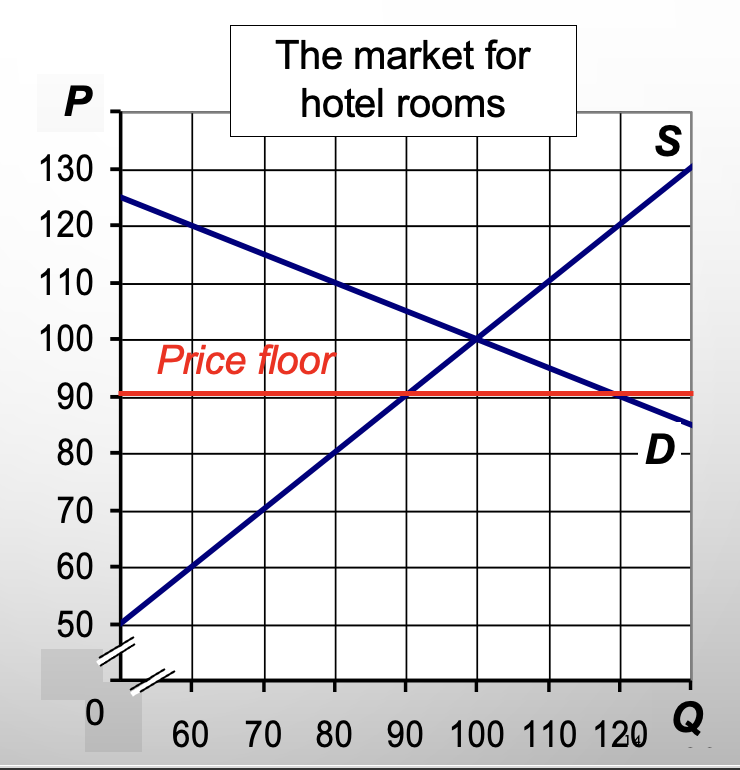
Determine the effects of $90 price floor
Equilibrium price is above the $90 price floor, so the price is not binding
P= $100
Q= 100 rooms
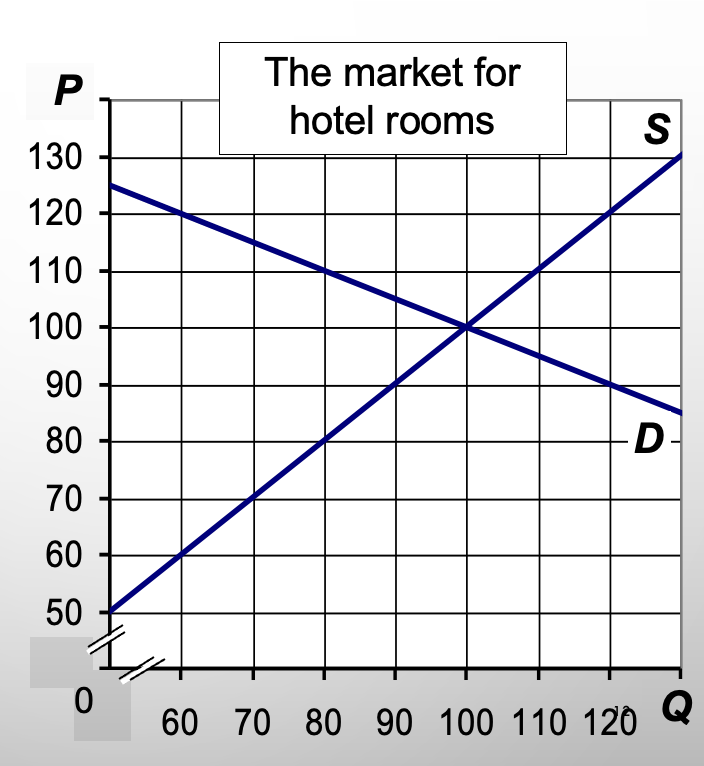
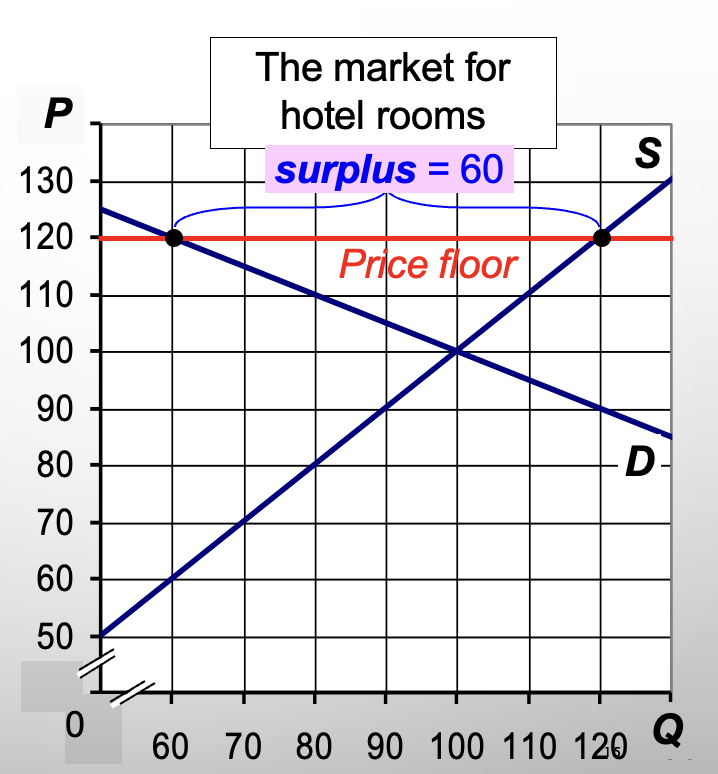
Determine the effects of $120 price floor
Binding price floor above the equilibrium
Buyers demand 60 rooms, sellers supply 120
Surplus
What is a market?
buyers + sellers interacting
Why do economists usually oppose price ceilings and price floors?
They interfere with the market’s natural balance
Prices in a market economy are best described as:
Determined by supply and demand
What is the main role of prices in a market?
To balance supply and demand
What does it mean that markets “coordinate economic activity”?
Buyers and sellers make decisions based on prices
Why do governments use price controls?
To help poor people and fix unfair markets
What is a major problem with price controls?
They often hurt the people they are trying to help
Which is a better way to help low-income individuals?
Subsidies
A rent subsidy is:
Government help paying rent
Why does the government use taxes?
👉 To raise money for important things like:
🛣 Roads
🏫 Schools
🪖 National defense
➡ Basically: public services
Who does the government tax?
Buyers (customers)
Sellers (businesses)
How is the tax burden shared between buyers and sellers?
Buyers usually pay higher prices
Sellers usually receive less money
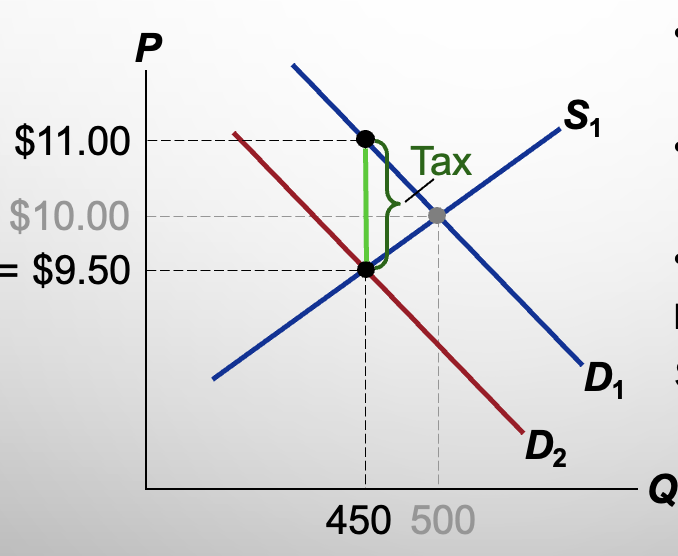
New equilibrium with tax:
Sellers receive:
Buyers Pay:
Total tax:
450
$9.50
$11.00
$1.50 tax
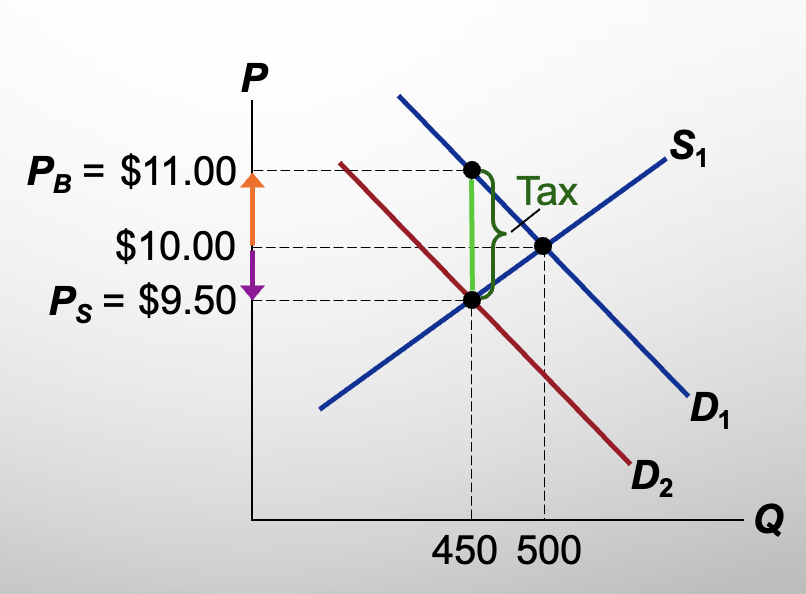
How much more do buyers pay? How much less do sellers get due to tax?
Buyers pay $1.00 more
Sellers get $0.50 less
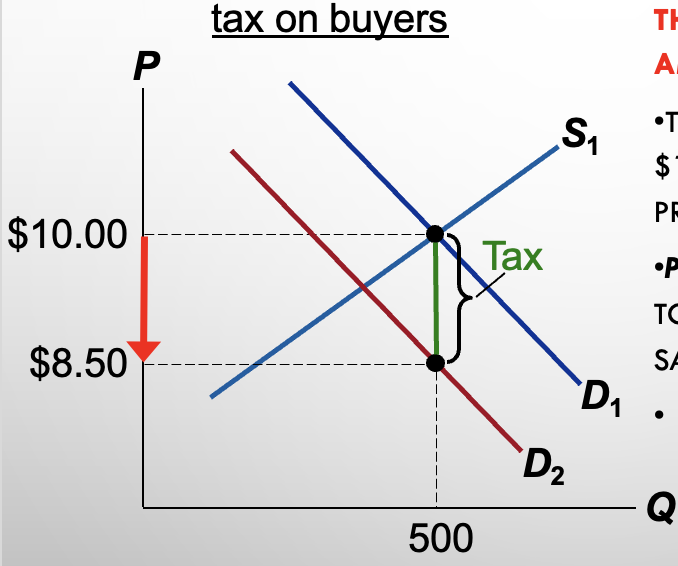
Would a tax on buyers shift the demand curve up or down?
Down
👉 Why?
Buyers now have to pay extra (the tax)
So they are less willing to buy at every price
Buyers pay $1.50 more than market price
Would a tax on sellers shift the supply curve up or down?
It shifts the supply curve up.
Tax on sellers = they need more money to make the same amount with the tax
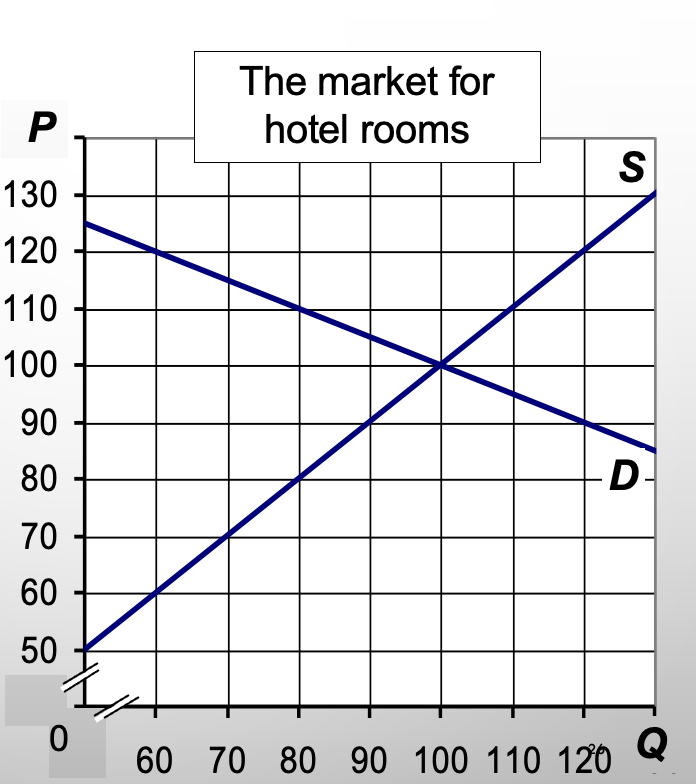
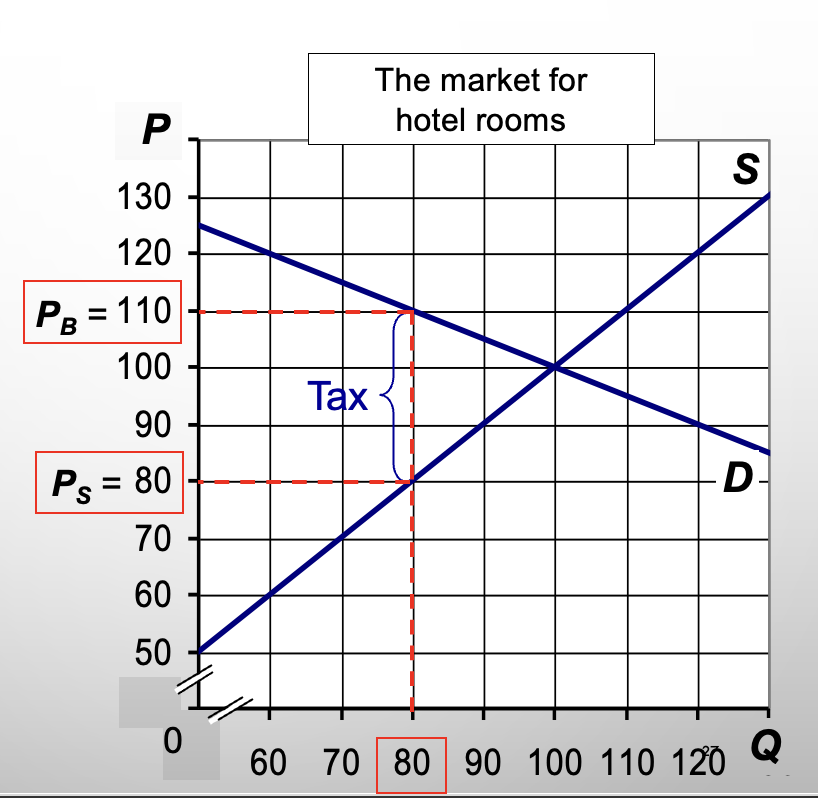
Suppose the government imposes a tax on buyers of $30 per room.
What’s the new equilibrium, Buyers price, and sellers price?
New Equilibrium: 80
Buyers Price: $110
Sellers Price: $80
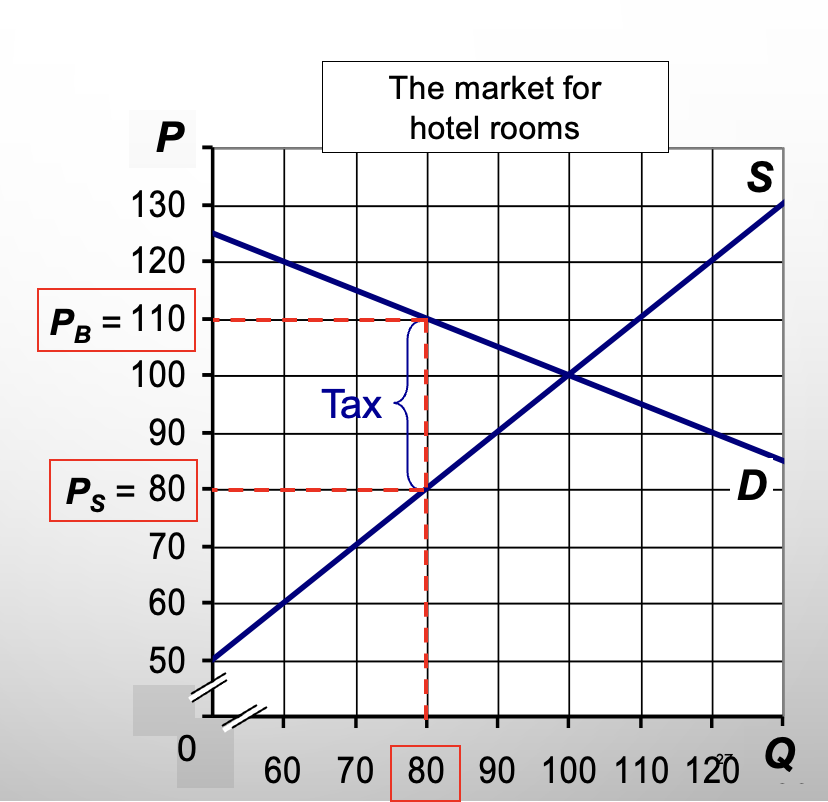
What’s the incidence on buyers and sellers?
Buyers: $10
Sellers: $20
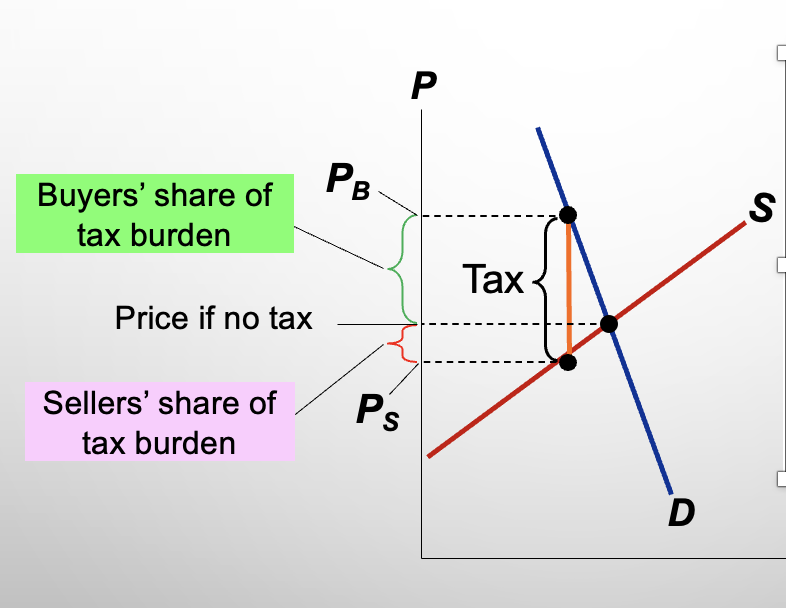
What happens when supply is more elastic than demand?
Supply is more elastic → sellers can easily stop selling if prices aren’t good.
Demand is less inelastic → buyers can’t stop buying what they need.
Think of it like a balloon: sellers can let go of the balloon (leave the market) easily, but buyers are holding onto it tightly (need the product). The “tight grip” (buyers) ends up taking most of the weight of the tax.
Buyers pay more tax!
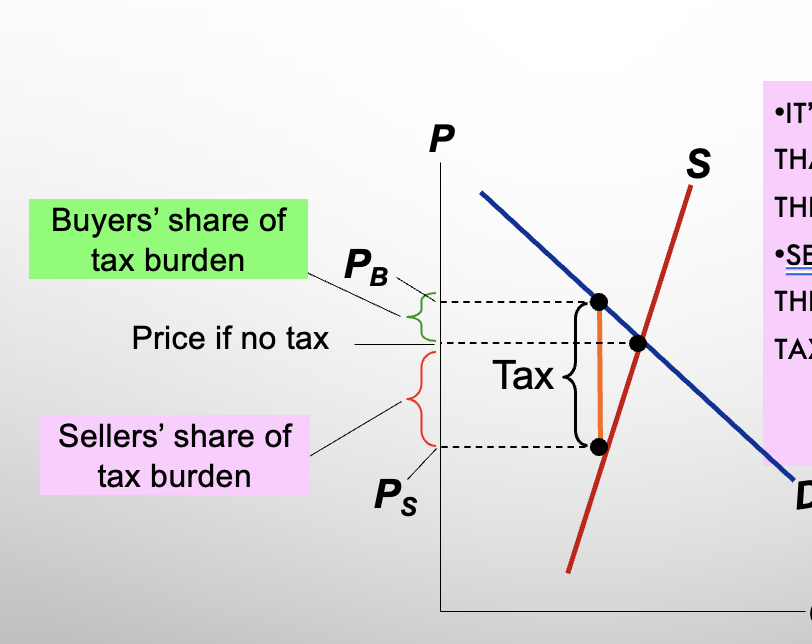
What happens when demand is more elastic than supply?
Demand is more elastic → buyers can easily stop buying if the price goes up.
Supply is less elastic → sellers can’t easily stop selling.
Imagine a balloon again: this time, buyers are holding the balloon loosely (they can let go) and sellers are holding tightly (they can’t let go). The “tight grip” (sellers) ends up taking most of the weight of the tax.
Sellers pay more tax!
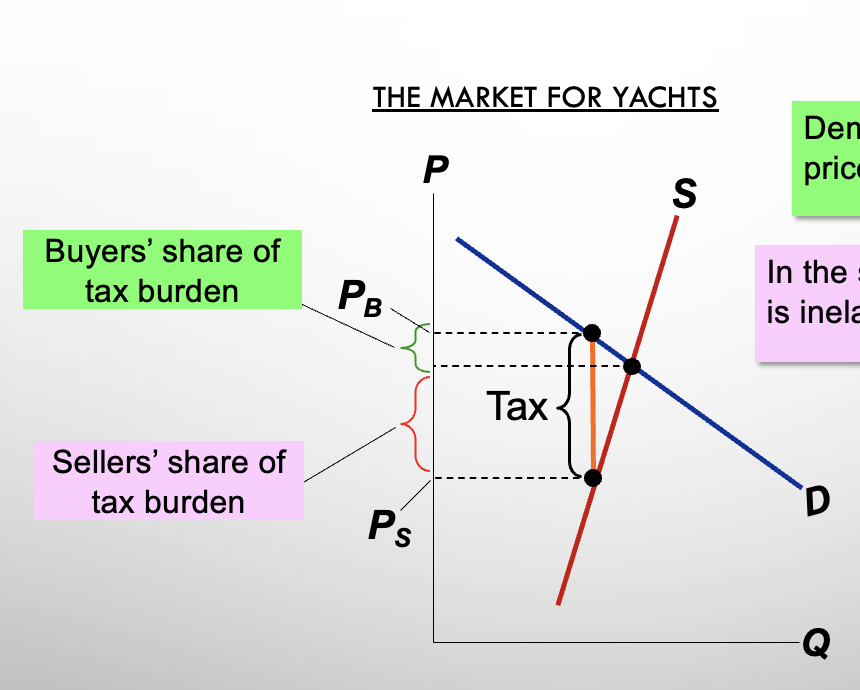
What is luxury tax?
In 1990, Congress added a tax on very expensive things like:
Yachts, Private airplanes, Furs, Jewelry, Expensive cars
The idea: make rich people pay extra money because they can afford it.
Who ends up paying the tax?
Sellers
Demand is elastic, supply is inelastic
Because buyers (rich people) can easily avoid the tax by not buying, they don’t pay most of it.
Sellers can’t easily leave the market, so they end up losing money or lowering their prices to sell.