Tissues bio 3
 Studied by 0 people
 Call with Kai
 Learn
Learn Practice Test
 Spaced Repetition
 Match
Match Flashcards
 Knowt Play
1/22

There's no tags or description
Looks like no tags are added yet.
Name | Mastery | Learn | Test | Matching | Spaced | Call with Kai |
|---|
No analytics yet
Send a link to your students to track their progress
23 Terms
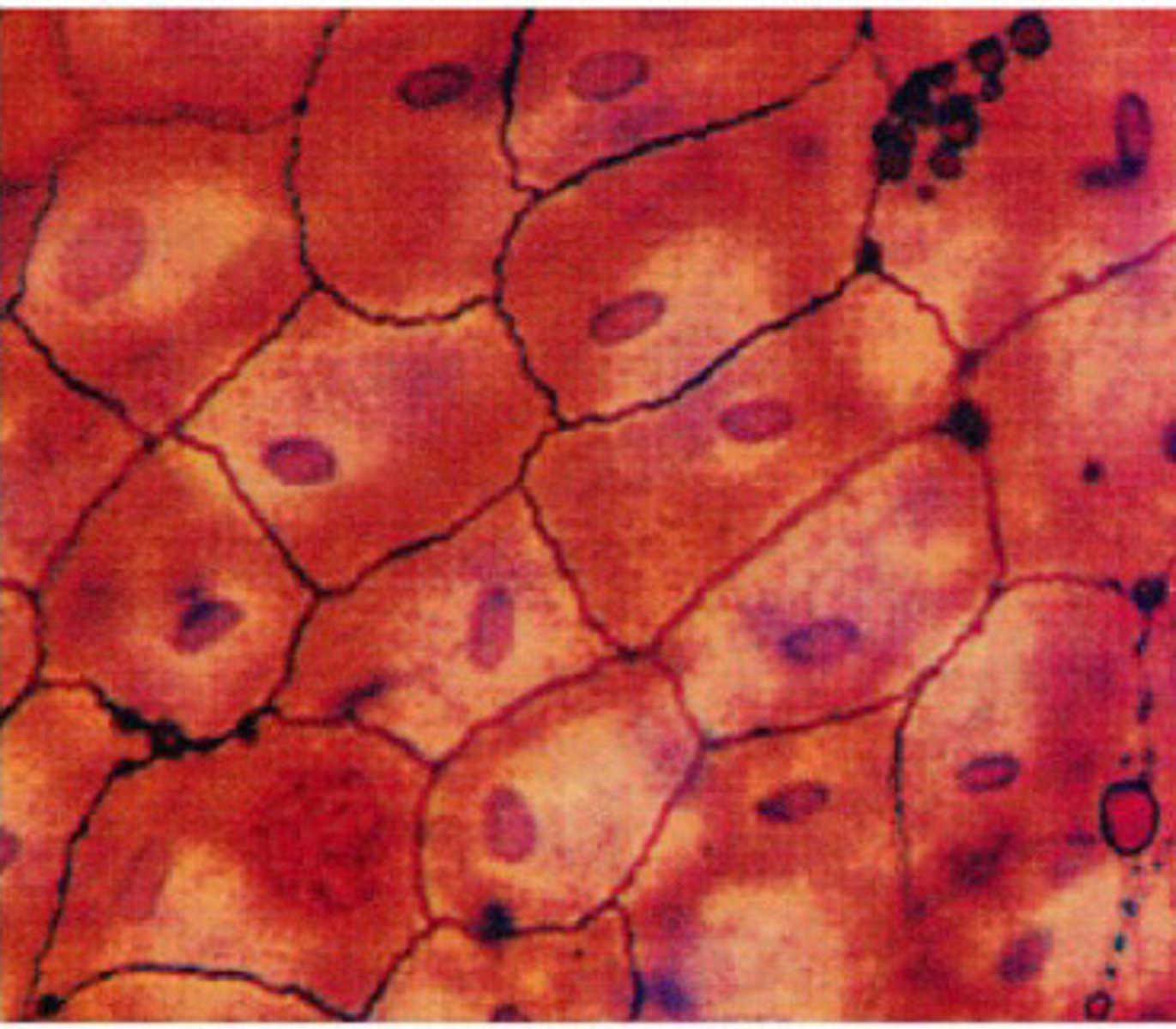
Simple squamous epithelium
Allows for diffusion and filtration within air sacs of lungs, lining of heart and vessels
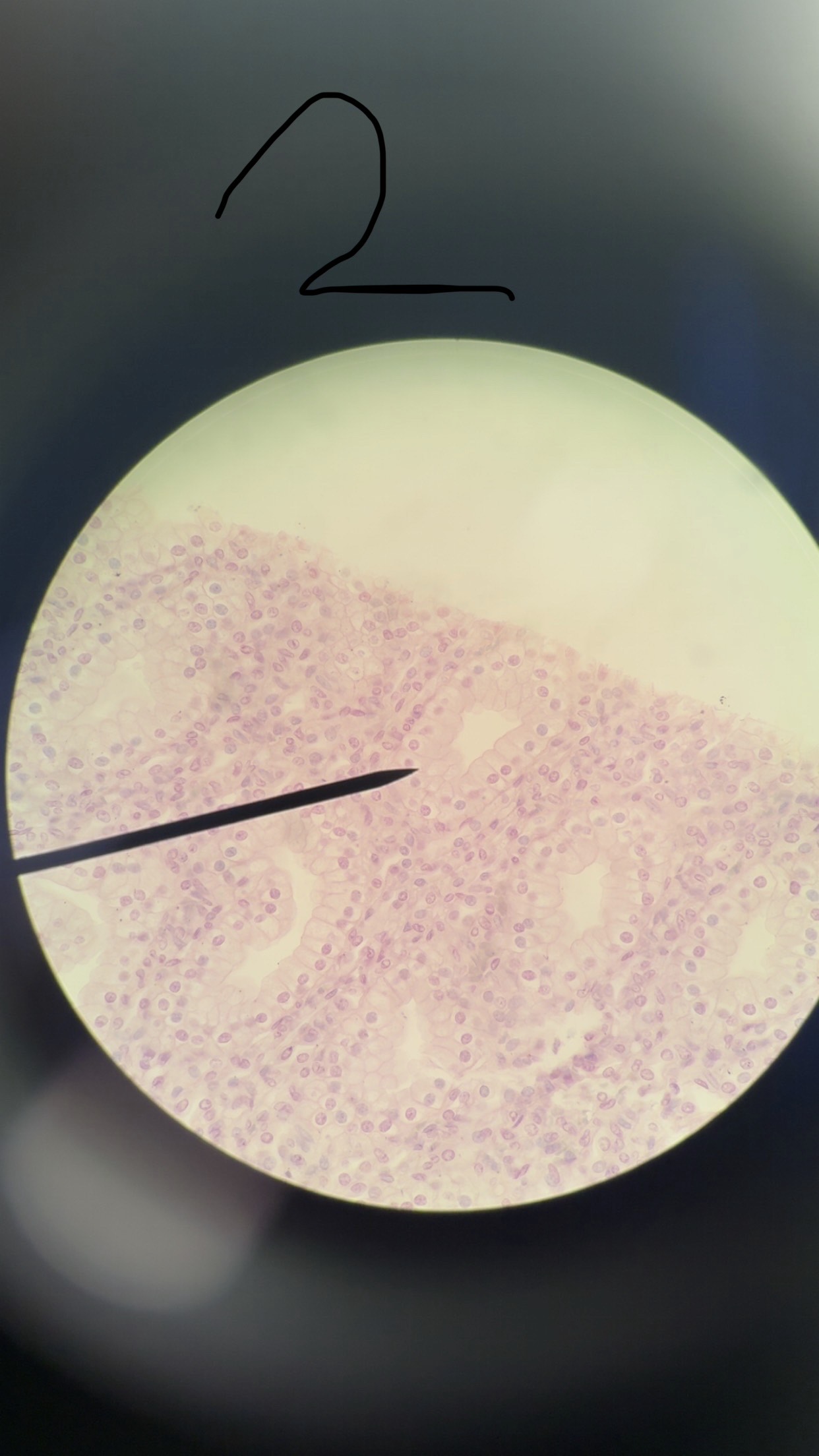
Simple cuboidal epithelium
Absorption and secretion within kidney tubules and ovary surface
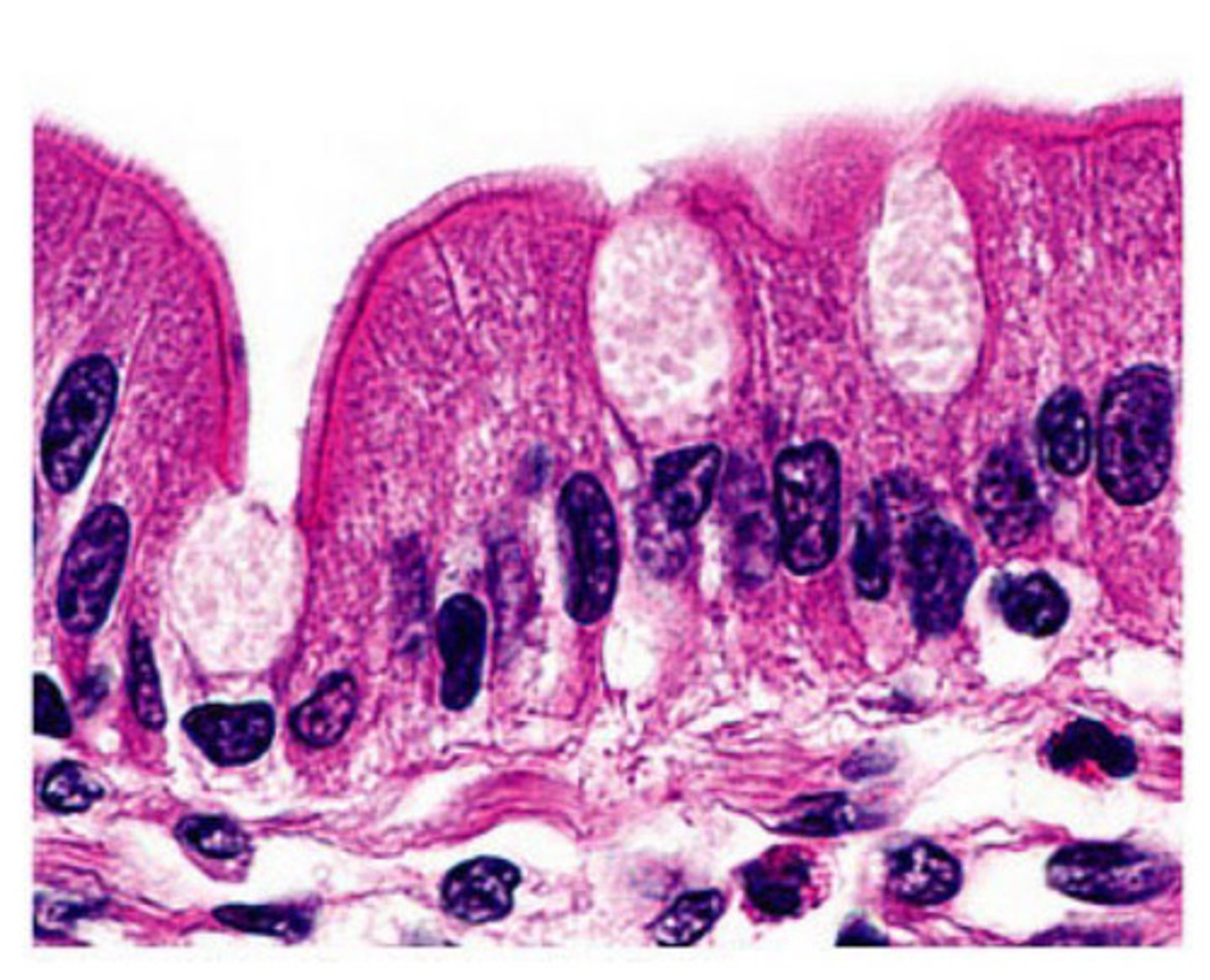
Nonciliated simple columnar epithelium
Containing microvilli and goblet cells that secrete mucus which helps in secretion, absorption and lubrication of stomach, and gallbladder
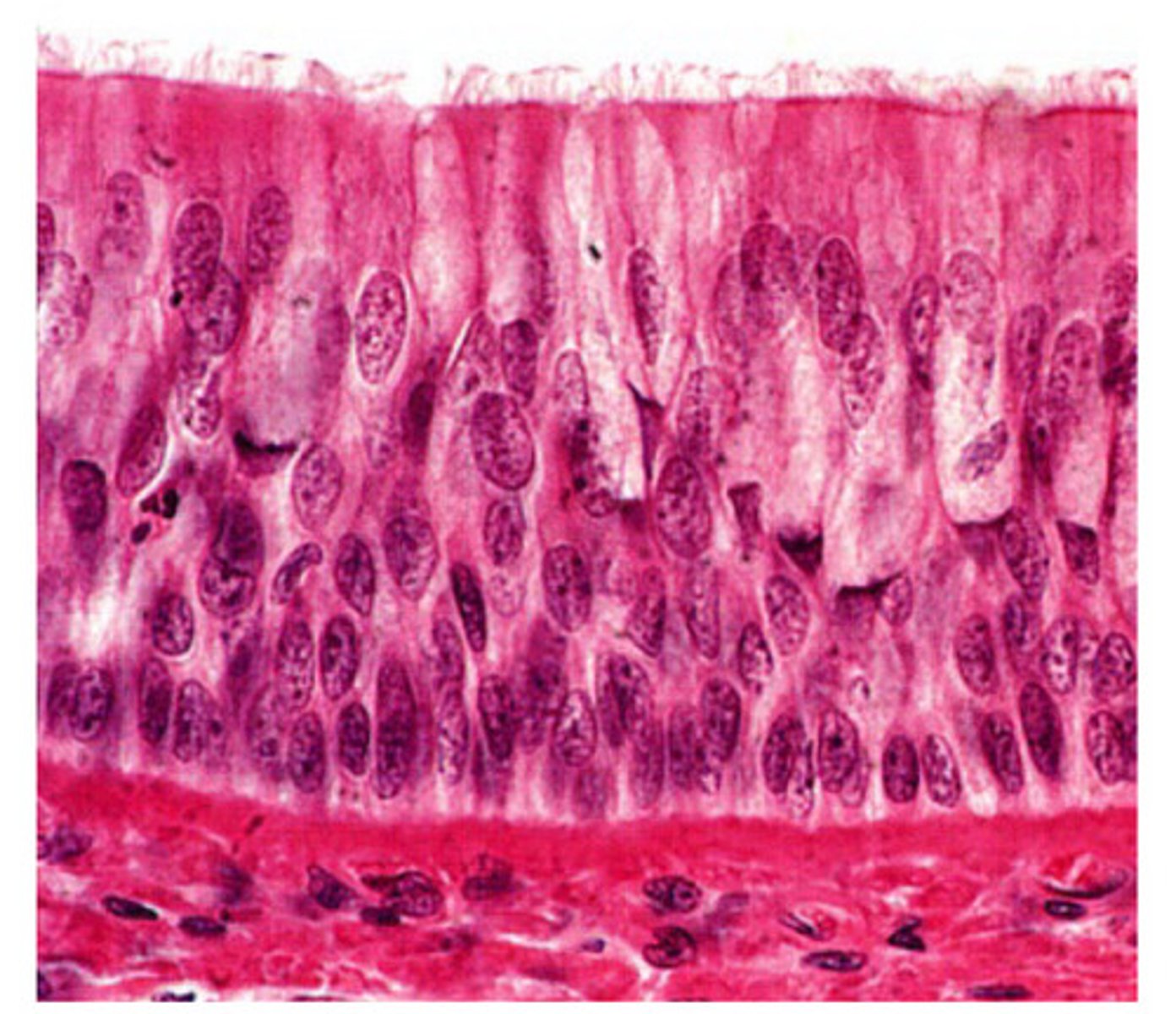
Ciliated pseudostratified columnar epithelium
Secretes mucus found lining most of the upper respiratory tract
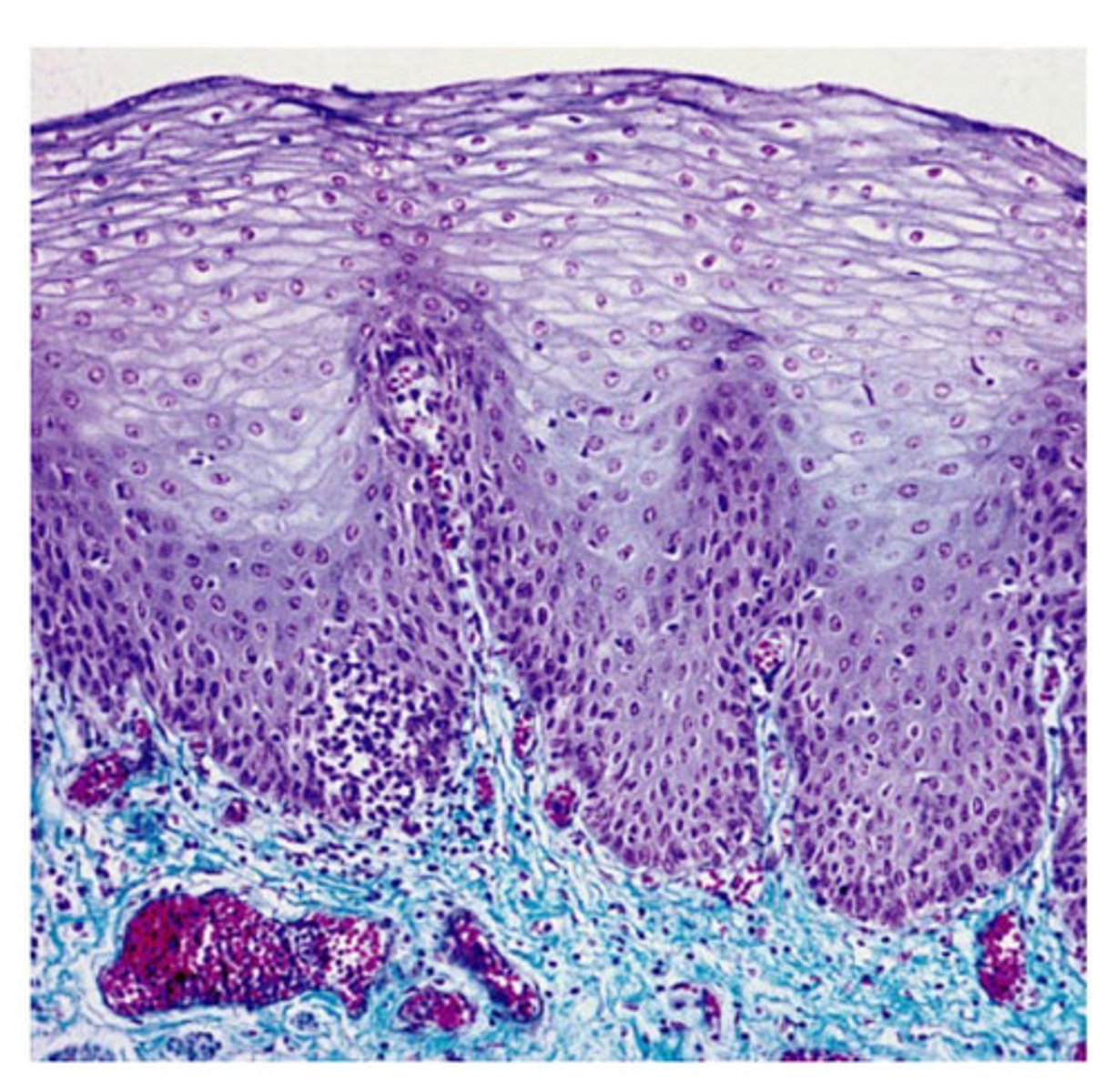
Stratified squamous epithelium
Protects against abrasion, dehydration, and pathogens found in the epidermis (keratinized) and linings of the mouth, esophagus, and vagina (nonkeratinized)
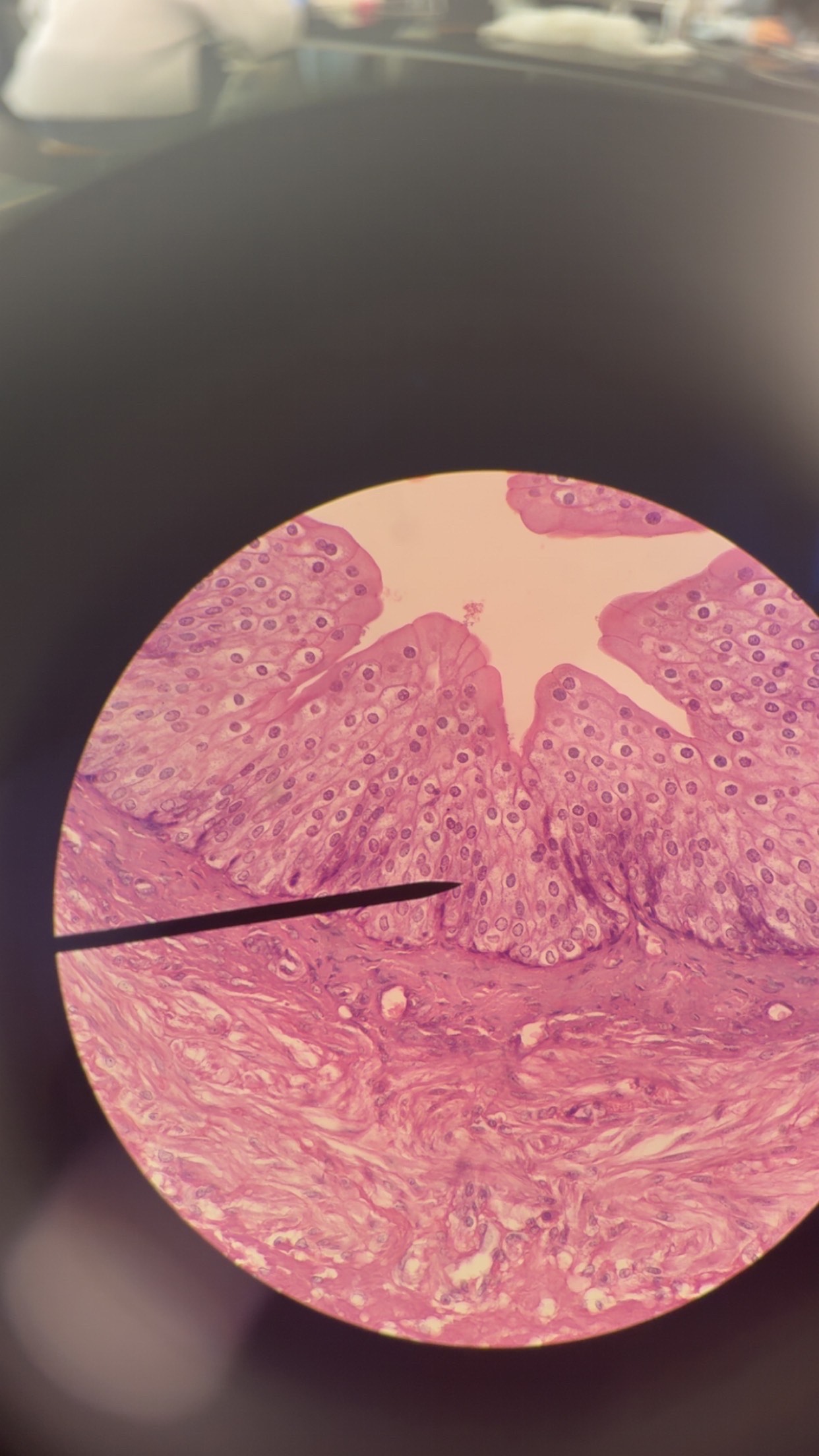
Urothelium
Allows stretching while maintaining a protective barrier and is found lining the urinary bladder, ureters, and parts of the urethra
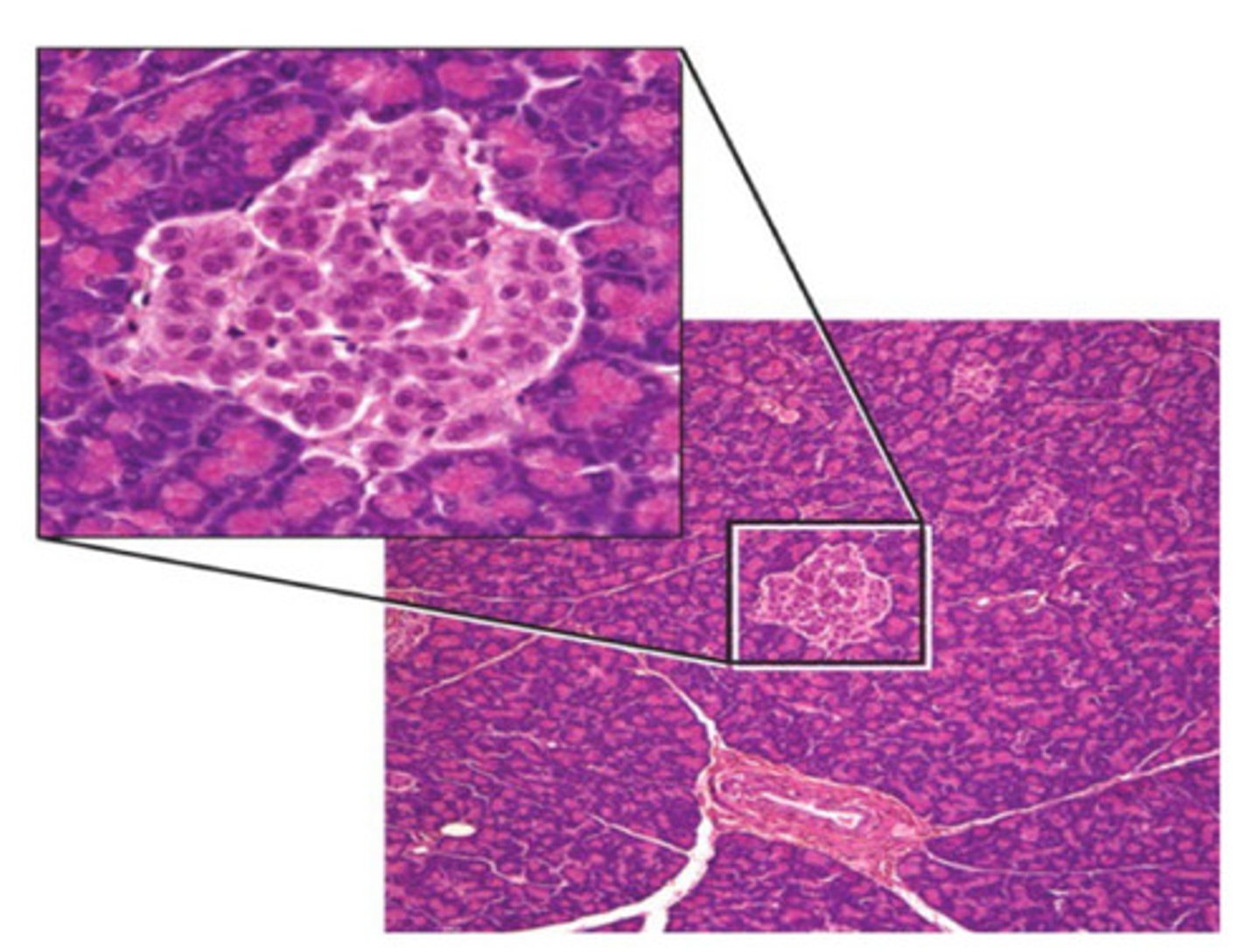
Acini (Pancreas)
darker purple cells that secrete pancreatic juices, found in pancreas
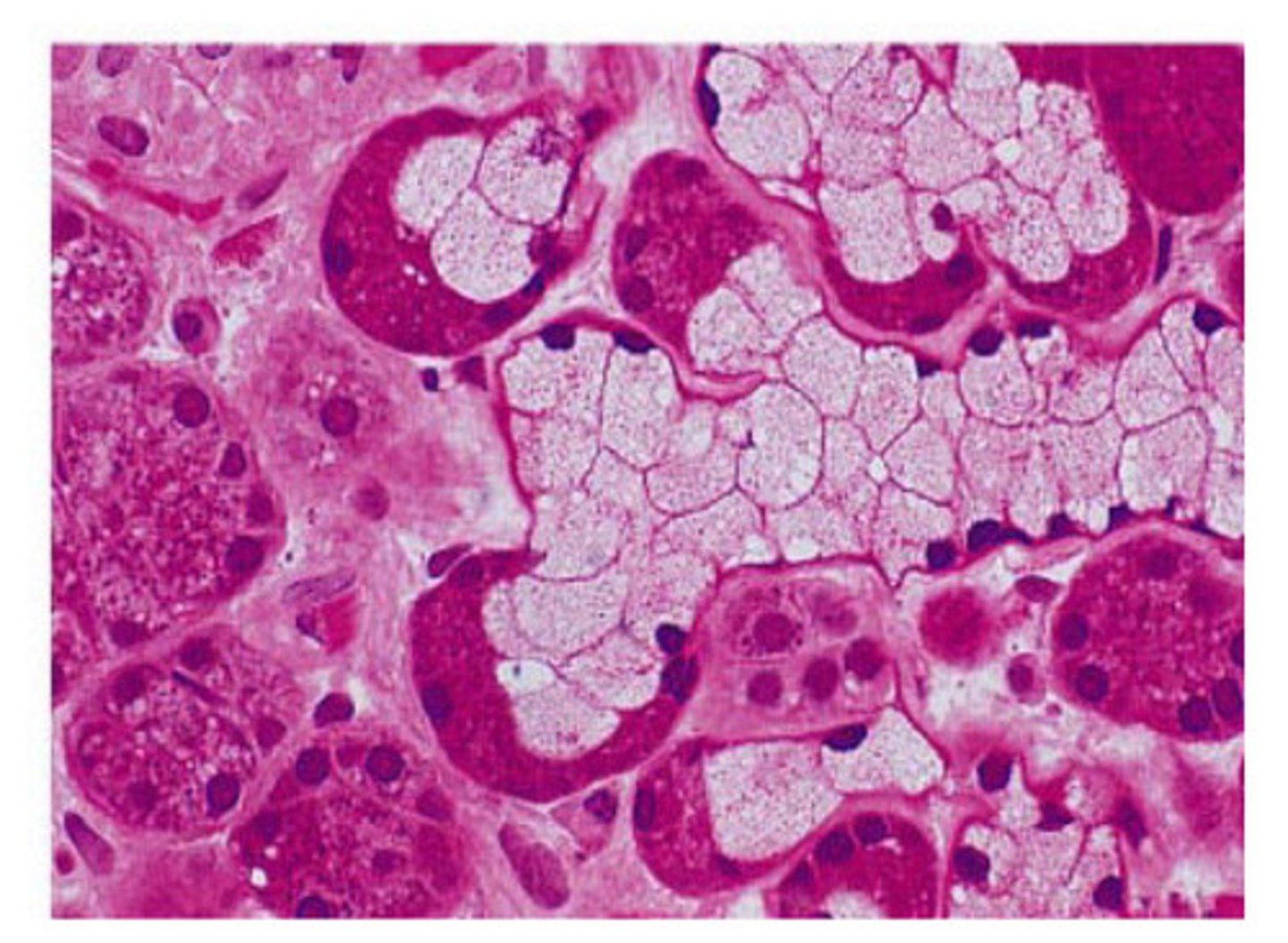
Salivary gland
produces saliva which aids in oral health and digestion, in the floor of the mouth
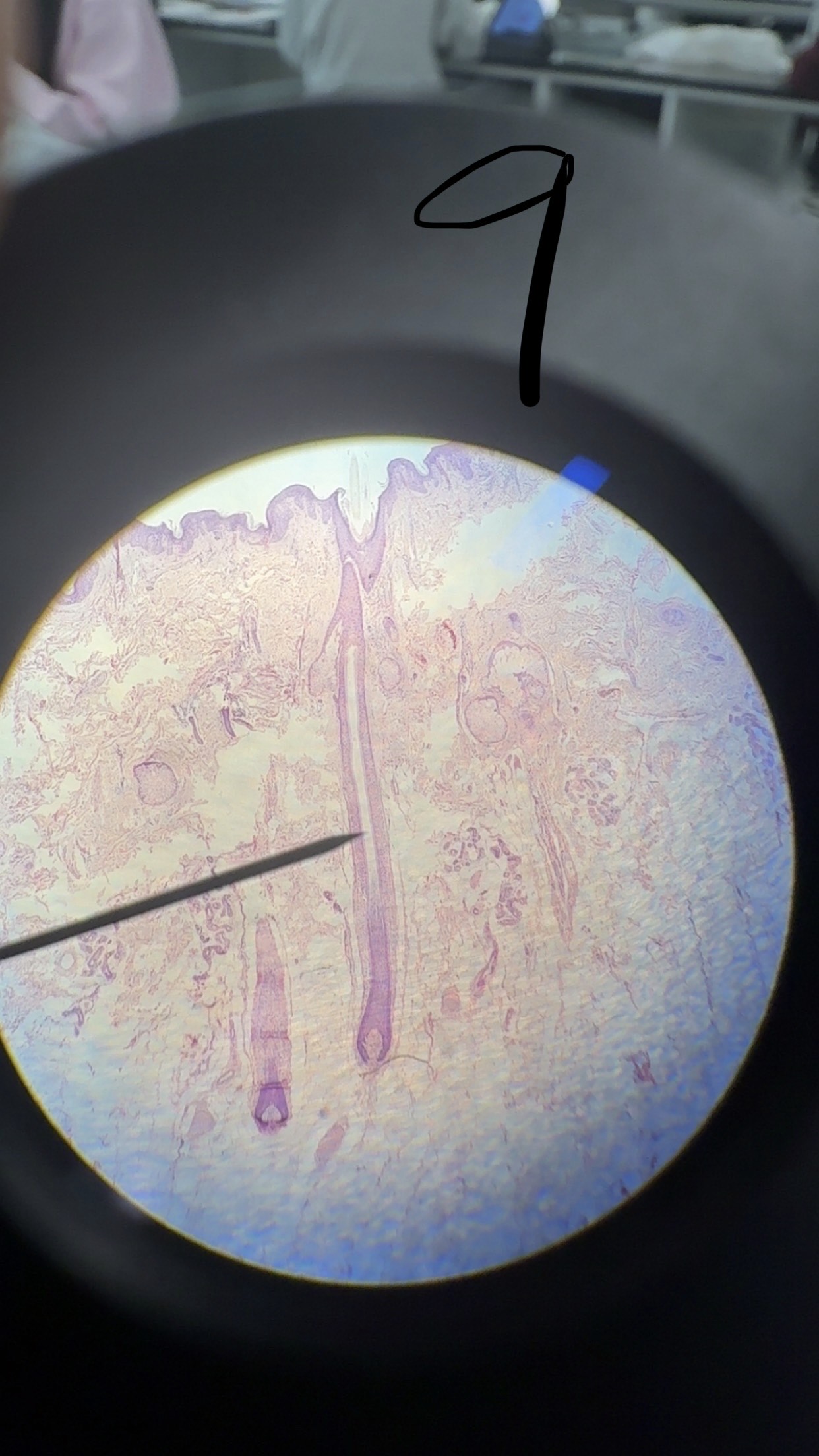
Sebaceous gland
Moistens hair, softens skin, and makes it waterproof, dermis, all over the body except palms and soles
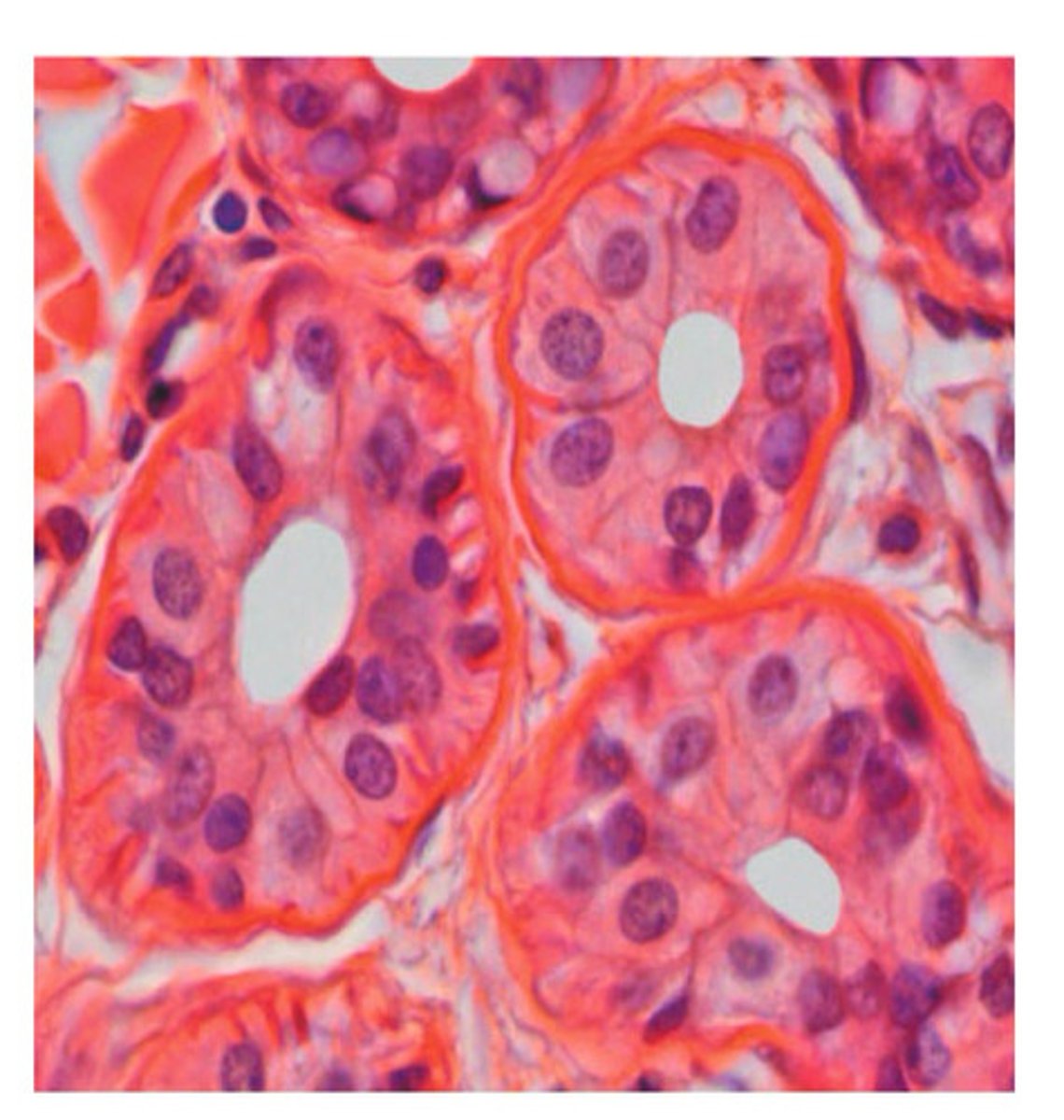
Sudoriferous gland
release sweat for thermoregulation, located in the dermis on all parts of the body
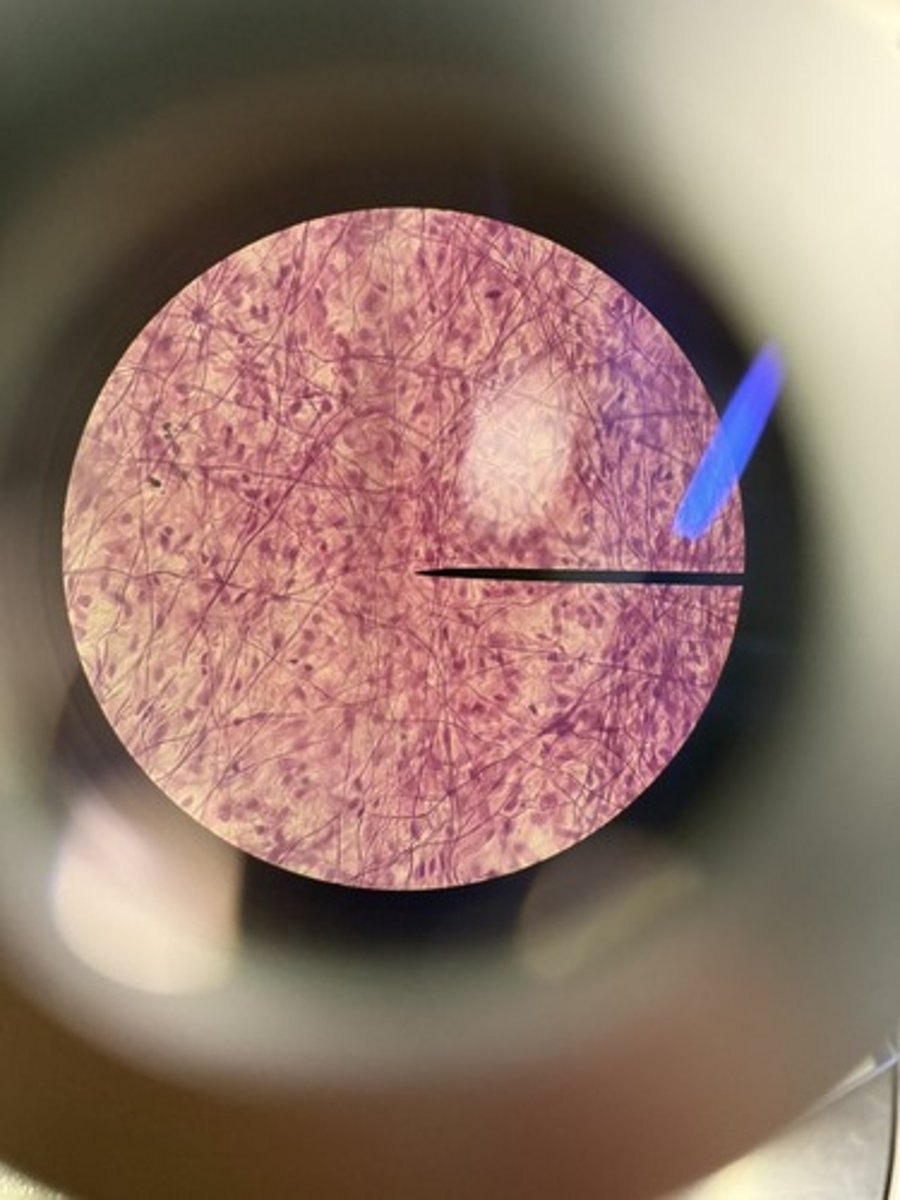
Areolar connective tissue
strength and elasticity, subcutaneous layer and mucous membranes
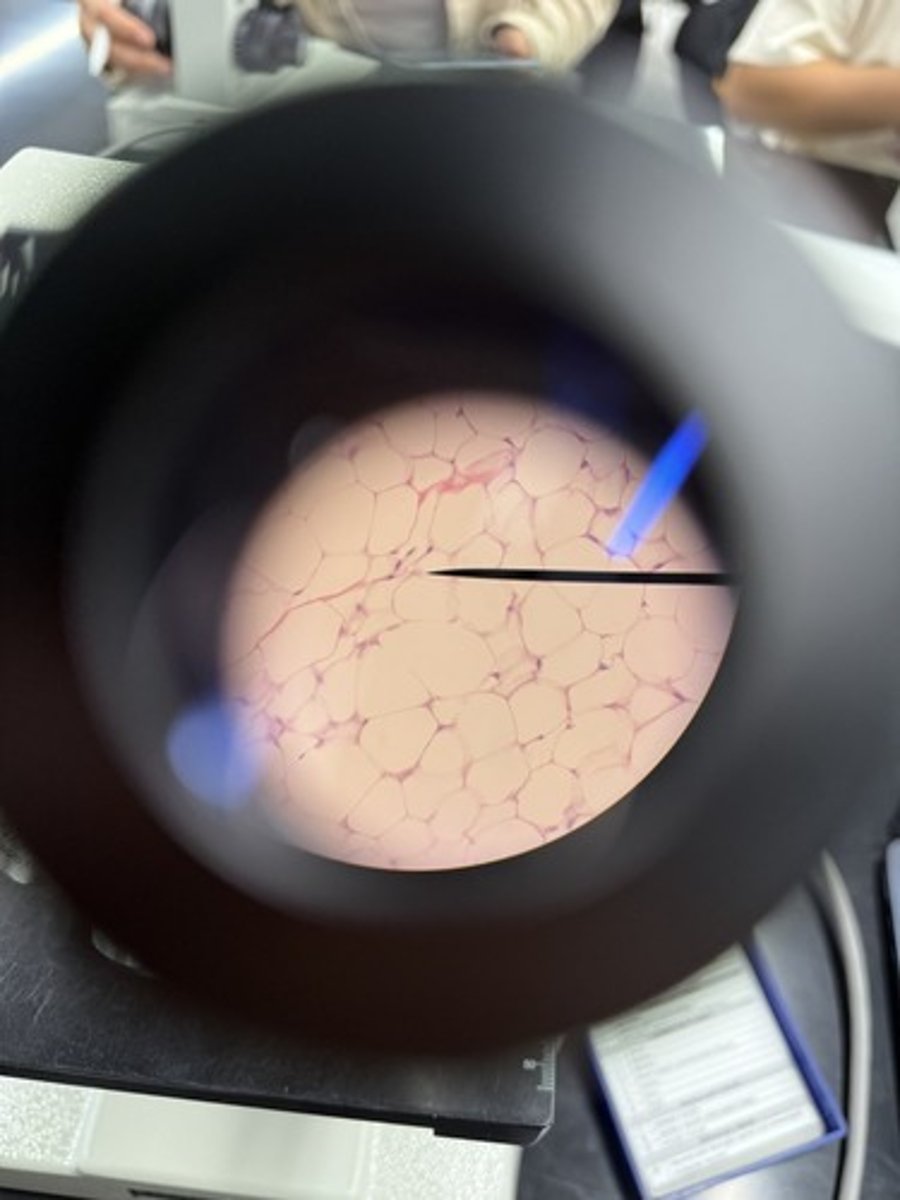
Adipose connective tissue
reduces heat loss through skin and serves as an energy reserve, subcutaneous layer and kidneys
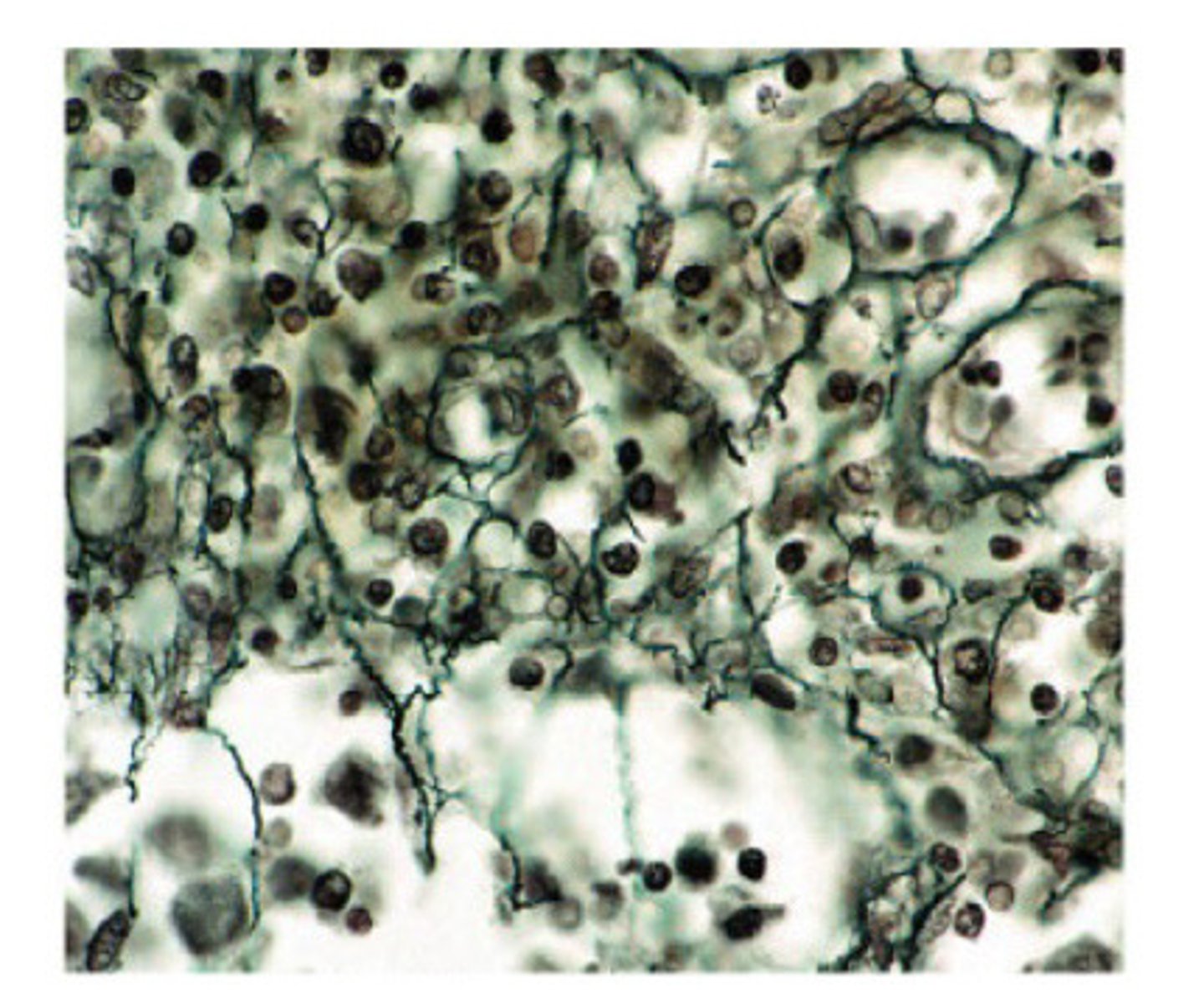
Reticular connective tissue
Forms the supportive framework of organs like the liver and spleen
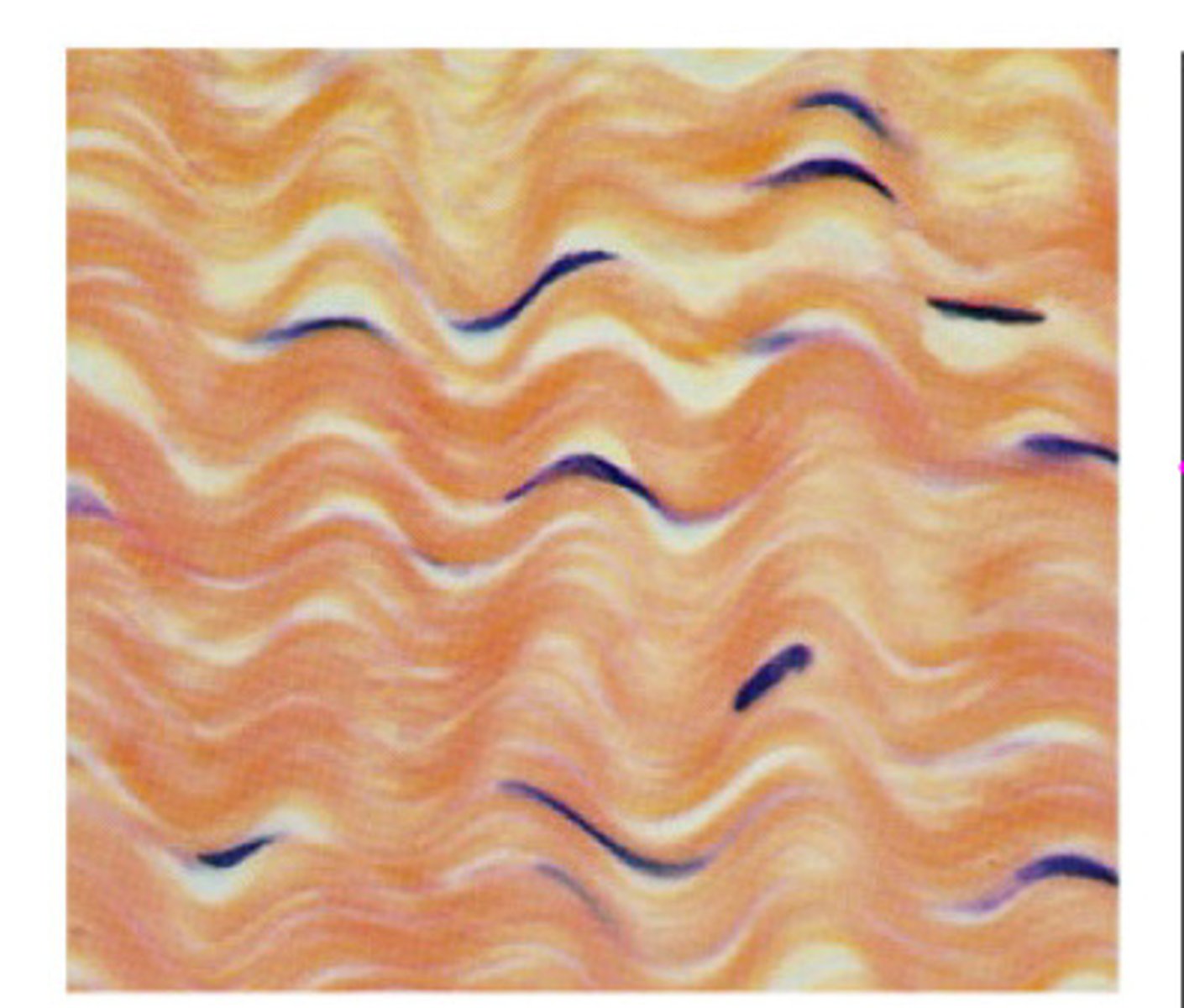
Dense regular connective tissue
provides strong attachment between various structures, tendons and ligaments
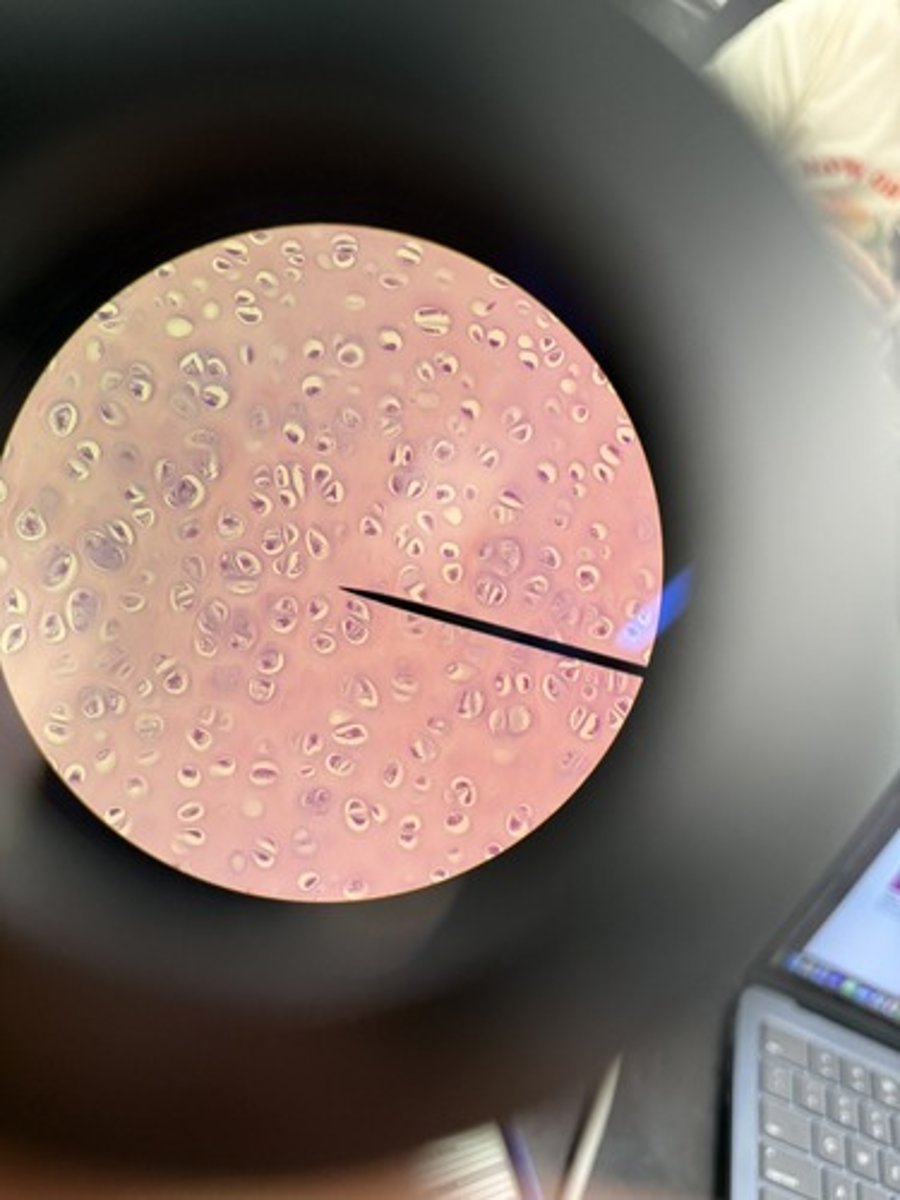
Hyaline cartilage
Functions: provides smooth surfaces at joints for movement
Locations: at ends of long bones, and anterior ends of ribs
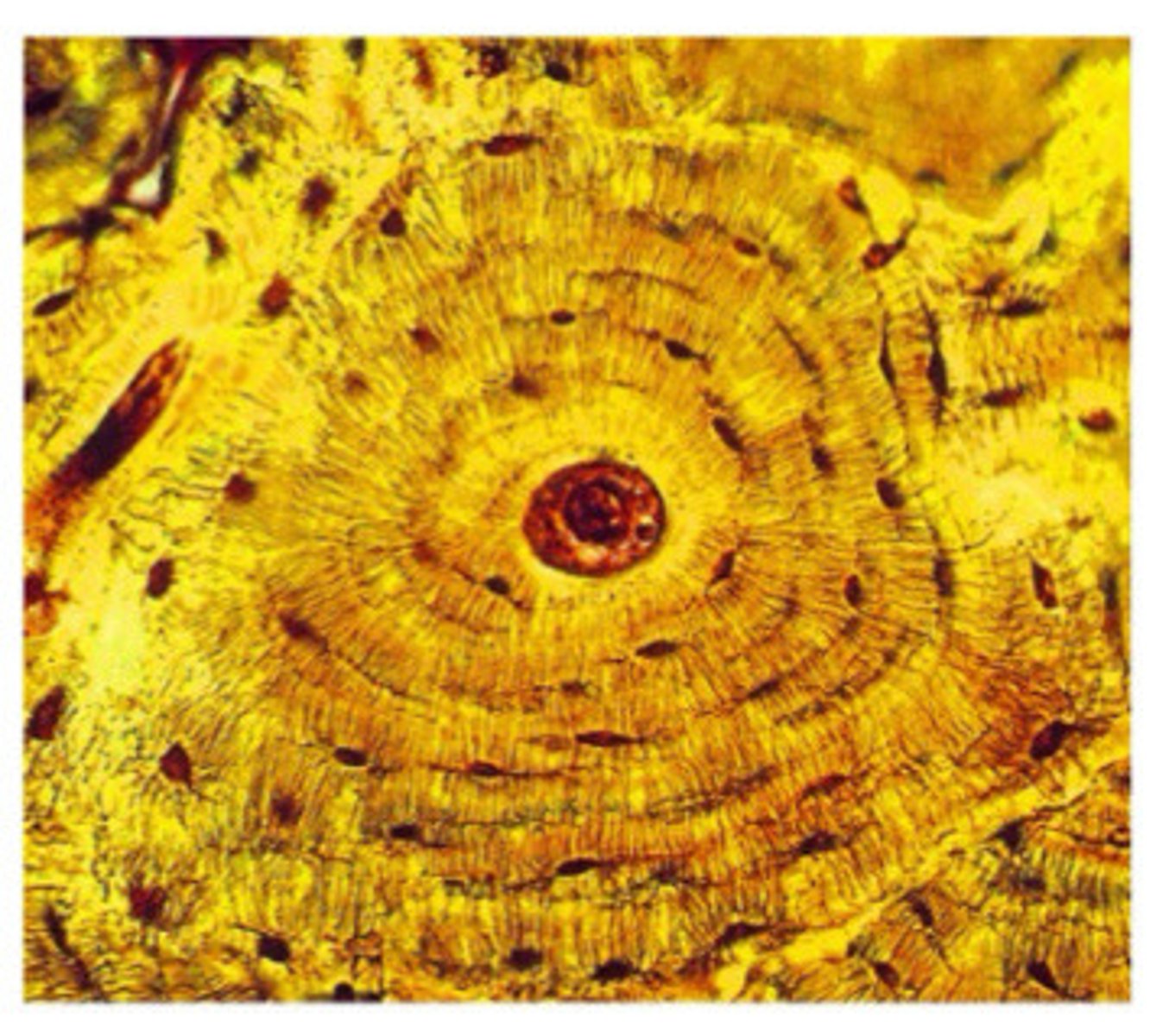
Bone tissue
protects organs and stores minerals, found in compact and spongy bone
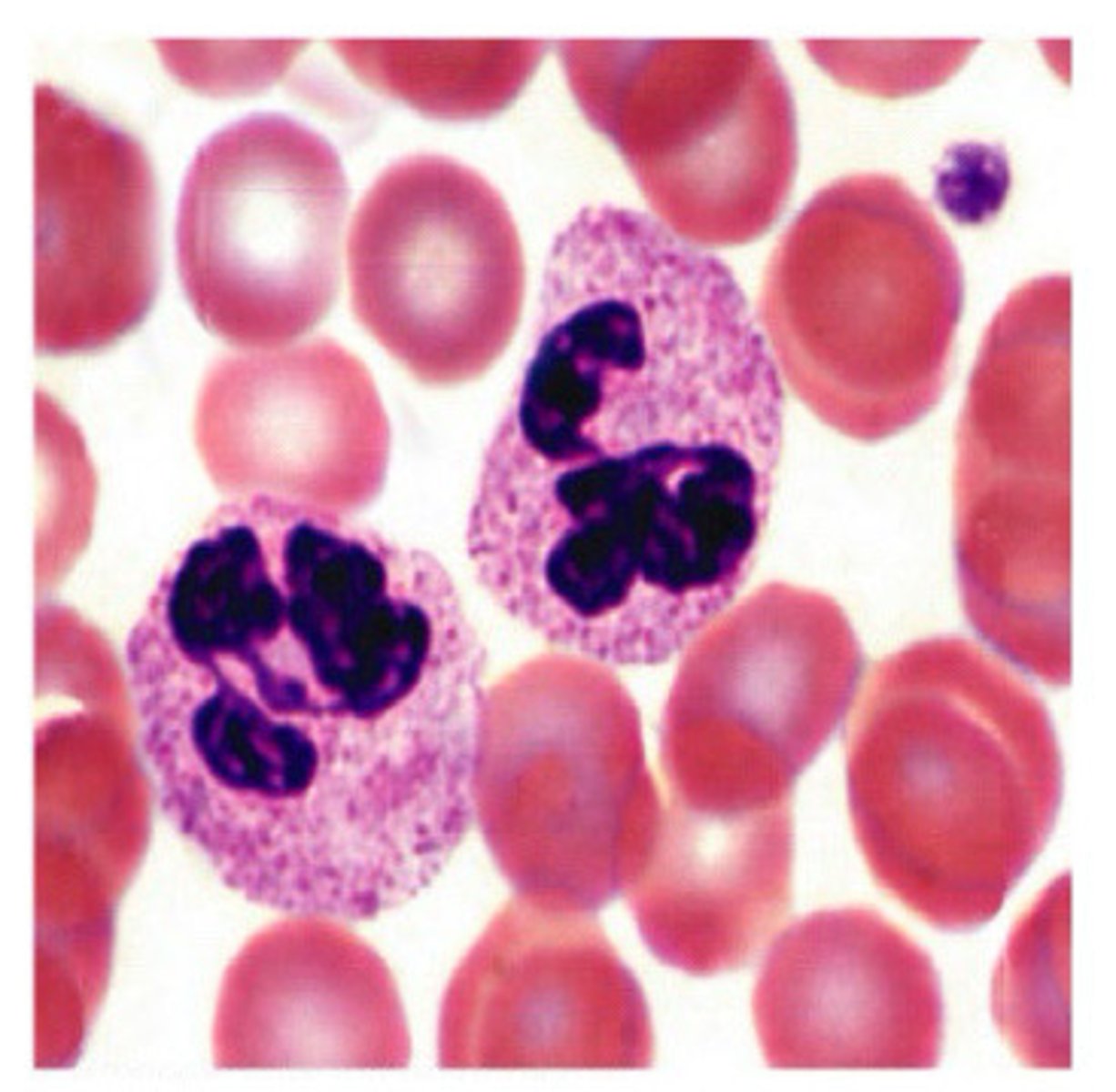
Blood smear
RBC = transport oxygen and some carbon dioxide
WBC = carry on phagocytosis and mediate allergic reactions
within blood vessels and chambers of heart
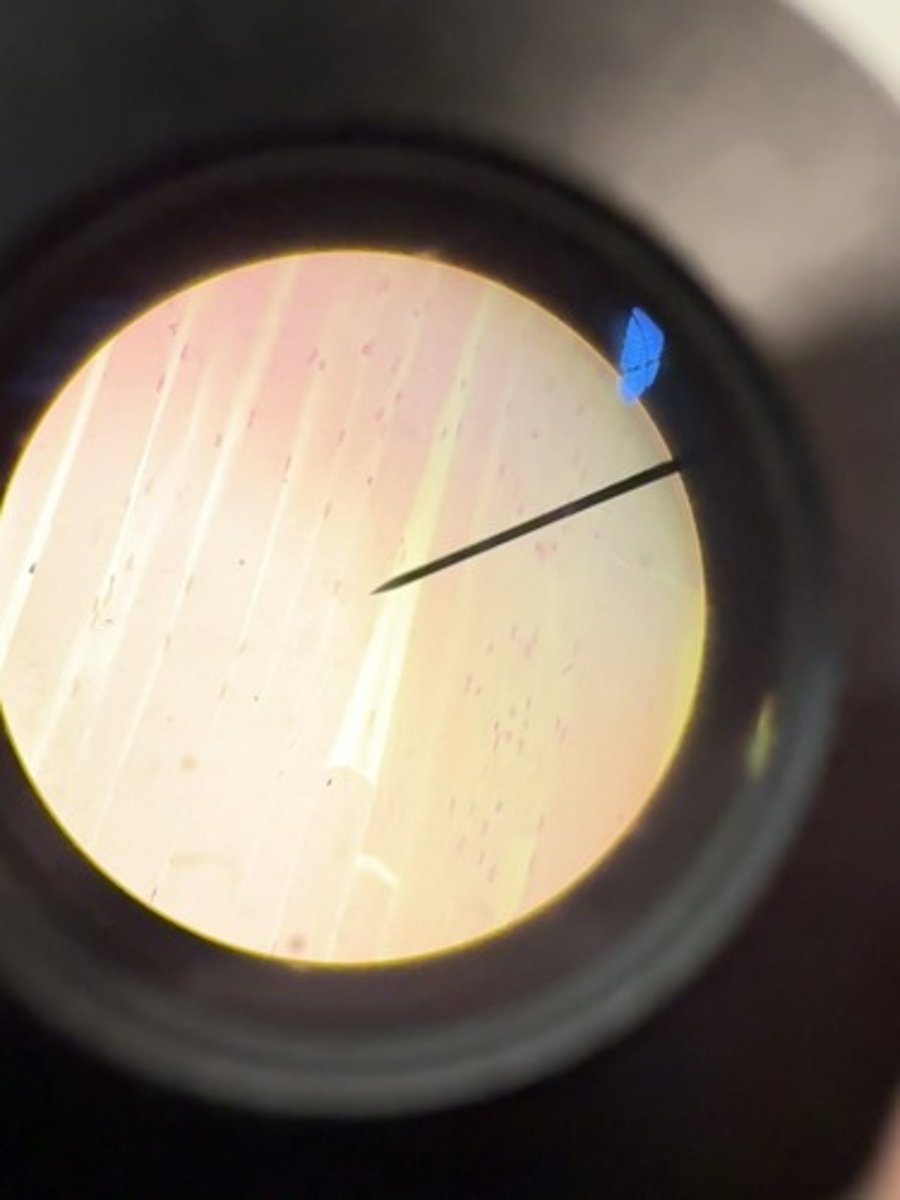
Skeletal muscle
motion and heat production, attached to bones by tendons
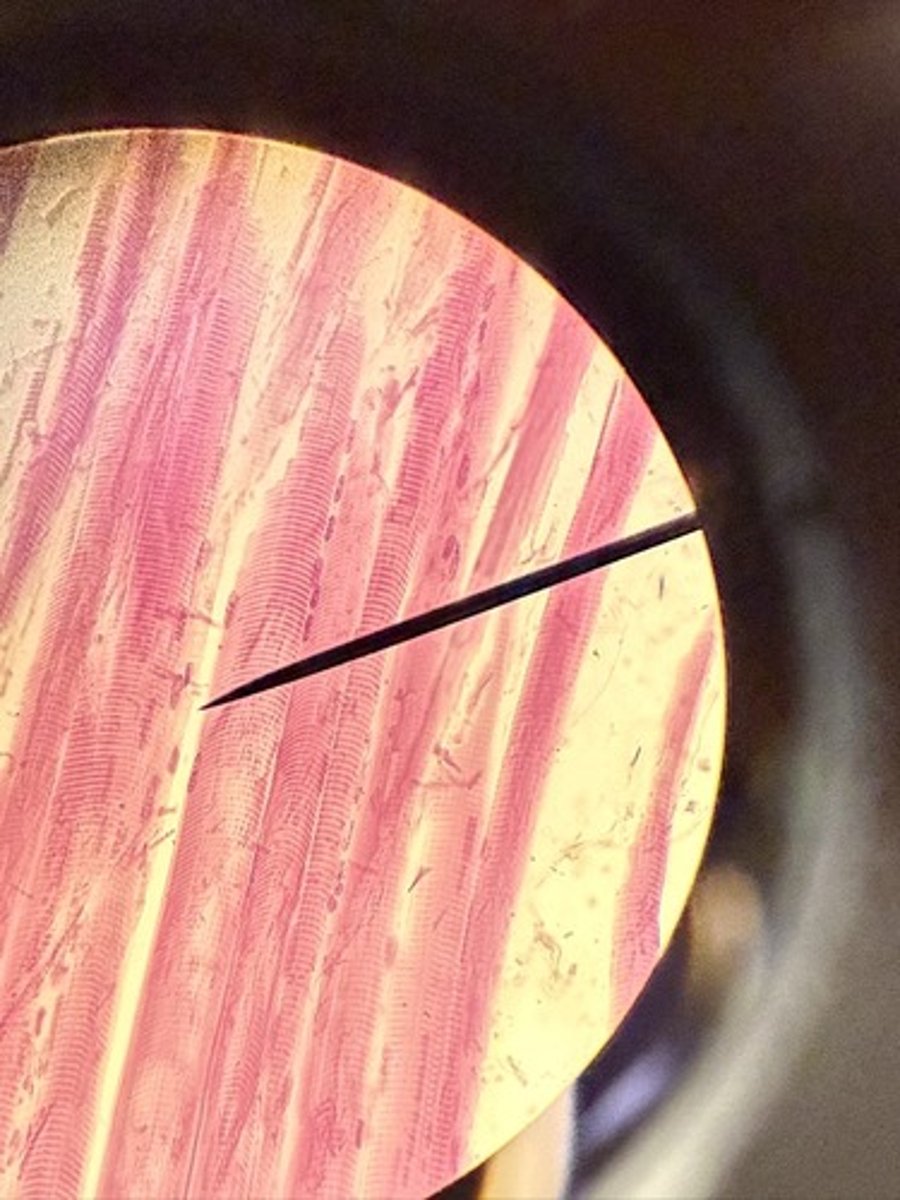
Cardiac muscle
pumps blood to all parts of the body, heart wall
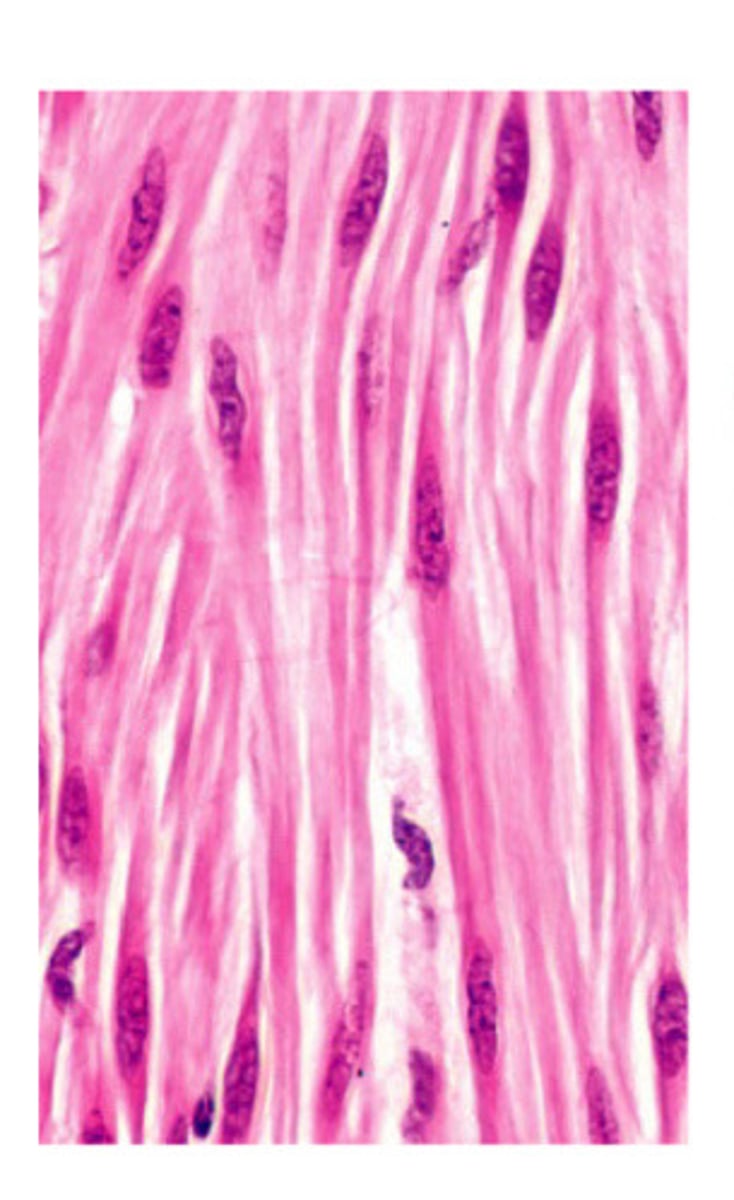
Smooth muscle
Moves substances and regulates blood flow through contractions, blood
vessels and intestines
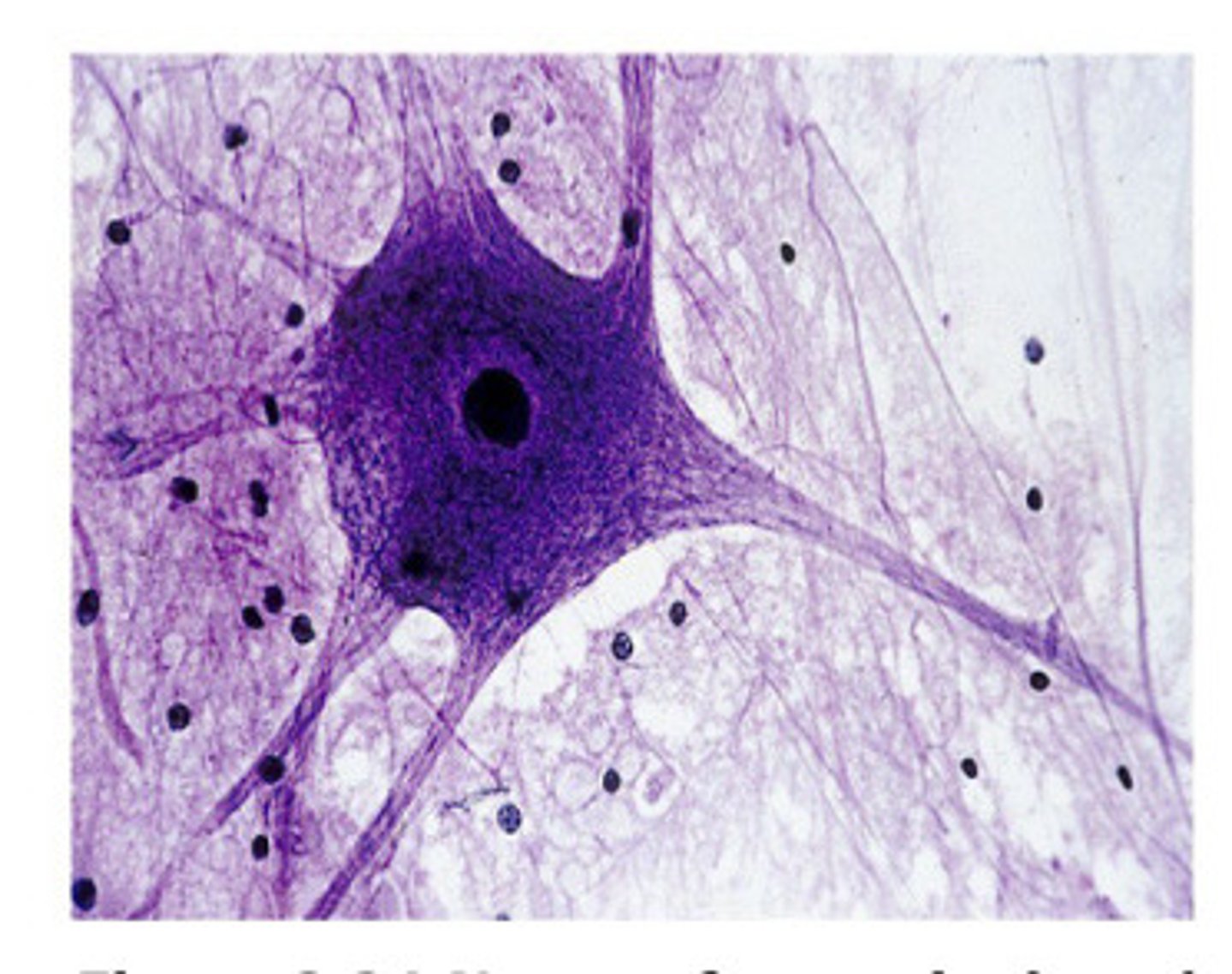
Neuron
sendsa receives signals, brain and spinal cord
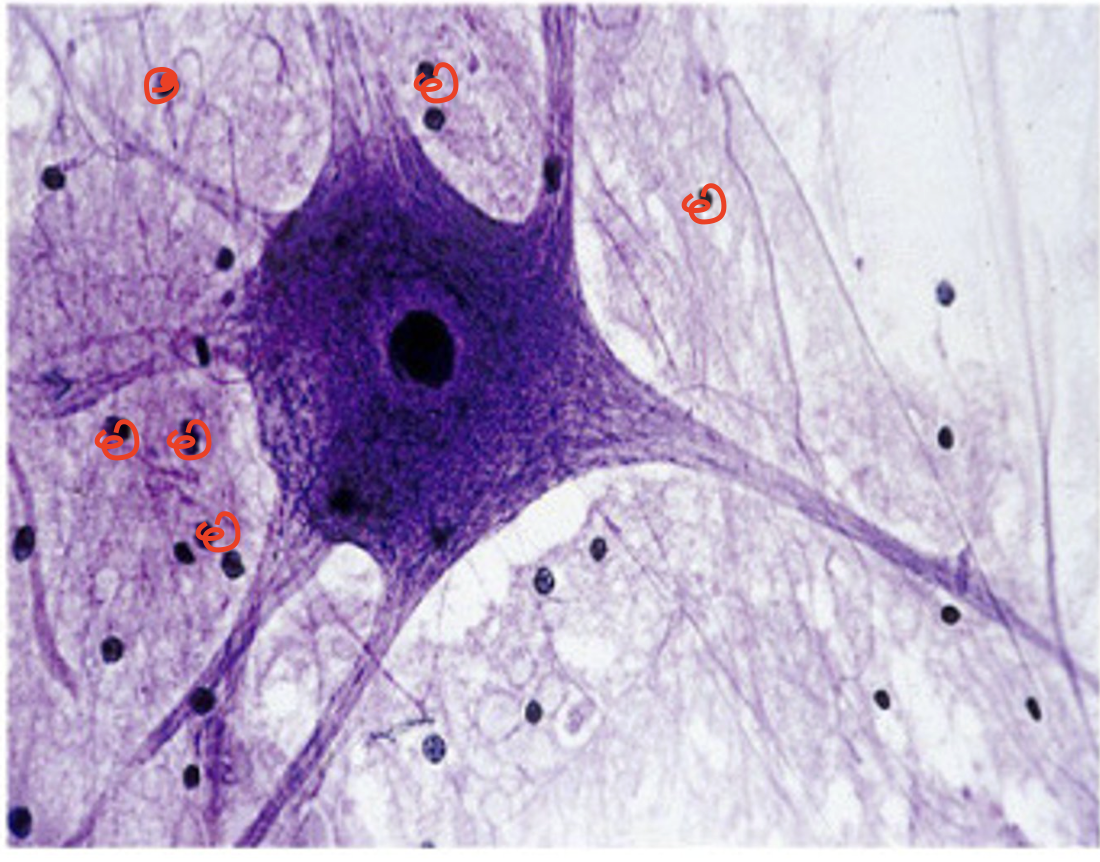
Neuroglia
Insulates axon for faster signals and supports neuron function
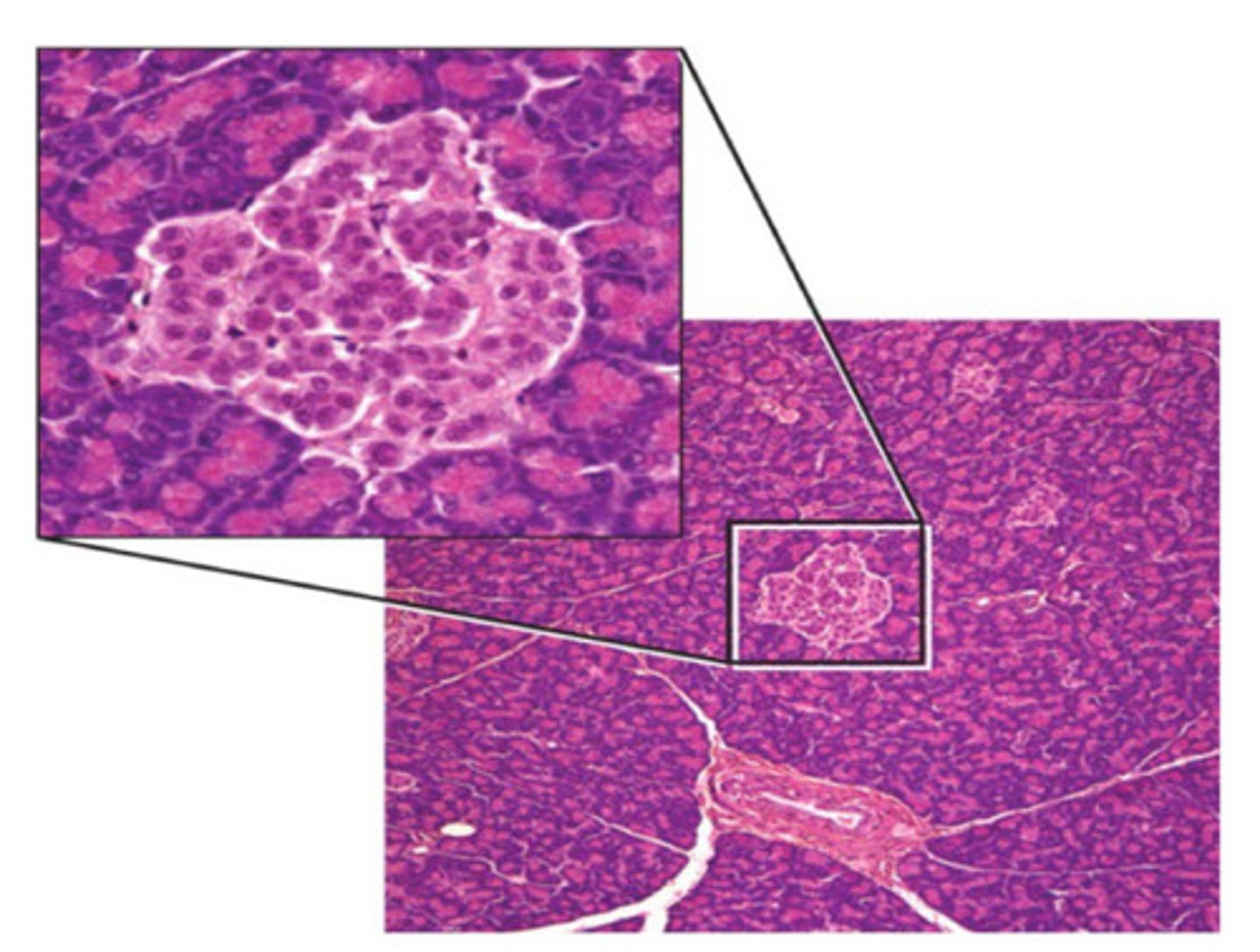
Islets (pancreas)
light purple cells that secrete hormones, found in pancreas
 Note
Note  Flashcards (20)