CMPP: Kidney Stones
 Studied by 0 people
 Call Kai
 Learn
Learn Practice Test
 Spaced Repetition
 Match
Match Flashcards
 Knowt Play
1/100

There's no tags or description
Looks like no tags are added yet.
Name | Mastery | Learn | Test | Matching | Spaced | Call with Kai |
|---|
No analytics yet
Send a link to your students to track their progress
101 Terms
typical flank pain
--> acute ureteral distension
when one has a kidney stone, stimulation of the renal pelvis and calyces secondary to an interureteral stone results in...
ilioinguinal, genitofemoral
in the lower ureter, pain signals are distributed through the _________ and __________ nerves resulting in classic pain radiation patterns
N/V
common innervation pathway of the renal pelvis and GI tract results in what symptoms in 50% of pts?
supersaturation
the key process in the development of kidney stones is...
calcium oxalation, uric acid, and cysteine
what are some examples of stone promoters (substances in the urine that predisposes to stone formation)
low
--> low fluid intake results in low urine volume leading to high concentrations of stone-forming solutes in the urine
stone promoters can form crystals if urine output is...
by preventing crystals from sticking t renal tubules
how do stone inhibitors protect against stone formation
citrate, magnesium, pyrophosphate
what are some examples of stone inhibitors (protect against stone formation)
hypercalciuria
what is the most common metabolic abnormalitiy associated with stone-formation?
increased protein diets, increased Na diet --> increased urinary calcium
what are some other risk factors for stone formation?
low urine volume, increased promoters, decreased inhibitors
what are the three MAIN predisposing factors to stone formation?
yes -- radiopaque
can you see calcium-based stones on plain films?
calyceal, painless
stones develop within the ______ system, and they are generally _________ within the calyces/renal pelvis
when they become intraureteral
when do stones begin to cause pain?
the stone is NOT the cause of their pain
what does it mean if a pt is having pain and the CAT scan reveals an infrarenal stone?
calcium --> calcium oxalate is most common
the vast majority of stones are _______ based
struvite stones, uric acid stones, and cystine stones
less common types of kidney stones
idiopathic hypercalciuria
hyperparathyroidism (less common)
what are some causes of calcium-based stones?
acidic, alkaline
calcium oxalate stones form in ______ urine, while calcium phosphate stones form in _______ urine.
magnesium, ammonium, and phosphate
struvite stones contain...
suffering recurrent UTIs secondary to urea splitting organisms
--> Proteus and Klebsiella
--> pts with abnormal urinary tract anatomy and patient's requiring frequent bladder catheterizations are also at risk
there is an increased risk of forming struvite stones in patients...
women (due to higher propensity for UTIs)
what gender is at higher risk of struvite stones?
painless, radiopaque
Struvite stones may be _____, and are _________ on KUB.
Staghorn formation
struvite stone that extends to full the renal pelvis
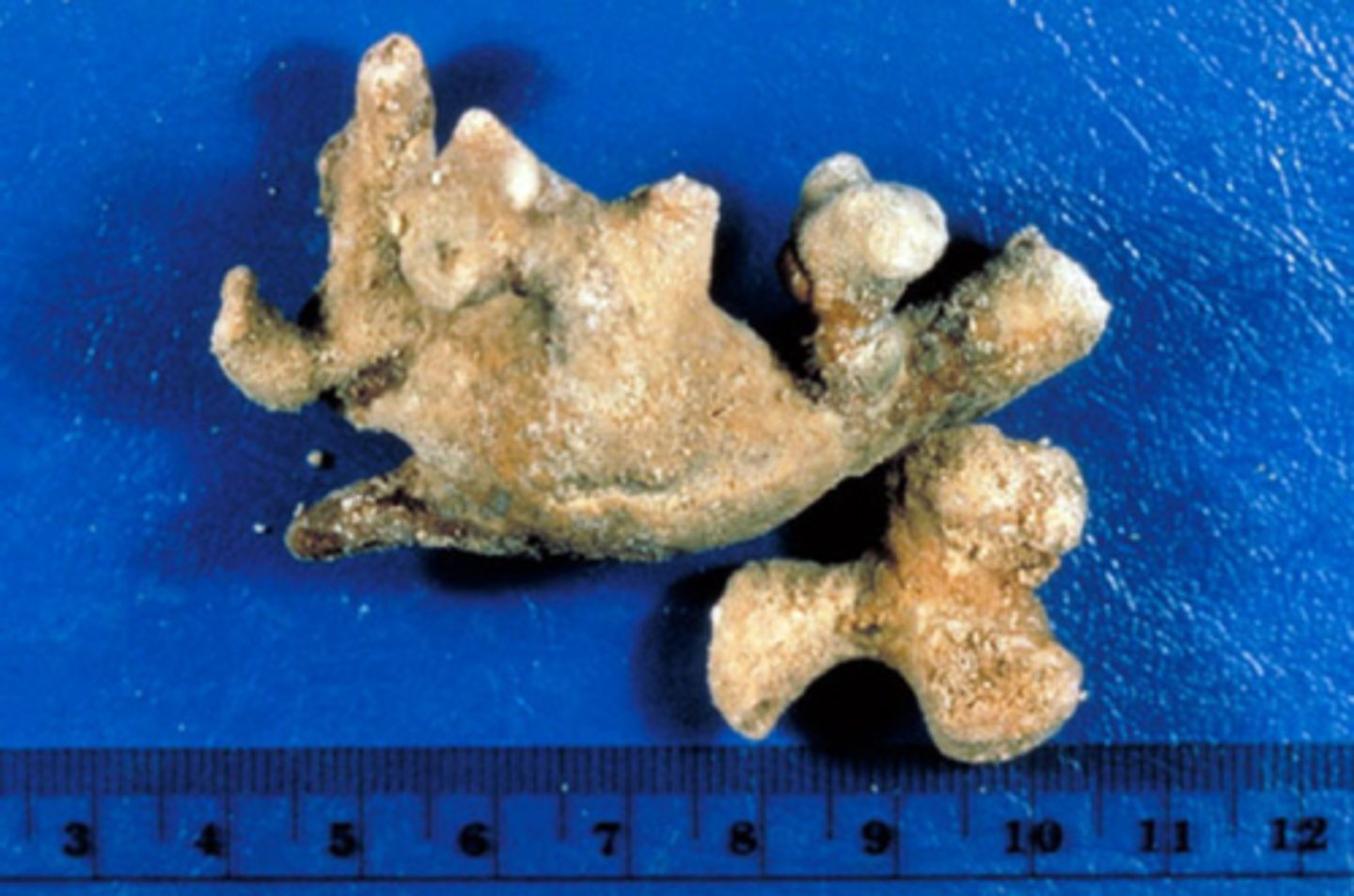
hyperuricosuric states (gout and myeloproliferative disorders)
uric acid stones may develop as part of...
acidic, purine (organ meats)
uric acid stones are formed in _______ urine, and are also caused by diets high in _____.
no! but can be seen on CT
can uric acid stones be seen in XR?
cystinuria (autosomal recessive), hexagonal crystals, acidic
cystine stones are associated with __________, appear as ___________, and form in _______ urine.
HYDRATION
Citrate -- chelates Ca forming highly soluble complexes
Magnesium supplementation
Fiber-rich diet
what are some primary protective factors against kidney stones?
sudden, severe pain which may wax and wane (renal colic)
N/V, hematiroa, dysuria, urinary frequency
clinical features of kidney stones (quality of pain/associated symptoms)
there is bilateral obstruction, a single functioning kidney, or significant preexisting CKD
anuria/azotemia secondary to post-renal AKI only occurs when....
pain localized to the flank and upper abdomen
if a stone is upper ureteral, where will the patient be having pain?
mid and lower abdominal pain
if a stone is mid-ureteral, where will the patient be having pain?
pain radiates to lower pelvis, groin, testicle, or labia
--> may have associated with urinary frequency/urgency
if a stone is lower ureteral/at the ureterovesical junction, where will the patient be having pain?
sudden, intense unilateral flank pain
pain may radiate based on location of the stone
restlessness (vs peritoneal causes which cause you to lie still), N/V, irritative urinary symptoms
--> NOT usually associated with fever, chills, or diarrhea
what is usually present on the HPI for one with a kidney stone?
Cancer (paraneoplastic syndrome/tumor lysis syndrome)
Hyperparathyroidism
Sarcoidosis
Gout, multiple myeloma, chemo
IBD
Recurrent UTIs
PMH that could point you towards a kidney stone
AAA
if a pt presents with abdominal pain, is >60 and they have no history of kidney stones, what is this a red flag for?
+ FH
adolescents following rapid wright gain
genetic factors in children
dietary factors
Misc historical factors associated with kidney stones
significant distress secondary to pain, pacing, restless, intensely diaphoretic, writhing in pain
general appearance of one with a kidney stone
tachycardia, HTN, CVA tenderness, abdominal distension (ileus), NO significant abdominal tenderness
PE findings for one with a kidney stone
kidneys are retroperitoneal
why is there usually no significant abdominal tenderness associated with kidney stones
AAA!!
can also include cholecystitis, pancreatitis, gastritis, musculoskeletal/mechanical back apin
--> many of these are associated with significant abdominal pain and tenderness, which is NOT a symptom seen with kidney stones
Ddx for one with upper abdominal pain (what else can it be other than upper-ureteral stones?)
Appendicitis/diverticulitis
--> many of these are associated with significant abdominal pain and tenderness, which is NOT a symptom seen with kidney stones
Ddx for one with lower abdominal pain (what else can it be other than mid-ureteral stones?)
ruptured ectopic, ovarian torsion, tubo-ovarian abscess, PID,ruptured ovarian cyst, testicular torsion, epididymitis, UTI
--> many of these are associated with significant abdominal pain and tenderness, which is NOT a symptom seen with kidney stones
Ddx for one with pain in the labia, testicles, suprapubic region, or irritative voiding symptoms (what else can it be other than ditsal ureteral stones?)
significant abdominal pain/tenderness -- not associated with kidney stones
what is a PE result that can help to differentiate kidney stones from other conditions (e.g ectopic pregnancy rupture, testicular torsion, diverticulitis)
no
does back pain and hematuria always equate to a kidney stone?
T12-L3, lateral aspect of the TPs
kidneys are typically at vertebral level _______, and the ureters travel along the _______________.
a radiopaque calcium-based/struvite stone
--> difficult to differentiate from other densities
--> does not allow for identification of ureteral obstruction
KUB (plain XR) may reveal...
follow-up after a stone is diagnosed on a CT
KUB is primarily used as...
Noncontrast Low-dose radiation Spiral CT scanning
--> detects TINY stones
--> assesses degreee of hydroureteronephrosis
--> recommended for diagnosis in first-time episodes, unclear dx, or prox infection suspected
what is the study of choice for one with kidney stones?
less radiation and easier to perform on these populations than a CT
--> can identify hydronephosis and small/radiolucent stones
why is ultrasonography the imaging modality to choice in children/pregnant patients
Intravenous pyelography
before the widespread use of CT, what WAS the study of choice for kidney stones?
Intravenous pyelography
contrast is injected into a peripheral vein; plain XRs are taken at intervals as the dye travels through the urinary tract; gives info regarding renal function
does not reveal alternate pathology
contraindicated with underlying CKD
what are some issues with IVP?
Hematological disorders/Hyperplasia (BPH)
Infections (UTI)
Trauma
Tumor of the urinary tract
Exercise
Renal (Glomerulonephritis)
Stones
Ddx for hematuria (HITTERS)
Pyonephrosis
infection PROXIMAL to an obstructing stone; urologic emergency
presence of UTI and a stone
what signs/symptoms raise concerns for pyonephrosis
recurrent stones, initial presentation at age < 30 years, severe AKI
indications for 24-hour urine studies with kidney stones
decreased urinary volume
hyprercalciuria
hyperoxaliruia
hyperuricosuria
hypocitraturia
what are some common abnormalities found with 24-hour urine studies
IV fluids to correct dehydration (0.9 NS)
IV NSAID (ketorolac)
--> don't give if pt has CKD
IV antiemetic (Zofran)
*management comes BEFORE evaluation
acute management of kidney stones
excess hydration could worsen pain -- adequate hydration is now what's indicated
why is aggressive hydration no longer indicated in the acute management of kidney stones?
IV NSAID: blocks prostaglandin formation --> relaxes the ureteral smooth muscle
Ketorolac (Toradol) MOA
pregnancy and CKD
--> if Toradol constricts afferent arteriole, can further decrease GFR and then worsen kidney disease
Ketorolac (Toradol) contraindications
Morphine sulfate
what is the opiate drug of choice for kidney stones?
binds to CNS opioid receptors
Morphine sulfate MOA
N/V, respiratory depression, altered mental status, hypotension
Morphine sulfate side effects
NSAIDS -- due to effect on relaxing ureteral smooth muscle, lower side effect incidence, minimal risk of addiction, no effect on ability to drive, less likely to require repeat doses
what drug for pain control is more effective in the tx of kidney stone pain?
intractable pain
intractable vomiting
AKI
urosepsis
anuria
stone size
admission criteria for kidney stones
unremitting pain
high-grade obstruction associated with increasing creatinine
bilateral obstruction or obstruction with a solitary kidney
obstruction + urosepsis (pyonephrosis)
indications for surgery with kidney stones
Ureteral stent placement
long, hollow tube passed cystoscopically through the urethra and bladder into the affected ureter; tube occupies the entire length of the ureter from the kidney to the bladder; forms coil at renal pelvis and bladder ends; ensures urine passage; should NOT be left in place for more than 3 mo
guarantees drainage of urine from the kidney
gently dilates ureter - significant pain relief
how does ureteral stent placement help to treat kidney stones?
discomfort secondary to bladder irritation/spasm
risk of blockage, dislodgment, or infection
side effects/complications of ureteral stents
drains collection of pus
why is a ureteral stent one of the primary tx options for pyonephrosis
Cystoscopic stone retrieval
Extracorporeal shock wave lithotripsy
Percutaneous nephrolithotomy
Open nephrolithotomy/pyelolithotomy
tx for kidney stones in which an incision is made through the flank into the renal cortex (nephrolithotomy) or renal pelvis (pyelolithotomy) to remove a stone lodged in the renal pelvis
anatomic difficulties precluding other interventions and the presence of complex (struvite) stones
indications for Open nephrolithotomy/pyelolithotomy
Hydration to maintain adequate urine output
Analgesia (opiates/NSAIDs) + anti-emetics
Alpha-1 antagonists
outpatient management of kidney stones
Intractable pain, vomiting, fever, chills, decreased urine output
red flags in pt education for one with kidney stones
analgesic of choice for outpatient management of kidney stones
Oxycodone/acetaminophen (Percocet)
what opiate is considered first line for outpatient management of pain associated with kidney stones?
Hydrocodone/acetaminophen (Vicodin)
--> less potent than oxycodone
other opiate options for outpaitient management of kidney stations
Ondansetron (Zofran) -- ODT (on da tongue)
what is the anti-emetic of choice for outpatient management of kidney stones
Tamsulosin (Flomax)
what is the alpha-1-antagonist of choice for the outpatient management of kidney stones
relaxes ureteral smooth muscle facilitating stone passage -- increases the likelihood of spontaneous passage, decreases the time for stone passage
Tamsulosin (Flomax) MOA
orthostatic hypotension and syncope
Tamsulosin (Flomax) side effects
less of a chance of dealing with major hypotensive symptoms -- since the pt will be asleep
why is Tamsulosin (Flomax) given at bedtime?
have the patient sit when they pee
how can we prevent micturition syncope with Tamsulosin (Flomax)
< 5 mm
stones of what size tend to pass spontaneously?
> 10 mm
stones of what size DO NOT tend to pass spontaneously?
stone is likely to pass spontaneously/can be managed outpatient
patient must maintain good hydration
strain urine (first time) so stone can be abalyzed
analgesics, antiemetic, alpha-blocker
follow weekly to monitor progress
should pass within 4 wks -- surgery if not
patient education for "small" kidney stones
less likely to pass spontaneously -- early surgical intervention
urologist
lithotripsy/cystoscopy with basket extraction
patient education for "bigger" kidney stones
often require hospitalization
emergent stent or percutaneous nephrolithotomy if renal function is jeopardized or a secondary infection has developed
< 2 cm --> lithotripsy
patient education for "biggest" kidney stones
normal calcium diet
avoid oxalate-rich foods
avoid high protein diet
Thiazide diuretics
Hypocitraturia -- potassium citrate
Hypomagnesiura -- magnesium supplements
long-term therapies for calcium-based stones
Allopurinol -- prevents uric acid production
avoid purine-rich foods (alcohol/organ meats)
Potassium citrate (alkalinizing agents) to prevent acidic urine formation
long term therapies for uric acid stones
Potassium citrate -- DRUG OF CHOICE
--> metabolized to potassium BICARBONATE
oral alkalinizing agents
calcium oxalate, uric acid, and cystine stones
oral alkalinizing agents are the tx of choice for...
UTIs
urine alkalization may increase the risk of...
usually surgical removal -- but can get lithotripsy
antibiotic coverage may be necessary (urea-splitting bacteria)
anatomic abnormalities should be corrected
tx for stuvite stones
 Note
Note  Flashcards (290)