Art and Architecture of the Enlightenment: Neoclassicism PT.2
 Studied by 5 people
 Call Kai
 Learn
Learn Practice Test
 Spaced Repetition
 Match
Match Flashcards
 Knowt Play
1/5

There's no tags or description
Looks like no tags are added yet.
Name | Mastery | Learn | Test | Matching | Spaced | Call with Kai |
|---|
No analytics yet
Send a link to your students to track their progress
6 Terms
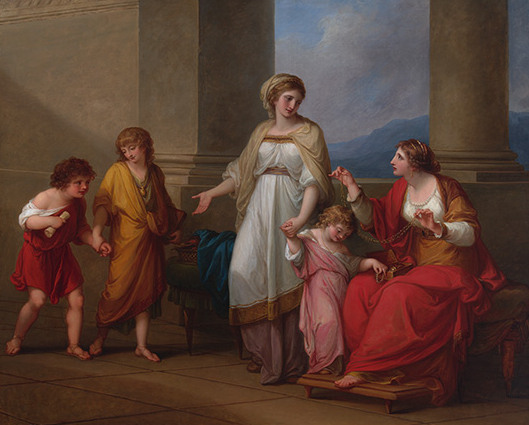
Angelica Kauffmann – Cornelia Pointing to Her Treasures
This painting illustrates a moral anecdote from Roman history. Cornelia, mother of the Gracchi, presents her children as her true “treasures,” rejecting material wealth.
Classical subject from Roman history
Clear composition and calm gestures
Simplicity over luxury → core Neoclassical ideal
Palladism
Palladianism (also called Neo-Palladianism) is an architectural style based on the ideas and buildings of Andrea Palladio
Architecture should be rational, harmonious, and morally uplifting, following the rules of classical antiquity (Ancient Greece and Rome).
Italy → Villas and churches (Palladio himself)
Great Britain → Country houses (e.g. Chiswick House)
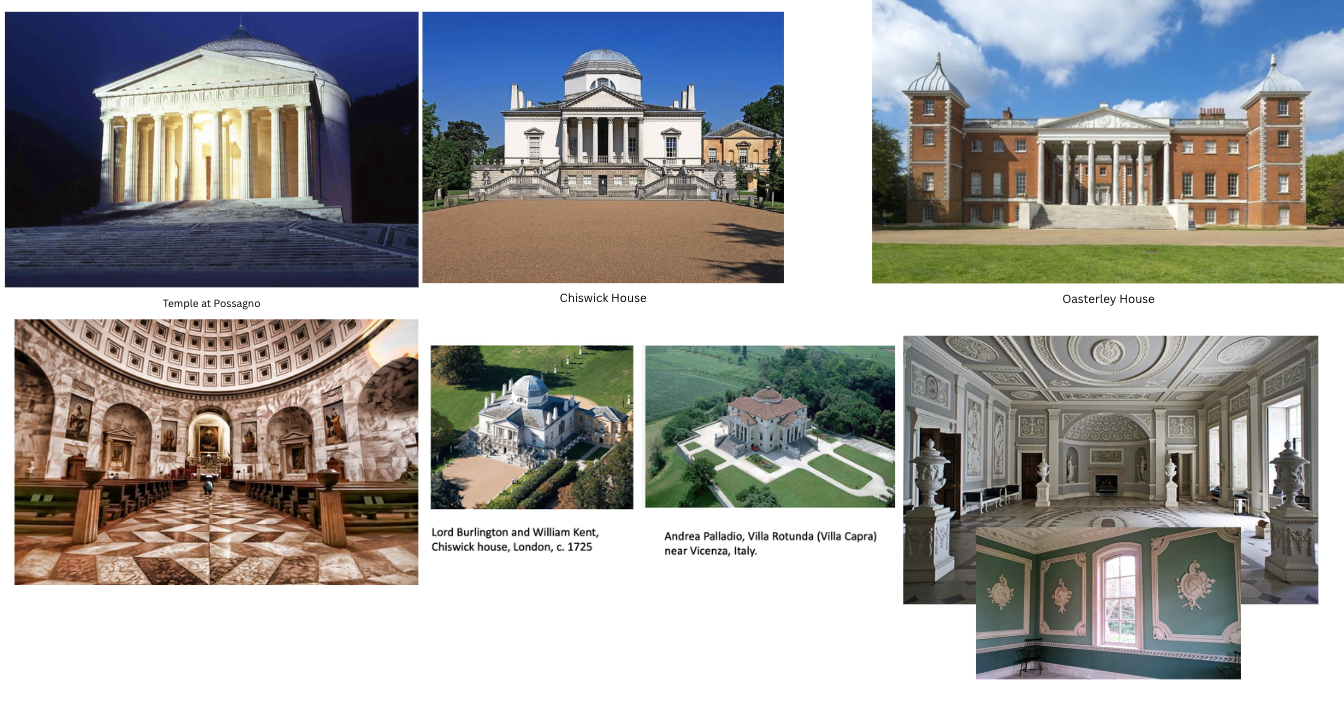
Palladianism in Architecture
Italy: Antonio Canova – Temple at Possagno
Designed by Canova as both a Catholic church and personal mausoleum, inspired by the Pantheon and Greek temples.
Great Britain: Palladian Tradition
British Neoclassicism favored domestic architecture, adapting Palladio’s ideas for aristocratic country houses.
Symmetry and proportion
Classical orders
Architecture: Richard Boyle & William Kent – Chiswick House
A manifesto of British Palladianism, directly inspired by Palladio’s Villa Rotunda.
Interiors: Gresham & Robert Adam – Osterley House
Robert Adam transformed the interiors using a refined Neoclassical decorative language. Elegant plasterwork and classical motifs, Light color palette, roman oriented ornaments.
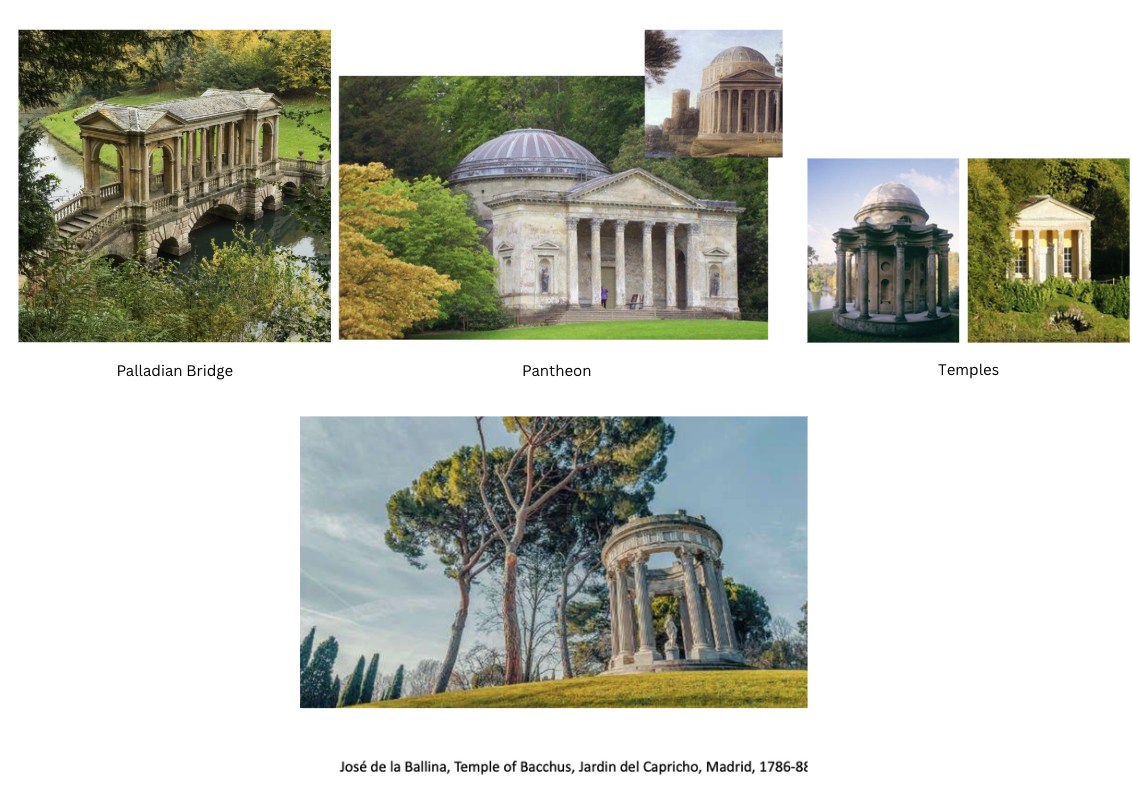
The Picturesque & Classical Landscapes
Henry Flitcroft – Palladian Bridge, Pantheon & Temples (Stourhead)
Classical structures placed within landscaped gardens to evoke ancient ruins and idealized nature.
Inspired by Roman temples
Landscape as a painted composition
Emotional contemplation of antiquity
José de la Ballina – Temple of Bacchus
A garden folly inspired by Roman temples, built for leisure and classical fantasy.
Decorative, not functional
Mythological reference (Bacchus)
Antiquity as pleasure and imagination
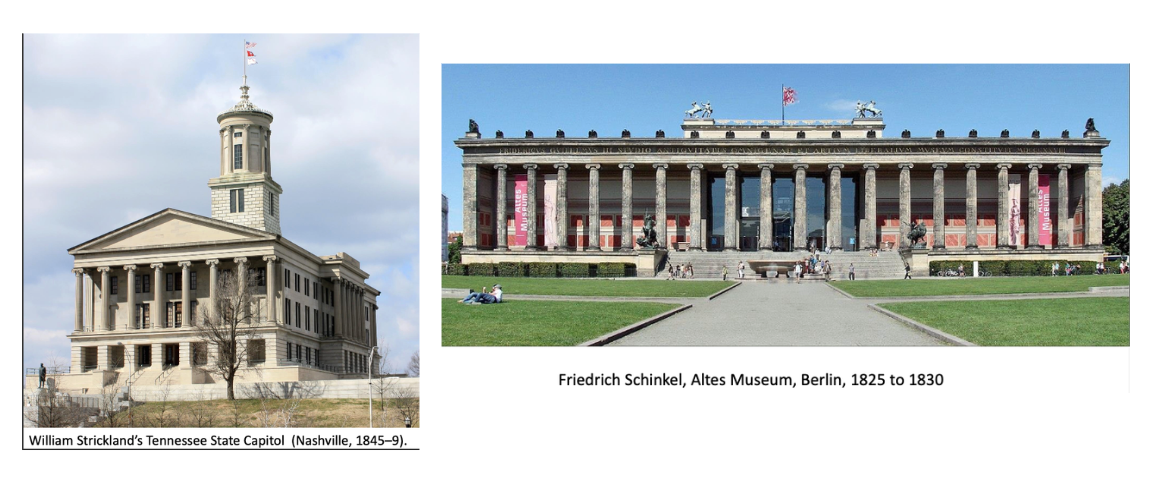
Greek Revival Architecture - Europe and America
Karl Friedrich Schinkel – Altes Museum (Berlin)
A public museum inspired by Greek stoas, symbolizing education and civic culture.
Greek Doric influence
Enlightenment ideals of knowledge
William Strickland – Tennessee State Capitol
Greek Revival adopted in the United States as a symbol of democracy.
Greek temple form
Political symbolism
Association with ancient democracy
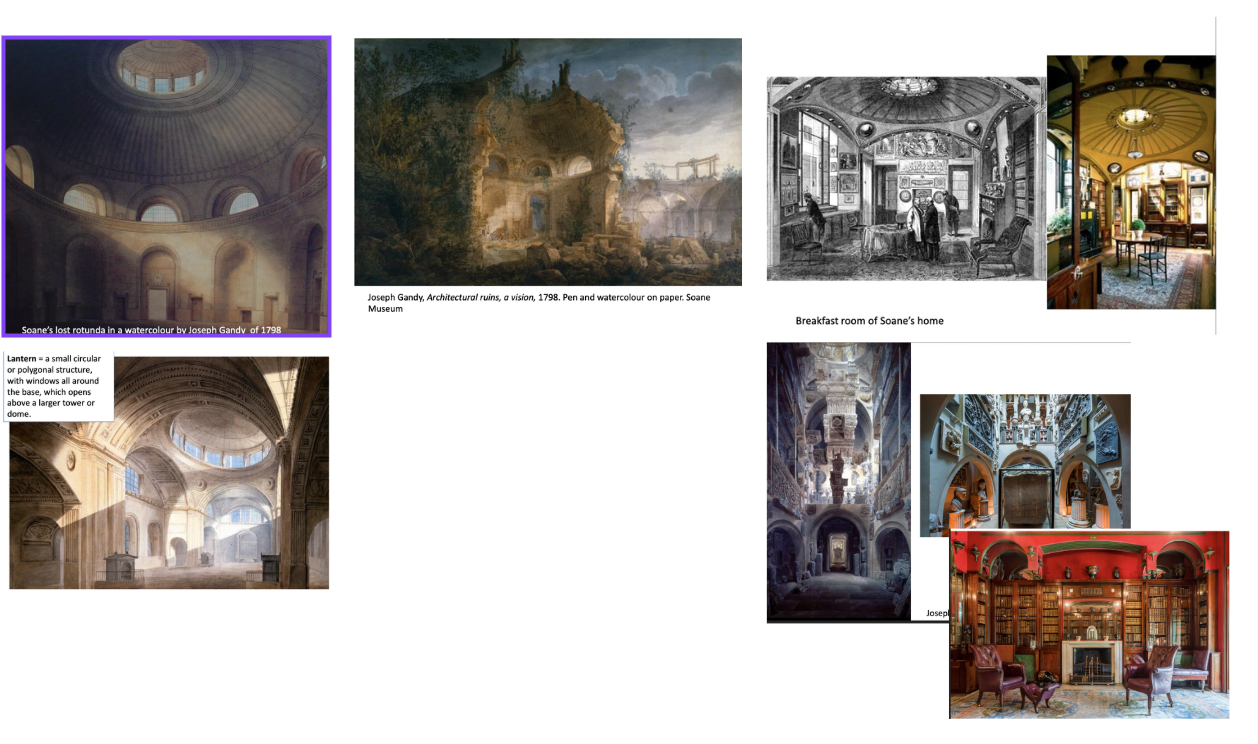
Architecture of John Soane (British Architecture)
Bank of England
Soane designed the bank as a walled, inward-looking complex, emphasizing security and light.
Complex spatial planning
Use of skylights and lanterns (a small structure with mirrors all around the base)
Abstracted classical forms
Innovation within Neoclassicism
Joseph Gandy – Imagined Ruins
Gandy visualized Soane’s buildings as future ruins, inspired by Giovanni Battista Piranesi.
Melancholy and time
Reflection on history and decay
Soane’s Home & Museum (Lincoln’s Inn Fields)
Soane’s house functioned as a living museum, merging architecture, light, ruins, and collections.
Experimental spatial sequences
Use of mirrors and skylights
Display of antiquities and casts
Neoclassicism + imagination
 Note
Note  Flashcards (32)