METHOD OF COMPENSATION
 Studied by 4 people
 Call Kai
 Learn
Learn Practice Test
 Spaced Repetition
 Match
Match Flashcards
 Knowt Play
1/34

There's no tags or description
Looks like no tags are added yet.
Name | Mastery | Learn | Test | Matching | Spaced | Call with Kai |
|---|
No analytics yet
Send a link to your students to track their progress
35 Terms
What is the main purpose of the Methods of Compensation?
To ensure that an architect’s professional fee is fair, ethical, and proportional to the scope, complexity, and value of services rendered.
What law and document govern the Methods of Compensation for architects in the Philippines?
Republic Act 9266 and the Architect’s Guidelines for Standards of Professional Practice (SPP).
What are the three main categories of architectural compensation?
Percentage-based fee, Lump Sum (Fixed Fee), and Time-based fee.
Which method of compensation is the most commonly used worldwide?
Percentage-based fee.
How is a percentage-based fee computed?
By multiplying the agreed percentage by the Project Construction Cost (PCC).
Why is percentage-based compensation considered fair?
Because the architect’s fee adjusts proportionally with increases or decreases in project cost and responsibility.
What does PCC stand for?
Project Construction Cost.
When is the Lump Sum or Fixed Fee method appropriate?
When the scope of services and project requirements are clearly defined at the outset.
What is the major risk of using a lump sum fee?
Changes in scope may require renegotiation or additional compensation.
When is time-based compensation most appropriate?
When services are undefined, advisory, short-term, or consultative.
Give examples of time-based compensation.
Hourly rate, per diem, retainer fee.
Why is time-based compensation not suitable for creative design?
Because creative value cannot be accurately measured by time spent.
What is a retainer fee?
A regular payment to ensure the availability of an architect’s services over a period of time.
Can an architect use more than one compensation method in a single project?
Yes, mixed methods of compensation are allowed and encouraged when appropriate.
What factors influence an architect’s professional fee?
Project complexity, scope of services, time requirements, risks, coordination needs, and responsibility.
True or False
A lump sum fee should remain unchanged even if the project scope increases.
False
True or False
Architectural fees are based only on the number of drawings produced.
False
True or False
Creative architectural work can be accurately measured using hourly
False
True or False
Percentage-based compensation reflects the architect’s responsibility for the project.
True
True or False
Architects may legally combine different compensation methods in one project.
True
METHODS OF COMPENSATION
PERCENTAGE BASED FEE
▪ PPPC : Probable Project Construction Cost
▪ APCC : Awarded Project Construction Cost
▪ FPCC : Final Project Construction Cost
GROUP 4: Residences
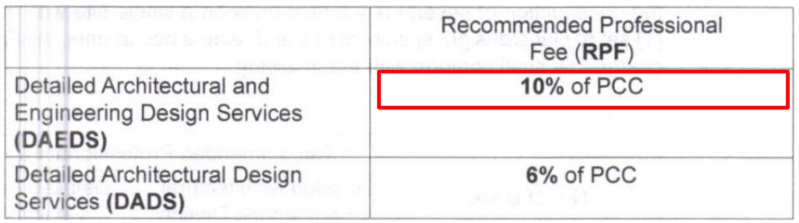
GROUP5: Monumental buildings
GROUP6: When the plan/design and related Contract Documents are re-used for the repetitive
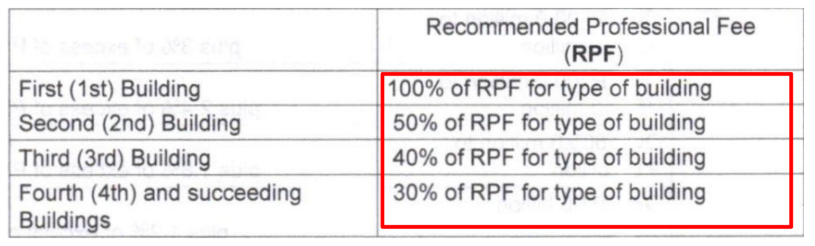
GROUP7: When the Architect is engaged to undertake a Housing Project involving the construction of several residential
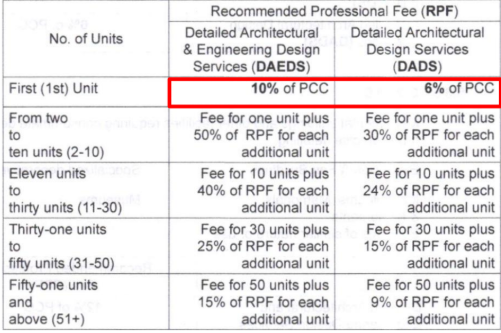
GROUP8
RPF : 15% of the PCC
GROUP9
the compensation of services should be
increased to fifty percent (50%) or a total of one hundred fifty
percent (150%) of the RPF.
GROUP10
RPF shall not be less than One Thousand Pesos (Pl,000.00) per
hour
MANNER OF PAYMENT FOR 202
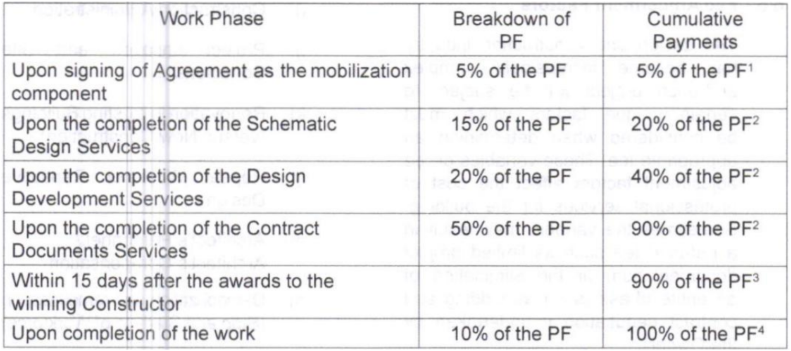
METHODS OF COMPENSATION FOR 203
Recommended Professional Fee (RPF) is 10% to 15% of the
cost of work
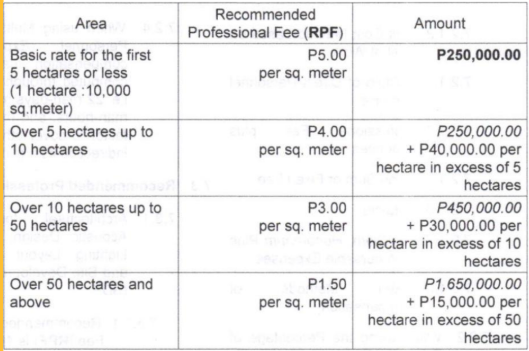
Physical Planning for building sites such as lndustrial Estates,
Commercial, Religious, lnstitutional and Government

METHODS OF COMPENSATION FOR 204
1% to 1.5% of the Project Construction Cost (PCC).
METHODS OF COMPENSATION FOR SPP 205
The Recommended Professional Fee (RPF)
based on value-pricing is from 4% to 6% of
gross rental.
METHODS OF COMPENSATION FOR SPP 206
Project Manager is 2% to 5% of Project Construction Cost (PCC).
METHODS OF COMPENSATION FOR SPP 207
Administration shall be 7% of the Project Construction Cost (PCC),
 Note
Note  Flashcards (20)