IMED2001 - Medically important Gram Positive Cocci (L3)

0.0(0)
Studied by 0 people
call kaiCall Kai
learnLearn
examPractice Test
spaced repetitionSpaced Repetition
heart puzzleMatch
flashcardsFlashcards
GameKnowt Play
Card Sorting

1/28

encourage image

There's no tags or description

Looks like no tags are added yet.

Last updated 8:43 AM on 3/27/26
Name
Mastery
Learn
Test
Matching
Spaced
Call with Kai

No analytics yet

Send a link to your students to track their progress

29 Terms
1
New cards
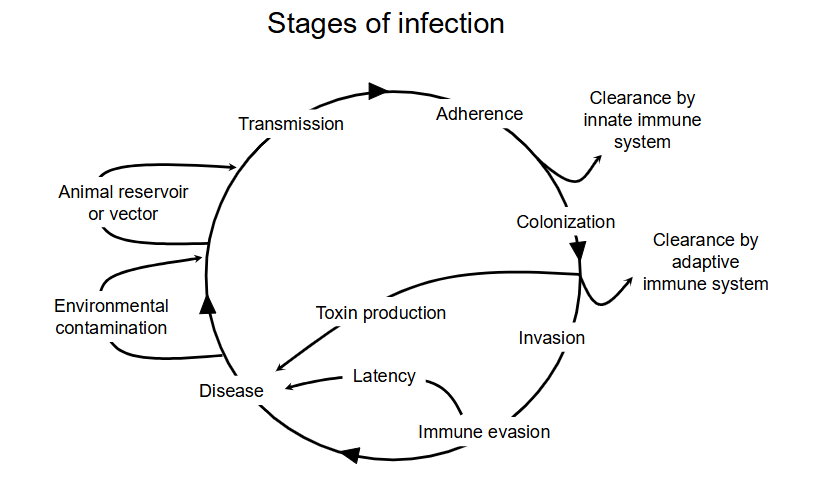
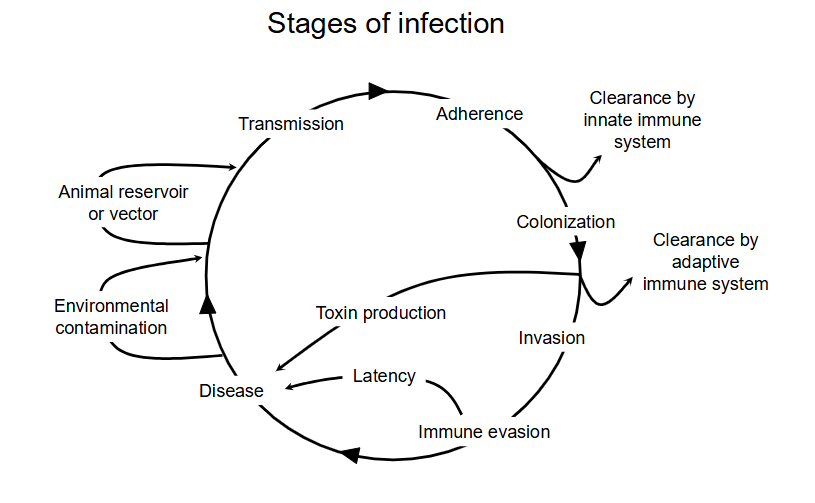
<p>stages of infection DIAGRAM</p>

stages of infection DIAGRAM

- two ways to infect: the actual pathogen invades or the toxins cause disease
<p>- two ways to infect: the actual pathogen invades or the toxins cause disease</p>
2
New cards
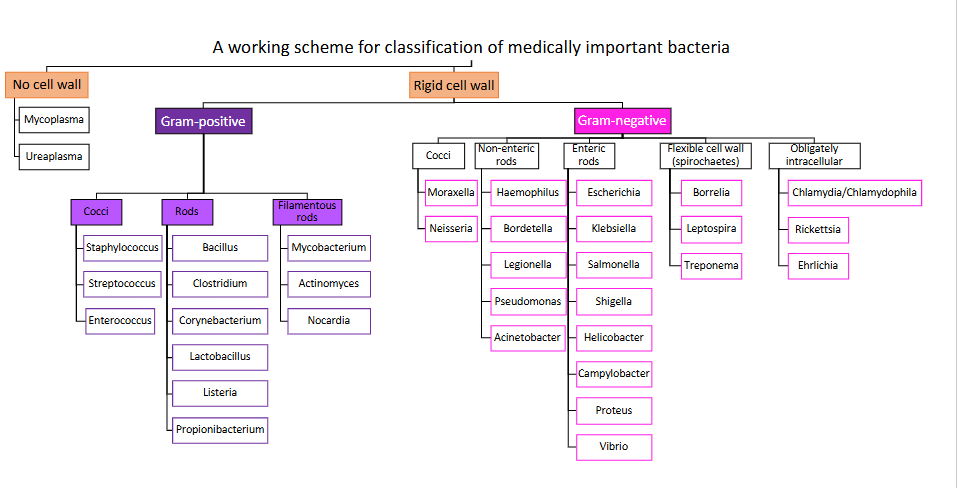
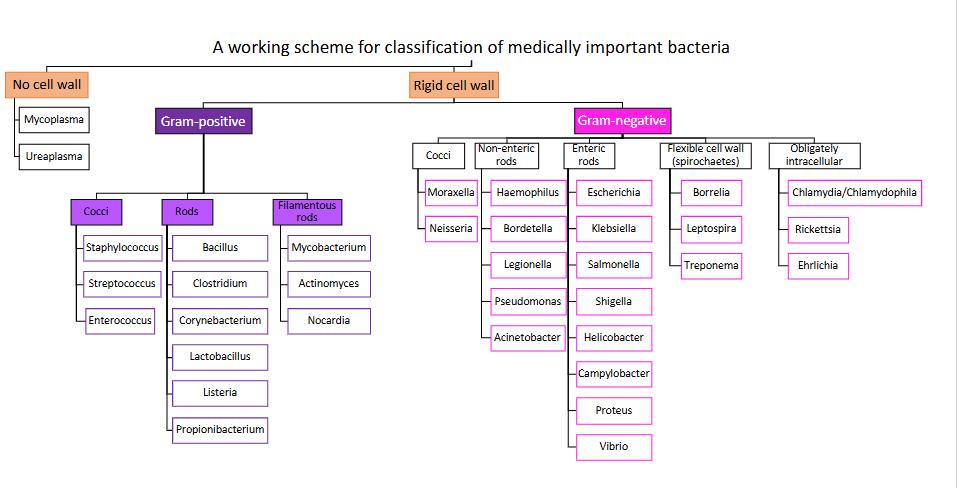
<p>A working scheme for classification of medically important bacteria</p>

A working scheme for classification of medically important bacteria

DIAGRAM ON SLIDE 4
<p>DIAGRAM ON SLIDE 4</p>
3
New cards
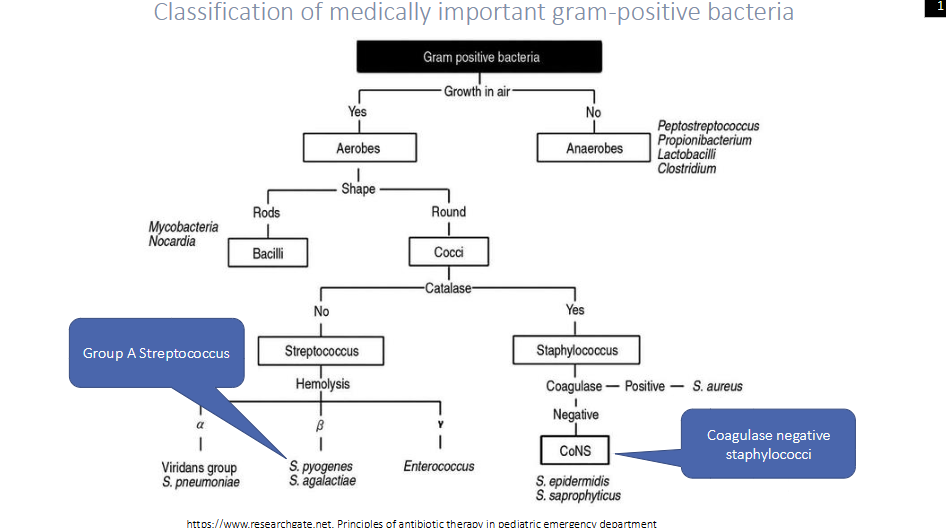
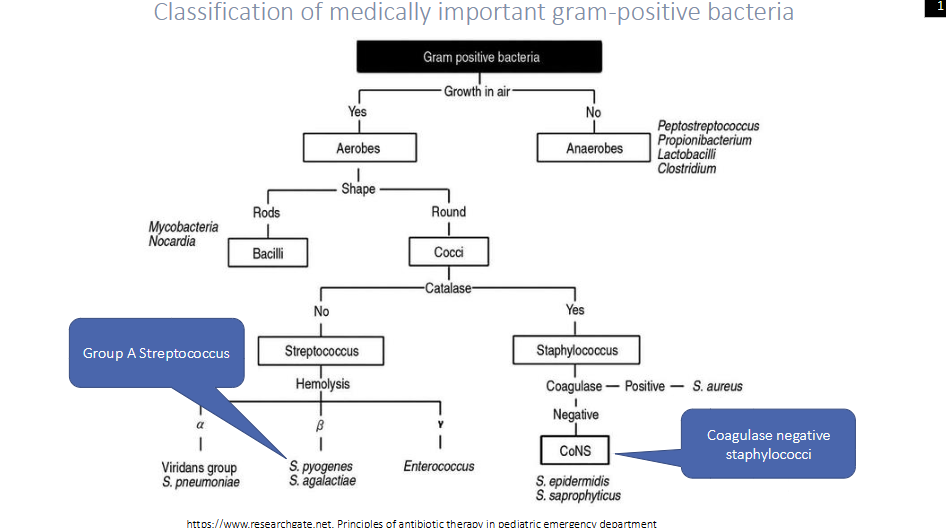
<p>Classification of Medically important gram-positive bacteria</p>

Classification of Medically important gram-positive bacteria

DIAGRAM ON SLIDE 6
<p>DIAGRAM ON SLIDE 6</p>
4
New cards
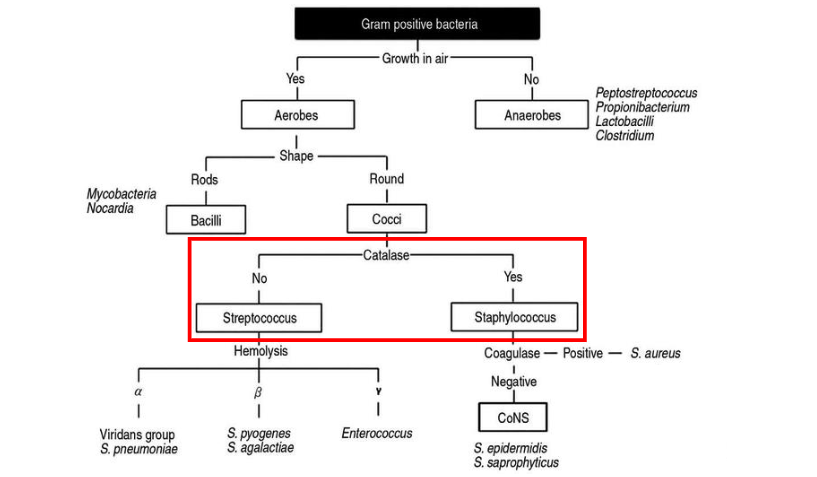
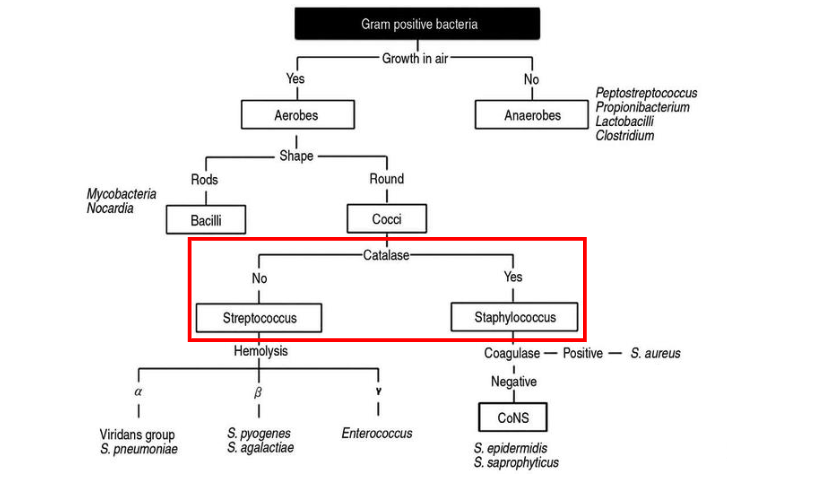
<p>Focused more on cocci classification of medically important gram-positive bacteria</p>

Focused more on cocci classification of medically important gram-positive bacteria

- lecture focus on streptococcus and staphylococcus

- notice that all aerobes are cocci or bacilli

- then we have catalase and coagulase tests
<p>- lecture focus on streptococcus and staphylococcus</p><p>- notice that all aerobes are cocci or bacilli</p><p>- then we have catalase and coagulase tests</p>
5
New cards
<p>Catalase Reaction</p>

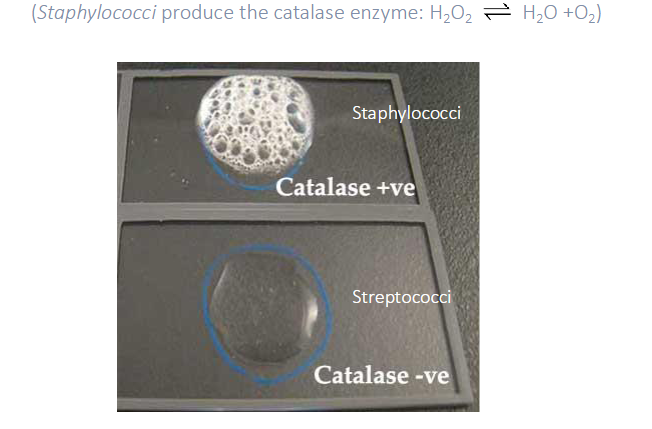
Catalase Reaction

- Staphylococci produce catalase enzyme: H2O2 <--> H2O + O2

- Catalase positive: bubbling

- Catalase negative: no bubbling
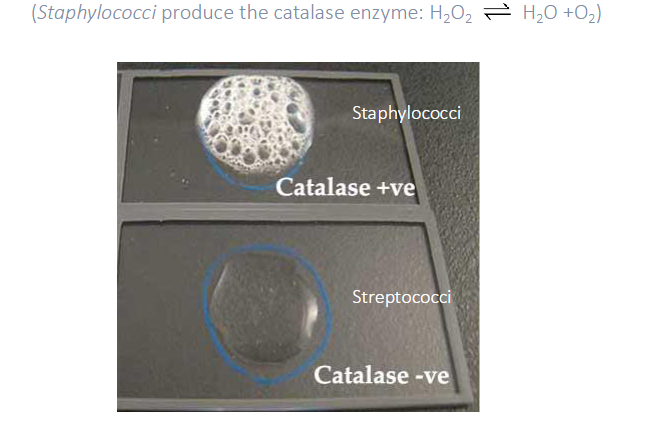
<p>- Staphylococci produce catalase enzyme: H2O2 &lt;--&gt; H2O + O2</p><p>- Catalase positive: bubbling</p><p>- Catalase negative: no bubbling</p>
6
New cards

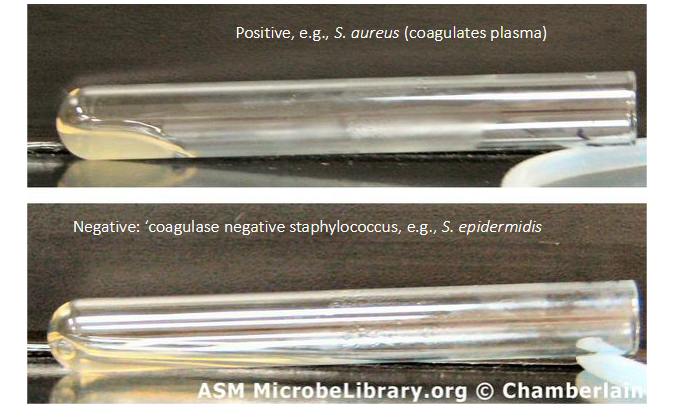
Coagulase positive staphylococci are

usually Staph aureus
7
New cards
<p>Coagulase Test for Staphylococci</p>

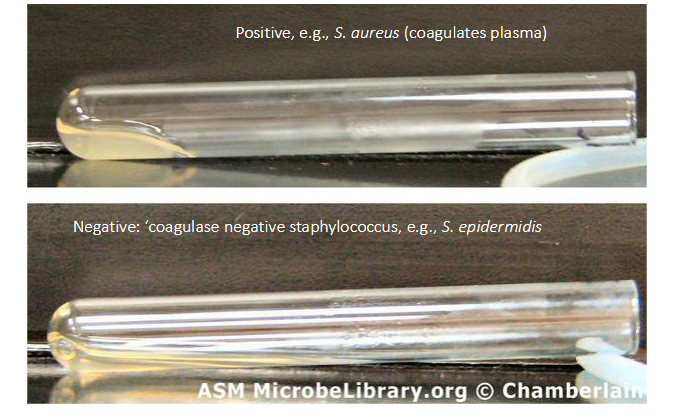
Coagulase Test for Staphylococci

- what we do is we get plasma (left from spinning blood to be left with plasma) and if we add Staph aureus culture to the plasma the coagulase enzyme which is present in Staph aureus coagulates the plasma and you get a little clot

- forms a little clot within and it activates the clotting cascadde in the plasma

.

- coagulase negative staphylococci shows that plasma spreads over the test tube
<p>- what we do is we get plasma (left from spinning blood to be left with plasma) and if we add Staph aureus culture to the plasma the coagulase enzyme which is present in Staph aureus coagulates the plasma and you get a little clot</p><p>- forms a little clot within and it activates the clotting cascadde in the plasma</p><p>.</p><p>- coagulase negative staphylococci shows that plasma spreads over the test tube</p>
8
New cards
<p>The Genus Staphylococcus</p>

The Genus Staphylococcus

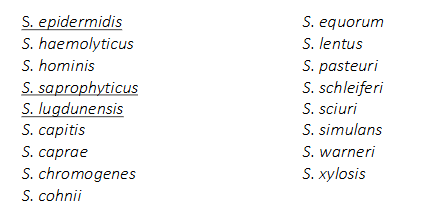
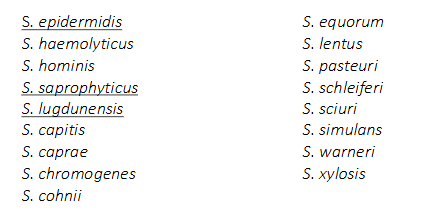
- Coagulase negative staphylococci: most are memberes of normal skin flora of humans

.

- dont need to know all the names

- Low virulence, but pathogenic in some settings (typically when skin barrier has been breached, e.g by invasive devices, premature infants

- Vary in pathogenic potential
<p>- Coagulase negative staphylococci: most are memberes of normal skin flora of humans</p><p>.</p><p>- dont need to know all the names</p><p>- Low virulence, but pathogenic in some settings (typically when skin barrier has been breached, e.g by invasive devices, premature infants</p><p>- Vary in pathogenic potential</p>
9
New cards
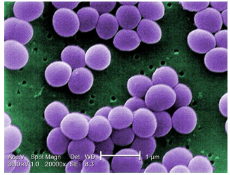
<p>Staphylococcus Aureus</p>

Staphylococcus Aureus

- 20-40% of population are carriers (anterior nares (nostrils), skin of the axilla and groin)

- May cause localised or disseminated infections

- Pyogenic (pus forming, e.g abscess) infections in almost any organ (coagulase toxin 'walls off' infection, while lytic toxins (haemolysins, proteases) destroy tissue
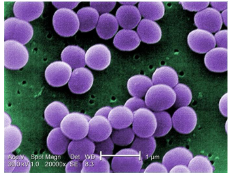
<p>- 20-40% of population are carriers (anterior nares (nostrils), skin of the axilla and groin)</p><p>- May cause localised or disseminated infections</p><p>- Pyogenic (pus forming, e.g abscess) infections in almost any organ (coagulase toxin 'walls off' infection, while lytic toxins (haemolysins, proteases) destroy tissue</p>
10
New cards
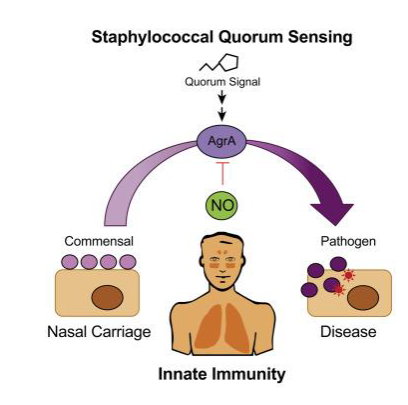
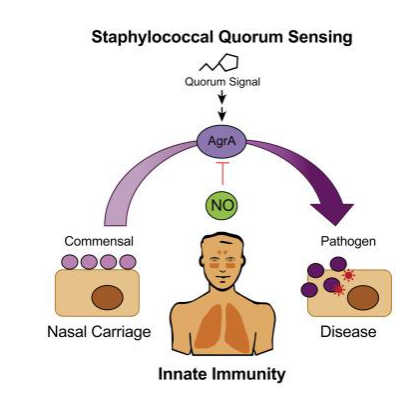
<p>S. aureus: what determines colonisation vs disease (Basically why is it that so many of us are asymptomatically colonised by S. aureus whereas others develop disease)</p>

S. aureus: what determines colonisation vs disease (Basically why is it that so many of us are asymptomatically colonised by S. aureus whereas others develop disease)

Staphylococcal Quorum Sensing

.

- Quorum Sensing (QS): chemical communication between bacteria that depends on the surrounding environmental conditions, including bacterial density

- Influences bacterial behaviour, allowing bacteria to collaborate in response to environmental conditions

- The quorum sensing system in Staphylococcus aureus works through the accessory gene regulator (agr)

- Agr contributes to S. aureus pathogenicity in several infection types, including subcutaneous abscesses, endocarditis and arthritis

.

- basically it responds to the environment that allows it to behave in a certain way in its environment
<p>Staphylococcal Quorum Sensing</p><p>.</p><p>- Quorum Sensing (QS): chemical communication between bacteria that depends on the surrounding environmental conditions, including bacterial density</p><p>- Influences bacterial behaviour, allowing bacteria to collaborate in response to environmental conditions</p><p>- The quorum sensing system in Staphylococcus aureus works through the accessory gene regulator (agr)</p><p>- Agr contributes to S. aureus pathogenicity in several infection types, including subcutaneous abscesses, endocarditis and arthritis</p><p>.</p><p>- basically it responds to the environment that allows it to behave in a certain way in its environment</p>
11
New cards
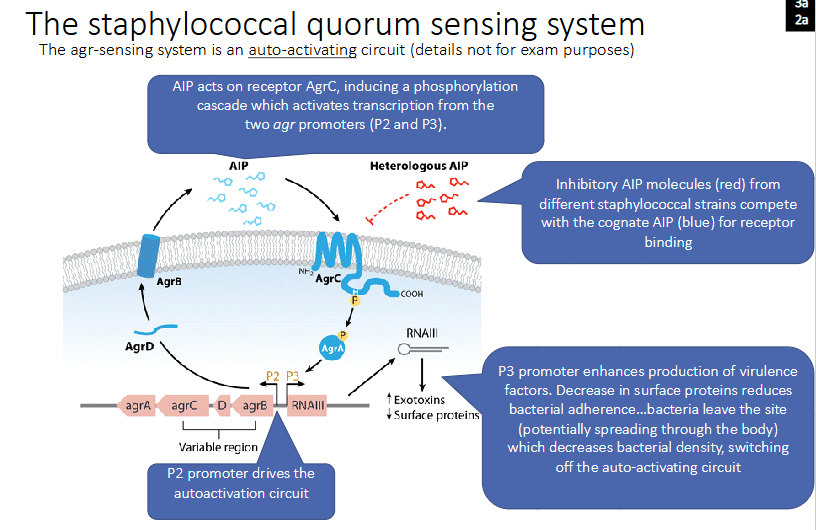
<p>The staphylococcal quorum sensing system</p>

The staphylococcal quorum sensing system

- The agr-sensing system is an auto-activating circuit (details not for exam purposes)
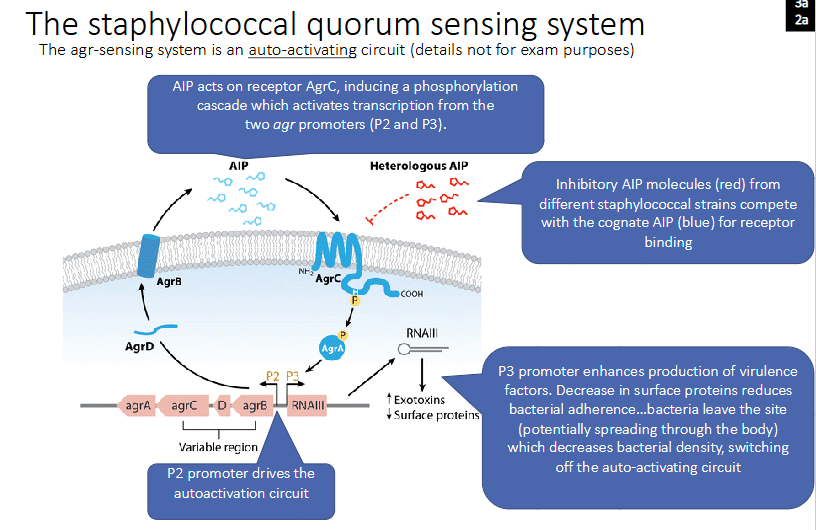
<p>- The agr-sensing system is an auto-activating circuit (details not for exam purposes)</p>
12
New cards
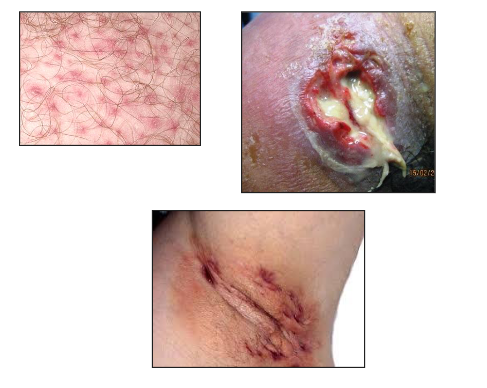
<p>Staphylococcus Aureus Infections</p>

Staphylococcus Aureus Infections

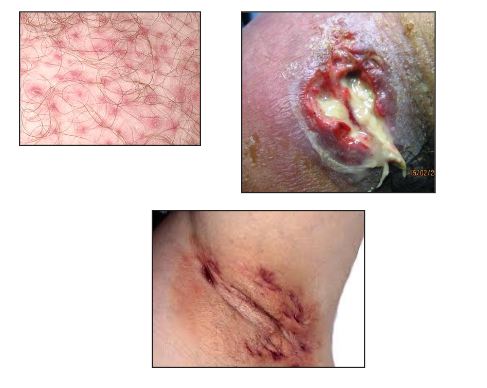
- Frequent cause of skin infections

.

- Folliculitis

- Furuncles (boils)

- Carbuncles

- Impetigo

- Cellulitis

- Wound Infections
<p>- Frequent cause of skin infections</p><p>.</p><p>- Folliculitis</p><p>- Furuncles (boils)</p><p>- Carbuncles</p><p>- Impetigo</p><p>- Cellulitis</p><p>- Wound Infections</p>
13
New cards
<p>Staphylococcus Aureus Infections (other localised infections)</p>

Staphylococcus Aureus Infections (other localised infections)

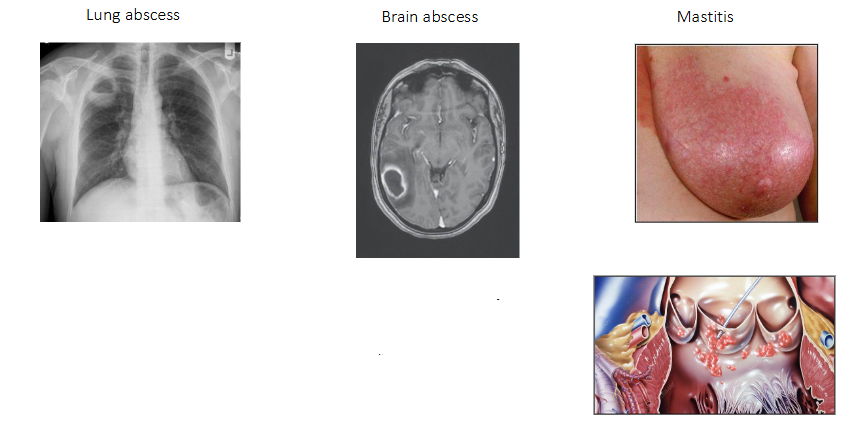
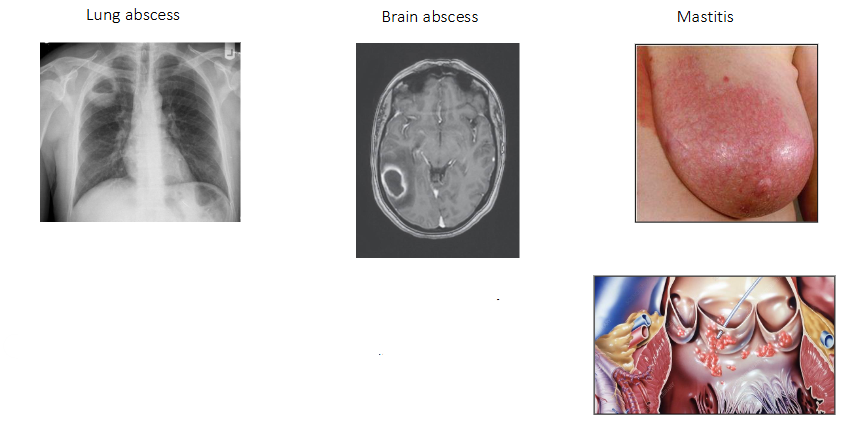
- Lung abscess

- Brain abscess (means swelling due to pus)

- Mastitis

.

- Disseminated infection - bacteraemia

- S. aureus circulating in the bloodstream

- May progress to infection of a heart valve: endocarditis
<p>- Lung abscess</p><p>- Brain abscess (means swelling due to pus)</p><p>- Mastitis</p><p>.</p><p>- Disseminated infection - bacteraemia</p><p>- S. aureus circulating in the bloodstream</p><p>- May progress to infection of a heart valve: endocarditis</p>
14
New cards

Staphylococcus Aureus Toxins

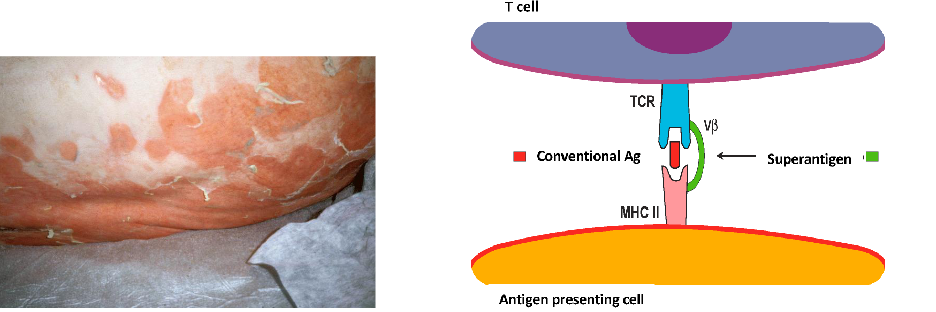
Some toxin-producing stains of S. aureus can cause non-pyogenic disease:

- Staphylococcal scalded skin syndrome (SSSS)

- Staphylococcal toxic shock syndrome (STSS)

- Staphylococcal food poisoning
15
New cards
<p>Staphylococcus Aureus Superantigens</p>

Staphylococcus Aureus Superantigens

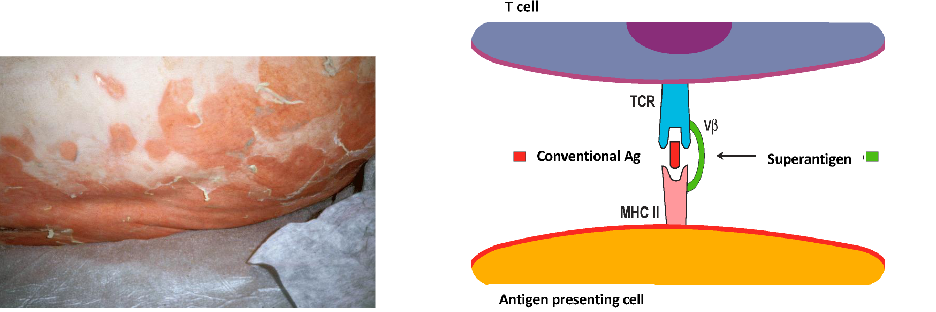
STAPHYLOCOCCAL SCALDED SKIN SYNDROME (SSSS):

- caused by an enterotoxin, the gene fore which which originated in a bacteriophage (acquired by transduction)

- The enterotoxin is a 'superantigen'

- Superantigens bypass normal antigen presentation by directly crosslinking T cell receptor and MCH II

- causes polyclonal activation of T cells and an inflammatory cascade

.

- essentially it causes an inappropriate immune response, hence inflammation
<p>STAPHYLOCOCCAL SCALDED SKIN SYNDROME (SSSS):</p><p>- caused by an enterotoxin, the gene fore which which originated in a bacteriophage (acquired by transduction)</p><p>- The enterotoxin is a 'superantigen'</p><p>- Superantigens bypass normal antigen presentation by directly crosslinking T cell receptor and MCH II</p><p>- causes polyclonal activation of T cells and an inflammatory cascade</p><p>.</p><p>- essentially it causes an inappropriate immune response, hence inflammation</p>
16
New cards
<p>The genus Streptococcus (and Enterococcus)</p>

The genus Streptococcus (and Enterococcus)

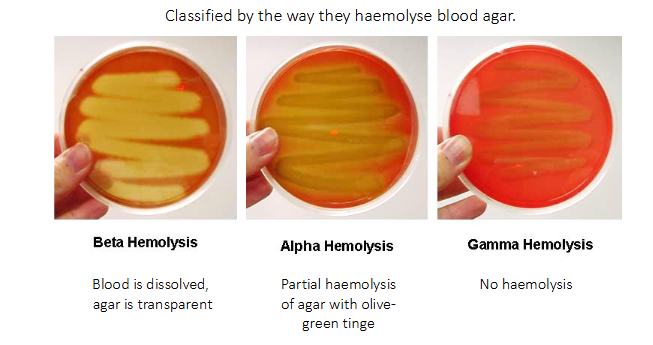
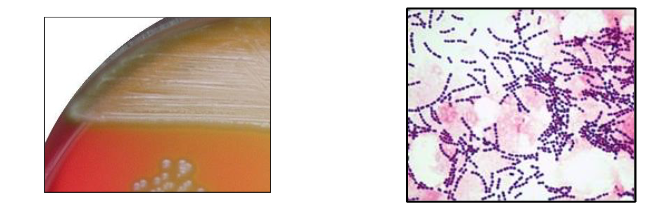
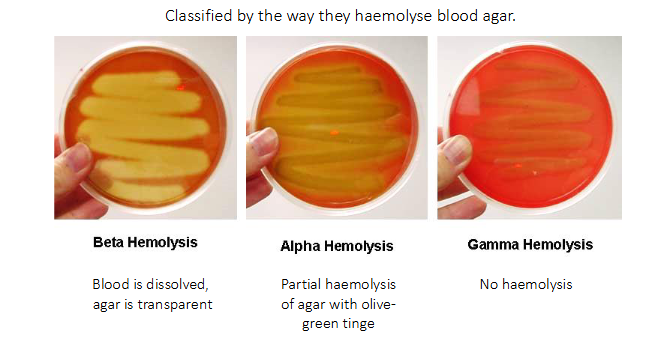
- Classified by the way they haemolyse blood agar

.

BETA HAEMOLYSIS:

- blood is dissolved, agar is transparent

.

ALPHA HAEMOLYSIS:

- partial haemolysis of agar with olive-green tinge

.

GAMMA HAEMOLYSIS:

- No haemolysis
<p>- Classified by the way they haemolyse blood agar</p><p>.</p><p>BETA HAEMOLYSIS:</p><p>- blood is dissolved, agar is transparent</p><p>.</p><p>ALPHA HAEMOLYSIS:</p><p>- partial haemolysis of agar with olive-green tinge</p><p>.</p><p>GAMMA HAEMOLYSIS:</p><p>- No haemolysis</p>
17
New cards
<p>The Beta-haemolytic streptococci</p>

The Beta-haemolytic streptococci

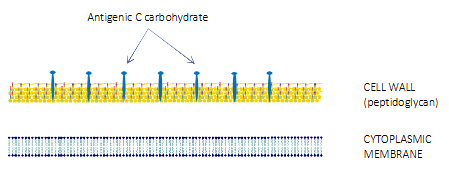
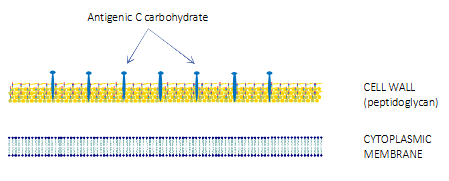
- Further classified according to antigenic differences in cell wall carbohydrates

- Lancefield grouping system: 20 different groups (A-H, K-V)

- Two lancefield groups are of particular clinical importance

.

LANCEFIELD GROUP A (= Strep A)

- also known by its species name, Streptococcus pyogenes

LANCEFIELD GROUP B

- Also known by its species name, Streptococcus agalactiae

- Colonises the urogenital tract and rectum of women, transmitted to infants during/after birth

- causes severe infections (meningitis and bloodstream infections) in neonates
<p>- Further classified according to antigenic differences in cell wall carbohydrates</p><p>- Lancefield grouping system: 20 different groups (A-H, K-V)</p><p>- Two lancefield groups are of particular clinical importance</p><p>.</p><p>LANCEFIELD GROUP A (= Strep A)</p><p>- also known by its species name, Streptococcus pyogenes</p><p>LANCEFIELD GROUP B</p><p>- Also known by its species name, Streptococcus agalactiae</p><p>- Colonises the urogenital tract and rectum of women, transmitted to infants during/after birth</p><p>- causes severe infections (meningitis and bloodstream infections) in neonates</p>
18
New cards
<p>Lancefield group A Beta-Haemolytic Streptococcus (Streptococcus pyogenes)</p>

Lancefield group A Beta-Haemolytic Streptococcus (Streptococcus pyogenes)

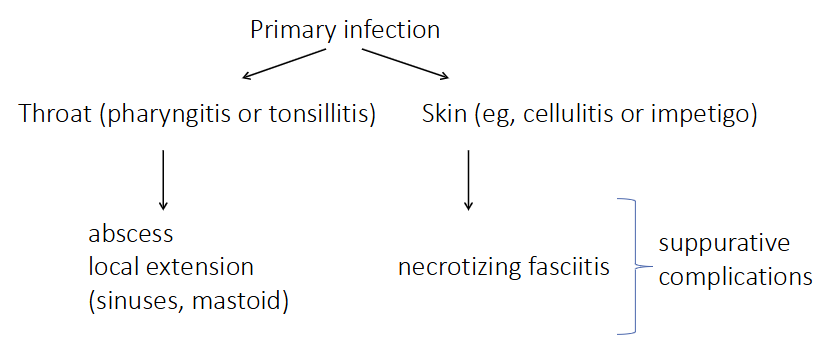
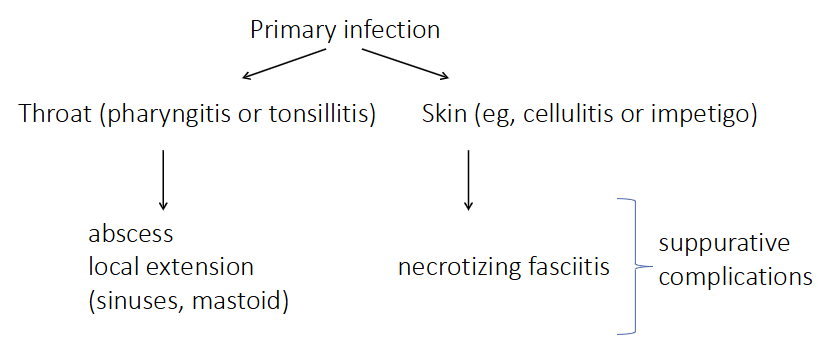
PRIMARY INFECTION:

- Throat (pharyngitis or tonsilitis) -> abscess local extension (sinuses, mastoid)

- Skin (e.g cellulitis or impetigo) -> necrotizing fasciitis (suppurative complications)
<p>PRIMARY INFECTION:</p><p>- Throat (pharyngitis or tonsilitis) -&gt; abscess local extension (sinuses, mastoid)</p><p>- Skin (e.g cellulitis or impetigo) -&gt; necrotizing fasciitis (suppurative complications)</p>
19
New cards
<p>Throat Infections caused by Strep A</p>

Throat Infections caused by Strep A

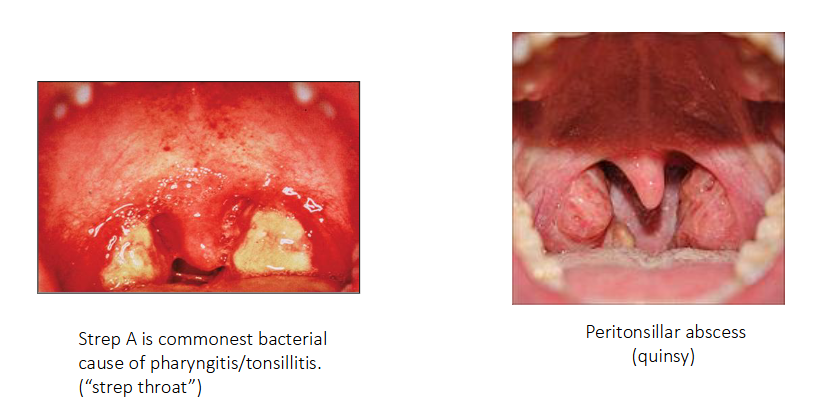
- Strep A is commonest bacterial cause of pharyngitis/tonsilitis ("strep throat")

- Peritonsillar abscess (quinsy)
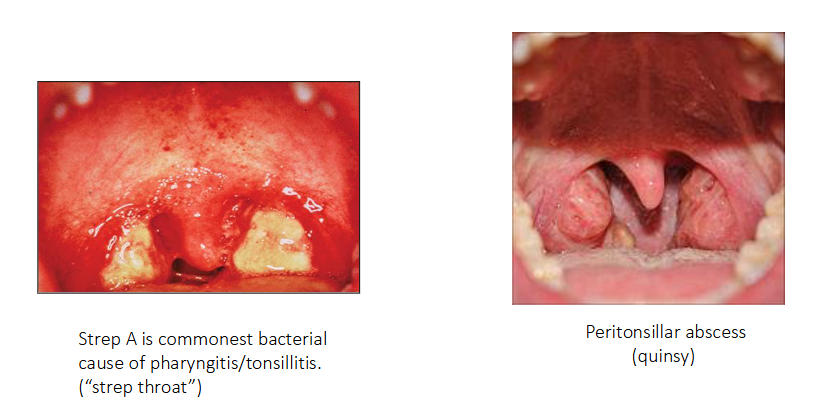
<p>- Strep A is commonest bacterial cause of pharyngitis/tonsilitis ("strep throat")</p><p>- Peritonsillar abscess (quinsy)</p>
20
New cards
<p>Skin and soft tissue infections caused by Strep A</p>

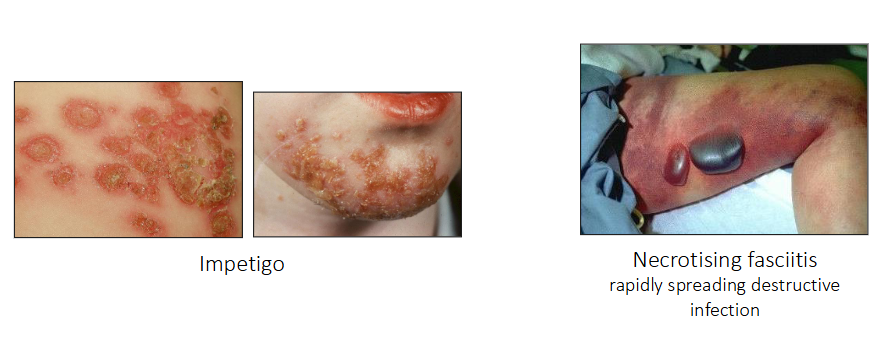
Skin and soft tissue infections caused by Strep A

- Impetigo

- Necrotising fasciitis (rapidly spreading destructive infection)
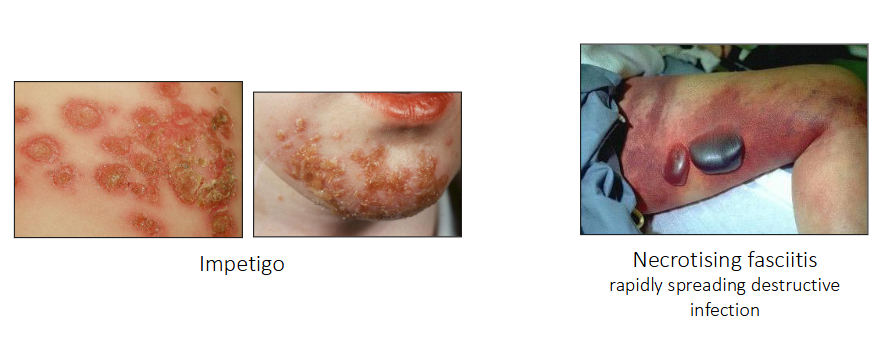
<p>- Impetigo</p><p>- Necrotising fasciitis (rapidly spreading destructive infection)</p>
21
New cards
<p>Non-suppurative complications of Strep A infection</p>

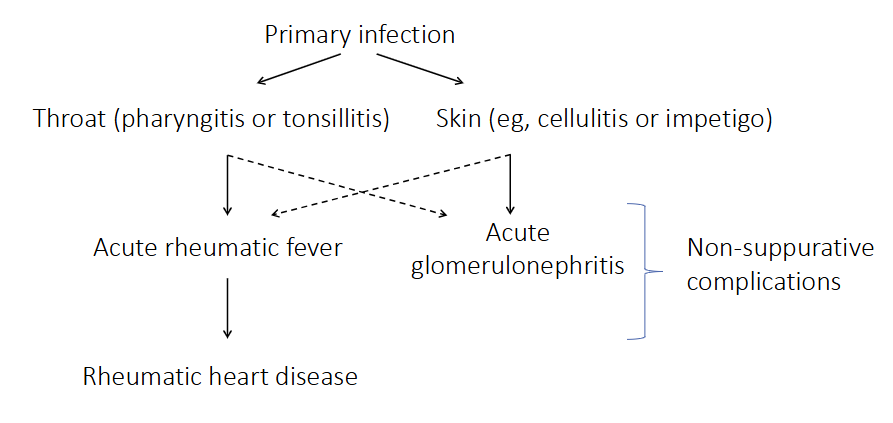
Non-suppurative complications of Strep A infection

- non-suppurative means non-pus forming complications

- due to immune response to infection

.

PRIMARY INFECTION:

Throat or Skin infection

- as a consequence of the immune response to this infection you develop these other diseases (acute rheumatic fever or acute glomerulonephritis)

- can cause rheumatic heart disease
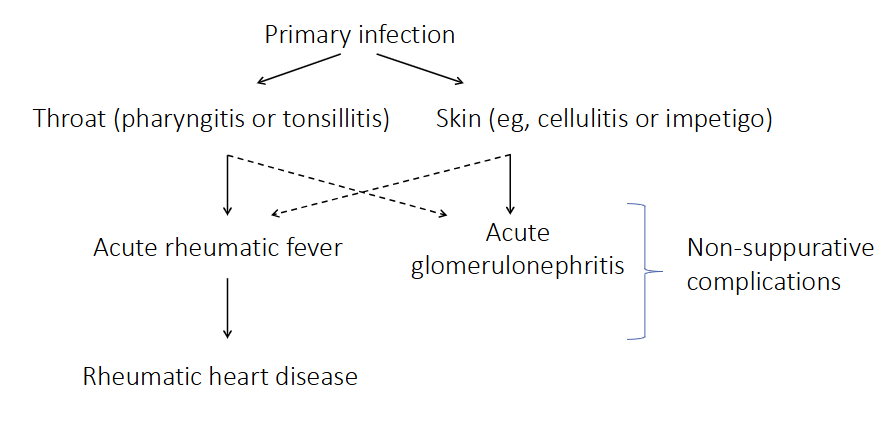
<p>- non-suppurative means non-pus forming complications</p><p>- due to immune response to infection</p><p>.</p><p>PRIMARY INFECTION:</p><p>Throat or Skin infection</p><p>- as a consequence of the immune response to this infection you develop these other diseases (acute rheumatic fever or acute glomerulonephritis)</p><p>- can cause rheumatic heart disease</p>
22
New cards
<p>Lancefield group A beta-haemolytic streptococcus (Streptococcus pyogenes)</p>

Lancefield group A beta-haemolytic streptococcus (Streptococcus pyogenes)

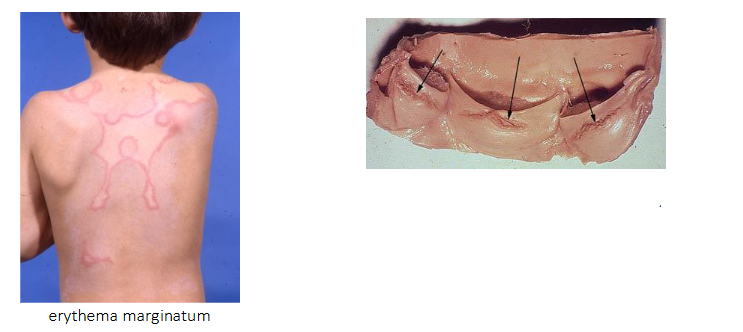
ACUTE RHEUMATIC FEVER:

- Common in aboriginal children, and worldwide associated with poverty

- Syndrome including arthritis, rash, writhing movements and carditis

.

- carditis: damage to heart valves and muscle

- recurrent rheumatic fever leads to rheumatic heart disease years later

- Chronic narrowing or stiffness of heart valves
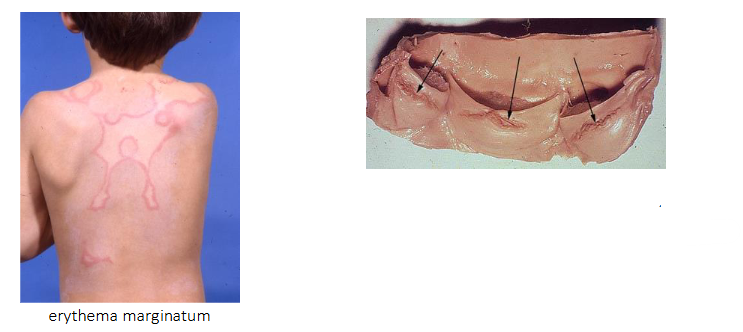
<p>ACUTE RHEUMATIC FEVER:</p><p>- Common in aboriginal children, and worldwide associated with poverty</p><p>- Syndrome including arthritis, rash, writhing movements and carditis</p><p>.</p><p>- carditis: damage to heart valves and muscle</p><p>- recurrent rheumatic fever leads to rheumatic heart disease years later</p><p>- Chronic narrowing or stiffness of heart valves</p>
23
New cards
<p>Pathogenesis of acute rheumatic fever</p>

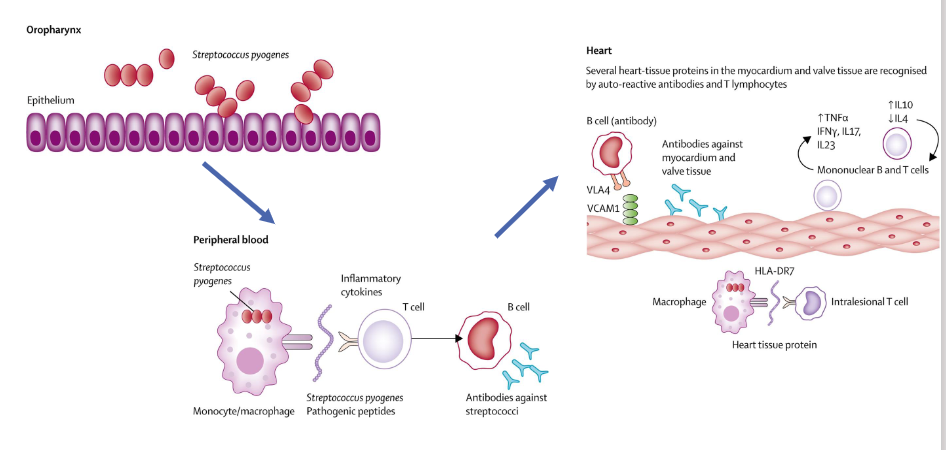
Pathogenesis of acute rheumatic fever

- some of the proteins Strep A produces or has in its cell wall are very very similar to proteins which are found on human heart tissue

- so when you produce an antibody against the Group A streptococcal protein, it also recognises the heart protein

- and so then you get this cross reaction of the immune response, where antibodies that your body intends to kill Group A strep are instead attacking your heart tissue

- stimualtes an inflammatory cascade in your heart tissue, causing problems
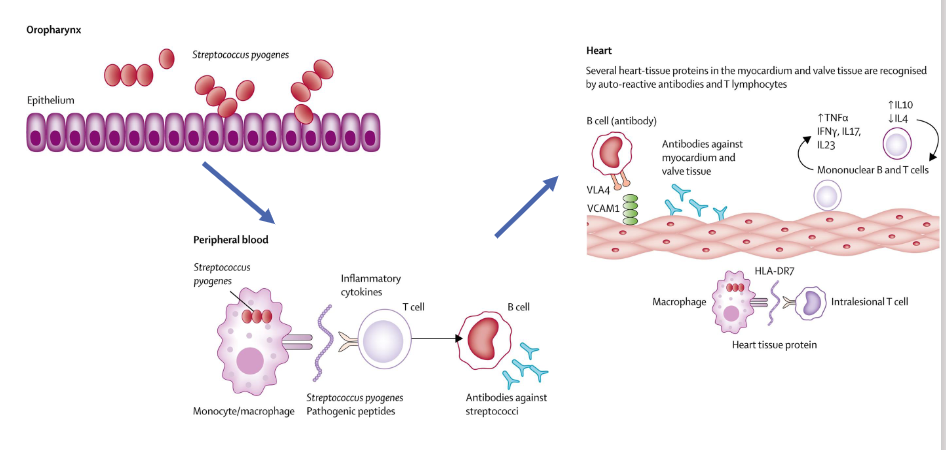
<p>- some of the proteins Strep A produces or has in its cell wall are very very similar to proteins which are found on human heart tissue</p><p>- so when you produce an antibody against the Group A streptococcal protein, it also recognises the heart protein</p><p>- and so then you get this cross reaction of the immune response, where antibodies that your body intends to kill Group A strep are instead attacking your heart tissue</p><p>- stimualtes an inflammatory cascade in your heart tissue, causing problems</p>
24
New cards
<p>The alpha-haemolytic streptococci</p>

The alpha-haemolytic streptococci

- common commensals of the oropharynx, nasopharynx, gut and genital tract

TWO GROUPS:

- 'viridans' group of streptococci

streptococcus mutans group (dental caries)

- Streptococcus pneumoniae
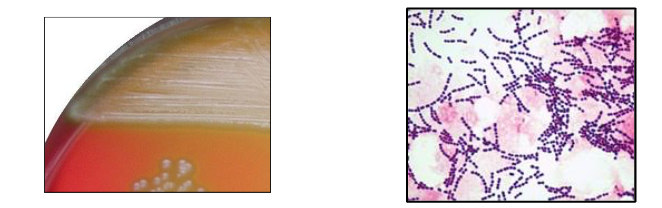
<p>- common commensals of the oropharynx, nasopharynx, gut and genital tract</p><p>TWO GROUPS:</p><p>- 'viridans' group of streptococci</p><p>streptococcus mutans group (dental caries)</p><p>- Streptococcus pneumoniae</p>
25
New cards
<p>Pathogenesis of dental caries</p>

Pathogenesis of dental caries

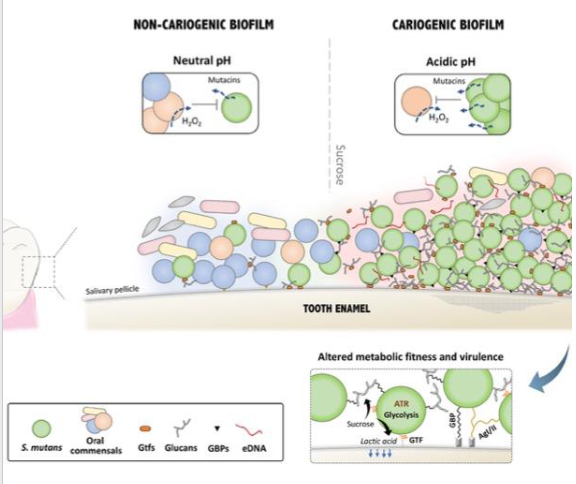
- Continuous intake of sucrose (sugar) favours the growth of S. mutans

- S. mutans secretes glycosyltransferases (GTFs) which adsorb onto the enamel

- GTFs catabolise sucrose to produce large amounts of glucans, whcih contribute to the buildup of extracellular polysaccharide matrix which serves as a scaffold for biofilm

- Organic acids (e.g lactic acid) are produced by bacteria in the biofilm, decreasing pH

- the low pH leads to demineralisation of enamel and initiates the carious process

.

  • Dental caries, or tooth decay, is a prevalent chronic disease where cariogenic bacteria metabolize sugars to produce acids, causing mineral loss and structural damage to teeth. It manifests as white spots, dark stains, sensitivity, and pain. Prevention involves fluoridated toothpaste, reduced sugar intake, and brushing, while treatment includes fillings, crowns, or root canals.
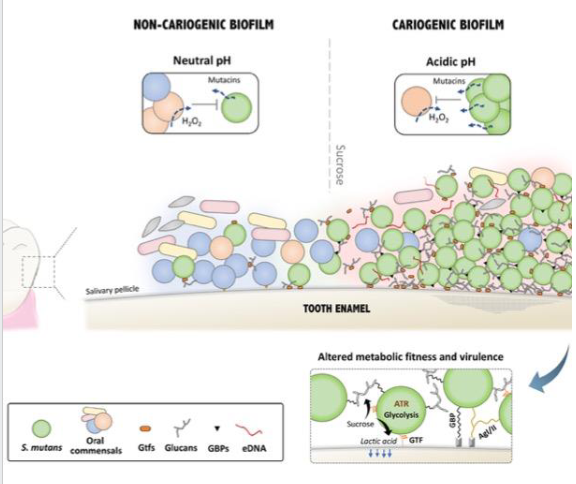
<p>- Continuous intake of sucrose (sugar) favours the growth of S. mutans</p><p>- S. mutans secretes glycosyltransferases (GTFs) which adsorb onto the enamel</p><p>- GTFs catabolise sucrose to produce large amounts of glucans, whcih contribute to the buildup of extracellular polysaccharide matrix which serves as a scaffold for biofilm</p><p>- Organic acids (e.g lactic acid) are produced by bacteria in the biofilm, decreasing pH</p><p>- the low pH leads to demineralisation of enamel and initiates the carious process</p><p>.</p><ul><li><p>Dental caries, or tooth decay, is a prevalent chronic disease where cariogenic bacteria metabolize sugars to produce acids, causing mineral loss and structural damage to teeth. It manifests as white spots, dark stains, sensitivity, and pain. Prevention involves fluoridated toothpaste, reduced sugar intake, and brushing, while treatment includes fillings, crowns, or root canals.</p></li></ul><p></p>
26
New cards
<p>Evolution of S. mutans</p>

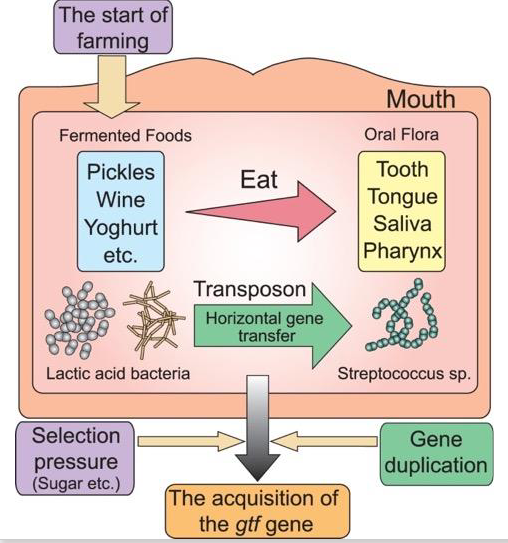
Evolution of S. mutans

- The introduction of fermented foods into the human diet (due to agricultural practices and food preservation methods) put lactic acid bacteria, such as Lactobacillus and Leuconostoc, in contact with oral Streptococci

- Streptococci acquired the gtf gene via horizontal gene transfer from these lactic acid bacilli

- Selective pressure (eating sugar) resulted in selection for Streptococci strains wtih multiple copies of the gtf gene
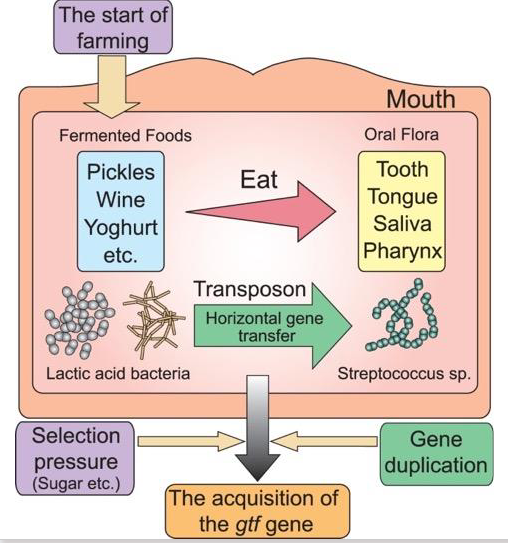
<p>- The introduction of fermented foods into the human diet (due to agricultural practices and food preservation methods) put lactic acid bacteria, such as Lactobacillus and Leuconostoc, in contact with oral Streptococci</p><p>- Streptococci acquired the gtf gene via horizontal gene transfer from these lactic acid bacilli</p><p>- Selective pressure (eating sugar) resulted in selection for Streptococci strains wtih multiple copies of the gtf gene</p>
27
New cards
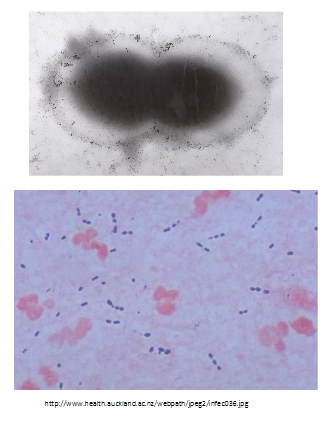
<p>Streptococcus pneumoniae: the pneumoccous</p>

Streptococcus pneumoniae: the pneumoccous

- Leading bacterial cause of pneumonia (most important cause of child death outside neonatal period)

- Also causes meningitis

- Gram-positive diplococcus

.

POLYSACCHARIDE CAPSULE:

- >94 distinct capsular types identified

- important pathogenic factor for invasive disease; prevents phagocytosis

- protection is specific to capsular type (serotype) - vaccines protect against specific serotypes (e.g PCV-13)
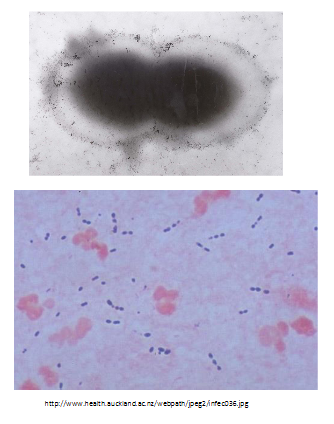
<p>- Leading bacterial cause of pneumonia (most important cause of child death outside neonatal period)</p><p>- Also causes meningitis</p><p>- Gram-positive diplococcus</p><p>.</p><p>POLYSACCHARIDE CAPSULE:</p><p>- &gt;94 distinct capsular types identified</p><p>- important pathogenic factor for invasive disease; prevents phagocytosis</p><p>- protection is specific to capsular type (serotype) - vaccines protect against specific serotypes (e.g PCV-13)</p>
28
New cards
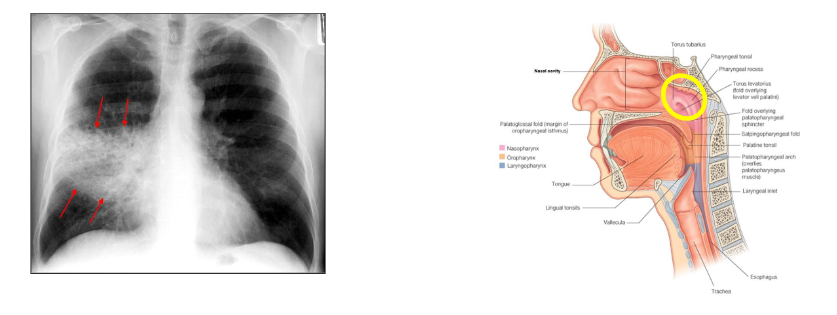
<p>S. pneumoniae carriage</p>

S. pneumoniae carriage

- Nasopharyngeal carriage of S. pneumoniae is necessary for transmisison of bacteira and precdes invasive disease

- Carriage is age-dependent (more common in children)
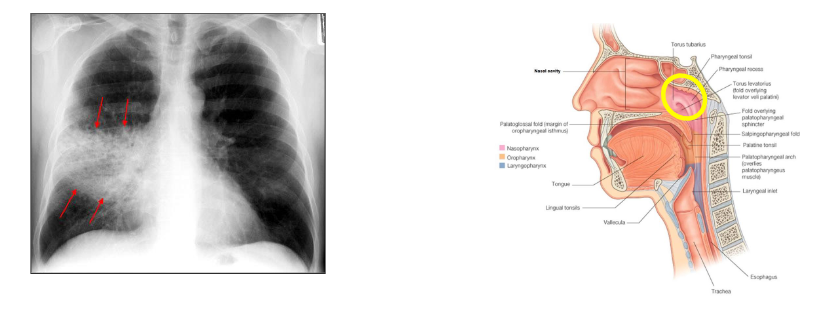
<p>- Nasopharyngeal carriage of S. pneumoniae is necessary for transmisison of bacteira and precdes invasive disease</p><p>- Carriage is age-dependent (more common in children)</p>
29
New cards
<p>Conjugate Vaccines</p>

Conjugate Vaccines

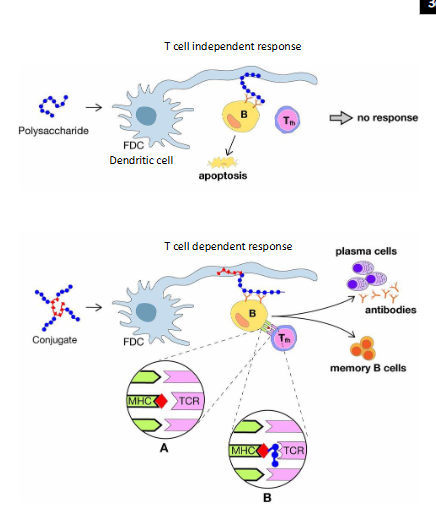
- Polysaccharide vaccines (based on bacterial capsules) do not induce a strong or persistent immune response in young children

- Polysaccharides become very immunogenic when linked to a carrier protein (e.g, tetanus toxoid) = conjugate vaccine

- Importantly, conjugate vaccines induce memory responses and reduce nasopharyngeal carriage of bacteria, impacting on transmission

- Conjugate vaccines against Haemophilus influenzae type b (Hib), pneumococcus and meningococcus serogroups C, A, W, and Y have contributed to the virtual elimination of bacterial meningitis caused by these bacteria and prevent more than a million deaths annually

.

- basically it gives people memory from bacterial disease

- basically when we attach pneumococcal polysaccharides to a protein carrier, suddenly we change the way the immune system recognises this antigen

- so now what happens is you get presentation of B cells you also get presentation to T cells, and the conjugate (this portein part) is presnted in the MHC class 2 cleft, and it presents pneumococcal polysaccharide to the T cell receptor or the B cell receptor
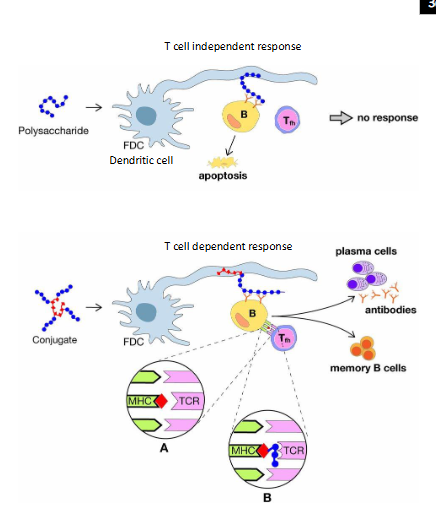
<p>- Polysaccharide vaccines (based on bacterial capsules) do not induce a strong or persistent immune response in young children</p><p>- Polysaccharides become very immunogenic when linked to a carrier protein (e.g, tetanus toxoid) = conjugate vaccine</p><p>- Importantly, conjugate vaccines induce memory responses and reduce nasopharyngeal carriage of bacteria, impacting on transmission</p><p>- Conjugate vaccines against Haemophilus influenzae type b (Hib), pneumococcus and meningococcus serogroups C, A, W, and Y have contributed to the virtual elimination of bacterial meningitis caused by these bacteria and prevent more than a million deaths annually</p><p>.</p><p>- basically it gives people memory from bacterial disease</p><p>- basically when we attach pneumococcal polysaccharides to a protein carrier, suddenly we change the way the immune system recognises this antigen</p><p>- so now what happens is you get presentation of B cells you also get presentation to T cells, and the conjugate (this portein part) is presnted in the MHC class 2 cleft, and it presents pneumococcal polysaccharide to the T cell receptor or the B cell receptor</p>

Explore top notes

note
A1 German Lessons
Updated 263d ago
0.0(0)
note
Chapter 3:Ionic Compounds
Updated 1267d ago
0.0(0)
note
Philosophy Final Exam Review
Updated 1099d ago
0.0(0)
note
Introduction to the Legal System
Updated 587d ago
0.0(0)
note
Biological Molecules
Updated 1039d ago
0.0(0)
note
Practice Final
Updated 527d ago
0.0(0)
note
A1 German Lessons
Updated 263d ago
0.0(0)
note
Chapter 3:Ionic Compounds
Updated 1267d ago
0.0(0)
note
Philosophy Final Exam Review
Updated 1099d ago
0.0(0)
note
Introduction to the Legal System
Updated 587d ago
0.0(0)
note
Biological Molecules
Updated 1039d ago
0.0(0)
note
Practice Final
Updated 527d ago
0.0(0)

Explore top flashcards

flashcards
Science exam Year 8
61
Updated 881d ago
0.0(0)
flashcards
Electromagnetism Physics Vocab
30
Updated 1065d ago
0.0(0)
flashcards
Connect 4, Unit 3
52
Updated 1022d ago
0.0(0)
flashcards
12/14 India + China test
63
Updated 1198d ago
0.0(0)
flashcards
Unit 1 AP GOV
63
Updated 346d ago
0.0(0)
flashcards
Science exam Year 8
61
Updated 881d ago
0.0(0)
flashcards
Electromagnetism Physics Vocab
30
Updated 1065d ago
0.0(0)
flashcards
Connect 4, Unit 3
52
Updated 1022d ago
0.0(0)
flashcards
12/14 India + China test
63
Updated 1198d ago
0.0(0)
flashcards
Unit 1 AP GOV
63
Updated 346d ago
0.0(0)