Personality Assessment Quiz 1
 Studied by 8 people
 Call Kai
 Learn
Learn Practice Test
 Spaced Repetition
 Match
Match Flashcards
 Knowt Play
1/98

There's no tags or description
Looks like no tags are added yet.
Name | Mastery | Learn | Test | Matching | Spaced | Call with Kai |
|---|
No analytics yet
Send a link to your students to track their progress
99 Terms
How does theory drive our understanding of personality?
What you subscribe to shapes how you see personality, and tools are then created based on these theories
Psychoanlaytic perspective on personality
unconscious conflicts between pleasure-seeking impulses and social restraints
Assessments are projective tests aimed at revealing unconscious
evaluation: speculative, hard to test theory with enormous cultural impact
Trait perspective on personality
expressing biologically influenced dispositions, like extraversion or introversion
Assessment techniques: personality inventories that assess strengths of different traits & peer ratings of behavior patterns
Evaluation: Descriptive approach criticized as sometimes underestimating the variability of behavior in different situations
Humanistic perspective on personality
processing conscious feelings about oneself in light of one’s experiences
Assessment techniques: questionnaire assessment and empathic interviews
Evaluation: a humane theory that reinvigorated contemporary interest in the self; criticized as subjective and sometimes naively self-centered and optimistic
Social-cognitive
reciprocal influences between people and their situation, colored by perceptions of control
Assessment techniques: questionnaire assessments of people’s feelings of control & observations of peoples behavior in particular situations
Evaluation: art interactive theory that integrates research on learning, cognition, and social behavior. Criticized as underestimating the importance of emotions and enduring traits
Personality Traits
Characteristic behaviors and feelings that are consistent and long lasting
long lasting and enduring like the climate: Antarctica is always cold
Personality States
Temporary behaviors or feelings that depend on a person’s situation and motives at a particular time
temporary like the weather
APA definition of personality
•The enduring configuration of characteristics and behavior that comprises an individual’s unique adjustment to life, including major traits, interests, drives, values, self-concept, abilities, and emotional patterns.
Personality is generally viewed as a complex, dynamic integration or totality shaped by many forces, including hereditary and constitutional tendencies; physical maturation; early training; identification with significant individuals and groups; culturally conditioned values and roles; and critical experiences and relationships.
lowkey they can’t pick a side and combine all the theories
Personality
Relatively stable and distinctive patterns of behavior that characterize an individual and their reactions to the envionrment
Personality Tests
attempt to measure personality. Most structured personality tests attempt to assign a personality type based upon measurements of someone’s personality traits
Testing vs. Assessment
testing is specific
Assessment is comprehensive, aim to answer the whole referral questions, and can include parts that are not tests (like observations)
Testing is just giving and interpreting certain tools.
Testing can be apart of assessment
First personality test
WW1
Used to understand who would be more susceptible to shell shock
Tool was basic. Theory driven (not empirically driven)
Psychometric properties (reliability, validity) not established
Sample qs: do your eyes often pain you, do you have continual itchings in the face
1930s/1940s Personality Test Development
Projective Tests (Performance-Based Tests)
theory-driven. Designed to probe deeper dimensions of personality
Empirically derived tests (Objective Measures)
designed using factor analysis
created around pre-determined criteria (criterion-referenced)
Informal Tests
Interviews
unstructured: “tell me more about yourself”
structured: set of list of questions
Observations
Structured Personality Inventories
Objective tests (e.g. self report measures)
Performance Based/Projective Techniques
ex: ambiguous stimuli
Rorscharch test
Consists of 10 inkblots

Thematic Apperception Test
TAT consists of a serious of ambiguous features and have the client tell you stories about it

Objective Personality Inventories
Personality inventory: Self-report questionnaire used for personality assessment
Utilize highly structured response formats
Consist of unambiguous stimulus items
Forced choice (e.g., true/false)
Likert scale ratings
Result in a quantitative score that can be compared with normative score data
Structured Personality Inventories
Content-related procedures
Define what is being measured and develop items that reflect the content of interest (BDI — all qs get at depression)
Personality theory
Use theory as a basis for the instrument, determine if the measure meets the tenets of the theory; NEO (created around big 5 personality)
Factor Analysis (FA)
Groupings of items are determined by FA;16PF. Look at what’s statistically together. 16PF puts together trait theory and FA
Empirical criterion-keying
Select items based on an external criterion; MMPI.
Compare groups of people with a disorder and without and create a scale based on the differences. Not saying that the expert knows how people will respond
broadband tools
cover broad domains like the PAI and MMPI
Statistics
a way by numbers to determine and understand how a person functions similar to other people, gives us predictive power and confidence.
numbers that communicate information about a person compared to other similar people.
conclusions based on statistical analysis of test scores can never be absolute
Scales of Measurement
nominal, ordinal, interval, ratios scale
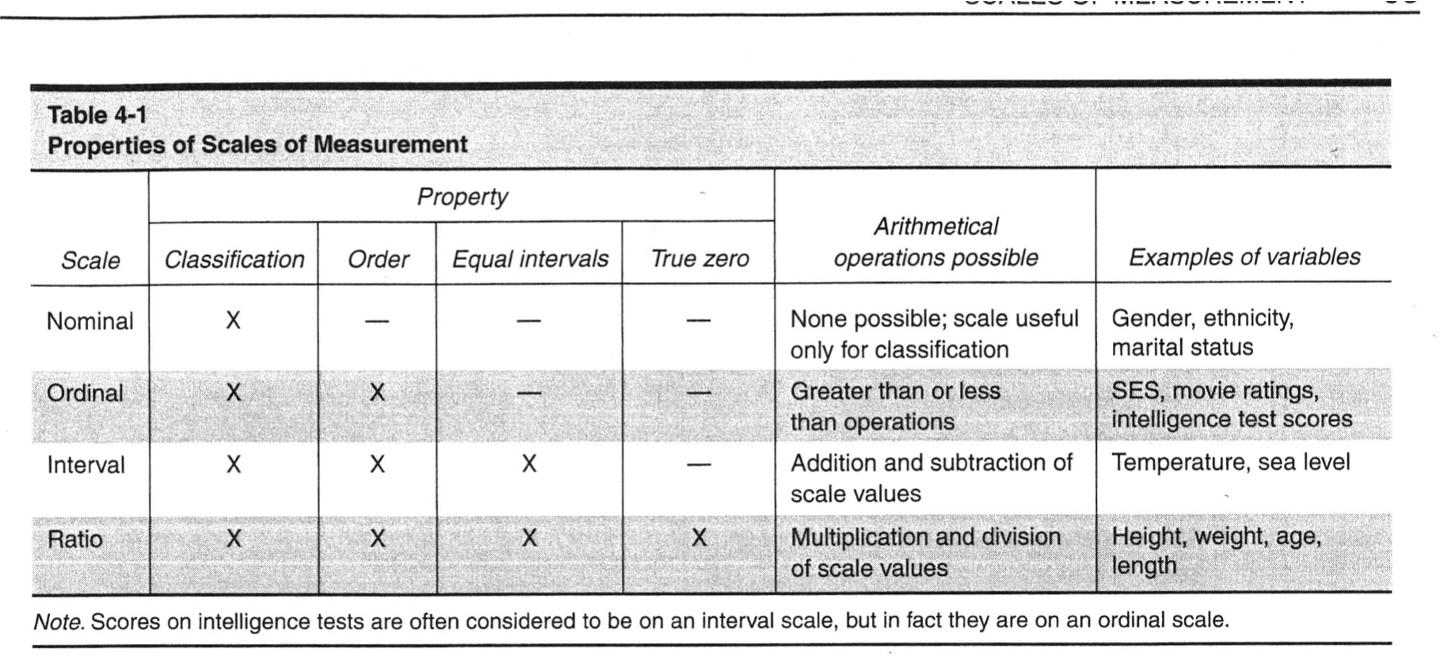
Nominal
Discrete
numbers to names (1=red, 2=blue)
Ordinal
Discrete
Order in which things fall. No information about the difference between numbers.
for example 1st, 2nd, 3rd place doesn’t tell you how much distance in scores is between places
Interval
Continuous, no true zero
temperature, sea level
differences (intervals) between values are equal and meaningful, but it lacks a true zero point
Ratio Scale
continuous
true zero
weight, cant be -1lbs
A ratio scale is the highest level of measurement, characterized by a true zero point (indicating absence of the quantity) and equal intervals between units, allowing for meaningful ratios (e.g., one value is twice another) and all mathematical operations
Nonparametric vs. parametric statistics
parametric statistics assume the distribution is normal
descriptive stats
summarize data obtained about a sample of individuals
Central tendency
Mean, median, mode
normal curve, all 3 are in the middle
mean — average
median — middle
mode — most common
normal distribution
Many phenomena have normal distributions — weight, height
Dependent variables
Normal distributions can help us make inferences about people
Normal curve characteristics:
bell shaped
symmetrical distribution of scores
more scores close to the middle than at the ends
all measures of central tendency occur at the highest point of the curve
Specific percentages of scores fall at precise distances
Standard Scores
z-score: >99% of scores fall in range of -3.00 to +3.00
Sign (+ or -) indicates whether above or below the mean, the number indicates how many SDs away from mean
t-scores (MMPI & PAI use): provides location of score in distribution with mean of 50 and standard deviation of 10 (over 99% of scores range from 20-80)
Correlations
degree of relationship between 2 variables, including the strength and direction of their relationship
linear correlation
curvillinear correlation
Restricted range
scores are limited
ex: how happy you are from 1-2 doesn’t capture all variability
outliers
one score that’s really unlike others, can confound the data
if you exclude it it could make it more or less representative
you can change the score to be similar to the highest/lowest in some cases
lot of statistical decisions, none are perfect
Standard Error of Measurement
estimates how repeated measures of a person on the same instrument tend to be distributed around his or her “true” score. The true score is always an unknown because no measure can be constructed that provides a perfect reflection of the true score.
Why measure personality?
understand how to ineract with a person, strengths and weaknesses, treatment plans
some occupations require certain assessments (law enforcement, corrections, reality tv)
applicable in many settings: hospitals, jobs, outpatient, private practice
Raw score
just added up from scale
norming
process of developing norms, getting scores to compare
norm group (sample)/standardization sample
comparison group based on characteristics
standard score
Standard scores transform raw test scores onto a common scale, showing how far a score is from the average (mean) in units of standard deviation, allowing comparisons across different tests.
percentile ranks
where they fall on the normal curve
A percentile rank shows the percentage of a comparison group scoring at or below a specific score, indicating relative performance, not a percentage correct; for example, the 75th percentile means you scored better than 75% of others
age equivalent & grade equivalent scores
compares a person’s test performance to the average performance of different age/grade groups, indicating the age/grade level whose typical score amtches the individual’s score
Norm-Referenced Test
Standardized Test
Compares one’s performance with performance of others
designed to yield to a normal curve
example: GRE
Criterion-References Test
I.e. mastery tests
benchmarks/objectives are known
possible for ALL the test takers to achieve 100%
examples: Driver’s license exam
Inferential stats
making predictions of someone based on where they fall in normal curve
statistical significance
liklihood finding was by chance or because of variables.
p<.05, 95% sure it’s true difference and not chance. intervention is reason for change
effect size
how much does it matter in the real world,
clinical significance, real-world significance
for example, a score of 19 v. 20 might be statistically significant but not mean much in the real world
Reliability definition
consistency
always hitting the same spot, same result over + over
not all tools have to have all types of reliability (MMPI and PAI dont have alternate forms)
We say a piece of reserach is reliable if we can replicate and get similar results
correlations used for reliability
Test-retest reliability
take it once, wait a bit, take it again
personality tests should remain stable over time
alternate form reliability
different versions of test should measure the same thing
split-half reliability
split tool in half, both should be correlated
interrater reliability
2 raters should score same, test similarlity
Confidence INtervals
a band, or range, of scores around the obtained score that likely includes the child’s score
68% or 95% or 99% for our confidence interval (%s from normal curves(
more restricted range, lower confidence
Practice Effects
may be related to prior exposure to the tests
may occur because of intervening events between the two administrations
may not occur to the same extent in all populations
vary for different types of tasks
may be affected by regression toward the mean
may be difficult to interpret when initial test and the retest are different
may depend on the item content covered throughout the test
Validity
the degree to which a test measures what it purports to measure
must have demonstrated reliability before considering validity
Content Validity
are you covering range of everything in the topic
Construct Validity
what’s in the test, depth
Convergent — similar to other similar tests (BEC anxiety and other anxiety scales)
Divergent / discriminant — different from completely unrelated tests (anxiety vs. love of dinosaurs scale)
usually want higher convergent and lower divergent validity
Face Validity
does the tool on its face look like what it says it’s about
PAI has high face validity
MMPI has lower face validity — harder to tell what the questions are getting at
Internal Validity
can you attribute change in expereince based on condition, control group vs. stimulus group
External Validity
in real life you can’t control all variables, does it still work in the real world, its generalizability
Regression toward the mean
the statistical tendency for extreme results (unusually high or low) to be followed by results that are closer to the average, or mean, on subsequent measurements, due to the influence of random chance or luck
standard deviation
how far people are on average from the mean
Base Rates
Relative frequencies with which certain states or conditions occur in a population
Base Rate Fallacy
When a person judges that an outcome will occur without considering prior knowledge of the probability that it will occur
Sensitivity
degree to which the test correctly identifies those who actually have the disorder
Specificity
extent to which the test correctly identifies those who are free of the disorder
True positives
correctly identified individuals with the index disorder
True negatives
accurately identified individuals who are free of the disorder
False positives
healthy individuals that are misidentified with the index disorder (misidentification)
false negatives
those with the index disorder who are not detected on the measure
Meta Analysis
combining the results of individual studies with statistical methods
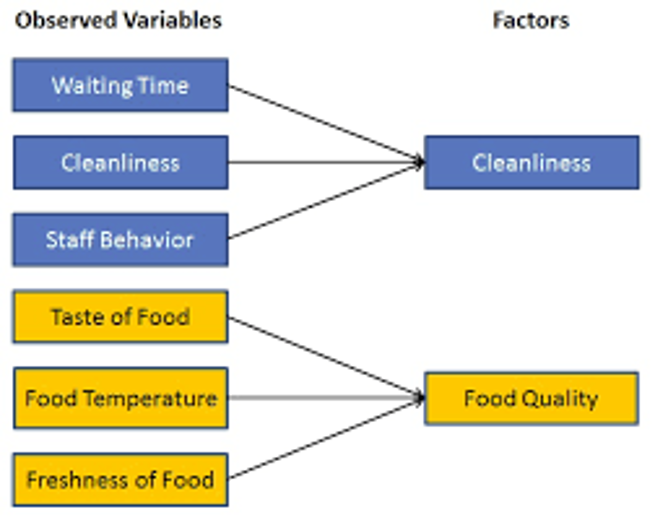
Factor Analysis
technique that is used to reduce a large number of variables into fewer numbers of factors
Ceiling Effects
Refers to a limit of the range of scores of scores.
E.g., as treatments are added or as the client changed from a prior treatment there might be little room on the measure to reflect incremental benefits of treatment
Flooring effects
Refers to a limit of the range of scores of scores.
Opposite of ceiling effects
test data
anything you can gather about a person during test (raw scores, observations…)
raw data
raw scores
test materials
anything used for testing. don’t want manuals published for the whole world to see because of test security
What are ethical principles vs standards
Principles = aspirational
Standard = enforceable
Who does the ethics code apply to?
Members of APA — students, psychologists, researchers. Because of it’s limited jurisdiction, differents tates have embedded parts of the APA into law, so even if you’re not apart of APA, you might still have to follow it. Or, if you’re apart of an organization that is under APA like how Dr. Foster is not apart of APA but is apart of APLS which falls under APA
What does being a member of the APA have to do with the ethics code? What can APA do if you are found inviolation of ethics
Membership in APA commits members and student affiliates to comply with the standards of the APA Ethics Code
If found in violation:
termination of APA membership
They can recommend to the state to remove your license (APA cannot itself remove your license because the state is what licenses you)
What does reasonable mean in terms of APA ethics
The prevailing professional judgement of psychologists engaged in similar activites in similar circumstances, given the knowledge the psychologist had or should have had at the time
why consulting is so important
What if the law has a lower standard than the Ethics code?
if the ethics code establishes a higher standard of conduct than is required by law, psychologists must meet the higher ethical standard
always responsible for highest standard.
if the standard contradicts what law says → advocate for the ethics code but eventually follow the law
Principle A: Benefiecence and Nonmaleficence
do no harm
Principle B: Fidelity and Responsibility
establish relationships of trust with those with whom they work
professional standards of conduct, clarify their roles and obligations, accept appropriate responsibility for behavior, and seek to manage conflicts of interest
consult with others to extent of best interest of client
contribute portion of professional time for little or no compensation or personal advantage
Principle C: Integrity
promote accuracy, honesty, and truthfulness in the science, teaching, and practice of psychology
keep your promises
don’t do fraud
if deception is needed, maximize benefits and minimize harm
Principle D: Justice
all persons access to and benefit from psychology
equal quality in procedures and services
reasonable judgement and precautions to prevent against potential biases, boundaries of competence, and limitations of expertise
Principle E: Respect for People’s Rights and Dignity
dignity and worth of all people
rights of individuals to privacy, confidentiality, and self-determination
respect cultural, individual, and role differences
vulnerable populations & eliminate effects of biases
9.01 Bases for Assesssment
base opinions on information and techniques sufficient to substantiate findings
provide opinions only after you have conducted an examination of the individual adequate enough to support statements. When not practical, document efforts made
if individual examination is not warranted or necessary for opinion, explain this and sources of info conclusions are based on
9.02 Use of Assesments
administer assessment techniques for purposes that are appropriate
validity and reliability established
appropriate to an individual’s language preference and competence
9.03 Informed Consent in Assessments
Must obtain informed consent except:
mandated by law or governmental regulations
consent is implied because testing is a part of routine educational, institutional, or organizational activity
one purpose of the testing is to evaluate decisional capacity
inform those with questionable capacity to consent or for whom testing is mandated by law about the nature and purpose of the assessment using language that is reasonably understandable
When using an interpreter, ensure the confidentiality of test results and test security are maintained. Include in the report any limitations on data obtained
9.04 Release of Test Data
test data → raw and scaled scores, responses, psychologist’s notes and recordings
psychologists provide test data to client/patient or others identified in release
psychologists may refrain from releasing data to protect patient/client from harm or misuse or misrepresentation of data
in absence of client/patient release psychologists provide test data only as required by law or court order
9.05 Test Construction
when developping tests, use appropriate psychometric procedures and current scientific/profesh knowledge
9.06 Interpreting Assessment Results
take into account purpose of assessment, various test factors, test taking ability, and other characteristics of person being assessed
9.07 Assessments by Unqualified Persons
don’t do it
unless for training with appropriate supervision
9.08 Obsolete Tests and Outdated Test Results
Do not base assessment, intervention, decisions, or recommendations on old tests
9.09 Test Scoring and Interpretation Services
accurately describe to other professionals the purpose, norms, validity, reliability, and applications of procedures
select scoring and interpretation services on evidence of validity of the program and procedures
retain responsibility for the appropriate application, interpretation, and use of assessment instruments whether they scored the test or used other services
9.10 Explaining Assessment Results
ensure explanations of results are given to individual unless the nature of the relationship precludes provision of an explanation of results (ex: forensic or security screening) and this fact has been explained to person in advance
9.11 Maintaining Test Security
Reasonable efforts to maintain the integrity and security of test materials (manuals, protocols, instruments, questions, or stimuli) and other assessment techniques consistent with law and contractual obligations
 Note
Note  Flashcards (34)