Vertebrate Histology: Epithelial, Connective, Muscle & Nervous Tissues
 Studied by 0 people
 Call Kai
 Learn
Learn Practice Test
 Spaced Repetition
 Match
Match Flashcards
 Knowt Play
1/55

There's no tags or description
Looks like no tags are added yet.
Name | Mastery | Learn | Test | Matching | Spaced | Call with Kai |
|---|
No analytics yet
Send a link to your students to track their progress
56 Terms
What is a tissue?
A group of closely associated cells that are similar in structure and perform related functions.
What are the four classes of tissue?
Epithelial, connective, muscle, and nervous.
What is extracellular material?
Acellular matter that includes nonliving materials, such as the mineral component of bone tissue.
What are the main functions of epithelial tissues?
Protection, secretion, absorption, sensory reception, filtration, and ion transport.
What is the role of intercellular junctions in epithelial tissue?
They facilitate close contact between epithelial cells, enhancing protection.
What are desmosomes?
Cellular junctions that bind cells together, made up of protein plaques and microfilaments.
What is a tight junction?
A type of cellular junction where opposing cell membranes fuse, leaving no space between the cells.
What is a gap junction?
A junction that allows communication between cells via specialized transmembrane proteins that serve as ion channels.
What is the basement membrane?
An acellular structure that separates epithelium from underlying tissues and supports epithelial cells.
What is the significance of the basement membrane?
It binds and supports the epithelium, allows for regeneration, and serves as a line of defense.
Why do epithelial tissues lack blood vessels and nerves?
Due to the tight packing of its cells, they require support from loose connective tissue with a good blood supply.
What is the regenerative capability of epithelial tissue?
Epithelial tissue has a high regenerative capability, allowing it to repair itself effectively.
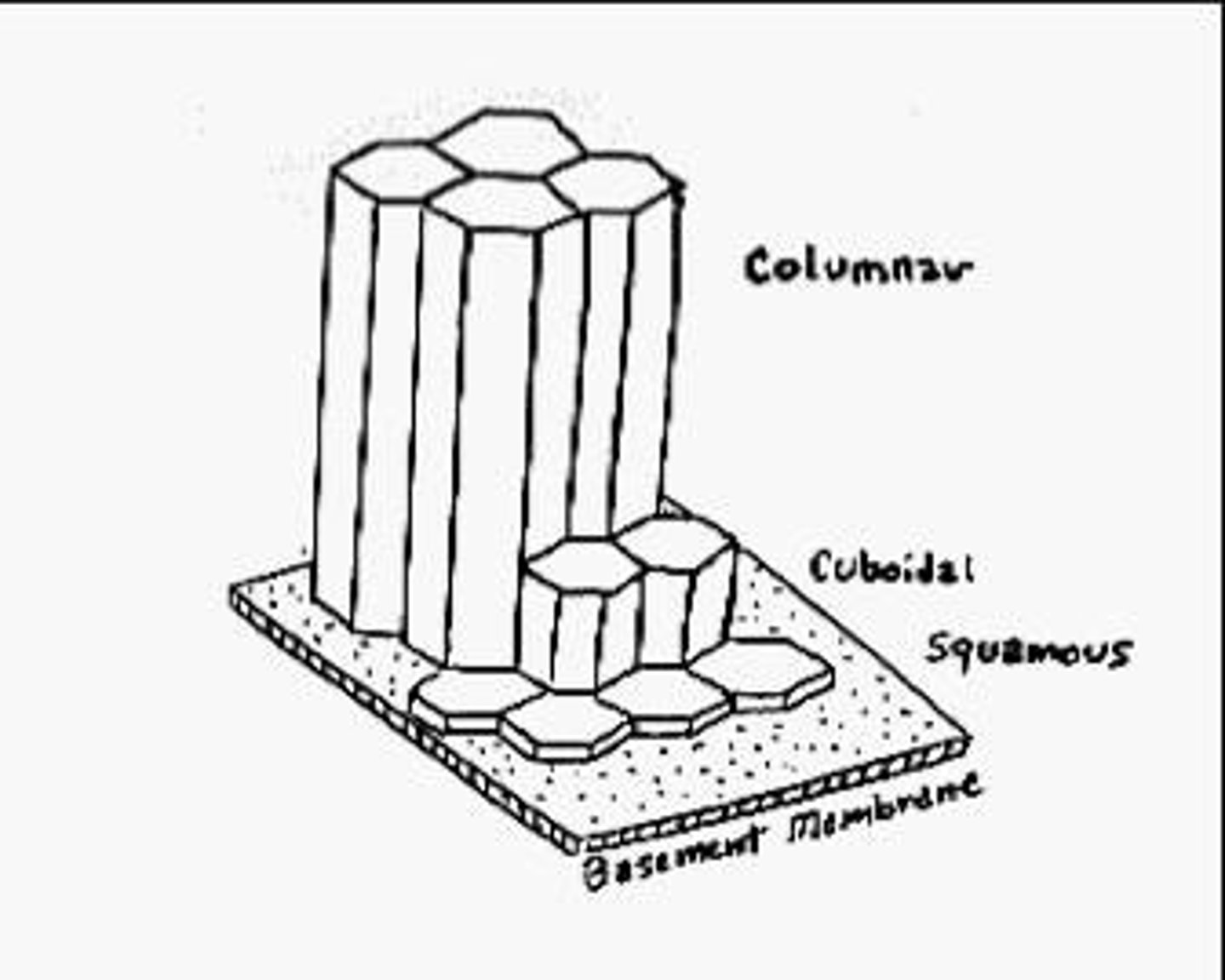
What are the classifications of epithelial tissue based on cell shape?
Squamous, cuboidal, and columnar.
What are squamous cells?
Low, flattened cells that are scale-like in appearance.
What are cuboidal cells?
Cube-shaped cells that have equal height and width.
What are columnar cells?
Column-shaped cells that are taller than they are wide.
How can epithelial tissue be classified based on the number of cell layers?
Simple (one layer), stratified (more than one layer), and pseudostratified (one layer of uneven height).
What is simple squamous epithelium?
A single layer of flattened cells found in blood vessels and alveoli.
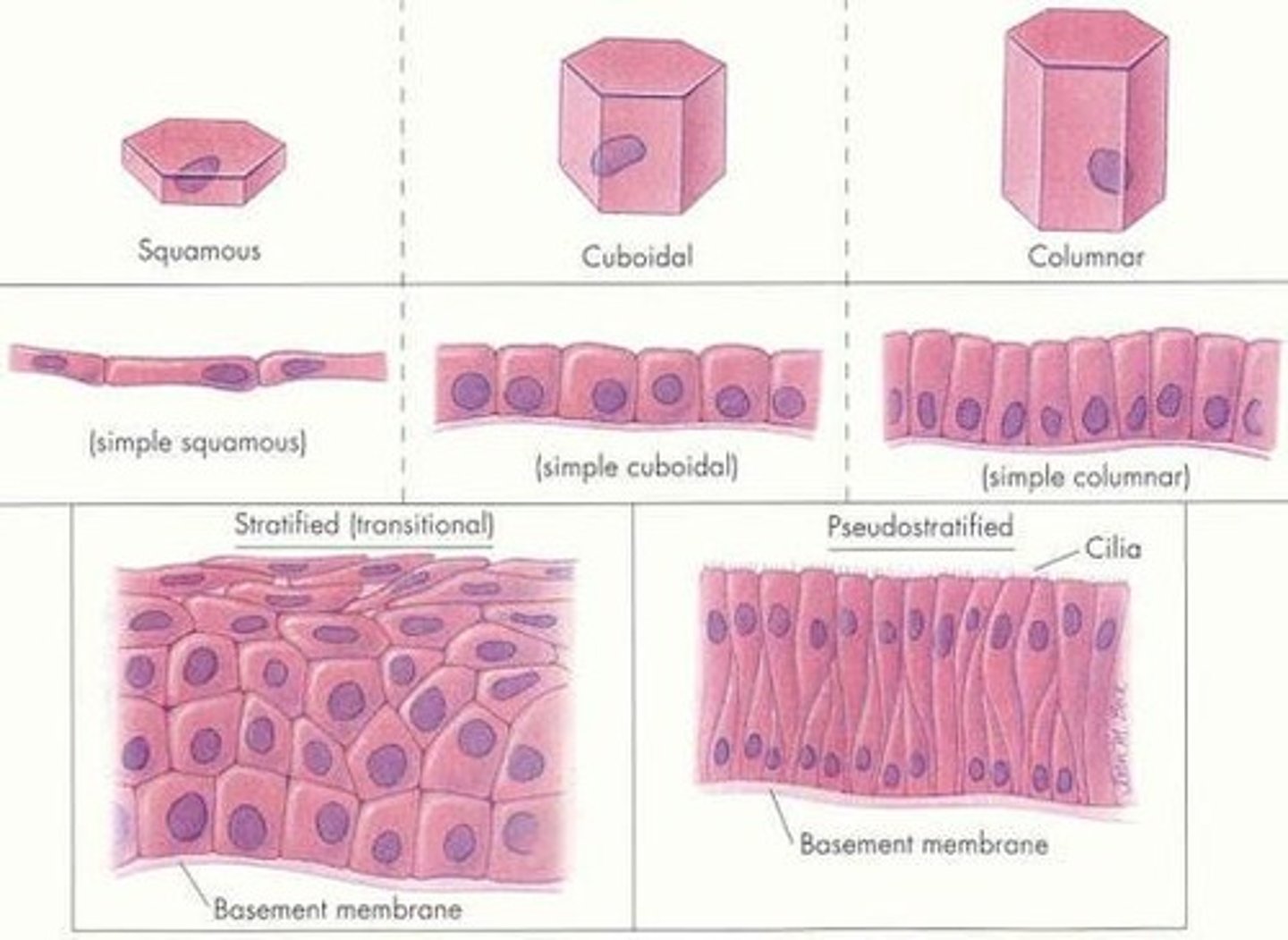
What is simple cuboidal epithelium?
A single layer of cube-shaped cells found in small glands and kidney tubules.
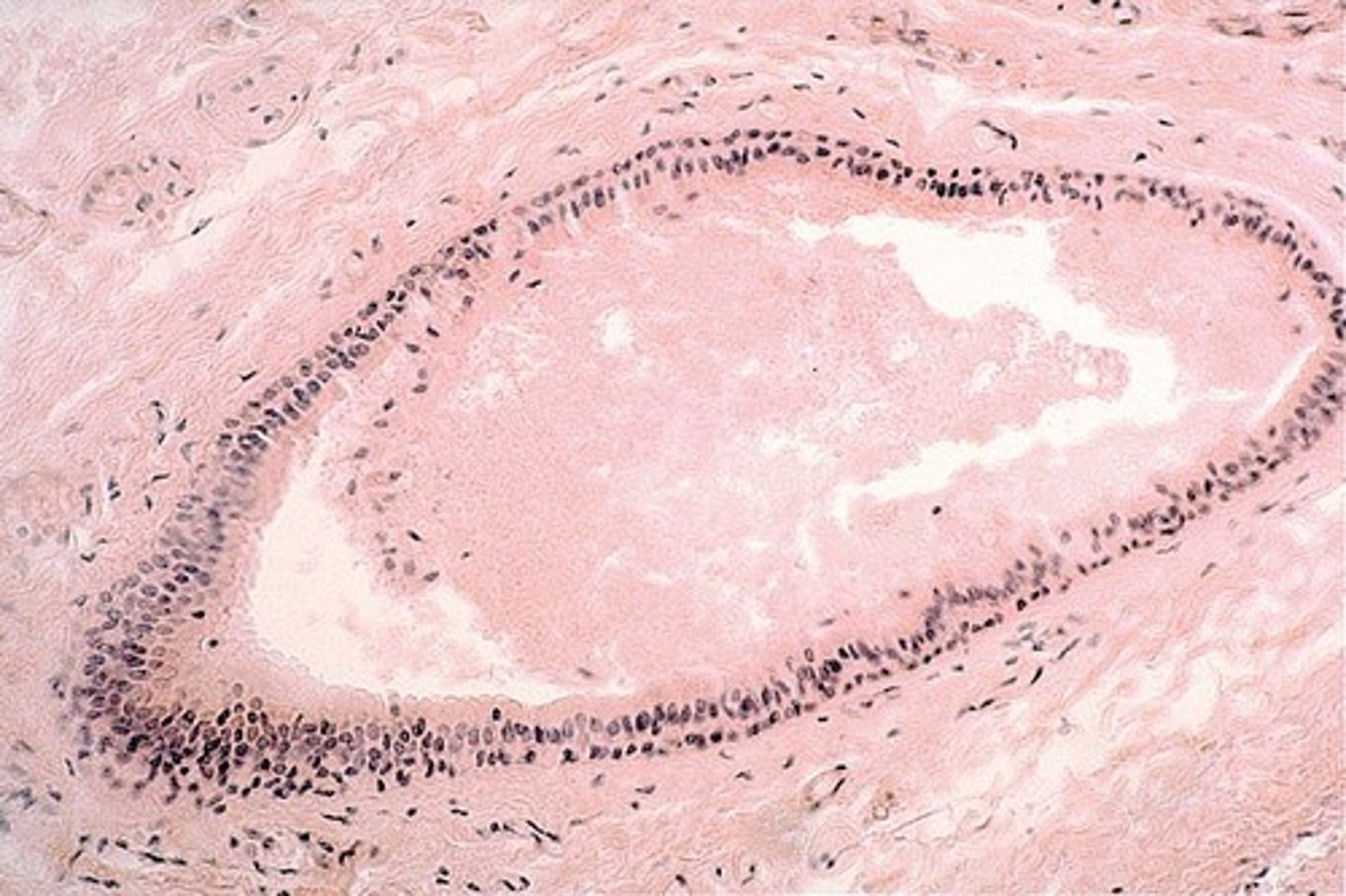
What is simple columnar epithelium?
A single layer of columnar-shaped cells found in the lining of the alimentary canal.
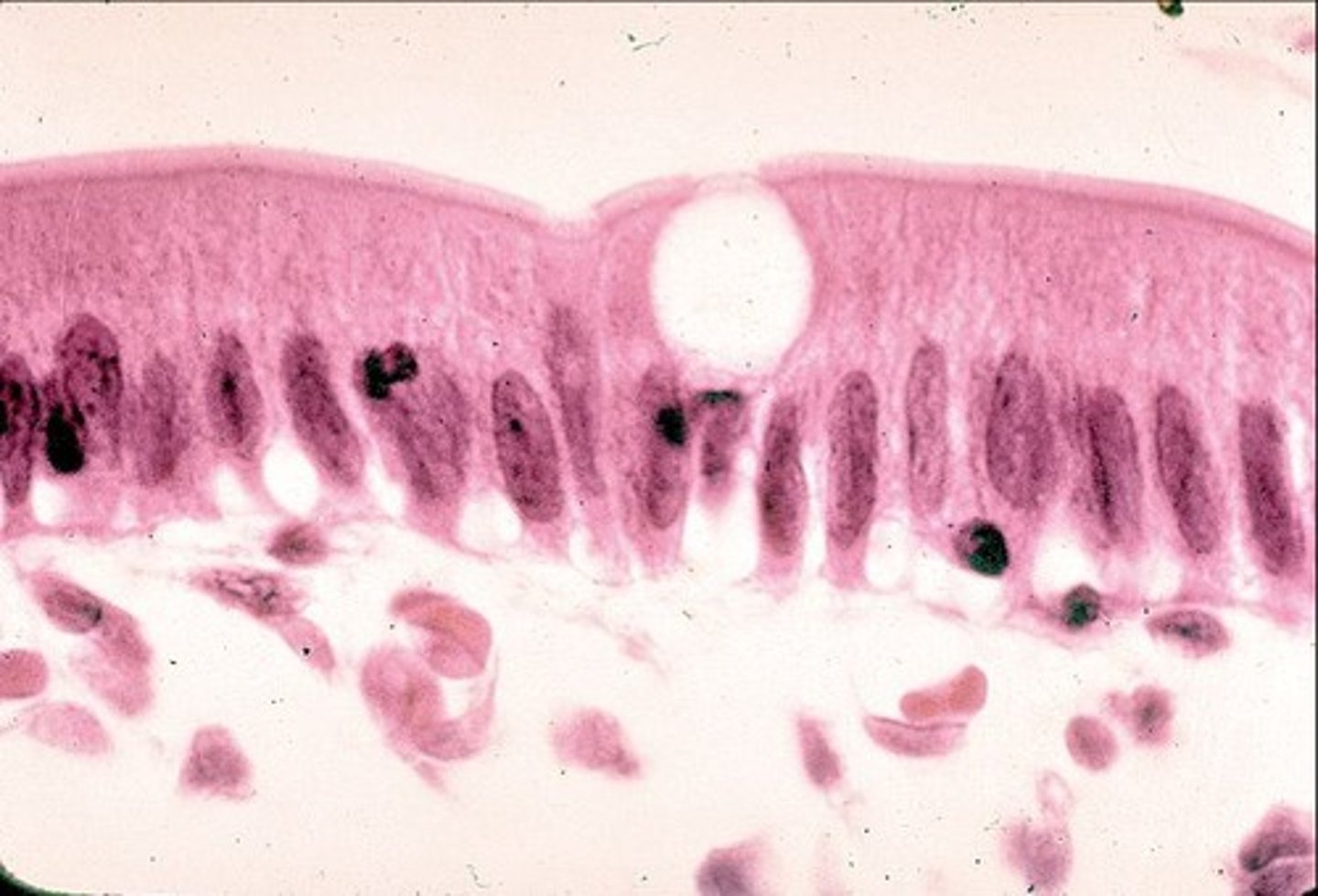
What is pseudostratified columnar epithelium?
A single layer of columnar cells of varying height that appears stratified, found in the upper respiratory tract.
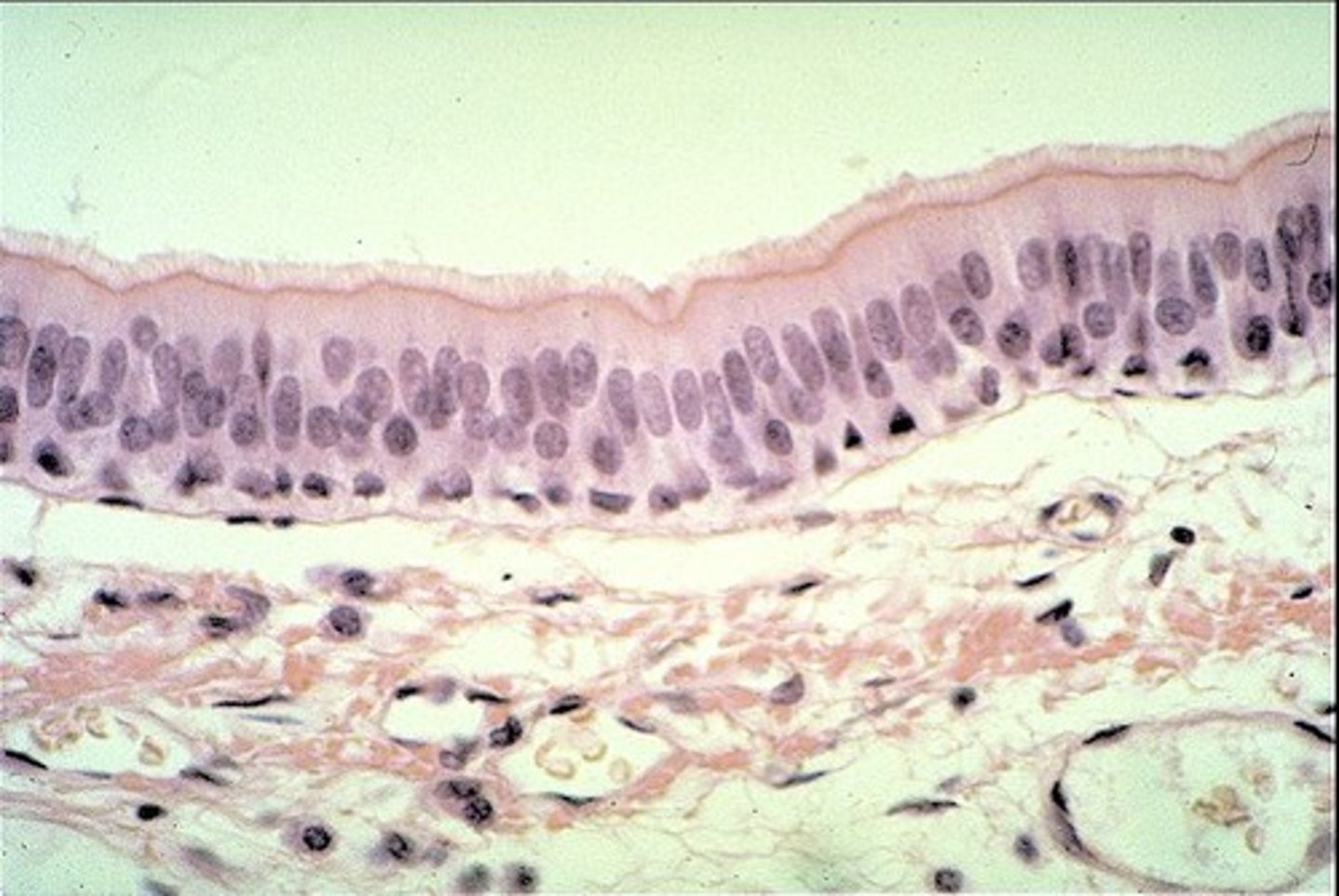
What is stratified squamous epithelium?
More than one layer of flattened cells found in areas subject to abrasion, such as skin and the lining of the mouth.
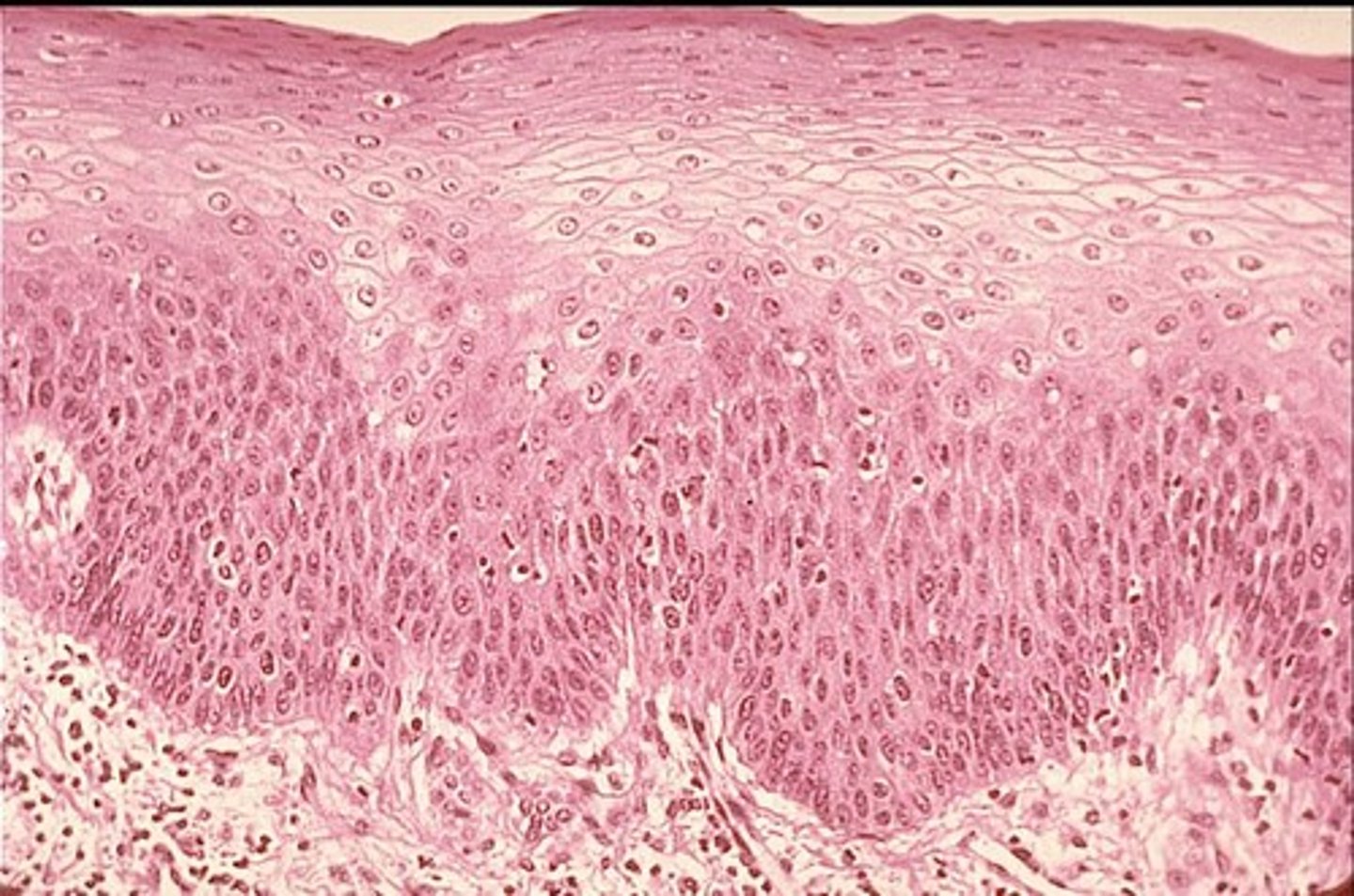
What are the two types of stratified squamous epithelium?
Stratified squamous keratinized (skin) and stratified squamous nonkeratinized (esophagus).
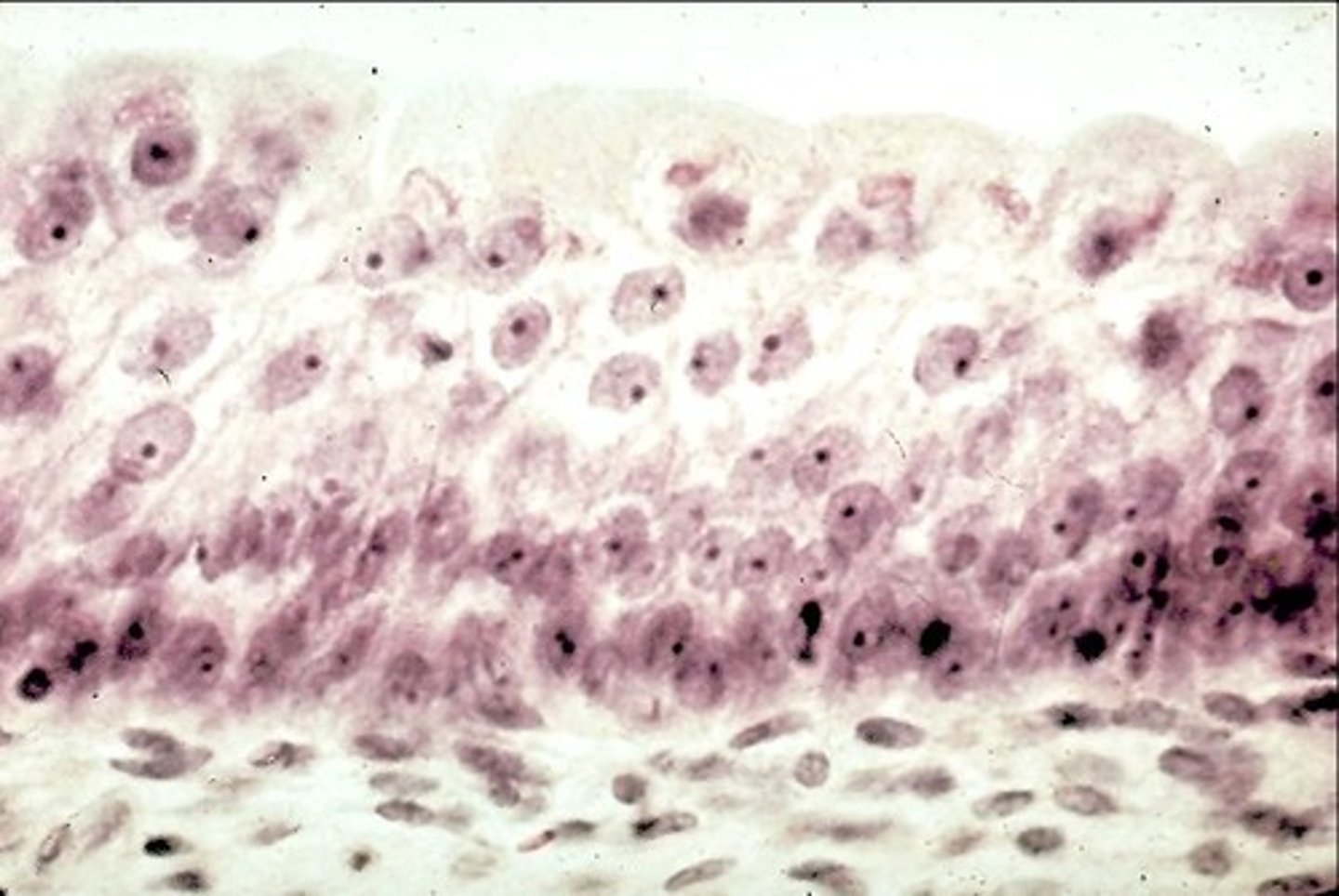
What is transitional epithelium?
A stratified epithelium made up of variably shaped cells, allowing for distension, found in the urinary bladder.
What are glands?
Structures composed of epithelial cells that secrete aqueous fluid products.
How can glands be classified?
By the number of cells (unicellular or multicellular) and mode of secretion (exocrine or endocrine).
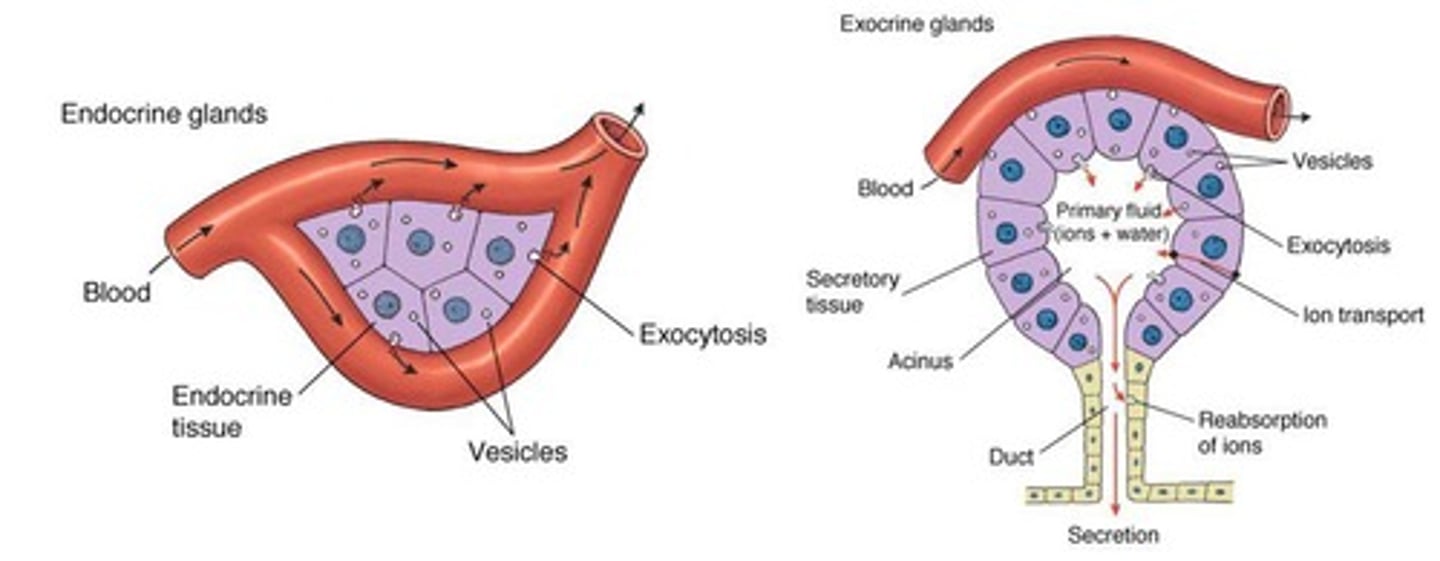
What are exocrine glands?
Glands that secrete their products into ducts, such as salivary glands.
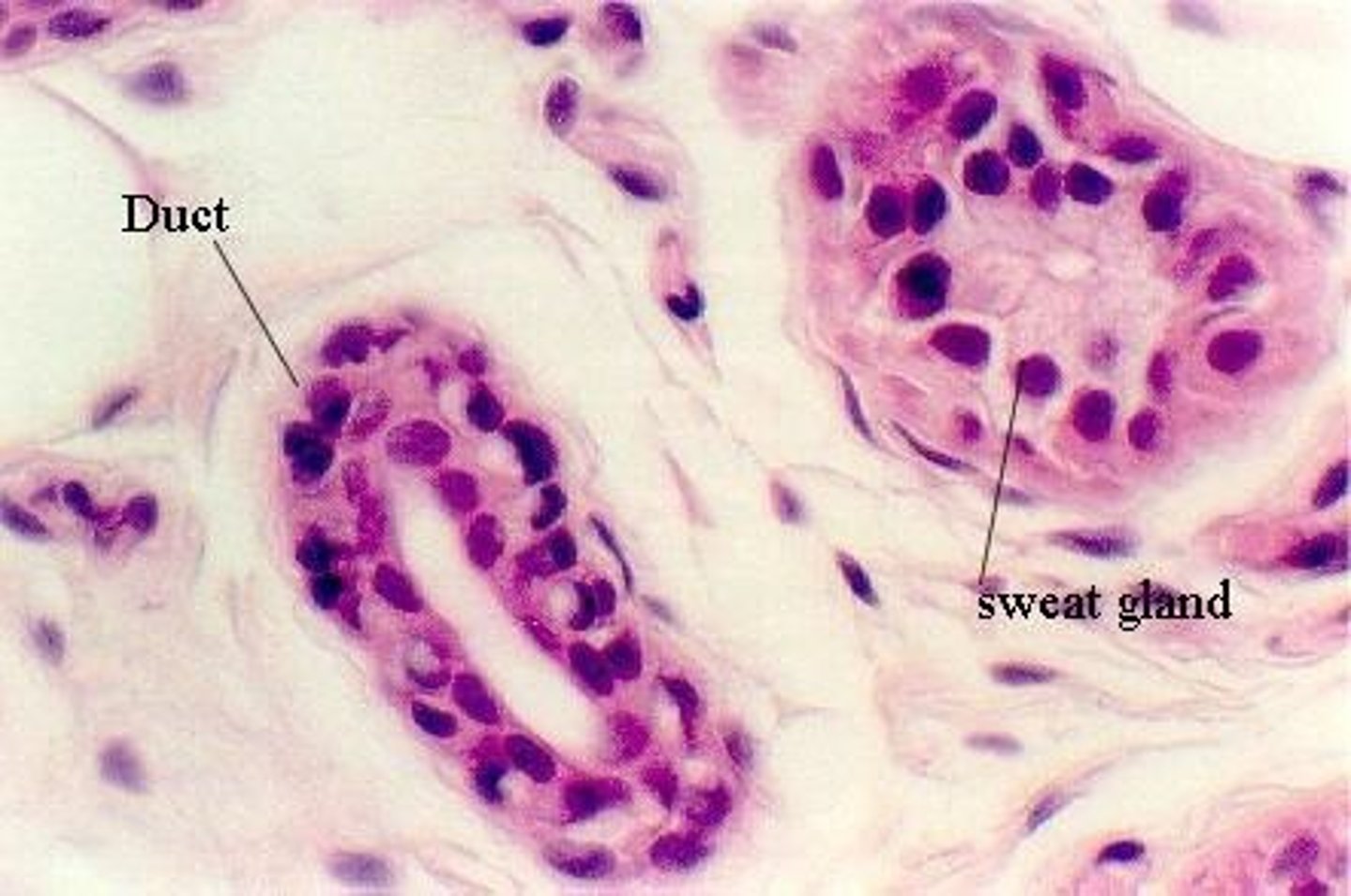
What are endocrine glands?
Ductless glands that release their products into the bloodstream for delivery to target organs.
What is the common origin of all connective tissues?
All connective tissues are derived from an embryonic tissue called mesenchyme.
What are the four main classes of connective tissues?
Connective tissues proper, blood, cartilage, and bone.
What is the primary function of connective tissues?
To connect organs and cells, form the skeleton, transport gases and nutrients, and protect the body via the immune system.
What characterizes areolar connective tissue?
It underlies most of the body's epithelia and surrounds small nerves and blood vessels.
What are the three types of fibers found in areolar connective tissue?
Collagen fibers, reticular fibers, and elastic fibers.
What is the function of collagen fibers?
They are the strongest and most abundant fibers, able to withstand a great deal of tension.
What is the role of fibroblasts in connective tissue?
Fibroblasts are immature connective tissue cells that produce fibers.
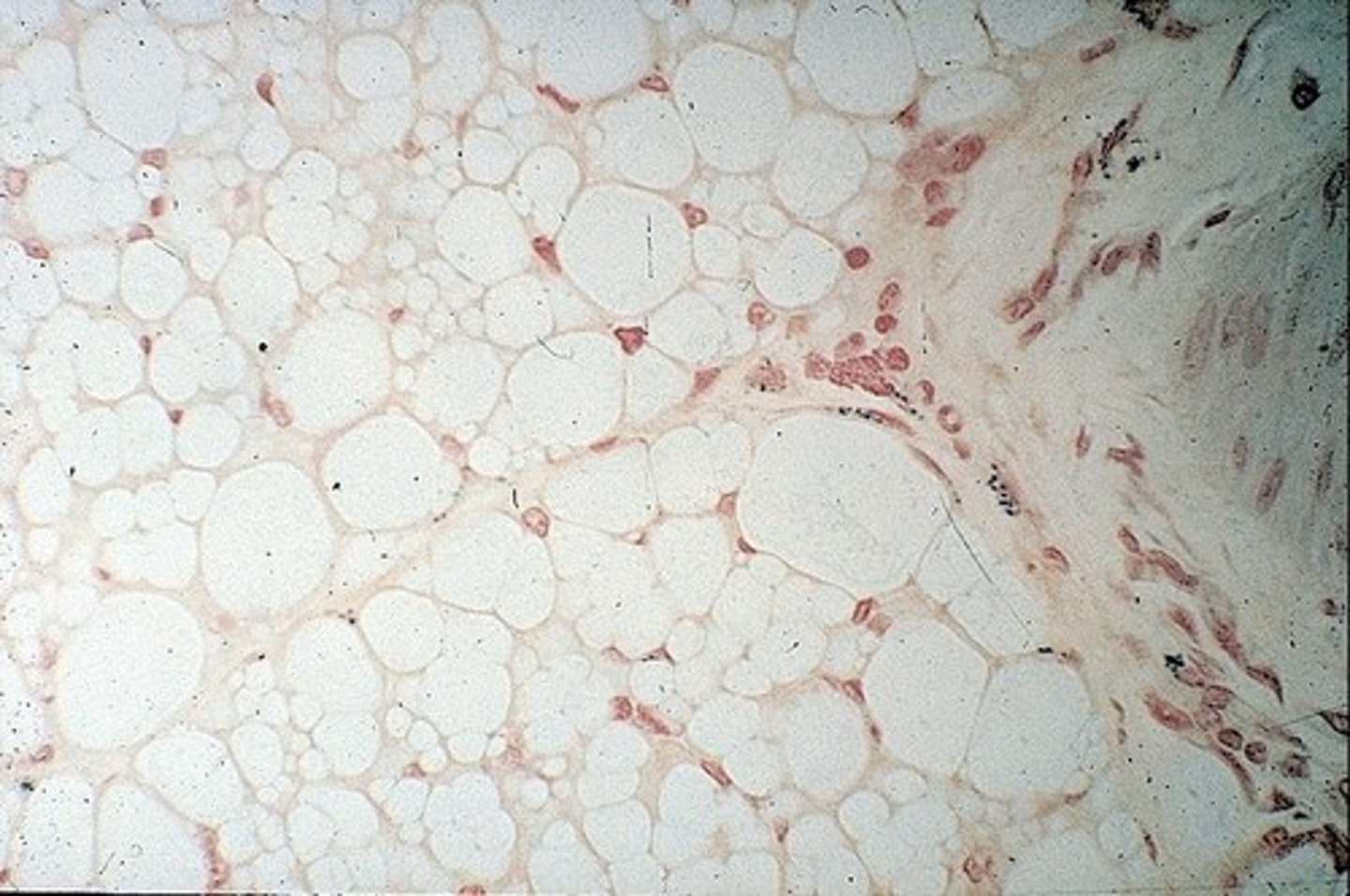
What is adipose tissue and its functions?
Adipose tissue stores nutrients, insulates the body, and protects it from trauma.
What distinguishes dense regular connective tissue from dense irregular connective tissue?
Dense regular connective tissue has fibers arranged in a regular pattern, providing tensile strength along one axis.
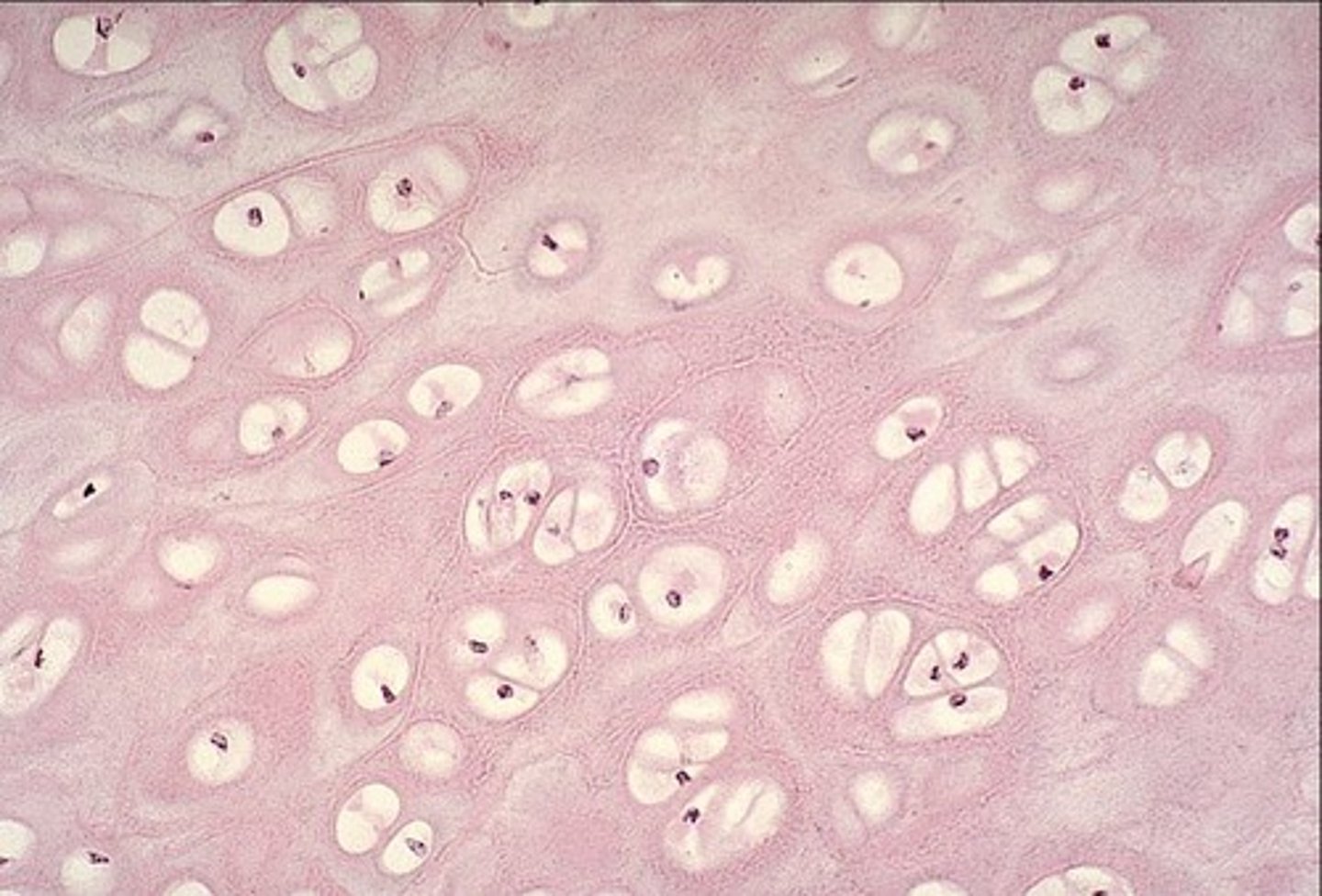
What is the main cell type found in cartilage?
Chondrocytes.
What is the extracellular matrix of blood called?
Plasma.
What are the three classes of cells found in blood?
White blood cells (WBCs), red blood cells (RBCs), and platelets.
What is the primary function of muscle tissue?
To allow for the movement of the body and structures within the body.
What are the three classes of muscle tissue?
Skeletal muscle, cardiac muscle, and smooth muscle.
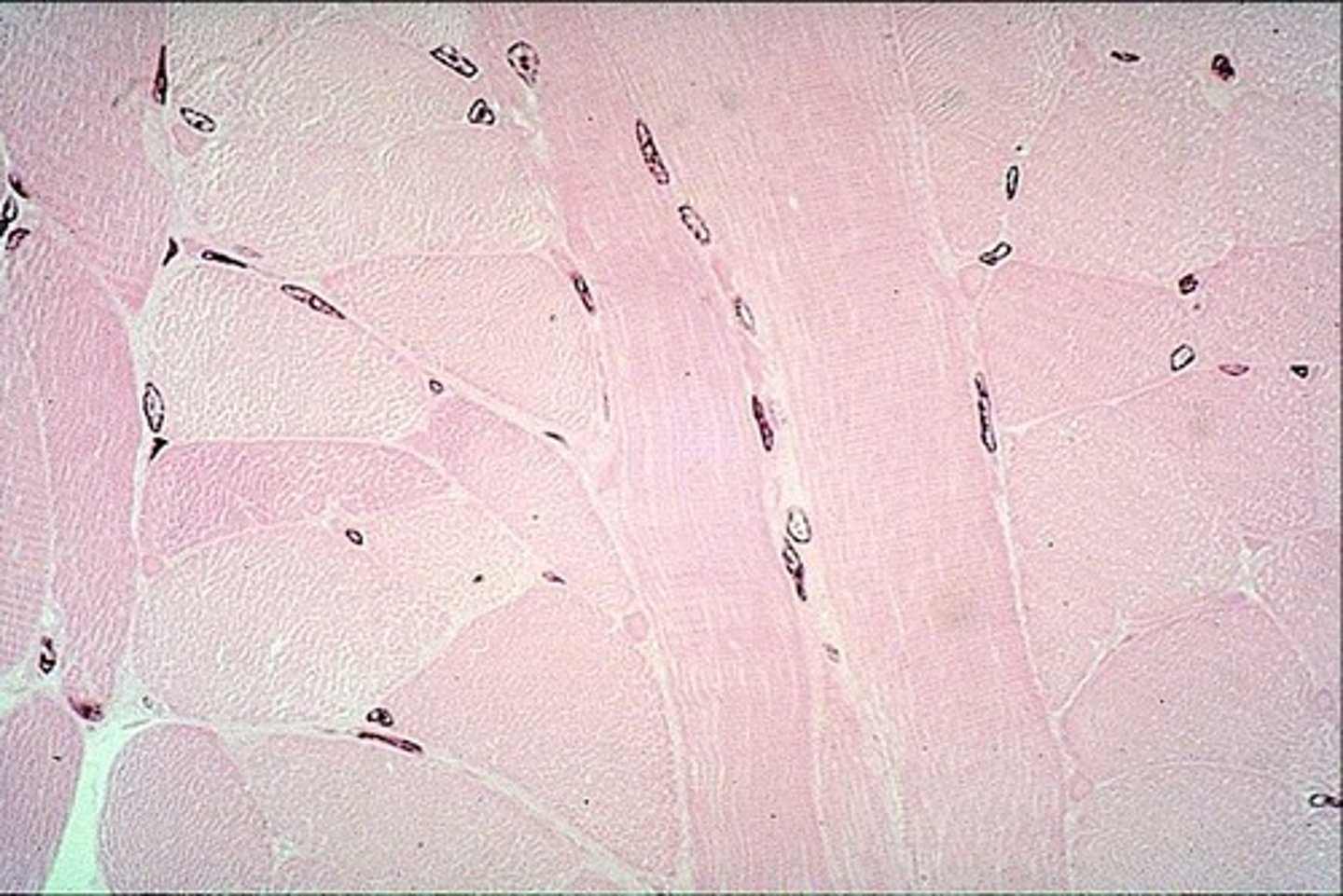
What characterizes skeletal muscle?
It is striated, multinucleated, voluntary, and associated with the skeleton.
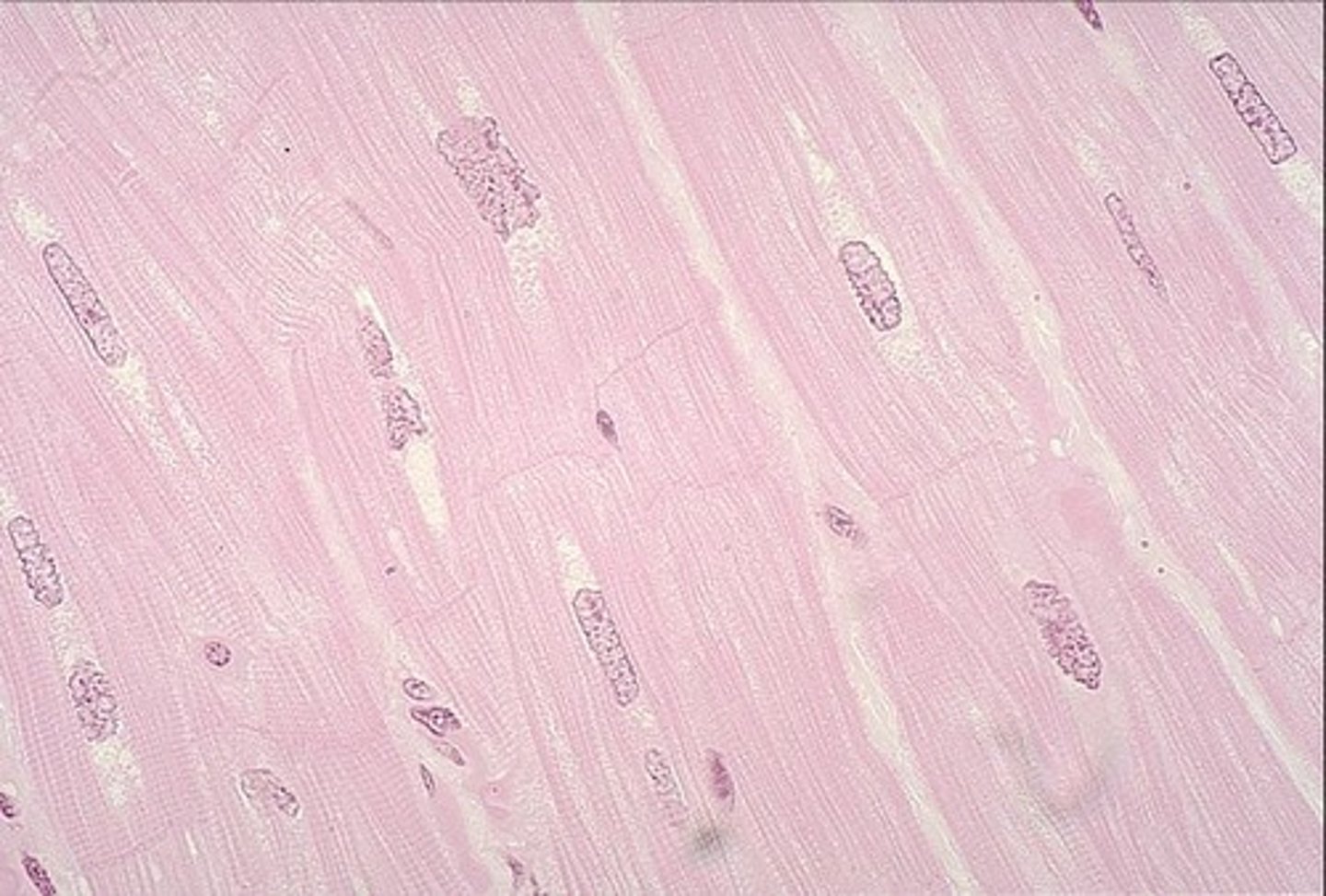
What is unique about cardiac muscle cells?
They are striated, have 1-2 nuclei, are involuntary, and have branching cells.
What is the primary role of neurons in nervous tissue?
Neurons are modified to conduct information.
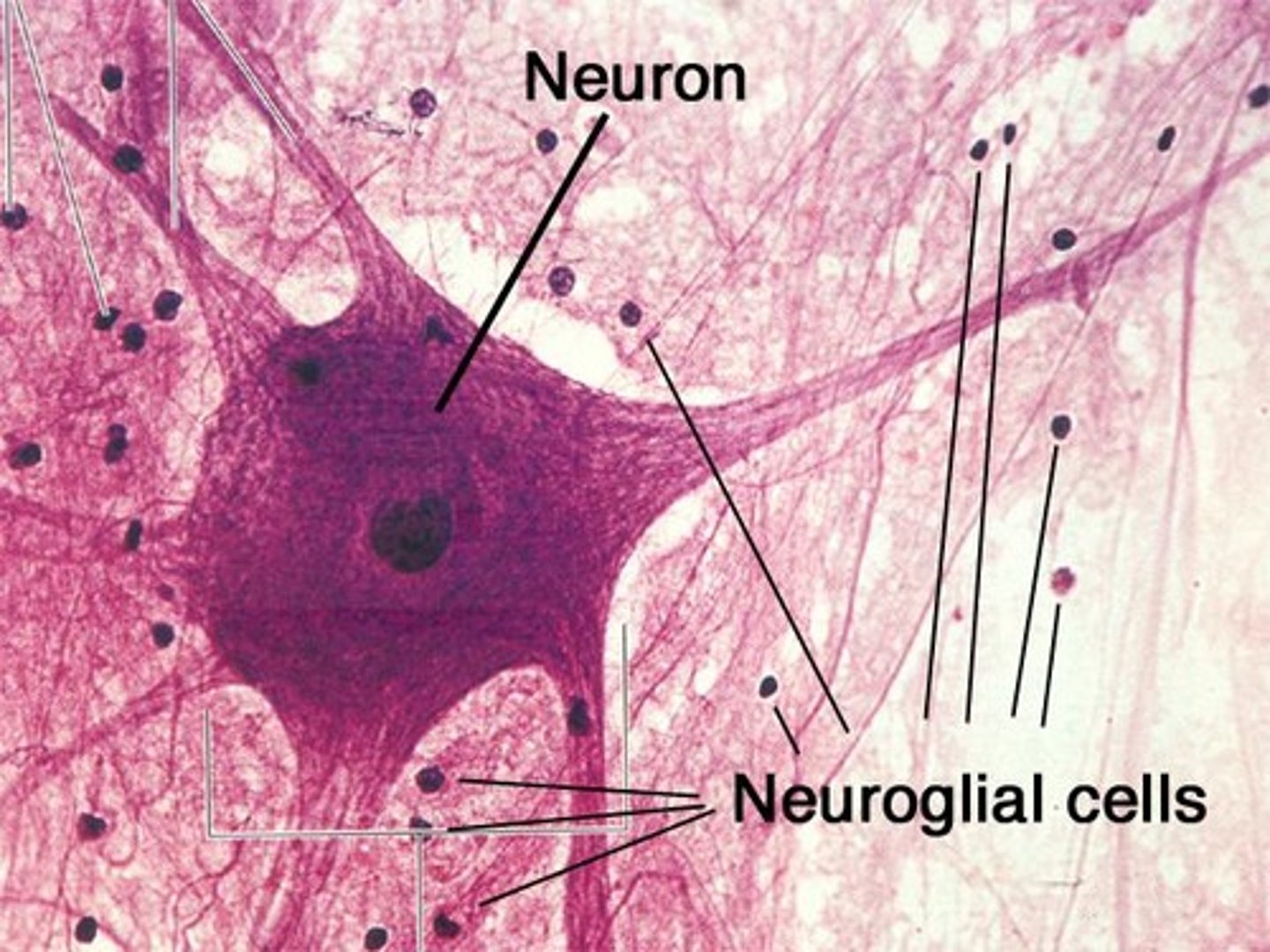
What are supporting cells in nervous tissue?
A variety of cells that support and assist the neurons.
Where is cartilage primarily found in the body?
In the embryonic skeleton and areas needing support and flexibility, such as the nose and ears.
What is the function of osteocytes in bone tissue?
Osteocytes mature from osteoblasts and are involved in maintaining bone tissue.
What is the function of the extracellular matrix in connective tissues?
It provides structural and biochemical support to surrounding cells.
What type of connective tissue is primarily found in the dermis?
Dense irregular connective tissue.
What is the function of elastic connective tissue?
It provides strength and flexibility, found in areas like the vocal cords.
What is the role of macrophages in connective tissue?
They are nonspecific phagocytic cells that help in immune response.
What are adipocytes?
The cells of adipose tissue that store fat.
What is the structure that chondrocytes reside in within cartilage?
Lacunae, which are fluid-filled cavities in the matrix.
What is the primary characteristic of smooth muscle?
It is non-striated, uninucleated, and involuntary, associated with hollow organs.
What is the main function of the extracellular matrix in blood?
To transport materials throughout the body.
 Note
Note  Flashcards (62)