Endterm 1.1
 Call Kai
 Learn
Learn Practice Test
 Spaced Repetition
 Match
Match Flashcards
 Knowt Play
1/44

There's no tags or description
Looks like no tags are added yet.
Name | Mastery | Learn | Test | Matching | Spaced | Call with Kai |
|---|
No analytics yet
Send a link to your students to track their progress
45 Terms
No approved therapeutic claim
As mandated by the FDA, this claim should be present if you were to market your product as a herbal supplement. They do not give safety and toxicological studies. They do not undergo clinical trials
Compard to vitex negundo and sambong, those are already approved a drug products with enough studies
Hepatocytes
Kupffer cells
Stellate cells
Lobules contain several types of liver cells
— main functional cells of the liver
— specialized macrophages
— cells involved in liver regeneration and fibrosis
Kupffer cells
A life span of RBC's is 120 days, what cells clean the expired RBCs
zone 1
zone 3
zone 2
Acinus involved in the metabolism of nutrients and the detoxification of harmful substances. It has three zones
— is closest to the entry of blood
— abuts the terminal hepatic vein
— is intermediate.
Protein synthesis inhibition
Cellular membrane disrpution
Mitochondrial function interference
Mechanism of Toxicant-Induced Liver Injury
Direct hepatotoxicity: Toxicants can directly damage hepatocytes (liver cells), leading to hepatocellular injury. This can occur through various mechanisms, including:
Valproic acid
Certain toxicants can damage mitochondria, leading to fatty liver disease
— is an example of a toxicant that can cause mitochondrial injury by inhibiting mitochondrial betaoxidation, leading to fat accumulation in the liver. Fatty liver leads sto hepatic cirrhosis
Amiodarone
Certain toxicants can damage mitochondria, leading to fatty liver disease
—, a medication used to treat heart arrhythmias, can also cause mitochondrial injury and fatty liver disease
Tetracycline
Certain toxicants can damage mitochondria, leading to fatty liver disease
—, an antibiotic, can cause fatty liver disease by interfering with mitochondrial protein synthesis.
Oxidative stress
Mechanism of Toxicant-Induced Liver Injury
— occurs when there is an imbalance between the production of reactive oxygen species (ROS) and the body's ability to detoxify them. This can lead to liver injury through cholestasis, which is the impaired flow of bile from the liver to the intestines
hepatic fibrosis
Mechanism of Toxicant-Induced Liver Injury
Inflammation occurs when the immune system responds to injury or infection. Chronic inflammation can lead to —, which is the formation of scar tissue in the liver.
Alcohol
— is a well-known example of a toxicant that can cause liver inflammation and fibrosis through chronic use.
B, C, and D
Mechanism of Toxicant-Induced Liver Injury
Immune-Mediated Injury: The immune system can also cause liver injury through an autoimmune response or by attacking liver cells infected with viruses. Hepatitis viruses, such as hepatitis — can cause liver inflammation and cirrhosis.
Chronic inflammation, meaning leading to cirrhosis. Hepatitis A is not a developing hepatitis (treatable)
Autoimmune hepatitis
Wilson's disease and alpha-1 antitrypsin deficiency
— is a condition in which the immune system mistakenly attacks liver cells, leading to chronic liver inflammation and fibrosis.
— are genetic disorders that can also cause immune-mediated liver injury.
Steatosis (fatty liver disease)
It occurs when there is an accumulation of fat in the liver. Alcohol is a well-known example of a toxicant that can cause this through chronic use.
Necrosis
— is a type of cell death that occurs when cells are exposed to extreme stress or toxins.
Aflatoxin B1
—, a toxin produced by certain strains of Aspergillus fungus, can cause necrosis and liver cancer. Can be found in peanuts that are improperly dried. They can culture aspergillus fungus. .
Direct hepatotoxicity
Mitochondrial injury
Oxidative stress
Inflammation
Immune mediated injury
Steatosis
Necrosis
Mechanism of Toxicant-Induced Liver Injury
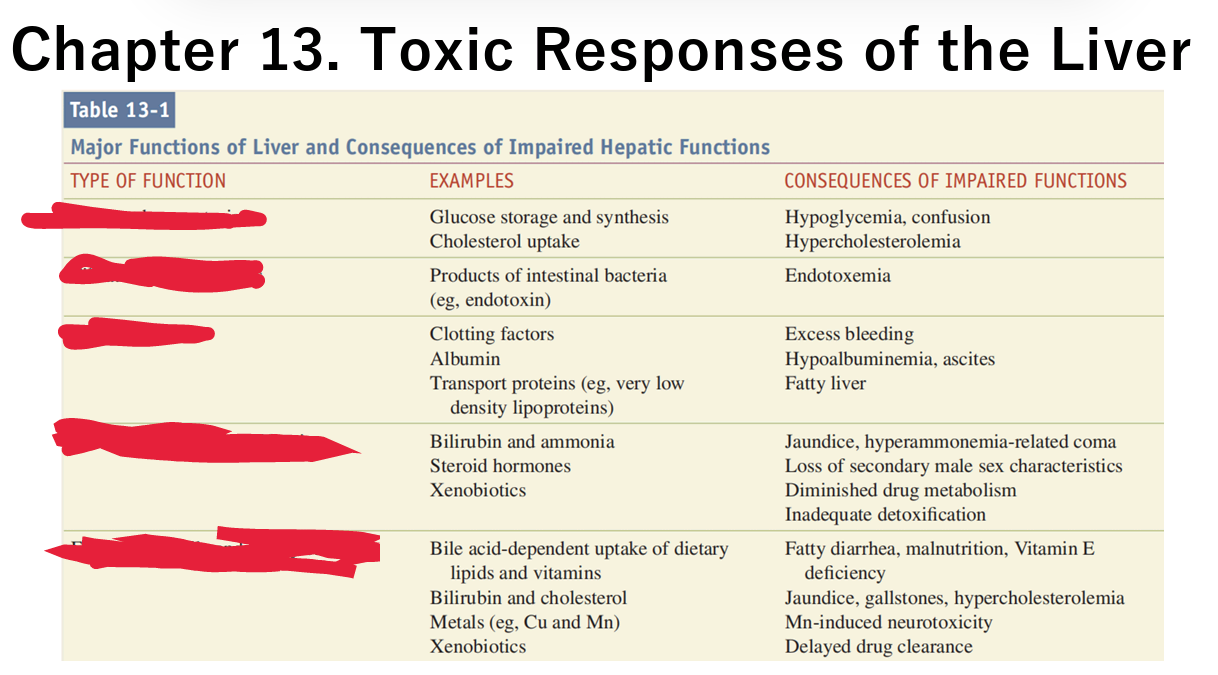
Nutritional homeostasis
Filtration of particulates
Protein synthesis
Bioactivation and detoxification
Formation of bile and biliary secretion
Diclofenac (analgesic)
Halothane (anesthetic)
Nitrofurantoin (antibiotic)
Phenytoin (anticonvulsant)
Tienillic acid (diuretic)
Drugs that can cause immune mediated (allergic) idiosyncratic hepatotoxicity
Amiodarone
Bromfenac
Diclofenac
Disulfiram
Isoniazid
Ketoconazole
Rifampin
Troglitazone
Valproate
Drugs that can cause nonimmune mediated (nonallergic) idiosyncratic hepatotoxicity
Afferent
Efferent
- to go inside
- to go outside
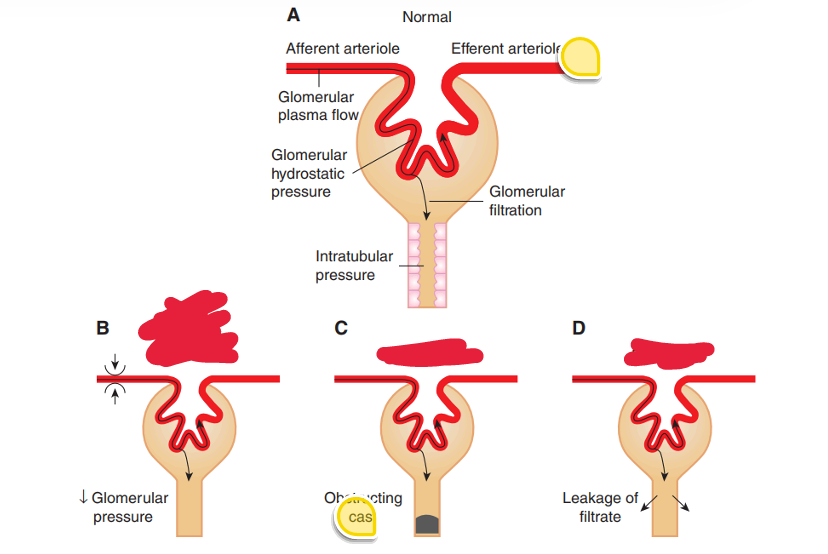
Afferent arteriolar constriction
Obstruction
Back leak
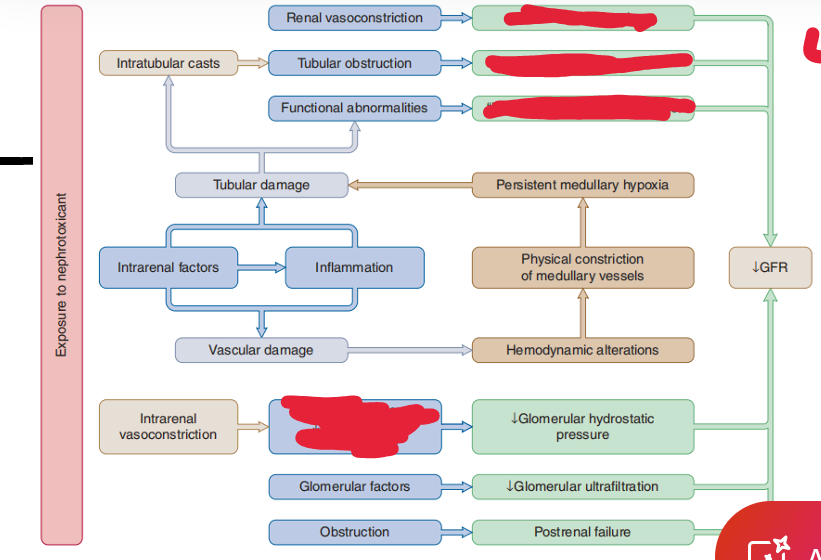
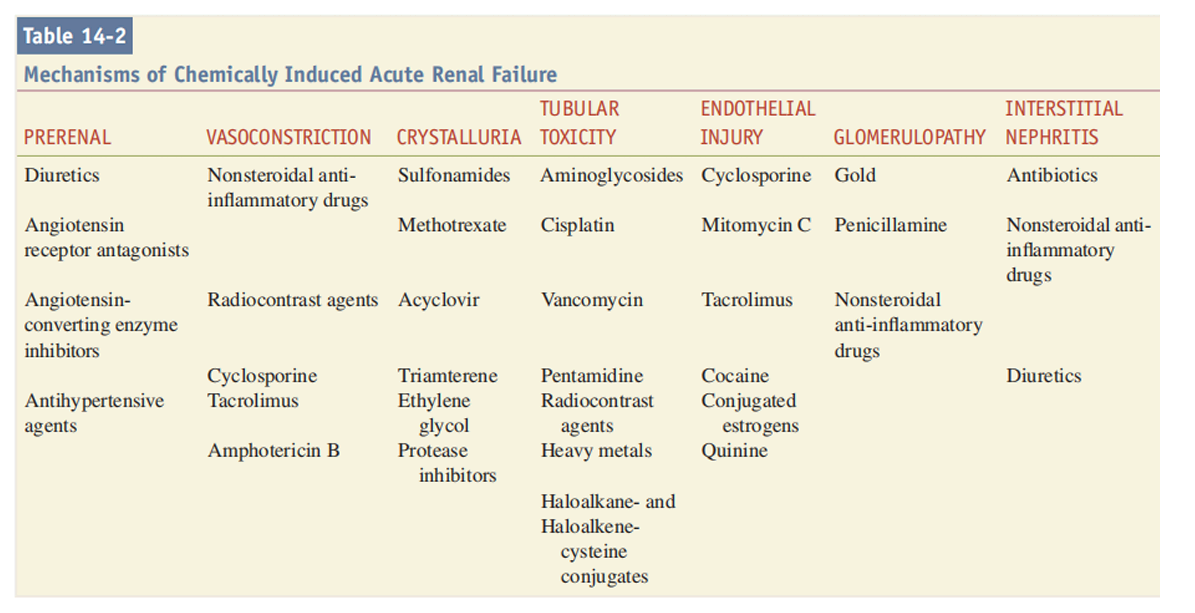
Mechanisms of reduction of the GFR
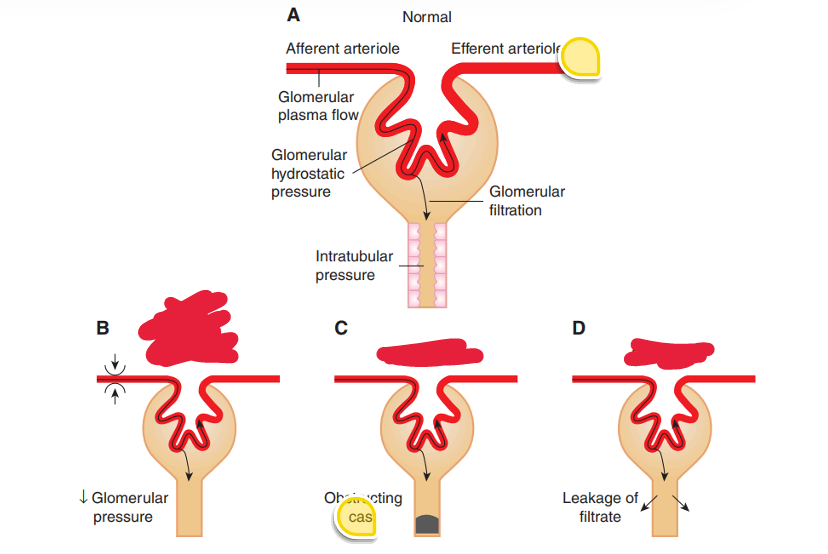
Adequate blood flow to the glomerulus
Afferent arteriolar pressure
Glomerular permeability
Low intratubulta pressure
GFR depends on 4 factors:
Afferent arteirolar constriction
— decreases GFR by reducing blood flow, resulting in diminished capillary pressure
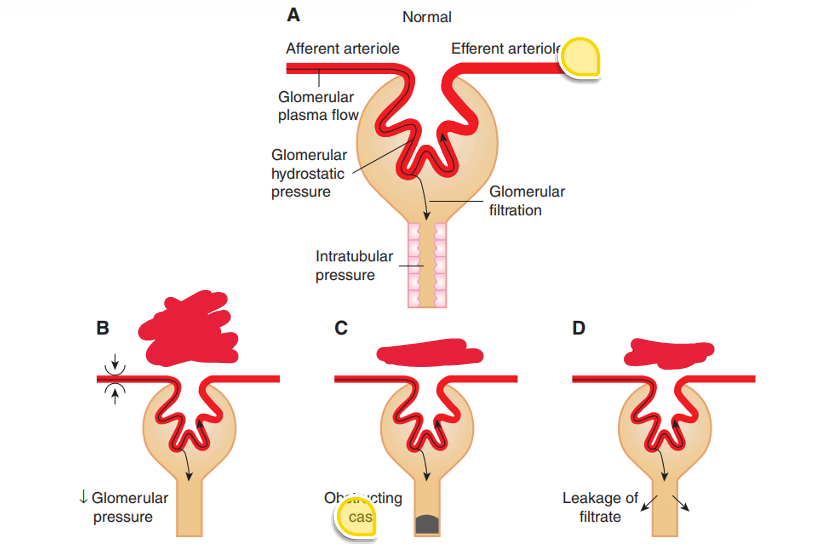
Obstruction
— — of the tubular lumen by cast formation increases tubular pressure. When tubular pressure exceeds glomerular capillary pressure, filtration decreases or ceases
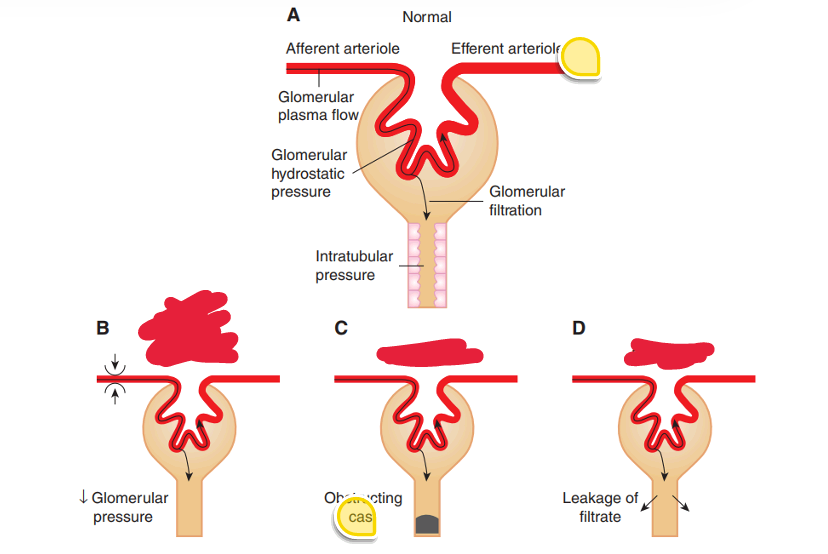
Back leak
— occurs when the paracellular space between cells increases and the glomerular filtrate leaks into the extracellular space and bloodstream.
Recall
Answer recall
Nephron
It is the functional unit of the kidney
Recall
Answer recall
Recall
Answer recall
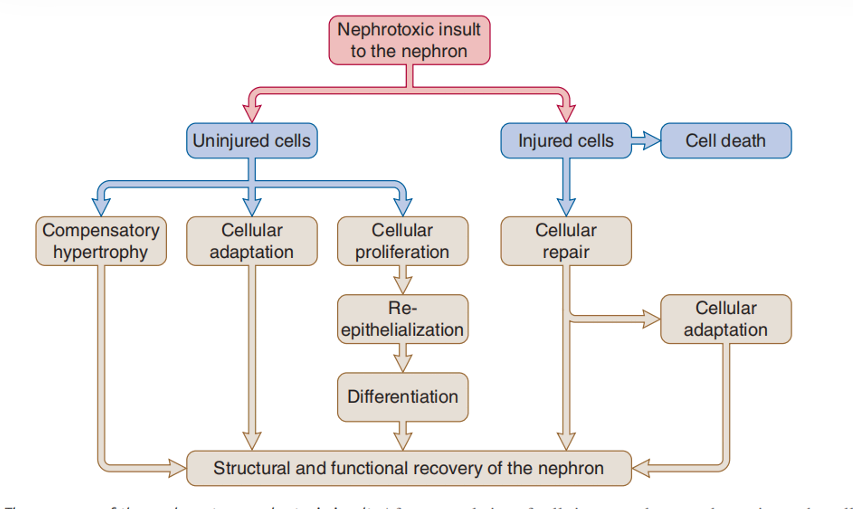
Oncosis
Apoptosis
Terminally injured cell undergo cell death through —
True
True or false
Cells injured sublethally undergo repair and adaptation in response to the nehrotoxicant
Acute irritation
This mechanism of toxicity occurs when a toxicant causes irritation to the respiratory tract, leading to symptoms such as coughing, wheezing, and shortness of breath
What irritation is typically reversible once the exposure to the toxicant is stopped?
Ammonia
Chlorine
Formaldehyde
Examples of toxicants that can cause irritation in the respiratory system include:
Acute inflammation
This mechanism of toxicity occurs when a toxicant causes inflammation in the respiratory tract, leading to acute or chronic respiratory problems.
What inflammation can cause symptoms such as coughing, wheezing, and chest tightness?
Chronic inflammation
This mechanism of toxicity occurs when a toxicant causes inflammation in the respiratory tract, leading to acute or chronic respiratory problems
What inflammation can lead to scarring and permanent damage to the lungs?
Silica
Asbestos
Tobacco smoke
Examples of toxicants that can cause inflammation in the respiratory system include
Pulmonary edema
This mechanism of toxicity occurs when a toxicant causes fluid buildup in the lungs, leading to symptoms such as coughing, shortness of breath, and chest pain. Severe cases can be lifethreatening.
Cyanide
Chlorine
phosgene
Examples of toxicants that can cause pulmonary edema include:
Bronchoconstriction
This mechanism of toxicity occurs when a toxicant causes the muscles in the airways to contract, leading to the narrowing of the airways and difficulty breathing. This can cause symptoms such as wheezing and shortness of breath
Sulfur dioxide
Ozone
Diesel exhaust
Nicotine
Examples of toxicants that can cause bronchoconstriction include:
Pulmonary fibrosis
This mechanism of toxicity occurs when a toxicant causes scarring and thickening of the lung tissue, leading to permanent damage and reduced lung function. This can cause symptoms such as shortness of breath and chronic cough
Asbestos
Silica
Beryllium
Examples of toxicants that can cause pulmonary fibrosis include
Carcinogenesis
This mechanism of toxicity occurs when a toxicant causes damage to the DNA in the cells of the respiratory tract, leading to the development of cancer. This can cause symptoms such as coughing, chest pain, and difficulty breathing
Radon
Benzene
Vinyl chloride
Examples of toxicants that can cause carcinogenesis in the respiratory system include

