Italian Furniture
 Studied by 0 people
 Call Kai
 Learn
Learn Practice Test
 Spaced Repetition
 Match
Match Flashcards
 Knowt Play
1/10

There's no tags or description
Looks like no tags are added yet.
Name | Mastery | Learn | Test | Matching | Spaced | Call with Kai |
|---|
No analytics yet
Send a link to your students to track their progress
11 Terms
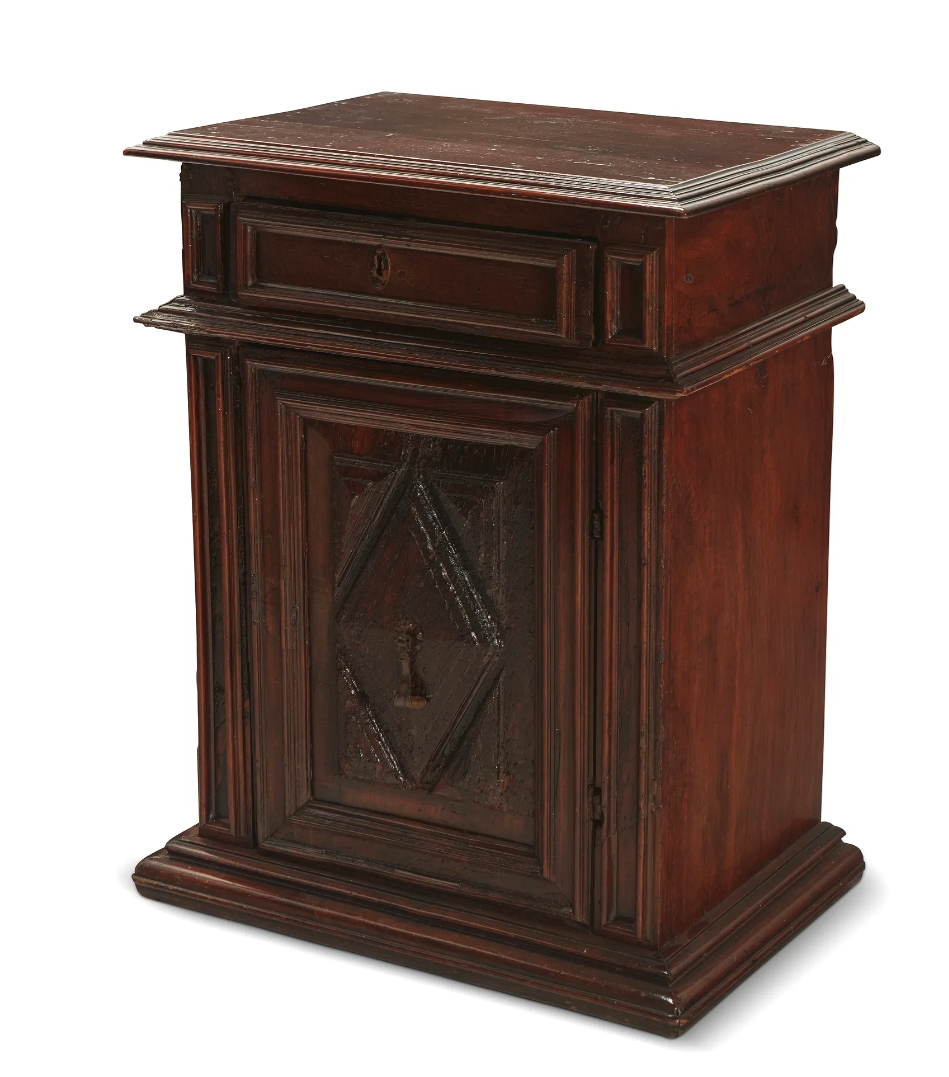
Italian Renaissance carved walnut cabinet
17th century
Italian Renaissance
14th to 17th centuries
It was characterized by a revival of classical Roman and Greek styles, influencing furniture design with symmetry, proportion, and the use of classical motifs. Key features include the use of walnut, intricate carvings, and the incorporation of architectural elements into furniture pieces.
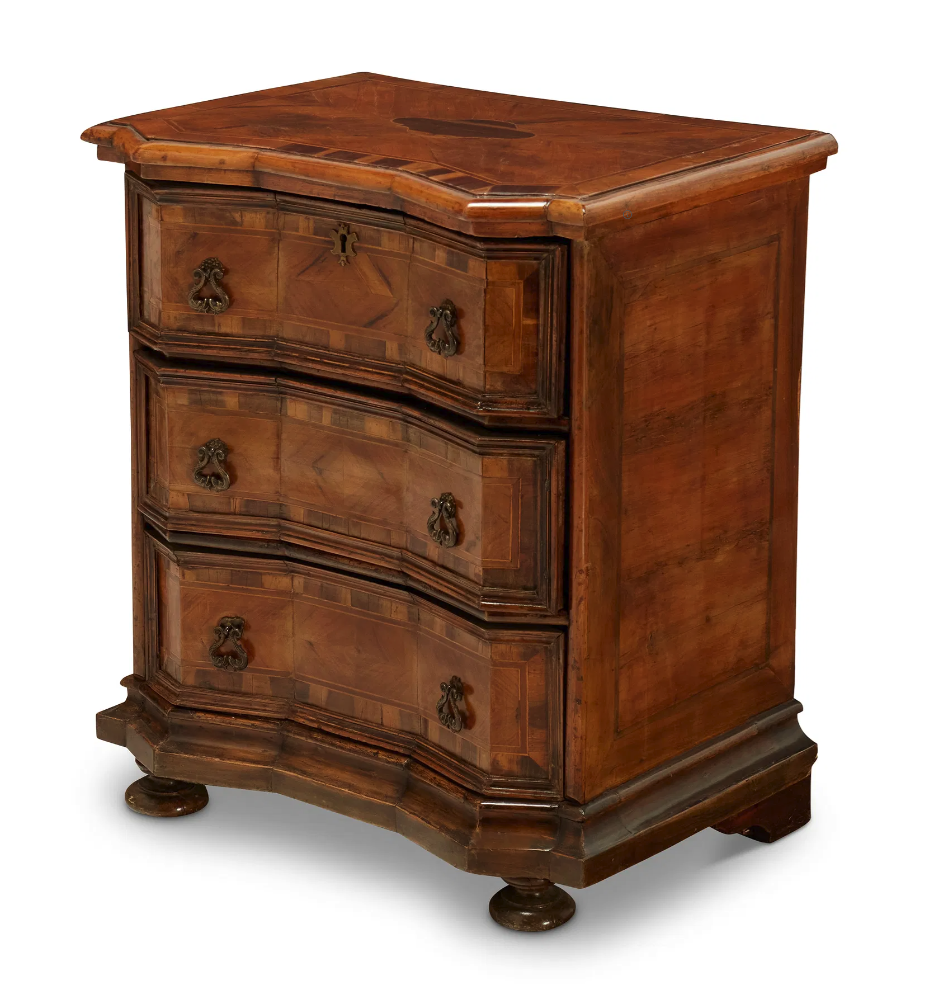
Italian Baroque-style inlaid walnut commodino
Mid-19th century
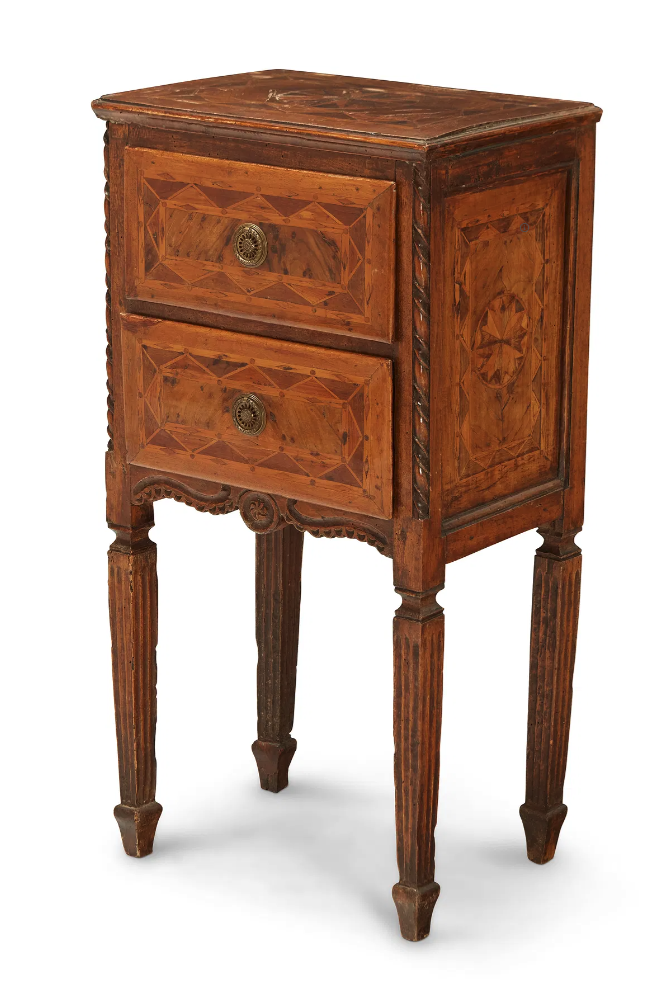
Italian Neoclassical marquetry-inlaid walnut commodino
Early 19th century
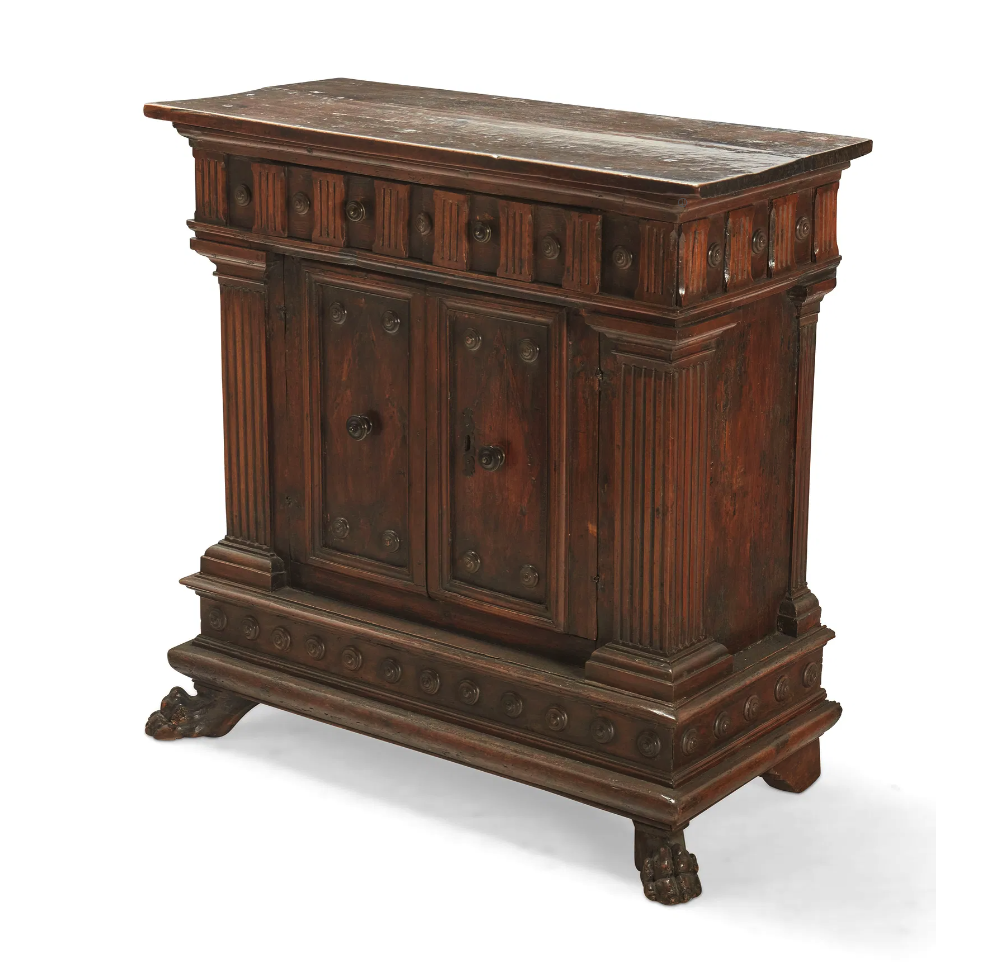
Italian carved walnut credenza
18th century
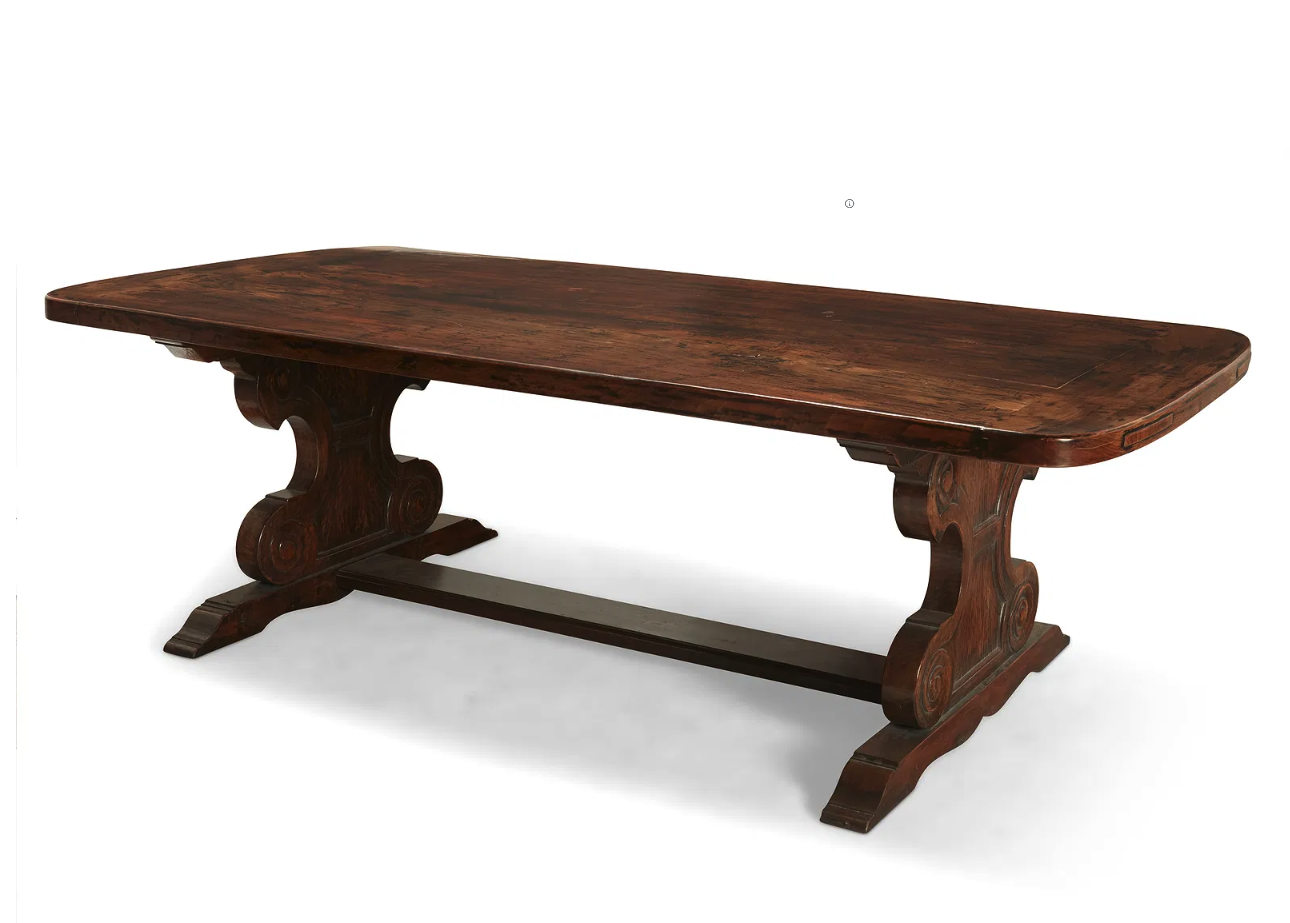
Italian Renaissance-style walnut trestle table
20th century
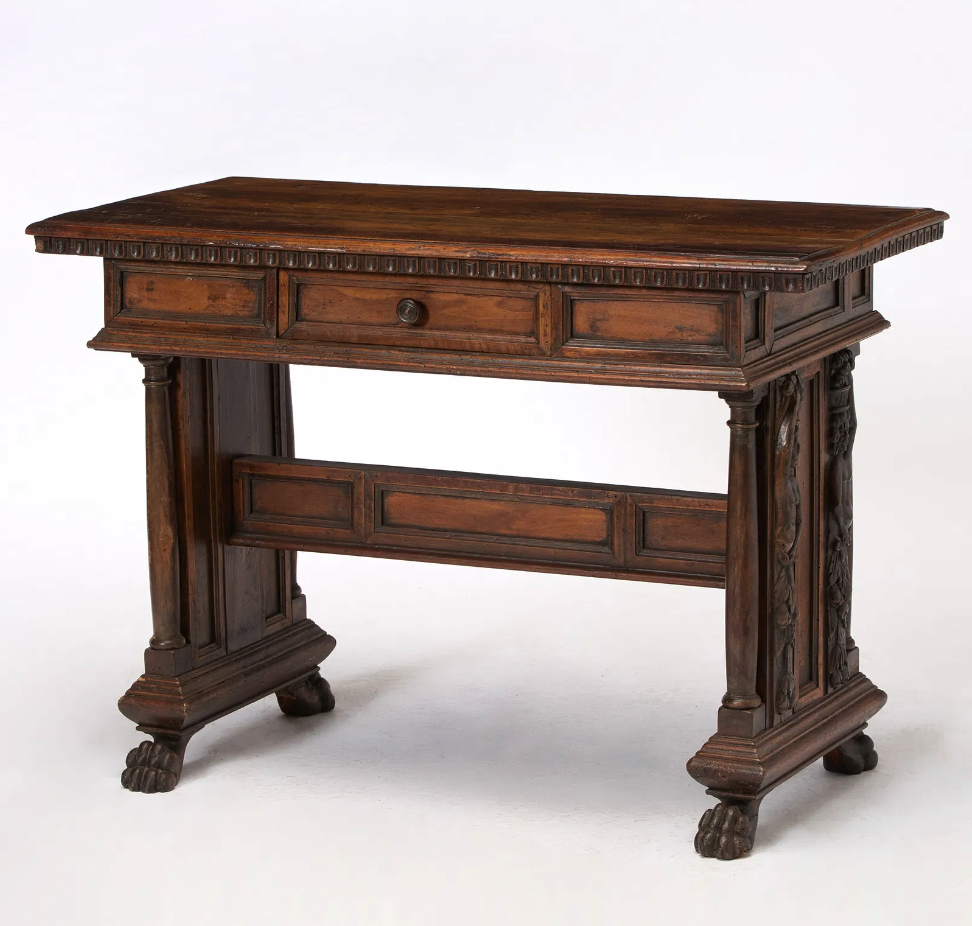
Italian Renaissance Rectangular Carved Walnut Side Table
Late 16th / early 17th century and later
The molded and carved top above a central frieze drawer on figural carved trestle supports flanked by Ionic columns, on paw feet.
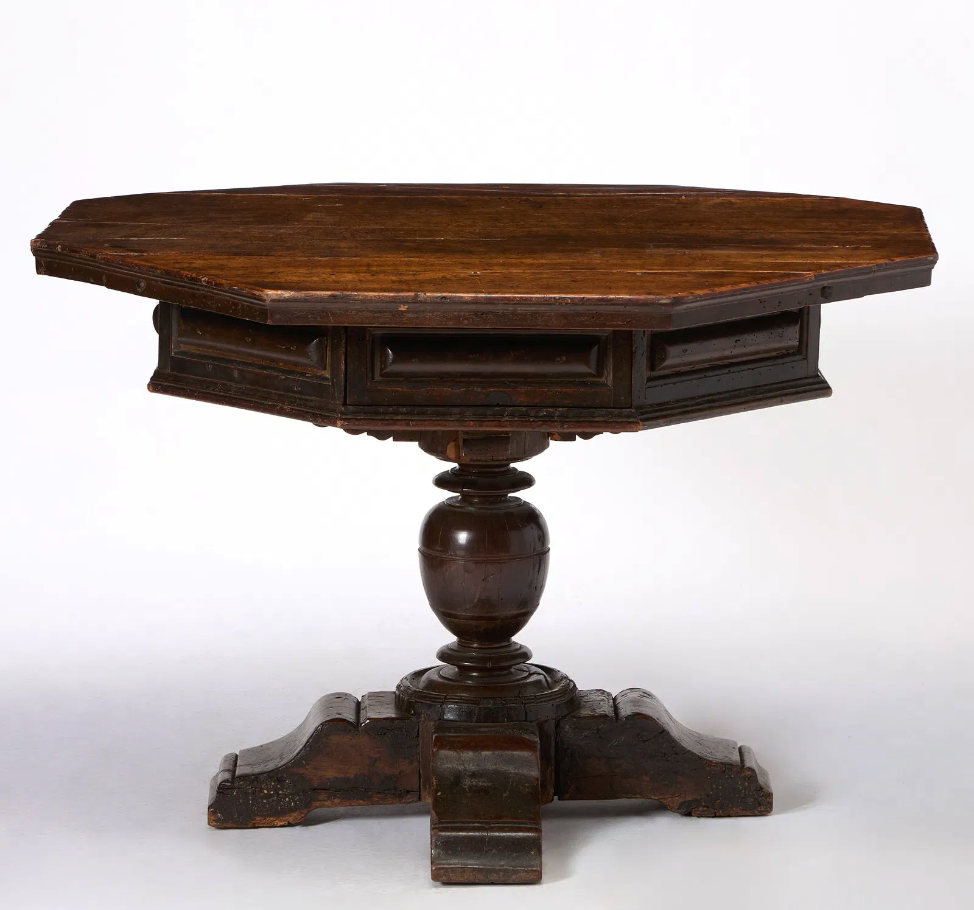
Italian Renaissance Octagonal Center Table
Bolognese, late 16th century
The moulded top above a conforming frieze, on turned and bulbous support with ring turnings, terminating in quadripartite plinth base with block feet.
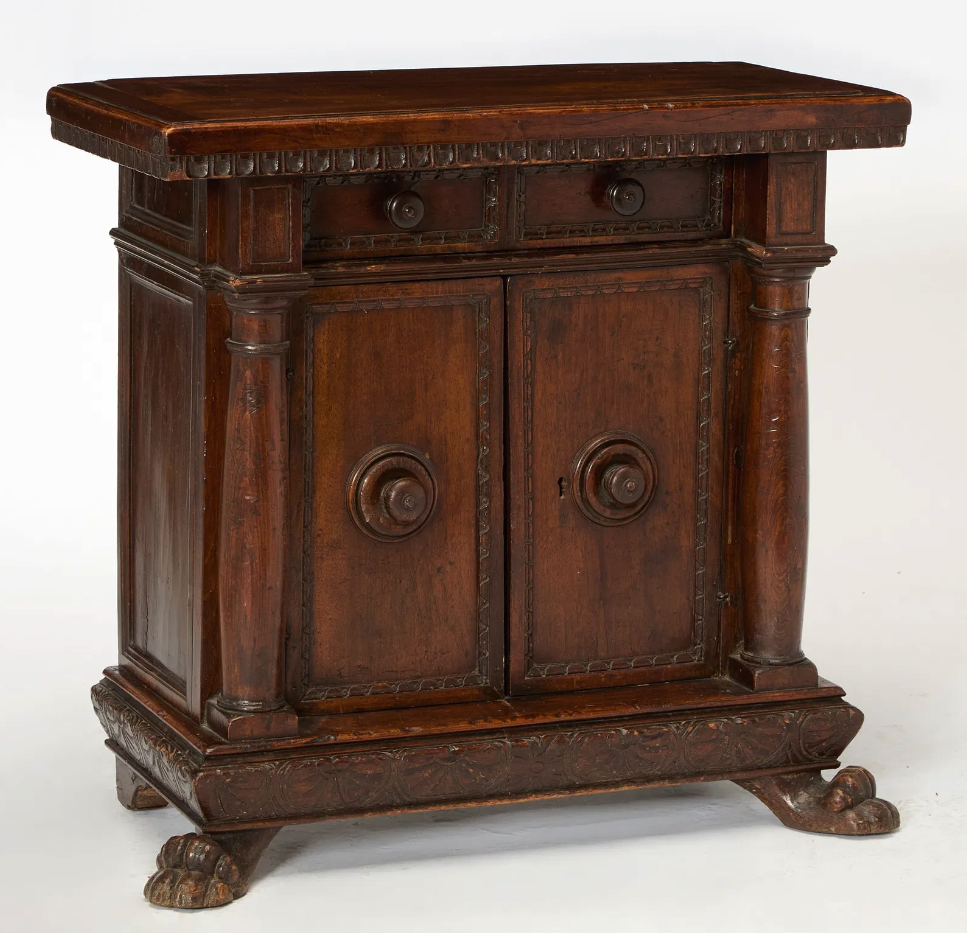
Italian Renaissance Walnut and Beech Wood Cabinet
Tuscany, late 16th/early 17th century and later
The molded and carved rectangular top above a frieze drawer and cupboard enclosing a shelf, flanked by columnar standards, on a floral carved plinth and paw feet.
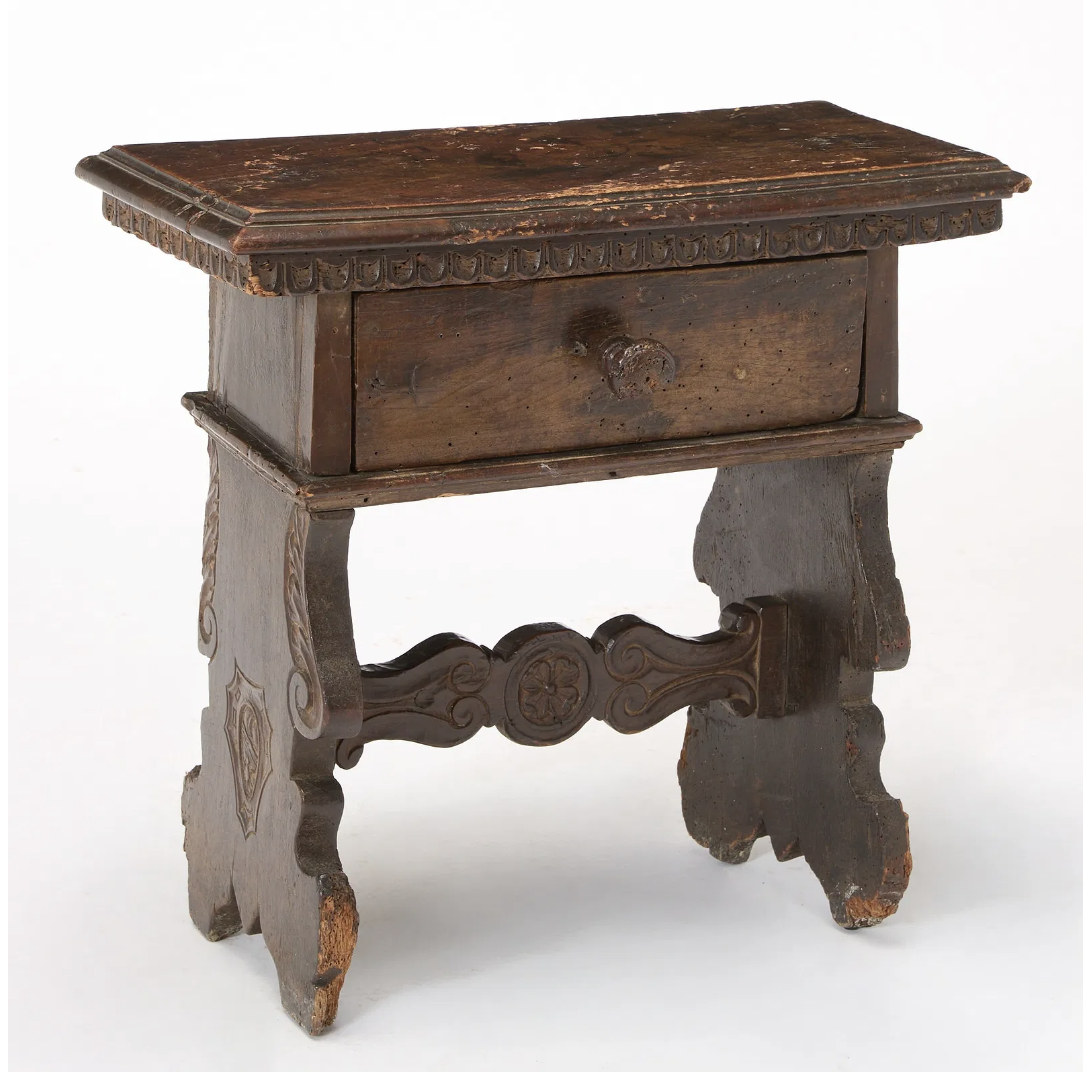
North Italian Baroque Walnut Side Table
17th century
The molded and carved rectangular top above a frieze drawer on shaped supports carved with a coat of arms joined by a scroll and foliate-carved stretcher.
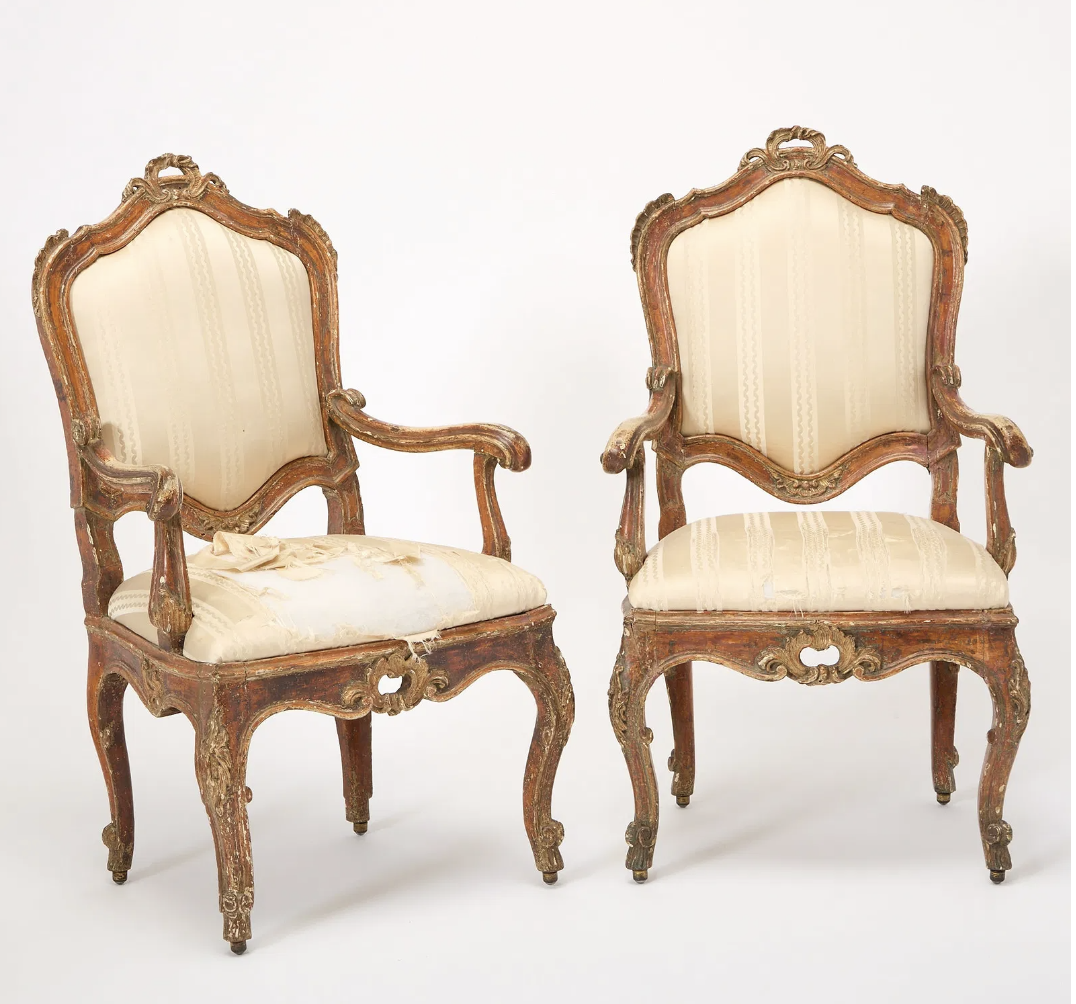
Pair of Italian Rococo Carved and Polychrome Painted Wood Fauteuils
Probably Venetian, mid-18th century
Each padded backrest a chassis centered by confronting scroll claps and flanked by ruffles within a molded frame above a drop-in seat, the S-scroll arms and acanthus carved supports above a pierced apron centered by a further pierced confronting scroll on acanthus-headed cabriole legs and shaped feet, on later casters
 Note
Note  Flashcards (175)