Bacterial diseases

0.0(0)
studied byStudied by 0 people
0.0(0)
call with kaiCall with Kai
learnLearn
examPractice Test
spaced repetitionSpaced Repetition
heart puzzleMatch
flashcardsFlashcards
GameKnowt Play
Card Sorting

1/44

encourage image

There's no tags or description

Looks like no tags are added yet.

Study Analytics
Name
Mastery
Learn
Test
Matching
Spaced
Call with Kai

No study sessions yet.

45 Terms

1
New cards

Rocky Mountain Spotted Fever

Agent: Rikketsia ricketsii

- transmitted through tick bites.

Symptoms; fever, headache, and a spotted rash.
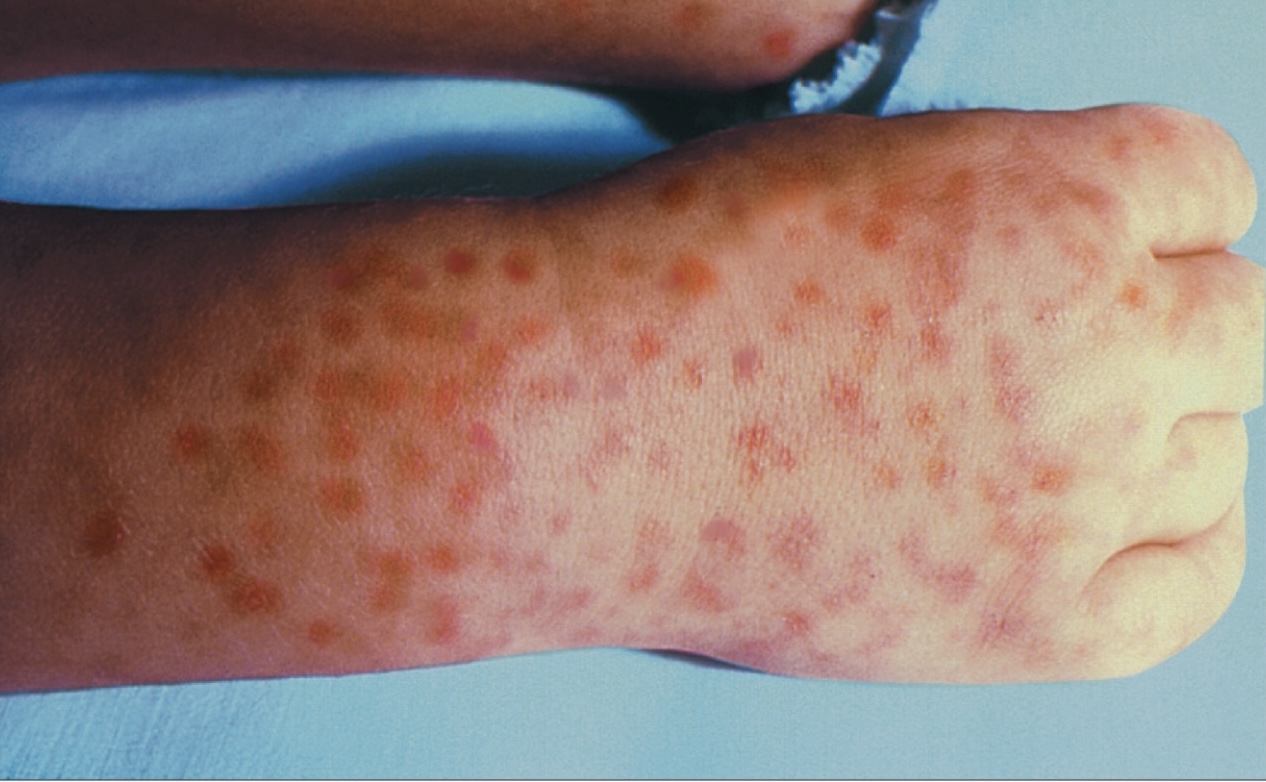
<p>Agent: <em><span>Rikketsia ricketsii</span></em></p><p><em><span>-</span></em> transmitted through tick bites.</p><p>Symptoms; fever, headache, and a spotted rash.</p>
2
New cards

Brucellosis

Agent: Brucella melitensis

Zoonosis- transmitted from animals to humans

-Transmitted through handling of infected animals or unpasteurized milk

Symptoms: Undulant fever, sweating, chills, headache

<p><span>Agent: </span><em><span>Brucella melitensis</span></em></p><p>Zoonosis- transmitted from animals to humans</p><p><span>-Transmitted through handling of infected animals or unpasteurized milk</span></p><p><span>Symptoms: </span><strong><span>Undulant fever,</span></strong><span> sweating, chills, headache</span></p>
3
New cards

Whooping Cough

Also known as Pertussis

Agent: Bordatella pertussis

Route of Transmission: Inhalation

Symptoms: Catarrhal stage: common cold

Paroxysmal stage: persistent, violent cough without a breath; wheezing inhalation (whoop)

Convalescent stage: several weeks as coughing subsides
- Cyanosis (blue appearance) due to poor oxygen exchange

-Dangerous to children

— kills cilia in throat causing build up of mucus
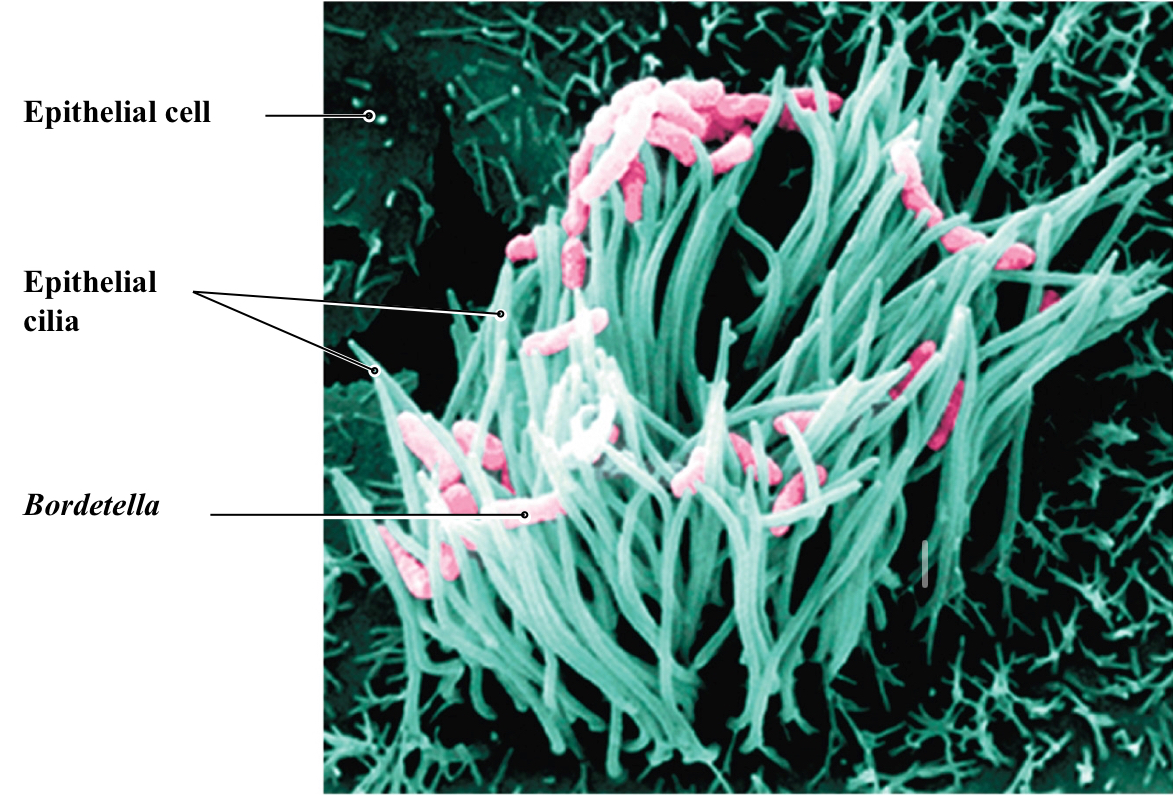
<p>Also known as Pertussis</p><p><span>Agent: </span><em><span>Bordatella pertussis</span></em></p><p><span>Route of Transmission: Inhalation</span></p><p><span>Symptoms: </span><span style="background-color: transparent;"><u><span>Catarrhal stage</span></u><span>: common cold</span></span></p><p><span style="background-color: transparent;"><u><span>Paroxysmal stage</span></u><span>: persistent, violent cough without a breath; wheezing inhalation (whoop)</span></span></p><p><span style="background-color: transparent;"><u><span>Convalescent stage</span></u><span>: several weeks as coughing subsides</span></span><br>- <span>Cyanosis (blue appearance) due to poor oxygen exchange</span></p><p class="s31"><span>-Dangerous to children</span></p><p class="s31"><span>— kills cilia in throat causing build up of mucus </span></p><p></p>
4
New cards

Identify the different vaccines used for pertussis

DTP vaccine had more intense side effects (low patient compliance) (endotoxin)

DTaP vaccine is now used which causes less intense side effects

•Six doses; doesn’t use the endotoxin

5
New cards

Gonorrhea and (PID)

Agent: Neisseria gonorrhoeae

Transmitted through: Sexual contact or via birth canal to newborns ( through newborns eyes) 

Identify parts of bacteria: capsule and diplococci

Consequence of PID: damage to uterine tubes cause infertility
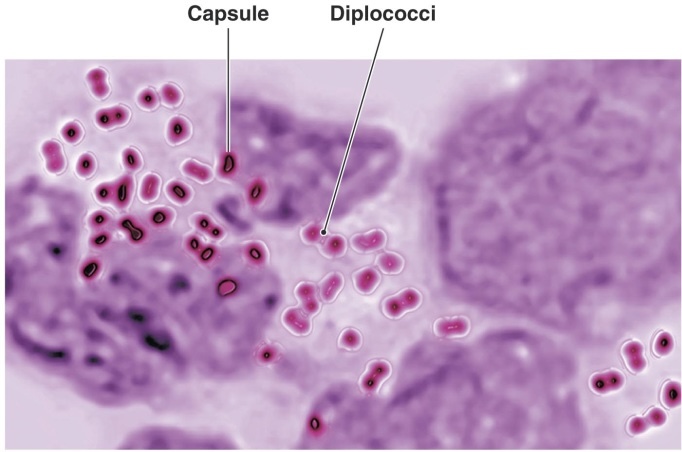
<p><span>Agent: </span><em><span>Neisseria gonorrhoeae</span></em></p><p><span>Transmitted through:&nbsp;</span><span style="background-color: transparent;"><span>Sexual contact or via birth canal to newborns ( through newborns eyes)&nbsp;</span></span></p><p><span style="background-color: transparent;"><span>Identify parts of bacteria: capsule and diplococci </span></span></p><p><span style="background-color: transparent;"><span>Consequence of PID: damage to uterine tubes cause infertility </span></span></p>
6
New cards

Pseudomonas aeruginosa infection 

Blue-green pus due to pigment produced by bacteria; under nails 

  • Opportunistic pathogen; burns or open skin

Route of Transmission: water borne, direct contact, nosocomial infections

— self limiting (cleared by body) 
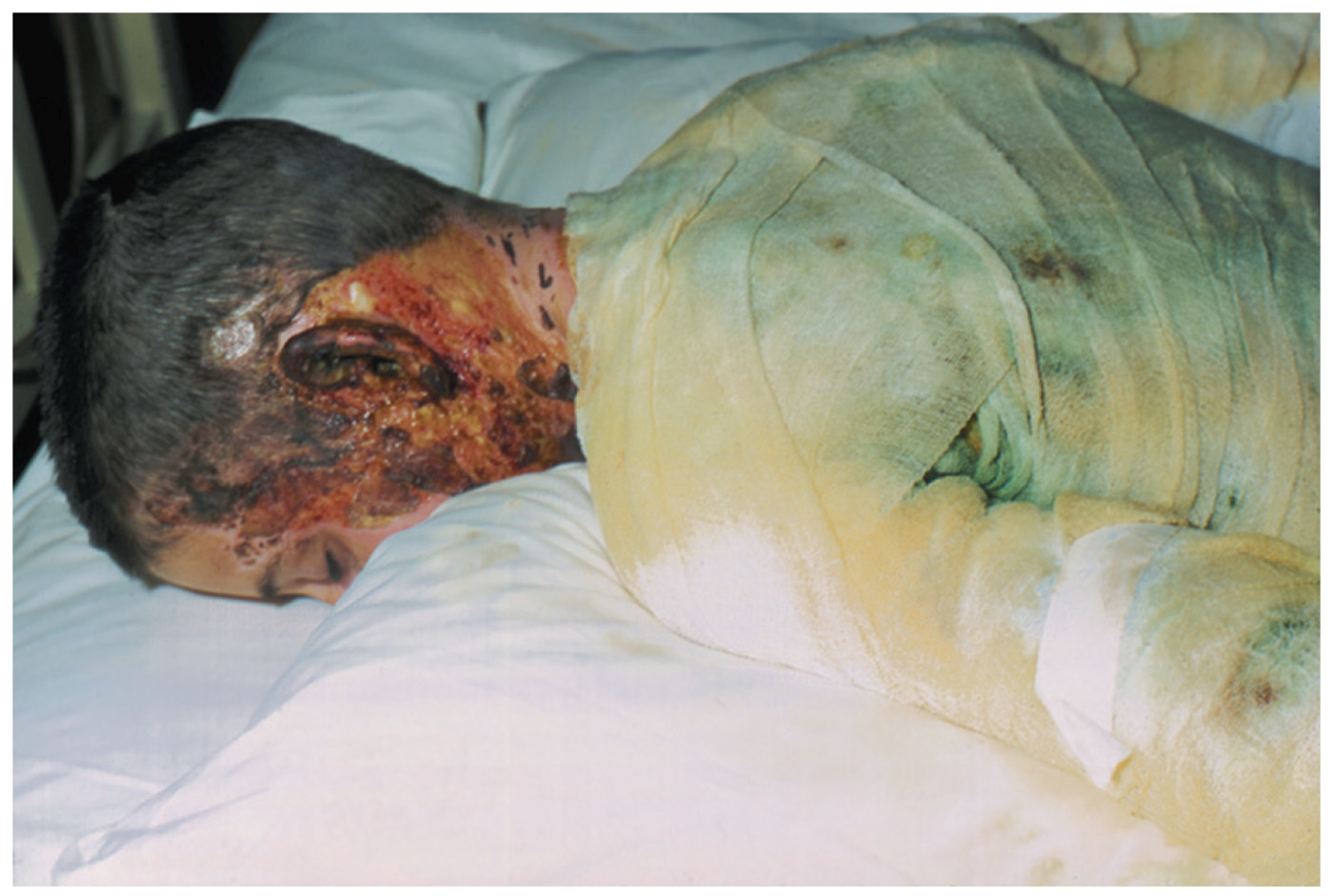
<p><span style="background-color: transparent;"><span>Blue-green pus due to pigment produced by bacteria; under nails&nbsp;</span></span></p><ul><li><p><span style="background-color: transparent;"><span>Opportunistic pathogen; burns or open skin</span></span></p></li></ul><p><span><span>Route of Transmission: water borne, direct contact, nosocomial infections</span></span></p><p><span><span>— self limiting (cleared by body)&nbsp;</span></span></p><p></p>
7
New cards

Legionnaire’s disease or legionellosis

Agent: Legionella pneumophila

Route of Transmission: Respiratory

HVAC, Spas, showers, Humidifiers, Warm water lines in hospitals

Symptoms: cough, general symptoms of pneumonia

“Modern” disease due to their preferred environments; Central heating, water lines, etc. (we didn’t always have these) 

8
New cards

Cholera

Agent: Vibrio cholera

Transmitted: through contaminated water or foods

Symptoms: No fever

Rice-water stool

Dehydration and hypovolemic shock

9
New cards
term image

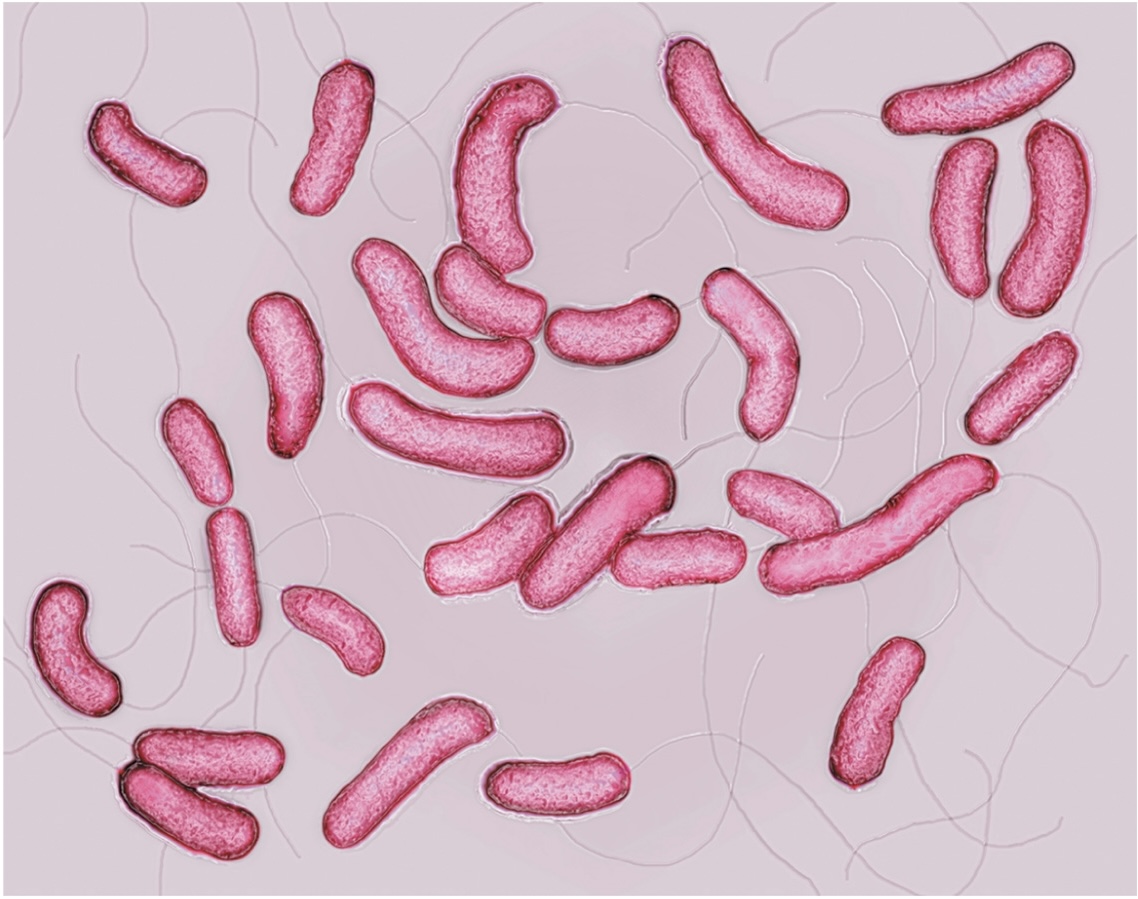
Vibrio cholera

Vibrio shape; Flagella is monotrichous

10
New cards

What does cholera toxin do and how does it relate to osmosis? 

-Cholera toxin is important for virulence (causes diarrhea) (shedding of the bacteria into the environment in large amounts)

– The Toxin results in electrolytes leaving the cell and going to the Intestinal lumen. 

results in lots of water inside the intestine(due to osmosis) that gets passed as diarrhea 

Osmosis: if high concentration of solutes on one side, water rushes across the membrane to balance out that concentration

11
New cards

UTI & Traveler’s diarrhea

Agent: E. Coli

Most common cause for UTIs

Fecal/ Fecal oral for Travelers diarrhea
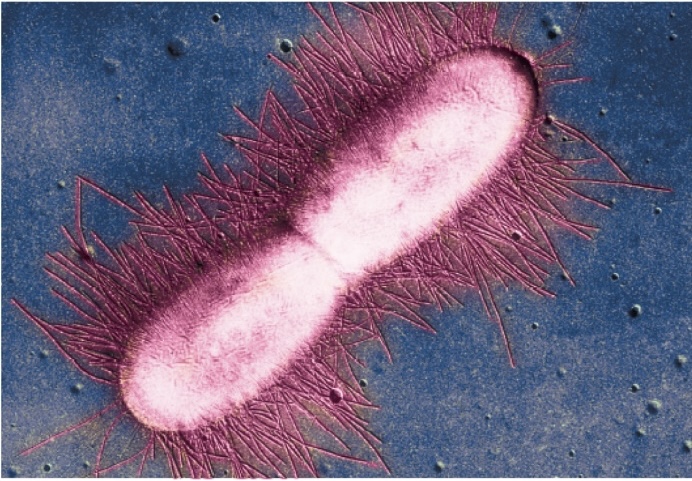
<p>Agent: <em>E. Coli </em></p><p>Most common cause for UTIs</p><p class="has-focus is-empty">Fecal/ Fecal oral for Travelers diarrhea </p><p class="has-focus is-empty"></p>
12
New cards

Describe the flagella on E. coli

Peritrichous flagella; multiple flagella that are distributed randomly over the entire surface of a bacterial cell
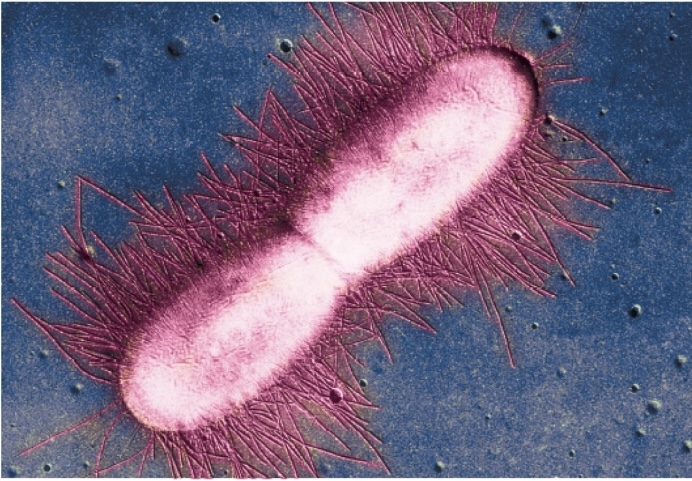
<p><span style="background-color: transparent;"><span>Peritrichous flagella;&nbsp;multiple flagella that are distributed randomly over the entire surface of a bacterial cell</span></span></p><p><span style="background-color: transparent;"><span> </span></span></p>
13
New cards

Bacillary dysentery

Agent: Shigella dysenteriae

Transmitted through: fecal/oral 

Symptoms: diarrhea and bloody stool

shiga toxin: can secrete, results in the host cells stopping protein synthesis

— more severe case, usually self limiting 

<p>Agent:&nbsp;<span style="background-color: transparent;"><em><span>Shigella dysenteriae</span></em></span></p><p>Transmitted through: fecal/oral&nbsp;</p><p>Symptoms:<span style="background-color: transparent;"><span> diarrhea and bloody stool</span></span></p><p><strong>shiga toxin:</strong>&nbsp;can secrete, r<span style="background-color: transparent;"><span>esults in the host cells stopping protein synthesis</span></span></p><p>— more severe case, usually self limiting&nbsp;</p><p></p>
14
New cards

Salmonellosis

Agent: Salmonella species

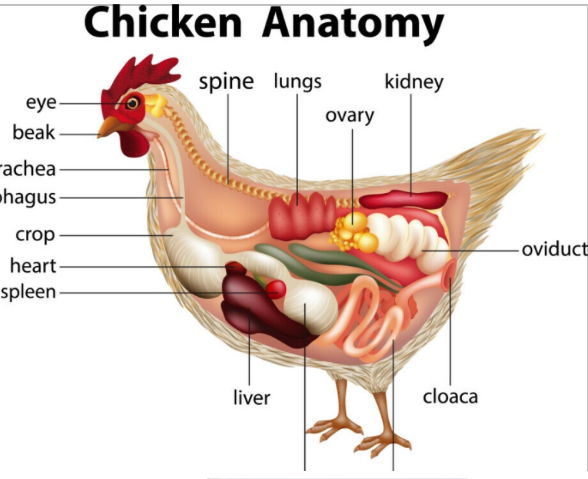
Transmitted through:  fecal/oral route from chicken eggs

-Their anatomy, poop comes out same hole

Prevention methods: Boil the egg, cook it, peel it, or forget it
<p>Agent: <span style="background-color: transparent;"><em><span>Salmonella</span></em><span> species</span></span></p><p><span style="background-color: transparent;"><span>Transmitted through: &nbsp;fecal/oral route from chicken eggs </span></span></p><p><span style="background-color: transparent;"><span>-Their anatomy, poop comes out same hole </span></span></p><p> </p><p>Prevention methods: <span style="background-color: transparent;"><span>Boil the egg, cook it, peel it, or forget it</span></span></p><p></p>
15
New cards

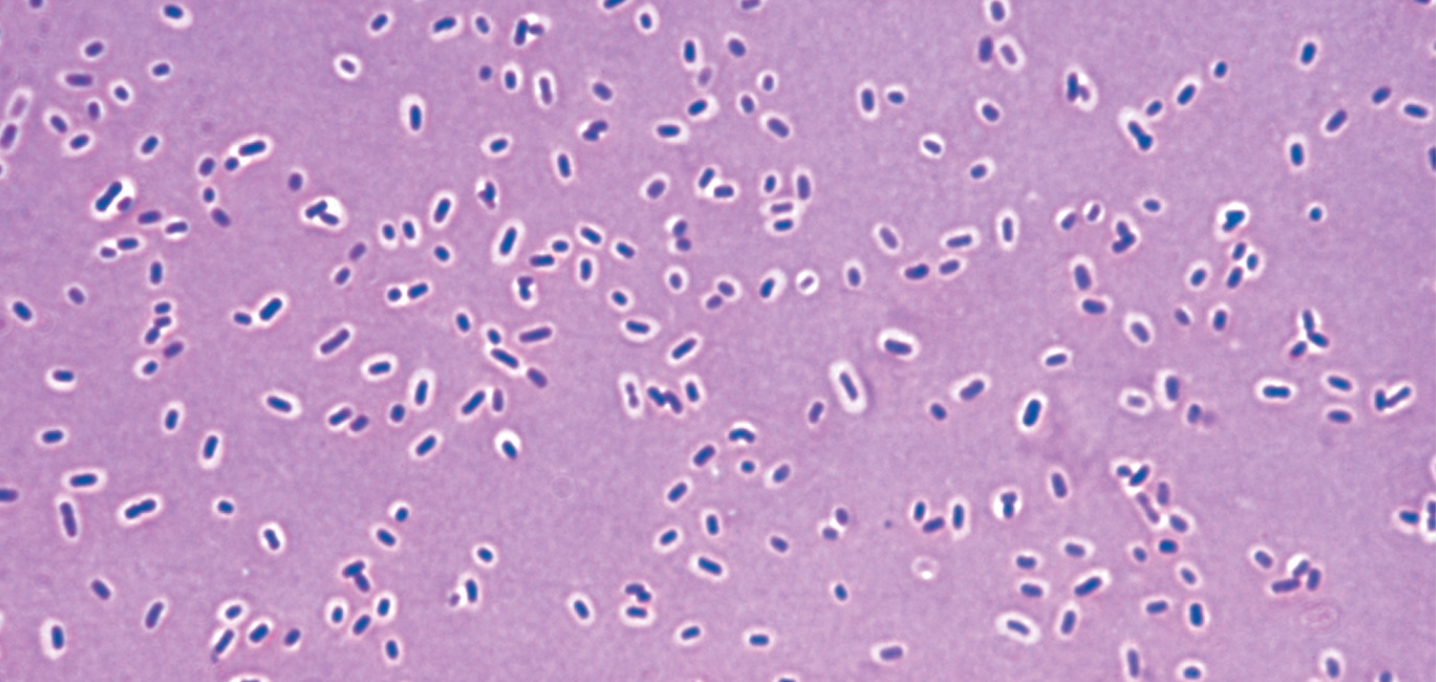
Pneumonia

Agent: Klebsiella pneumoniae

Transmitted: inhalation

Symptoms: Coughing and chest pain; Thick bloody sputum- destruction of alveoli (lung tissue), recurrent chills

-Opportunistic pathogen; clearing oral secretions from the respiratory tract helps with preventing lung disease.
<p>Agent:&nbsp;<span style="background-color: transparent;"><em><span>Klebsiella pneumoniae</span></em></span></p><p>Transmitted: inhalation</p><p>Symptoms: <span style="background-color: transparent;"><span>Coughing and </span><strong><span>chest pain</span></strong><span>; </span><strong><span>Thick bloody sputum</span></strong><span>- destruction of alveoli (</span><strong><span>lung tissue</span></strong><span>), recurrent chills</span></span></p><p><span style="background-color: transparent;"><span>-Opportunistic pathogen; clearing oral secretions from the respiratory tract helps with preventing lung disease.</span></span></p>
16
New cards
term image

Klebsiella pneumoniae

Capsule surrounding the bacilla helps them avoid phagocytosis by the immune system.

Gram - 

17
New cards

Identify the at-risk populations for poor respiratory tract clearance:

Cleaning secretions from respiratory tract helps prevent pulminary disease; some have problems with this

Alcoholics; Compromised immunity like AIDS; Very young or very old

18
New cards

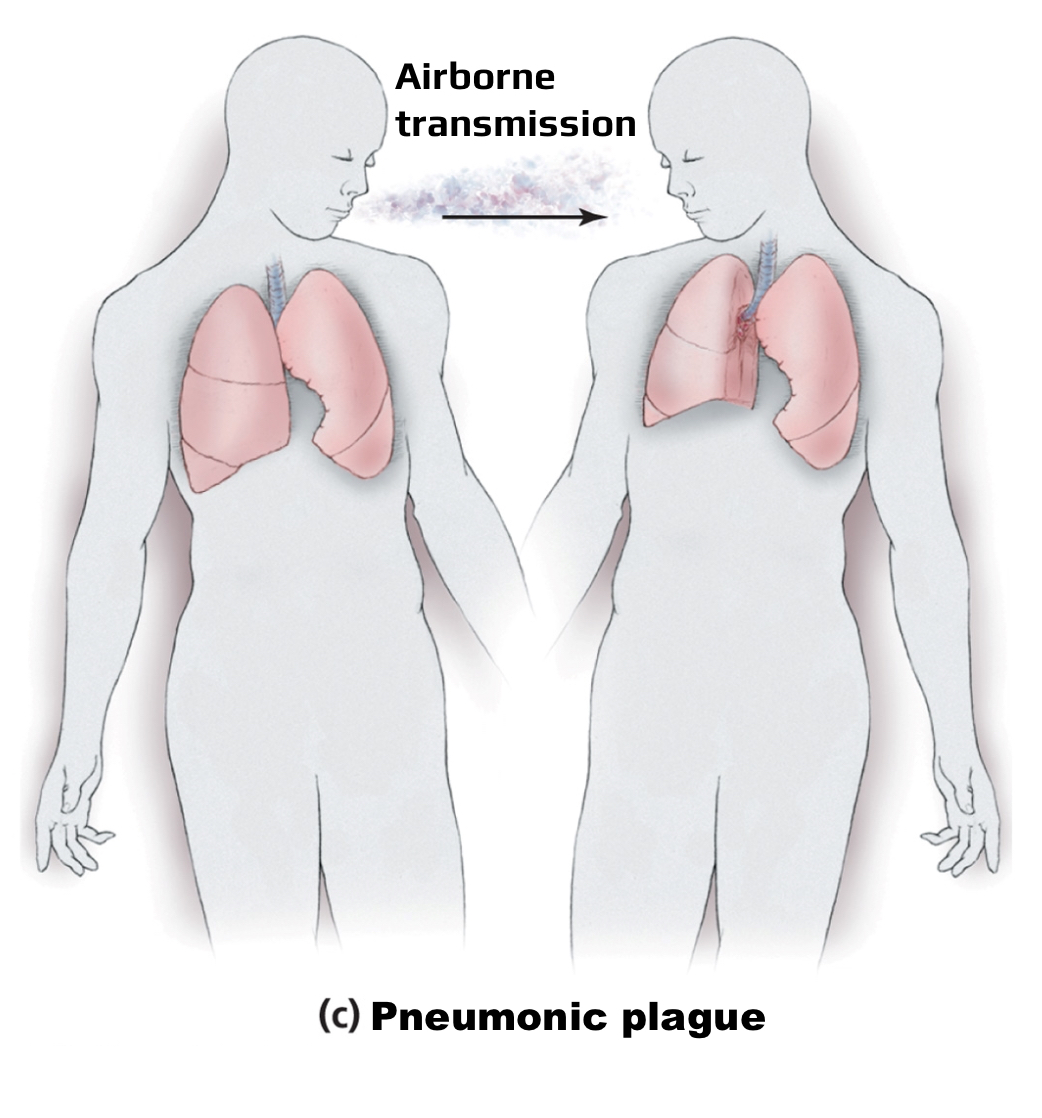
Pneumonic plague

Agent: Yersinia pestis

Transmitted through: inhalation human to human

Symptoms: cough, difficulty breathing, and frothy bloody sputum

Causes pneumonia 
<p><span style="background-color: transparent;"><span>Agent:&nbsp;</span><em><span>Yersinia pestis</span></em></span></p><p>Transmitted through: inhalation human to human</p><p>Symptoms:&nbsp;<span style="background-color: transparent;"><span>cough, difficulty breathing, and </span><strong><span>frothy bloody sputum</span></strong></span></p><p>Causes pneumonia&nbsp;</p>
19
New cards

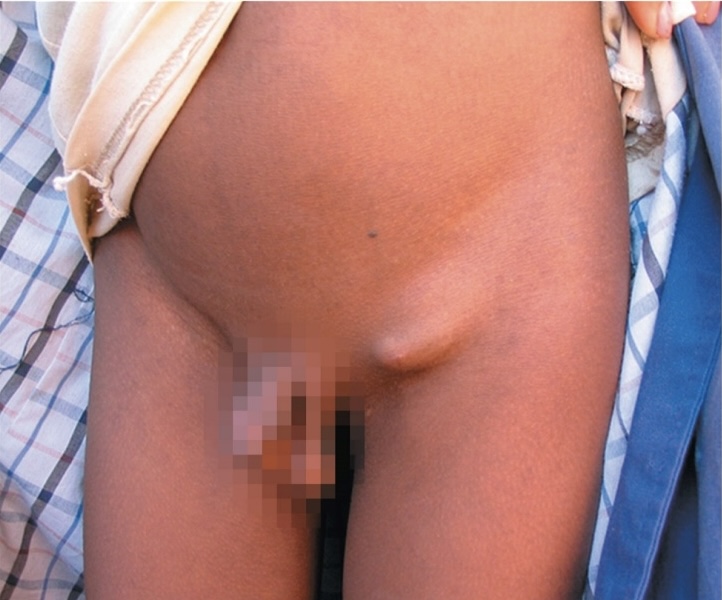
Bubonic Plague (Black plague)

Agent:Yersinia pestis

Transmitted through: flea bite 

Symptoms: smooth, enlarged lymph nodes called buboes (groin, armpit, neck) 

- muscular pain, severe headache, If bacteremia or septicemia happens, you have death of tissues which turn black
<p><span style="background-color: transparent;"><span>Agent:</span><em><span>Yersinia pestis</span></em></span></p><p>Transmitted through: flea bite&nbsp;</p><p>Symptoms:&nbsp;<span style="background-color: transparent;"><span>smooth, enlarged lymph nodes called buboes (groin, armpit, neck)&nbsp;</span></span></p><p>-<span style="background-color: transparent;"><span>&nbsp;muscular pain, severe headache, If bacteremia or septicemia happens, you have death of tissues which turn black</span></span></p>
20
New cards

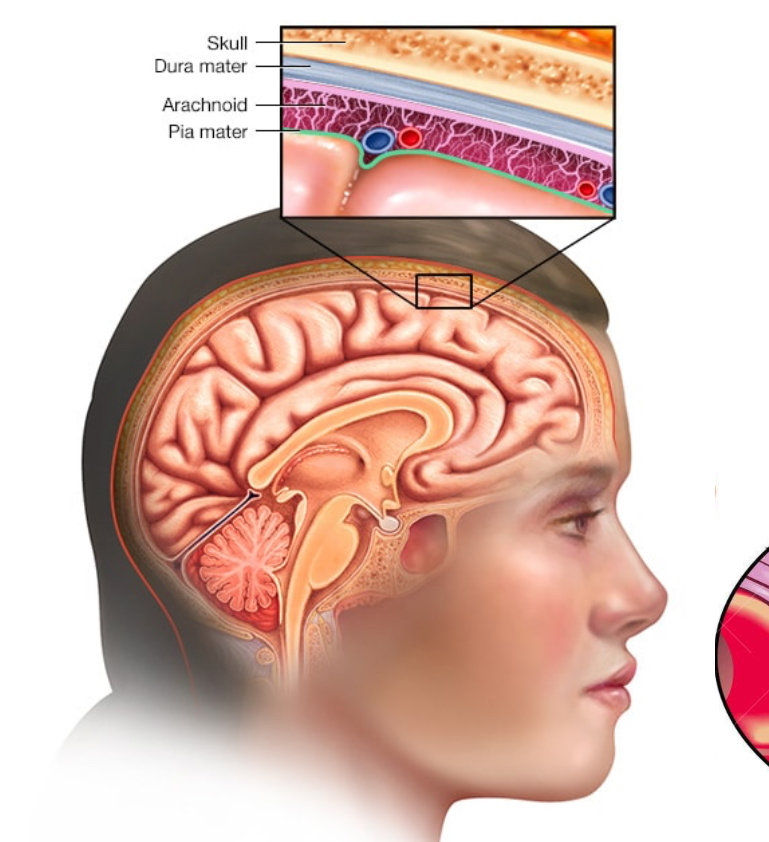
Meningitis

Agent: H. influenzae

Transmitted through air 

Signs and symptoms: – Increased white blood cells in cerebrospinal fluid (CSF)

Inflammation of meninges causes severe headache, light sensitivity, nausea, pain

  • Loss of brain functions: drowsiness, confusion, irritability

If brain infected, encephalitis (inflammation of the brain)

  • Deafness, blindness, drastic changes to patient’s behavior, coma, or death
<p><span style="background-color: transparent;"><span>Agent: H. influenzae</span></span></p><p>Transmitted through air&nbsp;</p><p>Signs and symptoms:&nbsp;<span style="background-color: transparent;"><span>– Increased white blood cells in cerebrospinal fluid (CSF)</span></span></p><p><span style="background-color: transparent;"><span>Inflammation of meninges causes severe headache, light sensitivity, nausea, pain</span></span></p><ul><li><p><span style="background-color: transparent;"><span>Loss of brain functions: drowsiness, confusion, irritability</span></span></p></li></ul><p><span style="background-color: transparent;"><span>If brain infected, </span><strong><span>encephalitis</span></strong><span> (inflammation of the brain)</span></span></p><ul><li><p><span style="background-color: transparent;"><span>Deafness, blindness, drastic changes to patient’s behavior, coma, or death</span></span></p></li></ul><p></p>
21
New cards

Food-borne infections

Agent: Campylobacter jejuni
Leading cause of food-borne illness in US

Symptoms: diarrhea, abdominal cramps and fever, no vomiting

  • In the intestines, not stomach

22
New cards

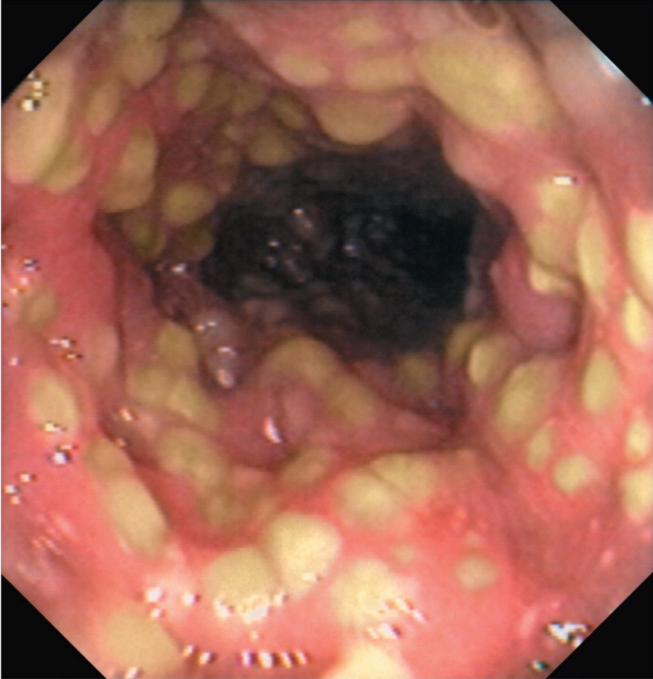
C. diff

Agent: Clostridium difficile

Signs and symptoms: 5-10 watery, foul-smelling bowel movements per day

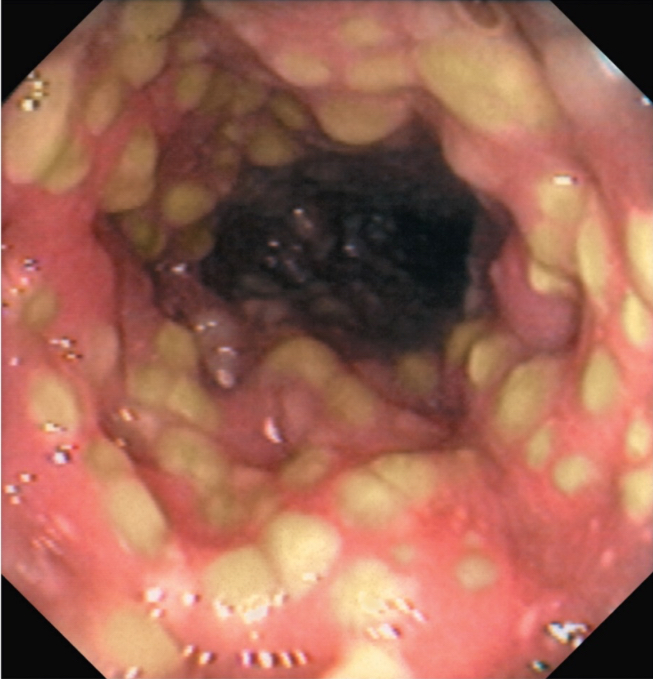
—Inflammation and formation of intestinal lesions called pseudomembranes

Made of connective tissue, dying WBCs, and dead colon cells

Treatments: – Restoring the microbiome

“Modern infection”, increased with the use of antimicrobial drugs

Usually, stopping antimicrobial treatment is enough to restore the normal microbiome

•Probiotics

•Fecal transplants in severe cases
<p>Agent: <span style="background-color: transparent;"><em><span>Clostridium difficile</span></em></span></p><p>Signs and symptoms:<strong> </strong><span style="background-color: transparent;"><strong><span>5-10 watery, foul-smelling bowel movements</span></strong><span> per day</span></span></p><p><span style="background-color: transparent;"><span>—Inflammation and formation of intestinal lesions called pseudomembranes</span></span></p><p><span style="background-color: transparent;"><span>Made of connective tissue, dying WBCs, and dead colon cells</span></span></p><p>Treatments: <span style="background-color: transparent;"><span>– Restoring the microbiome</span></span></p><p><span style="background-color: transparent;"><span>“Modern infection”, increased with the use of antimicrobial drugs</span></span></p><p><span style="background-color: transparent;"><span>Usually, stopping antimicrobial treatment is enough to restore the normal microbiome</span></span></p><p><span style="background-color: transparent;"><span>•Probiotics</span></span></p><p><span style="background-color: transparent;"><span>•Fecal transplants in severe cases</span></span></p>
23
New cards
term image

C. Diff

 Intestinal lesions; Made of connective tissue, dying WBCs, and dead colon cells
24
New cards
term image

diptheria 

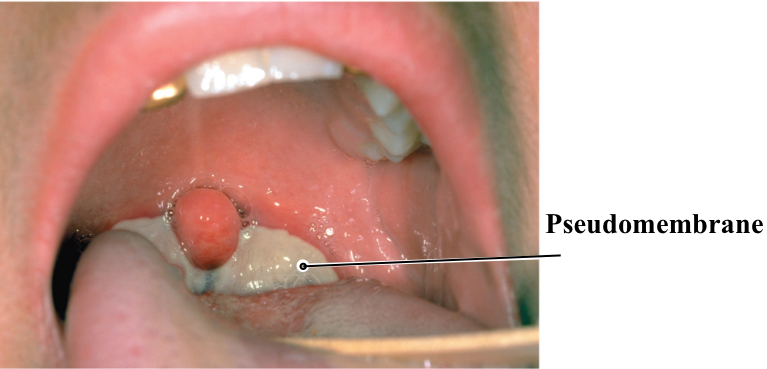
Pseudomembrane made of:  intracellular fluid, blood clotting factors, leukocytes, bacteria, and remains of dead cells

25
New cards

Tetanus and lockjaw

Agent: Clostridium tetani

Transmitted through: puncture wound

Signs and symptoms: Tightening of the jaw and neck muscles

-Sweating, drooling, grouchiness, and constant back spasms

-Spasms and contractions may increase and spread to cause curled arms, fists, and feet, and the body arches backwards as the heel and back of the head bend towards each other
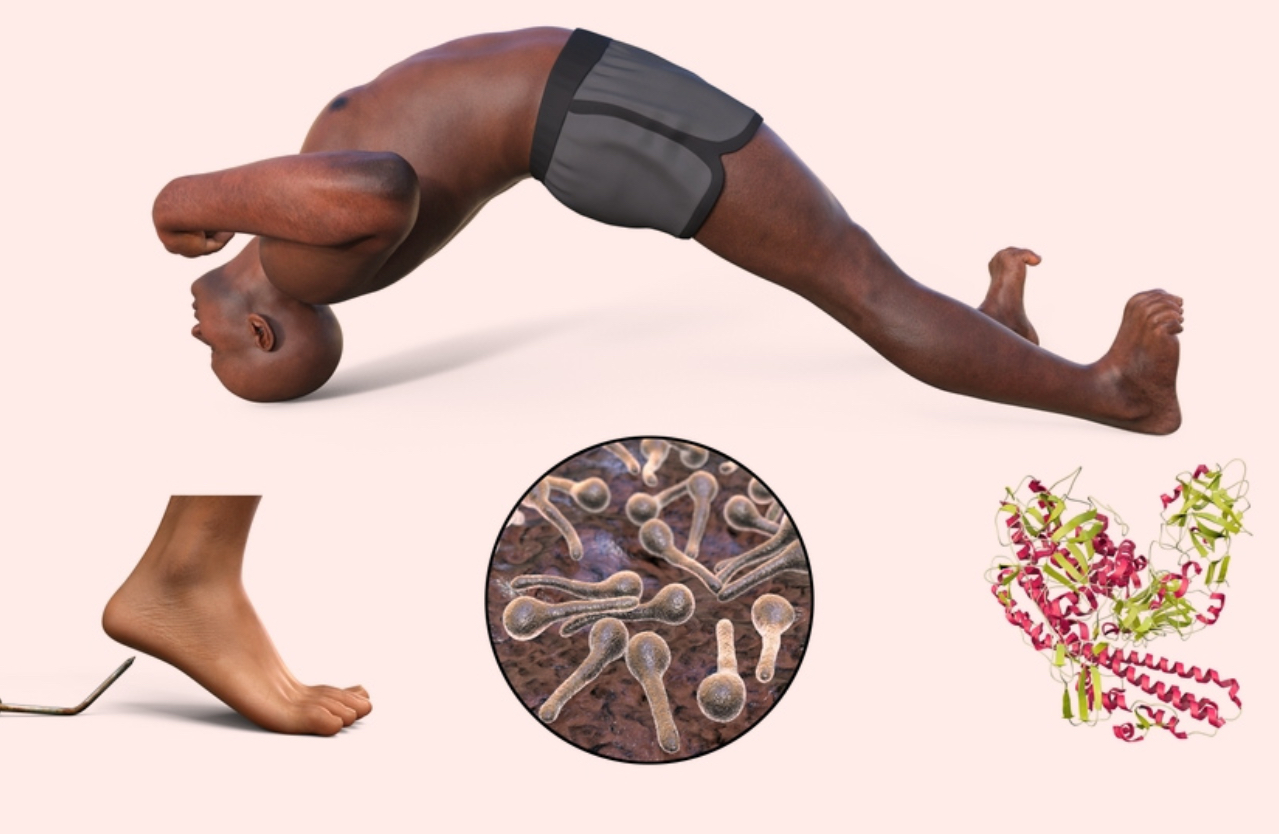
<p><span>Agent: </span><em><span>Clostridium tetani</span></em></p><p><span>Transmitted through: puncture wound</span></p><p>Signs and symptoms: <span><strong><span>Tightening of the jaw and neck muscles</span></strong></span></p><p><span><span>-Sweating, drooling, grouchiness, and </span><strong><span>constant back spasms</span></strong></span></p><p>-<span><span>Spasms and contractions may increase and spread to cause curled arms, fists, and feet, and the body arches backwards as the heel and back of the head bend towards each other</span></span></p>
26
New cards

Botulism

Agent: Clostridium botulinum

Toxin blocks the nerve signal that tells the muscle to contract (acetylcholine)
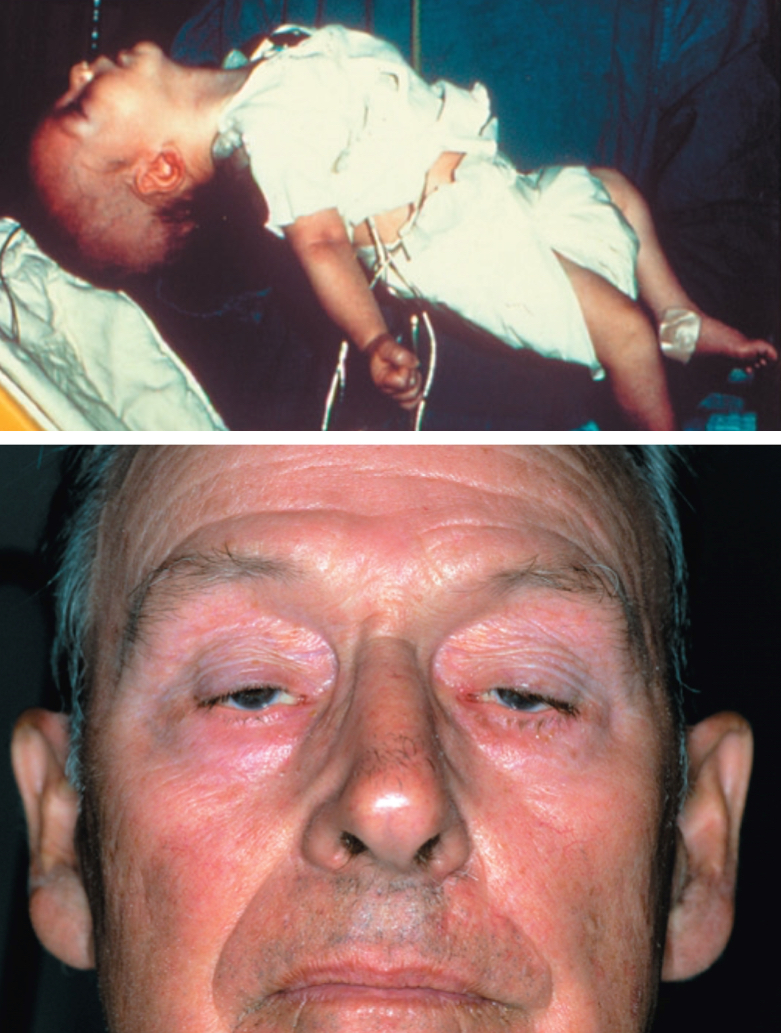

<p><span><span>Agent: Clostridium botulinum</span></span></p><p><span style="background-color: transparent;"><span>Toxin blocks the nerve signal that tells the muscle to contract </span><strong><span>(acetylcholine)</span></strong></span></p><p><br></p>
27
New cards

Gas Gangrene

Agent: Clostridium perfringens (anaerobic)

Symptoms: Intense pain at site of infection; blackening of infected muscle and skin; production of bubbles of hydrogen and CO2

– May break out with a frothy brownish liquid

– necrosis( tissue death) 

Transmitted through contact with broken skin

Diabetics are susceptible
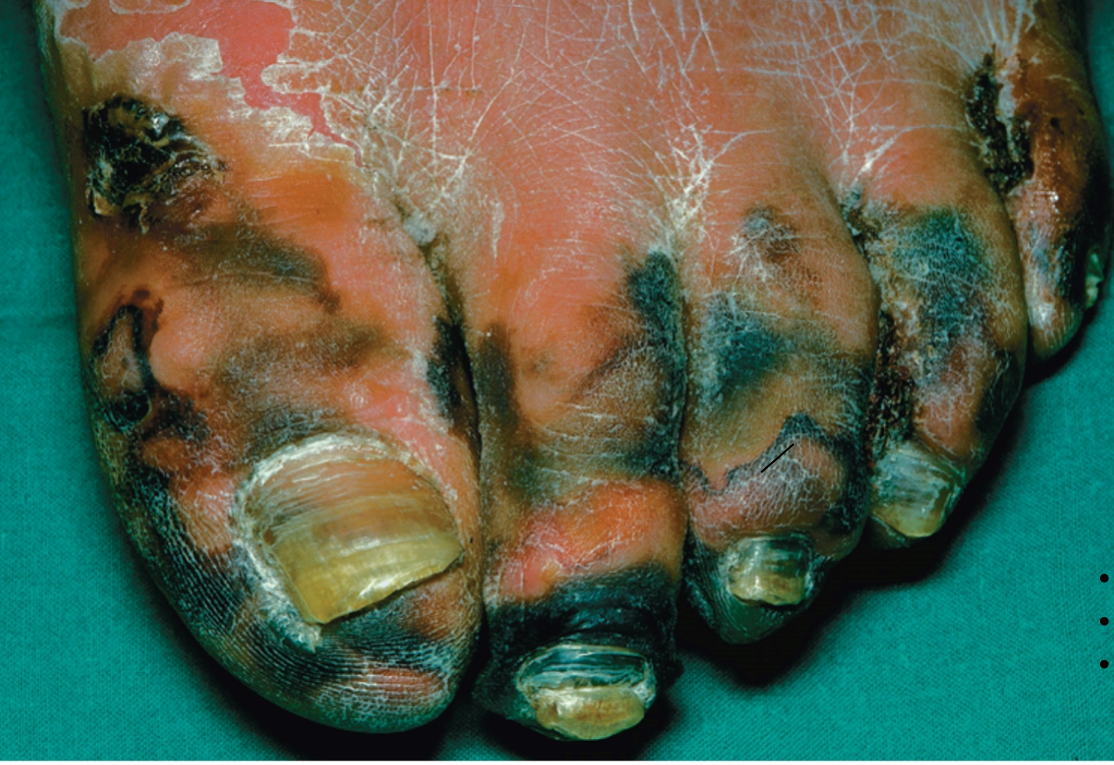
<p><span><span>Agent: </span><em><span>Clostridium perfringens</span></em><span> (anaerobic)</span></span></p><p><span><span>Symptoms:&nbsp;</span></span><span style="background-color: transparent;"><span>Intense pain at site of infection; </span><strong><span>blackening of infected muscle and skin</span></strong><span>; production of bubbles of hydrogen and CO2</span></span></p><p><span style="background-color: transparent;"><span>– May break out with a frothy brownish liquid</span></span></p><p><span style="background-color: transparent;"><span>– necrosis( tissue death)&nbsp;</span></span></p><p>Transmitted through contact with broken skin</p><p><strong>Diabetics are susceptible </strong></p>
28
New cards

Cutaneous anthrax

Agent: Bacillus anthracis

Bacteria usually shed from an animal makes its way to broken skin; results in eschars or swollen, black, crusty ulcers
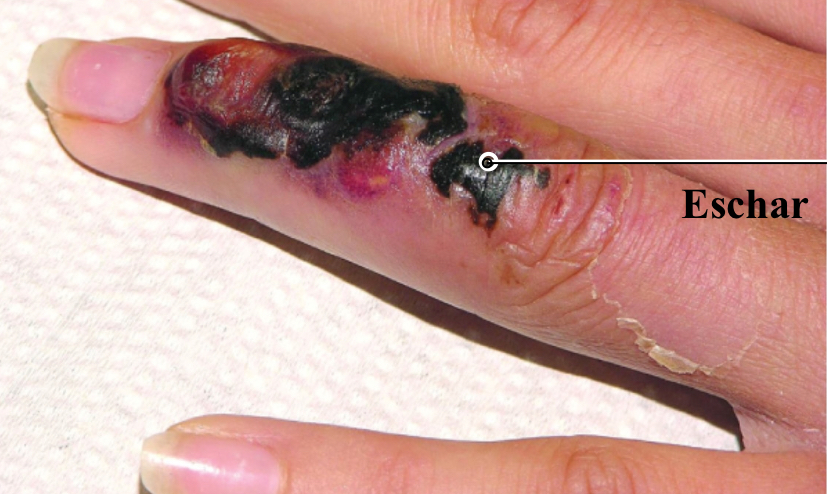
<p><span><span>Agent: Bacillus anthracis</span></span></p><p><span style="background-color: transparent;"><span>Bacteria usually shed from an animal makes its way to broken skin; results in </span><strong><span>eschars</span></strong><span> or swollen, black, crusty ulcers</span></span></p>
29
New cards

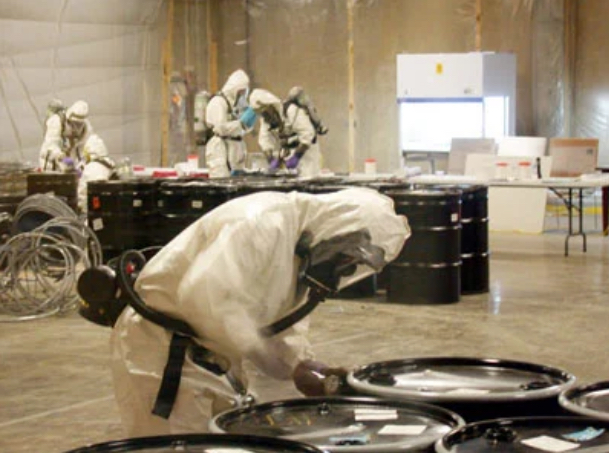
Inhalation anthrax

Agent: Bacillus anthracis

Inhalation(most severe from): common cold or flu- sore throat, mild fever, myalgia, mild cough, and malaise

progress to severe coughing, nausea, vomiting, fainting, confusion, lethargy, shock, and death
<p><span><span>Agent: Bacillus anthracis</span></span></p><p><span style="background-color: transparent;"><span>Inhalation(most severe from): common cold or flu- sore throat, mild fever, myalgia, mild cough, and malaise</span></span></p><p><span style="background-color: transparent;"><span>progress to severe coughing, nausea, vomiting, fainting, confusion, lethargy, shock, and death</span></span></p><p></p>
30
New cards

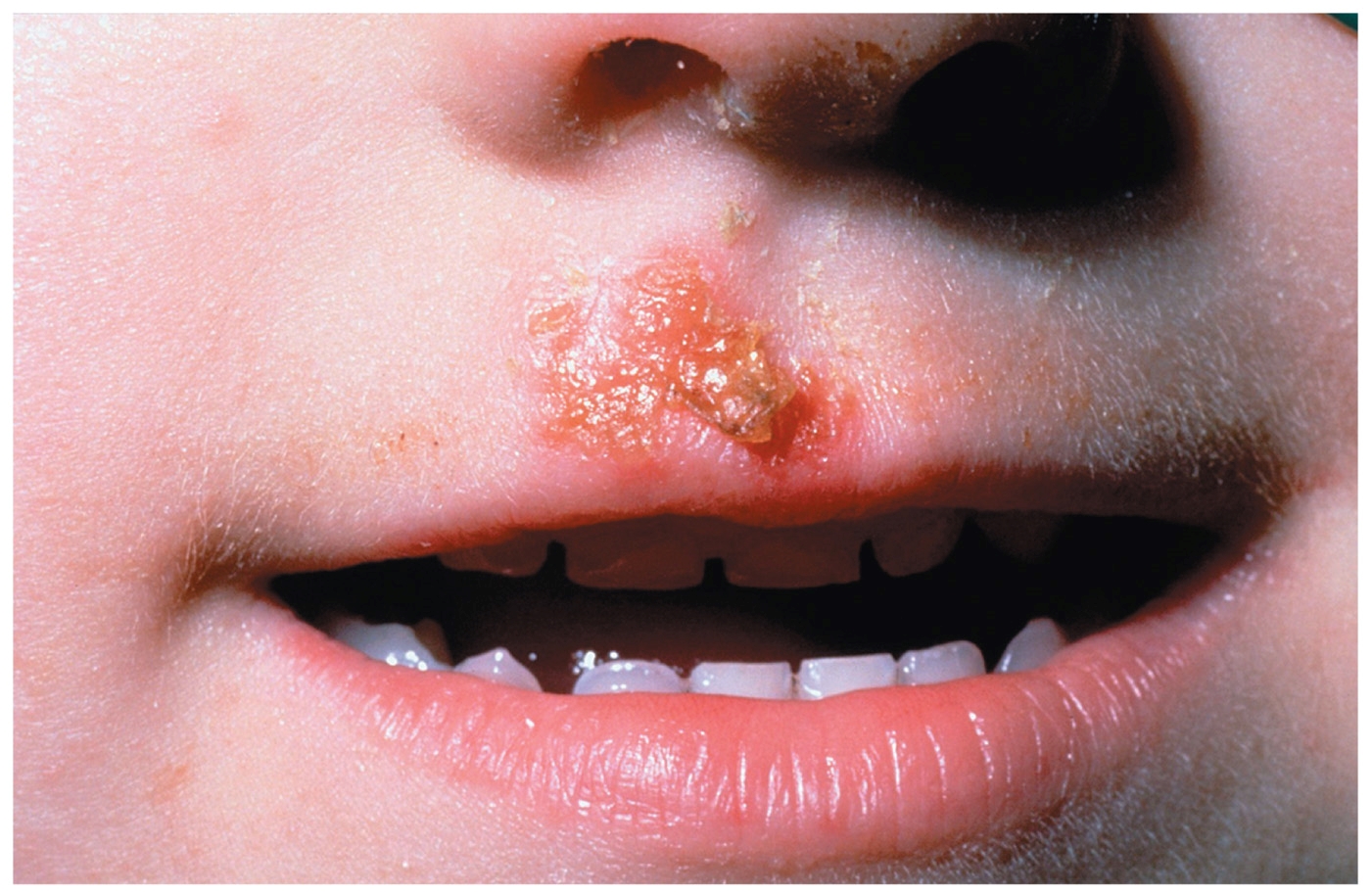
Impetigo and scalded skin syndrome

Agent: Staphylococcus aureus

Impetigo: small, flattened red patches usually on the face and limbs, usually on children 

-Pus filled vesicles that break, forming a thick honey-colored crust

Scalded skin syndrome: separation of the outer layer of skin by the toxins released by Staphylococcus

<p><span style="background-color: transparent;"><span>Agent:&nbsp;</span><em><span>Staphylococcus aureus</span></em></span></p><p><span style="background-color: transparent;"><u><span>Impetigo</span></u><span>: small, flattened red patches usually on the face and limbs, usually on children&nbsp;</span></span></p><p><span><span>-Pus filled vesicles that break, forming a thick honey-colored crust</span></span></p><p><span style="background-color: transparent;"><span> </span><u><span>Scalded skin syndrome</span></u><span>: separation of the outer layer of skin by the toxins released by </span><em><span>Staphylococcus</span></em></span></p><p><br></p>
31
New cards

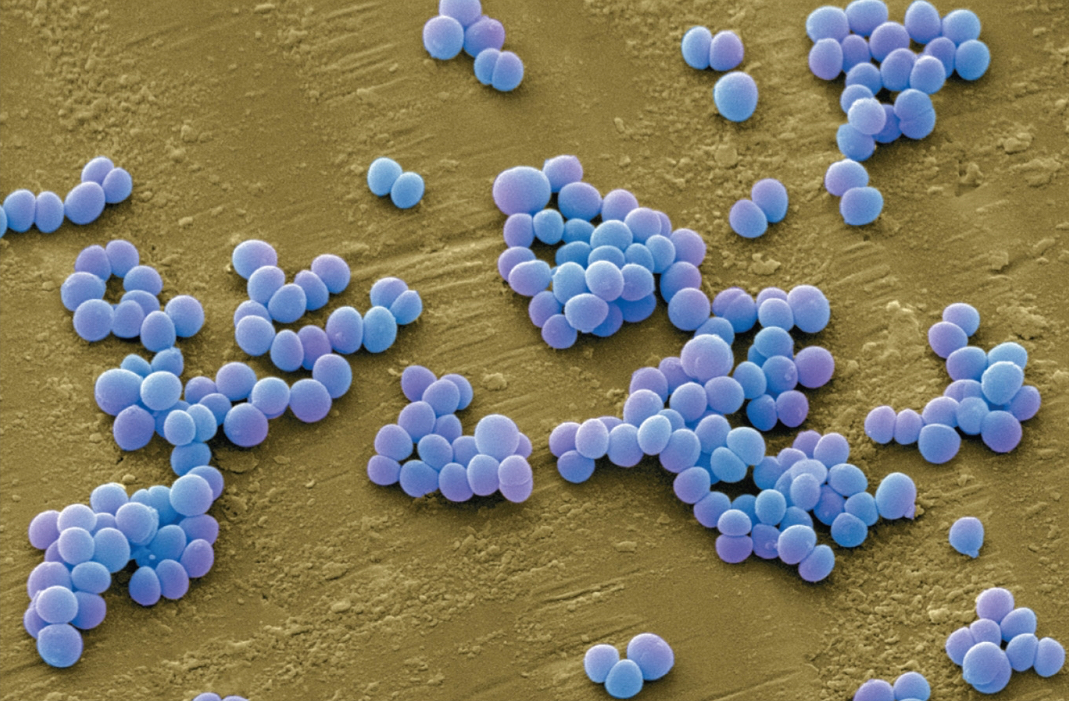
Identify which bacteria are commonly associated with methicillin resistance and what measures keep it in check:

Staphylococcus aureus

often become resistant against antimicrobial drugs; usually treated with vancomycin 

—  part of normal flora; a large amount is needed for infection
— Proper aseptic technique and cleansing keeps it in check
<p><span style="background-color: transparent;"><em><span>Staphylococcus aureus</span></em></span></p><p><span style="background-color: transparent;"><span>often become resistant against antimicrobial drugs;&nbsp;usually treated with </span><strong><span>vancomycin&nbsp;</span></strong></span></p><p><span style="background-color: transparent;"><span>—&nbsp; part of normal flora; a large amount is needed for infection</span></span><br><span style="background-color: transparent;"><span>— Proper aseptic technique and cleansing keeps it in check</span></span></p><p></p>
32
New cards

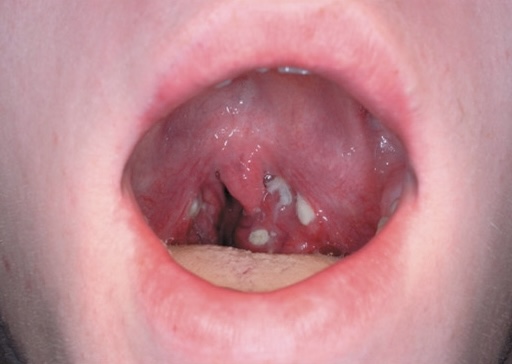
Strep throat and Scarlet Fever

Agent: Streptococcal pharyngitis:

Strep throat: inflamed back of pharynx, with swollen lymph nodes and purulent abscesses covering the tonsils; pain during swallowing; bad breath 


Scarlet fever- rash that begins on the chest and spreads through the body- tongue becomes strawberry read
<p>Agent:<em> </em><span style="background-color: transparent;"><em><span>Streptococcal pharyngitis:</span></em></span></p><p><span style="background-color: transparent;"><u><span>Strep throat</span></u><span>: inflamed back of pharynx, with swollen lymph nodes and </span><strong><span>purulent abscesses covering the tonsils</span></strong><span>; pain during swallowing; </span><strong><span>bad breath</span></strong><span>&nbsp;</span></span></p><p><br><span style="background-color: transparent;"><span>•</span><u><span>Scarlet fever</span></u><span>- rash that begins on the chest and spreads through the body- tongue becomes strawberry read</span></span></p><p></p>
33
New cards
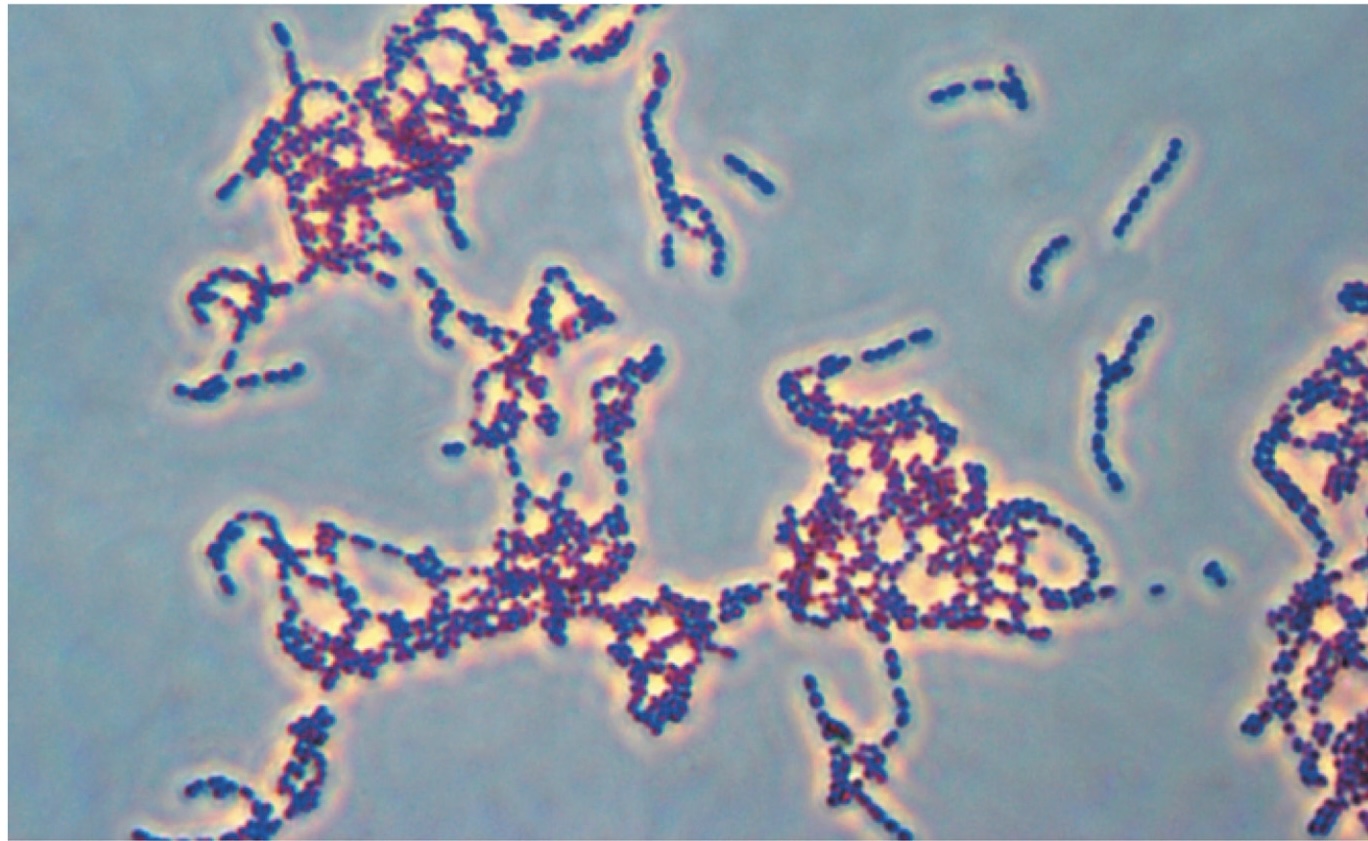
term image

Streptococcus pyogenes

Streptococci shape (round and in strings)

34
New cards

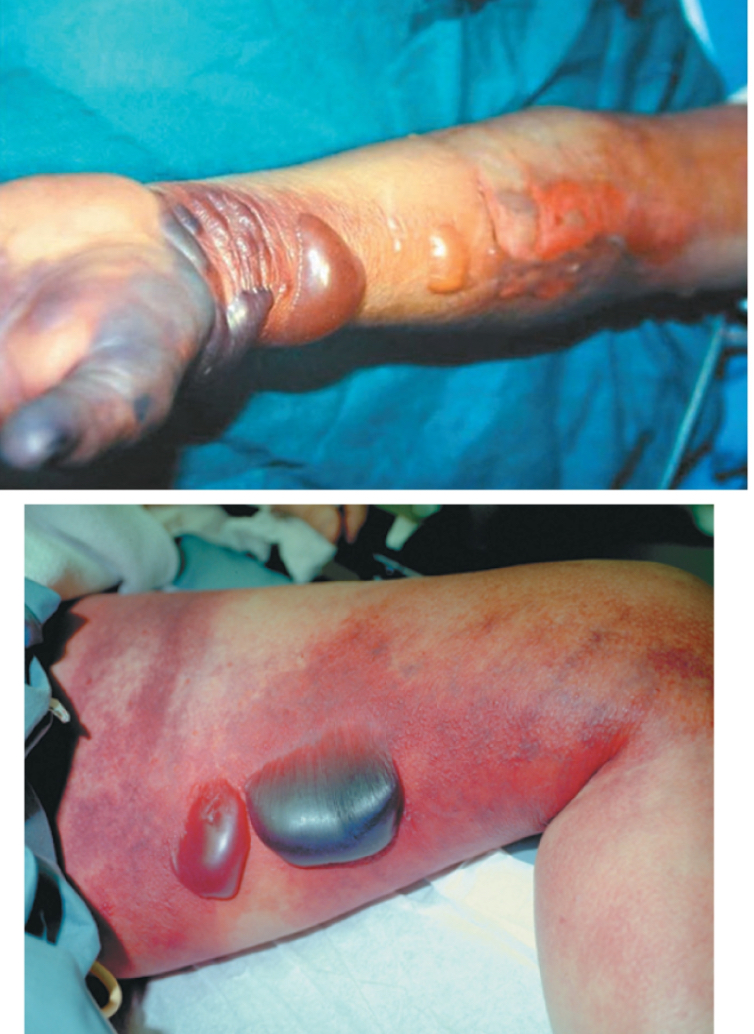
Necrotizing Fasciitis

Agent: S. pyogenes

Early: Hot, intensely painful sunburn-like rash

•Disproportionately more pain than how the rash appears

As it progresses:

•Fever, tiredness, muscle aches

As tissue is destroyed, blood pressure drops, and patient becomes mentally confused and ultimately comatose
<p>Agent:&nbsp;<span style="background-color: transparent;"><em><span>S. pyogenes</span></em></span></p><p><span style="background-color: transparent;"><u><span>Early:</span></u><span> Hot, intensely painful sunburn-like rash</span></span></p><p><span style="background-color: transparent;"><span>•Disproportionately more pain than how the rash appears</span></span></p><p><span style="background-color: transparent;"><u><span>As it progresses:</span></u></span></p><p><span style="background-color: transparent;"><span>•Fever, tiredness, muscle aches</span></span></p><p><span style="background-color: transparent;"><span>•</span><strong><span>As tissue is destroyed, blood pressure drops</span></strong><span>, and patient becomes mentally confused and ultimately comatose</span></span></p><p></p>
35
New cards

Endocarditis

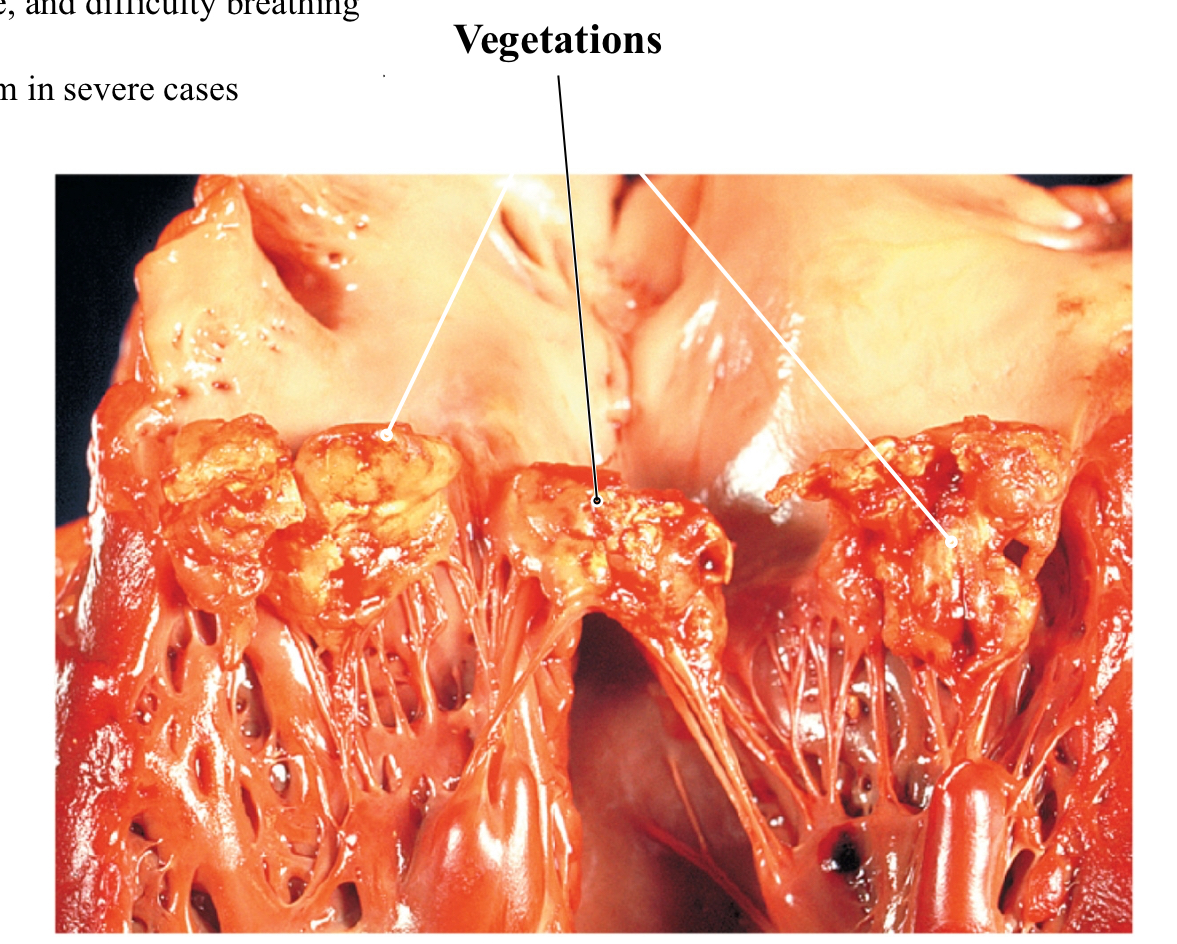
Endocardium lines the heart chambers, valves, and vessels near the heart

-Bacteria along the linings trigger inflammation and the formation of vegetations

Vegetations- bulky masses of platelets and clotting proteins that surround the bacteria

Complications: IV drug use; Heart abnormalities; Suppressed immune system; 

Increases risk for strokes as the vegetation can break off ( interrupt blood flow through brain)
<p><span style="background-color: transparent;"><span>Endocardium lines the heart chambers, valves, and vessels near the heart</span></span></p><p><span><span>-Bacteria along the linings trigger inflammation and the formation of vegetations</span></span></p><p><span style="background-color: transparent;"><span>Vegetations- bulky masses of platelets and clotting proteins that surround the bacteria</span></span></p><p>Complications:&nbsp;<span style="background-color: transparent;"><span>IV drug use; Heart abnormalities; Suppressed immune system;&nbsp;</span></span></p><p><span style="background-color: transparent;"><span>Increases risk for strokes as the vegetation can break off ( interrupt blood flow through brain)</span></span></p>
36
New cards

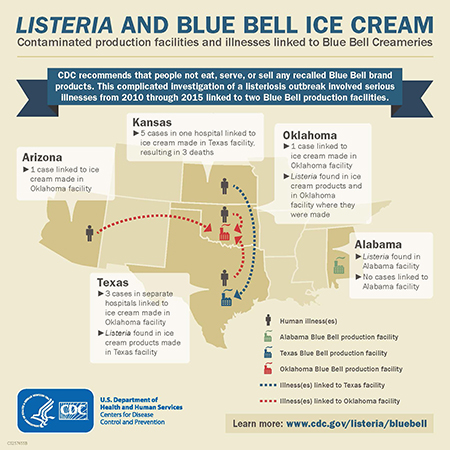
Listeriosis

Listeria monocytogenes

Transmitted: Foodborn or in utero Cold          —Tolerance can allow the bacteria to survive and proliferate in refrigeration (Bluebell listeria)

  • complications that can result in fetuses that contract listeriosis:

abortion, stillbirth, bacterial meningitis
<p><span style="background-color: transparent;"><em><span>Listeria monocytogenes</span></em></span></p><p>Transmitted: Foodborn or in utero&nbsp;<span style="background-color: transparent;"><span>Cold &nbsp; &nbsp; &nbsp; &nbsp; &nbsp;—Tolerance can allow the bacteria to survive and proliferate in refrigeration (Bluebell listeria)</span></span></p><ul><li><p><span style="background-color: transparent;"><span>complications that can result in fetuses that contract listeriosis:</span></span></p></li></ul><p><span style="background-color: transparent;"><span>abortion, stillbirth, bacterial meningitis</span></span><br></p>
37
New cards

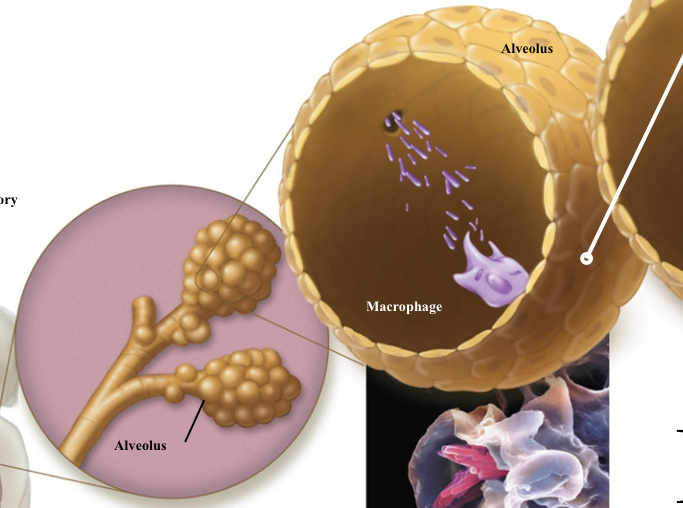
Tuberculosis

Agent: Mycobacterium tuberculosis

Acid fast- Cell walls contain mycolic acid, a waxy lipid

Grows slowly; Survive phagocytosis from immune cells; Can grow inside cells; 

Resistant to Gram stains, detergents, common antimicrobial drugs, and drying out
<p><span><span>Agent: </span><em><span>Mycobacterium tuberculosis</span></em></span></p><p><span><span>Acid fast- Cell walls contain mycolic acid, a waxy lipid</span></span></p><p><span style="background-color: transparent;"><span>Grows slowly; Survive phagocytosis from immune cells; Can grow inside cells;&nbsp;</span></span></p><p><span style="background-color: transparent;"><span>Resistant to Gram stains, detergents, common antimicrobial drugs, and drying out</span></span></p>
38
New cards

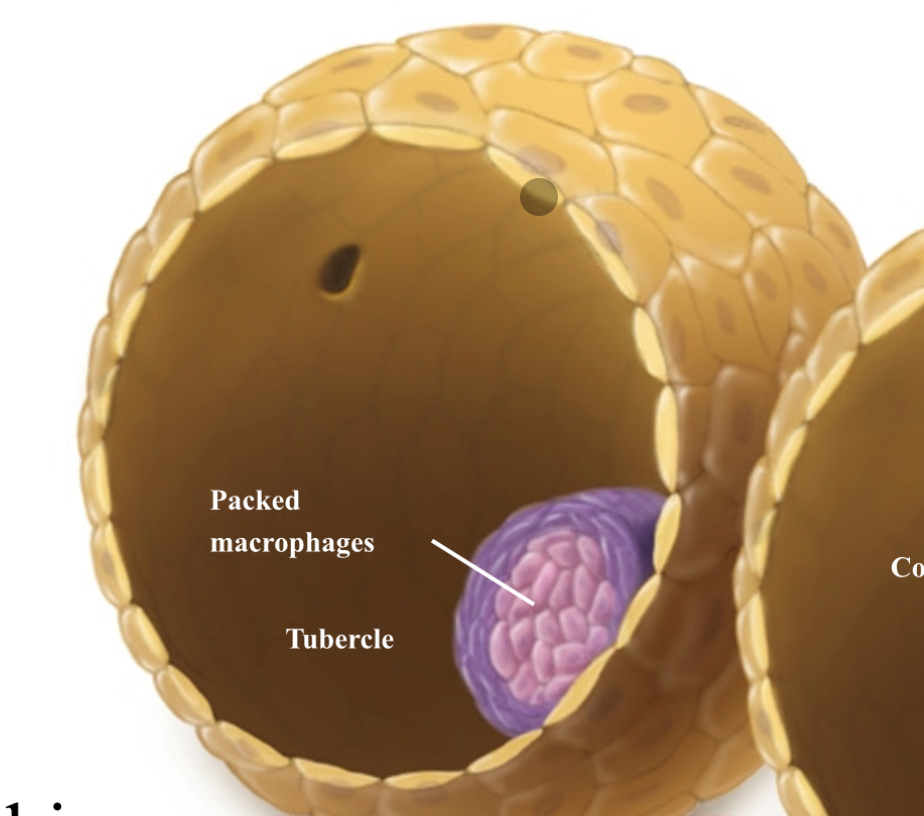
Explain how tuberculosis can result in tubercles

Macrophages call in more immune cells, causing a tubercle

Tightly packed macrophages surround the site of infection, forming a

tubercle over a two- to three-month period.

<p><span><span>Macrophages call in more immune cells, causing a tubercle</span></span></p><p><span style="background-color: transparent;"><span>Tightly packed macrophages surround the site of infection, forming a</span></span></p><p><span style="background-color: transparent;"><span>tubercle over a two- to three-month period.</span></span></p><p><br></p>
39
New cards

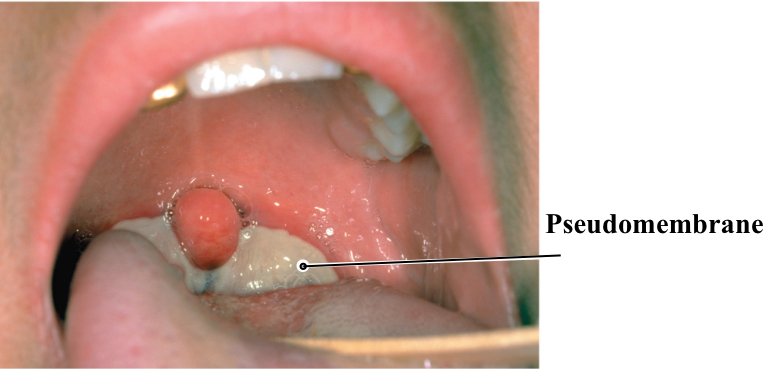
Diptheria

Agent: C. diptheriticae

C. diptheriticae has a lysogenic phage that codes for the diptheria toxin

Symptoms: sore throat fever pain

Pseudomembrane: intracellular fluid, blood clotting factors, leukocytes, bacteria, and remains of dead cells
<p><span><span>Agent: </span><em><span>C. diptheriticae</span></em></span></p><p><span style="background-color: transparent;"><span>C. diptheriticae has a </span><strong><span>lysogenic phage</span></strong><span> that codes for the diptheria toxin</span></span></p><p><span style="background-color: transparent;"><span>Symptoms: sore throat fever pain </span></span></p><p><span style="background-color: transparent;"><strong><span>Pseudomembrane:</span></strong><span> intracellular fluid, blood clotting factors, leukocytes, bacteria, and remains of dead cells</span></span></p>
40
New cards

Explain where diptheria gets the ability to make diptheria toxin from

C. diptheriticae has a lysogenic phage that codes for the diptheria

Toxin: Prevents polypeptides from being made and causes cell death 

41
New cards

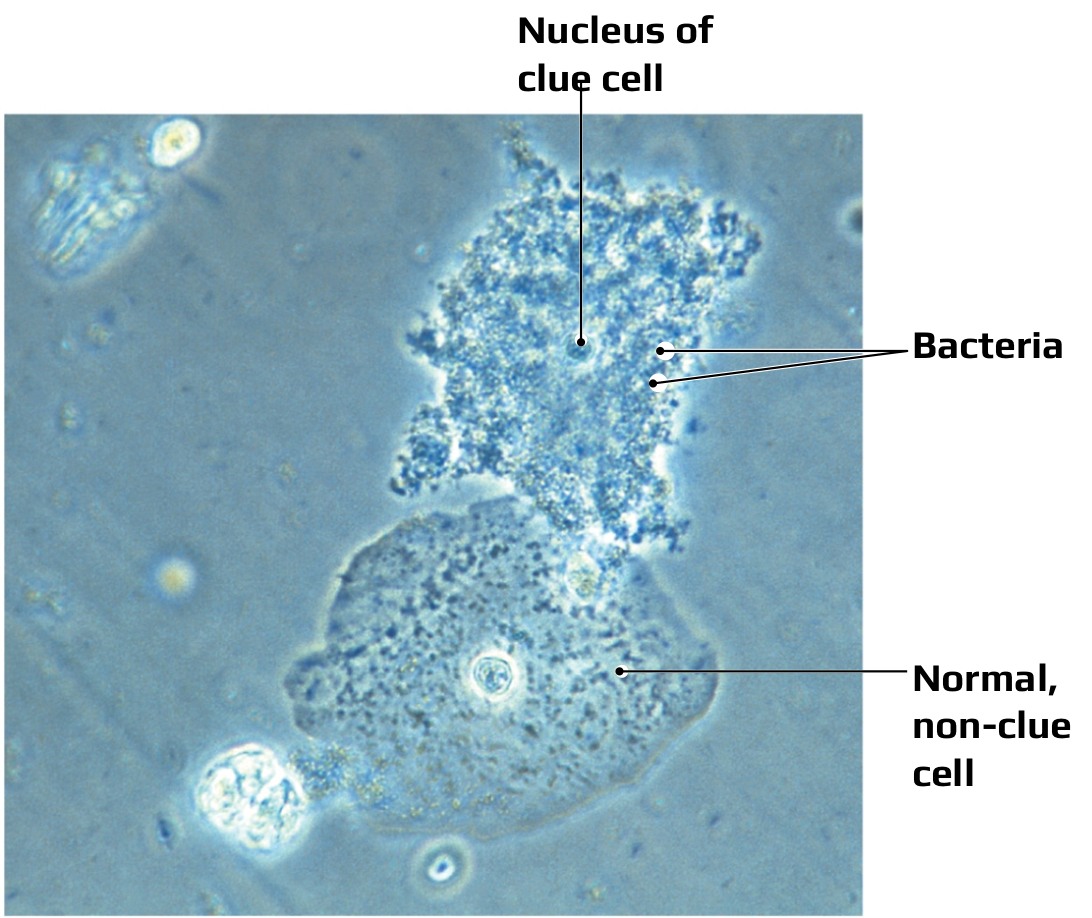
bacterial vaginitis/vaginosis

Agent: Gardnerella vaginalis

Signs and symptoms: White vaginal discharge with a “fishy” odor; Itching and irritation of the vaginal opening;

Clue cells differentiate from vaginal candidiasis
<p><span><span>Agent: </span><em><span>Gardnerella vaginalis</span></em><span>,&nbsp;</span></span></p><p><span><span>Signs and symptoms:&nbsp;</span></span><span style="background-color: transparent;"><span>White vaginal discharge with a </span><strong><span>“fishy” odor</span></strong><span>; Itching and irritation of the vaginal opening; </span></span></p><p><span style="background-color: transparent;"><strong><span>Clue cells </span></strong><span>differentiate from vaginal candidiasis</span></span></p>
42
New cards

Trachoma

Agent: Chlamydia trachomatis

Sign and symptoms: Scarring of the conjunctiva and cornea;

 Eyelashes turn inwards, cornea is scratched and irritated by the eyelashes
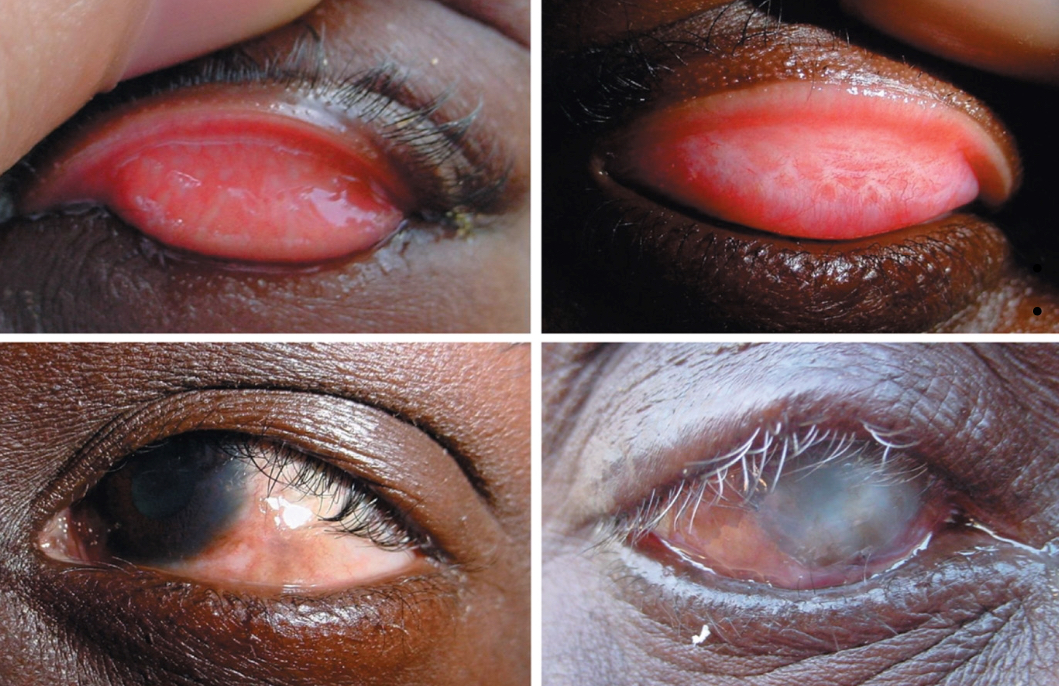
<p><span><span>Agent: </span><em><span>Chlamydia trachomatis</span></em></span></p><p><span><span>Sign and symptoms: </span></span><span style="background-color: transparent;"><span>Scarring of the conjunctiva and cornea;</span></span></p><p><span style="background-color: transparent;"><span>&nbsp;Eyelashes turn inwards, cornea is scratched and irritated by the eyelashes</span></span><br></p>
43
New cards

genital chlamydia

Agent: Chlamydia trachomatis

(Asymptomatic in women) Damage to reproductive tissues can cause sterility

– Pelvic inflammatory disease (PID) 

Lymphogranuloma venereum- transient genital lesion at the site of infection

•Followed by development of bubo
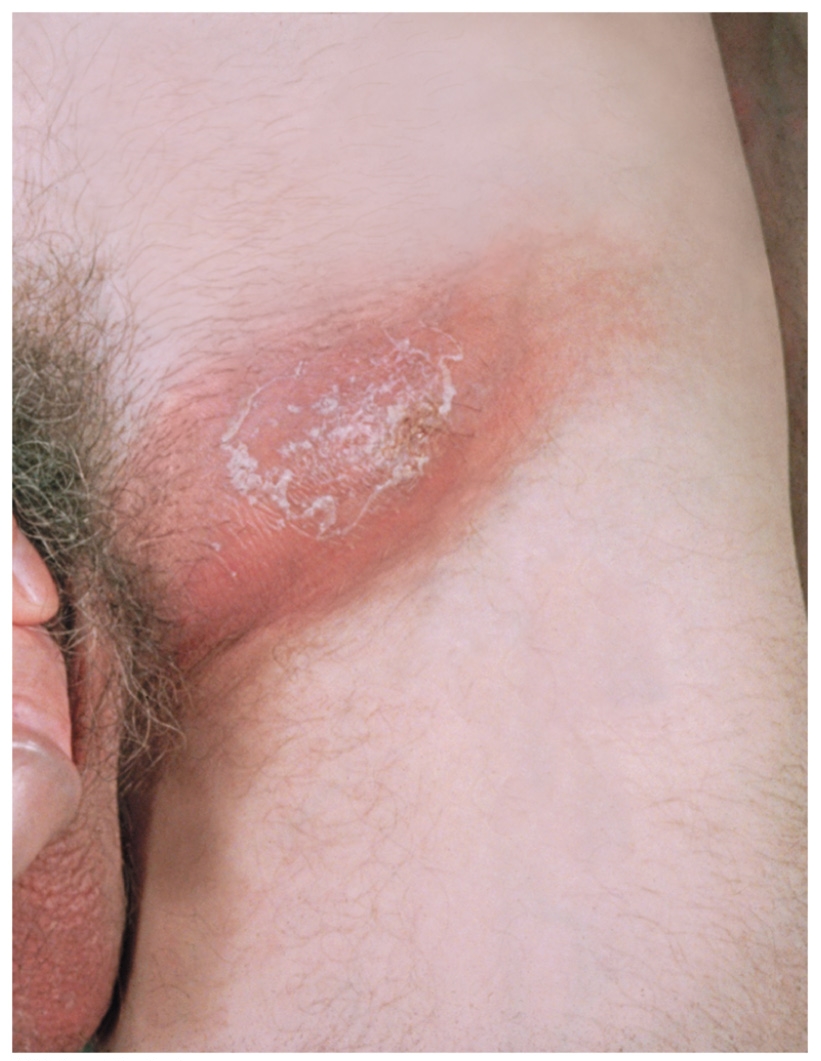
<p><span>Agent: </span><em><span>Chlamydia trachomatis</span></em></p><p><span style="background-color: transparent;"><span>(Asymptomatic in women) Damage to reproductive tissues can cause sterility</span></span></p><p><span style="background-color: transparent;"><span>– Pelvic inflammatory disease (PID)&nbsp;</span></span></p><p><span><strong><span>Lymphogranuloma venereum</span></strong><span>- transient genital </span><strong><span>lesion</span></strong><span> at the site of infection</span></span></p><p class="s15"><span><span>•Followed by development of bubo</span></span></p><p class="s87"></p>
44
New cards

syphilis

Agent: T. pallindum

Primary phase: Small, painless, hard lesion known as a chancre (ulceration)

•Often unobserved

Secondary phase:

Widespread rash, sore throat, headache, mild fever, malaise, myalgia

Latent phase : usually ends here;antimicrobial drugs 

.Tertiary phase: years later, untreated patients experience dementia, blindness, paralysis, heart failure, or syphilitic gummas( tumor like growth)
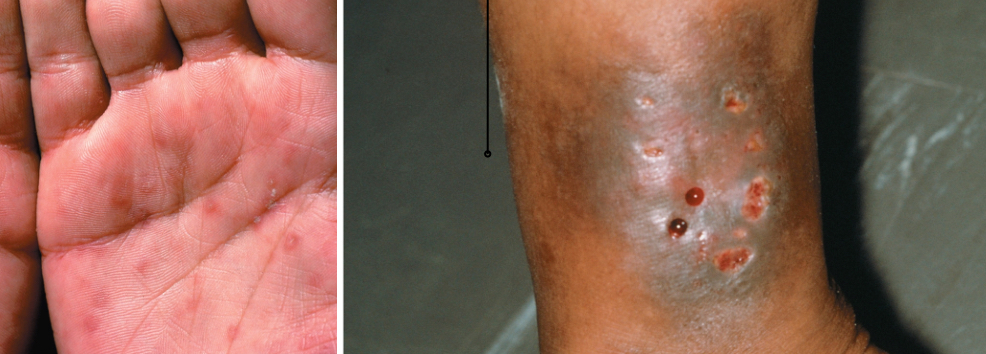
<p><span>Agent: </span><em><span>T. pallindum</span></em></p><p><u><span>Primary phase: </span></u><span>Small, painless, hard lesion known as a chancre (ulceration)</span></p><p class="s44"><span>•Often unobserved</span></p><p class="s44"><u><span>Secondary phase:</span></u></p><p class="s91"><span>Widespread rash, sore throat, headache, mild fever, malaise, myalgia</span></p><p class="s91"><u>Latent phase :</u>&nbsp;usually ends here;antimicrobial drugs&nbsp;</p><p class="s91"><span style="background-color: transparent;"><u><span>.Tertiary phase</span></u><span>: years later, untreated patients experience</span><strong><span> dementia, blindness, paralysis, heart failure, or</span><u><span> syphilitic gummas</span></u><span>( tumor like growth)</span></strong></span></p>
45
New cards

Lyme disease

Signs and symptoms: Bulls-eye lesion

Early: bulls-eye lesion, headaches, dizziness, stiff neck, severe fatigue, chills

Middle: 10% of patients experience neurological symptoms and cardiac dysfunction

Final: 80% of patients experience severe arthritis (may last years); rarely fatal


Vector: deer tick
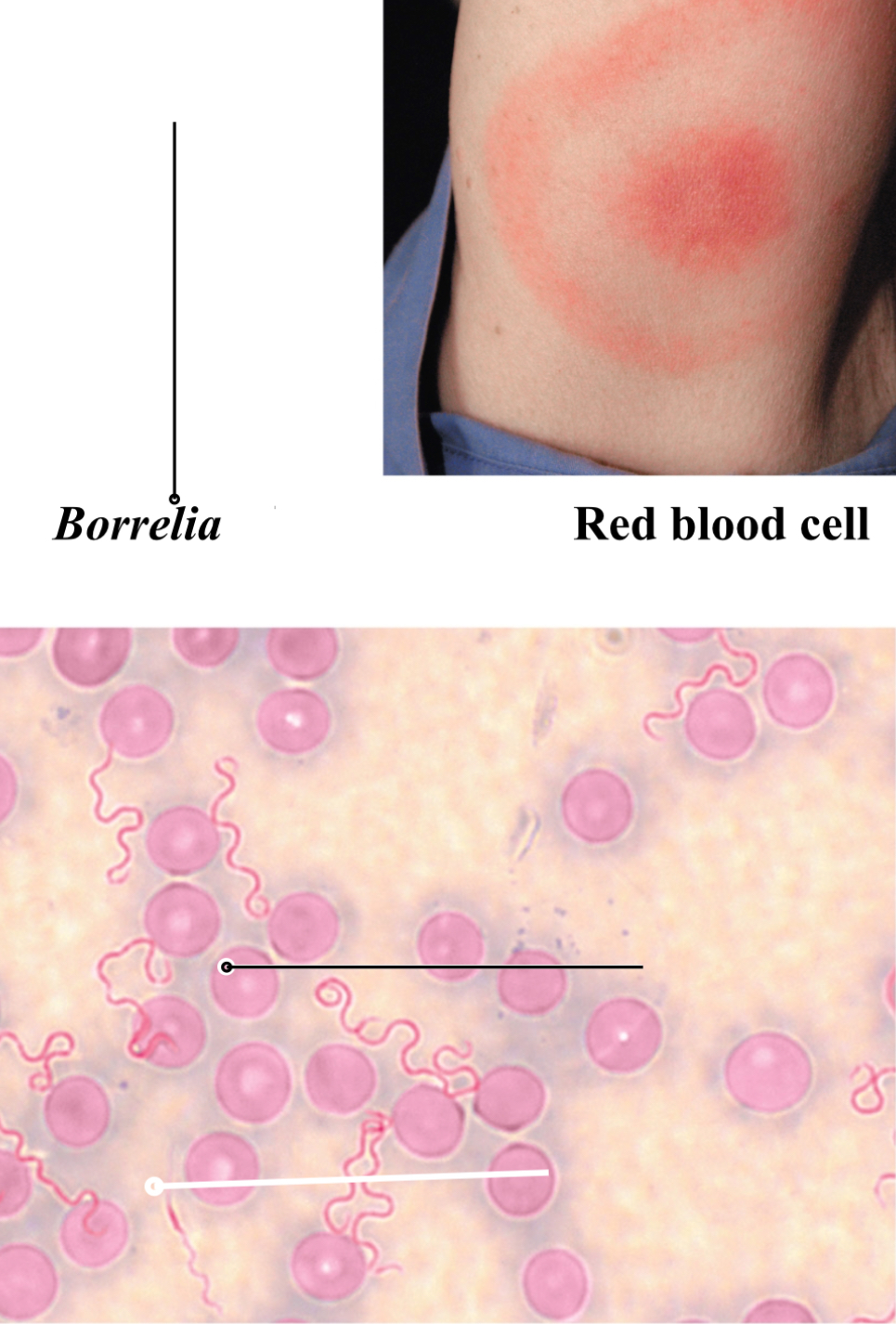
<p><span><span>Signs and symptoms: Bulls-eye lesion</span></span></p><p><span style="background-color: transparent;"><u><span>Early:</span></u><strong><span> bulls-eye lesion</span></strong><span>, headaches,</span><strong><span> </span></strong><span>dizziness, </span><strong><span>stiff neck</span></strong><span>, </span><strong><span>severe fatigue</span></strong><span>, chills</span></span></p><p><span style="background-color: transparent;"><u><span>Middle: </span></u><span>10% of patients experience </span><strong><span>neurological symptoms</span></strong><span> and </span><strong><span>cardiac dysfunction</span></strong></span></p><p><span style="background-color: transparent;"><u><span>Final:</span></u><span> 80% of patients experience</span><strong><span> severe arthritis</span></strong><span> (may last years); rarely fatal</span></span></p><p><br>Vector: deer tick </p>

Explore top flashcards

Chapter 3
Updated 847d ago
flashcards Flashcards (59)
EXAM 2 - part 4
Updated 184d ago
flashcards Flashcards (44)
Toxicology
Updated 426d ago
flashcards Flashcards (107)
Psych. Chapter 13
Updated 1098d ago
flashcards Flashcards (38)
Chapter 3
Updated 847d ago
flashcards Flashcards (59)
EXAM 2 - part 4
Updated 184d ago
flashcards Flashcards (44)
Toxicology
Updated 426d ago
flashcards Flashcards (107)
Psych. Chapter 13
Updated 1098d ago
flashcards Flashcards (38)