Vasari’s Third Period in Courtly Florence and in Counter-Reformation Rome
 Studied by 0 people
 Call with Kai
 Learn
Learn Practice Test
 Spaced Repetition
 Match
Match Flashcards
 Knowt Play
1/18

There's no tags or description
Looks like no tags are added yet.
Name | Mastery | Learn | Test | Matching | Spaced | Call with Kai |
|---|
No analytics yet
Send a link to your students to track their progress
19 Terms

Michelangelo Buonarotti (1475–1564)
Projects at the Church of San Lorenzo; Patron: Cardinal Giulio de’Medici New Sacristy, 1519–1534, continuing into the 1550s, Allegories of Night and Day
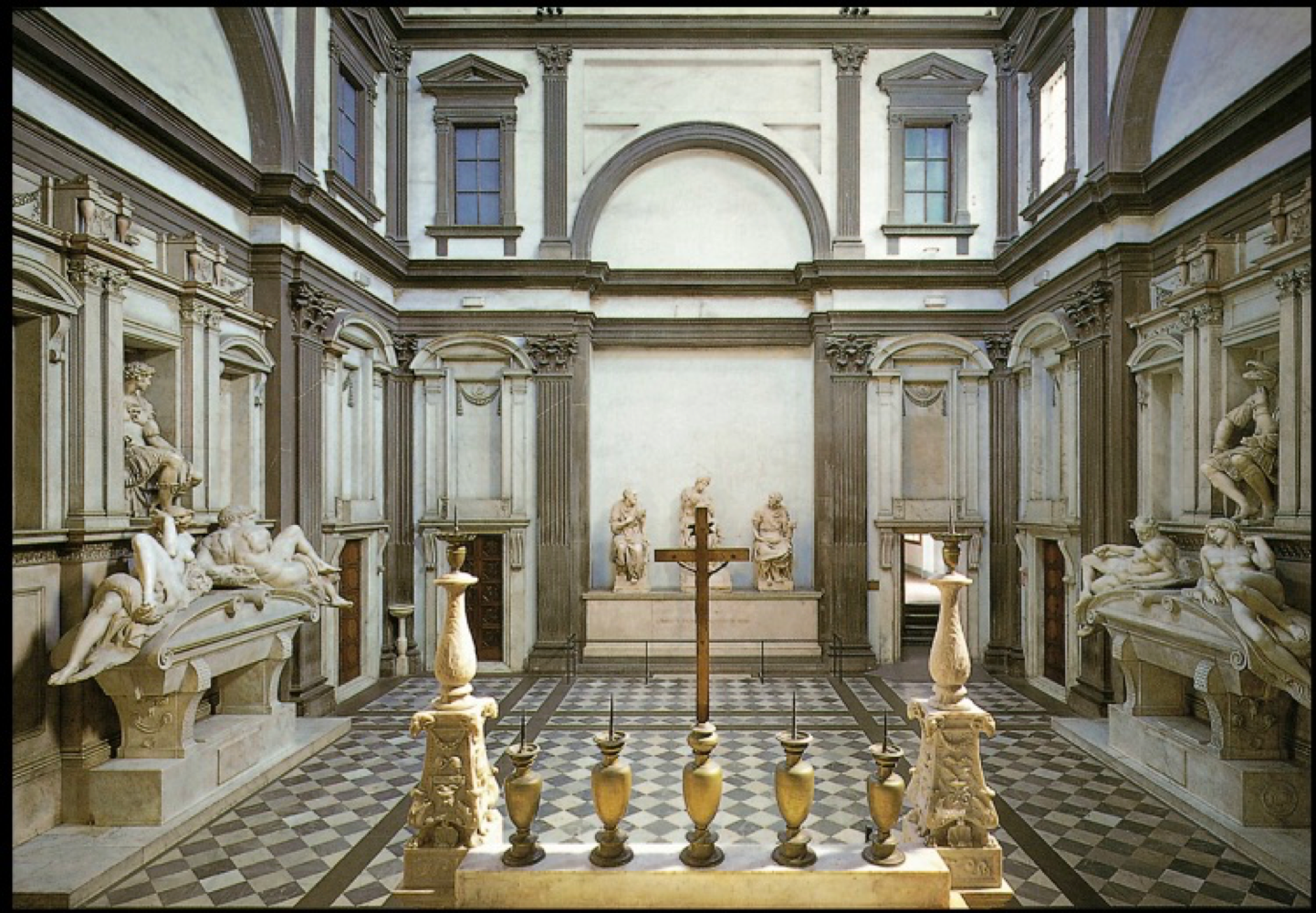
Describe the overall composition of the New Sacristy and its significace
circle and square, windows recede to exaggerate perspective, La Bella Maniera: starts now, knowledge of perspective new and better
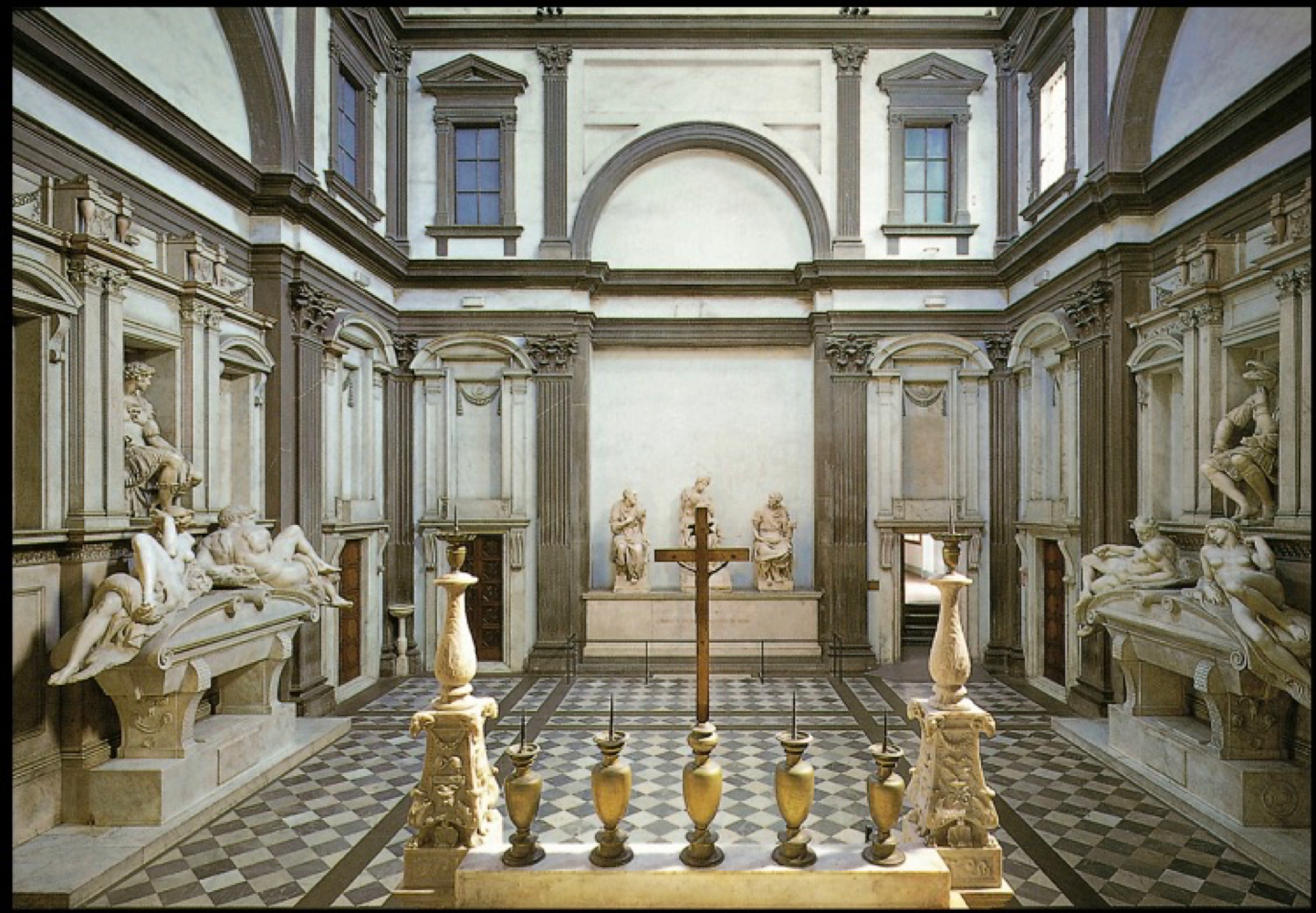
Describe the architecture in the New Sacristy and its significance
three intertwined rings: perfection symbolized, fictive supports of pietra serena on stucco: columns collide and merge with each other. Push and pull against each other: mannerist architecture: self consciousness and play on concepts of art. Extra lunet, perspectival window, roof like pantheon roof, triptych with sculptures, unfinished altarpiece
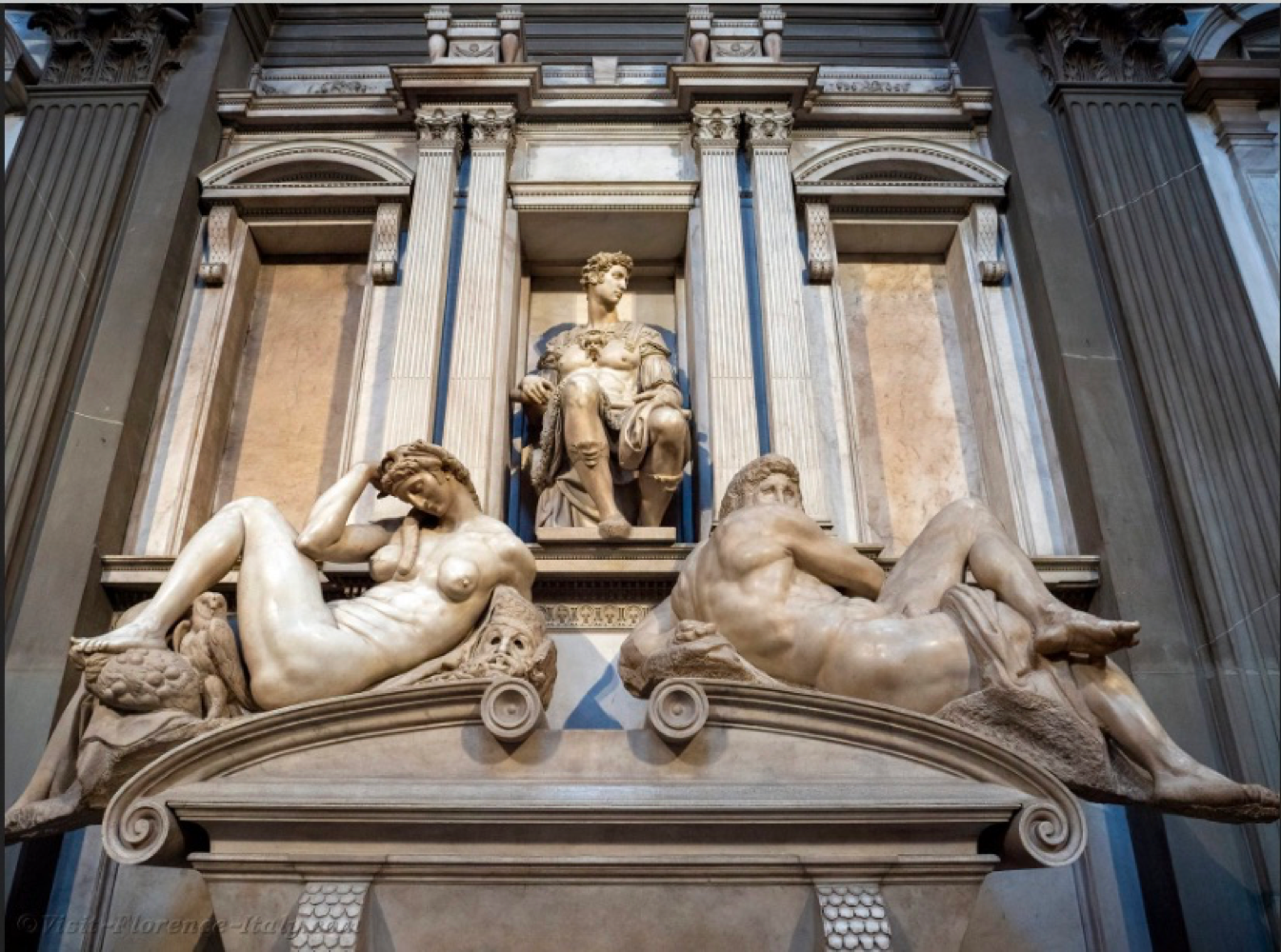
Describe the 2 donors and Allegories of Night and Day and its significance
below 2 donors, process of ascending to. heaven, triangular composition up to dome, would have had painting, perpetual prayer and reflection of the dead. Allegories breasts seem just attached, choose to portray them this way
Michelangelo Buonarotti (1475–1564)
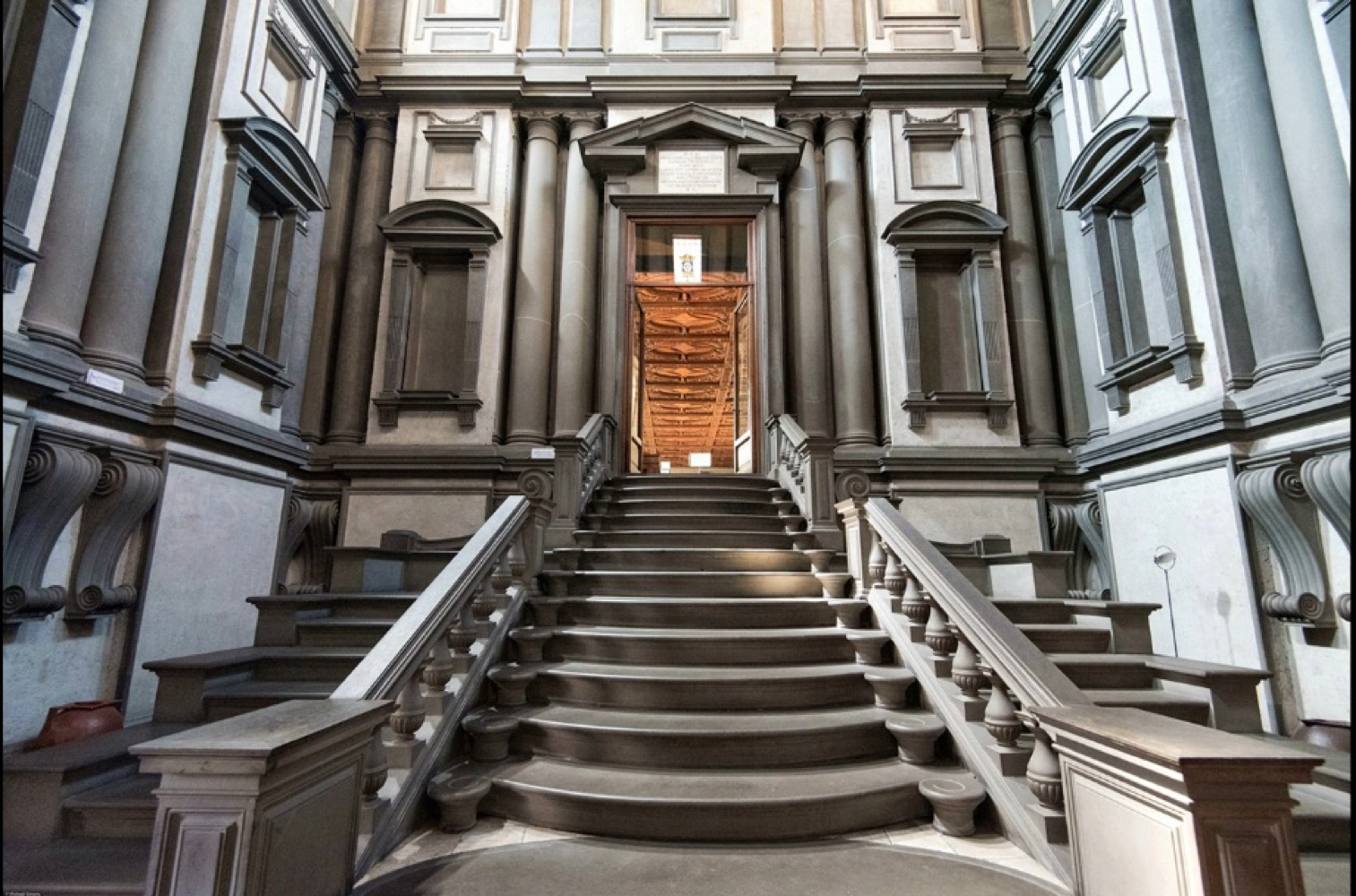
Laurentian Library vestibule, 1524–1533, continuing into 1570s
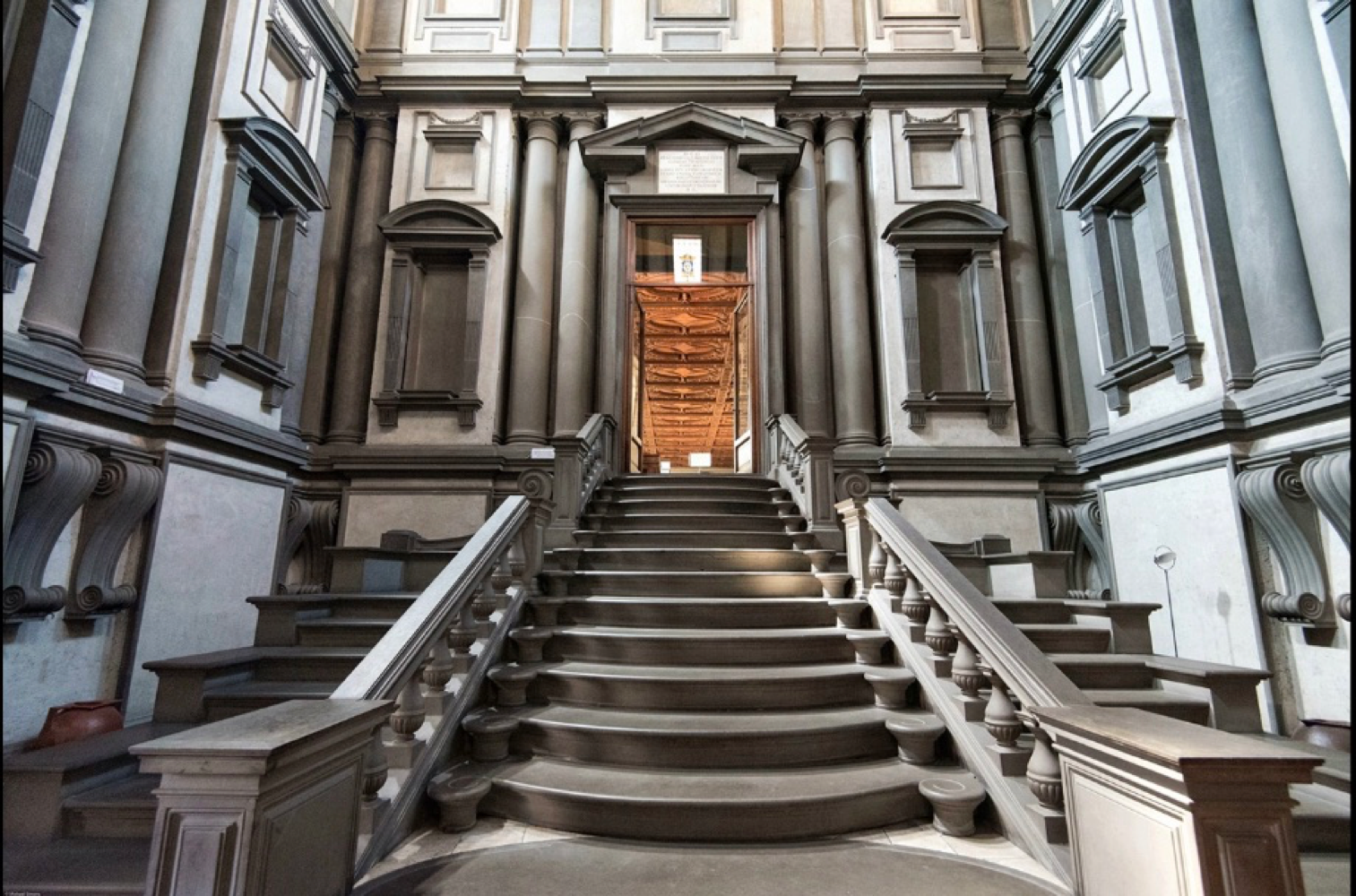
describe the architecture of the Laurentian Library vestibule and its significance
steps tempt to rise up to knowledge with low riser and long tred, oval replace circle. Intelligent architecture, columns within the wall: bones of the building, windows that are blind and upside down. Vocab of Brunelleschi, calm inside, triangular space for rare manuscripts: word of god, pray through them
Bronzino (1503-1572)
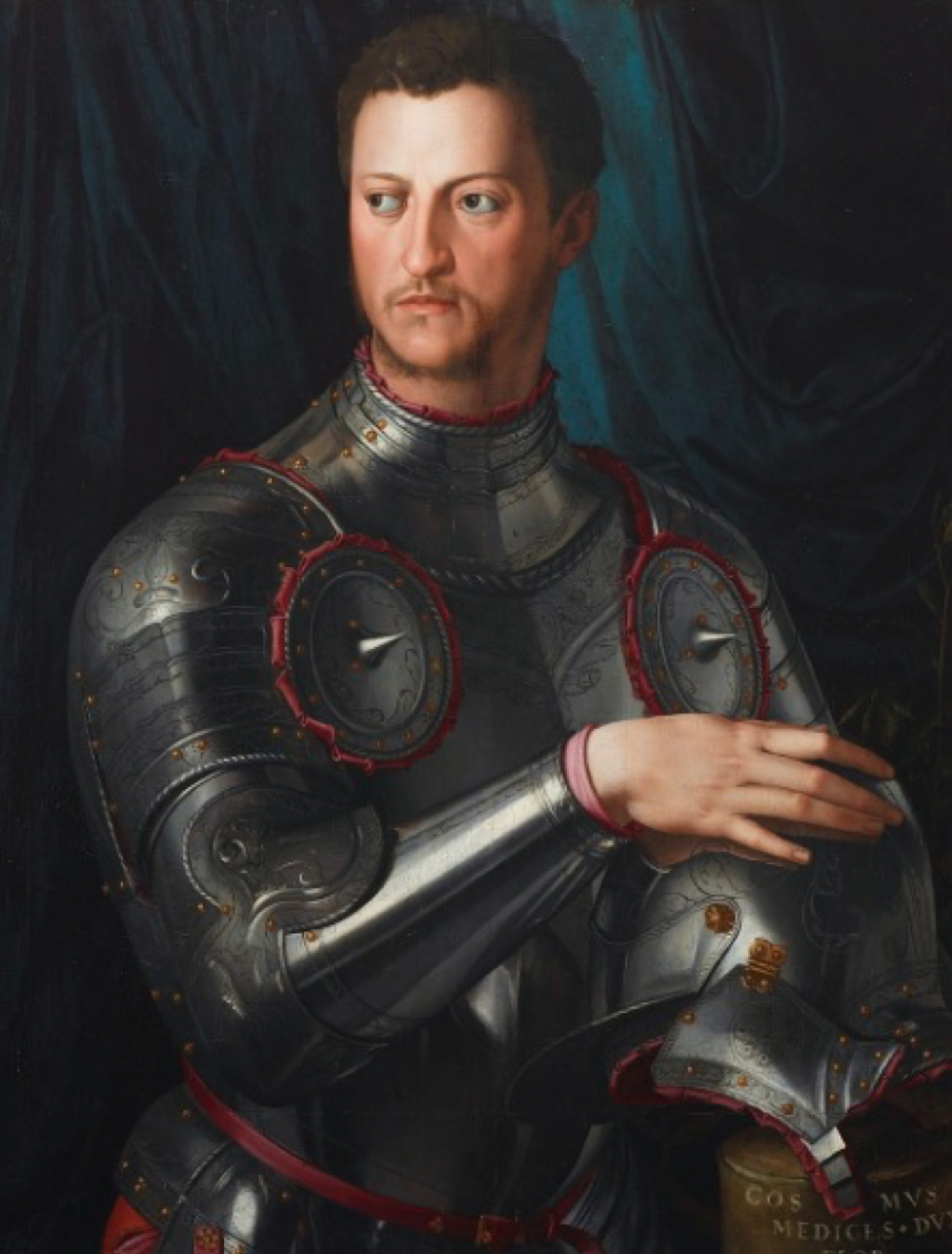
Duke Cosimo I de Medici, Oil on Panel, 1545, Patron: Duke Cosimo I de Medici (Uffizi)
Describe the composition of the Duke Cosimo I de Medici and its significance
bella maniera, affectation, mannerist portrait: proportions attenuated. Decadent, rich, luxurious surface
Bronzino (1503-1572)
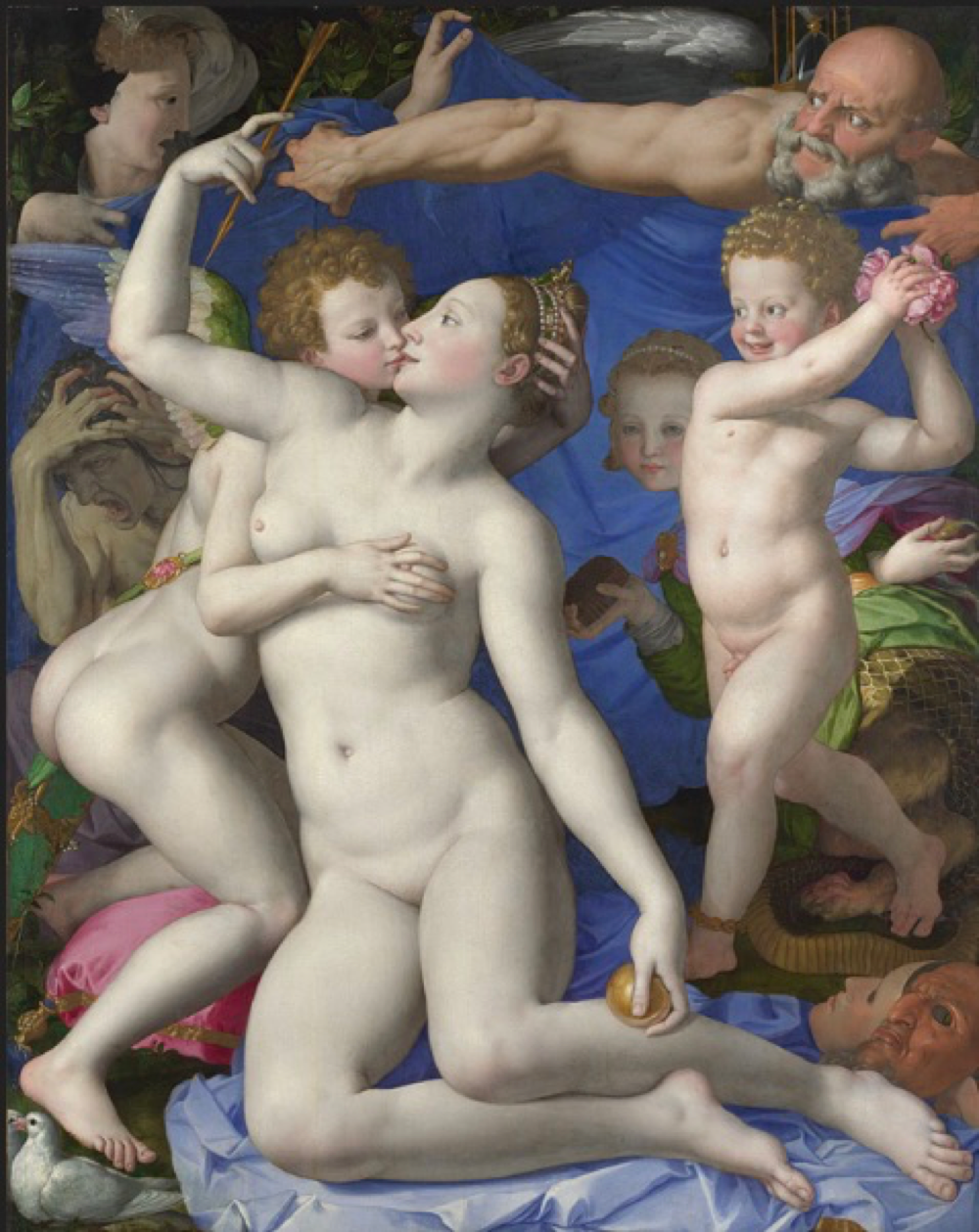
Allegory with Venus & Cupid, Oil on Panel, ca. 1545, Patron: Duke Cosimo I de' Medici (National Gallery London)
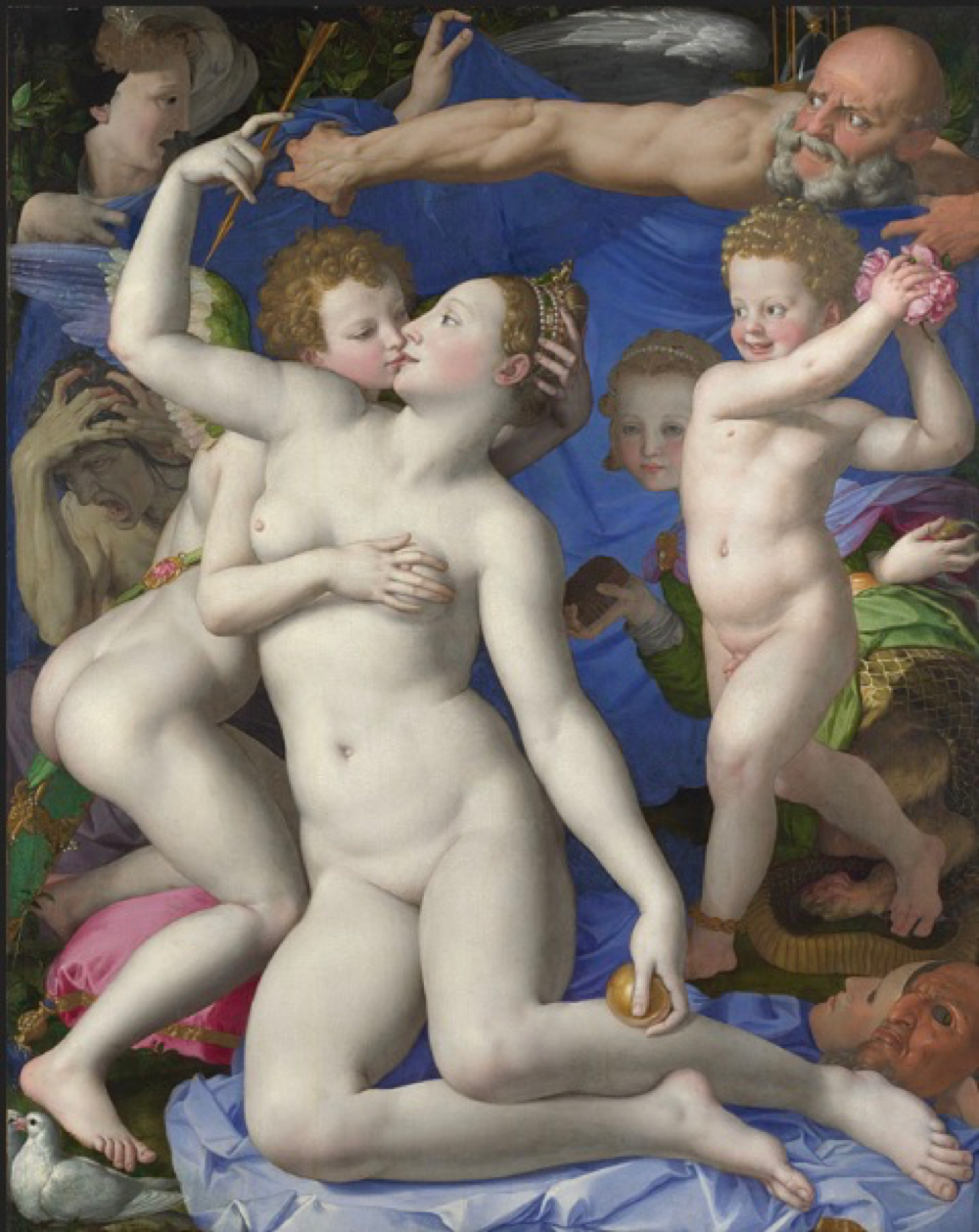
Describe the context of Allegory with Venus & Cupid and its significance
only for some eyes, not for general public: only for Cosimo, inspire poetic metamorphosis and poetry
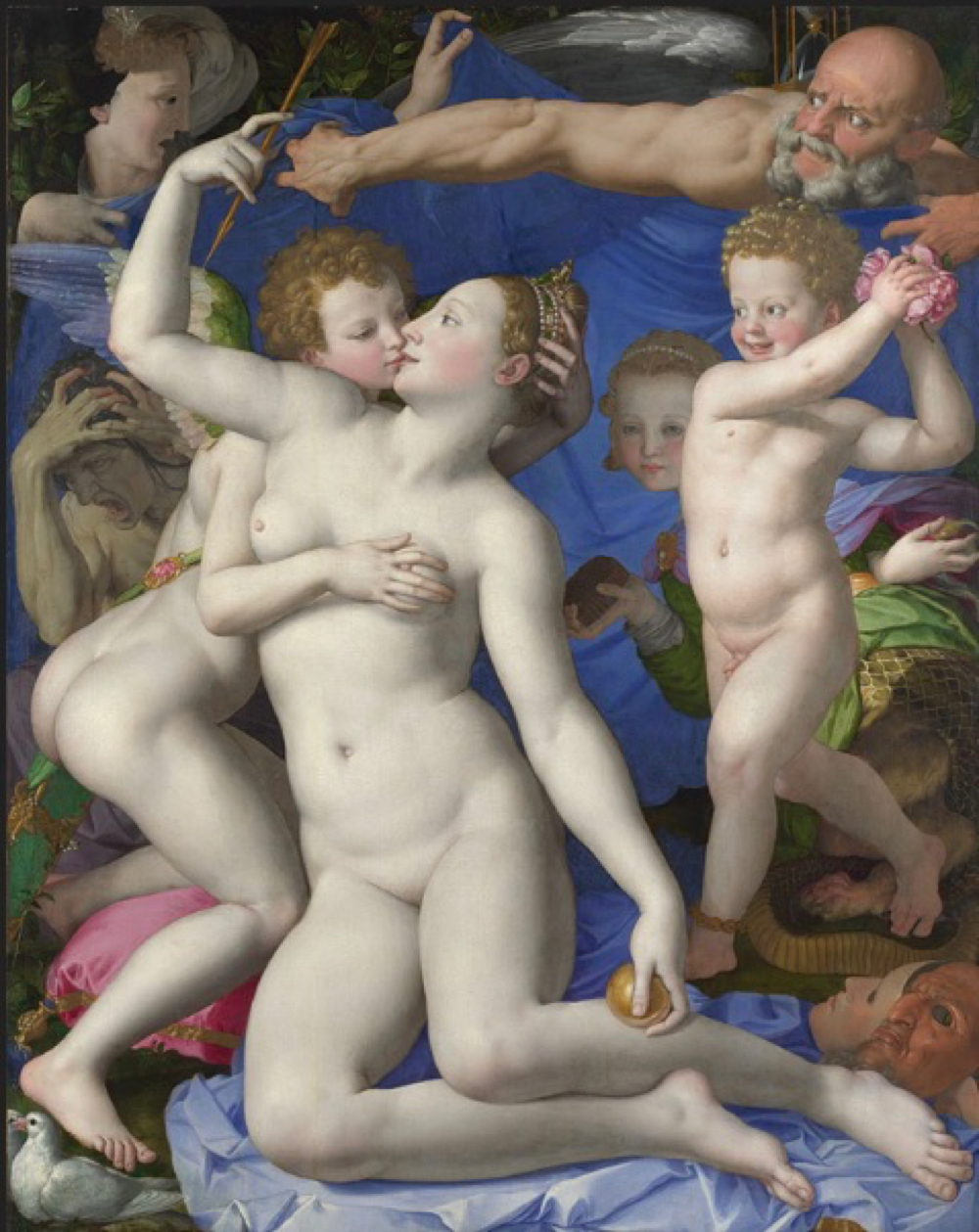
Describe the composition of the Allegory with Venus & Cupid and its significance
mannered, impossible to understand unless in the know, figures pull us in from left to right, Cupid fondle Venus’ breasts= weird and incestuous. Led in and out
Giogio Vasari (1511-1574)
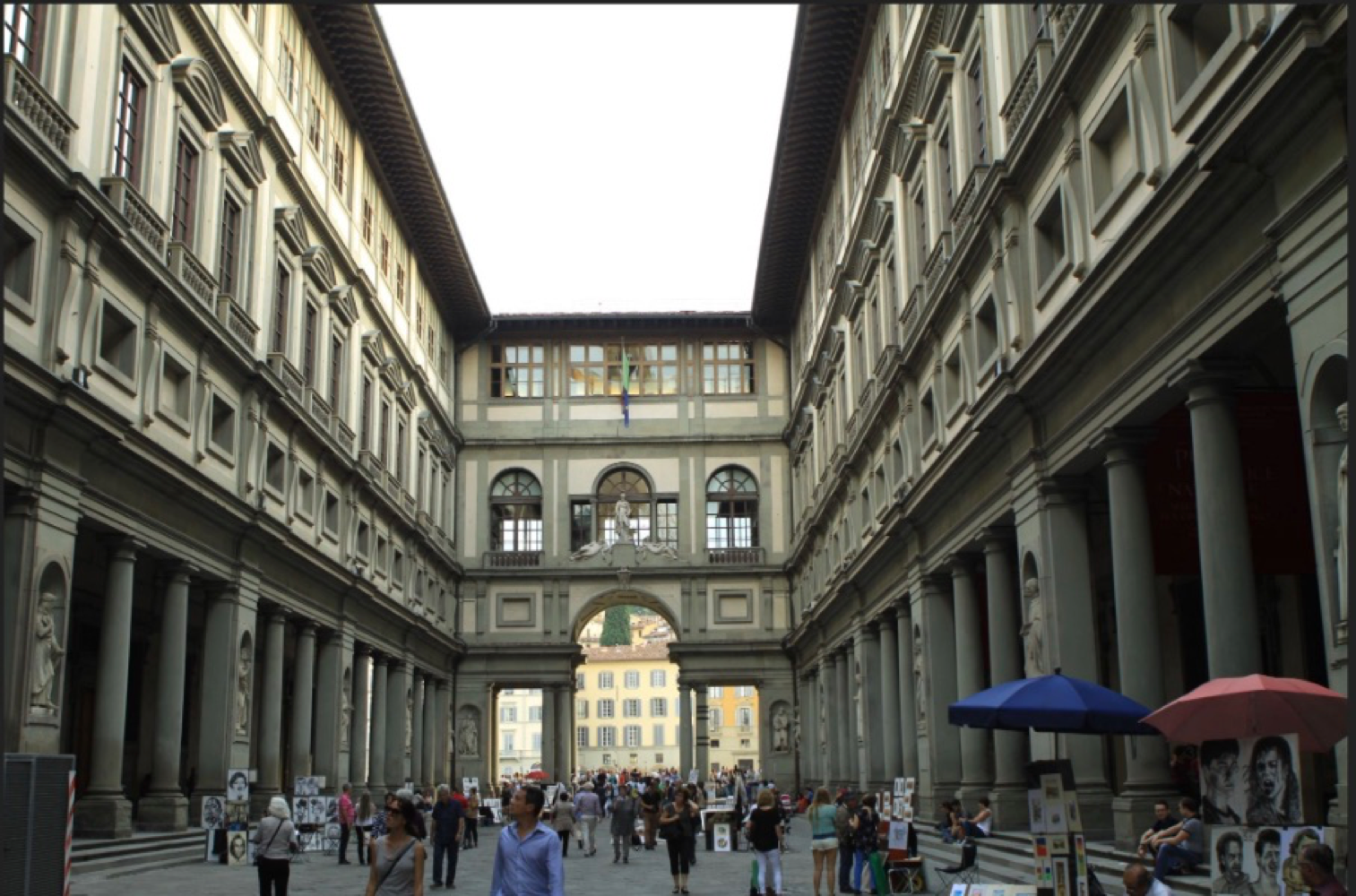
Uffizi, office building, 1560-1584, brick and stucco with pietra serena, Patron: Cosimo I, Florence
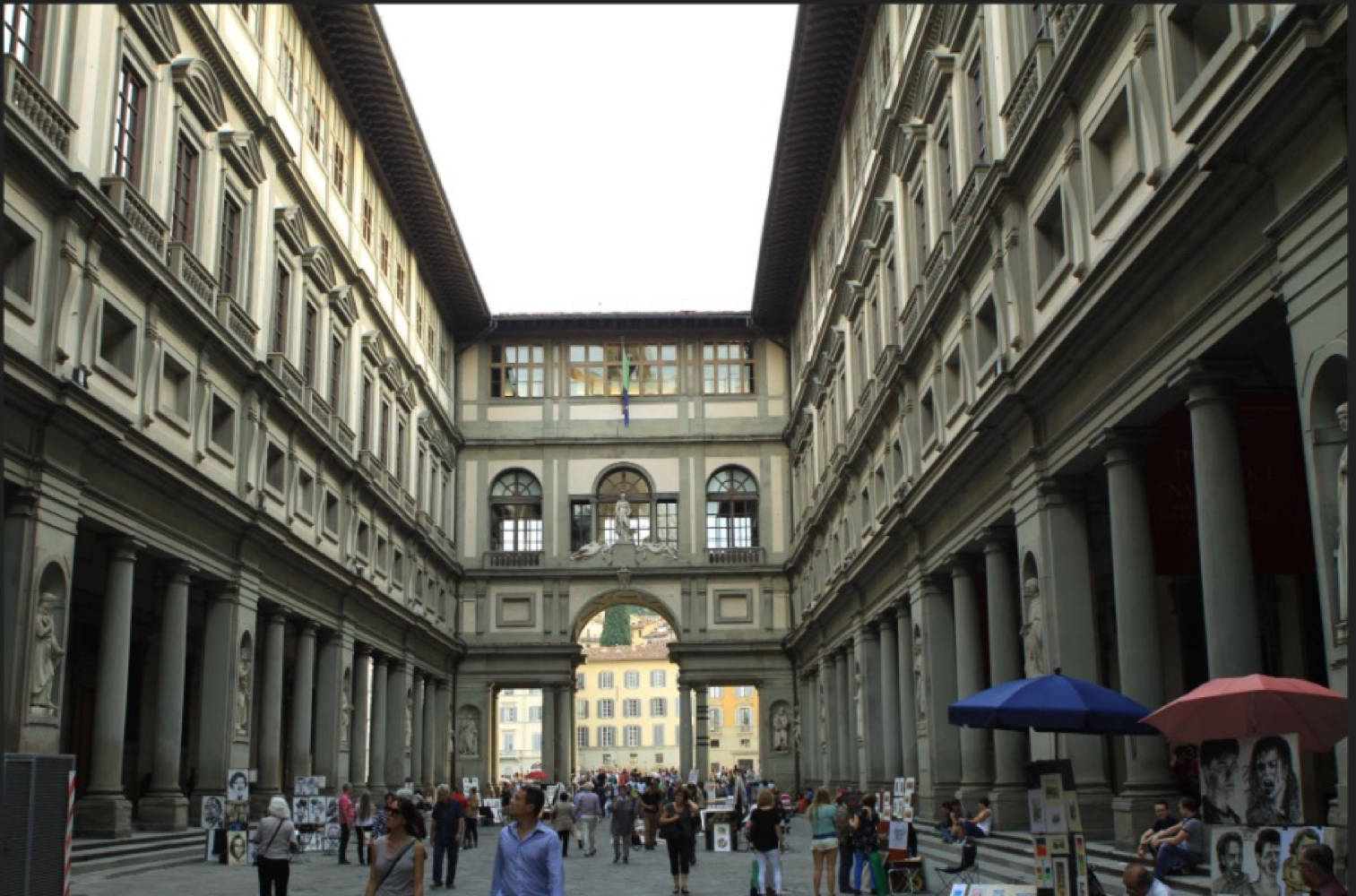
Describe the architecture of the Uffizi and its significance
lack of continuation and support, bizarre, break the rules of classic architecture with windows that go nowhere
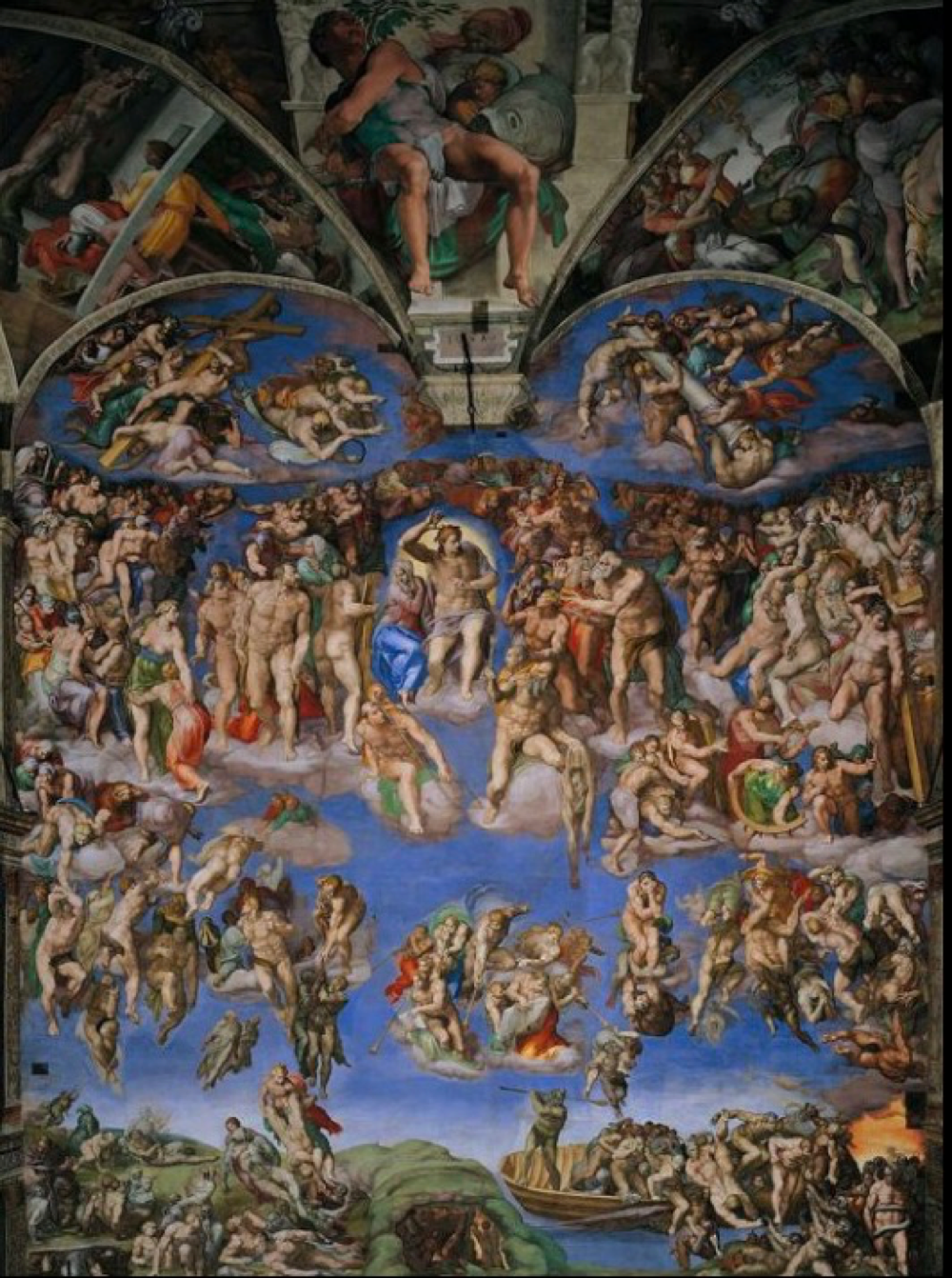
Michelangelo Buonarotti (1475–1564)
Last Judgment, fresco, ca. 1540, Patron: Pope Paul III Farnese, (Sistine Chapel, Vatican Palace, Rome)
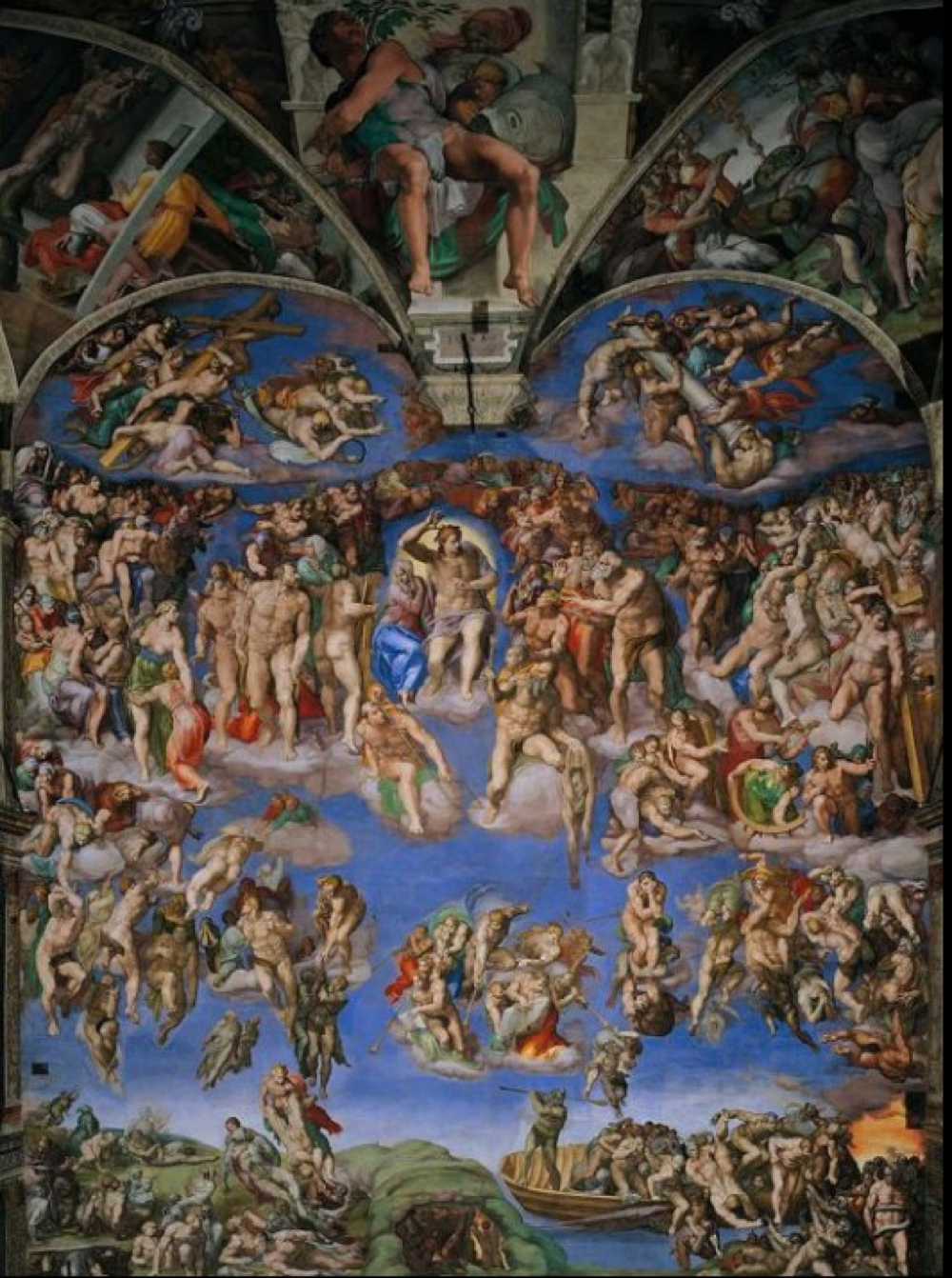
Describe the composition of the Last Judgment and its significance
leans out at us. Christ contained within flat circle=where salvation is gained, saints recede in space, anatomy on steroids: what you would have needed to be saved. Right side=the saved going up vs. Left side=the damned going down. Christ gaze to Michelangelo’s skin that st.Bartholomew holds: self doubt, recognition of his own sins, hope for divine mercy. Line of Christ’s hand to judge of hell. Bodies articulate theology: what it takes to be saved
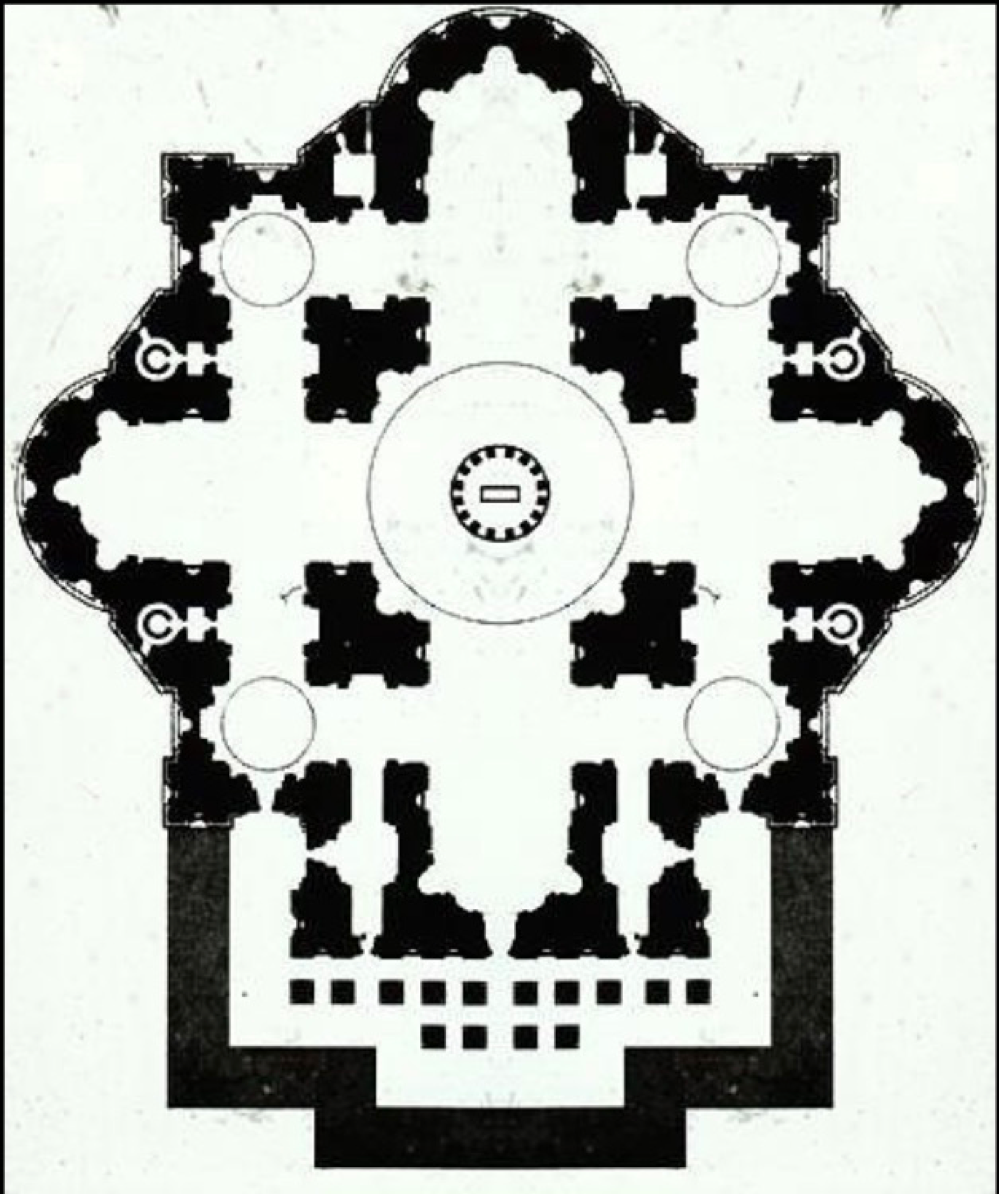
Michelangelo Buonarotti (1475–1564)
Plan for New St. Peter’s, chalk, pen, ink, and watercolor on paper (Opera di San Pietro)
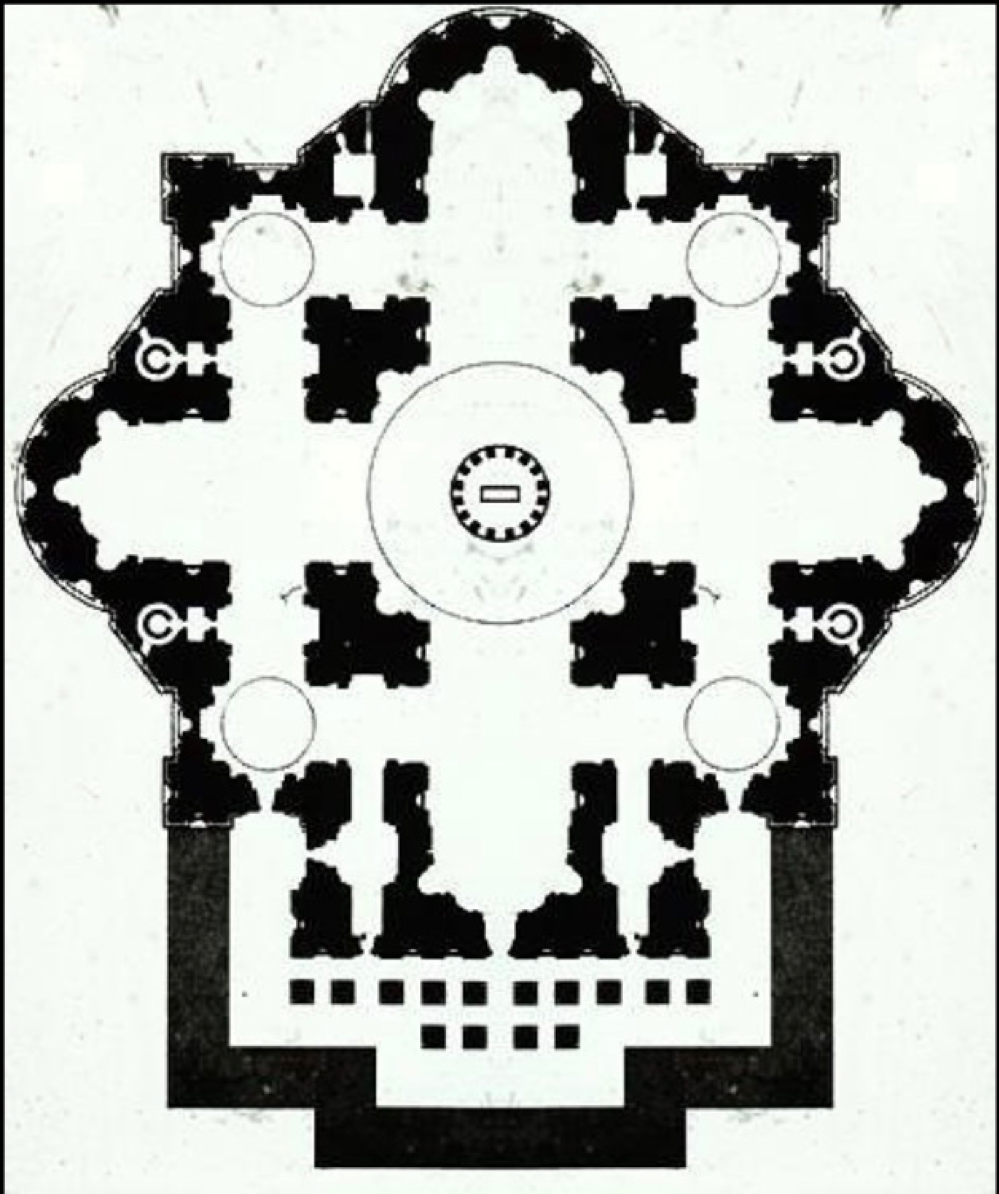
Describe the composition of the Plan for New St. Peter’s and its significance
made for free for atonement of sins. shapes that don’t have names, more muscular and merging
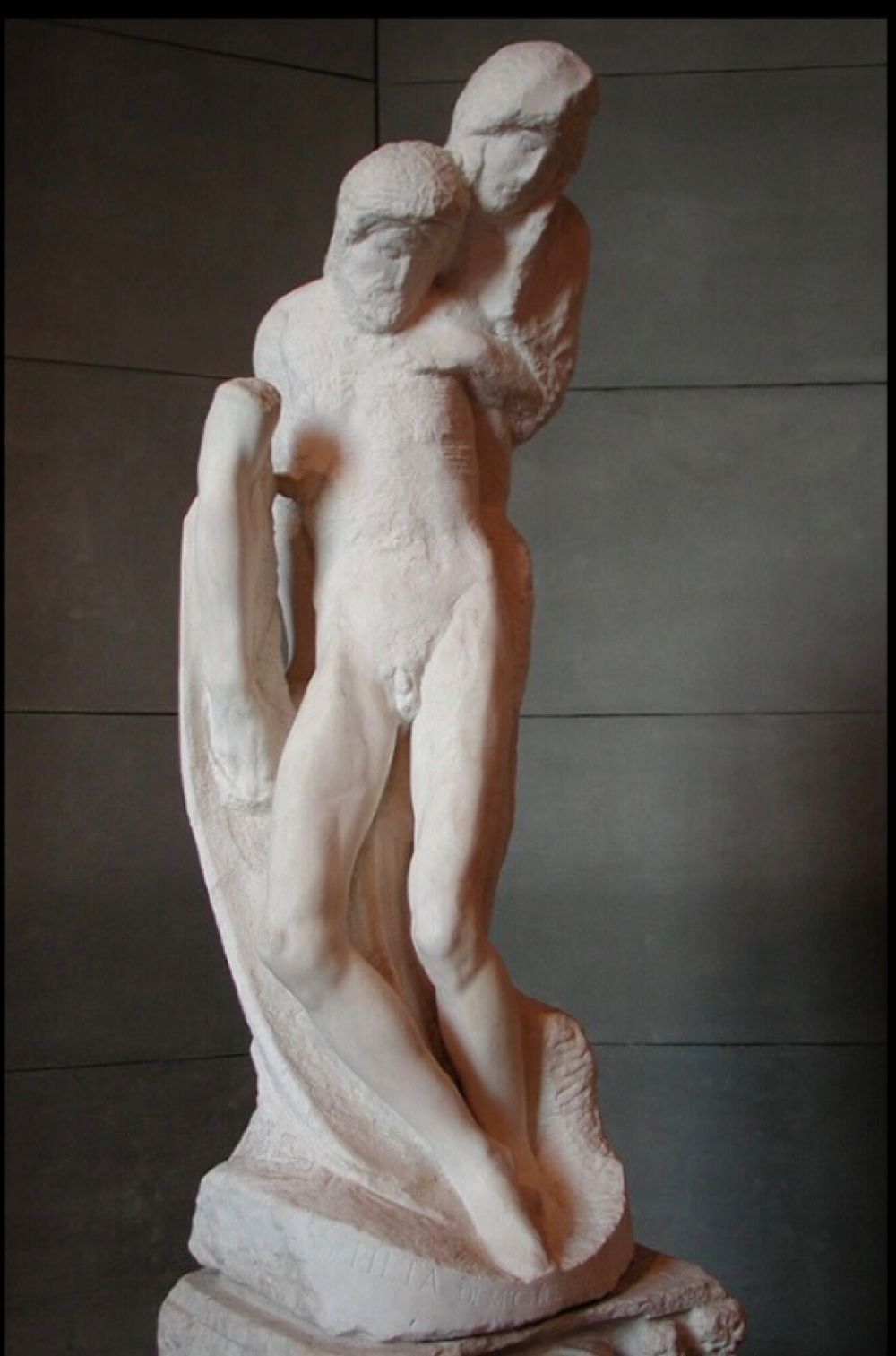
Michelangelo Buonarotti (1475–1564)
Rondonini Pietà, marble, ca.1554-1564 Patron: Michelangelo, (Caastello Sforzesco, Milan)
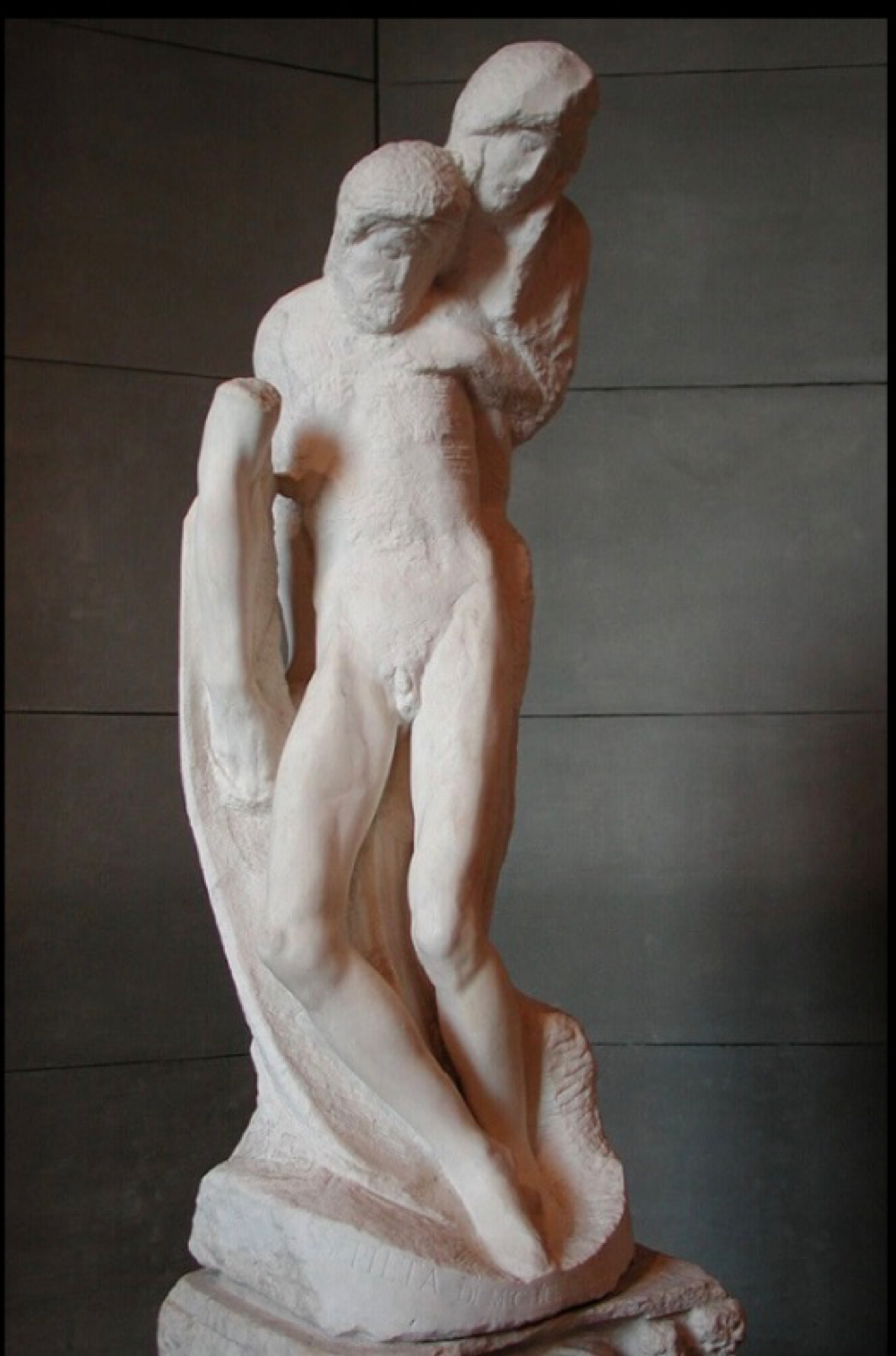
Describe the composition of the Rondonini Pietà and its significance
devotional image not from Bible, for himself and his tomb. Arm was for body of Christ. Unifies Christ and Mary: they are one and the same eg. Christ’s head=Mary’s shoulder because he kept carving and carving
 Note
Note  Flashcards (37)