ES 320 Midterm
 Studied by 2 people
 Call Kai
 Learn
Learn Practice Test
 Spaced Repetition
 Match
Match Flashcards
 Knowt Play
1/84

There's no tags or description
Looks like no tags are added yet.
Name | Mastery | Learn | Test | Matching | Spaced | Call with Kai |
|---|
No analytics yet
Send a link to your students to track their progress
85 Terms
anthropocene
the current geological age, viewed as the period during which human activity has been the dominant influence on climate and the environment
ordovician-silurian extinction (O-S)
~450 mya, massive glaciation and sea level drop, caused by continental drift, 60-70% of all species gone
late devonian extinction (late D)
~370 mya, 70% of species lost, global anoxia possibly triggered by global cooling or oceanic volcanism
permian-triassic extinction (great dying)
252 mya, 96% of marine speies and 70% of land species lost, severe volanic activity, environmental changes, long-term methane release
triassic-jurassic extinction (T-J)
201.3 mya, 70-75% of land/marine species lost, resulted from volcanic eruptions and greenhouse gas emissions
cretaceous-paleogene extinction
66 mya, 75% of species lost, non-avian dinos vanished, gave rise to mammals, asteroid impact + volcanic activity
living planet index (LPI)
measure of the state of the worlds biological diversity based on population trends of vertebrate species from terrestrial, freshwater, and marine habitats
what are the main risk factors in extinction?
low, fragmented population size
habitat loss
poaching pressure
conservation biology
the development of appropriate scientific principles and the application of those principles to developing technologies for the maintenance of biological diversity to developing technologies for the maintenance of biological diversity
fundamental characteristics of conservation biology
it is a crisis discipline where action in conservation must often be taken before all the facts can be assembled
it is holistic in the sense that it embraces a wide range of disciplines and theories - IBT, genetics, ecology, metapopulation biology, hazard evolution
3 goals of conservation biology
to investigate and describe biodiversity
to understand the effects of human activities on species, genetic variation, communities, and ecosystems
to develop practical interdisciplinary approaches to protecting/restoring biodiversity
axioms of conservation biology
natural communities are th eproducts of coevolutionary processes (eg. keystone species, sea otter)
many ecological processes have thresholds below and above which they become discontinuous or chaotic
genetic and demographic processes have thresholds below which nonadaptive, random forces begin to prevail over adaptive, deterministic forces within populations
nature reserves are inherently in disequilibrium for large, rare organisms
normative postulates of conservation biology
diversity of organisms is good. biological diversity has intrinsic value
ecological complexity is good (extinction is not good and must be avoided)
evolution is good
biotic diversity has intrinsic value
the big five
habitat degradation/loss
overexploitation
invasive species
climate change
nitrogen deposition
also pollution, disease, overuse of freshwater
major threats to nature
industrial agriculture
human population growth
pollution
habitat destruction/resource extraction
core discipline in CB
population biology
taxonomy
ecology
genetics
the romantic-transcendental conservation ethic (the preservationists)
thoreau, muir, emerson
nature has other uses than human economic gain
nature as a temple/place to cleanse/refresh
celebrated aesthetic and spiritual value of contact with wild nature
a non-economic view
1st principle: stressed equity - fair distribution of resources → current and future generations - origins of sustainable use concept
resource conservation ethic (the conservationists)
saw only resources in nature
nature = assortment of components that were either useful, useless or noxious to people
economic, reductionist, and selective
2nd principle: efficiency - multiple uses
the evolutionary-ecological land ethic
humans as part of the ecosystem - which is complex, evolves, and provides all of the different values from different viewpoints
“the biota as a whole is useful, and the biota includes not only plants and animals, but soils and waters as well”
first principles from indigenous conservation biology (6 principles for indigenous-led CB)
reconciling different worlds
respecting first nations law and jurisdictional authority
establishing ethical spaces of engagement
pulling together - applying diverse indigenous knowledge concepts in ocean and marine governance
indigenous knowledge is science
evolving co-governance for ongoing reconciliation
take home themes from BC oil tanker debate
shift from consultation to consent
courts as catalysts (legal victories reshaping national energy policy)
indigenous diversity (support for and opposition to tanker bans both exist with indigenous communities)
law + governance (indigenous law is central to coastal decision making)
BC oil tanker debate
2019 – Oil Tanker Moratorium Act
Ban on large oil tankers on BC north/central coast
Seen as protective floor, not full solution
Some First Nations opposed → economic self-determination
Shows Indigenous views are not uniform
2020s–Present
Ongoing debate about repealing/amending ban
Coastal Nations assert FPIC + Indigenous laws
Ban still law, but politically contested
how is it that human population growth rate declines as affluence and child survivorship increases?
the demographic transition
declines in birth rates followed by declines in death rates bring about an era of rapid population growth
women have fewer babies (increase in womens reproductive freedom)
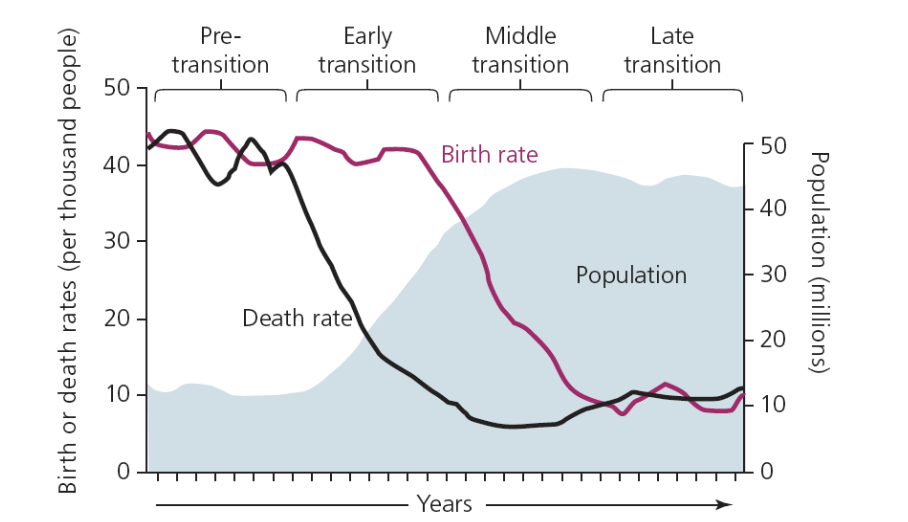
the demographic transition
THE OVERALL PATTERN OF CHANGES IN BIRTH & DEATH RATES AS SOCIETIES BECOME MORE ECONOMICALLY DEVELOPED: (first birth rates high, death rates high; then death rate drops -> pop. skyrockets; but then birth rates also drop (=middle transition), and then birth and death equilibrate at new low level and population stabilizes
the IPAT model of human impact on the environment
impact = population x affluence x technology
Both increases in population and consumption affect impact.
Technology can influence the environmental impact of affluence through more efficient ‘green’ production
the kuznets curve
inequality rises during early industrialization as some benefit more than others, peaks, then falls in more advanced, post-industrial economies with better education, welfare, and service sectors
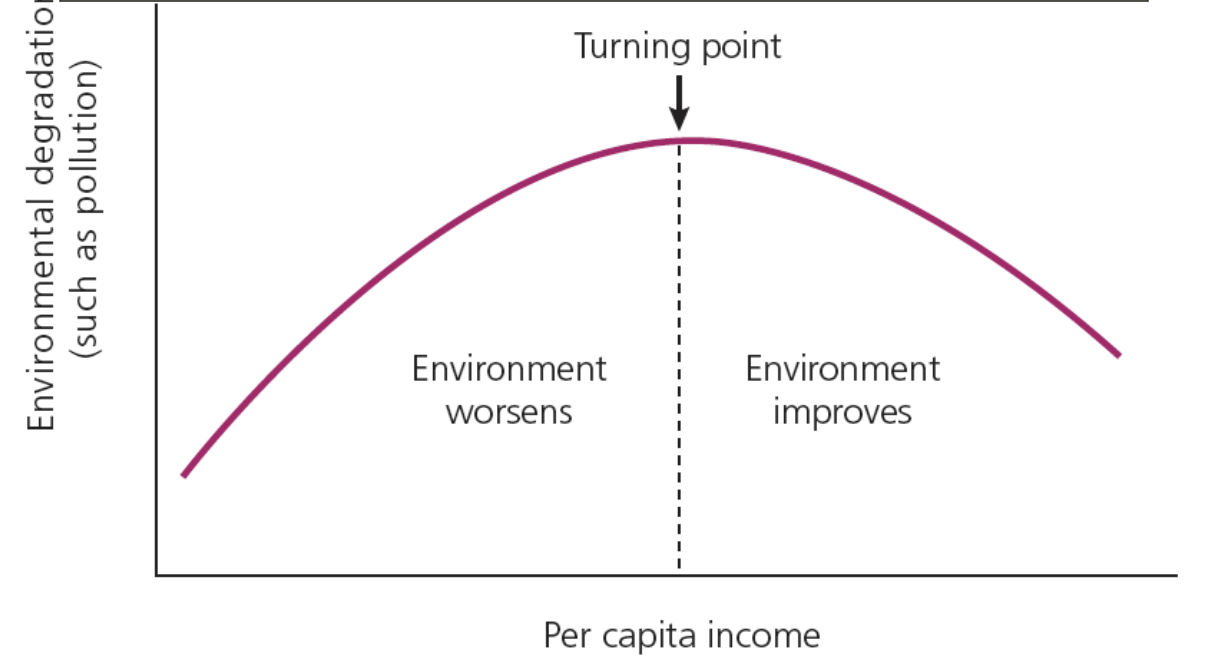
benefits from changes to ecosystems
improvement in health
access to information
we are all getting wealthier
role of conservation biology
To illuminate biodiversity patterns, threats, and potential solutions
Policy decisions about whether to and how to protect biodiversity based on many factors (economics, politics, societal values)
biophilia
the innate human tendency to seek connections with nature and other forms of life, driven by a deeply rooted biological need
why is biodiversity important?
biodiversity is more than just the parts of a living system, such as genes, individuals and species -- biodiversity also includes the ways the various parts interact with each other, including competition, predation and symbiosis
what is a species?
interbreed in the wild to produce viable, fertile offspring
is morphologically, physiologically, or biochemically distinct from other groups in some important characteristic
because of their relatedness, share at least one morphological or molecular trait that is absent in other potentially related groups
biological species definition
“interbreed in the wild to produce viable, fertile offspring” - Mayr
morphological species definition
“is morphologically, physiologically or biochemically distinct from
other groups in some important characteristic” - Cronquist
phylogenetic species concept
“because of their relatedness, share at least one morphological or molecular trait that is absent in other potentially related groups.”
focuses more on the evolutionary history (relies on genetic data)
must still consider what type and magnitude of genetic differences exist, and in what
portions of the genome constitute different species and must employ modern computational tools to manage the increasingly large datasets produced in genetic analyses
limitations to biological species concept
asexual reproduction
hybridization (different species can interbreed and produce viable offspring
different rates of evolution
ring species (a series of populations can interbreed with adjacent populations but two geographically distant populations cannot interbreed)
geographical barriers
behavioural isolation
extinct or fossilized species
closely related species
is vancouver island marmot a distinct species
YES
Why it’s considered a separate species
•Genetic evidence: Molecular studies show clear genetic divergence from other Marmota species.
•Morphology: It has distinctive features, including darker fur and unique white facial markings.
•Behavior and ecology: Differences in social structure, habitat use, and vocalizations compared to mainland marmots.
•Geographic isolation: Long-term isolation on Vancouver Island following glaciation likely drove speciation.
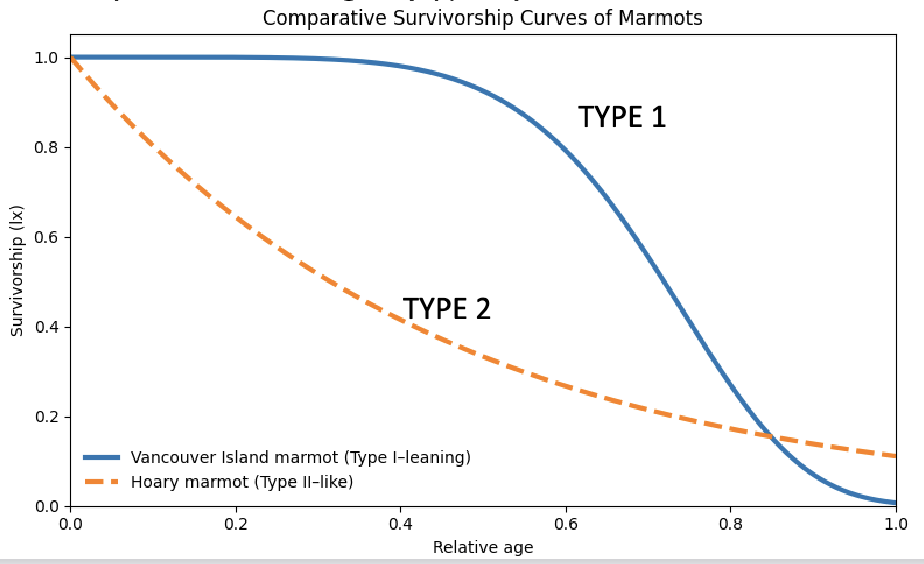
van isl marmot
Conceptual survivorship curves for marmots
Vancouver Island marmots → Type I–leaning pattern typical of long-lived mammals
hoary marmots → experience more constant mortality across life stages (Type 2)
key evolutionary takeaway from van isl marmots
example of island-driven speciation
a hoary-marmot-like ancestor colonized van isl
post-glacial isolation prevented gene flow
genetic, morphological, and behavioural differences accumulated
results in a distinct species not a subspecies
how many species are there?
Estimates of total # range up to 100 million species, but most accepted range is 3-30
million
in terrestrial communities, diversity increases with:
decreasing elevation
increasing solar radiation
increasing precipitation
species richness increases where:
complex topography and great geological age produce more environmental variation
latitudinal diversity gradients
The gradient involves high species' numbers near the equator (at low latitudes) and lower numbers of species at high latitudes.
energy: evapotranspiration → ____ → ____ → ____ → ____ → ____
productivity, more energy, more biomass, more individuals, more specialization
area: ____ → ____ → ____
bigger ranges, larger pop. sizes, lower extinction rates
species-energy relationship
suggests the amount of available energy sets limits to the species richness of the system
increased solar energy (with lots of water) at low latitudes causes increased net primary productivity (or photosynthesis)
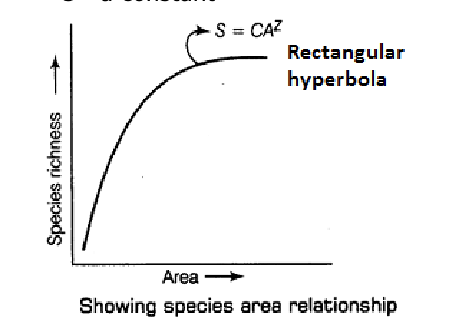
species-area relationship
the relationship between the area of a habitat and the number of species found within that area
what determines patterns of species diversity?
species-area hypothesis
species-climate stability hypothesis
species-climate harshness hypothesis
species-energy hypothesis
species-climate stability hypothesis
tropics have a more stable climate
species-climate harshness hypothesis
few species can tolerate cold (they would need specialized behaviours to survive)
species-energy hypothesis
tropics have greater productivity
alpha diversity
the species we find in one place (ie. saanich peninsula)
gamma diversity
species we find in an entire region (ie. species on van isl)
beta diversity
gamma/alpha
connects alpha and gamma
describes the rate at which species composition changes across a region
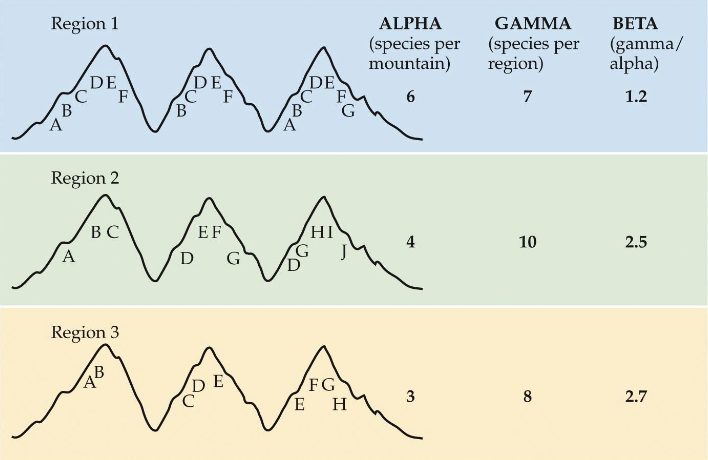
Each letter represents a different species; some species have populations on only one peak, while others are found on two or more peaks.
The variation in species richness on each peak results in different alpha, gamma, and beta diversity values for each ecoregion. This variation has implications for how we divide limited resources to maximise protection.
biome
large area characterized by its vegetation, soil, climate, and wildlife
large marine ecosystems
regions of ocean space encompassing coastal areas from river basins and estuaries to the seaward boundaries of continental shelves and the outer margins of the major current systems.
characterized by distinct: (1) bathymetry, (2) hydrography, (3) productivity, and (4) trophically dependent populations
5 of the most diverse systems on earth
tropical forests
coral reefs
deep sea
large tropical lakes and river
mediterranean climates
free resources + no regulations = ______
tragedy of the commons
tragedy of the commons
if many people enjoy unfettered access to a finite, valuable resource, such as clean water/air, they will tend to overuse it and may end up destroying its value altogether
how increased oil tanker traffic raises risk
higher oil spill risk
oil contamination directly harms alcids
population-level vulnerability
overlap with important foraging migration are
GDP
measures economic activity without accounting for costs of non- sustainable activities (e.g., overfishing, strip mining) → increases through activities that are destructive to long-term economic well-being
direct use value
products harvested from the wild by people
eg. timber, seafood, medicinal plants
use value
direct and indirect value provided by some aspect of biodiversity
option value
determined by the prospect for future possible benefits for human society
eg. new medicines, future food sources, genetic resources
intrinsic value
accords a value to biodiversity independent of its value to humans
indirect value
benefits provided by biodiversity that do not involve harvesting or destroying the resource
provisioning services (direct use values)
seafood
timber and fiber
pharmaceutical compounds
regulating services (indirect use values)
water quality control and disease
climate regulation
cultural services
tourism and recreation
esthetic and spiritual
supporting services
nursery habitat
habitat or supporting services (eg. existence value) = ______
biogeochemical and ecological processes necessary for the production of all the other ecosystem services
ecosystem services
diversity/productivity
carbon offset programs
water and soil protection
waste treatment and nutrient retention
climate regulation
species relationships
fishing down the food web
fishing pressure progressively removes species at the top of the food web first, then shifts toward smaller, lower–trophic-level species over time
Core idea
Early fisheries target large, long-lived, high-trophic predators (e.g., cod,
tuna, sharks).As these species decline or collapse, fisheries switch to smaller, faster-
growing species (e.g., herring, sardines, squid, invertebrates).The mean trophic level of the catch declines through time, even if total
catch stays high
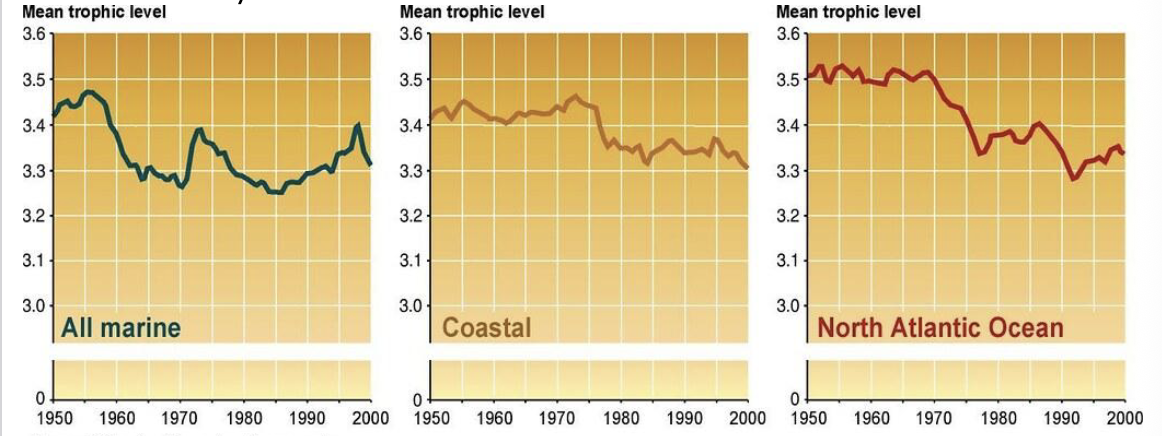
objective, key finding, interpretation, ecological implications
Objective: Quantified changes in the mean trophic level of global marine fisheries landings from 1950 to 1994 using FAO catch data and trophic level estimates.
Key finding: mean trophic level of the catch declined over time, reflecting a shift from harvesting larger, high-trophic predators (e.g., cod, swordfish) to smaller, lower-trophic species (e.g., forage fish, invertebrates).
Interpretation: indicated that fisheries were progressively removing species from higher to lower trophic levels (fishing down marine food webs)
Ecological implications: evidence of unsustainable exploitation patterns that restructure food webs and potentially a reduction in ecosystem resilience
mean trophic level (MTL)
average trophic level of species in global fisheries landings
higher values mean more top predators being caught
lower values mean more lower-trophic species like small pelagics and invertebrates
why does MTL matter?
ecosystem restructuring
reduced resilience
masked overfishing
shift to invertebrate fisheries
trophic cascade
ecological concept of side effects when the trophic level of the ecosystem is reduced or removed
fishing down the food web takeaway:
“fisheries can appear successful while progressively removing higher trophic levels from marine food webs”
T/F total landings can remain economically valuable even as trophic level declines
true
list 6 concerns that come from the oceans being saturated with carbon, leading to warmer, less oxygenated, more acidic oceans:
bleaching
rising sea levels
toxic algae
habitat degradation
acidification
fisheries
environmentalism is characterized by ______ and ______ activism, whereas conservation biology is a ___________ whose findings contribute to ______
political, educational
scientific discipline, the environmental movement
the species energy hypothesis suggests:
the amount of available energy set limits to the species richness of the system
what are the main negative externalities in BC associated with climate change and the following:
forestry:
agriculture:
urban expansion:
forestry: fires
agriculture: floods
urban expansion: floods and fires
lifeboat ethics
proposed by hardin
since global resources are finite, hardin believed the rich should throw poor people overboard to keep their boat above water
precautionary principle
if an action or policy has a suspected risk of causing severe/irreversible harm to the public or the environment, protective measures should be taken even without full scientific certainty
It prioritizes preventing damage over fixing it later
 Note
Note  Flashcards (61)