CDC Intestinal Hookworm
 Studied by 0 people
 Call Kai
 Learn
Learn Practice Test
 Spaced Repetition
 Match
Match Flashcards
 Knowt Play
1/11

There's no tags or description
Looks like no tags are added yet.
Name | Mastery | Learn | Test | Matching | Spaced | Call with Kai |
|---|
No analytics yet
Send a link to your students to track their progress
12 Terms
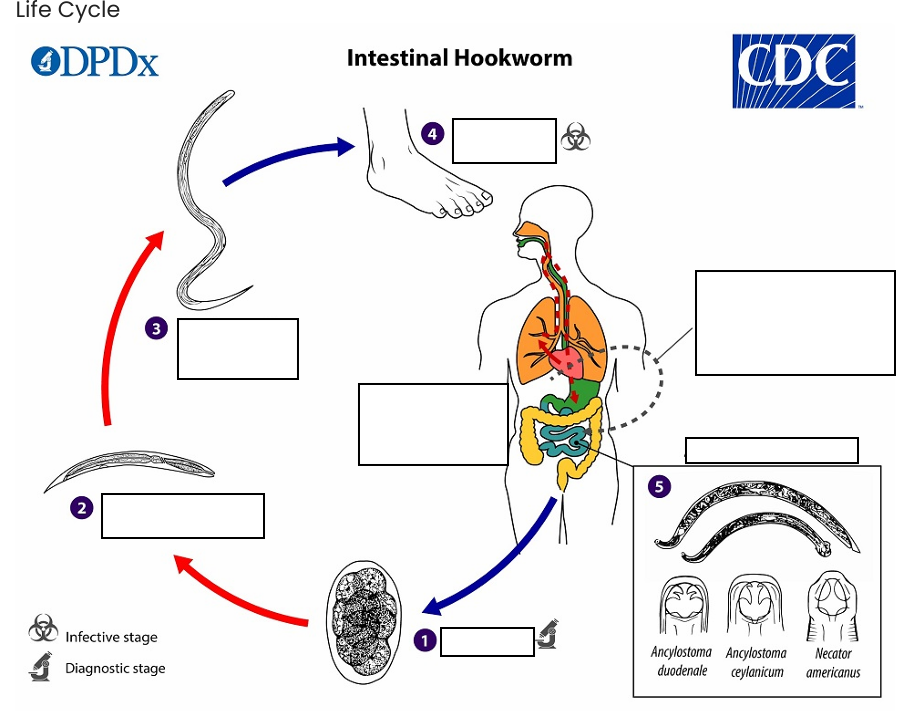
(1) Eggs are passed in the stool
,and under favorable conditions (moisture, warmth, shade), larvae hatch in and become
free-living in contaminated soil.
1 to 2 day
(2) These released grow in the feces and/or the soil
two molts) they become filariform (third-stage) larvae that are infective, and after 5 to 10 days (and two molts) they become filariform (third-stage) larvae that are infective
rhabditiform larvae
These infective larvae can survive 3 to 4 weeks in favorable environmental conditions. On contact with the human host, typically bare feet, the larvae penetrate the skin and are carried through the to the heart and then to the lungs. They penetrate into the pulmonary alveoli, ascend the bronchial tree to the pharynx, and are swallowed
blood vessels
(4) The larvae reach the jejunum of the small intestine, where they . Adult worms live in the lumen of the small intestine, typically the distal jejunum, where they attach to the intestinal wall with resultant blood loss by the host
reside and mature into adults
(5) Most adult worms are eliminated in _, but the longevity may reach several years
1 to 2 years
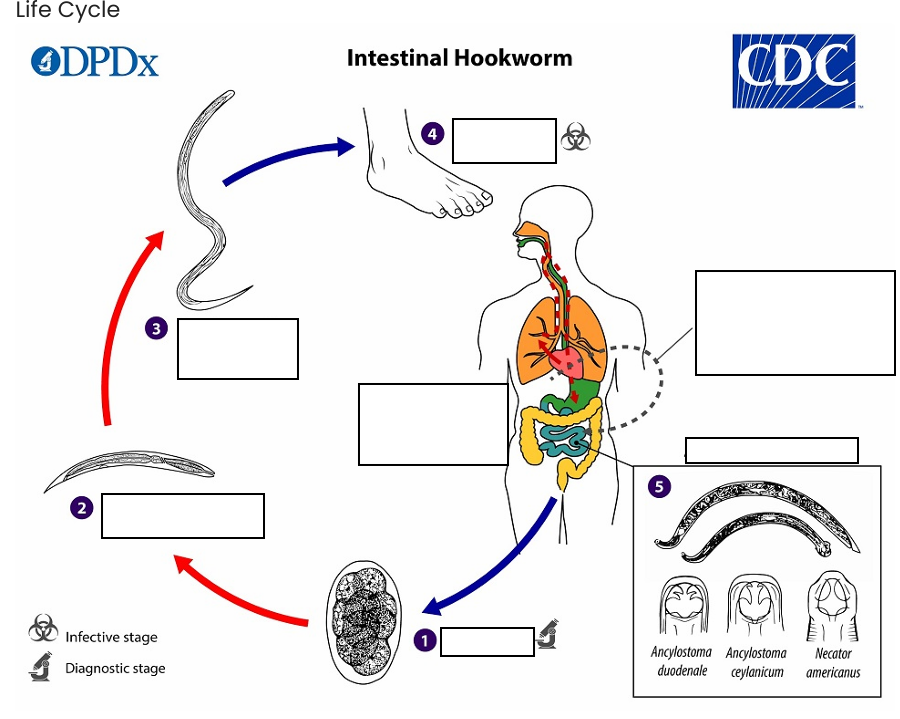
(1)
Eggs in Feces
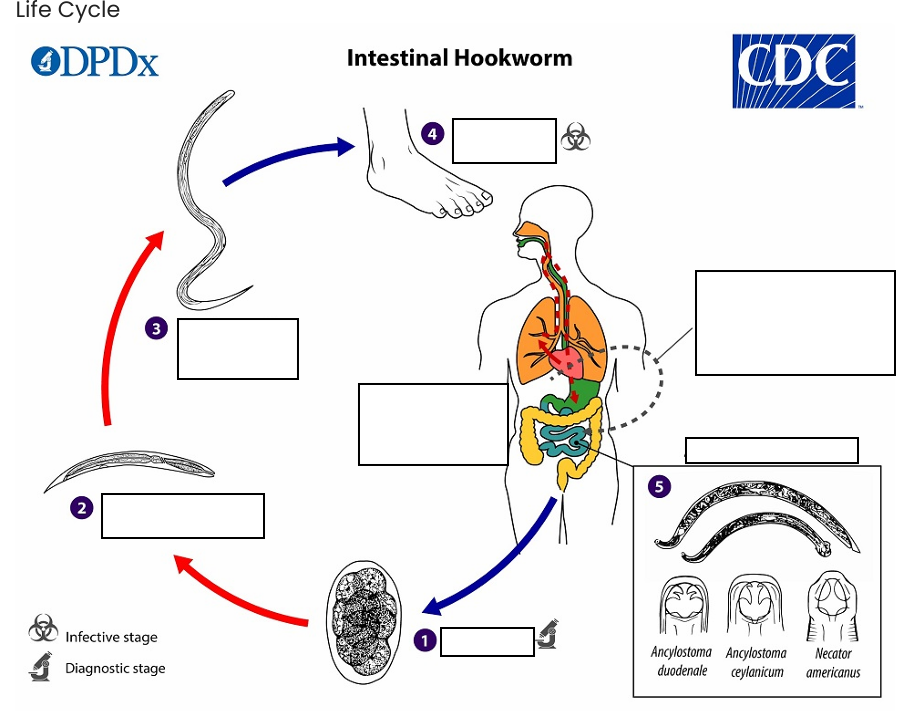
(2)
Rhabditiform Larva
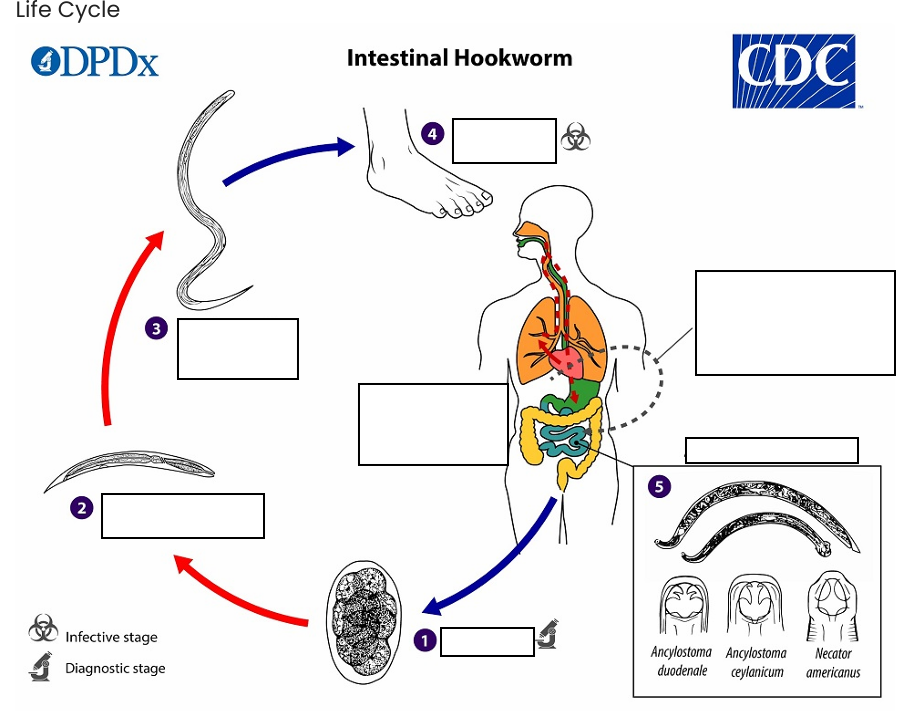
(3)
Development to filariform larva in enviornment
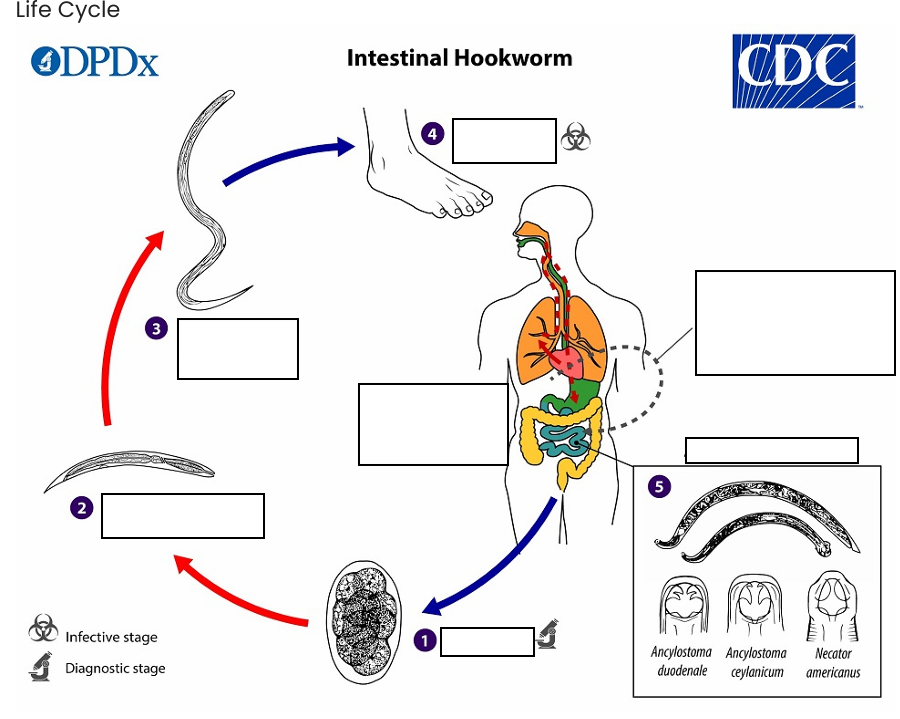
(4)
Filariform larva penetrates skin
dashed line
Ancylostoma spp. larvae can become developmentally arrested and dormant in tissues. Re-activated larvae may enter the small intestine.
box sa center
Larvae exit circulation in the lungs; they are then coughed up and swallowed.
(5)
Adults in small intestine
 Note
Note  Flashcards (32)