7: Mars Missions
 Studied by 0 people
 Call Kai
 Learn
Learn Practice Test
 Spaced Repetition
 Match
Match Flashcards
 Knowt Play
1/37

There's no tags or description
Looks like no tags are added yet.
Name | Mastery | Learn | Test | Matching | Spaced | Call with Kai |
|---|
No analytics yet
Send a link to your students to track their progress
38 Terms
how many martian meteorites have been identified?
~145
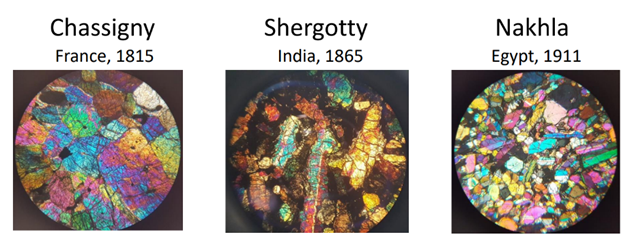
What are the 5 witnessed falls of martian meteorites? plus years
Nakhla, Egypt 1911
Chassigny, France, 1815
Shergotty, India, 1865 - basaltic
Zagami, Nigeria, 1962 - largest (~18kg)
Tissint, Morocco, 2011
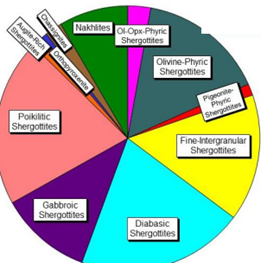
What is the classification for martian meteorites?
All are igneous rocks and cumulates
ages range from 150-600Ma
Groups
Shergottites (~134) - basaltic, iherzolitic
nakhlites (12) - clinopyroxene
Chassignites (3) - dunite
ALH84001 (1) - orthopyroxene
polymict/regolith breccia (1) - basaltic breccia, impact melt breccia
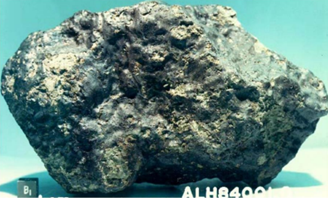
What is Alan Hills ALH 84001?
Mars meteorite:
1.931kg
found in Allan Hills icefield in antarctica 1984
identified as martian in 1994
comp: orthopyroxene - distinct from the snc groups
igneous
4.5ga
What was the controversy surrounding life on mars?
1996 paper: suggested carbonate globules in ALH 84001 had biogenic origin
evidence deemed insufficient
recently: nitrogen containing organic molecules found
What is NWA 7034?
Martian meteorite:
morocco 2012
comp: Al, Ca and Fe
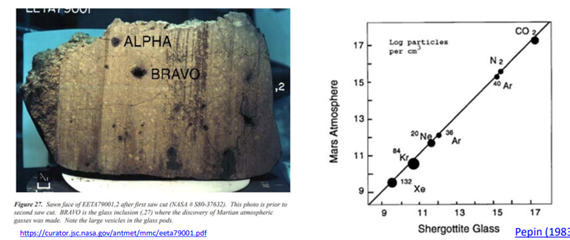
How do we know if a meteorite is from mars?
1983: gasses in ETT 79001 found to match atmospheric measurements taken by viking mission on Mars
What do Martian meteorites tell us about mars?
ancient volcanism/magmatism
evidence for past water:
Nakhlites - hydrated phyllosilicate clays
ALH 84001 - carbonate globules
possible indicators of past life
timing of impacts - ejection ages compared with known crater ages
soil (regolith) composition
mineral makeup, age, chemistry
describe the pre-space age telescope observations
From earth:
mottled surface
dark regions vary over time
polar ice caps change with seasons
Historical mapping
Giovanni Schiaparelli (1888)
Percival Lowell (1895)
What is the scientific motivation for mars exploration?
geological and climatic history
comparative planetology - model for early earth
habitability assessment
What are the names of the first Mars missions?
Mariner
Mariner 4
1965
first successful flyby
data: 21 images, ~1% surface
finding: heavily cratered surface
250km sections
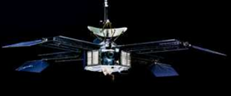
Mariner 6 & 7
1969
dual flyby
200 photographs returned
wide and narrow angle cameras
studied southern hemisphere
discovered: craters, plains, huge impact structures
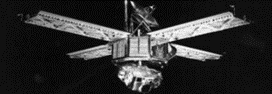
Mariner 9
1971
Discovered:
Olympus Mons
630km diameter
25km height
100x vol of Mauna Loa
Valles Marineris
vast canyon system
dwarfs earths grand canyon
Nirgal Vallis
575km long, 5-6km wide
has tributaries
resembles drainage channels formed by water
Sand dunes
Polar ice caps
permanent H2O ice caps at both poles
seasonal CO2 that sublimes
Why is mars NOT similar to the moon and mercury?
not just craters, impact melts and lava flows
complex geology: volcanoes, valleys, river-like channels, wind-driven features, dynamic polar caps
similar to earth
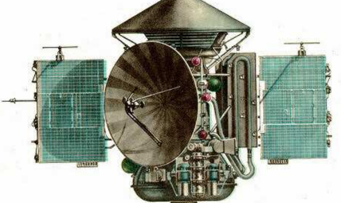
Soviet Mars program
Mars 2 and 3 1971
first orbiter and soft lander
arrived during greatest martian dust storm recorded
secret rovers
remained secret
small vehicles on side - movement by skis, carried penetrometers and densitometers
Viking Mission
two identical missions with orbiter and lander
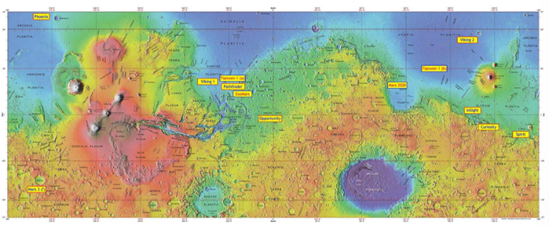
Viking 1: July 20, Chryse Planitia
Viking 2: September 3, utopia Planitia
analysis of surface and atmosphere
high res mapping: whole surface at 150-300m, selected areas at 8m
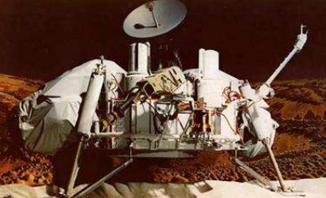
What instrumentation was present on the Viking landers
Environmental modelling:
2 360 degree cameras
meteorological sensors: temp, wind direction/speed, pressure
seismometer
Sample analysis:
robotic sampler arm (30cm)
x-ray spectrometer
gas chromatograph mass spectrometer
Biology experiments:
gas exchange, labelled release and pyrolytic release experiments to detect biosignatures
Name some notable post-viking mars exploration missions (1990s-2020s)
Mars Global Surveyor (NASA) - detailed mapping
Mars Pathfinder (NASA, 1997) - first rover (Sojourner)
Mars Odyssey (NASA) - orbital surveying
Mars Express (ESA) - European orbiter
Mars Reconnaissance Orbiter (NASA) - high-resolution imaging
Phoenix Mars Lander (NASA) - polar region studies
MAVEN (NASA) - atmospheric studies
Mars Science Laboratory/Curiosity (NASA)
InSight (NASA) - seismology
Mars Orbiter Mission (India) - first Asian Mars mission
Perseverance (NASA, 2020)
Tianwen-1 (China) - orbiter, lander, and rover
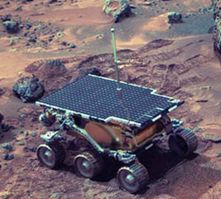
Mars Pathfinder
1997
airbag landing system - protective
sojourner rover: first wheeled vehicle on another planet, small, provided scale of surroundings, colour images
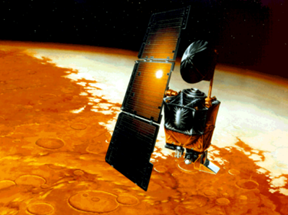
Mars climate orbiter
1999
FAILED
navigation error due to unit conversion mistake
Mars Polar Lander
1999
FAILED
premature engine shutdown - struck at high velocity
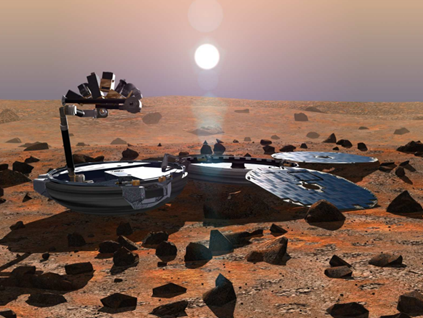
Beagle 2
2003
FAILED
solar panels not fully deployed
ESA Mars express mission
What are the two Mars Exploration Rovers?
Spirit and Opportunity, 2004-2018
Spirit Rover
Landed: Gusev Crater
Findings:
lack of expected lake sediments - lava flows instead
later: water evidence in si rich dust
bonneville impact crater
columbia hills
soil chemistry - salt rich, carbonate, habitable envs, silica rich soils
meteorites: asteroid fragments
lost in 2010
Opportunity Rover
designed for 90 days, lasted 04-18
Victoria crater
What was the camera technology on both mars rovers (2004-2018)?
Pancam technique:
black and white CCd instruments
13 rotating filter wheels
multiple images of same scene with different wavelengths
first colour image from Spirit
Phoenix Mars lander
2008 - Polar Regions
TEGA (thermal and evolved gas analyser): heated soil samples, analysed gases, confirmed presence of water ice
Major: confirmation of water ice below surface, ‘snow white’ trench exposed bright subsurface material
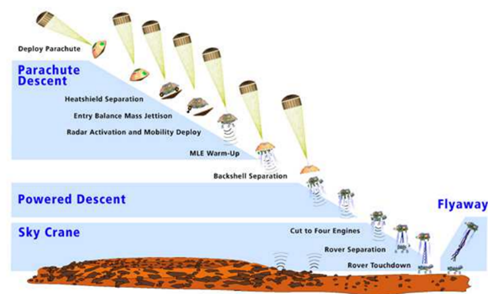
Curiosity Rover
2012 - present
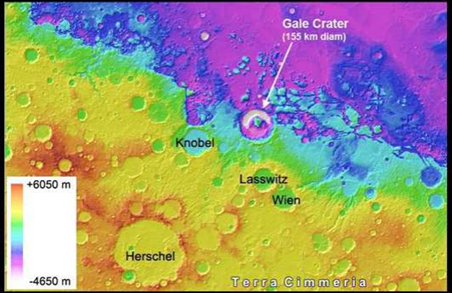
Gale Crater
travelled 7km
objective: traverse to Mount Sharp
Why is the Gale Crater important?
filled with younger sedimentary layers
fine-grained sediments and mudstones
clay minerals
RIVER DELTAS AND LAKE DEPOSITS = WET SYSTEMS
DRAMATIC CLIMATE CHANGE
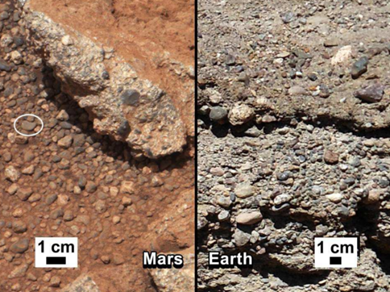
Evidence of ancient water;
rounded pebbles in conglomerates
poorly sorted
formed by flash floods
similar to terrestrial alluvial deposits
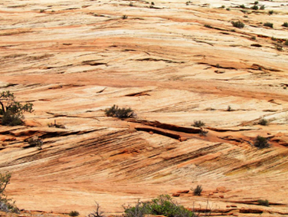
evidence for wind-blown deposits;
STIMSON FORMATION in gale crater
cross bedded sandstones
simple dune structures
dry, arid
evidence of aeolian wind processes
Evidence for ancient lake environment:
chemical analysis of mudstones
clays and magnetite
moderate ph and low salinity = habitable for microbial life
likely persisted for extended periods
InSight Lander
2018-2022
goal: study mars interior structure - deploy seismometer
Instrumentation: seismic package, heat flow probe
challenges: long delays, ~150m overspend - vacuum seal issues with seismometer
acheivments: detected marsquakes, data on interior structure
ExoMars program
2016-present
trace gas orbiter
goals: ATMOSPHERE
investigate methane sources
Schiaparelli test lander: entry, descent and landing technology - crashed
ExoMars Rosalind Franklin Rover
2022
landed: Oxia Planum
2m drill
accessed subsurface: below radiation, water ice may be stable, organic material preservation
search for biosignatures
Perseverance Rover Mission
2020
Jezero Crater
ancient river delta, fed into crater lake (3.5Ga)
well preserved sedimentary deposits
 Note
Note  Flashcards (76)