Quantifying Species Diversity
 Studied by 0 people
 Call Kai
 Learn
Learn Practice Test
 Spaced Repetition
 Match
Match Flashcards
 Knowt Play
1/93

There's no tags or description
Looks like no tags are added yet.
Name | Mastery | Learn | Test | Matching | Spaced |
|---|
No study sessions yet.
94 Terms
What is the most important factor regulating populations?
• Food availability
• Abiotic factors
• Competition
• Facilitation
• Predation
• Herbivory
• Parasitism
Species diversity
depends upon richness and evenness
bottom-up control
population sizes and dynamic are regulated by the primary producer of the food web
evidence for bottom-up control
1. Energy decreases from plants through herbivores to carnivores
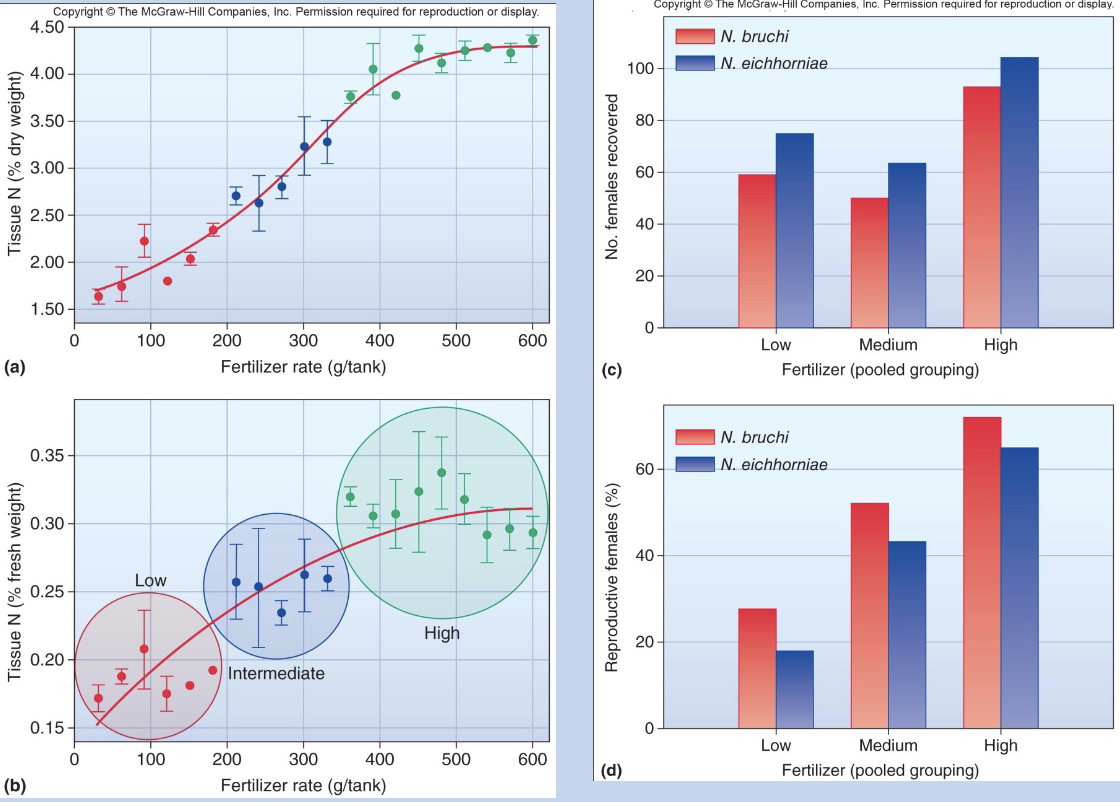
2. Organisms prefer food that contains the highest nitrogen content (NLH)
Example of bottom-up control(draw graph)
Bottom-up control of water hyacinth and its herbivores in Florida
trophic cascade(Top-down control)
highest level of food chain controls species size and dynamics
Evidence for Top-down control
1. Suggest that natural enemies control herbivores directly
2. Herbivores control plants directly – So natural enemies influence plants indirectly
3. Effects may percolate from predators through herbivores to plants
Examples of top-down control
• Biocontrol: Natural enemies such as predators and parasites are released against pests.
• Cottony Cushion Scale, California citrus and ladybird beetle
Necessary attributes for biocontrol agents
(Huffaker and Kennett, 1969)
1. General adaptability to the environment.
(Mismatch between enemy’s preferred optimal abiotic range and the released range: most common reason for failure (34.5%))
2. High searching capacity for hosts.
3. High rate of increase relative to the host’s.
4. Good dispersal ability.
5. Minimal time lag effects in responding to changes in host numbers
Twelve Guidelines for the International Code of Best Practices for Classical Biocontrol
Ensure the target weed”s potential impact justifies the risk of releasing nonendemic agents
Obtain multi-agency approval for the target weed
Select agents with the potential to control the target weed
Release safe and approved agent
Ensure only the intended agent is released
Use appropriate protocols for release and documentation
monitor impact on the target plant species
Stop releases of ineffective agents, or when control is achieved
Monitor impacts on potential nontarget species
Encourage assessment of changes in plant and animal communities
Monitor interactions among agents
Communicate the results to the public
Biological control often backfires
invasive species ladybeetle introduced for pest control takes over native ladybeetles habitat
Cane toad: to control grey backed beetle, but beetles at top of cane toads at the bottom, beetles during the day toads during the night, → toads spread everywhere, breed all year, poisonous and resistant to predator venom
Community
group of species that coexist and interact within a defined area
Based on observable differences in their physical and biological structure
– Can be difficult to define boundaries!
Ways to measure Diversity within communities
There are various kinds of diversity, and various ways to measure and compare diversity:
– Species richness
– Relative abundance
– Evenness and dominance
– Functional types or guilds
– Diversity of higher taxa (families, etc.)
– Genetic diversity within species
Species richness
the count of the number of species occurring within the community
Relative abundance
the percentage each species contributes to the total number of individuals of all species
Berger – Parker Index
the most simple dominance index
D_BP = N_max / N
1. N_max = total number of individuals in the most common species
2. N = the total number of individuals in the community
If one species tends to dominate, the community won’t be very diverse (and the index will be high)
To express greater diversity with a greater value, use the complement (D_BPC) = 1 - DBP
Simpson’s Index (D_S)
Probability of any two individuals drawn at random from a community belong to different species
• Where p_i is the proportion of individuals in the ith species (n_i/N)
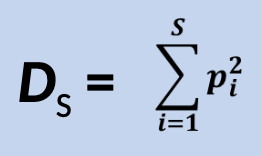
total dominance
When the basic Simpson index = 1, this represents total dominance (the converse of diversity)
Gini-Simpson Index
A complement index to Simpson’s [D_GS = (1 – D_S)]
– Increasing values mean increasing diversity
Simpson’s downsides
Heavily weighted towards the most abundant species
– Addition of rare species will rarely change the index.
– Limited value in conservation biology (but at least uses information about more species than Berger-Parker)
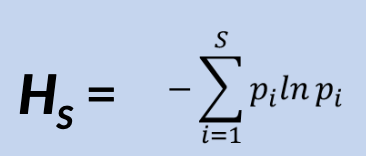
Shannon (or Shannon-Weiner) Index
Relative abundance of each species = pi = ni / N
• In the absence of diversity, where only one species is present, H_S = 0
• H_max = ln S, occurs when all species are present in equal numbers
Values for real communities often fall between 1.5 and 3.5, with the higher the value, the greater the diversity.
This index is very valuable to conservation biologists, who often study rare species and their importance to the community
Tells you certainty of guessing next species: PPPP_ is easier than LMTS_
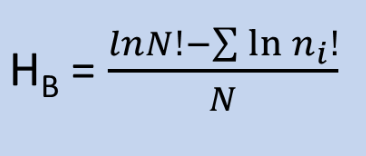
Brillouin Index
Where n¡ : number of individuals in each species and N is the total number of individuals of all species in the community
N! is a factorial
rare species with single individuals contribute nothing to the overall value of the index (ln1 = 0)
Shannon vs. Brillouin
The Brillouin index may have some advantage over the Shannon index related to conservation biology.
• Changes as overall abundance changes
The Shannon index is simple to use and doesn’t use factorials in the equations that produce huge numbers
Which index to use?
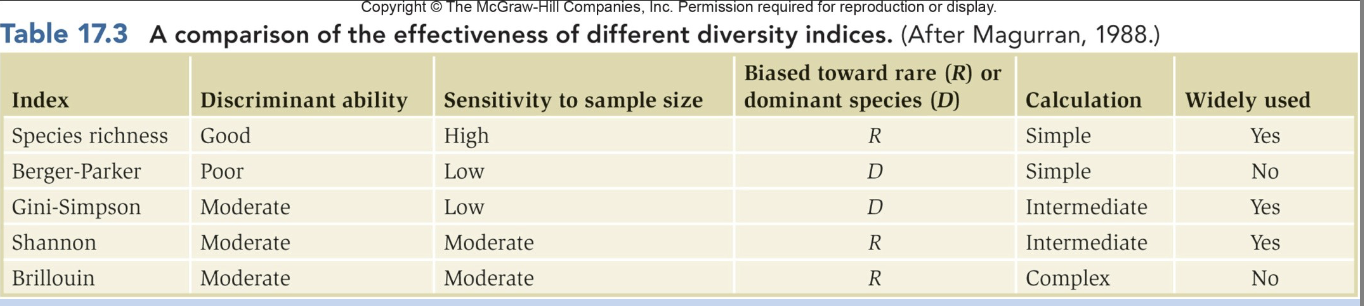
Dominance
the degree to which a species is far more abundant (in numbers or biomass) than other species in a community
Evenness
how many individuals belong to each species—are they distributed fairly equally
For any information statistic index, maximum diversity is found when all species are equally abundant.
Evenness, E, compares the actual diversity to the maximum possible
For example, using the Shannon index:
E = H_S/H_max, H_max = ln S
E is constrained between 0 and 1.0 and can be determined using any of the indices
Diversity indices
A measure of the number of species in an area and the relative distribution of individuals among these species
Rank abundance diagrams
Graphical plots of numbers of individuals/species against rank of species commonness in the community
making Rank Abundance diagrams
Plot the relative abundance(p_i) of each species against rank
– Ranks species by abundance (species w/ most individuals = rank 1)
– A community with a greater species evenness would have a more gradual slope of the rank-abundance curve
Plotting abundance (log scale) against rank gives a more complete picture of species in a community
Can be drawn for number of individuals, biomass of individuals, ground area covered by plants, etc
Rank abundance diagrams forms
– Lognormal
– The dominance preemption model
– The random fraction model
– The MacArthur fraction model
Log Normal Rank Abundance Plot
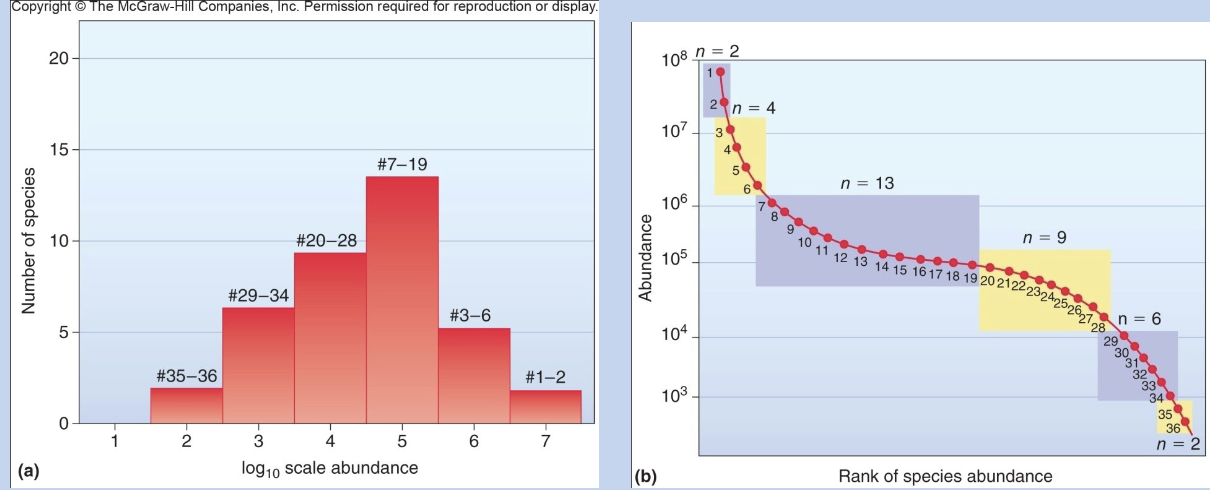
Similarity indices
Compare how areas may be similar in biodiversity, in terms of the numbers of species they hold in common
Community Similarity
Distinguishing between communities based on differences in species composition is important to understanding the processes that control community structure
Similarity indices types
Jaccard index
Sorensen’s index
Jaccard index
C_J = a/(a + b + c)
a = found in both sites
b = found in community B but not community A
c = found in community A but not community B
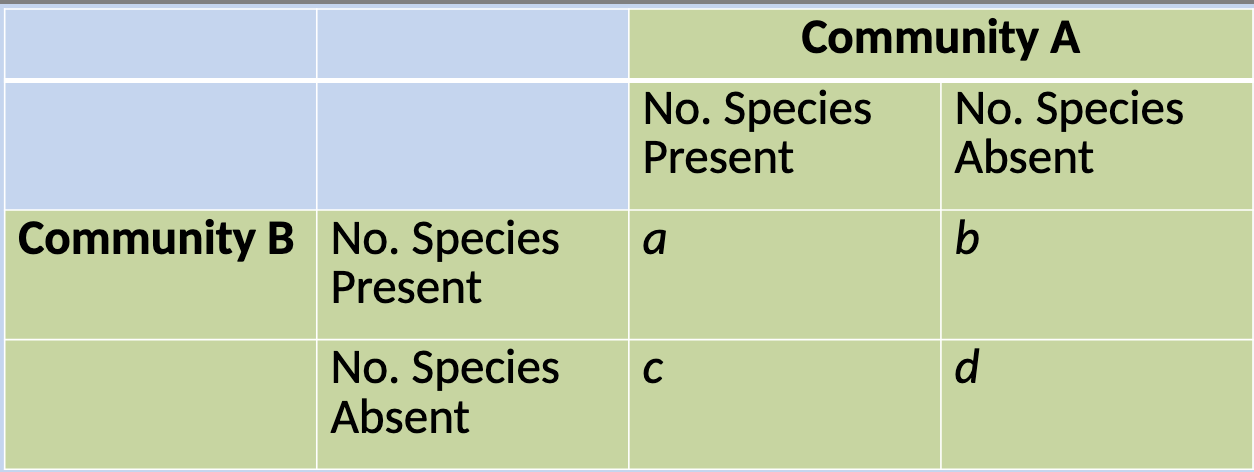
Sorenson index
C_S = 2a/(2a + b + c)
Weights matches in composition between sites more than mismatches due to the possibility of undersampling
How many species are there
Current counts (1.5 million +)
Estimated 8.7 million species
Species richness is underestimated
Assessing species richness depends on
– Number of samples
– Type of habitat
– Issues associated with taxonomy
It is not possible to sample everywhere
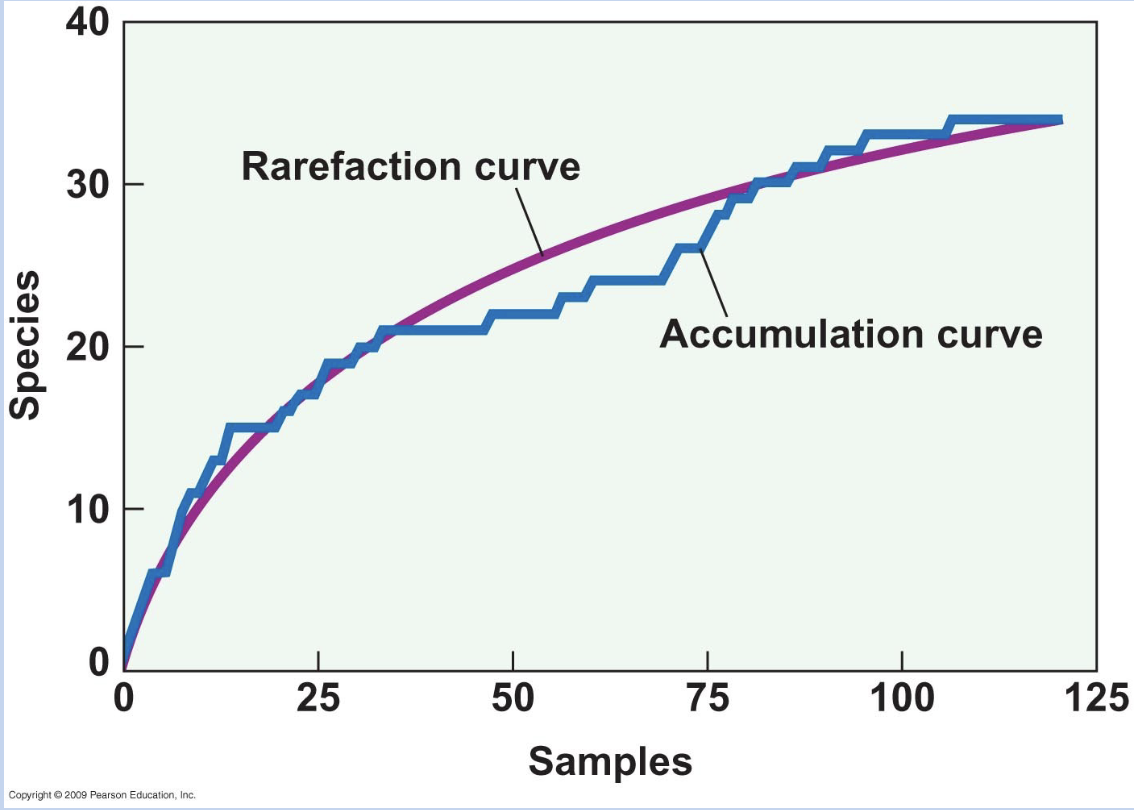
– Species accumulation curve
Quantifying biodiversity
Conduct surveys in a subset of sample areas (plots)
As you sample more subsets, more likely to accumulate more species
– Species accumulation curve rises rapidly at first, as more common species are quickly accumulated
– Rises more slowly as more rare species are included
– In principle, curve will asymptote when no new species are added despite increased sampling
Survey graph
Asymptote = optimal sampling size and best estimate for number of species present
Accumulation curve: move left → right, species found(check this?)
Rarefaction curve: a graphical tool that plots the expected number of species against the number of individuals sampled
Estimating richness
When a species accumulation curve does not reach an asymptote, there are various methods that can be used to approximate where the curve is likely to plateau
Just because a species is present, it may not be detected within a survey!
In any given survey, a species may be:
– present (and detected)
– truly absent
– present (and undetected)
Additional methods to quantify biodiversity include this detection parameter
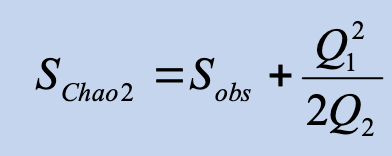
Chao 2 estimator
Where Q1 = number of species observed in only one sample, Q2 = number of species observed in only two samples
Why preserve biodiversity?
Benefits to humans
– Food, forest products, medicines
– Genetic resources
– Tourism and Aesthetic components
– Indirect (ecosystem services)
Investigating Species Richness Patterns
biodiversity is not distributed randomly
Latitudinal Species Gradient
number of species increases (in general) from polar → tropical
Hypotheses for diversity patterns
Difficult because…
– No one explanation explains all the patterns
– Different factors may act at different scales
– Patterns vary by taxonomic group
Area
There is more area at the equator – geometric fact
Species - Area hypothesis
Increased richness with increased area?
– More individuals (larger populations), resistance to extinction
– Greater range of habitats
– More potential for barriers that lead to speciation
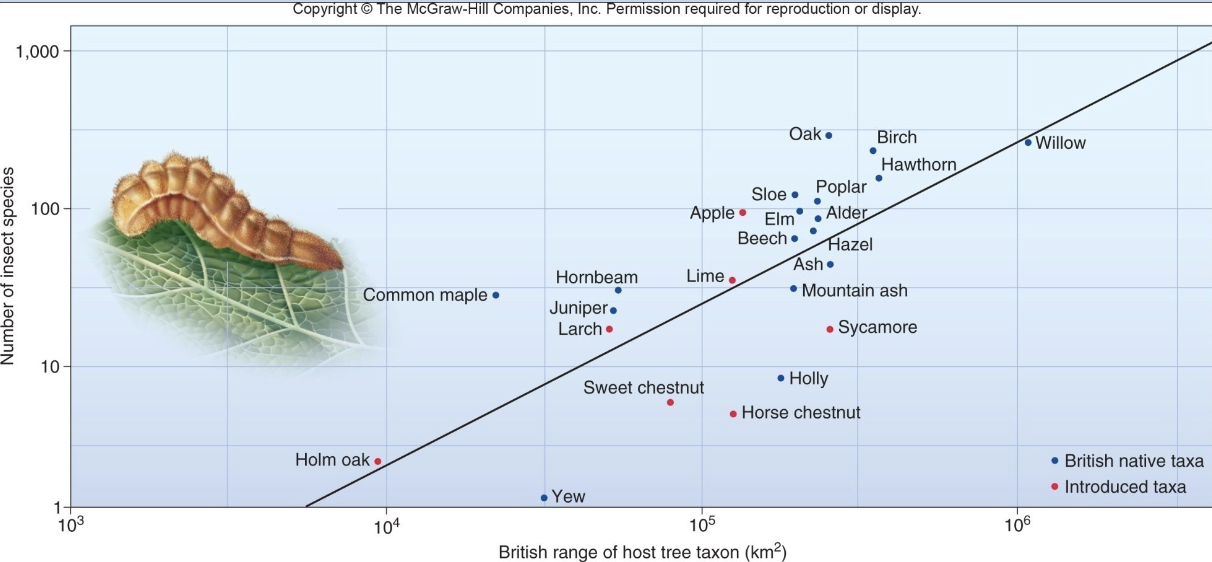
Species – Area hypothesis example
Relationship between insect species richness on British trees and area
Trees with a greater range support more insect species
Species-Energy hypothesis
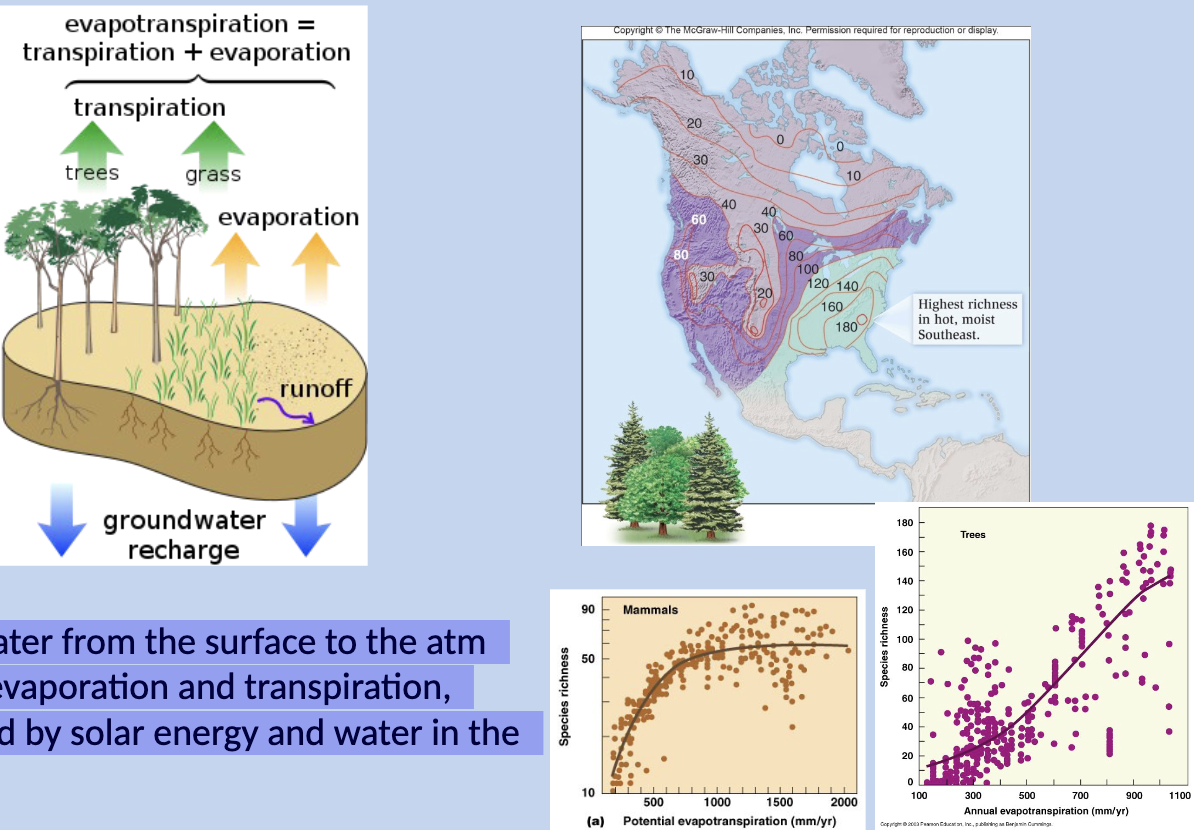
Environmental conditions favorable for photosynthesis and plant growth may give rise to increased plant diversity over evolutionary time
Provides a wider resource base permitting more species to coexist
– More herbivores, more predators, parasites, scavengers!
– Also provides habitat and structural diversity
Energy measured using evapotranspiration(imagine pictures)
Flux of water from the surface to the atm through evaporation and transpiration,
Influenced by solar energy and water in the ground
Species – energy doesn’t explain why
Some tropical areas have low productivity but high species richness
Some areas have high productivity but low species richness
– The sub-Antarctic Ocean
– Polluted waterways
– Estuaries
Favorability/Seasonality hypothesis
In a stable climate, species can specialize on predictable resources and have narrower niches
– Facilitating speciation
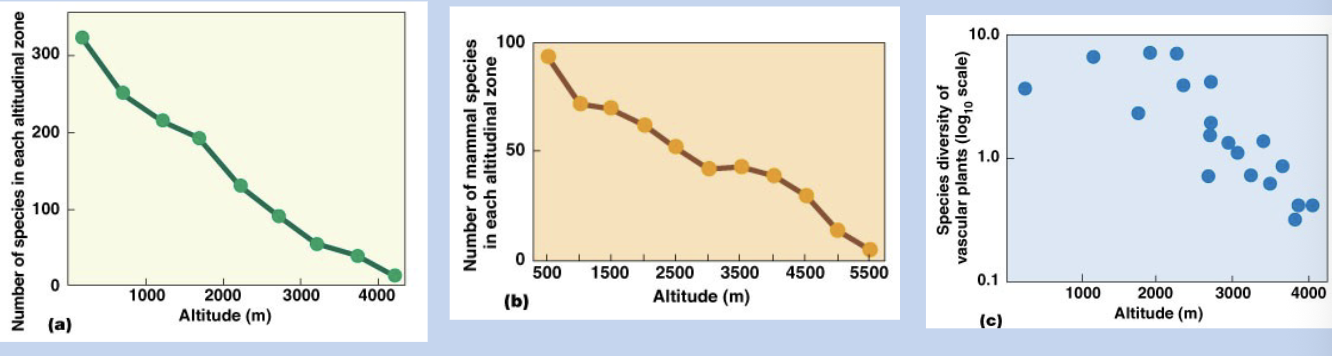
Fewer species have evolved to tolerate harsh or unfavorable environments (high latitudes, altitudes)
Species – Time Hypothesis
Tropics have been more stable across geologic time allowing more time for the evolution of new species
Temperate regions are younger than tropical regions and are still recovering from the Pleistocene glaciations
Species accumulation due to: Longer time for species in tropical areas
Alternatively, evolution is faster in the tropics
– High temperatures, short generation times, increased mutation rates
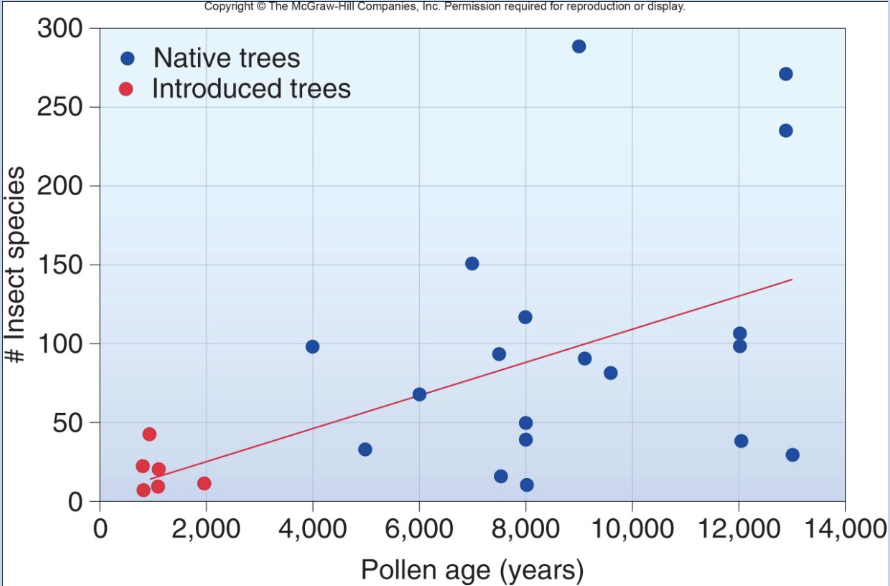
Support for Species-Time Hypothesis
number of insects in british trees by radiocarbon dating pollen
Older tree species support more insect species
Species-Time does not explain…
Data that do not support the hypothesis
– Ex: The oldest vertebrate lineages do not support more helminth parasites than the youngest lineages
Limited applicability to marine systems and endotherms
Data that suggest higher speciation and extinction rates in high latitudes
Null models: Mid-Domain
Mid-domain or boundary constraint models assume that hard boundaries constrain the size and placement of species’ ranges which causes randomly distributed species’ ranges to cluster near the center of the domain
Hypotheses for the latitudinal gradient
Why are there more species the farther you go from the poles?
a) area
b) energy
c) ambient energy/seasonality
d) time/historical stability
e) null models
Factors that promote local species richness
• Small change in environmental conditions
• Physically diverse habitat
• Evolution
• Middle stages of succession (more next time)
• Natural Enemies
• Intermediate environmental disturbance
Natural Enemies
Natural enemies reduce prey density, decrease prey competition, and permit coexistence of more prey species
Natural Enemies example
starfish(keystone species as well)
Intermediate Disturbance
maximum diversity at intermediate levels of disturbance
mix of r & K-selected species
High Rates of Disturbance
Species continually driven extinct
• Only good colonists (r-selected species) persist, moving in from adjoining, but undisturbed habitats
Low Rates of Disturbance
Competitively dominants outcompete all other species
A few K-selected species would persist, yielding low species richness
Intermediate Disturbance example
boulders at sea
Support for intermediate disturbance hypothesis
Higher tree diversity found in Japanese forests with intermediate storm intervals
(Hiura 1995).
• Coral reefs and tropical forests maintain high diversity in areas disturbed by hurricanes and tropical storms
Factors that negatively influence biodiversity
• Extreme conditions
• Large disturbance
• Intense environmental stress
• Severe shortage of key resources
• Isolation
• Introduction of invasive species
Invasive species pathway
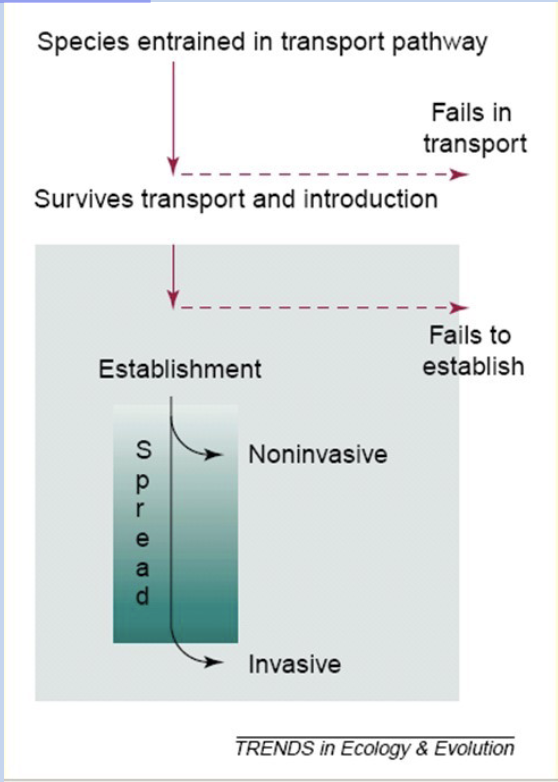
How do invasive species succeed?
Escape constraints of predators or parasites
Find vacant niches
Human disturbance aids their success
Have attributes that facilitate their success
Proposed attributes of successfully invading species
shedding of natural enemies during colonization
absence of natural enemies in recipient community
Better competitor than native species
Presence of mutualists in recipient community
high dispersal ability
association with humans
high reproductive rate (r-selected)
high growth rate (r-selected)
ability to thrive in disturbed areas
asexual reproduction (plants)
unique ways of lire; occupy vacant niches
climatic match between site of origin and site of colonization
Consequences of Plant Invaders
Can take over entire ecosystems
– Colorado saltcedar
– Passionflower in Hawaii
– European cheatgrass
Plant Invaders examples
– Colorado saltcedar
– Passionflower in Hawaii
– European cheatgrass
– Kudzu
Kudzu
Rapidly growing vine native to Japan, introduced in 1880’s as an ornamental and a forage crop
1900’s: Farmers encouraged to plant to resist erosion
Can grow as high as 30 meters tall
Thrives in ample sun
Quickly outcompetes native vegetation, strangling other plants and having the power to uproot tree
Plant Invaders - Aquatic
53 exotic aquatic weeds in Hudson River
– Alter animal species
– Choke waterways
– Change nutrient cycles
– Disrupt recreational activities
Vertebrate Invasions
Mammals
– Several escaped or were released into the wild
– Prey on native animals, plants, intensify erosion, vectors of disease
Birds
– Pigeon was intentionally introduced, now causes ~1.1 billion damages/year
Fish
– 138 introduced to US
– Can lead to extinction of natives
– Sport fishing 38 billion business
Effects of Invasions
Community composition
– Lead to homogenization
Negative impacts on native animals
Reducing the recruitment of natives (succession)
Promoting the spread of other non-native species
Ecosystem-level consequences
Methods of Control
Eradication is rare
Control depends on commitment and continued diligence
Long term, ecosystem-level efforts are the most successful
Prevention is the best way
What threatens species?
Habitat Degradation…..………………85%
Invasive Species……..………………..49%
Pollution………………………..……... 24%
Overexploitation……………..……….. 17%
Disease………………………..………. 3%
What is rarity?
Species that are at high risk are typically rare
Numerical: Factors associated with the abundance of a species
Spatial: Factors associated with the distribution of a species
Which species are most threatened?
Species differ in their susceptibility
– Life history characteristics
– Small metapopulations
– Seasonal migrators
– Specialized habitat requirements
– Large home range
– Species hunted/collected by humans
– Distribution
• Ubiquitous vs. Endemic
Identifying threatened species
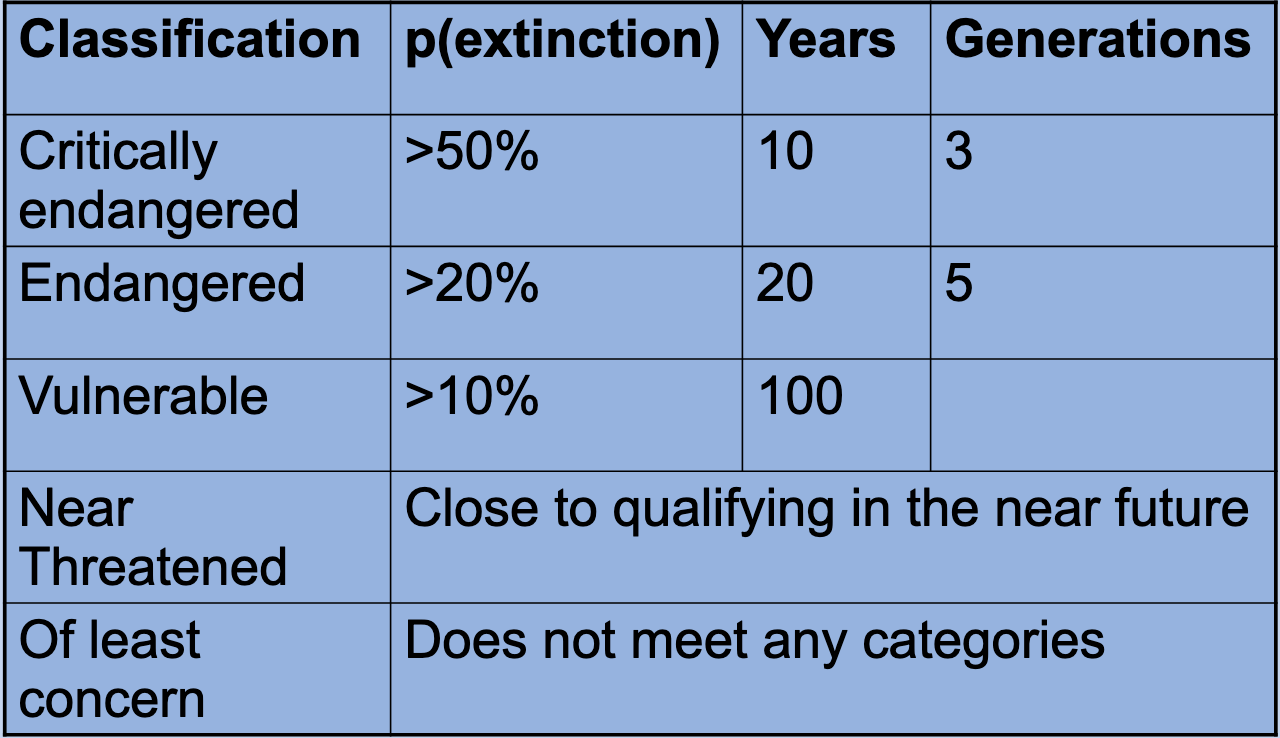
IUCN red list
Can incorporate spatial extent, population size, demography, stochastic events, but can be classified based on minimal data
Goals of IUCN red list
– Provide global index on the state of biodiversity degeneration
– Identify priority species for conservation attention
Classifying Extinction Risk table
Population approach to conservation
Endangered species consist of a few – or even a single local population(s)
– Often restricted to protected areas
Conservation plan requires the preservation of as many individuals as possible within the greatest possible area!
– …but space is limited…
How much space does this species need?
Determine MVP
Based on the MVP, determine area of suitable habitat needed (Minimum Dynamic Area)
Minimum Viable Population(MVP)
– Number of individuals needed to ensure that a species will persist in a viable state
– Depends on life history and dispersal ability
Protecting and Preserving: The Ecosystem Approach
Protect populations of species in their native habitats
– Preserve sufficient habitat areas through govt or privatization
– Eliminate or reduce populations of nonnatives
– Manage protected areas and restore natives
– Restore habitats
Protected Areas
An area of land and/or sea especially dedicated to the protection and maintenance of biological diversity, and of natural and associated cultural resources, and managed through legal or other effective means. (IUCN)
Is the PA system representative?
• Though Mexico has a lot of conservation reserves, only 33% of the amphibians occur in at least one protected area (Young et al 2004)
• In the eastern slope of the Andes, the endemic plants, amphibians, mammals and birds all have different distributions (Young et al 2007)
• Of the 11,633 species of mammals, amphibians, turtles, freshwater tortoises, and threatened birds analyzed, 12.2% (1424) of species are not covered by any protected area in the global network (Rodrigues et al. 2004a, b)
How do you choose an area to protect?
Reserve selection algorithms: selecting by maximizing the number of species in a reserve
– Typically based on presence/absence data, ignoring spatial heterogeneity and metapopulation dynamics (Akçakaya and Sjögren-Gulve 2000)
• Community-based approaches require an understanding of the relationship between biodiversity and the landscape
Hot Spots (Conservation International)
Patterns of species richness (and endemism!) increases as move from poles to equator
How can we support the most species for the least cost?
Mittermeier et al. (2004) identified 24 hotspots that contain 150,000 endemic plants (2.3% ELS)
Myers identified 25 hotspots that contain 133,149 plant species (44% known plants)
Where to place focus?
1. Biodiversity hotspots
2. Megadiversity countries (17 home to 80% species!)
3. Crisis ecoregions
– Areas at greatest risk of habitat loss because of land conversion
4. “Last of the wild”
– Areas that fall within the lowest 10% of human affected areas
– Pristine areas offer a great opportunity for conservationists because of their relatively intact communities
nine global biodiversity conservation priority templates
CE, crisis ecoregions
BH, biodiversity hotspots
EBA, endemic bird areas
CPD, centers of plant diversity
MC, megadiversity countries
G200, global 200 ecoregions
HBWA, high-biodiversity wilderness areas
FF, frontier forests
LW, last of the wild
make up the Priority setting exercises
What are the limitations of Global Priority Setting Exercises?
Difficulties in measuring taxonomic richness
Congruence between indicator groups (e.g. plants) and other elements of biodiversity?
Many rare species found in ‘cold spots’- sites of relatively low biological diversity
Source-sink dynamics complicate identification of hotspots
How will patterns change with climate change?
 Note
Note  Flashcards (202)