Protectionism
 Studied by 0 people
 Call Kai
 Learn
Learn Practice Test
 Spaced Repetition
 Match
Match Flashcards
 Knowt Play
1/13

There's no tags or description
Looks like no tags are added yet.
Name | Mastery | Learn | Test | Matching | Spaced | Call with Kai |
|---|
No analytics yet
Send a link to your students to track their progress
14 Terms
protectionist policies
tariffs, quotas, subsidies and administrative barriers
tariffs
a tax on a good or a service that is imported
they are most effective when demand is elastic and/or when a close substitute is produced within the domestic market
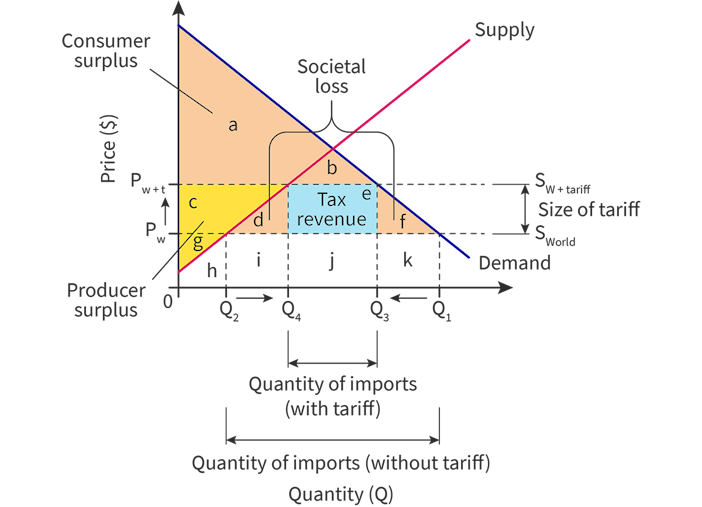
domestic producer revenue: before - g+h, after - c+d+g+h+i
foreign producer revenue: before - i+j+k, after - j
consumer surplus: before - a+b+c+d+e+f, after - a+b
government tax revenue: before - nil, after - e
domestic producer surplus: before - g, after - c+g
society misallocation: before - nil, after - d+f
quota
a physical limit on the volume of a good or service that enters the country
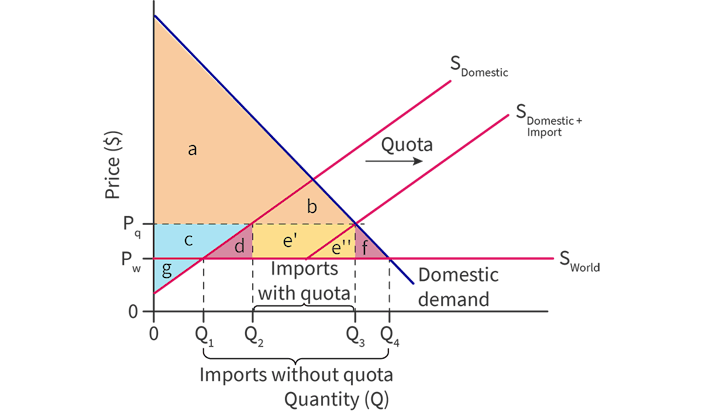
domestic producer revenue: before - g+h, after: c+d+g+h+i
foreign producer revenue: before - i+j+k, after - j+e
consumer surplus: before - a+b+c+d+e+f, after - a+b
government revenue: before - nil, after - can charge for quota licenses
societal misallocation: before - nil, after - d+f
domestic producer surplus: before - g, after - c+g
administrative barriers
protection of domestic markets by governments from import of goods and services not deemed of adequate quality
bureaucratic barriers preventing foreign producers from exporting goods and services
types of administrative barriers
product standards
voluntary export restraints
buy national policies
product standards
includes laws or regulations to protect the quality, health or safety in the domestic market
voluntary export restraints
when an exporting country voluntarily agrees to reduce the volume of exports(occurs through negotiating a limit)
buy national policy
a campaign that encourages consumers to buy domestically produced goods instead of imported goods. Utilises patriotic feelings to encourage consumers to support the nation’s economy
For protectionism: protection of infant industries
 Note
Note  Flashcards (106)