Ap Macro Unit 5
 Call Kai
 Learn
Learn Practice Test
 Spaced Repetition
 Match
Match Flashcards
 Knowt Play
1/49

There's no tags or description
Looks like no tags are added yet.
Name | Mastery | Learn | Test | Matching | Spaced | Call with Kai |
|---|
No analytics yet
Send a link to your students to track their progress
50 Terms
What are the Fed’s 2 main goals and what are they called?
low unemployment and low inflation
dual mandate
Phillips curve summary of the theory
there is an inverse relationship between the rate of unemployment and the rate of inflation
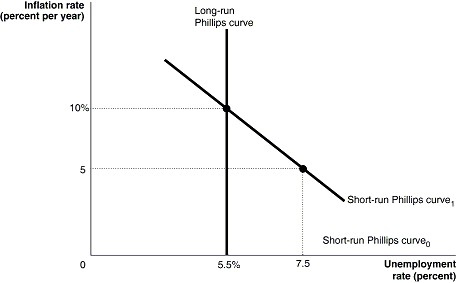
Phillips Curve Graph Long run and short ru what does it look like
Label as LRPC and SRPC
unemployment rate at equilibrium is the natural rate of unemployment (NRU)
Inflation rate at equilibrium is the Interest Rate (IR)
why does phillips curve make sense?
because as AD increases so do prices and the level of employment
changes in Aggregate Demand (AD) meaning shifting and government policy - cause what in the short run phillips curve (SRPC)
it causes movement along the short run phillips curve (SRPC)
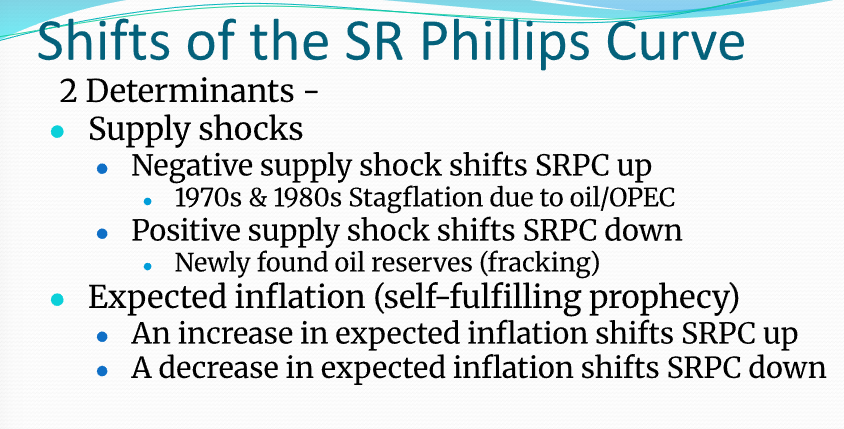
what are the determinants/shifters of the short run phillips curve (2 with things under)
supply shocks (negative and positive)
supply shocks have an inverse relationship with SRPC
expected inflation (increase or decrease) (self-fulfilling prophecy)
expected inflation has a direct relationship with SRPC
if we expect inflation we actually cause inflation
natural rate of unemployment is when cyclical equals what
cyclical equals 0
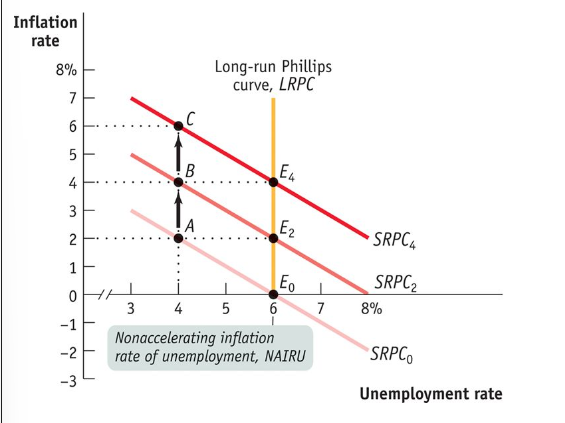
story about long run phillips curve based on this graph summary
economy has had 0% inflation so we expect inflation to remain at 0% (expected becomes actual)
if the gov doesn’t like 6% u/e rate, they could use expansionary monetary or fiscal policy to bring it down to 4%
this moves along the SR Curve to 2% inflation
overtime the public will then start to expect 2%
and because increased expectations SRPC will shift
process above will repeat if you operate below the natural rate of unemployment →inflationary gap
used policy to drive u/e up → you would create a reccessionary gap
NAIRU is same as NRU (natural rate of unemployment
what does nairu stand for and what it the same as
nonaccelerating inflation rate of unemployment
same as natural rate of unemployment (NRU)
what does Long Run Phillips Curve (LRPC) show
it shows the relationship between unemployment and inflation rate after expectations of inflation have adjusted→ makes it vertical at NRU/Nairu
2 ideas that makes up the quantity theory of money
quantity of money available in an economy dictates the value of money
growth in quantity of money is the primary cause of inflation
what is the equation of exchange and what do the letters in it mean
MV=PQ
M=money supply (available set by fed)
V= the velocity of money (number of times an average dollar bill is spent)
P= the average price level
Q = real gdp/ real value of all final goods and services produced
in MV = PQ, what does the MV part mean
total amount spent on consuming goods and services
example money supply is 4 trillion and the velocity of money (number of times an average dollar bill gets spent) is 4, MV= 16 trillion of g/s services were bough
in MV = PQ, what does the PQ part mean
nominal gdp (total amount recieved by sellers final goods/services)
why does the MV= PQ equation work
cz velocity of money is stable and gradually increases over time
P*Q is nominal GDP, and Q is real output (real gdp) which is not impacted by the money supply
if MV = PQ equation is given and one of the variables on each side is stable and the other one on each side isnt?
the other one on each side has to increase or decrease because they have to equal each other
what is crowding out and why does it happen
possible problem if you use expansionary fiscal policy (by increasing government spending = inc gov borrowing) → AD and D Lf increase→causes interest rates to go up→which is contractionary because people and businesses don’t want to get loans →AD goes back down bc investment decreases (opp of what you want)
define economic growth and what does it usually correlate with
an increase in the aggregate production of goods and services in an economy from one period of time to another
usually correlates with increased productivity or increased output per unit of input
what are the 4 determinants of economic growth?
physical capital (also called capital stock)
human capital
labor force
technology
what is economic growth heavily dependent on and why is it heavily dependent
heavily dependent on rates of saving and investment spending (I in gdp)
big investment (capital) projects need loans which comes from the loanable funds market
what does an aggregate production function graph look like and what does it show?
shows how an economies aggregate output (real GDP) depends on the determinants of economic growth
sustained economic growth only happens when labor productivity (amount of output per worker) increases steadily over time
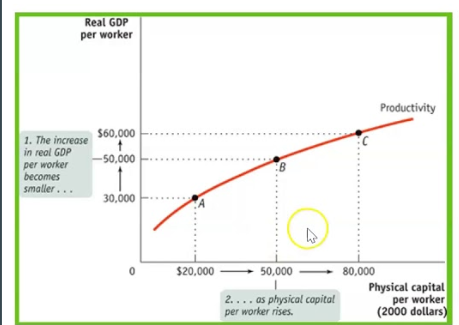
what is labor productivity and what 2 things determine it
amount of output per worker
2 things: quantity of capital per hour worked and the level of technology
when the amount of capital per worker changes, that is what on the production function
movement along the production function
when the level of technology changes, that is what on the production function
a shift of the production function
why do slopes decrease as you increase the physical capital per worker
because of diminishing marginal returns
what policies can the government create to support and encourage economic growth
increase spending in education (human capital)
increase spending in infrastructure
decrease business/corporate taxes and/or increase subsidies
deregulate business
increase spending on research and development projects
support property rights
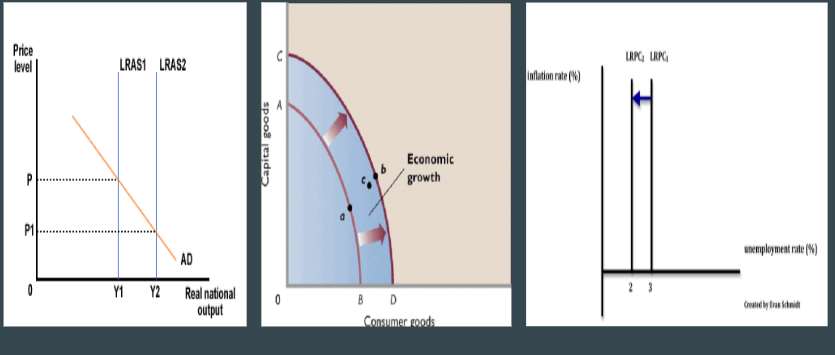
3 graphs of economic growth look like what?
fiscal policy
use of taxation and government spending to achieve financial goals
monetary policy
used by central banks like U.S Fed, to try to increase or decrease business activity by controlling the money supply and credit
expansionary fiscal policy is either ____ and what is it used for
a increase in gov spending or
a decrease in taxes
to increase real gdp (economic growth)
expansionary monetary policy is what and why does this happen
increasing the money supply by buying bonds, lowering the discount rate and/or lowering the reserve requirement to increase real GDP (economic growth)
because when money supply increases→interest rates decrease→investment spending increases→AD increases→real gdp increases
contractionary fiscal policy is either ____ and what is it used for
decrease gov spending
increase taxes
to decrease real gdp by shifting aggregate demand
contractionary monetary policy (open market sales) and what is its goal
sell bonds
raise the discount rate
raise the reserve ratio
to decrease real gdp by shifting aggregate demand
can the central bank and the government be against each other, how?
yes, when the government does expansionary fiscal policy, and the central bank does contractionary monetary policy or the opposite
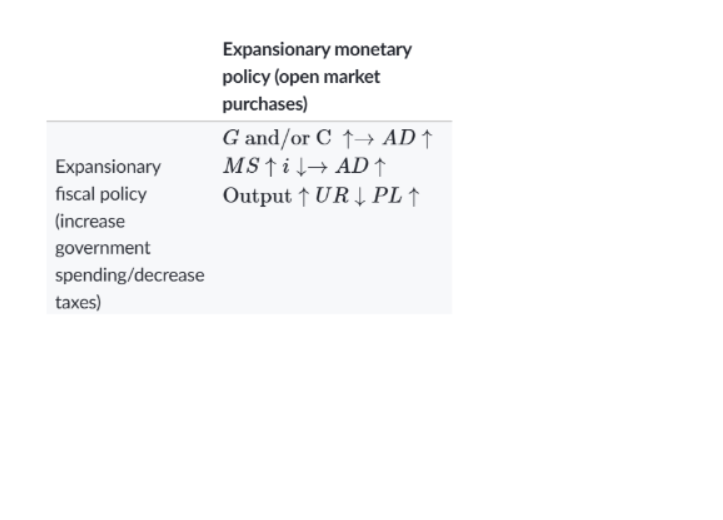
what happens when there is both expansionary monetary policy (open market purchases) and expansionary fiscal policy (increasing gov spending/ decrease taxes)
Government spending and/or Consumption increases → AD increases (fiscal)
Money supply increases →interest rates fall→AD increases (monetary)
Overall: Output increases→Unemployment rate decreases→price level increase
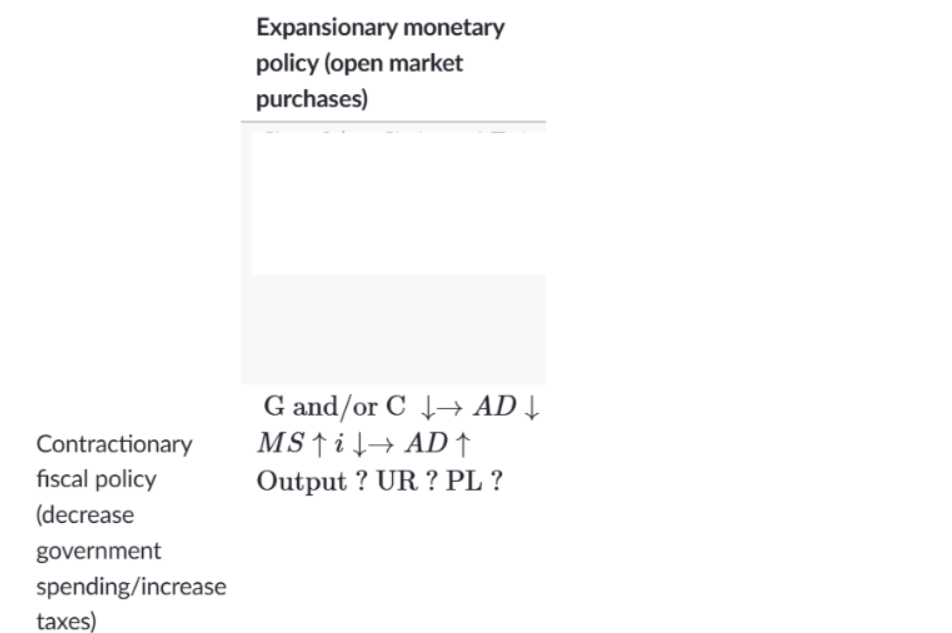
what happens when there is both expansionary monetary policy (open market purchases) and contractionary fiscal policy (dec gov spending/ inc taxes)
Government spending and/or Consumption decreases → AD decreases
money supply increases →interest rates decrease→AD increases
Overall: Output? Unemployment rate ? Price Level ?
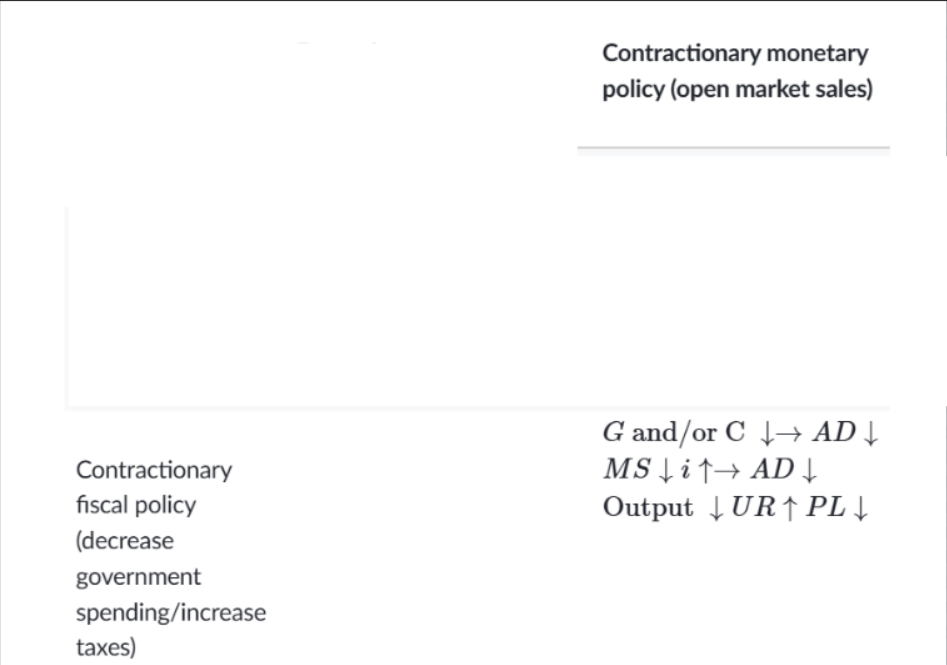
what happens when there is both contractionary monetary policy (open market sales) and contractionary fiscal policy (dec gov spending/ inc taxes)
government spending and/or Consumption decreases →AD decreases
money supply decreases →interest rates go up→AD decreases
overall: Output decreases→unemployment rate increases→price levels decrease
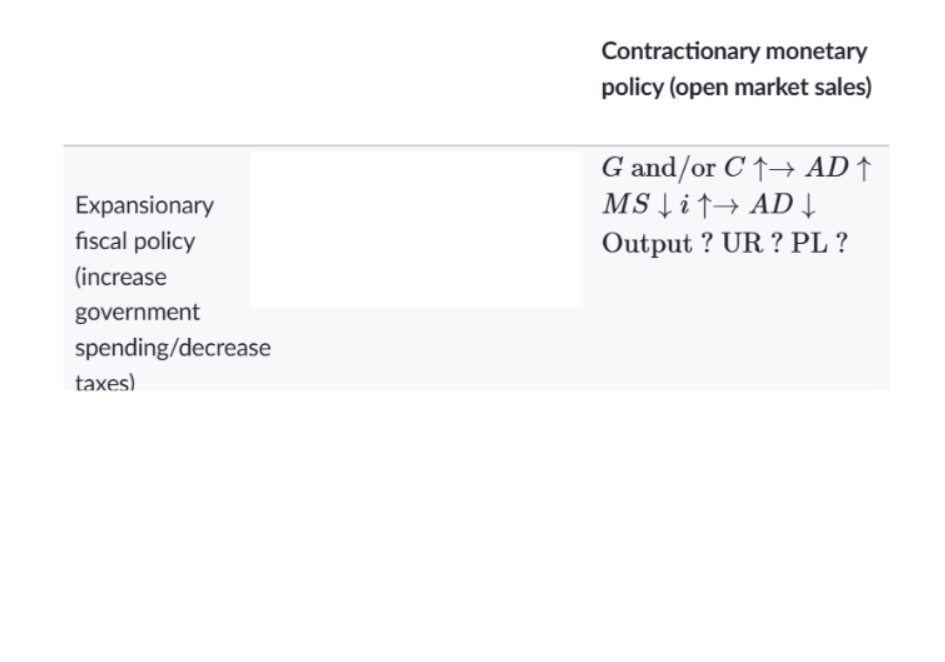
what happens when there is both contractionary monetary policy (open market sales) and expansionary fiscal policy (inc gov spending/ dec taxes)
government spending and/or consumption increases →AD goes up
MS decreases→interest rates increase→AD decreases
overall: output ?→unemployment rate ?→price level ?
money supply and interest rates have what type of relationship
an inverse relationship
expansionary and contractionary things mainly affect which curve
the AD curve
what is unknown when the when the fiscal policy and the monetary policy are working against each other (exp and con happening at same time)(3)
the output
the unemployment rate
and price levels
what is the formula for nominal interest rates
nominal interest rates = real interest rates + expected inflation
inflationary gap is when what and what do you use to fix it?
your short run equilibrium quantity is above the long run quantity (full employment)
contractionary policies
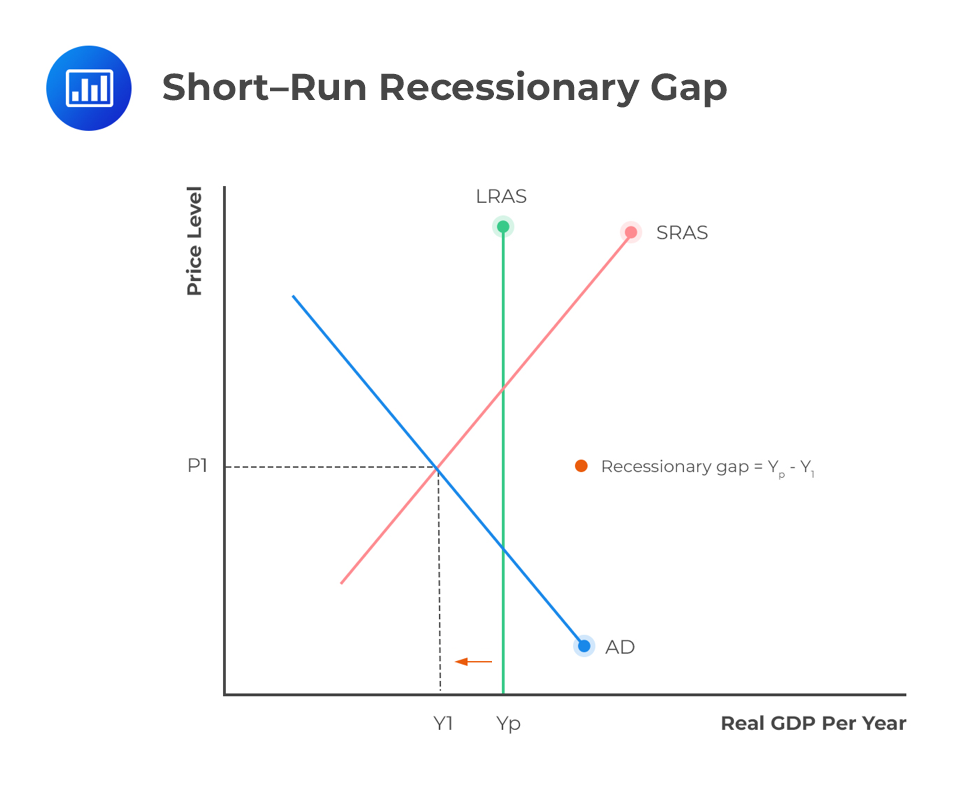
recessionary gap is when what and what do you use to fix it?
your short run equilibrium quantity is below the long run quantity
expansionary fiscal or monetary
changes in the money supply have what type of effect on real output in the long run
no effect
in the long run, velocity and real output are assumed to be what?
constant
real gdp formulas (2)
(nominal gdp/ gdp deflator)*100
current year quantities multiplied by base year prices
nominal gdp formula
real gdp * price level
can a recissionary or an inflationary gap happen in the long run
no, it’s at full employment
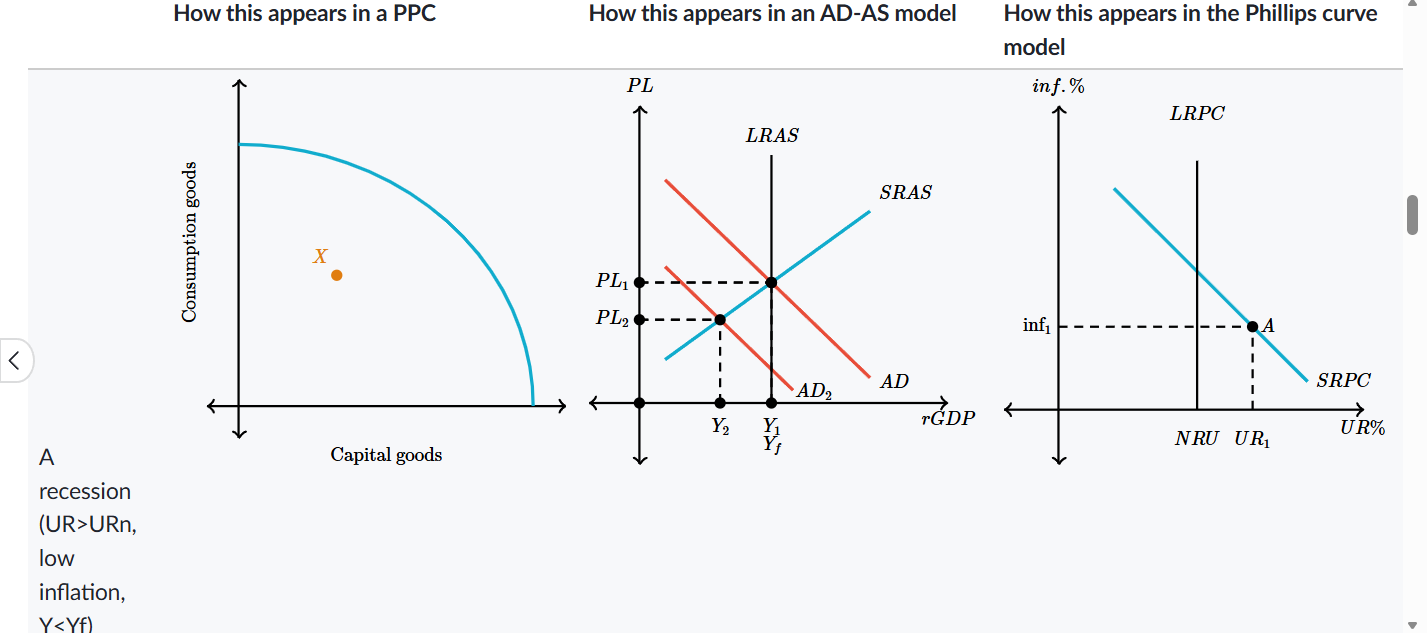
How does a recessionary gap look in PPC curve, AD-AS curve, and Phillips curves
since you are a recessionary gap (middle) → you are under producing →producing under the curve in PPC
since real gdp is lower in the short run →unemployment rate is higher on SRPC and the point moves to the right