SHEEP and GOAT BREEDS
 Studied by 0 people
 Call Kai
 Learn
Learn Practice Test
 Spaced Repetition
 Match
Match Flashcards
 Knowt Play
1/17

There's no tags or description
Looks like no tags are added yet.
Name | Mastery | Learn | Test | Matching | Spaced | Call with Kai |
|---|
No analytics yet
Send a link to your students to track their progress
18 Terms
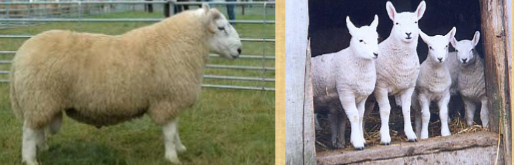
Cheviot
Hardy constitution.
Primarily a meat sheep
White faced, wool free head and legs.
Pricked ears, black nose and black hooves..
Long-wool breed, preferred by mills because of its fineness, crimp and length.
Rams: 160 – 200 lbs.
Ewes: 120 – 160 lbs.
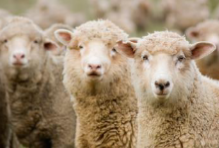
Columbia
One of the first breeds developed in US; a product of USDA and university research.
Larger breed with heavy, white fleece.
Moderately long ears; poll is covered with fleece; legs are covered with fleece.
Wool is classified as medium wool.
Often used for cross-breeding.
Rams: 275 - 350 lbs
Ewes: 150 - 250 lbs.
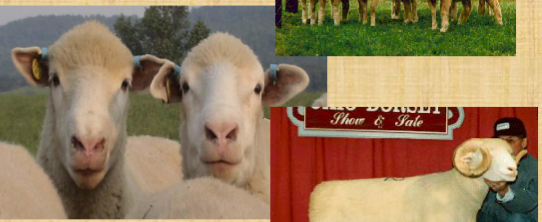
Dorset
Thought to have originated in Southwest England.
Both polled and horned.
Very popular, number one white faced breed in US.
All white sheep, medium sized.
Important attribute is its extended breeding season; can be bred both in fall and spring.
Rams: 225 – 275 lbs.
Ewes: 150 – 200 lbs.
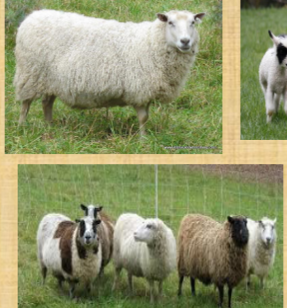
Finnsheep
First imported to North America in 1966.
Also used as a meat sheep; lean meat with light delicate flavor.
Most of these in US are pure white; also available in solid black and spotted; less common are gray, brown and fawn.
Fleece is lightweight, and blends easily with other fibers.
Rams: 170 – 240 lbs.
Ewes: 130 – 180 lbs
Hampshire
Known for their rapid growth and efficient feed conversion.
Large, open-faced, active sheep.
Ears are moderated in size and covered with coarse dark brown or black hair.
Face is free of wool from the eyes down.
Meat has good ratio of fat and lean and is fine flavored.
Both sexes are polled.
Rams: 275-350 lbs.
Ewes: 200 – 250 lbs.

Shropshire
Rising in popularity as a show sheep, especially in the Midwest.
Head is short, but broad between the ears and eyes.
White dense wool covers the whole poll, cheeks and jaw.
Face and ears are dark brown or soft black.
Legs are short and covered with wool.
Rams: 225 – 250 lbs.
Ewes: 150 – 180 lbs
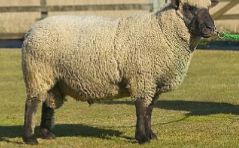
Southdown
Developed in Sussex, England.
Medium to small-sized sheep.
Docile and easy to manage.
Excel in a cross-breeding program because of their ability to produce meaty carcasses.
Head is carried high and has a moderate amount of wool about the face and eyes; tip of the nostril should be dark.
Rams: 190 – 230 lbs.
Ewes: 130 – 180 lbs.
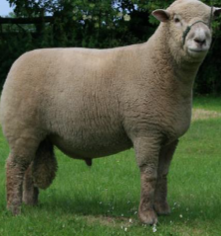
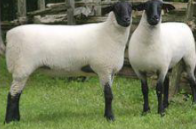
Suffolk
Originally developed in England.
Large breed of black-faced, domestic sheep raised mainly for meat.
Head is black from poll forward.
Legs are black, hooves are black.
Ears are long, black, bell- shaped and pointing downward.
“Spider Lamb Syndrome” most common in Suffolk breed.
Rams: 250 – 350 lbs.
Ewes: 180 – 350 lbs.
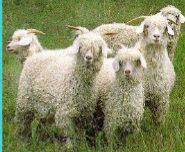
Angora
The most valuable characteristic of the ____ is the value of the mohair that is clipped.
Is a small, very picturesque animal.
More susceptible to damage from internal parasites than sheep.
Bucks: 180 – 225 lbs.
Does: 70 – 110 lbs
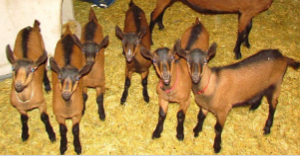
French Alpine
Known for its very good milking ability; Are one of the top goat milk producers.
Colors can range from white or gray to brown and black.
They have erect ears and a straight profile
Are friendly and curious, but they can be independent and strong- willed.
Bucks: 170 lbs
Does: 135 lbs
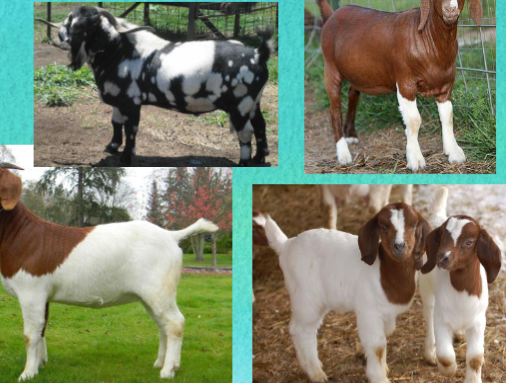
Boer
Typically have white bodies and distinctive brown heads.
Some can be completely brown or white or have large spots of a different color.
Ears are long and pendulous.
Head is small with a “Roman” nose.
Are docile and fast growing with high fertility rates.
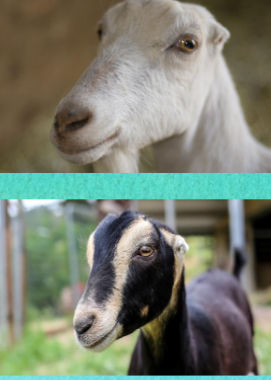
La Mancha
Only breed of goat developed in the US.
Easily recognized by their very short ear pinnae.
Also known for high milk production and high butterfat content of their milk.
La Mancha goats may be any color known to occur in goats.
Two types of ears: Gopher Ear and Elf Ear
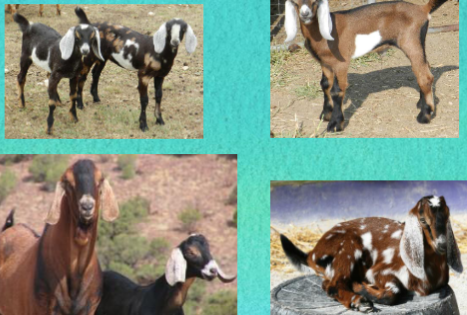
Nubian
Have a high butterfat content of their milk, however, the breed produces less milk than other dairy breeds
is large in size and carries more flesh than other dairy breeds.
Have large, pendulous ears that extend beyond the muzzle, and a “Roman” nose.
Colors and markings can be any color.
Are sociable and vocal.
Bucks: 175 lbs.
Does: 135 lbs.
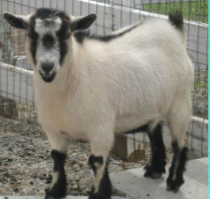
Pygmy
A breed of miniature domestic goat, developed from the West African dwarf goat.
Primarily kept as pets, they are active and friendly and enjoy having items to jump on.
They are small and compact.
Colors and coat patterns can vary significantly and can be categorized into caramel patterned, agouti patterned and black patterned.
Bucks: 60 – 85 lbs.
Does: 50 – 75 lbs.
Saanen
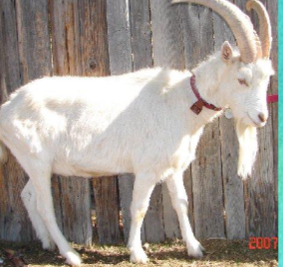
Originated in the _____ Valley in Switzerland.
Brought to US in 1900’s.
Most popular dairy goat breed due to their high productivity and ease of management.
Largest in size of the dairy goat breeds.
Largest milk producers of dairy goat breeds.
Profile of head is straight or slightly dished, with erect, forward-pointing ears.
Colors are generally white or cream colored, with short, fine coats.
Buck: 160 lbs
Does: 135 lbs
Toggenburg
Considered the oldest breed that was registered.
Larger in size, high milk production, low butterfat content.
Color is solid, varying from light fawn to dark chocolate, with very distinct white markings.
The ears are erect and carried forward.
Toggenburgs have wattles which are located on each side of the neck.

TPR - Sheep
101-104
55-115 bmp
10-30 breathes/min
TPR - Goats
101.5 - 104.5
70-120 bpm
10-30 breathes/min
 Note
Note  Flashcards (130)