1.8 Halogens
 Call Kai
 Learn
Learn Practice Test
 Spaced Repetition
 Match
Match Flashcards
 Knowt Play
1/57

There's no tags or description
Looks like no tags are added yet.
Name | Mastery | Learn | Test | Matching | Spaced | Call with Kai |
|---|
No analytics yet
Send a link to your students to track their progress
58 Terms
fluorine appearance
Yellow gas
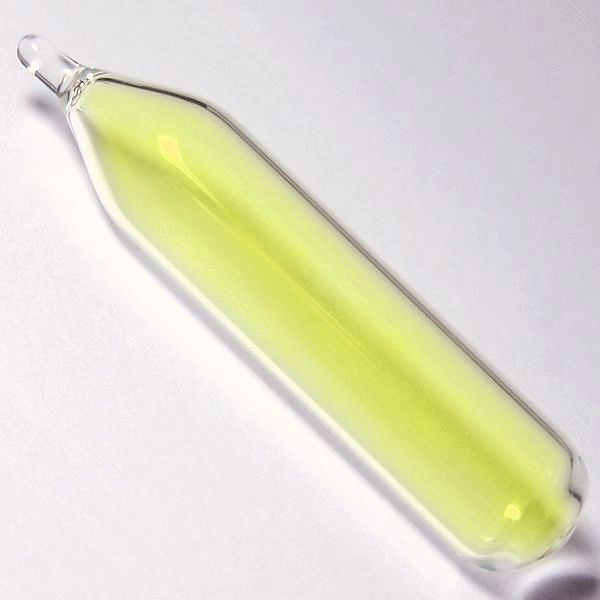
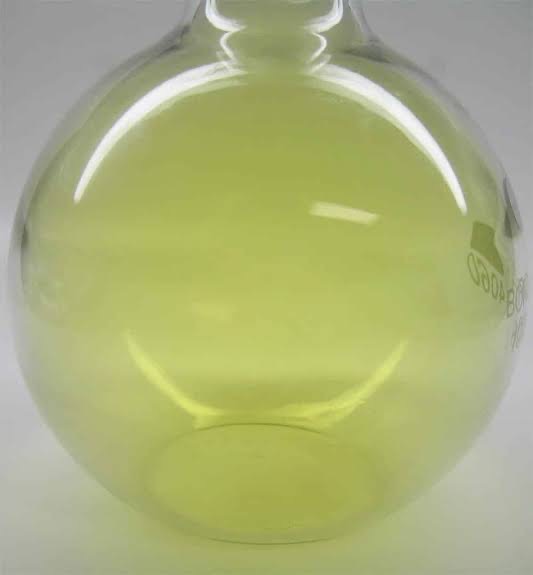
Chlorine appearance r.t.p
Yellow-green gas
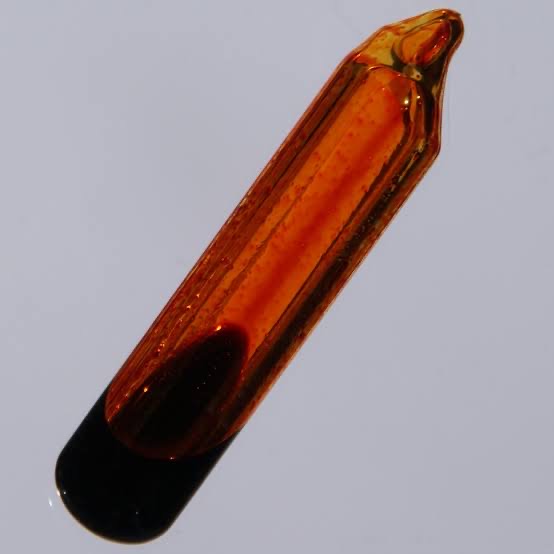
Bromine appearance at r.t.p
Red-brown liquid
-heated Vapour
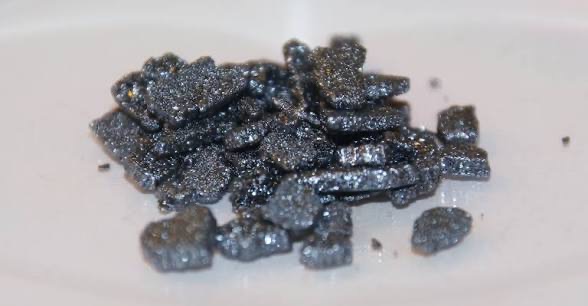
Iodine appearance at r.t.p
grey-black solid
Purple vapour when heated
Solidity of halogens
Dissolve in water (except F2)
Dissolve readily in non aqueous solvents
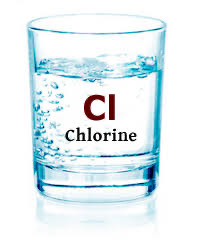
Chlorine in water
Pale green/colourless solution
Chlorine in hexane
Colourless solution
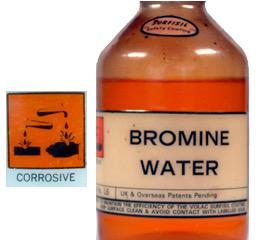
Bromine appearance in water
orange solution
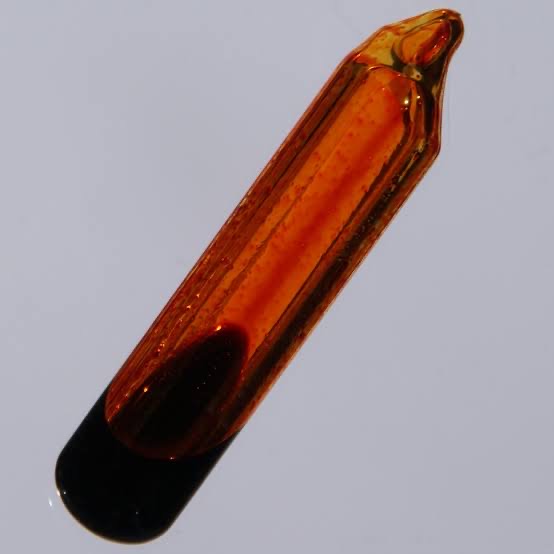
Bromine appearance in hexane
Red solution.
Iodine in water
Yellow-brown solution
Iodine in hexane
Purple solution
Atomic radius down group
Increases cus atomic number increases so do number of electrons and electron shells present. As more shells filled, atom increases in size
electronegativity
Decreasing
Bigger atom, more nucleus shielded by extra inner electrons.extra shielding means effect of nuclear charge reduced so ability of nucleus to attract electrons is reduced
boiling points
Increasing,
halogen non-polar, so attraction between molecules due to weak van der waals forces, size of molecule increses down, strenght of van der waals forces between moleucles also increase.
first ionisation energy
decreasing
outer electrons increasinly further from nucleus, and outer electrons shielded from nuclear charge by filled shells of electrons, ability of nucleus to hold electrons is reduced
bond energies
decreasing
atomic radii of elements increase, so increased bond lengths between atoms in a molecule decreased bond energies. F-F bond unexpectedly weak becus small size of fluorine atom brings lone pairs of electrons in F2 closer together than other molecules,
solubility down group
decreases as chlroine bromine slightly solulbe in water, iodine insoluble, as they non-polar with weak van der waals forces between them and water is polar with strong hydrogen bonds between molecules, halogens soluble in hexane as its non polar.
oxidation states down group
fluroine oxidation state of -1 but rest have empty d orbitals so can promote electrons to give oxidaition state +1 - +7 , oxidising agents
Disproportionation reaction defi
Substance oxidised and reduced in same reaction
chorine reaction with water
Cl2 (g) + H20 → HCl (aq) + HOCl (aq)
hydrochloric acid and ( hydrogen chlorate (I) ) which is chlorine water
what type of reaction is chlroine water
disproportionation reaction as chlroine has been oxidised in HOCl and reduced in HCl
test for chlorine
damp litmus paper turns red then bleaches white, as its acidic then hypochlroite ions bleach it
chlroine with cold dilute sodium hydroxide solution
Chlorine + sodium hydroxide → sodium chloride + sodium chlorate (I) + water
Cl2 (g) + 2NaOH(aq) → NaCl(aq) + NaClO(aq) + H2O (l)
Ionic equation for chlroine with cold dilute NaOH
2OH- + Cl2 → Cl- + ClO- + H2O
chlorine with hot contentrated sodium hydroxide solution
Chlorine + sodium hydroxide → sodium chloride + sodium chlorate (V) + water
3Cl2(g) + 6NaOH (aq) → 5NaCl (aq) + NaClO3 (aq) + 3H2O (l)
why this diff from cold dilute
as chlorate (I) ion disproportionates into chlroide and chlorate (V) ions
Chlorate (I) iond → chloride ions + chlorate (V) ions
3ClO- (aq) → 2Cl- (aq) + ClO3- (aq)
ionic equation for chloride + hot concentrated sodium hydroxide
6OH- + 3Cl2 → 5Cl- + ClO3- + 3H2O
chlorine + sodium hydroixde observation
yellow-green gas dissolves to from colourless solution
halogens oxidising agent and reason
fluorine best, iodine worst,
as electorns gained by fluroine will have stronger attraction to nucleus, it is not subjected to as much shielding and closer to nucleus,
halogens reduicng agents
iodine best reducing agent, fluorine worst
as electron lost from iodine shell far from nuceleus so attraction to nucleus is relatively weak, and outer electron subjected to large amount of shielding as many filled inner shells
displacement reaction of chlorine with potassium bromide (chlorine more reactive)
chlorine + potassium bromide → potassium chloride + bromine
Cl2 (aq) + 2KBr(aq) → 2KCl(aq) + Br2(aq) yellow orange
ionic equation of chorine + potassium bromide
Cl2(aq) + 2Br-(aq) → 2Cl- (aq) + Br2(aq)
half equation of chlorine + potassium bromide
Cl2 + 2e- → 2Cl- (reduction)
2Br- → Br2 + 2e-
Fluoride reaction with concentrated sulfuric acid
NaF + H2SO4 -> NaHSO4 + HF
Why fluoride get no reactions
Fluoride ion poor reducing agent , don’t give up electrons easily
Fluoride names of products
sodium hydrogensulfate, hydrogen fluoride
Fluoride observations
misty fumes, pungent smell, gas produced (HF), solid disappears, heat released
Chloride reaction with concentrated sulfuric acid
NaCI + H2SO4 -> NaHSO4 + HCI
Chloride additional reactions
None as Poor reducing agent
Chloride products
sodium hydrogensulfate, hydrogen chloride
Chloride observations
misty fumes, pungent smell, gas produced (HCI), solid disappears, heat released
Bromide reaction with concentrated sulfuric acid
NaBr + H2SO4 -> NaHSO4 + HBr
Bromide additional reaction
Sulfur atom reduced +6 to +4
2HBr + H2S04 -> Br2 + SO2 + 2H2O
Bromide name of products
sodium hydrogensulfate, hydrogen bromide, bromine, sulfur dioxide, water,
Bromide observations
misty fumes (HBr), gas produced (HBr/ SO2), solid disappears, red-brown vapour (Br), heat released, pungent smell (HBr/SO2/Br2)
Iodide reaction with concentrated sulfuric acid
NaI + H2SO4 -> NaHSO4+ HI
Iodide ion additional reactions, Sulfur atom reduced from +6 to +4/0/-2
2HI + H2SO4 → I2 + SO2 + 2H20
6HI + H2SO4 → 3I2 + S + 4H20
8HI + H2SO4→ 4I2 + H2S + 4H20
Name of products iodide
sodium hydrogensulate, hydrogen iodide, iodine, sulfur doxide, sulfur, hydrogen sulfide, water
Iodide observation
misty fumes (HI), gas produced (HF/SO4), solid disappears, grey-black solid and purple vapour (I2), heat released, pungent smell (HI/SO/ l2), rotten egg smell (H2S), yellow solid (S)
why no additional reactions with Sodium halides with concentrated phosphoric acid equation
harder to reduce phosphoric acid
Sodium halides with concentrated phosphoric acid equation
NaF + H3PO4 → NaH2PO4 + HF
NaCl + H3PO4 → NaH2PO4 + HCl
NaBr + H3PO4 → NaH2PO4 + HBr
NaI + H3PO4 → NaH2PO4 + HI
name of products of Sodium halides with concentrated phosphoric acid
sodium dihydrogen phosphate, hdyrogen fluroide/chlroide/bromide/iodide
observations of Sodium halides with concentrated phosphoric acid equation
gas releases, misty fumes (HF/HCl/HBr/HI), solid disappears, heat released
chlroine reacts with water equation
Cl2 + H2O → HOCl + HCl
Chlorine to drinking water Advantages
Cheaper than ozone
Provides residual protection as still present in water when it reaches the consumer
More soluble in water than ozone
Chlorine to drinking water Disadvantages
Cannot kill some microorganisms
Leave chemicals in water
Unpleasant taste
Toxic to humans so low quantities used
Ozone to drinking water Advantages
Kills more different types of microorganisms than chlorine
Breakdown product is oxygen
No residual chemicals in water
Removes metal and organic particles from weather
No unpleasant taste
Ozone to drinking water Disadvantage
More expensive than chlorine
Does not provide residual protection against microorganisms
Less soluble in water than chlorine so requires special mixing techniques

