Edexcel Biology A-Level - Enzymes
 Studied by 0 people
 Call Kai
 Learn
Learn Practice Test
 Spaced Repetition
 Match
Match Flashcards
 Knowt Play
1/19

There's no tags or description
Looks like no tags are added yet.
Name | Mastery | Learn | Test | Matching | Spaced | Call with Kai |
|---|
No analytics yet
Send a link to your students to track their progress
20 Terms
What is an enzyme?
a substance produced by a living organism that acts as a catalyst to bring about a specific biochemical reaction.
Describe the structure of an enzyme
-they are globular proteins
-it has an active site
-charged R groups on outside of molecules /
composed of many small R groups
What is a biological catalyst?
a biological catalyst is a substance that speeds up the rate of a chemical reaction. Enzymes are proteins that act as a biological catalyst.
What is an intracellular enzyme?
an enzyme that works within the cell.
What is an extracellular enzyme?
produced and secreted by exocytosis out of cells to catalyse reactions outside of cells
What is the name given to the specific substance an enzyme binds to?
substrate
What is meant by the lock and key model
shape of an enzymes active site is complimentary to shape of substrate molecule
What is the induced fit model?
substrate enters an enzyme's active site and the enzyme alters its shape slightly so the substrate can fit
How does substrate bind to active site?
amino acids form weak ionic and hydrogen bonds qith substrate
What happens when a substrate binds to an enzyme?
-the enzyme and substrate form an ES complex (enzyme-substrate complex)
-the enzyme will change shape, distorting substrate
-enzyme will produce products from the substrate
What happens inside enzyme during reaction?
-allows enzyme to either stretch substrate to break bonds or push molecules together to make bonds
-enzyme changes conditions inside active site, pH, water concentration etc
What do enzymes do to activation energy?
-they lower it, so that the reaction can take place at lower physiological temperature (usually between 0 and 40 degrees Celsius).
-therefore more substrate molecules have sufficient energy for reaction
Why effect does temperature have on enzymes?
-enzyme and substrate molecules have more kinetic energy,
-therefore they move faster and are more likely to experience successful collisions
-more enzyme substrate complexes formed
What is the approx optimum temperature for enzymes?
40 degrees Celsius
What happens when the temperature of enzyme gets too high?
-there is enough thermal energy to overcome hydrogen bonds holding quaternary, tertiary and secondary structure of enzyme
-enzyme loses specific shape to become random coil
-substrate can no longer bind and enzyme can no longer catalyse
What is the optimum pH for enzymes?
pH of 7-8
What is unique about protease enzymes?
work in stomach acid, therefore optimum pH is much higher than typical enzymes
Why does high pH denature enzyme?
-carboxyl group is uncharged (COOH) in acid but negatively charged in alkali (COO-)
-amino groups are positively charged in acid (NH3+) and uncharged in alkali (NH2)
-changes affect ionic and hydrogen bonds so change tertiary structure of protein as well as charge of active site
-therefore substrate can no longer bind and reaction is not catalysed
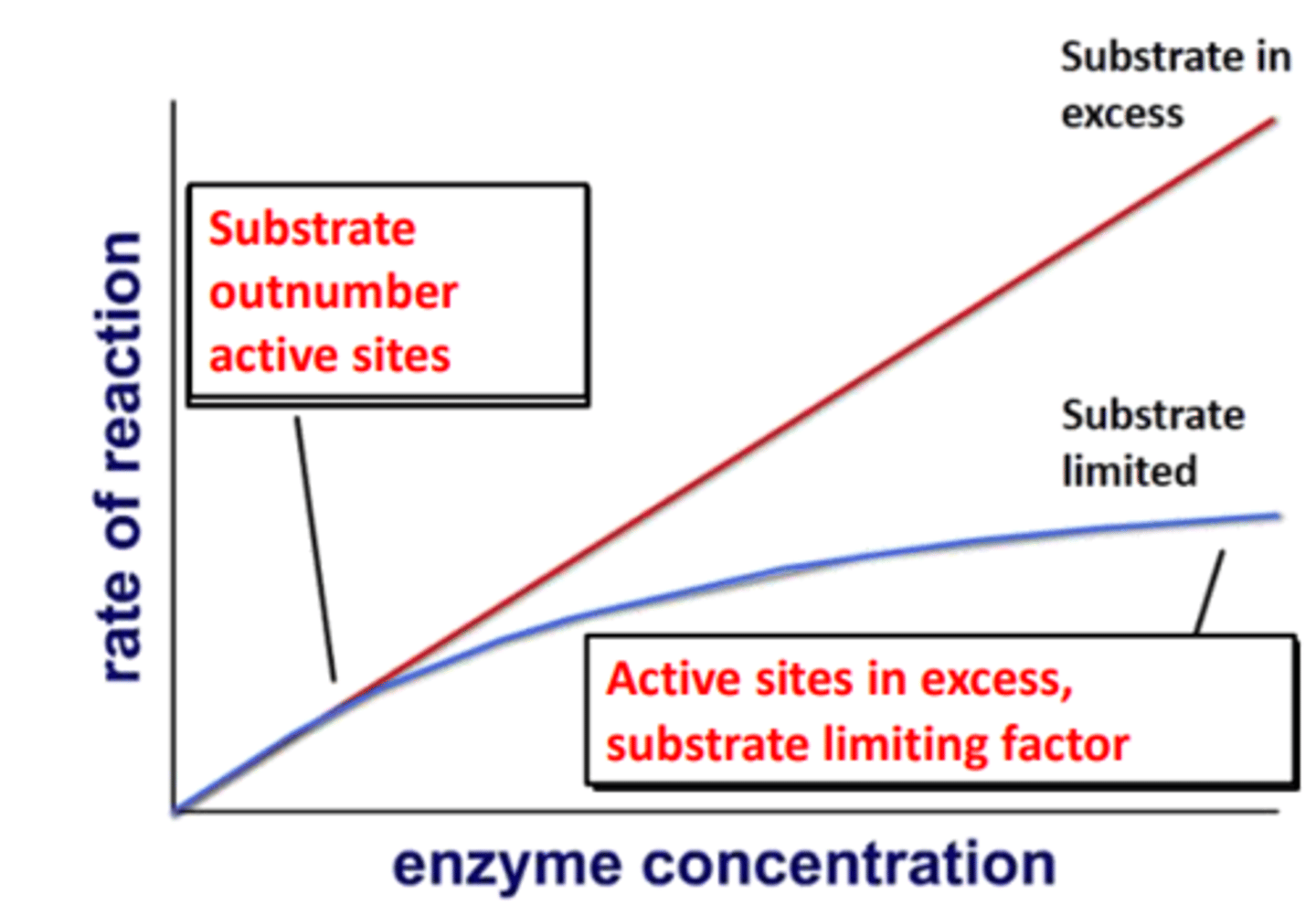
What happens when enzyme concentration increases?
reaction rate increases as more enzymes are available to catalyse substrate, at very high enzyme concentrations, substrate concentration may become rate limiting so rate stops increasing
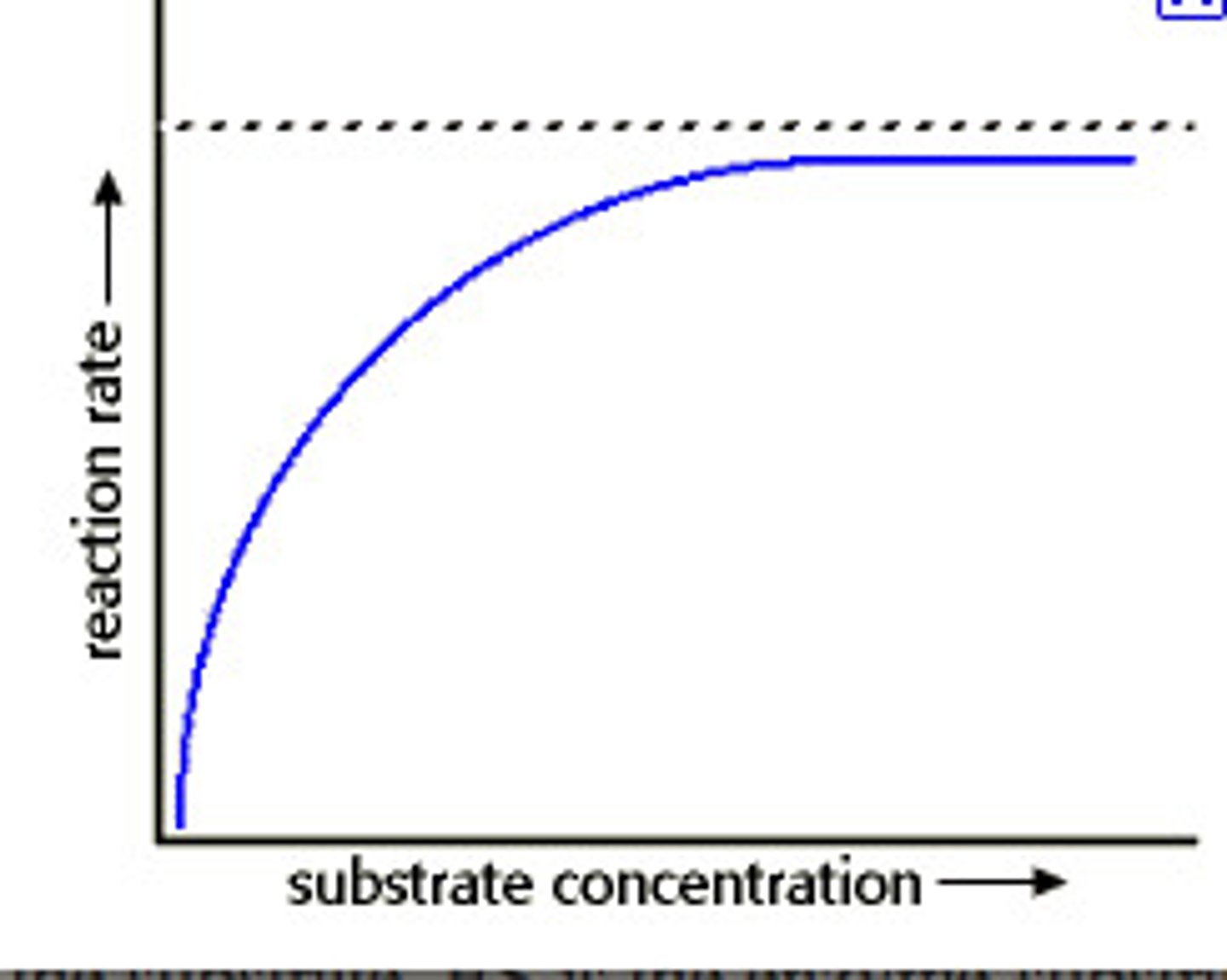
What happens when substrate concentration increases?
-rate of enzyme-catalysed reaction shows curved dependence on substrate concentration
-substrate concentration increase, rate increases because more substrate molecules with collide with enzymes
-at higher concentrations the enzyme active sites become saturated with substrate molecules
-so there are few free enzymes molecules so adding more substrate makes little difference
 Note
Note  Flashcards (56)