AP World History Unit 3: Land-Based Empires
 Studied by 1 person
 Call Kai
 Learn
Learn Practice Test
 Spaced Repetition
 Match
Match Flashcards
 Knowt Play
1/26

There's no tags or description
Looks like no tags are added yet.
Name | Mastery | Learn | Test | Matching | Spaced | Call with Kai |
|---|
No analytics yet
Send a link to your students to track their progress
27 Terms
Qing Dynasty of China
The last imperial dynasty of China, preceded by the Ming Dynasty and succeeded by the People's Republic. Formed the territorial base for the modern Chinese state. Founded in 1644 by the Manchus and ruled China for more than 260 years, until 1912. Expanded China's borders to include Taiwan, Tibet, Chinese Central Asia, and Mongolia.
Manchus
Northeast Asian peoples who defeated the Ming Dynasty and founded the Qing Dynasty in 1644, which was the last of China's imperial dynasties.
Mughal Empire
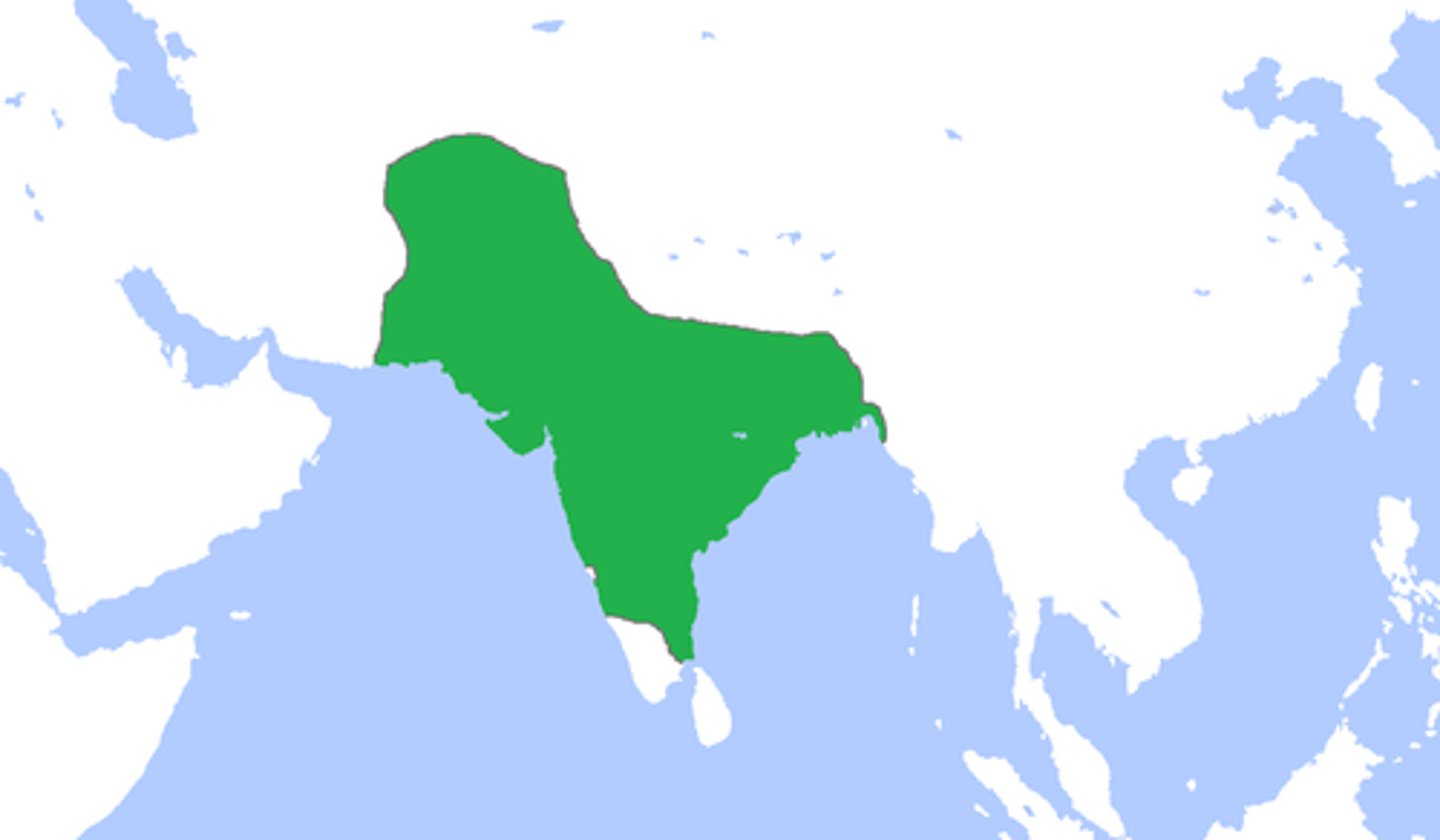
Muslim state (1526-1857) exercising dominion over most of India in the sixteenth and seventeenth centuries.
Ottoman Empire
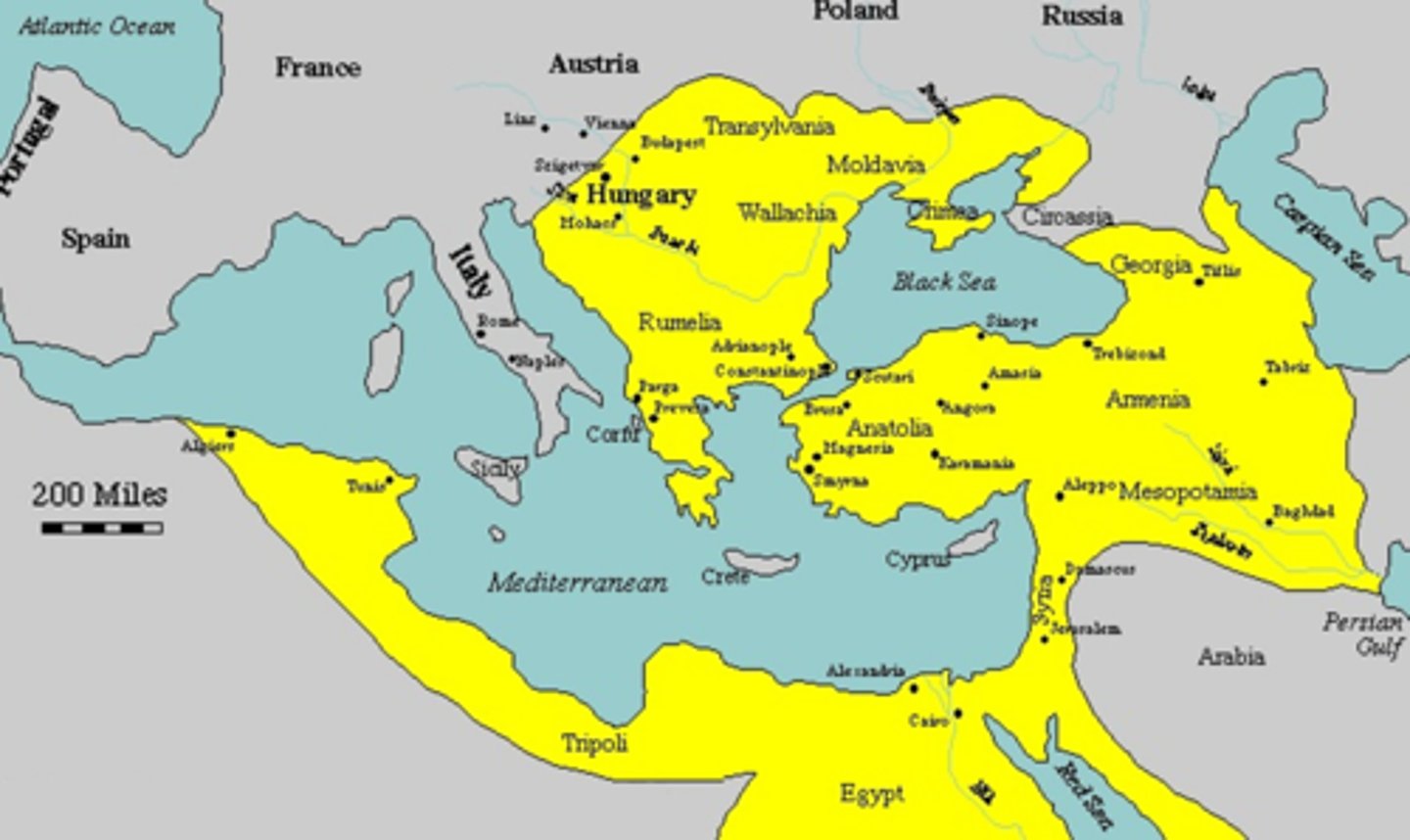
Islamic state founded by Osman in northwestern Anatolia. After the fall of the Byzantine Empire, the Ottoman Empire was based at Istanbul (formerly Constantinople) from 1453-1922. It encompassed lands in the Middle East, North Africa, the Caucasus, and eastern Europe.
Safavids
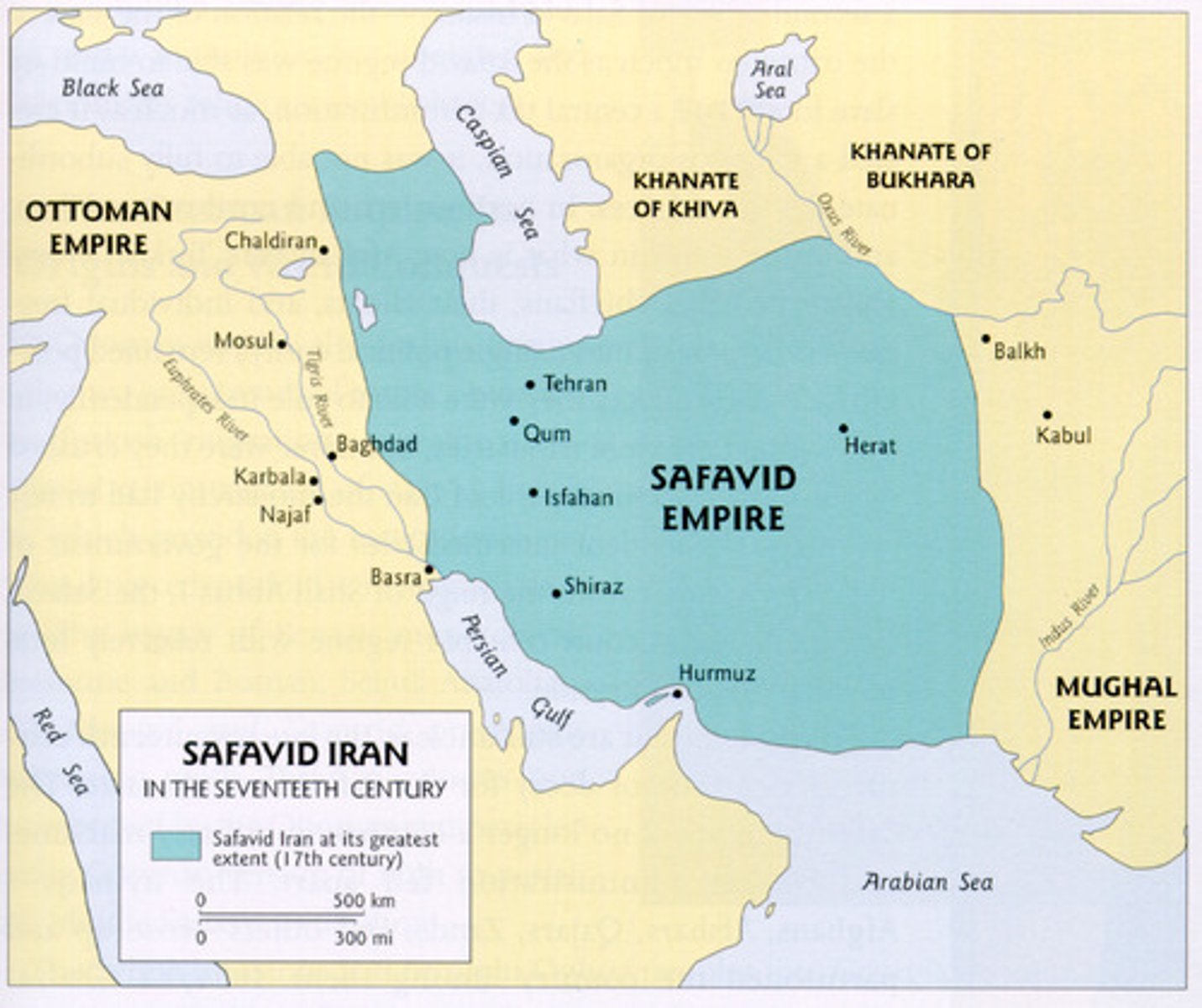
A Shi'ite Muslim dynasty that ruled in Persia (Iran and parts of Iraq) from the 16th-18th centuries that had a mixed culture of the Persians, Ottomans and Arabs.
Songhai
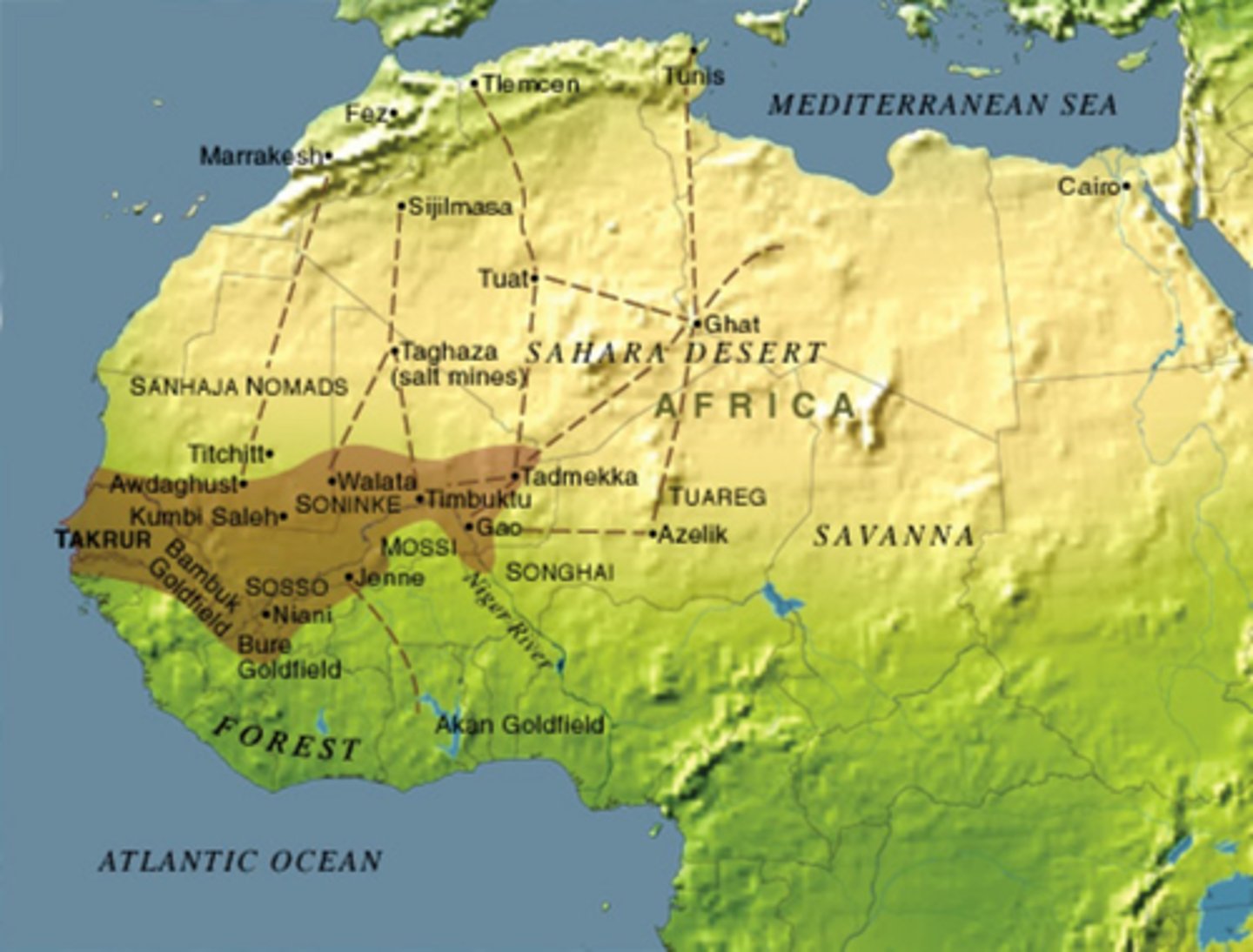
a West African empire that conquered Mali and controlled trade from the into the 16th century; eventually defeated by the Moroccans who were broke after fighting with Portugal
Devshirme
'Selection' in Turkish. The system by which boys from Christian communities were taken by the Ottoman state to serve as Janissaries (elite military units utilized by the Ottomans)
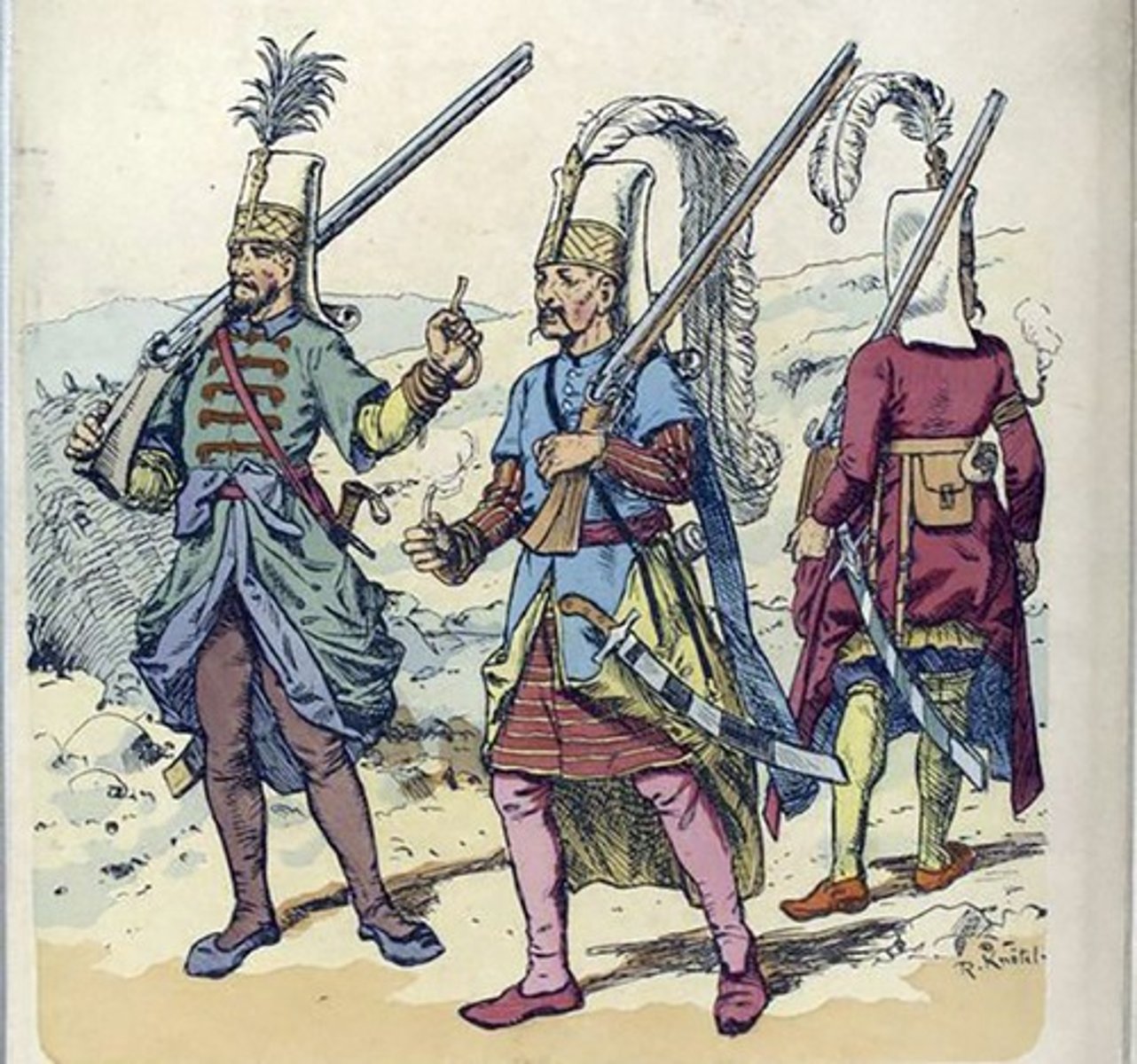
Janissary
elite Ottoman guard (trained as foot soldiers or administrators) recruited from the Christian population through the devshirme system, that often converted to Islam
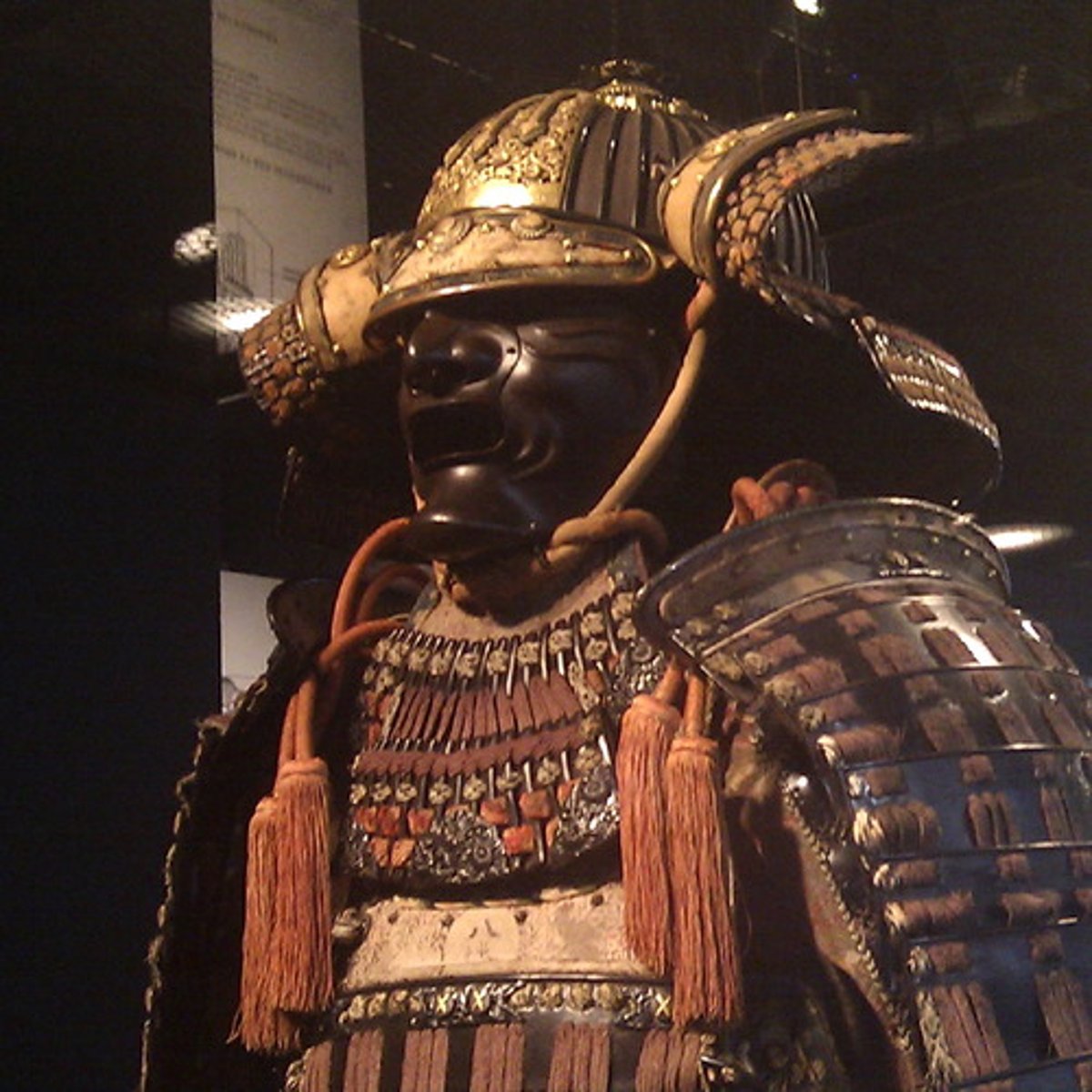
Samurai
Class of warriors in feudal Japan who pledged loyalty to a noble in return for land.
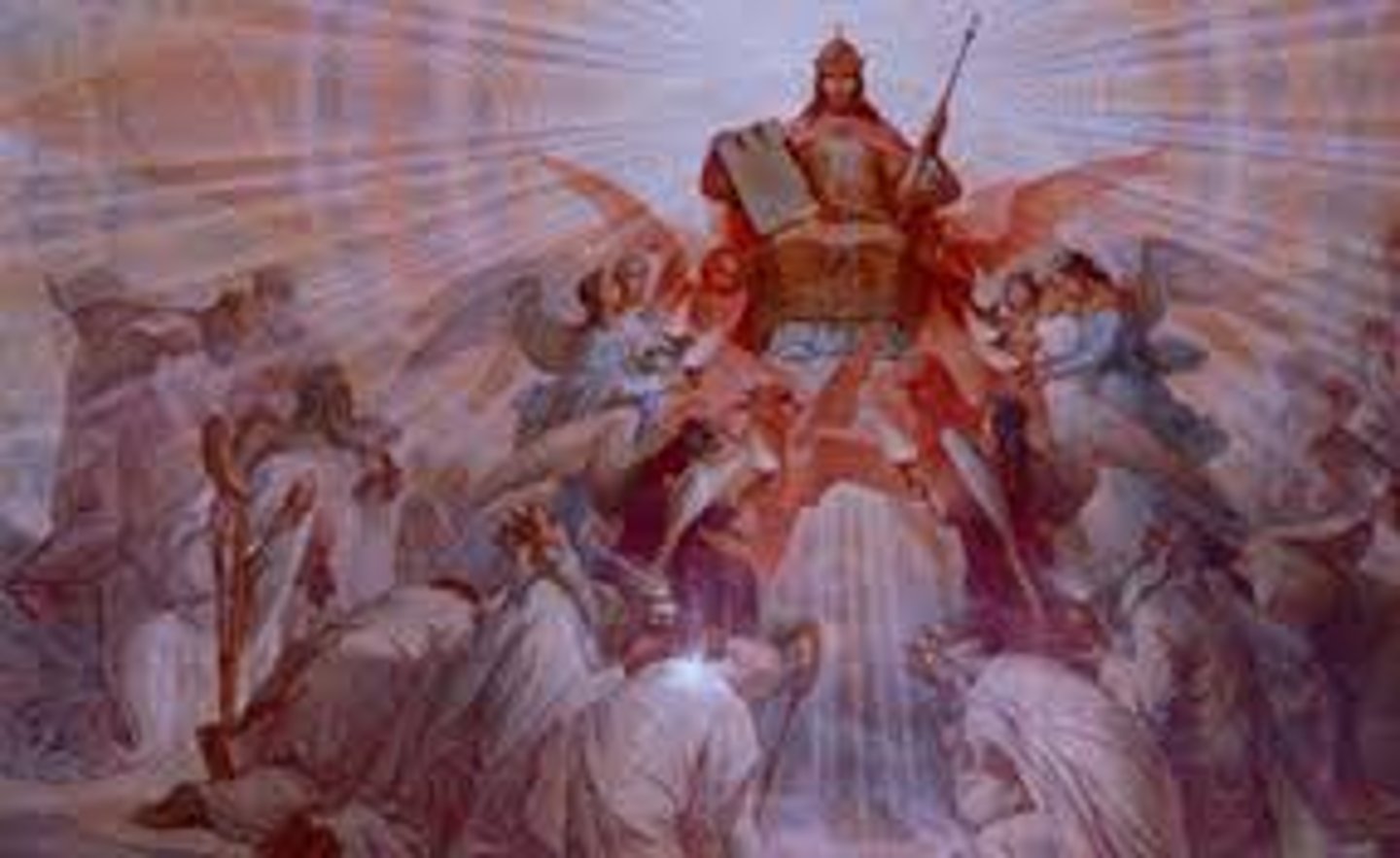
Divine Right
the idea that monarchs are God's representatives on earth and are therefore answerable only to God.
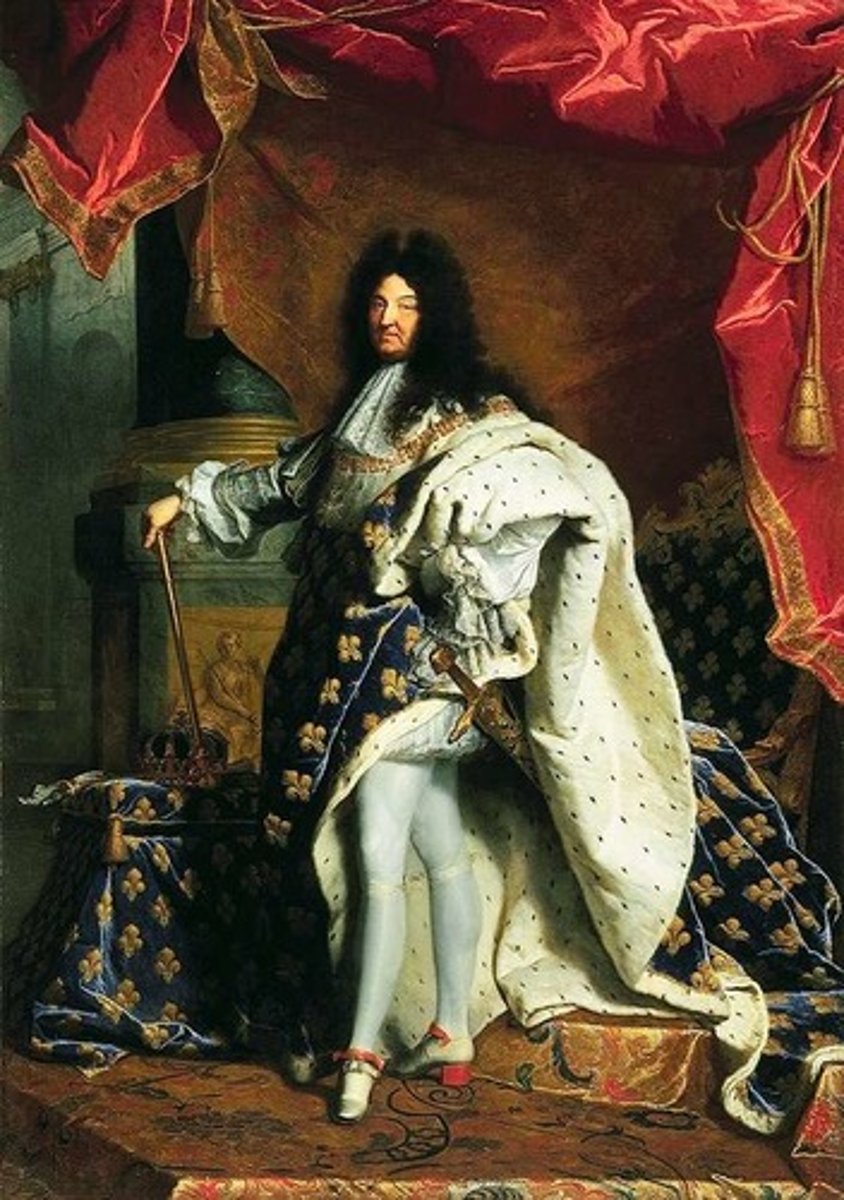
Absolute Monarchy
A system of government in which the head of state is a hereditary position and the king or queen has almost complete power
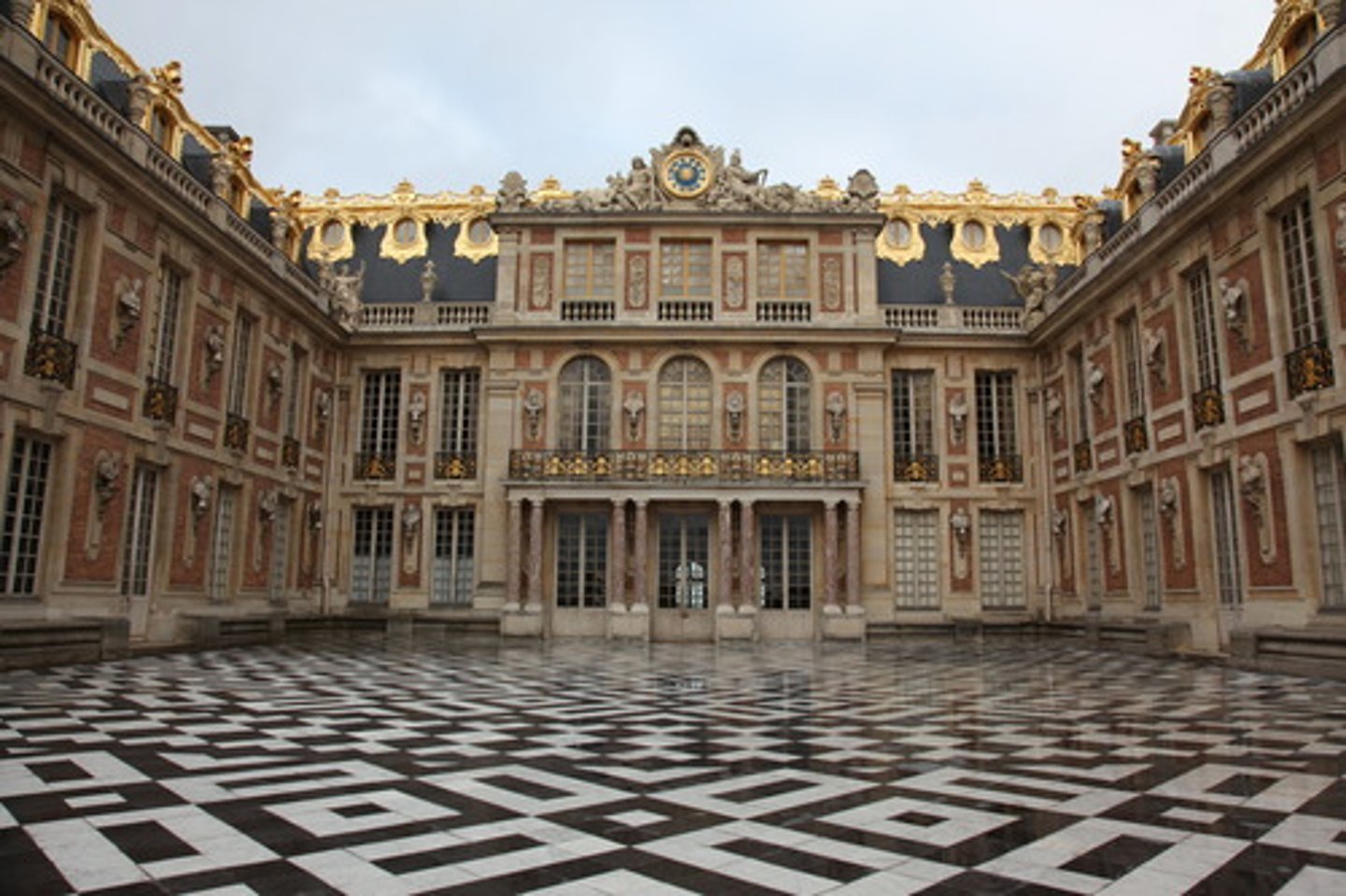
Versailles
Palace constructed by Louis XIV outside of Paris to glorify his rule and subdue the nobility.
Zamindars
Archaic tax system of the Mughal empire where decentralized lords collected tribute for the emperor.
Taj Mahal
beautiful mausoleum (tomb) at Agra (India) built by the Mughal emperor Shah Jahan (completed in 1649) in memory of his favorite wife; illustrates syncretic blend between Indian and Arabic architectural styles
Tax farming
To generate money for territorial expansion Ottoman rulers used this tax-collection system. Under this system the government hires private individuals to go out and collect taxes for them.
Protestant Reformation
Religious reform movement begun by Catholic monk Martin Luther who began to question the practices of the Latin Christian Church beginning in 1519. It spit the Roman Catholic Church and resulted in the 'protesters' forming several new Christian denominations, including the Lutheran, Calvinist, and Anglican Churches, among many others.
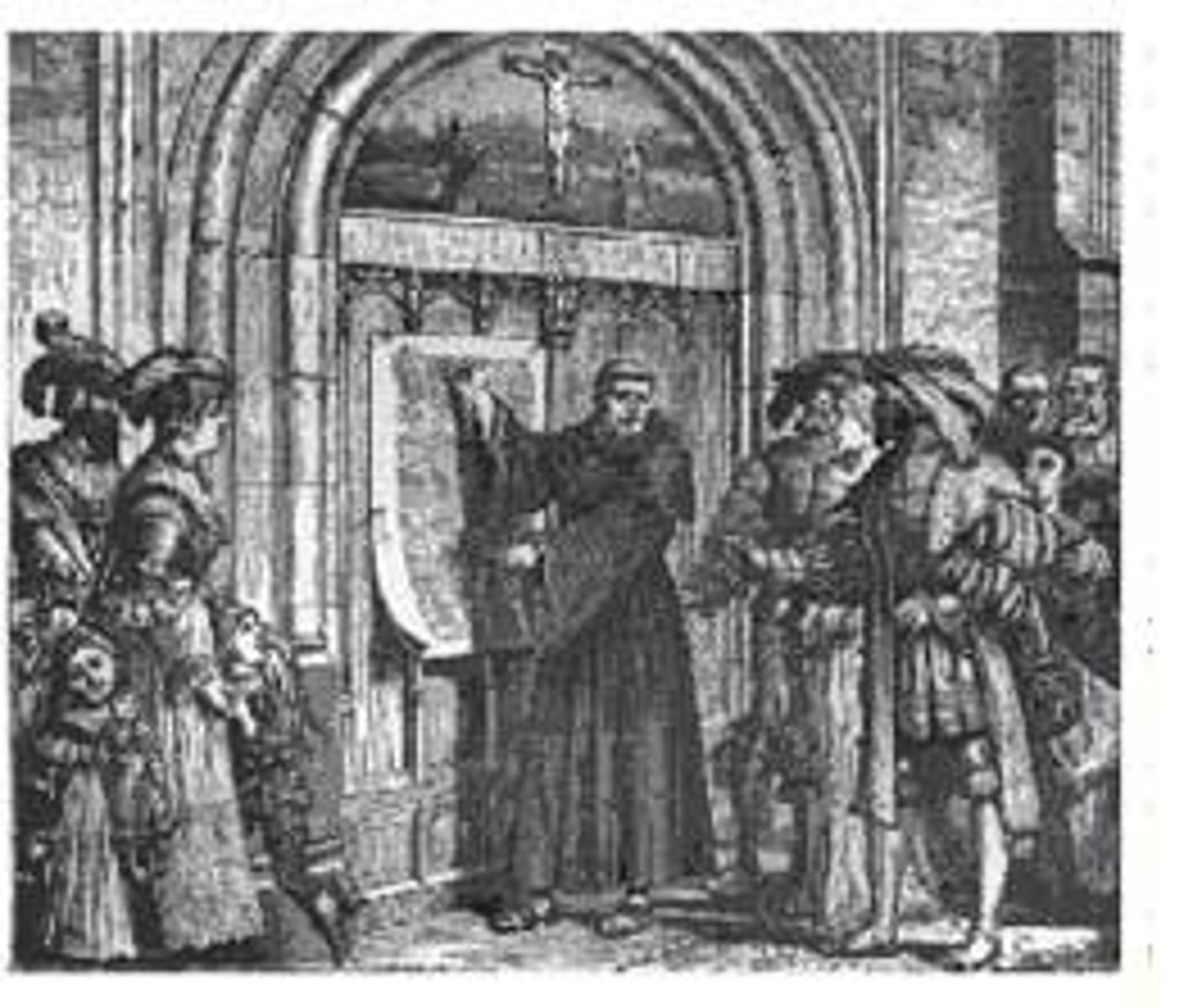
95 Theses
Arguments written by Martin Luther against the Catholic church. They were posted on October 31, 1517; ultimately led to Martin Luther's excommunication
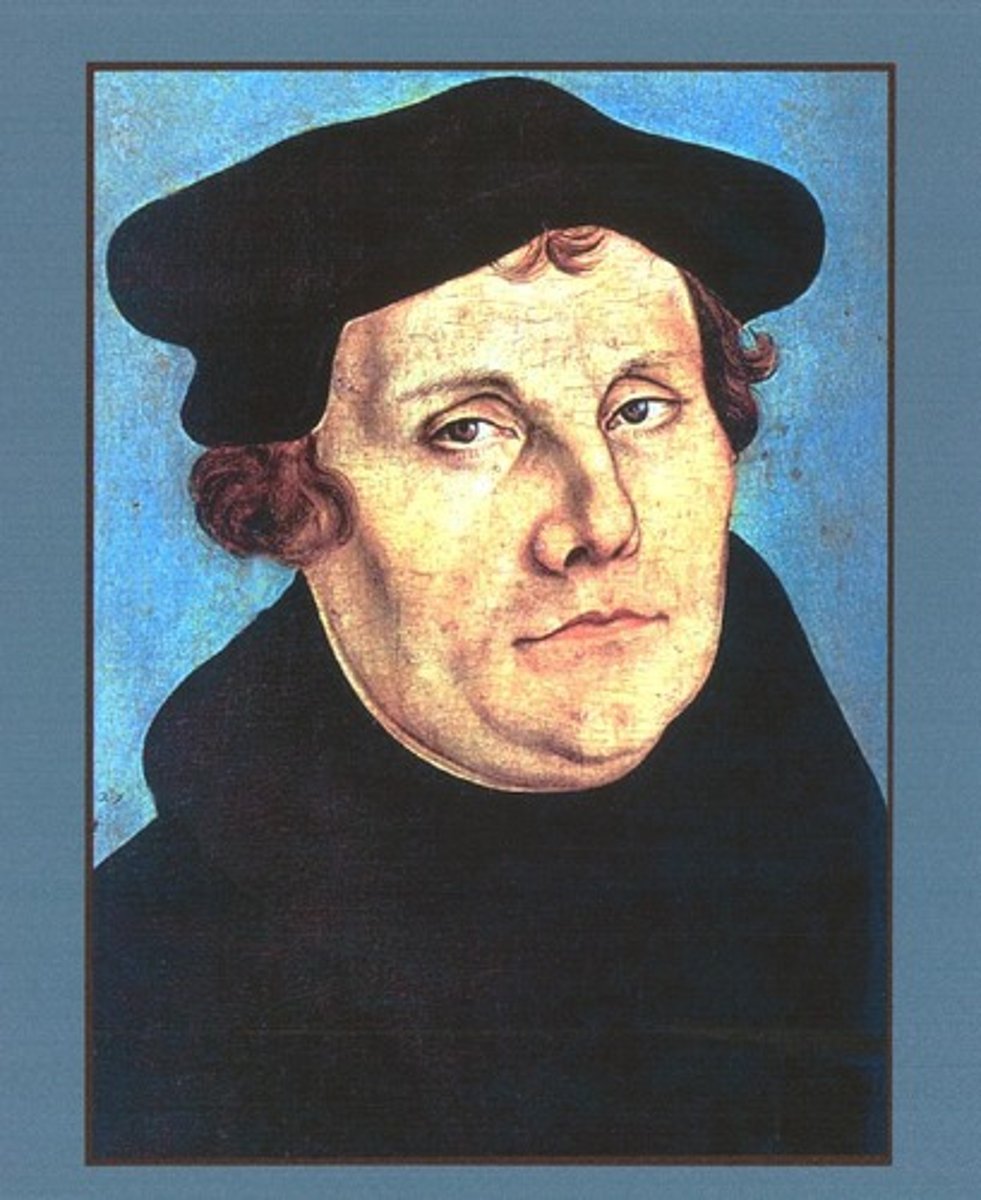
Martin Luther
a German monk who became one of the most famous critics of the Roman Catholic Church. In 1517, he wrote 95 theses, or statements of belief attacking the church practices. Began the Protestant Reformation
Counter or Catholic Reformation
the reaction of the Roman Catholic Church to the Reformation reaffirming the veneration of saints and the authority of the Pope (to which Protestants objected), ended sale of indulgences and simony, created Jesuits, but also the Inquisition
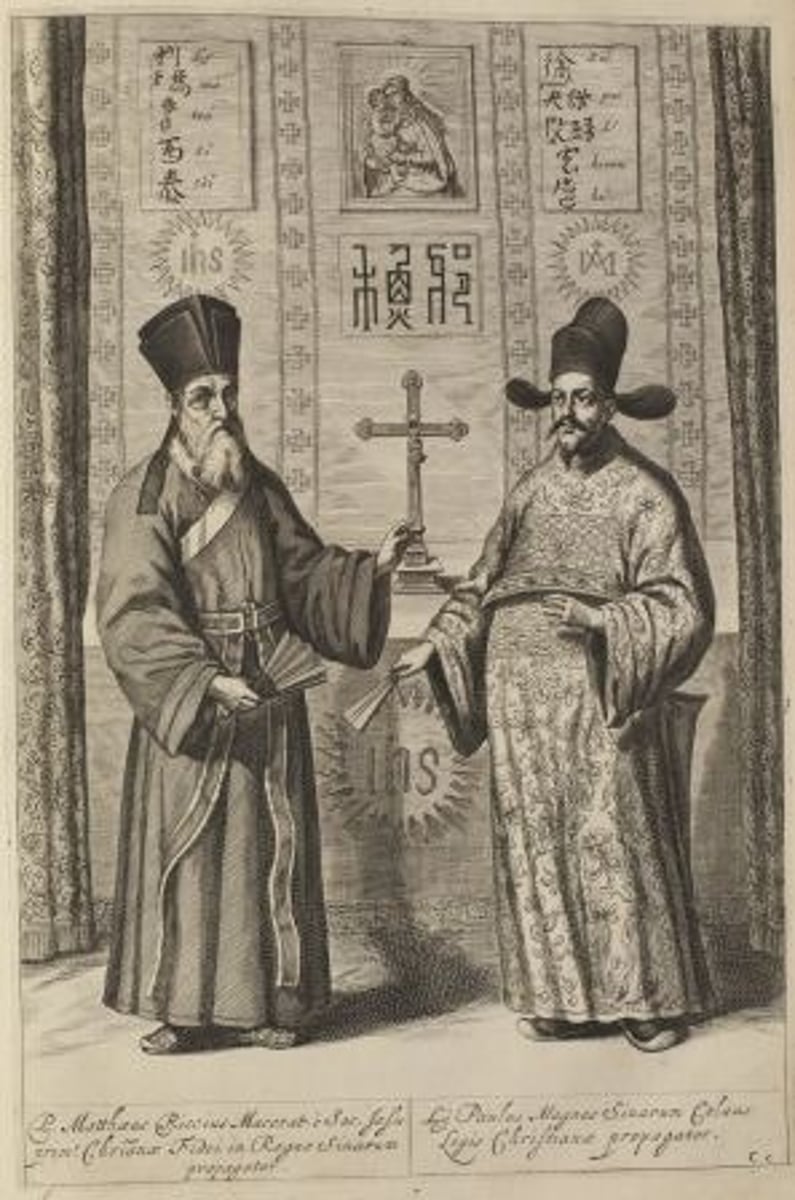
Jesuits
Also known as the Society of Jesus; founded by Ignatius Loyola (1491-1556) as a teaching and missionary order to resist the spread of Protestantism (a result of the Counter Reformation); were often sent to China, Japan, and around the world to gain Catholic converts
Indulgence
A pardon given by the Roman Catholic Church in return for repentance for sins
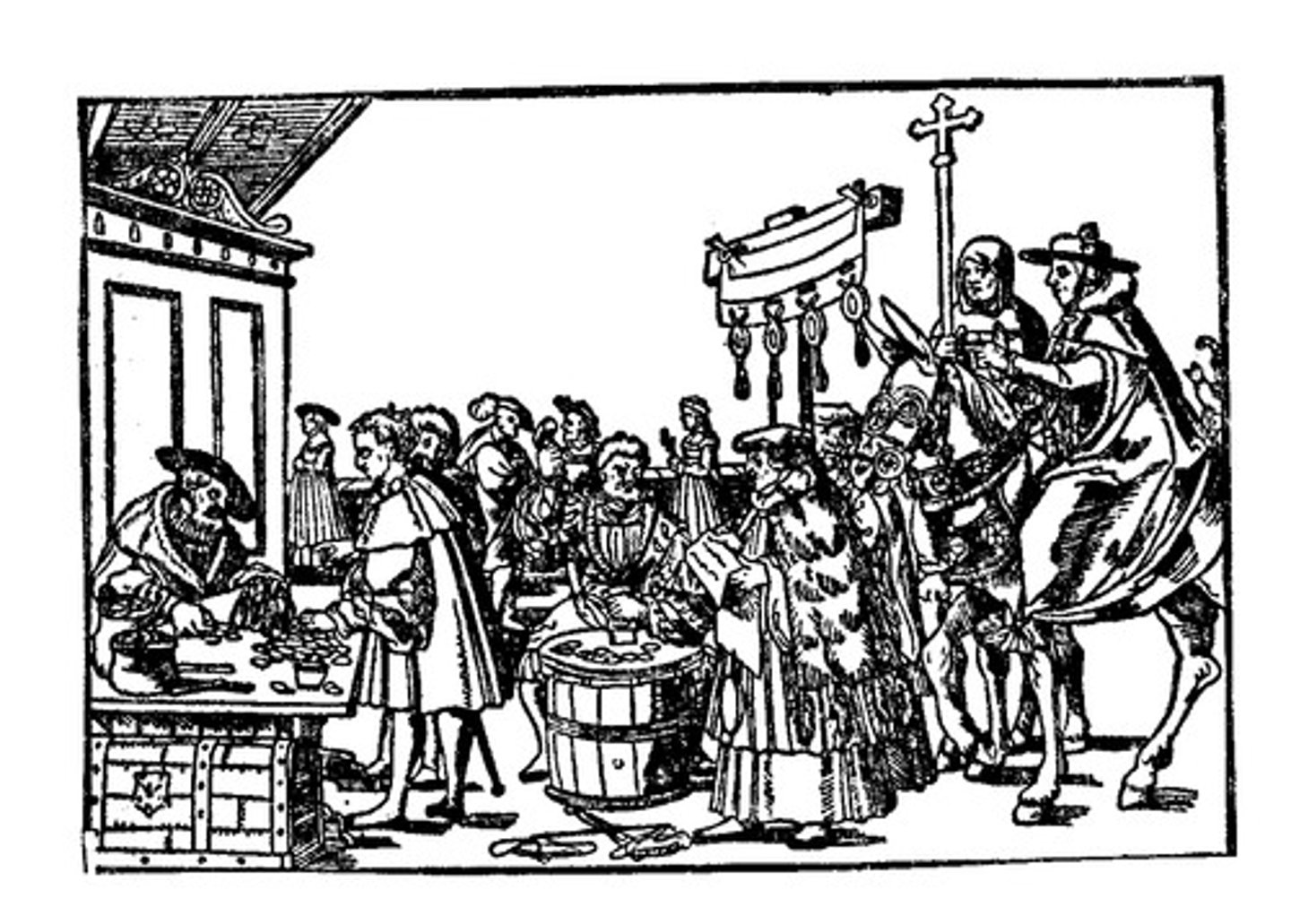
Simony
the buying and selling of church offices
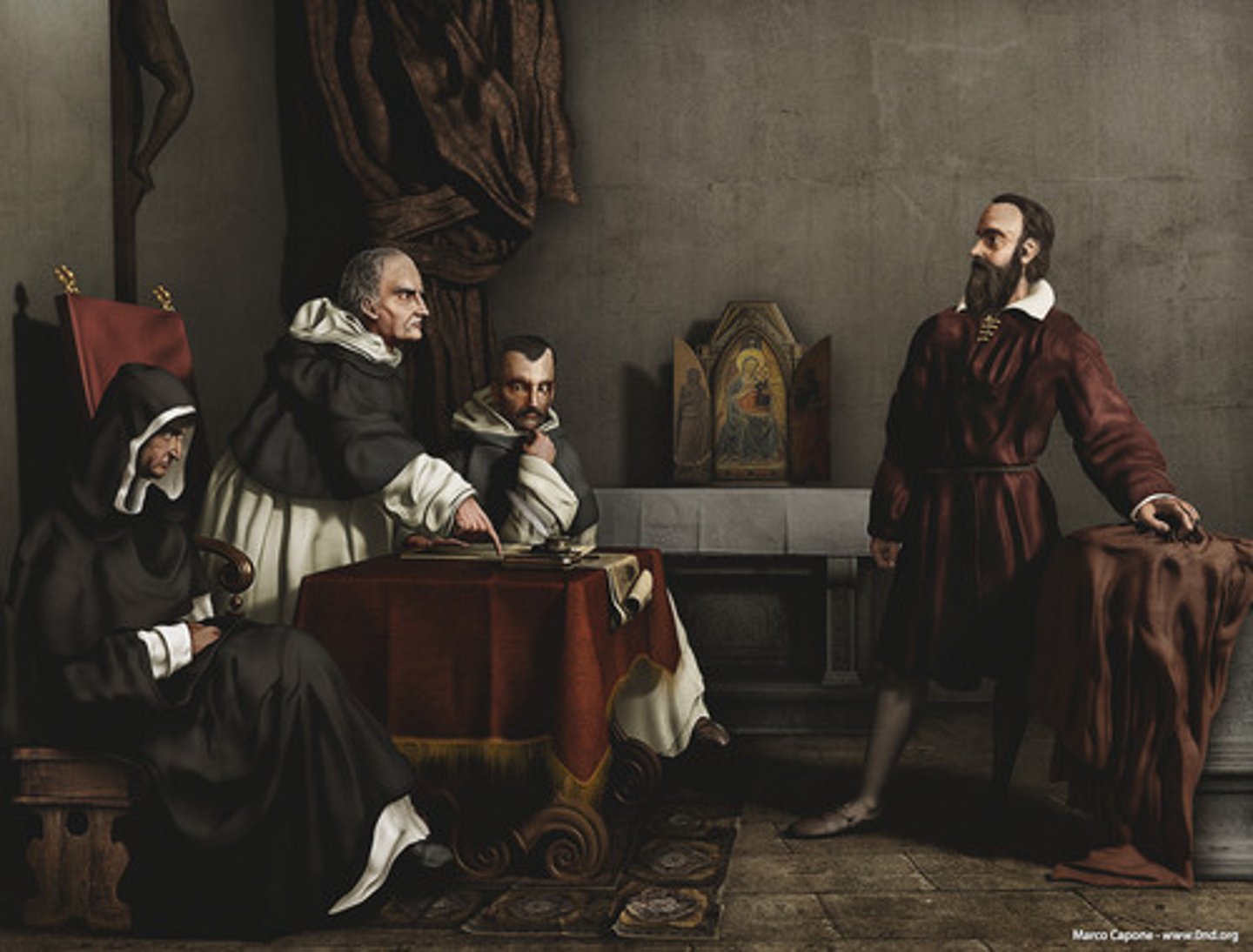
Inquisition
A Roman Catholic tribunal for investigating and prosecuting charges of heresy, a reaction to the Protestant Reformation
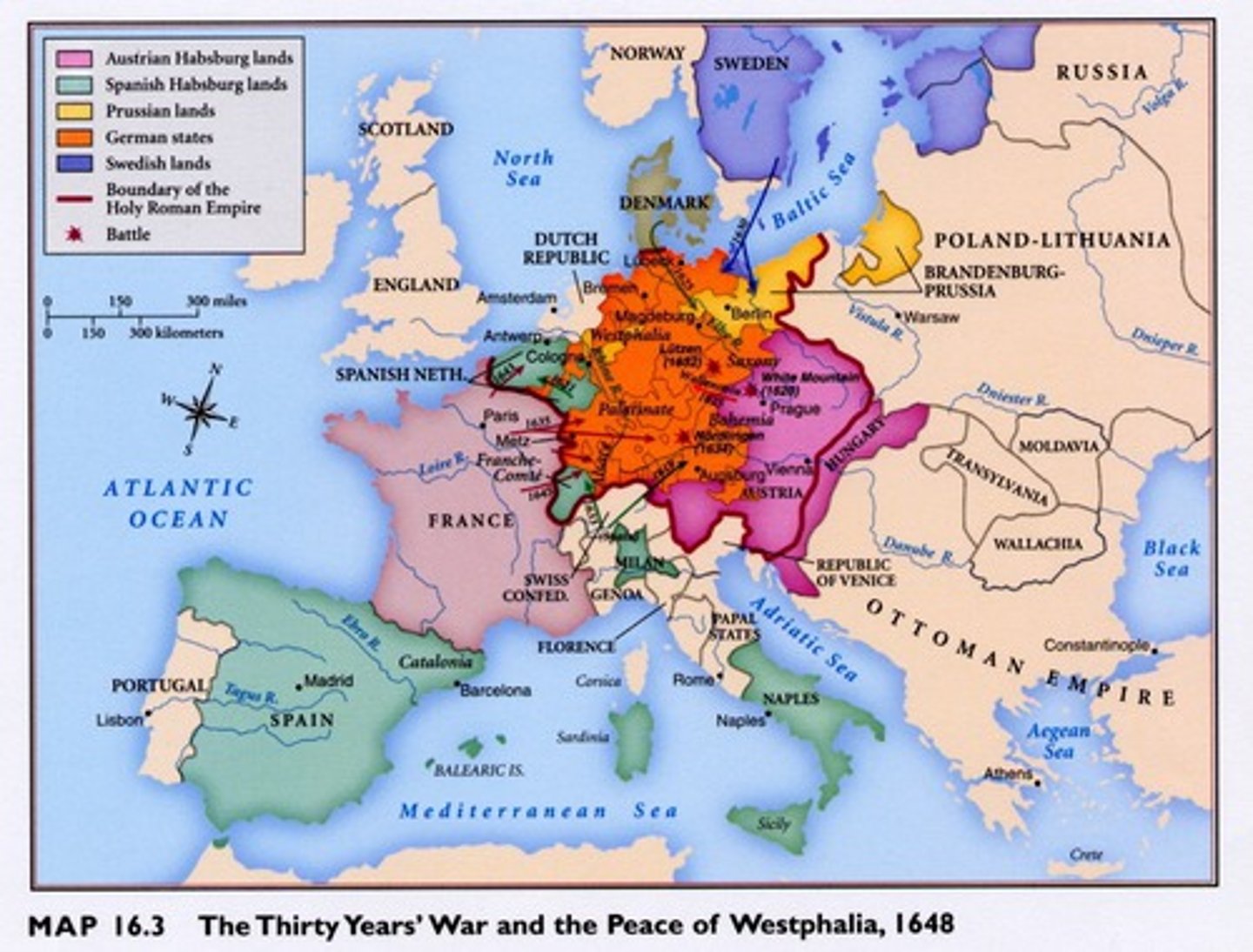
Thirty Years War
(1618-1648 CE) War within the Holy Roman Empire between German Protestants and their allies (Sweden, Denmark, France) and the emperor and his ally, Spain who supported Roman Catholicism; ended in 1648 after great destruction with Treaty of Westphalia; indicates the effects of the Protestant Reformation
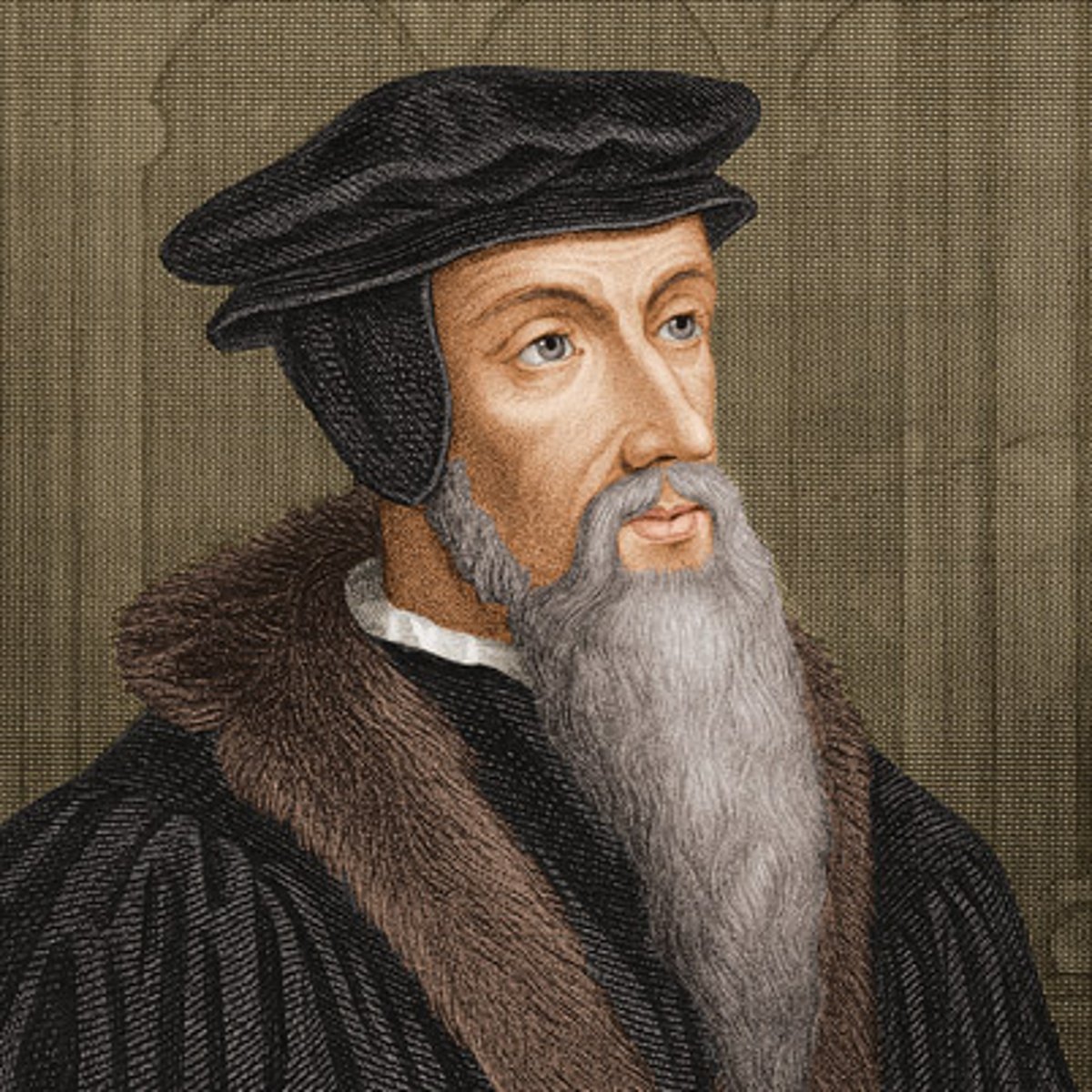
John Calvin
1509-1564. French theologian. Developed the Christian theology known as Calvinism. Attracted Protestant followers with his teachings; believed in predestination
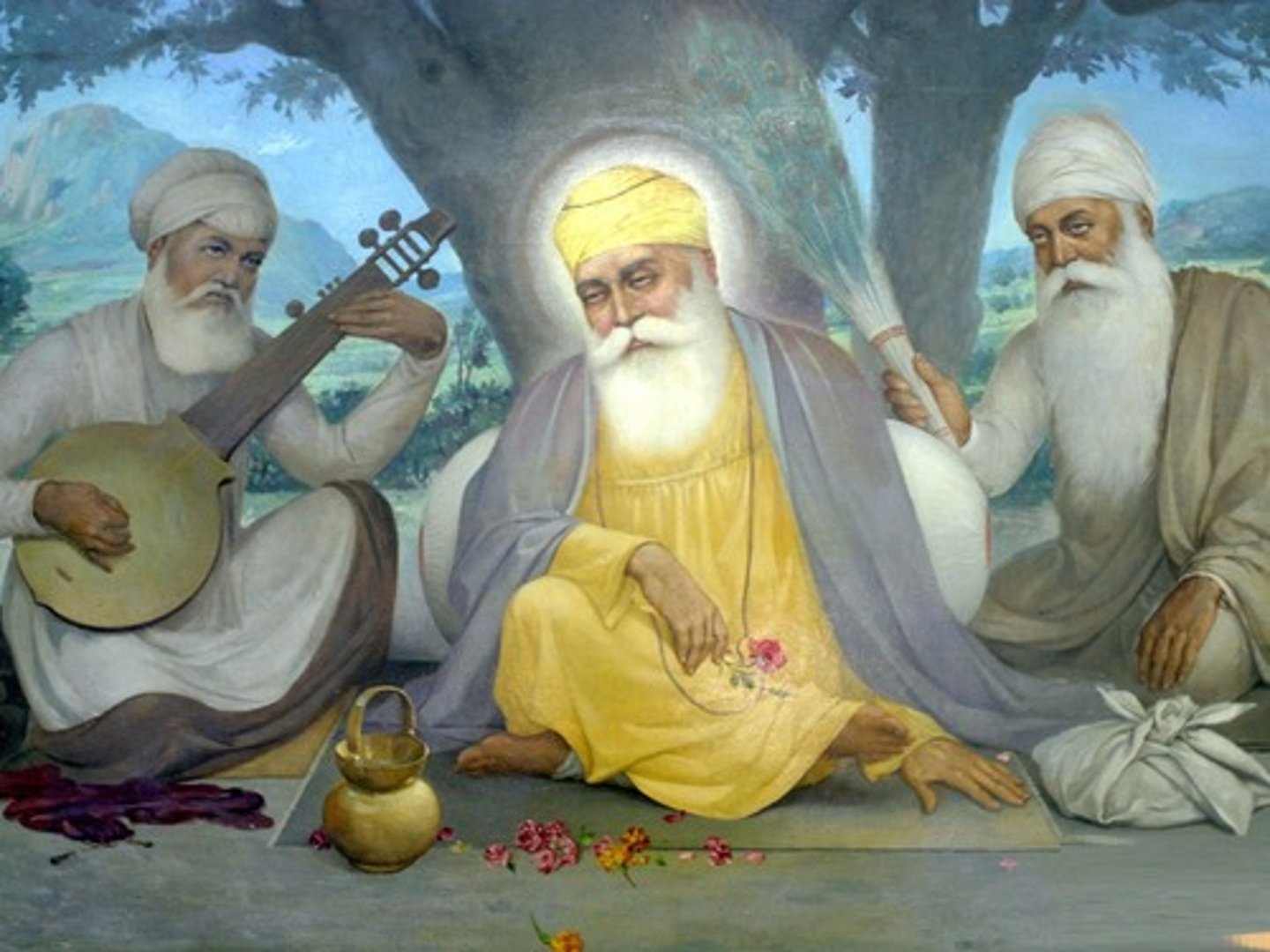
Sikhism
the doctrines of a monotheistic religion founded in northern India in the 16th century by Guru Nanak and combining elements of Hinduism and Islam; a result of the presence of the Mughal Empire in India
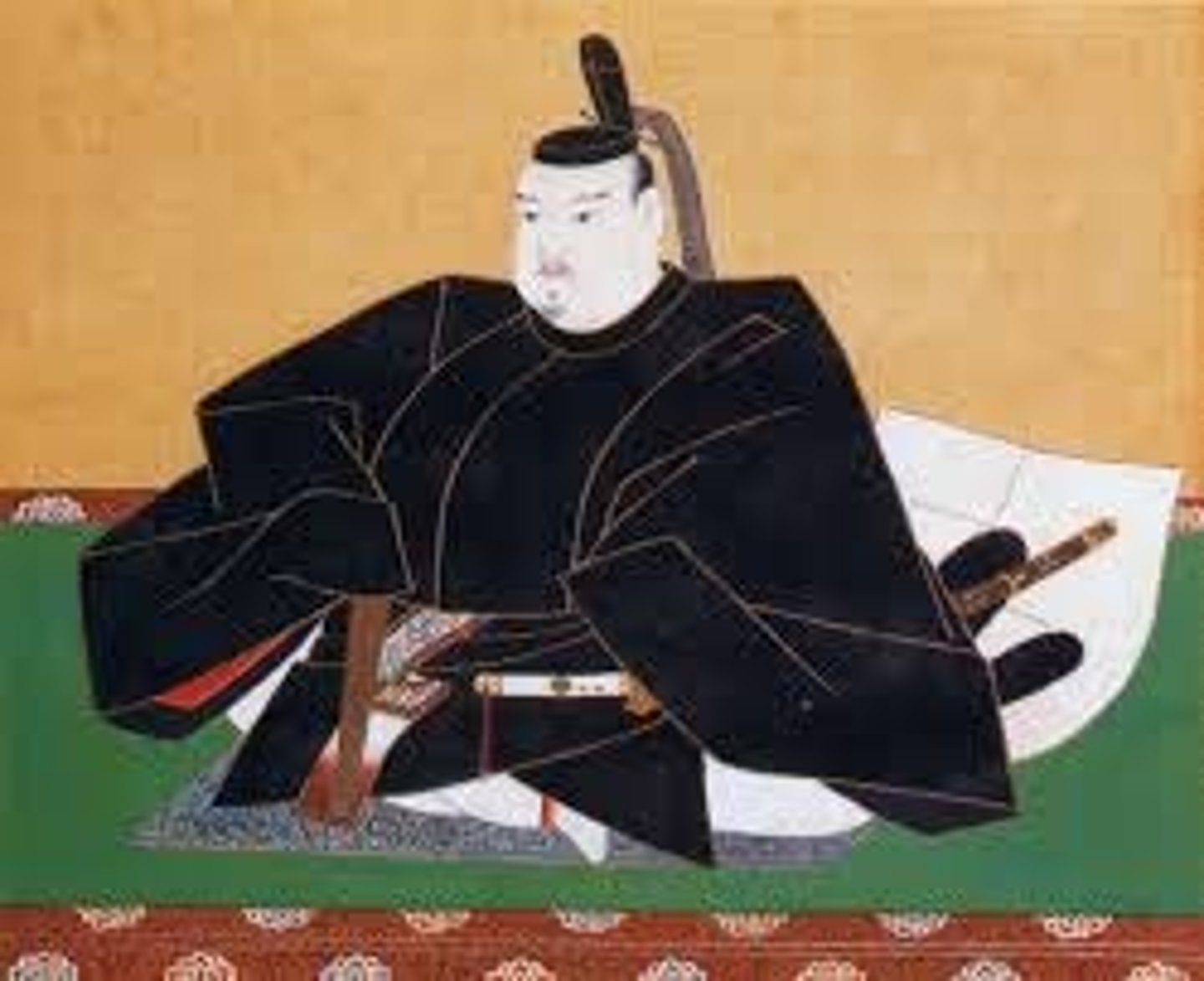
Shogunate
The Japanese system of government under a shogun (military warlord), who exercised actual power while the emperor was reduced to a figurehead.
 Note
Note  Flashcards (35)