B11.1 Gas exchange in humans
 Studied by 0 people
 Call Kai
 Learn
Learn Practice Test
 Spaced Repetition
 Match
Match Flashcards
 Knowt Play
1/6

There's no tags or description
Looks like no tags are added yet.
Name | Mastery | Learn | Test | Matching | Spaced |
|---|
No study sessions yet.
7 Terms
What is the human breathing system?
Organ system that allows body to obtain oxygen needed for aerobic respiration (needs O₂) and allows the body to remove the carbon dioxide (releases CO₂) produced as waste
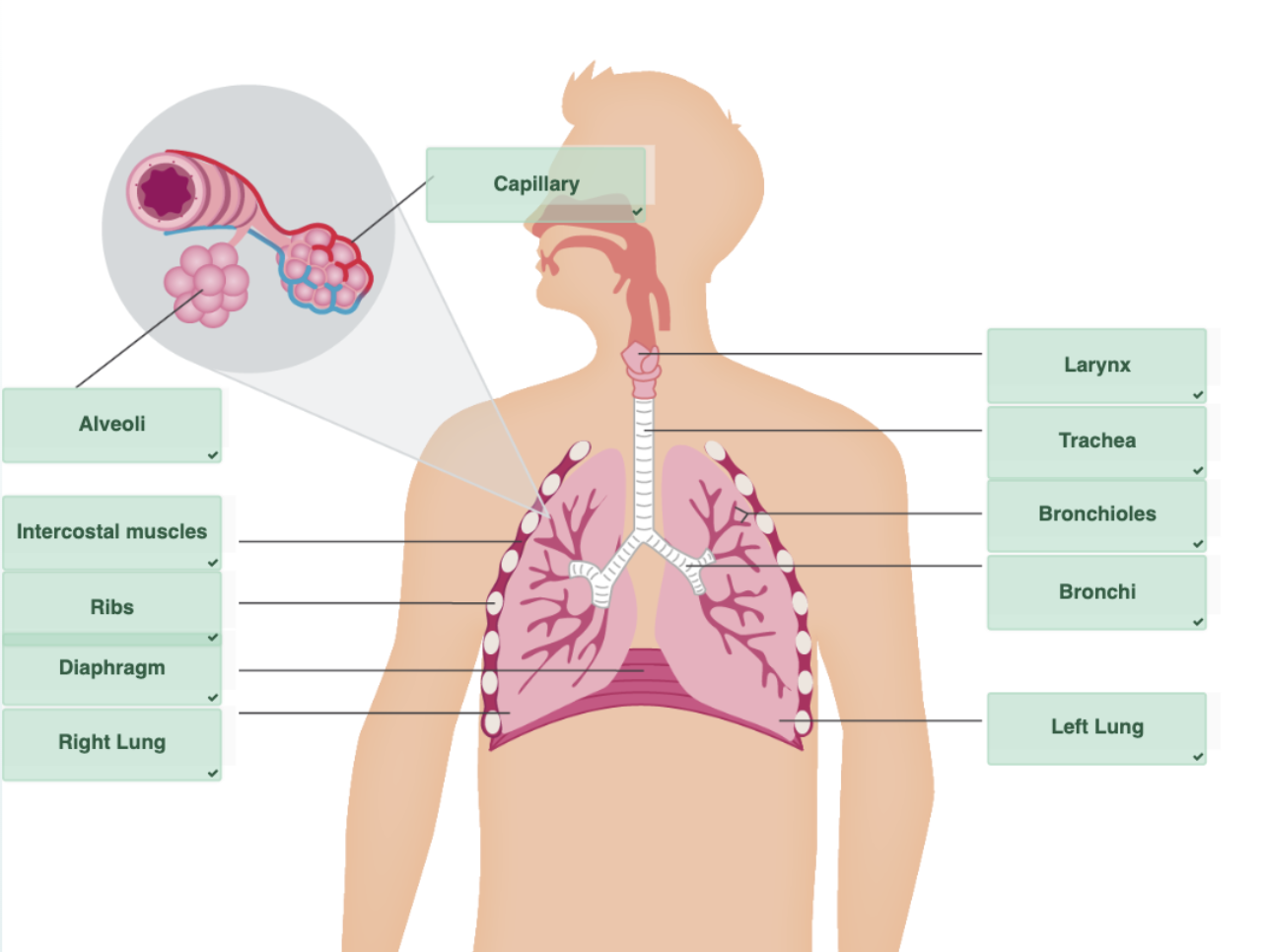
Identify in diagrams and images the parts of the breathing system
Alveoli are located at the end of the bronchioles, and they are surrounded by capillaries
Remember: in diagrams, the sides of the lungs are reversed
What is the pathway of air through the respiratory system?
Nose/mouth: air enters the body through here
Larynx: directs air into trachea
Trachea: windpipe carries air into the lungs
Bronchi: trachea splits into two main bronchi (one for each lung)
Bronchioles: bronchi branch off into smaller tubes called bronchioles
Alveoli: tiny air sacs surrounded by capillaries located at the end of bronchioles, this is where gas exchange happens
Describe the process of gas exchange in the alveoli
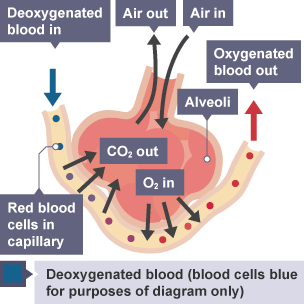
Air is inhaled through nose or mouth filling alveoli with air
There is a high concentration of oxygen in the alveolus, and a low concentration in the capillaries
Oxygen diffuses from high concentration in alveolus to low concentration in capillaries
Oxygen binds with haemoglobin which is then transported around the body and diffused into cells with low oxygen concentration so that they can use it for cellular respiration
Describe features of alveoli for efficient gas exchange
Have a large surface area: more space for gases to diffuse across
Thin: reduces diffusion distance, making gases like oxygen and carbon dioxide diffuse more quickly
Good blood supply: each alveoli has lots of capillaries surrounding it which transport blood
Good ventilation with air: good supply of air supplied through breathing
What is the difference between expired and inspired air?
Inspired air: the air you breathe in
More oxygen
Less carbon dioxide
Used for aerobic respiration
Expired air: the air you breathe out
Less oxygen
More carbon dioxide
More water vapour because moisture evaporates from the cells of the gas exchange surface
Describe the link between physical activity and the rate and depth of breathing
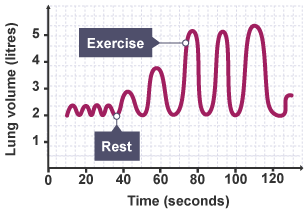
When exercising, cells in the body respire more during periods of physical activity to provide the muscles with the energy needed
Since theres more respiration, more carbon dioxide is produced as a waste product
The brain detects increasing carbon dioxide rate in the blood
This triggers the body to respond by increasing rate and depth of breathing to expel carbon dioxide from the body
These changes also increase amount of oxygen obtained which is needed for aerobic respiration to continue
 Note
Note  Flashcards (27)