back 2026
 Studied by 0 people
 Call Kai
 Learn
Learn Practice Test
 Spaced Repetition
 Match
Match Flashcards
 Knowt Play
1/63

There's no tags or description
Looks like no tags are added yet.
Name | Mastery | Learn | Test | Matching | Spaced | Call with Kai |
|---|
No analytics yet
Send a link to your students to track their progress
64 Terms
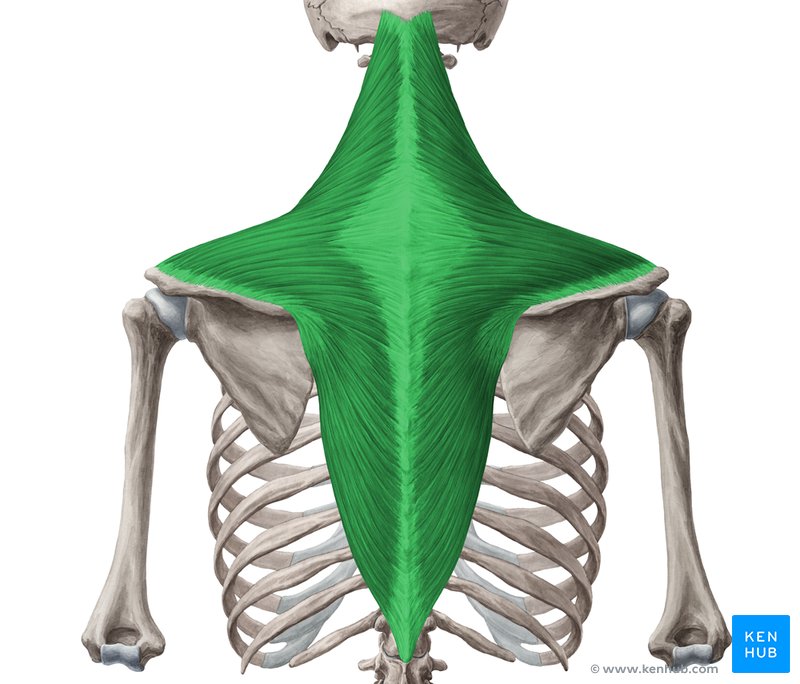
trapezius
superficial
origin: C7-T12
insertion: clavicle, scapula/scapular spine
elevation, depression, retraction, upward rotation
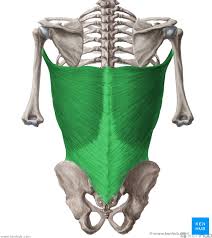
latissimus dorsi
Location: Large superficial muscle of lower back
Position: Inferior to trapezius, covers lower thoracic and lumbar regions
Origin: Spinous processes T7-L5, sacrum, iliac crest, lower 3-4 ribs
Insertion: Intertubercular groove of humerus
Action: Extends, adducts, and medially rotates arm
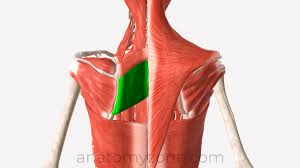
rhomboid major
Location: Deep to trapezius, between scapulae
Position: Inferior to rhomboid minor
Origin: Spinous processes T2-T5
Insertion: Medial border of scapula (below spine)
Action: Retracts and elevates scapula, rotates scapula downward
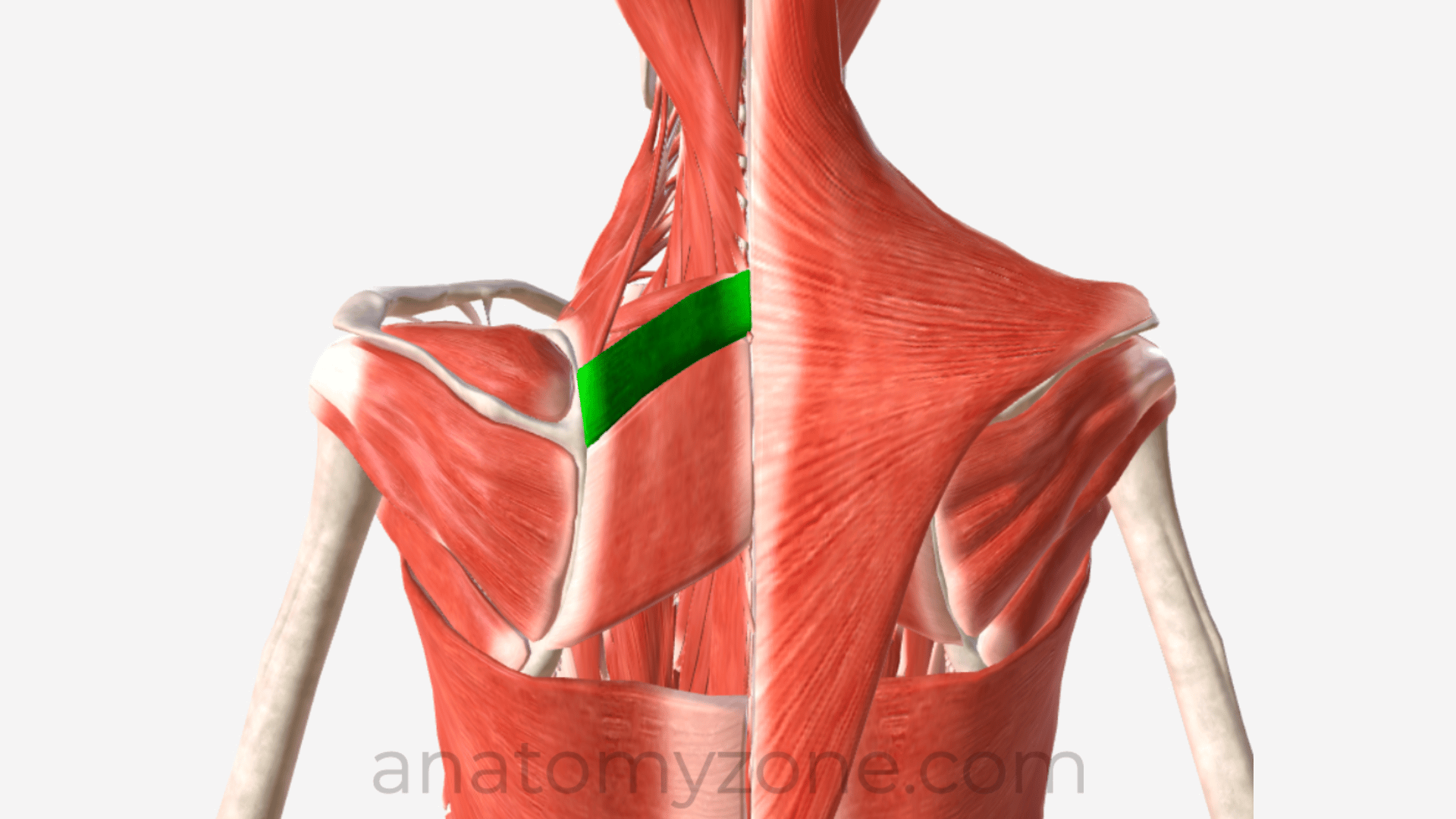
rhomboid minor
Location: Deep to trapezius, between scapulae
Position: Superior to rhomboid major
Origin: Spinous processes C7-T1, nuchal ligament
Insertion: Medial border of scapula (at spine level)
Action: Retracts and elevates scapula, rotates scapula downward
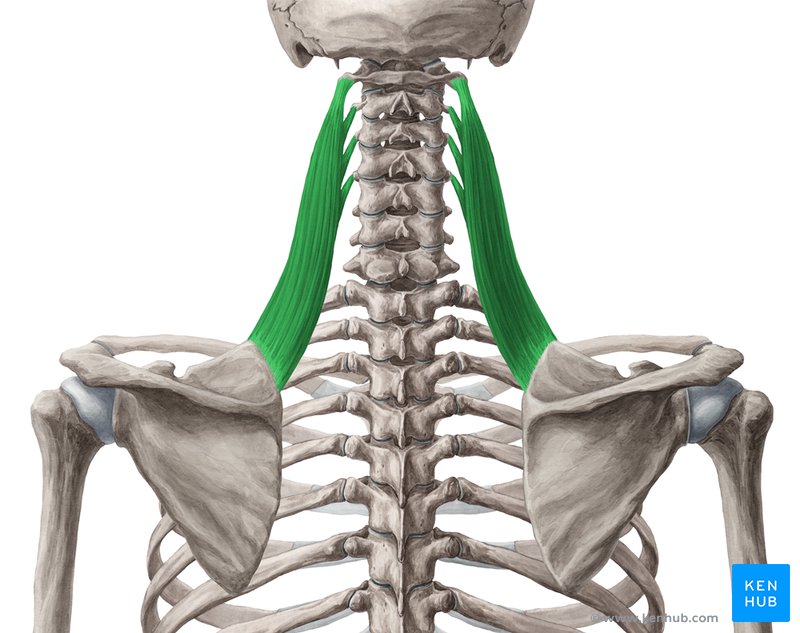
levator scapula
Location: Deep to trapezius, posterior-lateral neck
Position: Medial to posterior scalenes, deep to sternocleidomastoid
Origin: Transverse processes C1-C4
Insertion: Superior angle of scapula and medial border
Action: Elevates scapula, rotates scapula downward
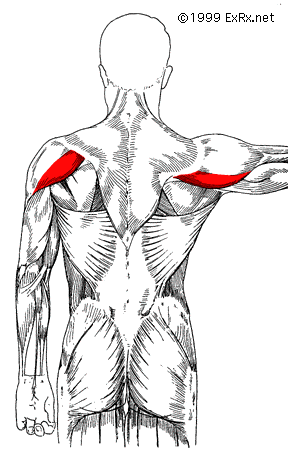
posterior deltoid
Location: Superficial muscle of shoulder
Position: Posterior aspect of shoulder, lateral to infraspinatus
Origin: Spine of scapula
Insertion: Deltoid tuberosity of humerus
Action: Extends and laterally rotates arm
supraspinatus
Location: Deep muscle of shoulder
Position: Sits in supraspinous fossa, deep to trapezius
Origin: Supraspinous fossa of scapula
Insertion: Greater tubercle of humerus (superior facet)
Action: Abducts arm (initiates abduction), stabilizes shoulder joint
subscapularis
infraspinatus
Location: Deep muscle of shoulder
Position: Sits in infraspinous fossa, deep to trapezius and deltoid
Origin: Infraspinous fossa of scapula
Insertion: Greater tubercle of humerus (middle facet)
Action: Laterally rotates arm, stabilizes shoulder joint
subscapularis
Location: Deep muscle of shoulder (anterior scapula)
Position: Sits in subscapular fossa, on anterior/costal surface of scapula
Origin: Subscapular fossa
Insertion: Lesser tubercle of humerus
Action: Medially rotates arm, stabilizes shoulder joint
teres major
Location: Deep muscle of shoulder
Position: Inferior to teres minor, along inferior lateral border of scapula
Origin: Inferior angle and lower lateral border of scapula
Insertion: Intertubercular groove of humerus (medial lip)
Action: Extends, adducts, and medially rotates arm
teres minor
Location: Deep muscle of shoulder
Position: Superior to teres major, inferior to infraspinatus
Origin: Upper lateral border of scapula
Insertion: Greater tubercle of humerus (inferior facet)
Action: Laterally rotates arm, stabilizes shoulder joint
splenius capitis
Location: Deep muscle of posterior neck
Position: Deep to trapezius, superficial to semispinalis capitis
Origin: Nuchal ligament (C7), spinous processes C7-T3/T4
Insertion: Mastoid process and lateral occipital bone
Action: Bilaterally: extends head/neck; Unilaterally: laterally flexes and rotates head to same side
splenius cervicis
Location: Deep muscle of posterior neck
Position: Deep to trapezius, medial and deep to levator scapulae
Origin: Spinous processes T3-T6
Insertion: Transverse processes C1-C3
Action: Bilaterally: extends neck; Unilaterally: laterally flexes and rotates neck to same side
semispinalis capitis
Location: Deep muscle of posterior neck
Position: Deep to splenius capitis, part of transversospinalis group
Origin: Transverse processes C7-T6
Insertion: Between superior and inferior nuchal lines of occipital bone
Action: Bilaterally: extends head/neck; Unilaterally: laterally flexes and rotates head to opposite side
semispinalis cervicis
Location: Deep muscle of neck
Position: Deep to semispinalis capitis, part of transversospinalis group
Origin: Transverse processes T1-T6
Insertion: Spinous processes C2-C5
Action: Bilaterally: extends neck; Unilaterally: laterally flexes and rotates neck to opposite side
spinalis group
Location: Deep intrinsic back muscles
Position: Most medial column of erector spinae, along spinous processes
Origin: Spinous processes of lower vertebrae (varies by region)
Insertion: Spinous processes of superior vertebrae
Action: Bilaterally: extends vertebral column; Unilaterally: laterally flexes trunk
longissimus group
Location: Deep intrinsic back muscles
Position: Middle column of erector spinae, between spinalis and iliocostalis
Origin: Transverse processes of lower vertebrae, sacrum
Insertion: Transverse processes of superior vertebrae, ribs, mastoid process
Action: Bilaterally: extends vertebral column; Unilaterally: laterally flexes trunk
iliocostalis group
Location: Deep intrinsic back muscles
Position: Most lateral column of erector spinae, along angles of ribs
Origin: Iliac crest, sacrum, lower ribs
Insertion: Ribs and transverse processes of cervical vertebrae
Action: Bilaterally: extends vertebral column; Unilaterally: laterally flexes trunk
serratus posterior superior
Location: Intermediate layer, deep to rhomboids
Position: Superior back, deep to rhomboids, superficial to erector spinae
Origin: Nuchal ligament, spinous processes C7-T3
Insertion: Ribs 2-5 (lateral to angles)
Action: Elevates ribs (assists inspiration)
serratus posterior inferior
Location: Intermediate layer, deep to latissimus dorsi
Position: Inferior back, deep to latissimus, superficial to erector spinae
Origin: Spinous processes T11-L2/L3
Insertion: Ribs 9-12 (lateral to angles)
Action: Depresses ribs (assists expiration)
vertebral foramen
Location: Central opening in vertebra
Function: Houses and protects spinal cord
Structures passing through: Spinal cord, meninges, epidural space with blood vessels and fat
intervertebral foramen
Location: Opening between adjacent vertebrae (formed by superior and inferior vertebral notches)
Function: Allows passage of spinal nerves
Structures passing through: Spinal nerve, blood vessels
spinous process
Location: Posterior projection from vertebral arch
Function: Attachment site for muscles and ligaments, lever for movement
Nearby structures: Erector spinae, multifidus, interspinous ligaments
transverse process
Location: Lateral projections from vertebral arch
Function: Attachment site for muscles and ligaments
Nearby structures: Erector spinae, rotator muscles, intertransverse ligaments
superior articular process
Location: Projects superiorly from vertebral arch
Function: Forms facet joint with inferior articular process of vertebra above
Nearby structures: Joint capsule, synovial fluid, facet joint
inferior articular process
Location: Projects inferiorly from vertebral arch
Function: Forms facet joint with superior articular process of vertebra below
Nearby structures: Joint capsule, synovial fluid, facet joint
vertebral body
Location: Anterior weight-bearing portion
Function: Main weight-bearing structure, supports intervertebral discs
Nearby structures: Intervertebral discs, anterior/posterior longitudinal ligaments
pedicle
Location: Connects vertebral body to transverse processes
Function: Forms walls of vertebral foramen, creates vertebral notches
Nearby structures: Spinal nerves (vertebral notches form intervertebral foramen)
lamina
Location: Connects transverse processes to spinous process
Function: Forms posterior wall of vertebral foramen
Nearby structures: Ligamentum flavum attaches here
intervetebral disc
Location: Between vertebral bodies
Function: Shock absorption, allows movement, separates vertebrae
Components: Nucleus pulposus (inner gel), annulus fibrosus (outer rings)
anterior longitudinal ligament
Location: Runs along anterior surface of vertebral bodies
Function: Prevents hyperextension, stabilizes spine
Attachment: Skull to sacrum
posterior longitudinal ligament
Location: Runs along posterior surface of vertebral bodies (inside vertebral canal)
Function: Prevents hyperflexion, limits disc herniation posteriorly
Attachment: Axis (C2) to sacrum
ligamentum flavum
Location: Connects laminae of adjacent vertebrae
Function: Maintains upright posture, prevents sudden flexion, elastic
Special feature: Yellow elastic connective tissue
interspinous ligament
Location: Connects adjacent spinous processes
Function: Limits flexion
Nearby structures: Continues posteriorly as supraspinous ligament
transverse foramen
Location: Only in cervical vertebrae (C1-C7)
Function: Passage for vertebral arteries (except C7)
Found in: Transverse processes of cervical vertebrae
transverse costal facet
Location: On transverse processes of thoracic vertebrae
Function: Articulation point for tubercle of rib
Found in: T1-T10 (sometimes T11-T12)
superior costal facet
Location: Superior portion of vertebral body (thoracic)
Function: Articulation with head of rib (of same number)
Found in: Thoracic vertebrae
inferior costal facet
Location: Inferior portion of vertebral body (thoracic)
Function: Articulation with head of rib (one number below)
Found in: Most thoracic vertebrae (T1-T9)
dens
Location: Projects superiorly from body of C2 (axis)
Function: Pivot point for rotation of C1 (atlas) and skull
Special feature: Embryologically represents body of C1
sacral canal
Location: Continuation of vertebral canal through fused sacral vertebrae
Function: Contains cauda equina (nerve roots)
Opens at: Sacral hiatus
sacral foramina
Location: Anterior (pelvic) and posterior (dorsal) surfaces
Function: Passage for sacral spinal nerves
Number: 4 pairs on each surface
ala
Location: Lateral masses of sacrum
Function: Articulation with ilium (sacroiliac joint), weight transmission
Formed from: Fused transverse processes
sacrum
scapula
superior angle (scapula)
Location: Superomedial corner of scapula
Muscle attachment: Levator scapulae inserts here
Level: Approximately T2 vertebra
inferior angle (scapula)
Location: Inferomedial corner of scapula
Muscle attachment: Teres major, latissimus dorsi, serratus anterior
Level: Approximately T7 vertebra
lateral angle (scapula)
Location: Thickened lateral corner
Contains: Glenoid cavity
Function: Forms shoulder joint
vertebral border (scapula)
Location: Medial edge closest to vertebral column
Muscle attachments: Rhomboids, serratus anterior, levator scapulae
axillary border (scapula)
Location: Lateral edge toward axilla
Muscle attachments: Teres major, teres minor, long head of triceps
superior border (scapula)
Location: Superior edge of scapula
Contains: Suprascapular notch
Muscle attachment: Omohyoid
scapula spine
Location: Prominent ridge on posterior surface
Function: Divides posterior scapula into supraspinous and infraspinous fossae
Muscle attachments: Trapezius, deltoid
acromion
Location: Lateral end of scapular spine
Function: Articulates with clavicle (AC joint)
Muscle attachments: Deltoid, trapezius
coracoid process
Location: Anterior projection from superior lateral scapula
Function: Attachment point for muscles and ligaments
Muscle attachments: Pectoralis minor, coracobrachialis, short head of biceps
glenoid cavity
Location: Lateral angle of scapula
Function: Articulates with head of humerus (glenohumeral joint)
Features: Shallow socket
suprascapular notch
Location: Superior border medial to coracoid process
Function: Passage for suprascapular nerve
Nearby structures: Suprascapular artery passes over (not through)
infraspinous fossa
Location: Posterior surface below spine
Muscle: Infraspinatus originates here
Larger than: Supraspinous fossa
supraspinous fossa
Location: Posterior surface above spine
Muscle: Supraspinatus originates here
Smaller than: Infraspinous fossa
subscapular fossa
Location: Posterior surface above spine
Muscle: Supraspinatus originates here
Smaller than: Infraspinous fossa
flexion
Bending forward (anteriorly)
extension
Bending backward (posteriorly)
lateral flexion
Bending to the side
rotation
Twisting left or right
 Note
Note  Flashcards (62)