Substance use in the context of health assessment
 Call Kai
 Learn
Learn Practice Test
 Spaced Repetition
 Match
Match Flashcards
 Knowt Play
1/18

There's no tags or description
Looks like no tags are added yet.
Name | Mastery | Learn | Test | Matching | Spaced | Call with Kai |
|---|
No analytics yet
Send a link to your students to track their progress
19 Terms
Substance use varies based on
social practices and acceptability
Affordibility
Issues of trauma, violence, chronic pain, etc.
Mental health and substance use are linked
Substance use is not a problem to be targeted
substance use is a symptom that pre-exists a problem or circumstance
How is knowledge of substance use applied in health assessment
health promotion
take patient’s and population’s context into account
trauma and violence informed care
minimize harm
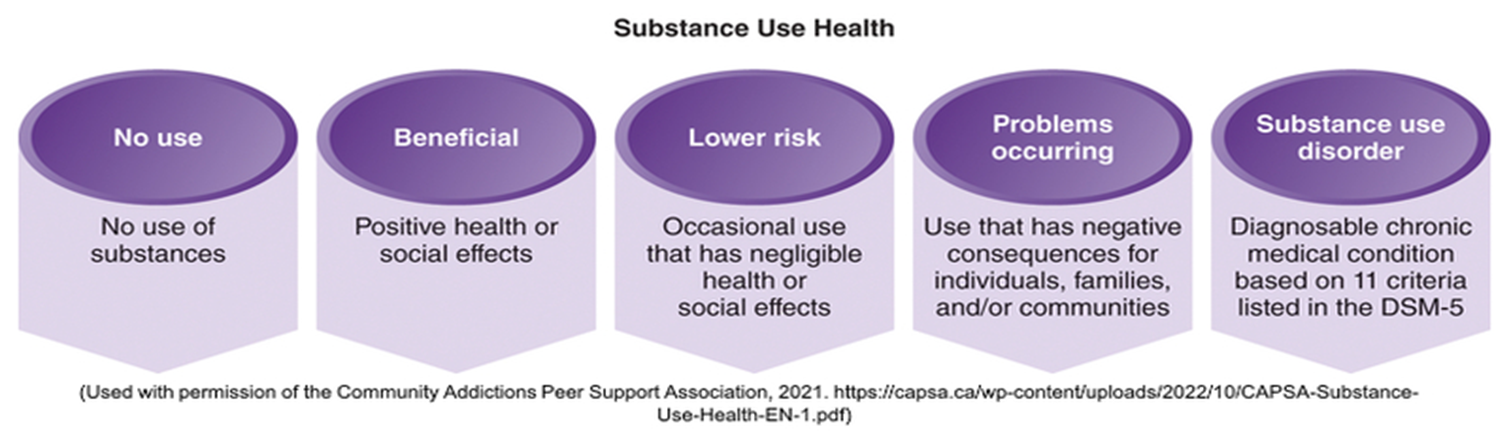
Relevent terms & documentation
avoid discrimination and stigma - this makes people reluctant to share and seek help
avoid labels such as “drug addict or user”
use factual terms
non judgemental tone
accurate as possible; include:
Type of substance used
amounts
route
results of health history and physical assessment
Examining Attitudes
Take a moment to reflect on values and beliefs about substance use and how this may influence your assessment practices.
How do you feel about working with people who use substances?
What judgements may arise when providing care?
what situation do you find it would be most challenging to be respectful?
Putting harm reduction principles into action
we consider harm redduction principles as a practice of health promotion
also have to screen for substance use
again emphasizing importance of developing a rapport and asking the questions in a non-judgemental way
NEVER ASSUME, ALWAYS STAY CURIOUS
Screening tools and assessments: TWEAK
tolerance - how many drinks does it tke to make you feel the first effect?
worry - have close friends or relatives worried or complained about your drinking in this past year?
eyeopener - do you sometimes take a drink in the morning when you first get up?
amnesia - has a friend or family member ever told you about things you said or did that you cant remember
k-cut down - do you sometimes feel the need to cut down on your drinking?
used to identify women who are at-risk for alcohol use problems
>2 points - likely a drinking problem
Screeing tools and assessments: CAGE tool
CUTDOWN - ANNOYED - GUILTY - EYEOPENER
commonly used in accute care & pre-op settings to screen for possible substance use that may result in withdrawal symptoms
(Please note: This test will only be scored correctly if you answer each one of the questions.
Please check the one response to each item that best describes how you have felt and behaved over your whole life.)
Have you ever felt you should cut down on your drinking? Yes No
Have people annoyed you by criticizing your drinking? Yes No
Have you ever felt bad or guilty about your drinking? Yes No
Have you ever had a drink first thing in the morning to steady your nerves or get rid of a hangover (eye-opener)? Yes No
If client answers 2 or more “yes” responses, consider at risk for alcohol withdrawal.
Assessing for withdrawal
hospitalization can interrupt patterns of substance use
assessment and alertness needed to manage withdrawl
know withdrawal symptoms specific to different substances**
Do not assume symptoms are due to withdrawal - could be another medical emergency!
Alcohol withdrawal symptoms
insomnia
sweating
tachycardia
tremors
N&V
tremors
anxiety
seizures
sedative withdrawal symptoms
anxiety
othostatic hypotension
tremors of hands, tongue, eyelid
nicotine withdrawal symptoms
vasodilation, headaches, irritability and nervousness
cannabis withdrawal symptoms
irritability
nervousness
sleep difficulty
decreased appetite
restlessness
decreased mood
physical symptoms - discomfort
Cocaine withdrawal symptoms
dysphoric mood
agitation
insomnia
hypersomnia
amphetamines withdrawal symptoms
same as cocaine
dyphoric mood
agitation
insomnia
hypersomnia
Opiates
Same as Cocaine and amphetamines
dyphoric mood
agitation
insomnia
hypersomnia
two assessments
CIWA-Ar - Clinical institution withdrawal assessment - alochol revised
use objective assessment data to obtain score and follow protocol
COWS - Clinical opiate withdrawal scale
assess for and treat opiod withdrawal
5 A’s for integrating knowledge of substance use in health assessment
Acquire knowledge - replace assumptions
Anticipate harm that may be caused by your practices, reactions, judgements
Analyze organizational practices and resources
Avoid social judgement about substance use, such as seeing a person as “bad”, deviant or morally weak
Approach patients respectfully

