SCM 414- UPS Case Studyguide
 Studied by 15 people
 Call Kai
 Learn
Learn Practice Test
 Spaced Repetition
 Match
Match Flashcards
 Knowt Play
1/40

There's no tags or description
Looks like no tags are added yet.
Name | Mastery | Learn | Test | Matching | Spaced | Call with Kai |
|---|
No analytics yet
Send a link to your students to track their progress
41 Terms
What was UPS's global operations strategy when Mr. Abney took over as CEO in 2014?
Special focus on the emerging economies
Who was UPS's major competitor in India in terms of volume share among international logistics service providers?
DHL
Why didn't UPS have the flexibility to experiment with different business models based on trial and error in India?
Competitors already had a head start in Indian supply chain
What happens when a logistics firm obtains Common Carrier Rights?
It allows the logistics firm to deliver packages to both private and commercial customers.
What does the term "Synchronized Commerce" refer to?
Modifying supply chains to align goods, information and funds to deliver more products and services to its customers.
On what model is UPS's delivery network based?
Hub and Spoke
What was India's open sky policy?
Foreign airlines are allowed to have any number of flights to India (after the agreement is signed)
Which of the following is not a positive growth driver for UPS in the Indian industry?
Government policies to limit FDI.
What is UPS four Quadrant growth strategy?
Focus innovating existing business operations internally and externally and, likewise, focus innovation on new entrepreneurial ventures both internally and externally.
Why was India a difficult market to penetrate for UPS? Choose the most significant reason.
Fragmented nature of the market and large number of competitors already present.
What is UPS known as globally?
The world’s largest package delivery company.
What industry is UPS a leader in within the U.S.?
Less-than-truckload (LTL) industry.
What is FTL (Full Truckload)?
The whole container belongs to one company (e.g., Walmart).
What is LTL (Less-Than-Truckload)?
Multiple companies share a container; moves shipments from 150 to 15,000 lbs using a hub-and-spoke network.
UPS Bargaining power of buyers?
Low – fixed rates, few competitors offering similar services.
UPS Threat of substitutes?
Medium – strong global presence, good service.
UPS Bargaining power of suppliers?
Medium to high – suppliers include fuel, truck, aircraft, and equipment manufacturers.
UPS Threat of new entrants?
Low – high investment costs (warehouses, fleet, tech, reputation).
UPS Rivalry among competitors?
Medium – offers services to competitors; asset-based company.
What is UPS’s business strategy?
Industry-wide differentiation: best quality and wide range of services; higher prices but handles larger volume.
What is UPS’s supply chain strategy?
Company-owned fleet, focused customer base, acquisitions, and a single network structure.
List UPS’s four major global challenges
Growing bargaining power of Amazon.
Suppliers delivering heavier objects.
Increasing peak season/COVID-19 volumes.
Human resource issues.
Why was “United” added in 1919?
They wanted people to know they all are working for the same company. They evolved to customer needs.
What are “Common Carrier Rights”?
Allowed UPS to deliver to all customers, not just private ones.
What is the “Teamsters Union,” and why is it significant?
A large U.S. logistics labor union that represents transportation and logistics workers; significant bc it’s 1997 strike halted deliveries nationwide and cost the company millions.
What is a “Solutions Company”?
A company that customizes services to solve specific customer problems.
offered services tailored to its customers business process value chain, provided financial products/services to help small businesses grow.
What is “Synchronized Commerce”?
Financial, goods, and information flows; as goods are moving you can easily track where you goods are, which facility it was at; 3 main flows, goods, info, finance are all synchronized.
What is the “UPS Store,” and how did it help growth?
These UPS stores are access points, which are linked to the facilities, easy way to extend into a country, let customers experience your service, and these stores offer various services.
What was the “License Raj”?
System in India requiring excessive government permits to operate, slowing business growth. basically license control
repealed by Manmohan Singh
What is “Make in India”?
2014 initiative to boost manufacturing to 25% of GDP, create 100m jobs, and attract investment.
Started by the government, now Indian government over time has been much of a service hub, but wants to be a manufacturer instead. Expanding UPS is significant because other companies are getting that "first movers advantage'“, so its they are requiring a lot of RM to be moved, those RM need to be redirected/stored in these warehouses, logistics companies will provide this, same with moving them to the ports, then freight forwarders unload
What is the “Point-to-Point” delivery model?
goods are shipped directly from the starting place to the destination without stopping at a central hub.
UPS operates hub-and-spoke
Who was UPS’s first partner in India?
Jet Air in 2005
What was the benefit and outcome of UPS’s partnership with AFL?
It gave UPS wider access points and stronger local logistics in India, but it was short-lived because FedEx bought AFL’s delivery business.
How did partnership with Connect India help UPS?
Expanded reach to semi-urban and rural regions, giving customers access to global shipping.
Why are MNCs like UPS investing in India?
Gain access to a larger market. (1B pop population, sustained economic growth)
Gain access to low-cost input factors. (514M workers, Low wage rate, High population of educated and English speakers)
Develop new competencies (learning new capabilities)
Country-specific reasons.
Positive government attitude towards FDI – economy liberalization (e.g., GST, Tax holidays etc.)
Efforts to integrate fragmented logistics landscape – growth in manufacturing and e-commerce.
What risks come with investing in emerging as opposed to developed markets?
Liability of foreignness (increased cultural distance)
Political risk.
Economic sensitivity. (sensitive to global recession)
Poor infrastructure. (power outage issues, high transit times (20 days)
Weak IP protection. (weak enforcement of regulations)
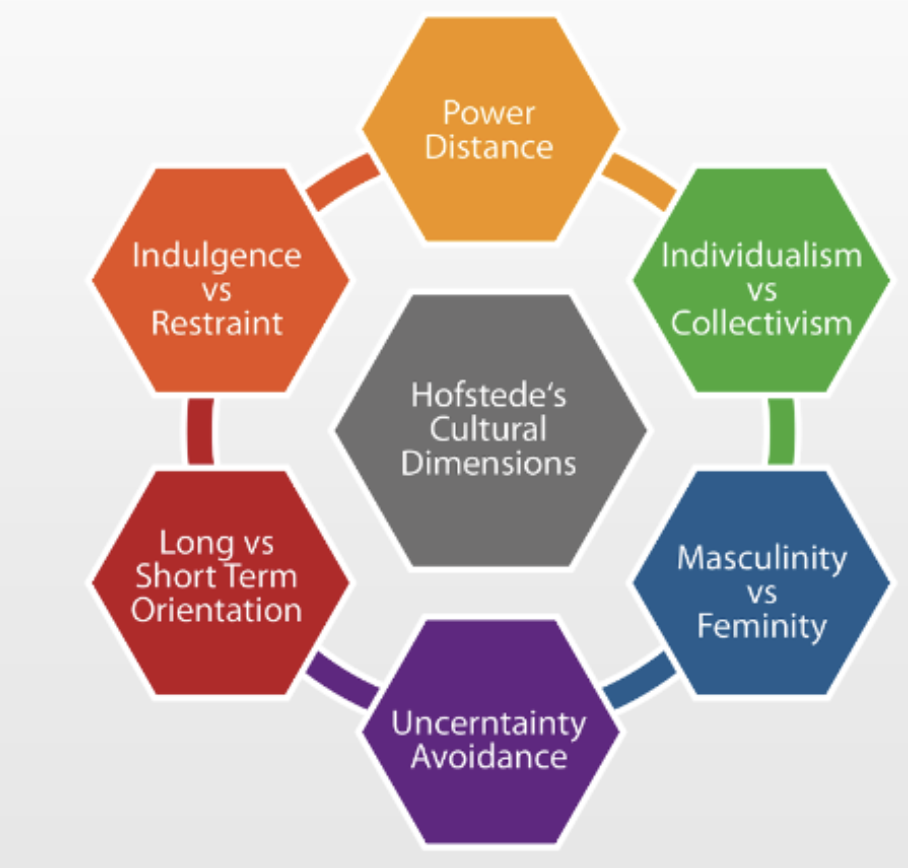
Compare the national cultures of the U.S. and India. How might these
differences affect UPS’s formulation and implementation of an
expansion strategy in India?
Similarities – People avoid uncertainty, Work is important, Goals: Job security, up-to-datedness.
Differences:
USA – Individualistic Society | India – Collectivistic society.
USA – Less power distance | India – More power distance.
USA – Quick result expectation | India – Persistence and
perseverance (eye toward future).
What mode(s) of entry would you recommend that UPS consider?
Form alliances (e.g., InterGlobe partnership – “Movin”: Movement + India).
GST (goods and services Tax)
replaces many different state and national taxes with one common tax. shipping across state lines should get easier and cheaper
Special Economic Zones (SEZs)
By 2006, India created Special Economic Zones (SEZs)
National Waterways Bills, 2015
a law that turned 110 rivers and canals across India into national waterways.
 Note
Note  Flashcards (145)