lesson 6 - correlational research
 Call Kai
 Learn
Learn Practice Test
 Spaced Repetition
 Match
Match Flashcards
 Knowt Play
1/12

There's no tags or description
Looks like no tags are added yet.
Name | Mastery | Learn | Test | Matching | Spaced | Call with Kai |
|---|
No analytics yet
Send a link to your students to track their progress
13 Terms
how to tell of 2 quantitative variables are correlated
column depiction
scatter plots
correlation coefficient (r)
how to tell of one categoriical and one quantitative variable are correlated
compare means across groups
how to tell if two categorical variables are correlated
compare frequencies/proportions across groups
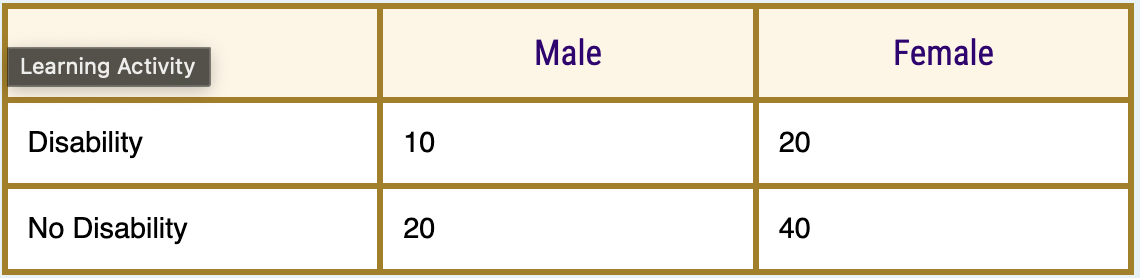
10 out of 30 males = 33.3%
20 out of 60 females = 33.3%
→ variables are not associated
how to read column depiction
organize one column from lowest → highest
→ do we see a tendency for the scores in the other column to move systematically in comparison??
interpreting scatterplots
how close together are the dots?
do they move in a specific direction/slant??
perfect positive correlation
every time the x value increases by a unit, the y value increases by a fixed amount
on a scatterplot → all points are in a straight upward slope
perfect negative correlation
as the x value decreases by a unit, the y value decreases bu a fixed amount
on a scatterplot → straight line sloping downward
how does a correlation allow us to make a prediction
step 1: finding the regression line
find the line of best fit in a scatterplot
step 2: using the regression line to make predictions
as long as the regression is sloped, you can make a prediction of someones y-score if you know their x-score
→ visually:
find score on x axis
move straight up until yu hit the regression line
move across to y-axis
y-value reached = predicted y-score
6 questions for evaluating statistical validity in correlational studies
how strong is the relationship?
whats the confidence interval?
has it been replicated?
could outliers be affecting results?
is there restriction of range?
is the association curvilinear?
3 criteria to support a causal claim
covariance
temporal precedence
internal validity
when is a third variable not a problem?
when the original relationship still exists within each level of the third variable
when does a third variable become a problem?
when the original relationship is completely explained by the third variable
a moderator
a third variable that modifies the relationship between the original two variables

