Permit Test for the Win Part 1
0.0(0)
 Studied by 0 people
 Call Kai
 Learn
Learn Practice Test
 Spaced Repetition
 Match
Match Flashcards
 Knowt Play
Card Sorting
1/173

Earn XP
Description and Tags
Last updated 7:30 AM on 1/24/23
Name | Mastery | Learn | Test | Matching | Spaced | Call with Kai |
|---|
No analytics yet
Send a link to your students to track their progress
174 Terms
1
New cards
Californian Driver's must have license when:
* Driving
* Showing it to any law enforcement officer
* Showing it to other driver(s) if involved in a collision
* Have a valid license (driving with expired license is a misdemeanor that leads to tickets, court, and impounded vehicle)
* Showing it to any law enforcement officer
* Showing it to other driver(s) if involved in a collision
* Have a valid license (driving with expired license is a misdemeanor that leads to tickets, court, and impounded vehicle)
2
New cards
Who must have a license?
- Californians who drive on public roads
- Military Personnel
- New residents wanting to drive
- Adults visiting from other states
- Military Personnel
- New residents wanting to drive
- Adults visiting from other states
3
New cards
Unlicensed Drivers
- Fine or jail time
- vehicle can be impounded for 30 if someone without a license drives it
- must be 21 or older to drive hazardous waste
- vehicle can be impounded for 30 if someone without a license drives it
- must be 21 or older to drive hazardous waste
4
New cards
Class C License can drive:
* Two-axle vehicle with a GVWR of 26,000 lbs or less
* Three-axle vehicle weighing 6,000 lbs or less
* House car
* Three-wheel motorcycle with two wheels located in the front or back
* Vanpool vehicle designed to carry between 10 and no more than 15 people
* Three-axle vehicle weighing 6,000 lbs or less
* House car
* Three-wheel motorcycle with two wheels located in the front or back
* Vanpool vehicle designed to carry between 10 and no more than 15 people
5
New cards
Class C License can tow:
Single vehicle with GVWR of 10,000 lbs or less
with a vehicle weighing 4000 lbs or more unladen, a:
* Trailer coach or fifth-wheel travel trailer under 10,000 lbs GVWR when towing is not for compensation
* Fifth-wheel travel trailer exceeding 10,000 lbs. but under 15,000 lbs GVWR, when towing is not for compensation with endorsement
with a vehicle weighing 4000 lbs or more unladen, a:
* Trailer coach or fifth-wheel travel trailer under 10,000 lbs GVWR when towing is not for compensation
* Fifth-wheel travel trailer exceeding 10,000 lbs. but under 15,000 lbs GVWR, when towing is not for compensation with endorsement
6
New cards
A farmer (or employee of a farmer) may drive:
Any combination of vehicles weighing 26,000 lbs GVWR or less (if used only in agricultural operations and not for hire or compensation)
7
New cards
Class C License cannot tow:
More than one vehicle
A passenger vehicle cannot tow more than one vehicle
A motor vehicle under 4000 lbs cannot tow any vehicle over 6000 lbs
A passenger vehicle cannot tow more than one vehicle
A motor vehicle under 4000 lbs cannot tow any vehicle over 6000 lbs
8
New cards
Are you ready to drive?
Make sure vision is good enough to drive
It is against the law to wear a headset or earplugs in both ears
Avoid driving if drowsy or fatigued
Check medications for effects
Health affects like lapses of consciousness, Alzheimer's disease, and related disorders
It is against the law to wear a headset or earplugs in both ears
Avoid driving if drowsy or fatigued
Check medications for effects
Health affects like lapses of consciousness, Alzheimer's disease, and related disorders
9
New cards
Hand-to-Hand Steering
Start with your hands at 9 and 3 o’clock, or lower 8 and 4 o’clock
Keep your hands in these positions while driving, even when making turns
Keep your hands in these positions while driving, even when making turns
10
New cards
Hand-Over-Hand Steering
Start with your hands at 9 and 3 o’clock, or lower at 8 and 4 o’clock
Push the steering wheel with one hand
Let go of the steering wheel with your other hand. reach across the arm still holding the wheel, grip the wheel, and pull up
Push the steering wheel with one hand
Let go of the steering wheel with your other hand. reach across the arm still holding the wheel, grip the wheel, and pull up
11
New cards
One-Hand Steering
When you are turning while backing up. place your hand at the 12 o’clock position on the steering wheel. this is necessary because you may need to turn in your seat to see where you are going behind you.
When you are operating vehicle controls that require you to remove a hand from the steering wheel.
When you are operating vehicle controls that require you to remove a hand from the steering wheel.
12
New cards
Signaling
Always signal when you turn, change lanes, slow down, or stop. signaling lets other drivers, motorcyclists, bicyclists, and pedestrians know what your plans are.
13
New cards
Left Turn Signal
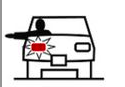
14
New cards
Right Turn Signal
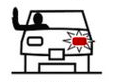
15
New cards
Slow or Stop
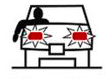
16
New cards
You should signal
At least 100 feet before you turn
Before very lane change. also check your mirrors, look over your shoulder, and check your blind spot
At least 5 seconds before you change lanes on a freeway
Before pulling next to the curb or away from the curb
Even when you do not see other vehicles around you. make using your turn signal a habit. it can help to avoid collisions even in situations when you think you are safe
If you plan to turn after crossing an intersection. if you signal too early, other drivers might think you plan to turn at the intersection. as a result, they might pull out in front of you. start signaling when you are almost through the intersection
Before very lane change. also check your mirrors, look over your shoulder, and check your blind spot
At least 5 seconds before you change lanes on a freeway
Before pulling next to the curb or away from the curb
Even when you do not see other vehicles around you. make using your turn signal a habit. it can help to avoid collisions even in situations when you think you are safe
If you plan to turn after crossing an intersection. if you signal too early, other drivers might think you plan to turn at the intersection. as a result, they might pull out in front of you. start signaling when you are almost through the intersection
17
New cards
Use your horn to:
Avoid collisions (when necessary)
Alert another driver of a hazard
Alert oncoming traffic on narrow mountain roads where you cannot see at least 200 feet ahead of your vehicle
Alert another driver of a hazard
Alert oncoming traffic on narrow mountain roads where you cannot see at least 200 feet ahead of your vehicle
18
New cards
Do not use your horn to:
Urge a slow-moving driver or bicyclist to go faster or get out of your way. the driver or bicyclist may not be able to safely go faster.
Alert other drivers that they made a mistake. your honking may cause them to make more mistakes and retaliate
Express anger
Honk at pedestrians, bicyclists, or motorcyclists (unless necessary to avoid a collision). remember that your horn sounds much louder outside the vehicle
Alert other drivers that they made a mistake. your honking may cause them to make more mistakes and retaliate
Express anger
Honk at pedestrians, bicyclists, or motorcyclists (unless necessary to avoid a collision). remember that your horn sounds much louder outside the vehicle
19
New cards
Use your headlights:
hen it is too dark to see. use your headlights if you cannot clearly recognize a person or vehicle from 1000 feet away
beginning 30 minutes after sunset until 30 minutes before sunrise
In adverse weather. if you need to use your windshield wipers due to rain or snow, you must turn on your low-beam headlights
When conditions (such as clouds, dust, smoke, or fog) prevent you from seeing other vehicles
On small country or mountain roads and tunnels (even on sunny days)
When a regulatory (white) road sign states that headlights must be on
To help other drivers see your vehicle, especially when the sun is low on the horizon
beginning 30 minutes after sunset until 30 minutes before sunrise
In adverse weather. if you need to use your windshield wipers due to rain or snow, you must turn on your low-beam headlights
When conditions (such as clouds, dust, smoke, or fog) prevent you from seeing other vehicles
On small country or mountain roads and tunnels (even on sunny days)
When a regulatory (white) road sign states that headlights must be on
To help other drivers see your vehicle, especially when the sun is low on the horizon
20
New cards
How to warn drivers behind you of hazard/collision
Turn on your emergency flashers
Lightly tap your brake pedal three or four times
Use a hand signal when slowing and stopping
Lightly tap your brake pedal three or four times
Use a hand signal when slowing and stopping
21
New cards
If you need to stop because of vehicle trouble:
Give other drivers plenty of warning that you are pulling over
Turn on your emergency flashers if you are not moving. if your vehicle does not have emergency flashers, use your turn signals
If possible, pull off the road away from all traffic
If you cannot get completely off the road, stop where people can see you and your vehicle from behind
Do not stop just over a hill or just around a curve. other drivers may not see your vehicle from behind
Do not stop just over a hill or just around a curve. other drivers may not see your vehicle in time to avoid a collision
If it is safe to do so, lift the hood to signal an emergency
Place emergency flares or triangles 200 to 300 feet behind your vehicle (if you have them). this gives drivers time to change lanes if they need to. be very careful when using flares. they may cause fires, especially when used near flammable liquids
Call for emergency roadside assistance, follow the above guidelines, and stay in your vehicle until help arrives
Turn on your emergency flashers if you are not moving. if your vehicle does not have emergency flashers, use your turn signals
If possible, pull off the road away from all traffic
If you cannot get completely off the road, stop where people can see you and your vehicle from behind
Do not stop just over a hill or just around a curve. other drivers may not see your vehicle from behind
Do not stop just over a hill or just around a curve. other drivers may not see your vehicle in time to avoid a collision
If it is safe to do so, lift the hood to signal an emergency
Place emergency flares or triangles 200 to 300 feet behind your vehicle (if you have them). this gives drivers time to change lanes if they need to. be very careful when using flares. they may cause fires, especially when used near flammable liquids
Call for emergency roadside assistance, follow the above guidelines, and stay in your vehicle until help arrives
22
New cards
Traffic Lane
A section of road for a single line of traffic
23
New cards
Lane Markings
On road surface help drivers know which part of the road to use and understand traffic rules
24
New cards
Single Solid Yellow Lines
Marks the center of a road with two-way traffic. do not cross over this line into oncoming traffic. do not pass a vehicle in front of you if there is only one lane of traffic going your direction and a solid yellow line on your side of the road.
25
New cards
Double Solid Yellow Lines
Never pass over these lines
Never drive left of these lines unless:
* In a high-occupancy vehicle (HOV) lane that has a designated entrance on the left
* Instructed by construction or other signs to drive on the other side of the road because your side of the road is closed or blocked
* Turning left across a single set of double yellow lines to enter or exit a driveway or private road or make a U-turn
Two sets of solid double yellow lines spaced two or more feet apart are considered a barrier. do not drive on or over this barrier, make a left turn, or make a U-turn across it, except at designated openings.
Never drive left of these lines unless:
* In a high-occupancy vehicle (HOV) lane that has a designated entrance on the left
* Instructed by construction or other signs to drive on the other side of the road because your side of the road is closed or blocked
* Turning left across a single set of double yellow lines to enter or exit a driveway or private road or make a U-turn
Two sets of solid double yellow lines spaced two or more feet apart are considered a barrier. do not drive on or over this barrier, make a left turn, or make a U-turn across it, except at designated openings.
26
New cards
Broken Yellow Line
Indicates you may pass if the broken line is next to your driving lane. only pass when it is safe
27
New cards
Single Solid White Line
Marks traffic lanes going in the same direction. this includes one-way streets.
28
New cards
double solid white lines
Indicate a lane barrier between a regular use and a preferential use lane (such as a carpool lane). You may also see these lines in or near freeway on and off ramps. never change lanes over these lines. wait until you see a single broken white line.
29
New cards
Broken White Line
Separate traffic lanes on roads with two or more lanes in the same direction.
30
New cards
End of Lane Markings
Ending freeway and street lanes are usually marked with large broken lines. if you are driving in a lane marked with broken lines, be prepared to exit the freeway or for the lane to end. look for a sign that tells you to exit or merge.
31
New cards
Yield Lines
A solid white line of triangles that shows approaching vehicles where to yield or stop. the triangles point towards approaching vehicles. also known as shark’s teeth
32
New cards
Choosing a Lane
Traffic lanes are often referred to by number. the left (or fast) lane is called the “Number 1 Lane".” the lane to the right of the “Number 1 Lane” is called the “Number 2 Lane.” Then the “Number 3 Lane,” etc.
33
New cards
Tips for choosing a lane:
* Use the left lane to pass or turn left
* Use the right lane to enter or exit traffic
* Use the right lane to enter or exit traffic
34
New cards
You might change lanes when:
* Moving from one lane to another
* Entering the freeway from an on-ramp
* Exiting the freeway
* Entering the road from a curb or shoulder
* Entering the freeway from an on-ramp
* Exiting the freeway
* Entering the road from a curb or shoulder
35
New cards
Before you change lanes:
* Signal
* Look in all your mirrors
* Check traffic behind and beside you
* Look over your shoulder in the direction you plan to move to make sure the lane is clear
* Check your blind spot for other vehicles, motorcyclists, and bicyclists
* Be sure there is enough room (space) for your vehicle in the next lane
Stay in one lane as much as possible. do not weave in and out of traffic. last minute lane or direction changes may cause collisions. once you start moving through an intersection, keep going. if you start to make a turn, follow through. if you miss a turn, keep driving until you can safely and legally turn around.
* Look in all your mirrors
* Check traffic behind and beside you
* Look over your shoulder in the direction you plan to move to make sure the lane is clear
* Check your blind spot for other vehicles, motorcyclists, and bicyclists
* Be sure there is enough room (space) for your vehicle in the next lane
Stay in one lane as much as possible. do not weave in and out of traffic. last minute lane or direction changes may cause collisions. once you start moving through an intersection, keep going. if you start to make a turn, follow through. if you miss a turn, keep driving until you can safely and legally turn around.
36
New cards
Passing Lanes
On a multi-lane road, the passing lane is the lane closest to the center divider and is used to pass other vehicles. It is also known as the fast lane because it is used by faster moving traffic.
37
New cards
Carpool/High-Occupancy Vehicle (HOV) Lanes
A special lane reserved for carpools, buses, motorcycles or low-emission vehicles with decals.
38
New cards
To use an HOV lane, one of these things must apply:
* You have a certain number of people in your vehicle. There will be signs at the on-ramp or along the road to tell you the minimum number of people. The signs also list the days and hours when the carpool/HOV rules apply.
* You are driving a low-emission or zero-emission vehicle. You must display a special DMV-issued decal.
* You are riding a motorcycle (unless otherwise posted).
The road surface in HOV lanes is marked with a diamond symbol and the words “Carpool Lane.” Do not cross over double solid lines to enter or exit an HOV lane except at designated entry or exit places.
* You are driving a low-emission or zero-emission vehicle. You must display a special DMV-issued decal.
* You are riding a motorcycle (unless otherwise posted).
The road surface in HOV lanes is marked with a diamond symbol and the words “Carpool Lane.” Do not cross over double solid lines to enter or exit an HOV lane except at designated entry or exit places.
39
New cards
Center Left Turn Lanes
A center left turn lane is located in the middle of a two-way street. It is marked on both sides by two painted lines. The inner line is broken and the outer line is solid. Use the center left turn lane to prepare for and make a left turn or U-turn. It is not regular traffic lane or a passing lane. You may only drive for 200 feet in the center left turn lane.
40
New cards
To turn left from the center left turn lane:
* Look for other vehicles coming toward you in the center left turn lane
* Signal
* Look over your shoulder to check your blind spot.
* Merge completely into the center left turn so you do not block traffic.
* Turn when it is safe.
When turning left from a side street or driveway, signal and wait until it is safe. Then drive into the center left turn lane. Enter traffic only when it is safe.
* Signal
* Look over your shoulder to check your blind spot.
* Merge completely into the center left turn so you do not block traffic.
* Turn when it is safe.
When turning left from a side street or driveway, signal and wait until it is safe. Then drive into the center left turn lane. Enter traffic only when it is safe.
41
New cards
Turnout Ares or Lanes
Some two-lane roads have special turnout areas or lanes. They are usually marked. Merge into these ares or lanes to allow cars behind you to pass.
You must use a turnout area or lane to let other vehicles pass when you are driving slowly on a two-lane road where passing is unsafe, and there are 5 or more vehicles following you.
You must use a turnout area or lane to let other vehicles pass when you are driving slowly on a two-lane road where passing is unsafe, and there are 5 or more vehicles following you.
42
New cards
Bicycle Lanes
Bicycles lanes are for bicyclists only and run alongside vehicle traffic. They are typically marked by a single solid white line and signs. They are sometimes painted bright green to make them easier to see. The solid line will change to dashed near en intersection.
43
New cards
Bike Lane
Established along streets adjacent to vehicle traffic. Typically defined by single solid white line that turns into a dashed line near an intersection.
44
New cards
Buffered bike lane
Uses chevrons or diagonal markings to provide greater separation from traffic and on-street parking.
45
New cards
Bike route
Uses bike route signs and/or shared road markings to designate a preferred route for bicyclists on streets shared with vehicle traffic.
46
New cards
Bicycle boulevard
Prioritizes bicycle travel on streets shared with vehicle traffic.
47
New cards
Separated bikeway
For the exclusive use of bicyclists. Physically separated from vehicle traffic. Also known as a cycle track or protected bike lane. The separation may include flexible posts, grade separation, inflexible barriers, or on-street parking.
48
New cards
Shared roadway bicycle markings (shadows)
Alert traffic that bicyclists can occupy the lane. When used appropriately, shadows help bicyclists maintain a safe lane position.
49
New cards
It is illegal to drive in a bicycle lane unless you are:
* Parking (where permitted)
* Entering or leaving the road
* Turning (within 200 feet of the intersection)
Check your blindspots before entering a bike lane.
If you drive a motorized bicycle, use caution to avoid other bicyclists. Travel at a reasonable speed and do not endanger the safety of other bicyclists.
* Entering or leaving the road
* Turning (within 200 feet of the intersection)
Check your blindspots before entering a bike lane.
If you drive a motorized bicycle, use caution to avoid other bicyclists. Travel at a reasonable speed and do not endanger the safety of other bicyclists.
50
New cards
To make a right turn:
* Drive close to the right edge of the road
* You can drive in a bike lane but wait to enter until you are 200 feet from the turn. Check for bicyclists in your blind spots.
* Watch for pedestrians, bicyclists, or motorcyclists between your vehicle and the curb.
* Begin signaling about 100 feet before the turn.
* Look over your right shoulder and reduce your speed.
* Stop behind the limit line (white lines on the road that show you where to stop). If there is no limit line, stop before you enter the crosswalk. If there is no crosswalk, stop before you enter the intersection.
* Look bother ways and turn when it is safe. Do not turn wide into another lane.
* Complete your turn in the right lane.
* You can drive in a bike lane but wait to enter until you are 200 feet from the turn. Check for bicyclists in your blind spots.
* Watch for pedestrians, bicyclists, or motorcyclists between your vehicle and the curb.
* Begin signaling about 100 feet before the turn.
* Look over your right shoulder and reduce your speed.
* Stop behind the limit line (white lines on the road that show you where to stop). If there is no limit line, stop before you enter the crosswalk. If there is no crosswalk, stop before you enter the intersection.
* Look bother ways and turn when it is safe. Do not turn wide into another lane.
* Complete your turn in the right lane.
51
New cards
Right Turn Against a Red Light
You may turn right at a red light unless there is a “No turn on red” sign. Follow the same steps as a normal right turn.
52
New cards
Right Turn Against a Red Arrow
You may not turn right if you are stopped at red arrow light. Wait until the light changes to green before making your turn.
53
New cards
Right Turn at a Public Transit Bus Lane
It is illegal to drive, stop, park , or leave a vehicle in an area designated for public transit buses. Signs will be posted to indicate the lanes are for “bus only” use. However, you may cross a bus lane to make a right turn.
54
New cards
Right Turn onto a Road with a Dedicated Lane
A dedicated right turn lane does not marge into another lane and allows you to make a “free right turn” without stopping first. You may make your turn even if there is a red light for vehicles going straight through the intersection. If there is a traffic light or sign on the right curb of the right turn lane, you must obey that light or sign. Always yield to pedestrians in a crosswalk when turning.
If free right turns are not allowed, there will be a sign saying so.
If free right turns are not allowed, there will be a sign saying so.
55
New cards
To make a left turn:
* Drive close to the center divider or into the left turn lane.
* Start signaling 100 feet before the turn.
* Look over your left shoulder and reduce your speed.
* Stop behind the limit line. If there is no limit line, stop before you enter the crosswalk. If there is no crosswalk, stop before you enter the intersection.
* Look left, right, and then left again.
* Make the turn when safe.
When you turn left, do not turn the steering wheel too soon and enter the lane of oncoming vehicles. This is known as “cutting the corner.” Keep your wheels pointed straight ahead until it is safe to start your turn. If your wheels are pointed to the left and a vehicle hits you from behind, you could be pushed into oncoming traffic.
* Start signaling 100 feet before the turn.
* Look over your left shoulder and reduce your speed.
* Stop behind the limit line. If there is no limit line, stop before you enter the crosswalk. If there is no crosswalk, stop before you enter the intersection.
* Look left, right, and then left again.
* Make the turn when safe.
When you turn left, do not turn the steering wheel too soon and enter the lane of oncoming vehicles. This is known as “cutting the corner.” Keep your wheels pointed straight ahead until it is safe to start your turn. If your wheels are pointed to the left and a vehicle hits you from behind, you could be pushed into oncoming traffic.
56
New cards
Left Turn Against a Red Light
you may only turn left against a red light when you are turning from a one way street onto a (left-moving) one-way street. Check to make sure there is no sign prohibiting the turn.
Yield to other vehicles, pedestrians, or bicyclists who have a green light. Look both ways and turn when it is safe.
Yield to other vehicles, pedestrians, or bicyclists who have a green light. Look both ways and turn when it is safe.
57
New cards
U-turns
A u-turn is when you turn your vehicle to go back in the direction you came. To make a U-turn, signal and use the far-left lane or center left turn lane.
58
New cards
You may make a legal U-turn:
* Across a double yellow line
* In a residential district:
* If no vehicles are approaching you within 200 feet
* Whenever a traffic sign, light, or traffic light protects you from approaching vehicles
* At an intersection a green traffic light or green arrow, unless a “No U-turn” sign is posted
* ON a divided highway, only if an opening is provided in the center divider
* In a residential district:
* If no vehicles are approaching you within 200 feet
* Whenever a traffic sign, light, or traffic light protects you from approaching vehicles
* At an intersection a green traffic light or green arrow, unless a “No U-turn” sign is posted
* ON a divided highway, only if an opening is provided in the center divider
59
New cards
Never make a U-turn
* Where a “No U-turn” sign is posted
* At or on a railroad crossing
* ON a divided highway by crossing a dividing section, curb, strip of land, or sets of double yellow lines.
* When you cannot see clearly for 200 feet in each direction because of a curve, hill, rain, fog, or other reason
* When other vehicles may hit you
* On a one-way street
* In front of a fire station. Never use a fire station driveway to turn around
* In business districts, including areas with churches, apartments, and public buildings (except schools). In these areas, turn only at an intersection (unless a sign forbids it), or where openings are provided for turns.
* At or on a railroad crossing
* ON a divided highway by crossing a dividing section, curb, strip of land, or sets of double yellow lines.
* When you cannot see clearly for 200 feet in each direction because of a curve, hill, rain, fog, or other reason
* When other vehicles may hit you
* On a one-way street
* In front of a fire station. Never use a fire station driveway to turn around
* In business districts, including areas with churches, apartments, and public buildings (except schools). In these areas, turn only at an intersection (unless a sign forbids it), or where openings are provided for turns.
60
New cards
Left turn from a two-way street
Start the turn in the left lane closest to the middle of the street. Use the center left turn lane is one is available. End the turn in the left lane closest to the middle of the street going in your vehicle’s direction of travel. In some situations, there may be signs or arrows to indicate that you can turn left from either lane.
61
New cards
Right turn
Begin and end the turn in the lane closest to the right edge of the road. Do not swing wide into another lane of traffic. Watch for pedestrians, motorcycles, and bicycles between your vehicle and the curb. Sometimes, signs or pavement markings will let you turn right from another lane
62
New cards
Left turn from a two-way street into a one-way street
Start the turn from the lane closest to the middle of the street. If there are three or more lanes in your turn in any lane that is safely open, as shown by the arrows.
63
New cards
Left turn from a one-way street into a two-way street
Start the turn from the far-left lane. End turn in the left lane closest to the middle of the street going in your vehicle’s direction of travel
64
New cards
Left turn from a one-way street onto a one-way street
Start the turn from the far-left lane. Watch for pedestrians, motorcycles, and bicycles between your vehicle and the curb. Bicyclists can legally use the left turn lane for their left turns. If there are three or more lanes in your direction of travel you may end your turn in any lane that is safely open, as shown by the arrows.
65
New cards
Right turn from a one-way street onto a one-way street
Startle turn in the far-right lane. If safe, you may end the turn in any lane. Sometimes, signs or pavements markings will let you turn right from another lane.
66
New cards
Turn at a “T” intersection from a one-way street onto a two-way street
Traffic going straight through the intersection has the right-of-way. You may turn either right or left from the center lane. Watch for vehicles, motorcycles, bicycles, and pedestrians.
67
New cards
When you enter a highway, you will need to:
* Enter at or near the speed of traffic.
* Merge into highway traffic when safe to do so. Do not stop unless absolutely necessary.
* Merge into a space large enough for your vehicle to safely join the lane. Do not try to merge into a gap that is too small.
* Use your mirrors and turn signals.
* Watch for vehicles around you. Turn your head to quickly look over your shoulder before changing lanes or merging into traffic.
* Leave three seconds of space (three-second rule) between you and the vehicle ahead of you. Make sure you can stop safely if you need to.
If you need to cross several lanes, cross them one at a time, and check your blind spots for vehicles each times.
* Merge into highway traffic when safe to do so. Do not stop unless absolutely necessary.
* Merge into a space large enough for your vehicle to safely join the lane. Do not try to merge into a gap that is too small.
* Use your mirrors and turn signals.
* Watch for vehicles around you. Turn your head to quickly look over your shoulder before changing lanes or merging into traffic.
* Leave three seconds of space (three-second rule) between you and the vehicle ahead of you. Make sure you can stop safely if you need to.
If you need to cross several lanes, cross them one at a time, and check your blind spots for vehicles each times.
68
New cards
To exit a highway safely:
* Know your exit and be aware of when it is approaching
* If you plan to change lanes, signal and look over your shoulder to check your blind spot.
* Change lanes one at a time until you are in the proper lane to exit.
* When exiting, signal your intention for about five seconds.
* Make sure you are at a safe speed to exit.
* If you plan to change lanes, signal and look over your shoulder to check your blind spot.
* Change lanes one at a time until you are in the proper lane to exit.
* When exiting, signal your intention for about five seconds.
* Make sure you are at a safe speed to exit.
69
New cards
Crossing or Entering Traffic
When crossing or entering traffic from a full stop, signal and leave a large enough space to get up to the speed of other vehicles. It is important to know how much space you need for merging, crossing, entering, and exiting traffic.
If you are crossing lanes or turning, make sure there are no vehicles or people blocking the path ahead or to your sides. You do not want to be caught in an intersection with traffic coming at you. Even if you have a green light, do not start going across the intersection if there are vehicles blocking your way.
When turning left, do not assume that an oncoming vehicle with its right turn signal on is turning before it reaches you. The driver may plan to turn just beyond you, or the signal may be on unintentionally. This is particularly true of motorcycles. Their signal lights often do not turn off automatically. Wait to see where the other driver starts to turn before you continue.
If you are crossing lanes or turning, make sure there are no vehicles or people blocking the path ahead or to your sides. You do not want to be caught in an intersection with traffic coming at you. Even if you have a green light, do not start going across the intersection if there are vehicles blocking your way.
When turning left, do not assume that an oncoming vehicle with its right turn signal on is turning before it reaches you. The driver may plan to turn just beyond you, or the signal may be on unintentionally. This is particularly true of motorcycles. Their signal lights often do not turn off automatically. Wait to see where the other driver starts to turn before you continue.
70
New cards
To cross or enter traffic, you need a space that is about:
* Half a block on city streets
* A full block on the highway
* A full block on the highway
71
New cards
You must judge whether you have enough space to pass whenever you approach:
* An oncoming vehicle
* A hill or curve
* An intersection
* A road obstruction
* A bicyclist
Before you pass, look ahead for road conditions and traffic that could cause other vehicles to move into your lane. Only pass when it is safe.
* A hill or curve
* An intersection
* A road obstruction
* A bicyclist
Before you pass, look ahead for road conditions and traffic that could cause other vehicles to move into your lane. Only pass when it is safe.
72
New cards
Do not pass:
* If you are approaching a hill or curve and cannot see if other traffic is approaching.
* Within 100 feet of or in an intersection, bridge, tunnel, railroad crossing, or other hazardous area.
* At crossroads and driveways.
* Within 100 feet of or in an intersection, bridge, tunnel, railroad crossing, or other hazardous area.
* At crossroads and driveways.
73
New cards
You may pass on the right only when:
* An open highway clearly has two or more lanes going your direction.
* The driver ahead of you is turning left and you do not have to drive off the road to pass. Never pass on the left if the driver is signaling a left turn.
* You are on a one-way street.
Never drive off the paved or main-traveled part of the road to pass. The edge of the main-traveled part of the road may have a painted white line. Do not pass on the shoulder. Do not try to pass unless you know you have enough space to return to your lane.
* The driver ahead of you is turning left and you do not have to drive off the road to pass. Never pass on the left if the driver is signaling a left turn.
* You are on a one-way street.
Never drive off the paved or main-traveled part of the road to pass. The edge of the main-traveled part of the road may have a painted white line. Do not pass on the shoulder. Do not try to pass unless you know you have enough space to return to your lane.
74
New cards
When you are going to pass on an open highway:
* Signal that you plan on passing.
* Look over your shoulder to check your blind spot.
* Drive into the passing lane.
* Speed up to pass the vehicle.
* Return to your original lane.
* Look over your shoulder to check your blind spot.
* Drive into the passing lane.
* Speed up to pass the vehicle.
* Return to your original lane.
75
New cards
Being Passed
If a vehicle is passing you or signals that they plan on passing allow the vehicle to pass. Maintain your lane position. Do not try to go faster to avoid being passed.
76
New cards
Here are the steps to parallel parking:
1. Find a space.
2. Pull up alongside the vehicle in front of the space you are parking in.
3. Check your rearview mirror.
4. Begin backing up.
5. Straighten out.
6. Center your vehicle in the parking space.
77
New cards
1. Find a space
Look for a space at least three feet longer than your vehicle. When you find a space, turn on your signal to show that you plan on parking.
78
New cards
2. Pull up alongside the vehicle in front of the space you are parking in
Leave about two feet between your vehicle and the vehicle next to you. Stop once your rear bumper is aligned with the front of your parking space. Keep your signal on.
79
New cards
3. Check your rearview mirror
Look over your shoulder for approaching vehicles. Keep your foot on the brake and put the vehicle in reverse.
80
New cards
4. Begin backing up
Turn your wheel to back into the space at about a 45 degree angle.
81
New cards
5. Straighten out
Begin turning the steering wheel away from the curb when your rear wheel is within 18 inches of the curb. You may need to pull forward and backward to straighten out. Your vehicle should now be parallel and within 18 inches of the curb.
82
New cards
6. Center your vehicle in the parking space
Turn off your vehicle and set the parking brake. Before you exit your vehicle, look carefully for passing vehicles, bicycles, and motorcycles. Exit when safe.
83
New cards
When you park on a sloping driveway:
Turn the wheels so the vehicle will not roll into the street if the brakes fail.
84
New cards
When you park headed downhill:
Turn your front wheels into the curb or toward the side of the road. Set up the parking brake.
85
New cards
When you park headed uphill:
Turn your front wheels away from the curb and let your vehicle roll back a few inches. The wheel should gently touch the curb. Set the parking brake.
86
New cards
When you park headed either uphill or downhill when there is no curb:
Turn the wheels so the vehicle will roll away from the center of the road if the brakes fail.
87
New cards
Parking on a Hill
When you park on a hill, remember that your vehicle could roll if your brakes fail.
Always set your parking brake and leave the vehicle in gear or in the “park” position.
Always set your parking brake and leave the vehicle in gear or in the “park” position.
88
New cards
Parking at White Curbs
Stop only long enough to pick up or drop off passengers.
89
New cards
Parking at Green Curbs
Park for a limited time. The time limit may be posted on signs or painted on the curb.
90
New cards
Parking at Yellow Curbs
Load and unload passengers and freight. Do not stop longer than the time posted. If you drive a noncommercial vehicle, you are usually required to stay with your vehicle.
91
New cards
Parking at Red Curbs
No stopping, standing, or parking. Buses may stop at a red zone marked for buses.
92
New cards
Parking at Blue Curbs
Parking for a disabled person or someone driving a disabled person.
* To park here, you must display a placard or license plate for disabled persons or disabled veterans. Misuse of a disabled person parking placard or license plate will result in losing special privileges. It is punishable by fine of up to $1000, imprisonment in county jail for up to 6 months, or both.
* Disabled people with a placard or license plated may park in a parking zone with a time limit for any amount of time, regardless of posted time limits.
* To park here, you must display a placard or license plate for disabled persons or disabled veterans. Misuse of a disabled person parking placard or license plate will result in losing special privileges. It is punishable by fine of up to $1000, imprisonment in county jail for up to 6 months, or both.
* Disabled people with a placard or license plated may park in a parking zone with a time limit for any amount of time, regardless of posted time limits.
93
New cards
Never park of leave your vehicle:
* Where a “No Parking” sign is posted.
* On a marked or unmarked crosswalk,
* On a sidewalk, partially blocking a sidewalk, or in front of a driveway.
* Within 3 feet of a sidewalk ramp for disabled persons.
* In front of or on a curb that provides wheelchair access to a sidewalk.
* In a disabled person parking space, unless displaying a disabled person placard or license plates.
* In a the crosshatched (diagonal line) area next to a disunited disabled parking space.
* In a space designated for parking or fueling zero-emission vehicles, unless you are driving a zero-emission vehicle.
* In a tunnel or on a bridge, except where permitted by signs.
* Within 15 feet of a fire hydrant or fire station driveway.
* Between a safety zone and curb.
* “Doubled parked” (parking in the street because all parking spaces by the curb are taken).
* On the wrong side of the street or on a freeway, except
* In an emergency
* When a law enforcement officer or device requires a stop
* Where a stop is specifically permitted
If you must stop on a freeway, park completely off the pavement and stay in your vehicle with the doors locked until help arrives. Leave enough space for other vehicles to safely pass your vehicle. Your vehicle should be visible for at least 200 feet in each direction. A vehicle that is stopped, parked, or left standing on a freeway for more than 4 hours.
* On a marked or unmarked crosswalk,
* On a sidewalk, partially blocking a sidewalk, or in front of a driveway.
* Within 3 feet of a sidewalk ramp for disabled persons.
* In front of or on a curb that provides wheelchair access to a sidewalk.
* In a disabled person parking space, unless displaying a disabled person placard or license plates.
* In a the crosshatched (diagonal line) area next to a disunited disabled parking space.
* In a space designated for parking or fueling zero-emission vehicles, unless you are driving a zero-emission vehicle.
* In a tunnel or on a bridge, except where permitted by signs.
* Within 15 feet of a fire hydrant or fire station driveway.
* Between a safety zone and curb.
* “Doubled parked” (parking in the street because all parking spaces by the curb are taken).
* On the wrong side of the street or on a freeway, except
* In an emergency
* When a law enforcement officer or device requires a stop
* Where a stop is specifically permitted
If you must stop on a freeway, park completely off the pavement and stay in your vehicle with the doors locked until help arrives. Leave enough space for other vehicles to safely pass your vehicle. Your vehicle should be visible for at least 200 feet in each direction. A vehicle that is stopped, parked, or left standing on a freeway for more than 4 hours.
94
New cards
During a Law Enforcement Stop
Turn on your right turn signal to acknowledge that you see the officer.
Move completely onto the right shoulder, even if in the carpool/HOV lane.
End your cell phone conversation and turn off your radio.
Remain inside your vehicle unless directed to get out by the officer.
Roll the window down after stopping your vehicle and before the officer makes contact with you.
Place your hands and all passengers’ hands in clear view before the officer makes contact with you.
Move completely onto the right shoulder, even if in the carpool/HOV lane.
End your cell phone conversation and turn off your radio.
Remain inside your vehicle unless directed to get out by the officer.
Roll the window down after stopping your vehicle and before the officer makes contact with you.
Place your hands and all passengers’ hands in clear view before the officer makes contact with you.
95
New cards
If an officer asks your permission to do something, you have a right to say no
However, if you say no and the officer says they are going to do it anyway, you do not have a right to interfere with their actions. For example, an officer may request to search part or all of your vehicle. You have a right to decline that request, but the officer may have the legal authority to search your vehicle, you should clearly say that you do not give your permission, but you do not have a right to resist or obstruct the officer if they search your vehicle anyway.
96
New cards
The driver of a stopped vehicle must produce a driver’s license, proof of insurance, and vehicle registration when stopped by law enforcement.
If a driver does not produce these documents, officers may conduct a limited search for them. An officer may also request the names or identification of passengers. Passengers can decline that request, but under some circumstances the passengers may be required to identify themselves anyway. If passengers do not want to produce their identification, they should clearly say so. Passengers should not interfere with the officer’s duties in conducting the traffic stop, and I an officer demands identification, passengers should not interfere with the officer’s actions. During a traffic stop, an officer can legally require the driver and all passengers to exit or stay inside the vehicle. If you are told to exit the vehicle or stay inside, you must do so.
97
New cards
In California, only federal law enforcement officers can ask you about your immigration status.
California laws prohibits state and local officers from asking drivers or passengers bout their immigration status. If a California law enforcement officer asks you about your immigration status, you can decline to answer.
98
New cards
In general, the First Amendment protects the right of drivers and passengers to record interactions with law enforcement in public spaces.
If you are recording, you should immediately make that clear. You do not have a right to interfere with the officer’s lawful duties during the enforcement stop, and you should not reach into concealed areas to retrieve your recording device without the officer’s permission. If your recording is not interfering with the officer’s ability to lawfully do their job, an officer cannot confiscate your recording device, delete the recording, or destroy the device just because you are using it to record. In general, you also have the right to deny a request to “unlock” a cellular phone or provide a password to it, though under some circumstances — such as if you are on parole — you may have to give permission in response to such requests. Finally, no government employee can retaliate against you just because you recorded something in public.
99
New cards
Even if you believe your rights were violated, you should not engage in physical resistance or violence against the officer.
If an officer does something that you believe violates your rights, you can voice your objection, but you should not physically resist. Everyone has the right to be safe during a traffic stop. Your safety and the officer’s safety could be jeopardized if the situation escalates with physical resistance or violence.
All members of the public have a right to file a complaint against any law enforcement agency, and it is against the law for any government employee to retaliate against you for doing so. You can file a complaint with the law enforcement agency that employs the officer. You have a right to be free from discrimination based on your actual or perceived race, sex, color, ethnicity, national origin, age, religion, gender identity or expression, sexual orientation, mental or physically disability, medical condition, or citizenship status. You also have other rights guarenteed by the United States and California Constitutions, as well as California and federal laws. When you file a complaint, the agency that employs the officer must investigate the complaint.
All members of the public have a right to file a complaint against any law enforcement agency, and it is against the law for any government employee to retaliate against you for doing so. You can file a complaint with the law enforcement agency that employs the officer. You have a right to be free from discrimination based on your actual or perceived race, sex, color, ethnicity, national origin, age, religion, gender identity or expression, sexual orientation, mental or physically disability, medical condition, or citizenship status. You also have other rights guarenteed by the United States and California Constitutions, as well as California and federal laws. When you file a complaint, the agency that employs the officer must investigate the complaint.
100
New cards
Solid Red Light
A red traffic signal light means “STOP.” You can turn right at a red light, if you:
* Do not see a “NO TURN ON RED” sign posted. Stoat the light before you turn.
* Yield for pedestrians, bicyclists, and other nearby vehicles that have the right-of-way. Only turn when safe.
* Do not see a “NO TURN ON RED” sign posted. Stoat the light before you turn.
* Yield for pedestrians, bicyclists, and other nearby vehicles that have the right-of-way. Only turn when safe.
 Note
Note  Flashcards (63)