Neuroscience - The Orbit and Eye
 Call Kai
 Learn
Learn Practice Test
 Spaced Repetition
 Match
Match Flashcards
 Knowt Play
1/58

Earn XP
Description and Tags
Name | Mastery | Learn | Test | Matching | Spaced | Call with Kai |
|---|
No analytics yet
Send a link to your students to track their progress
59 Terms
orbit
contains and protects the eyeball and accessory visual structures
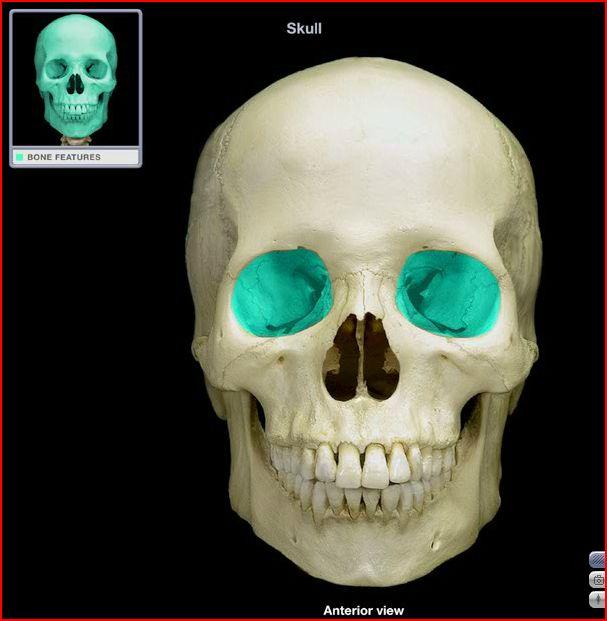
frontal bone
sphenoid
maxillary
zygomatic
palatine
ethmoid
lacrimal
Name the 7 bones that form the orbit
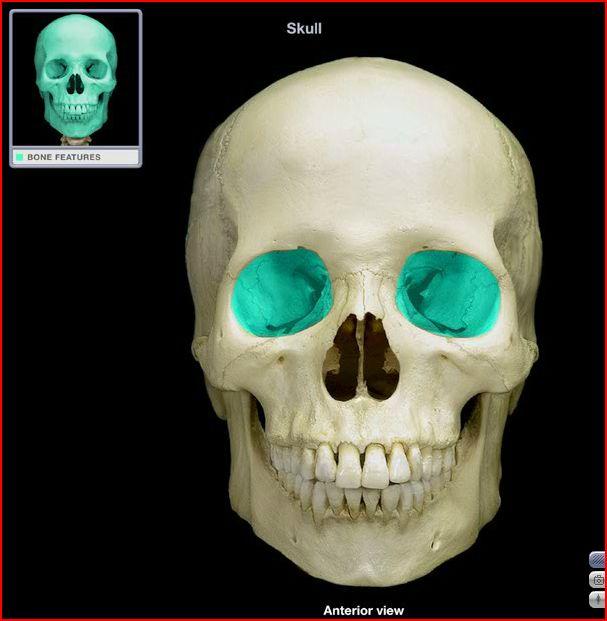
base of orbit
outlined by the orbital margin
medial wall of orbit
lacrimal groove
lateral wall of orbit
thickest and strongest wall
roof of orbit
contains lacrimal fossa
floor of orbit
apex of orbit
eyelids
protect the eyeball from injury and excessive light
keep cornea moist by spreading the lacrimal fluid
covered externally by skin
conjunctivitis
inflammation
palpebral conjunctiva
bulbar conjunctiva
continuous
superior and inferior fornices
superior and inferior tarsal plates
tarsal glands
levator aponeurosis
medial and lateral palpebral ligaments
lacrimal gland
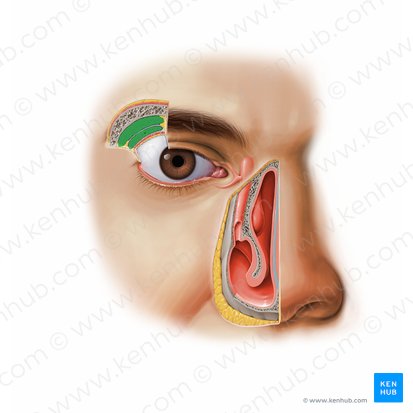
eyeball
optical apparatus of the visual system
Name the 3 layers of the eyeball
sclera
cornea
Name the 2 structures that make up the fibrous layer of the eyeball
sclera
5/6 of the fibrous layer of the eyeball
tough, opaque part
cornea
1/6 of the fibrous layer of the eyeball
provides a transparent protective coating for the optical structures
choroid
ciliary body
iris
Name the 3 structures of the vascular layer of the eyeball
uvea
choroid
vascular layer between the sclera and the retina
responsible for “red eye” in flash photography
continuous with the ciliary body; attached firmly to the retina
ciliary body
composed of smooth muscle
provides attachment for the lens
iris
a thin, pigmented, contractile diaphragm that lies on the anterior surface of the lens
pupil
stroma
dilator pupillae
sphincter pupillae
Name the 4 structures that make up the iris
pupil
stroma
dilator pupillae
sphincter pupillae
retina
Which structure makes up the inner layer of the eyeball?
retina
neural retina
retinal pigment epithelium
fundus
optic disc
macula lutea
fovea centralis
center of the macula
highest concentration of cones
area of most acute vision
lens
levator palpebrae superioris
broadens into a wide bilaminar aponeurosis as it approaches its distal attachment
elevates superior eyelid
superior rectus
elevates the eyeball
inferior rectus
depresses eyeball
medial rectus
adducts eyeball
lateral rectus
abducts eyeball
common tendinous ring
annular ring
What is another name for the common tendinous ring?
superior oblique
medially rotates eyeball
abducts and depresses eyeball
inferior oblique
laterally rotates eyeball
abducts and elevates eyeball

