lecture 28: oncologic emergencies
 Studied by 0 people
 Call Kai
 Learn
Learn Practice Test
 Spaced Repetition
 Match
Match Flashcards
 Knowt Play
1/54

There's no tags or description
Looks like no tags are added yet.
Name | Mastery | Learn | Test | Matching | Spaced | Call with Kai |
|---|
No analytics yet
Send a link to your students to track their progress
55 Terms
Stones, bones, (gastrointestinal) groans, (psychiatric) moans
presentation of hypercalcemia
most common is secretion of PTHrp by tumors. The next most common is due to the direct bone destruction of bone by osteolytic metastasis by way of the release of cytokines. Then finally, least common, is the production and circulation of 1,25 vit D by tumors
MOA of hypercalcemia of malignancy
breast, lung, kidney, squamous cell carcinomas
-more associated with advanced disease (metastatic)
solid cancers associated with hypercalcemia
multiple myeloma, T cell lymphomas
hematologic cancers associated with hypercalcemia
•Confirm hypercalcemia
•Measure serum PTH (low normal or low)
•If no obvious malignancy is apparent, then measure: PTHrP and vitamin D metabolites
work up to make the diagnosis of hypercalcemia of malignancy
Calcium in serum is bound to proteins, principally albumin. As a result, total serum calcium concentrations in patients with low or high serum albumin levels may not accurately reflect the physiologically important ionized (or free) calcium concentration.
how might albumin impact serum calcium readings?
-do not require immediate treatment
-avoid ffactorss that aggravate hypercalcemia
-hydration to avoid neprholithiasis
management of asymptomatic hyper calcium <12
may not require immediate treatment, because that degree of hypercalcemia may be well tolerated chronically. However, an acute rise to these concentrations may cause marked changes in sensorium, which requires more aggressive measures.
management of sesrum calcium 12-14
-IV NS
-calcitonin
-furosemide
-bisphosphonates
management of severe hypercalcemia >14
•Volume expansion with normal saline (+/- furosemide)
•IM or subQ calcitonin (will work for ~ 48 hours)
•IV bisphosphonates (takes 2-4 days to reach max effect)
management of hypercalcemia of malignancy
-only for symptomatic pts with very elevated calcium
-rapid onset but doesn't last long
-good for the first 48 hours then pts will develop tachyphylaxis
use of calcitonin in management of hypercalcemia of malignancy
•potassium--> hyperkalemia
•phosphate-->hyperphosphatemiia
•uric acid
-hypocalcemia
main contents released into circulation with tumor lysis syndrome
•high proliferation rate, large tumor burden, and high treatment sensitivity
tumor lysis syndrome occurs in the setting of malignancy with
high grade lymphomas, ALL
-can theoretically occur in any malignancy
tumor lysis syndrome occurs most commonly after treatment initatiion of
•IV hydration
•Allopurinol
•Rasburicase
prophylactic treatment against tumor lysis syndrome
allopurinol
a hypoxanthine analog what competitively inhibits xanthine oxidase, which blocks the formation of new uric acids and reduces incidence of obstructive uropathy in patients at risk for TLS. It is inexpensive and orally administered. So it is preferred for intermediate risk patients against tumor lysis syndrome
-does not reduce amount of existing uric acid, sos not good in pts who PRESENT with TLS
-increases serum levels of xanthine and hypoxanthine---> AKI
-hypersensitivity reactions
limitations to the use of allopurinol
Rasburicase
med preferred in treatment of pts who already have TLS
-breaks down uric acid to a soluble metabolic
•Phosphate and potassium binders
•Dialysis
supportive treatments in tumor lysis syndrome
AEIOU
Acidosis
Electrolyte abnormality
intoxication
volume Overload
Uremia
indications for emergent hemodialysis in tumor lysis syndrome
euvolemic hyponatremia
-high urine osmolarity
-low serum osmolarity
-aldosterone off--> euvolemia
what type of hyponatremia is associated with SIADH
-small cell lung cancer, leukemia, lymphoma
malignancies associated with SIADH
•Low serum osmolality
•High urine osmolality (making ADH, concentrating urine)
•High urine sodium (not making aldosterone = inappropriate ADH)
lab characteristics of SIADH
-Do NOT correct too rapidly (osmotic demyelinatioin syndrome)
-fluid restriction (<1L free water daily)
-consider 3% saline for Na<120
-get nephrology involved early
management of SIADH
conivaptan
-ADH receptor antagonist to treat SIADH
demclocycline
-blocks ADH activity in renal tubule in treatment of SIADH
•Symptomatic from hyponatremia
•Recover rapidly as normonatremia is restored
•Deteriorate several days later
clinical course of osmotic demyelination syndrome
-flaccid
-dysarthria, dysphagia, oculomotor abnormalities
-locked in syndrome
characteristics of osmotic demyelination syndrome
•1st: Back pain
•Then: Lower extremity weakness
•Then: Saddle anesthesia
•Then: Bladder/bowel paralysis
progression of symptoms related to cauda equina syndrome
•prostate, breast, lung, kidney, lymphoma and myeloma
cauda equina syndrome can result from bone metastases from
•Severity
•Duration
•Prompt recognition and treatment crucial to prevent further disability
reversibility of cauda equina syndrome depends on
-STAT MRI spine with contrast
-steroids
-consult neurosurgery for consideration of decompression stabilization
-radiation will usually be given whether or not pt gets surgery
immediate managment for cauda equina syndrome
•Single site of compression
•Nonradiosensitive tumor or if spinal instability
•Prognosis > 3 months
indications for surgery to treat cauda equina syndrome
lung, breast, kidney, lymphoma, testicular, melanoma
metastases to the brain usually come from
•Blood brain barrier "protects" micrometastases from chemotherapy
why is the brain resistant to chemo?
•Dexamethasone 10 mg IV —> 4 mg Q6h IV
•Mannitol, hyperventilation
management to decrease intracranial pressure from brain metastases
radiation, unless pt has a large symptomatic lesion that can be excised
-whole brain radiation technique with hippocampal avoidance
preferred treatment for brain mets
•Facial plethora
•Upper extremity edema
•Chest pain, dyspnea
early symptoms of SVC syndrome
•Obtundation/confusion
•Circulatory collapse
•Upper airway compromise
late symptoms of SVC syndrome
superior vena cava syndrome
most of the time, this will be a prepsenting symptom of an undiagnosed cancer
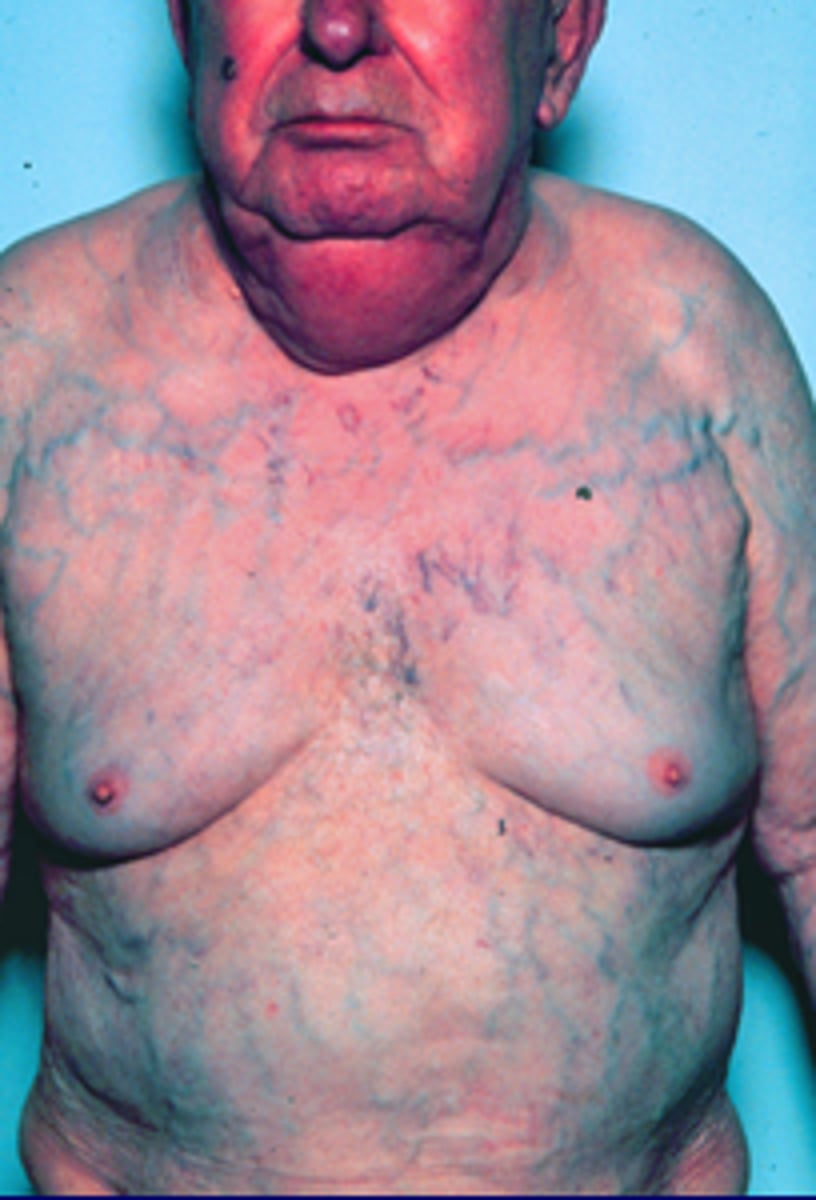
•Headache, dizziness —> confusion, obtudation
•Syncope after bending —> unprovoked syncope
•Laryngeal edema —> stridor
severe/life threatening symptoms of SVC syndrome
•Ensure respiratory and circulatory support
•Immediate endovascular recanulizaiton with stent placement
management for severe SVC
•Obtain staging imaging
•Seek tissue diagnosis
pt may have a curable cancer, do not burn any bridges
management for mild/moderate SVC
•Anticoagulation if thrombus is present
•Elevate head of bed
•Glucocorticoids for steroid responsive cancers (lymphoma, thymoma)
adjunctive/supportive measures of SVC
febrile neutropenia
this lab finding is a medical emergency regardless if associated with cancer
-absolute neutrophils <500
-single temp >101, sustained temp >100.4 (over one hour)
diagnostic criteria of febrile neutropenia
staph
most likely agent of febrile neutropenia
-empiric broad spectrum antibiotics, ensure pseudomonal coverage
-MRSA coverage if skin/soft tissue, cather related, very sick
-consider fungal coverage if highh risk
blood cultures before starting abx
manaagement of febrile neutropenia
•Transplant patients
•Some lymphoma and multiple myeloma patients
•Acute leukemia
NOT recommended in low risk pts (solid tumors)
indications for antibiotic prophylaxis to reduce incidence of neutropenia fever
colon stimulating factor prophylaxis
-can be given if high risk for febrile neutropenia
-type off chemo too
LEUKOSTASIS
symptomatic hyperleukocytosis
-Typically WBCs >100000
-WBCs in microvasculature
-respiratory failure and or neuro distress most commonly
-seeni n AML, ALL
clinical presentation of leukostasis
-stabiliize
-cytoreduce via induction chemotherapy, hydroxyurea, leukapharesis
-TLS prophylaxis
management of leukostasis
AML, sometimes CLL
cancers associated with leukostasis
hydroxyurea
treating leukostasis with _____ can convert problem to a tumor lysis syndrome
 Note
Note  Flashcards (129)