Aesthetic Shifts in Meiji Japan (1869-1912): The Rise of Urban Culture in Tokugawa and Meiji Japan
 Call Kai
 Learn
Learn Practice Test
 Spaced Repetition
 Match
Match Flashcards
 Knowt Play
1/16

There's no tags or description
Looks like no tags are added yet.
Name | Mastery | Learn | Test | Matching | Spaced | Call with Kai |
|---|
No analytics yet
Send a link to your students to track their progress
17 Terms
Describe the Meiji restoration
Daimyo forced to return their lands to emperor, restoration of imperial rule and abolish military dictatorship, visit by American navy officer=concern with Japan’s lack of scientific or technical progress, foreigners no longer banned or executed, from external pressure: see that they are falling behind militaristically
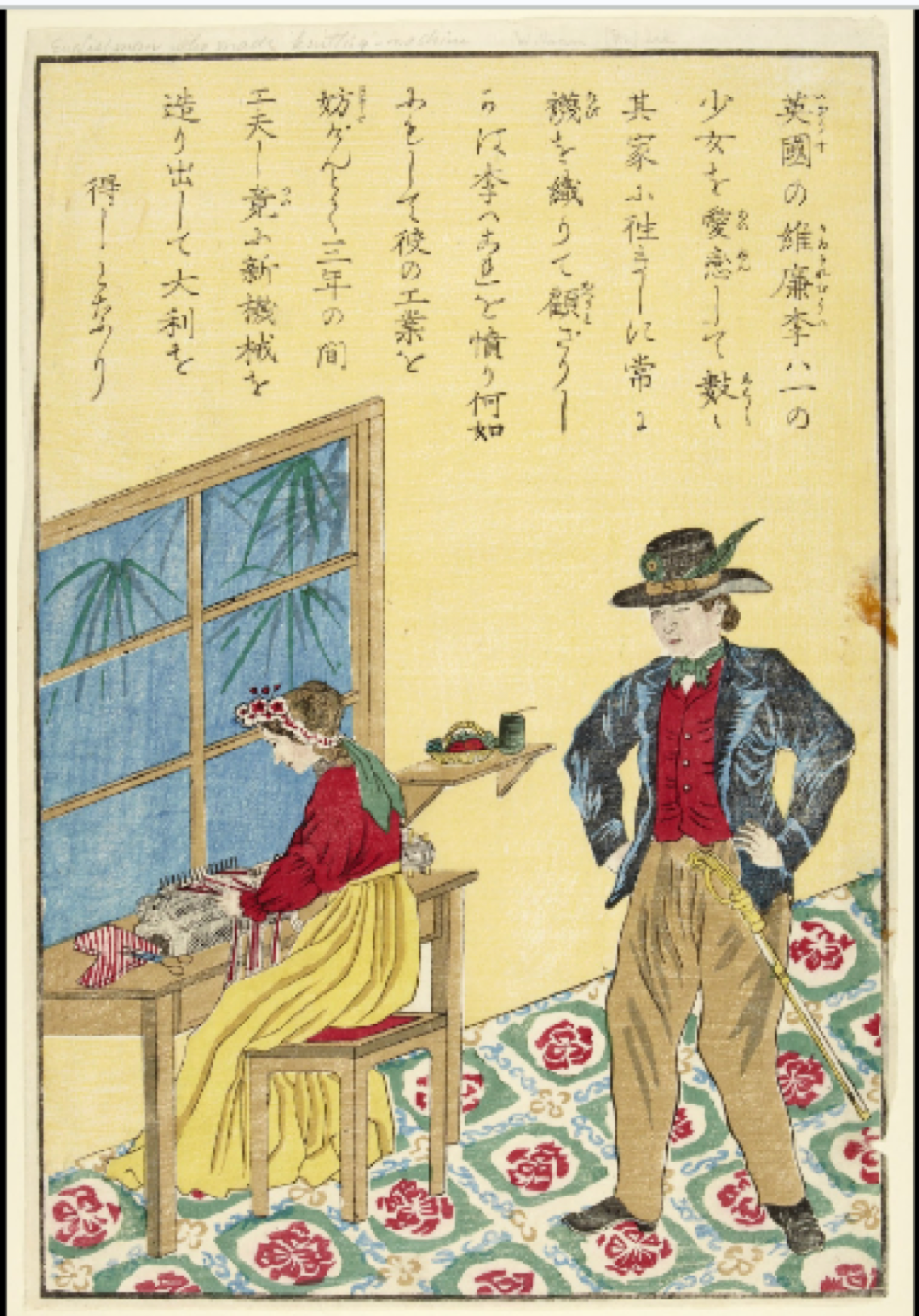
William Lee (the inventor) in England, woodblock print, 1890s
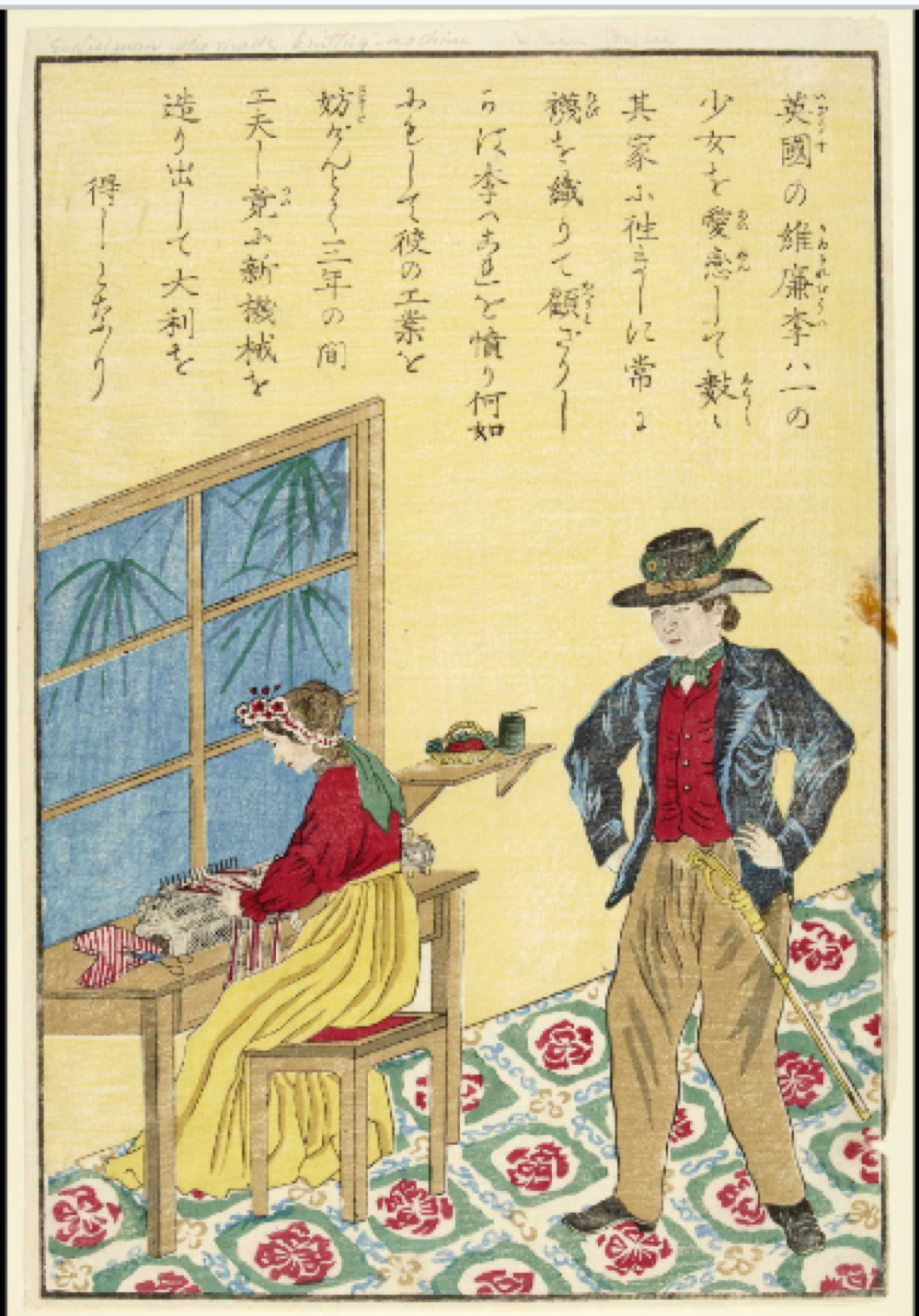
describe the context of the William lee print
Yokohama-e print, theme: images of foreigners, william Lee invented the knitting machine, chosen strategically: borrow from west and remain faithful to Japan
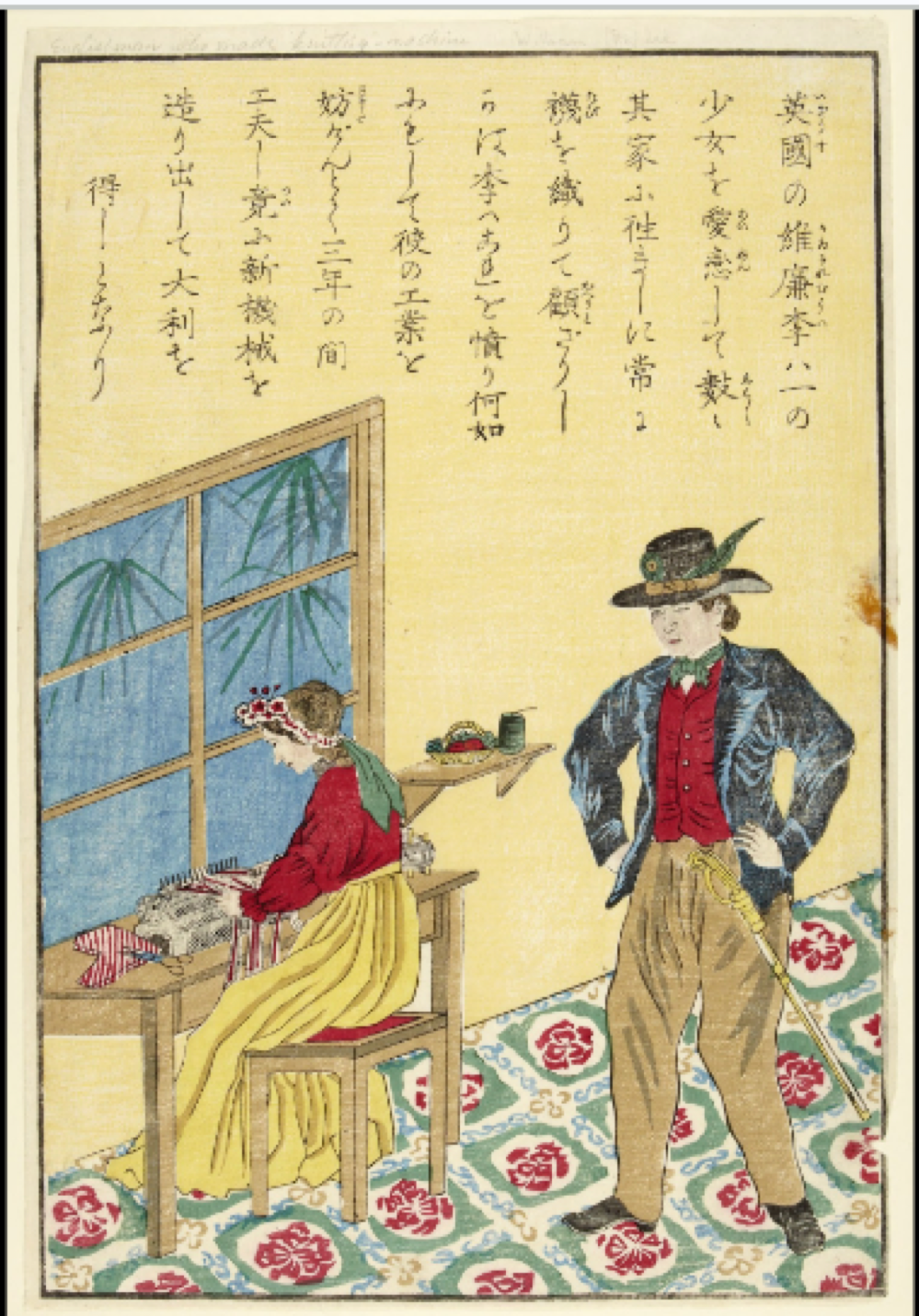
Describe the overall composition of the William Lee print and its significance
shows William Lee: clergyman with negative stories around women= make comment on how they should look up to the invention but not the family model of the west, ethnographic details right, foreigner was never the hero, in pose of authority
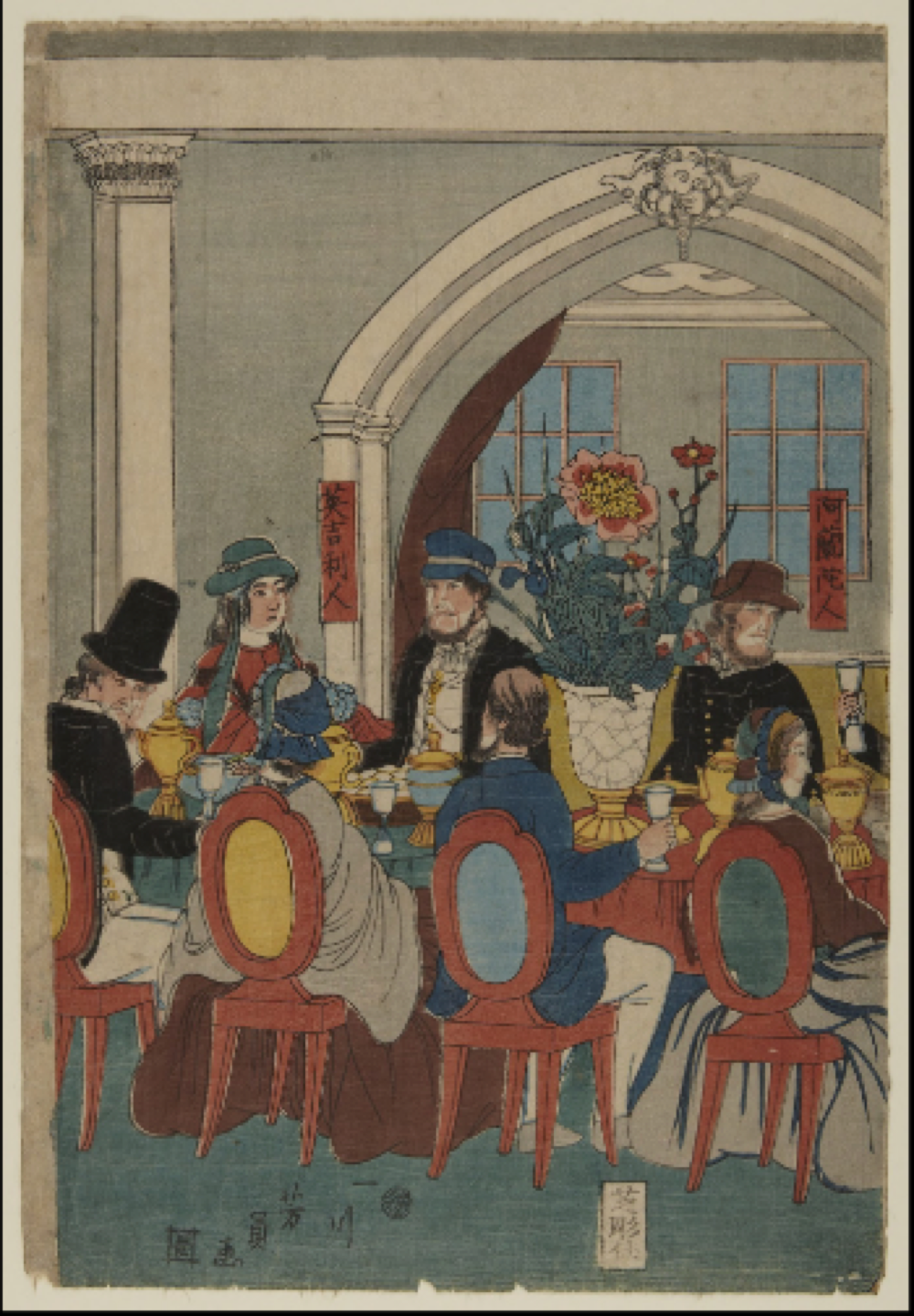
Utagawa Yoshikazu (active 1850s-1870s)
Banquet for foreigners from the five countries, woodblock print, 1861
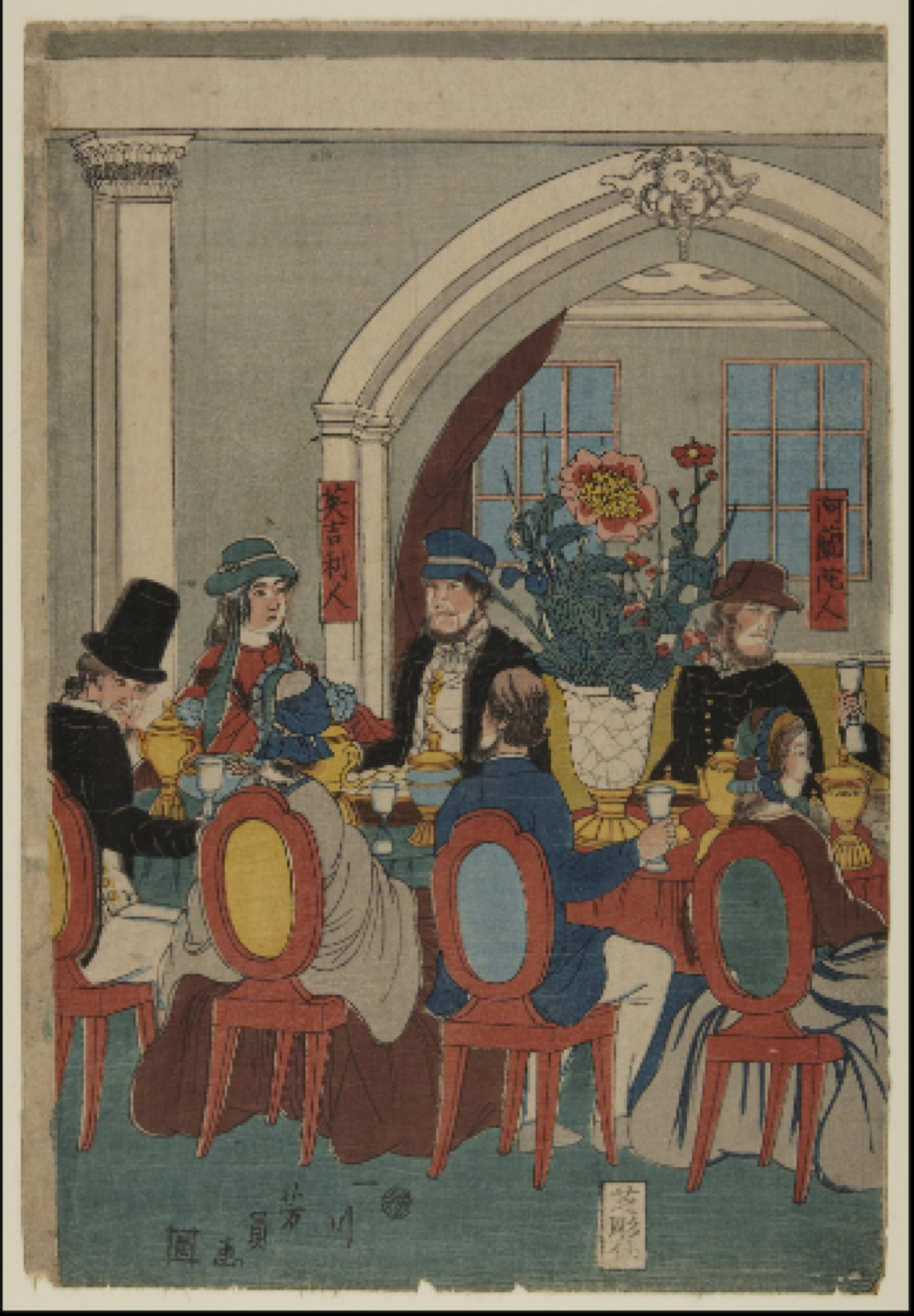
describe the overall composition of the Banquet print and its significance
great powers now allowed to do business with Japan, white men with their wives, Western composition: architecture (arch and capital), permanence to it unlike Japanese furnishing, those diplomatic missions necessary, not celebrate west, just acknowledge reality, dinner about business
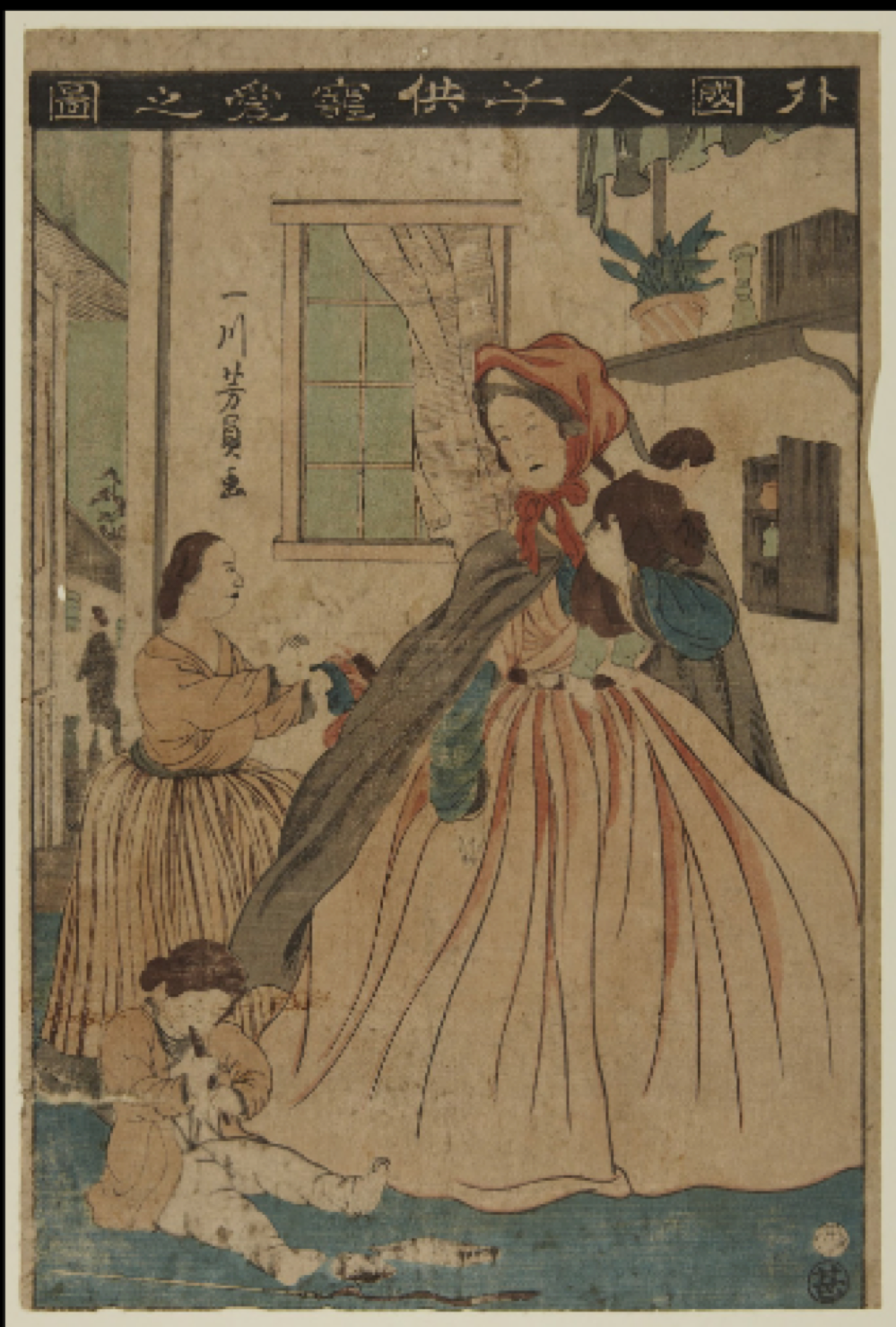
Utagawa Yoshikazu (active 1850s-1870s)
Foreigners Showing Affection to Children, woodblock print, 1860
describe the overall composition of the foreigners showing affection print and its significance
high status english woman, awkward, woman begrudgingly holding kid, accompanied by nanny: she takes care of the kids=this relationship not mimicked by Japan, preserve the role of women within the household
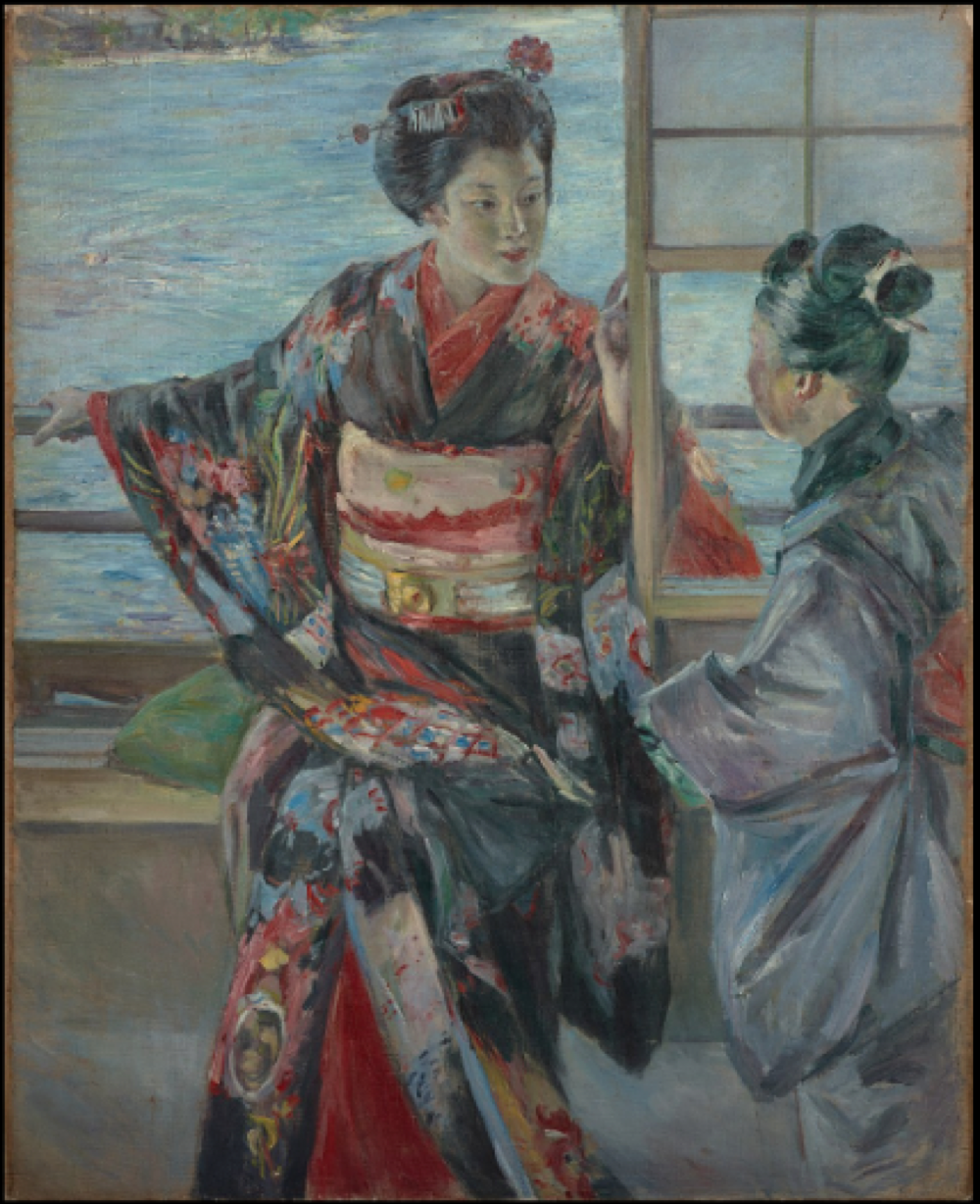
Kuroda Seiki (1866-1924)
Maiko Girl, oil on canvas (yōga), late 19th century
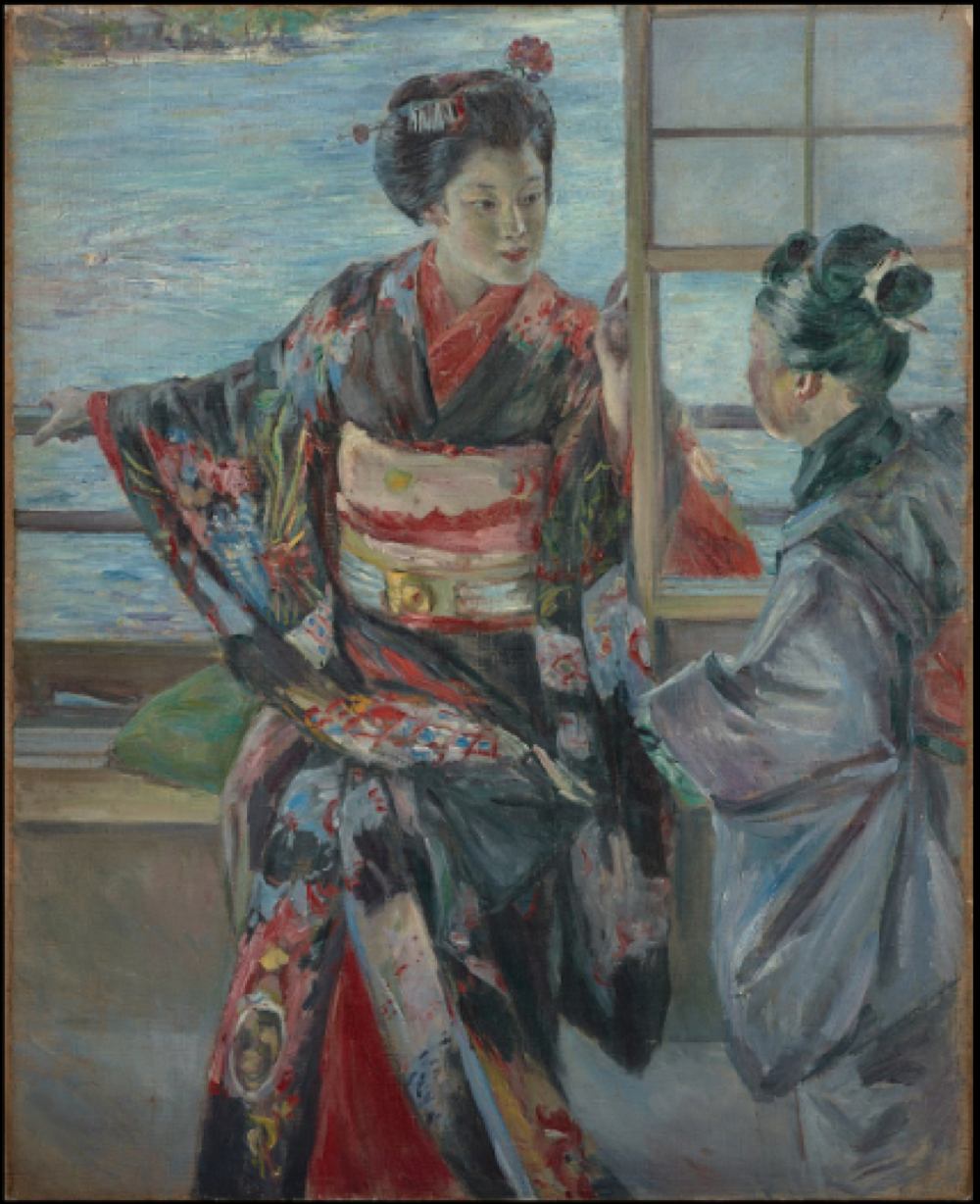
Describe the context of the Maiko girl print
painting genre emerge: yōga=western style painting and mode of making with oil on canvas, always adopted traditional Japanese subject, Maiko girl: apprentice geisha being taught by retired geisha: sacred relationship between teacher and pupil
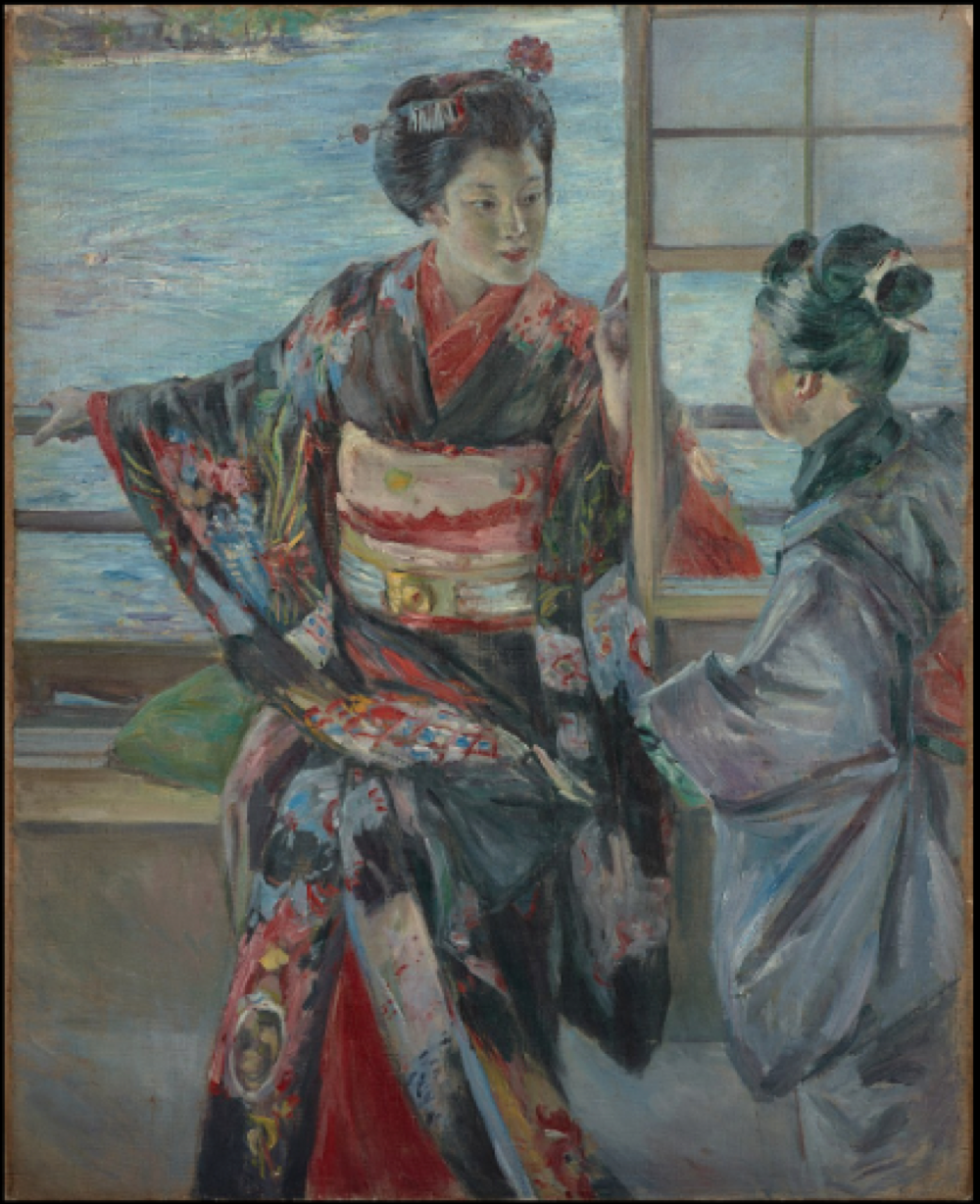
describe the overall composition of the Maiko girl print and its significance
on veranda, cropping technique=still Japanese idioms and partial concealment, brushwork and pigment blurry: study in France with impressionists, experiment with brazen manner, vestiges of impressionist brushwork=brisk and ethereal=fleeting beauty of things
Hishida Shunsō (1874-1911)
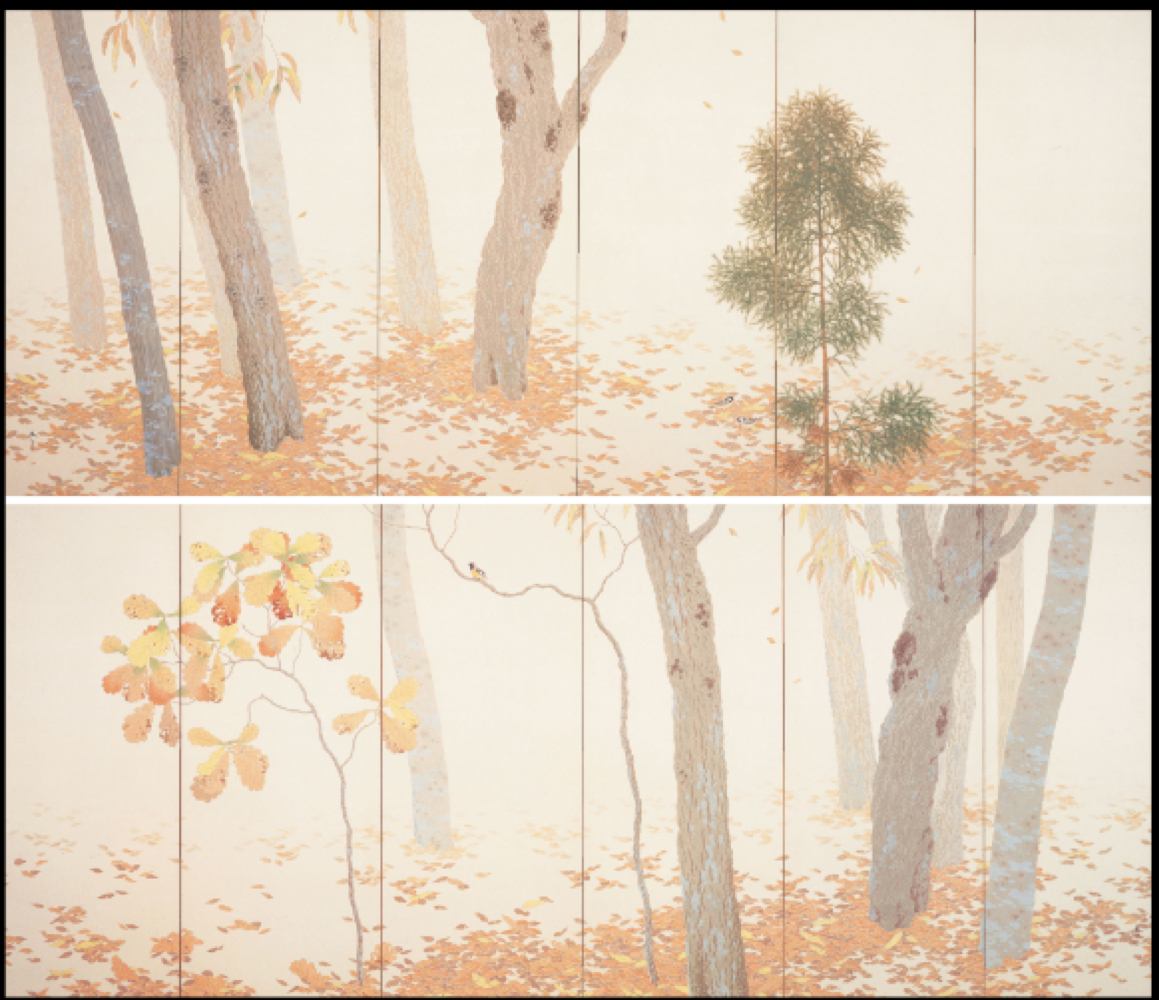
Fallen Leaves, double-six-fold screen (nihonga), 1910
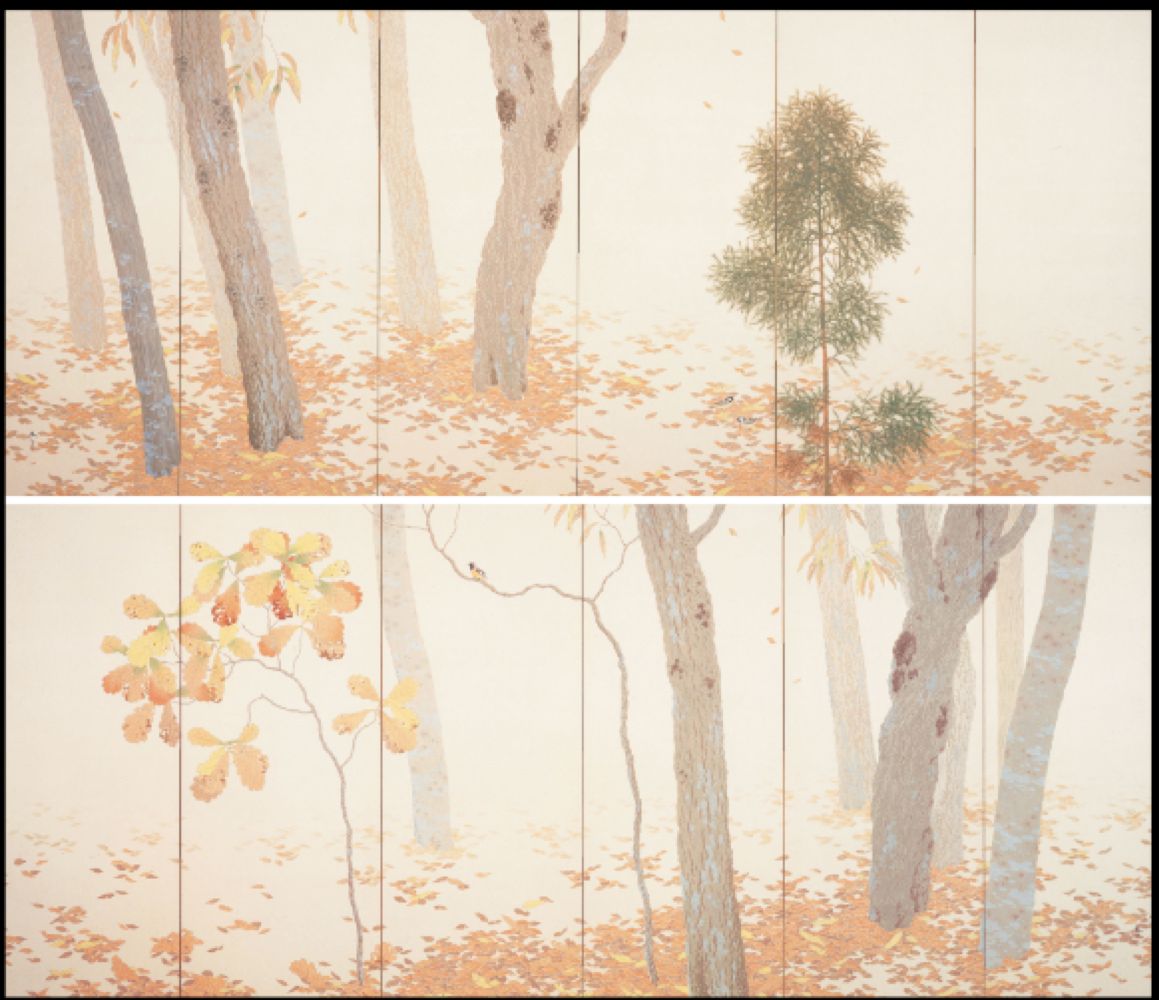
Describe the context of the Fallen Leaves print
Nihonga: Japanese style paintings, study only in Japan: went to all the Buddhist temples to copy Zen art, exhibited work in the US: discover new ways of portraying Japanese art
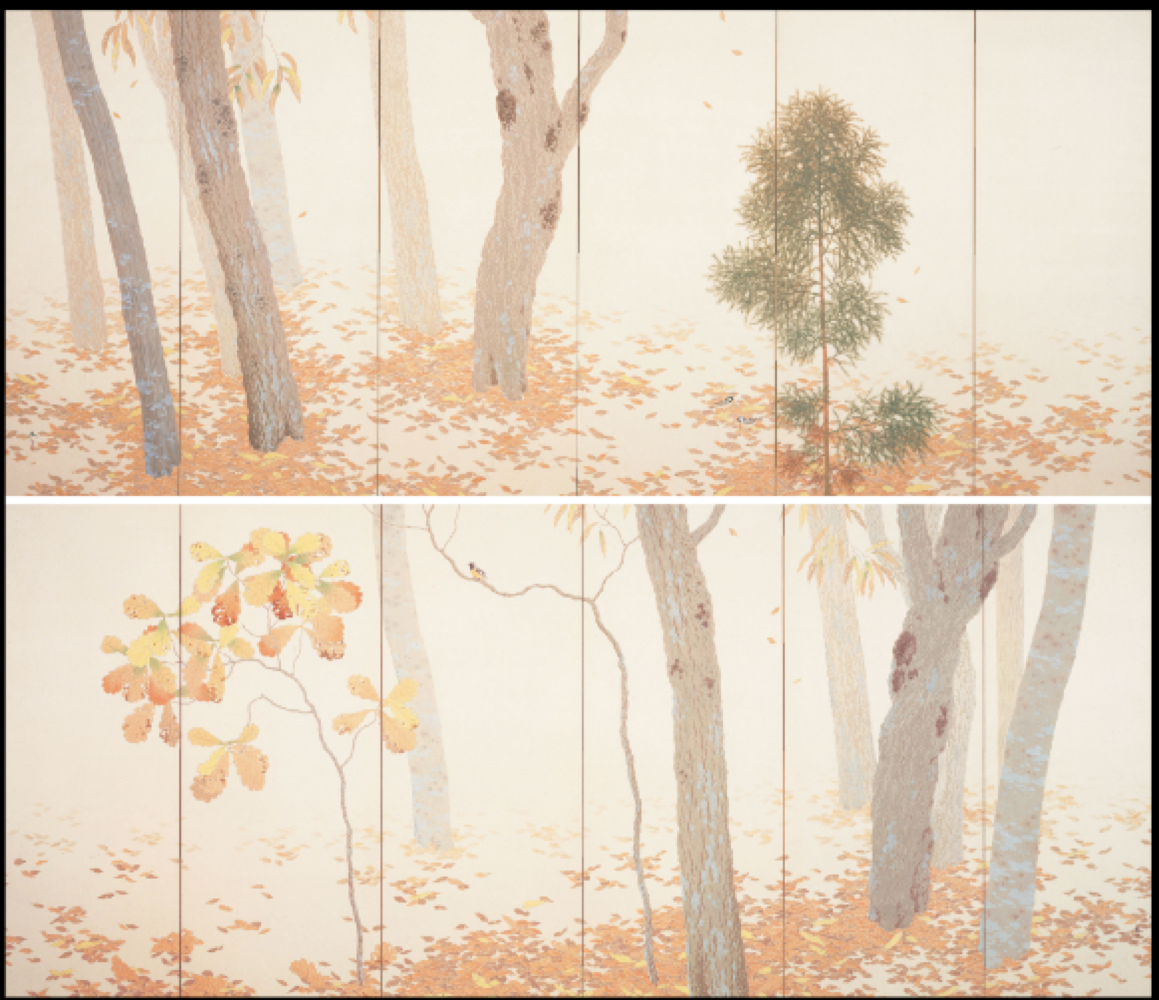
Describe the overall composition of the Fallen Leaves print and its significance
celebrate philosophical theme of seasonal change: metaphor=change in personal circumstances, celebrate inherently Japanese through gradation of color= experimentation, folding screen=typical nihonga
Takeuchi Seihō (1864-1942)
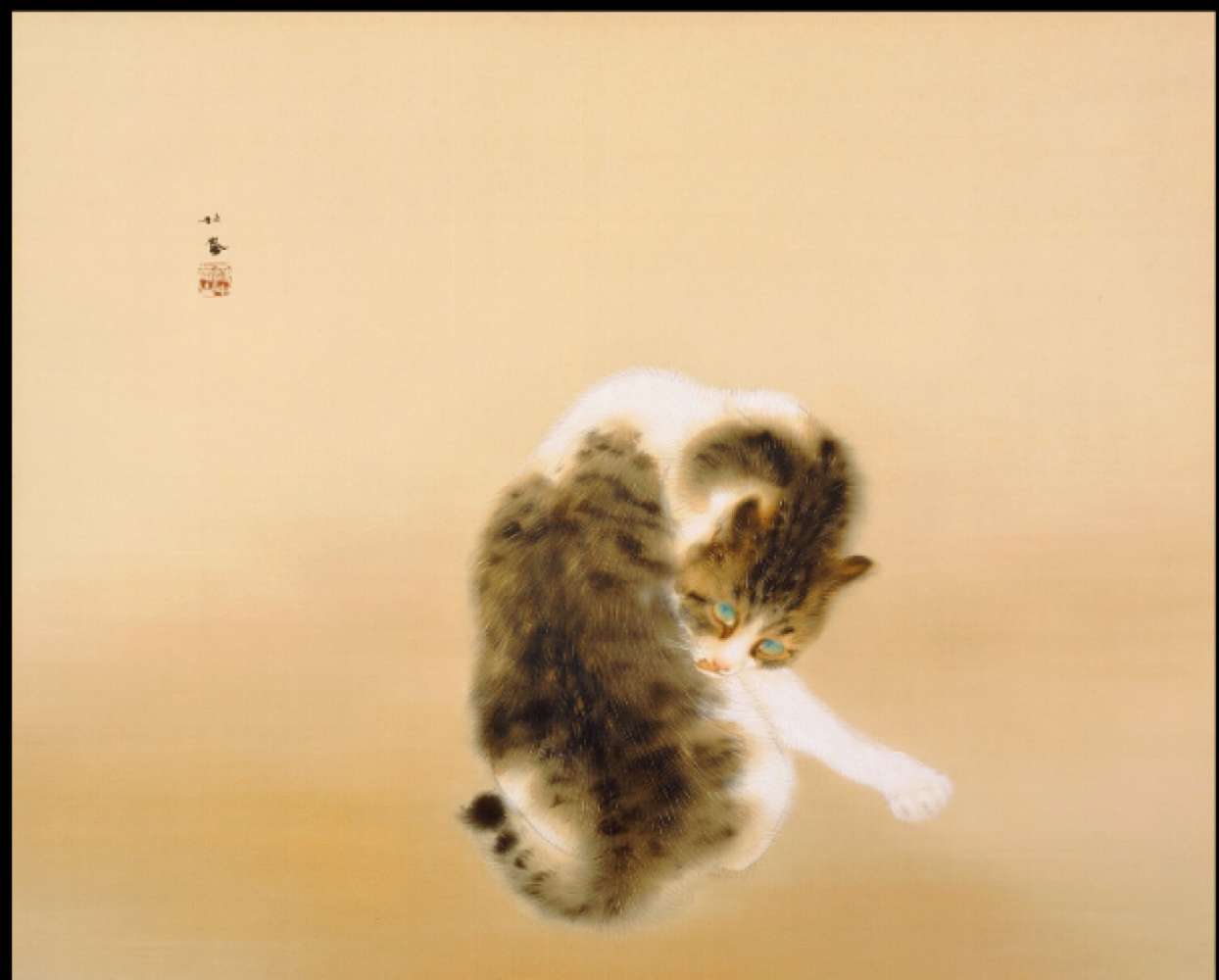
Tabby Cat, ink and color on silk (nihonga), 1924
Describe the context of the Tabby Cat
made by 1 of 3 founders of Nihonga, travelled for leisure, obsessed with exotic species, painted when Japan colonized Korean peninsula: worked close to government patrons, looked at Chinese paintings for inspiration= little color and ink-wash=ephemeral quality
Describe the overall composition of the Tabby cat and its significance
untreated background, animal as sole theme=access to far flung territories, cat: liberties with brushwork, hazy, relies on ink: gradation and dilute with water, color in eyes adds to realism, stylized/no strict outlines bc of loose brushwork, contorted twist unrealistic, indirect critical commentary on European colonization

