HWH 9 Unit 3 Test IHS Sacacian
 Call Kai
 Learn
Learn Practice Test
 Spaced Repetition
 Match
Match Flashcards
 Knowt Play
1/82

There's no tags or description
Looks like no tags are added yet.
Name | Mastery | Learn | Test | Matching | Spaced | Call with Kai | Chat |
|---|
No analytics yet
Send a link to your students to track their progress
83 Terms
Secular
Any attitudes, activities, or other things that have no religious or spiritual basis
Sect
A subgroup of a belief system, usually an offshoot of a larger group
Heresay
Belief or opinion contrary to religious doctrine
Clergy
The religious leaders whose job is serving the needs of their religion and its members
Denomination
A subgroup within a religion whose beliefs differ in some ways from other groups in the same religion
Doctrine
Beliefs, principles, or fundamental teachings held by a belief system
Divine Right
The doctrine that the right of rule comes directly from God, not from the consent of the people
Aristocracy
A system of government by a small privileged class or those presumed to be the best qualified to rule; the highest class in certain societies, especially those holding hereditary titles or offices
Autocracy
A system of government by one person with absolute power
Despot
A person, group, or institution that rules with absolute power and uses it in cruel, oppressive ways
Natural Rights
Universal and fundamental moral principles among all cultures and society that cannot be taken away by human law
Constitutional Monarchy
A system of government in which a constitution or legislative body limits the monarch's power
Oligarchy
A system of government in which a small group of people hold most or all political power
Representative Democracy
A system of government in which the people elect officials to represent them in an legislative body
Direct Democracy
A system of government in which the people decide on policy without legislative representatives as proxies
Renaissance
A period of cultural, artistic, and economy rebirth in Europe following the Medieval Period (stagnant → rebirth)
Where did the Renaissance start
Italy
What were the values of the Renaissance
Humanism
Skepticism
Generalism
Classicism
Individualism
Secularism
Humanism
Study of human worth/values. Men had unlimited potential, according to humanism. Promoted Renaissance ideals/values
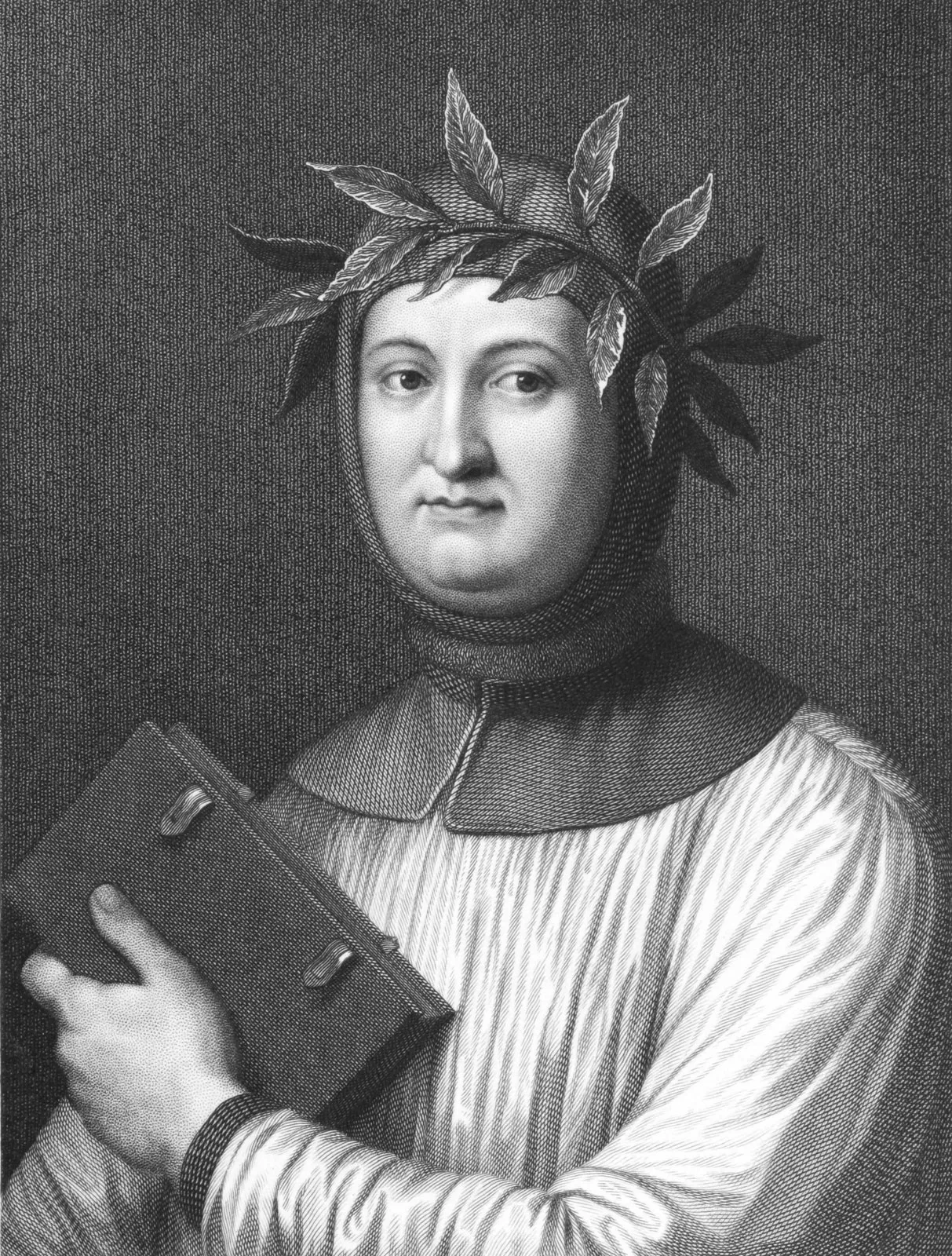
Petrarch
Considered the father of Renaissance Humanism; argued that God had given humans their vast intellectual/creative potential to be used to their fullest
Skepticism
Values that emphasizes a questioning attitude; used reason to discover truth/knowledge through faith
Generalism
idea that one should be a well-rounded individual (be skilled in many different fields or have many interests)
Classicism
Interest in the classical period of Ancient Greece/Rome
Individualism
Focus on the need to distinguish oneself from everyone else
Secularism
Focus on worldly desires rather than spiritual needs
Secular
Any attitudes, activities, or other things that have no religious or spiritual basis
Printing press
A device people invented to copy down text onto paper rather than manually writing and copying everything by hand
What was the printing press’s impact on the world
It allowed people to mass produce many books in vernacular (Ex. The Bible) allowing the common folk to be able to read and it allowed many ideas to be able to be spread around the world rapidly, while overall increasing literary rates around the world
Protestant Reformation
Religious reform movement that spread through Europe in the 1500’s resulting in the creation of various Christian denominations that separated from the Catholic Church due to differences in doctrine
What was the impact of the Protestant Reformation
Shattered the religious unity in Europe
Led to an age of religious warfare (Thirty Years War)
Shifted power from religious to political leaders
Encouraged the Catholic Reformation
Created social changes/new ideas
Fostered modern ideals and movements
Increase in education
Why was there frustration with the Catholic Church from the Protestant Reformation
The Church acted more like a power-hungry country than a sacred institution
Priests would partake in behavior not allowed by church law
The Church was making lots of money from tithes
People could pay to have sins forgiven
Martin Luther
He was a monk from Germany and was one of the many people that became upset with the sale of indulgences and corruptions of the Church
What was Martin Luther’s most important work
“The 95 Theses”
How did “The 95 Theses” influence society?
It intensified criticism of the church, sparked the Protestant Reformation, splintered Christianity, and it led to the European Society becoming more humanistic and secular. Argued that:
The Bible is the central religious authority
You can only win salvation only by faith in God
Indulgence
A way to reduce the amount of punishment one must undergo for the forgiveness of sins
Absolutism
The political doctrine and practice of unlimited centralized authority and sovereignty
Scientific Revolution
A series of events and discoveries in the 1500-1600's that led to a new way of thinking about the natural world
What caused absolutism to grow in Europe
The decline of Feudalism
Establishment and growth of national kingdoms
The Protestant Reformation
Conquering and creating colonies of the Americas
Religious and territorial conflicts led to continued warfare in Europe
Taxes had to be raised to pay for the military
Monarchs centralized their power to keep control
How did Absolute Monarchs use their power
They held immense power over their country, and they centralized their governments and power to keep control. They were generally corrupt and used their power as tyrants while justifying their actions by claiming divine rights
!!! Even if Absolute Monarchs used their power for good, many of the changes they put forth were reverted back after their reign !!!
How did Absolutism strengthen or weaken European countries
Strengthen:
Centralized authority
Stronger militaries
Economic growth
Increased control
Weaken:
Risk of poor leadership
Economic instability
Suppression of liberty
Social unrest
Religious differences
King Louis XIV
An absolute monarch that ruled France from 1643 to 1715
How did France become the leading power of Europe under the absolute rule of King Louis XIV
Louis XIV strengthened royal power, the army, the economy, and the arts to make France the leading power of Europe
How is King Louis XIV the prime example of an absolute monarch
He centralized his powers, eliminated checks on his authority, and asserted that his rule was a divine right from God
How was Tsar Peter the Great of Russia the opposite of King Louis XIV
He modernized Russia, embraced foreign influence, engaged in trade and alliances, and reduced the power of nobility, overall, he made Russia into a major European power. While the other strengthened traditional monarchy, rejected foreign influence, engaged in conflicts and wars, and maintained rigid social hierarchy and overall made them have a dominant culture but a strained economy
How did Peter the Great and Catherine the Great strengthen Russia and expand its territory
Using autocratic methods, they western- ized and modernized Russia, centralized royal power, improved the army, and expanded its territory through war, treaties, and exploration
How did Philip II extend Spain's power and help establish a golden age
Philip II asserted absolute power, waged war, and supported the arts, all to extend Spain's power and prestige
How were Charles V and Philip II alike and differ- ent in their goals of ensuring absolute power and strengthening Catholicism
Both sought to ensure absolute power and strengthen Catholicism, but Philip was more persevering
Why did Calvinism become an important form of Protestantism by the mid-sixteenth century
Calvinism became an important form of Protestantism because Calvin's writings helped spread Protestantism. Also, the belief in predestination gave Calvinists the conviction that they were doing God's work on Earth. This made them determined to spread their faith to other people
Which writers were influential in the spread of humanism/the Renaissance
Luther, Miciavelli, Dante
The Enlightenment
An intellectual and philosophical movement centered on the ideas of reason, humanity, power, and politics
What are the main ideas or themes of the Enlightenment
Reason: Truth that could be discovered through logic
Nature: Things that are natural that are good
Happiness: Wanted people to be happy on earth
Progress: Society should focus on improving
Liberty: Political freedom is important
Philosophes
The philosophes were French philosophers who examined government, law and society, and called for reforms to protect the natural rights of people. They have a great influence on politics and thinking. The philosophes also believed that nothing was out of reach for humans with reason.
What were the goal of the Philosophes
To call for reforms that protect the natural rights of people
How were the ideas of the Philosophes revolutionary
Enlightenment philosophes introduced revolutionary ideas that challenged traditional political authorities, religious values, and social norms of the 18th century. These concepts of reason, freedom, and natural rights ignited political and economic reforms globally, leading to significant societal transformations
Who are Enlightened Monarchs
Rulers who combined absolute power along with reform inspired by ideas of the enlightenment
What makes Enlightened Monarchs enlightened
They embraced Enlightenment ideas like reason, progress, enacting reform, promoting education, and improving administration while maintaining absolute power
What makes Enlightened Monarchs despotic
The enlightened despots were absolute rulers that used their power to bring forth social/political changes. They expanded religious tolerance, reduced torture, made the government more efficient, and improved economy/society
Who was Thomas Hobbes and what did he believe
English philosopher
Author of Leviathan
Believed humans are naturally selfish and evil
Supported absolute monarchy
Promoted social contract—people give up freedoms for protection
Who was John Locke and what did he believe
English philosopher; “Father of Liberalism”
Author of Two Treatises of Government
Believed humans are reasonable and moral
Believed all people have natural rights (life, liberty, property)
Government exists to protect rights; must have limited power
Opposed absolute monarchy
Influenced democratic thinking and revolutions
Who was Montesquieu and what did he believe
French philosophe
Author of The Spirit of the Laws and The Persian Letters
Believed in separation of powers:
Legislative
Executive
Judicial
Developed idea of checks and balances
Influenced U.S. Constitution
Who was Voltaire and what did he believe
French writer/philosophe
Strong critic of corruption, inequality, slavery, and injustice
Defended freedom of speech
Spoke out against the Catholic Church and French government
Author of Candide
Who was Jean-Jacques Rousseau and what did he believe
French philosophe
Author of The Social Contract and Emile
Believed people are naturally good, but society corrupts them
Supported direct democracy
Believed government control should be limited
Valued community good over individual interests
Opposed political and economic oppression
Who was Adam Smith and what did he believe
Scottish economist
Author of The Wealth of Nations
Supported free market and supply/demand
Believed in laissez-faire economics (minimal government interference)
Government role: protection, justice, public works
How were women treated during the Enlightenment
Still limited to home/family roles
Natural rights didn’t fully apply to women
Women who challenged roles = criticized
Some advocates existed, such as Mary Wollstonecraft
What did Enlightenment thinkers believe about slavery
Believed in natural rights — but applied mostly to white men
Many ignored contradiction
Some criticized slavery but still accepted African slavery
A few strongly opposed it (ex: Kant)
How did art change during the Enlightenment
Art styles changed with new tastes
Shift from Baroque → Rococo
Baroque: grand, dramatic, religious, intense
Rococo: light, elegant, pastel, playful
Rococo popular with middle/upper class
Philosophes criticized it
Who invented the printing press
A German publisher named Johannes Gutenberg
Vernacular
The vernacular was the language that the author speaks in, or the language that a specific region speaks in
What was the Scientific Revolution based on
Careful observation and a willingness to question the status quo
Where did the foundations of the Scientific Revolution come from
Came from ancient Greek learning and science of the Medieval period
What was the Geocentric Model and who came up with it
The theory that the Earth is the center of the universe; Greek philosopher Aristotle is credited for it
Prior to the 1500’s, what were European scientific beliefs based on
Ancient Greeks/Romans and the Catholic Church/Bible
What were some changes from the Scientific Revolution
Technology: Printing press → greater diffusion of knowledge and ideas
Culture: European society → more humanistic and secular
Worldview: Mapping of the world (Age of Exploration) → new worldview and contact with distant civilizations
Religion: Protestant Reformation → more criticism for the Catholic Church an skepticism of previously accepted ideas
What was the Heliocentric Model and who came up with it
The theory that the sun is the center of the universe; German mathematician/astronomer Nicolaus Copernicus is credited for it
Galileo Galilei
Italian astronomer/physicist. He is considered the father of modern science. Convicted of heresy by Catholic Church in 1633 and was forced to renounce (to officially give up or turn away from) Copernicus’ Heliocentric theory
Why did so many people refuse new discoveries
Because they contradicted ancient views about the world
Tyco Brahe and Johannes Kepler
Astronomers/mathematicians whose observations and data supported the Heliocentric model
What are French Calvinists known as
Huguenots
Politiques
Those who put aside personal religious beliefs in favor of political tranquility
Theocracy
State based on and run according to a religious doctrine
Which two foreign monarchs were taking new territory, becoming threats to European rulers
“Ivan the Terrible” and “Suleyman the Magnificent”
The main Anglican doctrine is that the power of state increased by combining secular and religious authority in what way
By using the king
Why did King Henry VIII want to use Protestantism
To get divorced and gain land