Human Physiology Exam 1
 Studied by 0 people
 Call with Kai
 Learn
Learn Practice Test
 Spaced Repetition
 Match
Match Flashcards
 Knowt Play
1/67

There's no tags or description
Looks like no tags are added yet.
Name | Mastery | Learn | Test | Matching | Spaced | Call with Kai |
|---|
No analytics yet
Send a link to your students to track their progress
68 Terms
Physiology
How the different parts of the body and systems do what they do.
Anatomy
The parts of the body and what they do
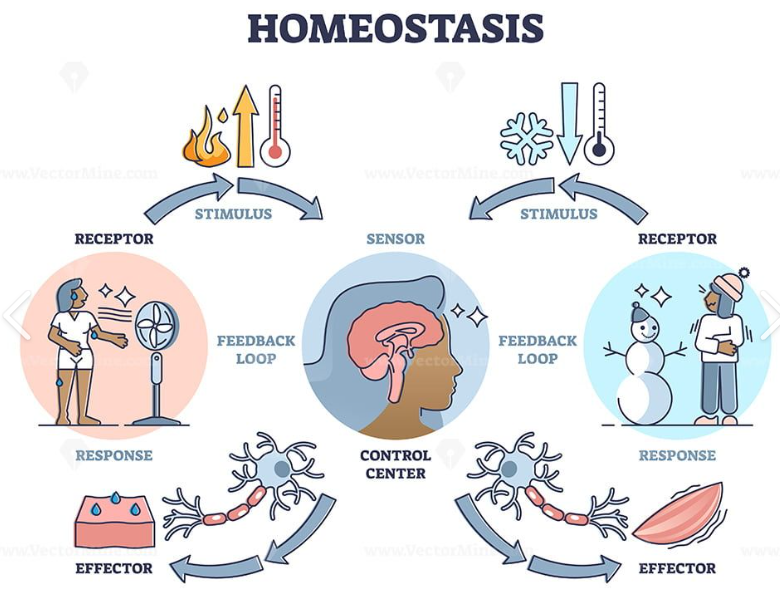
Homeostasis
maintain a stable internal environment
keeps the body in balance so cells can function properly
Organ systems work together to maintain this balance
Related to extracellular fluid (circulatory system, cardiovascular system)
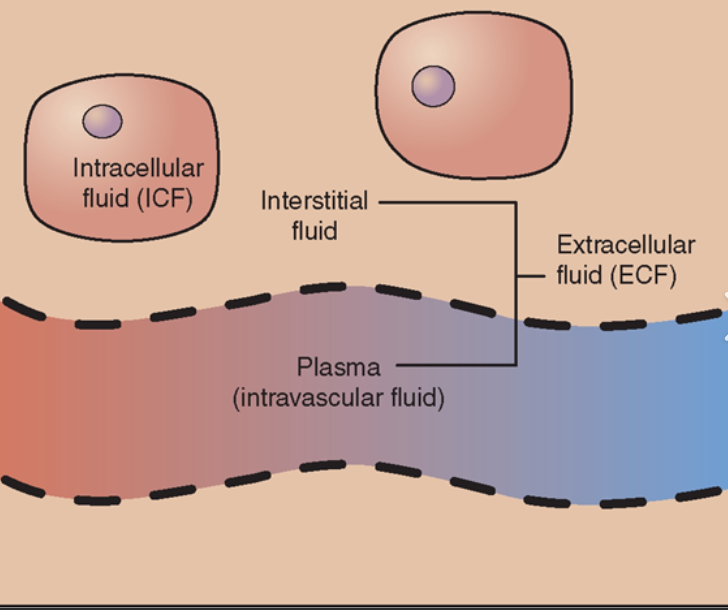
Extra-cellular fluid |
All body fluid outside the cells, including interstitial fluid and blood plasma.
Transports nutrients, oxygen, and hormones
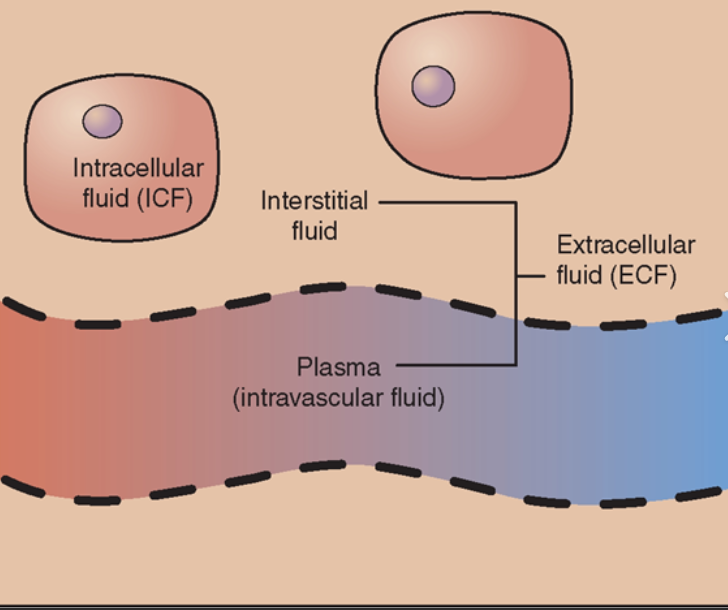
Interstitial fluid
Fluid that surrounds and bathes the cells in tissues. (fluid around tissues)
Involved in nutrient and waste exchange between blood and cells
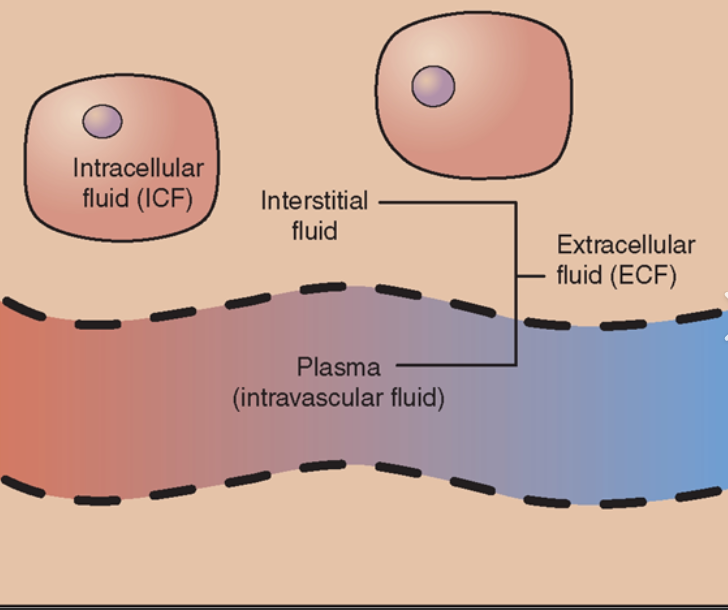
Intracellular fluid
Fluid inside the cells; makes up most of the body’s total fluid
Feedback loop
A control mechanism in which the output of a system influences its own activity.
Regulatory mechanisms that maintain homeostasis
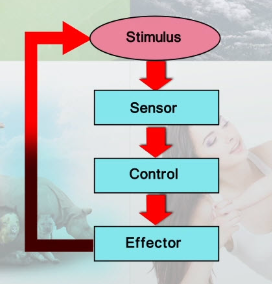
Negative feedback loop |
Stabilizes
Reverses the change
Restores balance
Brings body back to normal
Ex:
- Body temp regulation
- Blood sugar regulation (insulin/glucagon)
Blood pressure regulation
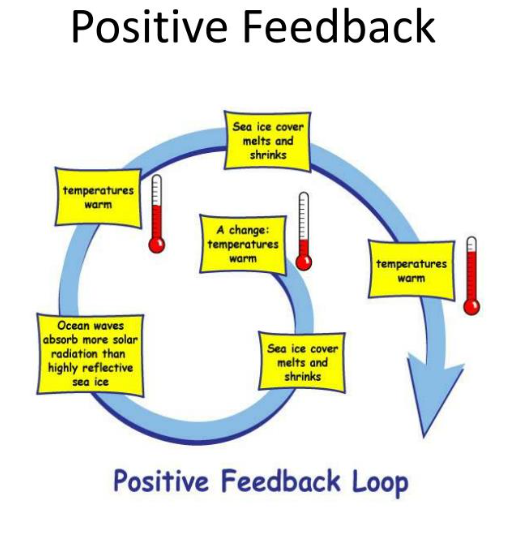
Positive feedback loop
Amplifies
Increases the change
Pushes process to completion
Not about balance, about finishing a process
Ex:
- Labor contractions (oxytocin)
- Blood clotting
Milk letdown during breastfeeding
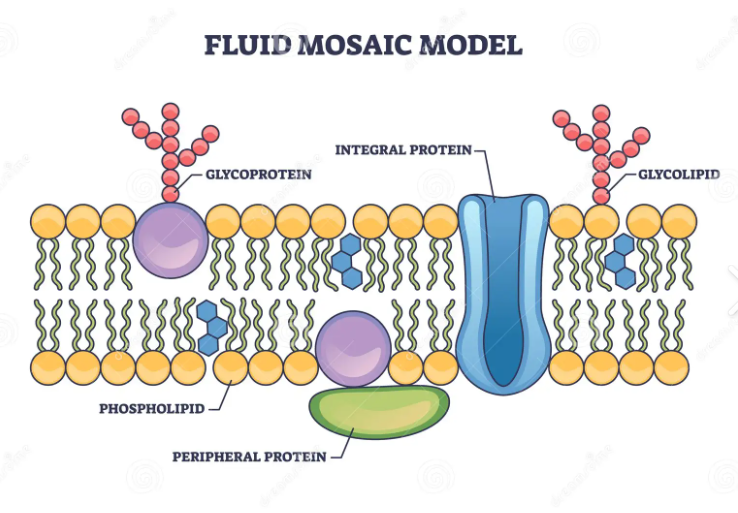
Fluid mosaic model of membranes
Describes the cell membrane as a flexible lipid bilayer with proteins embedded and moving within it.
Phospholipid bilayer
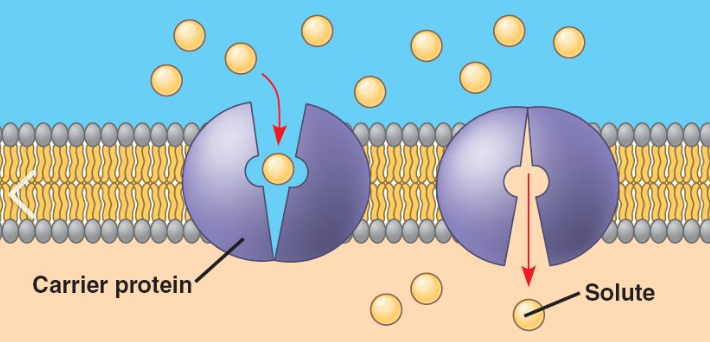
Carrier proteins
Membrane proteins that bind specific molecules and move them across the membrane.
Involved in active and passive transport
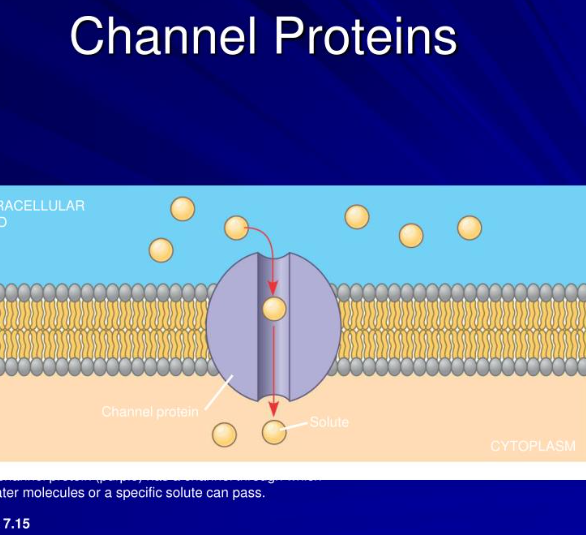
Channel proteins
Membrane proteins that form pores allowing ions or water to pass through.
- Passway way in the cell membrane
Facilitated diffusion
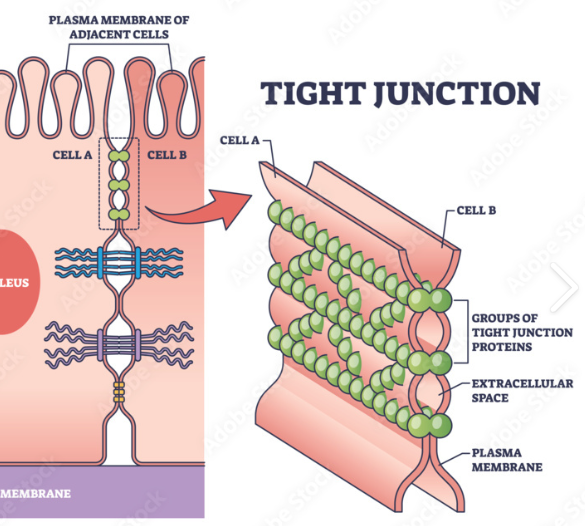
Tight junctions
A junction that forms a tight/blocked barrier between cells.
No extracellular space or movement
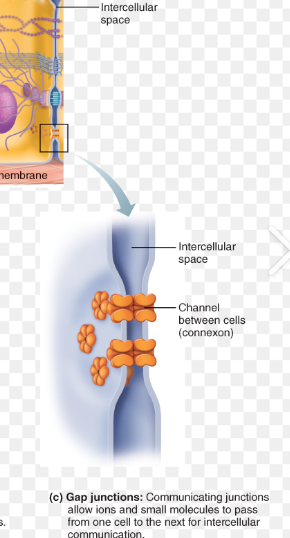
Gap junctions |
A junction that forms an intercellular passageway between cell membranes to move small molecules and ions
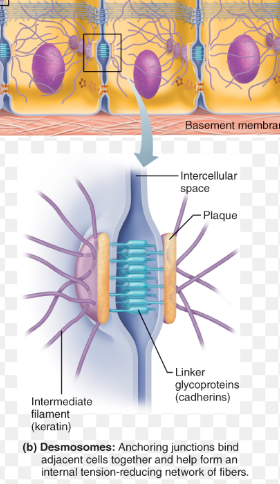
Desmosomes
link between two cells to hold them together/ has cadherin.
Provides strength
Diffusion
Solutes move from high concentration → low concentration
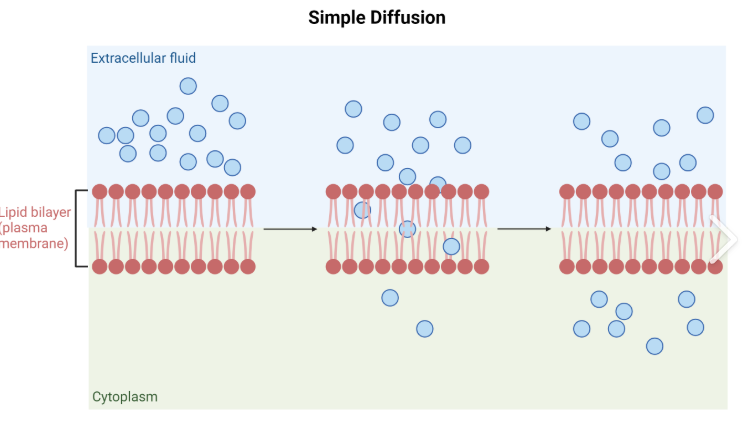
Simple Diffusion
Movement of molecules directly through the membrane from high to low concentration.
- Small and nonpolar molecules that move through the cell membrane with no energy needed. (passive)
- Oxygen and carbon dioxide
- Moves with the concentration gradient (high to low)
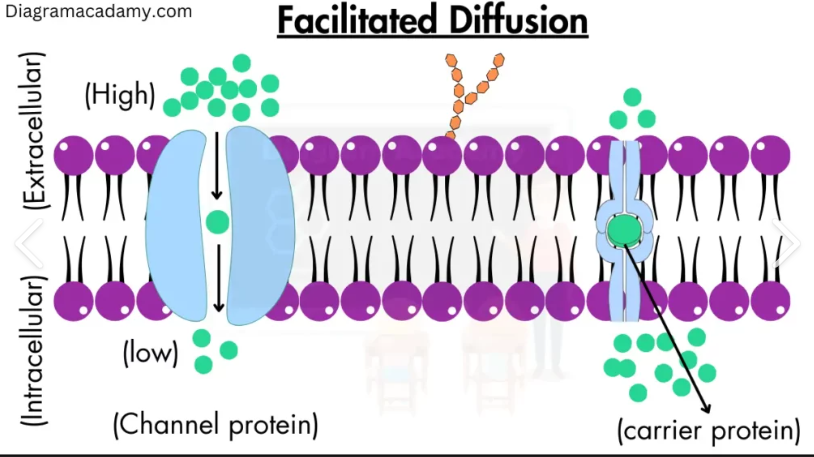
facilitated Diffusion
Movement of molecules through carrier or channel proteins from high to low concentration.
- Doesn’t require energy (passive)
Ions and glucose
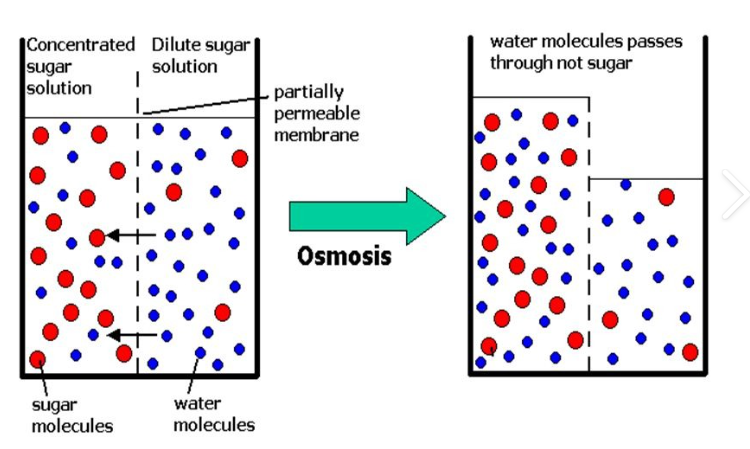
Osmosis
Movement of water across a semipermeable membrane from low solute (salt/sugar) concentration to high solute (salt/sugar) concentration. ( 💡 Water follows solute.)
- Water moves to where there is less water/higher particle concentrations are to reach equilibrium
- Does not occur with penetrating molecules (only non-penetrating solutes)
Ex: Sucrose, potassium, sodium, calcium
Penetrating solutes
Solutes that can cross the cell membrane
- Small and nonpolar
- Oxygen
- Water
Carbon dioxide
Non-penetrating solutes
Solutes that cannot cross the cell membrane and affect water movement
- Sodium
- Potassium
- Ions don’t go through the membrane
Large and polar
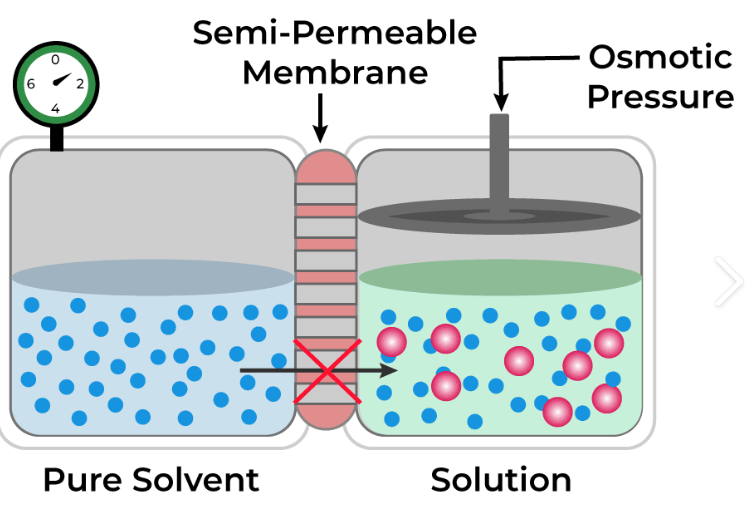
Osmotic pressure |
The pressure required to prevent water movement across a membrane due to solute concentration.
- Pressure that forces water across cell membrane
Hydrostatic pressure |
The pressure exerted by a fluid against a surface or membrane.
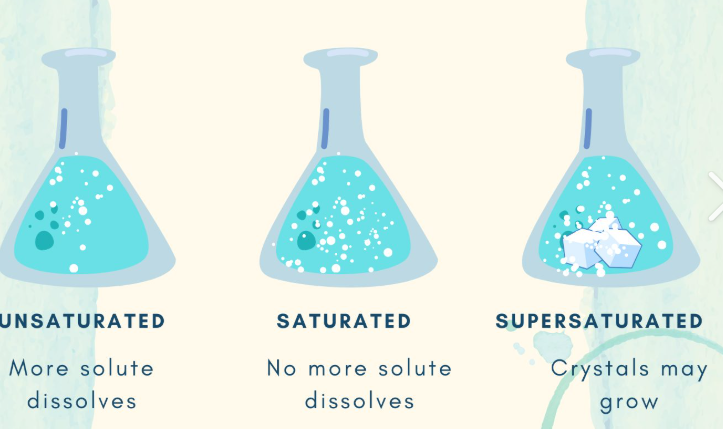
Saturation
where a system reaches its maximum
operational capacity
When all transport proteins are occupied- limiting transport rate
Transport maximum |
The maximum rate at which a substance can be transported due to protein saturation
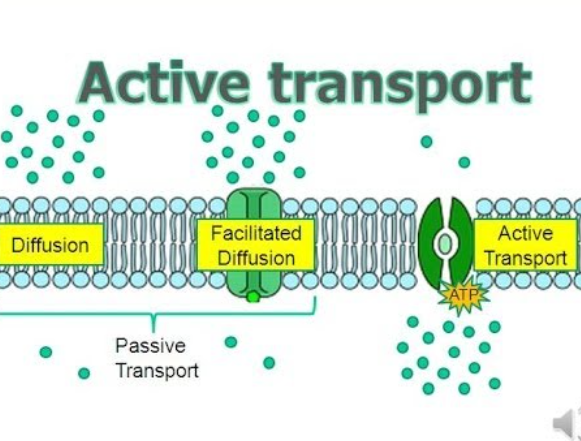
Active transport
Movement of substances across the cell membranes against their concentration gradient, requiring ATP
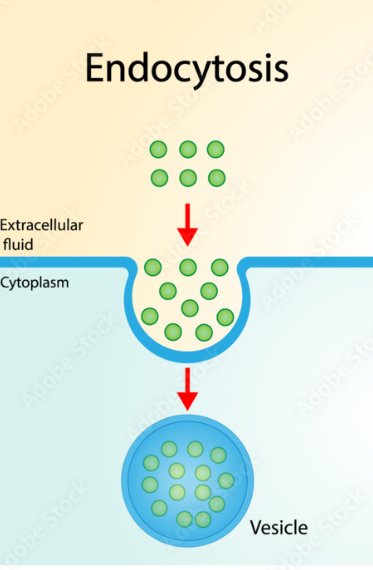
Endocytosis
Process by which cells bring substances into the cell using vesicles. (molecules fusing with the cell membrane)
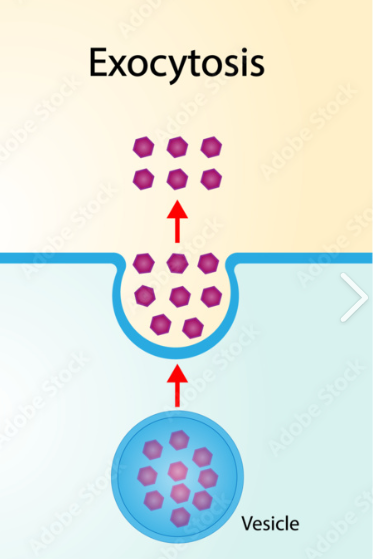
Exocytosis
Process by which cells release substances out of the cell using vesicles. (molecules fusing with the cell membrane)
Removes waste and delivers materials
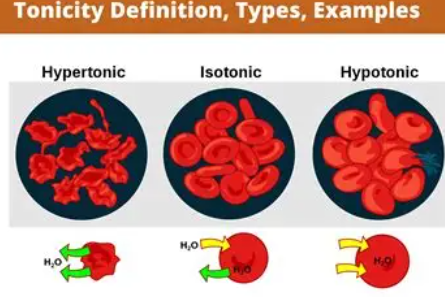
Tonicity
Effect of a nonpenetrating solute on another solution
- the ability of solution to cause water to move into or out of a cell by osmosis (where the water is moving)
- How a cell responds when placed on a solution
Hypotonic, Hypertonic, Isotonic
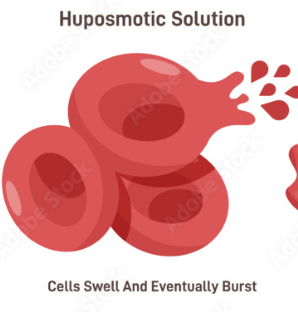
Hypotonic
Solution has lower solute concentration than the cell (cell swells).
- Water is less concentration.
- More water inside cell
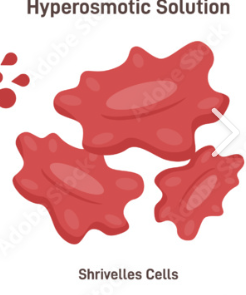
Hypertonic
Solution has higher solute concentration than the cell (cell shrinks).
- Water is more concentrated
Less water inside the cell
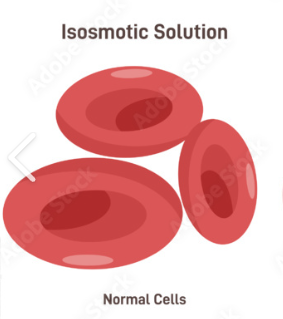
Isotonic
Solution has equal solute concentration (no net movement/ no change).
- Equal water inside and outside the cell
Osmolarity
Relates cell and solution concentrations
Relates to water and cell, not cell change
Molarity (#particles)/ #molecules
Hyperosmotic, Iso-osmotic, Hypo-osmotic
- Ex: OSM= 1M (2 particles)/ 1 molecule of NaCl
1 M NaCl = 2 Osm NaCl
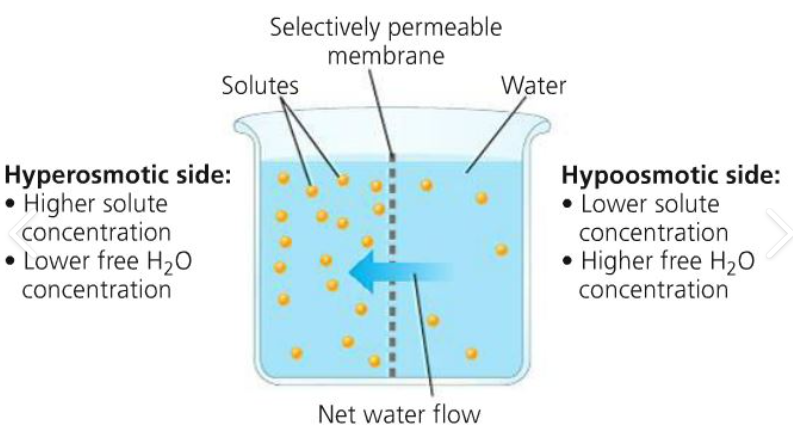
Hyperosmotic
Higher total solute concentration to solution
Iso-osmotic
Equal total solute concentration to solution
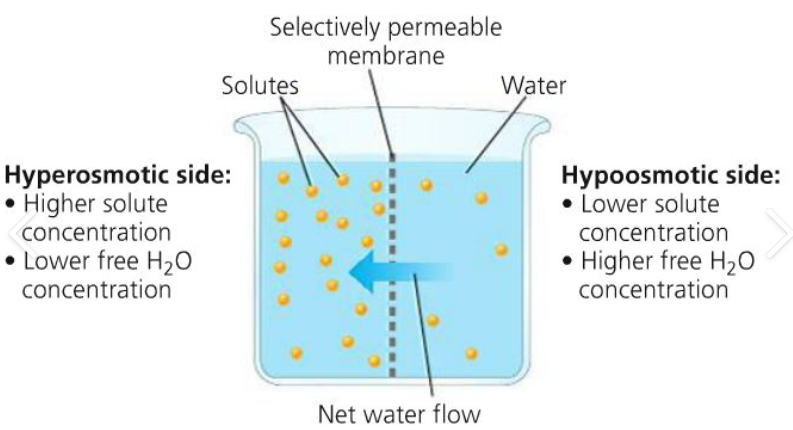
Hypo-osmotic
Lower total solute concentration to solution
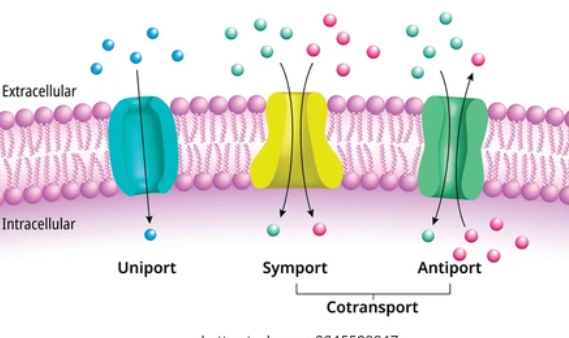
Symport
Transport of two substances in the same direction across a membrane
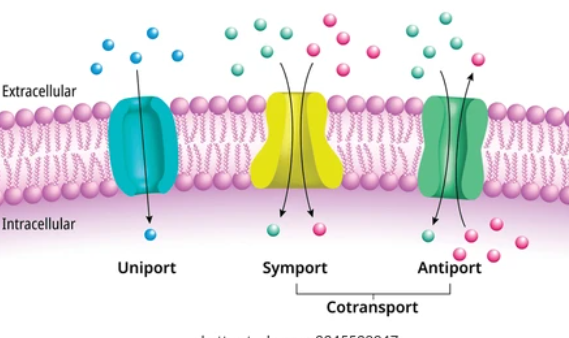
Antiport
Transport of two substances in opposite directions across a membrane
Molarity
The concentration of moles of a substance per liter of solution (moles/L).
list the levels of organization of living organisms from the atom to the organism.
a. Atom → Molecule → Organelle → Cell → Tissue → Organ → Organ System → Organism
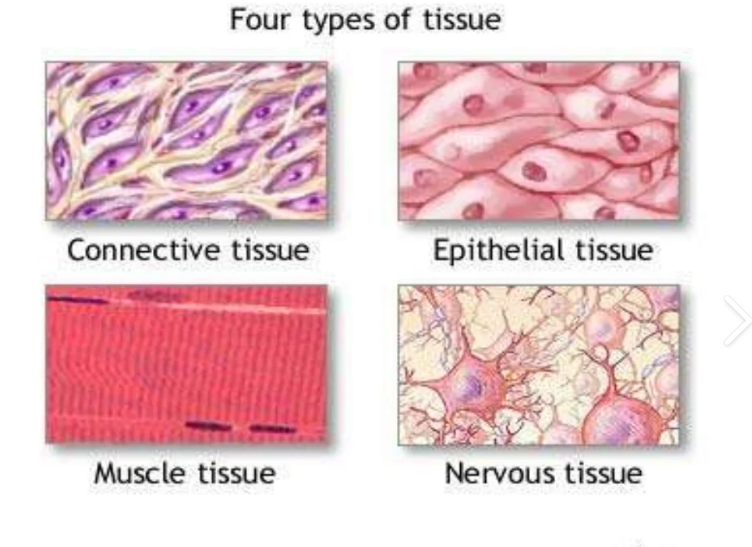
Epithelial tissue
i. Covers surfaces and lines body cavities/ forms glands
iii. Protects (skin), absorbs (intestine lining), and secretes (insulin)
iv. Avascular/ Rapid regeneration
v. Ex: skin, lining of stomach, lungs
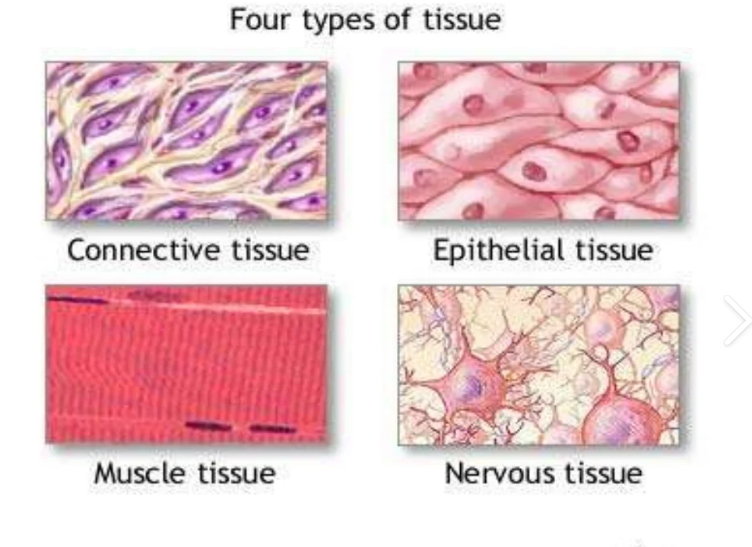
Connective tissue
i. Supports, storage, cushion, transport, and protects body parts
ii. Cells are spread out in a matrix
iii. Ex: bone, blood, cartilage, tendons
Highly vascular/ innerved
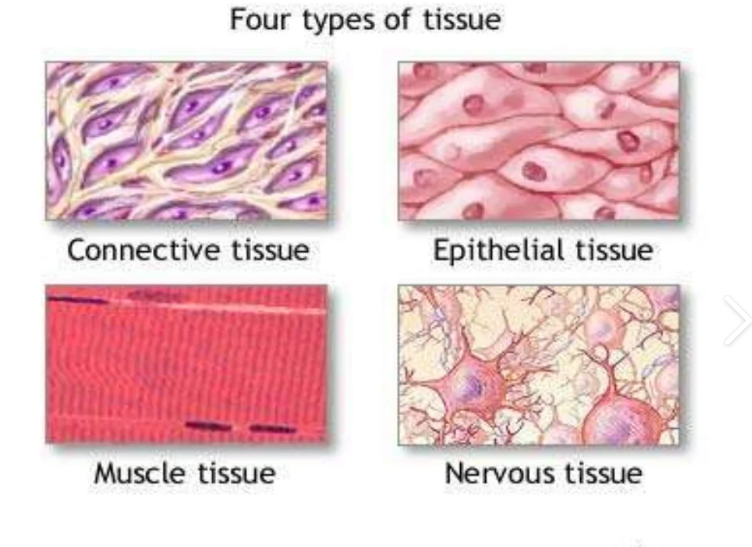
Muscular tissue
i. Contracts to produce voluntary and involuntary movement
ii. Types: skeletal, cardiac, smooth
iii. Ex: Heart, bicep brachii
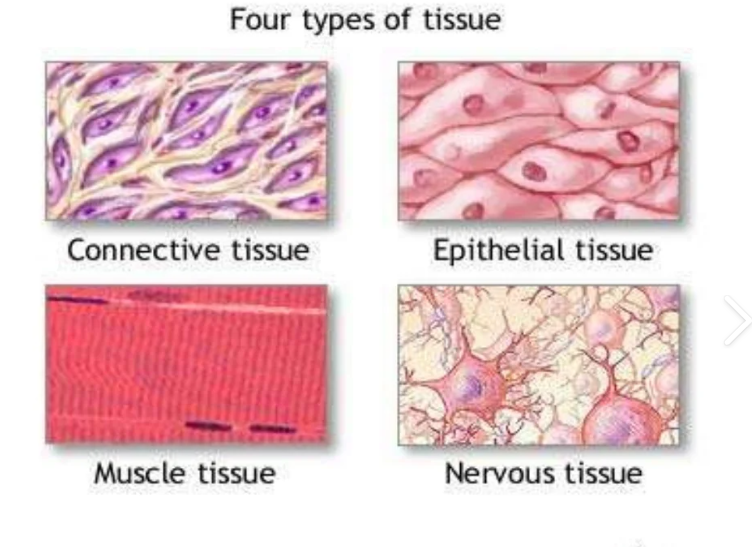
Nervous tissue
i. Conducts electrical signals/ actions potential
ii. Allows communication within the body
iii. Made of neurons and neuroglial cells
iv. Ex: brain, spinal cord, and nerves
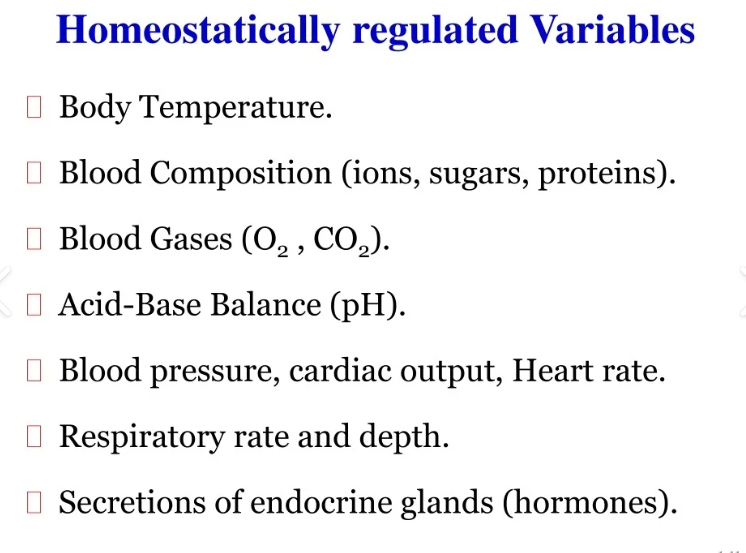
Regulated variables
factors that the body monitors and controls
Examples include body temperature, blood glucose level, blood pressure, pH, and oxygen concentration
kept within specific ranges constantly
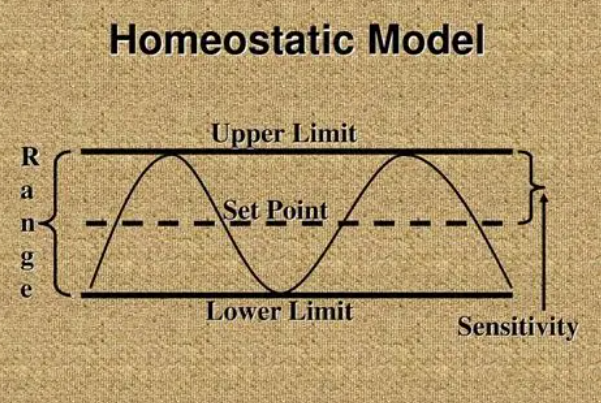
Set point
constant balance range in homeostasis that the body tries to maintain
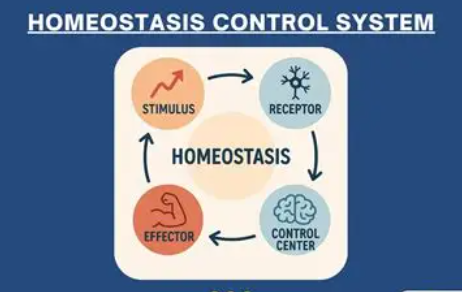
Control systems
mechanisms that maintain homeostasis
Receptors, Control centers, and Effectors
Negative feedback Example
i. If your body temperature rises → your body sweats to cool you down
If it drops → you shiver to warm up
ii. High blood sugar → insulin released → sugar decreases → normal restored
Positive feedback Example
i. Contractions start → oxytocin released → stronger contractions → more oxytocin
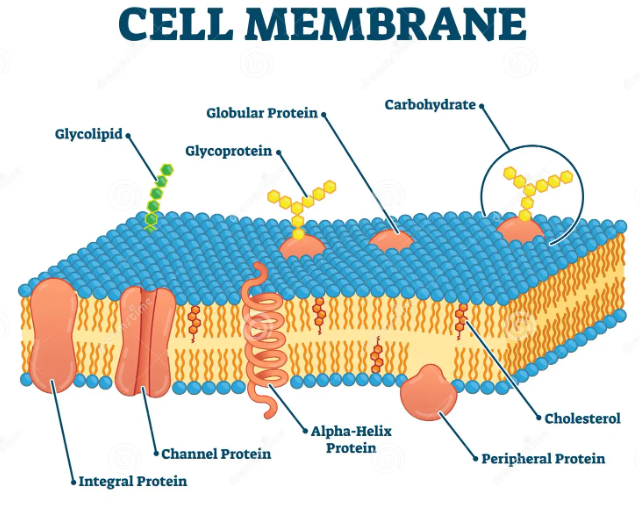
Phospholipid bilayer |
Forms a selective barrier; hydrophilic heads face out, hydrophobic tails face in (nonpolar/barrier) |
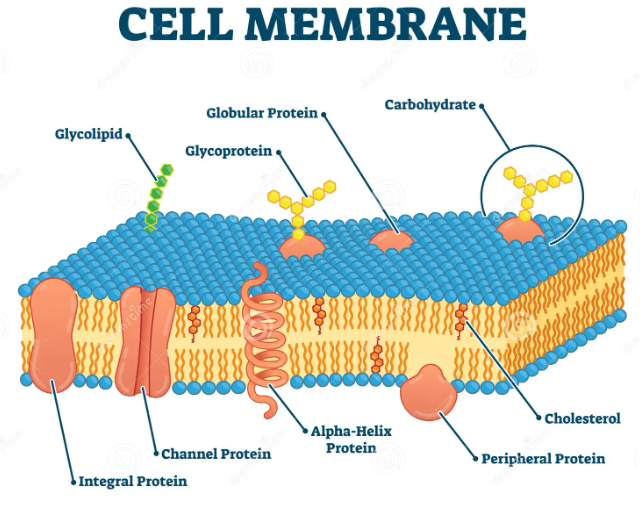
Cholesterol (cell membrane) |
Stabilizes membrane; controls fluidity |
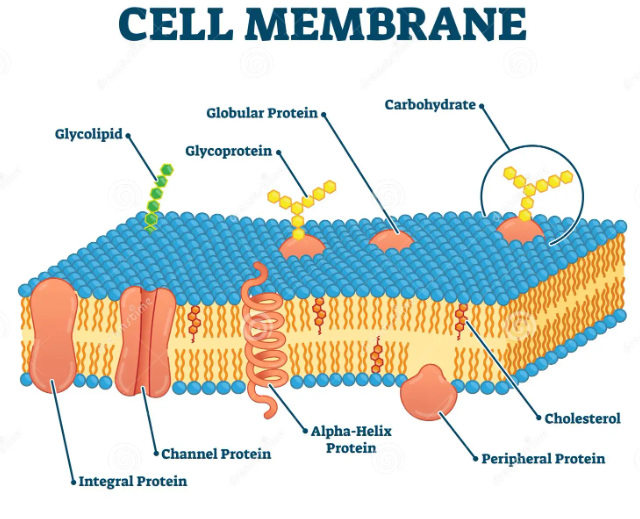
Integral (transmembrane) proteins |
Transport, receptors, channels |
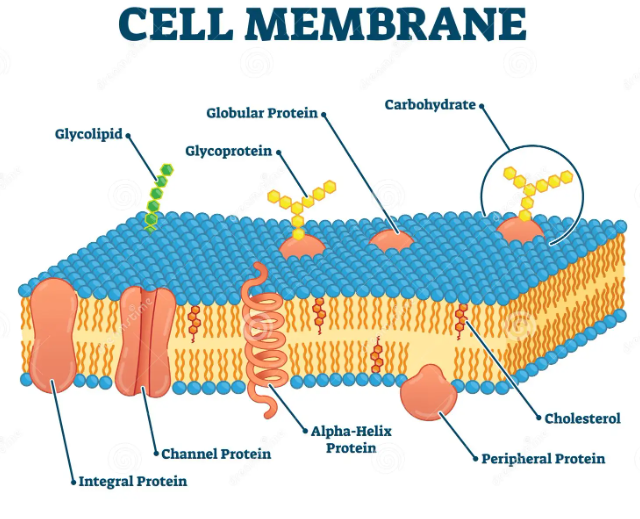
Peripheral proteins |
Support, enzymes, signaling |
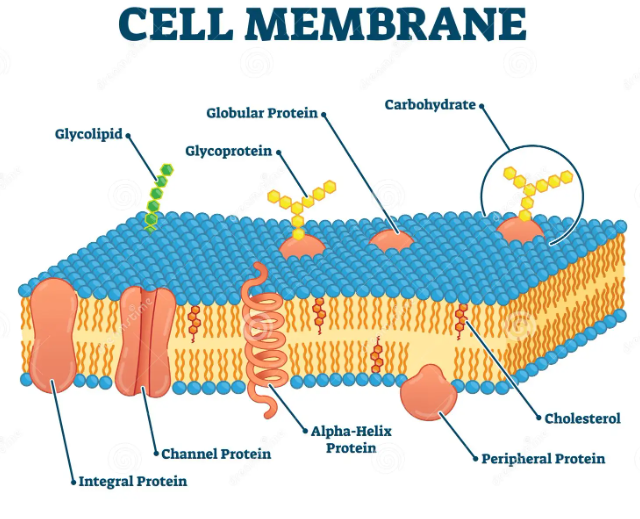
Glycoproteins |
Cell recognition, immune response |
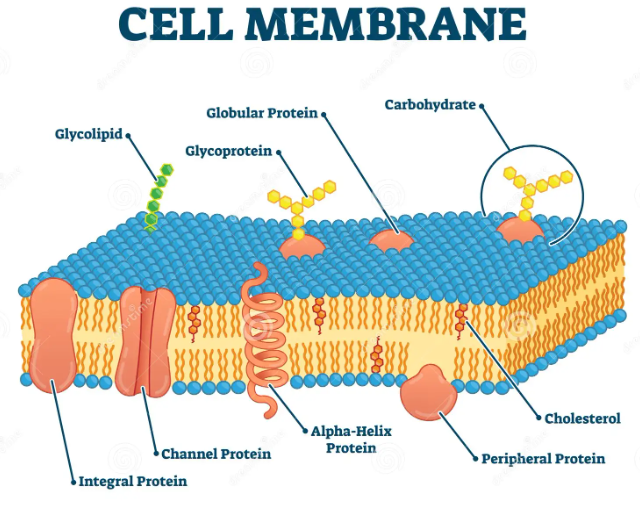
Glycolipids
Cell identity and communication |
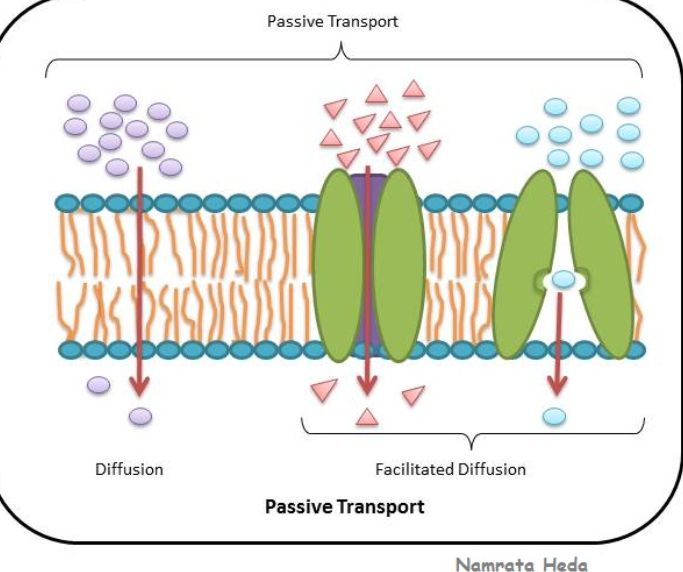
Passive transport
(no ATP, down gradient)
i. Simple diffusion
ii. Facilitated diffusion
iii. Osmosis
Filtration
Active transport types
(requires energy)
i. Primary active transport
ii. Secondary active transport
iii. Vesicular transport (endocytosis, exocytosis)
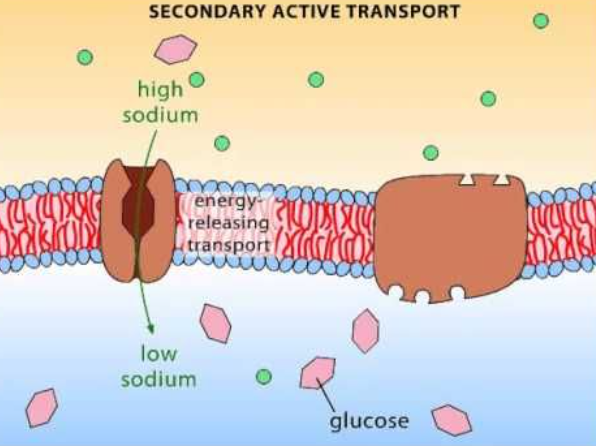
Secondary active transport
i. Uses energy stored in ion gradient
ii. Types:
iii. Symport (same direction)
iv. Antiport (opposite direction)
Vesicular transport
i. Endocytosis (phago-, pino-, receptor-mediated)
ii. Exocytosis
explain Fick’s law of diffusion
Rate of= Concentration gradient(membrane permeability)/ distance( molecular weight)
The rate of diffusion depends on:
a. Concentration gradient (steeper = faster)
b. Surface area (larger = faster)
c. Membrane permeability
d. Distance/thickness (thicker = slower)
describe the various fluid compartments of the body and the relative amounts of water found within each.
|
|
|
|
|
|
|
|
|
|
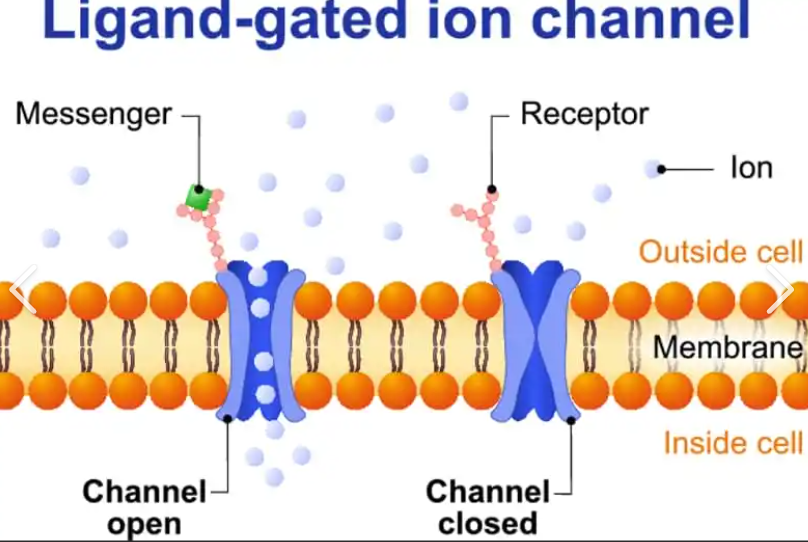
a. chemically regulated (ligand regulated)
i. Requires a specific chemical ligand to activate and open or close the channel
ii. Ligan can be a neurotransmitter, hormone, or signaling hormone
Ex: Synapses, Acetylcholine
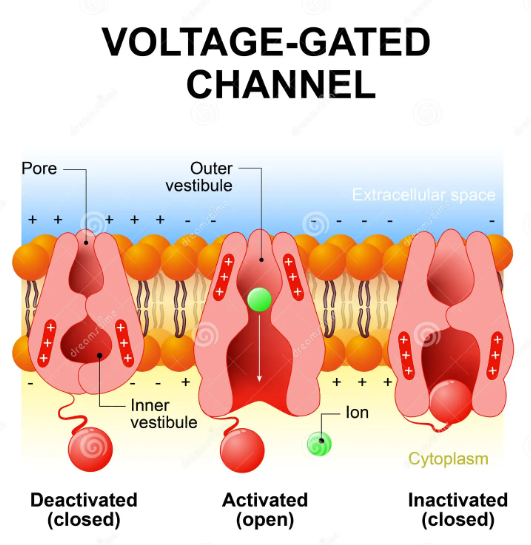
a. voltage-regulated channels
i. Requires a change in membrane electrical charge to cause channels to open or close
ii. Depolarization or repolarization in cell membrane
iii. No chemical binding required.
iv. Ex: Axons and muscle cells
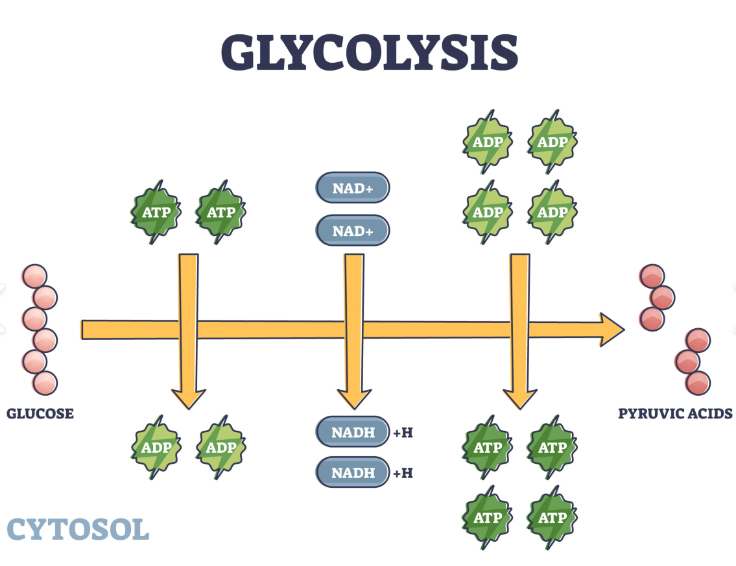
Glycolysis
occurs in the cytosol and produces a net gain of 2 ATP while breaking glucose into pyruvate.
does not require oxygen.
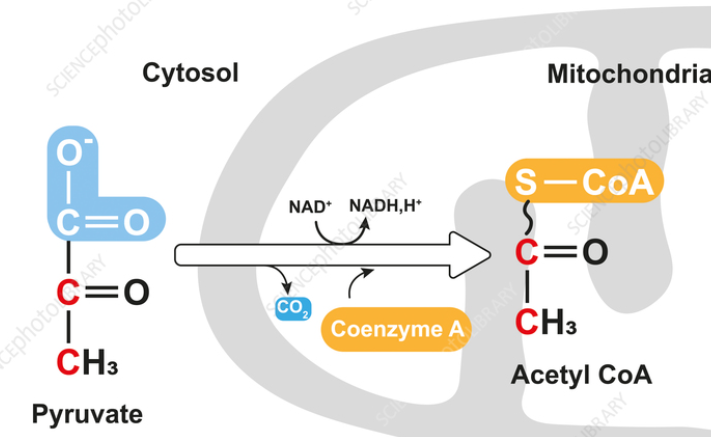
Pyruvate oxidation |
takes place in the mitochondrial matrix; it prepares pyruvate for the Krebs cycle but does not produce ATP directly
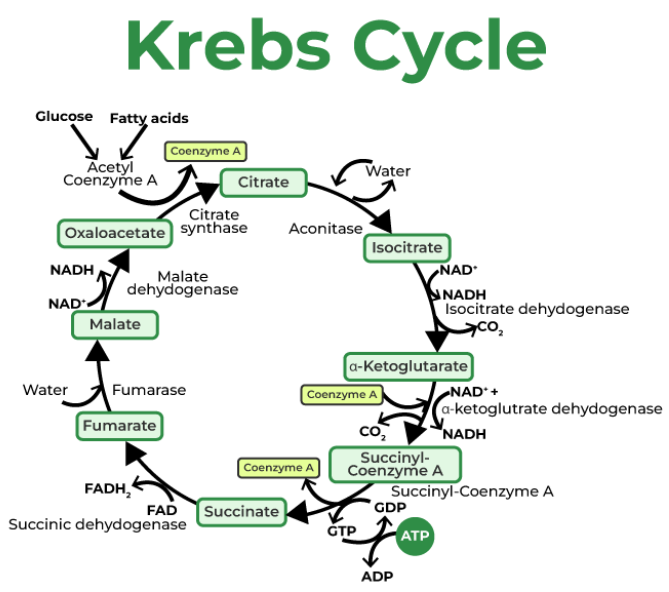
Krebs (Citric Acid) Cycle |
also in the mitochondrial matrix, generates 2 ATP along with high-energy electron carriers
require oxygen (directly or indirectly)
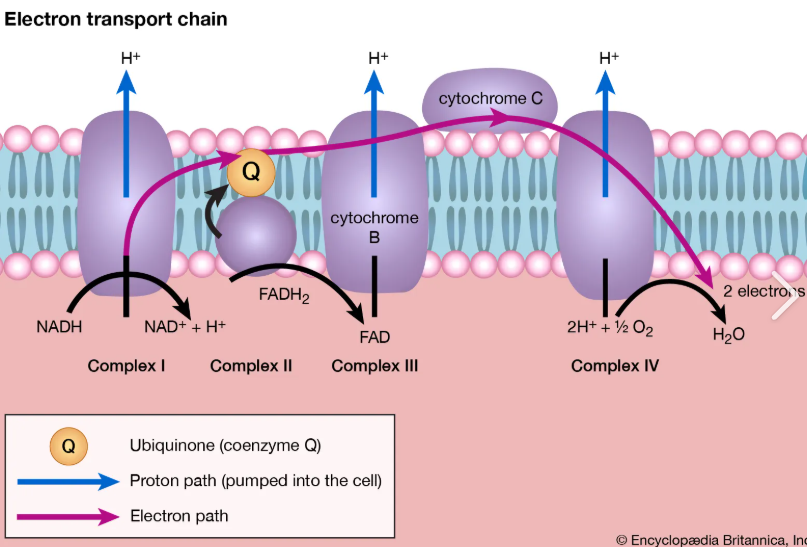
electron transport chain
located on the inner mitochondrial membrane, use these electron carriers to produce the majority of ATP (about 26–28 ATP).
require oxygen (directly or indirectly)
 Note
Note  Flashcards (64)