Clinical Decision Making 1
 Studied by 0 people
 Call with Kai
 Learn
Learn Practice Test
 Spaced Repetition
 Match
Match Flashcards
 Knowt Play
1/26

There's no tags or description
Looks like no tags are added yet.
Name | Mastery | Learn | Test | Matching | Spaced | Call with Kai |
|---|
No analytics yet
Send a link to your students to track their progress
27 Terms
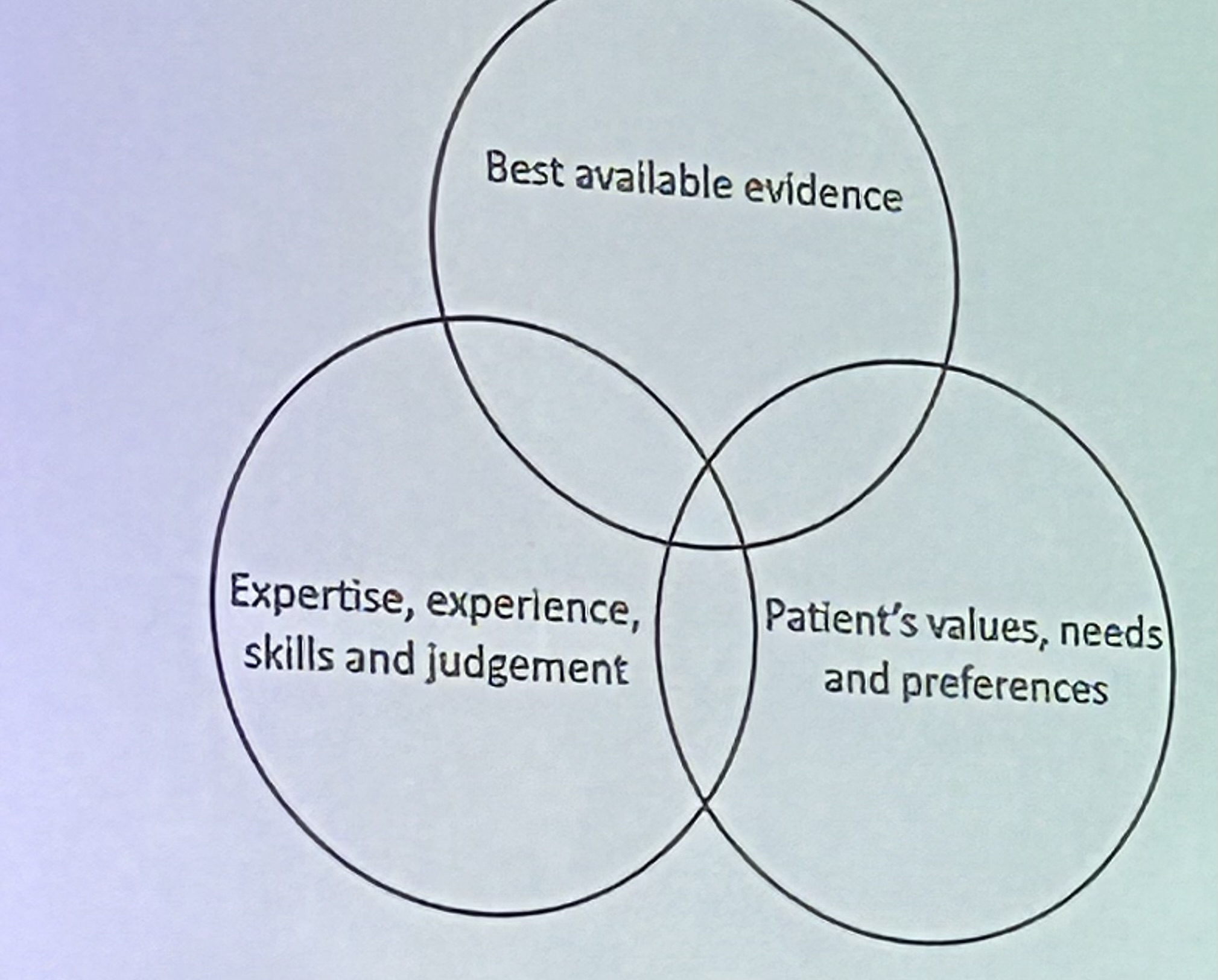
What factors affect clinical decisions?
Patient preferences, Patient factors/contextual factors - age, gender, ethnicity
Guidelines/best available evidence
Expertise, experience, skills and judgement
What are guidelines based on?
Best available evidence
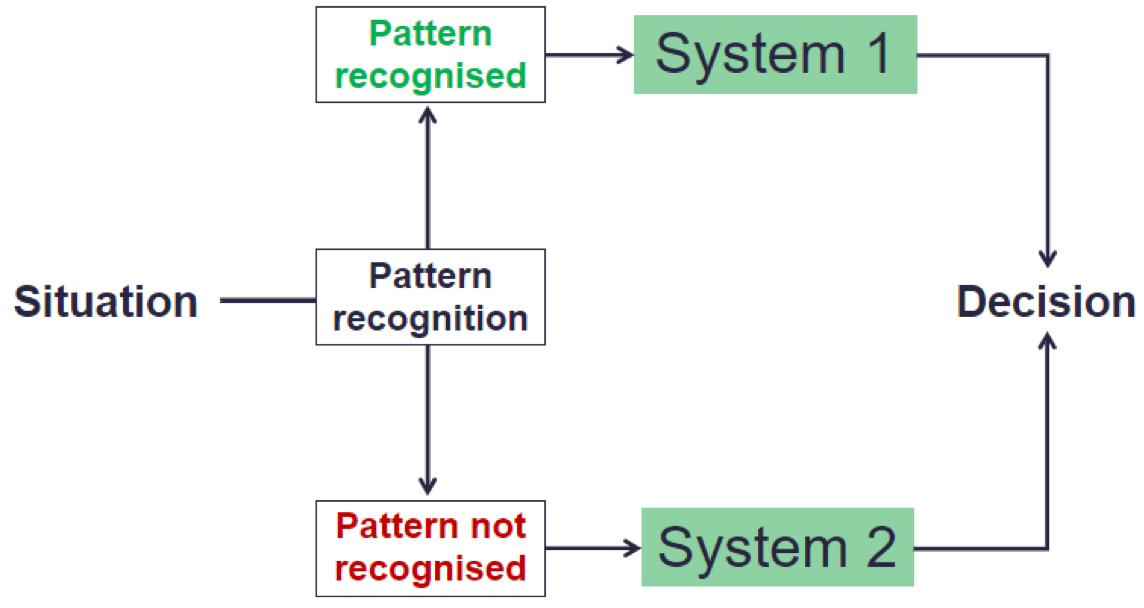
What is the type of thinking focused on pattern recognition and is quick?
System 1
What is the type of thinking focused on not recognising patterns, takes longer?
System 2
What is a diagram showing the dual process theory?
What can be an issue with system 1?
Can be wrong/infallible - if learnt pattern is wrong, decision made as a result is also wrong
Why is evidence needed?
Humans are biased!
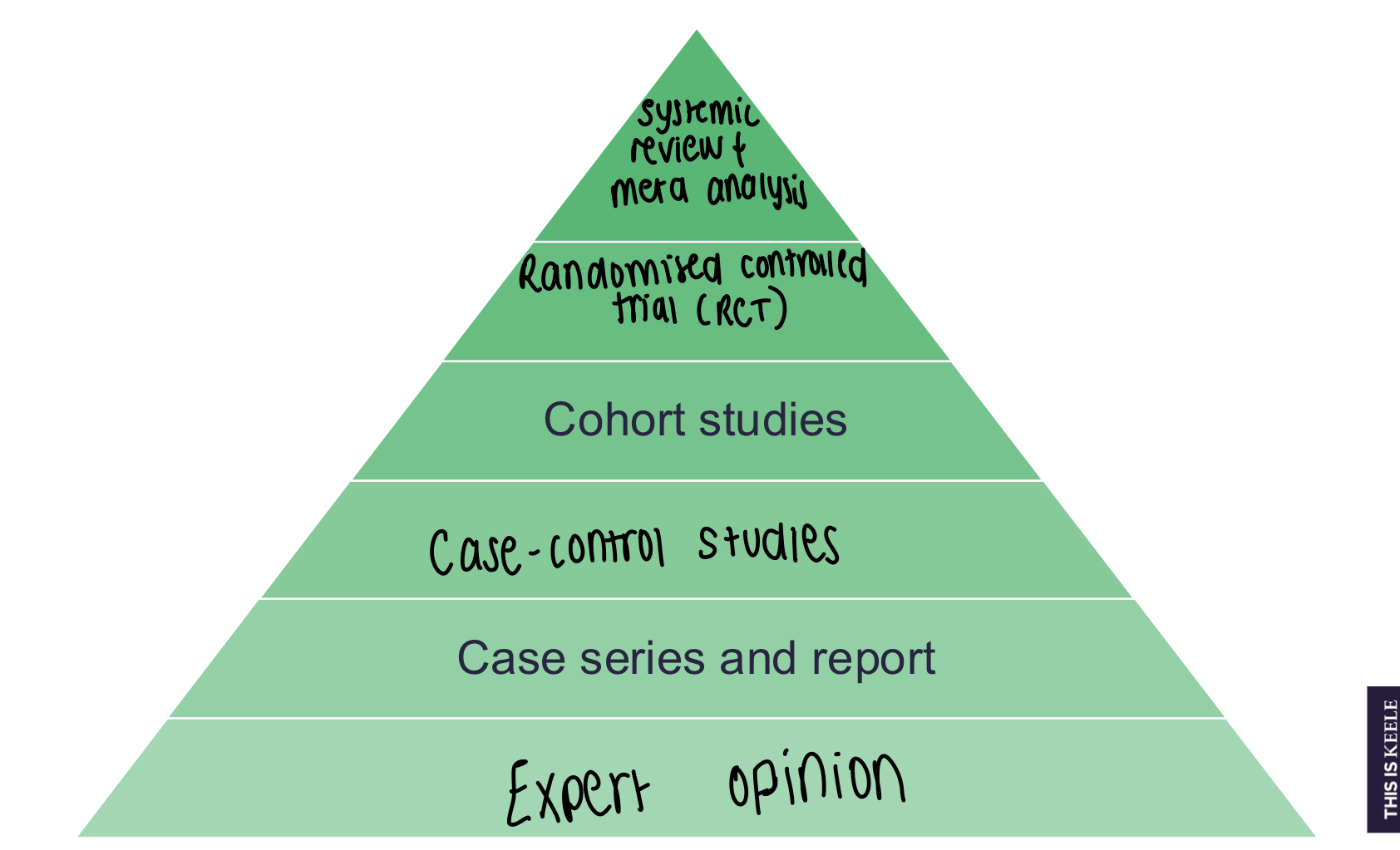
What is the diagram showing a traditional hierarchy of evidence?
What are some levels of organisation that produce guidelines?
Local, national and international
What do guidelines summarise?
Best available evidence and collate and appraise
What can be some benefits of guidelines?
Can decrease mortality, complications etc
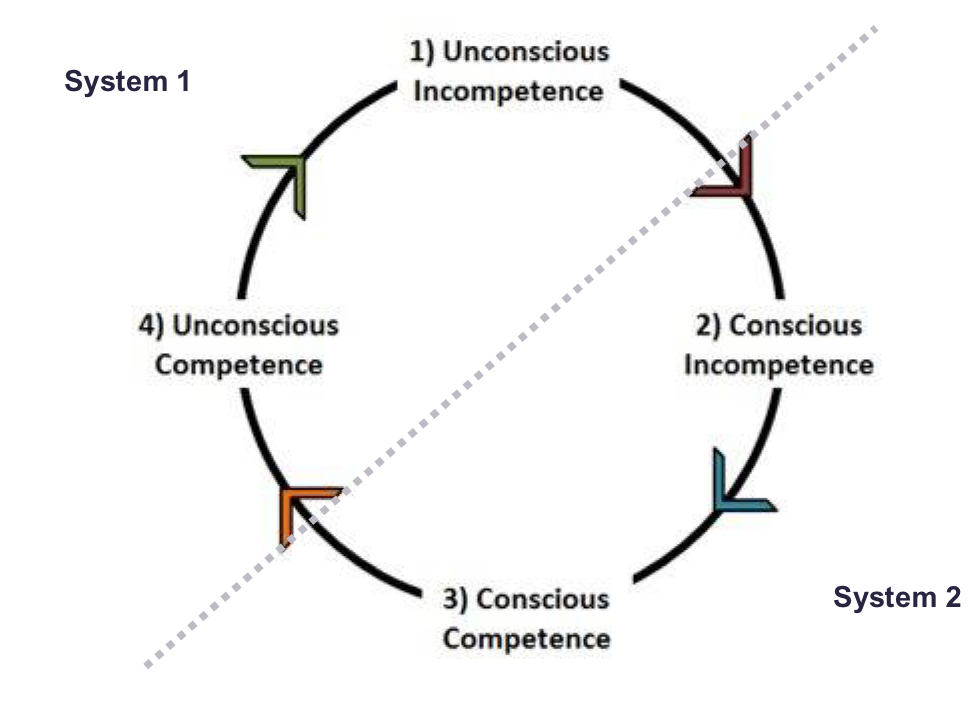
What is the diagram showing the different levels of competence and system 1 and 2 thinking?
Conscious incompetence - know you are not capable
Conscious competence - takes thought process, may find it challenging but thinking about it
Unconscious competence - know what you’re doing, feel at ease
Unconscious incompetence - DANGEROUS!! Not aware of what you’re doing e.g., not realising there is new guidelines
What is the term related to staying up to date when you review an occasional update on the conditions you see most frequently, set aside for 3-4 hours, a few times a year?
Hot-synching
What is the term related to staying up to date that uses a warning system to new developments which alerts you to changes that might affect your practice e.g., from NICE?
Foraging
What are some ways of staying up to date?
Hot-synching, foraging, using IT systems (For interactions, etc)
Why do we not just rely on guidelines?
Randomised trials can exclude patients with comorbidities
Guidelines describe evidence for single conditions, real patients have several comorbidities
Individual patients may have different values/preferences from clinician guidelines
Guidelines may not cover all aspects of care
What are surrogate markers?
Something that looks positive e.g., decreased LDL, increased HDL
What is the outcome related to factors related to disease e.g., HDL, LDL?
Disease orientated outcome
What is the outcome related to patients?
Patient related outcome
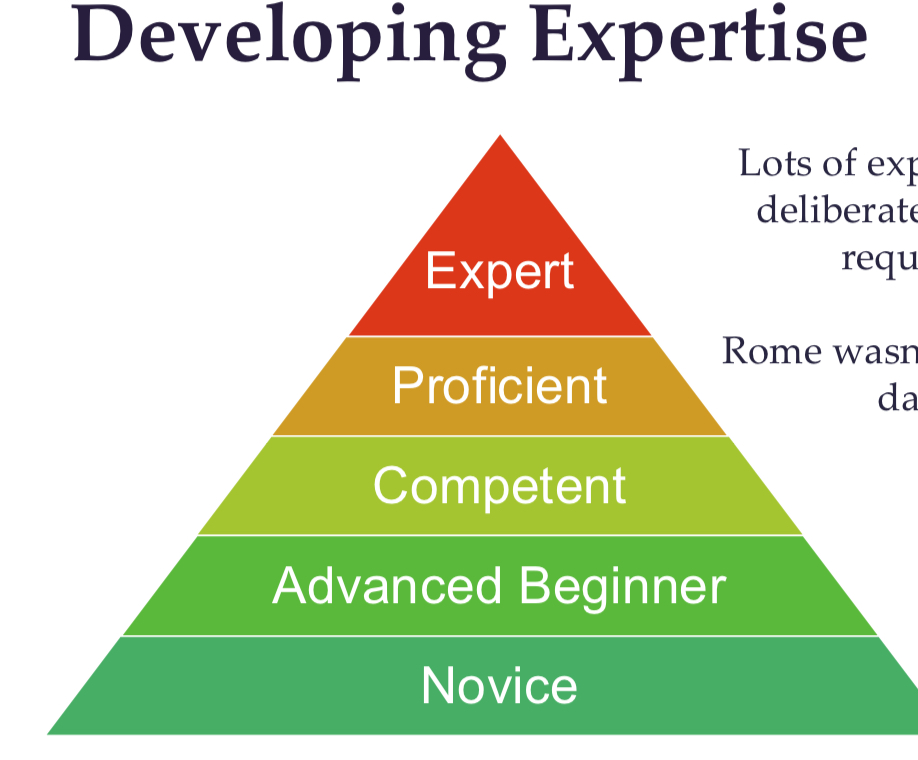
What is a diagram showing developing expertise levels?
Needs lots of experience and deliberate practice to reach expert
What are 3 things that patients want in relation to healthcare?
Good interpersonal skills - communication, empathy
Easy access to care, including convenient appointments with a familiar clinician
Involvement in decision making
What are at least 2 sources of expertise in a consultation?
pharmacist/healthcare professional and patient
What expertise may a pharmacist offer in a consultation?
Diagnosis, prognosis, management options, outcome probabilities
What expertise may a patient provide in a consultation?
Experience of illness, life circumstances, value and preferences, attitude to risk
What is the term to describe a collaborative process that involves a person and healthcare professional working together to reach a joint decision about care and empowers the person to make decisions?
Shared decision making
What is shared decision making based on?
Evidence and persons individual preferences, beliefs and values
What should you ensure a person understands in shared decision making?
Risks, benefits and possible consequences of different options through discussion and information sharing
 Note
Note  Flashcards (23)