BIO 190- Ch #10 *The Expression of Genetic Info via Transcription and Translation
 Call Kai
 Learn
Learn Practice Test
 Spaced Repetition
 Match
Match Flashcards
 Knowt Play
1/51

There's no tags or description
Looks like no tags are added yet.
Name | Mastery | Learn | Test | Matching | Spaced | Call with Kai |
|---|
No analytics yet
Send a link to your students to track their progress
52 Terms
Describe how transcription is different in bacteria compared to eukaryotes
Bacteria: mRNA is translated while it is being transcribed they are coupled
Eukaryotes: mRNA must be exported from nucleus to be transported
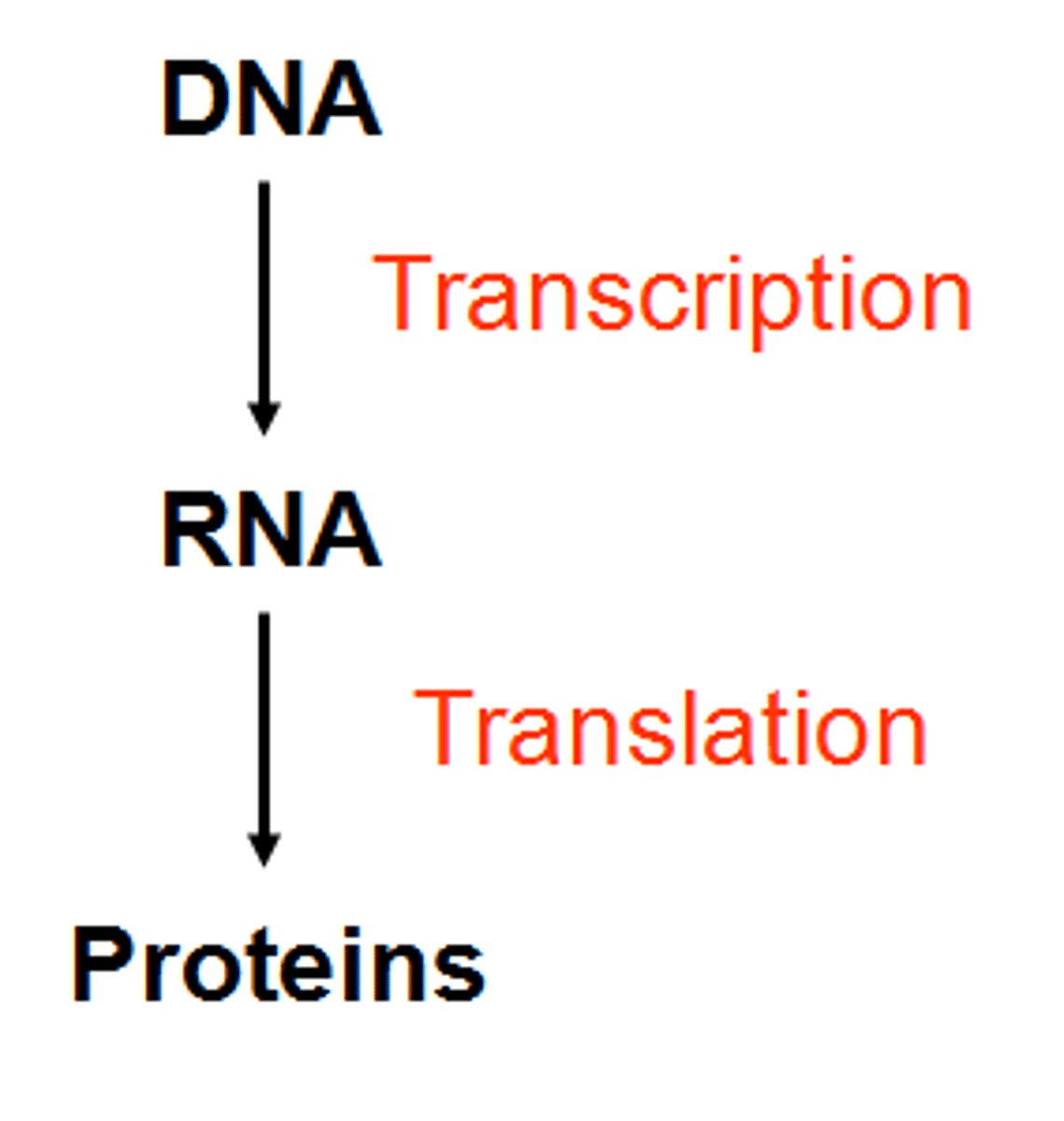
central dogma
DNA -> transcription--> RNA -> translation --> Protein
what do genes do
provide the blue print for the characteristics of organisms
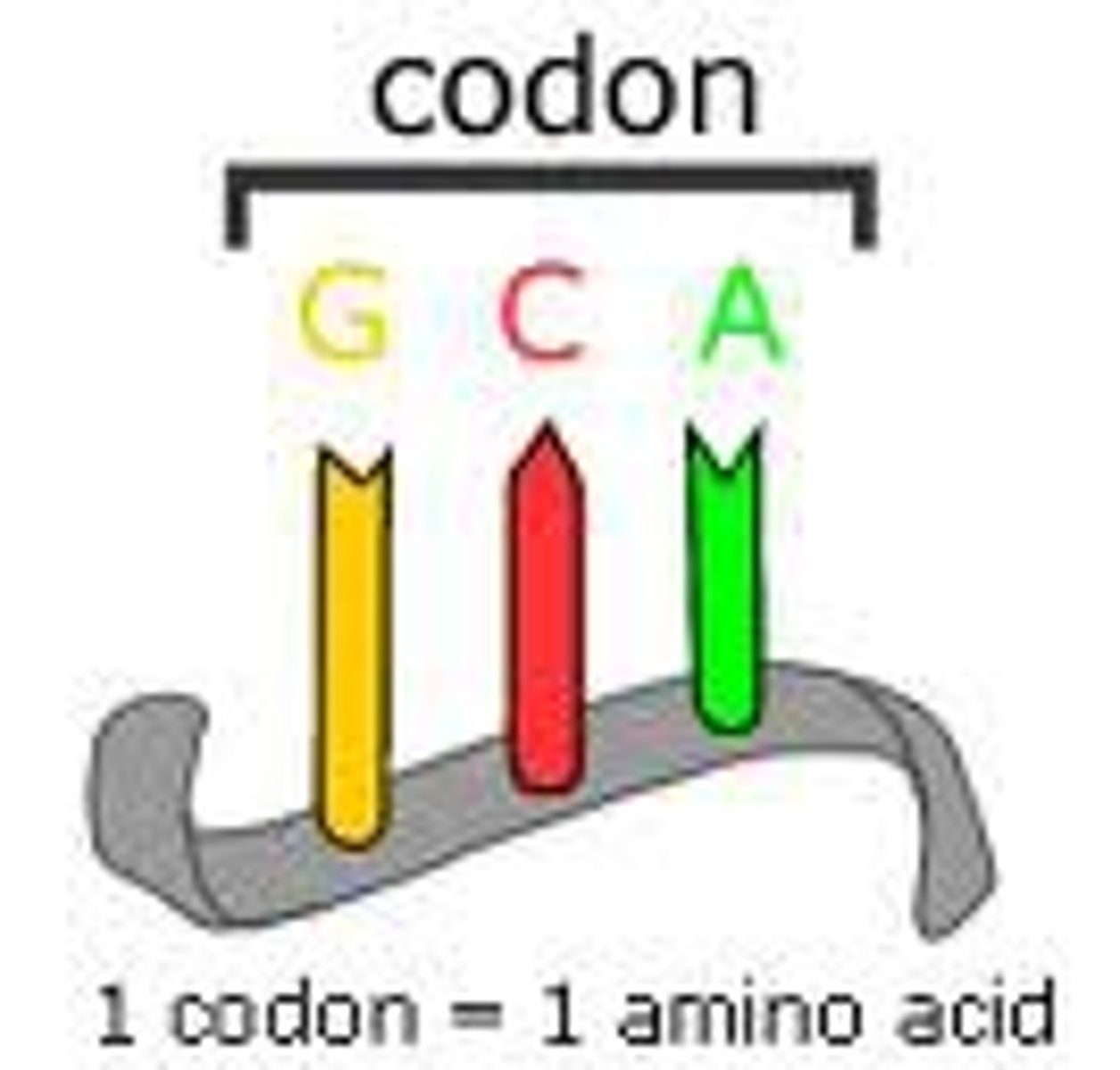
the code to make protein is embedded in the DNA in nucleotide sets called what
codons
mRNA
messenger RNA; type of RNA that carries instructions from DNA in the nucleus to the ribosome
Transcription
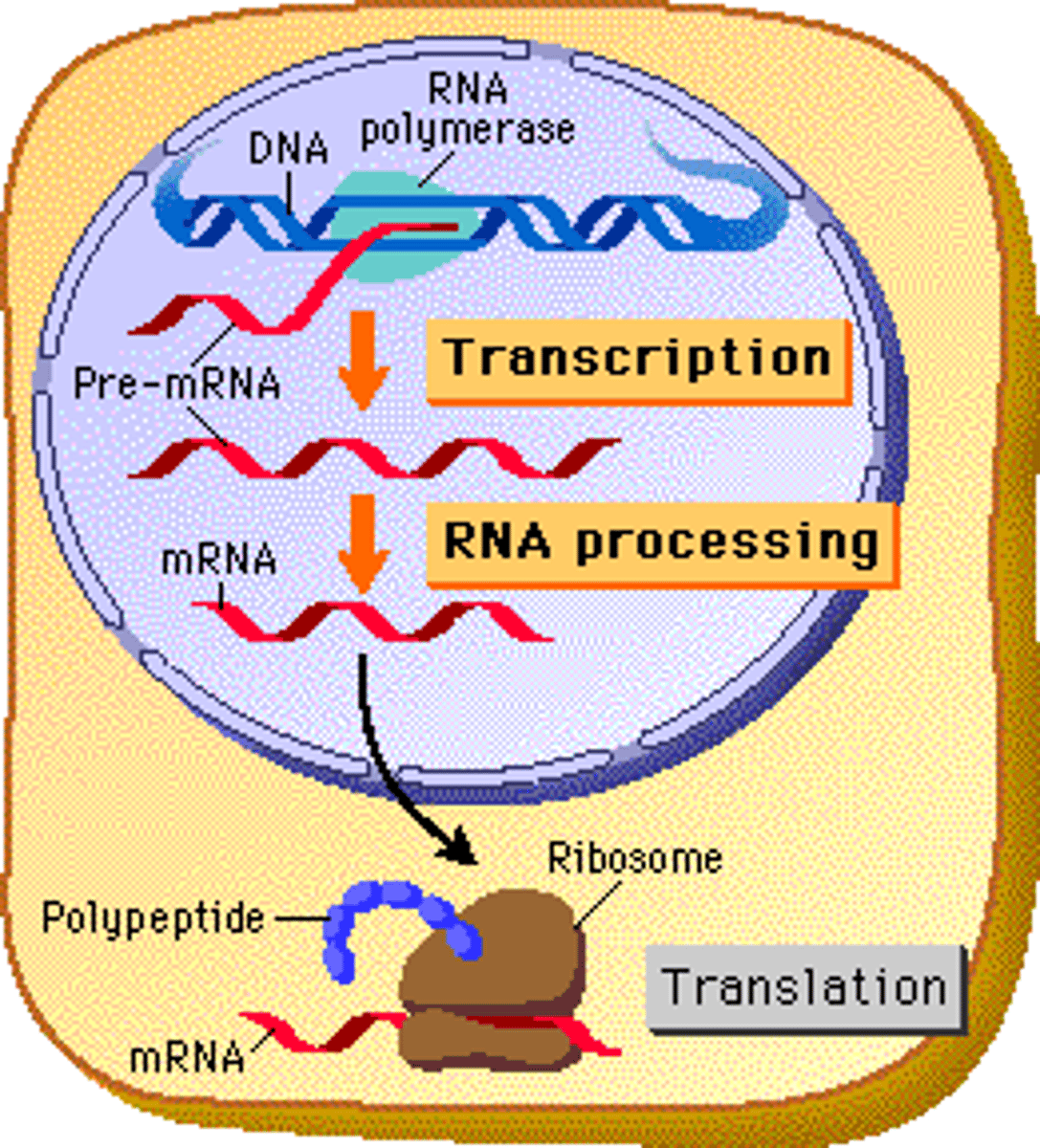
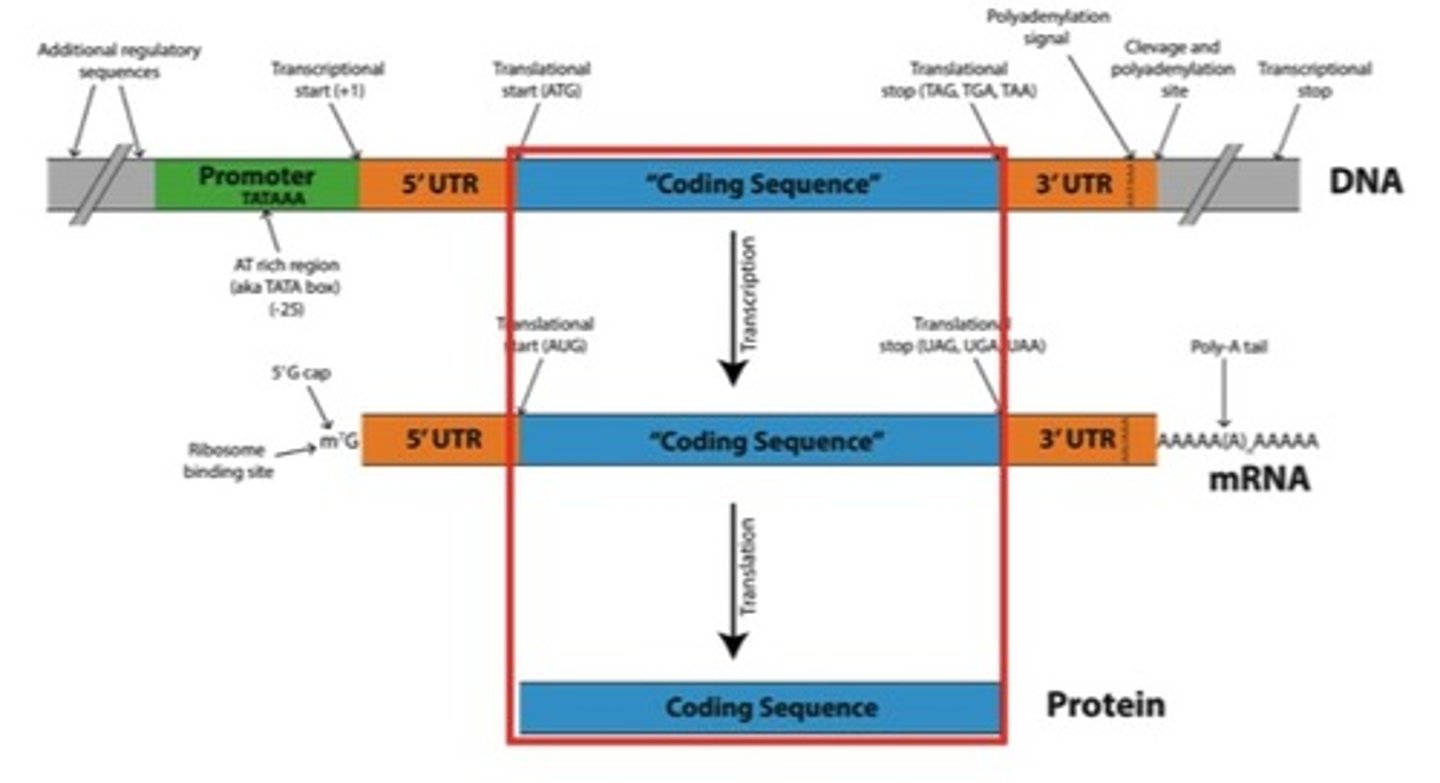
the process of creating mRNA from a DNA template
DNA serves as the template
RNA polymerase reads DNA __________' and builds mRNA _________', and _______ replaces thymine in mRNA.
RNA polymerase reads DNA 3' to 5' and builds mRNA 5' to 3', and uracil replaces thymine in mRNA.
what strand does mRNA use and what does it ignore
The DNA strand that is used as a template for mRNA synthesis is called the template strand
The DNA strand that is not used is the coding strand
mRNA is _____________ and _________ to the bottom DNA strand
complementary and antiparallel
transcription vs translation
transcription: a gene in the DNA is copied into messenger RNA (mRNA) inside the nucleus. This mRNA acts like a message that carries the instructions for making a protein.
translation, the mRNA travels to a ribosome in the cytoplasm, where it is read in groups of three bases called codons. Each codon tells the ribosome which amino acid to add next, and the amino acids are linked together to form a protein
transcription writes the message, and translation builds the protein.
what is transcription
- DNA is copied into mRNA
- RNA polymerase binds to a a gene on DNA and builds its complimentary strand (A--> U) (C-->G)
- In eukaryotes RNA processing modifies the mRNA by removing the introns, keeping the exons (splicing them together)
- 5 cap and poly tail are added for protection
-mRNA goes off the cytoplasm
Describe what allows the DNA to be transcribed into RNA
promotor:
Transcribed region:
Terminator:
Regulatory sequence:
promotor: where RNA polymerase binds
Transcribed region: info that specifies an amino acid sequence
Terminator: signals the end of transcription
Regulatory sequence: determines rate that RNA polymerase binds
Transcription occurs in what 3 stages
1. Initiation: promotor is recognition site, RNA polymerase binds, DNA strands are separated
2. Elongation: RNA polymerase reads template strand 3' to 5'
RNA polymerase synthesizes transcript 5' to 3'
3. Termination: RNA polymerase reaches a terminator and dissociates
RNA polymerase reads template strand _________
RNA polymerase synthesizes transcript _____
3' to 5'
5' to 3'
template vs coding strand during transcription
template strand (bottom) is used to read by RNA pol in 3' to 5'
the coding strand (top) is ignored
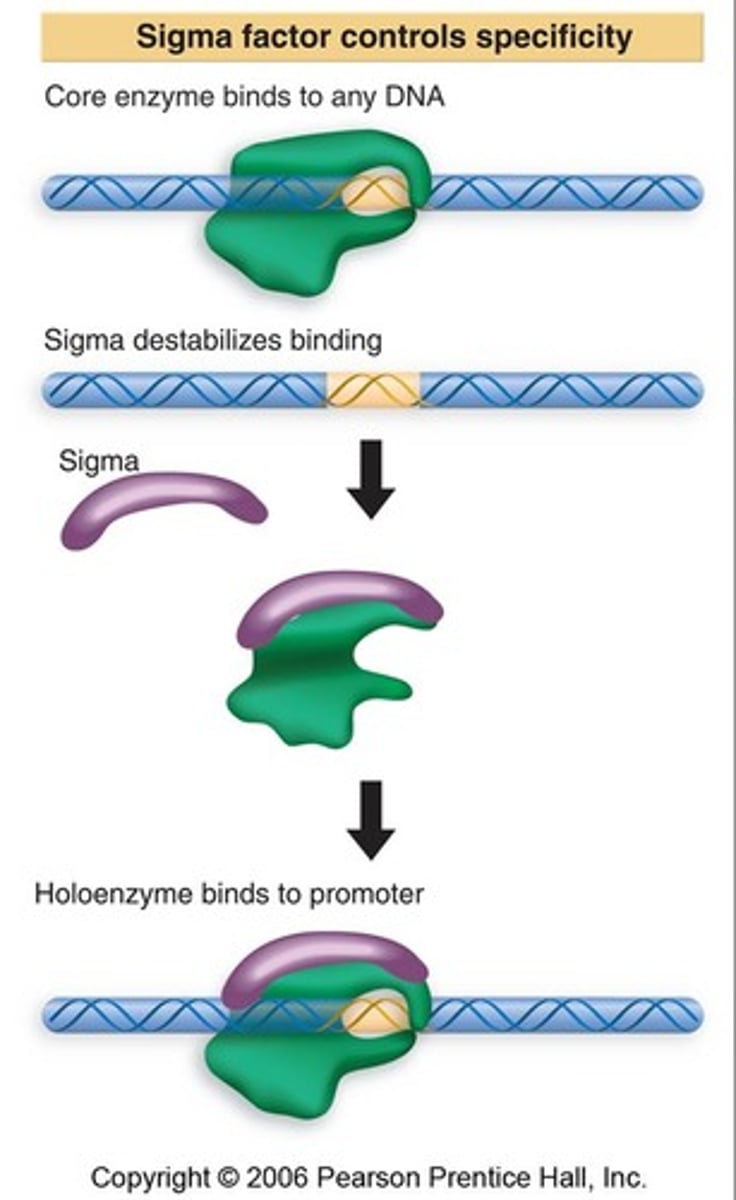
during transcription what helps RNA polymerase find its gene promotor
sigma factor
what strand does RNA polymerase "push away"
the coding strand (initiation)
after RNA polymerase clears the promotor what happens
the transcribed DNA zips back together
RNA polymerase is released and can go back to the promotor to transcribe again
mRNA vs coding strand
mRNA has the same sequence (5' to 3') and 5'-3' direction as the coding strand expect U replaces T
pre-mRNA must go through what 3 processes before exiting through a nuclear pore
1. splicing
2. capping
3. poly A tail
what is splicing of pre-mRNA
Removing non coding regions aka introns from RNA and seals exons together
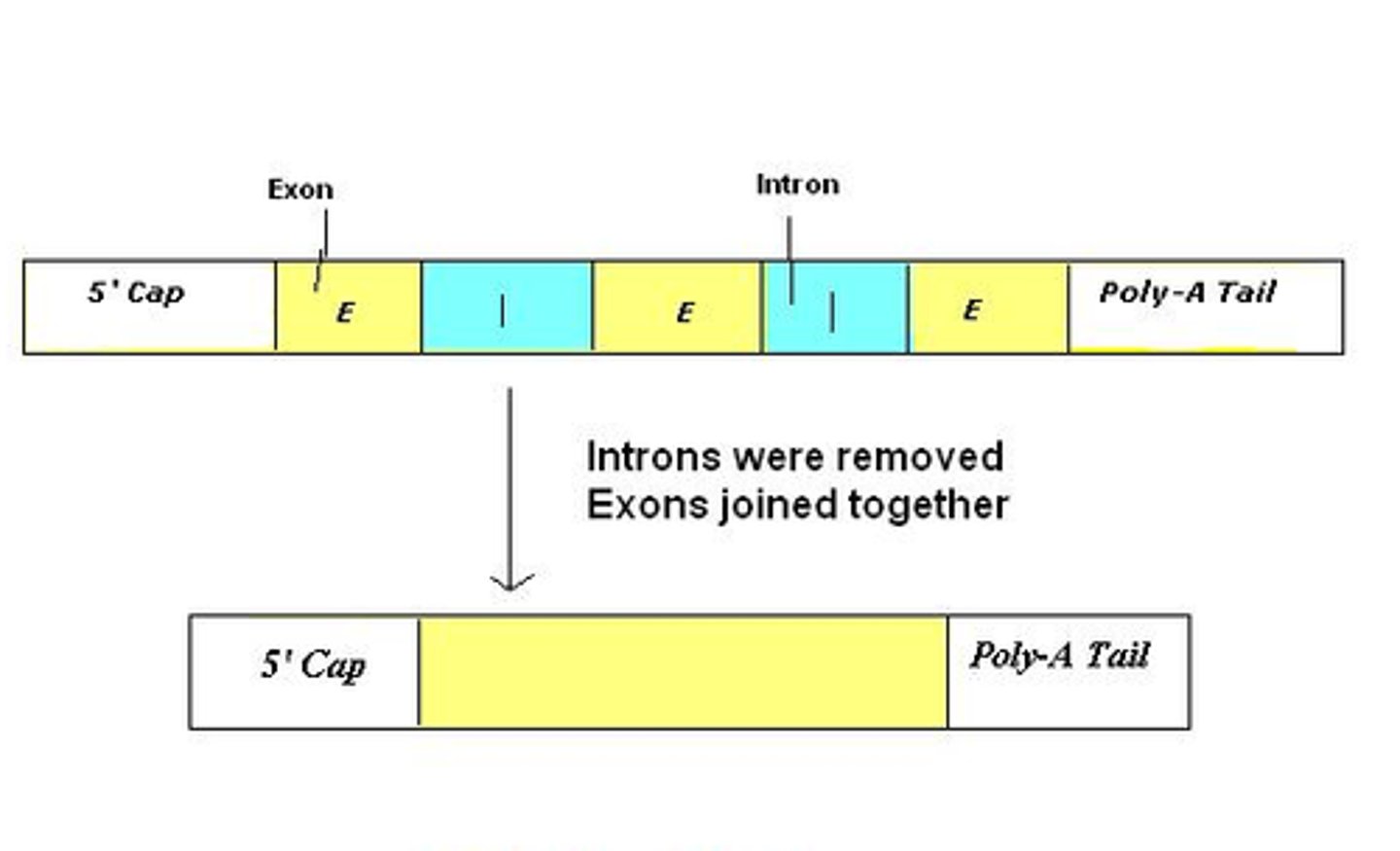
what is capping of pre-mRNA
when a modified form of guanine is attached to the 5' end
the 5' cap is recognized by a variety of proteins it is needed for mRNA to exit the nucleus and bind the ribosome
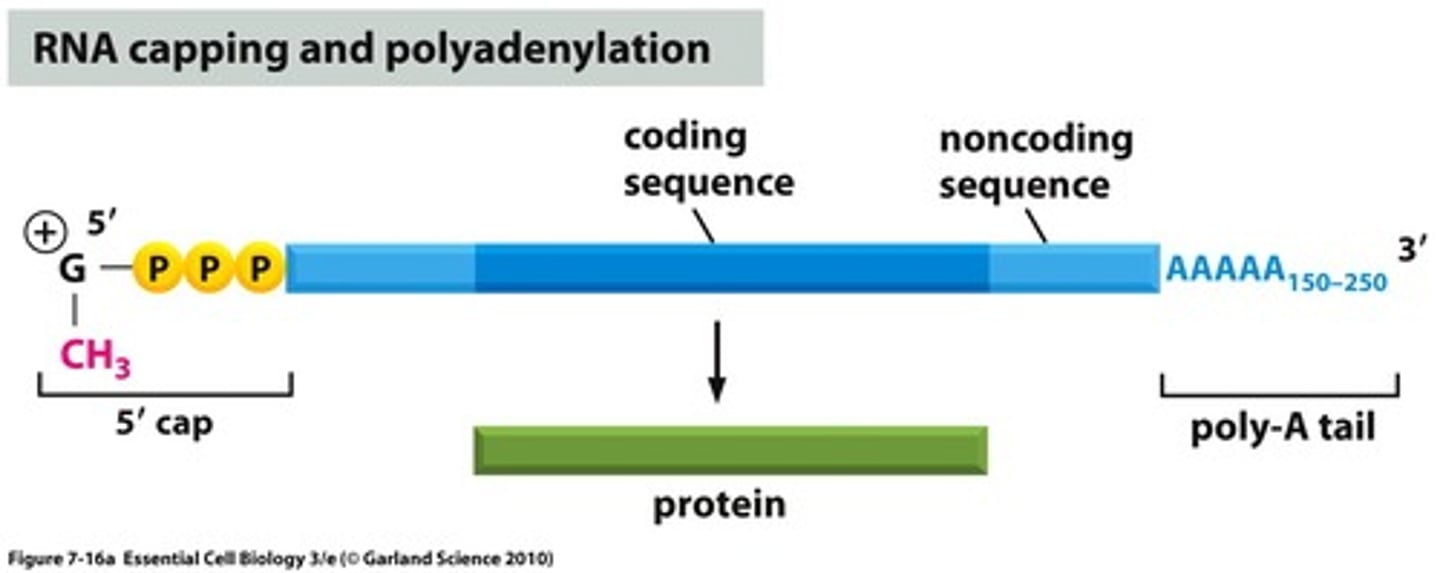
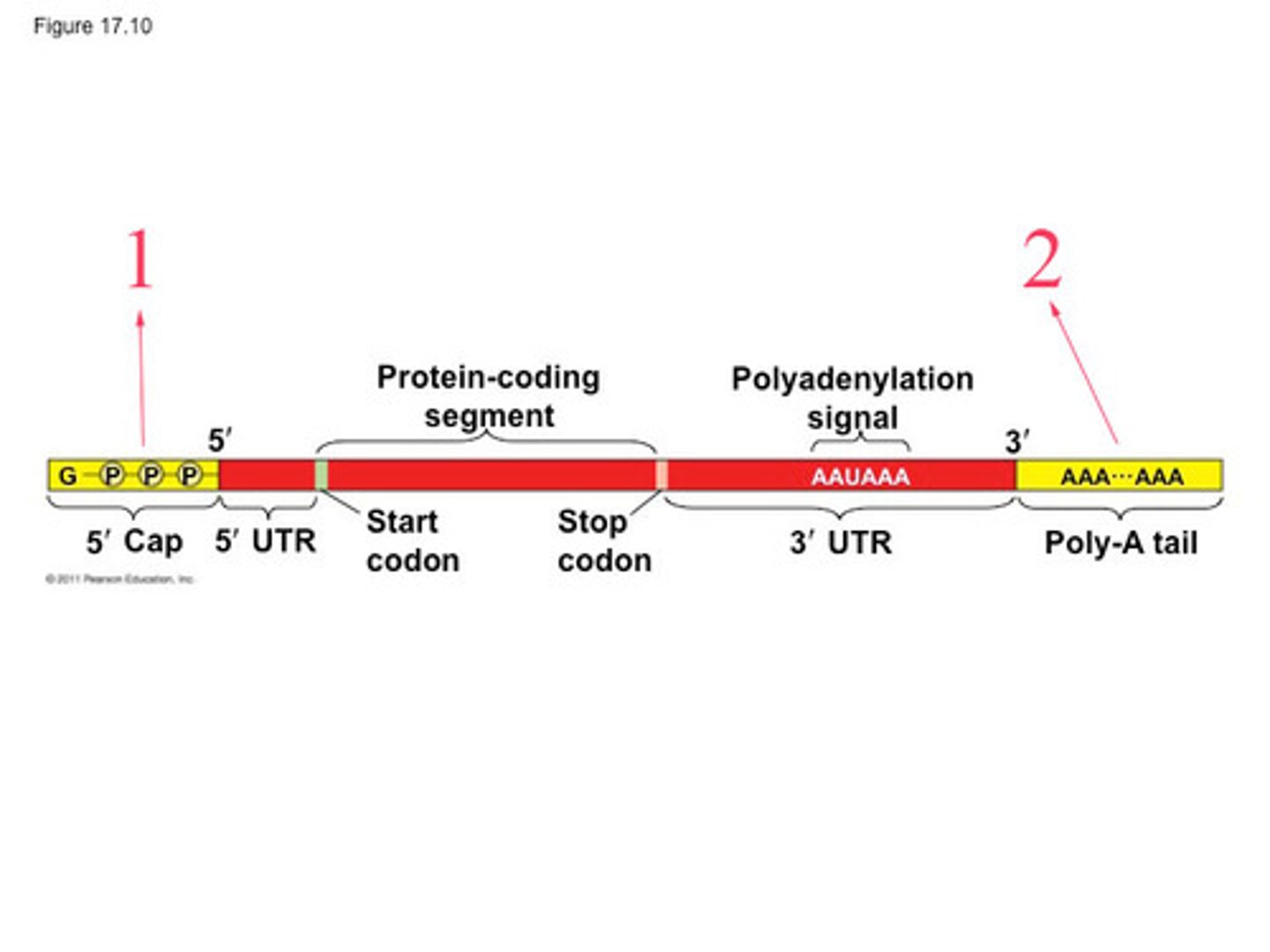
what is the poly A tail
added to the 3' end after transcription it increases the stability of the mRNA in the cytosol
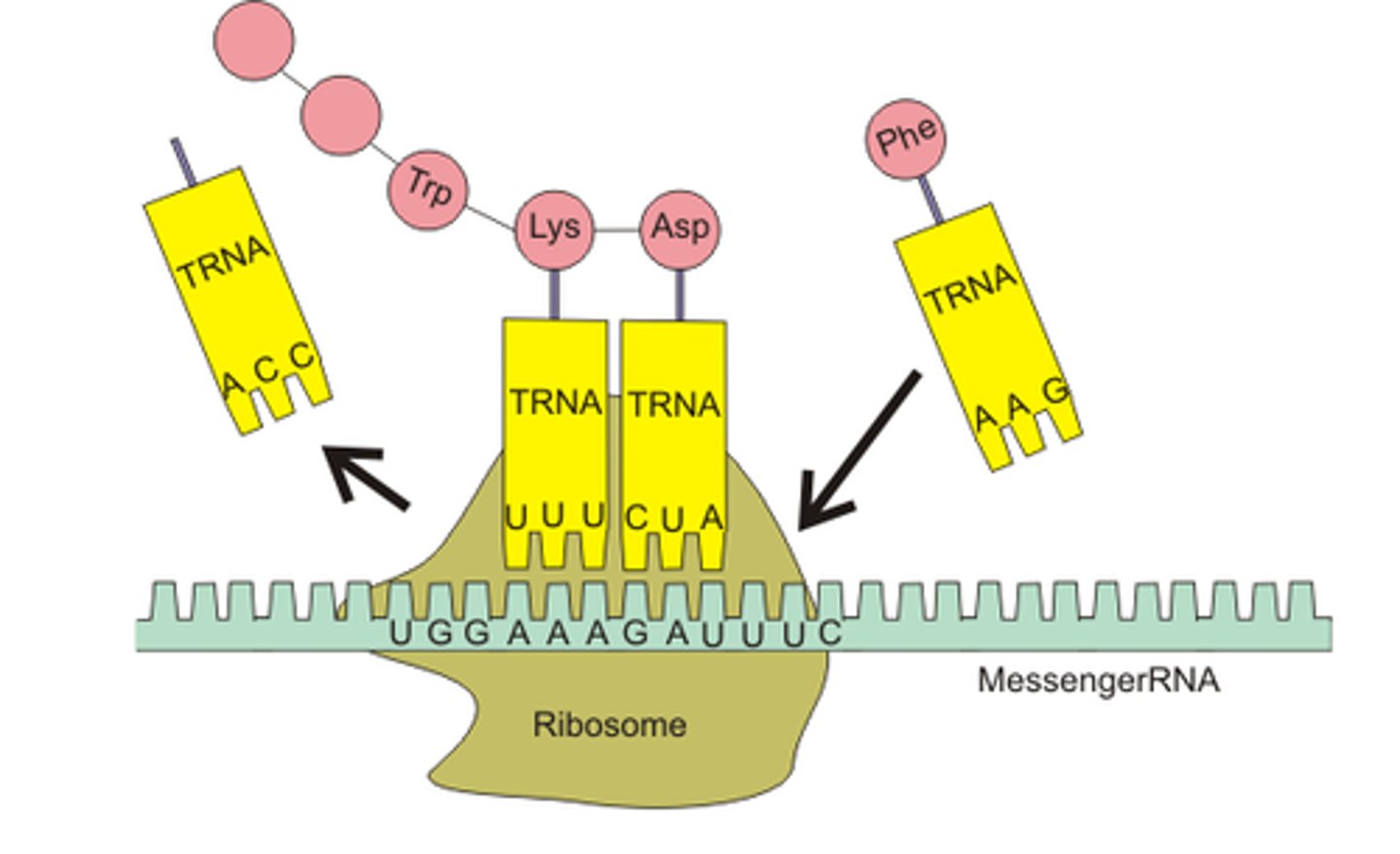
what is translation
the decoding of an mRNA message into a protein
what is the genetic code
specifies the relationship between the sequence of nucleotides in the mRNA sequence of amino acids in a polyepeptide, the code is read in groups of 3 (codons)
codons
The three-base sequence of nucleotides in mRNA
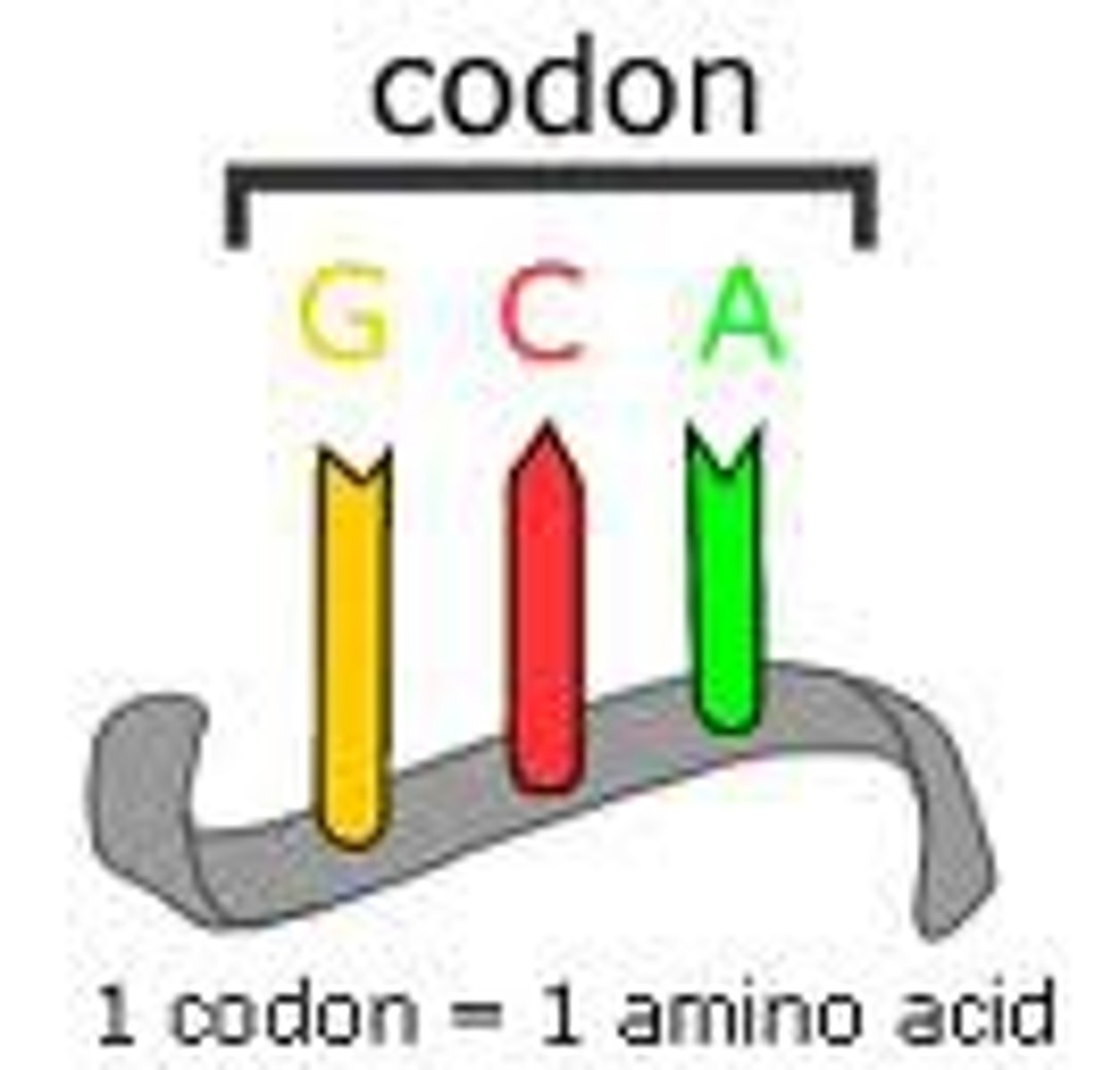
how many codons are there start vs stop
1 start and 3 stop
what does the redundantcy of codons mean
The redundancy of codons means that more than one codon can code for the same amino acid.
This redundancy helps protect against mutations, since a change in one base might still result in the same amino acid being made.
what are 4 key components during translation
ribosomal binding site, start codon, coding sequence, and stop codon
what is the start codon
AUG
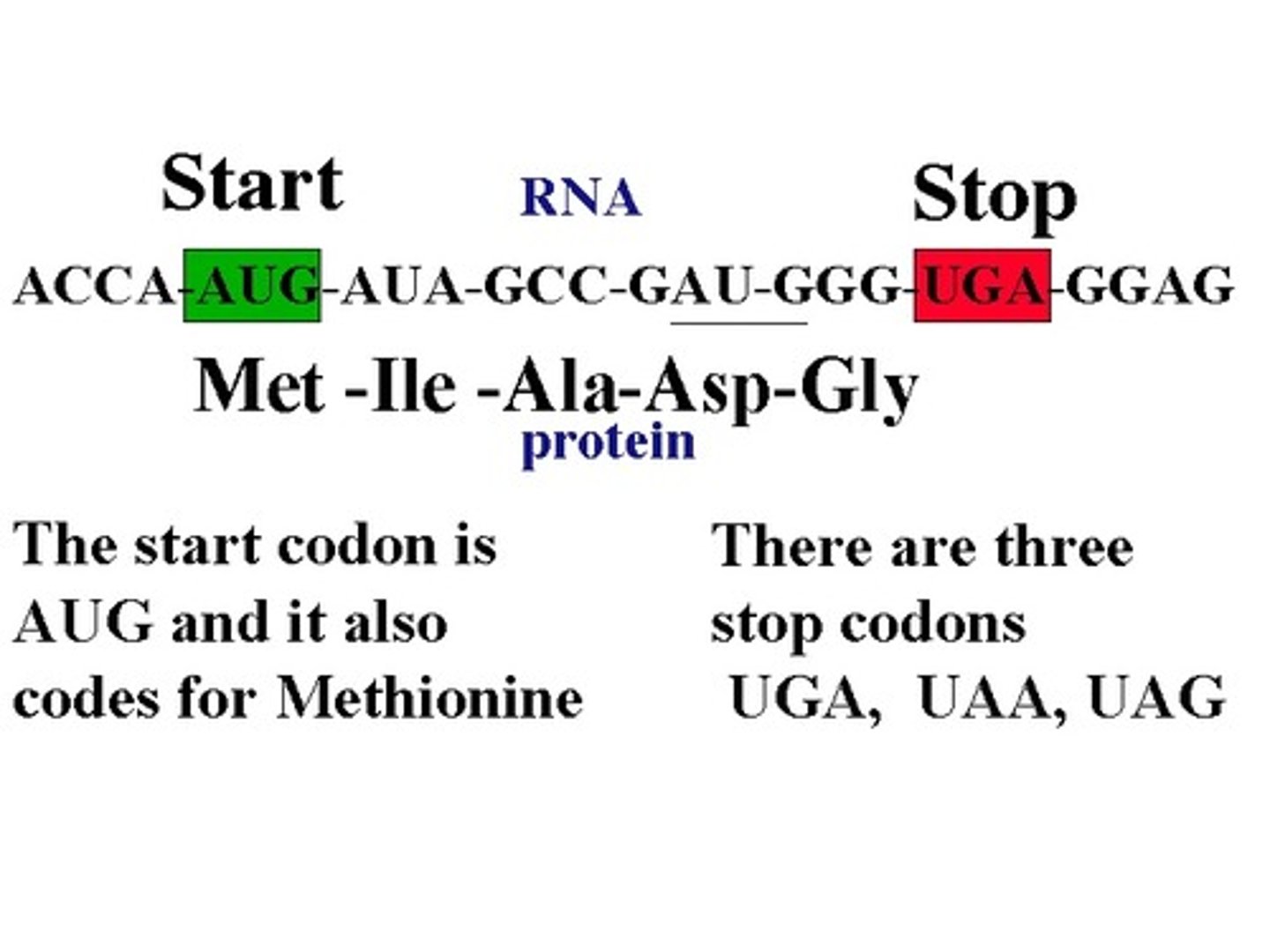
what is the coding sequence
the sequence of nucleotides in mRNA that encode amino acids. The start codon is the start of the coding sequence and the stop codon is the end of the coding sequence.
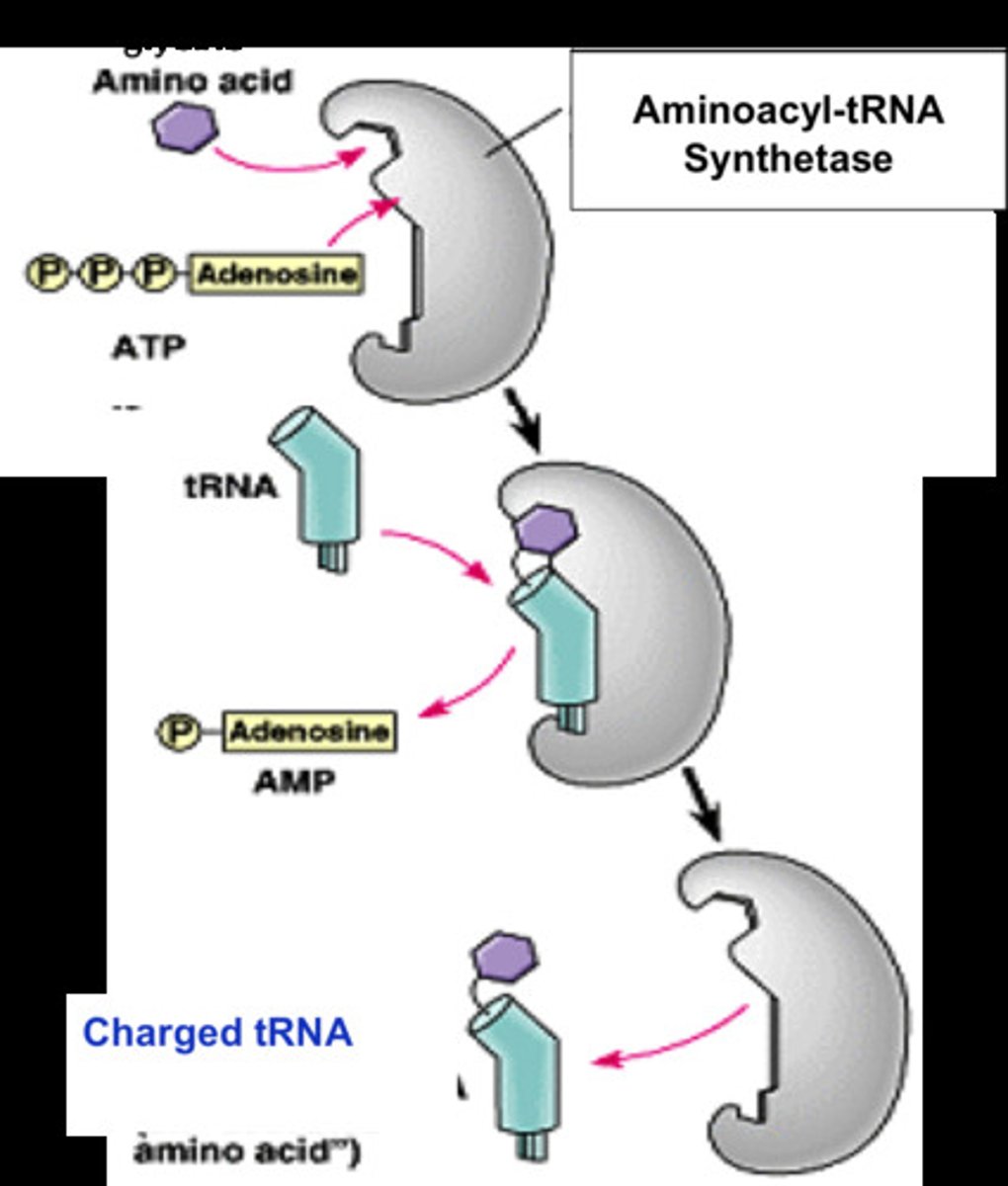
what brings the amino acids to the ribosome during translation
transfer RNA
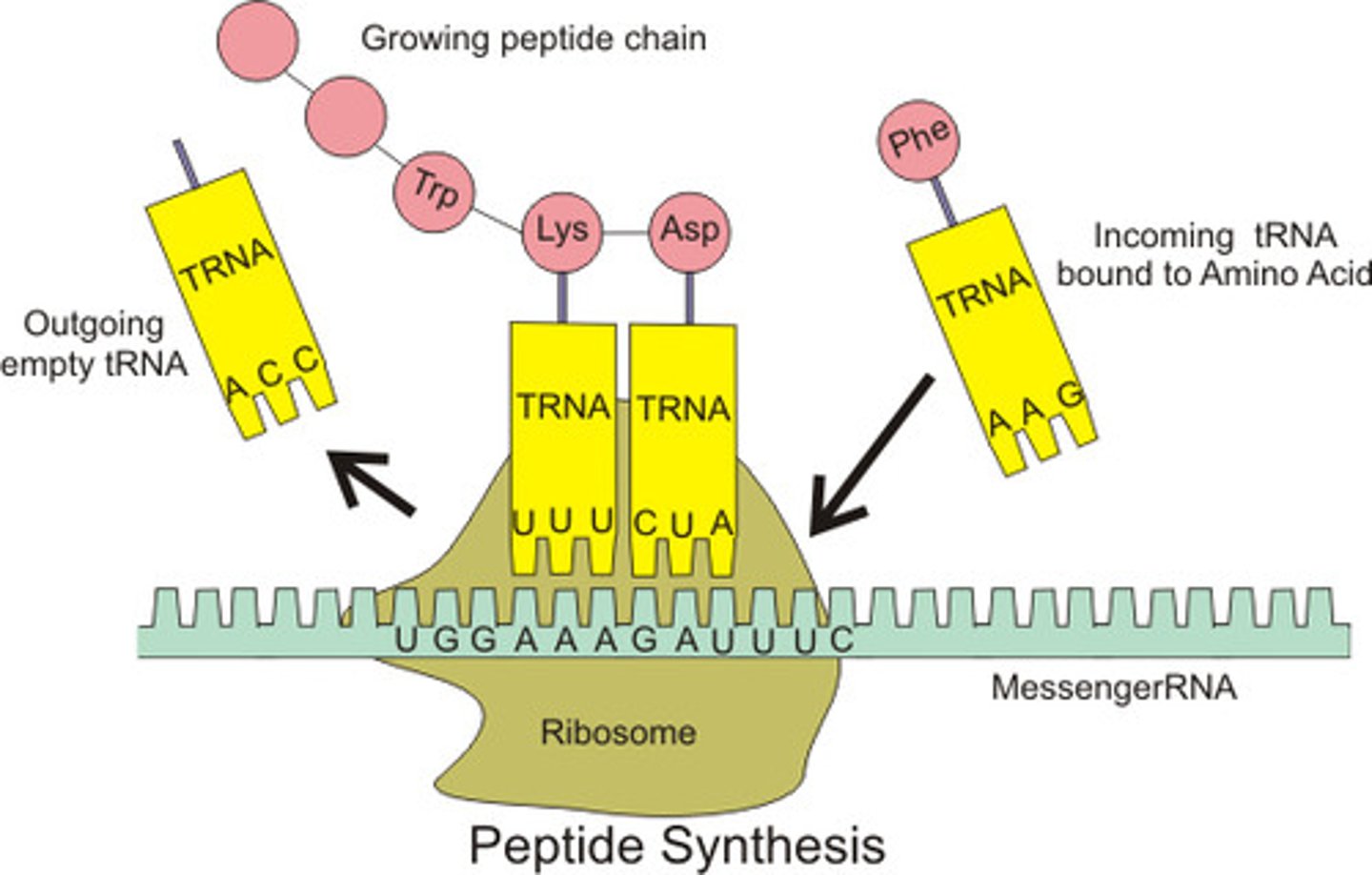
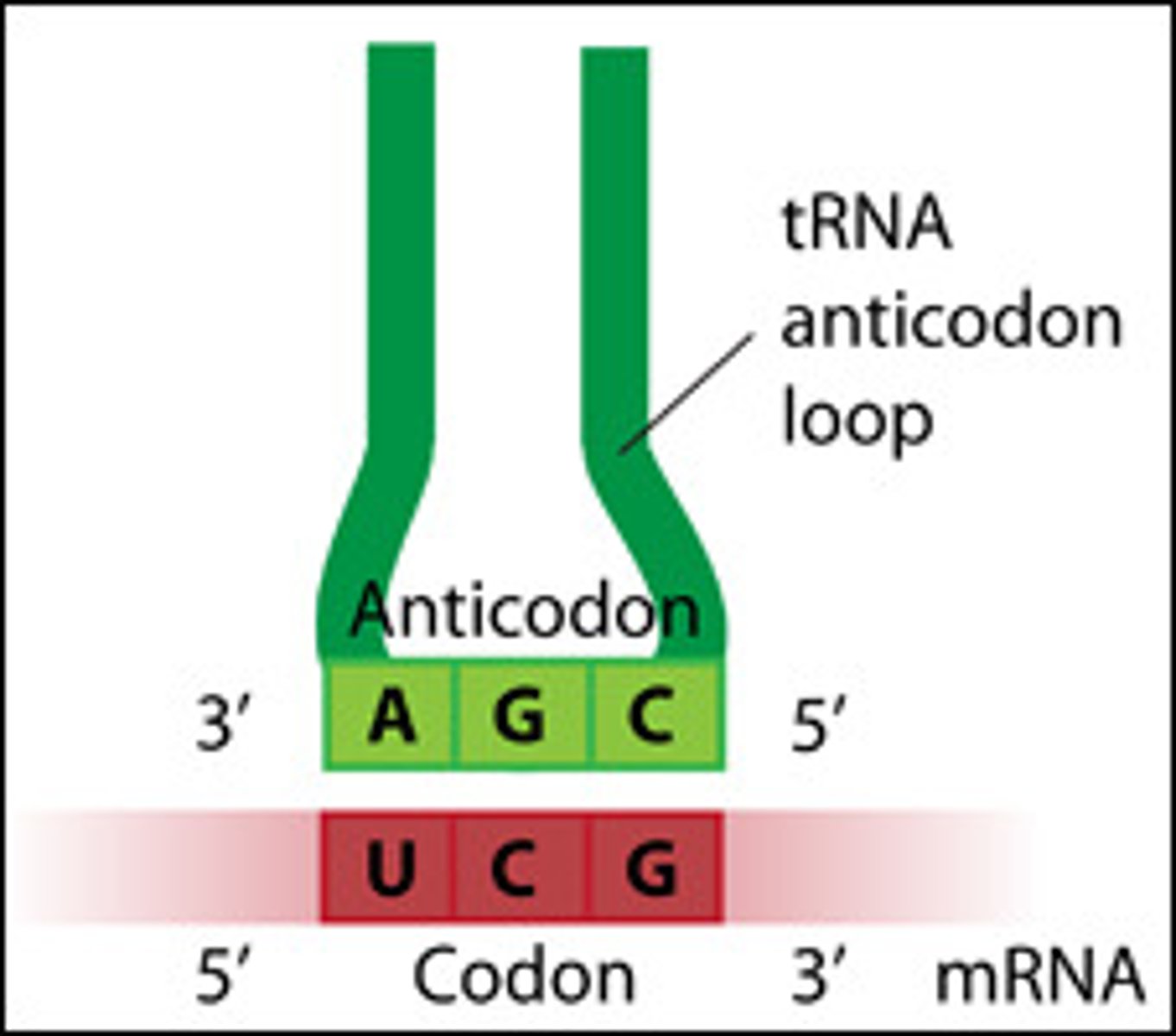
tRNAa contain ________ that is complimentary to an mRNA codon
anticodon
anticodon
group of three bases on a tRNA molecule that are complementary to an mRNA codon
why does translation take energy
Translation takes energy because building a protein is a complex and active process that requires multiple steps, all of which need energy to happen efficiently and accurately.
what are the sites of translation
ribosomes
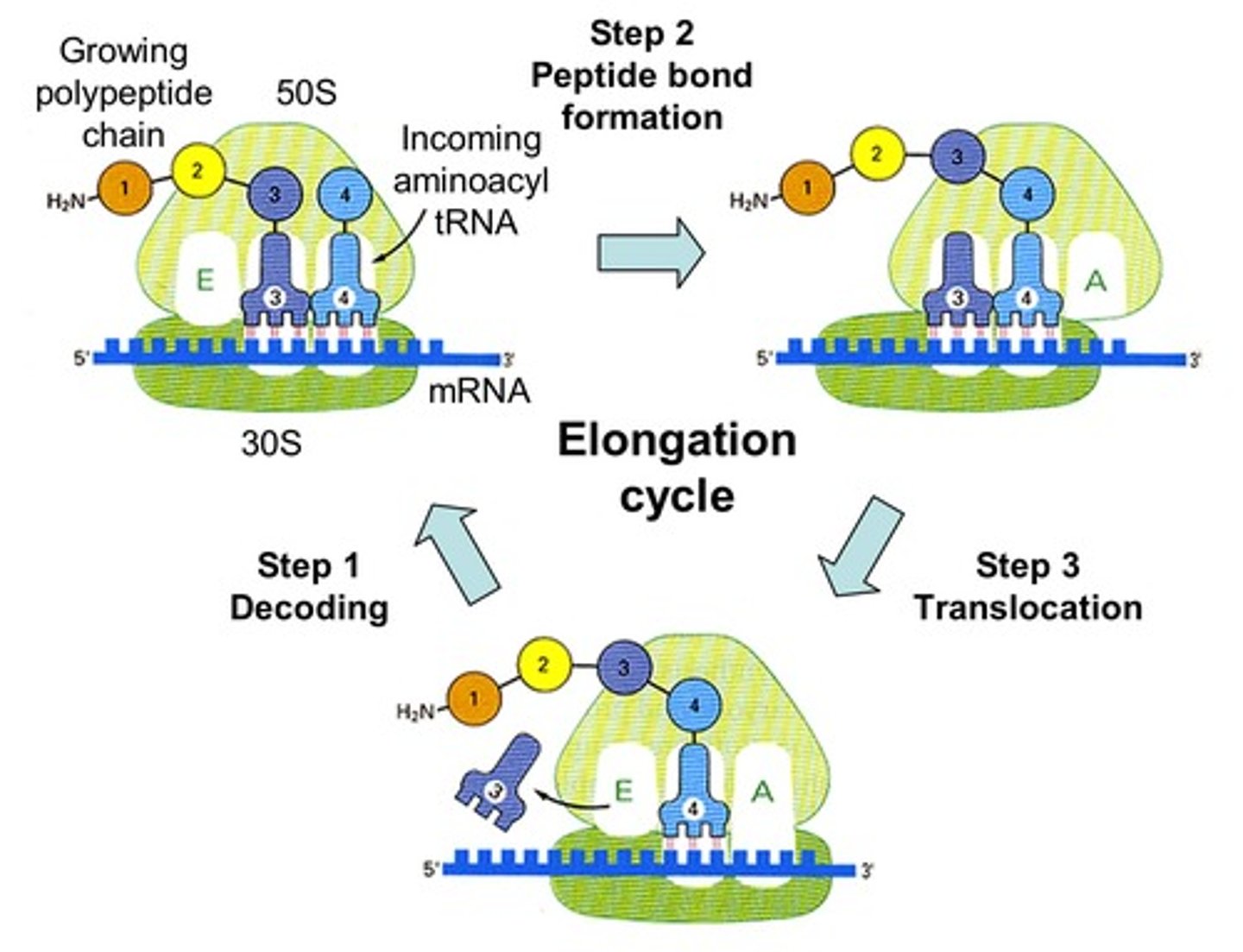
what are the 3 sites where tRNA acts on a ribosome
A site: where tRNA enters ribosome
P site: tRNA slides from A site to its amino acid removed/added to growing polypeptide
E site: empty tRNA exits
does bacteria have a 5 cap
no
describe elongation
-RNA polymerase assembles the RNA nucleotides that complement the template strand of DNA
-after the RNA polymerase copies part of the strand, the copied part of the DNA joins back together
when does termination occur during translation
when a stop codon is read , they are recognized by a release factor not tRNA
during transcription _____ is used as a template to make ________
DNA; RNA
During translation the information within the _______ is used to make _____
mRNA; polypeptide
when does the sigma factor cause the binding of RNA polymerase to the promotor sequence
during bacterial initiation of transcription
sigma factor is not found in eukaryotes
A region of the template strand of DNA used for transcription is
3'-AGCTTGAG-5'. What sequence of RNA would be transcribed from this region?
5' - UCGAACUC-3'
RNA is complementary and antiparallel
splicing of pre-mRNA involves the
removal of introns and connection of exons
is a eukaryotic mRNA failed to have a cap attached to its 5' end what would 2 negative consequences be
the mRNA would not properly exit the nucleus and it would not properly bind to a ribosome
once a molecule of RNA polymerase transcribes a gene what happens to it
it goes back to the promotor of the gene to transcribe the gene again
aminoacyl-tRNA synthetase
has binding sites for a specific amino acid, specific tRNA and ATP
where will translation begin on mRNA
on the first AUG codon found AFTER the ribosome binding site
Name key differences in eukaryotic translation initiation compared to prokaryotic
- In eukaryotes, the 5' cap on mRNA is essential for the binding of the mRNA to the small ribosomal subunit.
- The start codon selection in eukaryotes depends on the Kozak sequence around the AUG, which helps the ribosome find the correct start site.
-The initiator tRNA in eukaryotes carries methionine (Met), whereas in bacteria it carries formyl-methionine (fMet).
- Eukaryotic mRNA must be exported from the nucleus to the cytosol before translation can occur.
List correct features of gene expression
- In a multicellular organism, all genes are present in every nucleus, but some of these genes will never be expressed.
- In a multicellular organism, all genes are present in every nucleus, and some of these genes will be transcribed into mRNA in some cells, but not in others.
- the production of mRNA and translation of that mRNA into protein is called Gene Expression.
-Some genes are expressed at all times, in all cells, but other genes only produce mRNA at certain points in the life of a cell or in response to certain conditions.
-Genes that do not produce mRNA and do not contribute to the phenotype are "not being expressed."
amino vs carboxyl end
amino end = first amino acid
The carboxyl (C-) end is where the last amino acid goes

