N402 EXAM 1: Legal and Ethical Issues
 Studied by 0 people
 Call Kai
 Learn
Learn Practice Test
 Spaced Repetition
 Match
Match Flashcards
 Knowt Play
1/17

There's no tags or description
Looks like no tags are added yet.
Name | Mastery | Learn | Test | Matching | Spaced | Call with Kai |
|---|
No analytics yet
Send a link to your students to track their progress
18 Terms
ethics
distinguishing right from wrong
bioethics
ethics refering to scope of nursingm etc.
ethical dilema
moral appeals can be made for either option
- taking no action IS an action
autonomy
patient has the right to determine there destinies --> should be respected
beneficence
one's duty to beneift or promote the good of others
ex: no shoe laces for any patient on psych unit (that patient may be safe, but others wouldn't)
nonmaleficence
abstaining from negative act toward another --> careful to avoid harm
EX: de-escalation
justice
treat everyone equal and fair
everyone is fed, gets meds, etc.
veracity
one's duty to be truthful
***we chart everything we see, it is our duty
B52
haldol and ativan (mixed together)
benadryl (separate) --> decreases haldol effects
can psych patients refuse meds?
YES - try to get more info though
***unless on court order/forced meds
legal issues in psych
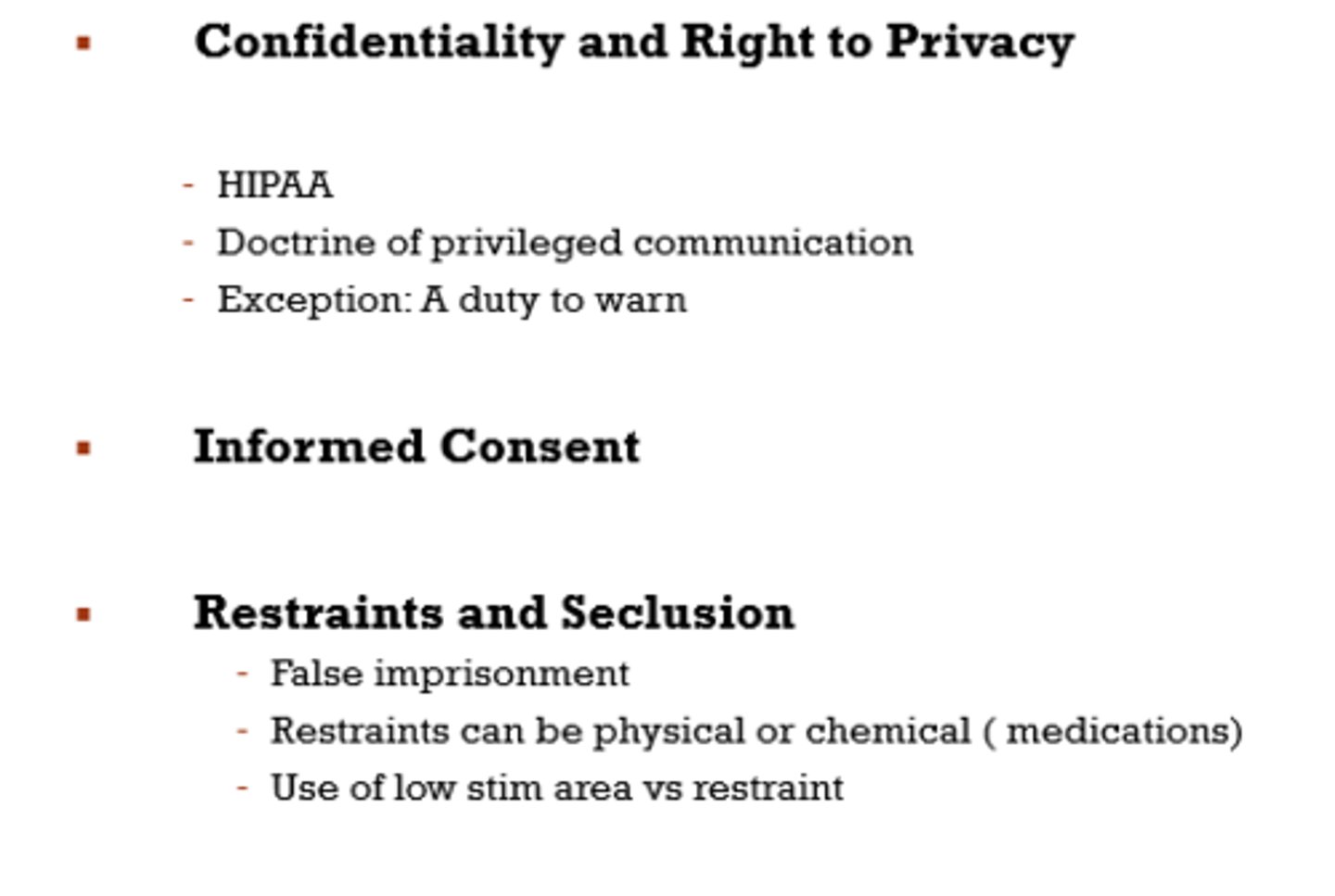
seclusion restrain
NEED:
- indications
- review
- orders
- monitoring
- release
- documentation
commitment issues
voluntary and involuntary admission
nursing liability
malpractice and negligence
assault and battery
false imprisonment
invasion of privacy
psychiatric advance directive
allows for competent person to document preferences regarding mental health Tx
- power of attorney
As a last resort, an agitated, physically aggressive client is placed in four-point restraints. The client yells, "I'll sue you for assault and battery." The unit manager determines that the nurses are protected under which condition?
A. The client is voluntarily committed and poses a danger to others on the unit.
B. The client is voluntarily committed and has a history of being a danger to others.
C. The client is involuntarily committed because of a history of violent behavior.
D. The client is involuntarily committed and is refusing treatment.
A
--> As a threat to others, the client can be restrained despite objections and voluntary commitment.
3.A nurse gave a client 5 mg of haloperidol (Haldol) for agitation. The client's chart was clearly stamped "Allergic HALDOL." The client suffered anaphylactic shock and died. How would the nurse's actions be labeled?
A. Intentional tort
B. Negligence
C. Battery
D.Assault
B
--> The nursing action was an unreasonable and careless act. The nurse was negligent and could be held liable for the client's death.
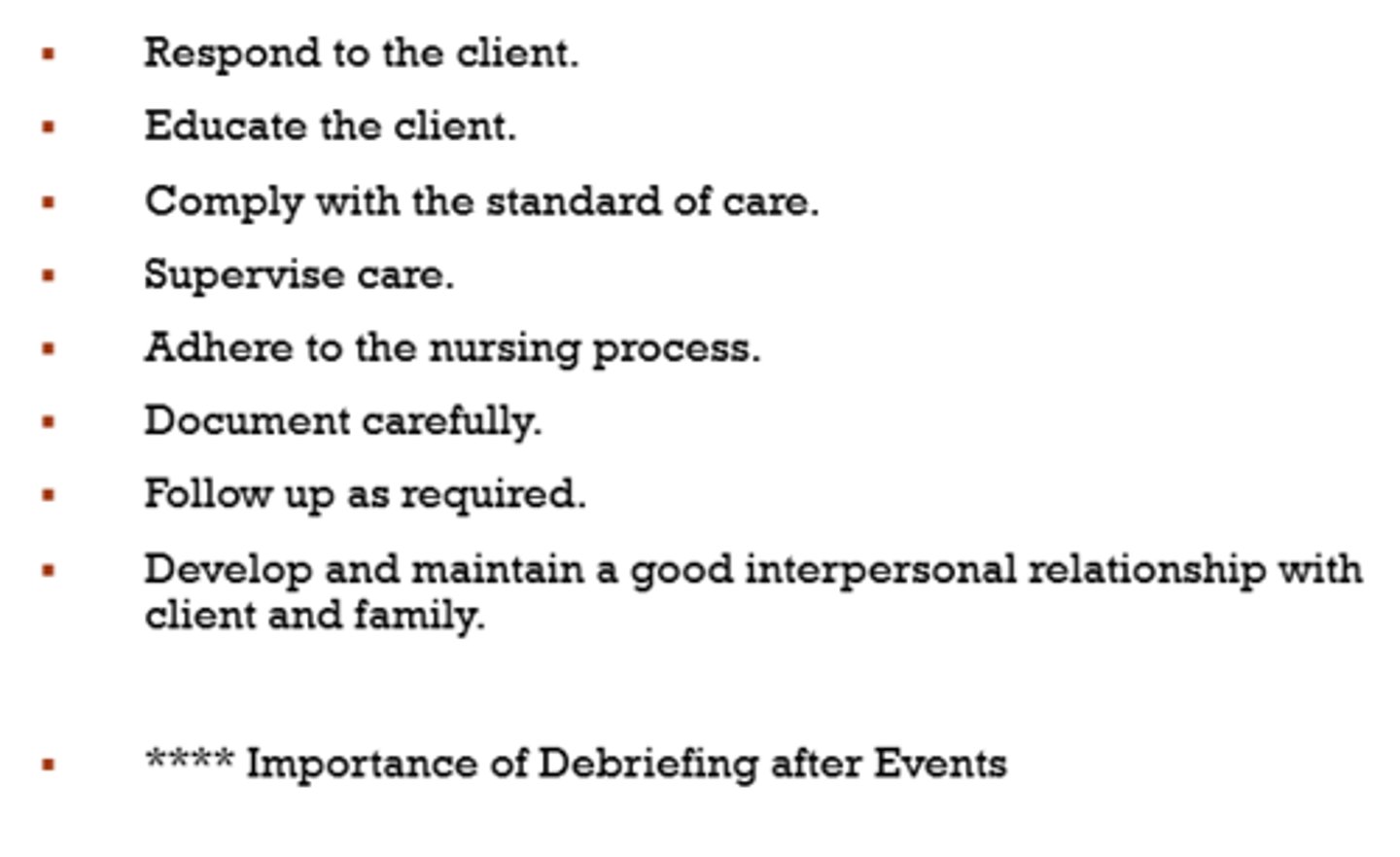
avoiding liability
 Note
Note  Flashcards (21)