integrals (area and volumes) (things to remember)
 Studied by 0 people
 Call Kai
 Learn
Learn Practice Test
 Spaced Repetition
 Match
Match Flashcards
 Knowt Play
1/27

There's no tags or description
Looks like no tags are added yet.
Name | Mastery | Learn | Test | Matching | Spaced | Call with Kai |
|---|
No analytics yet
Send a link to your students to track their progress
28 Terms
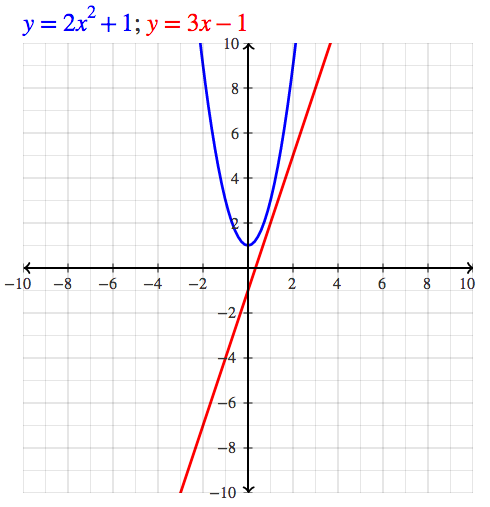
Basic Parabolas (x² + #) and lines
1 1
2 4
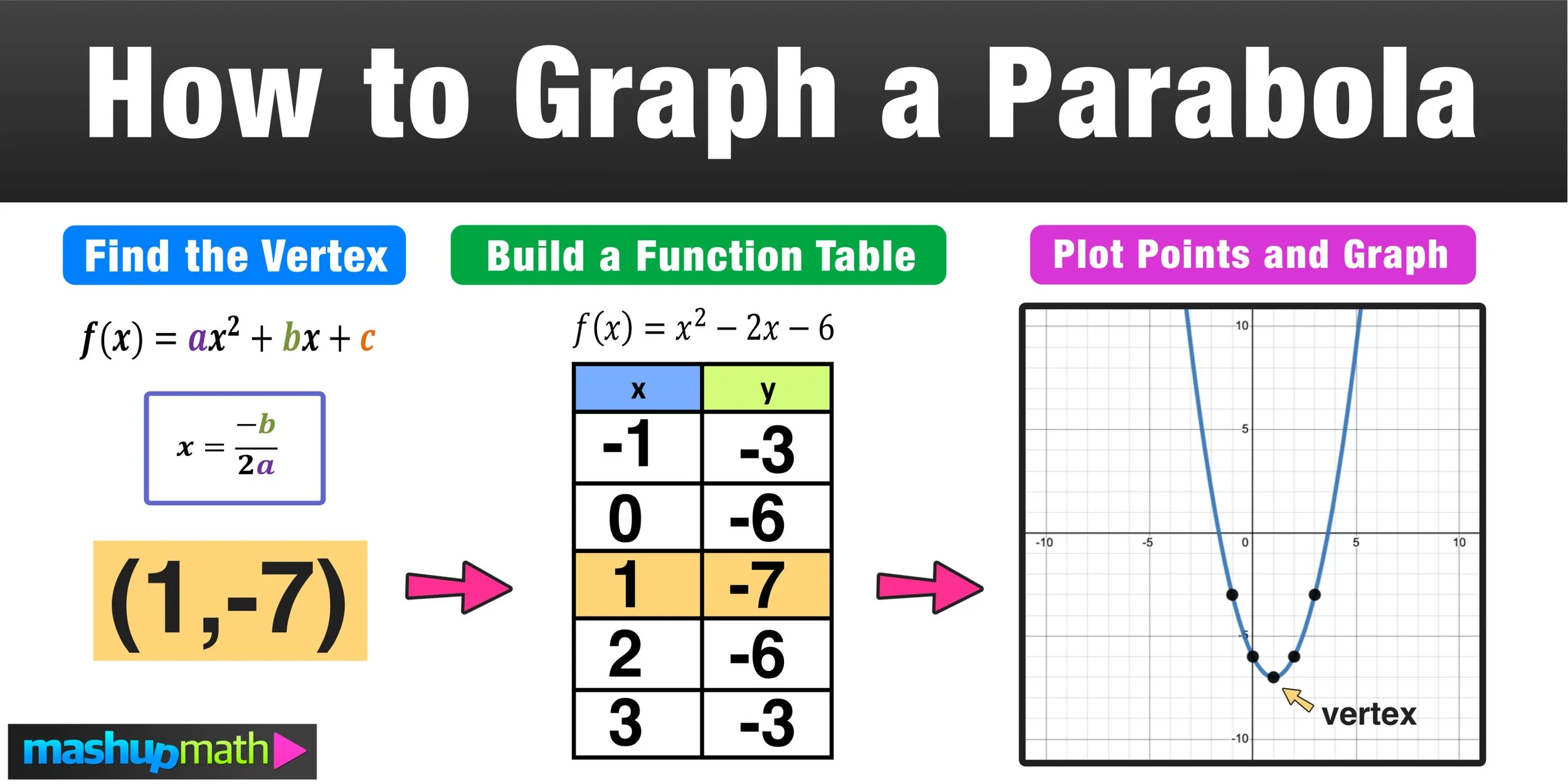
Complex parabolas
1 1
2 4
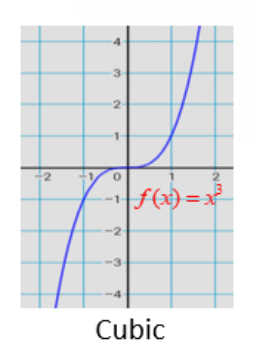
cubic x³
sideways backwards s (starts bottom left to top right)
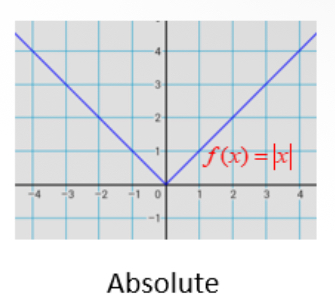
Absolute value |x|
V
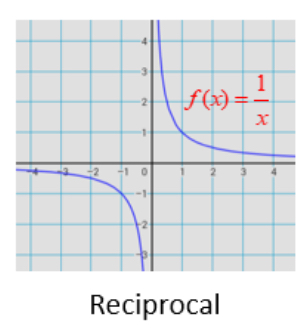
reciprocal 1/x
Top right and bottom left
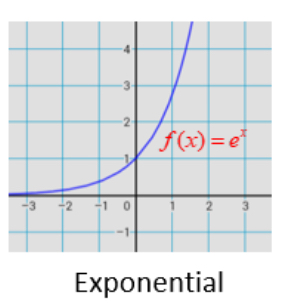
Exponential e^x
tip to memorize: exponent means up (goes up and starts left of x axis) (not below x axis) (goes more up than right) (u shape)
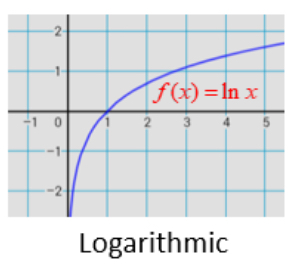
ln x
Starts from bottom right (below x axis) to top right (above axis) (goes more right than up) (c shape)
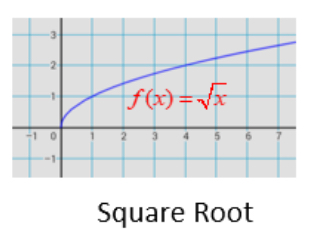
\sqrt{x}
Like ln x but starts from (0,0) (c shape) (goes more right than up)
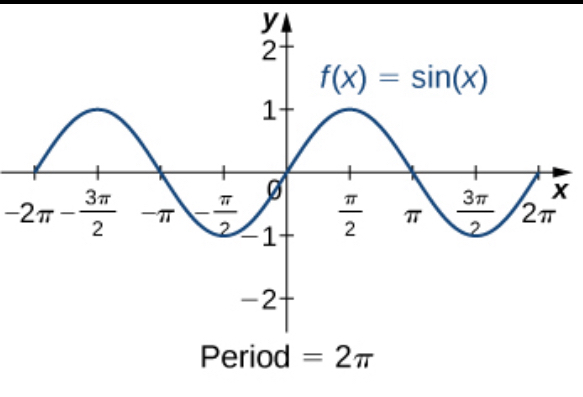
sin x
hill / hump / upside down u starts from zero to pi
parabola/ u shape from zero to pi (continue to the right) (connected like a squiggle)
(period: 2pi)
(X axis is in the middle of all humps)
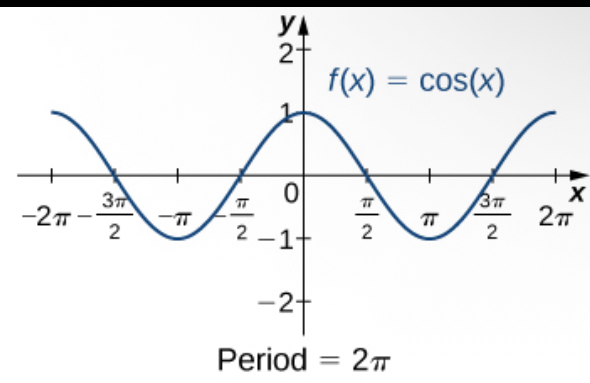
cos x
Y axis in the middle of hump
hill / hump / upside down u starts from negative pi/2 to pi/2
parabola/ u shape from pi/2 to 3pi/2
(continue to the right) (connected like a squiggle)
(period: 2pi)
(X axis is in the middle of all humps)
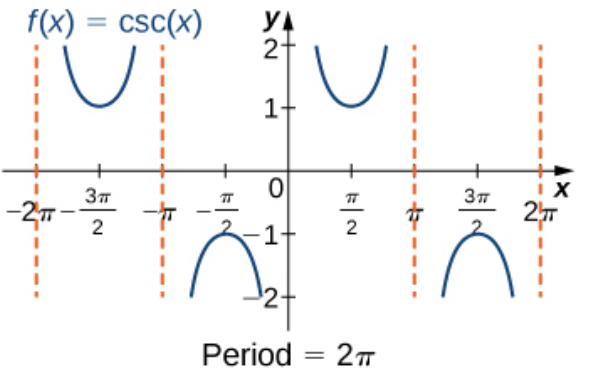
csc x
Parabola u shape from zero to pi
Upsidedown parabola from pi to 2pi
parabolas and upside down parabolas separated by vertical asymptotes (dashed lines)
period: 2pi
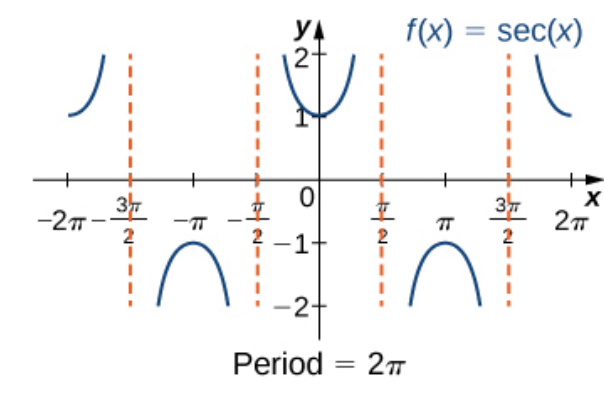
sec x
Y axis in the middle of Parabola u shape
Upsidedown parabola from pi/2 to 3pi/2
parabolas and upside down parabolas separated by vertical asymptotes (dashed lines)
period: 2pi
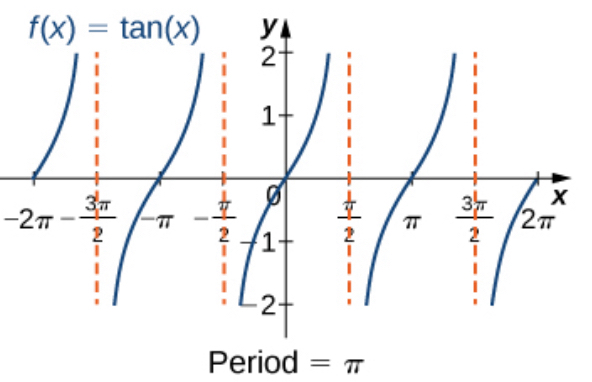
tan x
y axis in middle
sideways backwards s (going from bottom left to the top right) (goes up)
starts from negative pi/2 to pi/2 and repeats from pi/2 to 3pi/2 (separated with dashed lines (vertical asymptotes))
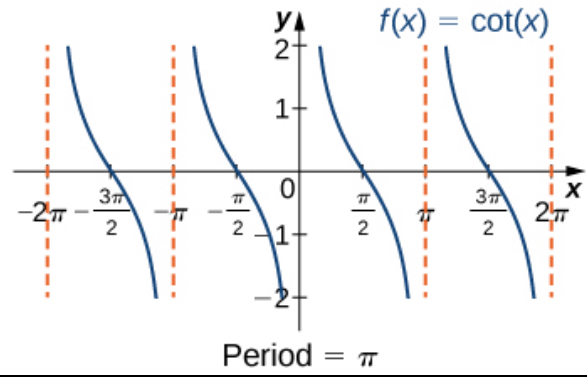
cot x
sideways normal s
Starts from top left to bottom right (goes down)
From zero to pi and pi to 2pi (separated by dashed lines (vertical asymptotes))
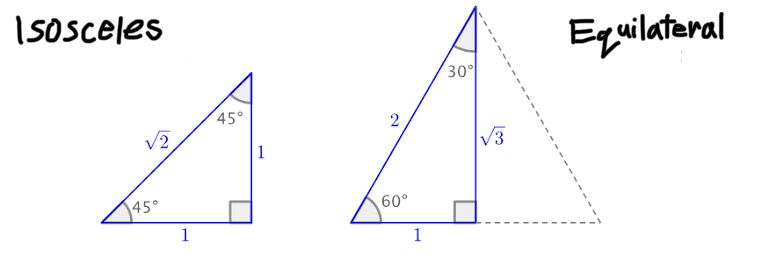
Isosceles and Equilateral Triangles
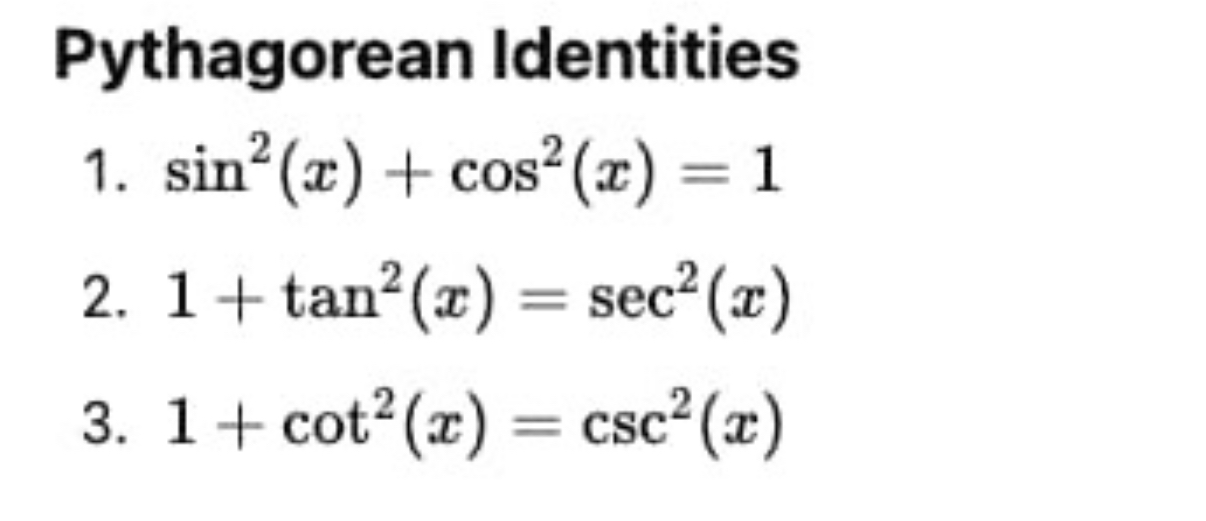
Pythagorean identities
sin²x + cos²x =1
(Can find the rest of them by either dividing everything by cos²x or sin²x)
use if exponent is odd
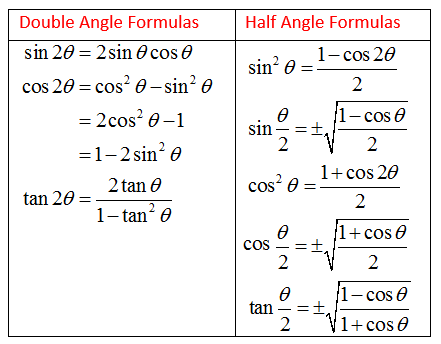
Double Angle Formulas (+half angle)
Use if exponent is even
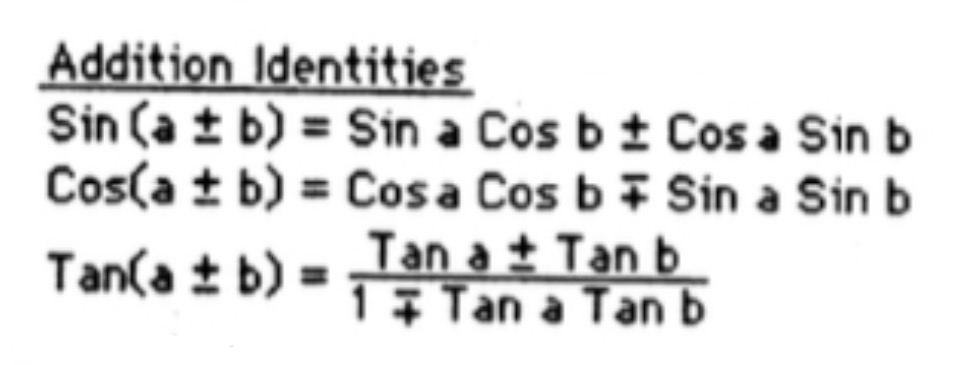
Addition and Subtraction Trig Identities
Anti derivative of sec x
ln|tanx + secx|
e^x and In(x) rules
In(e^x) = x
e^(Inx) = x
e^a + e^a = 2e^a (treat like a
variable if power is the same)
e^0=1
In 1 =0
In e=1
e^x cannot equal a negative number
Always e^x= positive number
log_a (b) = In (b) /In(a)
If it looks the same and it is addition or subtraction then add or subtract like you would a variable
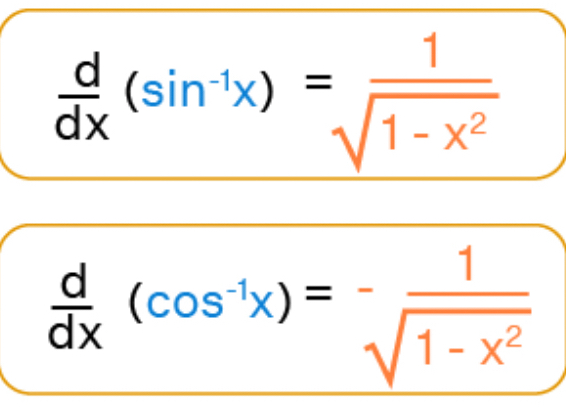
derivative of inverse sin and cos
inverse sin = 1/sqrt (1-x^2)
(one over square root one minus x squared)
inverse cos = - 1/sqrt (1-x^2)
(the derivatives of co- trig functions are negative)
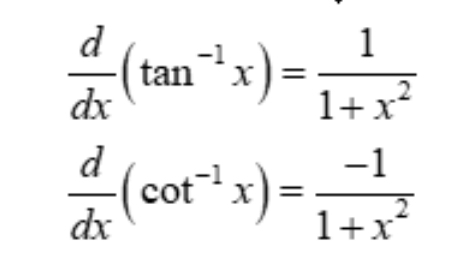
derivative of inverse tan(arctan) and cot
inverse tan = 1/(1+x^2)
(one over one plus x squared) (No square root)
inverse cot = - 1/(1+x^2)
(the derivatives of co- trig functions are negative)
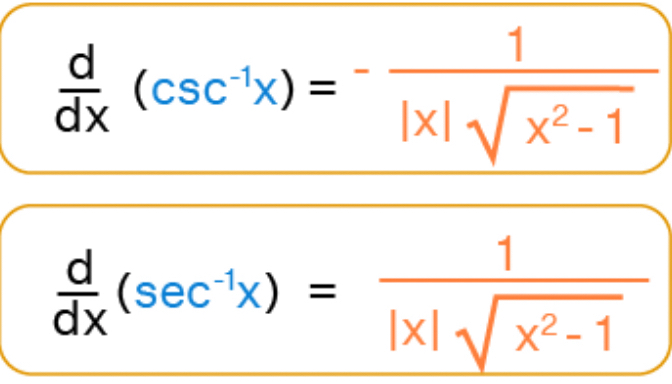
derivative of inverse sec and csc
inverse sec = 1/Ixlsqrt(x^2-1)
(one over absolute value x times square root x squared minus one)
inverse csc = - 1/Ixlsqrt(x^2-1)
(the derivatives of co- trig functions are negative)
derivative e^x |
e^x = e^x
derivative In(x) |
1/x
derivative b^x |
(b^x) (In(b))
derivative of log_b (x) |
1/ (x)(In b)
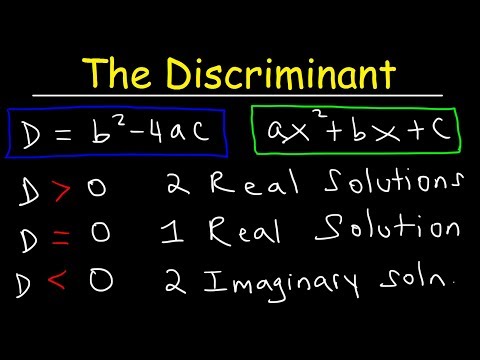
Discriminant
 Note
Note  Flashcards (106)