3B Eye: External & Internal Structure of the Eye
 Studied by 0 people
 Call Kai
 Learn
Learn Practice Test
 Spaced Repetition
 Match
Match Flashcards
 Knowt Play
1/34

There's no tags or description
Looks like no tags are added yet.
Name | Mastery | Learn | Test | Matching | Spaced | Call with Kai |
|---|
No analytics yet
Send a link to your students to track their progress
35 Terms
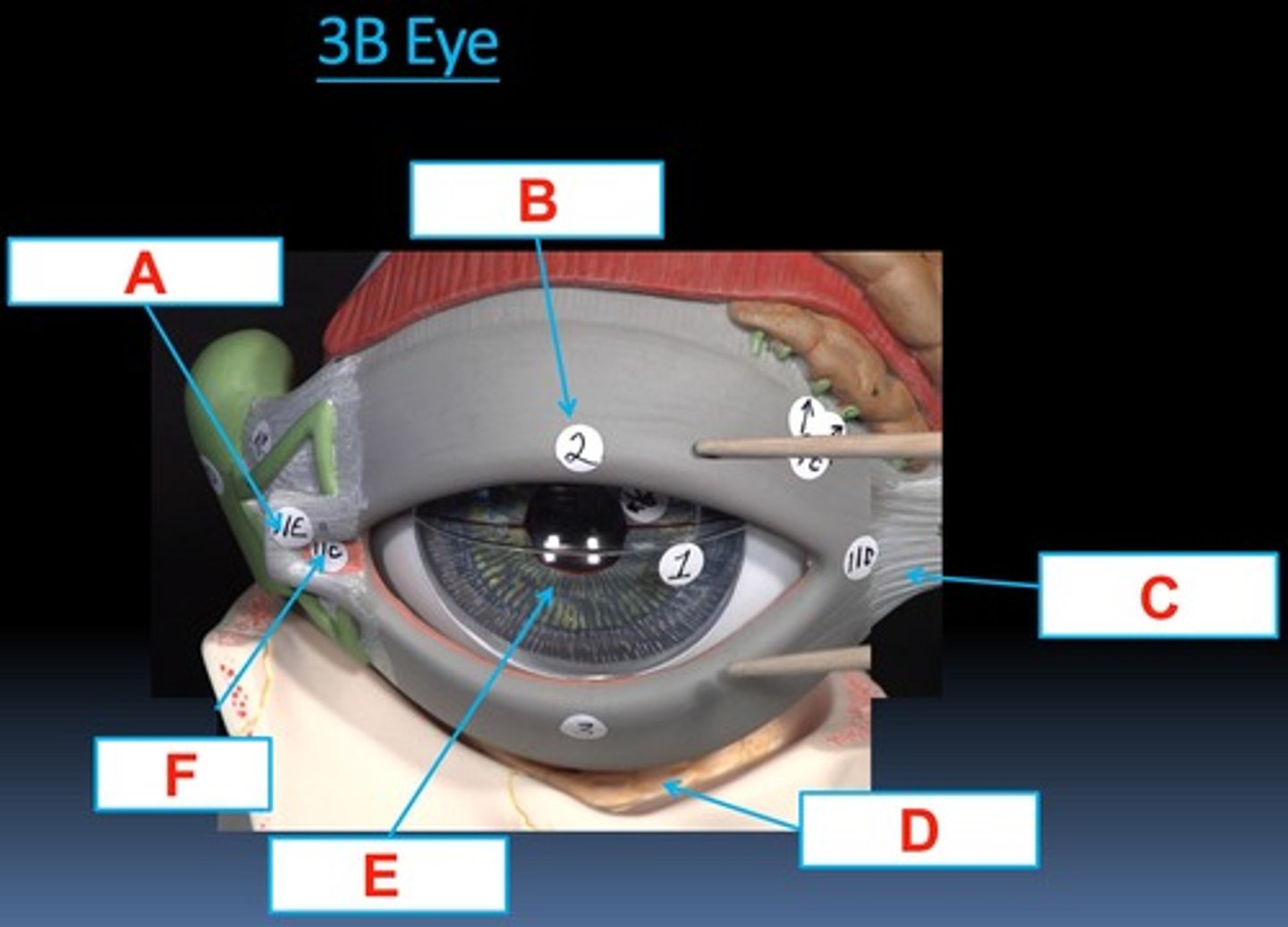
11E) Medial Canthus: area where the inferior & superior eyelids meet medially
11E
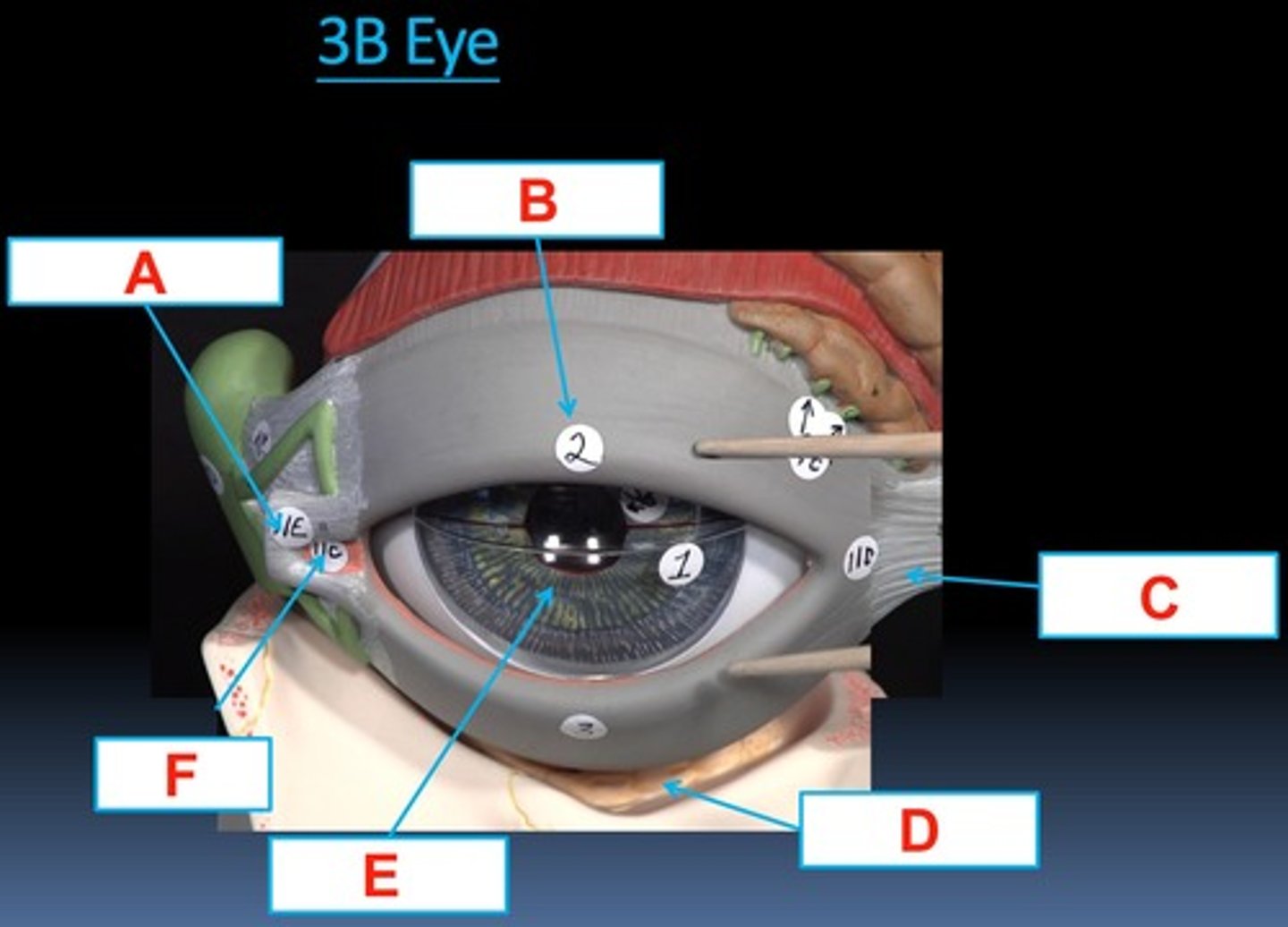
2) Superior Tarsus: lubricates ocular surface
2
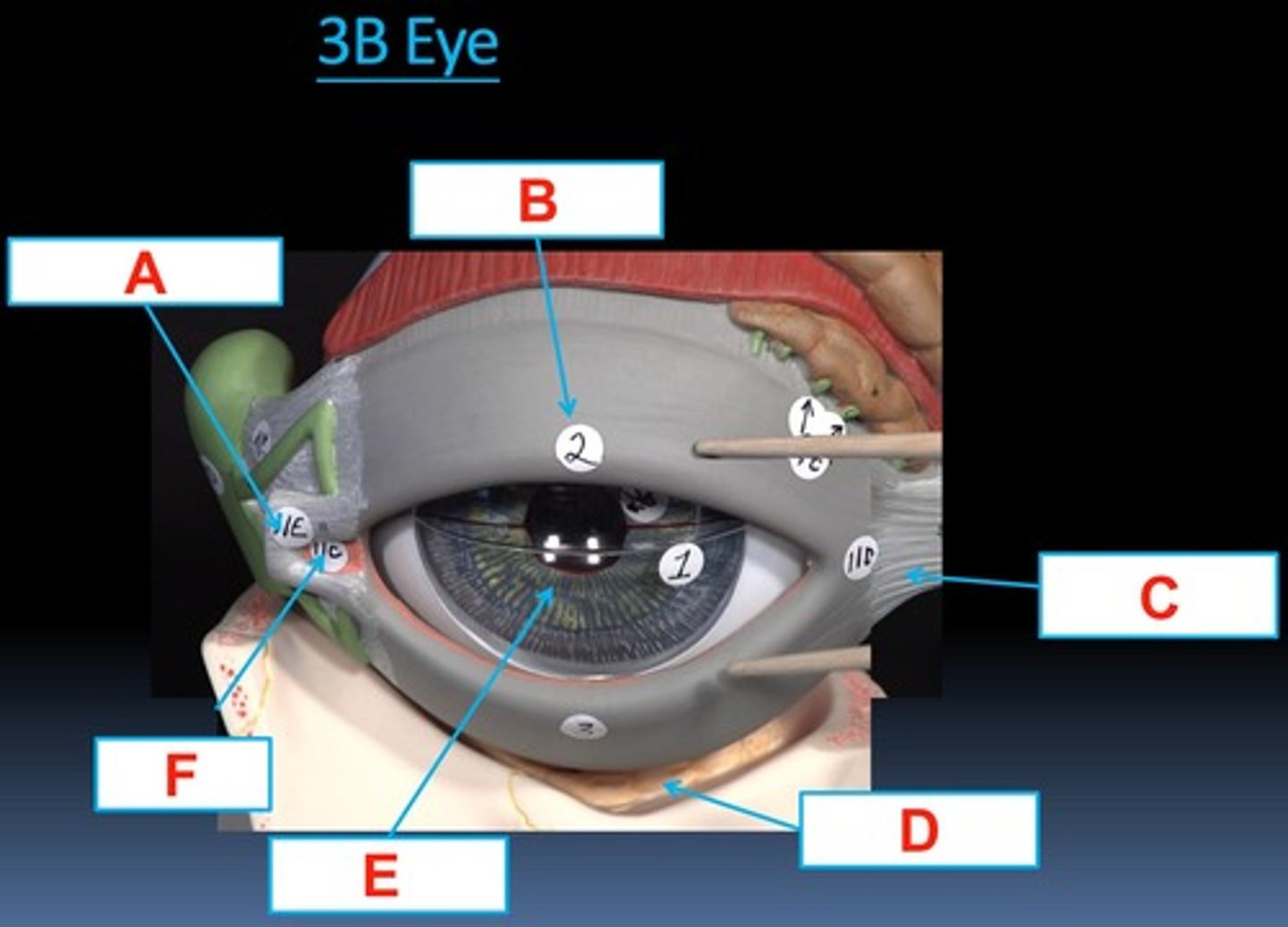
11D) Lateral Canthus: area where the inferior and superior eyelids meet laterally
C
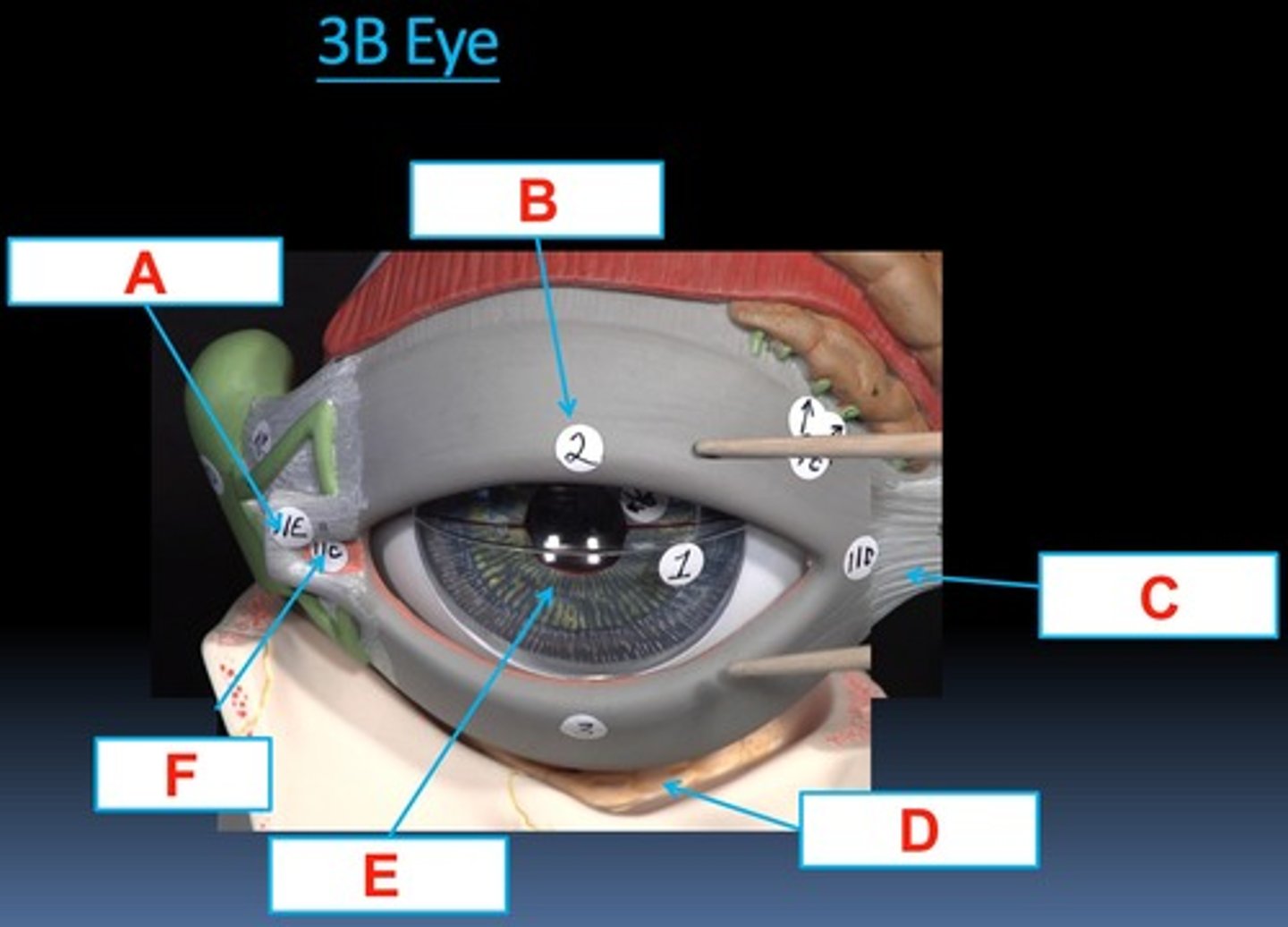
#3) Inferior Tarsus: lubricates ocular surface
3
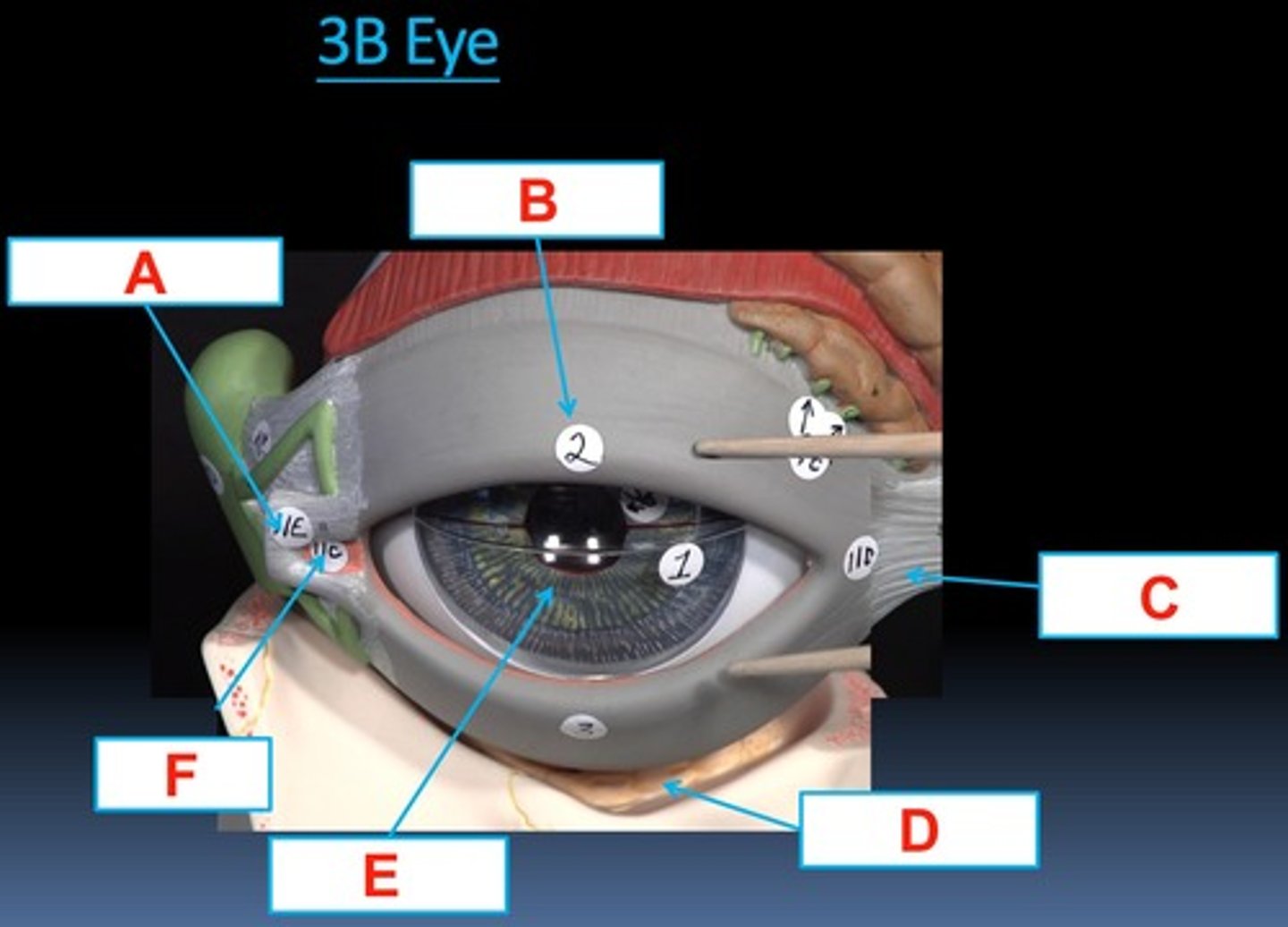
1) Cornea: refracts light
1
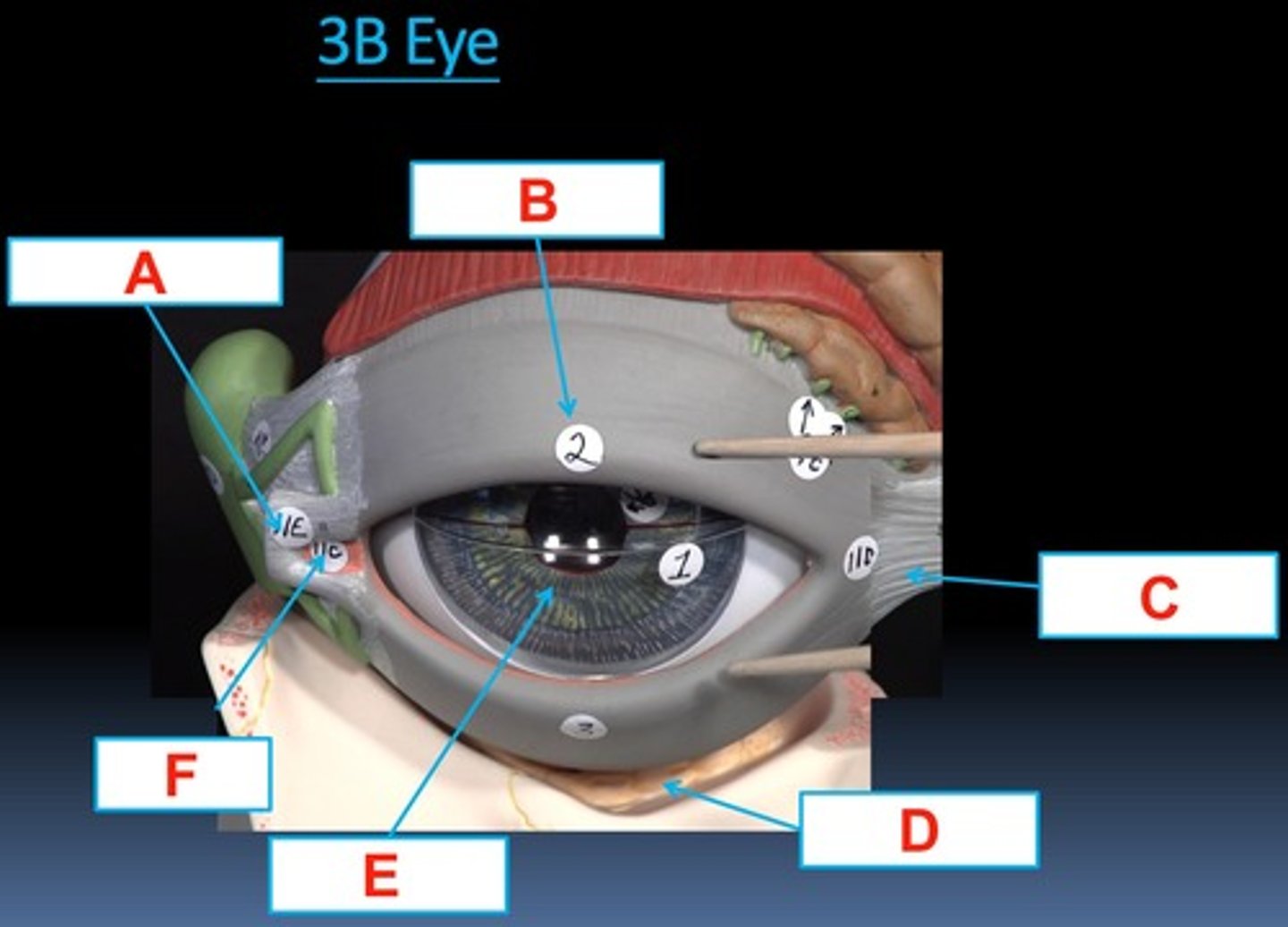
11C) Caruncle
F
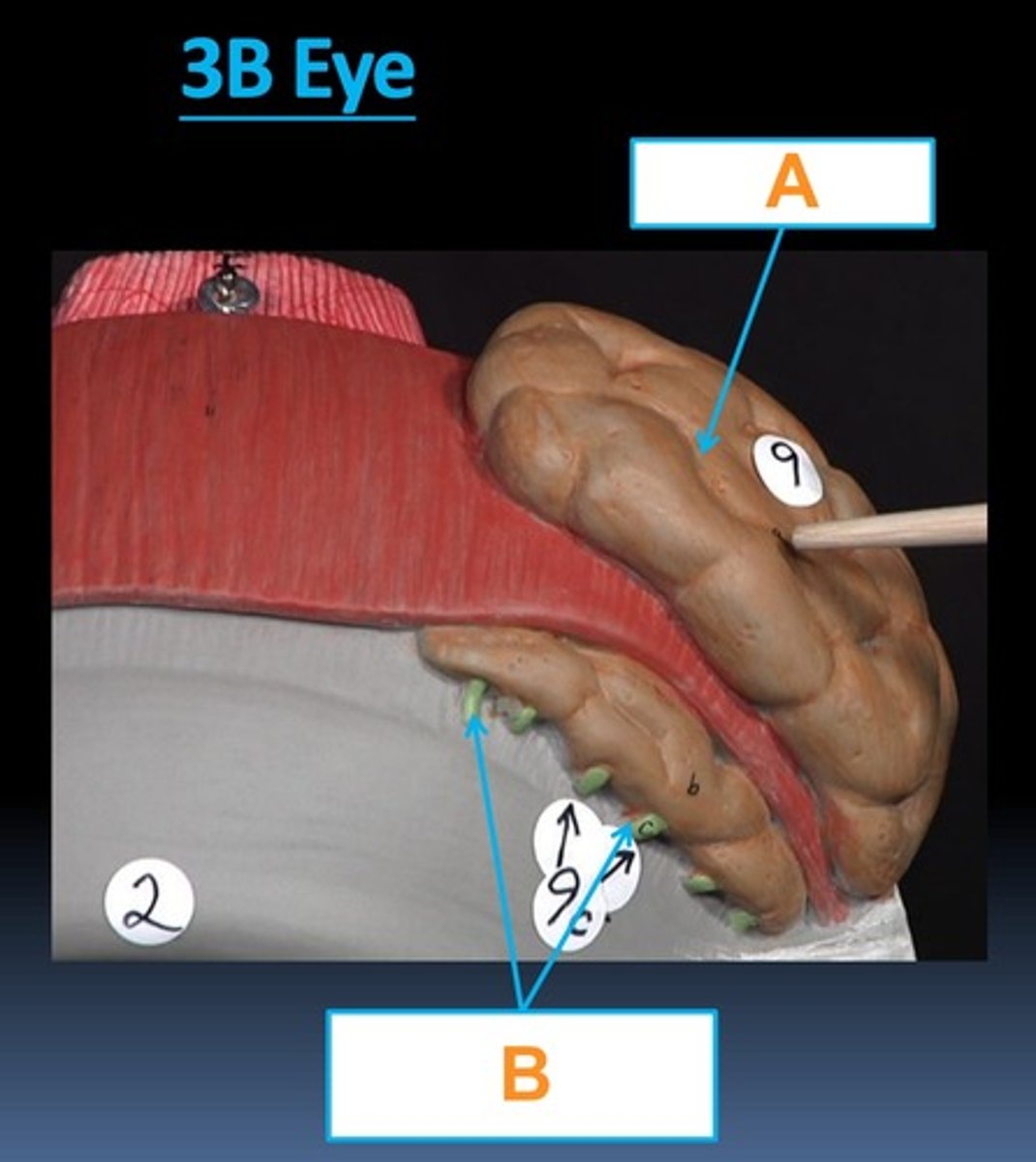
#9) Lacrimal Gland: produces tears
9
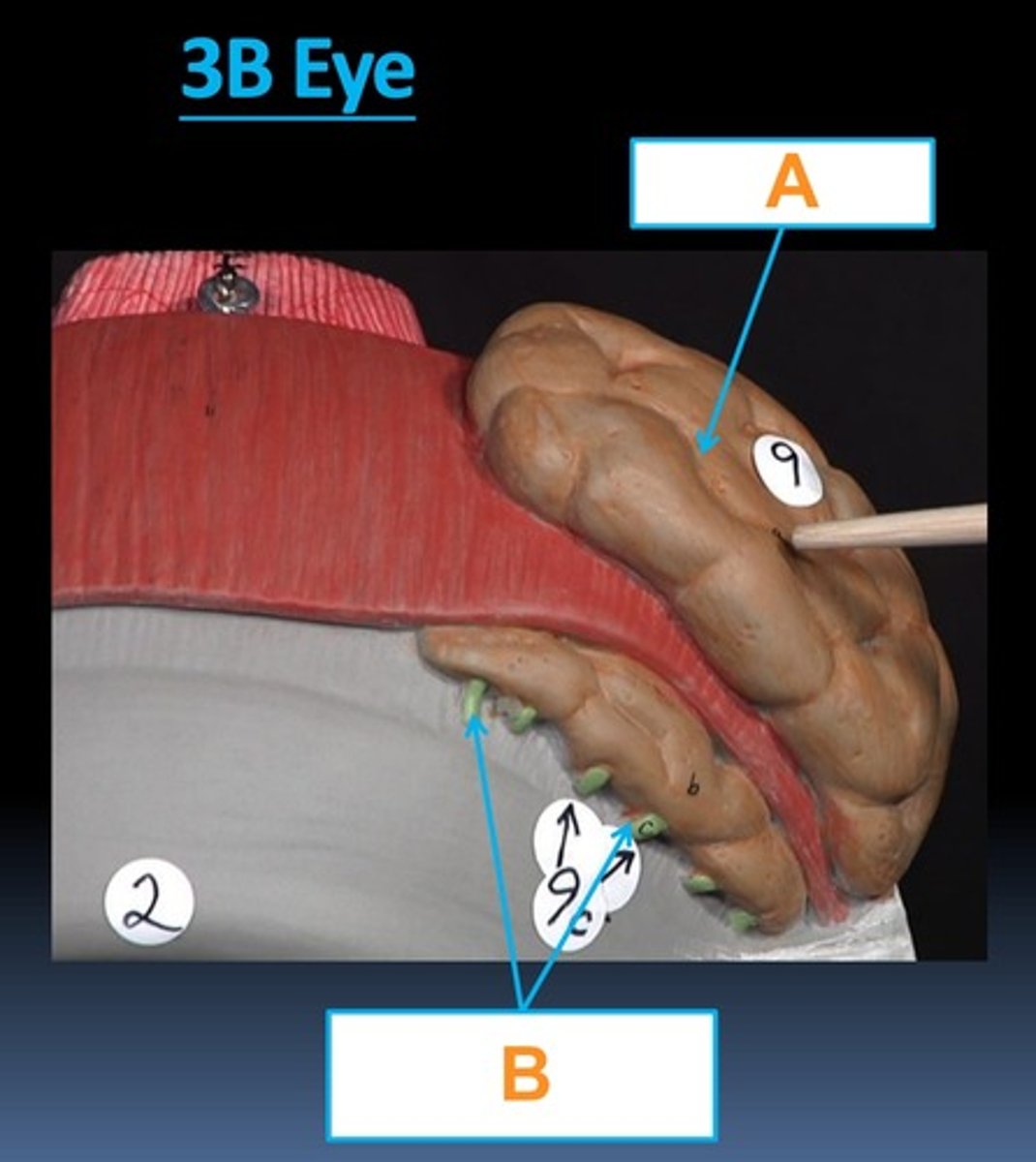
#9C) Excretory Ducts of Lacrimal Gland: drains the lacrimal gland of tears
9C
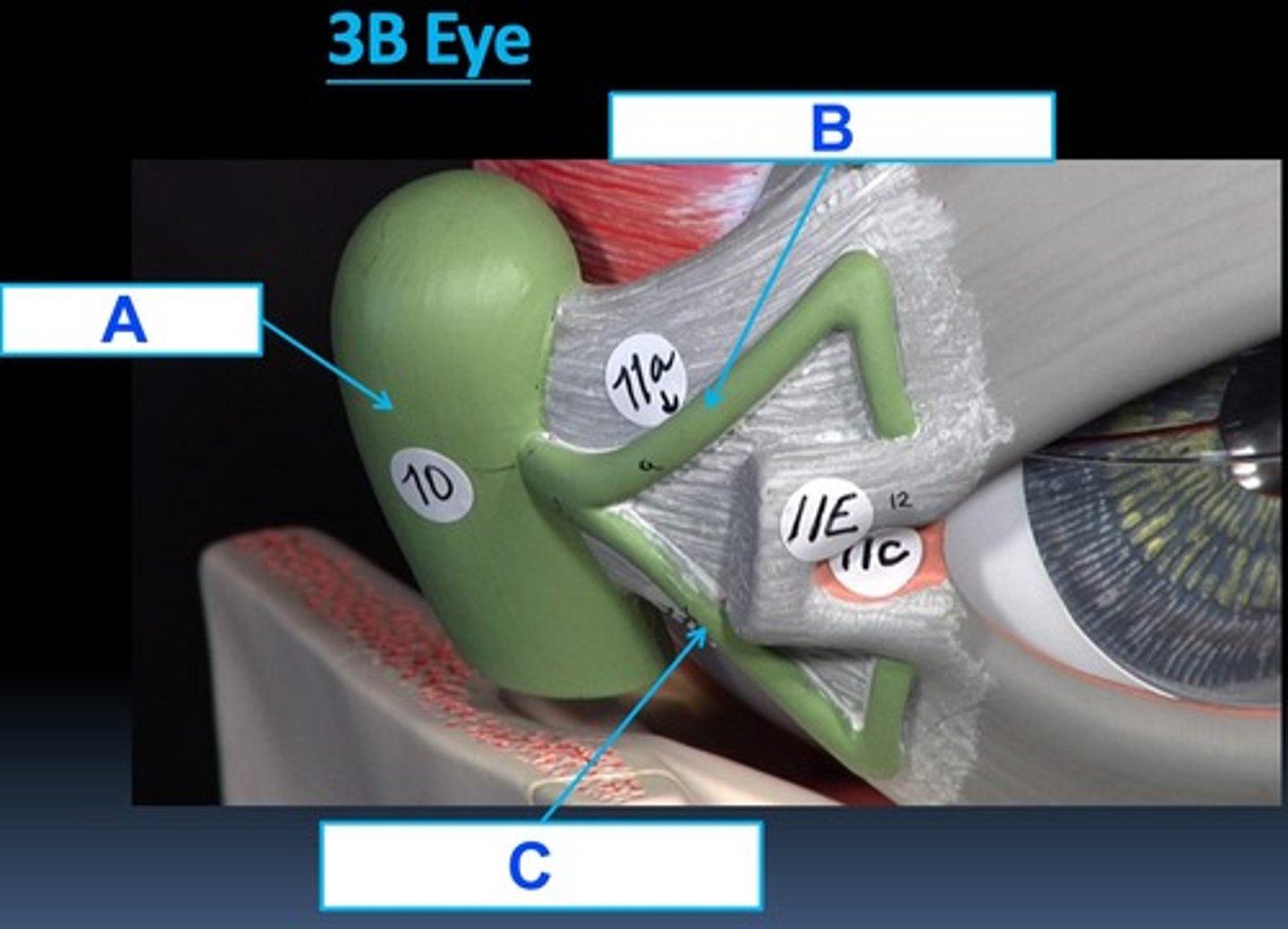
#10) Lacrimal Sac: drains tears into nasolacrimal duct
10
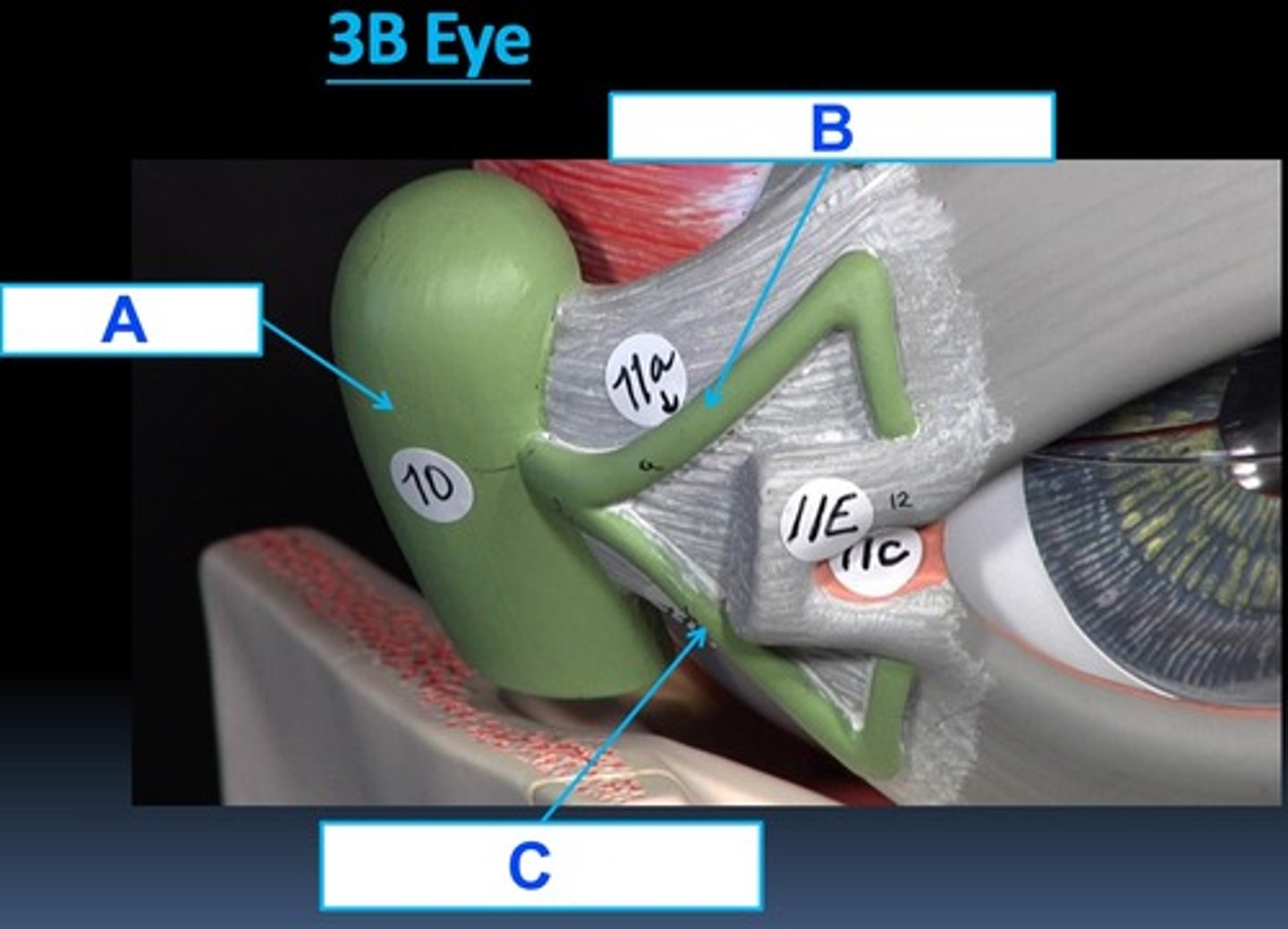
11a) Superior Lacrimal Canal: drains tears into lacrimal sac
11A
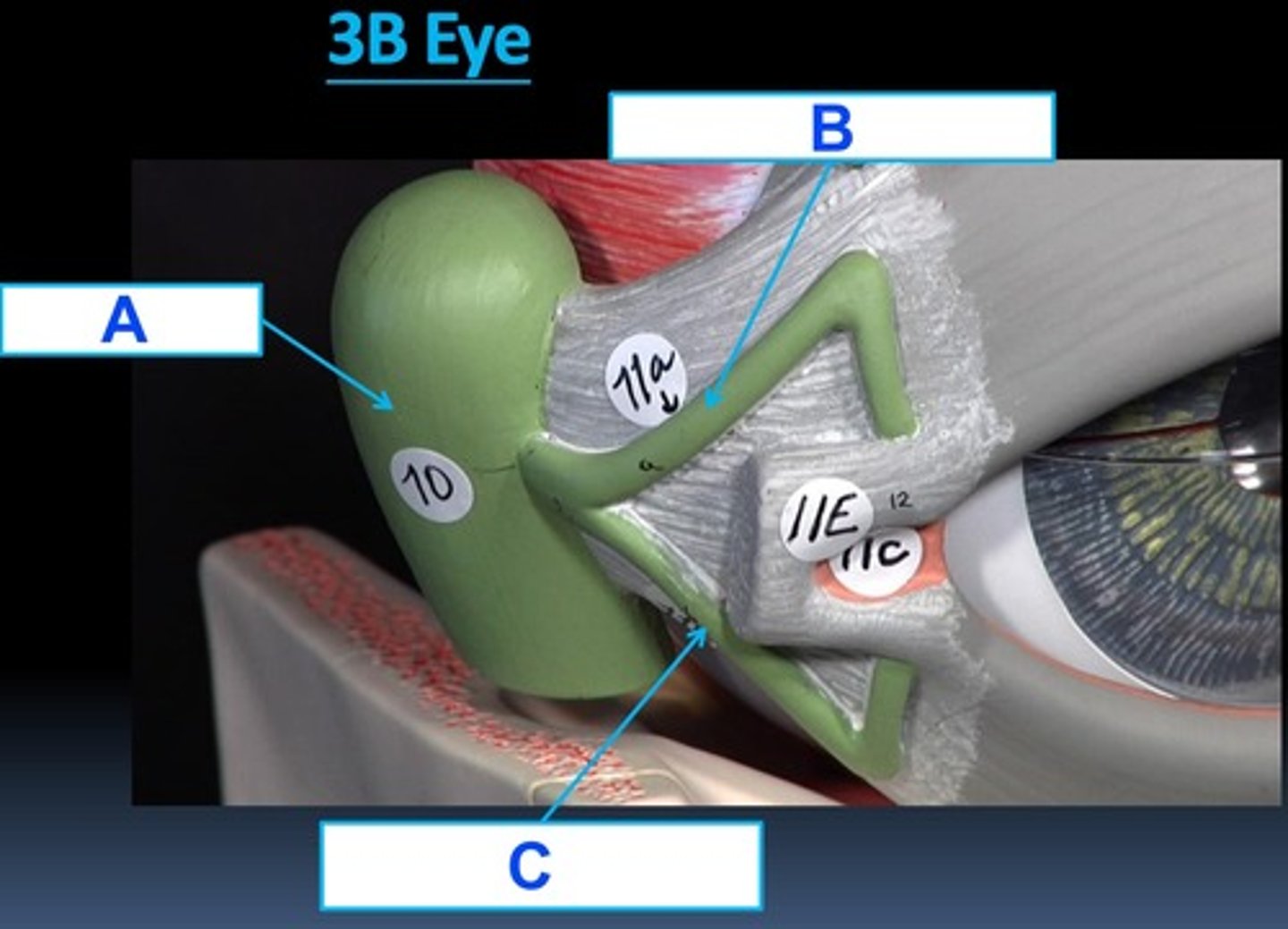
11b) Inferior Lacrimal Canal: drains tears into lacrimal sac
11B
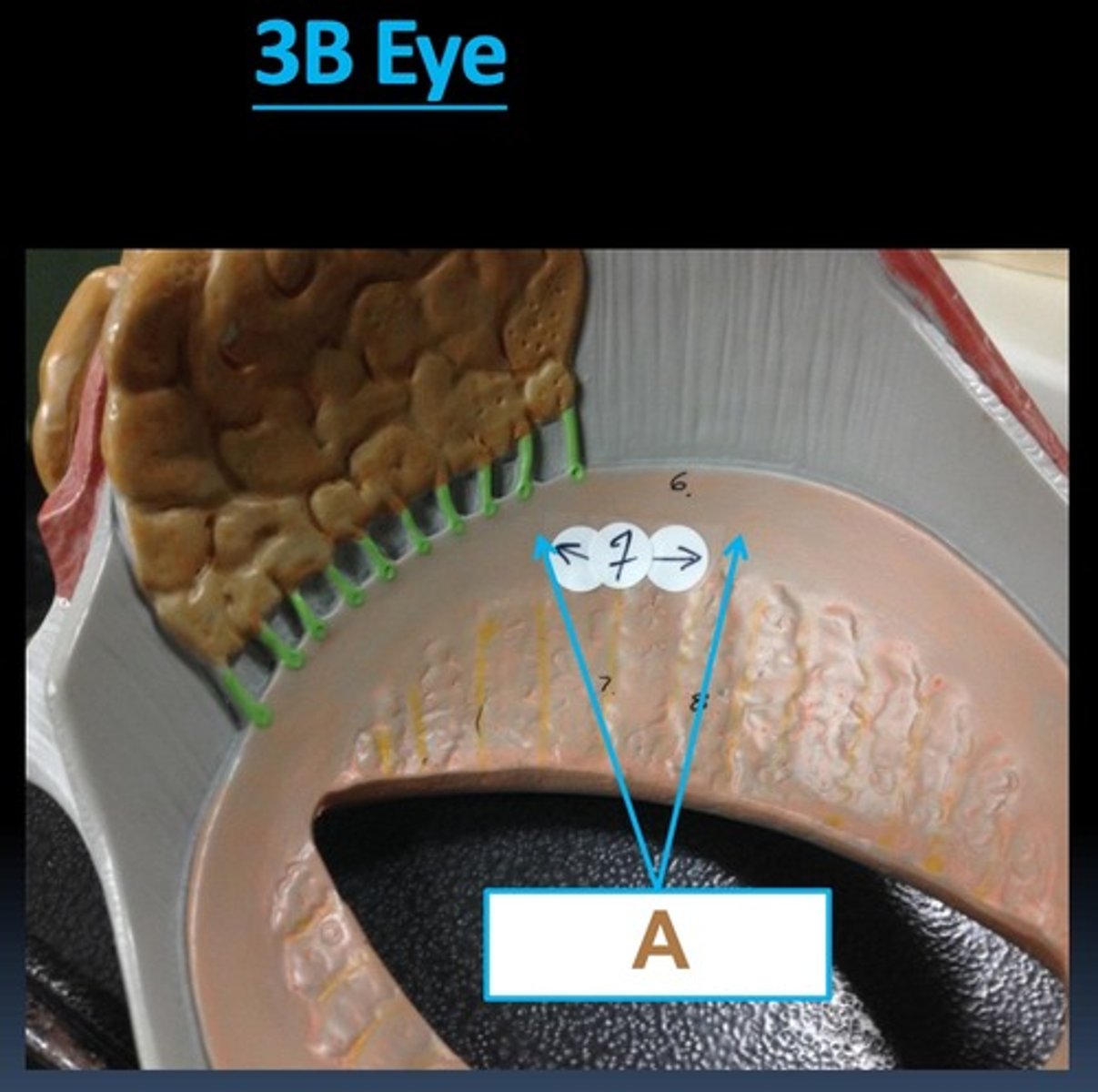
#7) Palpebral Conjunctiva: secretes mucus to lubricate eye
7
II) Inferior Rectus: depresses eye and turns it medially
A
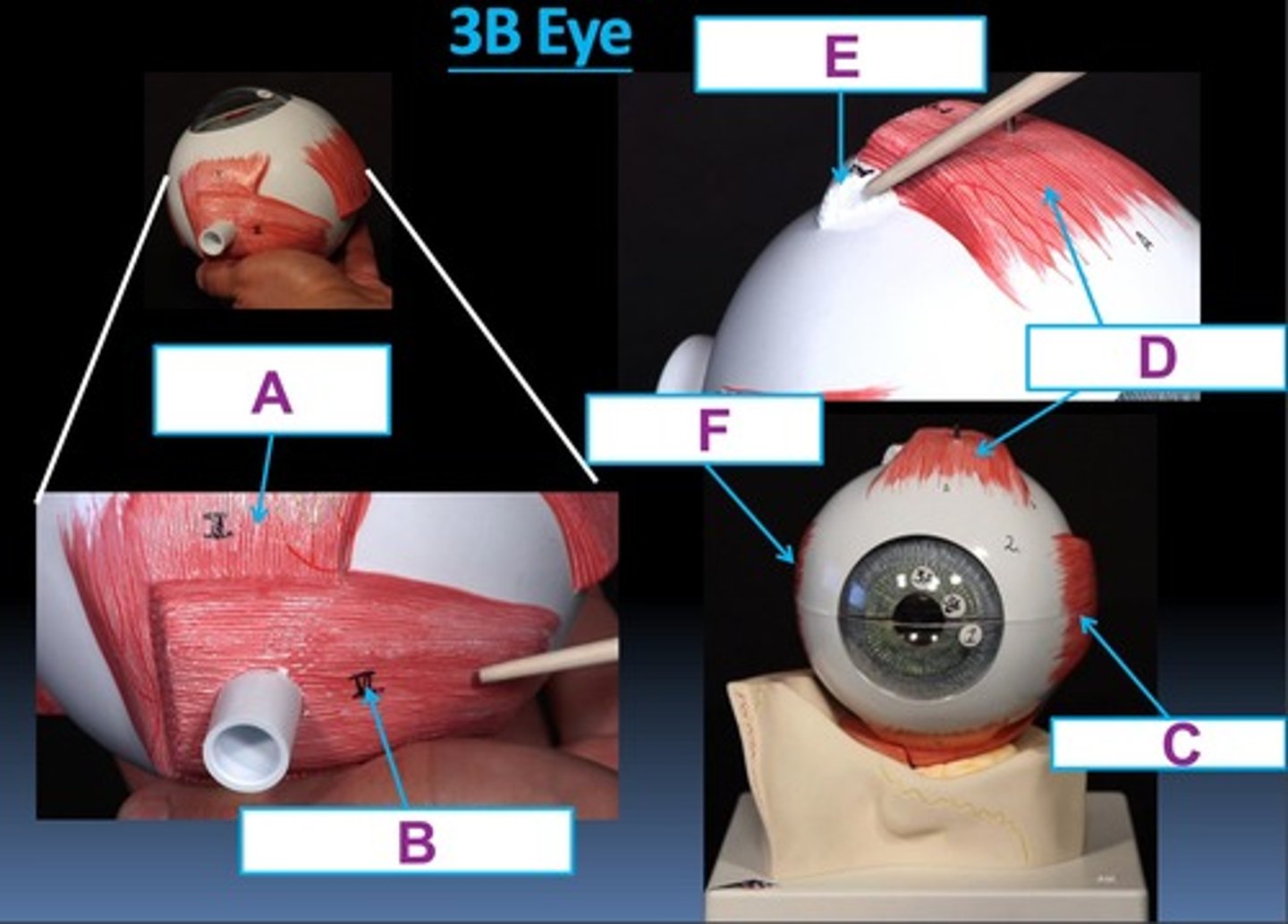
VI) Inferior Oblique: elevates eye and turns it laterally
B
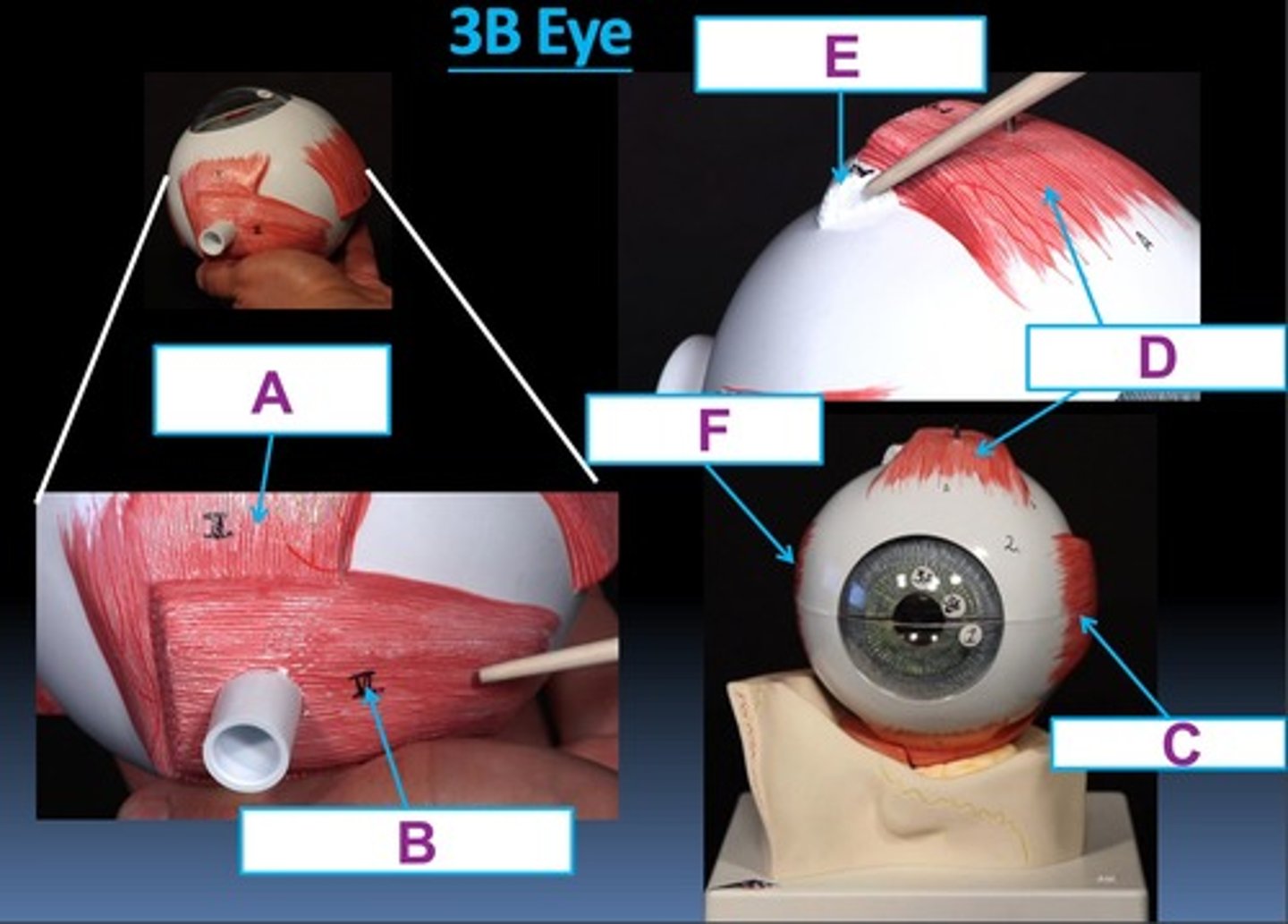
IV) Lateral Rectus: moves eye laterally
C

I) Superior Rectus: elevates eye and turns it medially
D
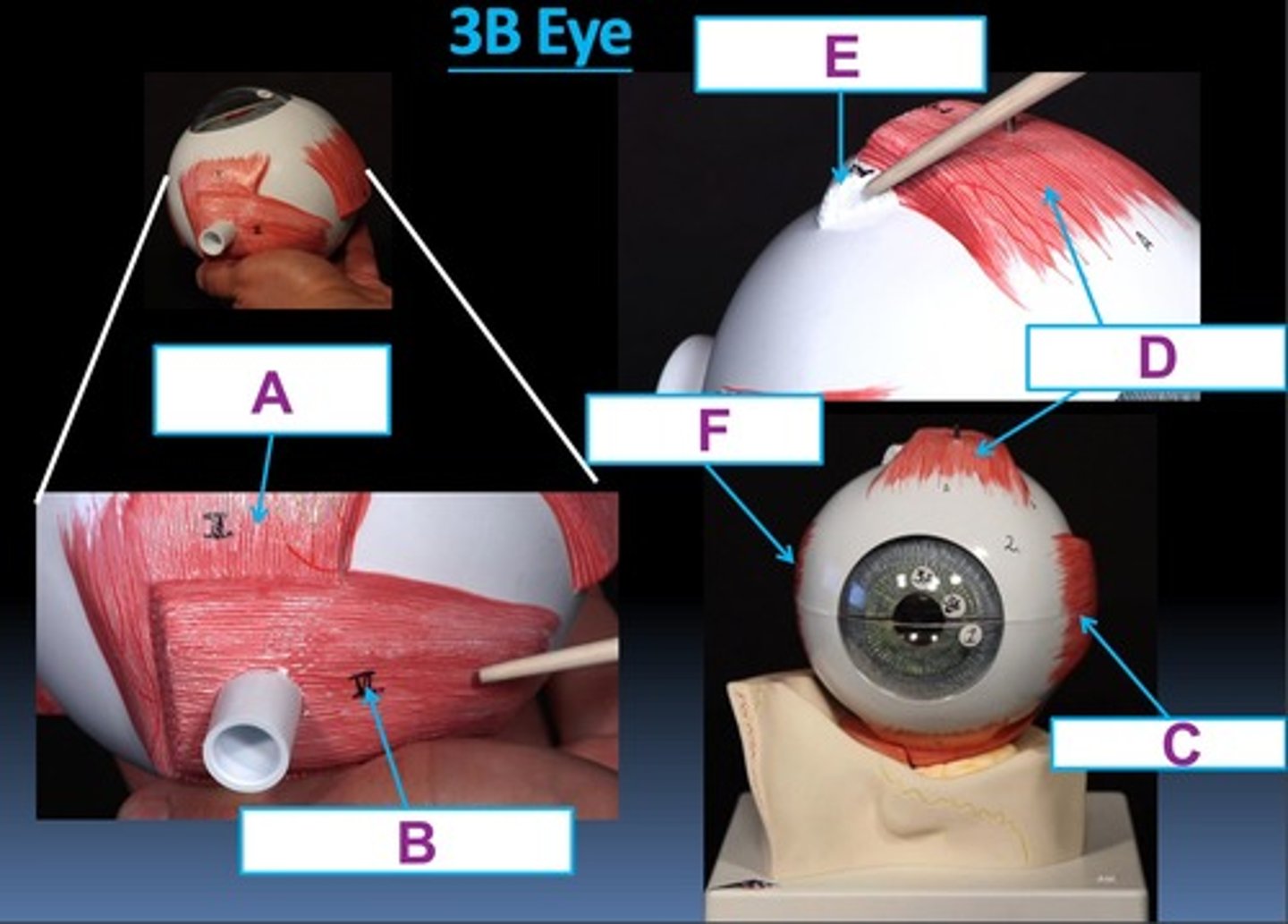
V) Superior Oblique: depresses eye and turns it laterally
E

III) Medial Rectus: moves eye medially
F
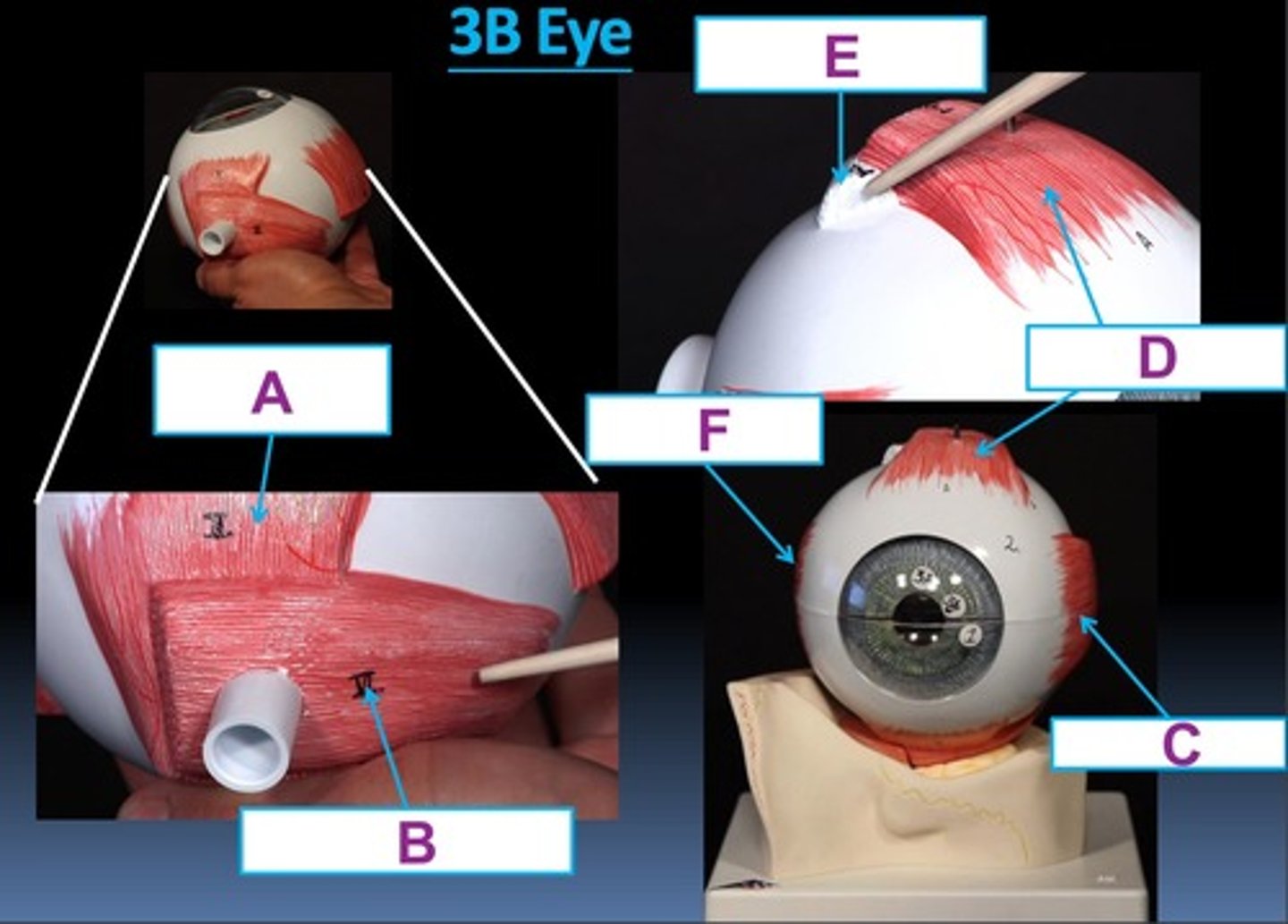
3A) Iris: controls how much light enters the eye
3A
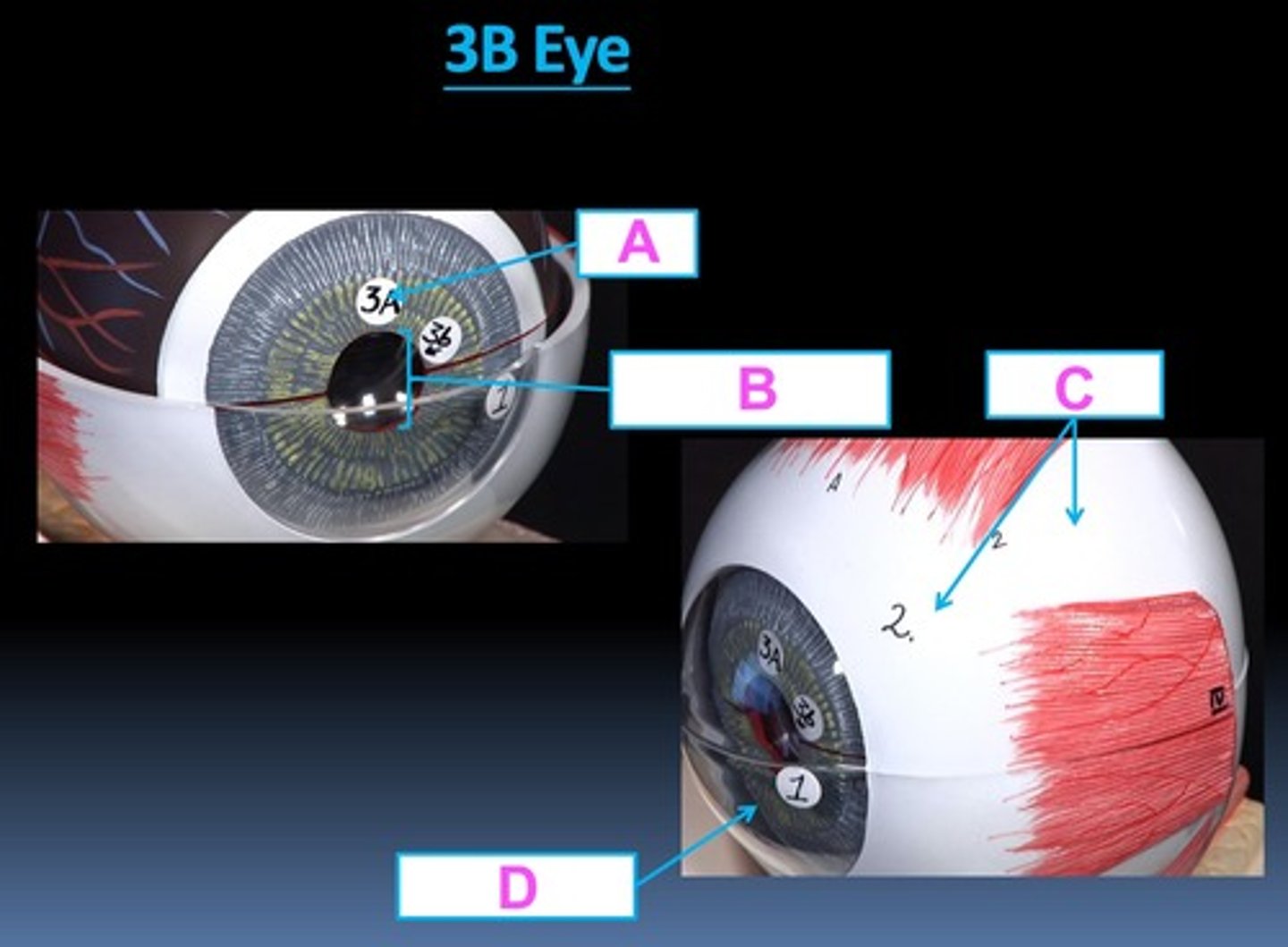
3b) Pupil: lets light enter eye
3B
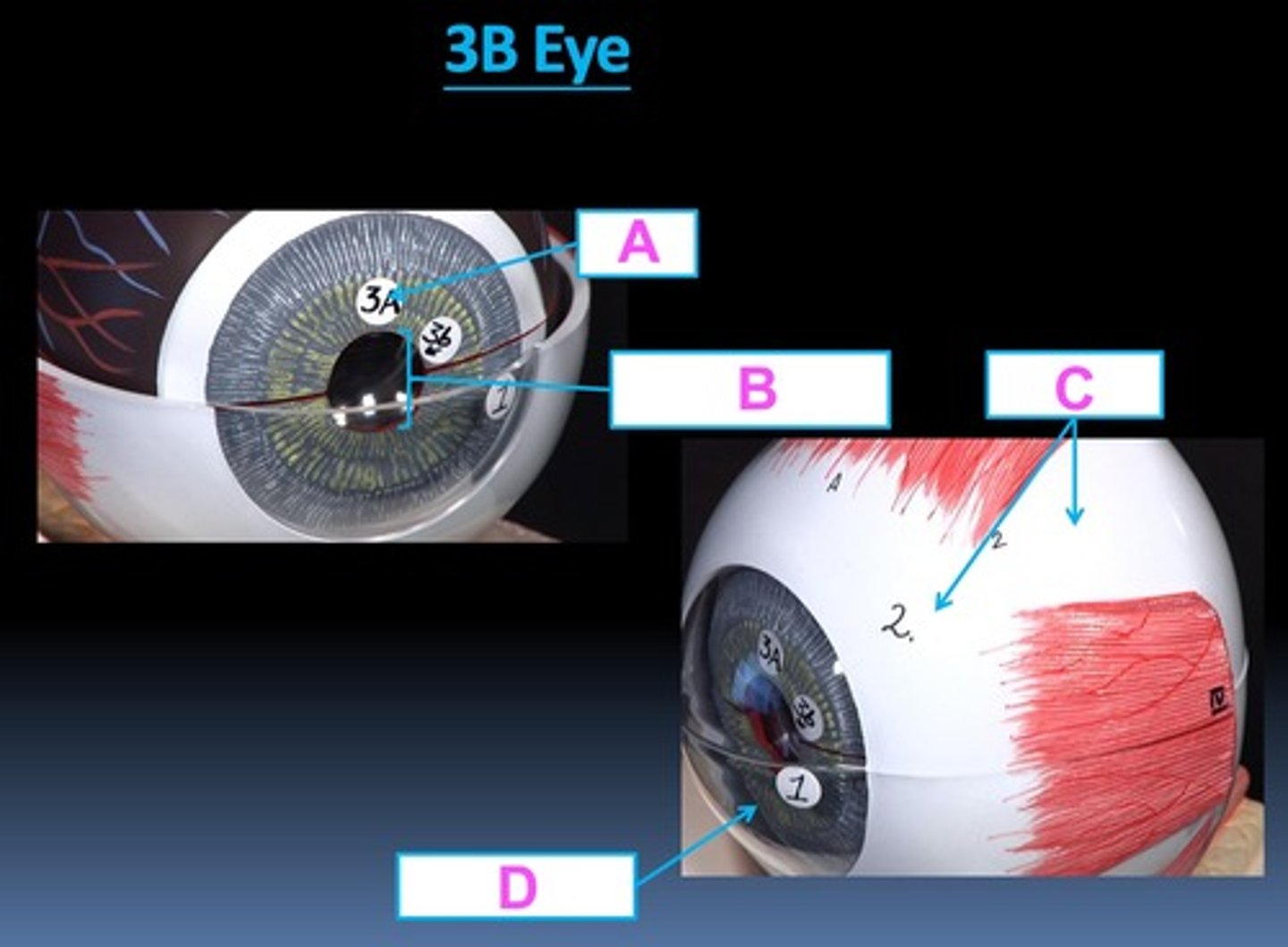
2) Sclera: helps maintain eyeball shape
2
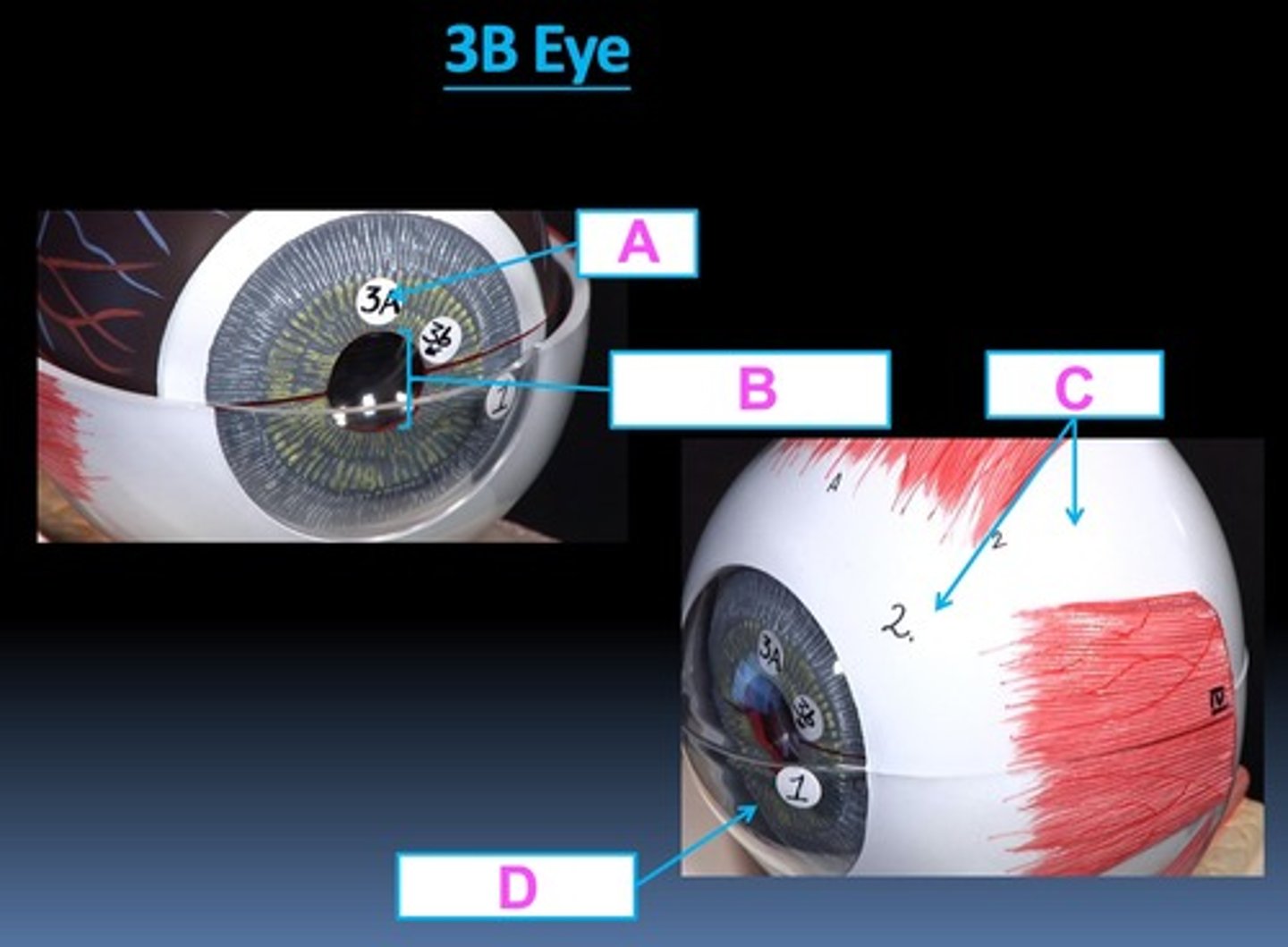
1) Cornea: refracts light
1
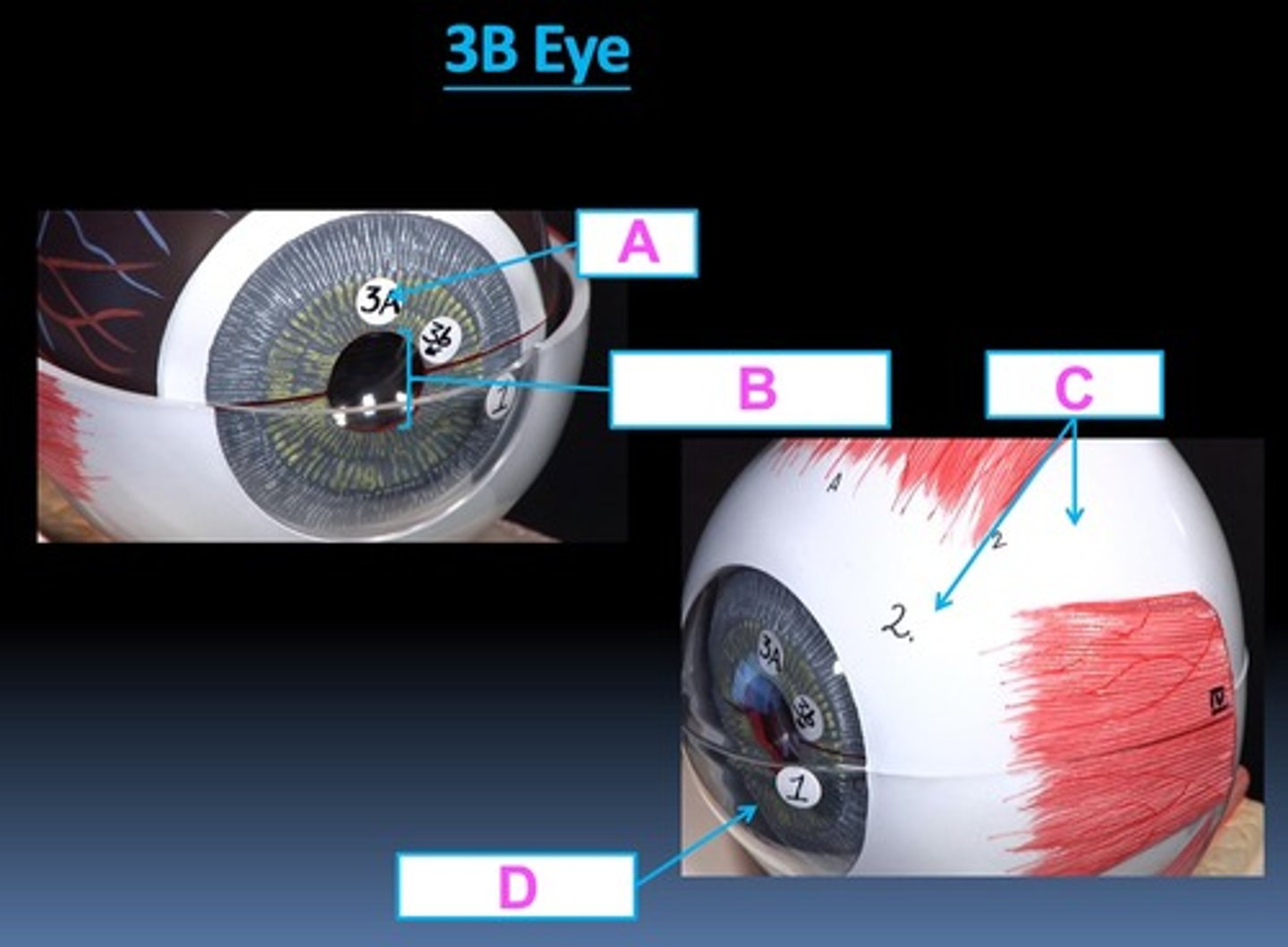
6) Choroid: vascularizes eye
A
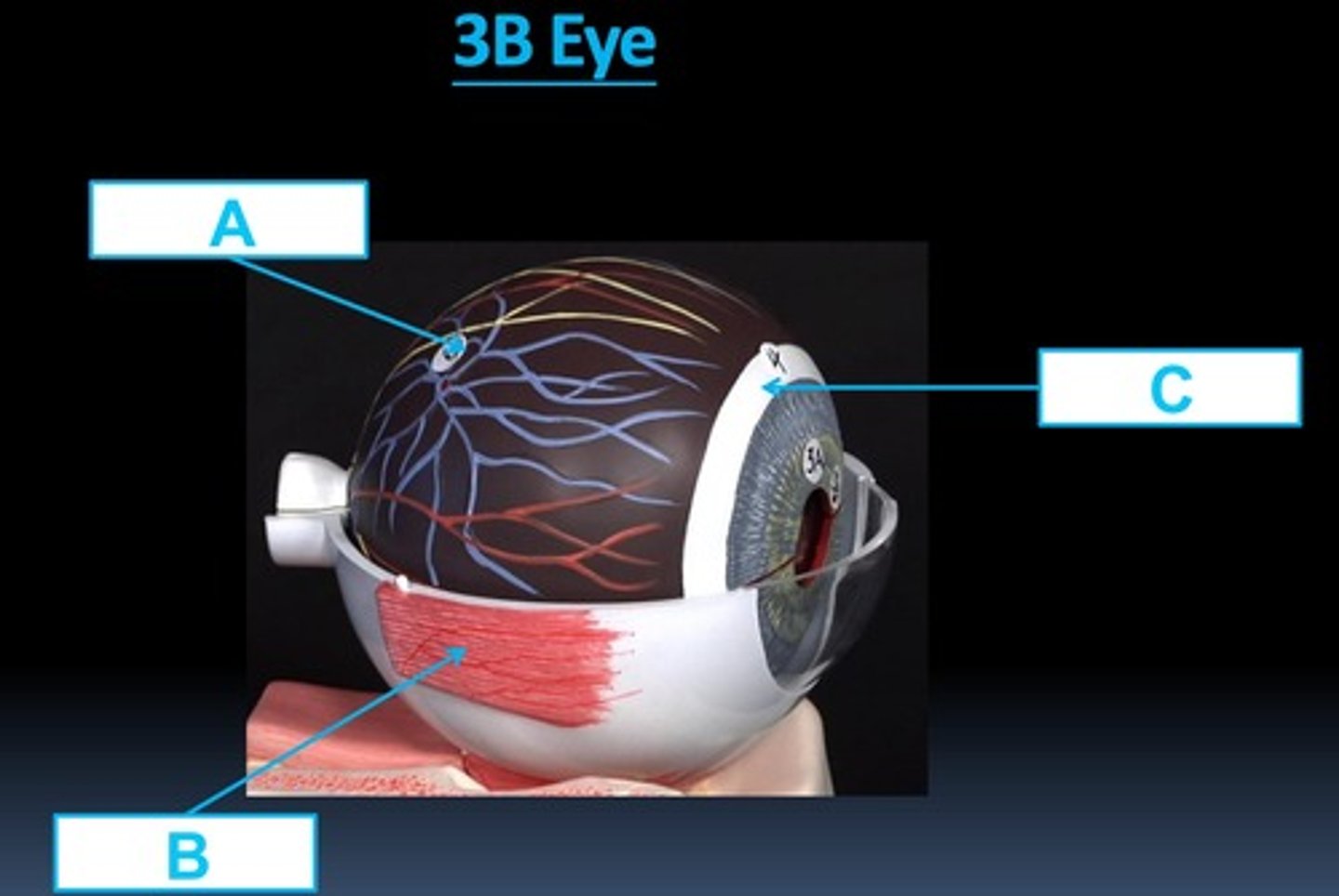
III) Medial Rectus: moves eye medially
B
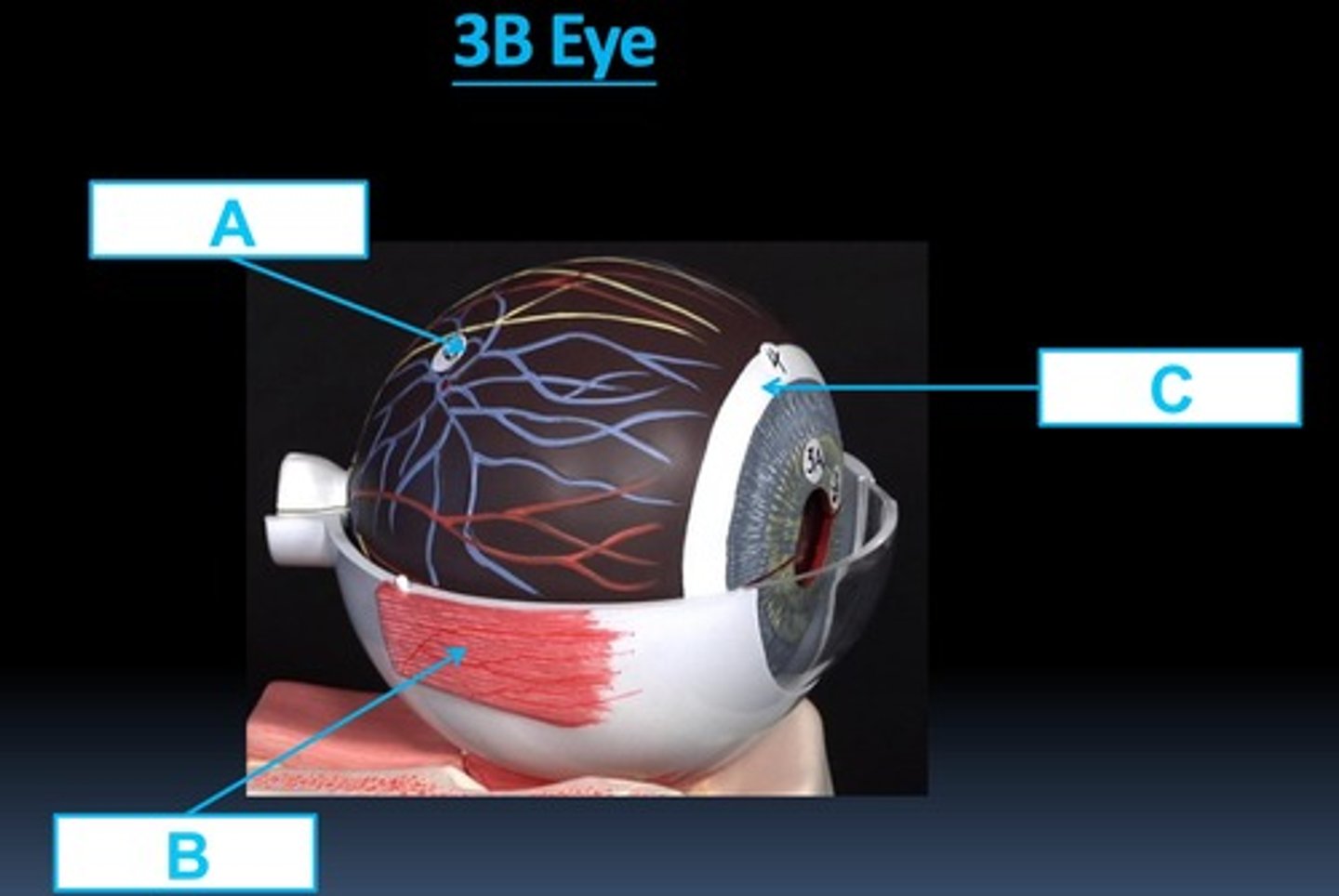
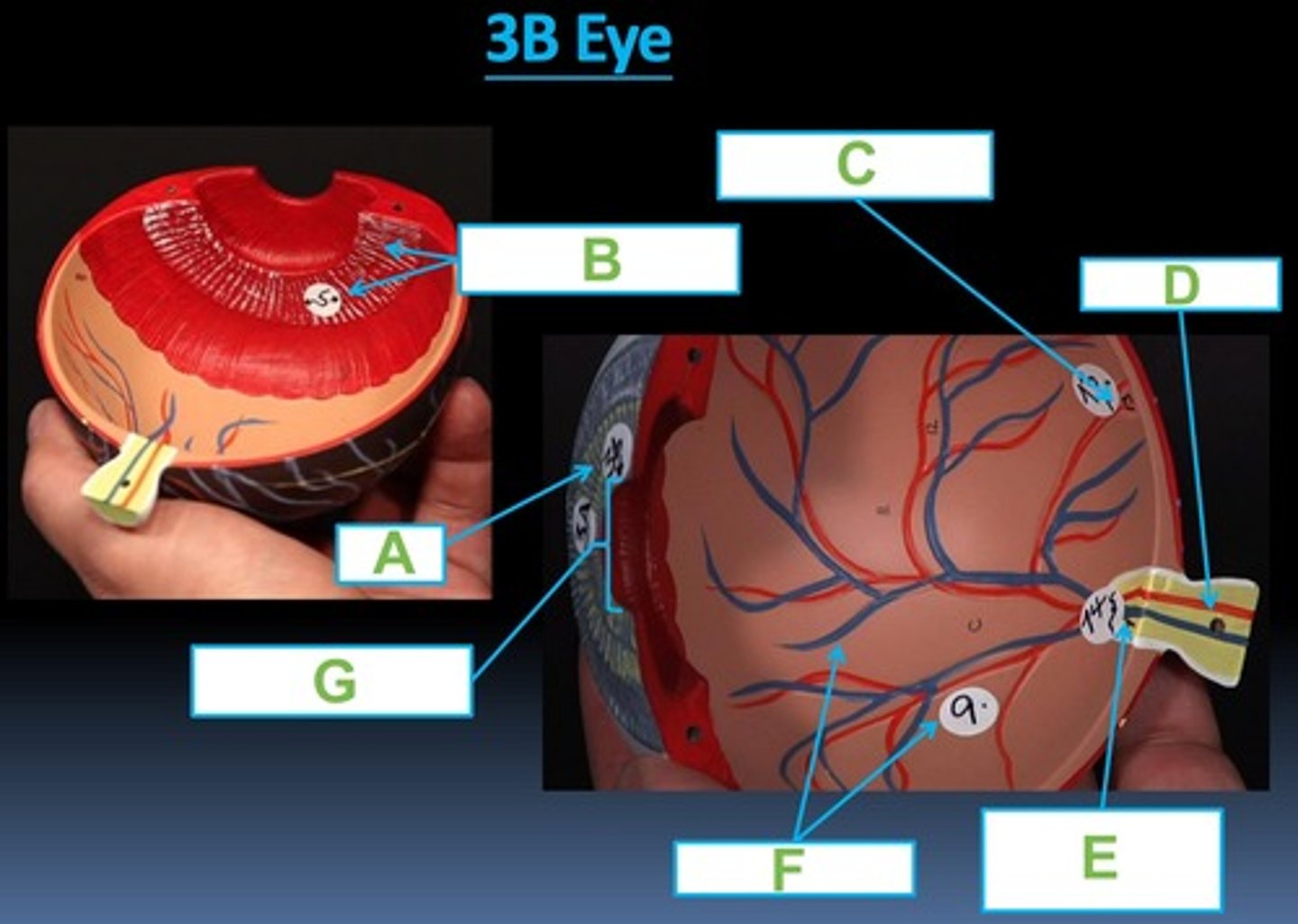
#4) Ciliary Muscle: helps change lens shape
4
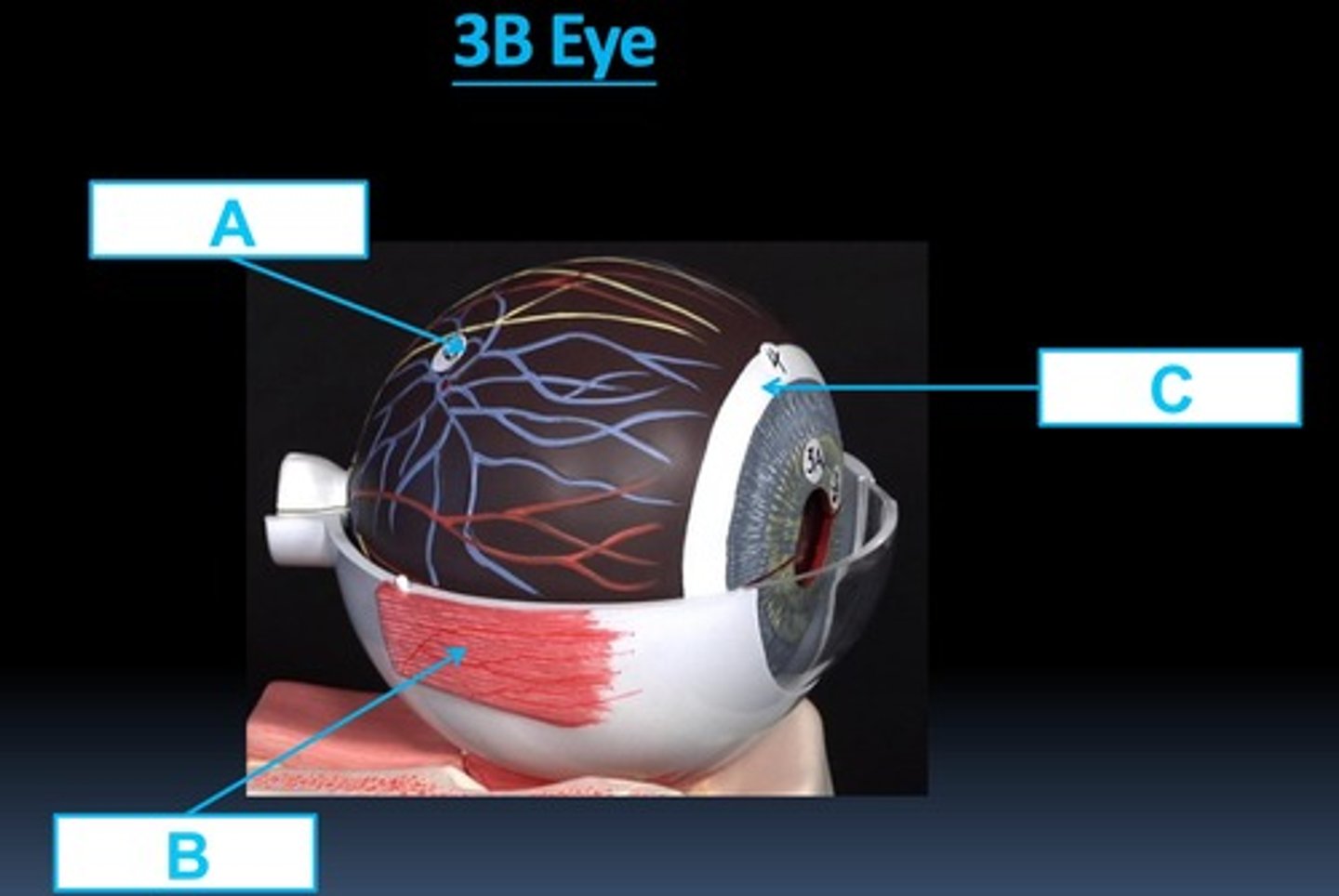
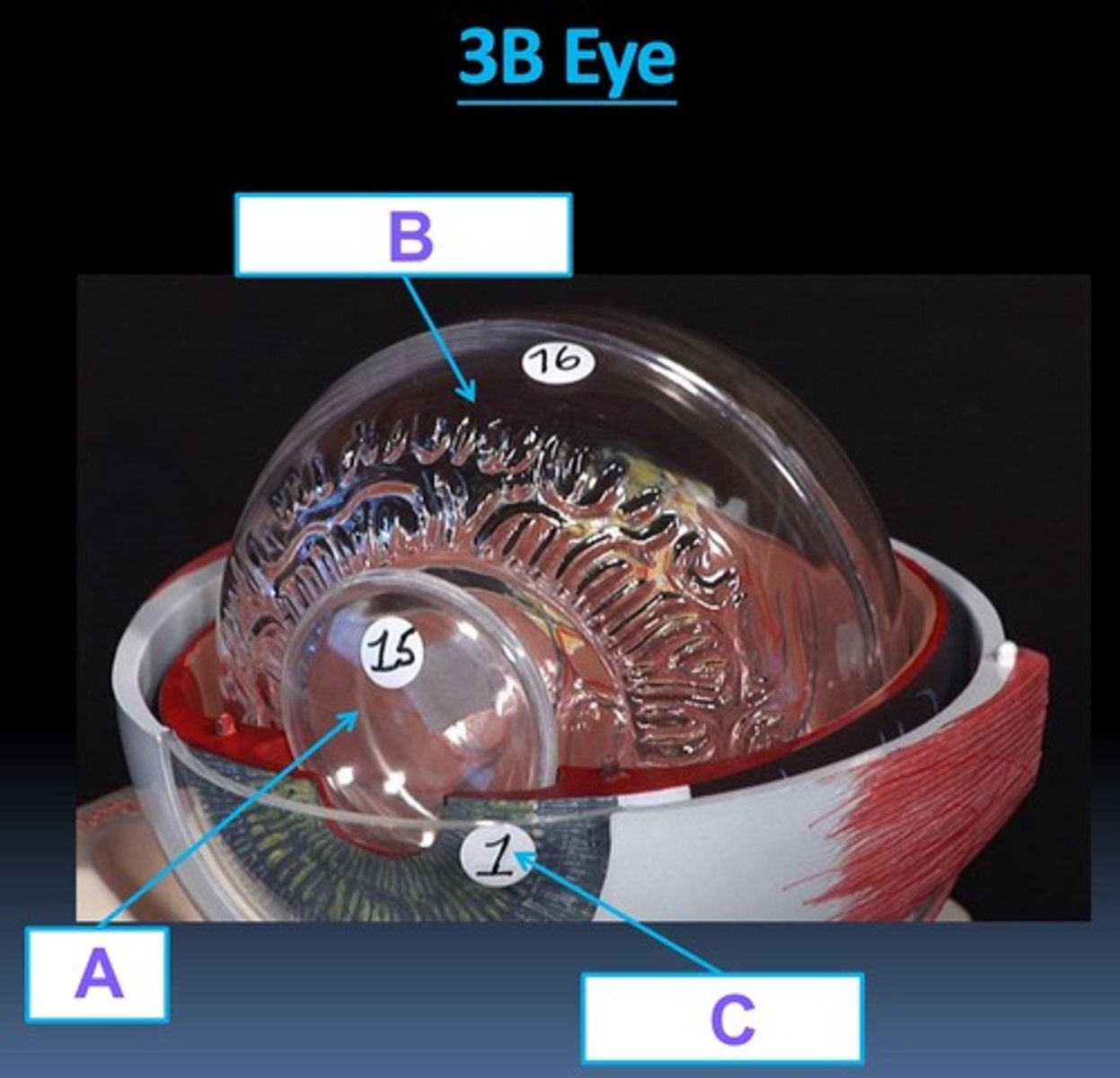
#15) Lens: refracts light
15
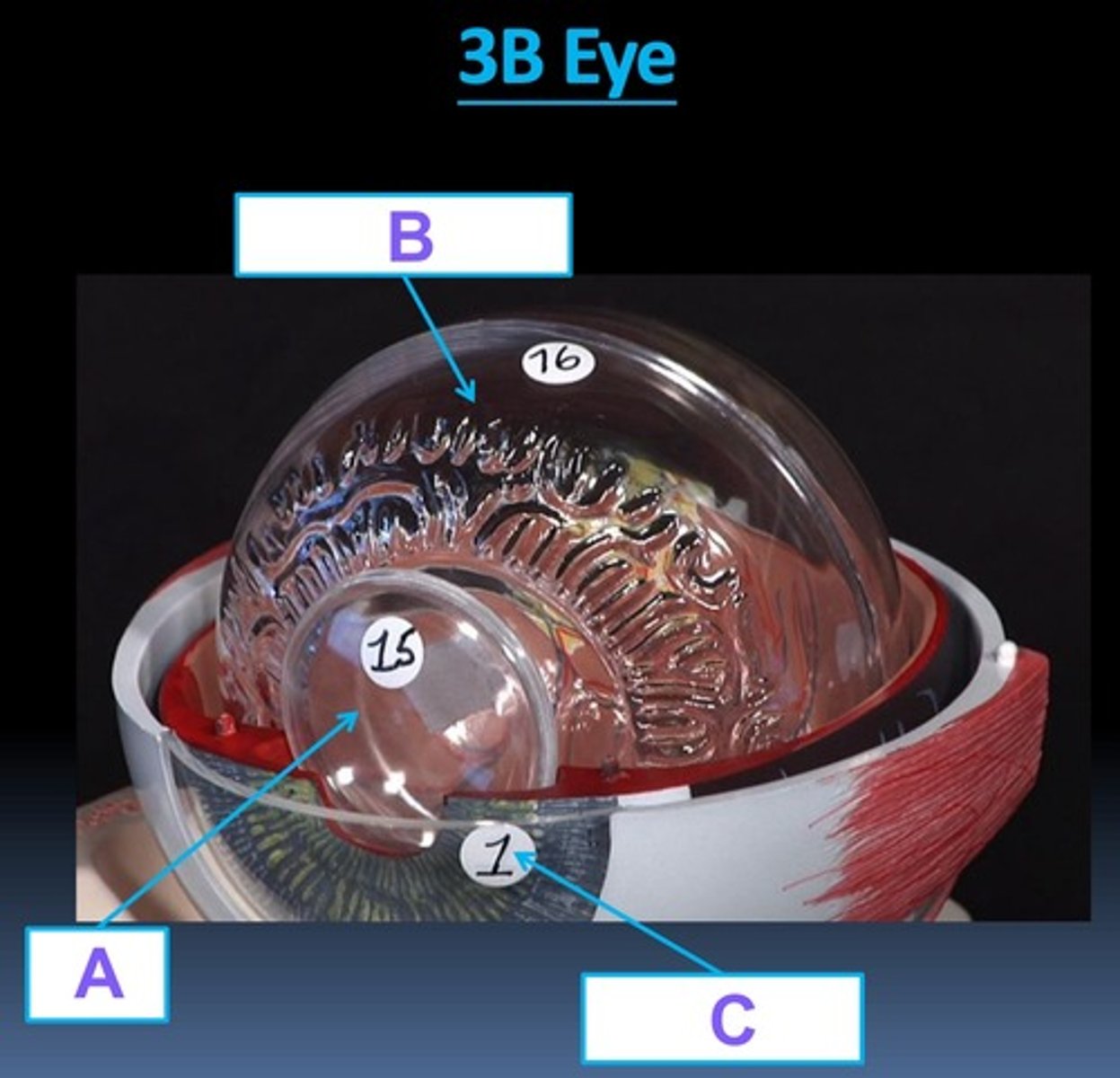
#16) Vitreous Humor: helps keep retina in place (against wall of eyeball)
16
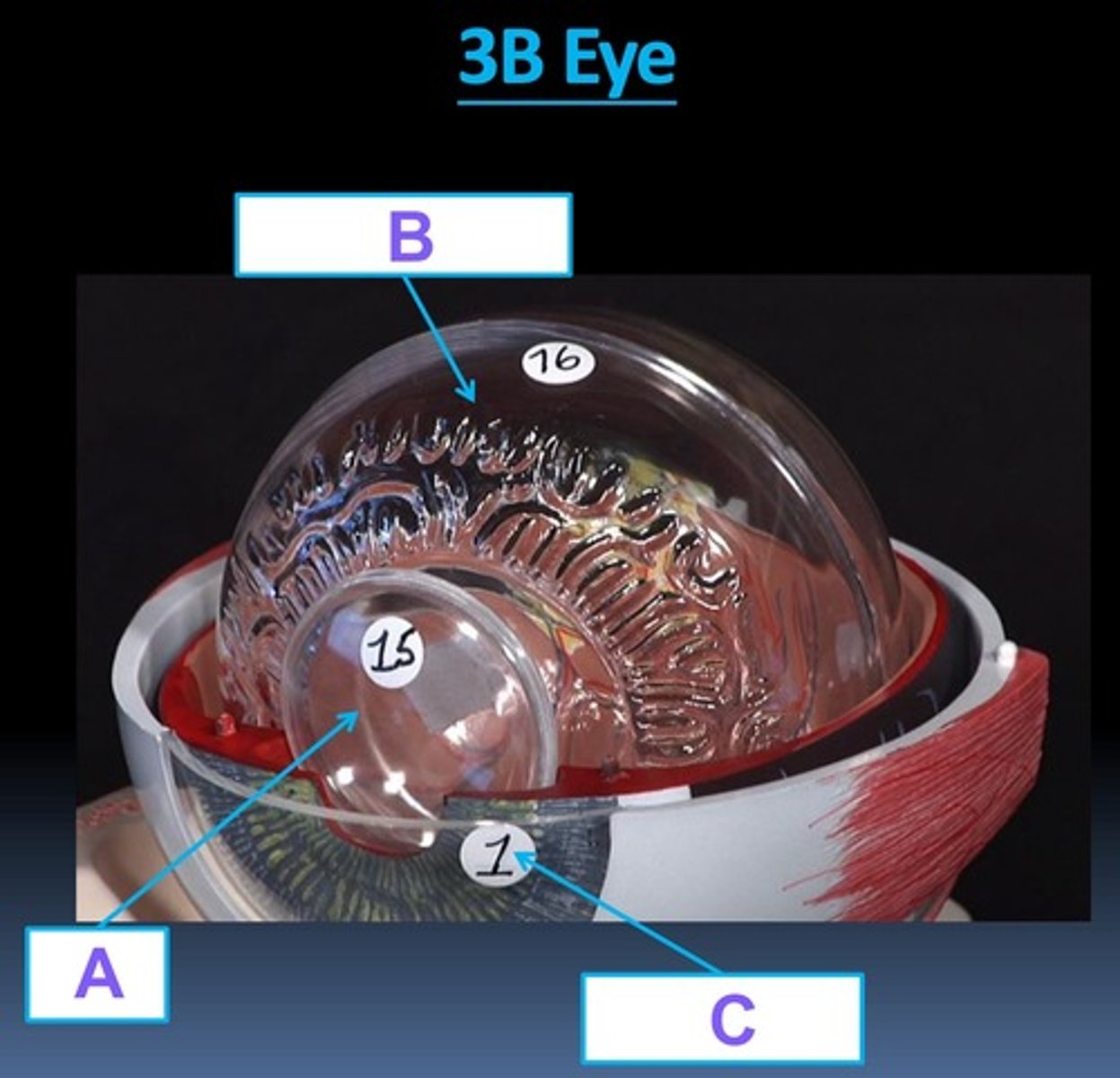
#1) Cornea: refracts light
1
#3A) Iris: controls how much light enters the eye
A
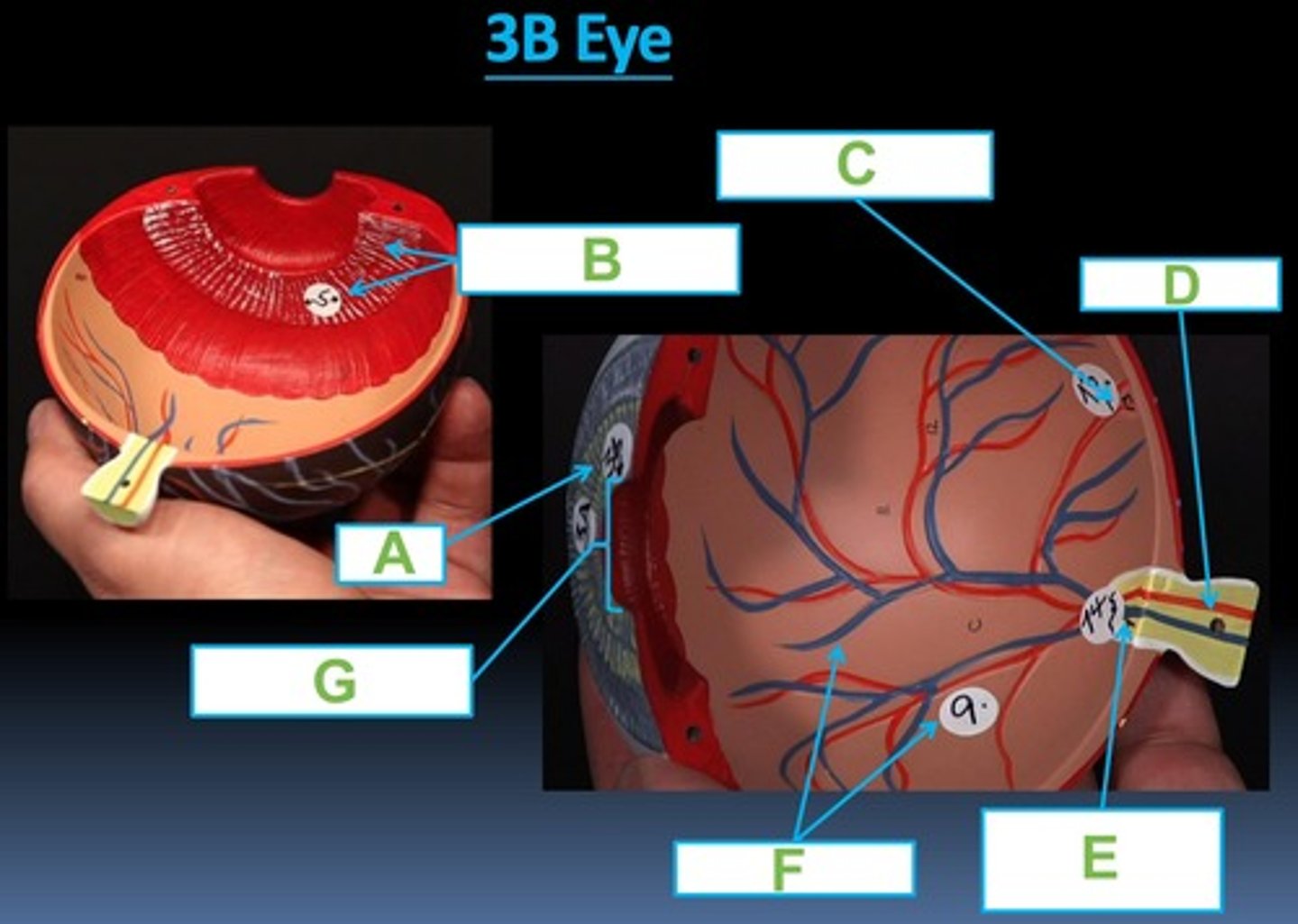
#5) Ciliary Processes: secretes aqueous humor
5
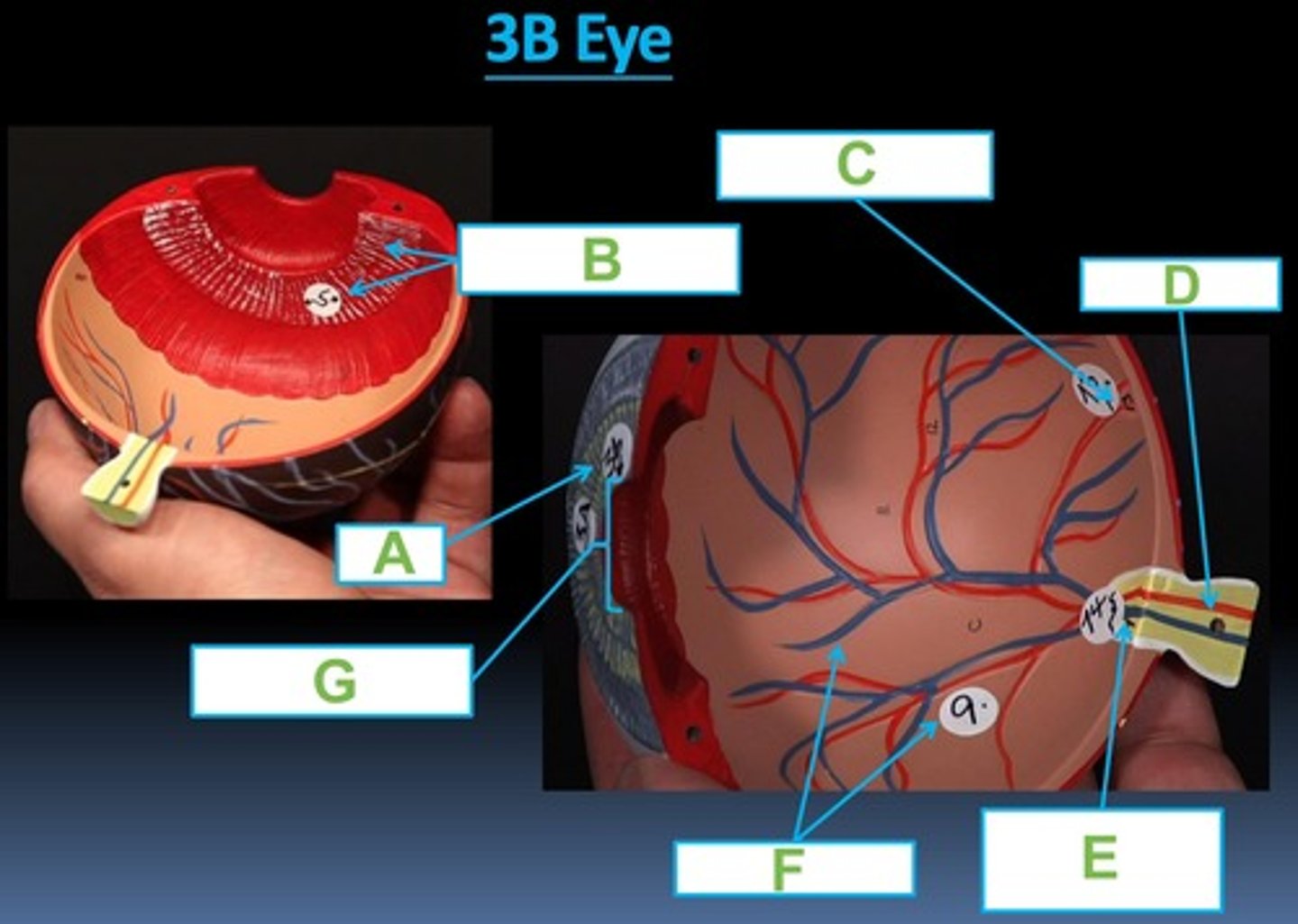
#13) Fovea Centralis: provides sharp central color vision
C
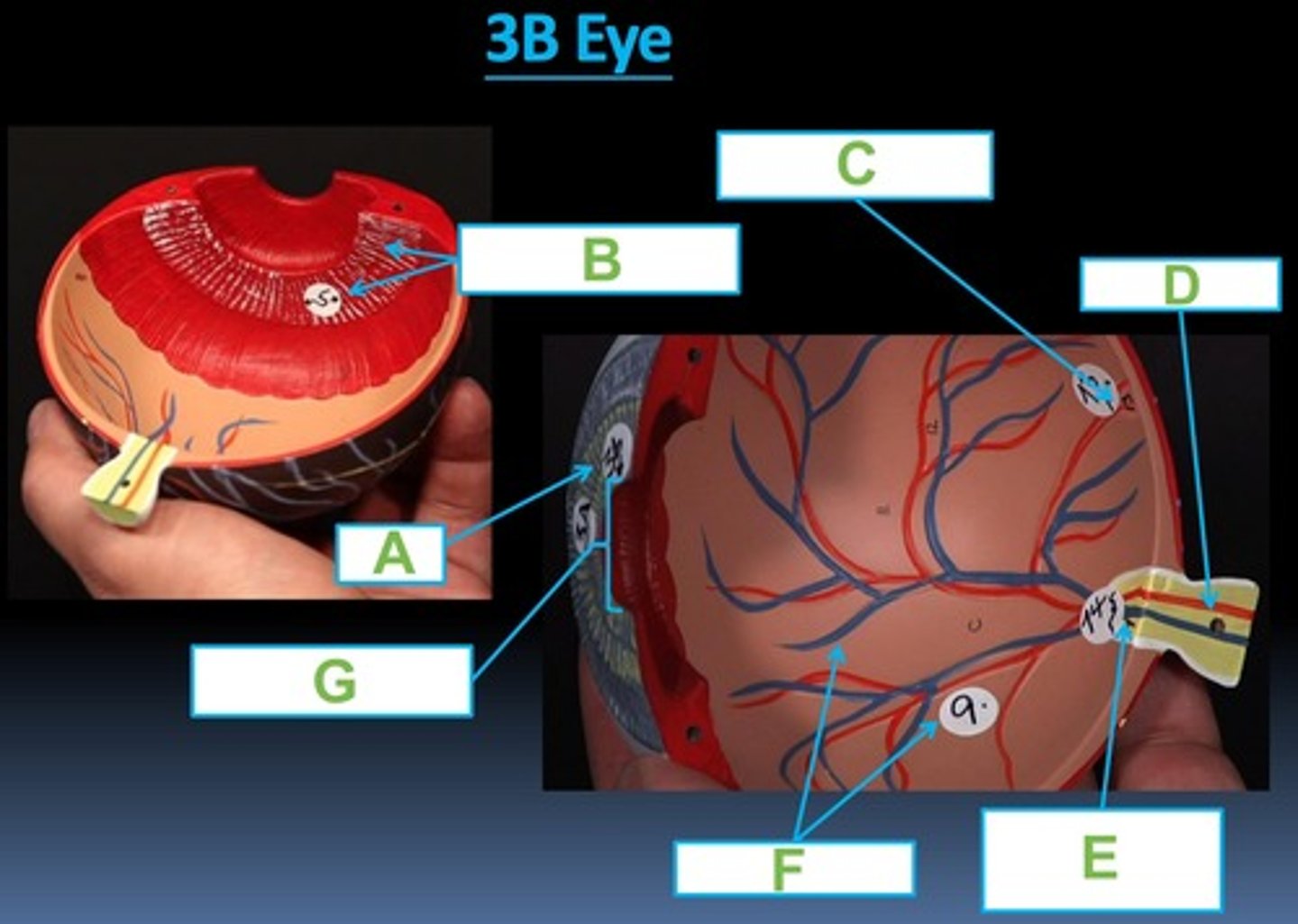
#17) Optic Nerve: CN#2, transmits visual signals from optic disc
D
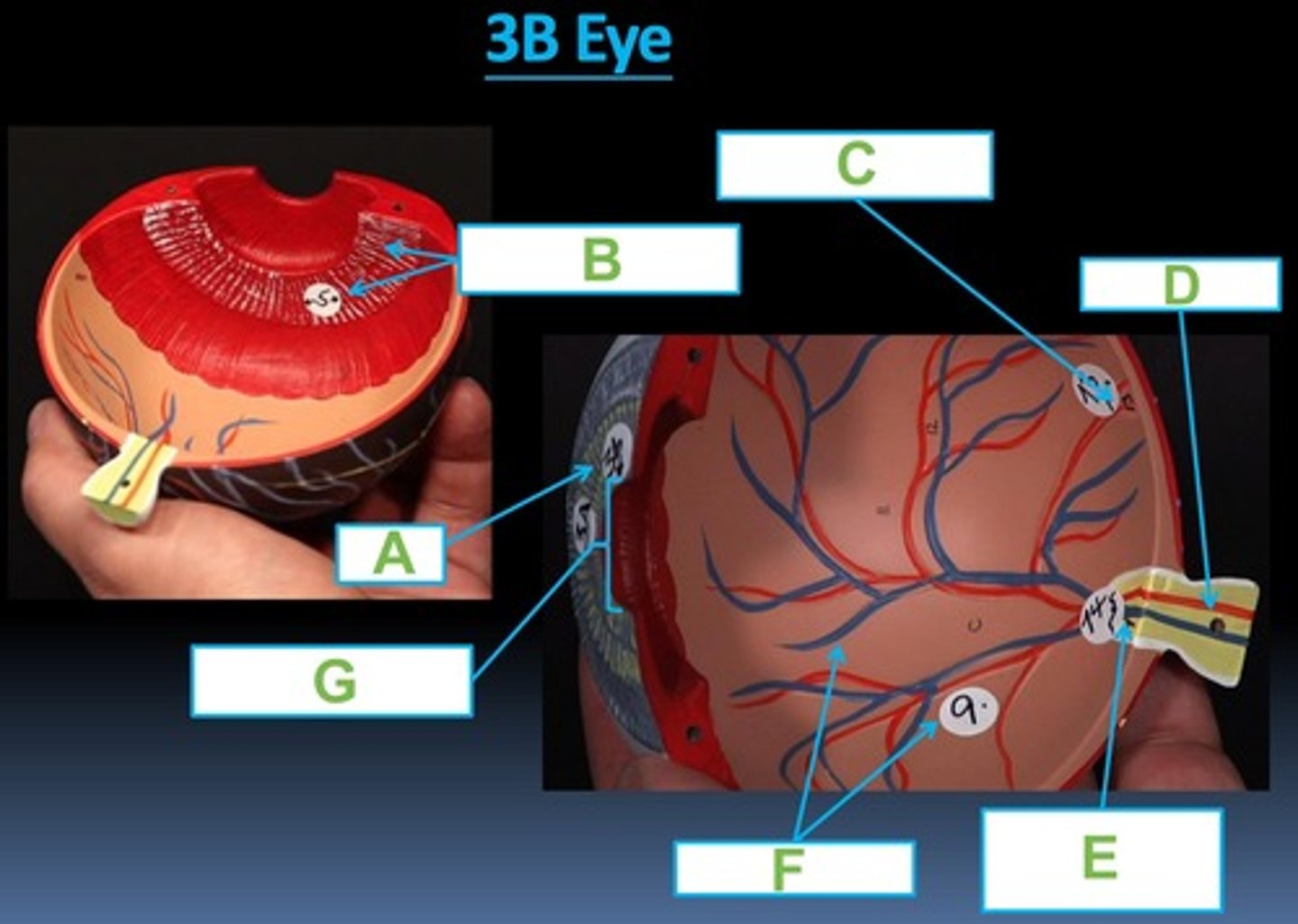
#14) Blind Spot: total insensitivity to light
E
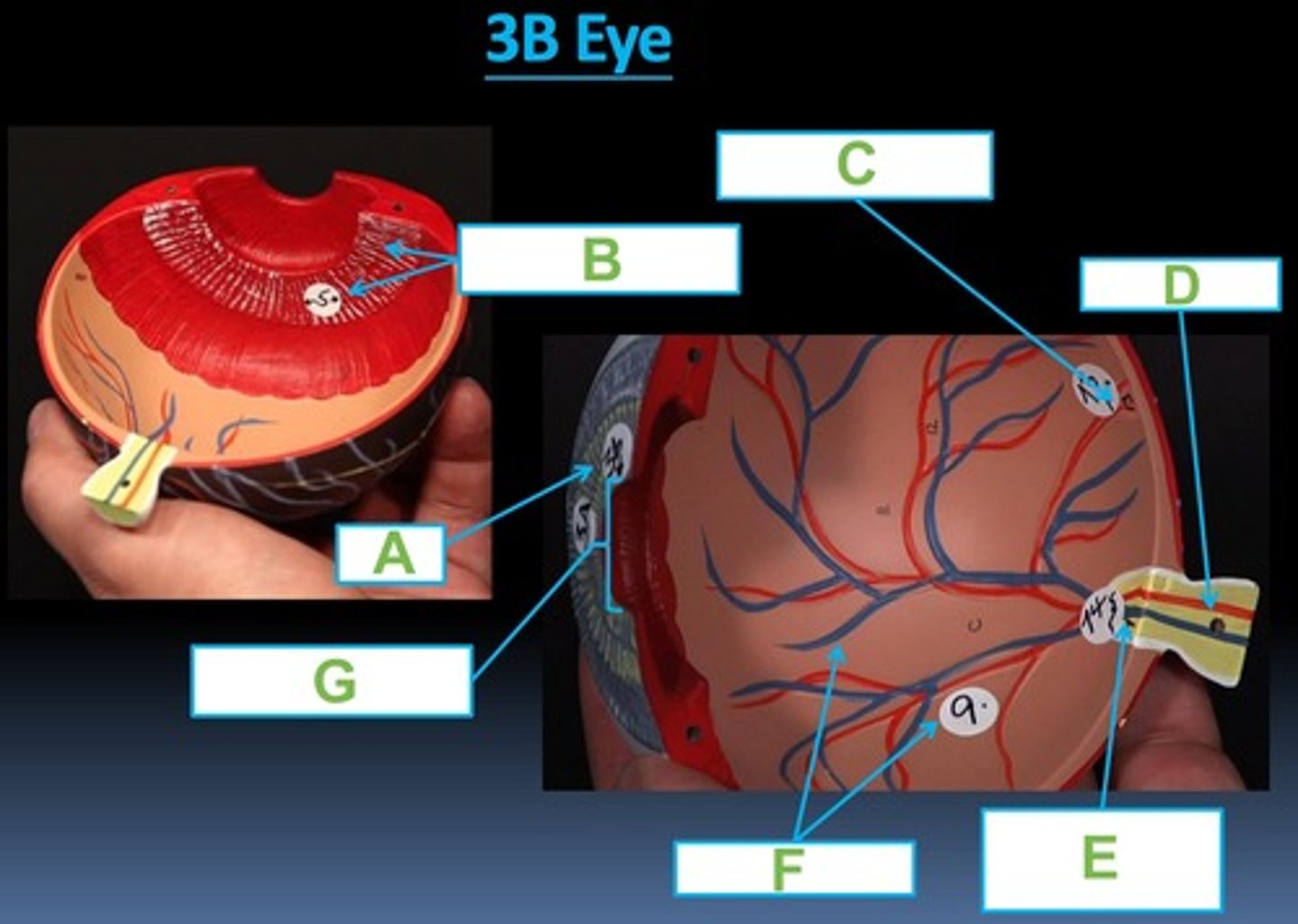
#9) Retina: vision
9
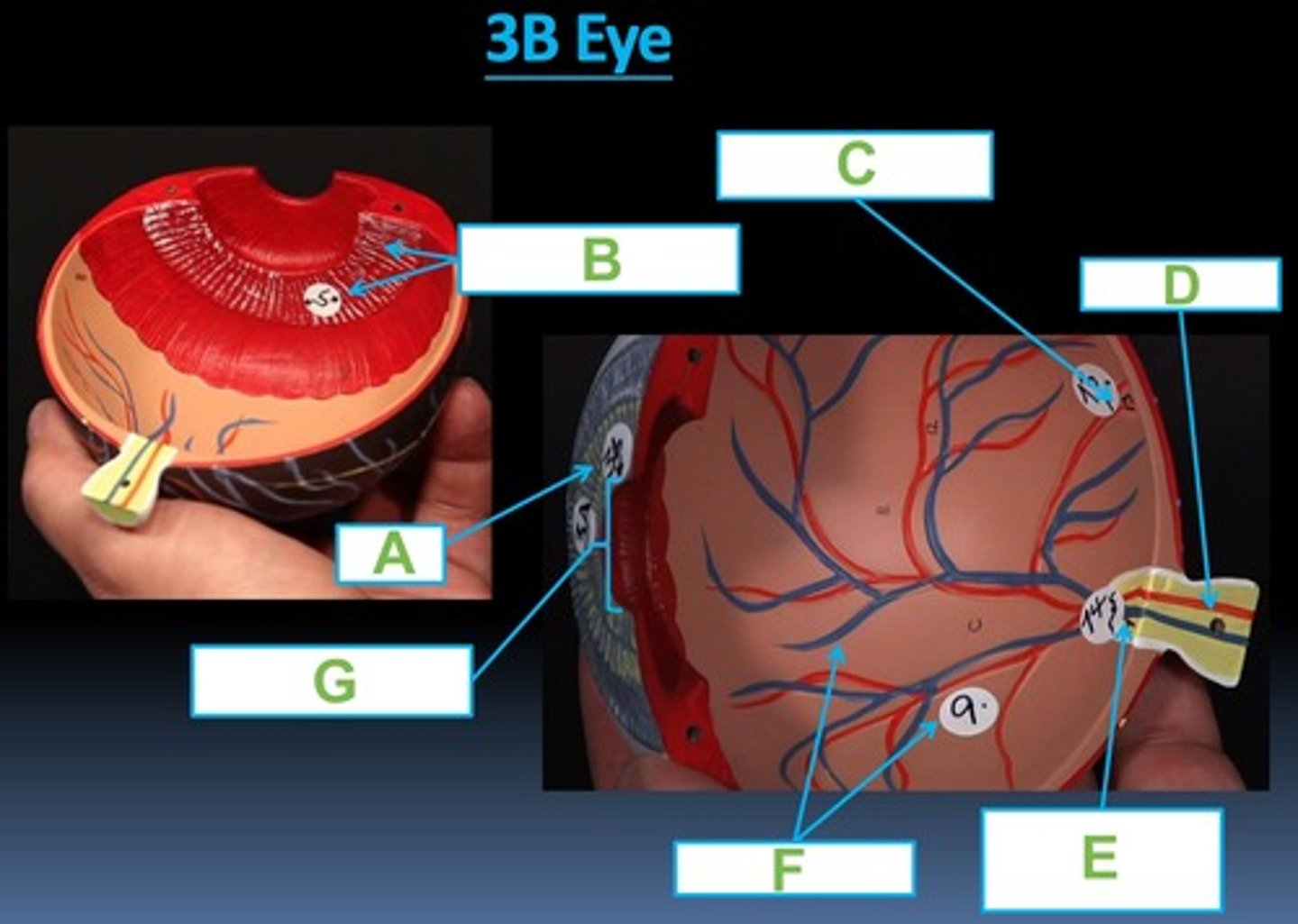
#3b) Pupil: lets light enter eye
G
 Note
Note  Flashcards (63)