Chapter 21: Capacitance
 Call Kai
 Learn
Learn Practice Test
 Spaced Repetition
 Match
Match Flashcards
 Knowt Play
1/31

There's no tags or description
Looks like no tags are added yet.
Name | Mastery | Learn | Test | Matching | Spaced | Call with Kai |
|---|
No analytics yet
Send a link to your students to track their progress
32 Terms
21.1 intro
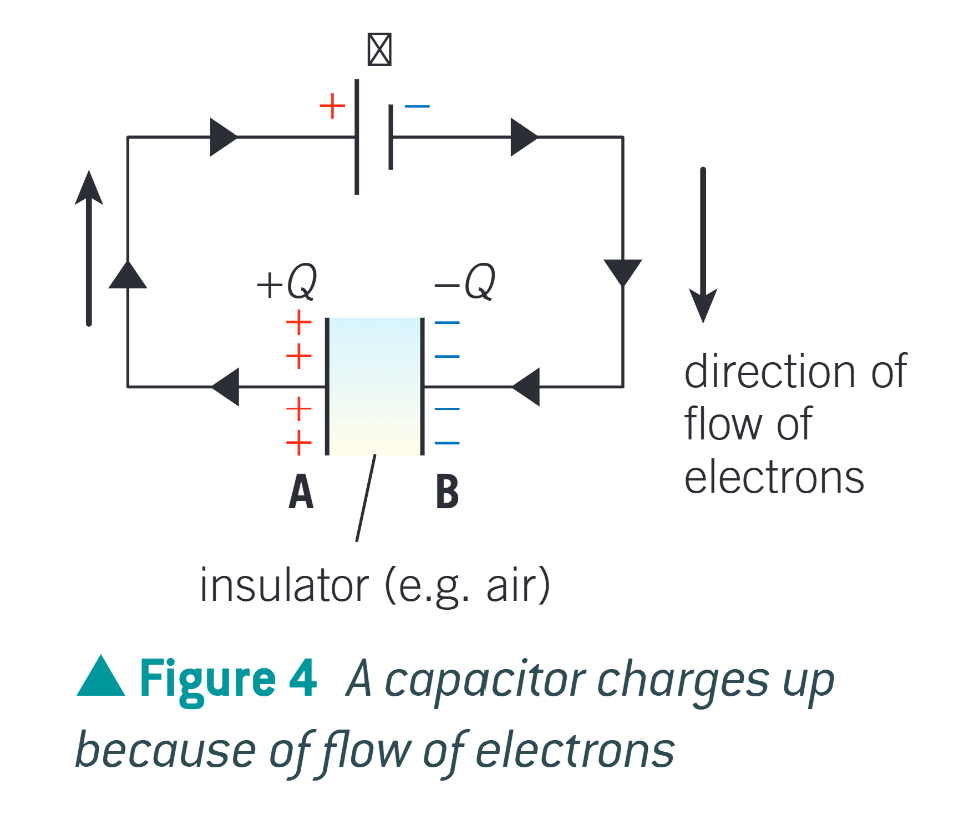
explain what is happening here
when the capacitor is connected to the cell, electrons flow from the cell for a very short time
they cannot travel between the plates because of the insulation
the very brief current means electrons are removed from plate A of the capacitor and at the same time electrons are deposited onto the other plate B
plate a becomes electron deficient and plate b gains electrons
the current in the circuit must be the same at all points and charge must be conserved, so the 2 plates have an equal but opposite charge of magnitude Q
therefore, there is a pd across the plates
the current in the circuit falls to 0 when the pd across the plates is equal to the emf of the cell
the capacitor is then fully charged
the net charge on the capacitor plates is 0
the capacitor is therefore really a device that separates electrical charge into -Q and +Q
how are commercial capacitors usually marked
with their capacitance value, which indicates the amount of charge Q that the capacitor can store for a given pd V.
the capacitance of a capacitor is defined as…
the charge stored per unit pd across it. that is C=Q/V
what is capacitance measured in?
farads (F)
for any capacitor, what happens when the amount of positive and negative charged stored on the 2 plates is greater
the pd is greater
1 F = …
1 CV-1
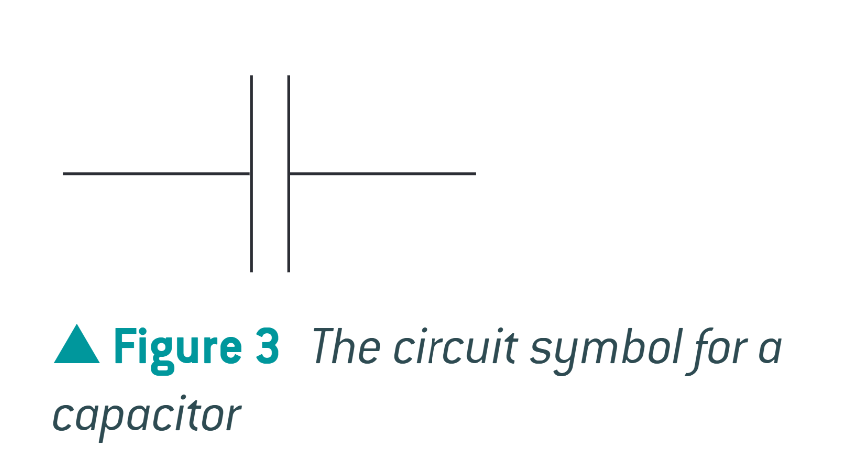
circuit symbol for capacitor
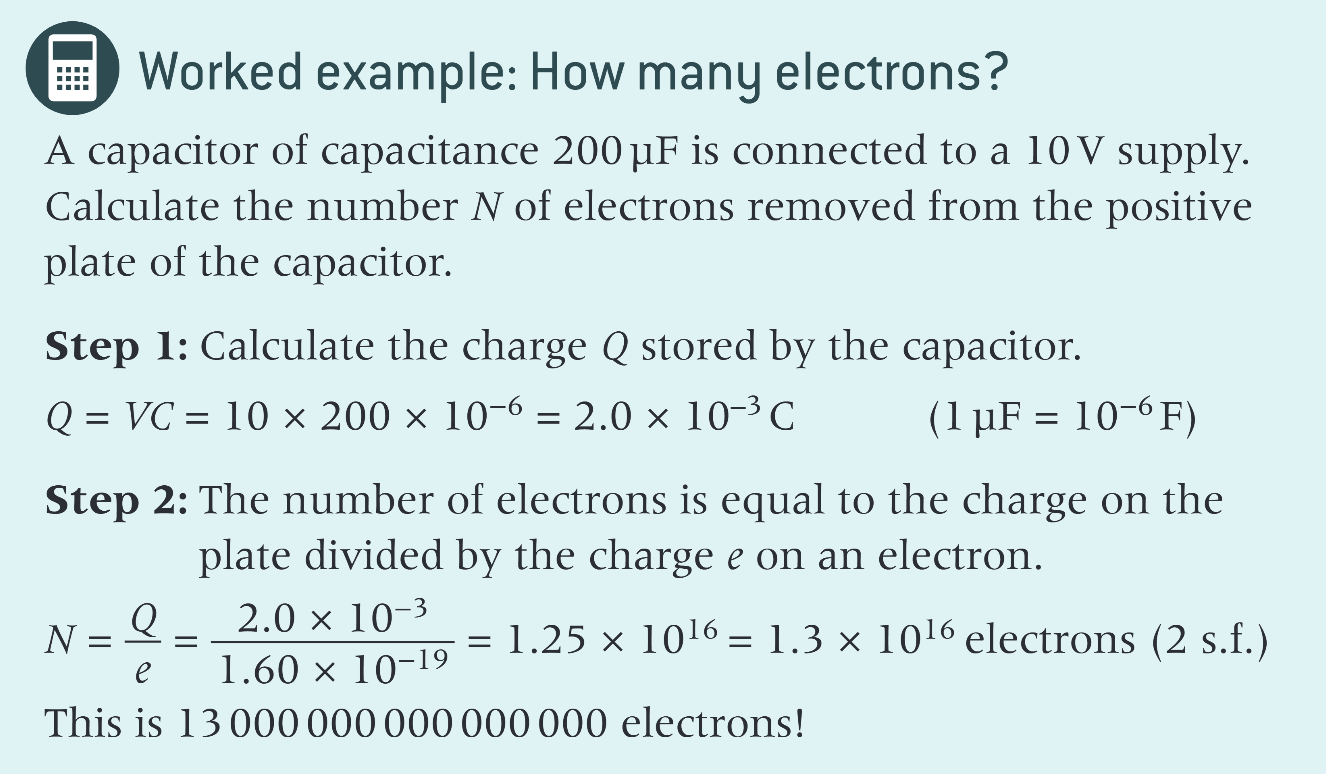
worked example: How many electrons?
21.2 Capacitors Intro
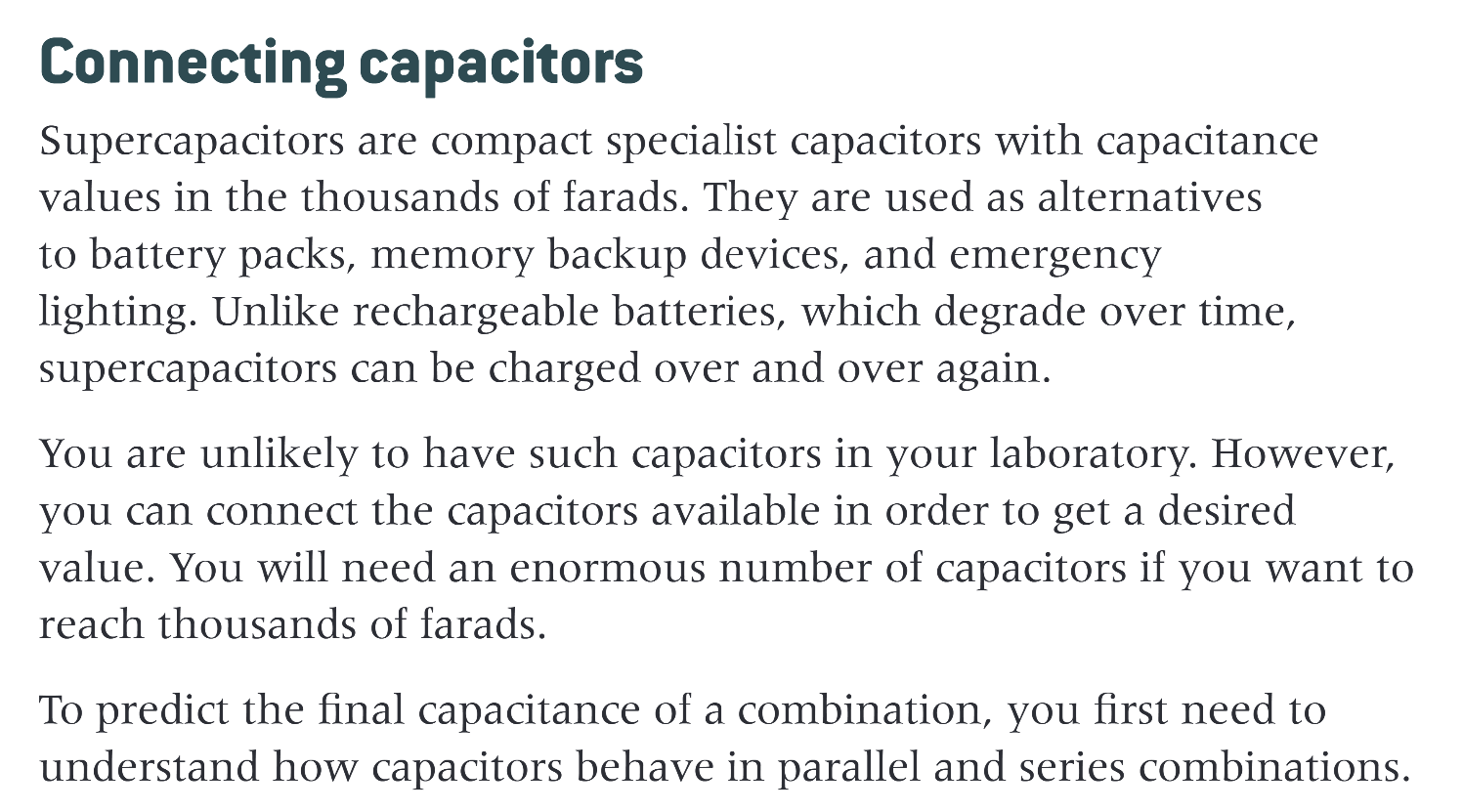
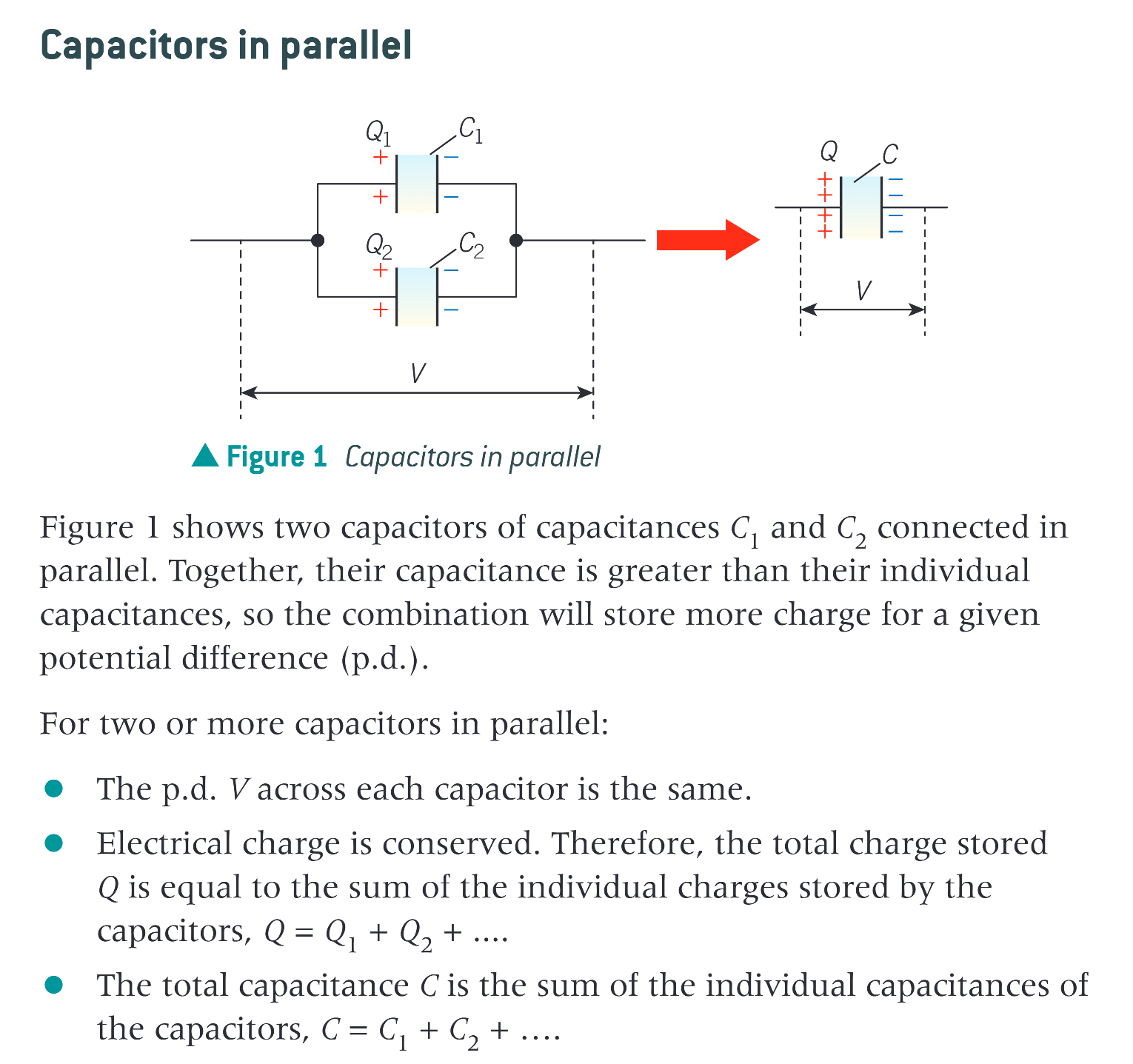
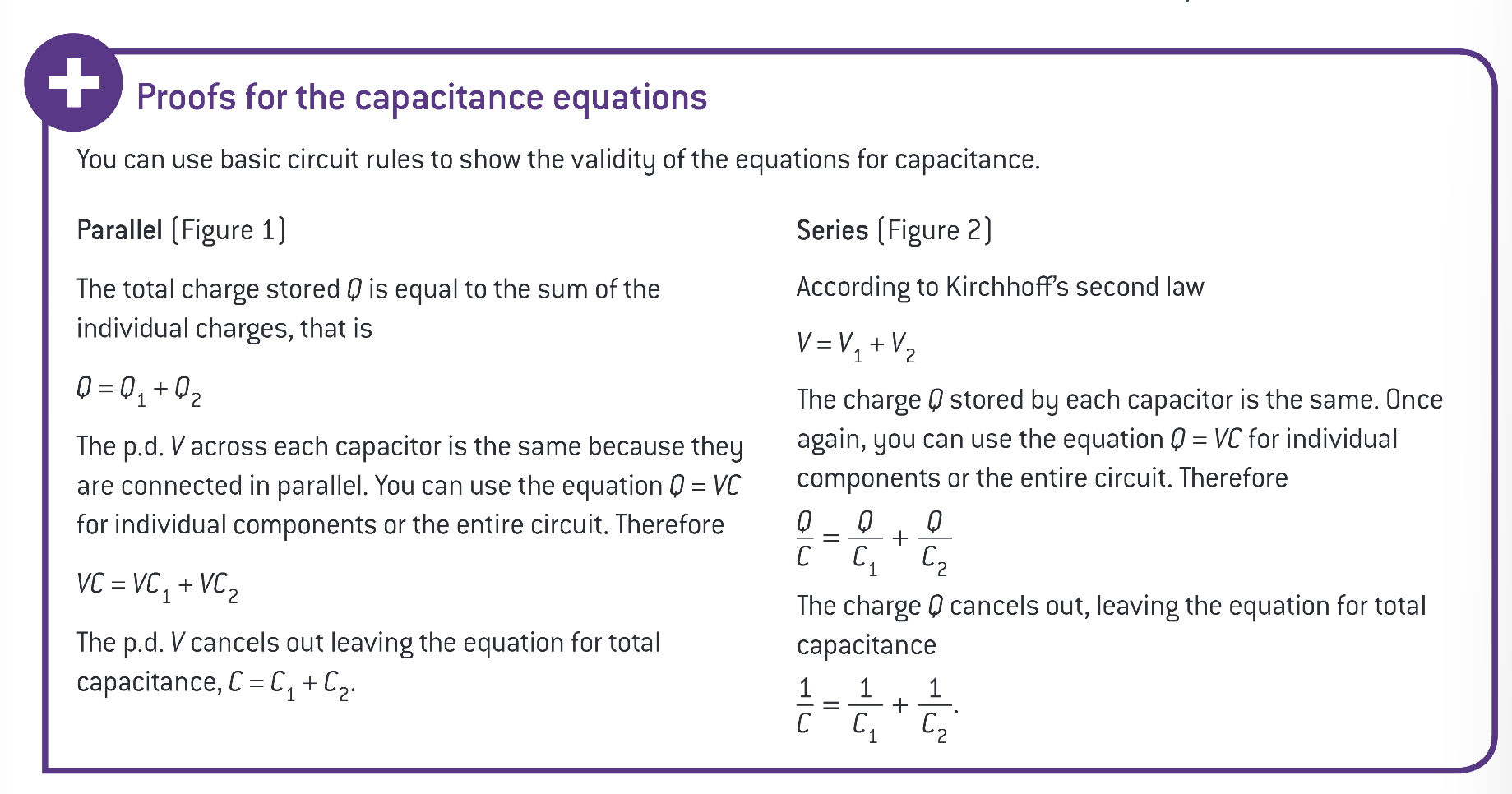
Rules of capacitors in parallel
capacitors in series
Together, their capacitance is less than their individual capacitances, so this combination will store less charge for a given pd. All the capacitors in series store the same charge. This is even true when they have different capacitances.
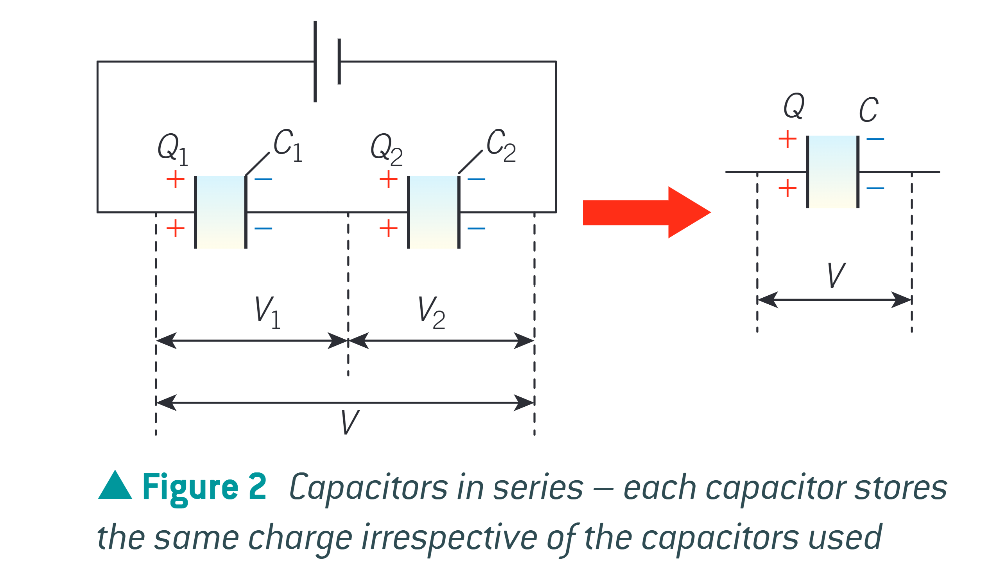
the cell is connected to the left-hand plate of the capacitor of capacitance C1 and to the right - hand plate of the capacitor of capacitance C2. these plates acquire equal and opposite charges as electrons flow from and to these plates. The middle 2 plates are not connected to the cell because of the presence of dielectric layers, but transfer of electrons between these plates ensures that they too acquire charge Q of the same magnitude. The overall charge of each capacitor is 0, but the magnitude of the charge on each plate is Q.
rules for capacitors in series
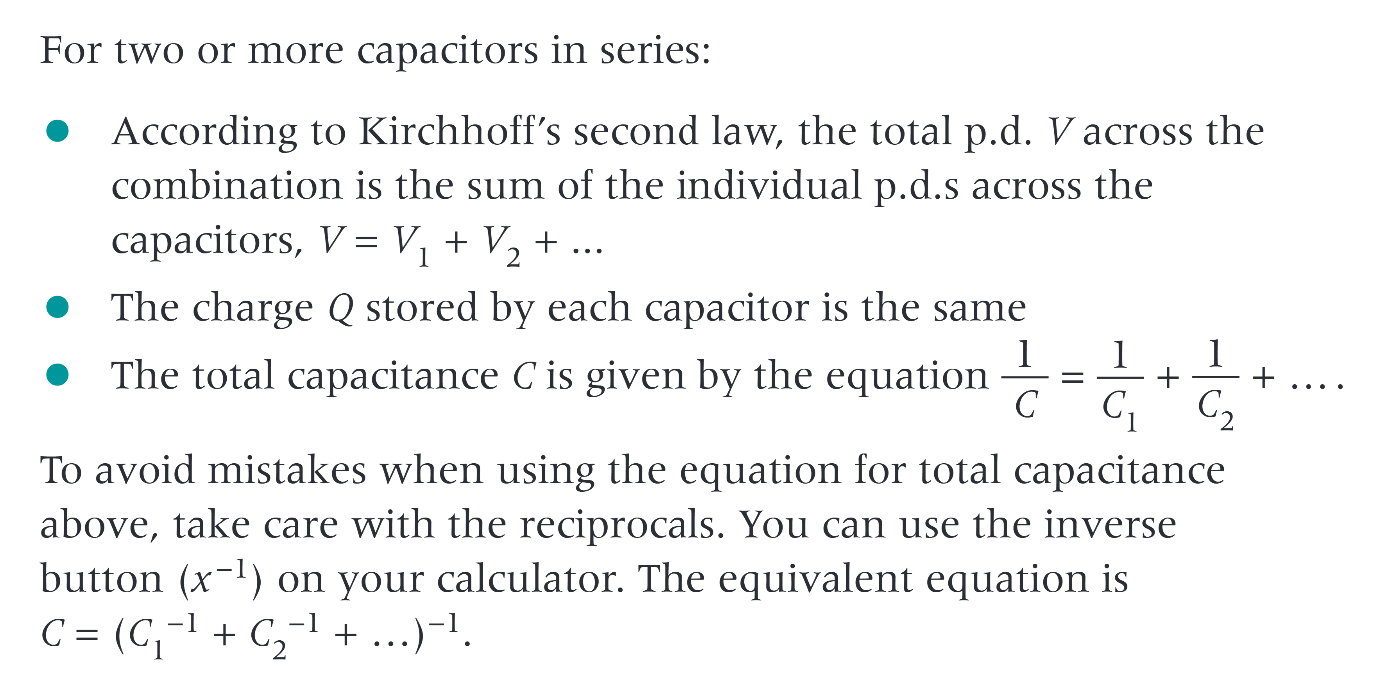
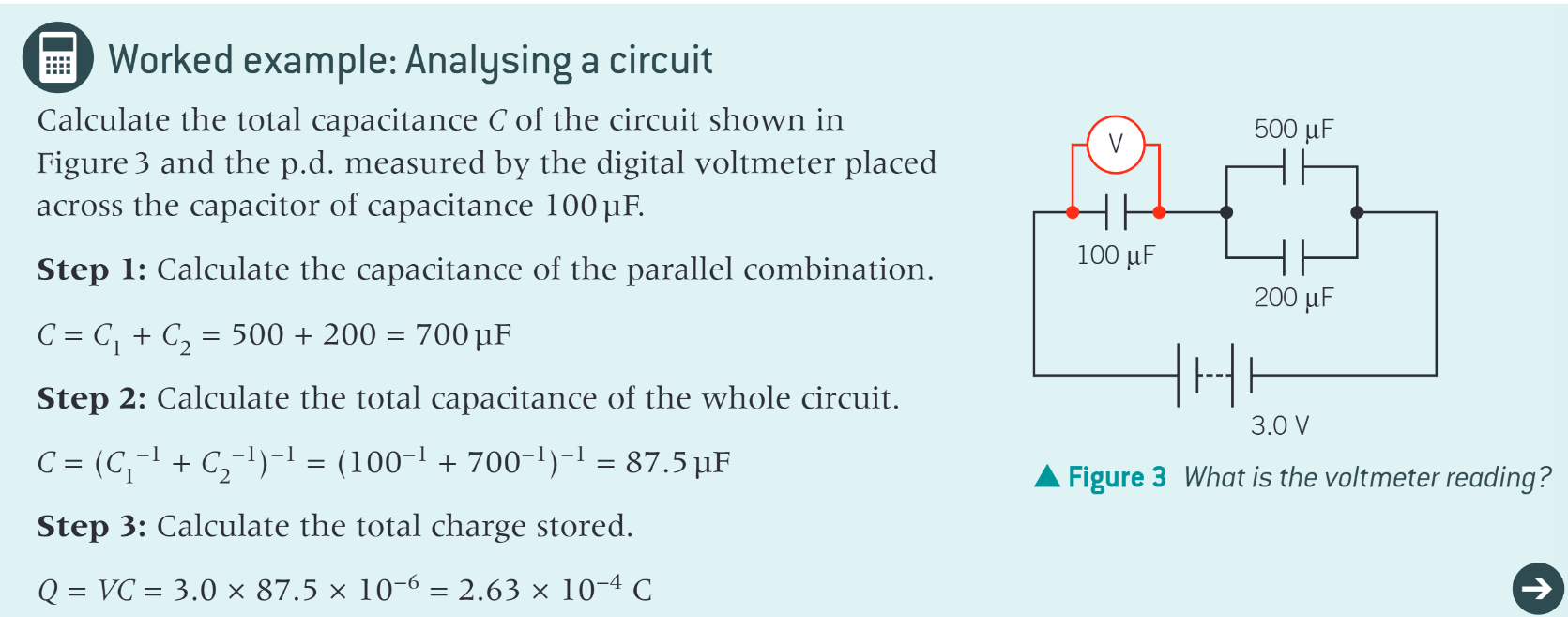
worked example: Analysing a circuit
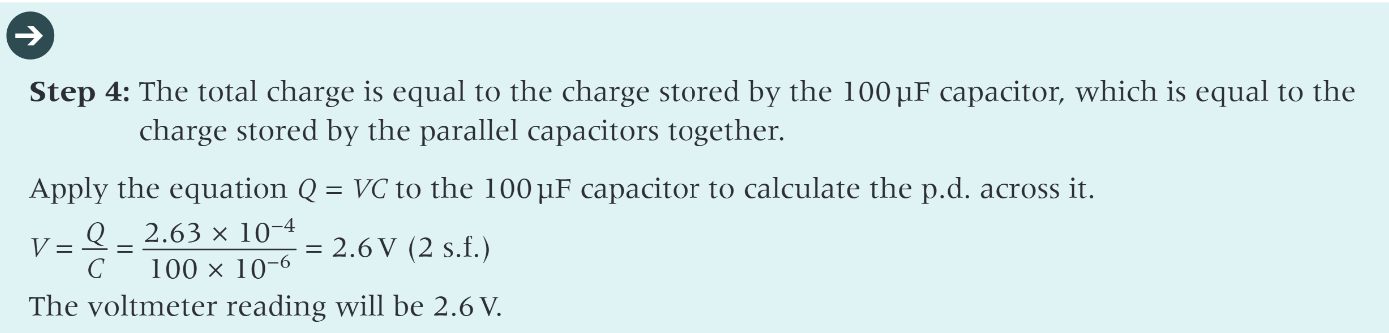
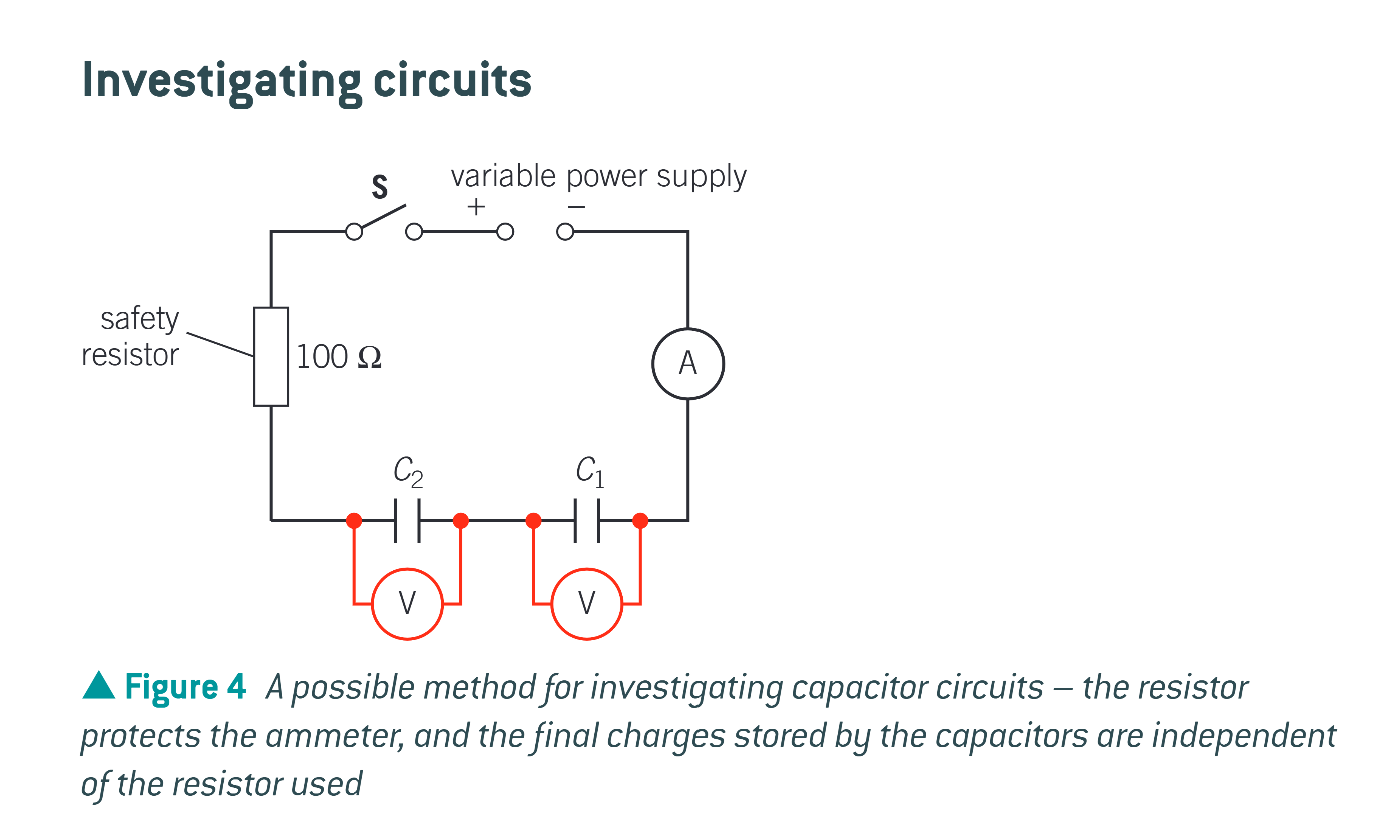
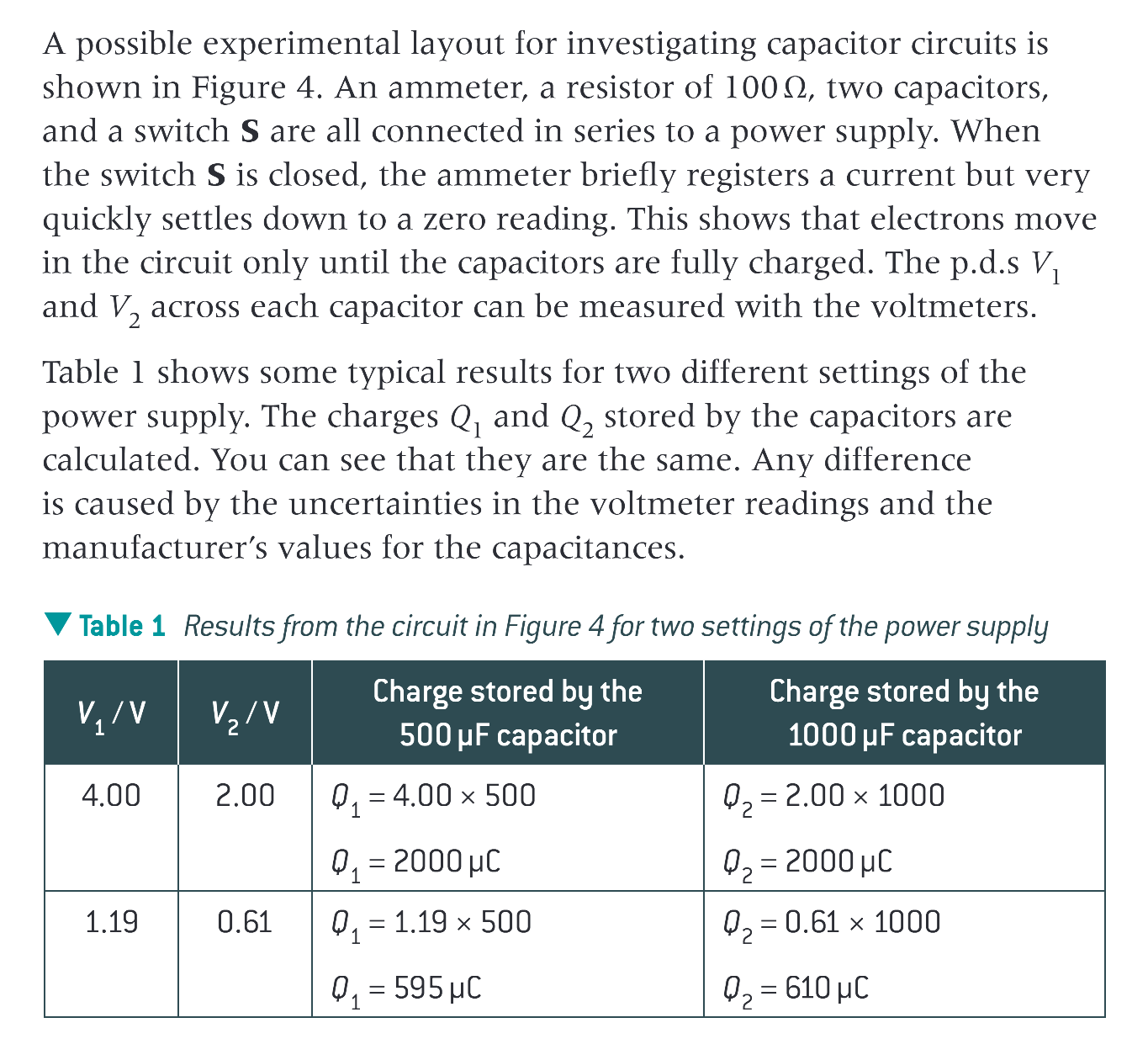
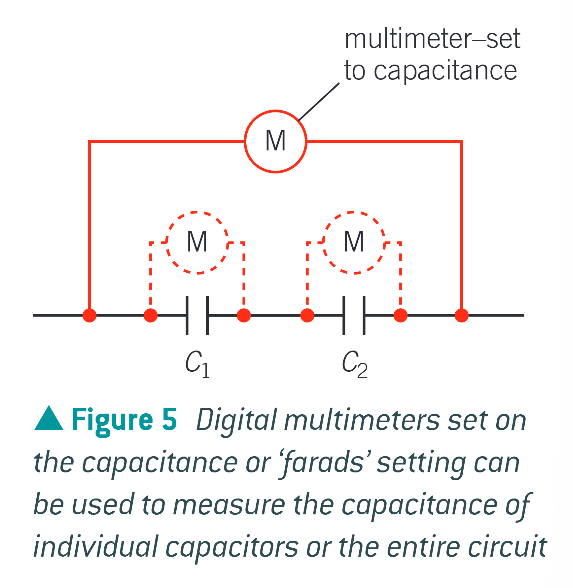
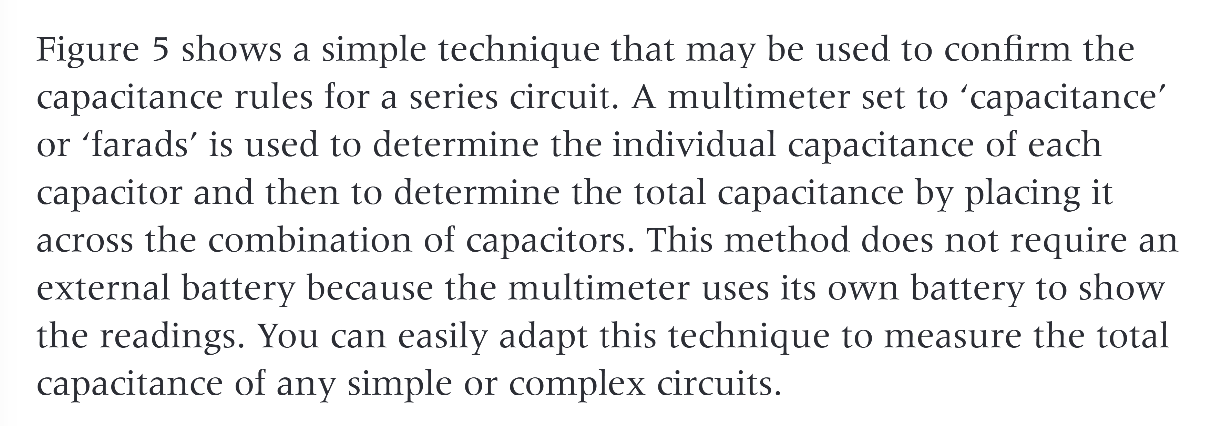
investigating capacitor circuits
Proofs for the capacitance equations
21.3 intro - energy stored by capacitors
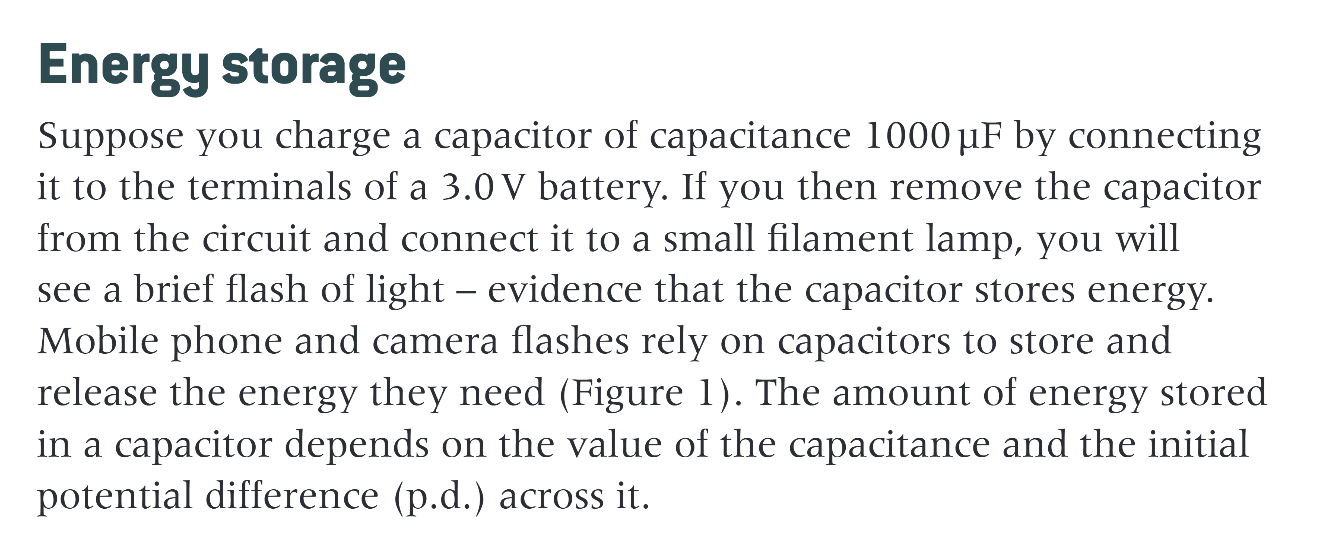
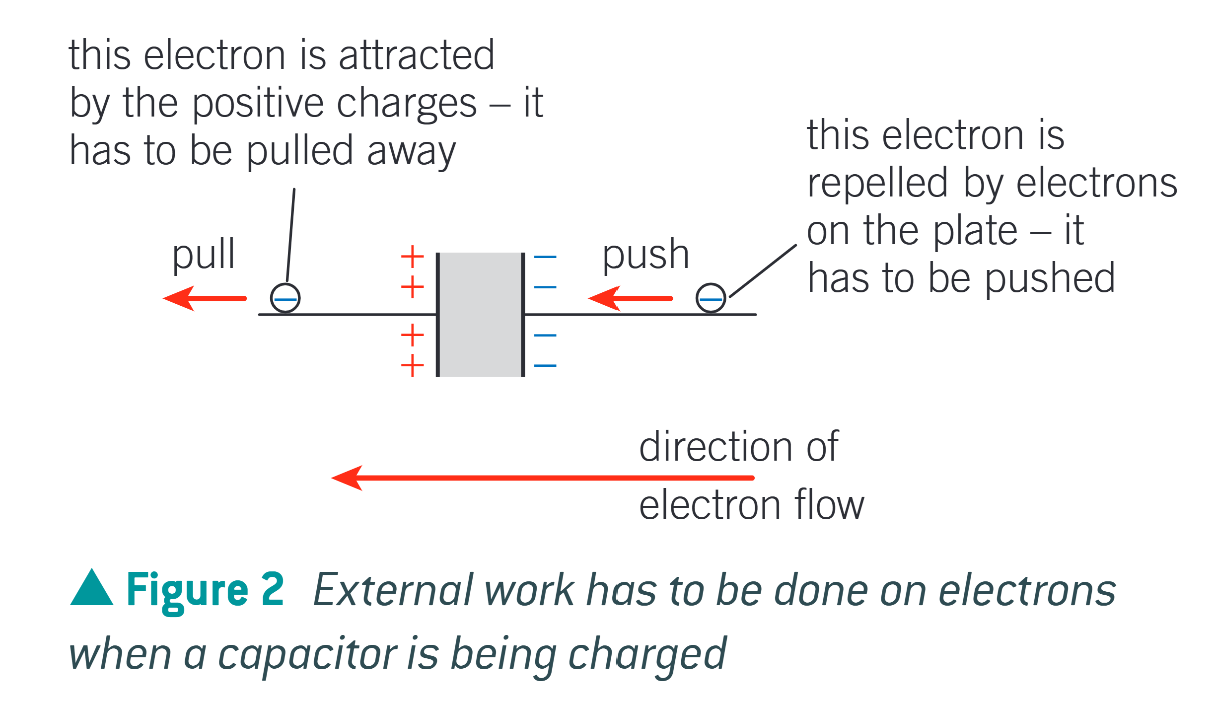
pushing and removing electrons - how is the movement of electrons affected by the plates of the capacitor
figure 2 shows an electron moving towards the negative plate of a capacitor that is being charged.
this electron will experience a repulsive electrostatic force from all the electrons already on the plate
external work has to be done to push this electron onto the negative plate
similarly, work is done to cause an electron to leave the positive plate of the capacitor
the external work is provided by the battery or power supply connected to the capacitor
in short, the energy stored in a capacitor comes from the energy of the battery or power supply
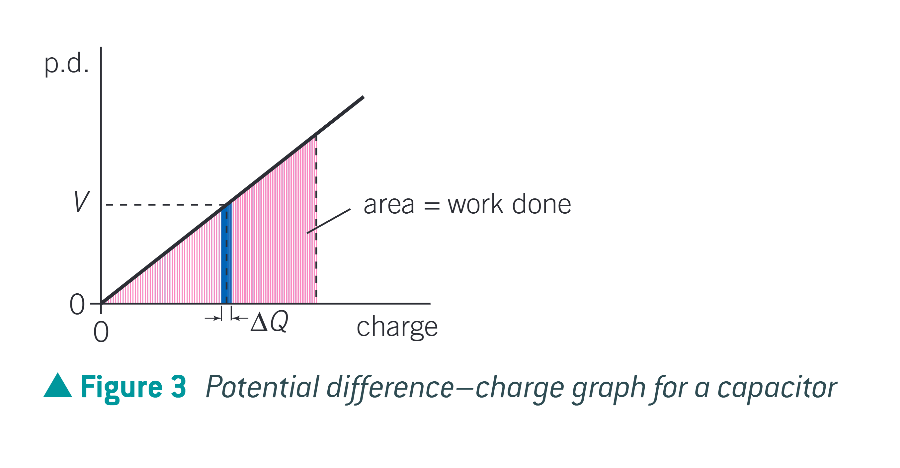
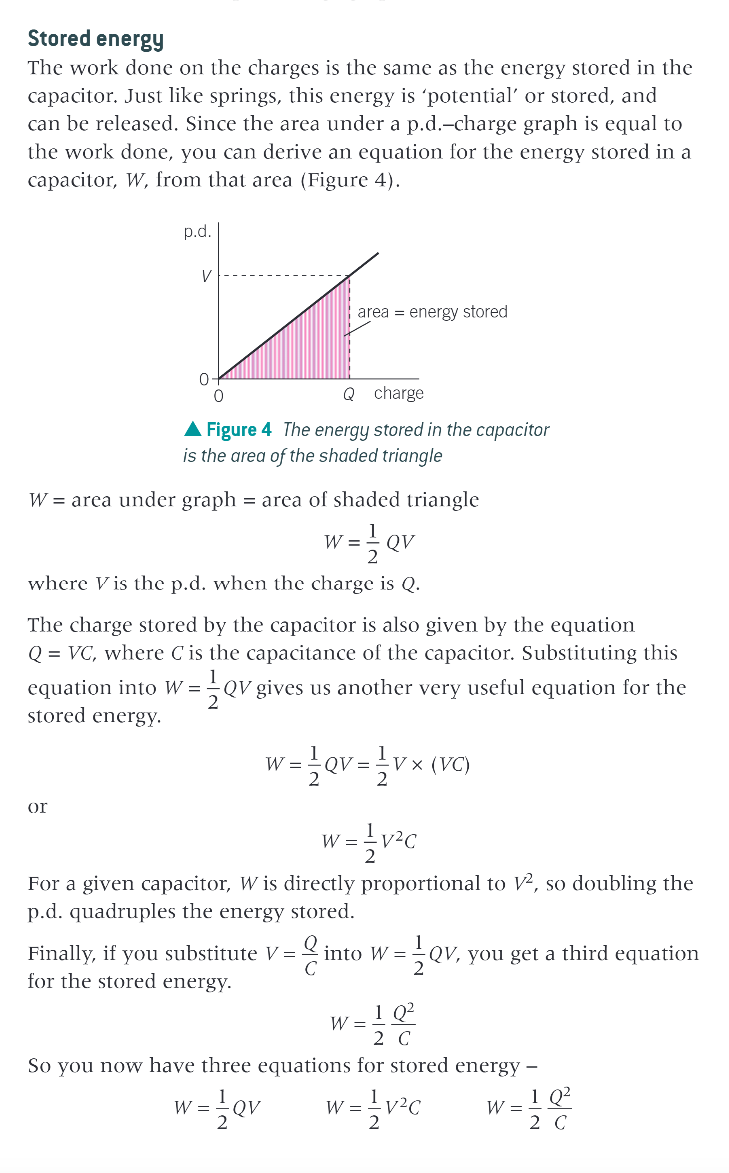
How can you determine the energy stored in a capacitor, using a potential difference - charge graph?
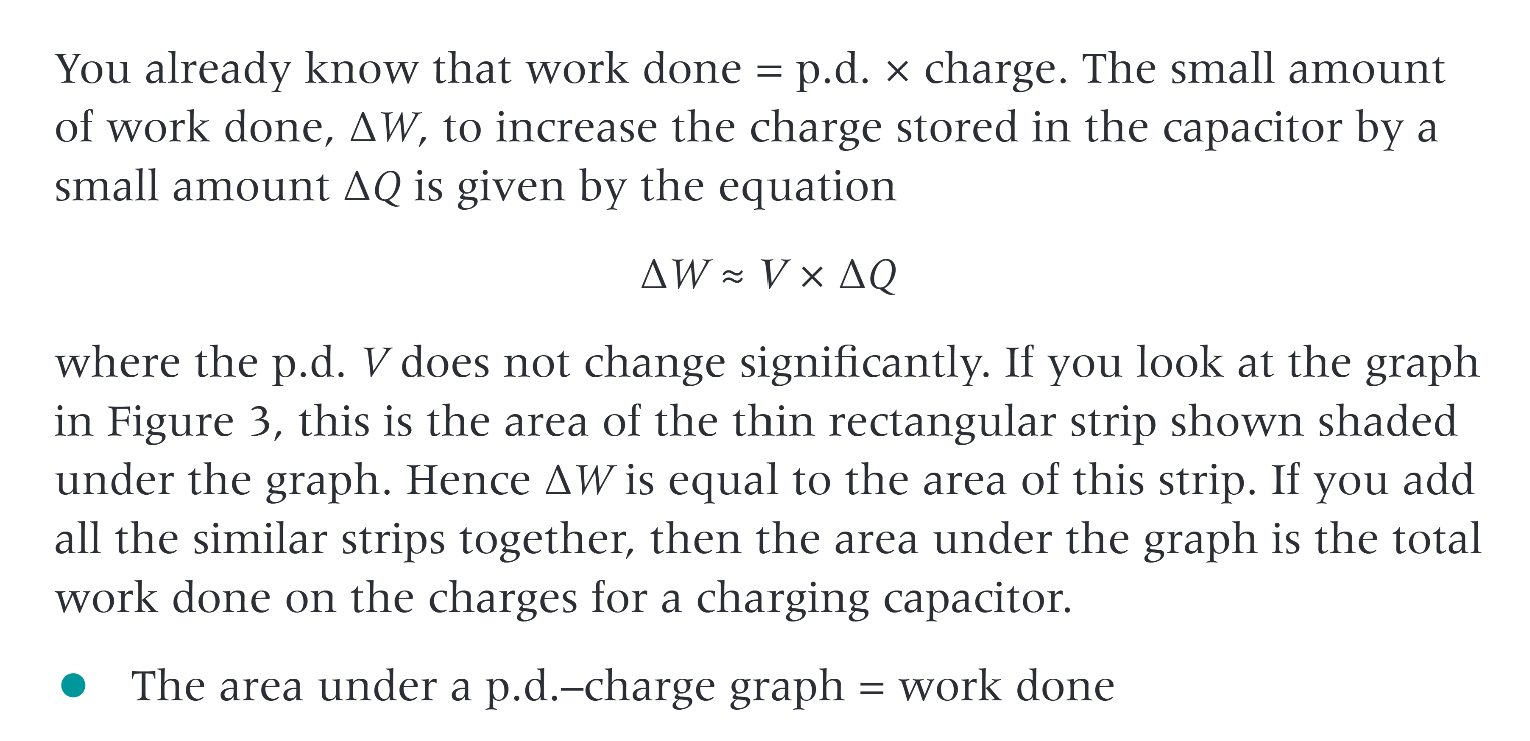
stored energy in a capacitor
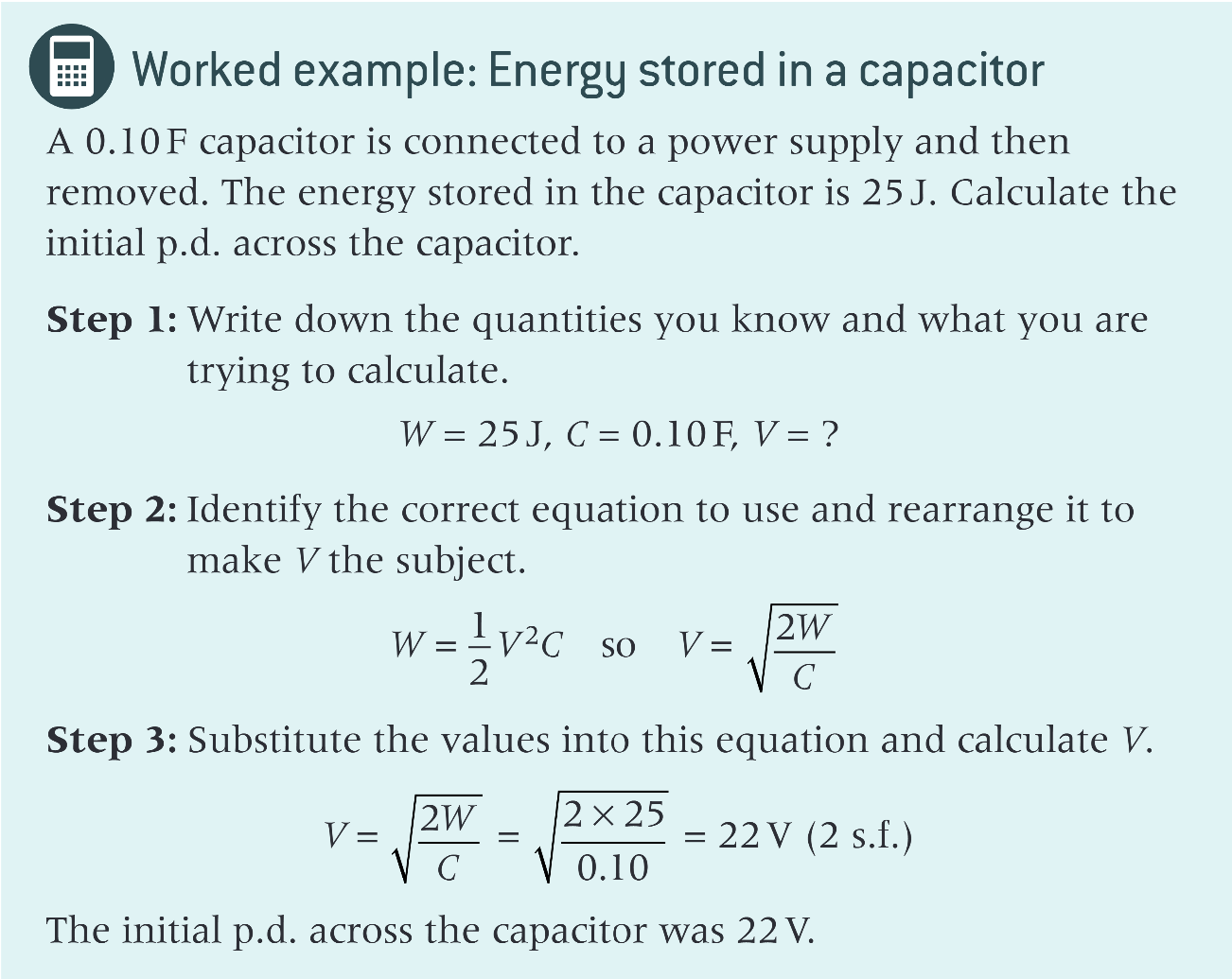
energy stored in a capacitor - example
21.4 intro - discharging capacitors
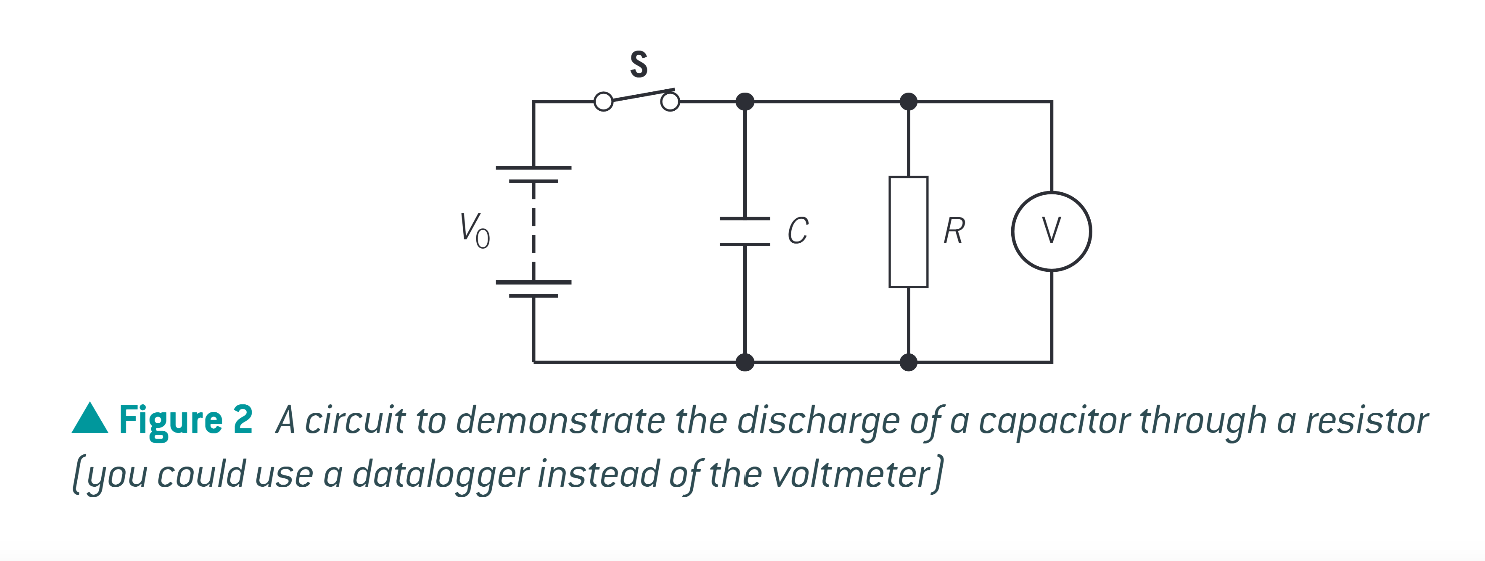
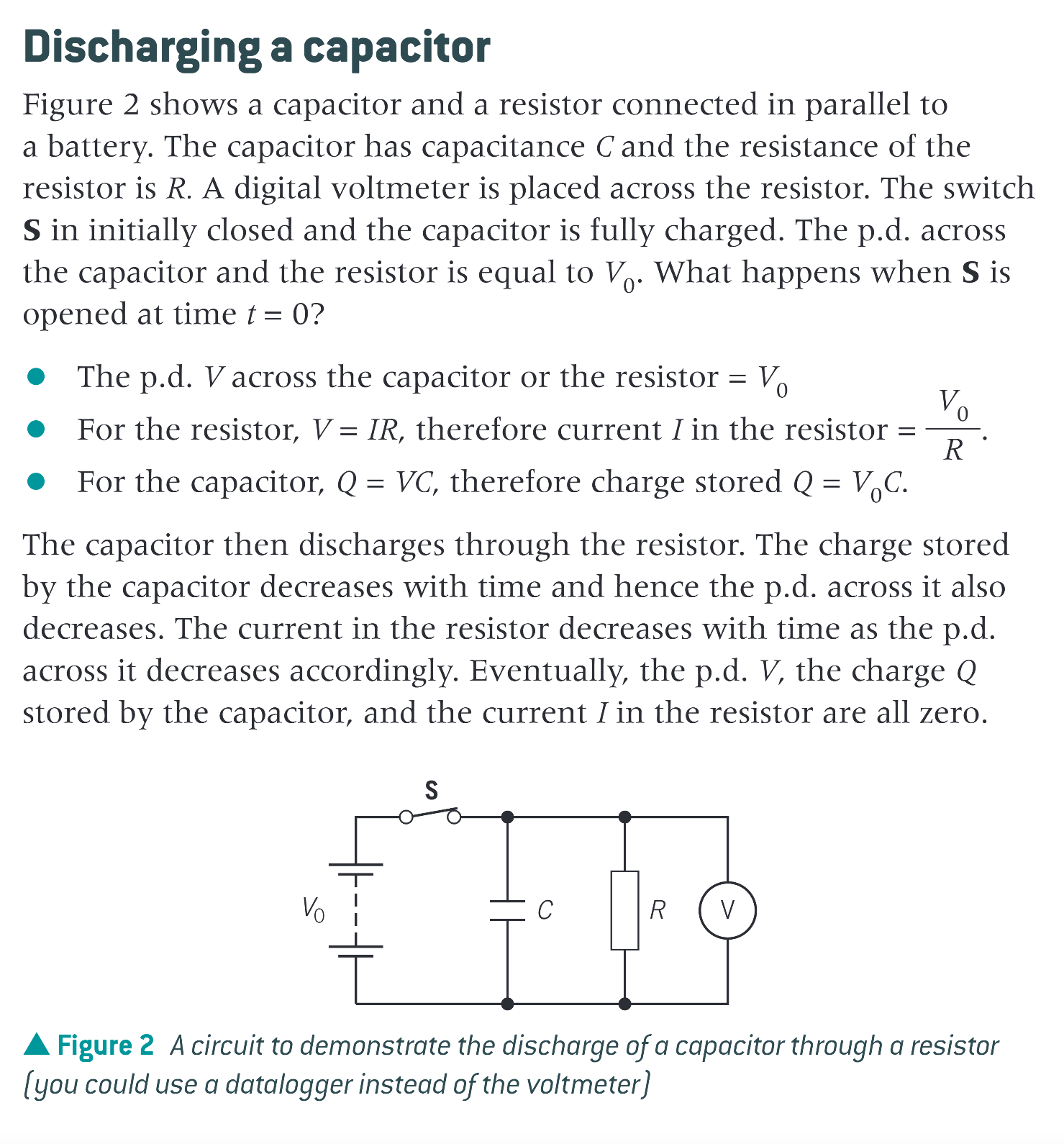
Discharging a capacitor - what happens when S is opened at time t=0
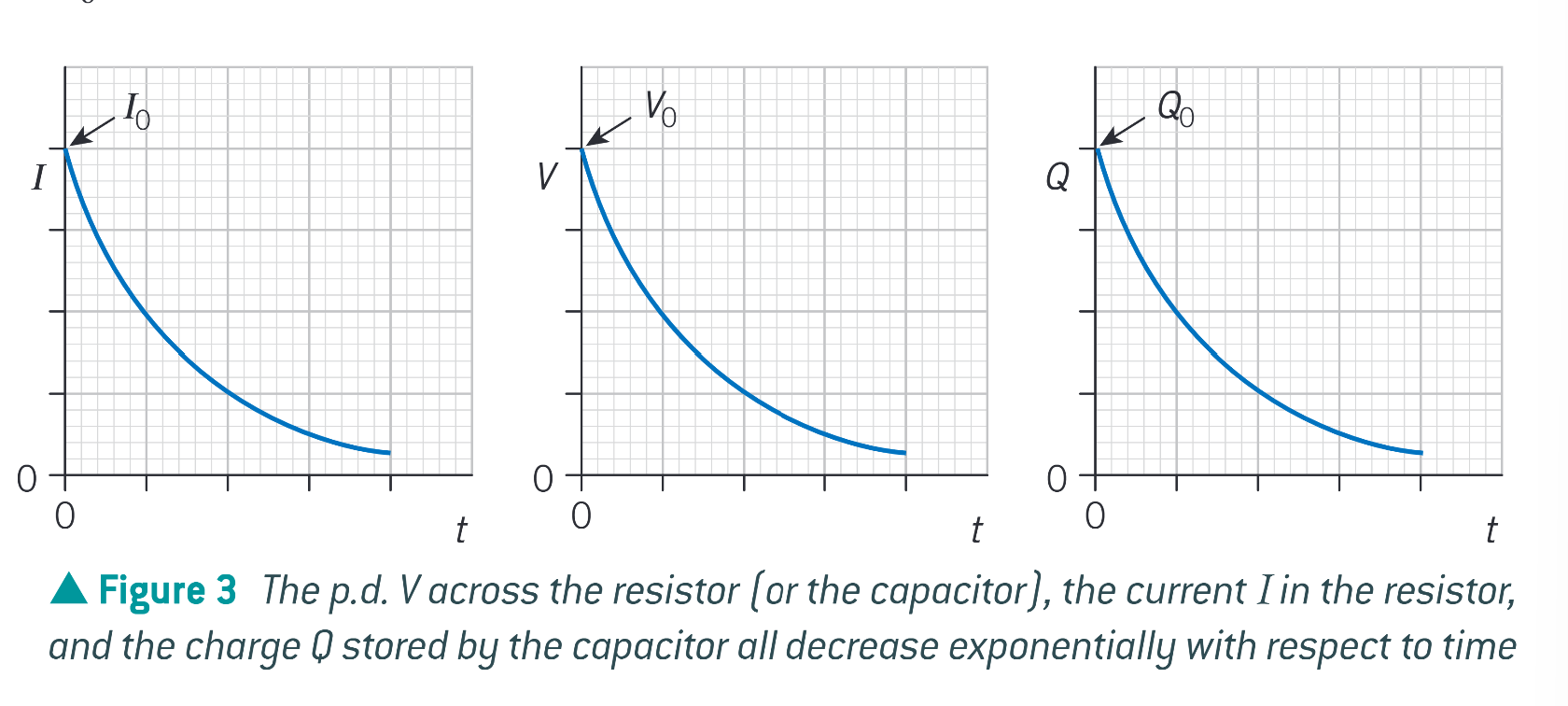
what is the general relationship between pd, V, charge Q, current I, and time t?
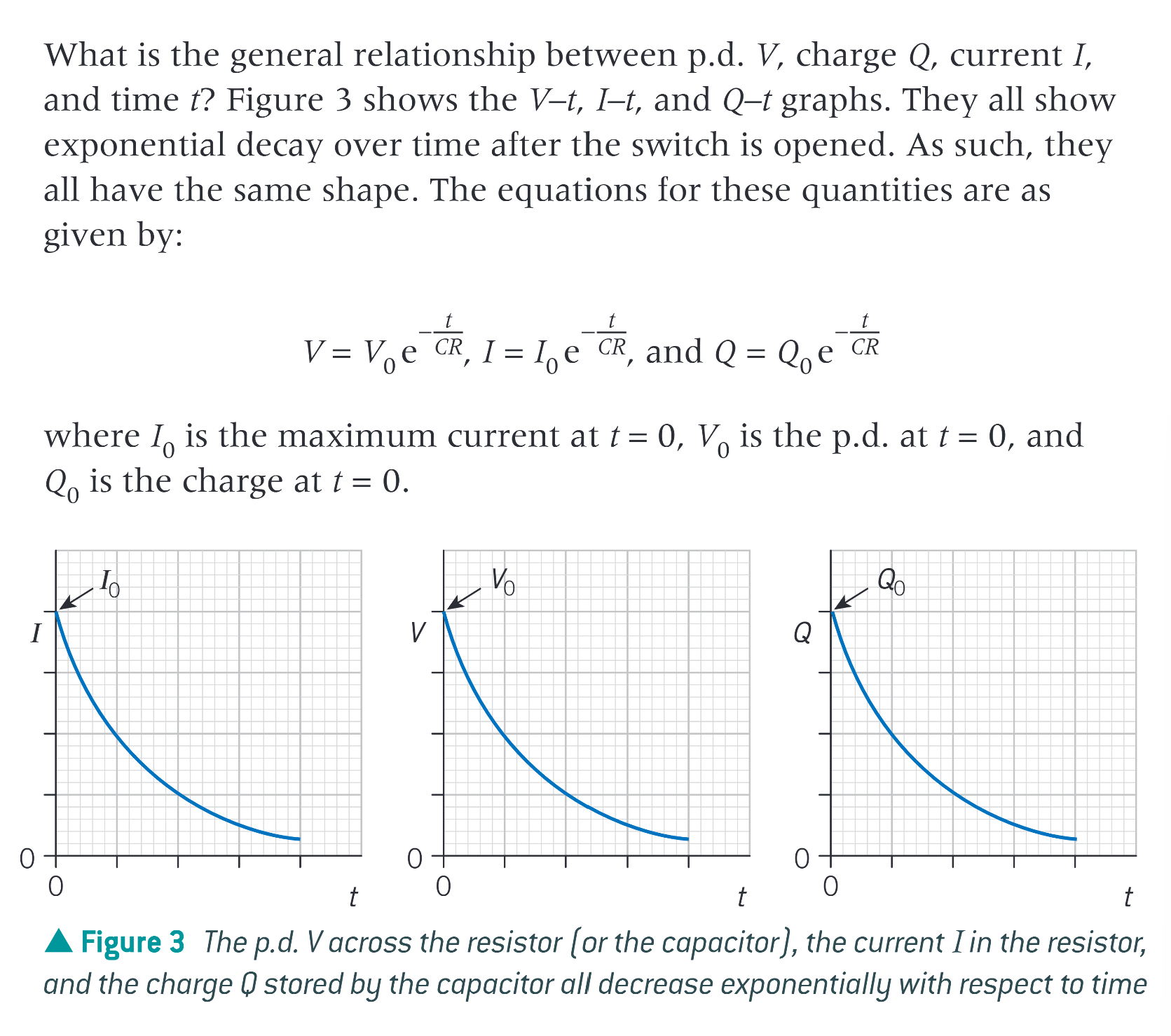
Analysing a discharging capacitor: Worked example
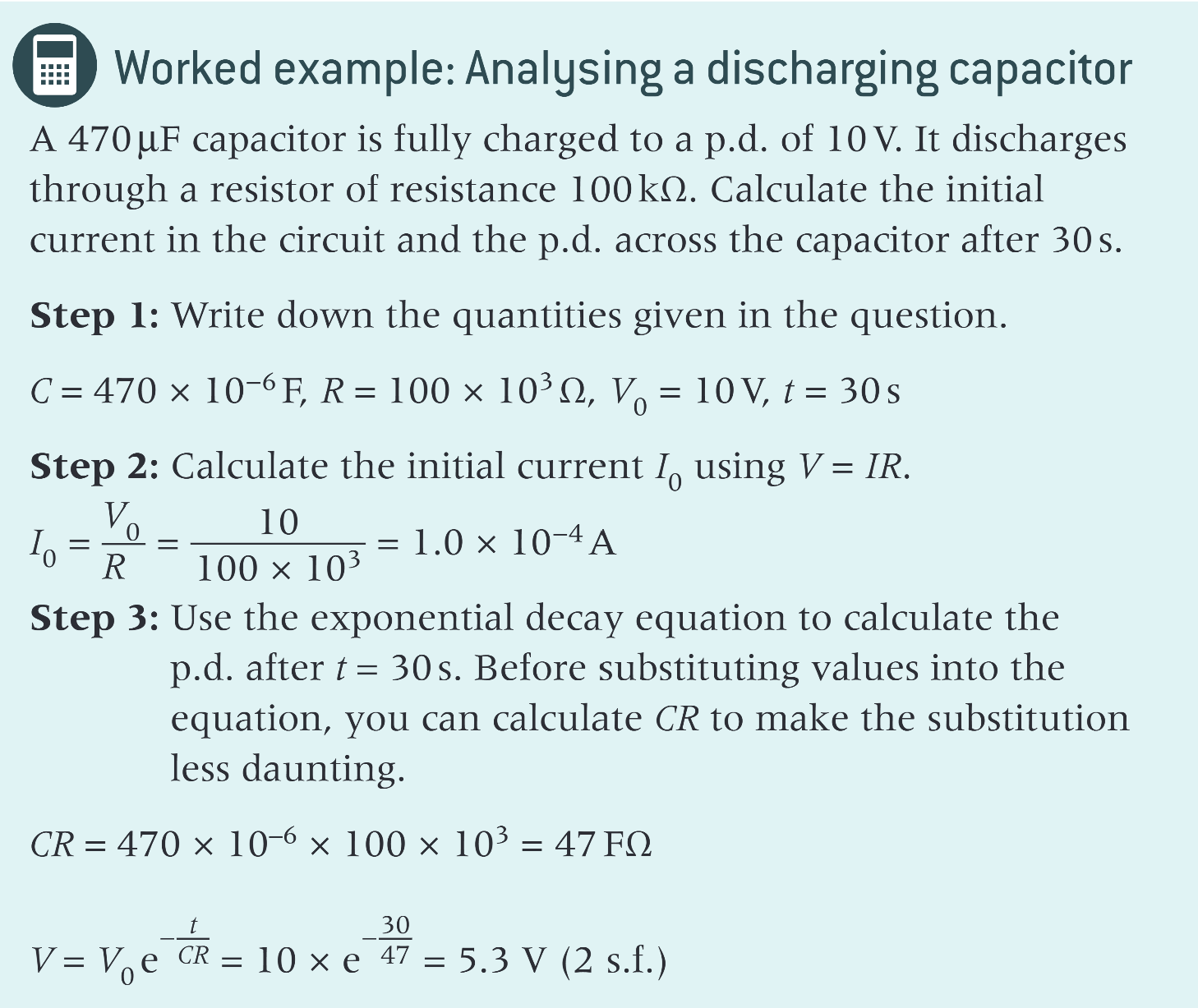
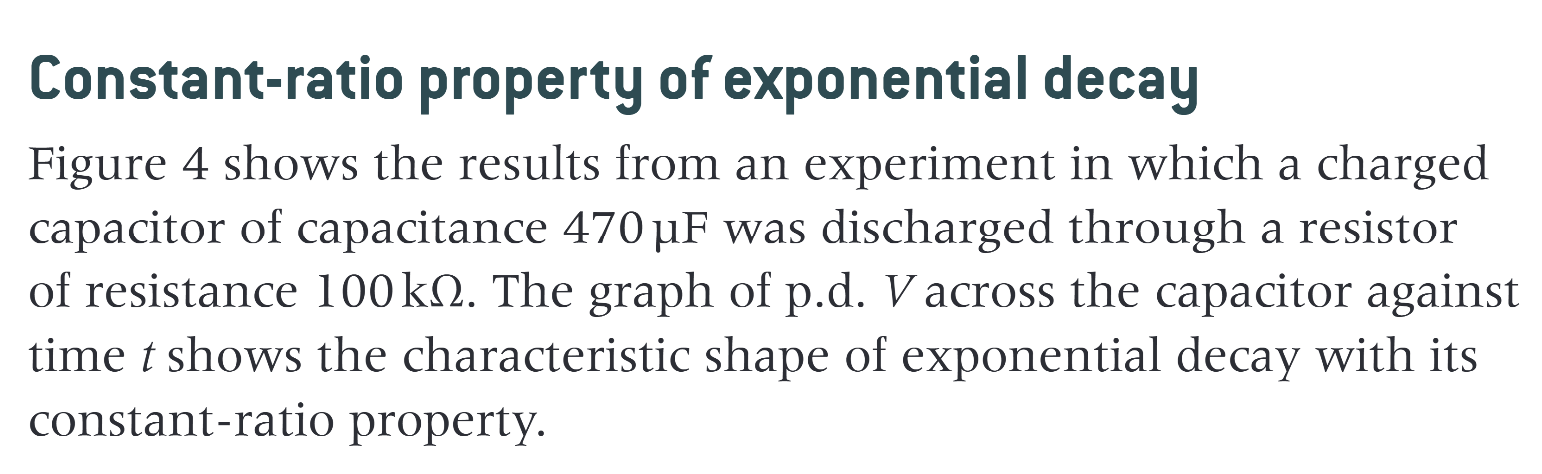
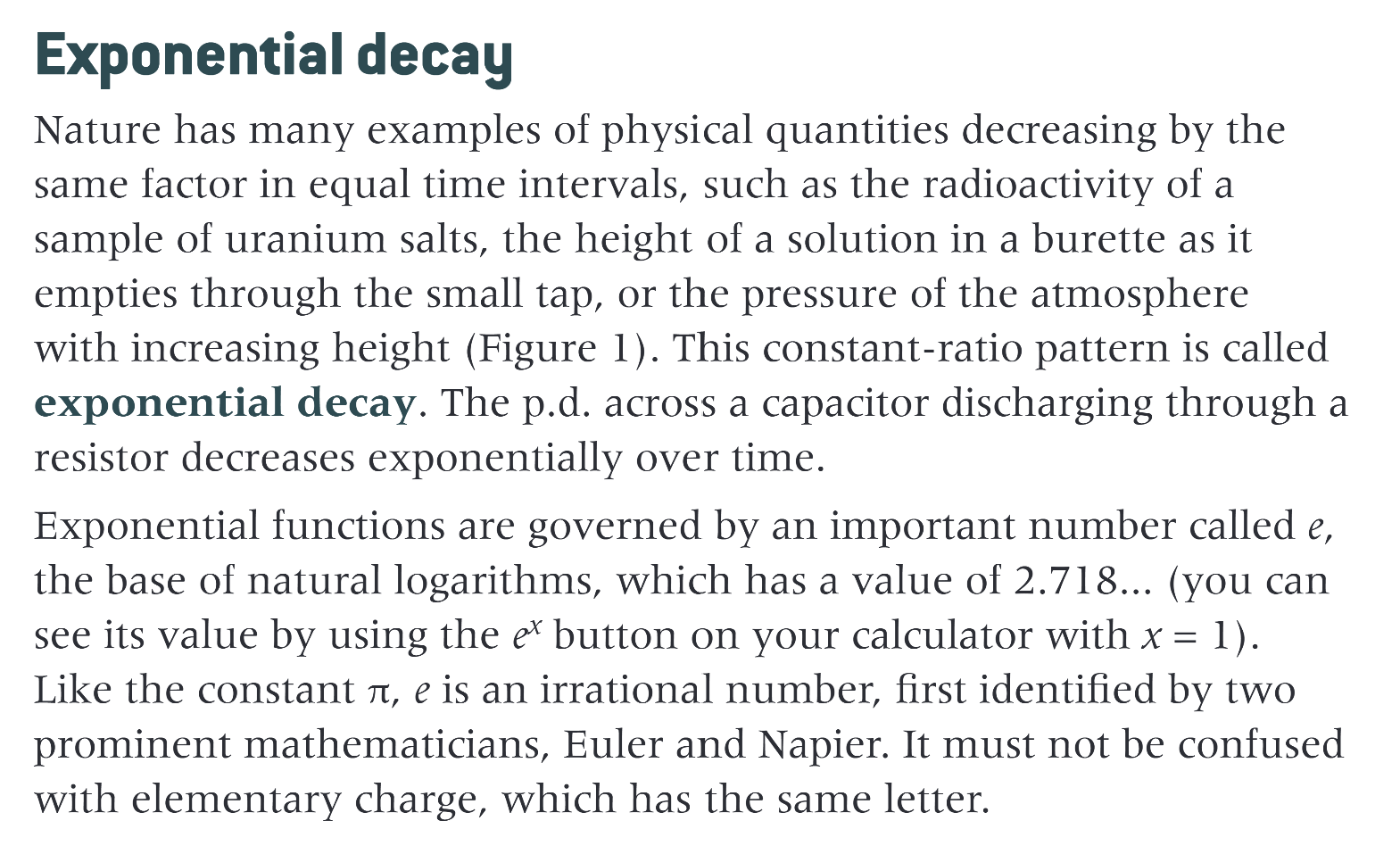
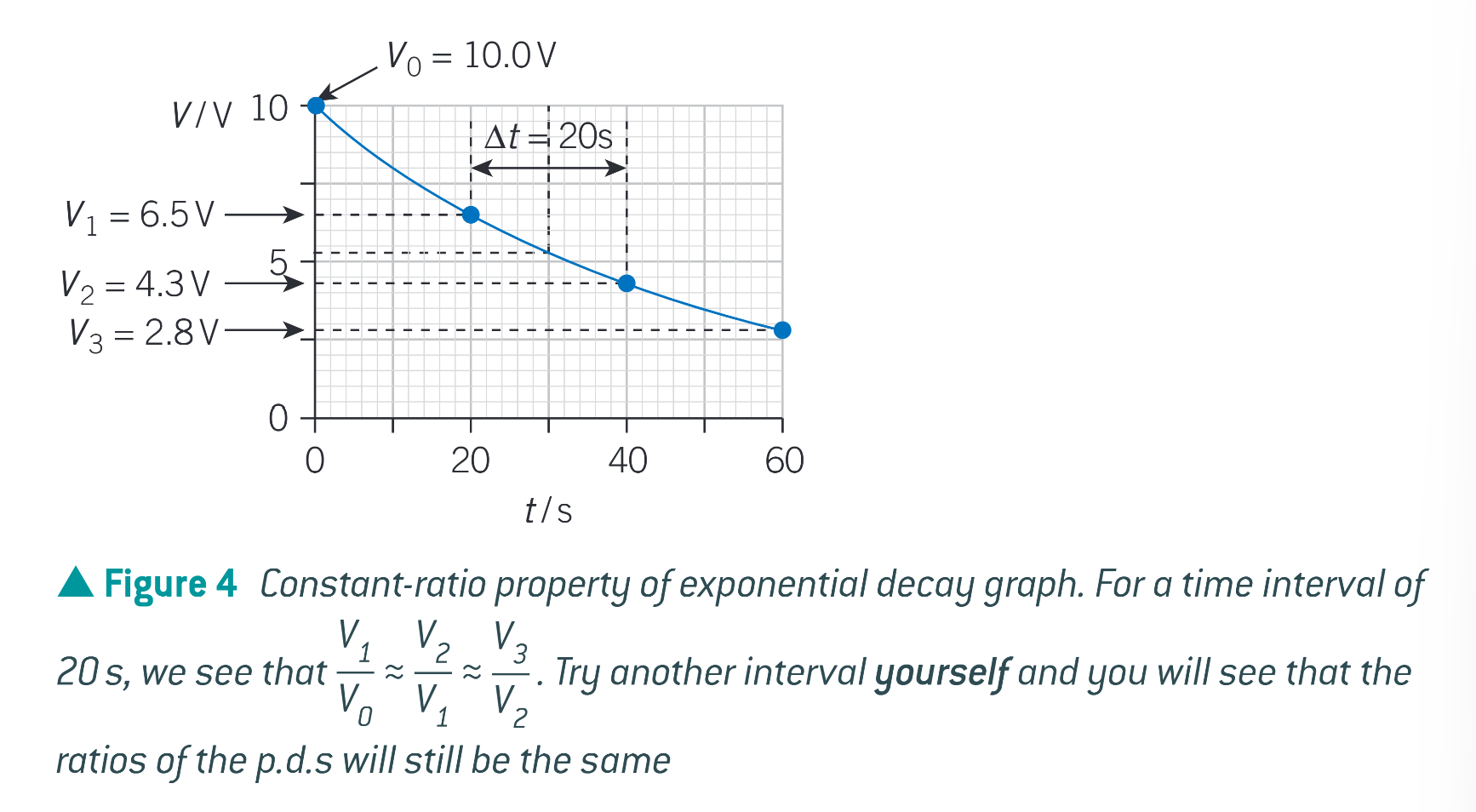
Constant - ratio property of exponential decay
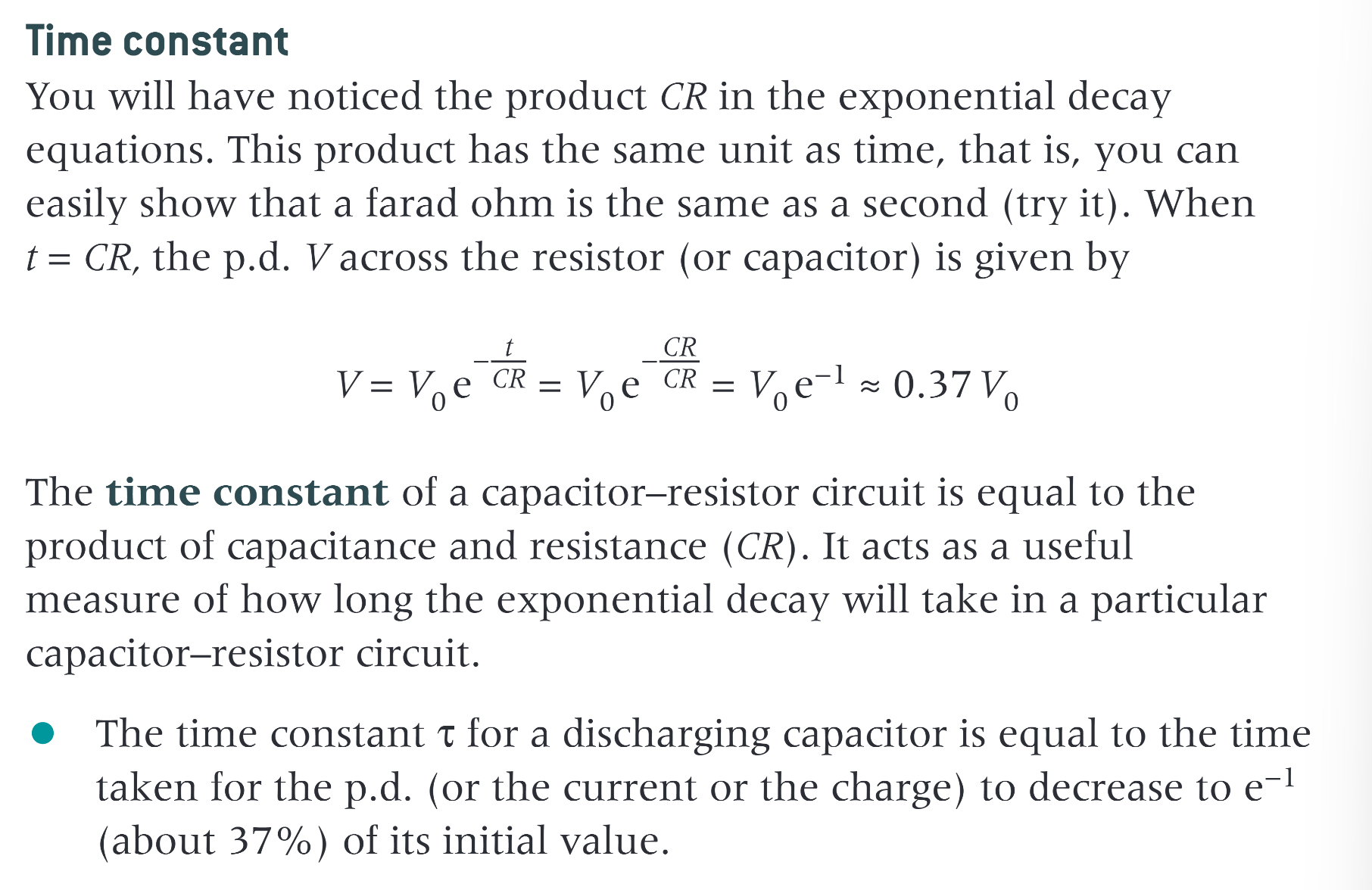
Time constant
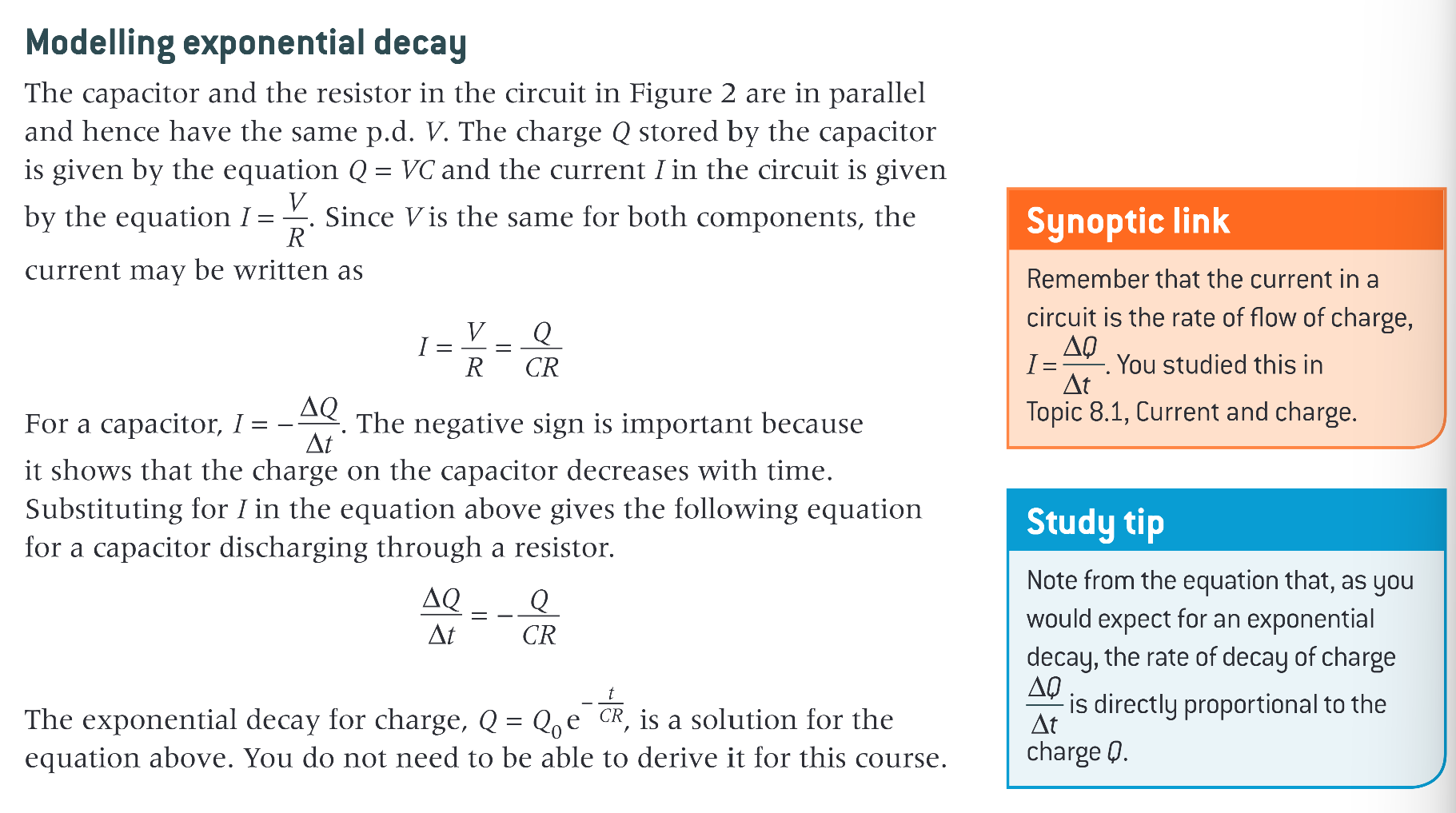
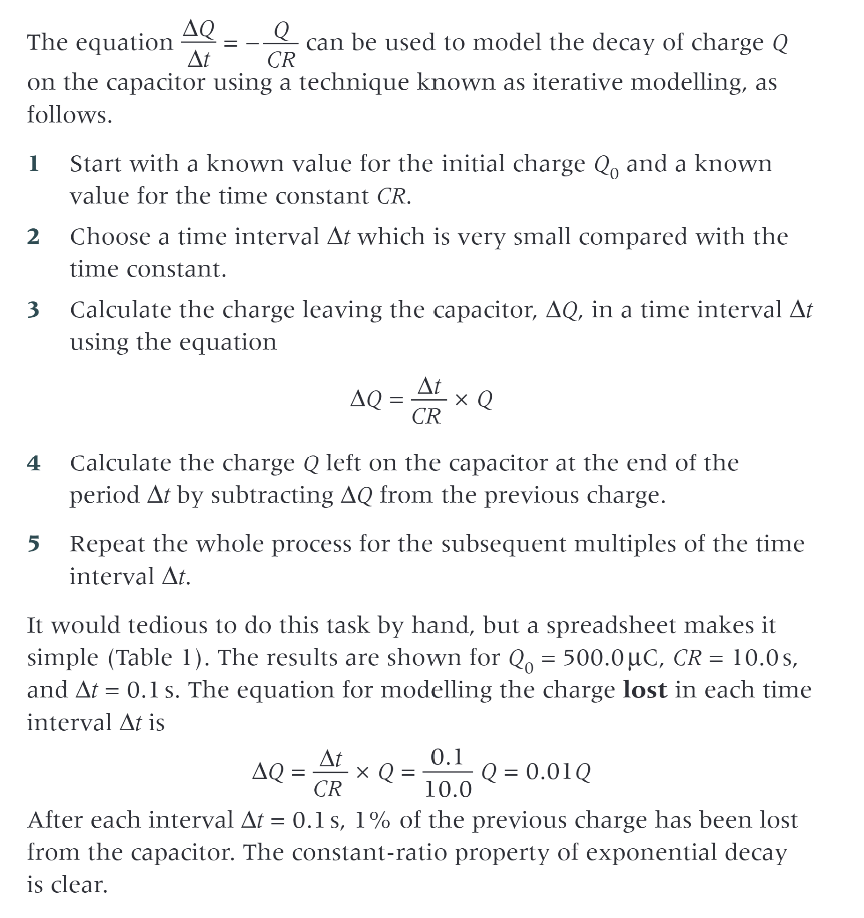
Modelling exponential decay
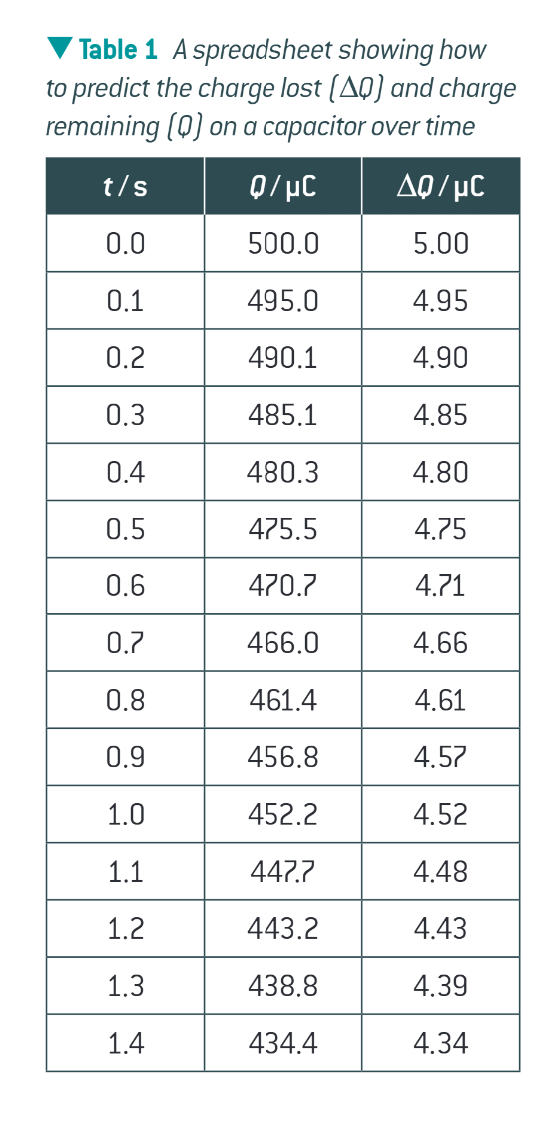
iterative modelling
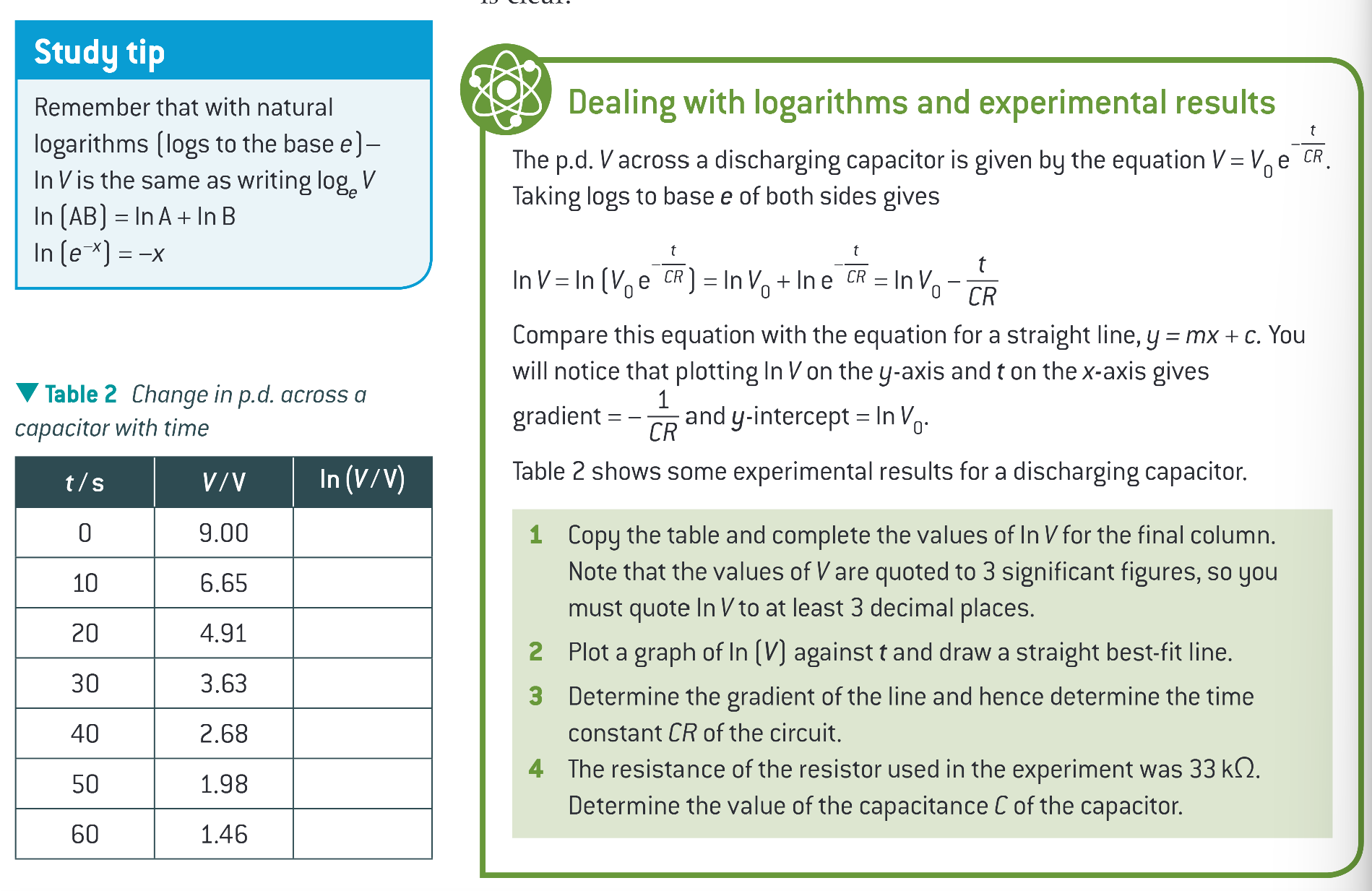
Dealing with logarithms and experimental results