Intergumentary System
 Studied by 0 people
 Call Kai
 Learn
Learn Practice Test
 Spaced Repetition
 Match
Match Flashcards
 Knowt Play
1/29

There's no tags or description
Looks like no tags are added yet.
Name | Mastery | Learn | Test | Matching | Spaced |
|---|
No study sessions yet.
30 Terms
Function of the skin
regulates temperature, serves as a blood reservoir, protection, excretion and absorption, synthesis of vitamin D.
Epidermis
The outer layer of the skin
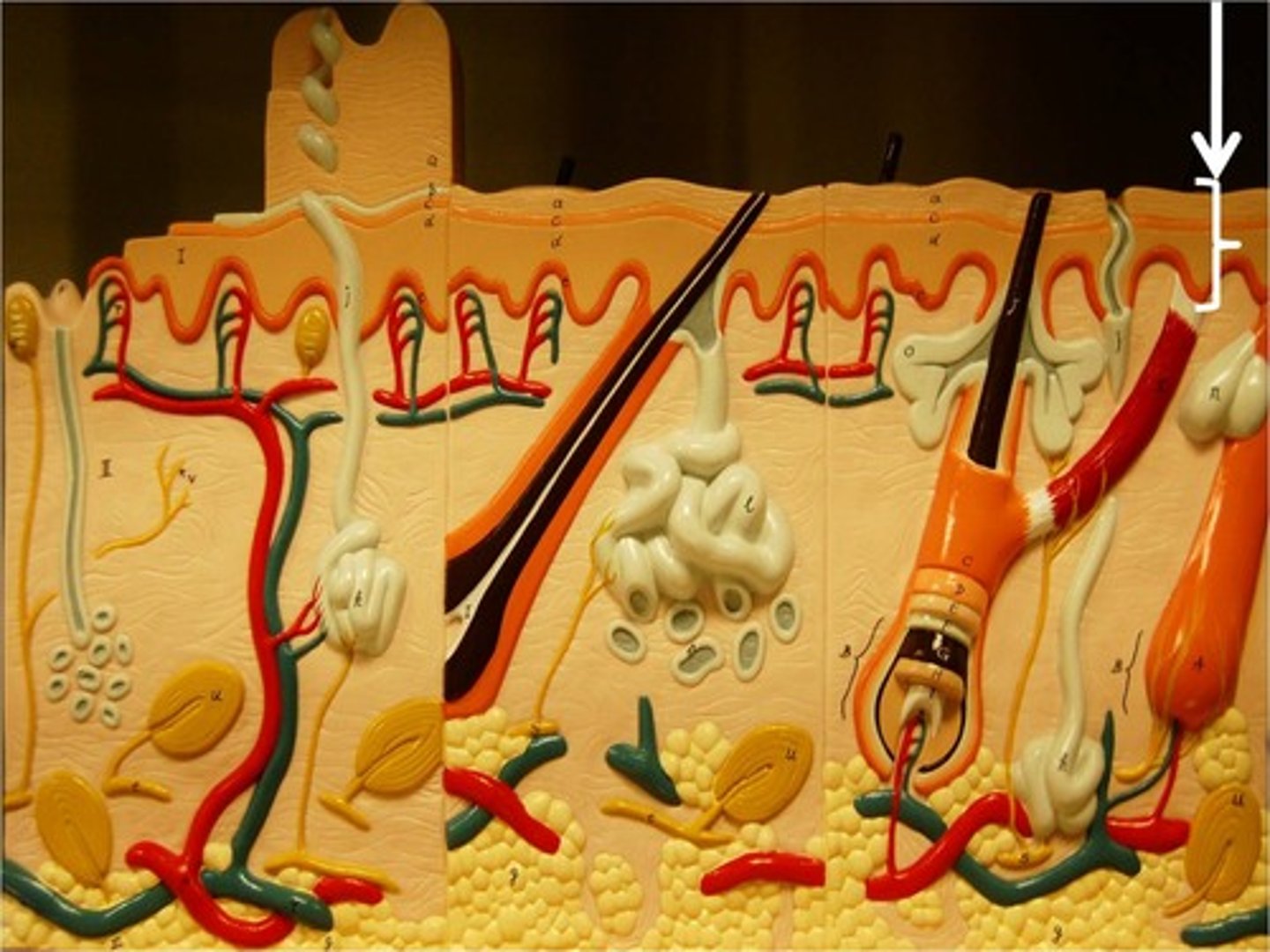
stratified squamous epithelium
Protects underlying tissue in areas subjected to abrasion. Mouth Vagina

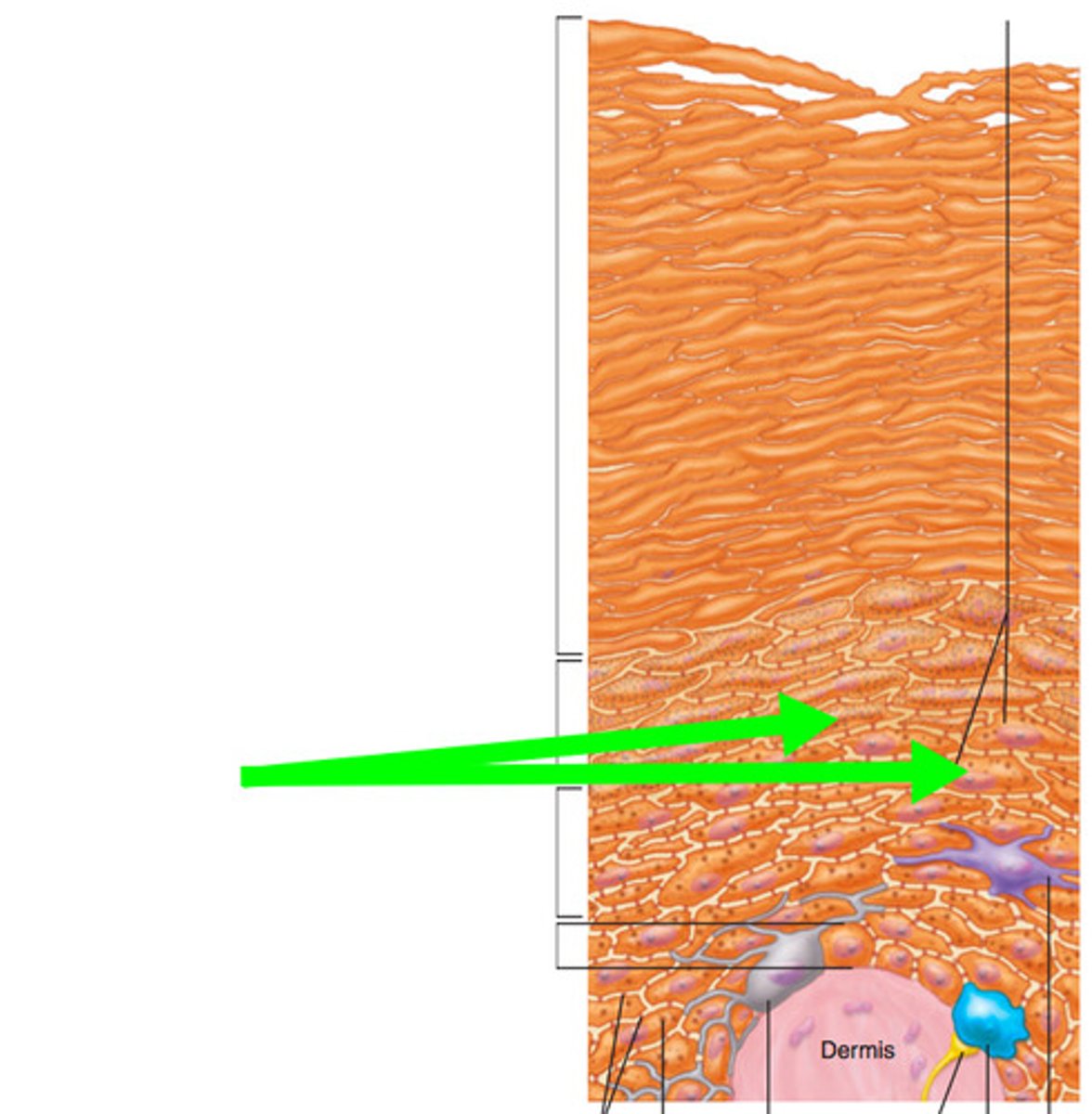
Keratinocyte
Keratin cells the most abundent ,To produce keratin fibrils
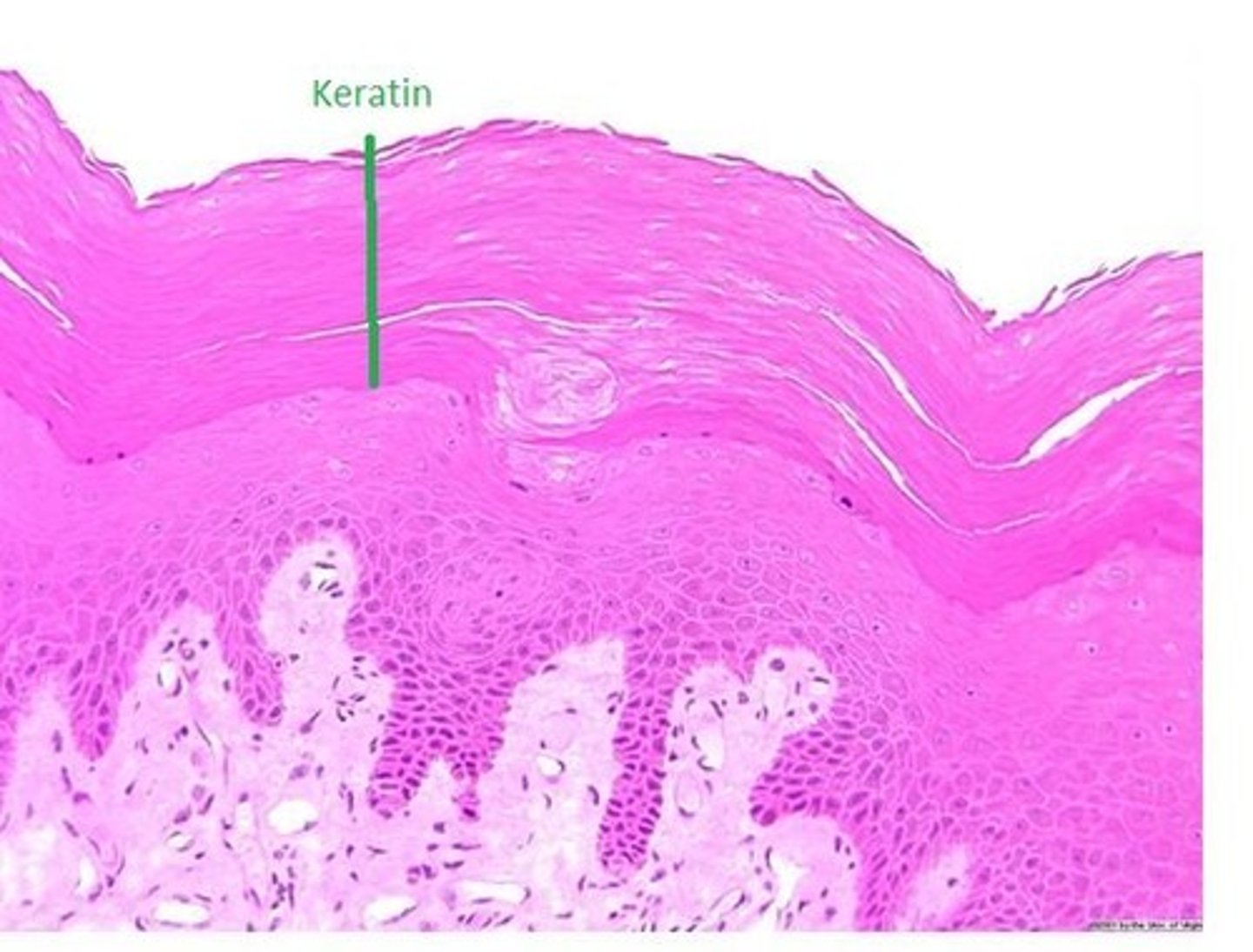
Keratin
Is a fibrous protein that gives the epidermis its durability and protective capability.
Melanocyte
Spidery black cells that produce the brown to black pigment melanin.
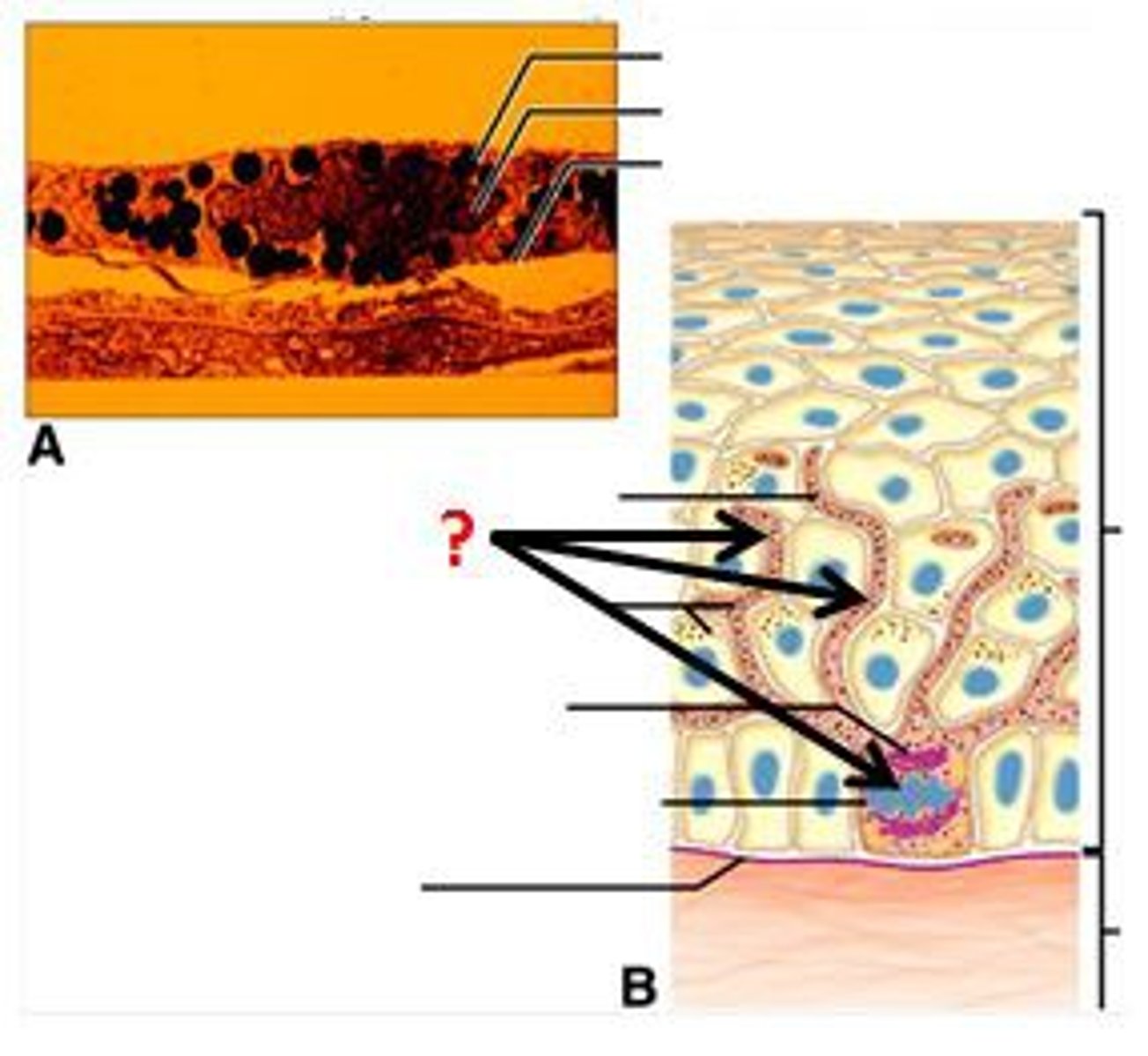
Melanin
Provides a protective pigment umbrella over the nuclei of the cells in the deep epidermal layers.
Stratum corneum
Most superficial layer 20-30 layers of dead cells

Stratum granulosum
One to five layers of flattend cells. Releases lipids
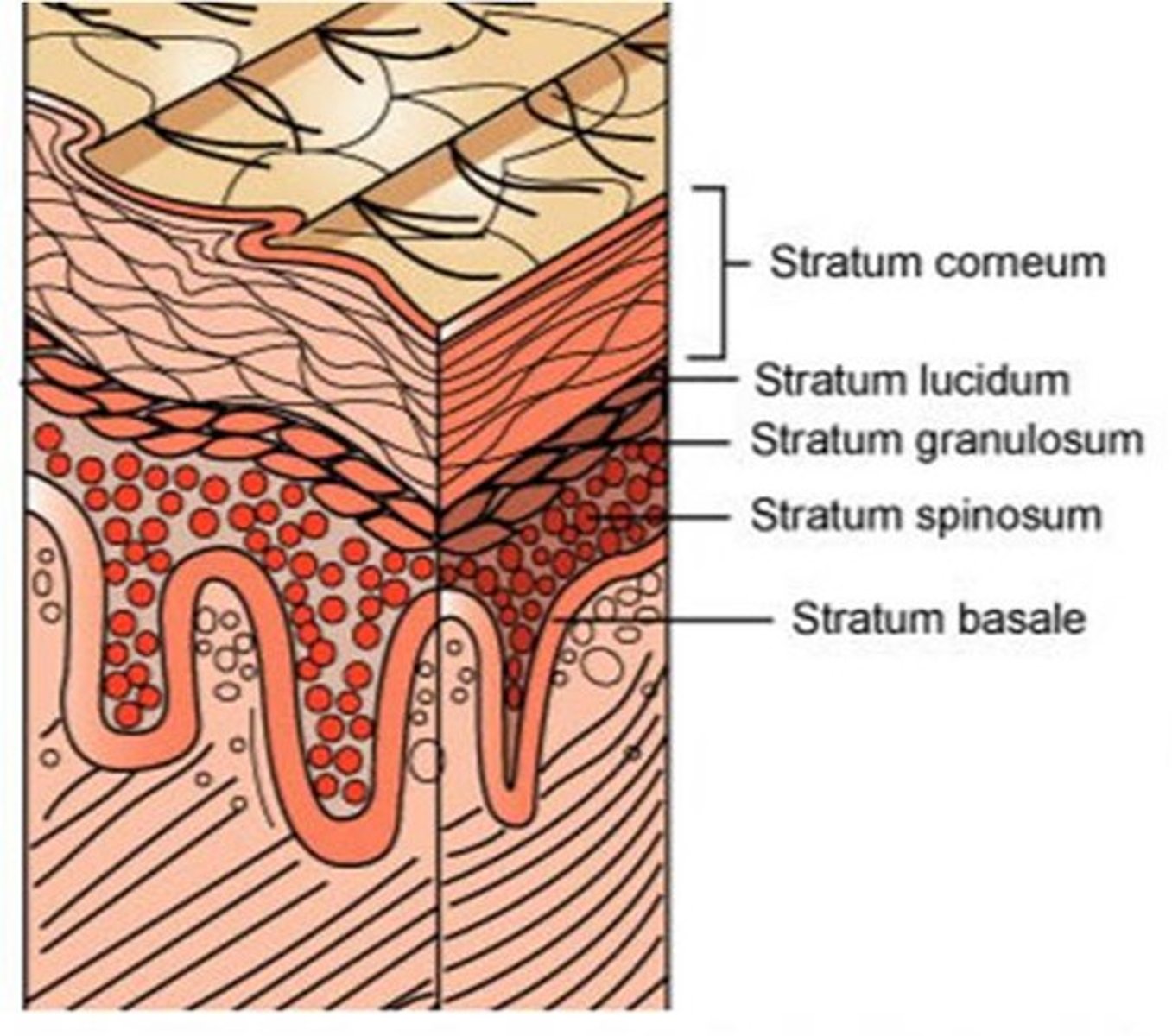
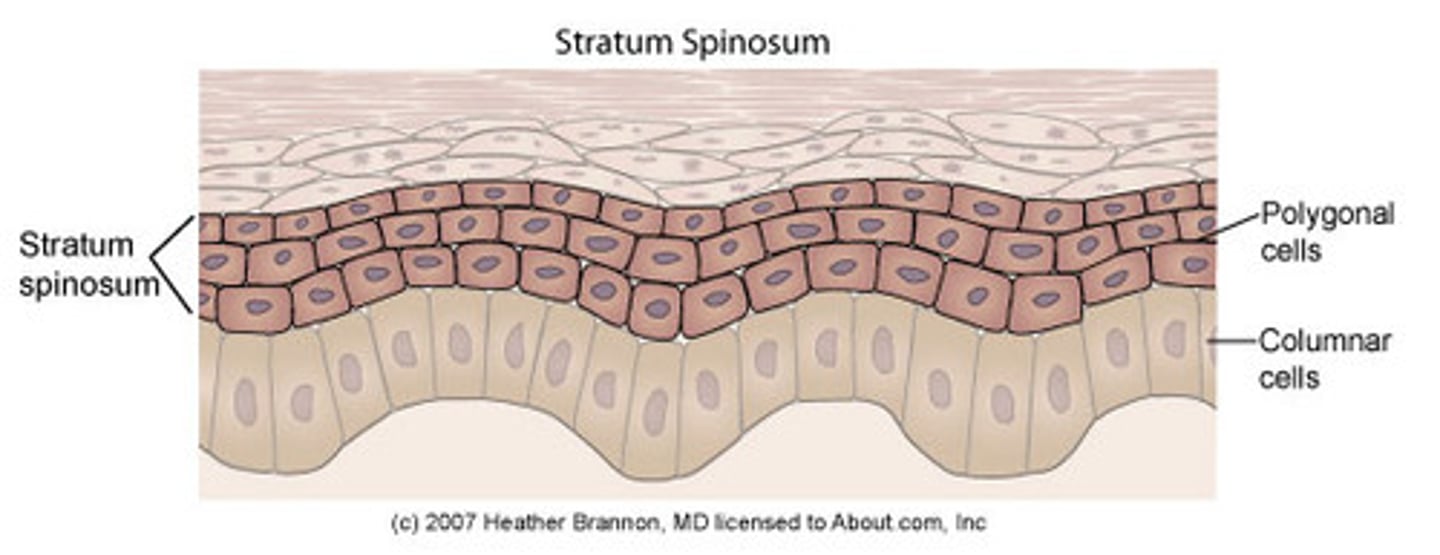
Stratum spinosum
Several layers of keratinocytes joined by desmosomes. Thick bundles of intermidate filaments made of pre-keratin
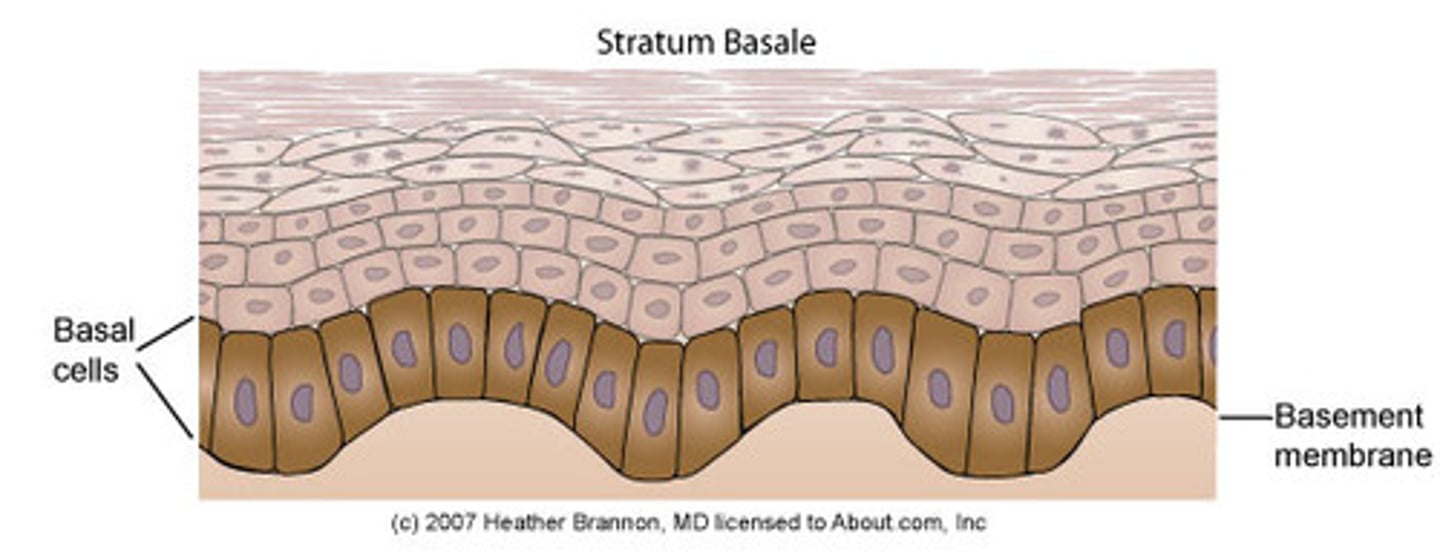
Stratum basale
Deepest epidermal layer
Dermise
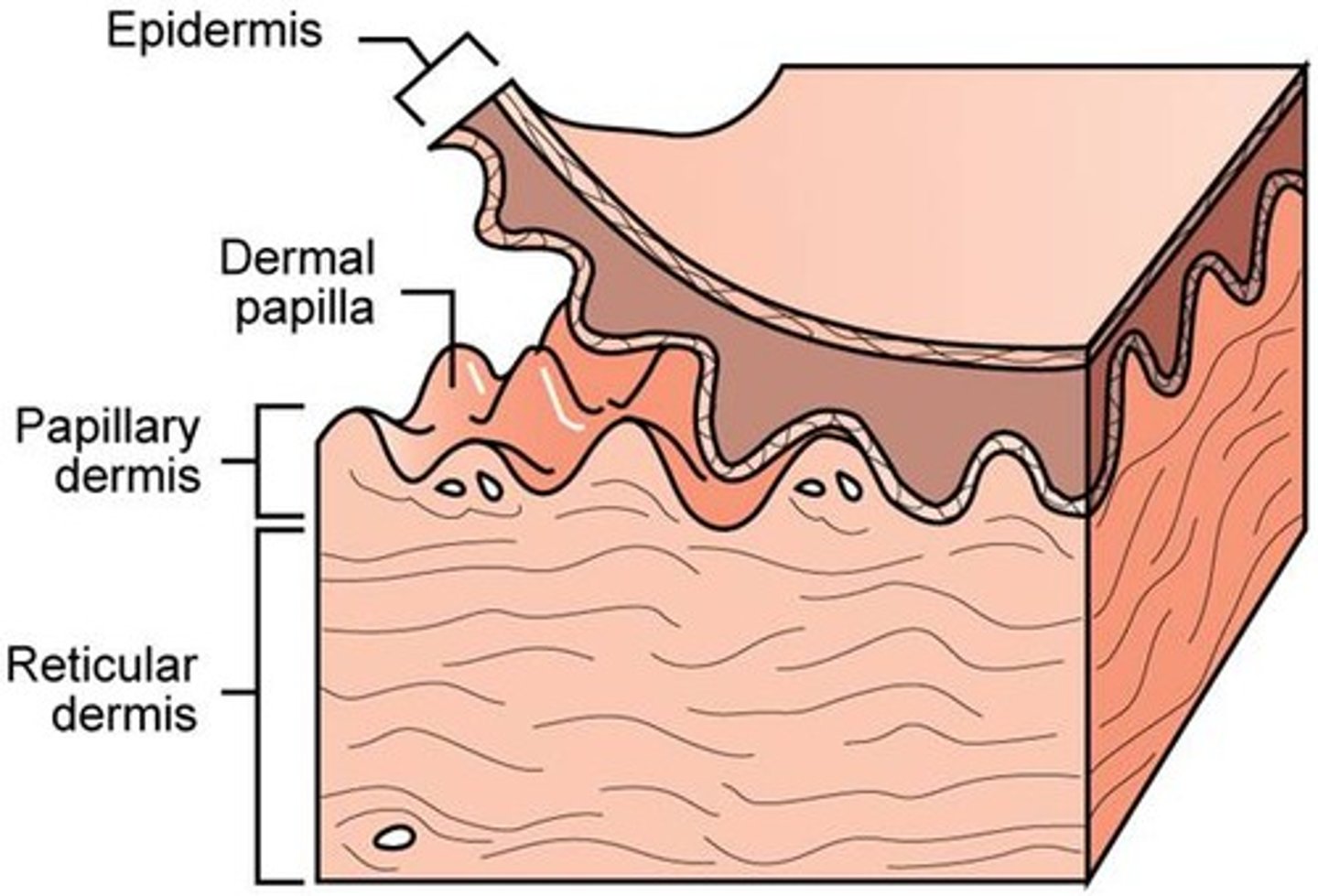
The dense irregular connective tissue,

Papillary layer
The most superficial dermal region composed of aerolar connective tissue.
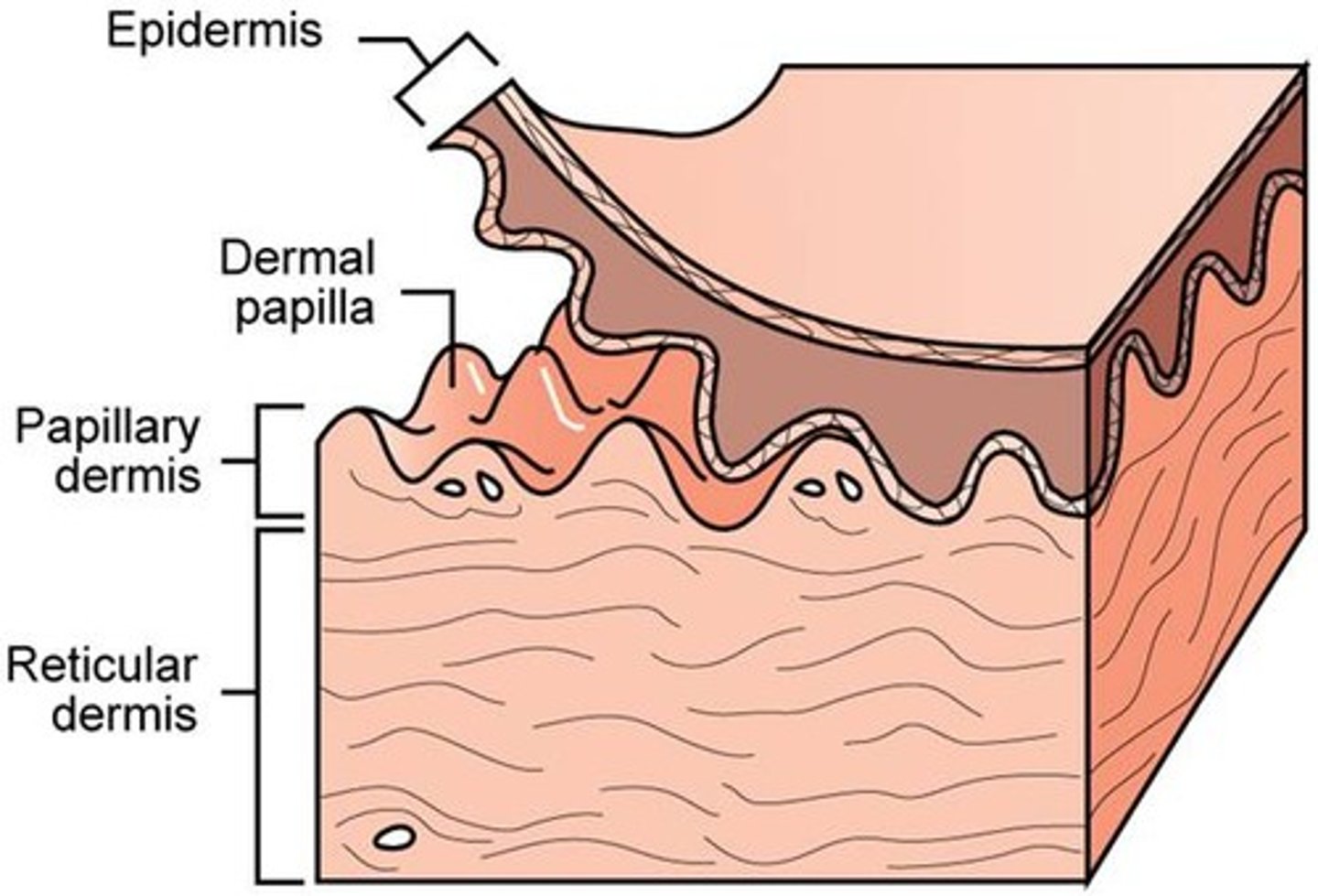
Reticular layer
The deepest skin layer.Dense irregular connective tissue
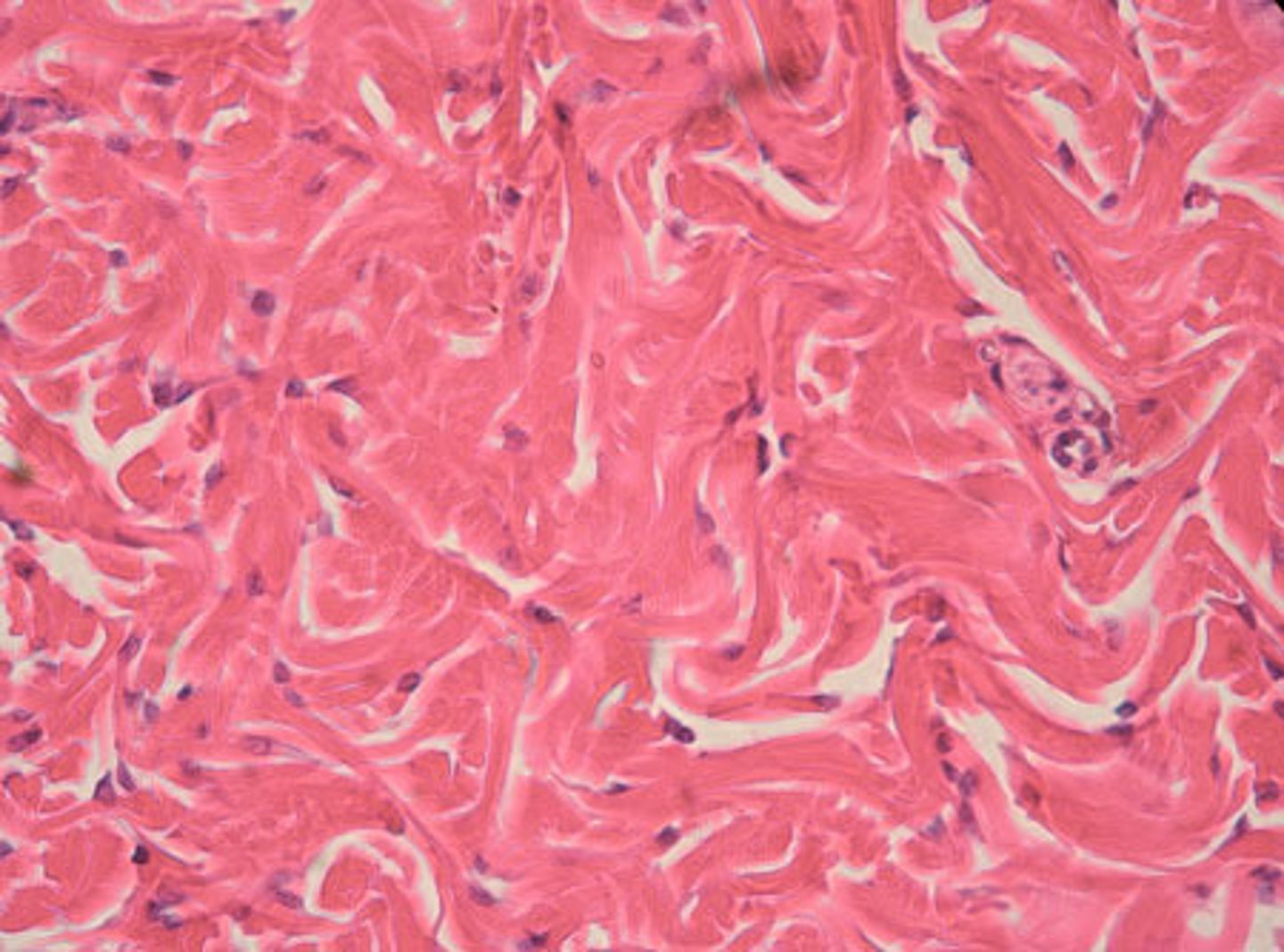
Dense irregular connective tissue
Provides structural strength.Joints
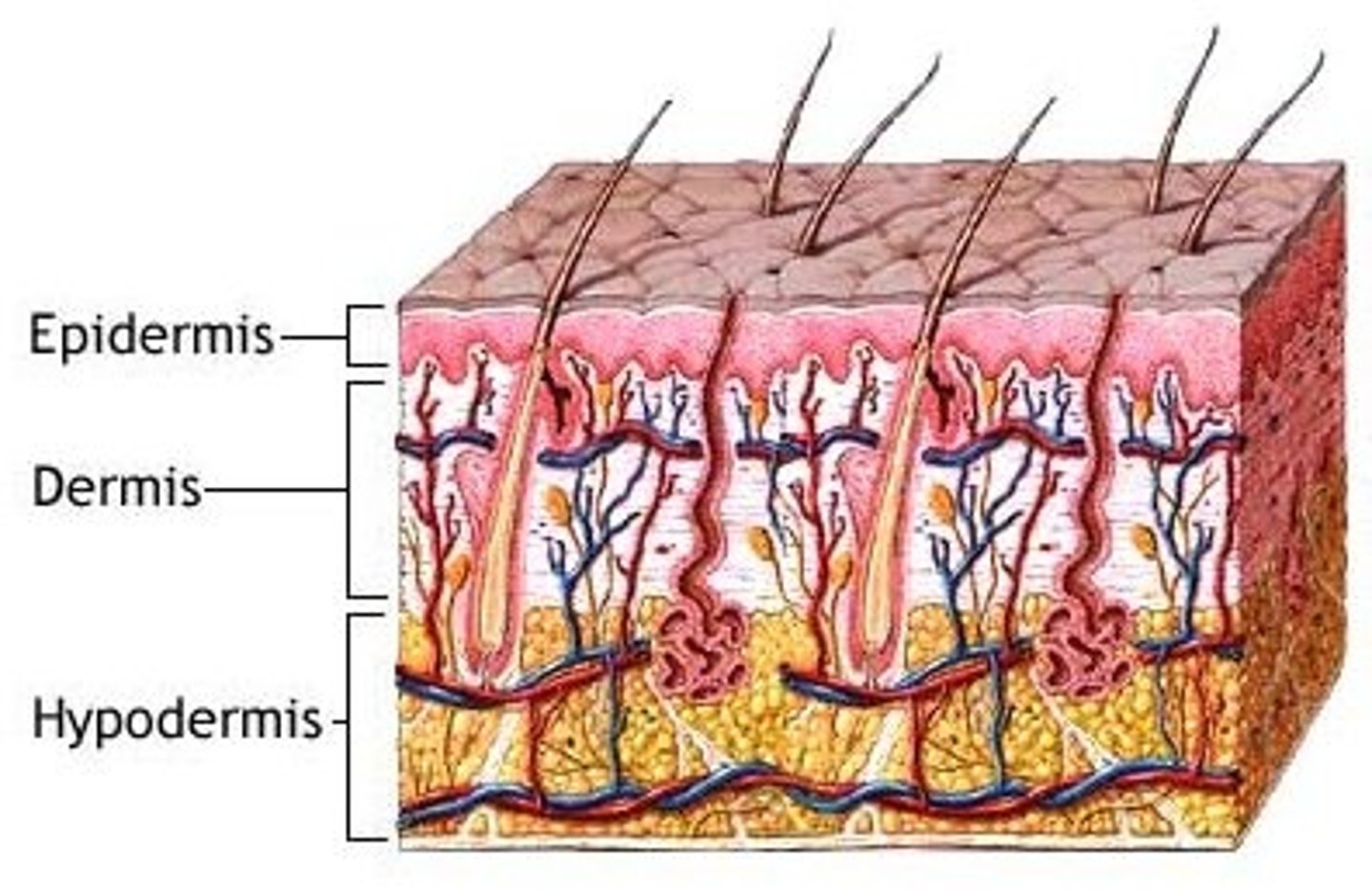
Subcutaneous layer (hypodermis)
beneath dermis
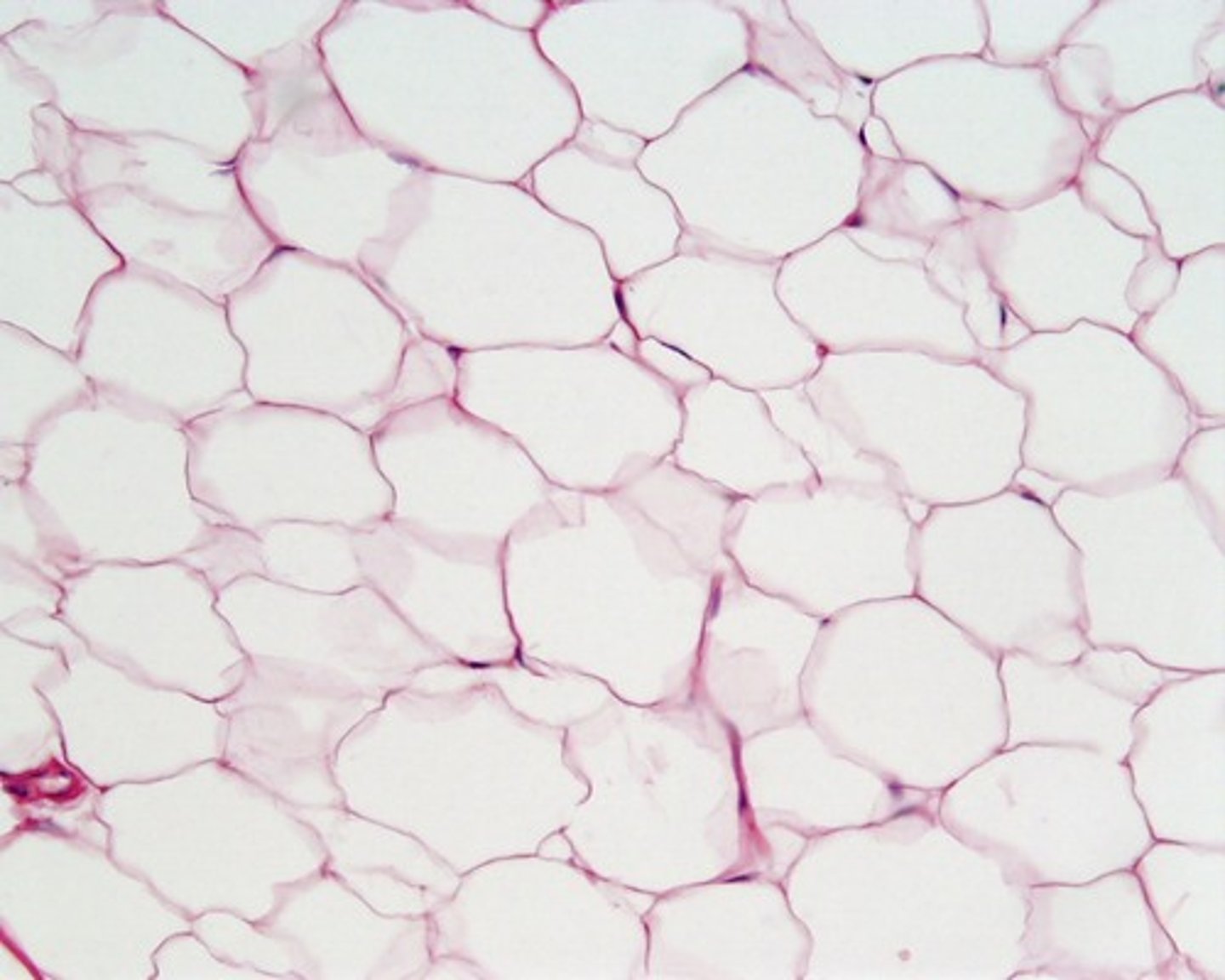
Adipose Tissue
Tissue that stores fat.
Dermal blood supply
Temperature regulation
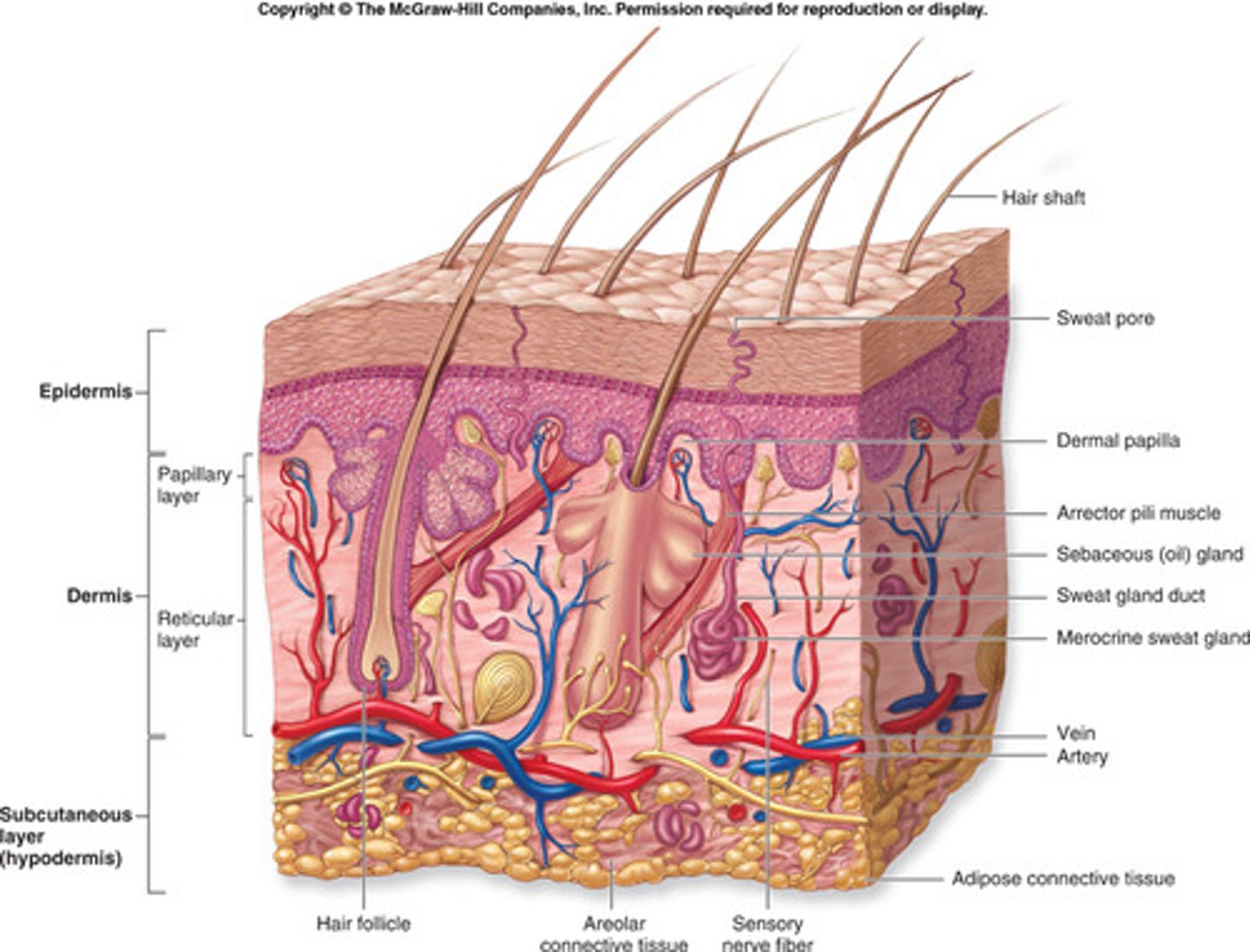
Origin of accessory structures
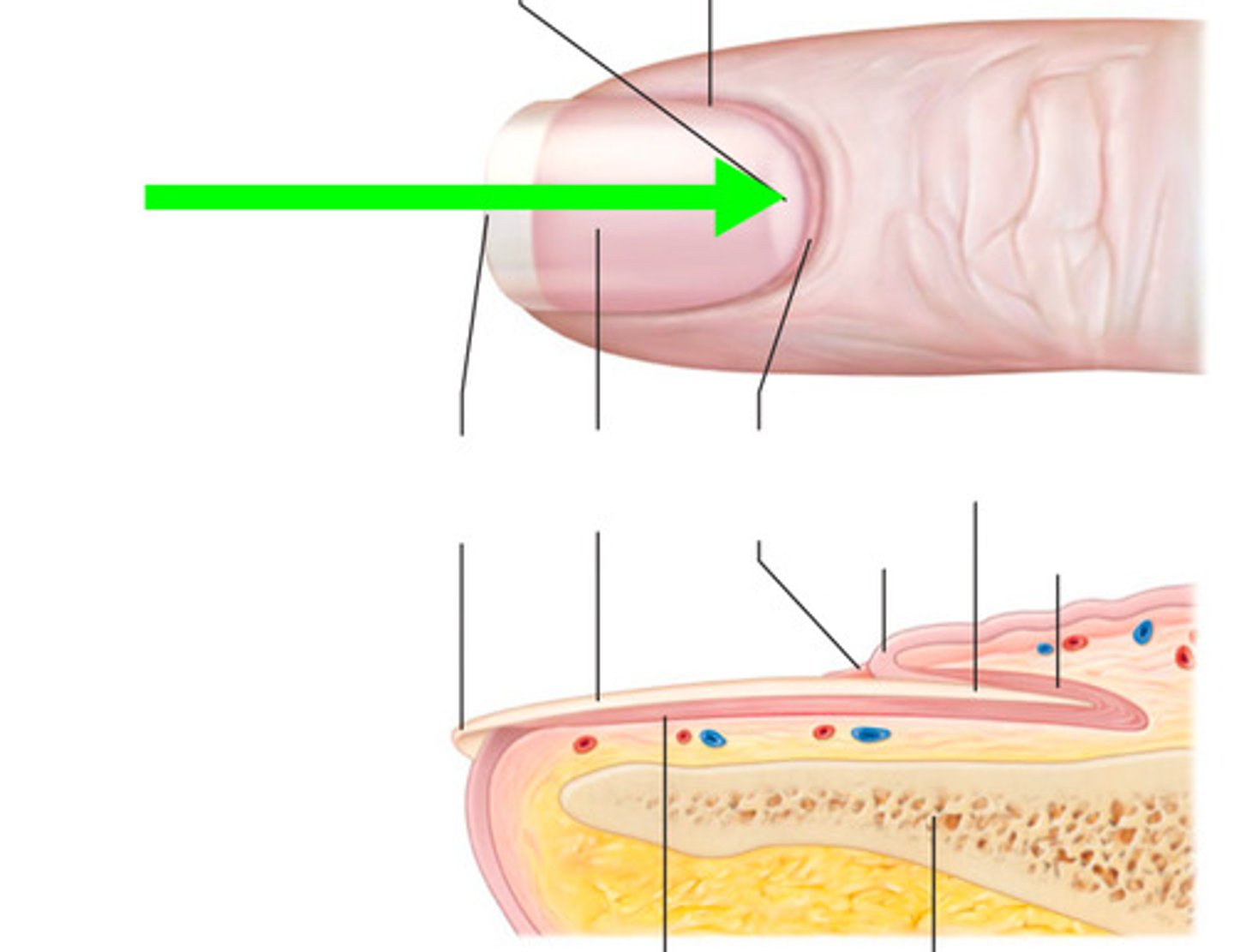
Nail
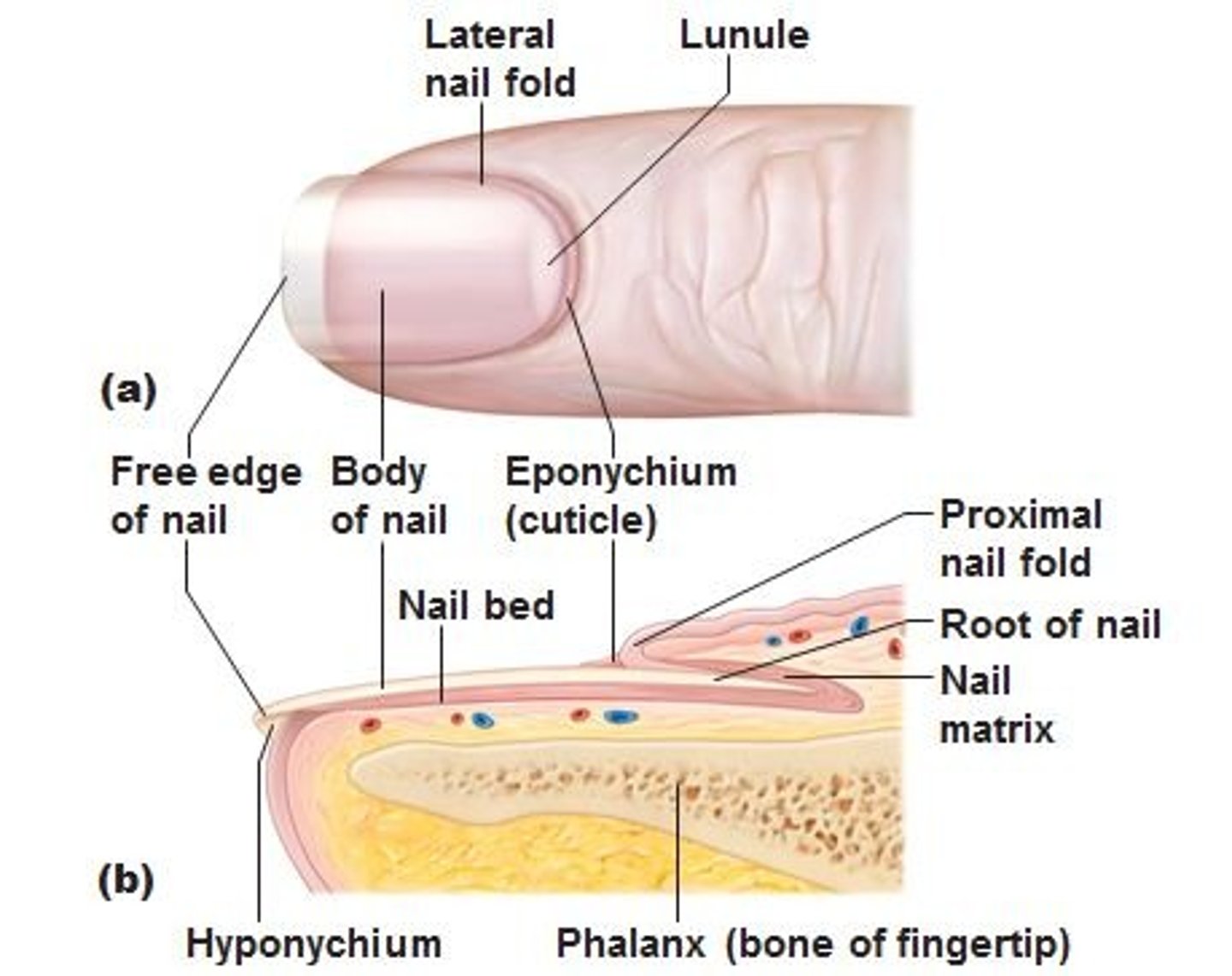
Nail Body
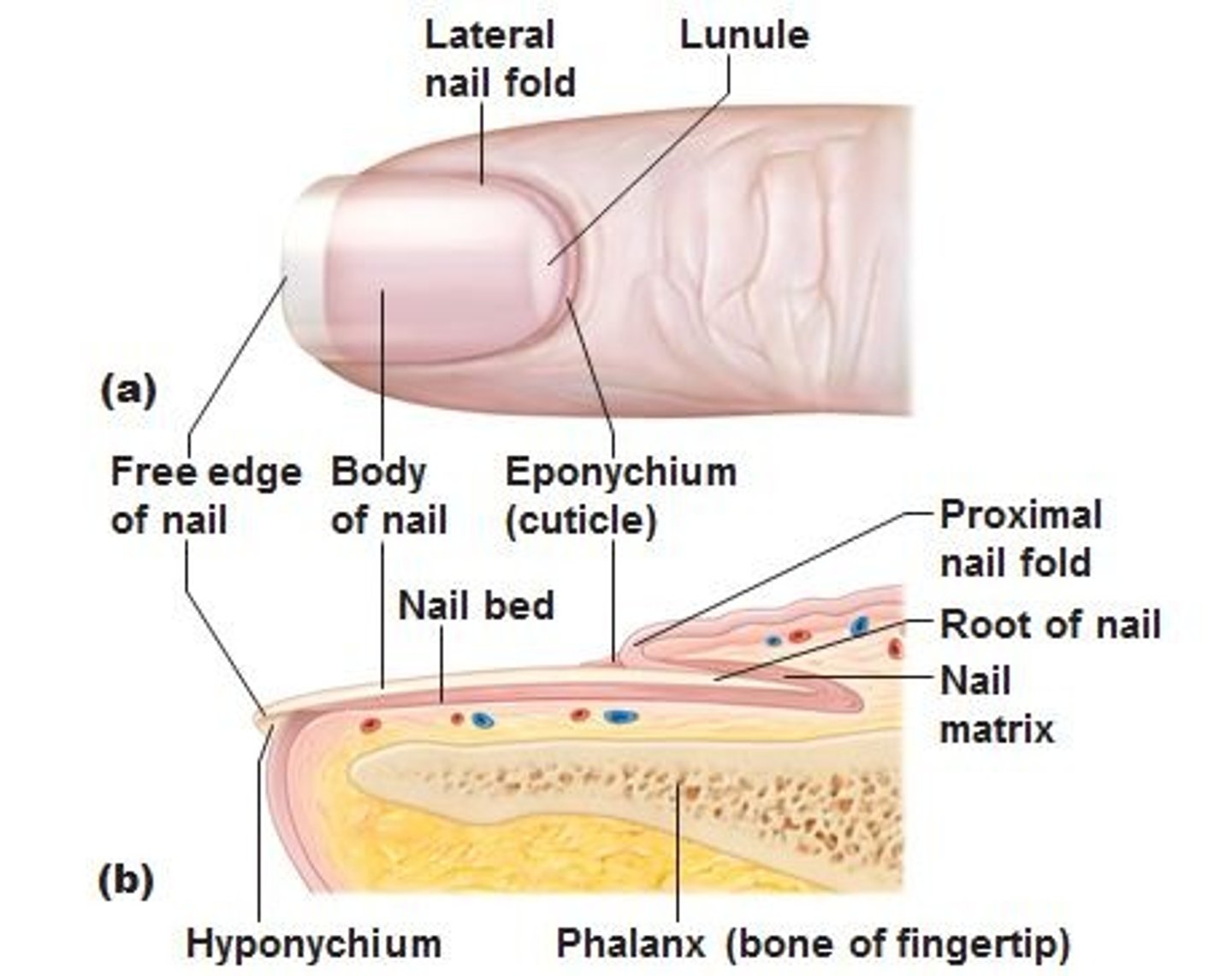
Nail bed
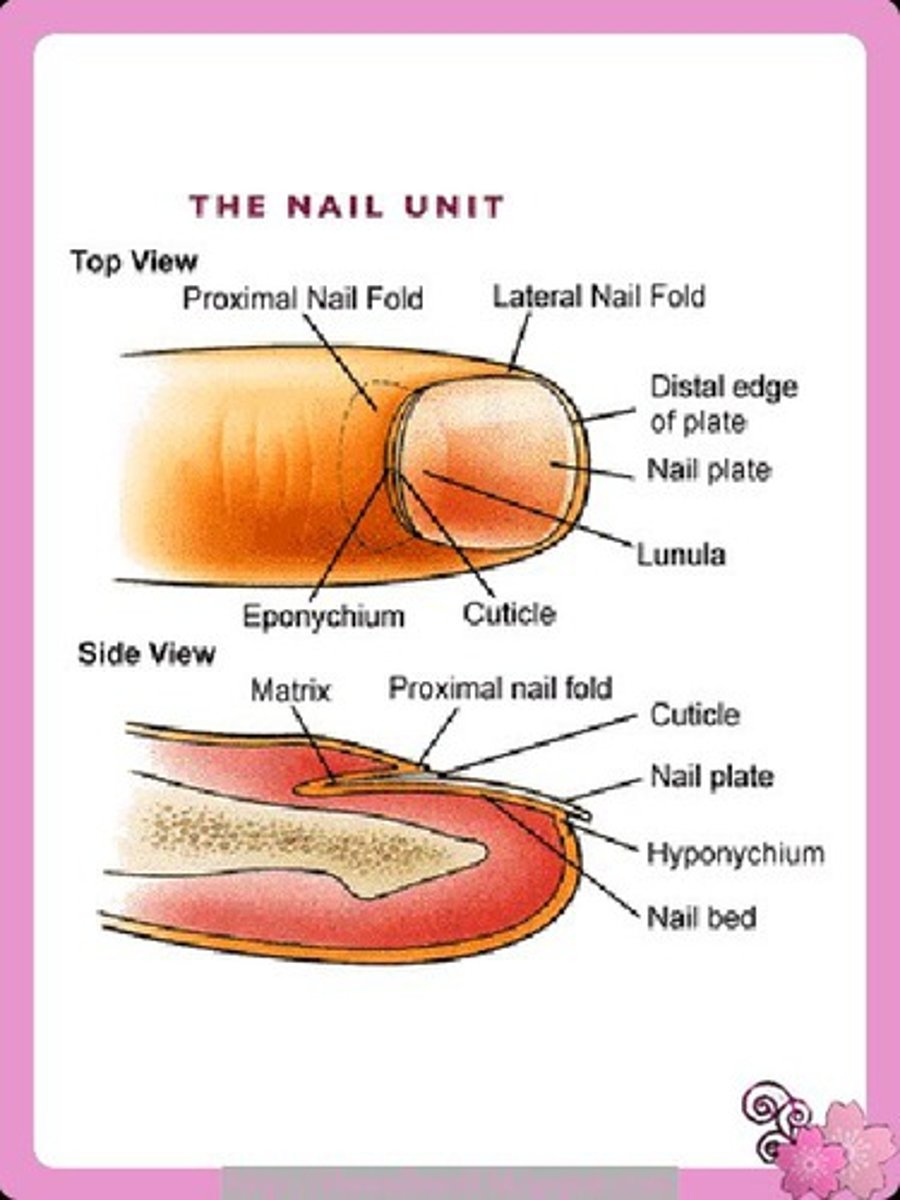
Lunule
an opaque white crescent at proximal end of nail
hair follicle
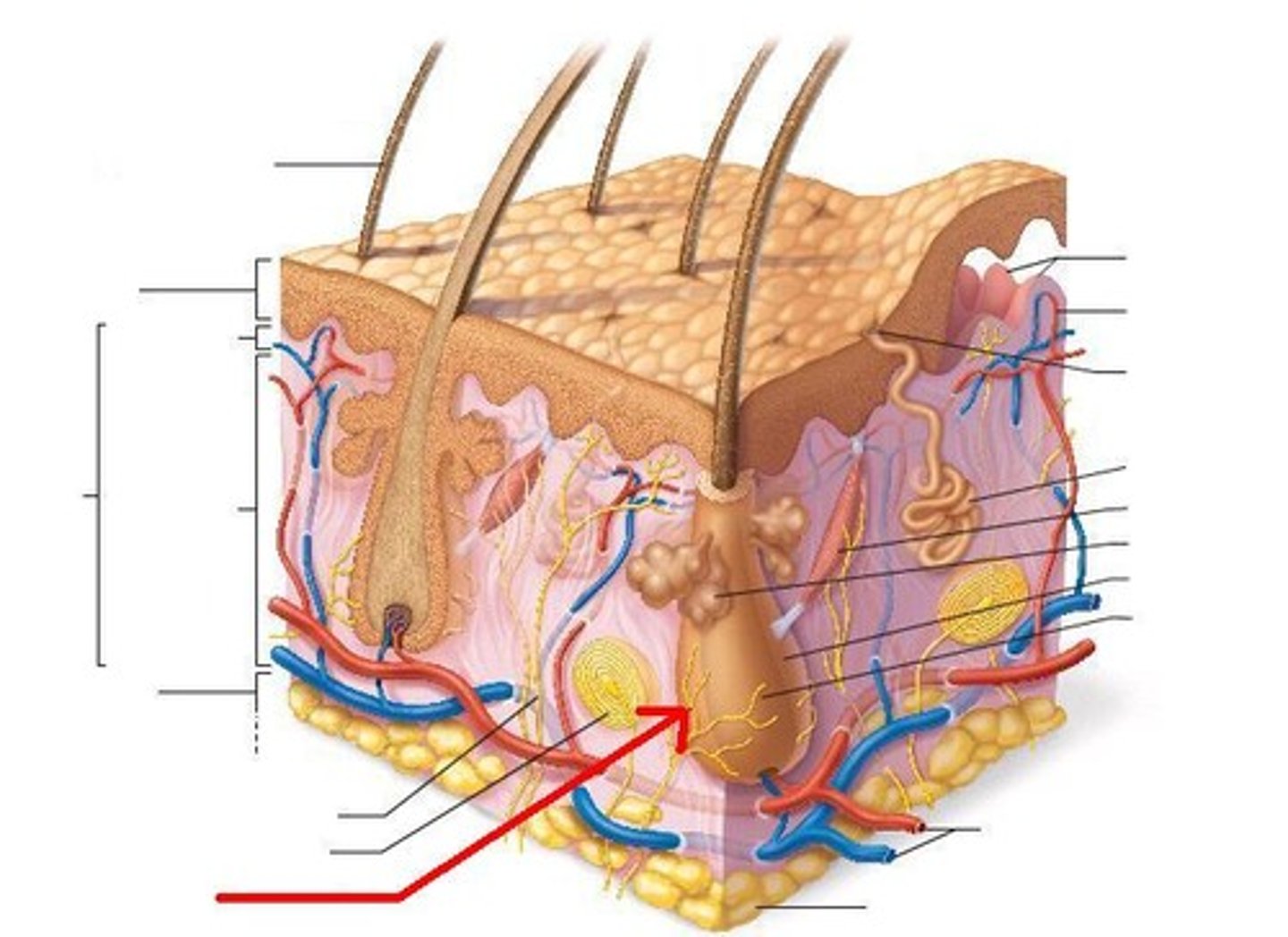
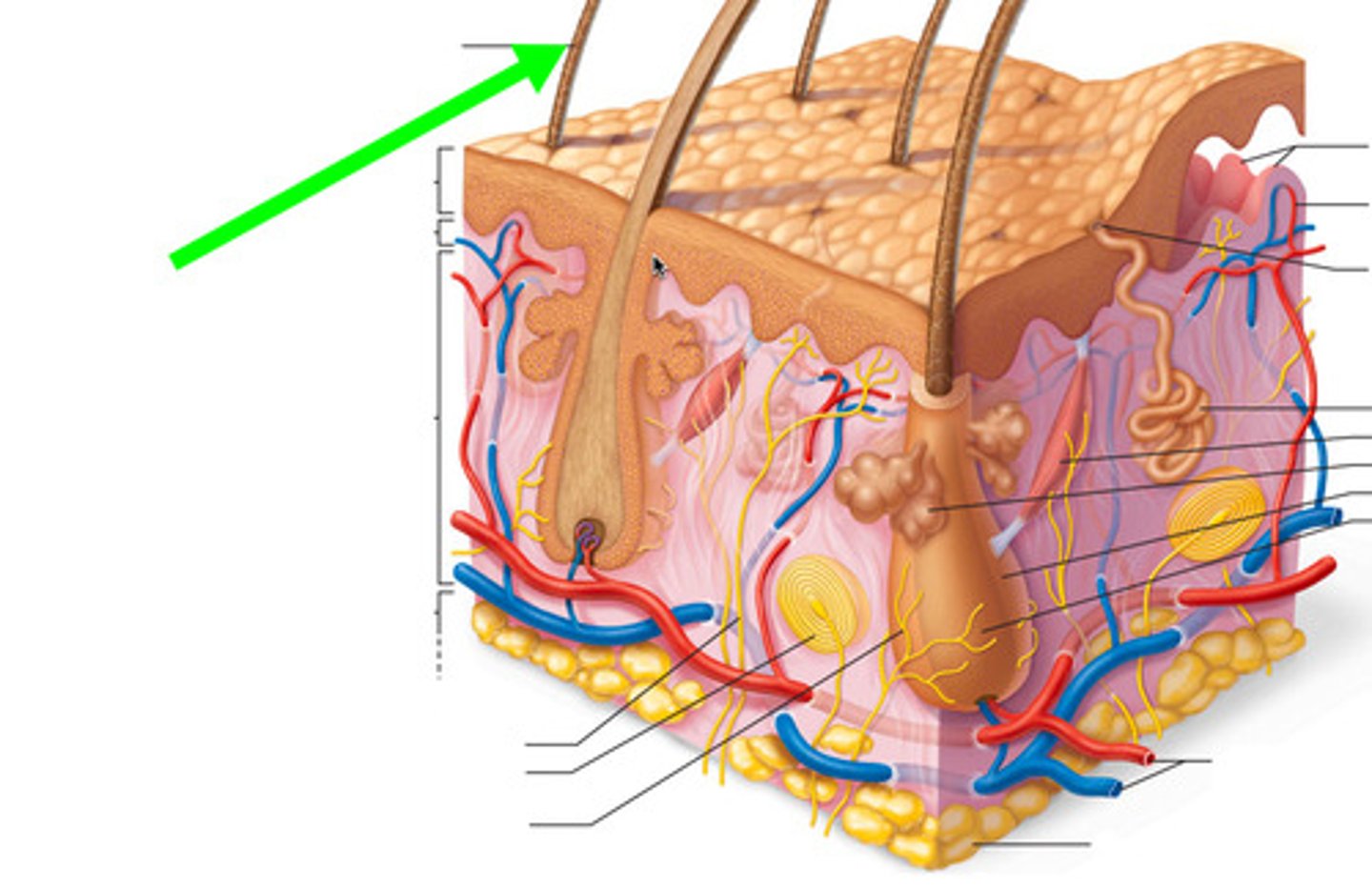
Hair root

Hair Shaft
Arrector pili
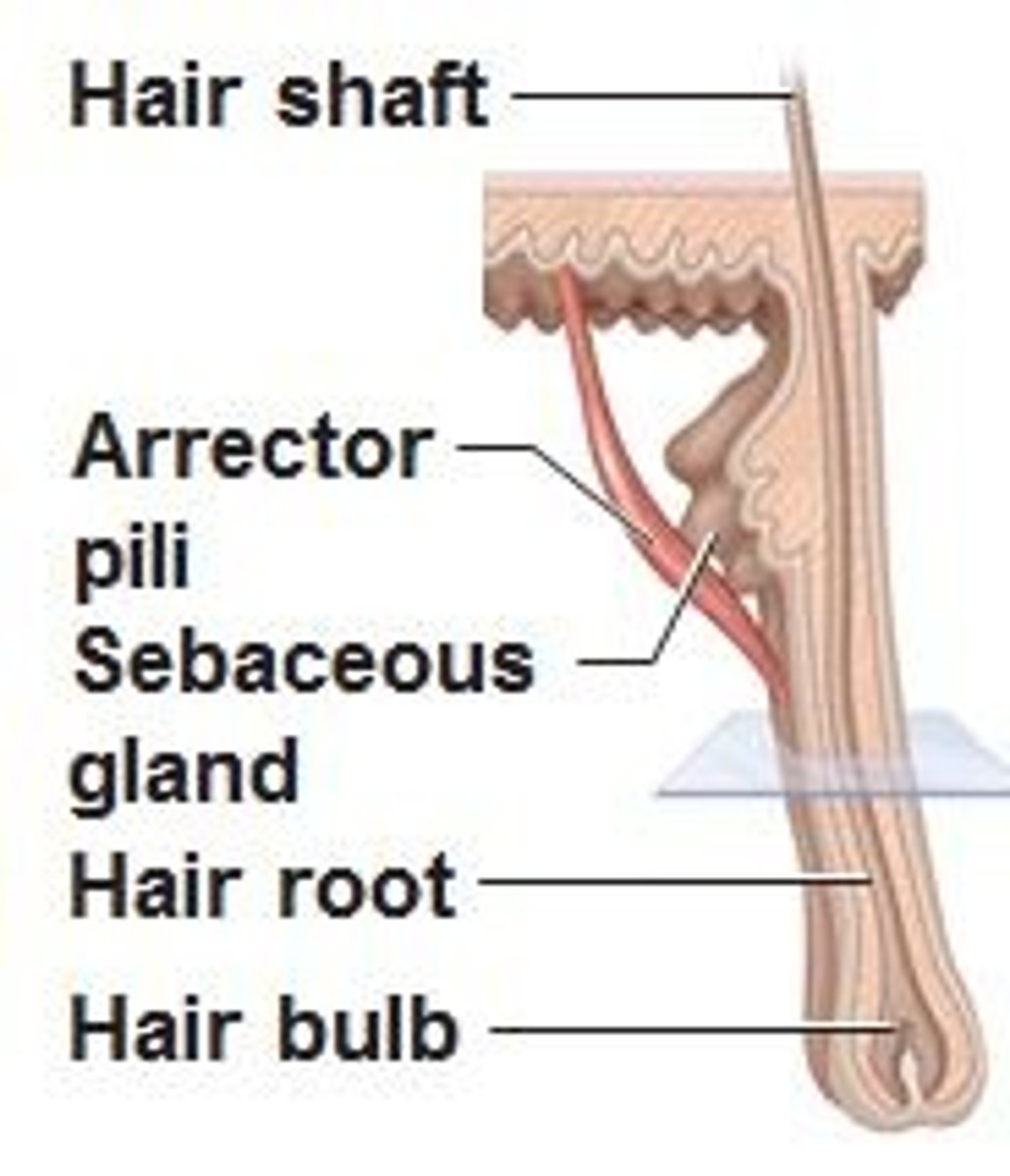
sebaceous gland
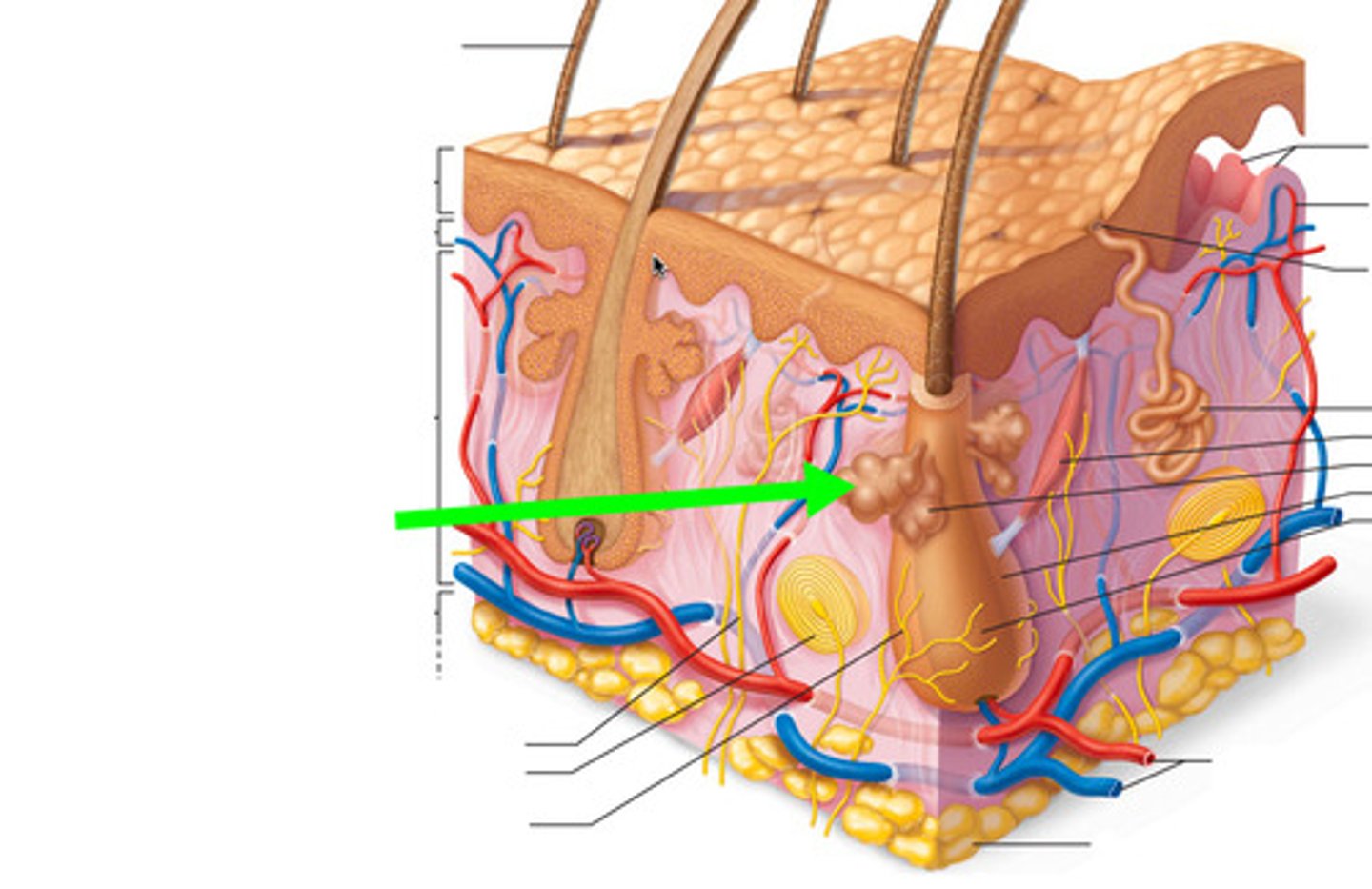
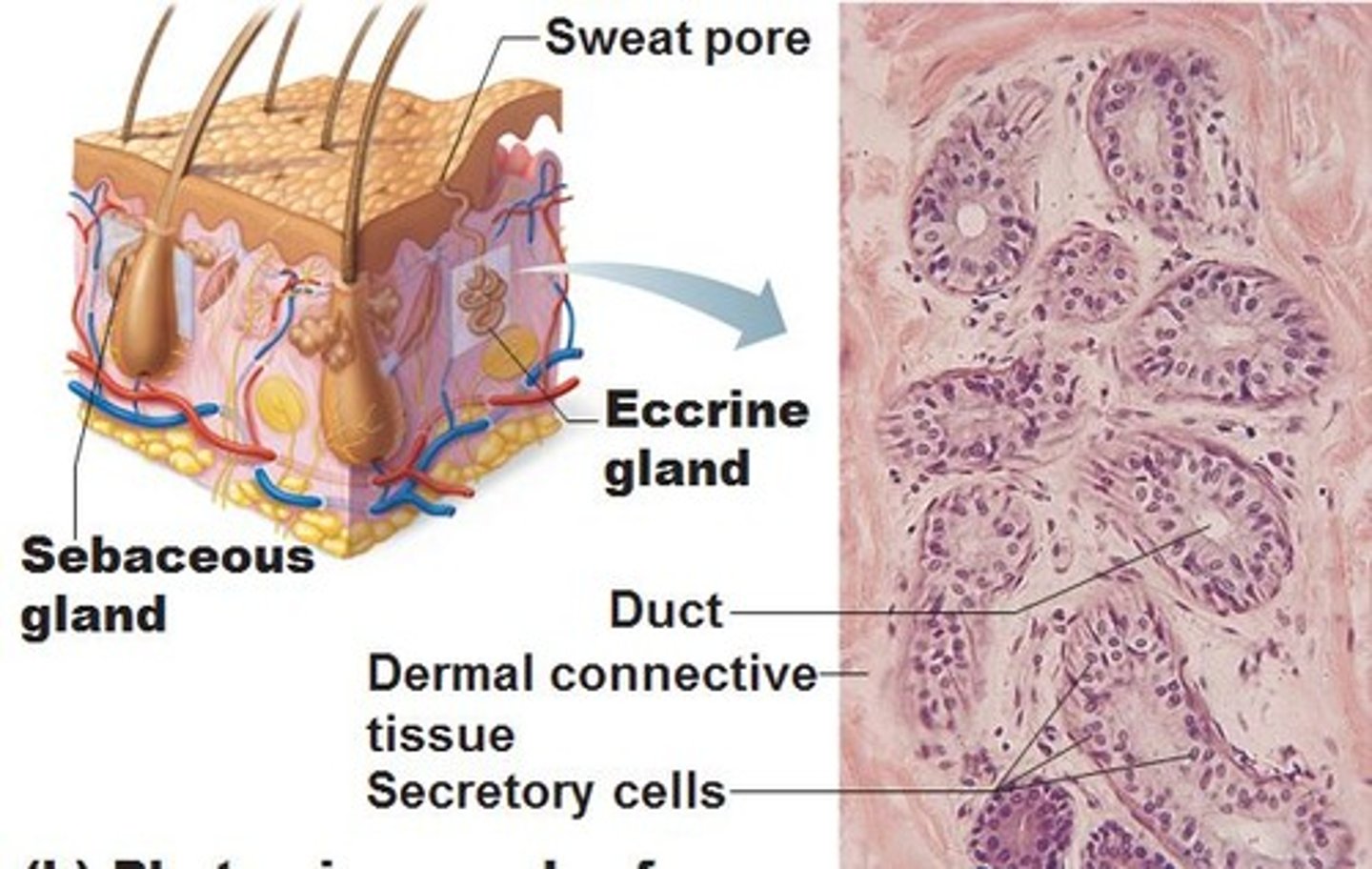
Eccrine sweat gland
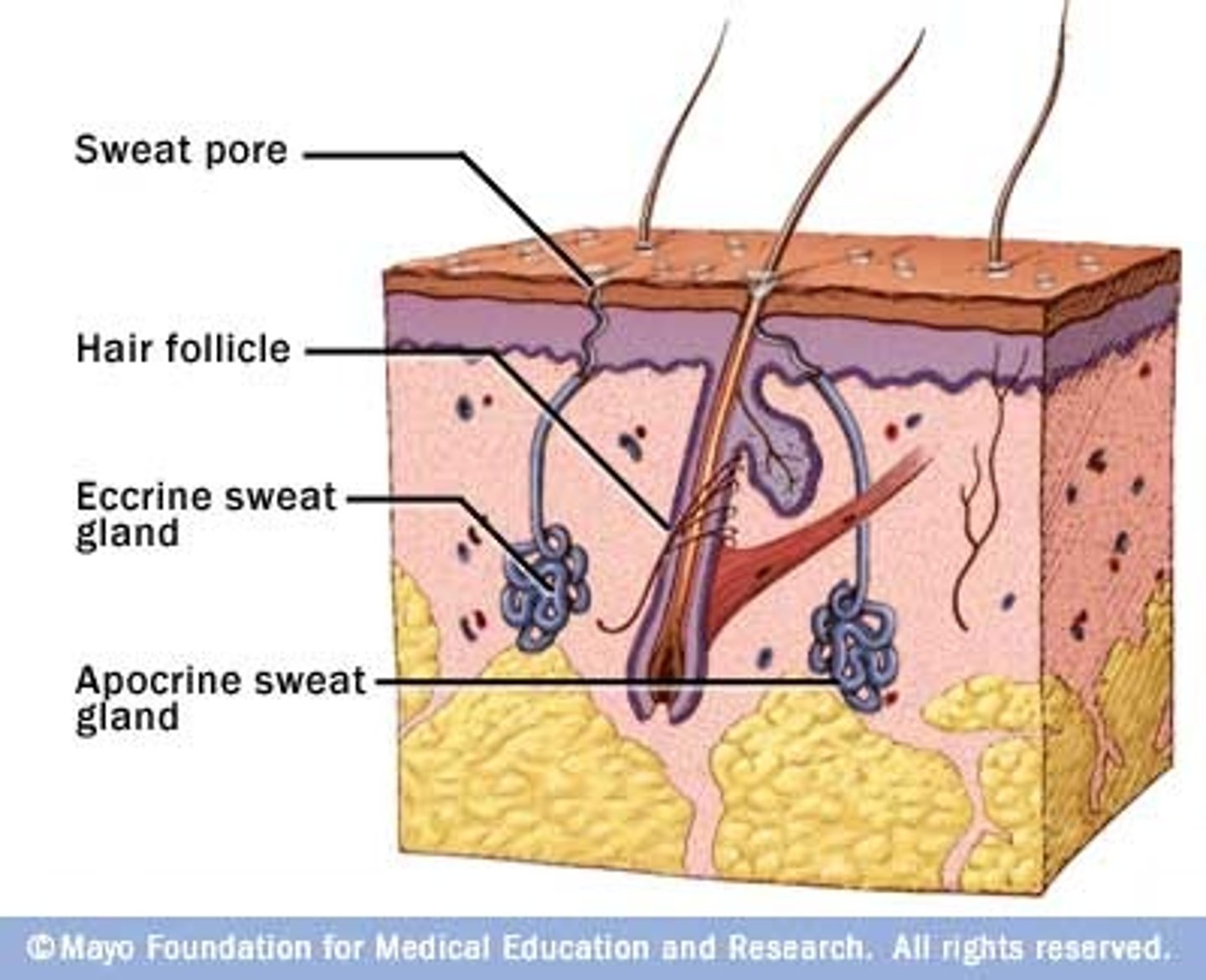
Apocrine gland
 Note
Note  Flashcards (53)