WEEK 11 Peripheral Nervous System
 Studied by 0 people
 Call Kai
 Learn
Learn Practice Test
 Spaced Repetition
 Match
Match Flashcards
 Knowt Play
1/41

There's no tags or description
Looks like no tags are added yet.
Name | Mastery | Learn | Test | Matching | Spaced | Call with Kai |
|---|
No analytics yet
Send a link to your students to track their progress
42 Terms
What is the structural divisions of the Nervous System?
CENTRAL (CNS)
Brain
Spinal Cord
PERIPHERAL (PNS)
Nerves
Ganglia
What are the divisions of the Nervous System?
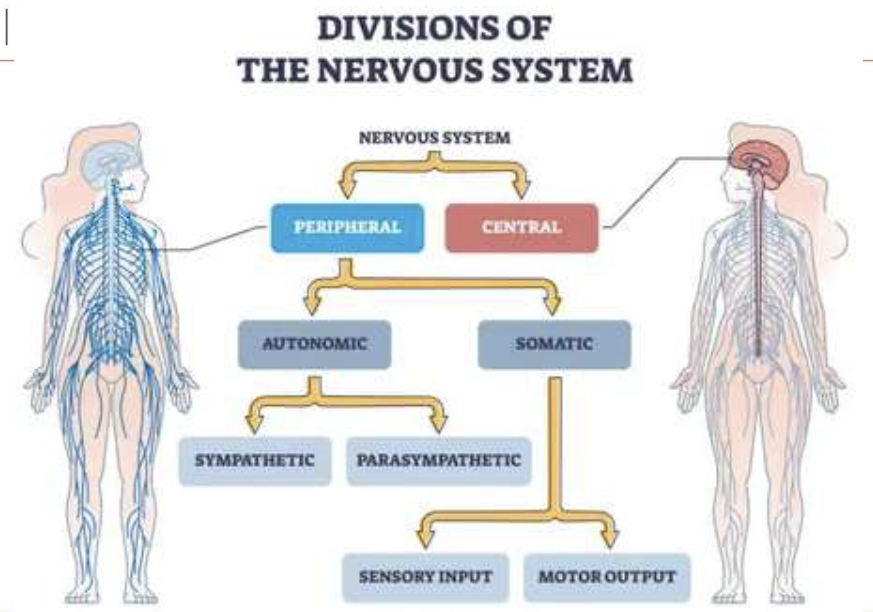
What does the Somatic Nervous System process?
it processes sensory information + controls the voluntary muscle movements
What does the Sympathetic Nervous System do?
-”Fight or Flight”
-it drives automatic bodily responses during stress
What does the Parasympathetic Nervous System do?
-”Rest and Digest”
-it regulates automatic bodily functions during rest
What is the structure of the PNS?
31 pairs of SPINAL NERVES
12 pairs of CRANIAL NERVES
(total 23 nerve pairs)
What do the 43 nerve pairs do?
they form the basis of the peripgeral nervous system
What arre the 2 types of nerves?
SENSORY (afferent)
MOTOR (efferent)
What is the function of the SENSORY NERVES?
detection of various sensations such as pain and heat
they transmit messages towards the CNS to be interpreted by either the spinal cord or the brain
What is the function of MOTOR NERVES?
they transmit messages away from the CNS
they stimulate effectors (skin, sense organs, muscles, etc) to perform a fucntion or reflex
What is a nerve called when it performs both SENSORY and MOTOR functions?
MIXED
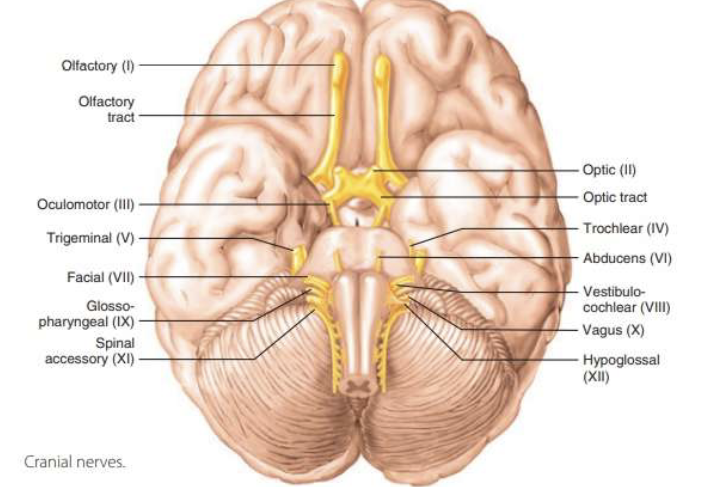
What are the CRANIAL NERVES?
OLFACTORY (I)
OPTIC (II)
OCULOMOTOR(III)
TROCHLEAR (IV)
TRIGEMINAL (V)
ADUCENS (VI)
FACIAL (VII)
VESTIBULOCHLEAR (VIII)
GLOSSOPHRAYNGEAL (IX)
VAGUS (X)
ACCESSORY (XI)
HYPOGLOSSAL (XII)
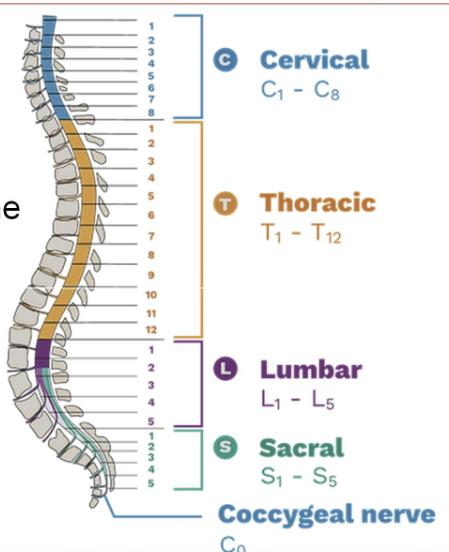
What are the 5 DIVISIONS of the SPINAL NERVES?
8 Cervical nerve pairs (C1-C8)
12 Thoracic nerve pairs (T1-T12)
5 Lumbar nerve pairs (L1-L5)
5 Sacral nerve pairs (S1-S5)
1 single Coccygeal nerve pair (C0)
What is the difference between the SPINAL CORD and the VERTEBRAL COLUMN?
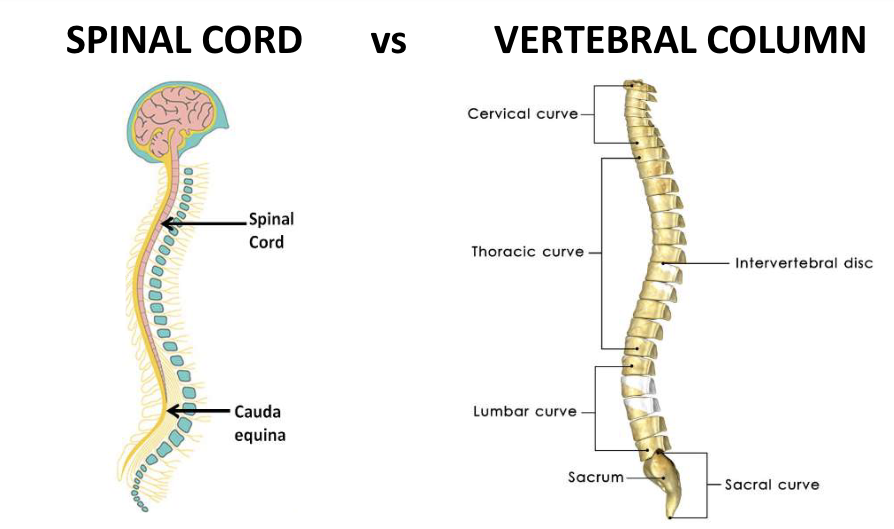
Where does the spinal cord extend into, until which vertevrae?
in the adult, the spinal cord typically ends between vertebrae L1 and L2
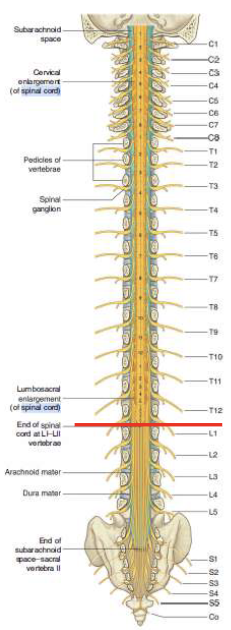
Where are the Segments of the Spinal Cord located in relation to the Bony Vertebral Body?
the Segments of the Spinal Cord are SUPERIOR to their corresponding Bony Vertebral Body
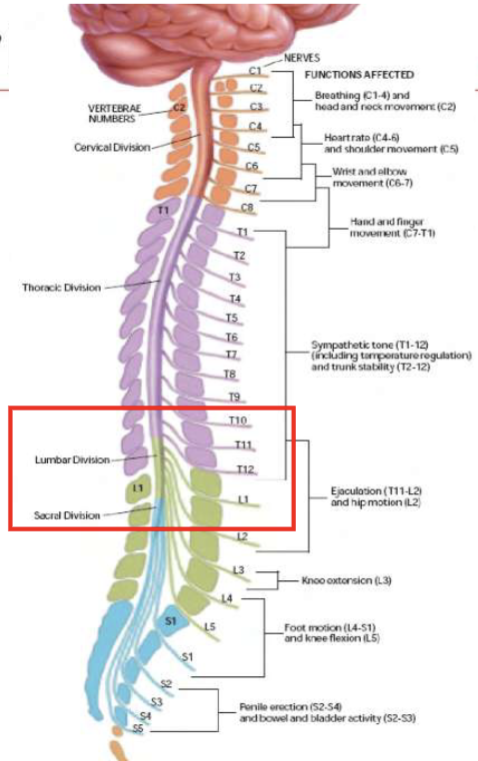
for example the T11 Spinal Segment is locaated higher than the T11 Bony Vertebra
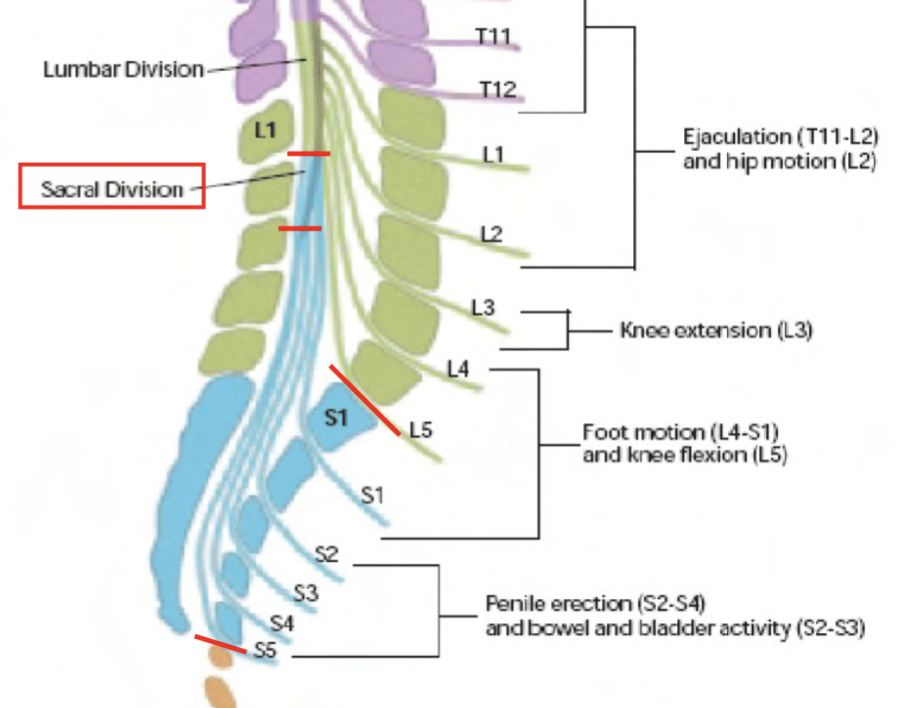
and the Sacral Spinal Cord Segment is higher than the L1 Verteral Body
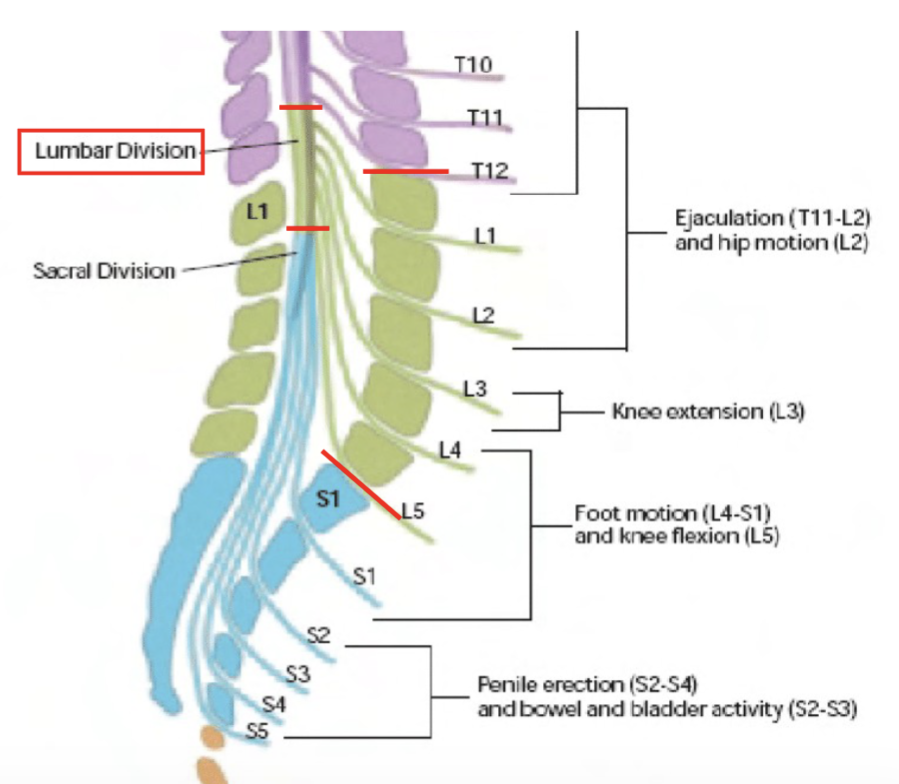
Lumbar Division of the Spinal Cord in relation to the Lumbar Area of the Vertebral Column
Sacral Division of the Spinal Cord in relation to the Sacral Area of the Vertebral Column
in the vertebral column where does the Spinal Nerve exit?
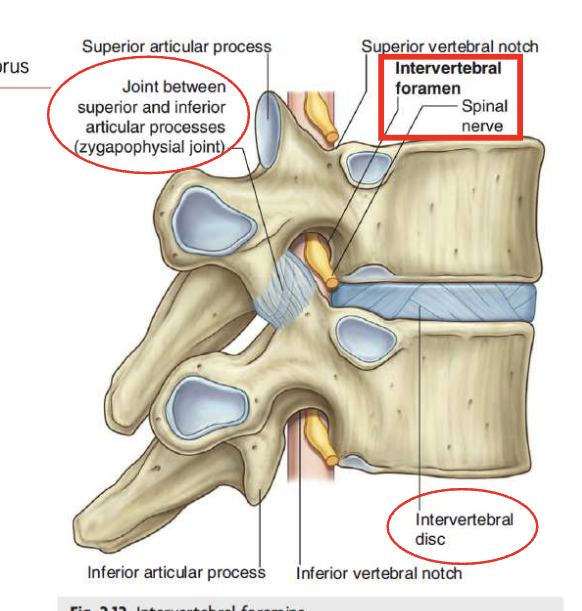
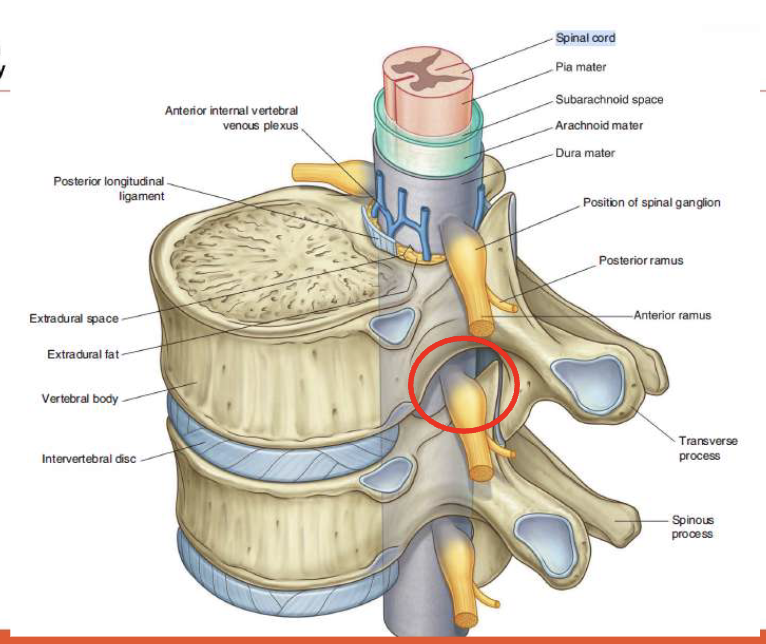
Each Spinal Nerve exits the vertebral canal through an intervertebral foramen
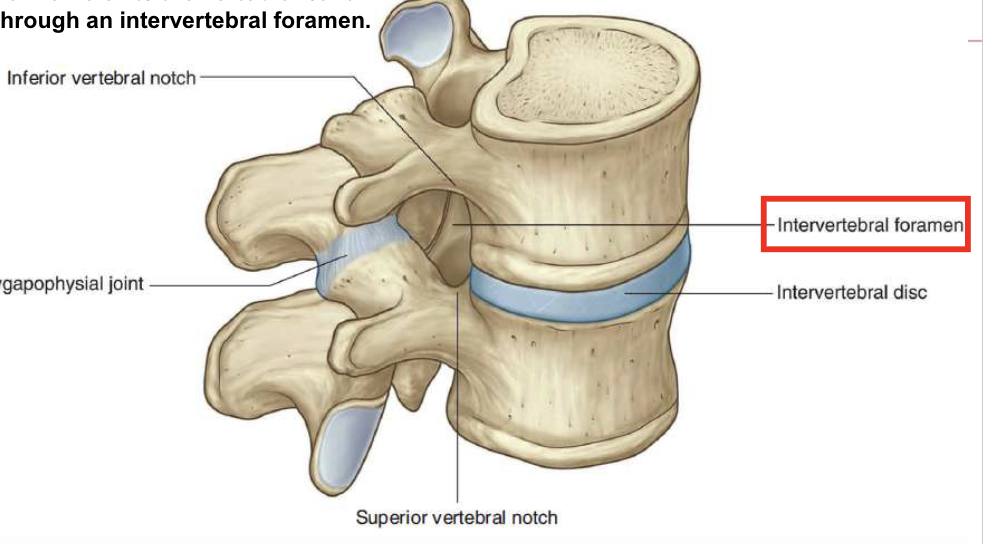
What is the name of the Joint that’s between the superior and inferior articular processes?
Zygophageal Joint
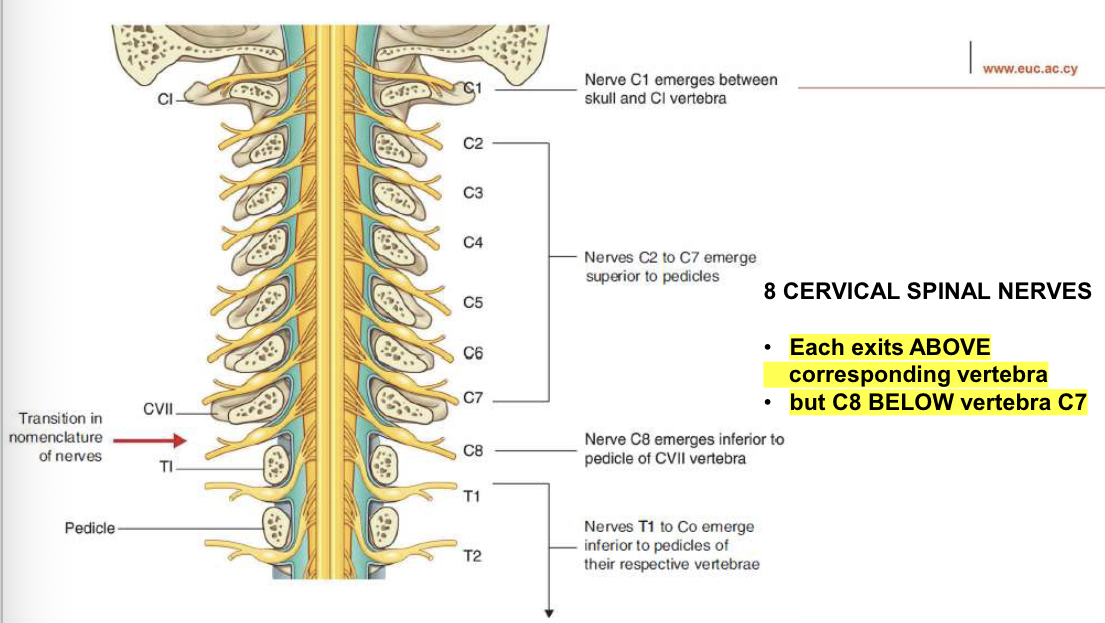
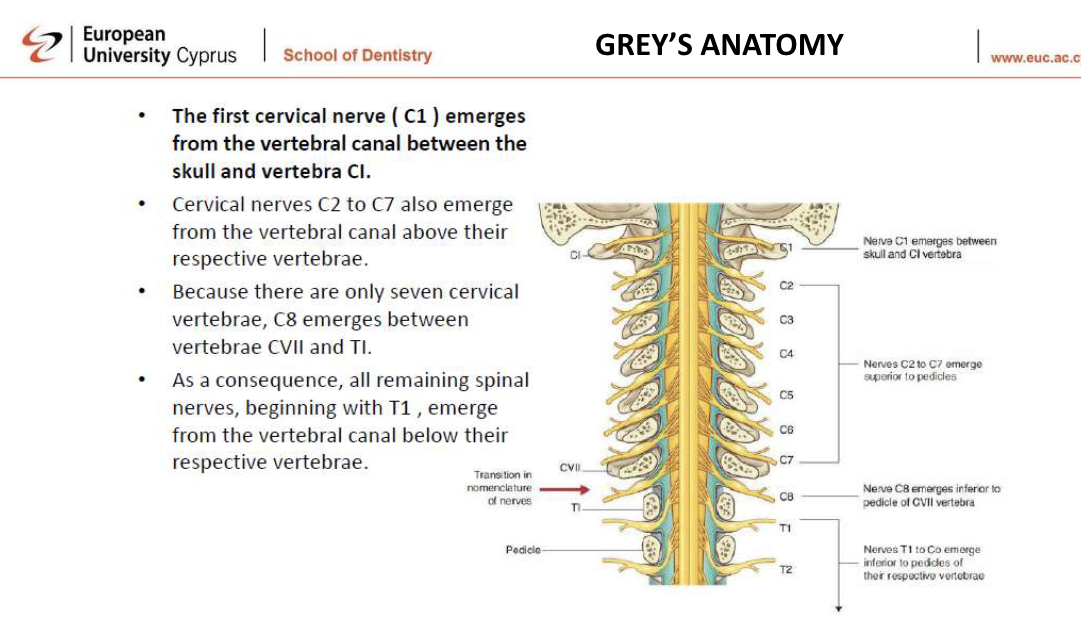
Where do the 8 Cervical Nerves exit from their corresponding vertebra?
Each exits ABOVE the corresponding vertebra, BUT C8 BELOW vertebra C7
Where do the 12 Thoracic Spinal Nerves exit from their corresponding vertebra?
Each exits BELOW corresponding vertebra
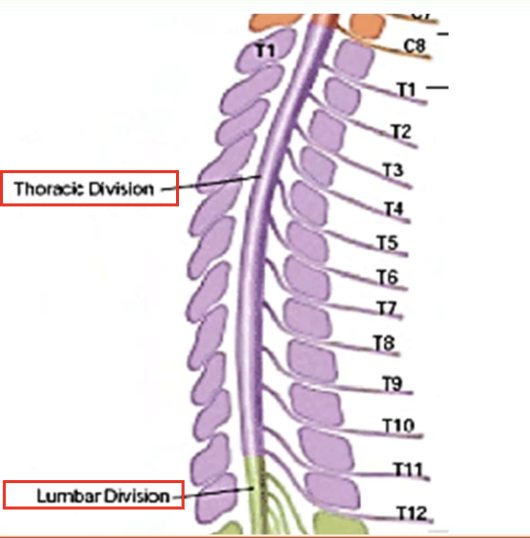
Where do the 5 Lumbar and 5 Sacral Spinal Nerves exit from their corresponding veretebra?
Each extis BELOW corresponding vertebra
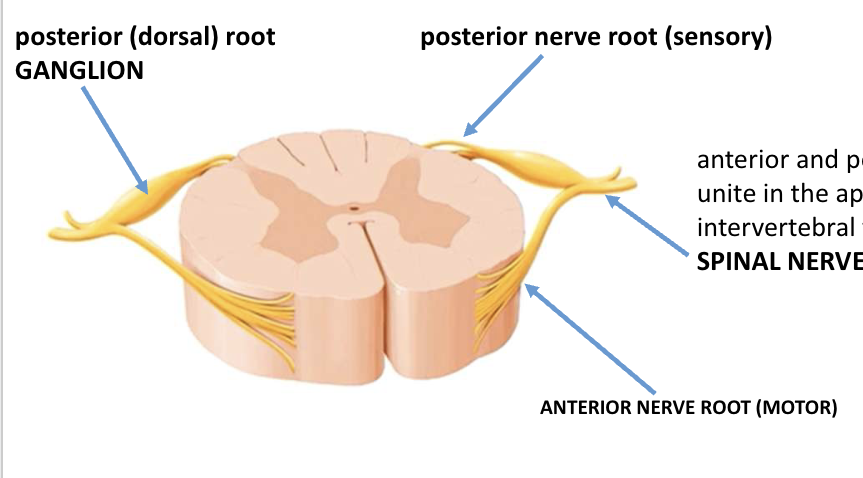
How is the Spinal Nerve formed?
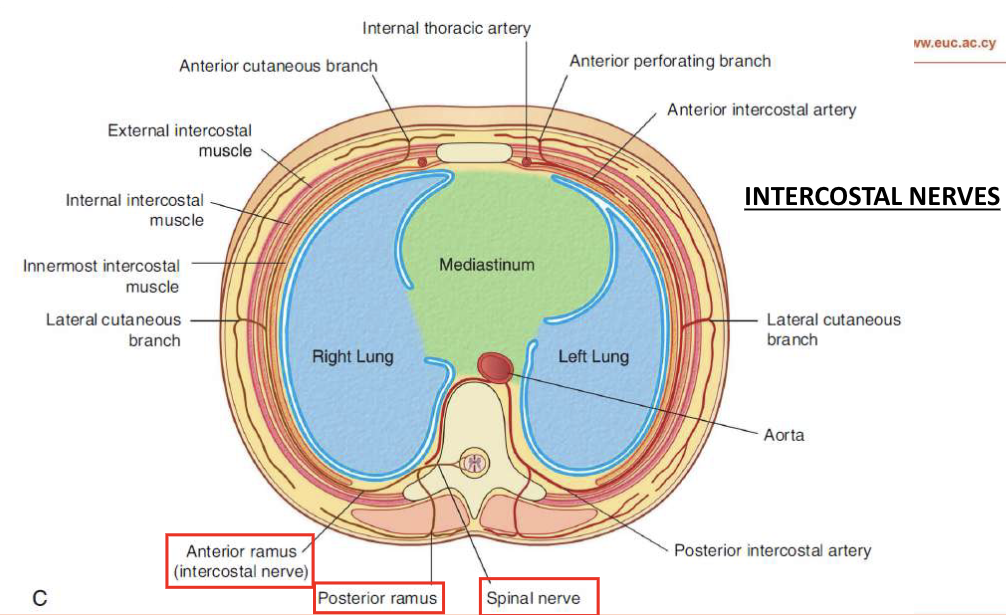
the ANTERIOR and POSTERIOR roots unite in the appropriate intervertebral foramen to form a SPINAL NERVE
Into what does each Spinal Nerve devide into?
into 2 Major Branches:
an ANTEIOR RAMUS (much larger)
a POSTERIOR RAMUS (smaller)
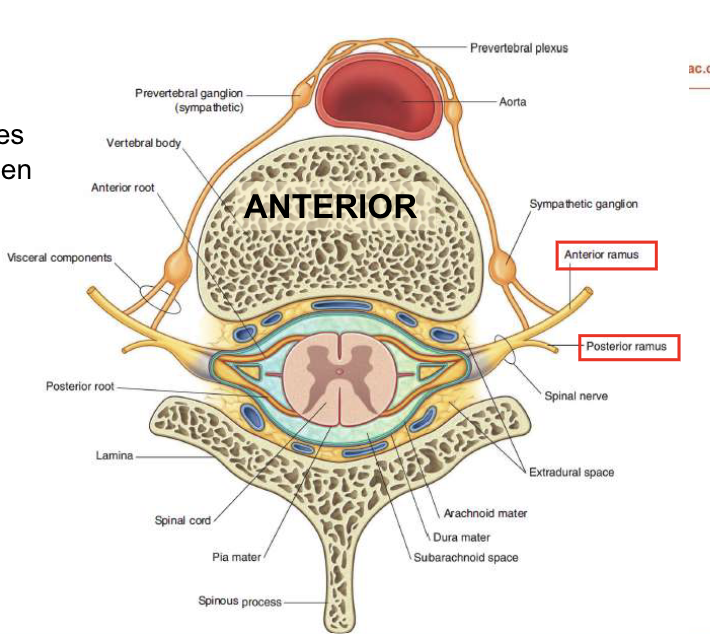
The branches of the POSTERIOR RAMI are responsible for innervating paraspinous muscles (the nerve’s myotome) and regions of the skin (the nerve’s dermoatome) related to the ramus’ vertebral level
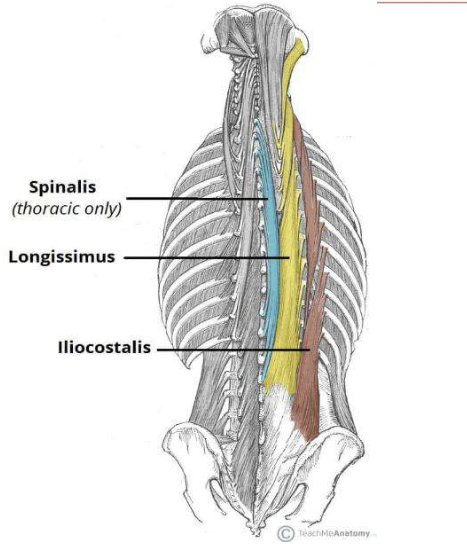
What are the Muscles that are INNERVATED by Dorsal Rami of the Spinal Nerves
Iliocostalis Muscle (Erector Spinae)
Spinalis Muscle (Erector Spinae)
Longissimus Muscle (Erretor Spinae)
Transvero-Spinales
Interspinalis Muscles
Suboccipital Muscles
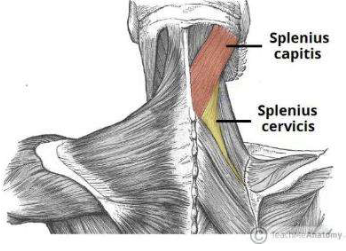
Splenius
Which are the Deep Back Muscles (Intrinsic) which are the Extensors and Rotators of the head and neck?
Splenius Capitis
Splenius Cervicis
Which are the Extensors and Rotators of the Vertebral Column muscles?
Erector Spinae (group of muscles)
Tranversospinales (group of muscles)
Which are the Short Segmental Muscles?
Levatores Costarum Muscles
Interspinales
Intertransversarii
From which muscles does the Erector Spinae group formed?
iliocostalis
longissimus
spinalis
From which muscles does the Transversesospinales group formed?
Semispinalis
Multifidus
Rotatores
What are NERVE PLEXUSES formed by ?
the Anterior Rami of the Spinal Nerves form the NERVE PLEXUSES= Networks of nerve fibers
Which are the Nerve Plexuses?
CERVICAL PLEXUS: C1-C4
BRACHIAL PLEXUS: C5-T1
LUMBAR PLEXUS: T12-L4
SACRAL PLEXUS: L4-S4
(- COCCYGEAL PLEXUS: S4-C0)
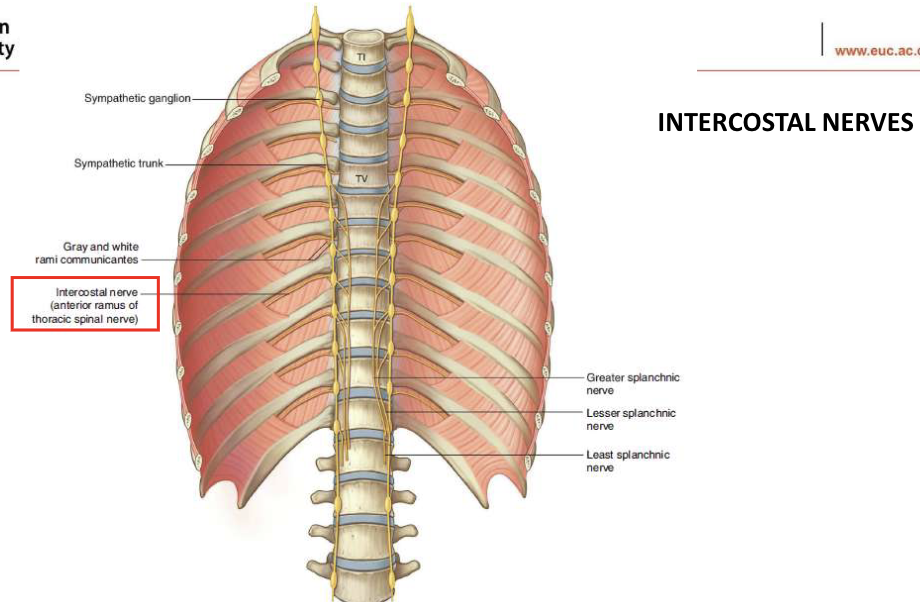
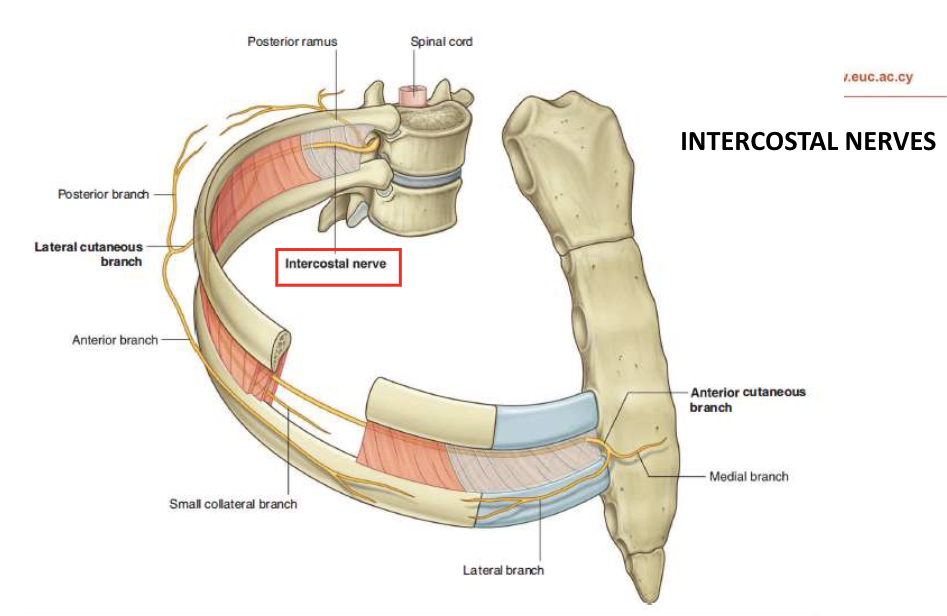
ONLY the anterior branches of the THORACIC SPINAL NERVES DO NOT FORM PLEXUSES
Since the THORACIC SPINAL NERVES DO NOT FORM PLEXUSES what do they do?
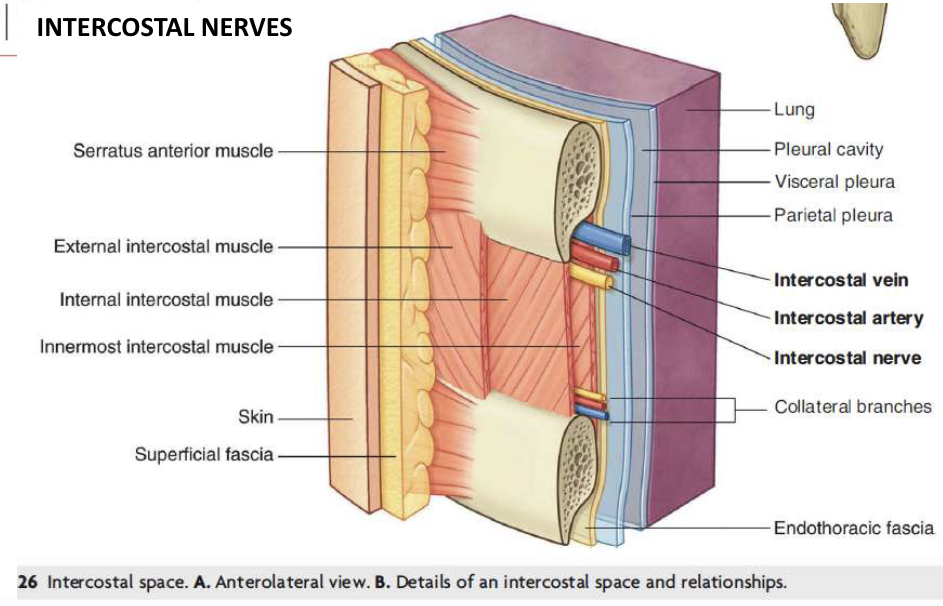
they travel relatively independetly from one another without forming plexuses —> they become the INTERCOSTAL and SUBCOSTAL nerves
From which nerves is the CERVICAL PLEXUS formed?
the CERVICAL PLEXUS is formed by the Anterior Rami of the Cervical Nerves C1-C4
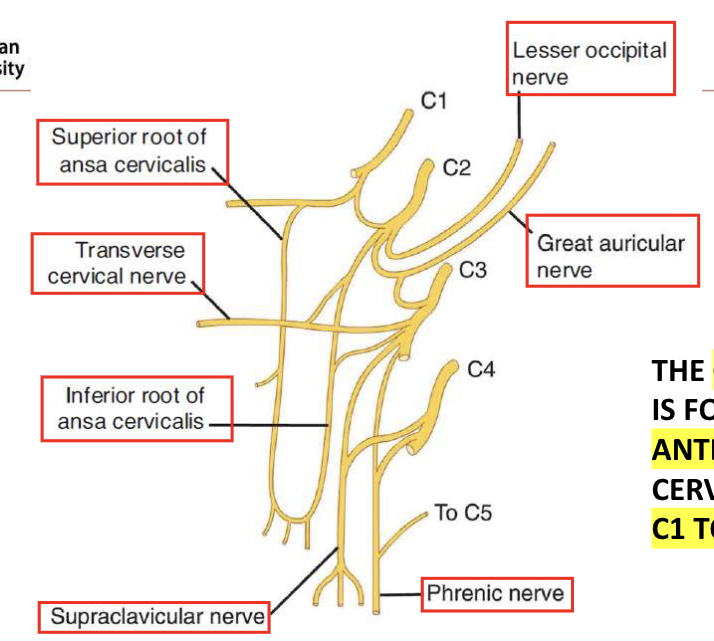
Which are Nerves originate from the Cervical Plexus?
Lesser occipital nerve
Great auricular nerve
Transverse nerve
Transverse cervical nerve
Supraclavicular nerves
Ansa Cervicalis
Phrenic nerve
 Note
Note  Flashcards (118)