AP Lang Unit 2 test
 Studied by 0 people
 Call Kai
 Learn
Learn Practice Test
 Spaced Repetition
 Match
Match Flashcards
 Knowt Play
1/18

There's no tags or description
Looks like no tags are added yet.
Name | Mastery | Learn | Test | Matching | Spaced | Call with Kai |
|---|
No analytics yet
Send a link to your students to track their progress
19 Terms
reptition
to emphasize reinforce an idea or concept often related to the writer’s purpose
juxtaposition
sets up a contrast or comparison of concepts
parallel structure
creates a sense of balance by placing emphasis on the grammatical element that is parllel
Rhetorical question
asks the reader to reflect,contemplate, or consider a concept or idea
antithesis
provides emphasis on one idea by contrasting it with another
fragment sentence
emphasizes an idea by focusing on a particular phrase or part of a sentence
simple sentence
placing a simple sentence by itself, especially among other longer or complex sentence, often emphasizes the idea in that sentence
induction
Observes specific instances or patterns and infers a general rule or broader principle from them.
deduction
Starts with a universal truth or general premise, then applies it to a particular case to reach a specific, logical conclusion.
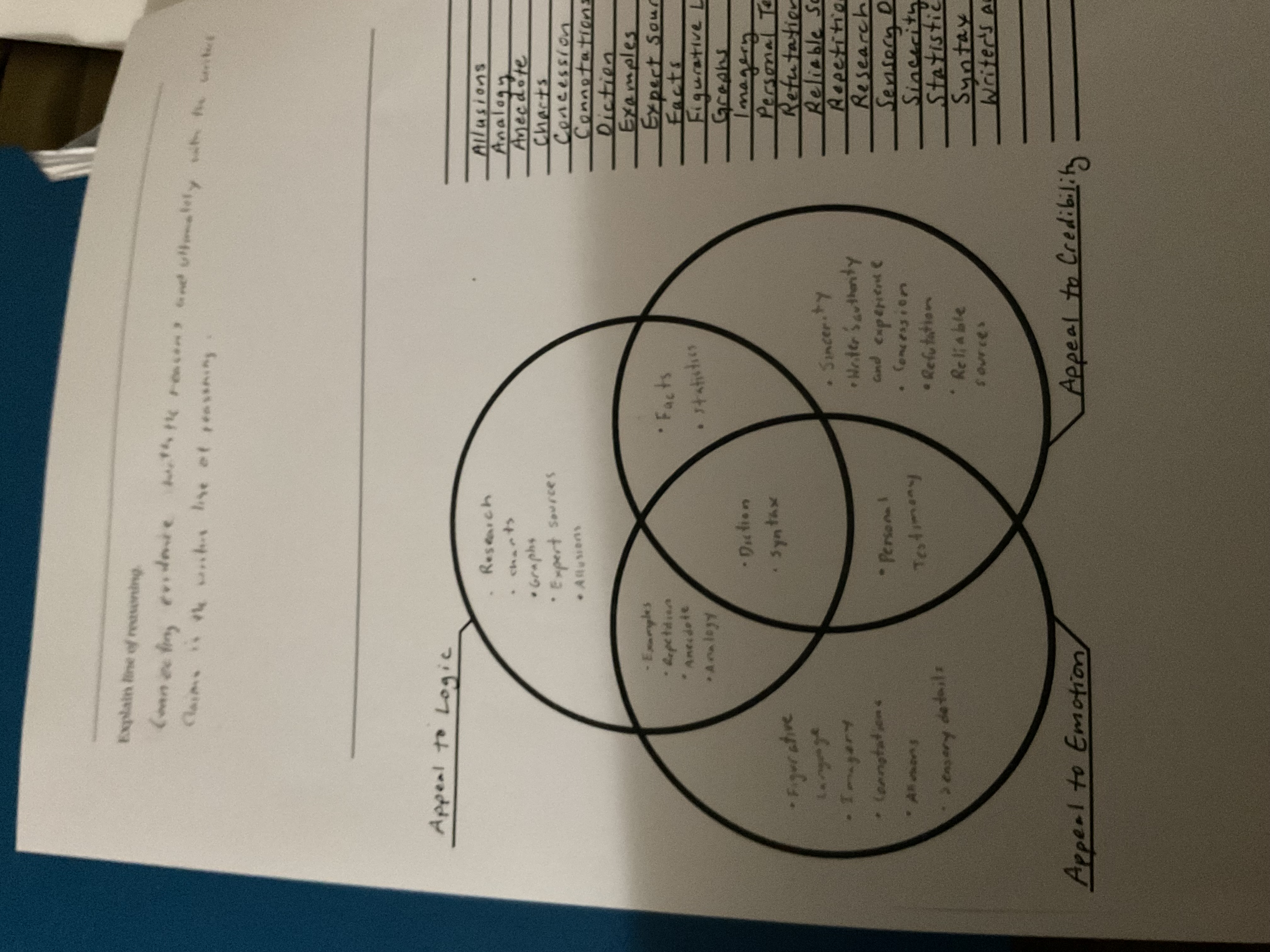
pathos
when writers pull on the heartstrings of their audience, they are attempting to persuade them by engaging some impact of the audience’s emotions or senses. When persuading, writers attempt to move an audience toward a specific action or belief.
logos
appeals to logos engage the audience’s sense of reasoning or logic, attempting to rationalize his or her perspectives or idea to the audience, writers appeal to logo by making clear detailed arguments.
ethos
a strong ethical appeal can build rapport and earn the trust of an audience. A writer’s background, character, status/position, or association are all means by which they implicitly attempts to persuade the audience of their credibility. Writers can also associate themselves with the audience by highlighting shared values
Based on a writer’s specific audience, he or she may use evidence to
illustrate, clarify or exemplify
establish a mood
create association; or
amplify or emphasize a point
relevant evidence
when a writer connects and explains its significance and relevance to the line of reasoning for a particular audience
sufficient evidence
refers to the quantity and quality appropriate for the argument
Typical evidence
evidence that is representative of a population or issue
accurate evidence
verifiable, meaning other credible sources can check that it is correct. Often indicates the practices, procedures,or experience, that led to its creation so others can verify the details
Explain line of reasoning
connecting evidence with the reasons and ultimately with the writer’s claims
 Note
Note  Flashcards (76)