Biology Exam 2-Chapter 3-Very Important Chapter
 Call Kai
 Learn
Learn Practice Test
 Spaced Repetition
 Match
Match Flashcards
 Knowt Play
1/35

There's no tags or description
Looks like no tags are added yet.
Name | Mastery | Learn | Test | Matching | Spaced | Call with Kai |
|---|
No analytics yet
Send a link to your students to track their progress
36 Terms
The breakdown of organic molecules is _________.
Exergonic
_________ is a partial degradation of sugars that occur without O2 and yields ATP. It is a type of _________.
Fermentation
Anerobic Respiration
_________ consumes organic materials and O2 and yields ATP
Aerobic Respiration
True or False: Cellular Respiration includes aerobic and anaerobic
True but it is often used to refer to aerobic respiration
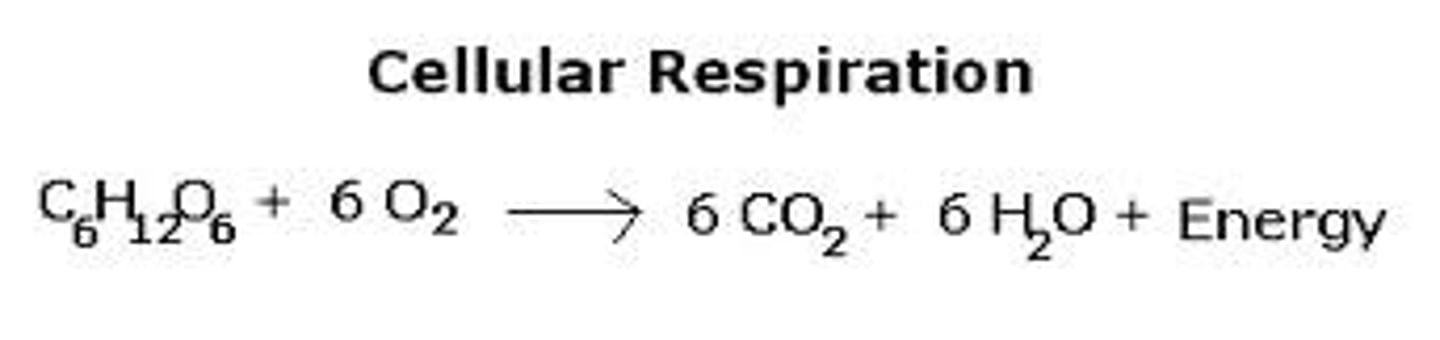
It is helpful to trace Cellular Respiration with _________
Glucose
***
The transfer of _________ during chemical reactions releases energy stored in organic molecules. What is the released energy used to synthesize?
Electrons
ATP
***
Chemical Reactions that transfer electrons between reactants are _________
in _________, a substance loses electrons
in _________, a substance gains more electrons
*** Exam questions will ask what what is being reduced and what is being oxidized
oxidation-reduction reactions/redox reactions
Oxidation
Reduction(think of the positive charge being reduced)
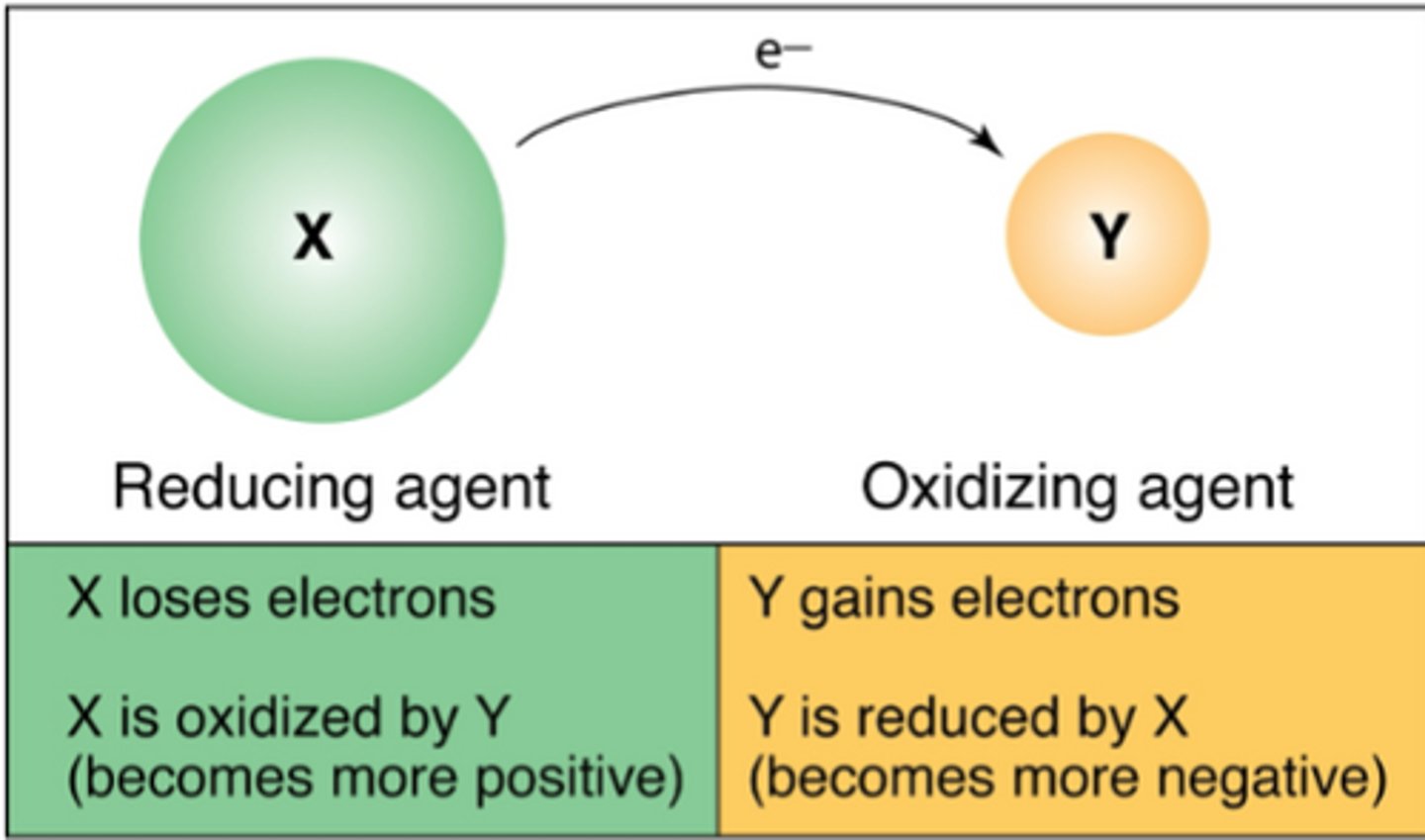
The electron donor is called the _________.
the electron receptor is called the _________.
Reducing agent
Oxidizing agent
***
In aerobic respiration, oxygen is being _________, and glucose is being _________.
Which one is the oxidizing agent?
Reduced, Oxidized
Oxygen is the oxidizing agent (electron receptor)

***
Electrons from glucose are usually first transferred to _________, a coenzyme.
NAD+(Carrier of electrons)
***
As an electron acceptor, NAD+ functions as an ________ during cellular respiration
Oxidizing Agent
The Electron Transport Train passes electrons in a series of steps, What pulls the electron across?
O2.
Harvesting energy from Glucose has 3 stages _________, _________, _________.
What does each one do?
Glycolysis
Citric Acid Cycle
Oxidative Phosphorylation
The enzyme responsible for ATP synthesis is _________.
ATP Synthase
Glycolysis breaks down glucose into _________ molecules of _________.
It occurs in the _________ and occurs _________ O2 is present
2 molecules of Pyruvate
Cytoplasm
Whether or not
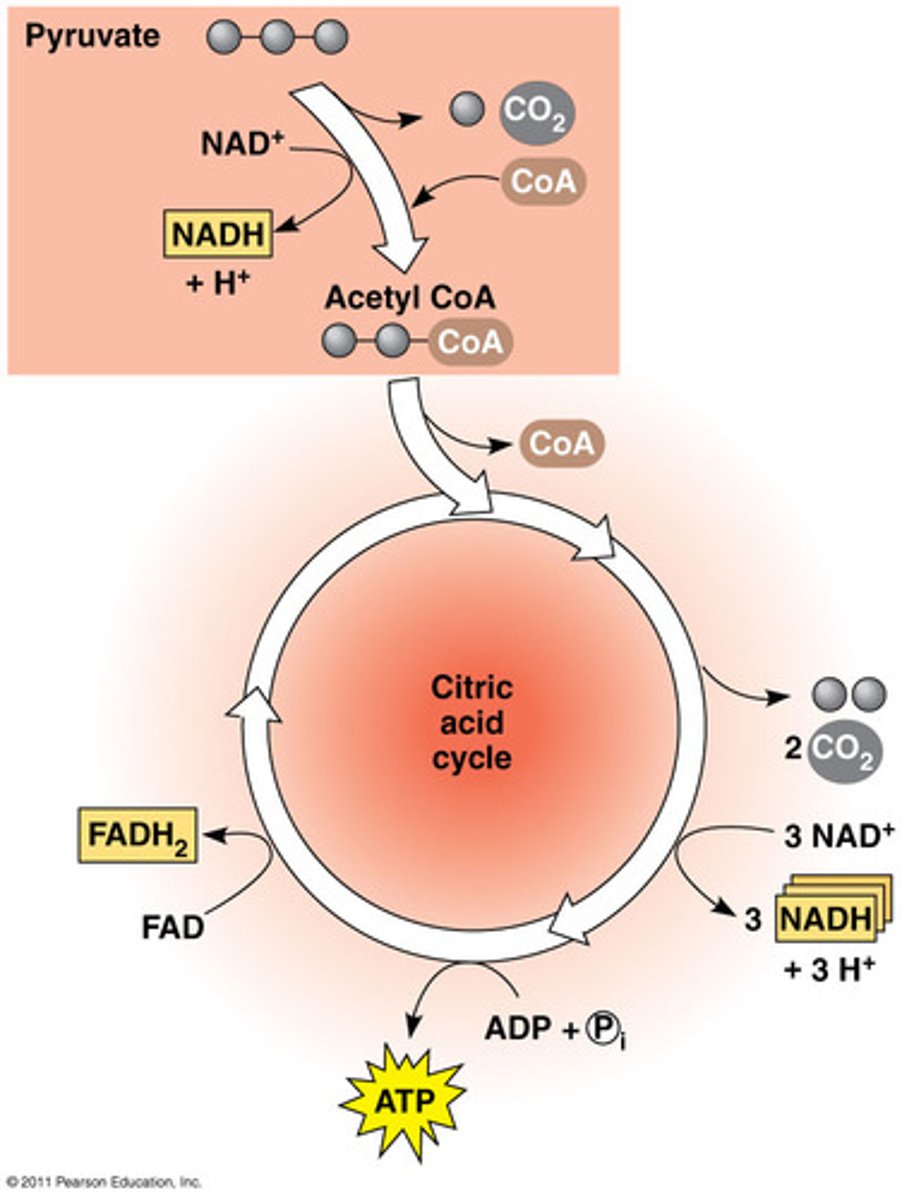
After pyruvate is oxidized, the _________ completes the energy yielding oxidation.
Citric Acid Cycle
In the presence of O2, pyruvate enters the _________ where the oxidation of glucose is completed. (hint: where Aerobic Synthesis takes place)
Mitochondrion
Before the Citric Acid Cycle can begin _________ must be converted to _________ _________ (_________) which links glycolysis to the citric acid cycle
Pyruvate
Acetyl Coenzyme (Acetyl CoA)
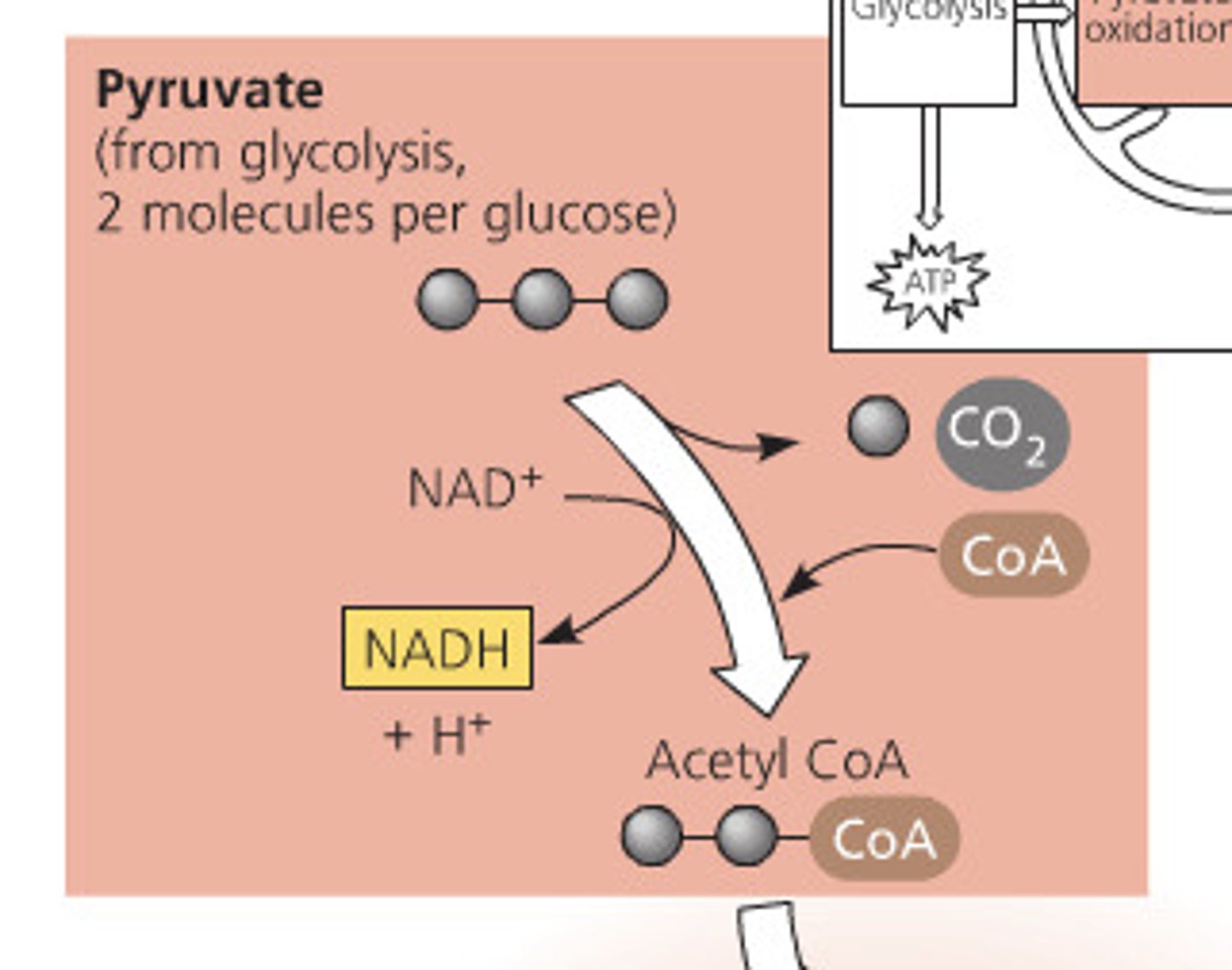
Pyruvate to Acetyl CoA:
A _________ is removed from Pyruvate
NAD+ is _________ to _________
An Acetyl group is transferred to _________ resulting in _________.
It occurs in the _________ and happens _________.
Carboxyl Group
Reduced to NADH
Coenzyme A, Acetyl CoA
Mitochondrial Matrix and happens twice
The Citric Acid Cycle, is also known as the _________, completes the breakdown of pyruvate to CO2.
Krebs Cycle
***
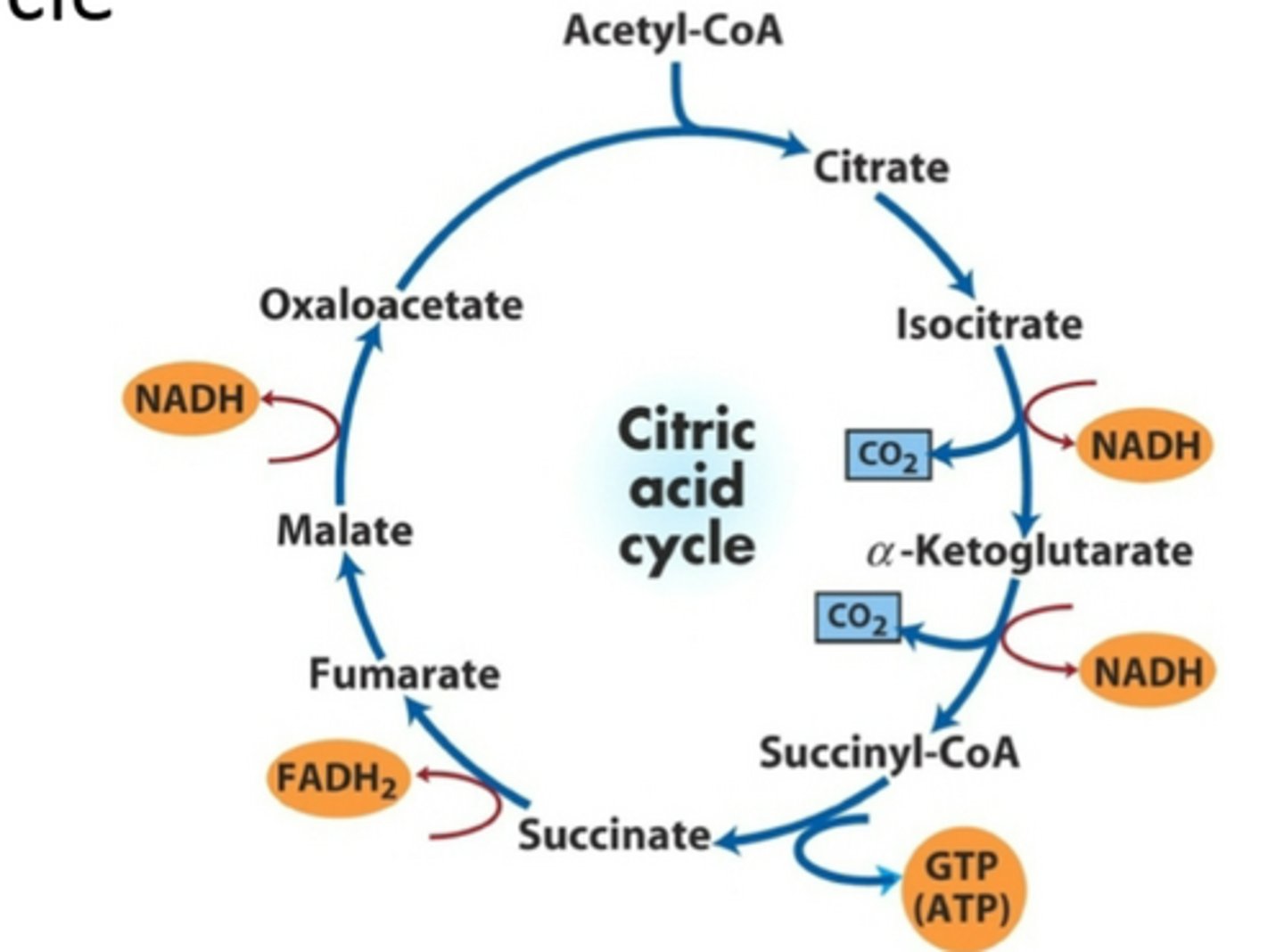
The initial step of Citric Acid Cycle involves the acetyl group of acetyl CoA joining the cycle by combining with oxaloacetate, forming _________.
Citrate
***
The NADH and FADH2 produced by the cycle relay electrons extracted from food to the _________ in the _________ .
Electron Transport Train in the cristae of the mitochondrion.
Electrons are transferred from _________ or _________ to the ETC, and are then passed through proteins to _________.
NADH or FADH2
O2
Electron transfer (the flow of an electron to the end of the tunnel) causes proteins to pump _________ from the matrix out to the intermembrane.
H+
When H+ moves back into the matrix with the gradient of diffusion, _________ uses the flow to drive phosphorylation. This is an example of _________ .
ATP Synthase
Chemiosmosis
The energy from the H+ moving across membranes is called _________.
Proton motive force
During the ETC, _________ ATP is made.
32
Fermentation uses _________ instead of an ETC to generate ATP.
Substrate-Level Phosphorylation
In _________, Pyruvate is converted to ethanol, first releasing CO2
Alcohol Fermentation
Fermentation is a type of _________ respiration.
Anaerobic
In _________, pyruvate is reduced to NADH, forming lactate.
Lactic Acid Fermentation
Aerobic and Anaerobic both use _________ to oxidize glucose and harvest energy from food, and in both _________ is the oxidizing agent to accept electrons during glycolysis.
Glycolysis
NAD+
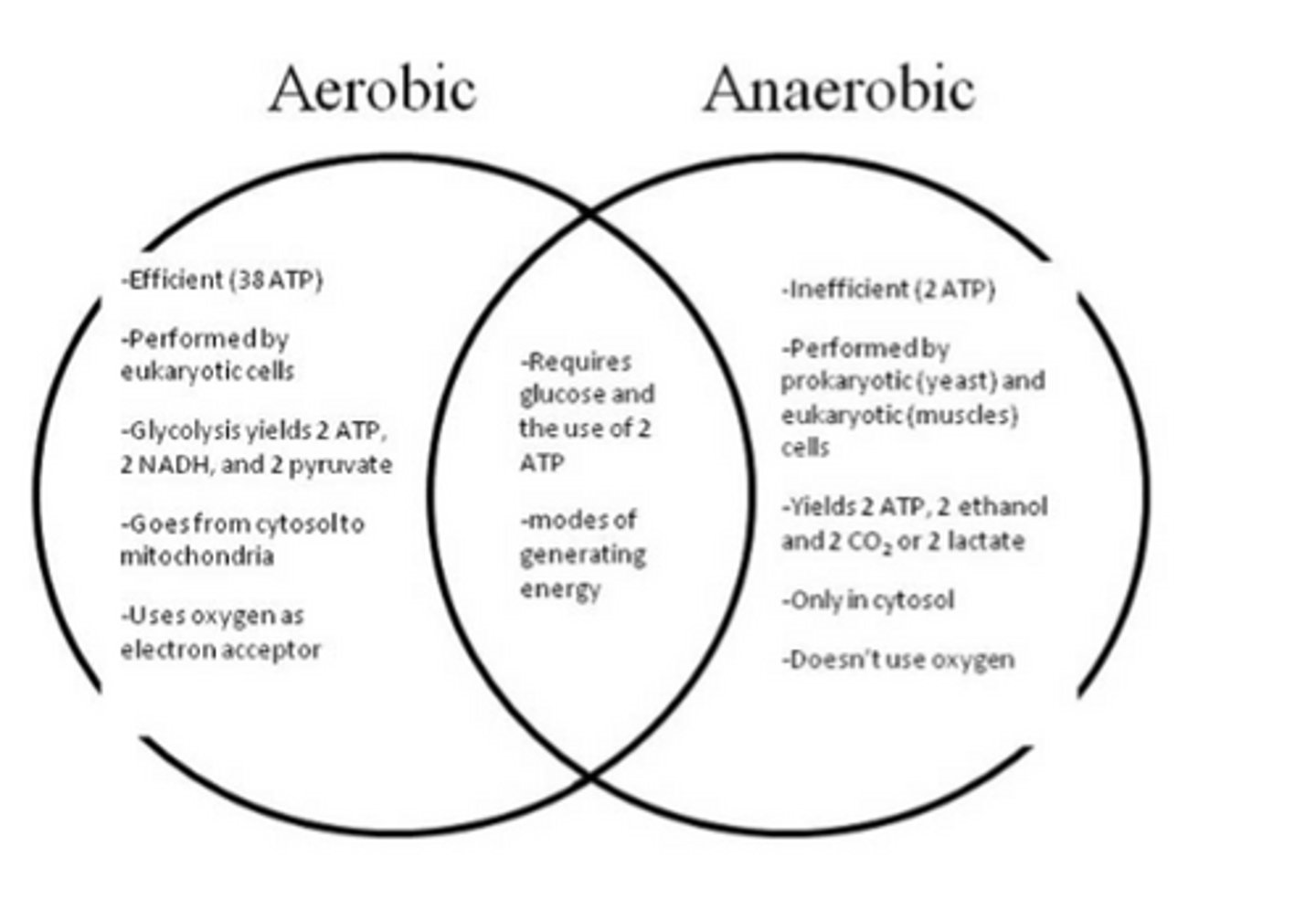
Aerobic and Anaerobic have _________ final electron acceptors.
Cellular Respiration produces _________ ATP, while fermentation makes _________ ATP.
Different: an organic molecule in ferm and O2 in cellular respiration
32
2
_________ carry out anaerobic respiration and cannot survive in O2.
_________ can survive using either fermentation or cellular respiration.
Obligate anaerobes
Facultative anaerobes
***
Fatty Acids are broken down by __________________ and yield acetyl CoA
Beta Oxidation

